Lalitha Krishnan:Hi guys. Thanks for listening in to Heart of Conservation Podcast (Ep#15). I’m your host Lalitha Krishnan. I hope you’re staying healthy, washing your hands regularly, and keeping sane. Talking of water, there are a lot of people in our country (India) who don’t have access to running water. I’m not going to say more. Let me introduce my guest Aditi Mukherji. She’s a Principal Researcher at the International Water Management Institute. She is a human geographer by training with a Ph.D. from Cambridge University, the United Kingdom where she was a Gates Cambridge Scholar. She has over 20 years of experience working on policies and institutions of water resources management with a special focus on water-energy-food nexus. She is the first-ever recipient of the Borlaug Field Award (2012) endowed by the Rockefeller Foundation and given by the World Food Prize Foundation, USA.
Aditi is the coordinating lead author of the water chapter of the Sixth Assessment Report (AR6) of the Intergovernmental Panel on Climate Change (IPCC), which is to be published in 2021. In her previous job as the Theme Leader of the Water and Air theme at the International Centre for Integrated Mountain Development (ICIMOD) in Nepal, she co-edited a report on the effects of climate change on the Hindu Kush Himalaya (HKH) region. This report that has woken the world to the possible reality that the Hindu Kush Himalayas could lose as much as 90% of its snow and ice by 2100 due to retreating glaciers, glacier-fed rivers, and carbon emissions.
Lalitha Krishnan: Thank you, Aditi for speaking to Heart of Conservation Podcast. Today you’re going to talk to us about spring water sources in the Hindu-Kush Region and the Indian Himalaya running dry. To start, could you tell us about springs?
Aditi Mukherji: Springs are, as you know, the main source of water in the mountains and even though they come out on the surface, essentially, they’re groundwater. So, what happens when rain falls, it seeps through the cracks and fissures in the mountains and the hills and then they kind of get stored inside the aquifers. There’s a bit of storage that happens and when it comes out…this coming out could be completely on another side of the hill. Basically, when the water comes out, we call it springs. But we have to remember essentially that water is rainwater and it infiltrates through the rocks and fissures in the hills and mountains, and then it comes out at one point. That is the discharge point. So, the discharge point is called the spring. While where the rainwater actually falls, it is called the recharge point and in between is the pathway…the pathway the water follows inside the hill-inside the rocks, coming from the discharge area. Springs are often the point where discharge happens.
Lalitha Krishnan: Thank you for clarifying that for our listeners. If we didn’t exactly know what springs are, there’s no doubt now. Aditi, when we talk about springs in the Hindu Kush, how many are we talking about and what areas are we talking about? More importantly, how bad is the situation?
Aditi Mukherji: We don’t have the numbers. The best that we have are anecdotal numbers and we have been talking of anything between 2-4 million springs which I personally think is a bit of an underestimate too. Hindu Kush Himalaya is a wide region starting all the way from Afghanistan to Myanmar and in all these eight countries you would find the occurrence of springs. The numbers are kind of huge, we don’t really know. I will give you an example. So, in my previous job when we did some fieldwork in Nepal, in a spring-shed not so far from Kathmandu, it was a very small area, less than 10 km sq.…and we mapped more than 200 springs. So, we are talking of very large numbers. We don’t know what those actual numbers are. And the best guesstimate we have is anywhere from 2-4 million springs. The areas we’re talking about generally the hills and the mountains of this Hindu Kush Himalayas. Having said that there are also springs in the Eastern Ghats and the Western Ghats in India. So basically, any place with an elevation and the geology, you would find springs.
So your question about how bad it is in terms of drying up…again, our numbers are anecdotal but I would think anything around 30-50% if not more of those springs are drying up and even more, at least 2/3rds of springs have shown a reduction in discharge of the springs.So the numbers are huge, the problem is huge and this is something you would get to know the moment you talk to any hill person, any pahadi. And they would tell you how their springs used to be much more productive when they were children and now, they have to walk further, the spring’s discharge is not enough. It’s a very severe problem in the hills and mountains of our region.
Lalitha Krishnan: You’re so right. It’s one of the major issues in the hills and mountains. What are the factors that make springs and groundwater dry out?
Aditi Mukherji: I would divide the factors for springs either drying up or reducing. There are a number of things that could happen. Either spring could either dry up completely or the discharge could reduce substantially. Or the springs that used to be annual perianal—they would flow all throughout the year—they become more seasonal and flow during the rainfall. The fourth thing that can happen and often happens is the water quality in the spring deteriorates. We use all these four instances to show that the springs have been affected negatively. To sum up: springs drying up, becoming seasonal, the discharge of the spring reducing from what used to be previously and water quality becoming poorer.
The causes are primarily two broad causes. One could be changes in the rainfall regime. If your rainfall has changed, if your rainfall amount has gone down or it has become more periodic, which means you have shorter spells but more intense rainfall, or even if your total quantity of rain has not gone down, it means it can affect recharge.
As I said, springs are simply rainwater that gets captured on the hills, kind of emerges through the cracks and emerges on another side at discharge points. So, if your rainfall itself has changed that could be one cause. But primarily what we are are finding, and again, we need more evidence on this rainfall changing…changes in rainfall and how it is affecting springs. We don’t have a lot of it (evidence) but what we are finding more of is that often springs are drying for a second reason which are changes in infrastructure. Road construction, hydropower construction. All these kinds of human interventions, we find, more often…we can find immediately that if there’s a hydropower construction happening, there’s a tunnel that was done, and immediately after tunneling, there was some kind of compaction. The spring pathway—I told you the recharge area from the waterfalls and the discharge from where the water comes out—the entire pathway may have been disturbed. We found springs have also dried after earthquakes. Similar thing; there was like a ‘shaking of the inside of the hill’ so to say, in very layman’s language and that disturbs the very underlying geology of the mountains. To sum up two main things: Change in rainfall; the quantity of rainfall, as well as the periodicity of the rainfall and the second, are more human causes; building, construction of a road. You construct a road and you cut off the recharge area form the discharge area. You construct hydropower, do blasting and the underlying geology of the mountains are disturbed. And the third reason is earthquakes which kind of, has a similar effect to what hydropower would be doing in terms of blasting. It’s you know, the same shaking of the mountains and changing of the underlying geology.
Lalitha Krishnan: Aditi, I know we can’t prevent natural disasters like earthquakes but when you’re talking of human intervention—I don’t know if this is a silly question—aren’t feasibility studies done before building and blasting…making roads or dams, etc?
Aditi Mukherji: No and unfortunately no. And that is not at all a silly question. To me, that is one of the most important questions. Why are infrastructures designed in the hills and mountains without taking into account whether springs would be disturbed? Springs are often the only source of water for these mountain people. There are rivers but the rivers are too deep down. They may be glaciers but they may be too far away from where the people are. Springs are the absolutely the only source of water that people of our hills and mountains in the Himalayas depend so it is quite surprising that most of the infrastructure projects are not designed with an understanding of what that infrastructure would do in terms of disturbing the recharge area. Very often we build roads, where previously, there used to be recharge. When recharge no longer happens springs dry up or we are cutting through the road in such a way that it will disconnect the recharge area from the discharge area. This means because the water can no longer get recharged and flow out to the designated points, the springs will dry. So, I think it’s of paramount interest that these hydro-geological considerations, a proper geological mapping with a focus on springs are undertaken before we design any of these infrastructures.
Interestingly also, you are aware for hydropower, so many communities in our region protect against hydropower. One of the reasons also why they protest is also that their drinking water sources dry up. While there is compensation for things like you know, if your house gets a crack or your assets are destroyed, then there is a system of compensation. But if your spring dries because the hydropower came up then it’s often very difficult for communities to ask for proper compensation. That’s when they really come out on the streets to protest. So I would say, this should become very very important.
Lalitha Krishnan: Thank you so much for that explanation. Aditi, technically speaking, how long does it take to rejuvenate a spring? First of all is it humanly possible to do that? If so, have we successfully achieved that in our country?
Aditi Mukherji: Yes, absolutely. It’s possible. How long it takes to rejuvenate a spring would depend on the nature of the spring. First, let me come to the second part of your question… Is it humanly possible to rejuvenate a spring? Yes, it is possible. It is not rocket science. It is not completed. It is not super complicated. You need people trained in field geology. You need people trained in basic hydrology, hydro-geology but it is possible to demarcate which is the recharge area of the spring. As I said it’s again, all rainwater falling into a plain that is recharging and then there is a flow path inside the hills and the mountains and then the spring comes out in the discharge point. Once you have actually identified the recharge area more or less—you don’t have to do it with super accuracy—but if you know that this is the part of the hill where when the rain falls and because the rocks are sloping in a certain way, they are dipping in a certain way, the water if it falls at that point, say point ‘A’, then water will take a certain path and it will come out as a spring in a point ‘Y’. As soon as you can map that with a certain level of certainty and for that you need expertise in field geology, that’s something that is not very complicated.
We have in India, the mountain state of Sikkim. They have done tremendous work in spring rejuvenation. So, Sikkim has to date rejuvenated more than a hundred springs if not more. They did exactly this. They trained their community workers, their panchayats, some technical people were trained in this basic understanding of geology. Basically, to know what kind of rocks there are in the hills or mountains, in which way are the rocks dipping, which is the slope of the rock and they could then identify the recharge area. Once you identify the recharge area, then you do very simple watershed activities. You dig a hole, you dig a trench…you know, it depends on the slope of the land, what activities you can do and what you cannot but then there’s a very clear guideline around this. We have been doing this watershed for ages. Now the important part is don’t do watershed activities blindly everywhere. Just identify the recharge area and do the watershed activities such as trenching which will mean that the rainwater that falls on that recharge area…and if you have done things like trenches… that water will reside a bit longer and that will flow down. That’s important to identify the recharge area. Then you can also say, this is the flow path. Let’s not construct a road here. If we do it, it will obstruct the flow.
Now coming to your question, has it been successfully achieved? Yes. We have done this when I was with ICIMOD. We have successfully done it in Nepal. Two springs were rejuvenated in the sense that they discharged more than double in just one season. We did the intervention, we identified the recharge are and did the trenches, etc., before the monsoon. And, right after the monsoon, we kept monitoring those. We saw that the spring but they also continued to have water for longer than usual.
And, how long does it take to rejuvenate a spring? That would really depend on the nature of the storage. You know, there is a bit of an aquifer that is storing that water. So, depending on how big it is or how permeable, how porous it is…that kind of determines. If it’s a fairly large one, that requires recharge coming from various sources, maybe you’re talking of maybe one full year or more…but if it’s a smaller, very localised spring with a localised small recharge area, you can expect the spring to have to have been rejuvenated—by that I mean—if it has become seasonal, to expand its seasonality, to increase its discharge, you can do it within a season. Since you are talking from Mussoorie, there’s also a very good NGO in Uttarakhand called Peoples Science Institute (PSI). They have also rejuvenated a lot of springs in and around Dehradun. A lot of NGOs are doing this. Springs have been rejuvenated in north-east India; Sikkim is one example. They’ve done the same in Meghalaya, in Darjeeling in West Bengal…
Lalitha Krishnan: That’s good to know. As the lead author of the water chapter of the Sixth Assessment Report (AR6) of the Intergovernmental Panel on Climate Change (IPCC), could you tell what collaborative measures or sharing of information happens between countries?
Aditi Mukherji: Basically, the IPCC report is a scientific report. So, the science gets communicated to all the countries, all the signatory countries of the UNFCCC. What happens is that the scientific report itself is not subject to government negotiation and governments just accept it the way it is. There is one document called the Summary for Policy Makers. That gets vetted during the final plenary session. For example, our cycle finishes in 2021. Sometime in October, 2021there will be a summary for policymakers which will be written for this entire report and that gets presented at that plenary. And, that’s where all the 98 countries, if I am not mistaken, are the signatories. That’s when the countries, you know, negotiate and say, “OK, this wording is not suitable, you can change that wording, etc. etc”. Having said that, the main science report doesn’t get changed by governments. That’s the science behind it. So that’s not up for negotiation. What’s up for negotiation is a bit of the summary for policymakers.
Lalitha Krishnan: Talking at the grass-root level, say the community level what can people do to maintain springs in their area?
Aditi Mukherji: The important part is to identify where the recharge area is. While our field geology can help it, we have seen through experience that the majority of the villagers, somehow or the other know where the recharge is happening. They just have that local knowledge, that traditional knowledge, that understanding of how those rocks are sloping and dipping. So, communities have to identify the recharge area and make sure the recharge area is kept clean. For example, no open defecation in the recharge area, because if that happens then the water quality that flows becomes dirty. Similarly, if possible, keep that recharge area well planted, don’t construct buildings in that recharge area which will impede the actual amount of recharge. So once communities identify where the recharge area is, they need to protect that recharge area through good land management practices. That kind of happens in many places, in many other places it doesn’t. There’s again this example of Nepal that I’m aware of. Many of the recharge areas were also wallowing ponds for buffalos. At some point, in the 70s, it was thought that those were also breeding ground for mosquitoes. Malaria eradication was big in those days. So many of these ponds were actually covered up and community health centres built on them.
Lalitha Krishnan: Oh no.
Aditi Mukherji:That’s when people started realising that many of their springs were drying up because those ponds were actually the recharge ponds for those springs. So, the measure the communities can take is just protecting the recharge area. Protect it like your life depends on it.
Lalitha Krishnan: What do you think of the measures our government is taking to rejuvenate springs?
Aditi Mukherji: I think it’s very encouraging. The NITI Aayog commission has set up a task force on the Himalayas and Spring Revival is one of those topics of that task force. And now that the report has been finalised and has been shared with all the eleven mountain states…all the elevens states have been doing tremendous activities. So I would say that India is showing very innovative leadership when it comes to spring rejuvenation. Something perhaps, our neighbouring countries can take inspiration from. Sikkim is agreat example. There has been a great co-learning between Sikkim and Bhutan. Bhutan has now taken up spring rejuvenation in quite a significant way. India is doing that as well. So, I think, the measures the government is talking is they are now trying to map springs. I recently read that there is some plan to engage drones in spring mapping. I wasn’t quite sure if that was the best approach. What Sikkim did was they really used their panchayat mechanism and got the panchayat officials trained in identifying theses recharge areas and they used the funds from the NREGA (National Rural Employment Guarantee Act) to do those recharge activities like digging of trenches etc. To support that the government has taken this very seriously, perhaps, there has to be a bigger role for the local elected bodies. That might be something that needs a bit more mainstreaming so that it’s the elected panchayats that do more of the work because they are best placed to map springs, identify recharge areas, etc.
Lalitha Krishnan: I have two more questions for you Aditi. We’re living in such unusual times. I wanted to know if the COVID 19 disease or the Coronavirus is impacting people…everyone from having access to running water?
Aditi Mukherji: Yes, it looks like in spite of all our progress, what seems to be the best precaution that everybody is recommending – WHO and the government and the one that’s proven is washing your hands frequently with soap and in running water. Now imagine living in a house where you don’t have running water. Imagine the only spring in your village has dried up and there isn’t any running water. This COVID19 has brought up the importance of having access to water near where you live. That’s again why we have to do something about all these springs drying up. This needs to be done on an emergency basis.
Lalitha Krishnan: When we open our taps to wash our hands we barely think about where the water is coming from. We’re sitting comfortably in our houses, stocking up…we may be quarantined but we are comfortable. So thanks for reminding us that there are people out there who don’t even have access to running water.
Aditi Mukherji: Absolutely. In a relatively well-managed village where springs are in good condition, they would usually have one stand post shared by 8-10 families. So that’s a good case. In villages where the springs have dried up or where there isn’t any infrastructure – where everybody would have to walk to the source of the spring… then there are springs where the waters being rationed…we have come across many springs where the village committee would literally lock up the spring. They would open it for one hour every morning and every evening simply because there isn’t enough water for everyone for 24 hours. In those circumstances, it would be really hard for people to follow this very basic advice of handwashing.
Lalitha Krishnan: Most of us have a lot to be grateful for. Aditi, I do have to ask you. Do you have hope?
Aditi Mukherji: Yes, it would be hard without it right?
Lalitha Krishnan: Of course, you’re right. When our researchers and scientists are optimistic, it gives us hope too. Ok Aditi, this is my last question to you and a request. I ask all my guests to share a new word to help us improve our vocabulary. So, is there a word that you’d like to share with us?
Aditi Mukherji: Yes, I’d like to talk about ‘aquifers’. An aquifer is basically the water-bearing layer. We can’t see it because either if you’re living in the plains then it’s under the ground; in the mountains, it’s basically inside the rocks. It’s super important because the aquifer is where all your groundwater storage is. India completely depends on groundwater. 60% of our irrigated area gets irrigated from groundwater. 80% of our drinking water comes from groundwater. If we don’t take care of our aquifers, don’t ensure that our aquifers are not overexploited, our aquifers don’t get dirty, we would never have water security. That’s the word I would like your audience to know: ‘Aquifer’ which is the water bearing layer from which our life-saving water comes from.
Lalitha Krishnan: Aditi thank you so much for everything you’re doing. It’s been a real honour talking to you.
Aditi Mukherji: Thanks so much.
Lalitha Krishnan: I hope you enjoyed this episode of Heart of Conservation. You can listen to it on many platforms -Spotify, SoundCloud, Apple podcast and many, many more. If you know somebody who’s doing interesting work or whose story should be shared, do write to me earthymatters013@gmail.com. Stay safe. Stay healthy and keep listening.
Photo courtesy Aditi Mukherji.
Podcast interview and Artwork: Lalitha Krishnan
Birdsong by hillside residents
Disclaimer: Views, thoughts, and opinions expressed in the podcast and show notes belong solely to the guests featured in the episode, and not necessarily to the host of this podcast/blog or the guest’s employer, organisation, committee or other group or individual.
Heart of Conservation Podcast Ep#14 Show Notes (Edited)
Introduction:
Lalitha Krishnan:You’re listening to Heart of Conservation Podcast, Season II, Episode #14. I am your host Lalitha Krishna keeping you informed and connected with the natural world by bringing you stories from the wild.
My guest today is Bhavna Menon. She is the programme manager at the Last Wilderness Foundation, an NGO that works in and around three Tiger reserves in Madhya Pradesh. I am doubly grateful to Bhavna because we had to rerecord this podcast because of technical issues.
Thank you Bhavna, for coming on Heart of Conservation podcast for the second time. To begin with, we were talking about how Last Wilderness Foundation has been working in Madhya Pradesh since 2009 and you’ve been engaged with the forest department, urban and the rural l communities over there. So briefly, could you tell me how it all started? What was the goal when you started?
Bhavna Menon: Sure. Last wilderness Foundation was started in 2009 like you rightly mentioned by an individual called Nikhil Nagle. So, when he met the Field Director of the Bhadhavgad Tiger reserve in 2010, Mr. C K Patil, Mr. Patil asked Nikhil to first send a team to understand the on-ground challenges faced by the villagers in the buffer villages surrounding a tiger reserve. And when we did the survey, of about 33 villages which were in the buffer zone of the tiger reserve, we found man-animal conflict to be the main reason and problem behind working out proper conservation strategy. So what we decided to do was to start a healthy dialogue with the villagers which couldn’t be done by just meeting them. There had to be something more fruitful coming out of it…something more personal coming out of it. So what we did is we took the kiddos of the villages—there are about a 100 odd villages in the buffer zone of the Bandhavgarh Tiger Reserve now—So, over seven years, we took the kiddos inside the park for a safari because it would probably not make sense for us to tell them, save the tiger…save the forest…without them having to experience the forest or an animal.
Lalitha Krishnan: Right.
Bhavna Menon: We took them on a safari; spent the whole day with them…had lunch with them, we did presentations; we asked them what their idea of forests and forest conservation was and at the end of the end we would try to tell them, “Yes, now that we have experienced the forest together, what can we do to protect the forests?” So many a time kids would come up with solutions. “Plant trees.” “Yes, we should not set fires in the forest”. “Yes, we can perhaps, think about reporting illegal incidents”, which was a win-win situation for us. And via the kiddos, even the adults were getting impacted in a manner because the kids would rush back home and say, “Oh my God, we saw a tiger today and it was harmless. It didn’t do anything to us.” “It was huge and big; it had long claws and big teeth but it only used that to hunt its natural prey.” It walked right past us when it saw us and it was that beautiful thing they saw. Once, a tiger was walking past the Gypsy (jeep) and this kid kept backing into me and finally without realizing she sat on my lap. And she said, “How big it is. How beautiful it is.” She kept whispering that as if she was in bliss. The way the mindset of the community members changed via the kids, via the inclusion of the community members in conservation, we saw a dramatic change.
Another impact that we saw because of the Village Kids Awareness Programme is that it extended to the adults. Once we had gone to this village in the buffer zone called Badwar which was anyway, a sensitive village and there we quite a few incidents of man-animal, man-tiger conflict in that area. So we decided to do the Village kids Awareness Programme in that area. And the day we arrived, we learned of an elderly gentleman succumbing to his injuries because of an encounter with a tiger in the forest when he had gone to… Basically, he was a herder. He had taken the cattle to the forests and he encountered a tiger and a kill and the tiger had attacked him etc. and he passed away. To meet the family members, we visited them, we just sat quietly—no one spoke a word—and we decided, out of respect to the community members, that we could not run the pogramme in the village because it would be very insensitive to work in that village at that point of time and tell them to protect the tiger. But, the most amazing part was, the next morning, this gentleman walks up to our canter…to our car and says, “Why aren’t you guys doing the programme? I want you to do the programme and I want you to take my kids in the first batch of the programme. I want them to learn about the forest and respect the forest and understand why it’s important to protect it.” From then on, we realized that we had opened the channel. Thanks to the forest department and the community this channel was open wherein we can reach out to the main stakeholders of conservation and tell them that we can work together as a team where we could learn from each other and protect the wilderness.
Lalitha Krishnan: Wow. Let’s talk about the forest department. I know you said the channels were open but in what way did you interact with them or engage with them?
Bhavna Menon: So,we started working with the forest department by conducting workshops. So although the frontline staff is very beautifully equipped to protect the forest, we wanted to equip them with certain topics slightly more thanks to the experts in the field. Like birding, a little more information about the biodiversity… Then slowly, we moved on to how they could—because we had worked with communities—we gave them a little bit of information on how they could deal with members of the community in times of conflict when we were not there. Our idea was to bridge the gap between the forest department and the community members via these workshops so that even if we are not there, they are not dependent on an external force like an NGO coming there and working. And they could do that themselves. They were their people. So they could have that connect between themselves.
Lalitha Krishnan: Do you think that this connection is now well established and they don’t need outside help so much now?
Bhavna Menon: Well, it’s an ongoing process I would say. It needs constant follow up. You need constant dialogue because they are people after all. People need to communicate. I don’t think it will be a one-time thing. Of course, there’s a huge adhesive that’s come into place but still, we need to do a lot of work. A lot of work still needs to go in.
Lalitha Krishnan: Can we start talking about the communities? Tell me about the Pardis and what initiatives you are taking with them in particular?
Bhavna Menon: Sure. We came in contact with the Pardhis in 2009 when the tigers in Panna (tiger reserve) had disappeared. There were no tigers in Panna. The Field Director, Mr. R. S. Murthy, invited us to Panna to meet with the Pardis to see the forest. And the first thing we heard from everyone is how notorious the Pardhis are. How they are a criminal tribe. How they are hunters and that Panna had suffered a lot because of Pardis. But despite all these preconceived notions I had held about them, as soon as I went to visit the hostels that house the Pardi kids—which in fact, was started by the former Field Director, before Mr. R. S. Murthy, Mr. G. Krishnamoorthy…Mr. Gola Krishnamoorthy, it was his visionary plan to work with the communities at some point and start two hostels for the boys and girls. So the minute I opened the gate of the girls’ hostel, I saw this number of kids rushing towards me who have no idea who I am but they clung to just any part of my body. I found kids hanging from my arms, legs feet…. All they said was, “hello”, “welcome,” “please come and sit”, “have chai”. And I was wondering, am I in the right place?
But the warmth, the genuine love they showed someone who didn’t even know them was brilliant and that was when I and the Director, Mr. Venkatesh, we decided we needed to do something to secure the future of these kids. So what we did, continuously, from 2009 to 2015 we kept visiting them to understand more about the community, kept an ongoing dialogue with them and in 2015 we ran a vocational training programme which was a two-month training programme with both the boys and girls. Wherein the children themselves choose what vocations they would like to pursue. The girls did stitching and the boys did an electricians’ programme. Local teachers were employed to teach them the same and we really bonded. All of us over two months really bonded. We had volunteers coming in who had also interacted with the kids and the success was that because of these hostels and because of these continuous dialogues, we now have five Pardi students who are pursuing their graduations –higher studies and they are the first line of Pardhis graduates from the Pardi community.
Lalitha Krishnan: That’s impressive. It’s something, to be proud of for sure. For them and the younger kids. Very inspiring.
Bhavna Menon: Lalitha, another great success story that has come out of working with the Pardhis is a girl called Reesna, Pardhi from the Pardhi community who has been absorbed by Taj Safaris after an initiative I am going to tell you about so basically when we were working with the kids and the adults saw the success of the programme, the adults in the community started demanding that we work with them as well. They kept saying, “why aren’t you working with us?” So we said, “OK, what would you like to do?” They said, “We like the forest, we like to walk in the forest. We can tell you all about birds and animals and, trees and medicinal herbs.” So I said, “Great”. So then we met with Taj safaris, we met with a gentleman whose extremely pro community. He’s called Mr. Nagendra Singh Hada who is the Area Director of Taj Safaris and because of his excellent team of naturalists, and our volunteers, we trained twelve Pardhi guides for three periods of training and because of that we started something called ‘Walk with Pardhis’.
Lalitha Krishnan: Right. I have read about that.
Bhavna Menon: It’s a walk in the territorial area. Guests can go for a walk and there are beautiful gorges you can encounter on your walk there. The animals they (the Pardhis) mimic, the birds they mimic…if you shut your eyes you won’t be able to tell the difference if it’s animal or if it’s a Pardhi guide imitating the animal. It’s super incredible. And because of this, there is a particular girl called Reesna Pardhi who was also trained as part of the Pardhi initiative. The guests loved her so much and Taj saw so much potential in her that she is now working at the Taj Kahna Property, Banjaar Tola. If someone is visiting Kanha, they can most certainly visit Reesna also. She is a lovely, confident young woman now and yes, that’s what we are trying to do with the Pardhis.
Lalitha Krishnan: So nice to hear. Moving on, the other tribal communities you worked with, the Baiga community and the Gonds. So tell me about the jewellery workshops and the community in general.
Bhavna Menon: The Baiga community-the Baigas we met with-live in the buffer zone of Kanha tiger reserve another beautiful park and there we work with an extremely visionary forest officer called Mr. Surendra Khare who is like this champion for women empowerment In Kahna. I would like to say something before the Baiga community workshop about something they have done in Kahna Lalitha if I may?
Lalitha Krishnan: Of course. Please do.
Bhavna Menon: First time, there was a visually impaired camp that we ran in Kanha with the vision of Mr. Khare. There was this little girl called Tulsa. She is visually –impaired, she called up Mr. Khare Sir once and shed asked. “Why aren’t you showing me the jungle?” He was very puzzled and taken aback and emotional all at once and he said, “yah, actually…why not”? There should be no difference between kiddos wherever they are. We’ve done about three visually impaired camps in Kanha. We run the hearing impaired camp based on sign language. We run the visually impaired camps based on a sensory nature trail, as well as sounds.
Lalitha Krishnan: How many kids came on that (visually impaired camps)?
Bhavna Menon: So the first batch had 23 kids then there was a batch of 40 kids. So different groups had come from NAD(?) Bombay. So one had come from the Netraheen Kanya Vidyalaya, Jabalpur and one was from Justice Tankha Memorial School, Jabalpur and that was a hearing impaired camp. So a different number of people have come to each camp.
Lalitha Krishnan: That’s quite the initiative. Unfortunately in our society, challenged people are left on the side or not included.
Bhavna Menon: Yah, and the experience Lalitha…I learned so much from there. I mean, I thought we’ll go and tell them…in fact, there was a time when a tiger was walking by our canter. The kids could only hear it. These were the visually-impaired kids. They could only hear it walking in the grass. They could hear rustling. And they said, “Oh my God, I saw a tiger”. And the happiness was just contagious. Everybody was crying by the end of that camp.
Lalitha Krishnan: I can just imagine. Just visualizing it in my head I’m thinking, what a joy to hear something like that.
Bhavna Menon: They were just bouncing around camp and they’re happy and they’re singing and they’re not…I’ve never seen them feel sorry for themselves. And this was because of Mr. Khare. Had it not been for that Officer, none of this would have happened. This again is an extract of what the forest department is doing. After doing these camps we realized there was a lot of more work to be done in Kanha and Mr. Khare encouraged us since we had already worked with communities and we had had a dialogue with the people. He encouraged us to work with the Baiga community who live in the buffer zone of the Kanha Tiger Reserve. They are very dependent on the forest produce as a source of livelihood. Women usually visit the forests and collect a leaf called Mahul. It’s a creeper with a very big leaf. They make little plates and bowls of those which are then sold in the market for Rs. 30/- 40/-. So you have to collect a whole lot of them to make plates for which they used to spend the whole time in the forest which encourages encounters with wild animals and encourages the chance of a conflict. So Mr. Khare said, “why don’t you work with these ladies concerning livelihood. We spent three-four months discussing and visiting the ladies and we finally chanced upon an elderly lady in the village who was wearing very beautiful silver coin jewellery. We said, “Okay, where did you find this from?” She said, “No we made it.”
“Wow, with what machinery?”
“No, we make everything by hand. Nothing is machine-made. Nothing is bought except the raw material.”
We said, “Okay, that’s brilliant, Can you make this for us?”
A group of 10 women started laughing and saying. “Who do you think is going to wear this in the city? No one’s going to wear it. It’s a village thing, it’s a tribal thing”. They sometimes feel shy that people will make fun of them. In fact, they have amazing tattoos on their body. Baigas are famous for tattoos on their body. But unfortunately, the younger generation is refraining from doing it because everybody will tease them in school and colleges saying, “Oh, this one’s is a Baiga”. So that also hit us and we said, “No you should be proud of this.” So we started giving them ideas: “You can make bracelets, necklaces.” So we started giving them the raw material. We have a branding partner called “Natureworks India’ which helps us sell the jewellery and the response has been beautiful. We are working with some 40 odd ladies now across four villages. Reduction in the forest has happened drastically because ladies can now sit at home instead of being in the forest. They can sit at home and make jewellery, It’s a whole day’s work. They get paid on the spot…as soon as they make the jewellery. The beautiful part is men used to mock them. “Why are you making this jewellery? Who’s going to buy it?” They’ve seen their wives being successful in business. When their wives are ill or pregnant, the men sit and make the jewellery.
Lalitha Krishnan: Really? That’s a change. That I’d love to see.
Bhavna Menon: Youshould see the men running around carrying necklaces instead of the women.
Lalitha Krishnan: That’s good news. I have seen them (the jewellery) on social media and they look fabulous And colourful.
Bhavna Menon: Yes. Veryhappy.
Lalitha Krishnan: There’s some mention of the Gond tribe or community you work with.
Bhavna Menon: Yes,that’s in Basically, what I’m trying to do also Lalitha, is to include guests and tourists to visit community members. What hit me once was when I was on a safari, a very happy guest said, “Oh we saw five tigers today”.
I said, “Lovely. If you have time, why don’t you visit a village?
“What? They have villages here? I thought there were only forests and resorts.”
“No, no. There are lots of villages and lots of amazing people you can meet if you can step outside the confines of your resort.”
“Wow. What are the activities you offer?”
Then and there, Vidya and I decided to pen down a list of activities guests can do while they are visiting the tiger reserves. I am happy to say those tour operators especially, who are helping us with this do encourage guests to do these activities. We have village walks, we do lunch, breakfast, dinner with villagers if you choose that an option. We have jewellery making workshops wherein you can go to the village, sit with the Baiga people and make jewellery. And then we have the tribal dance. People while eating their dinner or while they are having chai, can sit and watch the dance. More often than not, guests are dancing themselves. It’s a contagious dance. They get up and start dancing themselves.
Lalitha Krishnan: That’s great and is homestay a possibility or not…because they are living on the fringe?
Bhavna Menon:Homestay is a possibility. It requires a little bit of work as we need to speak to the community members. Because community members need to be comfortable with strangers staying in their houses as they are in remote areas. So the idea is to get them on board. A lot of them in Panna and Bandhavgarh are on board with this idea. We’ve been in talks with them. They want to be trained in regards to hospitality so we will be exploring this and maybe in the next few years when you come to Central India, we can put you up in a homestay.
Lalitha Krishnan: Yes, I look forward to that. So what other outreach programmes or initiatives have you’ll be taking in these areas.
Bhavna Menon:So we run the nature education programme in these areas in association with the forest department, with the help of brilliant volunteers in Kanha. The nature education programme is very very similar to the Village Kids Awareness Programme of Bandhavgarh that we had started in 2012. Where kids from the buffer zone are taken inside the forests and we tell them about the interconnect of denizens of the forest. Apart from that a very important programme that we run from the conservation point of view is the Forest Fire Prevention Programme in Pannah. That again, Mr. K S Bhadoriya who is the current Field Director of Panna…he’s been extremely supportive and he’s been practically part of each and every session that we do with villagers. He travels for one hour and comes down every time and sits with the villagers. So the idea is to understand/ first talk to the villagers about their challenges and then tell the villagers. “Now that the tigers have a magnificent comeback in Panna, we need to protect them.” The biggest problem in Panna is fire. It is an extremely dry landscape. So we need to talk to the people with special emphasis on how to prevent forest fires in the landscapes. Whether via reporting fires to the fires department or patrolling teams and helping the forest department in helping different regions for fire and other illegal activities. We are encouraging community members to do so via our sessions.
Bhavna Menon:
Lalitha Krishnan: Ok. And these fires you are talking about. Do they happen in April…the dry seasons?
Bhavna Menon: It happens in the summer months andacres and acres of forest get burnt becausethe landscape is so dry and it is completely grassland. So, one spark can actually ignite the whole forest. It’ happened in Panna before but I’m very happy to report that since we started working in 2019 there hasn’t been a case of forest fires last year. We’ve done two sessions with the villagers in 2019 and 2020 and covered almost 37 villages and 1200 villagers. There hasn’t been a case of forest fires. We are hoping to God, fingers crossed that there won’t be any forest fires this summer.
Lalitha Krishnan: Fingers crossed and congratulations to you and your team for making it possible.
Bhavna Menon: Thank you
Lalitha Krishnan: 1200 people is a big number. You were talking about volunteers. I wanted to know if anyone wanted to volunteer in any of these camps or places that you work in how long would they have to stay and what sort of work would you expect them to do? What are the options for anyone who is interested or goes to your website or connects with you? This is just to give them a feel for what it will be like.
Bhavna Menon: Ideally we call upon volunteers when there is a project in place. Suppose there’s a Nature Education Camp in place like the Visually –impaired Camp. We had volunteers for that also. Then, mostly conservation outreach programmes, even the forest fire prevention programme we had volunteers coming in and helping us. When we were training the Pardhis, at that time also we had volunteers who were staying on for two-three weeks and helping us see the project through. That’s how volunteering works. But suppose people want to write to us irrespective of an ongoing project, so we may shortlist them later, they can write to us on an email Id that we’ve provided on the website. It’s called conservarationatthelastwilderness.org. All the details of our project and the email id is mentioned on our website.
Lalitha Krishnan: That’s good to know. You mentioned Bhavna that you’ve been working for nine years or around nine years. First I want to know how you started working for this organization and for you’ve been personally affected. You did say a bit of that but you can expand.
Bhavna Menon: I’ve always been interested in wildlife and conservation, forest and people. I’m very interested in meeting people but I was never a science buff. I was always an English Literature buff. I did Psychology for three years. And it was when I moved to pursue my post-graduation in journalism from Xaviers in Mumbai, this came after my college ended. This came as a college placement. Our founder Director Mr. Nikhil Nagle was looking for media students to help him put together a comprehensive website on wildlife and communities, and conservation efforts in different areas because he said, “there isn’t a good enough website as of now, which gives all this information.” So when he hired us, he hired some students from Sophia’s, some from Xaviers. We were a biggish team then. Now we are an extremely big team of two people. We started working then. We travelled to tiger reserves and collected the information. Every time we would come back and tell Nikhil about the different efforts being taken, he thought to himself and then he said it out loud to us: “You know, why don’t we give back to the forest as well?” Because, the tiger, he claims has given him so much in life—such happiness—he wanted to give back to the tigers as well. So that’s how we started work. We all build the NGO together and that’s how we started conservation.
Lalitha Krishnan: And do you want to tell me what the experience has been like for you?
Bhavna Menon: I think when I started out in this field I came from a lot of privilege. I carried with me a whole bag of preconceived notions but the day I walked out from the field, all of that just vanished into thin air. I realised that I knew nothing. I unlearnt and learned a lot of things thanks to the community members and they grounded me. I felt grounded when I realized the challenges people faced n villages and how they live. I always say this to people, even though it sounds real clichéd, that the real India is in the villages. The cities are beautiful yes but India exists in the villages. In the past nine years, I have changed a lot and I have learned to accept people for who they are. I’ve not been judgemental of people and I come with a very broad mind thanks to conservation.
Lalitha Krishnan: Excellent
Bhavna Menon:But the only thing I want to say is none of this would have been possible, like I said before, without our field coordinators. We have had some brilliant field coordinators like Indrabanji who handles Panna and Pushpenderji who handles Bandhavgarh. Disksha, she used to work in Kanha. Now we have Mr. Ram Kishore who works with us and volunteers. It sounds great that we are doing a brilliant job but it’s a huge team that’s behind this…
Lalitha Krishnan: I’m sure. So, how many people actually work in your office?
Bhavna Menon: Just me and Vidhya. Vidhya is my Director and I am the Programmes Manager for the organisation.
Lalitha Krishnan: OK. Hats off to you guys.
Bhavna Menon: All of two women team
Lalitha Krishnan: That’s amazing. I want to know how FWF is funded and whether you require funding and how does it work if somebody is interested in funding you?
Bhavna Menon: Yes. As an NGO we are definitely looking for funding because a: we definitely want these projects to be sustainable in the long term. We wouldn’t want them to stop because we don’t have funds. Secondly, we are slowly expanding. We are working with more and more community members for which again, we need funds. So if anybody wants to contribute or wants to donate either their time or financially support us, they can again, write to us at conservation@thelastwilderness.org or they can directly contact me. I am available on social media and mail.
Lalitha Krishnan: One last question. I always ask my guests to share a word that is significant to them or to conservation. So what is yours?
Bhavna Menon: Right. Mine would be inclusion and acceptance. Actually two words maybe, almost meaning the same thing. It’s a word I choose or associate with conservation very deeply because had I not accepted the people/community members around tiger reserves for whom they are…because Last Wilderness believes you should not change people. You should work with them to understand them and then find a solution together. So acceptance and inclusion are extremely important. They have accepted me for who I am so and so have I…which has helped me work for the past nine years
in conservation and enjoy every bit of it.
Lalitha Krishnan: I was going to say, it works both ways for the people involved. That’s lovely. Such a pleasure talking to you! Thank you so much.
I hope you enjoyed this episode of Heart of Conservation Podcast. You can listen to it on Google podcast, Spotify, Apple podcast and many other platforms. If you know somebody who is doing interesting work and whose story should be shared, do write to me at earthymatters013@gmail.com. And keep listening. Bye for now.
Introdcution:
Lalitha Krishnan:You’re listening to Heart of Conservation Podcast, Season II, Episode #14. I am your host Lalitha Krishna keeping you informed and connected with the natural world by bringing you stories from the wild.
My guest today is Bhavna Menon. She is the programme manager at the Last Wilderness Foundation, an NGO that works in and around three Tiger reserves in Madhya Pradesh. I am doubly grateful to Bhavna because we had to rerecord this podcast because of technical issues.
Thank you Bhavna, for coming on Heart of Conservation podcast for the second time. To begin with, we were talking about how Last Wilderness Foundation has been working in Madhya Pradesh since 2009 and you’ve been engaged with the forest department, urban and the rural l communities over there. So briefly, could you tell me how it all started? What was the goal when you started?
Bhavna Menon: Sure. Last wilderness Foundation was started in 2009 like you rightly mentioned by an individual called Nikhil Nagle. So, when he met the Field Director of the Bhadhavgad Tiger reserve in 2010, Mr. C K Patil, Mr. Patil asked Nikhil to first send a team to understand the on-ground challenges faced by the villagers in the buffer villages surrounding a tiger reserve. And when we did the survey, of about 33 villages which were in the buffer zone of the tiger reserve, we found man-animal conflict to be the main reason and problem behind working out proper conservation strategy. So what we decided to do was to start a healthy dialogue with the villagers which couldn’t be done by just meeting them. There had to be something more fruitful coming out of it…something more personal coming out of it. So what we did is we took the kiddos of the villages—there are about a 100 odd villages in the buffer zone of the Bhadavgad Tiger Reserve now—So, over seven years, we took the kiddos inside the park for a safari because it would probably not make sense for us to tell them, save the tiger…save the forest…without them having to experience the forest or an animal.
Lalitha Krishnan: Right.
Bhavna Menon: We took them on a safari; spent the whole day with them…had lunch with them, we did presentations; we asked them what their idea of forests and forest conservation was and at the end of the end we would try to tell them, “Yes, now that we have experienced the forest together, what can we do to protect the forests?” So many a time kids would come up with solutions. “Plant trees.” “Yes, we should not set fires in the forest”. “Yes, we can perhaps, think about reporting illegal incidents”, which was a win-win situation for us. And via the kiddos, even the adults were getting impacted in a manner because the kids would rush back home and say, “Oh my God, we saw a tiger today and it was harmless. It didn’t do anything to us.” “It was huge and big; it had long claws and big teeth but it only used that to hunt its natural prey.” It walked right past us when it saw us and it was that beautiful thing they saw. Once, a tiger was walking past the Gypsy (jeep) and this kid kept backing into me and finally without realizing she sat on my lap. And she said, “How big it is. How beautiful it is.” She kept whispering that as if she was in bliss. The way the mindset of the community members changed via the kids, via the inclusion of the community members in conservation, we saw a dramatic change.
Another impact that we saw because of the Village Kids Awareness Programme is that it extended to the adults. Once we had gone to this village in the buffer zone called Badwar which was anyway, a sensitive village and there we quite a few incidents of man-animal, man-tiger conflict in that area. So we decided to do the Village kids Awareness Programme in that area. And the day we arrived, we learned of an elderly gentleman succumbing to his injuries because of an encounter with a tiger in the forest when he had gone to… Basically, he was a herder. He had taken the cattle to the forests and he encountered a tiger and a kill and the tiger had attacked him etc. and he passed away. To meet the family members, we visited them, we just sat quietly—no one spoke a word—and we decided, out of respect to the community members, that we could not run the pogramme in the village because it would be very insensitive to work in that village at that point of time and tell them to protect the tiger. But, the most amazing part was, the next morning, this gentleman walks up to our canter…to our car and says, “Why aren’t you guys doing the programme? I want you to do the programme and I want you to take my kids in the first batch of the programme. I want them to learn about the forest and respect the forest and understand why it’s important to protect it.” From then on, we realized that we had opened the channel. Thanks to the forest department and the community this channel was open wherein we can reach out to the main stakeholders of conservation and tell them that we can work together as a team where we could learn from each other and protect the wilderness.
Lalitha Krishnan: Wow. Let’s talk about the forest department. I know you said the channels were open but in what way did you interact with them or engage with them?
Bhavna Menon: So,we started working with the forest department by conducting workshops. So although the frontline staff is very beautifully equipped to protect the forest, we wanted to equip them with certain topics slightly more thanks to the experts in the field. Like birding, a little more information about the biodiversity… Then slowly, we moved on to how they could—because we had worked with communities—we gave them a little bit of information on how they could deal with members of the community in times of conflict when we were not there. Our idea was to bridge the gap between the forest department and the community members via these workshops so that even if we are not there, they are not dependent on an external force like an NGO coming there and working. And they could do that themselves. They were their people. So they could have that connect between themselves.
Lalitha Krishnan: Do you think that this connection is now well established and they don’t need outside help so much now?
Bhavna Menon: Well, it’s an ongoing process I would say. It needs constant follow up. You need constant dialogue because they are people after all. People need to communicate. I don’t think it will be a one-time thing. Of course, there’s a huge adhesive that’s come into place but still, we need to do a lot of work. A lot of work still needs to go in.
Lalitha Krishnan: Can we start talking about the communities? Tell me about the Pardis and what initiatives you are taking with them in particular?
Bhavna Menon: Sure. We came in contact with the Pardis in 2009 when the tigers in Panna (tiger reserve) had disappeared. There were no tigers in Panna. The Field Director, Mr. R. S. Murthy, invited us to Panna to meet with the Pardis to see the forest. And the first thing we heard from everyone is how notorious the Pardhis are. How they are a criminal tribe. How they are hunters and that Panna had suffered a lot because of Pardis. But despite all these preconceived notions I had held about them, as soon as I went to visit the hostels that house the Pardi kids—which in fact, was started by the former Field Director, before Mr. R. S. Murthy, Mr. G Krishnamurthy…Mr. Gola Krishnamurthy, it was his visionary plan to work with the communities at some point and start two hostels for the boys and girls. So the minute I opened the gate of the girls’ hostel, I saw this number of kids rushing towards me who have no idea who I am but they clung to just any part of my body. I found kids hanging from my arms, legs feet…. All they said was, “hello”, “welcome,” “please come and sit”, “have chai”. And I was wondering, am I in the right place?
But the warmth, the genuine love they showed someone who didn’t even know them was brilliant and that was when I and the Director, Mr. Venkatesh, we decided we needed to do something to secure the future of these kids. So what we did, continuously, from 2009 to 2015 we kept visiting them to understand more about the community, kept an ongoing dialogue with them and in 2015 we ran a vocational training programme which was a two-month training programme with both the boys and girls. Wherein the children themselves choose what vocations they would like to pursue. The girls did stitching and the boys did an electricians’ programme. Local teachers were employed to teach them the same and we really bonded. All of us over two months really bonded. We had volunteers coming in who had also interacted with the kids and the success was that because of these hostels and because of these continuous dialogues, we now have five Pardi students who are pursuing their graduations –higher studies and they are the first line of Pardhis graduates from the Pardi community.
Lalitha Krishnan: That’s impressive. It’s something, to be proud of for sure. For them and the younger kids. Very inspiring.
Bhavna Menon: Lalitha, another great success story that has come out of working with the Pardis is a girl called Risna Pardhi from the Pardi community who has been absorbed by Taj Safaris after an initiative I am going to tell you about so basically when we were working with the kids and the adults saw the success of the programme, the adults in the community started demanding that we work with them as well. They kept saying, “why aren’t you working with us?” So we said, “OK, what would you like to do?” They said, “We like the forest, we like to walk in the forest. We can tell you all about birds and animals and, trees and medicinal herbs.” So I said, “Great”. So then we met with Taj safaris, we met with a gentleman whose extremely pro community. He’s called Mr. Nagendra Singh Hada who is the Area Director of Taj Safaris and because of his excellent team of naturalists, and our volunteers, we trained twelve Pardi guides for three periods of training and because of that we started something called ‘Walk with Pardis’.
Lalitha Krishnan: Right. I have read about that.
Bhavna Menon: It’s a walk in the territorial area. Guests can go for a walk and there are beautiful gorges you can encounter on your walk there. The animals they (the Pardis) mimic, the birds they mimic…if you shut your eyes you won’t be able to tell the difference if it’s animal or if it’s a Pardi guide imitating the animal. It’s super incredible. And because of this, there is a particular girl called Reesna Pardi who was also trained as part of the Pardi initiative. The guests loved her so much and Taj saw so much potential in her that she is now working at the Taj Kahna Property, Bunchar tola. If someone is visiting Kahna, they can most certainly visit Reesna also. She is a lovely, confident young woman now and yes, that’s what we are trying to do with the Pardis.
Lalitha Krishnan: So nice to hear. Moving on, the other tribal communities you worked with, the Baiga community and the Gonds. So tell me about the jewellery workshops and the community in general.
Bhavna Menon: The Baiga community-the Baigas we met with-live
in the buffer zone of Kahna tiger reserve another beautiful park and there we work with an extremely visionary forest officer called Mr. Surendra Kahrey who is like this champion for women empowerment In Kahna. I would like to say something before the Baiga community workshop about something they have done in Kahna Lalitha if I may…
Lalitha Krishnan: Of course. Please do.
Bhavna Menon: First time, there was a visually impaired camp that we ran in Kanha with the vision of Mr. Karhe. There was this little girl called Tulsa. She is visually –impaired, she called up Mr. Karhe Sir once and shed asked. “why aren’t you showing me the jungle?” He was very puzzled and taken aback and emotional all at once and he said, ”yah, actually…why not”? There should be no difference between kiddos wherever they are. We’ve done about three visually impaired camps n Kanha. We run the hearing impaired camp based on sign language. We run the visually impaired camps based on a sensory nature trail, as well as sounds.
Lalitha Krishnan: How many kids came on that (visually impaired camps)?
Bhavna Menon: So the first batch had 23 kids then there was a batch of 40 kids. So different groups had come from NAD Bombay. So one had come from the Netrya vidyala, Jabalpur and one was from Justice Tanka Memorial School, Jabalpur and that was a hearing impaired camp. So a different number of people have come to each camp.
Lalitha Krishnan: That’s quite the initiative. Unfortunately in our society, challenged people are left on the side or not included.
Bhavna Menon: Yah, and the experience Lalitha…I learned so much from there. I mean, I thought we’ll go and tell them…in fact, there was a time when a tiger was walking by our canter. The kids could only hear it. These were the visually-impaired kids. They could only hear it walking in the grass. They could hear rustling. And they said, “Oh my God, I saw a tiger”. And the happiness was just contagious. Everybody was crying by the end of that camp.
Lalitha Krishnan: I can just imagine. Just visualizing it in my head I’m thinking, what a joy to hear something like that.
Bhavna Menon: They were just bouncing around camp and they’re happy and they’re singing and they’re not…I’ve never seen them feel sorry for themselves. And this was because of Mr. Kahre. Had it not been for that Officer, none of this would have happened. This again is an extract of what the forest department is doing. After doing these camps we realized there was a lot of more work to be done in Kanha and Mr. Karhe encouraged us since we had already worked with communities and we had had a dialogue with the people. He encouraged us to work with the Baiga community who live in the buffer zone of the Kanha Tiger Reserve. They are very dependent on the forest produce as a source of livelihood. Women usually visit the forests and collect a leaf called Mahul. It’s a creeper with a very big leaf. They make little plates and bowls of those which are then sold in the market for Rs. 30/- 40/-. So you have to collect a whole lot of them to make plates for which they used to spend the whole time in the forest which encourages encounters with wild animals and encourages the chance of a conflict. So Mr. Karhe said, “why don’t you work with these ladies concerning livelihood. We spent three-four months discussing and visiting the ladies and we finally chanced upon an elderly lady in the village who was wearing very beautiful silver coin jewellery. We said, “Okay, where did you find this from?” She said, “No we made it.”
“Wow, with what machinery?”
“No, we make everything by hand. Nothing is machine-made. Nothing is bought except the raw material.”
We said, “Okay, that’s brilliant, Can you make this for us?”
A group of 10 women started laughing and saying. “Who do you think is going to wear this in the city? No one’s going to wear it. It’s a village thing, it’s a tribal thing”. They sometimes feel shy that people will make fun of them. In fact, they have amazing tattoos on their body. Baigas are famous for tattoos on their body. But unfortunately, the younger generation is refraining from doing it because everybody will tease them in school and colleges saying,” Arey this one’s is a Baiga”. So that also hit us and we said, “No you should be proud of this.” So we started giving them ideas: “You can make bracelets, necklaces.” So we started giving them the raw material. We have a branding partner called “Natureworks India’ which helps us sell the jewellery and the response has been beautiful. We are working with some 40 odd ladies now across four villages. Reduction in the forest has happened drastically because ladies can now sit at home instead of being in the forest. They can sit at home and make jewellery, It’s a whole day’s work. They get paid on the spot…as soon as they make the jewellery. The beautiful part is men used to mock them. “Why are you making this jewellery? Who’s going to buy it?” They’ve seen their wives being successful in business. When their wives are ill or pregnant, the men sit and make the jewellery.
Lalitha Krishnan: Really? That’s a change. That I’d love to see.
Bhavna Menon: Youshould see the men running around carrying necklaces instead of the women.
Lalitha Krishnan: That’s good news. I have seen them (the jewellery) on social media and they look fabulous And colourful.
Bhavna Menon: Yes. Veryhappy.
Lalitha Krishnan: There’s some mention of the Gond tribe or community you work with.
Bhavna Menon: Yes,that’s in Bandhavgarh. Basically, what I’m trying to do also Lalitha, is to include guests and tourists to visit community members. What hit me once was when I was on a safari, a very happy guest said, “Oh we saw five tigers today”.
I said, “Lovely. If you have time, why don’t you visit a village?
“What? They have villages here? I thought there were only forests and resorts.”
“No, no. There are lots of villages and lots of amazing people you can meet if you can step outside the confines of your resort.”
“Wow. What are the activities you offer?”
Then and there, Vidya and I decided to pen down a list of activities guests can do while they are visiting the tiger reserves. I am happy to say those tour operators especially, who are helping us with this do encourage guests to do these activities. We have village walks, we do lunch, breakfast, dinner with villagers if you choose that an option. We have jewellery making workshops wherein you can go to the village, sit with the Baiga people and make jewellery. And then we have the tribal dance. People while eating their dinner or while they are having chai, can sit and watch the dance. More often than not, guests are dancing themselves. It’s a contagious dance. They get up and start dancing themselves.
Lalitha Krishnan: That’s great and is homestay a possibility or not…because they are living on the fringe?
Bhavna Menon:Homestay is a possibility. It requires a little bit of work as we need to speak to the community members. Because community members need to be comfortable with strangers staying in their houses as they are in remote areas. So the idea is to get them on board. A lot of them in Pannah and Bhandhavgad are on board with this idea. We’ve been in talks with them. They want to be trained in regards to hospitality so we will be exploring this and maybe in the next few years when you come to Central India, we can put you up in a homestay.
Lalitha Krishnan: Yes, I look forward to that. So what other outreach programmes or initiatives have you’ll be taking in these areas.
Bhavna Menon:So we run the nature education programme in these areas in association with the forest department, with the help of brilliant volunteers in Kahna. The nature education programme is very very similar to the Village Kids Awareness Programme of Bhandhavgad that we had started in 2012. Where kids from the buffer zone are taken inside the forests and we tell them about the interconnect of denizens of the forest. Apart from that a very important programme that we run from the conservation point of view is the Forest Fire Prevention Programme in Pannah. That again, Mr. K. S Badhoria who is the current Field Director of Pannah…he’s been extremely supportive and he’s been practically part of each and every session that we do with villagers. He travels for one hour and comes down every time and sits with the villagers. So the idea is to understand/ first talk to the villagers about their challenges and then tell the villagers. “Now that the tigers have a magnificent comeback in Pannah, we need to protect them.” The biggest problem in Pannah is fire. It is an extremely dry landscape. So we need to talk to the people with special emphasis on how to prevent forest fires in the landscapes. Whether via reporting fires to the fires department or patrolling teams and helping the forest department in helping different regions for fire and other illegal activities. We are encouraging community members to do so via our sessions.
Bhavna Menon:
Lalitha Krishnan: Ok. And these fires you are talking about. Do they happen in April…the dry seasons?
Bhavna Menon: It happens in the summer months andacres and acres of forest get burnt becausethe landscape is so dry and it is completely grassland. So, one spark can actually ignite the whole forest. It’ happened in Pannah before but I’m very happy to report that since we started working in 2019 there hasn’t been a case of forest fires last year. We‘ve done two sessions with the villagers in 2019 and 2020 and covered almost 37 villages and 1200 villagers. There hasn’t been a case of forest fires. We are hoping to God, fingers crossed that there won’t be any forest fires this summer.
Lalitha Krishnan: Fingers crossed and congratulations to you and your team for making it possible.
Bhavna Menon: Thank you
Lalitha Krishnan: 1200 people is a big number. You were talking about volunteers. I wanted to know if anyone wanted to volunteer in any of these camps or places that you work in how long would they have to stay and what sort of work would you expect them to do? What are the options for anyone who is interested or goes to your website or connects with you? This is just to give them a feel for what it will be like.
Bhavna Menon: Ideally we call upon volunteers when there is a project in place. Suppose there’s a Nature Education Camp in place like the Visually –impaired Camp. We had volunteers for that also. Then, mostly conservation outreach programmes, even the forest fire prevention programme we had volunteers coming in and helping us. When we were training the Pardhis, at that time also we had volunteers who were staying on for two-three weeks and helping us see the project through. That’s how volunteering works. But suppose people want to write to us irrespective of an ongoing project, so we may shortlist them later, they can write to us on an email Id that we’ve provided on the website. It’s called conservarationatthelastwilderness.org. All the details of our project and the email id is mentioned on our website.
Lalitha Krishnan: That’s good to know.You mentioned Bhavna that you’ve been working for nine years or around nine years. First I want to know how you started working for this organization and for you’ve been personally affected. You did say a bit of that but you can expand.
Bhavna Menon: I’ve always been interested in wildlife and conservation, forest and people. I’m very interested in meeting people but I was never a science buff. I was always an English Literature buff. I did Psychology for three years. And it was when I moved to pursue my post-graduation in journalism from Xaviers in Mumbai, this came after my college ended. This came as a college placement. Our founder Director Mr. Nikhil Nagle was looking for media students to help him put together a comprehensive website on wildlife and communities, and conservation efforts in different areas because he said, “there isn’t a good enough website as of now, which gives all this information.” So when he hired us, he hired some students from Sophia’s, some from Xaviers. We were a biggish team then. Now we are an extremely big team of two people. We started working then. We travelled to tiger reserves and collected the information. Every time we would come back and tell Nikhil about the different efforts being taken, he thought to himself and then he said it out loud to us: “You know, why don’t we give back to the forest as well?” Because, the tiger, he claims has given him so much in life—such happiness—he wanted to give back to the tigers as well. So that’s how we started work. We all build the NGO together and that’s how we started conservation.
Lalitha Krishnan: And do you want to tell me what the experience has been like for you?
Bhavna Menon: I think when I started out in this field I came from a lot of privilege. I carried with me a whole bag of preconceived notions but the day I walked out from the field, all of that just vanished into thin air. I realised that I knew nothing. I unlearnt and learned a lot of things thanks to the community members and they grounded me. I felt grounded when I realized the challenges people faced n villages and how they live. I always say this to people, even though it sounds real clichéd, that the real India is in the villages. The cities are beautiful yes but India exists in the villages. In the past nine years, I have changed a lot and I have learned to accept people for who they are. I’ve not been judgemental of people and I come with a very broad mind thanks to conservation.
Lalitha Krishnan: Excellent
Bhavna Menon:But the only thing I want to say is none of this would have been possible, like I said before, without our field coordinators. We have had some brilliant field coordinators like Indrabanji who handles Panna and Pushpendrji who handles Bandhavgarh. Disksha, she used to work in Kanha. Now we have Mr. Ram Kishore who works with us and volunteers. It sounds great that we are doing a brilliant job but it’s a huge team that’s behind this…
Lalitha Krishnan: I’m sure. So, how many people actually work in your office?
Bhavna Menon: Just me and Vidhya. Vidhya is my Director and I am the Programmes Manager for the organisation.
Lalitha Krishnan: OK. Hats off to you guys.
Bhavna Menon: All of two women team
Lalitha Krishnan: That’s amazing. I want to know how FWF is funded and whether you require funding and how does it work if somebody is interested in funding you?
Bhavna Menon: Yes. As an NGO we are definitely looking for funding because a: we definitely want these projects to be sustainable in the long term. We wouldn’t want them to stop because we don’t have funds. Secondly, we are slowly expanding. We are working with more and more community members for which again, we need funds. So if anybody wants to contribute or wants to donate either their time or financially support us, they can again, write to us at conservation@thelastwilderness.org or they can directly contact me. I am available on social media and mail.
Lalitha Krishnan: One last question. I always ask my guests to share a word that is significant to them or to conservation. So what is yours?
Bhavna Menon: Right. Mine would be inclusion and acceptance. Actually two words maybe, almost meaning the same thing. It’s a word I choose or associate with conservation very deeply because had I not accepted the people/community members around tiger reserves for whom they are…because Last Wilderness believes you should not change people. You should work with them to understand them and then find a solution together. So acceptance and inclusion are extremely important. They have accepted me for who I am so and so have I…which has helped me work for the past nine years in conservation and enjoy every bit of it.
Lalitha Krishnan: I was going to say, it works both ways for the people involved. That’s lovely. Such a pleasure talking to you! Thank you so much.
I hope you enjoyed this episode of Heart of Conservation Podcast. You can listen to it on Google podcast, Spotify, Apple podcast and many other platforms. If you know somebody who is doing interesting work and whose story should be shared, do write to me at earthymatters013@gmail.com. And keep listening. Bye for now.
Photo Courtesy Bhavna Menon
Birdsong by hillside residents
Disclaimer: Views, thoughts, and opinions expressed in the podcast and show notes belong solely to the guests featured in the episode, and not necessarily to the host of this podcast/blog or the guest’s employer, organisation, committee or other group or individual.
Lalitha Krishnan:Welcome to Heart Of Conservation Podcast Season 2, Thisis episode 13. I’m Lalitha Krishnan, your host, bringing you inspiring stories that keep you informed and connected with our natural world. I’m talking to Almitra Patel today. She’s an environmental policy advocate and anti-pollution activist, and also one of the most unusual and amazing persons I know. Her Public Interest Litigation in the Supreme Court against the open dumping of municipal solid waste was instrumental in the drafting of the Municipal Solid Waste Management Rule in India. Her clean up India campaign started 20+ long years… long before it hit our billboards and screens perhaps even our conscience. While you and I were travelling to pretty places she was visiting garbage dumps all over the country. Somewhere in between these visits, she lost her sense of smell.
Her endless energy and determination have resulted in waste management policies being implemented at the home level, village level, small and big towns and cities all over India. It’s no wonder then that she was the best-qualified person to draft the Swach Bharat manual. Not one to sit still, Almitra is now looking into phosphorous carrying detergents that are polluting our water bodies. She wants manufacturers to label their products so we make the right choice. Her’s is an ongoing journey of activism but let’s hear it from her.
Welcome and thank you Almitra for being a guest on Heart of Conservation Podcast. Almitra, I’ve known you for 25+ years and I’ve never been able to keep up with all the incredible things you do. In 1959 you became the first Indian woman engineer to graduate from MIT. You’re also associated with saving the Gir Lions, being a tree warden, saving Ulsoor Lake, and building low-cost homes. Our country has its first ‘Municipal Solid Waste Management Rule or MSW thanks to you. It all started when the frogs stopped singing in your backyard. Is that right?
Almitra Patel: On the beautiful country road to our farm. Because Bangalore was dumping its garbage on the roadside there. It was a horrifying thing with stray dogs turning feral with no leader of the pack. They would gather together in the evening; and attack children going to school in the mornings, farmers going home after dusk and, killing livestock by day or by night…coming into farms and killing fowls…chickens, ducks. So there was no human restraint to their behaviour. They all became wild and followed a pack leader and at dawn and dusk, the dogs would gather in packs and chase two-wheelers, chase farmers and go out marauding and killing animals, even in the day time, even at midday. So, when I tried to help Bangalore clean up its act…in the meanwhile, there was a Capt. S. Vellu, from EXNORA, Chennai. I had been in touch with him for almost a year. Then there was the Surat plague on 24th September 1994. He said, “India is sitting on a time bomb.” Surat became like that because the garbage blocked the drains. The choked drains flooded the rat holes which made them come out and (caused) the plague and so on. So he said, we got to do a Clean India campaign- 30 cities in 30 days, starting on 2nd October. Which was what, 8,9 days away? And, we did it. We did the 30 cities and it was such an eye-opener because all the municipal people we met-all the commissioners-when we asked, “So what are you doing with your garbage?” They’d say, “I don’t know.” Ting. Ting. Ting. Call the sanitary inspector. He’d yell out, call the driver. And only the lowest man knew where he chucked anything. So all the municipal officers… when we explained, “Keep your wet and dry waste unmixed so both can be recycled, and have doorstep collections so there’s no waste on the road, and so on, they said, “Oh Won’t you start a scheme for us? Won’t you come back at the end of your tour?’’ And so, it became apparent that there was a need to do something on a national level. We went around in my high roof red Maruti van and the banner which Velu put up at the back (read) ‘Clean up and flourish or pile up and perish’.
Lalitha Krishnan: I like that. So, the municipal commissioners did take you seriously?
Almitra Patel: They did. They welcomed us. They said, “Nobody has ever told us what to do. We only see pictures in the newspaper of overflowing dustbins, choked drains, burning garbage and no one says what to do. That was the need for the rules so that everyone could have a road map.
Lalitha Krishnan: Sounds like Capt. Vellu knew what he was doing
Almitra Patel:He had worked with EXNORA in Chennai- Excellent, Novel, Radical. This was MB Nirmal banker who went to Hong Kong with 11 other bankers on a study tour. The others went shopping and sightseeing and he kept going around, wondering, “How can this place be so clean?” And he came back to Chennai and he conceptualized this. He found the waste pickers grubbing in dustbins and he asked them, “What are you looking for?” (They replied) “Trying to take out recyclables to feed our families and educate our children. So then he said, “I’ll give you uniforms, I’ll call you ‘street beautifiers’ and I’ll ask you to collect dry waste, clean separate dry waste from every home.” Then he called some actor, cricketer for a neighbourhood meeting so everybody came. Then, those people said, “Keep your waste separate, don’t chuck it 24 hours a day at your neighbour’s gate, you know? Wait till it will be collected.” So, the whole policy which we have, I mean the rules, actually came from NB Nirmal’s EXNORA. And, Vellu had been sent to Bangalore after a year in Vijayawada, to spend a year in Bangalore implementing that model somewhere. Then he said, “I can’t be sitting around. If I take a year per city it will take 300 years to cover India’s 300 Class I cities, means, one-lakh plus populations. That was the drivers first for the Clean India Campaign and after that, I was told, “If you want to get anything done, then go to the Supreme Court and ask for it.
Lalitha Krishnan: That must have taken a great deal of patience and determination. Tell us how that went?
Almitra Patel: Well, I thought I’d walk in, ask the court that municipalities need land for composting.Municipalities can’t do composting within their limits in a big centralised way. Because they can’t purchase land outside their municipal limits, the state has to give it to them. So, I thought I’d just ask for waste management sites, say thank you and go home. And the case took 20 years. 54 hearings in the Supreme Court…for three-four years… nothing happened. Then it went to the NGT and I think there were 15 hearings there till December 16. So, from December ‘96 to almost to the date, December ’16, it finished.
Lalitha Krishnan: Goodness. Hats off and thank you from all of India. I heard you have visited multiple dumping grounds, over 170?
Almitra Patel: Now it is 206 dumping grounds and their municipalities in that ’94 trip all over India. And, if I visit one, more than once, I don’t count them twice. 206 different ones. Some, I’ve been 3, 4 5 times.
Lalitha Krishnan: Really?
Almitra Patel: Yes. Over these 25 years.
Lalitha Krishnan: it’s pretty potent stuff. Frankly, I am not sure if I would be able to stomach that. I am not sure how many listeners could either.
Almitra Patel: A fortunate thing that happened is my nose stopped functioning about 17 years ago. Everyone goes around with a hanky on their nose and feeling sick. I don’t notice a thing and I have to ask my driver, “Has the smell begun? Is it worse?”
Lalitha Krishnan: I love the way you’re laughing about it. Without meaning to sound rude, not smelling anything sounds like a good criterion for checking out garbage dumps.
Almitra Patel: The most amazing thing is that the court-appointed this expert committee in Jan ’98 and we gave an interim report in November ’98 that’s eight of us, meeting every month and so on. And then, one of the members said, “Eight people cannot decide for the whole country. And so (we) asked the court for permission to present this interim report to all the commissioners of 300 Class I cities. So, 75 each, at Calcutta, Chennai, Bombay and Delhi. Delhi had the least attendance. Calcutta had the best from the eastern region. One of them presented all our things and said, “Do you have comments and so on?” There was very good buy-in and I am very proud that these rules are perhaps, the first to my knowledge, that is framed by a committee with consensus. Otherwise, you have a group of 6-7-8 out of which 2-3 are active, and it’s a rule for everybody. Luckily, the 2000 rules-it was early days. People didn’t even know the difference between compostable food waste, which we call, ‘wet waste’ for short and recyclables, which we call ‘dry waste’ for short. In those days, there was only compostable, recyclables and debris-innards, the third kind. It was only between then and now; now the 2016 Rules which have come are much more detailed and elaborate. At that time, you couldn’t afford to tell someone, “You shall…”. You could only say, “You should advise citizens to do this…”. Now it is a rule. Everyone has to do this because the situation has gone so much more out of hand. Kids in schools are also learning about it now. ‘Wet’, ‘dry’, ‘doorstep’, ‘recycling’, ‘composting’. These are all now household words.
Lalitha Krishnan: But not terms like leachate, windrow, biomining etc. I know you are going to explain all of this.
Almitra Patel:I also, as a city person in Bombay, would give my waste to the servant to take downstairs. I never followed him downstairs to see what he put it in. Or ask the people in the vehicle, “where is the waste going?” “To Deonar?” Or anything like that. So, only after I got onto this journey, did I begin to worry about where is it ending?
Lalitha Krishnan: Garbage has become such a huge issue but most of us don’t know much about handling it or know where it’s going or rather choose not to know.
Almitra Patel:I think it’s important for people to know from Vedic times, until the late 70s, there were no dumpsites. No Indian city needed a dumpsite because there was no plastic. The only thing that came out of a house was kitchen waste. And farmers, after bringing their produce into town would actually fight over the dustbins and have a teka, “this is my lane”, “my lane”, and take it back for composting on their farms. Two things killed this. One was the Green Revolution which told the farmers, “You just add urea and your crops will jump out of the ground and you don’t need to worry about composting” Second thing, the plastic yug began. When people said, “I don’t need this food waste, this plastic waste…in those days if we had the wits and foresight and told people, “Don’t chuck plastic in the food”, we wouldn’t be where we are today. So, there were no real mountains of waste at that time. It began, as I said, in ’91 and in ’94, we decided to do something about it when they started dumping this unwanted mixed waste on the roadside.
Lalitha Krishnan: What can we do at home to minimise the pile up on the dumping sites?
Almitra Patel: The whole idea is people will keep their dry and wet waste separate. It will not lead to mountains of mixed waste in some poor villager’s backyard with the leachate going into their groundwater and methane coming out and causing global warming. My latest interest has been to bring down these old heaps and that is done by bioremediation or biomining. What cities are doing at present; they’ll drive to some dumping ground, they’ll unload the truck, have an earth mover level it, drive over it, compact it…maybe, cover it with earth occasionally. But, instead, if they would simply only do which has to be done in every compost plant…that is to unload the waste in windrows which means, long, narrow heaps-parallel heaps, about 2-2.5 metres, not more. And these heaps can be very easily formed as a tipper truck moves slowly forward while unloading. So, it can just unload it in a long heap. You need one parking lot manager-type person saying, “This row is over, now start a parallel one and Truck no. 6, 7, 8, 9 can form the next one. Then, if you spray that with bio-cultures and turn it weekly, then the moisture goes out and some of the carbon turns to carbon dioxide with air. That’s why it’s called ‘Windrows’. So, wind can blow between the rows and aerate the heaps. And the volume comes down to 40%. Imagine that?
Lalitha Krishnan: That’s nearly half. And not so difficult to do either.
Almitra Patel: Almost half. So, if they do that then, you won’t have a big new heap. And, after four turnings, that waste is stabilised like leaves on a forest floor. There’s no leachate, no methane, no smell. That stabilized waste can be used anywhere. If we give it wet waste, compostable waste, then all of that can go straight, as is, to farms or restoring degraded land. So, now there are new options available where if you go to YouTube, Almitra Patel and look for Gurugram, Faridabad or look for Nagpur or Kumbakonam. These are three which describe simple ways of bioremediating. What they want to do which gets them a lot of money and a lot of excuses for land to flog to someone and pollute is ‘capping’. This means just covering with a plastic sheet, soil and grass, so it will look pretty but it’s like lipstick on mouth cancer. Everything is still decomposing inside generating leachate into the ground and the methane is slipping out of the sides of the cover. You can’t seal it because it was not lined in the first place. So, this capping is what they do in the West when they have a full bottom and side-lined pit and then if you put a liner on top – what they call a dry tomb. So, it makes no sense when you have an unlined dumpsite in India or anywhere else.
Lalitha Krishnan: I just hope people are listening. It just seems like we don’t know enough about handling solid waste.
Almitra Patel: Another thing which is a new kind of solid waste is fecal sludge. Septic tank sludge. This is something that your listeners should know. We have been coned by advertisers into using phenyl, bleach and strong microbe -killers which all go through your toilets and drains into your septic tanks killing the microbes which are supposed to live there and digest your solid waste. People complain why they have to empty their septic tanks every year, at huge expense – six to seven thousand (rupees) or more. At our school in Devlali, near Nashik, with 4000 kids, all day scholars, they used to empty the septic tank annually. After we started adding a bio-culture, from one supplier, for eleven years we haven’t emptied the septic tank. That’s because we stopped using phenyl, and we started using liquid soap, one tbsp in the bucket to clean the toilets or composting bio-culture itself to wash the toilets so that it would end up in the septic tank. All the sludge would get digested in the septic tank. So, you never need to clean it. And that water doesn’t overload your sewage treatment plants which empty into lakes and destroy the lakes. Because the sewage treatment plants in Indiaonly lower the Ph. They monitor the Ph and COD which is Chemical Oxygen Demand, and BOD which is Biological Oxygen Demand. They try to reduce that but they don’t reduce the nitrogen and phosphorus which are nutrients that are flowing with wastewater into the lakes and growing water-hyacinths and all the aquatic vegetation.
Lalitha Krishnan: Where can one access bio cultures? Is it easily available?
Almitra Patel: Not yet but if people begin to ask their supermarkets for them then it would show up on the shelves. Otherwise, just use Fem and that kind of liquid soap, not the microbicidal, bactericidal handwash. Use plain liquid soap. That’s good enough to wash your toilets.
Lalitha Krishnan: Almitra I know you must have many stories to tell but what part of your journey gave you made you feel satisfied or made you say This is what I hoped for?
Almitra Patel: What was for me, a great success, in this case, was, you know, I had asked for hyenic, eco -friendly management for 300 Class I cities, (I Lakh plus population) but the rules came out applying to all urban, local bodies, which means even 20,000 plus populations. So, that covered 4-5000 more cities. Another thing; in the beginning when the court directed all the states to give composting sites to their major cities, it happened. And I was happy about it. But all the cities misused this. Instead of dumping it on the highways, they said. “Yeah, now I got land and they rushed and dumped everything is a huge dump pile on a site which was meant for composting and doing it properly. So, what was non-point population along the highways – no man’s land of road-shoulders suddenly became point pollution for the villagers around these dumps. So, my dream became my nightmare. Now what we’re saying is that cities don’t have a right to ruin the life and heath of villagers outside for no reason with waste that isn’t there’s even. So, the trend, in the 2016 rules also, they are preferring decentralised composting with the city. There’s a lot of push back. Everyone says, not in my road, not in my park, not opposite my house…” But it’s your waste.
Lalitha Krishnan: That’s so typical. We don’t want to see anyone else’s garbage; we barely want to see our own.
Almitra Patel:So that has to change.
Lalitha Krishnan: What’s (a fitting example of a city/town) that comes to mind which has adopted good waste management practices.
Almitra Patel: Bangalore is the first in HSR layout park which has a Compost learning centre where they’ve got a shed with 13 different ‘home-composting models’ from -1,2-5-10 kgs. and a row of 7 open-air ‘community composting’ solutions. Anything from 50-500 kilo or one ton a day. What I like the best are lane composters. They are like large well-lit boxes raised off the ground so that air can go in from below and you put in some dry leaves; the waste can go in from some 40 houses and (you) sprinkle some bio-culture…it can even be sour curd and jaggery water or purchase bio-culture. Or a dilute 5% solution of fresh cow dung and again, some leaves. And you need twin boxes like this. One fills up in 15 days and you work on the second, leaving the first one to mature in 15 days. Then you empty that and begin again. And, that is so inconspicuous. You need people in the lane whoa re prepared to host it in front of their gate and take responsibility for managing it in order.
Lalitha Krishnan: Almitra thanks for sharing these But, if we want to know more about your work or delve into solid waste management a little more deeply where would you direct us.
Almitra Patel: http://www.almitrapatel.com/ So on the home page, top right, is a winking thing saying, ‘Free download. SWM guide Book’.
Lalitha Krishnan: Excellent.
Almitra Patel: That’s a 70-page manual that I wrote for the Swach Bharat Mission. Unlike the other manuals which the Ministry of Housing and Urban Affairs brings out, which starts with metro cities, this one begins with villages. Then goes to tiny towns, little bigger towns, medium towns and so on.
Lalitha Krishnan: In your long mission to clean up India, you must have come across some interesting people.
Almitra Patel:I’d like to share with people my hero. In 2003, I heard about a commissioner in S. A. Khadar Saheb, in Suryapet, which is about 3 hours east of Hyderabad. On his own, without even having studied the Solid Waste Rules, he just came up with the same idea. So, if people will look up Suryapet on my website, they can read about him. He also broke away from this common practice of Group-cleaning. So, after the morning work, a dozen workers are put together to clean the street. One or two do it while you can see the others sitting around. So, he gave a half kilometre stretch of a drain to one person with a wheelie-bin to take out the silt and not leave it on the drain-side. Then he had a separate leak-proof lorry going around so that the wet silt from the drains could go from the wheelie-bin into the lorry and then it went on to road shoulders for road widening, pothole filling. He needed no dumpsite at all. The amazing thing was this was a town of one lakh, three-thousand population. And, he managed everything on a half-acre site right in the heart of town. Quarter-acre was where he did compost. Stack composting (which on my YouTube channel, you can look at Kolar). After the stack compost was partly decomposed, he put it into vermi-bins for earthworms. And the driveway he constructed a shed on the quarter-acre with partitions for walls and he engaged, on salary, eight waste pickers saying, “Put your thin plastic, thick plastic, paper, cardboard, wood, metals in different gallas. He invited the kabbadi-wallasto come and purchase it from them. And within 6 months, his income every month from a one lakh population was one lakh rupees. Rs 45,000 from compost sale. Rs. 55,000 from the dry waste sale. Minus four workers for the composting and eight waste pickers for the dry. It was an amazing self-sustaining model. He didn’t get a pie of support from the state, the centre…no grant, no NGOs…nothing. Just manging with municipal funds. So, he innovated beautifully. He took eight self-help groups to the bank and said, “The municipality is going to engage them for door-door collections so a tractor would drive every 6-7 houses and stop and collect the waste (wet and dry, separate) from the houses. Near the driver was a high well-meshed cage for dry waste and near the tail the wet waste. And everyone standing there could see clearly that the wet and dry were being managed separately and that their efforts were being valued. He went to the bank and said, “Give them a loan for brand new tractors. And the EMIs for it, the municipality will pay directly and deduct from the fees which we are going to pay them for the collection”. At the end of five years, the tractor belonged to a self-help group. Even while they were doing the collection, after they collected the waste in the morning, in the afternoon, if they wanted to move sand or lumber, they could use them and use the extra income on their own. It was their tractor. That was a beautiful model.
Lalitha Krishnan: Definitely sounds like it. Almitra so when it comes to small towns v/s big cities where so do you think SWM will work more efficiently?
Almitra Patel: My hope these days is for small towns. Because the big towns think they know it all. They are dragged away on foreign tours to sell them inappropriate technology like ‘waste to energy’. How do you burn waste which has 60% food? Waste, which is 85% moisture? How do you get energy out of a rotten tomato? Unless you are doing bio methanation which is OK but incineration is an absolute No No. Big cities go for all these promises. These foreign people dare to come and say, “Don’t bother with your rules. Don’t bother to segregate. Just give your mixed waste, we’ll take care of everything. But you see what’s happening in Delhi. They promise 100% waste will end up as 5% ash. But in Delhi, Jindal in the middle of Okhla is sending over 30% of their intake as semi-burnt stuff to the dump. You can see charred coconut shells. Partly burnt cloth… Obviously, it’s not reaching temperatures of 1200 or whatever temp. it should if you can recognise it as a cloth or coconut. So, it’s a big fraud. Waste to Energy is the current big scam. So, my hope is with all the small towns. I think small-town people all know each other and can get together easier.
Lalitha Krishnan: Knowing you Almitra I can ask confidently ask what else is on your plate?
Another thing I have been working on is the pollution of surface waters. Ulsoor Lake in Bangalore. Village ponds. Nobody can go and swim in the village pond like their fathers or grandfathers used to. It’s all fully choked with water hyacinths. And the reason is—which was discovered by scientists in the US and Canada, when Lake Eerie between the two countries was turning green with aquatic vegetation, which would sink to the bottom, die, consume the oxygen, kill all the fish. That’s called eutrophication. And they wondered what to do to save the lake. They found that in the late 60s, synthetic detergents had been invented and they were using phosphorous. Sodium tripolyphosphate as an ingredient in synthetic detergents. Not soaps but in synthetic detergents. So, over a three-year battle, we fought in the courts with all the multi-nationals also. They succeeded in limiting the phosphorus content, in 1973, to 2.2% phosphorous, by weight, in the detergent. And that rule is still followed and practiced today though the Washington State says, “We will have no phosphorous in dish-washing and clothes-washing machine detergents and so on.” Europe also followed suite with 2.2%. India has not. And the same MNCs who are following the rules abroad-in US, Canada, and EU…they control 80% of the detergent market in India. There may small, small brands who are all making detergents for the big guys and they refuse to lower the phosphorus content.
Phosphorus is what is called a limiting nutrient. If you cut off the phosphorous, you cut off the aquatic plant growth. If you give phosphorous, it’s like a special booster nutrient for aquatic vegetation. Just like what urea or nitrogen is for land crops, phosphorous is for aquatic vegetation. So it’s so simple. I’ve been saying if the government doesn’t want to bite the bullet and restrict it at least make it mandatory to label the phosphorous content in detergents so that environment-conscious citizens can buy a low-phosphorous detergent. It’s an ongoing battle which hasn’t been won yet. But we need more voice to demand it.
I was speaking with environmental activist Almitra Patel. Check out her website almitrapatel .com. I hope you enjoyed this episode of Heart of Conservation Podcast. I’d love your feedback. Do write to me at earthymatters013@gmail.com. If you know somebody whose story should be told or is doing interesting work, do contact me.
You can download Heart of Conservation podcast episodes for free on Soundcloud, Apple podcast, Spotify, Google Podcast or wherever you listen to your podcasts. You can also read the full transcript on earthymatters.blog. Bye for now.
Ep# 12 An Interview with Rohit Chakravarty and Pritha Dey.
EP#12 Show notes (Edited).
[Photos courtesy: Rohit Chakravarty. Top-L-R Clockwise: Leisler’s Bat (Nyctalus leisleri), Eastern Barbastelle (Barbastella darjelingensis), .Woolly Horseshoe Bat (Rhinolophus luctus), Kashmir Long-eared Bat (Plecotus wardi), Pearson’s Horseshoe Bat (Rhinolophus pearsonii)]
Lalitha Krishnan: Hi. You’re listening to Episode 12 of the Heart of Conservation Podcast. Your very own podcast from the Himalaya. I’m your host Lalitha Krishnan bringing you stories that keep you connected to our natural world. Today for the first time I am speaking to an interesting young researcher-couple who are both experts in their fields. Pritha Dey and Rohit Chakravarty. Pritha’s doctoral work included the study of insect biodiversity loss due to anthropogenic disturbances. My second guest is Pritha’s husband, Rohit Chakravarty. He is a bat biologist currently pursuing a PhD at the Institute for Zoo and Wildlife Research, in Berlin. I met Pritha during a butterfly workshop in Devalsari, Uttarakhand and her knowledge and presentation on moths just blew me away. And so, I invited them to be guests on my show.
Pritha, Rohit, thank you so much for being on Heart of Conservation Podcast. It’s so fascinating to interview researchers anyway but to interview two who are a couple is a special bonus, I think. It’s intriguing that both of you are researching nocturnal creatures. Both of you have travelled in Uttarakhand in pursuit of your subjects. Let’ start with the basics. So Pritha, why moths?
Pritha Dey: Hi Lalitha, thank you for asking us to talk to you about our research.
Lalitha Krishnan: My pleasure.
Pritha Dey: We are highly interested to talk about our research all the time. It’s new for us that both of us are doing it at the same time. So, I’ll start with my pursuits of moths. I finished my Master and immediately joined Wildlife Institute of India where there was a project to document the diversity of moths in twelve different protected areas. Initially it is was just the excitement to roam about in different places and studying moths but eventually, I started reading about them and learning about moths. What intrigued me most was how diverse they are and at the same time how understudied, they are…being ecologically so important.
Lalitha Krishnan: OK.
Pritha Dey: And the myths that we find in movies, that they are evil creatures are absolutely not true. I wanted to look into that more and yes, that’s why moths.
Lalitha Krishnan: I think you have passed on a little of that love to all of us who heard your presentation at the butterfly workshop. I for one was totally inspired and now want to know more. Rohit how about you?
Rohit Chakravarty: Yes, it’s a privilege to be on HOC. I would simply say I chose bats because more than half of India is busy looking at tigers, leopards, lions, elephants, bears and all other charismatic animals. It started off with me looking for an empty niche for my research but in the end, it just took me beyond that empty niche. As we’re going to talk more about bats, we will hopefully convince the audience that bats are rather extraordinary animals. So more about that as we talk.
Lalitha Krishnan: Definitely. So Pritha, you completed your Ph.D. on the diversity patterns of the Geometridae family of moths along the elevation gradients in the western Himalaya. Could you tell us about this family of moths? And why you studied them in the Himalaya?
Pritha Dey: So, when I started working on the project on moths in the Himalayas, I found this particular family called the Geometridae family or commonly known as the Looper Moths. They are very abundant in mountain habitats. In mountains, you find them in huge numbers and they exhibit amazing variation in wing patterns and are hugely diverse with about 24000 species worldwide. Their taxonomy at the same time is very challenging and interesting. So, my idea was to work in the mountains and merge it with moth-study. So, moths and mountains were the ideal study group for me. I chose the western Himalayas because it’s very interesting biogeographically as the tropical and the temperate elements kind of merge in this part of the country and we find very interesting diversity across all taxa. It is far less diverse than the eastern Himalaya where you find double the number of species of moths or other taxa. Yes, this was very interesting as a study group as well as a study area.
Lalitha Krishnan: Great. And the combination of moths and mountains just works right? And Rohit, correct me if I am wrong, I read that there are a thousand species of bats. Right? How many bat species do we have in India? There are so many myths about bats in general. They are not your everyday mammal either. What is the role of bats in nature?
Rohit Chakravarty: You’re correct about the 1000 species. There are close to 1,300 species of bats in the world. India has about 120 species so we have a really large diversity. And, bats are actually the most diverse group of mammals in India. They even outnumber rodents in India. You’re right. Bats are really not your everyday mammal. They are way more extraordinary than most mammals we come across in our day to day life. They are the only mammals that can fly. They use ultrasound to navigate and they have very long lifespans. From the point, for an animal that is barely the size of a mouse, it actually lives way longer than a tiger would.
Lalitha Krishnan: Wow
Rohit Chakravarty:So, bats are really long-lived and their role in nature… There are two broad categories. There are fruit bats and there are insectivores bats. So, fruit bats pollinate flowers and they disperse seeds of different trees. Some of the flowers that they pollinate include extremely important cash crops like agave and durian. Durian is a very important food plant.
Lalitha Krishnan: Of course.
Rohit Chakravarty: Agave is the plant that is responsible for producing tequila.
Lalitha Krishnan: Yes.
Rohit Chakravarty:So, without bats, there won’t be any tequila. People are also trying to find out more about how bats are important in systems that produce cocoa. There might be many interesting results coming out soon. Insectivores bats eat tons of pest insects, which also include moths, unfortunately.
Lalitha Krishnan: I know, I am going to ask you about that. That’s interesting because considering there are so many bats, we barely see them. And now, you’ve added a twist by saying they pollinate agave. It just made me think, do people actually breed bats by any chance?
Rohit Chakravarty: I’m not sure about it. People don’t breed bats for economic benefits. The only breeding facility that I know of is for research. Not really for economic benefits.
Lalitha Krishnan: OK. Pritha, tell us about the whole moth’s attraction to the flame/the whole moon connection and how many species of moths there are in the world and the Himalayas?
Pritha Dey: We are all very familiar with the phrase,” Like moths to the flame”. Actually, it’s very interesting. It’s very unique to this group of insects that their communication or orientation is towards the light. There’s a theory called the light compass theory which means that they orient their flight towards celestial light. They try to keep the celestial light parallel and orient their flight towards the moon. So if we put any artificial source of light in their pathway, they get confused and try to orient their flight along that pathway along with that artificial light. So you mostly find moths flying in a circular manner around the lights in our houses or street lights if you see them. So that’s the reason. It’s kind of confusing for them so they fly towards the light and we are increasing their confusion by adopting artificial illumination. It’s kind of hampering their ecology.
Lalitha Krishnan: It’s like we know the way home but we use Google maps and end up in some small lane right?
Pritha Dey: Absolutely. Talking about the number of species, India has about 10,000 species of moths. I cannot even imagine how diverse they are. In the Himalayas, the eastern Himalayas have 50-60% of the total diversity, which is 5000-6000 but if you come to the western Himalayas, it’s only 20-30% which is an estimated 2000-3000 species in western Himalaya. You can imagine.
Lalitha Krishnan: Yes, and a major part of it is unexplored right. Both in the west and in the east?
Pritha Dey: Right. When I started out, I was the first person to study moths in Nanda Devi Biosphere Reserve…
Lalitha Krishnan: Oh wow. Nice.
Pritha Dey: …to document them properly. So, such important areas are known for other kinds of wildlife but we don’t know much about moths from such a biodiverse state like Uttarakhand.
Lalitha Krishnan: I’m glad you’re doing that and you can have a lifetime of doing that if you want. There are so many moths. Rohit you did mention that bats are the only mammals that fly. Do they migrate like birds do?
Rohit Chakravarti: They do and we know very little about that in India. Most of the studies on bat migration come from Europe and the US. Because the bat’s flight is not as efficient as that of birds, they cannot fly to the same order as birds do. Some birds can migrate from one pole to the other but bats are not capable of that. The maximum distance that they can cover is about 1000-3000 km.
Lalitha Krishnan: That’s quite a bit.
Rohit Chakravarty:That itself is a lot for an animal of that size. The interesting part though about bat migration is that unlike birds that migrate to remain active in a warmer climate, a lot of bats actually migrate and then they hibernate in much warmer conditions and much cooler conditions. So, bats do all sorts of interesting things that are rather unusual from the point of view of birds.
Lalitha Krishnan: Did you say to warmer and cooler conditions?
Rohit Chakravarty: Yes, I say that because particularly the studies on bats migrating on mountains have shown that the females go lower down because they mate just before migrating. So, they have a growing embryo in them; the females carry a growing pup and they have to remain active for some period of time in order to let the pup grow in their body. But the males do not have any such pressures so what they do is they actually migrate uphill to much colder conditions where it is easier to go into hibernation. It’s just like us sleeping in winters. We tend to sleep longer in winter because it’s much nicer to sleep in colder conditions. It’s much easier for us to fall asleep in colder conditions so that’s what the males do.
Lalitha Krishnan: OK. Pritha, back to you. There are day-flying moths and night-flying moths. I know this is a very basic question for you but for all of us who don’t know anything about moths, could you tell us 4 easy ways to help us differentiate a moth from a butterfly?
Pritha Dey: I’m very happy to answer very basic questions. So, moths and butterflies, they both belong to this order, Lepidoptera. Moths came earlier than butterflies. Butterflies evolved from moths. So, there are some connecting groups in the evolutionary tree which are the day-flying moths. So they have bright coloured wings like a butterfly do but mostly moths are nocturnal in behaviour.
The easiest way to differentiate between a butterfly and a moth is to look at the antennas. The antenna for butterflies is club-shaped. They have a round ball-like structure at the end of it whereas moths, they have fuzzy, hairy antennas. Looking at them also, butterflies are more slender but moths are fuzzy and hairy. If you look at them sitting also, butterflies close their wings when they sit on a leaf or a flower and moths sit with their wings open and flat on the surface.
Lalitha Krishnan: OK.
Pritha Dey: Of course, there are exceptions to these things that I’m telling you which actually prove the rule. Another difference is the pupal stage which is very scientific or taxonomic but I’ll still mention it. The moths in a pupal stage spin a covering around their developing stage which is called a cocoon. Which is spun by the moths. But for butterflies, the covering in which the developing stage is there is called chrysalis. It is part of their body that develops into this cover.
Another interesting thing that differentiates moths and butterflies is something called a wing coupling device. In moths, there is a tiny structure called the frenulum which actually joins the forewing and the hindwing but there is no structure like that in butterflies. So, that’s why you find their flight also a bit different. Butterflies, if you see them in flight it’s clearer and in moths, it’s a bit fuzzier and confused flight.
Lalitha Krishnan: OK. And can one see this? Is this visible…the joint between the wings?
Pritha Dey: No. it’s visible under a microscope. So, the last two differentiations that I said are very scientific and taxonomic but for a layperson to differentiate between a moth and a butterfly, is to look at the antenna. That’s the giveaway.
Lalitha Krishnan: This is an easy and practical way for people who might be interested but don’t know how to start looking in their own garden to differentiate the moths and butterflies. Thank you so much. Rohit, since 2016 you have been working on bats in Uttarakhand. Could you tell us more about the bats in the Himalayas?
Rohit Chakravarty:So, Himalayan bats are quite unique. Like Pritha spoke about moths we see very similar patterns with bats as well. Just because of the geographical location of Uttarakhand, there are species that are at the edge of their distribution from Europe, from Eastern Asia like China, Japan, etc. and peninsular India. All of these species sort of merge in Uttarakhand. So it results in a unique diversity of tropical and temperate species. But what is even more fascinating for me is to see these small animals that fly. And flight, as you know, takes up a lot of energy. These small animals live in such elevation and they fly continuously throughout the night. So it’s very interesting from the point of view of physiology to know how these animals do that. At some point in time, it would be great to study these things. There are bats going even further, even in Ladakh which is at 3800-4000 metres. I don’t think there is any place in the whole world where bats occur at such high elevation. That’s unique.
Lalitha Krishnan: One had a concept in one’s head that bats usually live in caves. But now they’re all over urban areas, right?
Rohit Chakravarty:Bats have actually been in urban areas for a very long time. It’s really their ability to keep themselves concealed. Most people have bats in their houses but they don’t know about them until they see a pup lying on the ground or until they see a dead body in their house. But bats really have the ability to conceal themselves. And, they fly out at night, which again helps them conceal. So, bats have been with people for a very long time and it’s just that their secretive behaviour had helped them keep away from people while being close to them.
Lalitha Krishnan: Pretty smart. Pritha, back to you. Could you tell us about the independent project that followed your PhD work?
Pritha Dey: When I came back from Germany after doing part of my Ph.D., I got funding from the Rufford Foundation (UK) where I got to study the moths from the Kedarnath wildlife sanctuary. It is another protected area in the western Himalaya which has not been explored for moths. We know the Himalayan Monal, we know the Musk deer, we know the Rhododendrons from this particular part of Uttarakhand but nothing about moths. In 2018 I did fieldwork there in the summer for two consecutive years. In 2019 also, I did some fieldwork. It’s been a very different diversity that I found from my earlier work in the Nanda Devi Biosphere Reserve because it’s more oak-dominated, rhododendron dominated moist forest in that part of Uttarakhand. I already reported a new species to the western Himalayas from that project. Most importantly I got to do a lot of outreach activities from that project where I could reach out to people from non-scientific backgrounds to talk about moths; how they’re important to our ecosystems and how is it important to conserve them. During that time also, I got to meet you at the Devalsari meet, which was also part of my outreach activity when I could give a talk about moths. Apart from science, I really like to reach out to people about my research which I think is very important for any kind of research. I take that from my independent project.
Lalitha Krishnan: That’s great. And what is the species you discovered?
Pritha Dey: I didn’t discover. it’s an already existing species. It the Drepanid moth which is a hook tip moth that was previously known to be found only in the eastern Himalaya. So, I reported this along with Mr Sanjay Sondhi. He also found it near Chakrata, in a place called Kanasar and I found it in Kedarnath wildlife sanctuary. Both of these records are first-time records from the western Himalayas. That was really something exciting.
Lalitha Krishnan: So cool. This might be a really stupid question but I haven’t heard of a …you know we have a national bird, a national animal, but do we have a national moth? Is that something we could do to promote moths?
Pritha Dey: We don’t as yet but we have state butterflies. We don’t have state moths as of yet. That gives me another reason to talk about moths more and to continue my research.
Lalitha Krishnan: It’s an idea.
Pritha Dey: It’s an idea.
Lalitha Krishnan: Rohit, bats use many senses as you said but mostly their sense of hearing to communicate? You have trapped and recorded their ultrasonic calls. Could you tell us more about how they hunt, how they pick up sounds or avoid threats and stuff like that?
Rohit Chakravarty:Bats use ultrasound to navigate. They make these sounds that we can’t hear. We can’t hear ultrasounds. These sounds that bats make are really loud and sometimes they can be as loud as a firecracker. We are fortunate that we can’t hear it. When those sounds hit objects and come back to them, bats make all these mental calculations in split seconds in their minds where they calculate their distance with respect to the object, their position, their speed, etc. and they navigate. If it’s a hard object, for example, if it’s wood, or it’s a tree or a brick wall in front of them…hard objects reflect almost all of the sound that has hit on them. Whereas if it is a person, or if it’s an animal, that’s in front of a bat, the skin absorbs some sound and reflects part of the sound back to the bat. Depending on the time that it takes for the sound to be emitted and to be returned, and the intensity of the sound that is emitted and the intensity of the sound that comes back to the bats, bats make these calculations and they figure out if it’s an object that’s in front of them – whether it’s an enemy, whether they’re edging toward danger or towards food. So despite our politicians telling us that mathematics is not important, it’s really important for an animal to survive in the wild and they do it subconsciously.
Lalitha Krishnan: I won’t say anything about politicians but bats sound pretty smart. That’s so cool. You also mentioned earlier that bats also feed on moths. I just read part of an article in a scientific journal which mention that a species of tiger moth has developed a defensive ultrasonic clicking technique that jams the sonar–exactly what you were talking about— of echolocating bats to avoid being eaten. They’re saying this is the “first conclusive evidence of sonar jamming in nature”. Who wants to talk about this?
Rohit Chakravarty: I’ll let Pritha answer.
Pritha Dey: Yes.
Lalitha Krishnan: What do they mean by moth-clicks?
Pritha Dey:Moths are majorly predated upon by bats. In the conversation so far we know that bats echolocate to hunt also. They hunt for moths by echolocating. One group of moths known as the tiger moth; they have—you talk about one species—but the entire family has developed this way of combating this echolocation by producing ultrasonic clicks. What they do is basically they produce the clicks at a certain frequency which are also ultrasonic. A frequency that hampers the echolocation of the flying bat and it confuses the bat as to where the moth is located. So, the bat gets confused about the location of the flying moth and cannot really predate on it. So, that’s how it functions and that’s how it evolved. So, the moths echolocate; they produce these ultrasonic clicks only in response to echolocating bats otherwise they do not use any ultrasound to communicate. They are mostly herbivores insects so they communicate only for mating which is mostly through pheromones. This moth-bat ultrasound warfare is an evolutionary arms race and they are co-evolving new strategies. There is something called a ‘stealth echolocation’ by the bats also where they have devised a way to avoid this sonar jabbing by the tiger moths and at the same time, the moths are also devising new strategies to combat these echolocating bats. So yes, it’s eco-evolving, ongoing warfare in nature.
Lalitha Krishnan: This sounds like something straight out of the movies. You know this could be a hit and miss for both right?
Pritha Dey: Yes.
Rohit Chakravarty:It sounds more like the US and North Korea saying, “My button is bigger than yours.”
Lalitha Krishnan: Haha. Ok. You’ll have both studied abroad. Did anything stand out from those experiences? What did you bring back to your respective fields?
Pritha Dey: For me, I was in Germany for part of my PhD. After I completed my fieldwork in India, I came to Germany to complete the rest of it. My supervisor here (Germany) is a very funny and kind-hearted man who took me to South America and different parts of Europe for fieldwork.
Lalitha Krishnan: Oh nice.
Pritha Dey: I was exposed to a lot of—for the first time—I have seen so many people working on moths come together which I hardly see in India. The efficient networking that they share like all the scientists here – I am talking about the European community – the scientific networking and the taxonomic exchange that is required for lesser-known taxa is very efficient here. Which I took- something positive about my stay in Germany and want to take this culture back to India where more scientists work together toward conserving particular taxa. It would be more encouraging. We have so much diversity in India but very few people working on this kind of diversity. So yes, I took that back from my stay in Germany.
Lalitha Krishnan: That sounds so good. That sounds like a good thing to bring back. What about you Rohit.
Rohit Chakravarty:In the case of Bats, Germany is a great place to study because Germany treats its bats like we treat our large animals. So, bats receive the highest levels of protection in German law. Whereas in India, they are completed unprotected except for a few species. What is even more heartening to see is almost every month, there are citizen science events where people go around the city either recording bat calls in a scientific framework. Or they are citizen groups that put identification rings on bats much like how people put rings to study migratory birds. So groups put rings on bats before they go into hibernation or during autumn. They do this to see how populations are faring in the city or see how populations are migrating from one part of Europe to another. Most of these studies have been going on for decades now. So, this culture of studying bats is really ingrained in them. That’s something I would really like to see in India- to bring it to India and continue for many years to come. Other than that, of course, Germany is a technological hub. The technology we have here to study bats e.g. miniature GPS tracking devices that you can put on bats to study their movements, study their foraging, and everything. So, that technology is something that I would ideally like to bring back to India.
Lalitha Krishnan: So nice to hear that you’re interested. We don’t have enough of citizen science projects. They’re a good way of creating awareness and conserving wildlife. I’m going to get back to citizen science as both of you are interested. If somebody in India is interested in moths and starts off by taking photographs or wants to id or post pictures online what or where should he/she be looking? What sites or what forums?
Pritha Dey: Yes, you correctly pointed out that both of us are interested in the citizen science framework. There are many forums like the India Biodiversity Portal or different social media groups where people put up pictures of moths and get them identified. Here, I would like to emphasise a particular portal – the Moths of India website which comes under the Biodiversity Atlas Project in India. It is completely citizen science-based. I’m a team member of this initiative. How it functions is that you see a moth, you click a good resolution picture as others can identify it and you can just put it up as an observation with a date and the location. These two things are important. Anybody can register themselves and upload their observations. Then, there’s a team of reviewers. We get these observation uploads every day and we -a team of 7-8 people-we review it, try to properly identify it if it hasn’t already been done and then it is put up on our website. The website is very easily searchable. You can search by location or if you are a bit more oriented toward the moth taxonomy you can search by family or genus names and you can get your moth identified and see their distribution also which is based on whatever observations we have from different parts of the country.
Lalitha Krishnan: That will help. And for bats Rohit? What resources would a bat fan use? What website?
Rohit Chakravarty:So, I have written a detailed article on this and I would really urge the audience to google ‘A Beginner’s Guide to Bat watching’ and the article is up on ‘Conservation India’ You’ll be able to find it as soon as you google it. In that article, I have listed down all the resources that people can refer to, and all the equipment a bat watcher needs to start watching bats and to start identifying bats. Unfortunately, there are not any online portals that allow Indians to know more about Indian bats but there’s a lot of self-learning that people can do and I’m sure this article will help you get started.
Lalitha Krishnan: One could always start a group of sorts, right?
Rohit Chakravarty: Yes and we definitely do need something bat focused in due course of time but at the moment like ‘Moths of India’, we also have ‘Mammals of India’. Of course, we receive a lot more photographs of other large mammals but I would urge the audience to click photos of bats wherever they can find them and post them to groups of ‘Mammals of India’ and also India Biodiversity Portal.
Lalitha Krishnan: OK. That helps, Thanks. I request both of you to share a conservation-related word/concept and tell us why it’s significant for you.
Pritha Dey: What concerns me at the moment is the ongoing insect species decline that we see globally. It has gathered attention from scientists and politicians alike. We need more young people to be interested to study lesser-known taxa or less charismatic taxa from a country which is so hugely biodiverse like India. With the right techniques and tools, India has the potential to stand out in insect conservation. I would really reach out to the young people through this conversation that: Please be interested more in moths, butterflies, and other insects. Apart from science, it’s very important to reach out to the non-scientific community to achieve larger conservation goals and I would end by saying there’s a famous scientific article by the scientist, EO Wilson which says:” Little things that run the world”; he talks about insects and arthropods. As long as you believe that so that’s the message that I would like to spread through this conversation.
Lalitha Krishnan: Bravo.
Rohit Chakravarty: My message is pretty similar to Pritha’s. As someone who works on a lesser-known group of animals. I believe that every animal is different and every animal tells a different story about the world. For e.g. a tiger might tell you a lot about forests and about how deer populations need to be controlled, how human interference needs to be managed, how corridors need to be connected etc. But a bat is a completely different animal and so is a moth and so is a frog. So, every animal tells a different story about the world. And, only when you study them, do you understand what story it conveys and how you should protect its world in order to save the animal itself.
The other message that I would like to younger people is to have faith in science. To not lose hope in science and to develop an objective view of the world; not a subjective one. And to include science in the way we conserve species. Science is not the end result and it’s not the destination but it’s definitely something important we need to incorporate into conservation measures.
Lalitha Krishnan: That was interesting and relevant for anyone who’s listening. Really great. Thank you so much Pritha and Rohit.
I hope you enjoyed this episode of Heart of Conservation Podcast. I’d love your feedback. Do write to me at earthymatters013@gmail.com. If you know somebody whose story should be told or is doing interesting work, do contact me.
If you want to know more about Pritha’s and Rohit’s work scroll down for the links. You can download Heart of Conservation podcast episodes for free on Soundcloud, Apple podcast, Spotify, Google Podcast or wherever you listen to your podcasts. Bye for now.
Disclaimer: Views, thoughts, and opinions expressed in the podcast and show notes belong solely to the guests featured in the episode, and not necessarily to the host of this podcast/blog or the guest’s employer, organisation, committee or other group or individual.
About Blog I live in the foothills of the Himalaya and welcome you to a glimpse of my world. The landscape is never the same on any two days and I’d like to share its uniqueness: all the quirks & surprises the mountains dole out. Bird & animal behavior, flowers & bugs, sky & earth, people & their stories. You’ll find them all here. Come. Grab your favourite cuppa and join me as I document wildlife through writing, podcasting and photography. Frequency about 1 post per month. Blogearthymatters.blog
About Podcast I want to reconnect my fellow Indians to nature through storytelling and to share everything I learn by entertaining, creating awareness, and bringing back the ‘awe’ of our natural world seamlessly. Frequency about 1 post per month. Podcastsoundcloud.com/heart_of_cons.. Facebook fans n/a. Twitter followers n/a.View Latest Episodes ▸
Show Notes: Episode #11 Dhritiman Mukherjee. [Edited]
You’re listening to Heart of Conservation, your very own podcast from the Himalaya. I’m your host, Lalitha Krishnan bringing you stories that keep you connected with our natural world. My guest today is Dhitriman Mukerjee one of India’s most reputed & sought out, nature photographers. Chances are you’ve seen Dhritiman’s photographs more than once. His work has been featured and associated with Saveus, Sanctuary Asia, BBC, National Geographic, New York Times. It’s a long and enviable top-notch list that every photographer would love on their portfolio.
But what most people don’t know about him is that he is also a self-taught photographer, a mountaineer, climber, and advanced Scuba diver. Dhritiman is also of the founding members of ‘Saevus’, one of India’s leading natural history and conservation magazines. Dhritiman’s work is extraordinary but here is a photographer with a conscience. His work impacts you as it creates awareness and evokes a sense of pride and, belonging in this beautiful world of ours. This interview was recorded over Skype.
Lalitha Krishnan: Dhritiman, Welcome to Heart of Conservation Podcast. I can’t tell you how delighted I am to have you as a guest on my show.
Dhritiman Mukherjee: Thank you and I am honoured.
Lalitha Krishnan: Dhritiman, you’ve been known to jump off cliffs to photographs vultures and get into dry suits and immerse yourself into the sub-zero waters to shoot penguins and seals. Could you describe what attracts you to wildlife in places like this and also explain the process of your photography in inhospitable places? It can’t be easy.
Dhritiman Mukherjee: The way I work; when I discovered people were started working with different subjects. Most people work on easily available subjects; of course, you go to Corbett, or Kahna or Kenya. You can actually drive into the park with a vehicle and see wildlife and shoot them. This is fantastic. Many people are doing this. If I am doing this then it will be a repetition. My point of view was whenever I planned my work, I try to do something which is different- less done or never done- which is actually not readily available to the mass(es). So, what is my goal? Initially, when I started photography, the most interesting part was that there was no better work like this. In wildlife photography life is always beautiful-what more can you want? You get a chance to be in the forest always or the ocean or any interesting landscape. It’s amazing. So that part was initially there. I loved to be in the field because it is away from normal life, which is, of course, good but sometimes….my main point is that I was liking it, I was enjoying it but with addition I realised that I can also contribute to science and you know, social reasons like creating awareness for conservation. For that, I mean, it becomes meaningful. So slowly, along with my enjoyment, I always tried to think about what should I do? Which work can actually contribute to science or create awareness? From that point of view, I always thought of those works that which are not done by many people. That way it becomes exclusive. Exclusive in the sense, whatever I will do, when I share it with people, it will be interesting or contributory. That way I always selected rare subjects, difficult habitats, difficult places, difficult subjects to work with. Because not many people are doing this. Also, my background is I was into outdoors. I was into mountaineering and climbing. I always loved adventure. So that was an added tool for me. So, I thought that I could actually use that tool for my photography, because, that will help in a different way. And, from that point of view actually, I started looking for difficult and challenging places and subjects.
If you talk about jumping into the frozen Baikal or Antarctica or climbing a volcano, or diving with a crocodile or Anaconda, these things I did later. Maybe, in the last three-four years. But there is another reason also. I was mostly working in India, in all landscapes, in all habitats, in different subjects. I worked in most of the landscapes of India—all the states actually— all the states of India. You saw that book I have done, The Magical Biodiversity of India? It was done to show how good our country is from a biodiversity point of view. Because India is amazing.
Lalitha Krishnan: True
Dhritiman Mukherjee: Every time I went out of India, I realised, India is best. It has so much…
Lalitha Krishnan: I agree.
Dhritiman Mukherjee: Yes, all kinds of landscapes. It’s kind of a mini-world.
Lalitha Krishnan: Yeah.
Dhritiman Mukherjee:We have deserts, 10000 km of coast, we have the Himalaya, Deccan plateau, rain forests, mangroves, sets of islands. So, you know, everything, like one complete package. So definitely, India was, you know, a most lucrative place for me to work. And the main important point was that when I started not much was done. India has so many life forms but not much was done.
Lalitha Krishnan: Can I interrupt you? When did you start?
Dhritiman Mukherjee: I started photography in 1997 but started wildlife (photography) in 2000; end of 2000 actually. In India, I covered most of the landscape and did that book Magical Biodiversity of India. Then, I thought, OK, I have done a little bit in India, if I want to see the world if I want to do something interesting outside India… with that continuation, I thought what can be the concept? So, I thought, let’s go for a magical arch; that was the kind of concept I was following. The world is so big and has so much, I cannot cover everything. So, what I can go for? I decided to work on interesting things, so that’s why I decided to include an interesting phenomenon on earth. Like you know, I climbed an active volcano, dived in Antarctica’s icebergs, in Greenland, diving with the crocodiles. Basically, from one point of view, these were difficult and challenging subjects but many people have worked with it and secondly, they (subjects) are very interesting and surprising and so I planned from that perspective. My main goal is to work on less done subjects so that I can bring those events, species or places to the masses who somewhere they are disconnected with those things. I mean, in the last 10-15 years there’s a revolution is connecting the masses with different things via the internet and you know, different media. People who have access to TV have seen a lot of things but still, there are some things that haven’ reached the masses. So that is one of the goals.
Dhritiman Mukherjee diving in the waters of Costa Rica
Lalitha Krishnan: That’ amazing and I think it reflects in all your photography. It’s not just a photograph. When you look at it you see so many things. That’s why I think your photographs are so special. And also, you’re talking of different media. The purpose of this podcast is also to reconnect people to nature. That’s great. So, along the same lines, I want to talk about something I just read about and it’s fascinated me. In 2018, you along with 5 scientists went on the iconic Abhor expedition, right? In Arunachal Pradesh. The expedition is one of great significance because of the amazing biodiversity of the area. Abhor was also visited 106 years ago as a punitive mission following the murder of Mr. Noel Williamson who was the assistant political officer of Assam back then. Your expedition almost sounds like a Darwinian kind of exploratory; a once in a lifetime adventure. You travelled into parts unknown, you discovered and recorded multiple new species as well. Can you tell us a little bit about this expedition? Because it’s huge, it’s humongous, and I think everyone should know about it.
Dhritiman Mukherjee: It is actually super interesting how it started. When I was at WII, I was discussing with my friends. I always thought of this multi-taxa mission because, in India, this kind of thing is not happening in good numbers. At least, I don’t know of any such kind of expeditions where scientists from different subjects participated. So, I always had a dream to go for something like this. I was discussing this there and gave a proposal to all these people, let’s all do something which will be contributory and let’s work in some area which is not explored yet. Actually, Abhijeet gave the idea about the place because he also was thinking about this Abhor expedition which was done 106 years back. So actually, it is a contemplation of the same route and a little more actually. Actually, this area is unexplored so why we called it the Abhor expedition is because that expedition which was done 106 years ago, was the baseline. When we do something in some area, after finishing the expedition, after getting all the data, we can compare the data with the past, available data which was gathered 100s of years back. That helps us see the impact of changes. We can see what is actually not there, if things have improved or what amount of destruction happened; what is the status actually? What are the changes? That gives us some ecological parameters. So, we split this area in where something was done 100+ years back and after that, not much was done. So, we went in one part and travelled along the Siang river then we went to bowling National Park… These scientists are amazing in their own field. So, I was documenting everything. For me, there were two things actually; I could see the entire region which was mostly unexplored and I got a chance to be with five scientists. I got a chance to learn a lot – I always prefer to. And, we got a few new species, new information… But we also got evidence of huge destruction and you know, habitat loss and much more. The final report is about to come but overall it was a very unique expedition for me.
Lalitha Krishnan: it sounds like a wonderful, wonderful opportunity for them and you. You bringing out the beauty of the place combined with the scientific information and discoveries… You said it so casually, “We discovered a few species”. It’s not every day that people discover new species.
Dhritiman Mukherjee: No. The truth is we were expecting more species. We actually failed to give more time in some places. And maybe the timing is very important. We went there in October and if we had gone in May or June, then probably, it might have been much better because for the herpetiform like snakes and other things they are more active during that time. So, I feel if we can do another expedition in the same route in a different time, then, probably we will get more things (species) actually.
Lalitha Krishnan: OK
Dhritiman Mukherjee: That’s the beauty of an expedition. When you go the first time, you will get to know many things you never imagined. After being there you realise OK this can be corrected or we could have done this differently. That’s the best part. So, it will be a good thing if we can repeat the same expedition.
Lalitha Krishnan: I’m going to ask you another question that you’ve been probably asked many times before. The list of cameras, lens, scopes, etc. available in the market these days is endless. How much of photography, do you think, is equipment nowadays? I don’t know if this is a good question. You’re a professional photographer but what would you tell somebody who is sort of mid-way? Is it necessary to buy rather than perfect your art?
Dhritiman Mukherjee: This is a good question actually. A question regarding equipment is a very interesting questioning for others so I would like to share. Equipment is very important for sure but sometimes what happens in wildlife photography is first we buy equipment and then we plan. This should be the reverse. You should plan something and then go for equipment. Equipment is just for your certain need and equipment can’t and shouldn’t restrict your work. Nowadays, everyone can buy equipment, it is all available here. Once upon a time, say 20-30 years back, when very few people had good equipment, the quality was very important for good or bad photography. It defined it. If you had good equipment you could develop good quality photos and people would like it. That was one important parameter. But now everyone has the equipment. People can produce good quality photos. Now what is important is the story in the photo. For me also, quality is OK. If you’re using good equipment or mediocre equipment, there will be a difference in quality but when the story becomes an important factor then, this has no value. If you produce a very interesting story with average equipment then that becomes much more important. The story or the natural history information you are providing – that becomes more important than the quality. At least for me. I take it this way. I have access to most equipment but I am not fussy about equipment these days. Once upon a time, I was very emotional about it. But now, it’s not of much importance for me because the story is the ultimate thing. What I’m showing is very important – what a photo is talking about. That is much more important than how the quality is. People see the quality; it is available actually. You can’t restrict yourself because of the equipment. Sometimes you say, “I don’t have equipment”. Work with whatever equipment you have. Even with a mobile, you can get a great snap.
Lalitha Krishnan: True.
Dhritiman Mukherjee: You can go for different stories that your mobile can take. Wildlife photography is not always about getting some tight shots. I think that time has gone. Now the content is far more important. What you’re talking about and what you’re showing.
Lalitha Krishnan: That’s great advice for anyone who is into any sort of photography I think, especially for wildlife. They just seem to think bigger is better. This is great thanks. So when I see wildlife posts on FB today, especially, if you go to a certain wildlife group or page, it’s mostly full of tiger surrounded by at least 15 jeeps and photographers carrying huge equipment. And they won’t leave that tiger alone till they get that perfect shot. I’m as guilty. I’ve also gone to national parks, gone in a jeep and tried to click a tiger but it is ridiculous. I have seen people change tires, talk on the cell phone if there’s coverage… But the scale of this in our parks today makes me just feel this is not ethical at all. The way the tiger is cornered, the patience of that animal, it’s tolerance for us…tolerating us humans…I feel it’s no different from the old shikar days when the tiger was hunted. Now we just use cameras and jeeps to hassle them. What are your thoughts on this?
Dhritiman Mukherjee: Ah, this is a very complex question.
Lalitha Krishnan: I know.
[Dhritiman Mukherjee: It’s not that easy to explain. Of course, there are issues. I have been to many tiger reserves and I have seen the situation. There are different points of view. I believe tourism is one of the finest conservation tools.If people are not going into the forest, if they are not connected or interested, there will be no lobby for wildlife. We need a huge lobby for all the participants of our ecosystem. Tourism is [word lost in translation] The problem is how we manage it. So, it is not bad if some jeeps are going into the forests. In any case, the tourism zone is not that big. It is a little part of that forest. And in that part, the road is covering 10-20% of that area. In some cases, animals don’t always get stressed. Sometimes, you see photographs of tigers just sitting while many jeeps are standing there. Sometimes it gives way. There is another perspective also. The tiger is a wild animal and it is just sitting in front of the cars. If it wants, it can actually jump 10 feet to be away from everything. But the tiger is not going. It is sitting there. It is not moving. In most of these places or some situations, the tiger can move away from the crowd but they don’t. In tourism zones, these animals are somewhere, comfortable with people. Comfortable in the sense they have accepted the presence of people and are kind of habituated to tourists. Sometimes they just ignore. That is not where you can see the stress level of the animal. But in some cases, there’s a tigress with her cubs, or they’re in a particular area and people are chasing them…sometimes, these things happen. There is no problem with tourism but rather the problem is the way we do it. Some management policies or awareness campaign or something for e.g. when people enter the park and if they can be given some instructions or advise, I think that will be helpful. I feel tourism is always fantastic.
There are some behavioural changes due to tourism that we see in wildlife but I don’t feel it is heavily harmful to animals or for the ecosystem. I feel it is helping rather than it is harming actually. So that way I am in favour of tourism. Of course, it has to be organised and sensitive tourism.
Lalitha Krishnan: : You’re so right. We absolutely need tourism but like you said, the way we do it is more important. Talking about wildlife, nowadays everybody is a photographer. We have our mobile phones and whatever. We all claim we are photographers. What in your opinion is responsible photography? How should or shouldn’t nature be documented? I think coming from you, it will be a lot for people who love wildlife but have no idea on how to be a responsible photographer.
Dhritiman Mukherjee: Ok, I always love to talk about the way I work but I would never like to tell you, “you do it like this or you should do this”. I believe everyone is a sensible human being and they can take a call. I cannot suggest to people to somethings but I can tell you what I believe. If that helps then it’s fine. For me, responsibility is the backbone of anything I do actually. The word ‘responsibility’ is a very important word for me. So, whenever I work there are two things actually: Why am I doing this? Why I am doing this is very important. There is an ethical point of view. The ‘ethical’ thing is a function of time and space and the situation. 20 years back what was ethical is not ethical now because it’s changing. What is the problem now? 20 years back you could hand count the number of wildlife photographers. But now, the wildlife photographers are close to a million in India…if you count the hobbyist or the amateur. These numbers are huge. In a narrow road, if there are one or two vehicles moving, it’s fine but if a hundred are moving then it’s not fine. It changes with time or the situation. In a park, earlier when one or two photographers were working it was not a problem. If a hundred photographers are there at a time, it becomes an issue. I am telling you this so you understand the dynamism of the situation. You have to take the call. What I do… I have some experience in the field, I try to understand in the field what I should go for or what I shouldn’t do… I take the call on the basis of the situation, not by something which is provided by someone else. It is always a call of mine on the basis of my experience, my knowledge and the present scenery of the place. For example, when 20 or 30 years back, if we saw an image of a charging elephant, we used to be very excited to see the image. We used to clap for it. We appreciated those images. Now, for me, it is no longer a good image. Because, if the elephant is charging me, it’s telling me that I was in its personal space. Someway, that animal was disturbed by me. It can be disturbed by anything. The main fundamental thing is when I am working in an ecosystem, the impact of my presence should be as minimum as possible. A charging animal shows the huge impact of my presence. That way, for me, it is no longer a good image.
Lalitha Krishnan: : You’re being invasive.
Dhritiman Mukherjee: I had images of charging animals before but evolution happens. If I am stuck in the old mindset then it is a problem of mine. We need to move on. We have to take the call. You have to understand that whatever you are doing, you are doing it for them. Why are we doing this (Wildlife Photography)? Because we’re enjoying ——-[word lost in translation]. We are lobbying for wildlife. To connect the masses with animals. And not to disturb them; not to create stress for them. So, as a photographer, I always try to take the call in the field to see to what extent I can go. I take a lot of photographs where I go very close to the subject. But it is not like I’m pushing boundaries. It is based on a lot of experiences. I love to study the individual (subject) before doing anything. So, when I photographed an American crocodile in Mexico-you can see I am taking the photo from one foot away-but it is not like I can do it for every individual. First, I try to understand the situation. If that animal is comfortable with me, it allows me…then only can I do that. I can’t push or stress them with my presence. For sharks also, for all underwater photography, you need to be very careful, or you cannot take good shots. It is more like the animal comes close to me rather than I go close to them. In most cases, you have to be careful how much you can push. Because, after all, they are important. Whatever we are doing is for them. If we are caring about their comfort or wellness it’s not good. For me, it’s always a personal call. When you talk about responsibility, I want to give a different example which is not directly related. I heard many people say—when they talk about their children’s career—they say, “If you go for IAS, then you’ll have a lot of power”. You’ll do your office work but if you are an IAS officer, you will have a lot of power. This is confusing. In our society, this is one type of schooling which is not right. It should be: when you are an IAS officer, you will have a lot of responsibility, not power.
Lalitha Krishnan: : Correct.
Dhritiman Mukherjee: The higher you go you will not have more “power” you will have responsibility. That is one perspective I feel we confuse with many things. Because, I have been into wildlife photography for a long time and I work a lot with many institutions, many conservation organisations, many people and many forest departments, sometimes, I get a little more access than others. Some people can think this is power. But this is not power. The more I get into into all this, the more my responsibility increases. Because I am taking that responsibility. So, whatever I do, the word ‘responsibility’ is the backbone of everything I do. I am responsible for this because I am doing this. From that point of view, it is very important for me to be sensible and responsible in the field. I want to add another thing. There is another kind of issue which I think of which not many people will think of. I don’t know if you’re e going to ask this question…
Coral reefs:Andaman Islands, India
Lalitha Krishnan: Tell me.
Dhritiman Mukherjee: What is your favourite place or what is your favourite animal to work on?
Lalitha Krishnan: I was going to ask you… you know your photography is making an impact but if there is one project you are proud of for the change it has created? Not…
Dhritiman Mukherjee: This is a proper question. This question is fine but if you ask me, what is your favourite subject or species, or favourite places? If I name some species or place to answer that then I feel I am very much irresponsible.
Lalitha Krishnan: Okay. Why?
Dhritiman Mukherjee: There are some ethical responsibilities what I was talking about; that is how we work in the field where we have to keep this word (responsibility) in our mind. Where we cannot do anything which will actually do harm or damage the ecosystem. That is one part. Then, there is another part – our thought process. Though the process which I am going to tell you now about favourite species etc. It’s like this. You have 10 children and I ask you, who is your favourite? If you mention one, it’ll be a very illogical and irresponsible answer. Because in the ecosystem, every species and habitat is equally important.
Lalitha Krishnan: : True. True.
Dhritiman Mukherjee: Whether it’s grassland,——-[word lost in translation] or a mountain, they are equally serving their role. They have their own participants. They are all equally important. If you talk about species, from small insects to bug elephants, they all are important in the ecosystem. They have their own roles. So, you cannot be biased. So, if I am biased about a subject, then I think it is an irresponsible thought process. And you have to develop it. It is not as if when I started, I had these thoughts. Because it is a human tendency, we always love predators. That’s why we love tigers, leopards, birds … that hunt or look ferocious attract us more. It was the same with me but I had to develop This is the part of the evolution of my thought process. I developed that thinking that I cannot be biased about any ecosystem or any species. That becomes irresponsibility. So then, with those consequences you can ask me about certain choices I make: why are you working or selecting these (species)? My thought process is like this. You can have 10 children and you cannot be biased on anyone but there is a chance that one child is weaker than the others and you have to take more care of them. That is not bias. What it is when one species is injured, another is in a good state, you can work on the endangered one or give more time to that species so that it can come out of its current bad state. That is the way of selecting my priorities. It’s not being biased. I work on those subjects or place which actually are in need at that time for different reasons. Endangered species or the habitat has some problems or it is scientifically less documented. So that my way of thinking; of selecting species and places. So, if I have favourites, I think it’s irresponsible for me. This is one perspective I always thought of.
Lalitha Krishnan: Right. I’m glad you said it even though I didn’t ask the question because I’m sure a lot of people have asked you that. It’s a completely different perspective you’ve given and it makes so much sense and seriously my respect for you has gone up many, many notches because it’s all about being mindful I suppose…and responsible (while you’re) out there photographing.
Lalitha Krishnan: Cool. Now I know how you choose your subjects to photograph. But which photographer has been your inspiration?
Dhritiman Mukherjee: I want to add something. Let me answer this at the end.
Lalitha Krishnan: OK.
Dhritiman Mukherjee: I initiated but forgot to tell you; I have some problems with the words, ‘best’, ‘success’, ‘failure’… Let me explain a little bit because I think it’s required. It’s similar to “favourite” things we were talking about. People sometimes people say, “Dhritiman is the best photographer”. I am surprised how one can be defined as best because it is a qualitative thing. For qualitative things, you cannot use these words: ‘best,’ ‘worst’. You cannot even say ‘good’, or ‘bad’. Think of the first tiger-photo. If you see it now, maybe you will think: Oh, it is an average photo. But when it was taken it was surprising for everyone because there were no other (tiger) photos before. It was the first tiger photo. Imagine the first tiger-photo when there were no photos at the time, then it was the best photo (available).
Lalitha Krishnan: Right.
Dhritiman Mukherjee: It is all so subjective. All photos are documentation of some moments, some time and some species. Time, which is already gone so somewhere it is very unique. So, all the photos are unique. It cannot be good, bad or best. So, what do we go for? Basically, what happens is people actually want to see new things. When we mistakenly say it is a bad photo, it’s a ‘seen’ photo, that which we have seen already.
Lalitha Krishnan: Hmmm.
Dhritiman Mukherjee: It is not surprising you. So, what do we go for? We go for different things, new things. We don’t go for old things that are done. What is done becomes a “bad photo”. But it is not actually a “bad” photo. It was very much a good photo at that time. At some point in time, it was fantastic but now because people have seen it, it becomes a little bit boring and then people say, Oh it is OK or not good. So, you have to understand that this good, bad, best…these words do not exist in photography or any qualitative thing. It has to be different. I mean if you are a photographer, what are you going for? You’re not going for a “good photo” or “best photo” but a different photo. Not what is done but new stories, new events. So, what I’m saying is whether you realise this the word, ‘competition’ does not exist. When you’re out of the competition, your mind becomes healthier.
Lalitha Krishnan: Right.
Dhritiman Mukherjee: Then, you’ll be out of all unethical practices where competition sometimes pushes you to do something unethical. These words don’t exist for me. I cannot be the “best” photographer. It doesn’t exist. Rather I would for being a contributory photographer where I can contribute to science or conservation. To answer your question, who inspired me…that way, except for me, all that photographers inspire me. Whatever they are doing, all other photographers inspire me. Even what an amateur is doing is new for me. I am not doing that. That surprises and inspires me. So, what all other photographers, naturalists are doing is equally inspiring. So basically, everyone is inspiring me.
Lalitha Krishnan: That’s such a novel way of thinking. Lovely.
Dhritiman Mukherjee: It’s actually a rational way of thinking. For me, the right way. So, when you think like that it’s not novel.
Lalitha Krishnan: Maybe, not novel for you but for anybody else who is competitive for instance? This is just a different perspective no? Makes sense? Can I get back to the question about one project that you’re proud of because of the change it has created or is creating some change while we speak?
Dhritiman Mukherjee: As I told you, I have a problem with some words that I told you.
Lalitha Krishnan: Yes.
The rare Narcunda Horn Bill found only on Narkunda Island, India.
Dhritiman Mukherjee: I try to solve some issues with these eg. ‘proud’, ‘best’, ’worst’, ‘competition’ or ‘achievement’, success-failure’…These words do not work for me. I can be a little happy not proud. The word ‘proud’ has some sort of unhealthiness. People will have different opinions on that I’m sure. Whatever one does actually, for me, I feel it has not been done to the extent it can be done. I have worked on different subjects, like the Narkundam hornbill…you know about the Narkunda island which is the easternmost island in India. The Narkundam hornbill is only found on this island. They are nowhere else in the world. So me and Dr. Rahmani, Dr. Shirish Manchi, we actually went there, stayed there for 18 days. We worked there and got a lot of information on that hornbill…photographed them. So, that was pretty much a rewarding experience. In later days there were issues with the island. The Indian Navy wanted to put a radar station on the Narkunda island. The scientist and others were not happy to know that because you know, it’s such a tiny island and that kind of activity can actually ruin the ecosystem of the island. Everybody wanted to stop that activity on the island. My photos helped to convey those (conservation) messages. Everyone used my photos, even National Geographic News also used my photos. So somewhere those photos were used for conservation. So, I feel it was a little bit contributory but it’s not like a 100% thing done. It could be better.
Lalitha Krishnan: : Yes. But a start.
Dhritiman Mukherjee: I worked on different subjects. The Bengal Florican which was less documented, then, the snow leopard project was very interesting. I have been working on the brown bear which is very less done. I photographed the Western Trogopan in Himachal Pradesh which is the state bird of Himachal. There weren’t many photos of it in the wild. I did different kinds of interesting things but I never feel I did a great job. I did Okay. Sometimes I was happy about how that work helped conservation but it is not like I am satisfied. I need to be more hardworking or more fruitful with my work. I cannot be satisfied with that or proud even. In any case, I have no relation with the word.
Lalitha Krishnan: I love that. But you set very high standards for yourself and it’s actually very inspiring. So, do you have a conservation-linked term or a photography-linked word or concept that you’d like to share?
Dhritiman Mukherjee: There’s a disconnect between the natural world and the masses and mostly I found, many policymakers are also disconnected with the natural world. So, what I am doing right now, what I am very much concerned about or what is very relevant for this time to me, is about ‘inclusion’. Inclusion of our ecosystem, in regular policy, social structure, everything. Because there is a disconnection, it is not included in our social system. So, whenever we see things, it looks like it’s separate. When we talk about development, we feel like nature, ecosystem, the natural world, forests…is a separate world from the word ‘development’. Actually, it is all included or inbuilt. When we talk about development…if someone is doing some deforestation, and we ask, why are you doing this? They say it’s a need for development. Development is about keeping the ecosystem inside. Do everything but keep the ecosystem intact. It is about inclusion. It is inbuilt. So, I feel we have to understand that we have to all of this into our regular system. For that, we have to connect the entire masses with nature. I do photography for this purpose. Photos are the strongest tool to connect to people emotionally. If I speak about some species you have never heard of, you cannot be emotional about it. Only when you know a little bit about it even then you can think of it. So, photos actually do that. It connects people with the natural world. So what I did as my responsibility is to lobby for the natural world or in other words, I can say I am on a mission to create as many as possible voters for the natural world. They will talk for them (wildlife). I am, one by one, connecting individuals with different species, different landscapes so that they will be in favour of them. Actually, it will create a huge lobby for them. For me, it’s one step to the conservation of the natural world. This is what I tell newcomers to wildlife photography. Connect as many people as you can to the natural world. That will be the best step towards other things. Once the lobby is made, then you can play with it. So that’s why I try to show my images to the policymakers whenever I get a chance. Also, students or collages and schools so they will be inspired by the natural world and they will be in favour of it. If something happens where a mass voice is needed it will be easier to get that voice in favour of the natural world. That’s why I make it my baseline responsibility.
Lalitha Krishnan: : That’s a great word and the way to go forward.
Dhritiman Mukherjee: Thank you for initiating this.
Lalitha Krishnan: Dhritiman thank you so much. It’s been a really wonderful conversation and getting to know the person behind the lens is quite fascinating. I’ve put you there as a photographer with a conscience and clearly, you are. So, thanks a lot.
I hope you enjoyed this episode of Heart of Conservation Podcast. If you know somebody whose story should be told, don’t hesitate to write to me at earthymatters013@gmail.com. I would love to hear from you, I would love feedback. Stay tuned, Heart of Conservation is available on Spotify, Apple Podcasts, SoundCloud, Google Podcast, Himalaya app, Android, or where you listen to your podcasts. Bye for now.
Lalitha Krishnan: Hello, you’re listening to episode #10 of Heart of Conservation, your very own podcast from the Himalaya. I’m your host Lalitha Krishna bringing you stories that keep you connected with our natural world.
Ok, so today I’m taking you to an island in Goa where I went looking for the smooth-coated otter, Did you know that three out of 13 otter species are found in India?
Check them out at wildlotters.com. So what did I do there? Scat analysis for one. It isn’t as bad as it sounds but seriously only when I started disassembling scat components and saw all that fish netting did it hit me for real. Our behaviour directly impacts wildlife.
Otters are kept as pets. Can you imagine? They are a huge part of the illegal wildlife trade. I found out this and more at Wild Otters an otter-research based organisation, tucked away in a corner of Chorao island in Goa. Part of the fun was getting there on a ferry.
So what else did I do there? Between several surveys, cataloguing camera trap data, early morning bird watching and late night video editing I bonded with a bunch of like-minded folks. This podcast is a by-product of conversations I had with a few interns, volunteers, and staff especially Ecologist & Director, Dr. Katrina Fernandez, and Director and Chief of Communications, Kshitij Garg.
Katrina Fernandes: Wild otters was started as a sole proprietorship. The aim was always to create a sustainable business model for conservation in the sense, trying to…rather than depending on funding and all the time writing grants, this, that and the other —sort of just trying to generate some sort of income to keep the place floating. That was the idea. Subsequently, we also realised that is not even possible. In terms that you can’t sell research. You can’t monetise research. You can’t make money out of pure research. You can do things that kind of help in other ways which is the internships and volunteers programmes, the workshops and the training programmes. So we do a bunch of those things. We get students from all over the world who do their placement years and their internships. We are also working with schools. We are working with one particular school called The Learning Centre which is into experiential learning. So everything is more tangible, more tactile, more outdoors and stuff like that. We are also working with The Owl House, with neurologically disabled kids. We do things with them like building insect hotels, also again tangible because we are trying to get them to be outdoors, tactile, using motor skills and stuff like that.
Kshitij Garg: Hi, my name is Kshitij Garg. I’m the Director and Head of Communications here at WildOtters. I essentially came in to look after some marketing and activities around which we would make this place sustainable. We are still working towards that. This is a rather challenging field I would say. It’s not the usual run-of-the-mill business model or run-of-the-mill profession. It is rather specialised. And I don’t come from a zoology, biology background. I studied physics in college, then did a bunch of things pertaining to management consulting, marketing, tried my luck at physics again, then did a bit of journalism on the side.
Katrina Fernandes: The main thing we do here is research. At the moment we have a bunch of projects running. Primarily we are trying to figure out how the smooth-coated otter is adapting to and sustaining in a human-dominated, human-modified landscape.
Also, Chorao is in the
middle of a river; it’s still estuary – all mangrove and brackish water, not
fresh water. We are also trying to see how those adaptations have happened over
time. We’ve always thought they require fresh water sources and we are trying
to figure out where that line can be drawn as well. A lot of their habitat
requirements in a pristine environment are way-way different from what it is
here. They are making dens on top of concrete retaining walls and all sorts of
modifications you know, and adaptations to those sort of modifications which
are quite interesting. So trying to understand all of that.
We do a lot of camera trapping to get behavioral data as well. There is a lot of deficit in terms of information for the species based on whatever historical data has been collected. We try to address those gaps. We don’t know much about their reproductive cycles and things like that. For instance, historically they have always been seen to have babies after the monsoon. But in 2017, we recorded a litter in May. That is completely out of character in terms of previous research done. So we’re wondering if that’s got to do with the productivity of the place or of course mangroves have a high productivity rate in sea species compared to freshwater species. There’s always fish, there’s always something going on. So essentially that provides more stability to a species such as the smooth coated otter.
Kshitij Garg: So one thing I am very closely involved with right now is…racking my brain over is how we can develop things that are interesting to different kinds of communities – this could be schools, colleges, universities, local communities, corporates. So, we are trying to see if there’s a way…of course, you speak of it to anybody…people get extremely excited. “Hey, you’re doing something that is fascinating, so out of the ordinary” But to build an engagement with them–to build an institutional level of engagement – isn’t straightforward. And, overall, through the history of Wild Otters, we have engaged with the public primarily through education. We run workshops, we run internship programmes and volunteering programmes, small field visits. So programmes can vary from four hours to four months. But, through most of this, the core content of all of this tends to be education. And though education is important… I mean…it isn’t the core of what we do. We run research projects; we try to study animals, their behaviours, threats to them, fill in data gaps… So we work very much within the scientific community to address some of these interesting issues essentially. I’m also particularly interested in seeing if citizen science can be a part of what we do. Is there a way to connect the community and get some interesting results out of data collection. These days everyone has a smartphone. What is the next best thing we can do? How can we get everyone together…can they tell us about their sightings, can they tell us about other interesting things they might have observed? And is there a way of everyone feeling some sense of fulfillment at the end of such activities?
Katherine Bradshaw: So hello, I’m Katherine. I’m from the UK, Lincolnshire specifically. I was originally here on my university placement year. I study wildlife conservation at the University of Kent. Having spent so much time here and have gained so much knowledge on the otter population, and the species here in Goa, I decided to extend my stay here and use camera trapping across the island to observe otter behaviour in this human-dominated landscape. So originally I was looking at comparing low human activity to high human activity. But with the island having fisherman all over it, I decided that the whole island had high human activity. So, I’m camera trapping across it and then focusing on otter behaviour looking specifically at _____ behaviour which is typically when they are alert, on edge. So if there’s a threat nearby they stand up on their hind legs, look around and observe what is going on. So, I’m looking at behaviour like that and also grooming and defecation and just focusing on whether there’s a difference across the island. For my personal project, I’m checking camera traps twice a week-three to four days. This means I’m not losing out on too much footage if the camera trap does suffer from a problem.
Lalitha
Krishnan: It’s a
fact that otter pups are born blind. But swimming lessons?
Katherine:
So swimming lessons for otter
pups typically come after maybe one to two months. They will primarily be based
in their denning sites which they dig into the bunds located here on the
island. Once the otters have been in their dens for a long enough time, like
one to two months, then they’ll take them out for swimming lessons. So they’ll
start taking the pups by the throat, taking them out into the water, getting
them used to the environment and bringing them back. Then you can slowly watch
them begin to become proper otters.
Lalitha
Krishnan: Katherine,
what are otter dens made of?
Katherine Bradshaw: So the dens here on the island are typically dug into the bunds which are the manmade body separating the waterbody. Typically, they’re made of earth, sand, and soil and they’re dug out just to separate the fishing pools between each one. So these are really easy for the otters to dig into. They can just use their front legs, dig out and make a nice little den with various burrows into it. They can also use various vegetation, like grass to cover it which will protect them from various threats.
Lalitha
Krishnan: So we
know that the smooth-coated otters have adapted to the brackish waters of these
mangrove forests. How significant are the mangroves and what’s the relationship
of the otter to its habitat?
Katherine Bradshaw: So mangrove ecosystems have a variety of different factors that they bring to the environment. They provide coastal protection, a habitat to a variety of species including otters and this, in turn, creates a whole ecosystem. Mangroves are definitely essential. So you can see on the island how the mangrove ecosystem keeps growing out. You can see the seeds and the pods as you walk along, falling into the water which is extending the mangrove which will provide further benefits.
Otters are a keystone species which means they are basically essential for the environment and being an apex predator they do serve an essential role. So by them being present in an ecosystem, it’s an indicator of the ecosystem being healthy. So therefore if you have otters, then yeah, it means you have a healthy ecosystem. And through the food chain which I’m sure you’re all aware of, through that, going down each one, otters can mean fish and fish can mean various other things. So the cycle continues and continues. So if you remove a component of that cycle, that cycle will not function in the same way. So if the otters were not here then, the ecosystem would be completely different from what we have right now.
Lalitha Krishnan: Katrina, talking about community, how have they adapted to your presence here on the island? What do they think of the work you’re doing here and how are you getting them to cooperate and help you conserve the otters and their habitat?
Katrina Fernandes: It’s a very indirect approach at the moment. We’ve been here now for essentially over a year…almost two years actually. I think, the fishing communities around–which is essentially the people who have direct contact with the otters–if there was to be conflict, it would be between the fishermen and the otters. Because they do eat a certain proportion of their catch. It is the fishermen’s livelihoods at the end of the day, we don’t have some large scale commercial operations going on here. It’s all about livelihoods, it’s going to feed people’s families and stuff like that. But we don’t push ourselves on them. They’ve seen us. They’ve seen us go about to collect the data, they know exactly who we are and they see different people coming from all over the world. And, that has somehow brought some sort of value to the island, to the fishing community… because it’s like OK, “Why are all these people so interested? There must be something here.” That’s the thought process that is sort of…I like to think, to believe that that’s why we are not seeing any direct conflict in terms of retaliatory killings or things like that. As I said, it’s a two-way street. We are all outsiders at the end of the day. You have to make very tiny footsteps into the community and let them trust you before you start imparting all this knowledge onto them.
Yeah, now you get fishermen who
see us out there and they actually give us information. “Oh, the otters are not
here right now; they’ve gone to that side…we saw them this morning. There were
six of them.” So
you know, now they are automatically communicating.
Lalitha Krishnan: They’re observing for themselves.
Katrina Fernandes: Exactly. They now know the movements. “They’re not here. They’ve not been here for weeks. Come back next month. They’ll come back.” Some of them even want to tell you why they think they’re not here. “ Oh, the fish are too young over here. They are waiting for them to get bigger.” Stuff like that. I believe in a sense if you want to get involved with the community you can’t just come into that community and try and change their minds. It’s a very slow process. For it to be a 100% workable, it needs to be very slow infiltration.
Lalitha Krishnan: Kshitij, looks like you’ll have your hands full. You’ll do incredible stuff but what next?
Kshitij Garg: ‘Experiential learning’ is a big sort of key phrase these days. One thing I would be very interested in knowing is that can we develop programmes wherein individuals don’t just come to educate themselves but are directly involved from wherever they are, in solving some wildlife-related issue. In some ways, they are actually involved in more than just seeing it on TV channels or news media about things that are happening related to wildlife. And the reason I say this is because a lot of people I meet or who write to me or write to us, want to be involved but sadly the avenues are somewhat limited. They have this sense in their heads that they have to come to a very pristine, wildlife sanctuary-type environment to even start looking at wildlife. That is in itself is so wrong because there’s such a serious dearth of even the most basic knowledge of research techniques that people don’t have. Using which, they could do a bunch of things in their own backyards and cities for that matter. We now have started to get people from across the world over here, essentially for long term internship programmes.
Shiri Lev: Hi Lalitha, My name is Sirilev, I’m from Israel. I came to India because I wanted to basically help otters live. A few months back, I went online to search my next step in life and naturally, it was going to be about animals and my favourite animal is (the) otter. So I went online and I found a lot of information about the otter pet trade that has been going on around here; around south-east Asia, especially in Japan and I started sending emails to whomsoever could shed some light on this subject. Eventually, I contacted Kshitij and Katrina from Wild Otters. I got a few of the studies that were done by Katrina and some of her colleagues.Reading them back home, I was crying the whole time. I was very upset about this. And I decided to come here and try and learn more about otters…to learn how they live.
Kshitij Garg: Even in India, for instance, people just didn’t know about otters. Still, most of them don’t know about otters. But there is this slow and steady pace at which this knowledge is expanding. And there are a ton of other such interesting species that people just don’t know about. We run a wide variety of workshops on mammalian studies for instance. Camera trapping, using a GPS, mapping techniques to invertebrate studies. We might teach them about butterfly trapping, moth analysis, pitfall trapping. We also run a couple of workshops on jungle survival. You might want to learn about building a raft or cooking your own food. Choosing what is edible or inedible berries or filtering water. There are a plethora of things that we do. Of course, we do a lot of custom programmes based on the requirements of the university or the organisation; it could vary between say ½ a day to as much as 10 days. We are also trying to work with a couple of local schools addressing waste management solutions over here and we are also trying to see if there are ways of expanding our reach to the community. We are working with a few more organisations on and off the island doing some programmes for them in terms of sensitising the individuals that visit them towards nature.
Lalitha Krishan: So when you do your surveys on the island, what exactly are you looking for?
Katherine Bradshaw: So when we survey the island we are looking for otter activity which is typically defecation areas and spraints. So defecation-areas are where otters repeatedly visit. They spraint there so that shows that they are active within the environment and we also look for pug marks, obviously denning sites. Marks, if they have come in and out of the water, because you can see how the way the tail has dragged. It’s typically defecation areas that we spot.
Lalitha Krishnan: Katrina, I believe we have a hybrid otter since the two species of otters, the smooth-coated otter has been breeding with the small-clawed otter. Can you tell us about that?
Katrina Fernandes:That’s not happened in India that we know of as yet but hybridisation has happened in Singapore. So the entire otter population in Singapore is hybrids between the smooth-coated and the small-clawed. So it’s a genetic mixture. And yes, they’re successfully continuing the population in that fashion.
Lalitha Krishnan: (to Shiri Lev): You’re taking on Otter trade. That’s very brave of you. But what’s your plan of action. How are you going to do this alone?
Shiri Lev: Well, I mean, I can’t do anything alone. No one can.We need people around us; we need to form friendships based on either basic interests or goals or you know, some kind of drive to try and help what’s going on around us on earth today. I figured I’ll get a college degree in university. Fine. Ok, It’s great to study. But to do stuff in life we need to learn first. So I figured volunteering was a great way to start. Just to go somewhere, to learn first hand what’s going on. From people who have dedicated their lives to that. And from that getting inspired and developing my ideas and try and help.
Lalitha Krishnan: There’s so much going on here with the otters, the research, the interns, the volunteers, the biodiversity, the community, tourists, feral dogs, garbage. There are no easy answers.
Katrina Fernandez: Even if you look at us, it’s very easy to monetise in terms of…Ok, I’ll just do a walk every morning and take six people and show them otters. But that’s contraindicative of what we’re trying to do in the first place. Because in one sentence we’re saying there is human pressure – humans are putting pressure on the habitat etc. etc…then you can’t take those numbers of people out every day causing more disturbance. That’s contradictory.
Lalitha Krishnan: Yes, knowingly taking them out.
Katrina Fernandes: It’s very easy to justify and say you do have to make that sacrifice to get money to actually work with the animal but we’re trying to somehow, figure out an alternative model to that which doesn’t involve taking people out there, showing them otters.
Kshitij Garg: Where we’ll go from here, I’m not exactly certain. We’re expanding into other species. We’ve already started some studies on civets and porcupines in the Mandovi ecosystem. And we are essentially now starting to look or are starting to look at the ecosystem more holistically. Most of our previous studies have focused more on otters where you do study parts of the ecosystem along with it. And I think that’s a good approach to take when you’re even looking at using all of this data …whether feeding into the local government or the forest department or anywhere where you want to make a policy level change. It’s good to look at the whole ecosystem more holistically. There’s also a thin line between being educational in a research place and then sort of venturing more into tourism space. We are consciously making an effort not to venture too much on the tourism side because that just takes away a lot of mind space and effort on our side. And that does not contribute as much to the end result as much as we would like to. We definitely hope to expand to more species, more projects, and definitely more field bases beginning with a few more spots in India. But all that is of course just wishful thinking for now and hopefully, it will happen in the future sometime.
Lalitha Krishnan: OK then, I hope you enjoyed this episode. I’m going to leave you with a new word in the usual tradition. It’s ‘spraint’. I’m going to let Katrine explain it to you as she explained it to me.
Katherine Bradshaw:So ‘spraint’ is otter poop and we mark this using a GPS device so this GPS device marks the exact point where this spraint is. And we can use this to create maps of otter activity and this allows us to see month to month where otter activity is and high activity and low activity and if they’re on the move.
Lalitha Krishnan: So bye guys, if you know somebody whose story should be told, do write to me at earthymatters013@gmail.com. Stay tuned. FYI Heart of Conservation Podcast is available on Spotify, Apple podcast, SoundCloud, Google podcast, Himalaya App, Android…so do tune in.
Birdsong by hillside residents
Disclaimer: Views, thoughts, and opinions expressed in the podcast and show notes belong solely to the guests featured in the episode, and not necessarily to the host of this podcast/blog or the guest’s employer, organisation, committee or other group or individual.
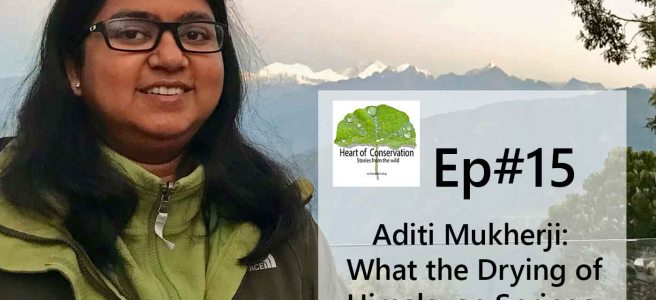

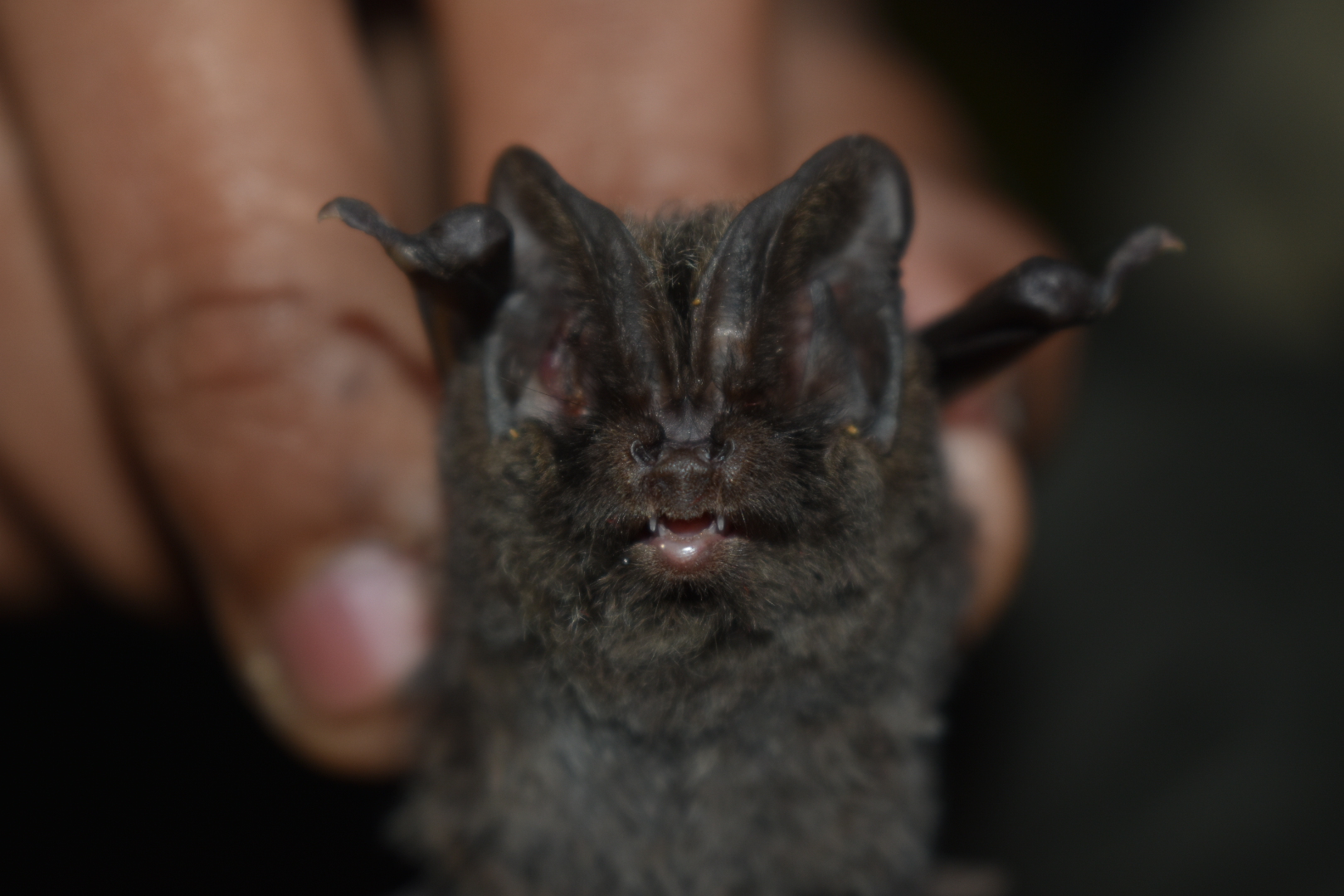






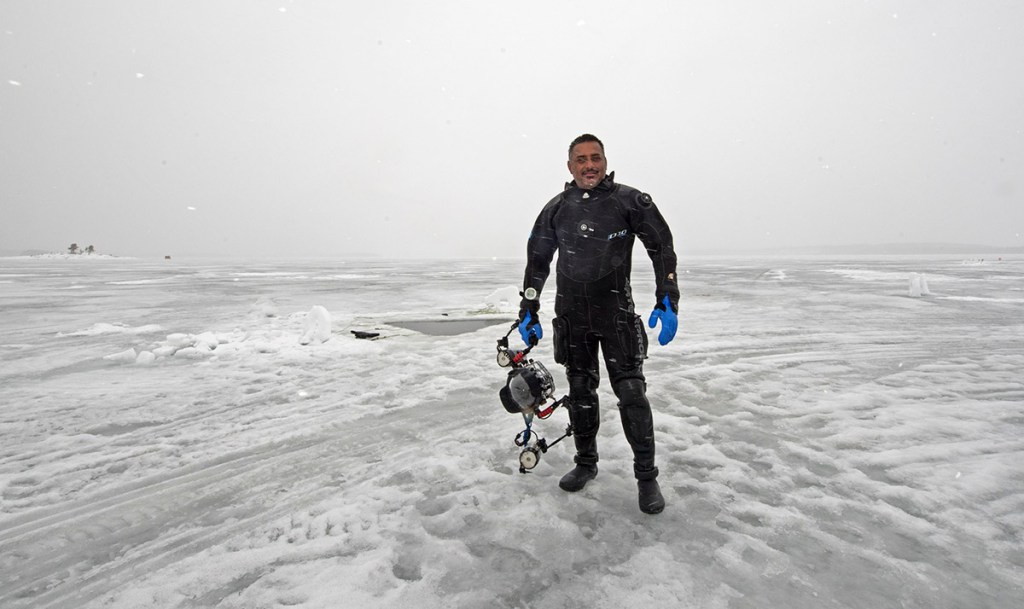

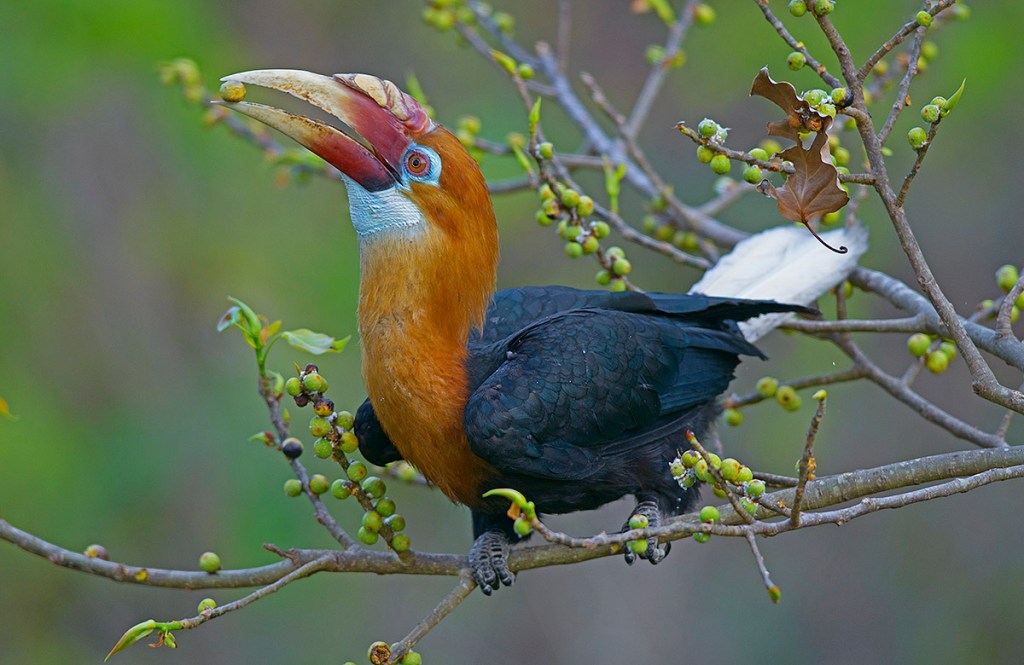

 Earthy Matters