The Legacy of Technology for Wildlife Foundation with Nandini Mehrotra

Heart of Conservation Ep #37 Show Notes (Edited)

Summary

Nandini sheds light on the innovative use of technology in conservation efforts. We discuss the diverse range of technologies employed in conservation, with a focus on spatial technology involving satellite data, drones, and remotely operated vehicles (ROVs). Our conversation delves into various collaborative projects across different landscapes, highlighting the foundationโ€™s expertise in cartography and the use of technology for land restoration and riverine wildlife conservation.

This episode also showcases the foundationโ€™s pioneering work in utilizing drones for the study of river dolphins and gharials, emphasizing the ethical and collaborative approach taken in wildlife research. The episode captures the legacy of Technology for Wildlife Foundation, emphasizing its commitment to using technology ethically and thoughtfully to benefit wildlife, habitats, and local communities.

Our legacy should be remembered for prioritizing impactful grassroots action through technology for conservation.-Nandini Mehrotra (Technology for Wildlife Foundation)

Listen now

Transcript

0:00:09

Host: Lalitha Krishnan: Hi, Iโ€™m Lalitha Krishnan, and youโ€™re listening to heart of conservation. I bring you stories from the wild that keep us all connected with our natural world. Today Iโ€™m speaking to Nandini Mehrotra from Technology for Wildlife foundation, a NGO based out of Goa. I have been chasing technology for Wildlife foundation for a couple of months now. Somehow the opportunity kept slipping through my fingers till now and just in the nick of time. And you will find out why soon.

0:00:37

Lalitha Krishnan: For now, Iโ€™m very excited to be speaking to Nandini, whoโ€™s the Program Manager, Technology for Wildlife foundation. She has an MPA in Environmental Policy from Cornell University and oversees the applied research projects. Her interests lie in the intersection of conservation technology and government. Welcome to heart of conservation, Nandani.

0:00:59

Nandini Mehrotra: Thank you so much.

0:01:00

Lalitha Krishnan: So, you know, Nandini, technology for wildlife sounds like such an innovative space to be in. You know, I know theyโ€™re very amazing ways of employing technology, so Iโ€™m very excited to hear your stories. Perhaps could you start with, you know, introduce us to some kind of technology employed in conservation efforts first, and then tell us all about technology for Wildlife Foundationโ€™s expertise in this specific field?

0:01:28

Nandini Mehrotra:  Sure, I think. I mean, Iโ€™d like to start by just mentioning that conservation technology itself is not new. Itโ€™s just changed form, like all the technology in our day to day lives. And it is, of course, like an increasingly growing field as smart technologies also continue to improve. So, yeah, technology for wildlife work very much comes from a place of seeing that if this technology is available and growing and agile, how can we use it for the betterment of the planet?

0:01:58

Nandini Mehrotra: But the kind of technologies are so varied. They include radio tags to camera traps, acoustic devices, sonar. Like every technology that exists in our day to day lives, conservationists have tried to adapt to see what we can do to use it for conservation. For us at Tech, for Wildlife, though, we mostly specialize in spatial technology, so we donโ€™t work with this whole range of technology. We work a lot with satellite data and spatial data, so that can be things that are taken from satellites or also even just gps on your phone.

0:02:32

Nandini Mehrotra: We also use drones, both for their visual information, but also because they record spatial data as well and we use something called ROVs (Remotely Operated Vehicles), which are kind of like tethered underwater drones. They basically are like underwater cameras, which have motors and we can direct them.

0:02:52

Lalitha Krishnan: So thatโ€™s cool.

0:02:54

Nandini Mehrotra: Yeah, itโ€™s quite fun to use them, but, yeah, thatโ€™s kind of the range of tech that we use.

0:03:01

Lalitha Krishnan: So, what other wildlife organizations do you collaborate with and in what range of landscapes?

0:03:08

Nandini Mehrotra: Most of our projects are all collaborative. We are always looking for partners who are doing impactful work and we feel they are aligned with. And if thereโ€™s a case where the tech that we have can assist with their work, then thatโ€™s how we choose our projects. So, the organization and work are really spread across the country and varied in that sense.

0:03:32

Lalitha Krishnan: Yeah.

0:03:33

Nandini Mehrotra: Goa, where weโ€™re based, we collaborate quite a bit with the Goa Foundation and with WCT Wildlife Conservation Trust, weโ€™ve been collaborating for the last couple of years in Bihar around freshwater ecosystems and wildlife.  With Dakshin and WWF, we did some work in Orissa, around Olive Riddley turtles. In Ladakh, we work with IISER Tirupati. We also have an exhibit going on with the science gallery in Bangalore, where we compile our work on mangroves, along with three visual artists that we collaborated with.

0:04:13

Nandini Mehrotra: So thatโ€™s an exhibit thatโ€™s been running for the last few months, and this is the last month that itโ€™s running. I think ecosystems and projects are quite varied.

0:04:22

Lalitha Krishnan: So, you know, can you speak about how you use cartography for conservation with specific partners, perhaps?

0:04:31

Nandini Mehrotra:  Sure. So, one of the main reasons that we specialize in spatial technology is that we believe that a lot of time conservation, especially conservation, especially terrestrial, but really, everywhere is a land use position, and maps influence these positions. A lot of time, the visualization is easier for people to conceptualize, see our way of being able to use our skills to do work. So, we do use maps quite a bit.
0:05:02

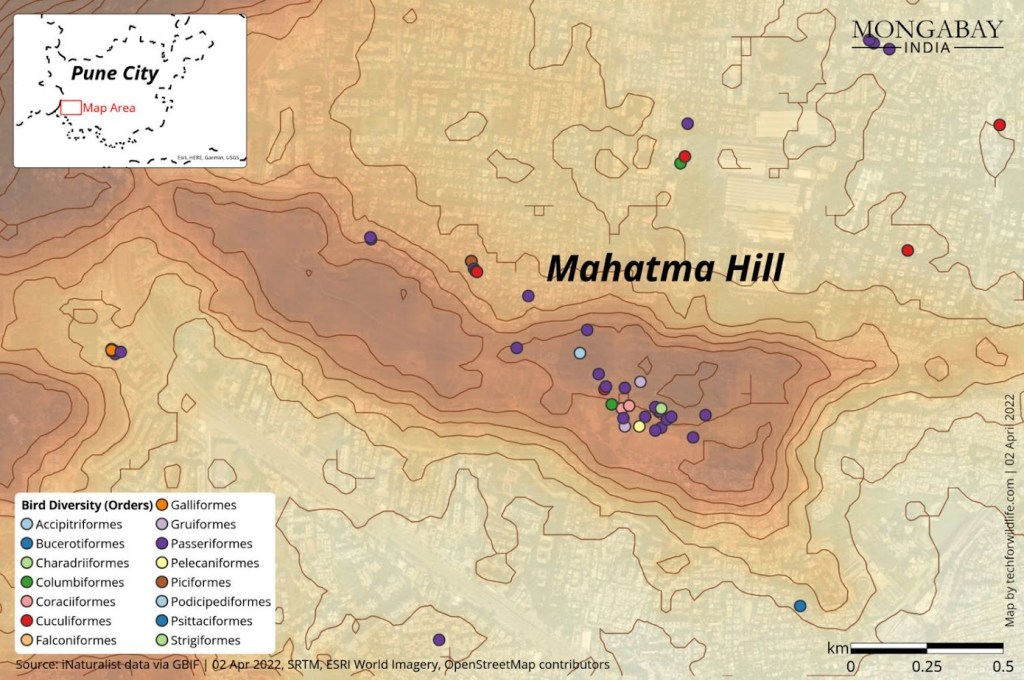
Nandini Mehrotra: Some of the ways that weโ€™ve been doing this is through collaborating with different partners, one of them being Mongabay India. We worked with them for two years. We did over 40 stories with them. So that covered a range of whatever topics they were working on, anywhere that, like visual mapping, could aid the story in any way. So we worked on those, on static maps, moving gifs, dynamic maps.. different and many things.

0:05:30

Nandini Mehrotra: Yeah, many things. Over 40 stories where must have been at least double of those maps. The other one that weโ€™re quite proud of is thereโ€™s an update coming of Fish Curry and Rice, which is a book written by Goa Foundation and is currently in the being updated. So that entire book is about Goan ecology and environment. Itโ€™s kind of like a current state of affairs report, and we provided the cartography for that as well. For 20 maps.

0:05:59

Nandini Mehrotra: So that book should be published this year as well. So, weโ€™re looking forward to seeing that.

0:06:04

Lalitha Krishnan: Quite a range. I shall look forward to Curry and Rice myself. What a catchy title.

0:06:12

Nandini Mehrotra: Yeah, yeah. Thereโ€™s, I think, two versions of the book already out. Fish curry and Rice. Also in Goa.. Iโ€™m not sure if youโ€™re familiar with the Aamche Mollem campaign, but itโ€™s a citizenโ€™s movement thatโ€™s been running now since 2020. It was questioning three linear infrastructure projects that are passing through the state of Goa. So itโ€™s a collaboration of activists, researchers, lawyers, kind of looking into the impact of these projects and trying to see what is the way forward that can be most beneficial to everyone and, like, least negative impact on the environment.

0:06:55

Nandini Mehrotra: And we also did cartography to be able to support that, both for analysis and for communication.

0:07:05

Lalitha Krishnan: Nice. So you seem to have had a busy 2023, and of course, youโ€™ve done a lot of work based out of Goa. One of the areas you cover is technology for the restoration of land. Could you tell us more?

0:07:21

Nandini Mehrotra:  I just wanted to start by talking about restoration in general as a growing field. Itโ€™s. Yeah. To both conserve biodiversity, restore land use, address climate change. Itโ€™s got many benefits and weโ€™ve been seeing an increasing interest in this as a way to address some of these challenges. So, our aim was probably to see how can we use the tech and skills that we have to be able to enable and assist some of these processes.

0:07:55

Nandini Mehrotra: A lot of the people working in restoration need to be able to quantify and monitor their land better and to be able to see how to plan their activities more. So thatโ€™s kind of where we were coming in. So we were very lucky. We have two amazing colleagues, Alex and Christina, who are working to restore 150 degraded forests in Goa western parts. And along with many collaborators, weโ€™ve been trying to see what we can do for this. So, thereโ€™s actually already a lot of research and tech thatโ€™s being used to assist restoration. But what we found is that some of the technology that normally people have written about includes technology thatโ€™s inaccessible to a lot of, at least NGOโ€™s in the country.

0:08:44

Nandini Mehrotra: Like us, it was inaccessible. So, we realized that it must be similar for other NGOs in the country as well as in the global south generally. So things like LiDAR and multi spectral drones are still not so accessible, both in terms of cost and regulationsโ€ฆ A bunch of things. We wanted to see from the tech and resources we already have, from as open access and affordable as things can be, what can we create?

0:09:09

Nandini Mehrotra: So, weโ€™ve been using a combination of ground data, and basic off the shelf RGB, which is just visual color drones and satellite data to understand the land a bit more. So doing spatial analysis with the satellite data to understand levels of degradation, different factors of degradation, and then using our drones to see what more visual information can we get within computer vision models to extract some of this data and make the satellite models better.

0:09:44

Nandini Mehrotra: So, while we are giving all of this input to Alex and Christina, that piece of land. So hopefully it will be helpful for them to be able to see, okay, what does the entirety of the land look like? And to be able to see year by year how itโ€™s changing. But we currently condensing the whole workflow and weโ€™ll be trying to put it out soon so that itโ€™s also useful for anybody else working on similar projects, because as I was mentioning, there are quite a few.

0:10:11

Nandini Mehrotra: So thatโ€™s what weโ€™re working on in terms of restoration.

0:10:16

Lalitha Krishnan: Oh, cool.

0:10:17

Nandini Mehrotra: Yeah, I mean, itโ€™s a really beautiful site, and itโ€™s in the ghats, itโ€™s very close to protected areas. So, in that sense, itโ€™s also just an amazing place, even in terms of biodiversity. If that land is restored, it is like, it does have a lot of trees. Itโ€™s just the quality of the forest has degraded. Yeah, it is a beautiful piece of land.

0:10:41

Lalitha Krishnan: Yeah, sounds like it. Okay, so what is the other, project Technology for Wildlife is working on? I read about the riverine wildlife. Do you want to talk about that?

0:10:53

Nandini Mehrotra: I would love to talk about that. Itโ€™s definitely one of my favorite projects that we worked on. Just generally, for the context, we have obviously, incredible rivers and freshwater ecology in this country, and river dolphins and gharials are two of these. River dolphins are endangered. gharials are critically endangered. And we wanted to see what we can do to better understand and, how we can use our skills to protect these species. So, the experiment was kind of in multiple parts, in one.

0:11:28

Nandini Mehrotra: This is all in collaboration with Wildlife Conservation Trust. In one stint, we tried to combine many methods to see what is working for which species to understand them better. So, we, of course, were using drones for this, but they were also using acoustic devices, also just boat based visual methods to be able to understand one: How are species reacting to all of these? What can we do with minimal disturbance and what aspect of their behavior are we getting the best? So that for future surveys or any way to plan conservation efforts, what means should we be using? So, first, two of our trips were really around being able to understand this better.

0:12:13

Nandini Mehrotra: And recently we then built on this. So, for gharials, we realized that using drones was a very useful way to be able to cover large distances and disturb them minimally, get a better assessment of their numbers, size, bunch of things, as long as itโ€™s done with a lot of care. Theyโ€™re very sensitive to sound, so they have to be flown at a decent height above them. With river dolphins, we found that maybe not so much for counting them, but river dolphins areโ€ฆ

0:12:50

Nandini Mehrotra: They stay underwater and only come out to breathe for a fraction of second. And, they live in the Indo-Gangetic basin, and the water is extremely murky. Using underwater cameras, not really an option there. So, to be able to understand more about the species, their behavior, it is very hard to document. So, most of the accounts are quite muted because theyโ€™re seen visually. So, we found that in this case, using drones, we were able to capture a lot of video and video footage.

0:13:25

Nandini Mehrotra: So then we went back for our third round of fieldwork this year. We went to hotspots where we knew there was a lot of dolphin activity, and we were just staying there and observing these dolphins. So now we are building a lot more information on their body size -their size and their body condition based on that, and being able to build a profile of dolphins in a certain area in the Ganges.  What is the condition, what are their sizes to understand, like, the profile of the population.

0:13:57

Nandini Mehrotra: A lot of this has kind of been experimental and innovative. Itโ€™s been a lot of fun to learn about, and Wildlife Conservation Trust is a incredible team, so itโ€™s been a pleasure.

0:14:09

Lalitha Krishnan: Oh, nice. So, are you the pioneers in doing this? Iโ€™m not sure Iโ€™ve heard of dolphin studies with drones.

0:14:18

Nandini Mehrotra: Yeah. So, drones have been used to study dolphins around the world, but this has mostly been done for marine dolphins. I think also the Amazonian River dolphin people have used drones in. Yeah. So while some of it is still experimental, like, I donโ€™t know of anybody else yet who has done size estimation of river dolphins in Goa. At least nothing has been published.

0:14:49

Lalitha Krishnan: Right. So, you know, you did not say that it was hard, but what are the challenges you face in your line of work? You know, like, do you ever have to deal with community and I am sure weather. And stuff like that?

0:15:03

Nandini Mehrotra: It ranges, really. Thereโ€™s, of course, challenges that you have to address within the technicalities of the work. And then thereโ€™s more broadly the field. Itโ€™s interesting you brought community up so far. Actually, we never faced an issue with the community, with any community. I mean, yeah. For one, that we always work in collaboration with organizations that have been working in an area for a while and have a rapport with people there.

0:15:33

Nandini Mehrotra: You would never want to go into a place and, you know, not do anything that might not respect or scare anybody. You never want to be able to hide what youโ€™re doing. So, anybody who has questions, any curiosity, you want to welcome that.  I think ethics is always like a very tricky thing in this field, especially around drones, because thereโ€™s many cool things that you can do. But also, there are definitely concerns around privacy and safety that thereโ€™s always scope of things being misused, if not done sensitively.

0:16:12

Nandini Mehrotra: And also, I think drones also have a perception that make people also hesitant. Understandably so. So, I think one of the things for us has been also, you know, how to navigate this in a way. We have been very keen to distinguish ourselves, to make sure that we, you know, want to make it known that we will not do anything that would ever risk or harm anyone, even if it comes at the cost of not being able to collect the data we want to.

0:16:40

Nandini Mehrotra: We would rather give up that day of fieldwork than do anything that would make somebody uncomfortable. But that being said, the processes of how to go around it are so are not that clear. Right? Itโ€™s not like thereโ€™s a regulation or like a set protocol around how should you go around the ethics of when youโ€™re doing a wildlife project or any work for that matter, and then you, tend to do whatever is in your capacity and possible. So because this was important to us, we kind of had our own internal checklist of what we were or were not okay doing.

0:17:16

Nandini Mehrotra: But that also comes within its own limitations of what we have read, what we are exposed to, and also what is possible. Right? We are also a small ngo going for a few days of field work somewhere. This is something that would require, say, like written informed consent of an entire community. Like, thatโ€™s not something that was within our reach, even. That requires like, a lot more systems that would…

0:17:45

Lalitha Krishnan: Yeah, but that is so good to hear. I mean, you must have done something right if you havenโ€™t had any trouble so far. You know, you are sensitive and doing the right thing.

0:17:57

Nandini Mehrotra: I mean, honestly, people are intelligent and even if they do not know exactly what the tech isโ€ฆ If you are not trying to be sneaky about it, itโ€™s quite straightforward. And of course, if somebody is not comfortable, then you just do not do it. And then if thereโ€™s in a place, if thereโ€™s ever a question of not being able to ask somebody or not being able to issue get the permission, or you just donโ€™t do it.

0:18:23

Nandini Mehrotra: For us, that has always been the approach.

0:18:26

Lalitha Krishnan: 2023 was also eventful because the great loss of your founder, director Shashank Srinivasan, from what I read, he seems to have been a really passionate and charismatic leader. Would you like to speak a little about him and his work in Ladakh, perhaps, or just anything you would like?

0:18:48

Nandini Mehrotra: Definitely. The very existence of the organization is, of course, completely owed to Shashank, and he was an incredible person and conservationist and leader. I think he was really a very insightful creator in that sense. To be able to see a gap in the conservation ecosystem and create an organization to fill that gap, I think thatโ€™s quiteโ€ฆThatโ€™s not a small feat at all. I think thatโ€™s definitely something that deserves recognition. I think thatโ€™s something incredible to have achieved in his lifetime. And even within the organization, I think his creator instinct, like, to be able to, the way the projects are developed and conceptualized, always makes place for impactful work and prioritize that in what weโ€™re doing. And, just, you know, what kind of work environment do we have? Like, what kind of work environment do you want to work in? What will help you flourish and then trying our best to create that. And I think thatโ€™s really, it takes many different skills and abilities for somebody to be able to create that, so that weโ€™re very lucky to have had a workplace like that. And of course, he was incredibly skilled as a spatial analyst and card operator. So, in that sense, also an incredible creator.

0:20:14

Nandini Mehrotra: And, yeah, his projects, he was involved in every project, of course, that we were doing. But Ladakh, I guess, was like his longest running association professionally, I think his interest, I think, began during his own Masters thesis while he was there. He loved the black neck crane there. And during his masters, he was working with the community mapping with the Changpa community there.

0:20:40

Nandini Mehrotra: So, it began with that. And then he went back multiple times with different organizations. I think he went back to WWF as well. And then in 2019, he got a National Geographic explorer fund. So that was also for work in Ladakh. So, there we documented nine remote lakes, both aerially using drones and underwater using our ROVs. Yeah, it was incredible. Part of it was just that explorer bit, which was just thereโ€ฆ

0:21:14

Nandini Mehrotra: They were quite remote lakes. Some of them were not even open for on the tourist circuit. So, to be able to document and share that also with everyone, because thereโ€™s always a sense of, like, how can anybody want to protect something that they donโ€™t know or havenโ€™t seen? And also, again, the aerial and underwater footage, again, as far as we know, it was one of the first things that a lot of it was being captured for these breaks, especially underwater, because itโ€™s too dangerous for humans to dive in.

0:21:45

Nandini Mehrotra: Yeah, a lot of that was incredible to explore. And there was also a component of it which was looking at plastic. Plastic waste, because all these lakes are endorheic, meaning they donโ€™t have like a river outpost. If any contamination ends up in the lake, that means itโ€™ll stay there until somebody takes it out. So, it was also about looking at, is there plastic contamination even in the remotest of remote lakes in India? And if so, how much? And what are the companies, what kind of litter is there? So, we spend a lot of time collecting garbage around.

0:22:22

Lalitha Krishnan:  God bless you guys. I always say that to anyone who collects garbage. But, wow, what an amazing experience to even be there and do this. Incredible.

0:22:35

Nandini Mehrotra: Yeah, we felt lucky, for sure. And while we were there, we ran into researchers from. IISER Tirupati who were working on pika, mammoths and wolves and conversing. Yeah, they were like, oh, if you are going to use drones anyway, see if you can see burrows. And we could. So then, then we then had a follow up project where Shashank went back and mapped their barrows for pika, mammoths, and wolves. And now that data is being analyzed to see, what we can distinguish? Like, can we map their burrows? Can we see how that habitat is changing?

0:23:10

Lalitha Krishnan:  Iโ€™m a bit wolf crazy. I might just tap into your resources.

 I am really sad that youโ€™re wrapping up operations for Technology for Wildlife foundation. Yeah, I am sad to hear and sad to say it even. But what happens to all the work, you know, all this incredible work you have been doing in the past few years?

0:23:37

Nandini Mehrotra: Yeah, I mean, we are trying our best to document everything because that is actually our foremost concern also that we wouldnโ€™t want work to be lost. I think the two things that Iโ€™m really pushing to be out there, one is that weโ€™ve created, over this time, a pipeline of how we are using drones and drone data for scientific research and conservation. And all of this is done using like either very affordable or open access workflows and software. So, we are condensing the whole pipeline into videos and how to blog so that we can put it out there for anybody to use.

0:24:15

Nandini Mehrotra: So that, yeah, at least itโ€™s there and hopefully itโ€™s useful to more people. So thatโ€™s definitely one big part of it, along with codes and blog posts for almost every project and work that weโ€™ve done. So that that stays on there on our website, as in.

0:24:29

Lalitha Krishnan: okay, so that will be up. You are not going to bring that website down.

0:24:37

Nandini Mehrotra: No, the website is going to stay up as an archive. And yeah, if there are any changes, Iโ€™m sure itโ€™ll be updated there, but we will do that. And the other thing that will hopefully be up soon on that is an impact assessment, which I feel like is going to be for me, is important to be documented and put out there. One thing is just that so many projects happen generally with NGOs over time, scattered over regions and collaborators and years that sometimes itโ€™s difficult to see it as a consolidated body of work.

0:25:09

Nandini Mehrotra: And I think for a field which can sometimes be disheartening, you know, people get jaded. I hope that seeing it as a consolidated piece of work in some way, know, at least show you what is possible to do, like what can be done if somebody decides to do some work, that is one thing.  But also realistically, just the way funding models work generally, itโ€™s not so easy as an organization to be able to put outโ€ฆ

0:25:44

Nandini Mehrotra: You know, I would not want to call them failures, but everybody tries different things in a space like this to have impact and some things work and some things. And while everybody can share very proudly what worked, they are not always in a position to be able to share what didnโ€™t work so well as it should be. But right now, as we close operations, we are in a unique position where I think openly accepting things that may not have also worked or we may have thought worked, but somebody else assessing might think it could be better otherwise, like to be able to put that out for the whole ecosystem to be able, able to use. I think for me that is valuable. So, Iโ€™m also looking forward to like a third-party assessment, just compiling all the experiments that we have done over the last few years to be able to see what worked well, what was impactful, what will be better in the future, so that other people who are experimenting and working in the field, and even for us going forward, it gives some direction.

0:26:40

Lalitha Krishnan: That is inspiring and I think itโ€™s very honest, you know, and bold to be able to do that. I mean, people can know what not to do if you put it out there and be inspired by everything else, you know, that you have done.

0:26:59

Nandini Mehrotra: Yeah.

0:27:00

Lalitha Krishnan: So, what for you, Nandani, is the legacy of Technology for Wildlife Foundation. What should it be remembered for?

0:27:09

Nandini Mehrotra: So, of course, our name, Technology for Wildlife, you know, it simplifies our mission and what we hope to have achieved in this time, just, you know, to do impactful work for the conservation of wildlife. And some of that will be innovation and impact. I mean, those are definitely things that want associates with us. But honestly, I do think tech and wildlife and conservation will continue.

If there is one thing about our legacy that I hope that we are remembered for, itโ€™s that I hope that we remember that for using tech ethically and collaboratively, and to use it in a way thatโ€™s thoughtful for our planet, wildlife and also its people.- Nandini Mehrotra (Technology for Wildlife Foundation)

0:27:53

Nandini Mehrotra: So, for us, being able to be a bridge for some of those things was extremely valuable and a huge part of how we chose our projects and collaborators. Weโ€™re very aware that tech is an amazing gift and tool. It can also be used to exacerbate inequalities and differences. And we wanted to be able to work in a space that enabled more impactful grassroots action. So, I hope we are remembered for that.

0:28:32

Lalitha Krishnan: There are not many people or, you know, organizations ngos or otherwise that can say, โ€œweโ€™ve been ethical all along and we started doing the right thing and continue to do the right thing.โ€ That is inspiring. And so, I just want to wishโ€ฆ

0:28:50

Nandini Mehrotra: To the best of our abilities. Sorry for cutting in. And I just went, like, I mean, at least I think, as per the best of our senses.

0:28:59

Lalitha Krishnan: Sure, sure. We are all human.  Thank you so much, Anthony. This has been really great, and I wish you and all the your coworkers of Technology for Wildlife Foundation a great future.

0:29:15

Nandini Mehrotra: Thank you so much. Itโ€™s been really nice to speak with you.

0:29:19

Lalitha Krishnan: Take care.


Birdsong by hillside resident, the collared owlet.

All photos courtesy Technology for Wildlife Foundation

Podcast artwork by Lalitha Krishnan

Disclaimer:Views, thoughts, and opinions
expressed in the podcast and show notes belong solely to the
guest/guests featured in the episode, and not necessarily to the host of
this podcast/blog or the guestโ€™s employer, organization, committee or
other group or individual

Tigers of The Tide, Breathing Roots et al. The Sundarbans with Dr Radhika Bhargava.

Heart of Conservation Podcast Ep#31 Show Notes (Edited)

Introduction:

Hi, I am Lalitha Krishnan and youโ€™re listening to Ep# 31 of Heart of Conservation. I bring you stories from the wild that keep us all connected to our natural world. You can listen to Heart of Conservation on several platforms and also read the transcript right here on my blog Earthy Matters.

Todayโ€™s episode is about the Sundarbans. I recently made a trip there and I have to tell I am so spell bound by the immensity and biodiversity of the worldโ€™s largest delta which we share with Bangladesh. To be honest, I didnโ€™t know about these 2 facts earlier.  Almost everything I saw was unique somehow, something I had never seen before. I knew I had to find an expert to learn more about the Sundarbans ecosystem. As luck would have it, I came across a social media account @onesundarban which belongs to Dr Radhika Bhargava, my guest here on episode # 31.

In her own words, Dr Radhika wears multiple hats as a coastal geographer, geospatial analyst, and a National Geographic Explorer. She is a Research Fellow at the NUS Centre for Nature-based Climate Solutions working with wetland conservation in Asia. She recently completed her PhD at the National University of Singapore. We will discuss her research some more but for now, Radhika, welcome and congratulations on your PhD. I feel so privileged to have you share your knowledge and experiences with us.

Radhika Bhargava: Hi Lalitha, thank you so much for having me on your podcast. I am so excited and I am so happy that you recently visited the Sundarbans. I am really looking forward to your questions and interacting with you on Sundarbans. 

Lalitha Krishnan: Lovely. So, let us start. Radhika, what made you, first, focus on the mangroves for your research and why must we be watching the mangroves to check on the health of our planet? 

Radhika Bhargava: I started working on mangroves during my Masters actually. I was part of a project where they were looking for someone to do coding or use coding /computer languages to identify mangroves of South East Asia. So, you use satellite images and you have to interpret where the mangroves are. There were many other forest classes that I was interested in studying but somebody had taken up those classes or somebody had taken up those forest areas to study using satellite imagery. They were only left with mangroves and then, I joined the lab. Nobody was willing to take up this project because there was a lot of computer coding required. And, coming from ecology, biology or management backgrounds, we were not trained in it. I saw this gap and even I didnโ€™t know any computer programming at that time. But then, looking at this desperate need that nobody is doing, I said, โ€œSure, why not? I will give it a try.โ€ I started learning coding from scratch and then my focus was mangroves. So, that is how I learnt a lot about mangroves. I became so curious that through the two years of my Masters which was at University of San Francisco, the focus was Environmental Management. I ended up with all my class projects or side projects related to mangroves. Thatโ€™s how I came across the Sundarbans.

3:56

You asked me, โ€œwhy must we be watching the mangroves to check on the health of our planet?โ€ There are many reasons. Especially that mangroves are coastal protectors. They protect the sea from storms and cyclones. Their roots help in purifying water but specially they store or remove carbon dioxide which causes global warming. They store it within themselves and keep it there for millions and millions of years. They have such characteristics that can tell about the health of the planet and actually help in improving the health.

4:30

Lalitha Krishnan:  Thatโ€™s quite amazing. I love the part about you learning coding from scratch. Look where it has taken you.  Radhika, Iโ€™m curious about your social media handle. Why its called โ€˜One Sundarban? There must be something to it. There must be a good reason why you have called it so?

4:56

Radhika Bhargava: So glad you asked me this question because initially, people thought that maybe I did not get the handle โ€œSundarbansโ€™ and that it why I went with ‘One Sundarbans’. Also, I think, I have had that account for maybe two years. I only joined social media because I felt the urge to share about the Sundarbans. When I realised that a storm can come, a cyclone can come in that area and nobody would even know that somethings happeningโ€ฆ  So, I felt that I am at a place that I can share so I should take that initiative. So, I only joined social media to share about Sundarbans.

And why โ€˜One Sundarbanโ€™?

Sundarbans is across India and Bangladesh. It is one ecosystem. As a researcher, it really annoyed me initially when I would come across studies or management plans or government records that focused on just one side-either India or Bangladesh. So, for me, โ€˜One Sundarbanโ€™ is one ecosystem so hence โ€˜One Sundarbanโ€™ but after I pondered about it a bit more, about the terminology, I realised that โ€œsundarโ€ is in Hindi, In Bangla and in many local Indian languages, โ€œsundarโ€ is beautiful and โ€œbanโ€ or โ€œvanโ€ is forest. So, it is just one beautiful forest. If I branch out of onesundarban, this name still holds.

-Radhika Bhargava

6:37

Lalitha Krishnan: Right. That is a beautiful thought and it makes so much sense because you cannot save it in part. It is half the story then. Radhika, how much ground did you cover during your research and what techniques did you employ to cover this vast area?

6:59

Radhika Bhargava: Right. So, I worked across India and Bangladesh. So, Sundarbans, for those who are not familiar, is 10,000 sq. kilometres of just mangrove forests. It is made up of many small islands-I do not even know the exact count-but, adding both India and Bangladesh, it is going to be more than 200 islands. My initial idea was to capture the ecosystem. Since I use geo-spatial analysis, which means using satellite maps and satellite data to understand what is happening on the ground, I was able to understand that from one aspect, right? Since satellite images can help you cover that vast area but when I went into the field, I still intended to go from the easternmost to the westernmost and northernmost to the southernmost island. For that, I first recorded shorelines from on top of a boat. I installed a Go Pro camera on a boat and then we would go parallel across shorelines and then I would be doing a commentary on those videos. Later on, I converted those videos into multiple images, and so from the observations in those images and my commentary, I collected some data.

8:25

So, we covered around 240 kilometres just of observation. The travelling kilometres were much more. And then, I went to around 16 villages to conduct interviews with the communities to understand their part of the story of the work I was doing.

8:53

Lalitha Krishnan: That is very extensive. You must have learnt a lot. That is quite amazing Radhika.

 9:01

Radhika Bhargava: Thank you so much. If not for COVID, I had another few methods I wanted to try out too which would have made me go into the forest to collect some  forest bio-physical  measurements  within the forests but because of COVID, I had a shorter amount of time and PhD scholarship and all restricted me. So, there was still more that I wanted to do.

9:24

Lalitha Krishnan: But you must have amassed quite a lot of information.

9:29

Radhika Bhargava: It took a long time to process it. I think I would still go back to that data set although I have written my thesis on it, there is still so much more to get from it. I hope I get a chance to do that in the future.

9:41

Lalitha Krishnan: I am sure (you will). These things never go to waste โ€“ what youโ€™ve observed, what youโ€™ve learnt and what you have surveyed. You know, even though I have lived by the sea, I never bothered to familiarize myself with mangroves. It was in the Sundarbans, that too on a boat that I witnessed up close, the diversity of mangroves species.  They are quite different from each other apart from the fact that they seem to be thriving in this cocktail of river and sea. Could you talk about some of these mangroves species and how unique they are? The snake roots, breathing roots for e.g. or the way some species propagate themselves with seed balls that float till they find a suitable location? It is all so fascinating.

10: 34

Radhika Bhargava: In just a few lines you actually explained how one comes across and becomes fixated with mangroves. Initially you lived by the sea, I come from a land-locked place. So, I had not even heard the word โ€˜mangrovesโ€™. So even today when I tell people I am doing research on mangroves, they assume I am researching mangoes. The word is so unfamiliar.

Lalitha Krishnan: Thereโ€™s somebody worse than me that means.

11:13

Radhika Bhargava: I was worse than you. Despite visiting coastal areas with my parents, I never processed why there are trees on the beach or why there are trees on the water. Especially in Bombay. Goa, Gujarat side of India. So, I also learnt about it through books and through reading research papers until I went to the Caribbeans to do some project on coral reefs. So, we had a small project where we were snorkelling and looking at fish nurseries around mangrove roots. So, I thought that was cool. But I did not realise that thereโ€™s this amazing ecosystem like Sundarbans  or Bhitarkanika in Odisha, where in sediment-rich mangroves you canโ€™t even see whatโ€™s happening under water. So, I also came to mangroves in a similar way; I said โ€œwhat are these crazy roots?โ€ A lot of people whom I have talked to say mangroves for them are like some sci-fi movie, when they come to the Sundarbans.

12:14

It is mainly because of the roots like you said. Mangroves have this crazy kind of roots, especially to adapt to the extreme environment they grow in. By extreme environment, I mean they grow at the interface of land and water. So, they are often flooded with salt water although they receive some fresh water from rivers as well. They get flooded twice a day during high tide. They are exposed to extreme waves. When I am explaining this, I like people to imagine that these mangroves are humans. Or to become mangroves themselves. So, if youโ€™re standing at such a place or if you are to stay there for so long, you would develop some kind of adaptation that would help you first, stand there steadily. That the hold of the rootsโ€ฆ the snake roots or the prop roots as it is called. that helps them stay aground. There are four to five kinds of mangroves roots. Basically, the first role they play is help them stay in that silty, flooded land. The second thing specially in the Sundarbans or Bhitarkanika, where there is a lot of sediment that these mangroves are standing on, the second thing they need to do is to be able to breathe. But the soil and the water mix are so poor in oxygen content that they have to grow their roots up or their roots have to come from their branches and then go into the ground, unlike other plants which grow roots hidden in the ground. So the roots that are propping up from the ground-thereโ€™s a type of root called pencil roots- which look like if youโ€™ve stuck pencils in the soil, they look like that. Or buttress rootsโ€ฆ All of these roots apart from giving them stability, they also help them get oxygen from the air. So, many plants get oxygen from the atmosphere directly and through their leaves and through their stems but mangrove roots also get oxygen content from the air to support breathing for the plants. So, these are some adaptations that mangroves must bring in to stand tall in that extreme environment.

Source: Nature Picture Library

You also asked about propogation of species. How mangroves grow mangrove babies, right? So, if you are a mangrove and youโ€™ve figured out how you are going to stand and how to breathe in this fragile, dynamic ecosystem then the next thing is to figure out how are we going to reproduce? Unlike many trees which produce seeds–those seeds get propagated by wind or by animals or by water–some of the mangrove trees do produce fruits. And then within these fruits, there are seeds which finally find a ground and grow. But, itโ€™s also common in certain kinds of mangrove species to not produce seeds but produce a mangrove propagule. That propagule is just a mangrove baby thatโ€™s growing on top of its mom. You might have come across these green sticks hanging from the tree, they are mangrove propagules. They hang from the tree and until they are ready to go- the weather conditions, the time of year, the tidal conditions etc are good-the mom drops them in the water. Now they are floating in the water but these are not seeds ready to be germinated. These are germinated plants which function like any other plant and it keeps floating until it finds the right elevation, the right tidal conditions, the right slope, and the right area to settle in. So, that stick or propagule has that much sense to find the right place for its survival.  It floats horizontally. Once it finds the right place, it becomes vertical, the centre of mass changes and it automatically goes into the soil. Which is just mind-blowing for me. In a way, they are like mammals. In mammalsโ€ฆhumans, babies grown within the mum until they are ready to come out. I find equal similarities.

17:19

Lalitha Krishnan: It sounds like they have an intelligence of their own. There is so much we do not know.

17: 25

Radhika Bhargava: There are things people who study these processes are still finding out. Things we know have been published but there is so much more, so much unknown when it comes to mangroves.

17:41

Lalitha Krishnan: Thank you so much for explaining that. Talking of species, the animals that exist in the Sundarbans also seem to have adapted to this unique environment. We saw the rare Mangrove pitta, the Fishing cat we didnโ€™t see but I know itโ€™s there and the swimming Bengal tiger, which is the only tiger that lives in a mangrove system. How cool is that? What makes them so different or what can you tell us about them?

18:19

Radhika Bhargava: If we are talking about Sundarbans, how can not (talk) about the tiger? The Royal Bengal tiger is found in many places in India or in the South Asian subcontinent. However, the subspecies of the Royal Bengal tigerโ€”Iโ€™m not sure if sub-species is the correct wordโ€”but the evolution of the Royal Bengal tiger that found in the Sundarbans is quite different from the other Royal Bengal tigers that are found, in say, Central India, where I come from.

18:59

The main difference in their adaptation to living in the Sundarban Delta. In those mangroves, in that flooded ecosystem. Just like I was explaining earlier how mangroves adapted to this soil, sediment, flooding conditions, the tigers of the Sundarbans also have to.

19:22

If you are a tiger, you would need sweet water or fresh water, as they say, to survive. But the tigers of the Sundarbans are living in a delta filled with salt water. Their houses or their land or their habitat, gets flooded twice a day which tigers of Central India do not experience.

They go to a fresh water pond within their forest to get water but then they can go back to their caves to chill. But there are no such structures that are dry all year around for the tigers of the Sundarbans. And if they want to go from one place to another, there are huge rivers and streams in between which they have to traverse. So, tigers and other kinds of cats can swim naturally but the tigers of the Sundarbans use swimming as their means of transportation. When their islands get completely flooded because of high tide they climb on to a tree and stay on the tree twice a day during high tide conditions. Hunting also, for  for these animals is very different. Now you donโ€™t have a grassland to run and catch deer but you have to very strategically traverse the silty, quick-sand type or quick-mud type of terrain where you cannot run a lot because of the roots–that I just explained about earlierโ€”would stop you from running far distances.

 21;10

So, it so amazing how the Royal Bengal tigers of the Sundarbans have adapted to live in these conditions. However, these extreme conditions- lack of habitat these days, lack of availability of sweet-water ponds and extreme environmental and anthropogenic pressures are affecting these tigers in a way that now, they are more exposed to the local villages. A lot of human and tiger negative interactions have started to take place. There are a lot of theories of why some of these tigers are also maneaters. These theories that make sense to me are related to the extreme environment and increasing environmental and anthropogenic pressures that are making them encounter humans in a negative aspect.

22:19

Lalitha Krishnan: Right. I imagine tigers or for that matter any other animal there having to climb a tree twice a day to escape drowning if they cannot swim. I never would have even thought that far.  Thank you for explaining that.  It is quite a hard life even for a tiger. I was thinking of the deerโ€ฆ

22:40

Radhika Bhargava: Did you see any tiger?

22:41

Lalitha Krishnan: No, we did not see any tiger and we did not expect toeither. They told us not to expect to see a tiger. But we did see paw prints. What is fascinating is thatโ€”I have seen scratch marks of tigers on trees but here, we actually saw scratch marks on the mud. We had such an excellent forest guide. Mud looks like mud; it was all wet but he manged to point that out to us. It was quite distinct. That was fascinating.

23:14

Coming back to the Sundarbans and the ravages of nature, Cyclone Bulbul in 2019, Cyclone Amphan in 2020, Cyclone Yaas and Jawad in 2021 have all struck and affected these low-lying islands.  What makes them so defenceless? What were the losses incurred with every cyclone-hit?

23:50

Radhika Bhargava: The โ€œdefencelessโ€ word here is something I should talk about. Itโ€™s Yes and No. Mangroves are known to protect inland areas from the impacts of storms and cyclones. So, in a way they are not defenceless. They have those defences. And, even the all the cyclones that you named just now; Kolkata was the least impacted if we are speaking from Indiaโ€™s perspective or Khulna or Dacca if we are speaking from Bangladeshโ€™s perspective. They were impacted but the impact was so small compared to what it could have been if the Sundarbans was not there. So, Sundarbans is still holding ground, defending inland areas.

However, because of ongoing anthropogenic pressures; to name a few: the shipping channel that has been formed within the Sundarbans which is a protected area. It should not be converted into a water highway.

Or a coal plant coming into Sundarbans or other aspects, the extreme erosion of land; the loss of land which was the focus of my research, causing mangroves to degrade and get lost is causing them to reduce the amount of defence they could have provided.

25:28

When you are talking of defence I would also talk about the people. The people of the Sundarbans, I feel are resilient especially in terms of how they manage when these reoccurring cyclones, with the frequency of three to four times a year, impact them. However, with reduced options of livelihood, with reduced preparedness because they are managing a lot of land, and cyclones, lack of livelihoods, lack of protection altogether, their resiliency is also getting reduced.

So, although the people are not defenceless to start with, the conditions are making them such. So, if you hear, I just made a parallel between the resiliency of the mangroves and the resiliency of the people; yet both their resiliencies are getting reduced or impacted. Which on a side note is the conclusion of PhD thesis.

26:38

Lalitha Krishnan: Good. So, during my visit to the Sundarbans, I noticed that the embankment to my resort was half washed away. I was told it was the cyclone which is a recurring factor there. Is there more to it?

26:51

Radhika Bhargava: Great observation Lalitha. I am so glad that you didnโ€™t buy into just the story that a cyclone comes and destroys the structure. So, to give a bit more context to our audience, the soil in the Sundarbans , the sub-sediment in the Sundarbans is silty;  itโ€™s clayish. So, if you want to understand this, clay that a potter uses to mold clay into, it is that kind of clay, on which if you put a step, just as a 55kg human, the soil is going to get compressed and youโ€™re going to slip away.

Imagine putting concrete slab on this silty and soft soil? Itโ€™s like creating a hard line in a very dynamic system. That concrete is going to eventually collapse. Iโ€™ll explain very quickly how. So, thereโ€™s a concrete slab but underneath, is a soft silty soil. And underneath, there are waves that are coming in and out throughout the day, So the waves are going to take some of that soil with them. Or that soil which may be a bit harder during low tide is going to get mixed with water and become soft. So, the concrete slab on top is eventually and slowly and slowly going to collapse. And, then, itโ€™s going to be like the embankment that you saw during your visit.

So, when a cyclone comes, all of this just gets exaggerated. But these processes are happening on a daily basis, causing these embankments to fall and collapse. Yet, when these embankments fall, another embankment of such poor design is built maybe 200 mts. away from the current shoreline. This keeps on repeating to the point where the place you stayed, you saw the 5th embankment collapse in the past 40 years or so. This is something I also worked on during my PhD to understand why this poorly designed embankments are still around and how are they impacting the local people. So, what I explained earlier about the reduced preparedness or resiliency of the people, that lack of preparedness, that lack of having other options make them rely on these quick yet poor solutions. So, the demand also increases for these. One thing collapses, yet the second time, they want the same thing to be built so that they can get some short-term benefits of prevention of flood or some people start living in tents- who have also lost houses because of all of this, start living around the embankment. So, it becomes like a vicious cycle of land loss, poorly designed embankments come in, poorly designed embankments cause more land loss yet more of these embankments come in and the cycle continues.

30:00

Lalitha Krishnan: Again, I never thought of it. I am learning so much from you Radhika.  Finally, my last question for you. Could you share a word that was perhaps part of your research or significant to you in some way? Something new for all of us.

30:16

Radhika Bhargava: So, the word I want to use, building off of what I just explained about embankments, is a word called โ€˜maladaptationโ€™. It is very relevant because in the last IPCC report, it was used to highlight a pressing issue in our fight against climate change. I will explain it in pieces. Adaptation means any form of project, idea or implementation that comes in to reduce impact or anything. But in climate change context, climate change adaptation is an adaptation such as building a sea wall, or other things that help you reduce the impact of climate change. So one impact could be flooding, sea-levels rising and so on. Maladaptation to climate change means when that adaptation which is built to reduce the impact of climate change fails but not only does it fail but it causes other negative impacts to the local community or the global community.

31:31

So, when an adaptation fails and causes more negative impact it turns into a maladaptation. This is a word that I realise through the work I have done in the Sundarbans, or through my research in the Sundarbans, and I am hoping that I can contribute more to the growing literature of maladaptation.

31:56

Lalitha Krishnan: You have increased our vocabulary. Thank you so much Radhika, we have covered a lot and learnt a lot from you. Itโ€™s been a real pleasure talking to you.

Radhika Bhargava: Thank you so much Lalitha. I love talking about the Sundarbans and sharing about it from a place where I did not know and then I had the privilege to go and learn about it. So, I feel that itโ€™s my responsibility in a way to share about it in any medium and form I can. So, thank you so much for giving me this platform to talk more about Sundarbans and the issues people and the forests are facing over there.

32:35

Lalitha Krishnan: Thank you Radhika, I feel the same way. I feel thereโ€™s so much we donโ€™t know and I want to share. I am luck I found you.

32:47

Radhika Bhargava: One quick thing to add for our listeners. So, you learnt a lot about Sundarbans, and mangroves. So, one takeaway you can do for me and Lalitha would be if you can go and tell more people in your social circles about how cool and awesome mangroves are and how amazing Sundarbans is. Thank you.

Lalitha Krishnan: I hope you enjoyed listening to episode #31 and Dr Radhika as much as I did. If you know somebody who is doing incredible work and his/her story needs to be shared do write to me at earthymatters013@gmail.com Watch out for my next episode. Till then, take care. Bye.

Birdsong by hillside resident, the collared owlet.

Cover photo: courtesy Dr Radhika Bhargava. Podcast cover artwork by Lalitha Krishnan
Disclaimer: Views, thoughts, and opinions expressed in the podcast and show notes belong solely to the guest featured in the episode, and not necessarily to the host of this podcast/blog or the guestโ€™s employer, organization, committee or other group or individual.

Sudarshan Shaw:Breaking Definitions of Art & Nature.

Ep#30 Season 4 Heart of Conservation Transcript (Edited)

Read or Listen. All paintings-photos courtesy Sudarshan Shaw.

Sudarshan Shaw artwork on Cover art

0:05

Lalitha Krishnan:  Iโ€™m Lalitha Krishnan and youโ€™re listening to episode #30, season 4 of Heart of Conservation. I bring you stories from the wild that keep us all connected to the natural world.

For someone who has no sense of direction and couldnโ€™t probably read a map to save her life, I have to say I practically drooled over one visually delightful map that I came across on Instagram.  It conveyed a spectacular visually-rich story of a place, its people and art and biodiversity on a single sheet.  This is one, I would easily put up on my wall permanently. I will be putting them up on my blog, Earthy Matters very soon, so do have a look.

My guest today is not a cartographer by profession but a young, extremely talented visual artist from NIFT, whose keen sense of perception and belonging, passion for depicting, and preserving local art, and love for natural history is tangible in his stunning artworks which go way beyond creating maps. I am speaking to one of Indiaโ€™s rising young, inspiring artists and authors, Sudarshan Shaw. Welcome to Heart of Conservation Sudarshan. Thank you for joining me.

1:19

Sudarshan Shaw:  Thank you so much for having me on Heart of Conservation Lalitha. Itโ€™s an absolute honour to be here.

Lalitha Krishnan:  My pleasure. Sudarshan why donโ€™t we start by you telling us a little bit about yourself and what influences your work?

Sudarshan Shaw:  I was born and brought up in the culturally rich cities of Bhubaneshwar and Kolkata. And I grew up feeding on art forms and colours of all types. And, I have always been a history buff soโ€ฆ all of which came together after I discovered my calling towards wildlife while I pursuing my final year of college. Thatโ€™s when I visited Ranthambore National Park which was my first ever formal introduction to the wild world. It was also for my graduation project and while the forest look all great and beautiful, I always felt that connection was missing; some sort of connection. Thus, I started to explore more and more regions to understand myself and the situation better and have a better understanding of the wider world.

2:25

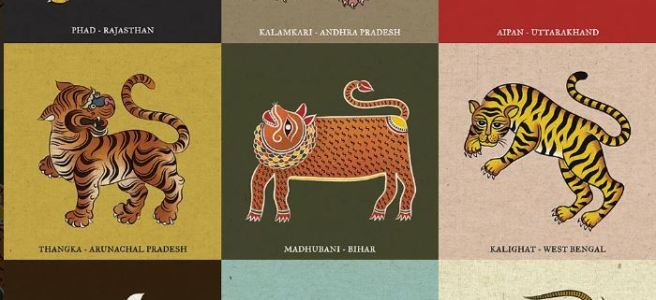
Lalitha Krishnan:   Nice. Letโ€™s talk briefly about all the maps you created. You created more than one for Orissa, biodiversity maps for Andhra Pradesh, Gujarat, Rajasthan and West Bengal, a special Elephant corridor one for Kerala and other clients like the one for the Shiv Nadar University etc.  The first one which is the wildlife map of Orissa- your home state was self-funded. Am I right? What I love about that map is how you incorporated the local tribes and hotspots in the traditional pattachitra style of Orissa. It almost feels like a tribute. So, what made you create this one?

3:13

Sudarshan Shaw: Yes, it is a tribute indeed. Itโ€™s a tribute to the land, the wild and the cultural heritage of my state. Itโ€™s also a tribute to the strong relationship among them that enhances their meaning of each other. I always felt a huge disjoint in the natural and cultural heritage of India and the kind of graphic language the young communicators use in the country. I feel it is heavily influenced by the west and does not have that connection with the native land and hence itโ€™s not acceptable to the masses in a certain way. So, the vibrance and diversity that folk arts have in store have disappeared from the contemporary visual language that we used to in recent time used to communicate our stories. This was my humble attempt to bring it back with all dignity and pride. Another reason would be Odisha itself. Odisha has an abundance of wildlife. We almost know all the stories regarding Odisha but it never found a place, I mean materially in our surroundings.

What I saw is the pattachitra paintings which are quite prevalent in Odisha -which is the folk-art form in Odisha โ€“ and it has a place in our homes over here. There are depictions of gods and goddesses and many other folklores on the walls. I thought this could give me an important platform if I drew it in that style and I depicted wildlife in that style. Eventually, it worked out well and the wildlife map found a place in peopleโ€™s homes. So, they put it up where they used to put pattachitra paintings.

5:00

Lalitha Krishnan:  Thatโ€™s such an honour. Thatโ€™s fantastic. What is your creative process? How do you create a map-I donโ€™t mean technically- but I want to know how you think you know, and how long it takes, who commissions these maps. How does it work?

5:23

Sudarshan Shaw: The process usually starts with intense research, which is both online and in the field. Itโ€™s quite impossible to do justice to โ€ฆ.(lost in translation)  with short timelines or deadlines. So, I try my best to gather as much as I can; so more of essence than information. I must say, the internet has negligent information on this so most of the interaction and interpretations have travelled orally with tradition or in folk art forms. So, the idea is to go through and explore as many of these. The next step is where Is it down to innovate a graphic style which is more often inspired but local art and traditions. Then, I design a layout and then spend about one to two months to complete/render it depending on the amount of details. Most of these maps have been funded by the forest departments of various states or other wildlife NGOs if not other private institutions.

Lalitha Krishnan:   Great. Being from Odisha, does practising the traditional art of Odisha come naturally to you? Is it something you learnt as a child or is it something that you learnt in art school?

6:45

Sudarshan Shaw: Naturally it was in my subconscious because weโ€™d always be looking at these art forms on stone sculptures, wall paintings of different buildings in Odisha and also in homes, as I said earlier. But, consciously I started practising and grasping it after I visited Ranthambore wherein I first had that interaction with Phad paintings of Rajasthan. There are these common folk paintings of Rajasthan, wherein they had drawn stories from the wild in their artworks. For example, in the story of โ€˜Machhliโ€™ the Tiger, wherein they had depicted the tiger in a very beautiful style in stories from its birth to its death and everything. This was the main reason why I started grasping art forms more and this is how I implemented it. I get a story from one place and try to incorporate the folk-art of that place into it (the art).

Lalitha Krishnan: O.K. Thatโ€™s very sensitive and thoughtful of you to do that. You have depicted wildlife, for example, the striped hyena, otters etc that are also listed as endangered or vulnerable by the IUCN (International Union for Conservation of Nature) Tell us something about these. I love the little camera trap you have put along with the โ€˜Black tigerโ€™, the pseudo-melanistic black tiger painting of yours. I donโ€™t know if the Fishing catโ€™ (see podcast cover) is part of this series but that too just caught my eye.


8:27
Sudarshan Shaw: The Fishing cat was the first painting that I did for this series but that was also a self-funded one. The main idea always starts with a self-funded one and the Fishing cat was one of those. The idea behind drawing the Fishing cat was–which is also a mud painting by the wayโ€”during that time, I heard a lot about fishing cats. You know they are found on the outskirts of my hometown. It was very interesting to know that these kinds of creatures live nearby. So, I started looking at images of fishing cats in Odisha and West Bengal and other regions of India. I found images of fishing cats which are mostly nocturnal. The images were quite similar. Once I got a glimpse of a fishing cat drawn in the Kalighat form of painting in Bengal, and I saw a very distinct flavour to it. That cat was depicted holding a fish, it had a stance of its own and it almost looked like that fishing cat is Bengal and it was very different from that of Odisha or any other region of the world. So, a depiction of that species in that art form you know helped in sensitising the people of that particular region regarding that species. That was my whole idea. To incorporate that style and show the world that all these creatures have their distinct characters from the places that they belong to. That was my main idea behind that. The other artworks: the Smooth-coated (otters), the (striped) hyena, you know, they tagged along, people understood my reasoning behind the Fishing cat and they wanted similar species to be shown in their own characters so that they would help in spreading awareness and in sensitising people about the species.


10:30
Lalitha Krishnan: Itโ€™s true when you say, (species) have their own stance, their own character of the place. Thatโ€™s an interesting take. You know, tigers have been part of the Indian psyche forever and they feature a lot in your paintings. I saw one of The 9 Tigers depicted in different folk styles which tells us so much in one go.
I also want to talk about the โ€˜Tiger Boundaryโ€™ piece which is nothing short of mesmerising.
I like that you said somewhere that the boundary in the frame instead of blocking in gives you the artist and the subject, in this case, the tiger, free reign. Did I get that right? What do you mean by that? And what draws to the tiger?

11:17

Sudarshan Shaw: Absolutely. Apart from being as popular as โ€˜Tโ€™ for Tiger, and one of the epic predators of the forest systems in India, I feel tigers are truly beautiful beings in all senses. They are as gentle as they are fierce, the air of pride and mystery around the creature makes them much larger than their actual size -which is both inside the forest and outside. So, what draws me and the whole forest and nation to the tiger are that itโ€™s like another mystery. I never met a tiger in the wild. But fortunately, I met so many in folk art and in my imagination and they are all different from each other.
So, yes, as an artist I always felt conflicted about having boundaries around my artworks. On the face, the borders look like confinements, a kind of limitation but they are very common, if you observe, in all the folk-art forms of India. So, one fine day, during an interaction with a pattachitra folk artist, he was explaining to me why they drew borders on the canvas before they started the painting inside. That was the instance when I thought that is how tigers also mark the territories for themselves in the forest and both the artist and tiger would then paint their minds and live inside it. I could then understand how boundaries set by self, bring a sense of safety, depth of connection and commitment to our responsibility. All of which actually sets us free.


12:56
Lalitha Krishnan: Wow. Thatโ€™s all I can say. You authored your first childrenโ€™s book called โ€œWhen a Forest Wakes upโ€. Congratulations. The name itself evokes a visual flood but the book is also very magical. Your interpretation of natureโ€ฆ where trees are antlers sending messages and elephants block out the sun and birds fly to flowers in gratitude for the colours and where hills are sleeping rhinosโ€ฆitโ€™s so wonderous and I can just imagine the wonder and oneness that any child will love. I believe you said, โ€œThe basic idea of the book is โ€˜breaking definitionsโ€. Yes?

13:41

Sudarshan Shaw: yes, one of the ideas behind the book was to see beyond rigid definitions that we have set for ourselves. To dive into a world of imagination and the endless possibilities that it has for us. So, another idea behind the book was actually inspired by animism. A belief system by the various ancient indigenous communities in India, according to which everything from the stones to the mountains to the trees and rivers are living forces and beings bigger than us or just like us. All of these live in relation to each other.

I remember how we were taught in our school days that nature is full of resources and had multiple uses for us humans. And the distinction between biotic and abiotic, the living and non-living things. We have been told to see a river or soil as a non-living resource it would be very difficult to respect and have a relationship with them. This book is an attempt to change that perception from a very young age.

14:47

If I give you another example, of it, when we ask a child to see towards the sky and the clouds, they would always say the clouds look like different animals or objects and everything. Suddenly, with time, youโ€™d see how the animals and the various objects turn towards being a single cloud. When you ask an adult, what is that they would say, โ€œThatโ€™s a cloud. Either itโ€™s going to rain or not going to rain. But when you ask the child, โ€œThat is a tigerโ€. โ€œThatโ€™s a leopardโ€ฆthatโ€™s a dinosaurโ€ and whatnot. All those imaginations with time are suppressed and you know, along with the coming of rigid definitions, that ends it for us. So, I wanted to break that stereotype fear out of understanding and definitions.

15:38

Lalitha Krishnan:  Youโ€™re freeing my mind as you speak. So, I believe you have travelled to Uttarakhand–thatโ€™s where I live mostly–and walking in the forests there impacted you. How was it different and is that where you got your studio name. โ€˜Kyariโ€™ from?

15:56

Sudarshan Shaw: Yes. Uttarakhand has been like a second home. I have travelled to Uttarakhand quite frequently as much as I could. You know, I was in college in Delhi so Uttarakhand wasnโ€™t so far from there. Living there, you can totally understand how special the land is. It is almost beaming with life and beauty, to say the least, and โ€˜Kyariโ€™ is a very small village near Ram Nagar in Uttarakhand and my studio name lends its name from it and the meaning of it; you know how kyari is a small nursery kind of thing where in they put up small plants and flowers. Then they grow wild from it. Thatโ€™s the main philosophy of starting my studio wherein Iโ€™d be experimenting with different forms and art styles, and stories and those would be going into the wide world.

16:52

Lalitha Krishnan: A nursery of ideas. Lovely

16:54

Sudarshan Shaw:  A nursery I would say is one of my best teachers of all the ways I see the world and understand the world the studio is a lifelong tribute to that.

17:05   

Lalitha Krishnan:  Iโ€™d like to know briefly about the ‘My Pictures of Divinity’ series your visual stories about the turtle and sea, and the vulture and the dead e.g. though steeped in lore and also educating us about the animalsโ€™ role in the world and their vulnerability today.

17:26

Sudarshan Shaw:  Yes, I strongly believe that existence has its meaning in relation and not in isolation. So, my picture of divinity is the search for that godliness that lies in the relationship between the humble life forms that we see and the magnificent ecosystems of sustenance that surround them.  So, it is an attempt to override conventional portraits of God that centralised humans while all the legendary powers that they invented were inspired by the ways of the wild. So, itโ€™s a tribute to our true ancestors, the teachers, the deities of the art of thriving and surviving. So, e.g.

Iโ€™d say, Uttarakhand and Odisha have been my main source for drawing this series. One story would be the Olive Ridley Turtles of the Odisha coast. If people talk about the species, they talk about the species in isolation but if you actually get to experience that place, you would see how the species is actually a connection between the land and the sea. Itโ€™s tying both of them together. Thatโ€™s the beauty of seeing things in relation and not in isolation. –Sudarshan Shaw

18:40

Lalitha Krishnan: Beautifully put. Coming to my last question, could you share a word, concept or something you believe is important—youโ€™ve mentioned a lot of thingsโ€”something for all of us to know or imbibe.

18:59

Sudarshan Shaw:  Sure. So, being an artist, Iโ€™ll say a few lines on how we understand art and nature. For me, art and nature are two sisters of the same fate. Nature has been an inseparable part of native peoplesโ€™ being. Folk art has also been practised routinely by all in different ways and forms. So once, the colonial influences came, they alienated our art as a speciality which was quite pristine, exclusive and polished and very far away from us. They did the same to nature and wilderness which became (lost in translation). Art is the nature of all living beings; we must understand this. And, separating them in our words and worlds may have separated us from our true selves and denied us access to the strongest relations which are nature and art. So, I believe we can turn folk art for the reunion and reassurance for everybody, which is free too, we must draw, sing and dance to ourselves and our surroundings better.

20:14 So true, Sudarshan, thank you so much. Youโ€™re going to go a long way and all the best for your journey ahead.  I am so touched by everything youโ€™ve said and everything you do. Thank you

20:29

Sudarshan Shaw: Thank you so much Lalitha.

Lalitha Krishnan: I hope you enjoyed this episode of Heart of Conservation. Do check out Sudarshanโ€™s artworks. You might want to buy, commission it or gift it to somebody else or yourself. The transcript for this show will be out very soon on Earthy Matters (my blog). You can listen to Heart of Conservation on several platforms so check it out and spread the word, guys. Thanks.

Birdsong by hillside resident, the collared owlet.

All photos courtesy Sudarshan Shaw including Fishing Cat. Podcast cover artwork by Lalitha Krishnan

Disclaimer: Views, thoughts, and opinions expressed in the podcast and show notes belong solely to the guest featured in the episode, and not necessarily to the host of this podcast/blog or the guestโ€™s employer, organization, committee or other group or individual.

Minimum resources, Maximum Impact. Avian and Reptile Rehabilitation Centre (ARRC), India.

A conversation with Jayanthi Kallam, Executive Director of ARRC and the team.

Podcast Episode #27 Part 1. Show notes (Edited).

Introduction:

Lalitha Krishnan: Hi there, Iโ€™m Lalitha Krishnan and youโ€™re listening to Season 4, part 1, Episode 27 of Heart of Conservation. I bring you stories from the wild that keep us all connected to the natural world.

O:16

We may all have at some point in our lives called an animal rescue centre. But how many of us know you know what goes after the animals is picked up?  How many people does it take to look after an injured animal? What treatments are given? What is it fed? Or not fed? How long does it take to heal? What precautions are taken to speed up its recovery and how and where is it released?  Iโ€™m speaking with the Executive Director of Avian and Reptile Rehabilitation centre ARRC, Jayanthi Kalam and the ARRC team in Bangalore to find out makes a wildlife rescue centre a professionally run enterprise

Jayanthi has served as a board member of the International Wildlife Rehabilitation Council (IWRC).  She holds a Master’s in Business Administration from NYU.  She worked in various MNCs in the U.S. and quit after 12 years to pursue her interests in wildlife conservation.

Jayanthi, thank you so much for joining me on Heart of Conservation. Before we start with your relationship with the wild, Iโ€™d like to ask you about human behaviour? We, animal lovers, are a very enthusiastic bunch. The first thing we do, when we pick up an injured animal is to try to feed it food and water. Is that an OK thing to do? What is the right way to handle an animal before we even contact you?

1:50

 Jayanthi Kallam: Thatโ€™s a really great question because this happens quite often. Like, people want to help animals but the very first they want to do is feed the animal.  To give you an analogy, if you have a human that was in a road accident youโ€™re not going to try and feed him something right? Youโ€™ll take him to a hospital first or youโ€™ll call an ambulance. The same thing applies to wild animals also, particularly in places where there are wildlife centres and wildlife rehabilitation centres. The best way to deal with a wild animal when you find one is to call the rehabilitation centre and take their guidance. Because there are many nuances in this. Sometimes, an animal does not need rescue at all. Sometimes it has to be kept in a certain way before the rescue team arrives. Or, maybe the most important thing to do in certain cases would be just doing crowd control so no one disturbs the animal. So, it varies based upon the situation, thatโ€™s why itโ€™s important to call the rescue centre for guidance first before acting. Because, feeding an animal or giving water, like in the case of birdsโ€ฆ if you just pour water down the throat, it can enter the lungs directly. Because their airway system is different from mammal airway system. Or if you try and feed an animal without knowing what species it is or what is the right diet and how much to feed and is it even in a condition to eat at that point? You can do more harm than good. So, while wanting to help is a great thing and we do find a lot of people in Bangalore who want to help the animals, we always tell people to learn the right way or call us first and take our guidance and then approach the animal accordingly.

3:52

Lalitha Krishnan: Thatโ€™s great. There are several animal rescue centres in Bangalore but it is so remarkable that, and correct me if I am wrong, youโ€™re one of only two Certified Wildlife Rehabilitators (CWR) in India. And you were the first. So, congratulations on this CWR certification from the International Rehabilitation Council. So, how did this come to be? Tell us this story.

Jayanthi there are over several rescue centres in Bangalore but itโ€™s so remarkable that you are one of only two Certified Wildlife Rehabilitators (CWR) in India. And youโ€™re the first.  Congratulations on the CWR Certification from the International Wildlife Rehabilitation Council. How did this come to be? Tell us this story.

4:23

Jayanthi Kallam: My journey into wildlife rehabilitation started in the U.S. Until 2012, I was just working my cooperate job. I didnโ€™t know much about wildlife rehabilitation but when I started looking into something to do with conservation, something to do with social causes, wildlife rehabilitation happened to be one of the things I was interested in. And, when I wanted to get into it, there are not many formal courses one can take to become a good wildlife rehabilitator. There may be related coursed one can take but Wildlife Rehabilitation as a course is not offered, was not offered at that time. So the way I learnt wildlife rehabilitation is to actually get hands-on experience by volunteering at different places. And, taking these conferences and courses on wildlife rehabilitation offered by different universities. And I wanted to make sure that I have the right information with me and the IWRC, the International Wildlife Rehabilitation Council offers this test called Certified Wildlife rehabilitator ensuring that any person who passes this test has an understanding of all different aspects of wildlife rehabilitation. Because itโ€™s not just the veterinary field, it has ecology as part of it, nutrition and many other aspects for someone to become a successful wildlife rehabilitator.  So, to make sure I have my concepts right, I was looking for some certification and that is how I found this certification and took it sometime in 2014, I think. Iโ€™m happy to be qualified as a Certified Wildlife Rehabilitator. Having done that, not only am I a Certified Wildlife rehabilitator now, I am also one of the instructors for the International Wildlife Rehabilitation Council (IWRC) who offer these training courses into wildlife rehabilitation.

6:34

Lalitha Krishnan: I am glad for all the people you work with and all the animals you rescue. Theyโ€™re in good hands. You studied veterinary technology. It’s not a familiar term. Could you explain that line of study?

6:50

Jayanthi Kallam: In India, again we donโ€™t have this specific field of veterinary technology. In the US thereโ€™s this defined role as a veterinary technician. Veterinary technicians can do a lot of things except for performing surgery or prognosis in medical outcomes but they receive knowledge and training and skills like animal anatomy, animal handling, pharmacology, anaesthesia, radiology, surgical nursing you know, many different skills that go along with handling an animal and taking care of an animal even including giving medications. Since, that was not the path I wanted to fast track my career into wildlife rehabilitation because even when I started this, my goal was ultimately to start a wildlife rehabilitation centre of my own. I wanted to make sure that I am familiar enough–since I donโ€™t come from a vet backgroundโ€”familiar enough with the concepts and things like that. Thatโ€™s why I took this Veterinary Technology course. Itโ€™s a two-year course to basically get familiarized, to understand how to take care of an animal medically.

8:13

Lalitha Krishnan: Thatโ€™s amazing. Itโ€™s so interesting to know that there are so many options to study. Itโ€™s been7 years since you established Avian and Reptile Rehabilitation Centre (ARRC) with Saleem Hameed, who is a noted environmentalist, illustrator and photographer, also the winner of the David Shepherd Award from Wildlife Trust of India (WTI) and Nature Forever Societyโ€™s Sparrow award. I would love to hear how you began โ€ฆ there are so many stories to tell.

8:43

Jayanthi Kallam: Again, going back into my journey, in 2012, I quit my corporate career. I wanted to do something that mattered to me. In 2012-2014, I was in the US, trying to get into fields like conservation, land restoration, organic farming, wildlife rehabilitation etc. Suddenly I felt like, you know, why not do this in my home country? And, I wanted to explore possibilities if it would be feasible for me to come back here and do something. So, I took a trip to India and I went to different cities here trying to find like-minded people, figuring out what possibilities exist. One such person I met is Saleem Hameed. At that time, what he said to me definitely inspired me a lot and thatโ€™s how I ended up starting up ARRC in Bangalore along with him. He is one of the pioneers in wildlife rehabilitation in Bangalore. He has dedicated his life for a very long time. That was when wildlife rehabilitation did not exist as a field at the time. When I spoke to him it became very clear that many people here care about wildlife, the formal way of taking care of them or the science part of it, the finances part of it makes it a little bit difficult to give the highest standards of rehabilitation. So, that looked like an opportunity for me because I was exposed in the US to different wildlife rehabilitation centres that existed for years which run with a scientific approach and all that. So, I wanted to get some of that back to India and thanks to the support of a few other friends who are also trustees of ARRC now, we can financially start this as a philanthropic initiative from all of us. So, our passion also was in wildlife rehabilitation, the finances were there and the guidance of Saleem is also there. With all this, we thought we could make a difference by starting a wildlife rehabilitation centre here in India and thankfully, it did work out for us today. In 2016 we started and in 2021 about 6600 animals have been rehabilitated through our centre. I feel itโ€™s been a good journey so far.

11:28

Lalitha Krishnan: Truly. In fact, I was very impressed with how the professional way your staff rescued a bird from a park in front of my house. He was quiet, he was quick and he was efficient. What according to you makes a good rescue centre excellent? Tell us about the training your staff undergo at ARRC?

11:52

Jayanthi Kallam: All our people who work, particularly the rescuers, donโ€™t have any formal background in wildlife rescues as such. Some of them have probably passed their higher secondary school, you know. Itโ€™s not like they studied wildlife and then come and become wildlife rescuers. But, even when we hire someone, we look for that passion in them, like wanting to do rightโ€ฆ Itโ€™s not just a job for them, they also want to do something good. So, we hire people like that and once they start working with us, we take a lot of time in fact, to culturally get them inducted into our own philosophy at ARRC as such where the animal matters first. Whenever you do a rescue itโ€™s important to ensure the animal is safe, the rescuer is safe and the public at large is safe. Initially, when someone joins us, he will shadow a senior rescuer and they will learn from them on the job. And, all of that will be reinforced back through the training sessions and one on one coaching that we give. Thatโ€™s how a Wildlife Rescuer becomes so efficient but it stems from a larger philosophy that we have which if youโ€™re okay with, I will go intoโ€ฆ

13:22

Lalitha Krishnan: Go ahead

13:23

One of the things that drive us to be efficient is the understanding that most non-profits including ours are limited by resources whether it is financial resources or technical resources etc. So we have to use these minimal resources to do the maximum impact. -Jayanthi Kallam, Executive Director (ARRC)

And, in doing so being efficient, being quick and being to the point helps a lot. So that is why we train our rescuers also to get information about the rescue ahead of time, discuss with the team, go with the plan, finish the rescue with minimal stress to the animal and carry the animal back because after the animal is rescued, it has to come back to the rehabilitation centre to get treatment. Thatโ€™s how they are trained to make sure that it (a rescue) is done efficiently so that they can rescue more animals and they can get those animals back to the hospital in time so that their treatment can start.

14:30

Lalitha Krishnan: Alright. There are so many people at ARRC who play so many different roles. Starting with the vet, you have the Outreach Coordinator, the Rescue Coordinator, the Wildlife rehabilitator, the Animal Care Manager, the Animal Rescuer, the Animal caretaker and of course the Maintenance Staff. I was wondering if you could briefly tell us about one of these roles, perhaps the Rescue Coordinator?

15:00

Jayanthi Kallam: Generally, I think Rescue Coordinator is one of the most importantโ€”a key roleโ€”for a rescue centre because the first interface that the public have when they find an animal is they call the rescue helpline and it reaches the rescue centre. So, it is important for this person to calm the person, assess the situation, try to get the key information from the caller and then accurately access the situation and figure out how the animal needs help. And, if it does, how to go about it, and assign the right rescue team which can handle that rescue safely.  

They will have to deal with different types of personalities. Some people who call are very nervous when they find an animal. Some people who call, they get very aggressive you know.โ€ How long are you going to take? Can you not come in the next five minutes?โ€ Some people will not be sure. They want to help but they donโ€™t want to. Theyโ€™re scared of the animalโ€ฆall kinds of people call the Rescue Coordinator. Through all this, they have to keep their objective in mind which is helping the animal which cannot speak for itself. There is no caretaker for that animal who can accurately give a history of all that had happened. So to keep the person calm, to keep themselves calm and to be able to help the animal is the role that a rescue Coordinator has to play. Day in, day out, someday there could be 50 calls on the phone. It doesnโ€™t matter. They have to keep going through one rescue call after another and ensure that every call gets the same kind of proper care, proper instructions: Animal is safe, the person is safe, our rescue team is safe. Thatโ€™s why I think the Rescue Coordinator role is a key role and thankfully we do have some good people handling these rescue calls at our centre.

17:07

Lalitha Krishnan: Itโ€™s an important role but I think each of youโ€™ll in your way have very important roles. Thank you.

I also spoke with some members of the team who work behind the scenes including the vet, Dr Ashwata.

17:20

Dr Ashwatha: Hi, Iโ€™m Dr Ashwatha and Iโ€™ve been working with ARRC for a little over three years now. Wildlife is not exactly, entirely deeply taught in veterinary studies in India. So, it was quite a new field for me and I have been learning ever since I joined here and I am still learning. Itโ€™s very rewarding to work here I feel.

Lalitha Krishnan: Whatโ€™s a normal day for you?

Dr Ashwatha: I come around 10 am and my main aim when I come is to recap on what has happened from the time, I left in the previous evening till the morning that I reach there so I recap with all that has happened overnight and then I move on to what we have to do that day. What birds and animals need more attention? Like, the whole course for the day. And, whoโ€™s going to handle what feeds? Basically, a whole overview, a take-up on that and also, this is peak seasonโ€ฆ

Lalitha Krishnan: I didnโ€™t know that.

Dr Ashwatha: Yes, we have to excessively stress on how to manage the large number of birds that we are getting so that is one main thing we are busy with right now. So, all the cages are full and we have to release the birds that are good and everything has to be monitored. Thereโ€™s always one work or the other.

Lalitha Krishnan: When one rescues an animal, apart from what you physically see, one doesnโ€™t know its history. How do you figure that out and resolve issues?

Dr Ashwatha: OK. Obviously, we all know animals canโ€™t speak; that is one of the biggest problems that we face. But otherwise also, whenever something is wrongโ€ฆlike even for us, if we are having a cold, it is manifested by some or other symptoms. Weโ€™ll cough or see dullness at least. The same things are correlated in animals also. So, if an individual is not feeling well, they are going to be dull. That in itself is a major symptom. So, to treat dullness, the first thing (that needs to be done) is to get them back to health. Once that is taken care of, you can find out what other issues are there. And there will be a lot of information in the history of the animal. We get many cases of animal attacks. Then we would search for injuries; accordingly, we treat them. If a person is reporting a bird that would have fallen from the nest, then we know itโ€™s a young one. We check it for fractures and accordingly we treat it after that.

Recuperating Black Kite At ARRC. Photo taken with permission.

So, one main thing about wildlife is that they get stressed very easily. In wildlife, itโ€™s a very common thing that stress kills. Sometimes even if a bird is dull and we donโ€™t find any physical abnormalities or any injuries or anything like that, it so happens that just the presence of a human can cause a birdโ€™s death. We have to be very careful about how much human interaction, these birds and animals are facing. We try to keep it minimal. We always handle them with a cloth.- Dr Ashwathi, Vet (ARRC)

Sometimes, we canโ€™t quite ascertain the causes of why they have come to us. In case we administer palliative treatment based on our assumptions and what we see. Itโ€™s dull, we give it fluids. Itโ€™s not able to eat, we keep it on fluids. We go ahead with such treatment till we are certain about what may have caused it to be dull. Usually, that resolves it. Invasive treatments in wildlife lead to stress; that would anyway cause its death.

21:47

Recently, I have been dealing with a lot of collision cases in kites. Usually, we see a lot of collision cases in small birds like koels (cuckoos)

Lalitha Krishnan: Collision meaning glass?

Dr Ashwatha: Mostly itโ€™s glass. They wonโ€™t be able to see it and they just crash. Koels are fruit-eating birds. They would be foraging in the garden and all of a sudden theyโ€™d fly up and not see a window and crash into them. Those are common cases with koels. But Kites, as such fly high. But once in a while, they do crash into a skyscraper. Weโ€™ve been getting those casesโ€”not a lot but a little more in numberโ€”and Iโ€™ve been wanting to figure out how to deal with those. The kited head-on crash into something and their face gets affected.  We have been seeing that their eyes get affected. As such, dealing with an affected eye is very difficult. They need to see to catch their prey or scavenge or whatever. So yes, we have been dealing with those and have been finding them very challenging. Even, to find out which antibiotics are more preferable for eye infections and all that. Recently we did surgery for a male kite who had an eye deformity. We are still waiting on how his recovery will be but usually, these birds actually, can live with one eye. They manage to adjust to their surroundings and learn how to fly around them. As long as their claws are fine, they can actually live in the wild also.

23:39

Jayanthi Kallam: First aid for animals particularly for wildlife? There are certain rules and laws. You donโ€™t want people to end up keeping them at home. Or keep them for too long. What would be more appropriate for citizens would be how to coexist with wildlife.

All photos of a recuperating owl and other animals at ARRC were taken with permission.

We get a lot of calls from apartment complexes or Resident Welfare Associations: โ€œWe have a problem with bats around usโ€, โ€œWe have a problem with owls.โ€ Right now, in the current season, I just heard from my Rescue Coordinator that weโ€™re getting a lot of calls about Kite conflicts. We are living in an urban environment which we share with this wildlife. They use this space; we use this space. We are all using these common spaces so encounters are inevitable. Depends on our perspective whether we see it as a conflict or an encounter with an animal.

So how to coexist with wild animals or wild neighbours is important. We can all do something to promote wildlife in our neighbourhoods. Those kinds of talks or presentations would be more appropriate for general citizens I feel.

25:16

Lalitha Krishnan: That sounds more practical. You made a career in wildlife rescue. What would you tell somebody who is contemplating the same?

25:30

Jayanthi Kallam: Wildlife rescue or rehabilitation is now a way of life I would say for me. When you empathise with urban wildlife or wildlife in general, you will understand that they are suffering a lot because of how our goals are not in alignment with what is good for them. Our own developmental goals are directly putting us in conflict with animals. We are taking away their habitat, we are constructing things that are obstructing their pathways and things like that. So, if somebody wants to get into wildlife, I would say, first, one should understand the ecology behind it. The importance of the eco-services that wildlife provides for us. And, once you understand why itโ€™s important still you have to be prepared for this career because itโ€™s not an easy career. That I would say. Thereโ€™s not great pay in it. Thatโ€™s unfortunate but still, people are working in it because theyโ€™re passionate about it. It (lost in translation) a social engineering causes for all of us.  If we are aware of the things we are causing knowingly and unknowingly to the wildlife we share the space with, this person who makes a career or wildlife rescues would be a conduit. Or be this person who will make the society around him aware of the disconnect between wildlife and humans. And, how we can be compassionate and can live in a way in which we can co-exist with wildlife. So, the career needs a lot of dedication, a lot of understanding of the wild animals in general because these animals will not be able to tell us what they need. You have to try and figure it out. You have to understand animal behaviour. Itโ€™s quite an interesting field I would say because it combines a lot of different aspects. Like I keep repeating, itโ€™s about animal behaviour, itโ€™s about ecology, itโ€™s about urban development and the confluence of all these things and figure out a response to this conflict that we are facing today and turn it into coexistence. That is the role of this wildlife rescuer or rehabilitator. So, career-wise, it is extremely interesting. A person would grow by working in this but it has to come from the passion because itโ€™s not one of those high paid careers out there.

28:17

Lalitha Krishnan: Like most outdoor careers. Well said. Thank you. I also spoke to Veerababu, Wildlife Rescuer at ARRC who has been working there since 2016.

When you get a rescue request what do you feel?

(Since English is not Veerababuโ€™s first language, I have translated the gist of his conversation)

VeeraBabu: Actually, the animal does not express its pain to me but I feel its pain. We have a voice. Animals are voiceless.  I donโ€™t understand what itโ€™s expressing but, in my heart, I feel its pain 100%. When I get a rescue call, we go and evaluate the situation, plan and discuss with the team also on how to proceed with the rescue. Then taking precautions we safely rescue the bird and bring it here to the rehabilitation team at the centre and after it has healed, I release it in the same location. I release and rescue both. Rescue first. Before taking the bird to the centre I inform them of the birdโ€™s condition so they prepare for it in advance. When it has healed and can fly, I help to release it back where it was picked up.

Lalitha Krishnan: You must feel very good then?

Veerbabu. Actually, I can proudly say, we have job satisfaction which is most important. I never had that in my previous places of employment. I am happy to do good work.

Lalitha Krishnan: What does your wife think about your job?

Veerababu: My wife is very supportive. She also works in a hospital, also in service. Her mindset and mine are aligned about doing service. My family is not rich. My father is a carpenter. I do this work without thinking of what financial profits will come my way.

Lalitha Krishnan: So, both of you are in the caring line of work.

Veerababu: Yes. Always.

Conclusion:

Lalitha Krishnan: Guys, hold on, this is not the end. Do listen to part 2 to find out how Jayanthi Kallam and her team at ARRC are raising the standards of wildlife rescue and rehabilitation in India.

You can listen to Heart of Conservation on many platforms.

Birdsong by hillside resident, the collared owlet and others on site

Podcast cover photo: Lalitha Krishnan. Artwork: Lalitha Krishnan

Disclaimer: Views, thoughts, and opinions expressed in the podcast and show notes belong solely to the guest featured in the episode, and not necessarily to the host of this podcast/blog or the guestโ€™s employer, organization, committee or other group or individual.

It’s not every day a yet-to-hatch cuttlefish stares back at you through its thin egg membrane. Listen to Shaunak Modi unravel the marine wonders of Mumbai. Ep#26

Heart of Conservation podcast has been listed on Feedspot’s Best 35 Wildlife Podcasts
as of Jan 24, 2022,โ‹… About this list: The best Wildlife podcasts from thousands of podcasts on the web ranked by traffic, social media followers, domain authority & freshness.

Show notes (Edited)

0:05    Lalitha Krishnan: Hi there, thanks for listening in to Season 4 episode 26 of Heart of Conservation. Iโ€™m Lalitha Krishnan, `bringing you stories from the wild that keep us connected with the natural world. You can read the show notes for this podcast episode on my blog Earthy Matters. Today Iโ€™m to speaking to Shaunak Modi. Shaunak is the co-founder and director of Coastal Conservation Foundation and a key member of Marine Life of Mumbai. He speaks of being a nature photographer in the past tense but I keep seeing his splendid photographs on social media. Do check them out.  

Shaunak has worked in the wilderness travel space where he founded his startup, Naturenama.

Iโ€™ve been wanting to have you on Heart of Conservation for so long. Finally, itโ€™s happened. So, thank you sincerely for making the time. And a very warm welcome to you.

Shaunak Modi: Thank you Lalitha for having me.

0:15    Lalitha Krishnan: Shaunak, you studied amphibians but your work and passion now have taken you to the source – the ocean. Tell us how that happened.  

0:24 Shaunak Modi: OK. I didnโ€™t study amphibians, I studied herpetology at Bombay Natural History Society (BHNS). That was another lifetime it feels like now. I have been going to forests for more than a decade now. And, there was a little hesitation whenever I came across a snake. What I realised was I would need to know them better I would need to not have that discomfort and I wanted to learn more about them. That is why I studied herpetology. So, thatโ€™s how that happened.

Then for a very long time, I was associated one way or the other with the wildlife community. I have been doing photography for a very long time. I also had a news website called โ€˜Project (lost in translation)? where I used to share wildlife news. That went on for almost 6 years before I shut it down. After Project Bhiwan, I was also working. I was in the wildlife travel space, that was where my work was; along with which there was a whale stranding that had happened in Mumbai and that was my introduction to the sea.

A lot has happened since and Iโ€™m sure we will have that conversation later in the podcast but that is how I am where I am today.

1: 40   Lalitha Krishnan:  Alright, thanks. Itโ€™s very interesting to me to see that youโ€™ve plotted a map of whale strandings. Iโ€™m not sure if this is the first of its kind in India of stranded/beached marine life. Why donโ€™t you tell us more about this map?  

 1:58 Shaunak Modi: Yes. So, in fact, that was what I was talking about earlier. In 2016, there was a Bryde whale that had beached on Juhu beach. I was there. I had spent a considerable amount of time on the beach that night because 1) out of the fascination of seeing a whale for the first time in my life and 2) because there was some crowd control that needed to be done and I was just helping with that. And, you know, when a creature of this size washes ashore, you would expect it to cause, you know, to be a topic of discussion. Especially in a community of wildlife enthusiasts and conservationists. But what I realised back then was that beyond the news that is 24 hours or 48 hours after that beaching, there was not a blip. I did not hear anything about it in the conservation community, largely the terrestrial conservation community. Thatโ€™s when I realised that if something like this can happen and go without being noticed, I just wanted to see how often it happens. I started following news articles and news stories about whale and dolphin strandings happening across the country and I started mapping them. I did that for a year and realised that there was a considerable amount of activity that was happening. What I did not know is that the marine biologists and the marine scientific researcher community were already mapping this. So, clearly, I was not the first one to do it. Thereโ€™s a wonderful website that has been documenting sightings and strandings for a very, very long time. Itโ€™s called the Marine Mammal Research and Conservation Network of India. And, the website is marinemammals.in. Itโ€™s been there since 2008. And, there is a database of strandings that is happening there. But, like Iโ€™m saying, you know, thereโ€™s sometimes a sort of echo chamber when it comes to conservation because there is so much to be done, so much happening that within the terrestrial conservation community, talk of anything beyond forests and big cats rarely makes a blip. That was exactly what I was going through. I was in an echo chamber of my own at that time and I had no idea these things existed. So thatโ€™s how I started mapping it but eventually, I realised that it wasnโ€™t really a useful thing because this website already had all that data. But what that did was also sort of, inculcate this interest in me to know more about this ecosystem and this habitat that I had no idea existed.

But, like Iโ€™m saying, you know, thereโ€™s sometimes a sort of echo chamber when it comes to conservation because there is so much to be done, so much happening that within the terrestrial conservation community, talk of anything beyond forests and big cats rarely makes a blip.

Shaunak Modi
Indian ocean humpback dolphin in Mumbai

4:54: Lalitha Krishnan:  Itโ€™s amazing whatโ€™s out there and how little we know. There are apps where citizens can report road kills of all wildlife. We have, correct me if Iโ€™m wrong, around 6000km of coastline. Do you think a similar app can be created for marine life? Especially for marine life?

5:21    Shaunak Modi: See, again, the equivalent to a road-kill for marine life would be strandings and since this website already exists, I think itโ€™s a great national database. There are a lot of researchers who are a part of it, there are a lot of people who contribute data to it. Rather than having another app, it would be great if people would contribute to this website. No one really owns this data so to speak. But it does help to keep everything in one place. There is no point having different silos-so to speak- for something like this because itโ€™s always very helpful if everything is being co-related in one place. This website is a great place instead of an app. Hopefully someday if something happens an app can be made for this website perhaps–I donโ€™t knowโ€”that would depend on the people who are in charge.

6:20    Lalitha Krishnan:  Yes, I feel there are too many (apps) for birds but youโ€™re right. If itโ€™s all in one place then it would make absolute sense and accessibility also would be easier for everyone involved.

6:33    Shaunak Modi: For sure. eBird is a great example of that. I mean there is so much data that one gets by just by visiting ebird. You can search by species; you can search by national park or you can search by your own neighbourhood and see which birds are found there or documented from there. And, itโ€™s not like eBird is saying, โ€œWe own this data.โ€ You know, the data is still contributed by people, by citizens, by enthusiasts and wild lifers. Itโ€™s great that something like this already exists. It makes sense not to add more to it.

7:07    Lalitha Krishnan: Yes. So, CCFโ€™s flagship project Marine life of Mumbai has become very popular. What exactly is the focus here and what citizen science activities do youโ€™ll undertake?  

7:23    Shaunak Modi: Iโ€™d like to say something here CCF, thatโ€™s Coastal Conservation Foundation came much after MLOM was there. Marine Life of Mumbai, for the first three years of its existence, was a collective. We were a bunch of people who came together from various backgrounds and we started working in different capacities doing different things with the single aim of basically sending out a message to โ€ฆ Our aim was to do outreach and familiarise the people to a very lesser-known side of Mumbai. So, outreach, again, was the main objective of the project.

So, it was started by Pradip Patade, Abhisek Jamalabad and Siddharth Chakravarthy in 2017. They started conducting shore walks. Itโ€™s basically like a nature trail but 2on a beach, during low tide so you can see the animals that live there. Along with shore walks, they also started uploading photographs to social media and thatโ€™s how a lot of people came to know that animals like this live in the city, with whom they share their natural spaces. Thatโ€™s been one of the main aims of MLOM. It continues to be one of the main aims but what started happening was that we were collecting so much data. Because there were a lot of wildlife photographers even in the group. We were constantly taking photos.

8:50       What we started realising is that the things we were photographing were not documented before. So, we decided to have an open-access database. That is the second side of Marine Life of Mumbai, the first being outreach. The second is data gathering. So, we have a project on our website called iNatularist.org Itโ€™s a global database of enthusiasts, researchers, scientistsโ€ฆI mean itโ€™s a mixed bag of people who are on the website. What we decided is, again, like I told you earlier, is instead of having our own database hosted on our own website, we started contributing all of our data to that website. So, we created a project there called Marine Life of Mumbai and started uploading everything to that and started getting help from across the world trying to ID things. If not help we started getting pointers as to how we should click a photograph, what we should look for in an animal to ID itโ€ฆ we got a lot of help from the scientific and non-scientific community from across the world. That was again, 2018; the start of 2018 was when we started uploading our data there and today, we have more than 41/2 thousand observations of about 500 odd species., just from the Mumbai metropolitan region. Thatโ€™s where we are.

10:21    Again you asked what the aim of Marine Life of Mumbai was? One is to familiarise the people with the marine life of the city and the second was to document it in a structured way and also have all of this data that we have accumulated open access so that anybody could make use of it.

10:40    Lalitha Krishnan:  So, this outreach programme and data gathering, the documentationโ€ฆ Do you think all this is the secret of MLOMโ€™s success? What do you think?  Also, you mentioned around 500 odd species, right? Tell us some of this.

Cuttlefish at Juhu beach – photographed on the shores of Mumbai

11:00    Shaunak Modi: If youโ€™re going to ask me what the secret of MLOM or what its success is, I would flat out say the people. After the three of them started MLOM, people started gathering. Some stayed, some didnโ€™t. But there was a very strong group of about 13 people. We were all just enamoured by our shoreline. We come from various backgrounds. There are editors, there are scientists, there are artists, there are water sports instructors; I come from a travel backgroundโ€ฆ All of us are from various backgrounds but we were just united by our love for marine life and curiosity. We were just curious about the shoreline. Thatโ€™s what brought us all together. For me, that would be the main reason why we succeeded. Because everybody was giving it everything they had and thatโ€™s how you end up with something so nice.

12:03    And if you were to ask me about species, I would like to be clear here that these are not species that are washed ashore dead or stranded like the dolphins or the whales we spoke of earlier.  Our work is mainly in the intertidal zone. That is basically the part of the shoreline which is underwater during high tide and exposed to air during low tide. And, this is a highly dynamic ecosystem where you have a lot of animals that live right here.

So, you have, from the smallest ones being snails and clams that people are familiar with, you have octopuses, you have cnidarians(??) like zoanthids. Cnidarians are the same group of animals in which jellyfish are. So, you have zoanthids, you have coralโ€”you have a lot of coral in Mumbai. This is something that no one really thought of you know, earlier? You have all sorts of thingsโ€”the smallest animal being a few millimetres to the largest one being a couple of feet large. You find a lot of stuff here.

13:14    Lalitha Krishnan: Itโ€™s amazing that there was no record in the public domain of the marine life of Mumbai before MLOM started documenting it. What is the most amazing thing you have photographed on Mumbaiโ€™s shores? Or what has been the most fascinating thing youโ€™ve seen?

13:33:   Shaunak Modi: OK. There has been some research done from the city. One of the oldest and seniormost marine biologists in India, Dr Chappgar was based out of Mumbai and there has been some work done but all of that exists in scientific journals. What I meant when I said there is no work in the public domain is that there was nothing accessible to the people. People did not know. So, if you were to ask anybody about the wildlife of the city, the first thing people would talk about was Sanjay Gandhi National Park which is great because here you have a city which is filled to the brim with people and then you have a park right in the middle of it where leopards roam. You donโ€™t see this everywhere in the world you know? Thatโ€™s great and you have a lot of wetland spots where you have wetland birds which come every winter. You have some spots where you can see a lot of wildlife in the city but there is something that has been completely ignored all this while and that was the marine life. Again, itโ€™s because this is so unfamiliar. Not a lot of people thought that they should go out looking for marine life.

              So, ever since I was a kid, Iโ€™ve lived in Juhu OK? Itโ€™s a suburb. An area very close to the Juhu beachโ€”thatโ€™s a very famous beach in the cityโ€”and I had never thought that there would be marine life here. In fact, the first time I saw, came across the Marine life of Mumbaiโ€™s Instagram account, and then shared some photographs taken in Juhu, there was disbelief. โ€œNo this canโ€™t hereโ€.   Because, you know, in Mumbai, in the last 20 odd years, there has been such a strong narrative around the pollution and the sewage and the dirt and the beaches being dirtyโ€ฆ.the beaches need cleanups. While all of that is true, despite all the stress that the ecosystem is under, there is a thriving ecosystem right there. And that is the fascinating thing for me. These are not ideal conditions. And this is not a beautiful island on the Pacific where you walk on a very clean white beach and you happen to come across a coral reef or a coral.

You know, in Mumbai, in the last 20 odd years, there has been such a strong narrative around the pollution and the sewage and the dirt and the beaches being dirtyโ€ฆ.the beaches need cleanups. While all of that is true, but despite all the stress that the ecosystem is under, there is a thriving ecosystem right there.

-Shaunak Modi
False pillow coral at Haji Ali

15:57    Here there are areas, I donโ€™t know if you are familiar with it, we have a very old dargah in the city called the Haji Ali dargah. Itโ€™s a little bit into the sea and thereโ€™s a pathway which leads to the dargah but on either side of the pathway is a rocky shore.  And on some days when the tide is low enough and you go thereโ€”in fact, I have taken a video because I find it extremely fascinatingโ€”that you look down and you see corals; and you look up and you see the dargah. And you look in another direction youโ€™ll probably see 1000 people walking to and from the dargah. Where else would you find something like this?  And all this while, itโ€™s sort of being hidden in plain sight. So that is the mind-blowing part for me.

Arabian carpet shark from Napean Sea Road

16:53    Again you asked me what I find fascinating or what is something I have photographed that has been fascinating? If you had asked me this last year, or before last year, I would have said that I happened to be walking on one of the shores and I happened to walk by a shark which was in a tide pool.

Lalitha Krishnan: Did you say tidepool?

Shaunak Modi: A tidepool, yes. OK, itโ€™s not a large shark, itโ€™s called the Arabian Carpet Shark. Itโ€™s a smaller species of shark that are found in the shore waters. But even then, to walk and reach a place where there is a shark in the water, itโ€™s not something you say every day. Itโ€™s not a sentence you would say every day. But that was before last year.

Last year, between the lockdowns in the city we happened to go to Juhu beach which again, is a very crowded beach and just by the tideline, there was this bunch of black grapelike things. This is something that is seasonally found around this time in the city โ€“ a lot of cuttlefish which are similar to octopuses and squids. Itโ€™s an animal; they come and they lay their eggs on the beach. So, if you happen to walk on the beach when the tide is low enough, you can actually just walk up to those eggs. So last year a group of us happened to walk and we saw these eggs and we waited there. And there was this moment when I was taking pictures of the eggs and I am looking down at it, shining a light on it and this tiny baby which has not even hatched yet looked back at me.

Lalitha Krishnan: What a thing to happen. Fantastic.

Unhatched cuttlefish looking through its egg membrane at the photographer, Shaunak Modi.

So last year a group of us happened to walk and we saw these eggs and we waited there. And there was this moment when I was taking pictures of the eggs and I am looking down at it, shining a light on it and this tiny baby which has not even hatched yet looked back at me.-Shaunak Modi

Shaunak Modi: Yes, from within the egg. I have a photograph of it. I am not doing the sighting justice just by talking about it but something in me sort of changed at that time. And then, a few minutes after that, we saw some of them hatch. And when the tide came in, they just went into the sea. So again, not a lot of ecosystemsโ€ฆthere arenโ€™t too many times when you get to witness something like this. And when you do, it sort of changes you in some ways, you know? Itโ€™s a very personal thing, it may not mean the same to someone else but to me, that is the most fascinating thing and the most amazing thing I have photographed and seen in the city. 

19:32:   Lalitha Krishnan: Thatโ€™s the most amazing thing Iโ€™ve heard happen to somebody on the shores of Mumbai. Thatโ€™s your reward I think for being persistent, doing what you do to conserve the shoreline. Itโ€™s truly amazing. Itโ€™s also amazing that all of this marine life exists and survives when we can barely handle bad air quality. So Shaunak, is there a good time or better season for spotting marine life?

20:11    Shaunak Modi: I think other than the monsoon months, once it starts raining thereโ€™s not much point in going tide pooling, because you wonโ€™t see too much. But other than that, I think the shores are open throughout the year.

              There are a lot of changes that happen seasonally. There are some things that you will only see in winter for example, the cuttlefish eggs that I spoke about. Similarly, there are squid eggs that happen during the winter months. So, those are seasonal. Other than that, I think, pretty much throughout the year, you can easily go tide pooling and see a bunch of animals. But along with that, you need to remember that a large part of the shore will open up only for a few days a month.

There is something called Spring tides and Neap tides. Neap tides are essentially the time of the month when the difference in the high tide and low tide is very less. So, a large part of the shore will probably be underwater. And during spring tides, the difference between the high tide and the low tide is much greater. So, the days of spring tide is when we go for tide pooling. So, I think other than that, seasons donโ€™t really matter but you need to have a good tide. Any tide which is below, maybe 0.07 mts. on your tide chart or the tide app that you may check is a good tide for Mumbai.

20:30:  Lalitha Krishnan: So, one should actually check the tide chart to have a better idea.

Shaunak Modi: Yes.

21:26    Lalitha Krishnan: OK great. What photographic equipment does one need for intertidal photography? 

21:42    Shaunak Modi: I am so happy that you asked me this. Nothing. Your phone is enough. Again, it depends on the kind of photographs you want to take but we regularly have participants on your shore walks who have brought just their phones and taken beautiful photographs. I am also, increasingly taking more and more photos with my phoneโ€ฆunless you want a really macro photograph of a really tiny animal, you will need an SLR with a microlens but other than that, a point and shoot camera or your mobile phone are good enough. These days you even get macro lenses just for your mobile phone, you know, the clip one ones. So, with that, you can come out with really, really great photos and videos. So yeah, I donโ€™t think you need much.

22:27    Lalitha Krishnan: Thatโ€™s heartening to hear. Who wants to lug around stuff when you can do so much with so little?  Perfect.

Shaunak Modi:

22:38    Lalitha Krishnan: I liked exploring the interactive map on your CCF website with all the popup photos and information. What is the CCF team busy with these days?

22:52    Shaunak Modi: Yes. So, that was part of the Confluence exhibit we did with Mumbai Water Narratives. The whole idea was to do a virtual shore walk for people. This happened during the lockdown so anyway, we could not go out, nor see the shore. So, Abhishek and Sarang, who were part of this project decided to do, a virtual shore where all three types of ecosystems that you find near the intertidal were close to each other and you would find an illustrated map – done by Gaurav. And, you click on an animal and you get more information about it and also the photograph. Again, the idea here was to familiarise people who are one, either not in Mumbai or at that time, could not go to the shore to see and probably learn more about what this intertidal zone is or what type of marine life Mumbai has, and things like that.

And what we are busy with now?

22:54    So CCF essentially was started by a few members of the MLOM collective. It was started to scale up MLOMโ€™s work and have a more sustained impact. That is what we are working on right now. The main focus areas, for us, is outreach, research, education and citizen science. And within that, we are taking the work that we have done as a collective—thatโ€™s MLOMโ€”and we are trying to scale it up to different cities, scaling it up to different audiences. We are constantly trying to find newer ways to get more people, to appreciate, and become ambassadors for marine life. Thatโ€™s pretty much what we are doing.

24:38    Lalitha Krishnan: I enjoyed reading the water narratives project e about the old water fountains of Mumbai. Weโ€™ve always seen it but one never thinks of it. And, also the bhistees as the water carriers were called in a time before pipes. We so take tap water for granted. Tell us about your other two projects the Coastwise Marine Festival and Inhabited Sea. 

25:11    Shaunak Modi: Sure. Yes, Iโ€™ll start with Inhabited Sea. Itโ€™s a wonderful project. I had an opportunity to work with a great group of people. What we were doing is essentially documenting Mumbaiโ€™s waters, basically the coastal areas and the sea in different ways, different aspects. There were architecture students, architecture professors who were doing it from their perspective. Thereโ€™s Nikhil Anand whose project it was- heโ€™s a professor at the University of Pennslyvania- who was looking at the artisanal fishing that happens in Mumbai. Sejal and I were representing Marine Life of Mumbai and of course, we were documenting the biodiversity bit of it. All of our projects are on a website called Inhabited Sea.org That was that project.

26:03    Coastwise is something we came up with. Weโ€™ve done 3 editions of this festival so far in three years. Itโ€™s a festival that is co-organised by CCF, the Mangrove Foundation which is a foundation of the mangrove cell of the Forest department of Maharashtra, and WWF India. So, the idea here was to again, create a festival that sort of familiarises people with different marine ecosystems. While our work at MLOM has mostly to do with the intertidal zone, as an extension, of course, there is marine life-but here, the idea was to do it at scale. So, we have a month-long festival in February. We do it every year when we host different events. Like thereโ€™s an art workshop, a photography workshop…  Of course, the theme of all of this is to do with marine life in some way. We also host an annual photo competition which is a marine photo competition for photographers from across the country.   We also do flamingo boat rides, mangrove walksโ€ฆ we also do walks at the fishโ€ฆ.. centres in different cities. We started this a couple of years ago and started just in Mumbai and it has sort of grown. Weโ€™ve had more states, weโ€™ve had our partners in different states come and be partners in the festival. And weโ€™ve had ………………..(lost in translation) walks in Chennai. Weโ€™ve had shore walks in Goa as part of the festival. This year unfortunately weโ€™ve had to delay the festival because of the current third wave thatโ€™s happening but hopefully, at the end of the year, weโ€™ll have the festival with even more states. Thatโ€™s what Coastwise is.

27:56    Lalitha Krishnan: Thereโ€™s so much one can do with people from so many different fields coming together. Really interesting. I hope you get more people joining you next time.

Your website has a lot of resources as well for those who are interested. Would you like to talk about that?

28:13    Shaunak Modi: Sure. On the MLOM website, we have a Tide Chart. Of course, it needs to be updated for 2022โ€”Iโ€™ll do it soonโ€”but that has the low tides and the high tides for each month of the year so that people can plan their shore walks around it. Weโ€™ve also created small guides for different shores in Mumbai where it has illustrations and information about the most common animals you ought to see on the shore. So, anyone who wants to explore can download them, make use of them. We also have a lot of photographs that weโ€™ve taken and under those photographs, thereโ€™s information about it. About what the animal is, where it is found, what its habitat is. This is also something that we do on our Instagram and Facebook accounts. We have a post every week about a different animal. We talk about what makes it interesting, where it is found, again, what its habitat is, how big is it? Things like that. All that can be found on our website, it can also be found on our social media accounts and thatโ€™s part of the digital outreach

30:11    Lalitha Krishnan: Fantastic. Do you have any advice for young or old citizens (because I think we are never too old to learn) who have never seen the marine life of Mumbai?

30:24    Shaunak Modi: Just pick a day with a good low tide. There are a lot of apps today which tell you what time the low tide is. An hour before that time, just go out on the shore. Whether itโ€™s Juhu beach, Girgaon Chowpatty, whether itโ€™s Carter Road in Bandra, itโ€™s Bandstand in Bandra, itโ€™s Haji Ali, just go out and look down. And, all of this marine life is right there.

30:49    We do walks every month. You can come and join us. We will show you around, weโ€™ll explain what youโ€™re looking at. Again, my personal goal is to make tide pooling aโ€”and this is also what other people in the group want to doโ€”our goal is to make tide -pooling like birding. People wake up on the weekend, pick up their cameras, binoculars and go birding. We would like to make tide pooling that. Itโ€™s an activity that you can do on your own, it does not cost money, you donโ€™t have to travel for it. There are no tickets to be bought. You literally have to put on your shoes, go out on a shore, look down and you will see much marine life. Itโ€™s not limited. We have a 71/2 1000 km coastline in the country. And, thereโ€™s marine life everywhere. So, itโ€™s one of those ecosystems where you donโ€™t really need guides.

Of course, there will be times when you donโ€™t really understand what youโ€™re looking at because here you have plants that look like animals, animals that look like plantsโ€ฆitโ€™s a mixed bag of things. I think itโ€™s a great activity to do on your own. I would request people to go out and if theyโ€™ve seen something they donโ€™t know what they see, they can send it to us, they can send it to me personally. I will help them ID, explain what they are looking out for. Yeah, just go out and go to the shore.

32:19    Lalitha Krishnan:  Itโ€™s a whole different world from what weโ€™re used to.  Most of us are not used to it. 

32:26    Shaunak Modi: You know Lalitha, thereโ€™s actually a reason why itโ€™s gone like this for so long. Because there is no familiarity. This is why, as part of MLOMโ€™s education pillar and now CCFโ€™s education pillar, what weโ€™re doing is also constantly going to schools and colleges, and giving presentations to very young students. If you look at other countries, for example, Australia. Thereโ€™s a very strong beach culture in many of the cities there, right? Even in parts of the US, itโ€™s like that. Even in parts of the United Kingdom, itโ€™s like that. And, youโ€™ll find this on a lot of pacific islands also. Itโ€™s not limited to these developed countries. Here we donโ€™t have that.

For a very long time, even for me, I would associate Juhu beach with food. Itโ€™s not the kind of association that youโ€™d make with an ecosystem. So, we really want kids to have a different mindset about it while theyโ€™re doing it/growing up. So, we take them on the shore, we show them all of this. We do presentations with a lot of photographs, with a lot of videos. We want to sort of pass on the message to them that there is something that is beyond our forests. I love my trips to the forests but you donโ€™t always get a chance to do that. You probably take one or two holidays a year. Most of us do at least. But here you have an opportunity to โ€“even if you have an hour or even half an hour before classโ€”and youโ€™re close to a beach just walk down. Youโ€™ll definitely see something. Thatโ€™s the idea we want to familiarise people with. That this really exists and exists everywhere. And we want people from other cities to have their own MLOs. By MLOs, I mean Marine Life Ofโ€ฆ and their own city. Itโ€™s not that we want to go there and create, we want them to have that. Weโ€™ll of course help them. We made some mistakes in the last few years and weโ€™ve learnt a lot. Weโ€™re ready to share all of that information with them but it would be nice if groups or individuals or organisations came forward and sort of want to create their own collectives in their own city.

34:45    Lalitha Krishnan: And take ownership for whatโ€™s theirs. Itโ€™s their land, their backyard.

Shaunak Modi: Thatโ€™s exactly why we donโ€™t want to do it. Itโ€™s not our backyard. So, while we may be able to do it, we really need a partner who is local, because that is how these things should be.

35:07    Lalitha Krishnan: Thatโ€™s really great. Shaunak, we are almost at the end of our conversation but before I let you go could you share a word or two thatโ€™s relevant for you that will improve our seaworthiness.

35:23    Shaunak Modi: I think we should start respecting the sea. Thereโ€™s a lot thatโ€™s going wrong right now with our seas. We always hear about the sea in a negative way. We hear about it more in a negative way than a positive way whether itโ€™s climate change or rising sea levels. Thereโ€™s a lot thatโ€™s happening. Not a lot of it is easy to change or alter or reverse. But I think a good first step would be to respect the sea. Because we are if the sea lets us be. Thatโ€™s all I would say.

36:00    Lalitha Krishnan: Thanks, Shaunak. That was poignant and relevant, and so interesting. Thank you so much.

Shaunak Modi: Thank you. This was a lovely chat. So much fun.

Shaunak at the shoreline in Mumbai. Photo courtesy Shaunak Modi

36:17    Lalitha Krishnan: I hope you enjoyed listening to Shaunak Modi as much as I have. Do check out CCF links and the whole transcript for this podcast right here on Earthy Matters. You can listen to Heart of Conservation on many platforms. You can also write to me at earthymatters013@gmail.com. Iโ€™m Lalitha Krishnan signing off. Till next time stay as safe as possible please and do subscribe for more episodes.
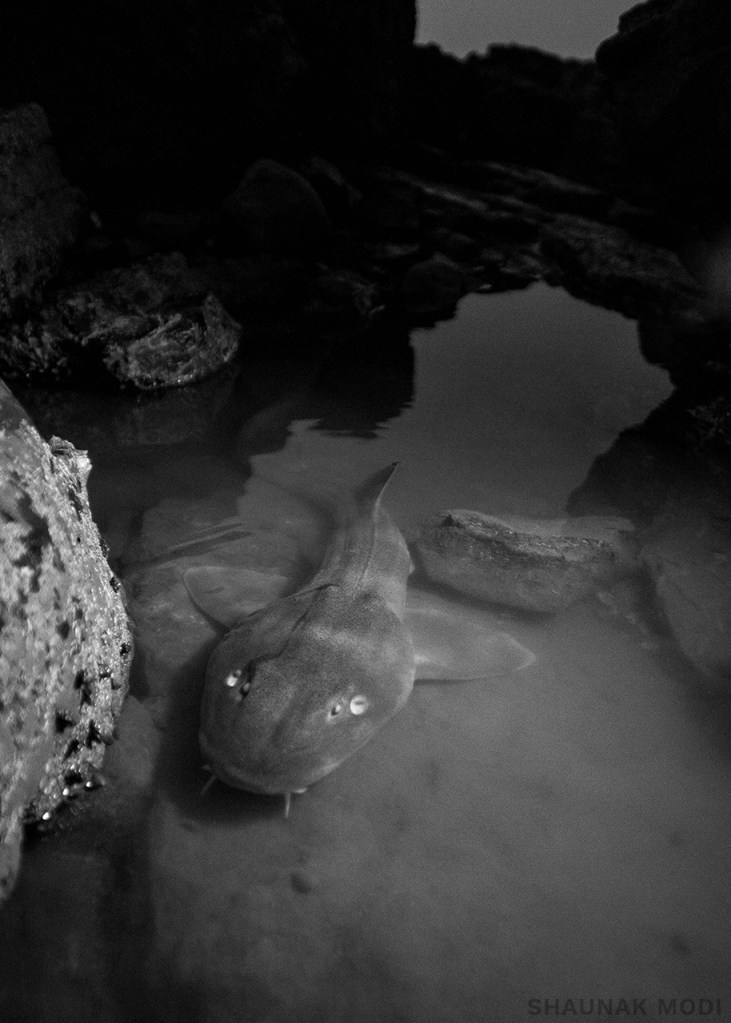
Birdsong by hillside resident, the collared owlet.

All photos including podcast cover photo courtesy of Shaunak Modi. Artwork: Lalitha Krishnan

Disclaimer: Views, thoughts, and opinions expressed in the podcast and show notes belong solely to the guest featured in the episode, and not necessarily to the host of this podcast/blog or the guestโ€™s employer, organization, committee or other group or individual.

Mitigating the Urban Human-bee Conflict: Rajani Mani.

Heart of Conservation Podcast. On the #Feedspot List of Top 35 Conservation Podcastsย Listen or read.

Season 4. Ep# 25 Show notes (edited)

Lalitha Krishnan: Hi there, thanks for listening in to Season 4 episode 25 of Heart of Conservation. Iโ€™m Lalitha Krishnan, bringing you stories from the wild that keep us connected with the natural world. You can read the show notes for this podcast episode right here on my blog Earthy Matters. Today Iโ€™m talking to Rajani Mani, a documentary filmmaker with Elephant Corridor Films, a Bengaluru based creative agency. Currently, she is working on “Colonies in Conflict” a film that examines the state of wild bees in a fast-developing Indian landscape. Rajini, thank you so much for joining me on Heart of Conservation.

Rajani Mani: Thank you so much for inviting me. I am happy to have this conversation with you since you were quite interested in my work when we chatted. So, Iโ€™m quite excited to speak with you as well.

0:56

Lalitha Krishnan: Thanks. Of all the creatures and critters in the world what got you interested in bees?

Rajani Mani: Itโ€™s not like Iโ€™m an insect lover from my childhood or anything like that. What got me interested was something that was recurrent which I was observing around me and which was bothering me. Essentially it was these big bee hives that you see in the cities and in Bangalore, we have plenty of those on balconies. The management is called for removing these honey bee hives and the way it was being done bothered me. You know, by spraying pesticides and there are so many beehives in these high-rise apartments that I was observing all the time. That disturbed me a lot and I was trying out ways to protect it and I got interested in the storyโ€ฆin the bees. And I started researching them and thatโ€™s how I got interested. I love bees, I love insects. But I was like everybody else you know. If you think of insects, we humans are generally not very fond of insects. I was one of those.

Lalitha Krishnan: So not only did you get over the fear you started loving them.

Rajani Mani: There was no fear per se but there was some disgust to be very honest. Insectsโ€ฆfor me it would be cockroaches. We are generally disgusted by cockroaches. We try to get rid of them. Bees are there. We understand pollination we studied it in school but come to think of it after all the research Iโ€™ve doneโ€”weโ€™ve not even touched the tip of the iceberg in schools and colleges when we are taught about pollination. Thereโ€™s a lot that an average person does not understand. I was one among those. I am actually thrilled to see my own transformation after the process of filming started.

3:25

Lalitha Krishnan: Thatโ€™s great. So how many species of bees do you find in India? And, apart from the obvious hives, where else do they reside? On the ground, Iโ€™ve read. I was surprised.

Rajani Mani: There are over 700 species of bees in India. Here I have to make a distinction between solitary bees and social bees. The bee that we generally see in advertisements or on cute emojis or cartoons is the honey bee. And of the honey bee itself, we have five different kinds in India. The rest of it is all solitary bees. Solitary bees nest in a variety of places. It could be old deadwood, it could be soil, it could be any of the wild spaces you know? You name it, some of them construct little nests with leaves and twigs and things like that. Some of them burrow in deadwood and make little nooks for themselves. The social bees nest in beehives which is what we are familiar with. We see these beehives on balconies, on water tanks, on trees. So, these are social bees and they nest in large numbers. There are tens of thousands of them in one hive. So, this is the first distinction which is that one set is social bees and the other set are solitary bees that nest in a variety of spaces but basically, they all live alone. Social bees live in societies just like us.

As I was saying five kinds of honey bees live in India. We have the apis which is the honey bee. You have the apis dorsata which is the rock bee that most people in the cities are familiar with; they are quite frightened of them because they are quite temperamental. You see these gigantic, two feet by three feet hives. Then you have the apis laboriosa which is found in the Himalayan region and that is kind of a cousin of dorsata. Then you have apis andreniformis in the North East area. Then apis florea which you can find in Bangalore and all cities. Most people donโ€™t notice them that much because they hide in bushes, in trees. They have more round and smaller hives. Then there is the Apis cerana. Apis cerana is in India, traditionally kept for beekeeping. They are the only cavity-nesting bees found in India.

In 1983, apis mellifera which is a European honey bee was introduced by the (Indian) government to promote honey bee farming. So, these are the varieties that are generally found here. The distinction between hive ??? nesting and cavity-nesting is that cavity-nesting can also be used for beekeeping.

Lalitha Krishnan: Thatโ€™s so interesting. You know we hear of animal corridors and migratory flight paths for birds and more commonly for the monarch butterflies. What about bees? Where do they come from and where do they go from here?

Rajani Mani: Again, if youโ€™re a ground-nesting or a tree cavity, tree hollow cavity-nesting solitary bee species then you donโ€™t really go anywhere. You just stay in that little area and you survive there. Theyโ€™re not migratory, not as far as I know. Whereas in the case of other honey bees like the apis florea there is no migratory behaviour as such. Cerana is a cavity-nesting bee. I have not heard of them migrating. The only migratory honey bee in this lot is the apis dorsata. Also, the study of bees is at very early stages right now. We havenโ€™t found out how far they migrate, where they go. These are also a): slightly difficult considering the size of these insects. But there is one study if you look online. A scientist in Sri Lanka says that these bees can travel up to 200 km. So, no concrete evidence has happened but there is an understanding that there are two kinds of migrations that the dorsata do. One is short term migrations which are in search of forage. Eucalyptus trees or other flowering trees are in plenty in one season. Once the forage of that season is over, then the bees would migrate to a shorter distance to find more food for their huge colonies. Because there are tens of thousands of them in one colony. They need a lot of food to take care of their progeny and you know, their whole hive. So, they need to constantly find good food sources as well as good water sources. So, they keep moving. They do a long-range migration which is generally just before the onset of the monsoons. And anecdotally, I can tell you that, because there are no research papers on itโ€”there is some work in progressโ€”so anecdotally speaking, we do know that the honey bee colonies in the cityโ€ฆthey disappeared just before the monsoon and returned in October. So, from October to about March-end, you would see bee colonies in Bangalore. I talk about Bangalore because it is my city. I understand whatโ€™s happening here and Iโ€™m sure similar patterns perhaps may be observed in, letโ€™s say, Gurgaon or Bombay or wherever. People from all of these cities do reach out to me and say, โ€œWhat should we do?โ€ we do know that dorsata colonies are there in urban centres all over India.

You talked about a corridor. So, there is a nectar corridor whichโ€”since Iโ€™m not a scientist, I cannot speak about in a very informative wayโ€”but from my understanding, there is a corridor which is between October to March in Bangalore in the western ghats when all the endemic trees are blooming. Thereโ€™s a rich source of food available to these bees then. Thatโ€™s also when they do the colony multiplication and so forth. 

11:36

Lalitha Krishnan: It will be interesting to have an โ€˜ebeeโ€™ just like we have ebird.

Rajani Mani: There is some talk about that somewhat and it has been developed as well but not so extensively and it has not been launched as yet by the NCBS but we are planning to do it. There is some delay on their part. I donโ€™t know if itโ€™s really an ebee thing because, you know, scientists find it difficult to track colonies, to actually monitor and spot the beehive,โ€”when they leave, when they come backโ€”this data would be very important and helpful to the scientist. Some people do put up bee sightings on the India Biodiversity Portal. What kind of bee they have spotted, where they have spotted.

Lalitha Krishnan: Thatโ€™s the place to go then.

Rajani Mani: Yes, but itโ€™s not as widespread. You are right. I was telling my friend as well. We go bird watching. If we go bee watching, Iโ€™m sure weโ€™ll spot so many different kinds of bees and then read up about them. It will be interesting for us as well, you know?

12:52

Lalitha Krishnan: Yes, the thing is itโ€™s about 12 degrees over here, itโ€™s really cold and Iโ€™m still seeing bees. Sometimes theyโ€™re just trapped in the house. Interestingly, you spoke about them being around from October so I was thinking theyโ€™re here in such a cold environment but I guess theyโ€™re Himalayan bees.

Rajani Mani: Where are you right now?

Lalitha Krishnan: Ranikhet, Uttarakhand.

Rajani Mani: You must be seeing the local bees of that place whichever they are.

Lalitha Krishnan: Yes.

13:21

Lalitha Krishnan: So, even elephants are wary of beehive activity. In Africa, they actually use bee pheromones to drive away elephants? Tell us why ordinary humans shouldnโ€™t be afraid of bees? 

Rajani Mani: I get asked this question because people think I am out to tell people not to be or be scared of bees that’s your choice. But I just want people to understand and respect them. Because, they are also at heart, wild creatures.

The only way to avoid fear is to try and understand where they are coming from. What is their nature like? What is their inherent behaviour? Right? Once we understand their behaviour and pattern and what they are all about, then we wouldnโ€™t feel this sense of fear likeโ€ฆeven a tiger in the jungle. We are fearful but we are also respectful. So, these insects also deserve that degree of reverence is what I feel.

-Rajani Mani

Lalitha Krishnan: Right.

Rajani Mani: They do a lot and just by saying,โ€ Oh Iโ€™m scared of bees and theyโ€™re going to stingโ€ฆโ€ Yes. Even a dog will sting if you trouble it right? Every creature which is wild at heart is going to come from a place where it has an inherent response to distress. And bees, are no different in that sense.

Lalitha Krishnan: So โ€˜respectโ€™ is the word.

Rajani Mani: Yes. Exactly.

15:05

Lalitha Krishnan: Rajani, could you briefly tell us about life in a beehive? I mean, we have all read about it you know? The queen, drones, worker bees which are all female by the wayโ€”why am I not surprised? โ€”and their roles, seasonality etc.

Rajani Mani: Yes, itโ€™s a female-centric matriarchal system followed in a beehive. You have the queen bee who is the whole heart and soul of the hive. And everythingโ€”all the bees and all the activities taking place in the beehive is taking into consideration her protection. And, her conservation. So, sheโ€™s at the very heart. And then you have the worker bees who in their lifetime play a variety of roles. They have roles like nurse bees or roles like guard bees and they have foragers who go out and forage for food and water. Then you have the drones whose only job is to mate with the queen when she is ready for mating. Their life cycle is also very interesting because the queen lives for 3-4 years and the worker bees live for several months, maybe 3-4 months not more. And, the drone dies, the moment mating happens. So, as I said, the queen is at the heart of the whole colony. And thatโ€™s why itโ€™s also important that when you have a beehive on your balcony, or on a tree or you are scaredโ€”irrationally scaredโ€”you have to use methods where the queen bee isnโ€™t affected and she survives. Because if she survives, she can move on and make another hive in a very short time.

17:30

Lalitha Krishnan: OK

Rajani Mani: If the queen dies itโ€™s the end of that entire colony as it stands.

Lalitha Krishnan: Wow. You know according to the WWF website, about 90% of all wildlife plants and 75% of all leading global crops depend on animal pollinators. One out of every three mouthfuls of our food depends on pollinators. I donโ€™t know the latest figures but in Bangalore itself, I know several beehives are removed every day. Thatโ€™s just one city. It makes you wonder how endangered bees are in India. Whether they are listed by the IUCN? Also, what happens if all the bees were to disappear one day. Is there a cascading effect like how wolves save/change rivers?

Rajani Mani: (Talking about urban beehives). At one time you will have at least 10 hives. One of the things about dorsata bees which are in the wild also together, they build nest aggregates. You wonโ€™t see just one beehive on a tree. Youโ€™ll see several.

So, in some sense, in the cities, when the dorsata bees make their nests, the city apartments are like nest aggregates for them. Itโ€™s like a large tree on which all these cousins are building their nests. So, the one time a bee-hive remover is called, he would maximize his time you know? He would at one stretch remove six of them. So, letโ€™s say there are 20,000 high rise apartments in Bangalore. And, there are 6-8 beehives in the given season. You can just guess how many beehives are being removed during this period. Itโ€™s a scary shocking number in any caseโ€ฆthe number of beehives that are removed routinely.

19:25:

Thatโ€™s one part of it. Is it listed in the IUCN?  No. It is not listed in the IUCN. There is no data that says that these bees are under threat. In India, in fact, there is no data at all. There is no data about the number of bees we have. Like, the kinds of bees, the species that we haveโ€ฆ.itโ€™s incomplete data. Whatever we have, is old, British times data. Now, there are some amazing people like Dr Belavadi โ€“heโ€™s a taxonomistโ€”who are generating data and are collecting all the records. There is a lot of bee species yet waiting to be discovered. I can tell you that from 2015-2021, every year, the number of beehives, I am getting in my society have reduced. I was filming in Coorg and the farmers tell at one time, around February, after Shivratri, the bees start coming. All the forests are blooming at that time. And, at one time you have literally 100s of dorsata bees on a single tree. Thatโ€™s how they are. They always come back to the same location, year after year after year. Because they have something thatโ€™s called site fidelity. Thatโ€™s the unique thing about dorsata bees.

21:08

And if this farmer says 30 years ago we had 100 hives now we barely see 30 or some years the bees skip altogether like 2020, when I went there, they had skipped altogether. There is anecdotal data that perhaps there is a decline but I cannot say that there is a decline. I donโ€™t think that while the forest and crops are all dependent on various kinds of animal pollination including our bee pollination, how would it have a cascading effect? It would have a cascading effect. In fact, there are a couple of things that are interconnected in this.

Bees are a keystone species. The minute I say they are a keystone species and if I remove-and you would know that if you remove a keystone species and there is a disturbance in the species, the whole arc will fall. This is the same case with bees. Not only honey bees-itโ€™s not only dorsata I am partial to, itโ€™s all kinds of bees.

22:25

Lalitha Krishnan: OK. What do you hope to achieve with your documentary, โ€˜Colonies in Conflictโ€™?

Rajani Mani: I think, I want people to see bees in a way they havenโ€™t seen bees before. I want them to really notice them. Because people understand what honey is, they consume honey, they consume food, thatโ€™s why they survive. All of that is a result of pollination. All kinds of specialist bees pollinate special crops that we are used to eating now. But we donโ€™t understand the input or the value of bee pollination whether itโ€™s our food or our forests. So, I hope that for a moment that this film will make you stop, think, pause and just observe the beauty of the bees and what they do as in what we do to them.

23:20

Lalitha Krishnan: Right.

Rajani Mani: You know there are a lot of films that are made from the human angle of how dangerous it is to hunt for honey. Honey hunters who climb on all kinds of cliffs to harvest honeyโ€ฆ

Lalitha Krishnan: Iโ€™ve seen those.

Rajani Mani: But this (film) is still is not about honey, itโ€™s about the bees and itโ€™s about the very precious service that the bees give and provide to us.

Lalitha Krishnan: Excellent. And youโ€™ve been filming for quite a few years, right?

Rajani Mani: Iโ€™ve been filming since Oct. 2019 but we had a brief pause because of the pandemic and also the shoot is seasonal. I can only film when the bees are around. Like I said, the flow is October to March or April is the period that I can film. During the monsoon, you donโ€™t see bees. Thereโ€™s nothing I can film at that time.

24:20

Lalitha Krishnan: OK. So could you share a conservation-related word thatโ€™s significant to you? It could be bee-related or not be?

Rajani Mani: At the moment, it would be โ€˜pollinationโ€™, you know? Because, I think pollination of our wild spaces, our forests are dependent on insects like bees, whether they are social bees or solitary bees. And, we need to recognise that we have to continue to have forests space, have safe spaces for our animals, for our biodiversity as such. So โ€˜pollinationโ€™ it is.

Lalitha Krishnan: I was hoping it would be. We keep hearing of putting out sugar water for bees in summer. I donโ€™t know if this is a weird question but how can we not kill with kindness? Could you share some guidelines on what not to do?

Rajani Mani: You donโ€™t really need to put out sugar water but what you can doโ€ฆ They will figure it out. The bees are there because they have found food sources close by. If there is no food source, they will not be bees there. So donโ€™t worry about their food source or their forage and feed them sugar water and all that but they do need water. Especially social bees because they build these large hives and they have such a huge population and it gets hot in the summers. They need a lot of water to keep cooling off. So, what you can do is have a shallow bowl and fill it with pebbles and a little water and keep it just like you do for birds, you know, you place it for the bees.

The bees are in your balcony they are there for a very short time; three months, not more than that. So, try and not to use that balcony especially if they are dorsata bees. They are the only ones that build hives on balconies. And, close your window meshes and close your curtains by 4:30 pm because these bees are phototactic. They get attracted to light and they come inside the home. Actually, the ones that come inside the home are foragers.  They are out foraging. Thatโ€™s when they get attracted by the light and they come inside, and then canโ€™t break away. They wonโ€™t sting you. They are you know, in distress themselves. Thereโ€™s a lot about these dorsata bees which is interesting and crazyโ€ฆI donโ€™t know if you have the time for all that.

Lalitha Krishnan: Yes, especially in urban spaces itโ€™s good to know what you should do and what you shouldnโ€™t do.

Rajani Mani: So, letโ€™s say, when the bees want to build a hive, a bunch of them will come earlier and they do a recce and they will see if your balcony or your space is suitable for them. And at that space you see letโ€™s say, 50 or 100 bees hanging or festooning on your balcony, you can light a herbal agarbatti and the smoke will distress them and they will think that this is an unsuitable place and they will leave by themselves.

27:50

The other thing you can do isโ€ฆletโ€™s say you were out on a holiday, you came back and you find this hive and one of you is allergic and you canโ€™t afford to have this thingโ€ฆwhat you can do is again light a herbal agarbatti โ€“not a doopโ€”below the hive for a couple of days, like 2-3 days. So, what happens is when the smoke comes it disturbs the bees. So, they decide this is no longer a viable place. And the queen will stop laying eggs. But they will not fly away immediately. They will take about 15 days which is the period they need for all the food and the resources โ€“the entire brood to emerge. Once the entire brood emerges, then the bees fly away to another place. But the queen will stop laying lays once the hive decides this place is no longer viable. Then, itโ€™s a two-week waiting period. Then they leave. So, you can try these things you know? The more conservative ways rather than pest management spraying or taking matters into your own hands because thatโ€™s quite cruel.

Lalitha Krishnan: Thatโ€™s fantastic. Thanks for enlightening us about the bees. Itโ€™s been really nice talking to you Rajani.

Rajani Mani: My pleasure. Thank you so much.

I hope you enjoyed listening to Rajani Mani and all about bees as much as I have. Do check out some links about her work and the whole transcript for the show on my blog Earthy Matters. You can listen to Heart of Conservation on many platforms. You can also write to me at earthymatters013@gmail.com Iโ€™m Lalitha Krishnan signing off. Till next time stay safe, be kind to bees and do subscribe for more episodes.

Birdsong by hillside resident, the collared owlet.

Podcast cover photo courtesy of Rajani Mani. Artwork: Lalitha Krishnan
Disclaimer: Views, thoughts, and opinions expressed in the podcast and show notes belong solely to the guest featured in the episode, and not necessarily to the host of this podcast/blog or the guestโ€™s employer, organization, committee or other group or individual.

Useful Links: https://www.elephantcorridorfilms.com/

https://indiabiodiversity.org/

“Barrenness is Always a State of Mind, Never a State of Land”-Yuvan Aves

Heart of Conservation Podcast Ep# 24 Show Notes (Edited)

O:06

Introduction: Hi there, Thanks for listening in to season three, episode #24 of Heart of Conservation. Iโ€™m Lalitha Krishnan bringing you more stories from the wild that keep us connected with the natural world.  You can read the show notes of this episode right here and check out the extra links provided by my guest below.  I am speaking to Yuvan, a naturalist, educator, activist, musician and author. One of Indiaโ€™s young influencers Yuvan is currently documenting coastal stories, helping create tree laws, saving the biodiversity of sand dunes and water bodies apart from a host of other ecologically relevant issues. 
0:46

Lalitha Krishnan: Thank you Yuvan for joining me and my listeners on Heart of Conservation. Iโ€™m truly excited to be speaking to you. There are so many things we can talk about but Iโ€™d like to start with something more recent if you donโ€™t mind. In collaboration with the Madras Naturalistโ€™s Society, you recently launched the Urban Wilderness Walk Internship which in your words is a dream come true as a naturalist and educator.  Tell us the why, what and how did you realize this dream?

1:20

Yuvan Aves: Yes, sure. Firstly, I am very, very delighted to be on your podcast. A lot of people you have spoken with, some of the questions you have asked, their work, their voice, their writing has been very formative for me and so Iโ€™m very happy to be here in conversation with you.

So, see, Urban Wilderness Walks emerged from this idea and thinking about what creates cultures. And is it possible to have a city-wide culture which is eco-centric where people are excited about, are knowledgeable about, are engaging with the biodiversity found around them in an urban spaceโ€ฆthatโ€™s the challengeโ€ฆand active about environmental issues, and exercising agency. And not slinking away into life which urban spaces often presses on us. Of being passive, of going to work, coming back, you know, sleeping and eating and all the rest of it. so, the dream of the Urban Wilderness Walks Internship is to try to create a city-wide network of young naturalists, resource people who can facilitate activities around ecology, nature, environment. That they then periodically take people on walks and kind of evoke urban spaces in an entirely different light. That was the dream and it kind of grew slowly. First, it was a few friendsโ€ฆI did it in my apartmentโ€ฆI do it once every few months. Then I asked some friends, who are also naturalists to do it at theirs but that wasnโ€™t kind of meeting what I was visioning in my head. Then, through Madras Naturalists Society, we actually offered it as an internship for colleges. For life science students. One of the things about Chennai is that it does not have an ecology courseโ€ฆChennai or its outskirts. In fact, there are only one of two places that offer young people a course in ecology or conservation biology or environmental sciences. People often diffuse away to Bangalore, to Dehradun and other places. You know, the aspiring naturalists who want to pursue a career here.

So, the idea was to train young people with the experience, the knowledge, the skills the tools, to be fantastic facilitators…you know, who get people excited about living things and nature in urban spaces.

-Yuvan Aves

4:15

Lalitha Krishnan: Interesting that a state like Tamil Nadu doesnโ€™t offer ecology courses or enough of it as you say. You encouraged some of your students to draft this petition to push for a law for Urban trees and they succeeded. In fact, you shared an (Instagram) story where I think theyโ€™ve convinced 600 schools and colleges. Thatโ€™s amazing. That must have felt very empowering (for them). Could you briefly tell us about this?

4:48

Yuvan Aves: That campaign is part of a Nature Education cum Citizenship Programme I conduct for a school where Iโ€™m working for the past three years called Abacus Montessori School. Very fortunately, itโ€™s grounded in the Montessori philosophy. And Montessori is one of those educational philosophers who went through the worst of human history. You know, the world wars and said, โ€œOh, we need to reimagine education. Children need to be able to think for themselves. They need a variety of experiences. Their experience of learning needs to be uncoupled from the larger market forces.โ€ And these were questions she pondered upon deeply and wrote about them. So, in our school we have this programme for Nature Education right from Primary, you know, the little toddlers to up to Class 12. So, when we come to Class 10, 11 and 12, itโ€™s about citizenship. Citizenship in the way weโ€™ve crafted it for our school means a few things. One is, that childrenโ€™s learning is in direct participation in matters of society, environment and politics, and governance. In direct engagement with the real world. Not just intellectually or not just in kind of insulated silos. It also means being active and practising action as a grounding and philosophy. Which means a whole range of things you know. Children decide, OK, this is my question, this is my concern, I am going to pursue it. Agency coming from within rather than coming from instruction outside. This is kind of what the Citizen Science Programme holds for children.

Lalitha Krishnan: Alright.

6:47

Yuvan Aves: So, Class 10 children learn RTI (Right To Information). You know, how to file RTIs for the State, for the Centre. And thereโ€™s also a reflection into what โ€˜Freedom of expressionโ€™ means. What โ€˜Active citizenshipโ€™ means. What are the different things they want to pursue based on their life experiences and backgrounds? And they use RTI as a medium to explore this whole thing and different modules like that. So, in Class 11, we have something called A Class Campaign. So, children come up with a cause that is local, which pertains to Chennai or Tamil Nadu, and find ways of amplifying it or giving voice to it. Engaging with it in real-time. So, last year, the Class 11 children took up the Save Pullicat campaign. You know, right now, a beautiful lagoon is under grave threat because of a port proposed by the Adani Group. So last year they took that up and they made some beautiful art and they also ran a petition. They had other ways of spreading the message. And, they conducted a press conference in Chennai. And through that, what happened is the message reached a whole lot of people and a public hearing was decided for the port. We know public hearings are shams you know, often in the process of  clearing of wild spaces. They were able to stop that. Because the media took it upโ€ฆ

Lalitha Krishnan: Nice.

8:25

Yuvan Aves: โ€ฆand the District Collector said something like, โ€œLetโ€™s scrap the public hearing, looks like a whole lot of people are going to turn up; we have Covid issuesโ€ฆโ€ and you know, all that stuff.  And they stopped that and that was such an important thing in the campaign because very shortly later, a few months later, the new government came and they kind of rode on this. 

You vote for us and we will scrap the Adani port. 

It was a win in that sense, you know, a little spanner in the works. 

So, this year what the children took up wasโ€ฆ you know, these children have been part of creating a forest in an arboretum in our farm school which we have in Vellaputhur. And they have been to different landscapes around Chennai and India, understanding wild places. And so, one of the things they easily took up was a Law for Urban trees. A little background to that is a lot of states in India have a law for urban trees which means there are trees -very old ones- important for the citiesโ€™ health, for peopleโ€™s health which have a specific law protecting them. You take, for instance, Maharashtra. It has a beautiful law, its implementation is up for question, but thereโ€™s a Tree Authority made of people and govt. officials who look at how to create awareness. Who scrutinise projects which want to fell a few thousand trees and so on? There is a Tree Helpline. There is a clause that says if trees are more than 50 years old, they get a label called โ€˜Heritage treesโ€. That gives them extra protection.  But in Tamil Nadu, there is no such law. Similarly, West Bengal has, Kerala has, Assam has, Karnataka has.

 In Tamil Nadu, any tree falling outside a protected area has virtually no protection. Virtually no personhood. 

10:25

You know, through my activism work and looking at other movements in this state, if there is a tree law, it protects people and places. For instance, Pulicat. If there was a Tree law to protect the mangroves to protect the kinds of vegetation there-which is very old- it would be an added layer of security for the fisherfolk there.  North Chennai is a watery landscape and artisan fishers are 1000s in numbers who have been living here for centuries. 

Similarly, for instance, if you take the Salem highway recently, which has been scraped in some sense by the new government; but if there was protection for treesโ€ฆlakhs of mango trees were going to be cut. But if they had protection, far more livelihoods are saved.

If you take the common urban landscape, trees support, protect people. They have a social life in urban society. The iron-walla, the tailor, the cobbler, the auto standโ€ฆeverything is under treesโ€ฆthe provision shop. So, the children took this up and they wrote a letter and they got endorsements from students from about 100 different colleges and schools in Tamil Nadu. 600 endorsements from 100 different institutions. Theyโ€™ve written to the Chief Minister, the Chief Secretary, the Principal Secretary of Environment. The media was interested. They spoke to the media and itโ€™s kind of an ongoing process. Iโ€™m happy that itโ€™s also kind of triggering conversations in other groups for instance who have been fighting for a cause like this. Itโ€™s a kind of coming together and one hope that this will result in a law.

12:27

Lalitha Krishnan: Definitely. Thatโ€™s great. This coming together is itself a big force if it happensโ€ฆthe voices of many. Moving on, in an article you wrote about coastal sand dunes you said, โ€œSand is slow water, a patient fluid, which is moved, shaped, folded by wind, waves, and vegetation. It flows over the years and with the seasons, like a current in deep timeโ€.  

I loved that imagery but more importantly, what I didnโ€™t know is the whole significance of sand dunes. That it can create freshwater for one or that sand dunes are even more effective than mangroves and casuarina plantations in terms of protecting coastal communities during a tsunami or storm. How so?

13:22

Yuvan Aves:  Yes, there are studies by Care earth and Feral India which has brought out this truth, you know. Sand dunes are seen often as landscapes that donโ€™t have life. If one were to go with an informed eye one sees so much. I was in a village called Poigainallur in Nagapattinam, a few months agoโ€ฆin search of sand dunes in fact. Poigai is an interesting word. Poigai means freshwater pond in Tamil; a word which is not often in use nowadays but poigai also signifies an aesthetic water body. Something which kind of has a beautiful backdrop perhaps has lilies and lotuses. Itโ€™s called Poigainallur but itโ€™s bang next to the sea. So, one thing that the village is known for and also a cluster of other villages around it is that there are massive sand dunes there. You know 40 feet. You have to climb them like little hills and go around them and navigate the landscape. And the people here have this interesting practice of protecting the sand dunes and letting them revive. If you went and spoke to them, they will say that as long as they can remember, they keep these palm fronds in the direction of the wind and stop the wind. So, sand kind of gathers there and they take palm seeds and put them behind and so they sprout and they grow sand dunes. After storms, after strong weather events, the sand dunes take a beating. They again use this practice to help them recover fast. And the whole aliveness of a coastal dune landscape I was able to see through those peopleโ€™s eyes. You know, the fisherfolk of that place. And, itโ€™s miraculous, 30 feet from the tide line they have water pumps –from which I have tasted the waterโ€”it gives clean water. And perhaps just 200 ft just behind the sand dunes thereโ€™s agriculture happening. So, these sand dunesโ€”these are called secondary or tertiary sand dunes– they are massive. Right behind them, there is a forest because the sand has it from sheltered salt-layered winds and it creates a perennial pool. When you walk in such a landscape, the brain is confused because on one side there are waves crashing and on the other side thereโ€™s a frog scape. Frogs are calling hardcore freshwater species.

But the deeper hydrological importance of sand dunes or any coastal cities is that sand on the edge of a place actually creates this bio shield from seawater ingressing, you know. Still, water can travel underground into freshwater aquifers and contaminate them and they become unusable. If you look for instance, in North Chennai, where all the large coastal infrastructure has come up because the people here are largely from fisher communities, there is no beach.  If you take archival pictures from British India of North Chennai, you will find there was a very large beach there. There is no beach right now. Interestingly, in 2019, a study by Anna University found that in the whole of India, maximum sea ingress is in North Chennai in places like Ennore and nearby. Sea in some places had come in, crept inside, underground up to 18 km and contaminated water. So, people have had to move from here, build desalinisation plants and so on.

The hope is to evoke the magic of sand dunes. โ€˜Sandโ€™, the way we use that word is without life but not so. They actually ensure life happens by just being on the coast.

17:46

Lalitha Krishnan: That is so amazing. I really feel like and going and seeing them (sand dunes) now. Tell us about your travels down the Indian coast. Did you do that for two years? I am not sure if I got that right. So, what were you thinking when you began this venture and what did you return with?

18:04

Yuvan Aves: Yeah, so hopefully, I will be able to kind of begin again. On the 20th I am going on a long tour of the southern districts of Tamil Nadu where some very special coastal ecologies exist. And pre-Covid, also I was going to different places on the Indian coast and understanding the places a bit and the people who live there. The idea, the interest in coasts started with our campaign for Pulicat and the hope and the action to save it. One of the things we found was that while campaigning for this place, we did not have enough stories. We did not have in fact, in some places, scientific data and other kinds of things that would evoke this kind of place as beautiful, as magical, as worth saving. So, we had to do that on the go, on the run.

Coastal landscapes exist on a cusp. You know, with changing climate, with seas becoming more unpredictable, more intense, they are the most vulnerable. Coasts and coastal communities. But they are also our first line of defence from climate-change driven consequences and impacts raging in from the sea. 

So, they exist on that cusp on that very difficult cusp. They are on the margins and also coastal communities are marginalised in that sense โ€“ in a political sense. That feelingโ€ฆ that intersection of realities during campaigning for Pulicat kind of drove this whole idea. So, what weโ€™re doing isโ€ฆone is a large project all across the Tamil Nadu coast, again, through Madra Naturalist Society. I work with a team of friends. I should mention their names; weโ€™ve all been equally part of that. Vikas, Ashwathy, Anuja, Nandita and Rohit and myself.  So, people call us the Oceanโ€™s Six and all that. So, whatever time we have, we are on the beach. We are with fisher people; we are at estuaries and creeks and so on. We have finished 1/4th of the Tamil Nadu coast and we are looking at, as comprehensively possible, documenting the ecology and the life there. You know the deep inimitable knowledge of artisanal fisherfolk.

If you come to this part of Tamil Nadu, the north, not the entire Tamil Nadu, there are nine words for winds. Wind speech is so vivid that if you walk with a fisherman elderโ€ฆyou know of my greatest teacher has been Pallayam from Urapukkam village near Adyar estuary.  He can stand there and he is so intensely perceiving the wind. And he can tell you if itโ€™s (the catch) going be mackerel. Is it going to be no catch, is it going to be anchovies or is it good for crabs? (All) by reading the wind.

-Yuvan Aves

That, I have been understanding a little bit but for them, itโ€™s an embodied knowledge. Itโ€™s knowledge in their blood. So, local knowledge and threats to this landscape. This is something we hope to do for the entire coast of Tamil Nadu.

As a personal thing, I want to travel to different places in India and collect these stories. I was in Goa recently speaking to fisherfolk in a village called Nauxim. Interestingly, the fluctuation between spring tide and mead tide is called sudthi-budthi. I just hope I am pronouncing it correctly in Konkani. Interestingly, sudthi-budthi is also a reference to our variation in emotion and mood. So, in their speech, the coming in and going out of the tidesโ€”the lunar fluctuationsโ€”is likened to the emotionality of the sea. And therefore, the sea is alive in that sense.

22:41

Lalitha Krishnan: Beautiful. So, do you think all of your travels, the research and conversations youโ€™re having will one day become a book? Do you see a book emerging from it?

Yuvan Aves: Yes, that is a dream, stories from all around the Indian coast. Of biodiversity, of local knowledge of different threads of a coastal landscape being magical places. Perhaps a collection of essays or perhaps a different form. Of course, there are other people who are doing fantastic work. For instance, Marine Life of Mumbai. Work like those groupsโ€ฆ different parts of India. Yes, I do hope it becomes a book in a few years.

23:31

Lalitha Krishnan: I hope so too. I would love to read that one. Yuvan, again, talking about music. You have so many talents.  In 2019, you held a musical concert for conservation where you also performed.  Tell us about your musical interest and the specific cause that you held this concert for?

23:52

Yuvan Aves: Iโ€™m a recorder player. The recorder is not a recording device. It’s a musical instrument from Europe. Itโ€™s a woodwind instrument seemingly simple to play at the beginning but it gets a lot harder when you progress with it. I started learning the recorder when I was three and a half when my mom joined me for classes. Interestingly, just a note about my teacher who is no more but then I owe a whole lot to him. S Balakrishnan. He was also a famous Malayalam music director. I wanted to pursue this instrument purely because of his own kindness. I was initially learning the piano from him. But he did not know it too much so he said, โ€œSee, this is all I know with respect to the piano. I can refer to other good teachers but if you want to learn from me, I know this bunch of (instruments). I know the flute, the recorder,โ€ and so on. So, I happened to tell my mom, โ€œSee I donโ€™t care what I learn, I want to learn from that teacherโ€. And, he was very kind and helped me love music. I have not pursued the piano. I have not pursued other kinds of things I had started learning deep back in childhood. But this, I have been able to pursue till date and I am a music teacher also and that is, of course, thanks to my teacher. So, coming back to your question about the concert of 2019, one of the things I hope to continually explore โ€“of course, Covid got in the wayโ€”is to merge music with my work in activism. One opportunity which came by was the move of the Chennai metro to hack down Panagal park. Thatโ€™s an old park with some very, very old treesโ€”a few 100 of themโ€”for a metro station. A metro station is a railway station that the cream of the cream of society uses. There’s MRTS, thereโ€™s Southern Railways, there are four kinds of local railways.  Of course, itโ€™s public transport and I have nothing against that but their siting was in parks. Theyโ€™ve already kind of flattened two very old parks: Nageshwara park and part of Thiruvika park they have taken over and constructed and those parks have gone. And so, they wanted to take over Panagal park as well.

Panagal park is there as a green lung space, an oasis you can walk into in the most haphazard hectic park of Chennai. Around it is large cloth shops, Saravana stores, Nalli and so on where in fact, the employees during their break, come in here to destress. Thatโ€™s something you see. Itโ€™s an important landmark of Chennai. So, they wanted to hack that down; we were putting together ways in which to stop that. Initially, we took Rober Macfarlaneโ€™s Heartwood poem. Thatโ€™s the poem he wrote for the people of Shielfield who were protesting against the cutting of trees in their streets.

โ€œWould you hew me to the heartwood cutter?

Would you leave me open-hearted?โ€ As if the tree was speaking to the woodcutter who has come to it with an axe. I adapted that poem for Tamil and we made a little animation of it as a way of gathering solidarity with people. And, after that, if you look at music, music comes from the belly of trees. If you look at, for instance, the veena, or the kanjira, if you made it out of the heartwood of any other tree other than the jackfruit tree, it wouldnโ€™t sound the same. It wouldnโ€™t be the veenaโ€ฆits characteristic timbre and tone. If you made the violin from anything else other than spruce or maple or a few other related trees it wouldnโ€™t sound like a violin. Similarly, with all the instruments you hear in an orchestra, the cello, the viola, the bamboo fluteโ€ฆ So, music is really as we have known it for all these centuries, is the belly, the hearts of trees singing. So, that was the theme of our concert. โ€˜Music comes from the heart of trees, letโ€™s save themโ€™. And, there were professional musicians, there were children, there were readings of poetry around trees and it did make an impact along with the other kinds of campaigning work we did. And, right now the plan to hack down Panagal park is stalled. Not shelved but then Chennai Metro has gone silent about it and we are keeping the pressure on so yes.

28:55

Lalitha Krishnan:  Another beautiful effort. Also, I would never have thought of musical instruments like that though we do know theyโ€™re made of wood. Thatโ€™s really amazing. So, you do want to harness the powers of music and use it to propel your activism more in the future.  

Yuvan Aves: We planned in fact, a concert around wetlands in 2020. But that did not come to fruition because of Covid. But hopefully, when things ease up, even more, weโ€™ll be able to do that.

29:27

Lalitha Krishnan: Youโ€™re self-educated; you authored two books already, and youโ€™re at the forefront of relevant conservation efforts in terms of educating and engaging. Who or what has been the biggest inspiration in your life? Iโ€™m sure there are many.

Yuvan Aves: About the self-education journey itself, I am firstly very, very grateful to my mother whose life has not been very easy but one thing which has been her priority and continues to be is my growth and well-being. And despite all the hardships she faced, she gave me a beautiful childhood in the sense that parenting often becomes about projecting oneโ€™s own identity and needs and what one wants to draw from society onto the child. My motherโ€™s philosophy of parenting shifted that and I am very grateful for that. And thatโ€™s something Iโ€™ve learned from and practised in my work as an educator. She observed me-the child-breathlessly. She would observe with care and curiosity – โ€œWhat is the energy of this child? What draws him?โ€ And then, she would feed into that. She would go read up, she would go research and she would buy things, create the experiences and that played a very big role for me to grow as a naturalist and in different fields which are not very popular or not too many people are in. Of course, increasingly they are but not as much perhaps.

So, it started like that and I was also fortunate to go into a Krishnamurthy School. First, I was at The School, in Chennai on a very beautiful campus.

And Krishnamurthyโ€™s philosophy was you know, no group or person or leader or spiritual organisation can lead you to the truth. You have to be a light onto yourself. He said, โ€œtruth is a pathless landโ€.

He spoke about the energy to find that which is true or eternal is deeply unique or driven from within each individual, irreplaceably so.

31:51

So, the schoolโ€™s philosophy wasโ€”and I met some amazing people thereโ€”who were interested in wilderness and nature who came to teach there. So that was important nourishing soil. After class 10, studying there-because of different circumstances, I did not want to pursue schooling in the conventional sense. One midnight, I went to the Director of my school. I said, โ€œSee, at this point in time, I canโ€™t be at home. I donโ€™t think I can pursue school the way Iโ€™ve done so far. You know, I have different ideas in mind but I just wanted to reach out to you.โ€ His name is G Gautama and he has been an inspiration throughout. Both his philosophy and his toughness and his different threads of reimagining what education should meanโ€ฆ He would often come and say, โ€œSee, I donโ€™t care what Iโ€™ve taught you,โ€ -to parents, you know-, โ€œIf these three things, children feel good about, my work as an educator is complete. One, they should not contemplate self-harm or suicide. Two is they should be able to walk on fresh paths. They should feel empowered enough to try something entirely newโ€. And, he had a few principles like that which I am not recalling at the moment. So that fed in a lot into my own strength and my own practices as an educator. So, I went to him just when he has started a new school near a place called Vallipuram, a 100-acre campus in the fields and farmer landscape of Chengalpet.

Lalitha Krishnan: What is it called?

33:35

Yuvan Aves: Pathashalla. And he said, โ€œYou come over here, you pursue your education by yourself and weโ€™ll see what we can doโ€. Weโ€™ll see how else you can be involved. I went there for my A levels, you know, the 11th and 12th, the Cambridge syllabus…I did it all myself. So, I would read the books, add questions, call up different people I knewโ€ฆ perhaps teachers in the school or other people who might be able to help me. Iโ€™d say, โ€œHey, I want to clarify these doubts, would you have half an hour in the evening?โ€

 And then, I registered in a different school, Headstart Learning Centre outside Chennai. So, I would go there to write my exam and go back. The academic part of my education was very, very small. While I was there, I walked dozens of lakes. I have had so many conversations with colleagues, teachers, children, farmers, the Irula community, other kinds of people from the village

I also started doing what they call, โ€˜subject enrichment workshopsโ€™ for govt. schools around Pathshalla which are in a rural landscape and which donโ€™t have much funds. So, our intention was to connect the content they are learning through the state syllabus to their immediate landscape, the biodiversity they see around them. The tools they use, the lives they live. Their landscape. That also went very, very well. I started reading and writing with far more fervour during that time.

So those are some of the people, there are a lot more. For instance, if I look at my activism work, I am deeply grateful to Nityanand Jayaraman, who I consider as my mentor. Right now, he is writing for Kodaikanal and for what Unilever had done there by dumping mercury and so on. Thatโ€™s shortly how I came away from the conventional path of education and found other things and other people.

35:40

Lalitha Krishnan: You know, I feel you have achieved a great deal in a very short while usually young people don’t usually get asked this but if you had to turn back the clock, would you have done anything differently? Do you have any regrets?

35:54

Yuvan Aves: The thing with regret is that you know, one goes through suffering in life. One goes through difficult times. And a lot of important learning and a lot of growing comes from that. Sometimes when you think behind superficially you want to not have that difficult period, that painful experience. Iโ€™ve had, for instance, a very physically abusive father and a stepfather. And, letโ€™s say sometimes when I look back, I want to undo that. But a lot of the commitment, the energy to work with children and to completely rethink education and parenting and just the community children are coming from that difficult experience.

Lalitha Krishnan: All the wrongsโ€ฆ are you sort of putting it right?

Yuvan Aves: Wrong and right is a polar way of thinking about it but sometimes what we hold as regrets were actually triggers for growth and wisdom, and one learns that on the way. Iโ€™m glad I donโ€™t have the opportunity to go back and do anything although one wants to. Because those are times that shifted you, which moved you inside.

37:31

Lalitha Krishnan: Alright, thank you for sharing that. Is thereโ€™s anything else youโ€™d like to talk about or share (about your work)?

Yuvan Aves: I want to talk about something that will be out soon. Itโ€™s something our coastal team is doing for Place-based Education.  You know, if youโ€™re living in Chennai, everything you do from your daily life to your practicalities to your weather, to your occupation is affected by the fact that you are living next to the ocean. And one of the things about a centralised syllabus is that you learn a great deal about the Ganges and the Yamuna, you know? Important parts of India but then you go and ask an average citizen in Chennai or the public, โ€œWhat are the three most important rivers through Chennai?โ€ You know, cities grow around rivers always from deep back in civilization till now. Thatโ€™s something we forget. Nobody can name three big rivers. Adyar, Kosathalaiyar, Cooum. Itโ€™s not in peopleโ€™s imagination. Similarly, the different coastal habitats, the winds, the currentsโ€ฆalthough they kind of affect our daily life, and knowing about it would be important, not just the place but for our own connection with it, and living our lives in touch with these aspectsโ€ฆitโ€™s not there in what children learn in schools.

One thing weโ€™ve done and I want to share the material with you as well, is a set of posters specific to the coast. What lives there. And a little field guide which people can open. Go out there on any Chennai beach, find 100 different things right from gastropods to bivalves, to crab to reptiles, and so on. When you know the names, when you know what to look for, the place comes alive. 

This is something I like to say in different places as well where I speak. Barrenness is always a state of mind never a state of the land. What is barren is our eyes and our imagination. But when these aspects, something like this come into our lives, places can turn magical. 

So, a little field guide for the Chennai coast. By the end of this month, we would have distributed to a100 schools in Chennai. And the hope is to kind of shift the way children experience these places. One of the things I have found as a teacher is โ€ฆyou know, we had the Vedanthangal (Bird Sanctuary) Campaign. That campaign was mostly a success. Iโ€™m saying mostly because it has not been cancelled completely you know? The plan is to de-notify the sanctuary for commercial interests to allow big pharma companies to expand. 

I was happy that I had taken many, many batches of children to that place because when that place was in threat, we went into Covid. Schools wouldnโ€™t function. The first module we did was Vedanthangal. And, children sparked up to it like fire. And it was perhaps the largest, most copious art campaign which has been done in Tamil Nadu. Right from 3-year-olds, 4-year-old children you knowโ€ฆ Vedanthangal is not just nursery ground for birds, lakhs of birds but also children.

So, taking children to a place and creating connecting experiences is one of the best ways to protect that place for long term conservation because that place begins to speak to them. It becomes part of their lives; it becomes a source of emotional connection. 

-Yuvan Aves

So, this emotional connection we are creating for the Chennai coast would be available for and distributed all across Chennai and people and public and so on. The hope is to evoke these places as beautiful and magical in peopleโ€™s imagination.

Lalitha Krishnan: Thatโ€™s great so how do you do this. Do you have sponsors who help you make this happen?

Yuvan Aves: Yes, weโ€™ve been sponsored by the Biodiversity Collaborative to make this material, print them and distribute them. 

41:47

Lalitha Krishnan: OK. I usually ask my guests to share a word or concept thatโ€™s related to conservation and holds some significance to them. Somewhere I read youโ€™ve discovered 140 words in Tamil that are related to the landscape and are lost in translation or not translatable at all.  Iโ€™d like you to share a few of these lost words if you donโ€™t mind. I can add all 140 on my blog, Earthy Matters if you give it to me for those interested.

Yuvan Aves:

One of my other big dreams hopefully is to create an ecological dictionary-not comprehensive in any sense, but then to evoke the deep reciprocity between language and landscape especially in India.  

-Yuvan Aves

There is a beautiful article that was published by the Pioneers where linguistic diversity- if you look at the world- and biodiversity overlap.

The biodiversity hotspots are also the most linguistically and culturally diverse. I wrote an essay about this with specific reference to India and some of the work I have been trying to do; collecting from different parts, different states. Itโ€™s called โ€˜Speaking Rivers, Speaking Rainโ€™. It was shared widely at the time it was written. 

43:20

If you look at, for instance, one very fascinating example in Tamil Nadu, itโ€™s the word, โ€˜purumbokeโ€™. Itโ€™s a word that refers to landscapes which are used commonly. Wetlands. Grasslands. Scrublands. These are places which nobody owns but everybody needs. And, they have very important ecological functions. Theyโ€™re not allowed to be economised directly or they cannot be. You cannot go to a salt marsh and grow paddy. A salt marsh buffers the oceanโ€™s rage. It protects your hydrology; it is a breeding ground for scrimp and fish and crabs. So, you know, sometimes in the minds of local people โ€˜commonsโ€™ also means a cross-species commons. โ€˜purumbokeโ€™ has the potential of embodying that philosophy. But during the colonial times, that word was shifted into meaning โ€˜wastelandโ€™ because you could not go and grow things there. You could not have your plantations there. You cannot go and grow casuarina in the middle of the lake for instance. So, this (word) was twisted into meaning land which had no use. So now, itโ€™s a bad word… you know, as a vulgar word you call somebody who is of no use as it were. So, one of the things we are trying to do in Tamil Nadu is shifting the word โ€˜purumbokeโ€™ back into meaning something beautiful. Thatโ€™s an important story with respect to land words. 

You look at water bodies; the number of words for water bodies. For instance, the word โ€˜eriโ€™ means a specific waterbody that is sheltered on three sides and is a catchment area on the fourth side which is either facing another larger waterbody or is facing a river basin. Eri also means there is a system of flow and overflow of these eris; because if you look at Kanchipuram. After all the real estate, after all the building over wetlands, there still exists 2000 eris today. You look at the hydrological map in the National Wetland Action Plan of Kanchipuram and Chengalpet, you know, two coastal districts in Tamil Nadu, itโ€™s blue. Itโ€™s a watery landscape and people understood that the only way to live here was to leave space for water to flow and create space for it to be and recharge. So, the word โ€˜eriโ€™; I canโ€™t translate it. I call it a lake but I canโ€™t speak of it in English.

46:01

Similarly, โ€˜poigaiโ€™.  You know, we spoke about poigai nallur. Similarly, โ€˜kunduโ€™, โ€œkundamโ€ฆ  There is another word called โ€˜Aazhikkinaruโ€™ which are special sites next to the coasts, very near the sea which for some reason give fresh water. Perhaps, they occur in other states too and these are some I visited. If you go to, for instance, Thiruchendur, a coastal temple, there is an aazhikkinaru there, where thereโ€™s an aquifer in the ground, right next to the sea which is giving pure freshwater.

And the beauty of these words is that they evoke land through poetry, through ecological function, through the mystery of each landscape

-Yuvan Aves

โ€ฆand I have been able to collect this from different states as well.  

46:51

For instance, you go to Dibang valley. They have words called โ€˜Khinuโ€™.  Khinu means spirit. There is โ€˜Goloโ€™, there is โ€˜Khe-paโ€™ there are different kinds of spirits of the forest. Spirit of the large tree, spirit of the hills, spirt of the landslide, of the house fireโ€ฆ 

In the Mishmi perception of the world, everything is alive. Everything is embodied with spirit and agency, and voice. You go to Sikkim, all the words they haveโ€ฆyou know, โ€˜Lepchaโ€™. It started with my interaction with Mayalmit Lepcha who is protesting against the Testa dam. Teesta for them is an important river because their genesis story starts in the Teesta. The first man and woman were created by โ€˜The Great Mother, โ€˜Itbumuโ€™ on the Khangchendzonga. When people die, they believe that their spirit travels along the Teesta and reaches Khangchendzonga again. Their sacrality, their spirituality is geographical you know? Thatโ€™s the beautify of it.  All their wordsโ€”perhaps, I can share that essay with you is river-rhyme. T

โ€œTo be curved like a riverโ€

โ€œTo be turbulent like a riverโ€ which refers to your mood and so on.

Lalitha Krishnan: Thatโ€™s so beautifulโ€ฆso lovely. Thank you so much.

Yuvan Aves: Thank you Lalitha

48:26

Lalitha Krishnan: I hope you enjoyed listening to Yvan Aves thought as much as I did. Do check out some links (below) on this blog, Earthy Matters. You can listen to Heart of Conservation on many platforms. You can also write to me at earthymatters013@gmail.com  Iโ€™m Lalitha Krishnan signing off, till next time stay safe. Do subscribe for more episodes.

Birdsong by hillside resident, the collared owlet.

Podcast cover photo courtesy Yuvan Aves. Artwork: Lalitha Krishnan

Disclaimer: Views, thoughts, and opinions expressed in the podcast and show notes belong solely to the guest featured in the episode, and not necessarily to the host of this podcast/blog or the guestโ€™s employer, organization, committee or other group or individual.

Links to Yuvan’s writings and educational material etc.

Language and Landscape – Speaking River, Speaking Rain – Vikalp Sangam
Journey in Self education and my educational philosophy – The Field of Learning (sanctuarynaturefoundation.org)The Ecosystem of Learning – Vikalp Sangam

Our Educational Material for the Chennai coast – https://1drv.ms/u/s!AnNoDXP8OkoAtFSdiZAgpc7wp_up?e=07RoY4
On Sand dunes – https://www.currentconservation.org/in-search-of-coastal-sand-dunes/
On Pulicat and Vedanthangal – https://www.sanctuarynaturefoundation.org/article/a-pulicat-story%3A-the-lagoon-that-protects-a-cityhttps://vikalpsangam.org/article/vedanthangal-art-to-save/