Ethical Writing for Conservation with Journalist, Vikhar Ahmed Sayeed

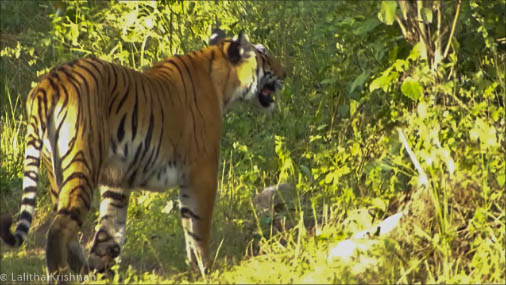
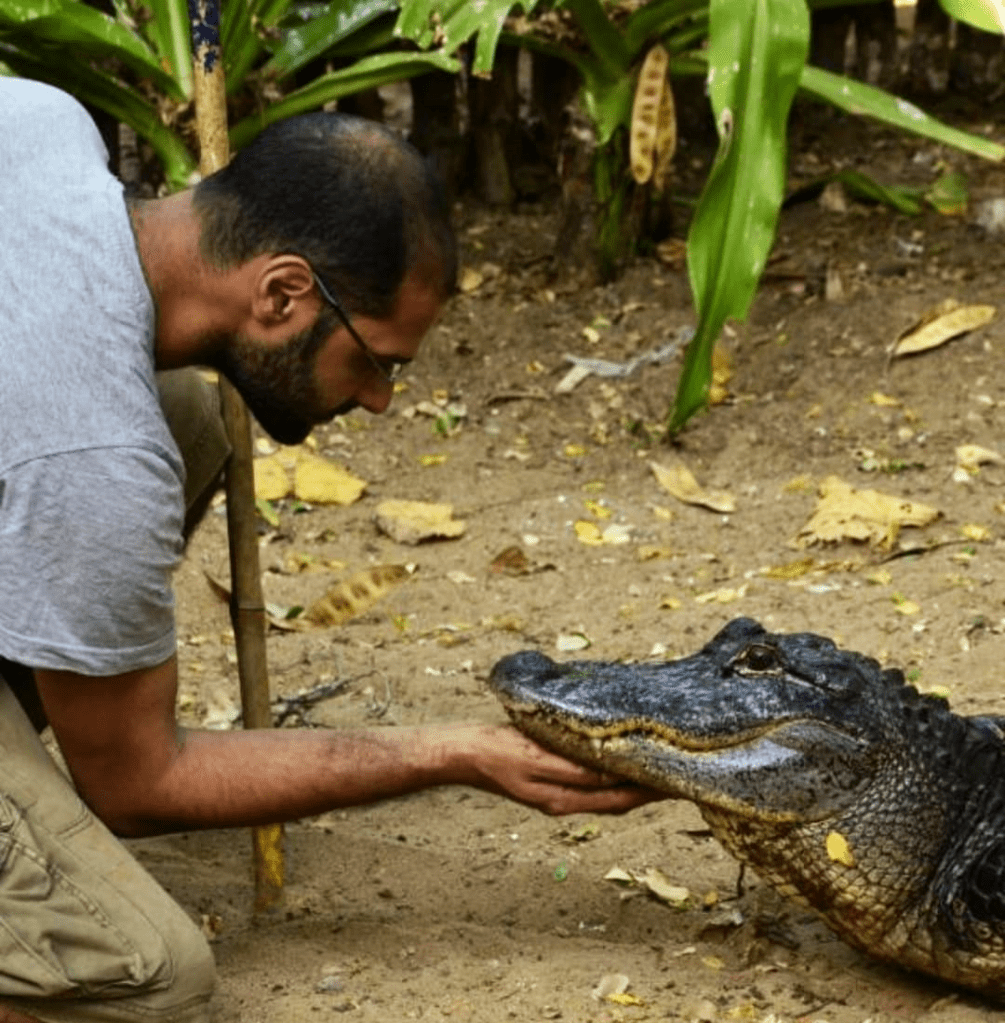
Photo credit https://frontline.thehindu.com/static/content/frontline/flipbook/20200917161213/index.html#p=93

Heart of Conservation Podcast Episode #39 Show notes (Edited)
00:06

Lalitha Krishnan:

Hi, I’m Lalitha Krishnan and you’re listening to episode #39 of Heart of Conservation. I bring you stories from the wild that keep us all connected with our natural world. You can read the transcript for this podcast on my blog, Earthy Matters.

00:21

I’m speaking with Vikhar Ahmed Sayeed. He’s a journalist at Frontline magazine. He has degrees in history from JNU -New Delhi and the University of Oxford. I first met Vikhar at the Wildlife Institute of India in 2016, where we attended a course for nature enthusiasts.

00:40

Vikhar considers himself more of a political and social writer, though he has written some wonderful nature conservation articles that are well researched and fascinating to read. We are going to discuss some of those today as great examples of ethical writing for conservation. In a time where short snippets of fake or sensational news draws more attention, I consider Vikhar a rare breed of journalist. I admire his no-nonsense style in the long form, written with the eloquence of the seasoned journalist that he is.

01:15

Vikhar, welcome to Heart of Conservation. I’m so grateful that you made the time between your travel and work to speak with me.

1:20:

Vikhar Ahmed Sayeed: Thank you so much, Lalitha, for being so patient with me while I’ve been travelling these past few weeks. And as I mentioned earlier, most of my work has been on the politics of Karnataka and social issues, rural affairs. I have a very diversified portfolio of work. Since we met in 2016, I’ve tried to sort of also work on issues of conservation through my journalism.

01:53

It’s not easy to report on issues of wildlife, human-animal conflict, but because of the long form that Frontline allows me to use and because it gives me time, I’ve sort of written a few good articles so I’m happy to chat with with you about these.

2:15

Lalitha Krishnan: Thank you so much it’s been worth the wait. You have as you said published a great many stories and one of them is about Kenneth Douglas Stewart Anderson the Scotsman who was born in India. He is considered a pioneer of wildlife conservation in southern India. But unlike Corbett, little is known about Kenneth Anderson. Would you like to tell us something about him?

02:43

Vikhar Ahmed Sayeed: Lalitha, growing up in Bangalore, and you know, when I was a child, I used to read a lot. And at some point, I came across the works of Jim Corbett. And later, I think, if I recall now, I was in college when I first encountered the works of Kenneth Anderson, which resonated far more with me because I learnt that he lived in Bangalore and he would often foray into the forests around Bangalore. And initially my fascination was like, โ€œOh my God, wow, these were all forests?โ€ I visit these places now and they are part of the sprawl of urban Bangalore.

03:27

And even further on, what were forests once upon a time are now towns. So that was my fascination. And then he was such an eloquent writer and the adventure. When I was young, I primarily used to engage with the works of Kenneth Anderson because of the adventurous element in them. I found that fascinating how he would go and track these man-eating large carnivores such as tigers and leopards and bears and elephants as well at times and he’d write so mellifluously about these encounters. So that was the thrill and then later when I became a journalist, I used to meet a wide variety of people.

04:18

And then a seed of doubt was sowed in my mind when someone casually mentioned, you know, I mean, โ€œYou love Kenneth Anderson, but have you ever considered the possibility that he was fibbing, that he was perhaps exaggerating?โ€ So that casual comment made me think more deeply about his work.

04:44

And I wrote a rather detailed article. The primary motivation was to examine the claim of whether he had actually shot all these tigers and other animals that he wrote about or whether he was exaggerating. So through the course of writing the article, I learned a little bit about him.

05:05

So I learnt that he was born somewhere near Hyderabad in 1910 and then shifted along with his family at some point to Bangalore where he lived in the heart of Bangalore. Right now, the place where he lived would be unrecognizable but it was very close to Cubbon Park and he died in 1974.

05:31

You described him as a Scotsman but to add a bit I think he described himself–he was aware that he was an Anglo Indian because his family had been resident in India for several generations. That is one thing that is important perhaps. Also, among the many books that he wrote, he wrote a work of fiction set around the Anglo-Indian community in India. This had this had nothing to do with animals. So this just as a tidbit And then he worked in Hindustan Aeronautics Limited.

06:16

And often he had a wide network of informants in the villages around Bangalore and what is now Tamil Nadu also. At some point he would hear stories or reports of marauding wild animals, he would set off in his trusted Studebakerโ€ฆ I don’t know how you pronounce the name of that car, but he mentions it often in his writings. And then he would go and he’d write sort of very detailed reports of tracking these animals and then shooting them. And, you may also be interested to know what was the result of my sort of delayed investigation, right?

07:10

I set out to examine the claim whether he actually shot these animals as he claimed. The result of my investigation was ambiguous. I cannot certainly say that he did kill these tigers or whether he didn’t kill these tigers.

07:30

But while writing the article and meeting several people who knew him and meeting younger people who were motivated to become conservationists because of Kenneth Anderson’s work, this question became irrelevant. That was the most interesting development through the course of working on this article.

07:56

He has inspired several, I don’t know, maybe thousands of people to be aware of the importance of wildlife. Even someone like Ullas Karanth who is one of the pioneering tiger conservationists in India, also writes very sort of evocatively about his early forays into the forest with Kenneth Anderson. If you look at his book, A View from the Machan, Karanth has written about these encounters and certainly these early encounters inspired him. This is just one person, but apart from that, there must be hundreds, if not thousands more who have taken an interest in wildlife and conservation because of their reading of the Shikar literature of Kenneth Anderson.

8:52

Lalitha Krishnan: So interesting. I didn’t know any of that. Great. So, more recently you wrote a very disturbing article about how snake bites kill more Indians than all other wildlife combined. That was a real shocker. I quote your article now, โ€œThe World Health Organization has classified snake bites as a neglected tropical disease.โ€ It’s a complicated subject to write about. So tell us about that.

9:23

Vikhar Ahmed Sayeed: It’s certainly complicated Lalitha, I agree with your assessment and it’s complicated for a few reasons, primarily because it’s so overwhelming, right? When you actually start looking at the statistical data, which is clearly under reported, it is scary, shocking, humongous and extremely complex.

09:54

So just to start off with some numbers. The numbers come from something called the Million Death Study (MDS), which looked at unnatural mortality among Indians. What emerged from this vast work is that more than 50,000 people were dying of snakebites in India annually, which is more than all other instances of man and animal conflict combined in the country. So it just seems it’s also complicated because it is so pervasive, right? It’s not restricted to a particular geographical region. It’s not restricted to one species of snake. And it primarily affects a certain poorer class of the country, primarily agriculturists who are out working in the field. So it just doesn’t get the media attention necessary also. For instance, if a marauding tiger accidentally encounters a human and kills that person, there’s so much attention paid to that one incident. Whereas the snakebites, over the past few months, I have sort of started following reportage of snakebite deaths. And often these are not reported. And when they are reported, they are consigned to some corner in the regional media.

11:44

And they rarely make it to the English newspapers, forget sort of the television channels because they are so widespread and common and also there is a feeling that simply because of the nature of the conflict right?  A snake slithers through a paddy field; a farmer bends down either harvesting or so planting crops the snake bites the victim somewhere below the knee, on the ankle, on the talus, on the heel and slithers away. So what can you do about this? So it’s incredibly complex and it’s a bureaucratic tangle also because unlike instances of conflict with other animals where it’s usually the forest department of the respective state that becomes the mediating state authority when it comes to snake bites–even though the vast number of poisonous snakes are consideredโ€ฆ come under the ambit of wildlife protection act these are oftenโ€ฆI mean it’s a more wider problem. So the department of agriculture is involved, the revenue department is involved, the health department is involved, the education department is involved. So there is, I mean, it’s a bureaucratic minefield to negotiate with. So, but through the course of working on this article, I did meet some very passionate, diligent, hardworking herpetologists who are coming up with simple solutions.

13:35

For instance, in the rural hinterland of Mysuru, Gerry Martin/Gerard Martin, the well-known herpetologist has been involved in a lot of local outreach, where he, through the aegis organization is distributing gumboots to farmers and advising them not to go out late at night. I mean it’s funny, a lot of these bites happen because of erratic power supply to agricultural fields. Farmers have to pump water and electricity is provided only at night. So late at night, in the middle of the night in fact, the farmers have to go to their fields and turn on their pumps. So a lot of bites take place at this time.

So Gerry Martin by simply encouraging them to wear closed footwear, by wearing gum boots when they go out at nightโ€ฆ when they can’t see what’s slithering around themโ€ฆ I don’t know the efficacy of this yet, because it’s still something that he’s put in place recently.

14:49

But there are simple solutions, but it is extremely complicated. And there are other problems as well. The state of antivenom, for instance, is a huge concern. And then also the tendency of villagers to go to a local quack, a local healer who has attained some kind of notoriety for treating victims of snakebites because of which they delay going to a hospital. All of this, you know, means that it is extremely complicated to sort of, find easy solutions to this conflict. Any issue of man-animal conflict, as I’ve reported over the past few years, is extremely, extremely complex to resolve. But when it comes to man-snake conflict, it is the problems are of another degree.

15:50

Lalitha Krishnan: Yes, it’s so complex I don’t even know what to say. As far as your conservation pieces go, you also have a knack for researching and writing about lesser-known people and topics. You wrote about a famous taxidermist also known as Van Ingen of Mysore, I don’t know if I’m pronouncing his name right either, who stuffed shikar trophies for international nobility and maharajas of India. He was considered quite an artist in โ€œmaking a lion look more terrifying than it lookedโ€. So please share some interesting facts you came upon while writing this story.

16:29

Vikhar Ahmed Sayeed: Thank you Lalitha. This was an article that I enjoyed writing tremendously, you know, because I’m primarily interested in history so it gave me a chance to indulge in my passion for research and combine it with journalism. So this this article that you mentioned, I must congratulate you for finding this and reading this because it is written more than 10 years ago. It still remains relevant. Anyone can google for it, read it. It reads very well even now. What sparked my curiosity, if you can indulge me for a bit, is that I read a very, very sort of brief report in the newspaper, like a one paragraph report around 10 years ago if I remember correctly. And, all it said was, (Edwin) Joubert Van Ingen, leading taxidermist of Mysore passes away. That’s all, right? And the one paragraph news item stated that Van Ingen was the last member of the famous family of the Van Ingen taxidermist. And he had passed away at the ripe old age of 101. So for all these reasons I was very very intrigued.

18:01

And at just at that time I think I had read R.K Narayan’s book where the main character is a taxidermist. It’s called The Maneater of Malgudi. So for all these reasons I was very sort of intrigued and I went off to Mysore and I was so fascinated to learn more about this character. So he was the last surviving member of the Van Ingen family. So they were actually Dutch Boers who had moved to South India and Mysore at some point during the reign of the Wadiars of Mysore when Mysore was a princely state. So, Joubert Van Ingen’s father started this taxidermy firm sometime in the 1920s and he had four sons, all of whom carried on the legacy after their father’s death. and they had a vast factory.
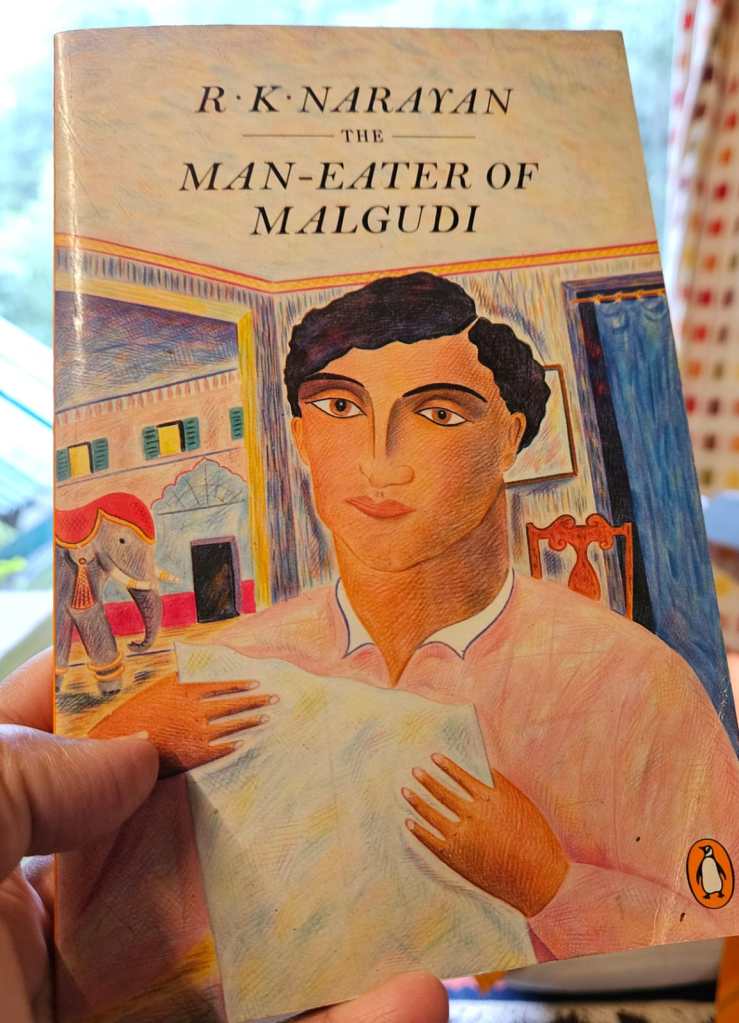
Photo by Lalitha Krishnan

19:10

So this was the time that you should be aware that hunting was wide bred, was considered a sort of, there are many sort of studies on hunting during the British colonial period. But hunting was in a way considered a rite of passage for both colonial officers and the Indian nobility. So, it was perhaps a valued hobby, a pastime, a networking arena if I could sort of use that very modern phrase. And everyone was hunting and they wanted to preserve this memento that they acquired for posterity.

20:01

So taxidermist became very important and it became a very skilled profession. During my research I met a number of people  including employees who worked for the Van Ingen factory and other old residents of Mysore who were aware of the Van Ingens, who had spent time with them, who sort of spoke about Joubert Van Ingenโ€™s great knowledge of the forest and his skill as a taxidermist. it is a little overwhelming for me when I recount this because as I mentioned earlier.

20:46

I mean they had a vast factory and they were the favoured taxidermist across South Asia and thousands of animals, skins primarily, would be sent to them from all over the country, right from Nepal from sort of the furthest boundaries of British India and then these thousands of skins would be processed for example if they are processing tigers they would make full mounts meaning the entire body of the tiger or like only the head or even rug right? And, we now have a population of between 3000 and 4000 tigers in India.

26 Dec 1992, Wankaner, India — Dining Room with Mounted Tiger Heads — Image by ยฉ Lindsay Hebberd/CORBIS (Laymens68, CC BY 3.0 https://creativecommons.org/licenses/by/3.0, via Wikimedia

21:33

You will be fascinated to learn Lalitha that just sort of say in a five year period, according to the data that I discovered in the 1930s, when the factory was working at its full efficiency  perhaps, more than 3000 tigers were just processed through the Van Ingen factory in five years.

21:59

This was sort of like a line. So they had sort of prefabricated models, mannequins which they would use. It was an elaborate art also.  But, the Van Ingens could err and refine their models simply because they had thousands and cumulatively perhaps lakhs of animal skins being processed in their factory. So, I mean, when we look back and just say a hundred years ago, this is not even a hundred years ago, say 70-80 years ago, large carnivores were so widespread. Even then, their numbers were depleting because there was no awareness of the importance of conservation. But it was just so easy to foray into the forest, to head to the forest, kill a tiger, shoot a tiger and then transfer the skin, transport the skin.

23:11

And Van Ingens had produced several manuals which were available, I am presuming, all over the country at that time, which described in detail what a hunter was supposed to do as soon as he shot an animal, how the skin should be preserved and how it should be transported safely so that it arrives in immaculate condition and then can be transformed into this great work of art that reflects a living animal itself. So, tigers were just one animal, there were leopards, there were elephantsโ€”not full elephants–elephant heads.

23:55

Even now, if you go to the Mysore Palace, right at the entrance there are two elephant heads which are mounted at the entrance. These also have been processed by Van Ingen. In the Mysore Palace there is a restricted enclosure. Enclosure may not be the right word. A room– a state room, a huge large room where you need special permission to go. And because the Mysore Maharajas were patrons of the Van Ingens, several of their trophies are available in this room, including a mount of the pet of one of the Mysore Maharajas, a mastiff known as Brumell. So Van Ingen, Joubert Van Ingen, you know, it is unfortunate that I was a journalist even before his passing, but I was unaware of the stature of this person. And I became aware of him only after his death. And all this, I found out after his death, you know, the only great regret I have is that I never met this man when he was alive.

25:06

Lalitha Krishnan: Wow, now I understand why you were overwhelmed. I mean, a factory processing tigers and elephants. It’s hard to imagine, you know? Vikhar, both your articles, Mumbo Jumbo Responses and Tiger on the Trail, cover again a very serious matter of human animal conflict. I like that you covered both sides of the story, the people’s view and the challenges that wild animals have to face living on the edge of human habitat. Karnataka has the highest count of elephants in India according to the 2017 census and probably, correct me if I’m wrong, human deaths by elephants.
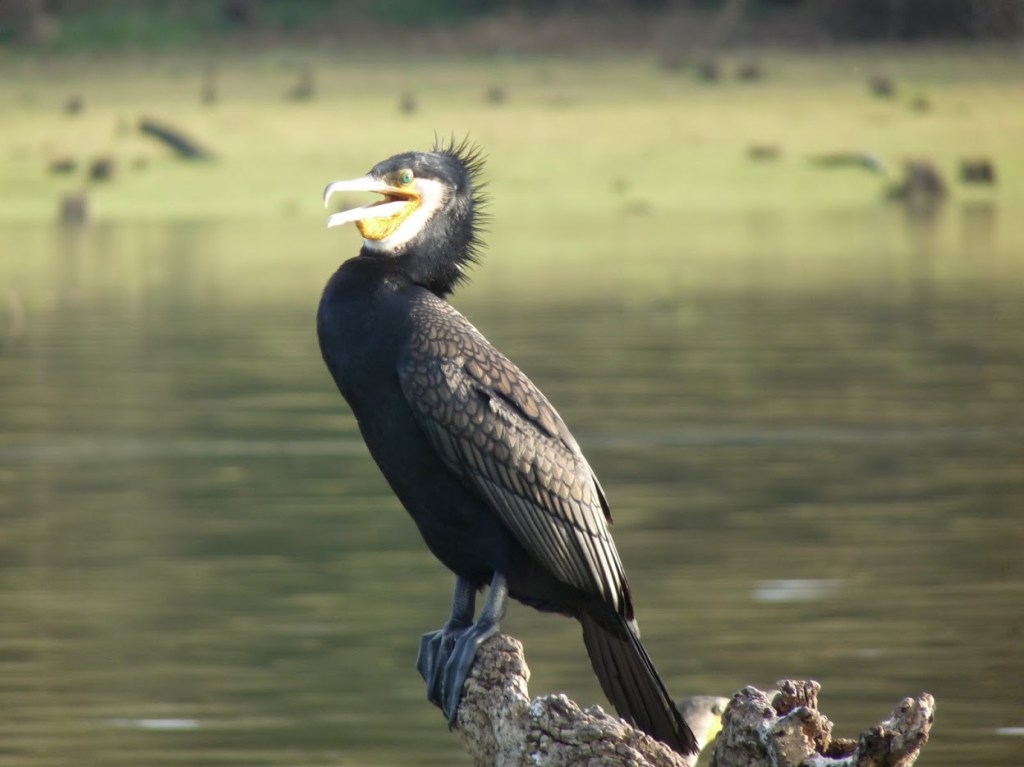
25:47

According to the National Tiger Conservation Authorityโ€™s โ€œStatus of Tiger Reportโ€ (2022), there are 3000+ tigers in the Nilgiri Biosphere.  Despite โ€˜Early Warning Systemsโ€™, trenches, tracking, fencing, relocation, building of corridors, radio collaring etc, this again, is such a complex issue and must have been a very difficult one to cover. What were the challenges you discovered writing about these conflicts?

26;17

Vikhar Ahmed Sayeed: Oh, thank you for that question, Lalitha. These pertain to two of my detailed articles. The first one, Mambo Jumbo Responses is on the human elephant conflict in the hills of Hassan, which has been a pervasive problem over the past few decades. And the second one is titled Tiger on the Trail, which pertains to tiger-human conflict on the fringes of two very well-known protected areas, the Nagarhole Wildlife Sanctuary and the Bandipur Tiger Sanctuary. So both of these are different. I mean, there was a point in my career, in my life when man-animal conflict issues were seen as humans encroaching into forests and because of which all this conflict takes place.

27:14 That was the sense that I had, which as I later learned, I was quite badly informed. So for instance, in the hills of Hassan, there is a resident herd, I mean it is not a single herd. There are several smaller herds and even individual male elephants who form their own bands or who are sort of rambling alone. So there are no forests, there is no protected area or even if they are there, these patches are so small and scanty that they cannot sustain this herd. So basically you have this large group of elephants that are just sort of walking around through the extensive coffee plantations in that region. So that is why you have these instances of conflict and over the past two decades. Some 70 people have been killed and various solutions have been devised but none have worked so far.

28:28

The only solution seems to be that humans and elephants need to learn to coexist and moving to the tiger issueโ€ฆ See, tigers in Nagarole and Bandipur… Bandipur and Nagarole are touted as sort of marquee examples of conservation success, especially of Project Tiger which began in 1970s, somewhere in the 1970s.

28:57

And when Project Tiger commenced, there were 12 tigers in Bandipur. There are more than 200 tigers and as you know, tigers are very territorial. So it is, I mean it is ironic, the conflict is a result of the success of conservation.

29:21

So these areas have been protected very well. So tigers are territorial beasts, they are also very fecund. So they have reproduced, they have taken advantage, there is a robust deer populationโ€ฆcheetal. So the population has grown and considering that these animals are territorial, they do end up on the fringes of these forests and even are often spotted outside the protected areas as well. So it is a little more complicated. Right?  Again, through the course of writing this article where I met a variety of stakeholders there is no easy solution to issues of man-animal conflict. That’s what I realize and the intervention of non-state actors has been crucial in mitigating instances of human-animal conflict.

30:18

Lalitha Krishnan:  Thank you for that. You gave a good explanation or understanding of what the real issues are. So, Vikhar, as a fellow of the Asian Journalism Fellowship, you were lucky to listen to Jane Goodall in Singapore. Your wonderful and erudite article, The Chimpanzee Lady, I presume is inspired by this encounter. So what was the most inspiring thing (I am sure there are a zillion) about her that influenced this article?

30:51

Vikhar Ahmed Sayeed: Lalitha, it’s kind of a very sort of basic question. It’s not a question at all. Because well, Jane Goodallโ€ฆ but we need to go back to the time that we spent together at Wildlife Institute of India (WII ) and one of the classes there which was a discussion on wildlife literature.

31:22

So I carefully sort of made a list of all the books that were recommended and the first book that I read once I came back from Dehradun back to Bangalore was Jane Goodall’s In the Shadow of Man. And I felt so deeply moved by that book and the honesty of Jane Goodall and her sincere effort at conducting what is now clearly seen as pioneering research on the ethology, on the behavior of chimpanzees that I sort of told myself that if ever an opportunity presented where I could listen to this great lady directly,I’ll sort of move heaven and earth to get there. Coincidentally, after that time after reading her book I was in Singapore and she was speaking at a venue in Singapore. And in Singapore, unlike a lot of events in India where everything is free and people can just walk in where in fact there’s a paucity of attendees sometimesโ€ฆ Singapore, it was a ticketed event. Someone, I think if I recall correctly, my fellowship administrators procured a ticket for me after they became aware of my eagerness to listen to Jane Goodall. So I went. I listened to her. Jane Goodallโ€™s work is fascinating on many many levels. There are many other greater people who can comment more authoritatively on the extensive corpus of her work. But for me, what struck me was, I haven’t gone through advanced postgraduate academic studies. It’s very difficult to challenge the established discourse that has been set in academia. It can be in any discipline.

33:41

So Jane Goodall goes to Gombe in Tanzania and she doesn’t have any background, she doesn’t have a degree even in wildlife sciences or anthropology or anything and very intuitively starts studying the chimpanzees of Gombe and builds such profound relationships with generations of chimpanzees. And she writes very beautifully about this connection that she built. So I heard her and also a very interesting point that she made was at some point, Goodall does enrol for a PhD and even completes it at Cambridge University. But when she realises that her research has greater significance, she very brutally, very confidently disconnects with academia, which I think is a very bold sort of move to make because how do we legitimize knowledge, right?

34:57

How do we legitimize that a certain mould of research is the correct way? We strive for recognition by a peer community and she breaks away from this and moves full-time into conservation. She says, no, I don’t want to be a wildlife scientist.

35:20

She takes this decision sometime in the 1980s. She’s done so much for conservation all over the world. What I recall very sort of clearly, is how optimistic she is. You and me are perhaps more pessimistic but even at her advanced age she remains very optimistic that humans and animals in the wild can coexist.

35:51

Lalitha Krishnan:  What conservation needs!  Hope. Optimism. I think she’s 90 now and still inspiring so many generations. She’s amazing. I had to ask you that question. I’m sorry. Besides, I am so jealousโ€ฆ Thanks for that, Vikhar. And, this is for budding conservationists or journalists, writers and documenters. What guidelines would you suggest for ethical representation?

36:22

Vikhar Ahmed Sayeed: That’s a tough question, Lalitha.

Lalitha Krishnan: Well, they can just read your articles.

36:29

Vikhar Ahmed Sayeed: Yes, yes, I certainly recommend that. Along with that, see, I mean, I came to writing about issues of wildlife and conservation in a convoluted way. At a midpoint in my career, Iโ€™d like to thinkโ€ฆ I’ve been a journalist for 16 years now. So I started paying attention to issues of man-animal conflict /conservation only over the past few years. So before that, my journalistic sense was finally honed. So using that same methodology and tools, I sort of applied it to understanding issues of conservation.

37:21

And very practically, what I did is, first, I befriended wildlife scientists as well as conservationists. And there is a fine difference between these two categories of people.  I befriended these people who are working towards on issues of conservation and then started sort of hanging out with them and getting a sense of how they engaged and interpreted issues of wildlife because wildlife science is a very advanced discipline. So obviously I couldn’t master it, right? But I tried to familiarize myself with how they think, how they thought. And using this sort of connection, I gained the confidence of writing on these issues. So these friends have been of great help.

38:32

When it comes to issues of conflict, again, I sort of work very clearly in a very straightforward manner as a journalist. Some people who identify themselves only as environmental writers or wildlife writers make the mistake of approaching the story with a bias. The bias is towards animals and even me, I mean, the whole purpose of my work is to ensure that how conservation can be improved. But I sort of don’t go to the field with this bias. I go with a very open mind and issues of conflict are extremely complex, right? They cannot be seen in terms of a black and white understanding.

39:19

They are very grey, they are very complicated and I enjoy that process of unravelling the intricate complexities of these issues. So, I savour that challenge. So, my advice to people who are writing about the wildlife and issues of conflict especially, is to be aware that there are multiple stakeholders and it’s very tricky to sort of unravel the complexities of conflict. But the advantage with these stories is first that wildlife. Scientists and conservationists are very studious people, right? So you have an incredible and rich source from which you can draw.

40:07

These people have been thinking so they would have generated data, they would have a strong perspective, they would have developed a strong point of view. So that is one advantage compared to the reportage that I do on other issues. I report in Karnataka and the bureaucrats of the forest departmentโ€”I don’t know, I can’t speak for the forest department bureaucrats in other statesโ€”but at least in Karnataka are accessible, which means that to understand the state point of view, the government point of view, you have an avenue for a journalist or for a writer. Because, like I’ve mentioned that I report on a wide variety of issues, right? Agriculture, caste issues… communalism. Often my struggle is to gain access to an officer or a bureaucrat of some authority who can comment articulately and clearly on an issue, which half the time is a big struggle.

41:19

Whereas when it comes to issues of wildlife, there is some struggle. People are not sitting as soon as you call them, they are just waiting, rolling out the red carpet for you. But at least they are willing to talk, which is important. So those are some learnings. And I don’t know if it works as advice, but certainly those are learning and which is why I’m excited to write more about issues of wildlife and conflict from Karnataka.

41:48

Lalitha Krishnan:  I so look forward to that. Thank you so much.

41:51

Vikhar Ahmed Sayeed: Thank you. You’re welcome Lalitha. I mean, I’m so happy that we had this conversation because I know that, you keenly read my articles. So it’s always a pleasure engaging with someone who takes your work seriously, who pays close attention to it. I should thank you for taking the time to read, go through some of my own articles, which I had forgotten.

42:20

Lalitha Krishnan: Absolutely my pleasure. I learnt so much. From listening to you even more.

The end.

Listen to the podcast here.

Birdsong by hillside resident, the collared owlet. All photos courtesy as mentioned in caption /photo. Guest photo credit: Vikhar Ahmed Sayeed. Podcast artwork by Lalitha Krishnan
Disclaimer:Views, thoughts, and opinions
expressed in the podcast and show notes belong solely to the
guest/guests featured in the episode, and not necessarily to the host of
this podcast/blog or the guestโ€™s employer, organization, committee or
other group or individual.

Illegal Wildlife Trade in India with Dr Dipankar Ghose, Senior Director, Biodiversity Conservation, WWF India

Heart of Conservation podcast Ep #38 Show notes (Edited)

0:00:07: Hi, Iโ€™m Lalitha Krishnan, and youโ€™re listening to Heart of Conservation. I bring you stories from the wild that keep us all connected to our natural world. Today, I have a very special guest, and we are going to be talking about the illegal wildlife trade. Illegal trade in vulnerable to critically endangered plants and animals is an organized crime network that has spread its tentacles across every continent.

0:00:31 Lalitha Krishnan: It takes a huge world network of very specialized partner organizations to bring down illegal wildlife trade. Iโ€™m speaking with Deepankar Ghose. Senior Director, Biodiversity Conservation, WWF India, to get the scope on illegal wildlife trade in India and abroad. Heโ€™s a conservator with three decades of experience under his belt, and Iโ€™m impatient to tap into his insights and hear of his battles on tackling the dark side of nature conservation.

0:01:00 Lalitha Krishnan: Deepankar, welcome to Heart of Conservation. Iโ€™m so happy to have you on board.

0:01:05 Dr Dipankar Ghose: Thank you, Lalitha. Itโ€™s an honour to be on this podcast.

0:01:12 Lalitha Krishnan:  So, you know, if one were to dig deep enough online, one could possibly see illegal wildlife trade routes for wildlife and exotic plants originating from our own country. With the demand growing, how serious a problem exactly is wildlife crime in India? And what numbers are we talking about?

0:01:36 Dr Dipankar Ghose: Well, first of all, let me congratulate you, or rather also thank you for bringing up a very important topic on wildlife trade. And today we are going to talking about the wildlife trade, more about the illegal wildlife trade. It is very big, unthinkably big globally. Now, when we come to India, wildlife trade in India is thriving because India is a source country. As long as countries, of course not India, but other countries continue to believe that rhino horn will cure cancer or a tiger bone vine will increase somebodyโ€™s strength our animals will continue to get poached. With a very high level of protection and dedication from the forest guards and tremendous support from the local community, poaching has been contained in many places, but it is still there. So we canโ€™t say that poaching has stopped. What we need to also recognize is the fact that the culture of conservation in India, does not allow a tiger to be poached easily, right?

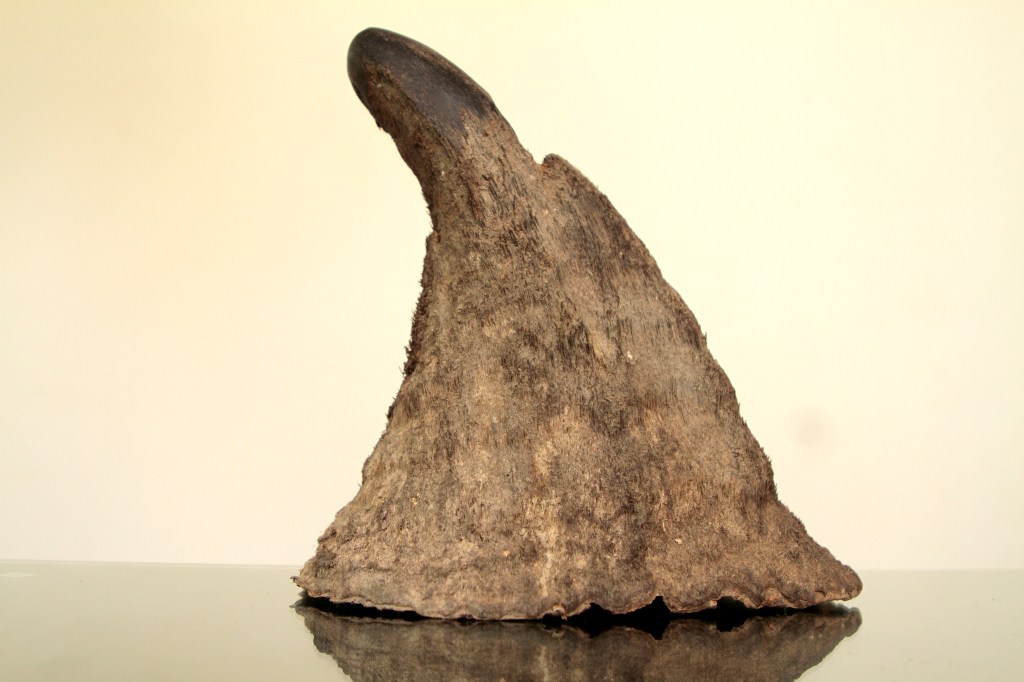
0:02:52 Dr Dipankar Ghose: So if, and we have actually seen it, that once a poacher in a village was identified, the person was kind of boycotted. So the local people support conservation, but it is the commercial nature of illegal wildlife trade. It is the very high demand and at times, pricing that allows the trade to thrive. Believe you me, rhino horn is nothing but a cluster of hair, which means it is keratin. Keratin does not cure cancer.

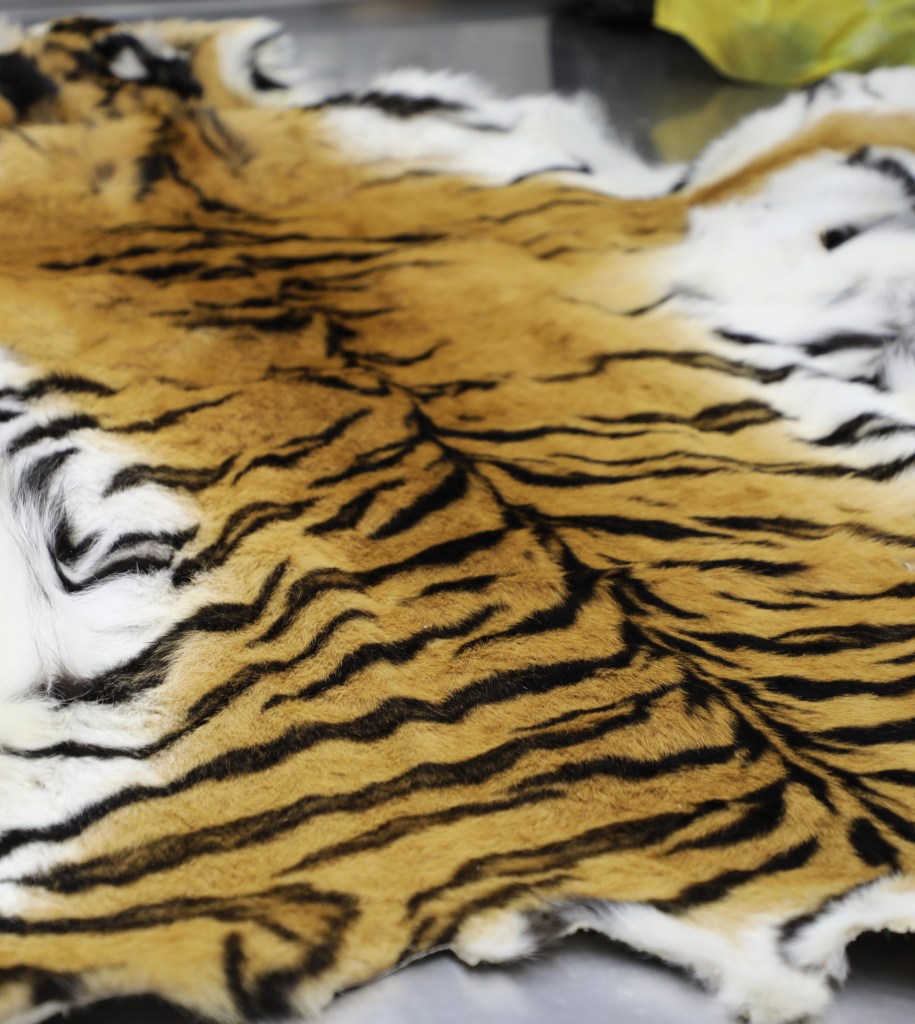
Tiger skin photo credit: Dr Saket Badola

0:03:25 Dr Dipankar Ghose: Same thing with tiger bone. Itโ€™s similar to any other carnivore bone. It will not add to the strength of a person. So while we are working in the country on strengthening protection and using modern tools to carve poaching, one also needs to work outside the country, which global organizations are doing to ensure that the demand is also reduced. So to answer your question, it is big, it is thriving, and India as a country acts as a source for some of these charismatic threatened animals. And we are talking about tiger body parts, rhino horns, elephant tusks, and sometimes even elephant bones and skins and blood bits.

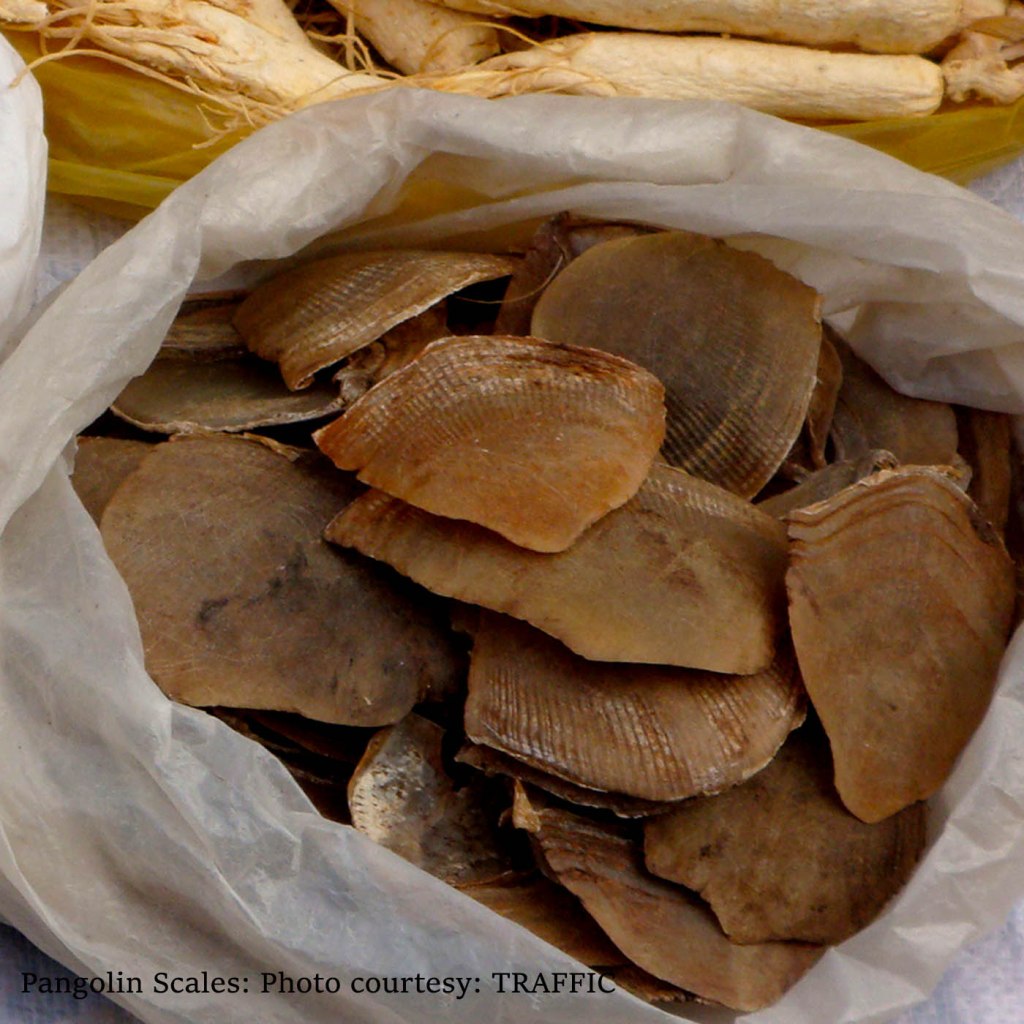
0:04:17 Dr Dipankar Ghose: We are also talking about marine species, freshwater turtles, pangolin scales, you name it. Most of the threatened species from India, animal species particularly, are in the illegal market.

0:04:33 Lalitha Krishnan: Right. Itโ€™s also like a catch 22 situation where we have so much and so much has been done to look after it. But at the same time, thereโ€™s a demand for all of this. So, you know, most of us have heard of tigers, rhinos being sold for medicine and skin, and the exotic pet trade of fish and birds. But most of us, Iโ€™m sure, in India, Iโ€™m not talking of the general public, who knows about the โ€˜conservationโ€™ field… But, you know, a good number of us donโ€™t even recognize the timid pangolin, which is part of this ongoing illegal network.

0:05:11 Lalitha Krishnan: And I read that 23.5 tons of pangolin were traded in 2021 alone. Of course, I donโ€™t have the latest numbers, but why is it so?  Could we speak about why pangolins are the new tigers or the new most fashionable thing to trade?

0:05:29 Dr Dipankar Ghose: So pangolin scales are used in traditional oriental medicine, right? Theyโ€™re never used in their fresh form, theyโ€™re used in their dried form. And there are papers published in reputed scientific journals which say thatโ€” thereโ€™s one particular paper I can send it to youโ€”which says scales are burnt, roasted, ashed, cooked in oil, butter vinegar, boyโ€™s urine, or roasted with oyster shells to cure a variety of ills.

0:06:00 Dr Dipankar Ghose: Among these are excessive nervousness and hysterical crying in children, women possessed by devils and ogres, malarial fever and deafness. So many pangolin skeleton requests for this purpose that yearly, the scales from some 5000 individuals were imported from a particular country. And these are all going into traditional Chinese medicine. The challenge again is the belief whether the scales have that kind of a property is not scientifically proven, but they are going to be used all the same as the rhino horn. It is keratin, which we know, does not cure cancer.

0:06:44 Dr Dipankar Ghose: Right. If it could be a cure, then probably we would have eaten up all our hair or bitten off all our nails just to prevent cancer from happening. But it doesnโ€™t help in any way. So same thing with pangolin scales. And what we are also hearing is that pangolin scales, because the belief is they cure a lot of illnesses, they help women to lactate and stuff. People started using dry pangolin scales as a hair comb for combing their hair and brushing their hair.

0:07:20 Dr Dipankar Ghose: They make tiny combs out of those scales or use them as guitar plucks just to have a feel, just to touch a pangolin scale. So itโ€™s deep in the belief that the challenge is that the users do not understand that a species is going to be exterminated from nature. Just because there is an unscientific belief in their mind, in oriental medicine, thatโ€™s the challenge.

0:07:51 Lalitha Krishnan: And this is such a small creature, it makes it even more vulnerable to ignorance you know?

0:07:58 Dr Dipankar Ghose: Absolutely. I tell you about 20 years back when many tiger skin seizures happened from India and Nepal, some of those seizures had also recorded the trade of otter skin. And then one found out, and I had been to Tibet and figured out this otter skin was used to make collars of coats of chuba. Why? Because otter skins have a very good waterproofing quality or character. So when it is snowing or it is raining, snow wonโ€™t settle on a coat which has got an otter skin collar. Now, my point is that in this time and age, when we have so much synthetic material use why kill a poor otter in the wild?

0:08:47 Dr Dipankar Ghose: And youโ€™re not, not using farmed sablel hair, but youโ€™re actually killing wild otters to use their skins on your coat.

0:08:56 Lalitha Krishnan: Makes my skin crawl. Is this still going on?

0:08:59 Dr Dipankar Ghose: Yes, we still hear otter skins getting seized. Itโ€™s likeโ€”at some point of timeโ€”in some parts of eastern India, Banded Krait, which is a veryโ€ฆ itโ€™s a poisonous snake, but a very docile snake. The Banded Krait was almost exterminated because there was high demand from the fashion industry to manufacture leather bags of Banded Krait skins. You know, yellow and very bright yellow and black stripes.

0:09:30 Dr Dipankar Ghose: That kind of exterminated the Banded Krait, which created another problem, because the Banded Krait, thrived on smaller snakes. They ate small snakes, and one of their food snakes was the Common Krait. So in Sundarbans, the hypothesis was that many people started encountering Common Krait. You see them inside your homes and fields, and you’re somebody getting into the farming room and stuff and getting bitten and bitten in odd places, odd times and dying.

0:10:04 Dr Dipankar Ghose: And one of the reasons scientists and naturalists who were working on this had said, โ€œIf bandit crates were there and there were a high number of Banded Kraits, they would have kept the population of Common Kraits.โ€ I mean, that exactly is a typical maintenance of ecological balance. You know, one creature maintains the balance of another. But we took out the Banded Kraits, they were poached for fitting into the fashion industry.

0:10:33 Dr Dipankar Ghose: Demand for snake skin all gone, you know. So, I mean, we sometimes do not even think ofโ€ฆ there is the whole illegality of it, but there is also the ecological aspect of it. And many a time one doesnโ€™t see the ecological aspect. At some point in time, in the southern part of the country, the large tuskers were all poached, and most of the tuskers were poached. So the sex ratio was skewed and breeding success went down because the makhnas or the tuskers with smaller tasks were not selected by breeding-age females.

0:11:10 Dr Dipankar Ghose: Now thatโ€™s getting recovered in successful conservation initiatives, its population is recovering. So there is this whole ecological aspect which also needs to be looked at when we deal with illegal wildlife trade, right?

0:11:25 Lalitha Krishnan: And also communicated, I donโ€™t think people realize what happens if you take all these species, especially keystone species off the picture. Wow, thatโ€™s interesting. Have you ever personally out of choice or otherwise been involved in particularly monitoring or witnessing wildlife training?

0:11:49 Dr Dipankar Ghose: Well, in my previous avatar, I was working with another organization and I was in charge of the enforcement unit: Wildlife Enforcement unit. So NGOโ€™s and civiliansโ€ฆ we are not authorized to take any enforcement action. So we worked very closely with government agencies, and enforcement agencies and monitored illegal wildlife trade and at some point in time also helped the government to bring an end to that trade. So this was around 2003, 2004 when I was working with another organization and we worked with the government of Uttar Pradesh to curb trade, or rather illegal trade in mongoose hair paintbrush.

0:12:35 Dr Dipankar Ghose: And initially what looked like a small industry of manufacturing paintbrushes, which is sold to the artists and students, we figured out that some of these brushes were actually getting into the fashion industry because that was one of the most preferred brushes, organic brushes for painting or face painting or colouring or masking. It was quite a long process. When we monitored this trade, often working with government agencies involved a lot of meticulous planning, careful planning and taking utmost care not to expose some of the people who were giving that information.

0:13:20 Dr Dipankar Ghose: And ultimately working with the government to curb the trade and bring the offenders to the book. So yes, I did that. But from WWF currently, we are not into any of these enforcement actions. If we get to know about any illegal trade, whether itโ€™s through online monitoring or whether itโ€™s based on information received by any of our field members, we immediately pass on the information to the nearest government authority, either the wildlife crime control bureau or the forest department.

0:13:56 Lalitha Krishnan: I mean, who would imagine part of your makeup is from a mongoose? To even think that, itโ€™s just so sad. Could you explain what the wildlife trade chain is? Just to have some basic understanding.

Sable fur skins in Milan. Photo by Kuerschner – Own work, Public Domain, https://commons.wikimedia.org/w/index.php?curid=3734346

0:14:18 Dr Dipankar Ghose: Itโ€™s very, very interesting. And I will take the example of Sansar Chand. And often people used to say that Sansar Chand is the Veerappan of north India, but thatโ€™s not true. So Veerappan was a person who was extracting sandalwood and who was also trading in sandalwood. But mostly his job was extraction and some bit of trade. Right? When I say extraction because it was plants, it was trees, which he was into, timber, which he was trading in and smuggling.  Come to north India, a Sansar Chand, Sansar Chand was not a direct poacher. He might have instigated or asked somebody to poach an animal, but he was essentially a trader, a big-time trader of wildlife derivatives.

0:15:08 Dr Dipankar Ghose: So there is a change in the process that we are seeing. Earlier, there used to be poaching syndicates and illegal wildlife trade syndicates which used to manage some of these. But with the advent of the Internet and social media and the dark web, a lot of supply chains and logistics solutions, we are seeing that the trade of illegal wildlife products is now going online. There was somebody who was announcing that, โ€œHey, I have this particular animal and a live specimen. If you would like, contact meโ€.

0:15:46 Dr Dipankar Ghose: And not even through the dark web in a masked wayโ€ฆhe was presenting it on an online platform. Obviously, enforcement action was initiated against the person. So the chain happens is that from the point of poaching, from the source point, it crosses our borders, land borders, primarily through Nepal or through Bhutan or through Bangladesh. Otherwise, itโ€™s through the seaports. A lot of seizures of star tortoises have happened in the seaports.

0:16:18 Dr Dipankar Ghose: Marine products through the seaports. And some fancy products are also very expensive, like shatu shawls. They are also transported by human carriers. E.g., a passenger would buy a shahtoosh shawl in India and they would take it in person when they would fly out of the country. So itโ€™s mixed and there is no one particular trade route, but essentially a land route through the northern and eastern border.

0:16:46 Dr Dipankar Ghose: Northeast has become, especially the Indo-Myanmar border has become particularly vulnerable to illegal wildlife trade. So, yes, land routes from those sides, seaports and sometimes also air routes.

0:16:59 Lalitha Krishnan: Itโ€™s more complicated than we can sort of figure out or understand.

0:17:06 Dr Dipankar Ghose: Yeah, indeed.

0:17:08 Lalitha Krishnan: At the same time, it looks so simple. I mean, a passenger taking a shawl across would be not suspected at all. Crazy.

Leopard skin photo credit: Samir Sinha

0:17:17 Lalitha Krishnan: You know, talking of technology, itโ€™s always evolving. Would you like to tell us something about environmental DNA or eDNA that WWF uses or something new that we might not even be aware of?

0:17:35 Dr Dipankar Ghose: A  very good question. We do not have a laboratory and we work primarily with government agencies. eDNA, technology is evolving and I hope that one day, subject to the availability of our resources, we will be able to get into the eDNA space and strengthen the work that researchers and officers from the government are doing. But there is something that we started about seven, eight years back. This is called the  RhODISยฎ -Rhino DNA indexing system, where we have been partnering with the Ministry of Environment, Forest and Climate Change Government of India (MoEFCC) and the Wildlife Institute of India(WII) to establish this system.

0:18:21 Dr Dipankar Ghose: The technology was borrowed from South Africa. I would say, users and initiators of the technology transferred the technology to the laboratories here and now the Wildlife Institute of India have the marker for rhino populations from all the wild, rhino-bearing areas of India. So what happens is that once a rhino is poached and its horn is collected, and if there is any tissue in it and DNA can be salvaged from there, then the rhino DNA is matched and the population where from it was collected is identified, which helps in strengthening the case. The prosecutor can then pinpoint and say that, okay, hey, this particular rhino horn, which might have been seized in a city, can say that, well, this matches with the population here.

0:19:17 Dr Dipankar Ghose: And if a carcass has been found and the DNA samples obviously, have been collected from that carcass, then that horn might even be matched with the carcass of rhino, which was poached. And, using this information, in the recent past, one conviction has happened where a person who was in possession of a rhino horn, was matched with a poached rhino. And then the call details record also showed that the suspected poachers were also talking to this person who was a trader. So this kind of technology also helps. Earlier, it would have been impossible to establish a link between the trader and the poacher. And although the case would be there when a ScheduleI species derivative would be seized from the possession of a civilian, the case would get strengthened if it could be linked with a particular poaching incident.

0:20:14 Lalitha Krishnan: Thatโ€™s so interesting and so nice to hear that. So itโ€™s not only concrete evidence, but itโ€™s speeding up the whole process of catching them before they leave the territory, wherever that is. Or the country, I suppose. Apart from the latest technology, which is also available to crime networks, what other methods or soft tools do you think are imperative to keep illegal wildlife trade at bay? What does WWF do?

0:20:50 Dr Dipankar Ghose: Again, a very good question. I think technology is important and we are working with the government agencies to help them with technology. There is a simple tool which was promoted by WWF and now many agencies use it. Itโ€™s called Deep Search Metal Detector, used to find leg snares. Sometimes these leg trap snares, metal snares, are put on the forest floor, primarily meant for catching carnivores like tigers and leopards and sometimes even herbivores. Now these DSMDs, the Deep Search Metal Detector would help a person, a forester, a forest guard, or a ranger, to find a snare.

0:21:38 Dr Dipankar Ghose: It would also, in a crime situation, help the officers to find empty cartridges or bullets or shells or metal cells or even a weapon if that was hidden in the nearby area or near the crime scene. So we also use forensic kits and stuff. But the most important fact remains that protection can be strengthened by increased patrolling, surveillance and support from the local communities who are residing within or adjacent to these wildlife habitats.

0:22:18 Dr Dipankar Ghose: These three things are of primary importance. Protection, surveillance, and community support. So we work a lot with the authorities, with the protected area managers or reserve forest managers, which are wildlife habitats, to strengthen protection, help them in surveillance using something like sniffer dogs, which could continue or which could help in the investigation, finding a spoor and also work on securing community support against wildlife crime.

0:22:56 Dr Dipankar Ghose: There is one area I would like to mention in the Terai particularly, in Uttar Pradesh. We have been able to establish, together with the forest department and local panchayats, a group of volunteers who are there to protect tigers. Theyโ€™re called Bhag Mitras and there are about 500 of them. Itโ€™s a fully voluntary force and their primary role is to help the authorities in managing human-tiger conflict.

0:23:25 Dr Dipankar Ghose: Whenever there is a challenge: a tiger is in human dominated landscape, these people come out and they form the first line of defense. So this really helps in managing conflict. But this also deters a suspected poacher. Because with so many people trying to protect the tiger, a poacher would not dare to go there because this particular group of people would then not support or would do something to stop poaching.

0:24:01 Lalitha Krishnan: First line of defence.

0:24:04 Dr Dipankar Ghose: Yes, indeed.

0:24:05 Lalitha Krishnan:  My next question is how does your partnership with other agencies like TRAFFIC (Trade Records Analysis of Flora and Fauna in Commerce) help fight wildlife trade in India? Or do you have other partners and what are their different roles?

0:24:18 Dr Dipankar Ghose: So traffic is part of WWF and I am also the Interim Head of TRAFFIC in India for the last two years. And so itโ€™s the same team which is working whether we call it TRAFFIC or WWF. But in terms of partnership, we partner a lot with not just government agencies but also NGOs and other intergovernmental bodies. We recently partnered is the South Asian Wildlife Enforcement Network (SAWEN) and the Global Tiger Forum in capacity building of enforcement authorities along the Indo Napal border at a very, very high level and a strategic level.

0:24:57 Dr Dipankar Ghose: We also work with other NGOs while it talking about capacity building or curriculum development for ranges. So most of the partnerships are through the government agencies coordinated by the Wildlife Crime Control Bureau or the State Forest Department or the Ministry of Environment, Forest and Climate Change where we partner with other enforcement agencies or with other NGOs.

0:25:25 Lalitha Krishnan: Dipankar, whatever youโ€™ve been telling me, itโ€™s such an insight. Thereโ€™s so much, as ordinary citizens that I donโ€™t know, and Iโ€™m sure most people donโ€™t know most of what youโ€™re talking about. So thank you so much for those insights.

0:25:39 Dr Dipankar Ghose:: Youโ€™re welcome.

0:25:40 Lalitha Krishnan: I kind of know the answer, but I donโ€™t know the answer. So is illegal wildlife trade a people problem or is it a government problem?

0:25:52 C: Itโ€™s a problem of both sides.

0:25:55 Lalitha Krishnan: All right.

0:25:56 Dr Dipankar Ghose: Why is it a people problem? Itโ€™s the people who do the poaching. They are normal people. What is driving them to poaching is different, but they are poaching.

0:26:08  Itโ€™s the people who are the traders, right? Itโ€™s the people who know about it but are keeping silent about it. And Iโ€™ll give you another insight, which is India is also becoming a consumer country, right? For what? For exotic pets. We have created a report from TRAFFIC India last year and you can download the soft copy from our WWF India website. We are becoming consumers of exotic pets in the country. All the way from a kangaroo roaming around on the highways of north Bengal, to vultures, to wildcats, to a lot of exotic primates from Latin America. Where are they all going? We donโ€™t have these animals. They are all coming to India as pets. The more people have affordability and more people have disposable money, they would like to do something exclusive.

0:27:08 C: Dr Dipankar Ghose: And you canโ€™t keep any Indian bird or an Indian mammal as a pet because thatโ€™s illegal under the Wildlife Protection Act. Right? So instead of going the legal ways of, you know, keeping budgerigars or there are some captive-bred birds which can be kept as pets legally, people are trying to find exclusivity. Itโ€™s like, okay, this person has a ball pen, and thatโ€™s a Reynolds or Uniball. I want something exclusive. It doesnโ€™t mean that the price has to be double or triple or four times, but it has to be exclusive. So people are always looking for that exclusivity. People are always looking for the attention. So it is a peopleโ€™s problem.

0:27:51 Dr Dipankar Ghose: It is also a government problem because people can reduce the demand, but ultimately, enforcement actions will have to be taken by the government.

0:28:00 Lalitha Krishnan: Right.

0:28:00 Dr Dipankar Ghose: So itโ€™s a problem of both. That is why I have always been saying on this podcast, as well as whenever I am talking about it or writing about this particular issue, that the support of local communities around the forest areas is of paramount importance if we are trying to stop poaching. Similarly, the support of people, of the business people or the people who are engaged in supply chain management is of paramount importance if we have to stop illegal wildlife trade through the usual supply chain or the usual logistics channel. So that is why there has to be an active involvement of people and, of course, government actions which are already going on.

Rhino horn photo credit: Dr Saket Badola

0:28:47 Lalitha Krishnan: Okay. And, you know, what can a citizen do to report a crime of this level without risking his own life? Is there a channel? Is there any way he can report stuff that you see?

0:29:02 Dr Dipankar Ghose: Of course, one can make anonymous calls to the Wildlife Crime Control Bureau and itโ€™s a very responsible government authority. But sometimes what happens is that in these anonymous calls, the veracity of the call or the verification canโ€™t be done. So if a person is giving any information to the Wildlife Crime Control Bureau, they take care of it, you knowโ€ฆ so they, they take care of whatโ€™s the problem and why this problem has happened and stuff.

0:29:35 Lalitha Krishnan: Great. So Iโ€™d love to hear some, you know, positive stories or personal stories that give us all hope. Iโ€™m sure you have quite a few of them.

0:29:48 Dr Dipankar Ghose: There is hope because if you see so many tigers moving out of the protected areas-India has 3600 plus tigers, where thatโ€™s the mean number. It could be more, it could be a few hundred tigers more or so, right? If we are considering about 4000 tigers, adults and maybe some young ones included, 25% of those tigers are moving outside the forest areas, outside protected areas, and they are in the agriculture fields.

0:30:24 C: They are passing through here and there, right? Passing through human-dominated landscapes. There are challenges, but the tolerance of people for those tigers or to keep those tigers or tolerate allowing those tigers to be in the human-dominated space is tremendous. The tigers are allowed to be there, otherwise there would have been challenges. There have been occasional incidents where people got killed, or injured, tigers got lynched.

0:30:53 C: But if you look at the scale, in a country of 1.4 billion people, we still have 4000 tigers, we still have 27,000 plus elephants, so many rhinos, so many herbivores, leopards, conflict is there, poaching is happening, but still we have all these. Right, show me any other country which has got very high, I wonโ€™t say numbers, but a very high density of human population like we have, but still has so much wildlife wealth. Itโ€™s there in India only. Right?So that talks a lot about our tolerance and I think that is the positive story.

0:31:30 Lalitha Krishnan:: You know, also those numbers may bring cheer, whatever said and done. Yeah. No, no other country has that I think. This is my last question to you. Youโ€™ve shared a lot, a lot of food for thought, but would you like to share a word or an idea or something that you feel strongly about that you would like our listeners to remember, about wildlife crime? It could be anything.

0:31:57 Dr Dipankar Ghose: Only one thing. If you see anything unusual about wildlife, whether one is travelling by public transport or travelling by a forest area, village, or urban area, report it. Iโ€™m sure that anybody who is listening to the podcasts also has an email ID, right? So send an email to the authorities, to the Wildlife Crime Control Bureau. You donโ€™t need to judge whether itโ€™s a crime or itโ€™s not a crime but inform, you know, just stay alert and inform that, like we do, when we see any unusual movement in the neighbourhood and we call up the police, a similar sort of alacrity has to be there if we are to stop wildlife crime.

0:32:42 Dr Dipankar Ghose: I would just like to leave that thought with our, with our listeners.

0:32:47 Lalitha Krishnan: Thatโ€™s a great thought. You know, sometimes we donโ€™t think we can do anything of the sort. Weโ€™re so scared of the consequences. But when you say itโ€™s safe to report, then I think more people will and should.

0:33:00 Dr Dipankar Ghose: Yes. Send an email. Send an email to Wildlife Crime. Send an email to the  Wildlife Crime Control Bureau and with just an email ID; let the authorities reach out to you if they see that this is, this is important, this is something that they could work on. I know they might come back to you saying that, โ€œOkay. We would like to work on itโ€. Or maybe some officer might contact you.

0:33:21 Lalitha Krishnan: Okay. Thatโ€™s super. Thatโ€™s great. Thank you so much. This has been so enlightening and so good.

0:33:30 Dr Dipankar Ghose: Thank you.

DipankarGhose #WWF_INDIA #TRAFFIC #IUCN #Tigers #Rhino #Poaching #IllegalWildlifeTrade #Veerappan #CITIES #WildlifeLawEnforcement #ExoticPets #SAWEN #Pangolin #SansarChand #SmugglingSpecies #wildlifeproducts #exoticplants #rhinohorns #tigerskin #pangolinscales #LalithaKrishnan #HeartofConservation #critically_endangered #storiesfromthewild #podcast

Pangolin photo: Rajesh Kumar Mohapatra Podcast cover art created by Lalitha Krishnan

Birdsong by hillside resident, the collared owlet.

All photos courtesy as mentioned in caption /photo

Podcast artwork by Lalitha Krishnan

Disclaimer:Views, thoughts, and opinions
expressed in the podcast and show notes belong solely to the
guest/guests featured in the episode, and not necessarily to the host of
this podcast/blog or the guestโ€™s employer, organization, committee or
other group or individual.

The Legacy of Technology for Wildlife Foundation with Nandini Mehrotra

Heart of Conservation Ep #37 Show Notes (Edited)

Summary

Nandini sheds light on the innovative use of technology in conservation efforts. We discuss the diverse range of technologies employed in conservation, with a focus on spatial technology involving satellite data, drones, and remotely operated vehicles (ROVs). Our conversation delves into various collaborative projects across different landscapes, highlighting the foundationโ€™s expertise in cartography and the use of technology for land restoration and riverine wildlife conservation.

This episode also showcases the foundationโ€™s pioneering work in utilizing drones for the study of river dolphins and gharials, emphasizing the ethical and collaborative approach taken in wildlife research. The episode captures the legacy of Technology for Wildlife Foundation, emphasizing its commitment to using technology ethically and thoughtfully to benefit wildlife, habitats, and local communities.

Our legacy should be remembered for prioritizing impactful grassroots action through technology for conservation.-Nandini Mehrotra (Technology for Wildlife Foundation)

Listen now

Transcript

0:00:09

Host: Lalitha Krishnan: Hi, Iโ€™m Lalitha Krishnan, and youโ€™re listening to heart of conservation. I bring you stories from the wild that keep us all connected with our natural world. Today Iโ€™m speaking to Nandini Mehrotra from Technology for Wildlife foundation, a NGO based out of Goa. I have been chasing technology for Wildlife foundation for a couple of months now. Somehow the opportunity kept slipping through my fingers till now and just in the nick of time. And you will find out why soon.

0:00:37

Lalitha Krishnan: For now, Iโ€™m very excited to be speaking to Nandini, whoโ€™s the Program Manager, Technology for Wildlife foundation. She has an MPA in Environmental Policy from Cornell University and oversees the applied research projects. Her interests lie in the intersection of conservation technology and government. Welcome to heart of conservation, Nandani.

0:00:59

Nandini Mehrotra: Thank you so much.

0:01:00

Lalitha Krishnan: So, you know, Nandini, technology for wildlife sounds like such an innovative space to be in. You know, I know theyโ€™re very amazing ways of employing technology, so Iโ€™m very excited to hear your stories. Perhaps could you start with, you know, introduce us to some kind of technology employed in conservation efforts first, and then tell us all about technology for Wildlife Foundationโ€™s expertise in this specific field?

0:01:28

Nandini Mehrotra:  Sure, I think. I mean, Iโ€™d like to start by just mentioning that conservation technology itself is not new. Itโ€™s just changed form, like all the technology in our day to day lives. And it is, of course, like an increasingly growing field as smart technologies also continue to improve. So, yeah, technology for wildlife work very much comes from a place of seeing that if this technology is available and growing and agile, how can we use it for the betterment of the planet?

0:01:58

Nandini Mehrotra: But the kind of technologies are so varied. They include radio tags to camera traps, acoustic devices, sonar. Like every technology that exists in our day to day lives, conservationists have tried to adapt to see what we can do to use it for conservation. For us at Tech, for Wildlife, though, we mostly specialize in spatial technology, so we donโ€™t work with this whole range of technology. We work a lot with satellite data and spatial data, so that can be things that are taken from satellites or also even just gps on your phone.

0:02:32

Nandini Mehrotra: We also use drones, both for their visual information, but also because they record spatial data as well and we use something called ROVs (Remotely Operated Vehicles), which are kind of like tethered underwater drones. They basically are like underwater cameras, which have motors and we can direct them.

0:02:52

Lalitha Krishnan: So thatโ€™s cool.

0:02:54

Nandini Mehrotra: Yeah, itโ€™s quite fun to use them, but, yeah, thatโ€™s kind of the range of tech that we use.

0:03:01

Lalitha Krishnan: So, what other wildlife organizations do you collaborate with and in what range of landscapes?

0:03:08

Nandini Mehrotra: Most of our projects are all collaborative. We are always looking for partners who are doing impactful work and we feel they are aligned with. And if thereโ€™s a case where the tech that we have can assist with their work, then thatโ€™s how we choose our projects. So, the organization and work are really spread across the country and varied in that sense.

0:03:32

Lalitha Krishnan: Yeah.

0:03:33

Nandini Mehrotra: Goa, where weโ€™re based, we collaborate quite a bit with the Goa Foundation and with WCT Wildlife Conservation Trust, weโ€™ve been collaborating for the last couple of years in Bihar around freshwater ecosystems and wildlife.  With Dakshin and WWF, we did some work in Orissa, around Olive Riddley turtles. In Ladakh, we work with IISER Tirupati. We also have an exhibit going on with the science gallery in Bangalore, where we compile our work on mangroves, along with three visual artists that we collaborated with.

0:04:13

Nandini Mehrotra: So thatโ€™s an exhibit thatโ€™s been running for the last few months, and this is the last month that itโ€™s running. I think ecosystems and projects are quite varied.

0:04:22

Lalitha Krishnan: So, you know, can you speak about how you use cartography for conservation with specific partners, perhaps?

0:04:31

Nandini Mehrotra:  Sure. So, one of the main reasons that we specialize in spatial technology is that we believe that a lot of time conservation, especially conservation, especially terrestrial, but really, everywhere is a land use position, and maps influence these positions. A lot of time, the visualization is easier for people to conceptualize, see our way of being able to use our skills to do work. So, we do use maps quite a bit.

0:05:02

Nandini Mehrotra: Some of the ways that weโ€™ve been doing this is through collaborating with different partners, one of them being Mongabay India. We worked with them for two years. We did over 40 stories with them. So that covered a range of whatever topics they were working on, anywhere that, like visual mapping, could aid the story in any way. So we worked on those, on static maps, moving gifs, dynamic maps.. different and many things.

0:05:30

Nandini Mehrotra: Yeah, many things. Over 40 stories where must have been at least double of those maps. The other one that weโ€™re quite proud of is thereโ€™s an update coming of Fish Curry and Rice, which is a book written by Goa Foundation and is currently in the being updated. So that entire book is about Goan ecology and environment. Itโ€™s kind of like a current state of affairs report, and we provided the cartography for that as well. For 20 maps.

0:05:59

Nandini Mehrotra: So that book should be published this year as well. So, weโ€™re looking forward to seeing that.

0:06:04

Lalitha Krishnan: Quite a range. I shall look forward to Curry and Rice myself. What a catchy title.

0:06:12

Nandini Mehrotra: Yeah, yeah. Thereโ€™s, I think, two versions of the book already out. Fish curry and Rice. Also in Goa.. Iโ€™m not sure if youโ€™re familiar with the Aamche Mollem campaign, but itโ€™s a citizenโ€™s movement thatโ€™s been running now since 2020. It was questioning three linear infrastructure projects that are passing through the state of Goa. So itโ€™s a collaboration of activists, researchers, lawyers, kind of looking into the impact of these projects and trying to see what is the way forward that can be most beneficial to everyone and, like, least negative impact on the environment.

0:06:55

Nandini Mehrotra: And we also did cartography to be able to support that, both for analysis and for communication.

0:07:05

Lalitha Krishnan: Nice. So you seem to have had a busy 2023, and of course, youโ€™ve done a lot of work based out of Goa. One of the areas you cover is technology for the restoration of land. Could you tell us more?

0:07:21

Nandini Mehrotra:  I just wanted to start by talking about restoration in general as a growing field. Itโ€™s. Yeah. To both conserve biodiversity, restore land use, address climate change. Itโ€™s got many benefits and weโ€™ve been seeing an increasing interest in this as a way to address some of these challenges. So, our aim was probably to see how can we use the tech and skills that we have to be able to enable and assist some of these processes.

0:07:55

Nandini Mehrotra: A lot of the people working in restoration need to be able to quantify and monitor their land better and to be able to see how to plan their activities more. So thatโ€™s kind of where we were coming in. So we were very lucky. We have two amazing colleagues, Alex and Christina, who are working to restore 150 degraded forests in Goa western parts. And along with many collaborators, weโ€™ve been trying to see what we can do for this. So, thereโ€™s actually already a lot of research and tech thatโ€™s being used to assist restoration. But what we found is that some of the technology that normally people have written about includes technology thatโ€™s inaccessible to a lot of, at least NGOโ€™s in the country.

0:08:44

Nandini Mehrotra: Like us, it was inaccessible. So, we realized that it must be similar for other NGOs in the country as well as in the global south generally. So things like LiDAR and multi spectral drones are still not so accessible, both in terms of cost and regulationsโ€ฆ A bunch of things. We wanted to see from the tech and resources we already have, from as open access and affordable as things can be, what can we create?

0:09:09

Nandini Mehrotra: So, weโ€™ve been using a combination of ground data, and basic off the shelf RGB, which is just visual color drones and satellite data to understand the land a bit more. So doing spatial analysis with the satellite data to understand levels of degradation, different factors of degradation, and then using our drones to see what more visual information can we get within computer vision models to extract some of this data and make the satellite models better.

0:09:44

Nandini Mehrotra: So, while we are giving all of this input to Alex and Christina, that piece of land. So hopefully it will be helpful for them to be able to see, okay, what does the entirety of the land look like? And to be able to see year by year how itโ€™s changing. But we currently condensing the whole workflow and weโ€™ll be trying to put it out soon so that itโ€™s also useful for anybody else working on similar projects, because as I was mentioning, there are quite a few.

0:10:11

Nandini Mehrotra: So thatโ€™s what weโ€™re working on in terms of restoration.

0:10:16

Lalitha Krishnan: Oh, cool.

0:10:17

Nandini Mehrotra: Yeah, I mean, itโ€™s a really beautiful site, and itโ€™s in the ghats, itโ€™s very close to protected areas. So, in that sense, itโ€™s also just an amazing place, even in terms of biodiversity. If that land is restored, it is like, it does have a lot of trees. Itโ€™s just the quality of the forest has degraded. Yeah, it is a beautiful piece of land.

0:10:41

Lalitha Krishnan: Yeah, sounds like it. Okay, so what is the other, project Technology for Wildlife is working on? I read about the riverine wildlife. Do you want to talk about that?

0:10:53

Nandini Mehrotra: I would love to talk about that. Itโ€™s definitely one of my favorite projects that we worked on. Just generally, for the context, we have obviously, incredible rivers and freshwater ecology in this country, and river dolphins and gharials are two of these. River dolphins are endangered. gharials are critically endangered. And we wanted to see what we can do to better understand and, how we can use our skills to protect these species. So, the experiment was kind of in multiple parts, in one.

0:11:28

Nandini Mehrotra: This is all in collaboration with Wildlife Conservation Trust. In one stint, we tried to combine many methods to see what is working for which species to understand them better. So, we, of course, were using drones for this, but they were also using acoustic devices, also just boat based visual methods to be able to understand one: How are species reacting to all of these? What can we do with minimal disturbance and what aspect of their behavior are we getting the best? So that for future surveys or any way to plan conservation efforts, what means should we be using? So, first, two of our trips were really around being able to understand this better.

0:12:13

Nandini Mehrotra: And recently we then built on this. So, for gharials, we realized that using drones was a very useful way to be able to cover large distances and disturb them minimally, get a better assessment of their numbers, size, bunch of things, as long as itโ€™s done with a lot of care. Theyโ€™re very sensitive to sound, so they have to be flown at a decent height above them. With river dolphins, we found that maybe not so much for counting them, but river dolphins areโ€ฆ

0:12:50

Nandini Mehrotra: They stay underwater and only come out to breathe for a fraction of second. And, they live in the Indo-Gangetic basin, and the water is extremely murky. Using underwater cameras, not really an option there. So, to be able to understand more about the species, their behavior, it is very hard to document. So, most of the accounts are quite muted because theyโ€™re seen visually. So, we found that in this case, using drones, we were able to capture a lot of video and video footage.

0:13:25

Nandini Mehrotra: So then we went back for our third round of fieldwork this year. We went to hotspots where we knew there was a lot of dolphin activity, and we were just staying there and observing these dolphins. So now we are building a lot more information on their body size -their size and their body condition based on that, and being able to build a profile of dolphins in a certain area in the Ganges.  What is the condition, what are their sizes to understand, like, the profile of the population.

0:13:57

Nandini Mehrotra: A lot of this has kind of been experimental and innovative. Itโ€™s been a lot of fun to learn about, and Wildlife Conservation Trust is a incredible team, so itโ€™s been a pleasure.

0:14:09

Lalitha Krishnan: Oh, nice. So, are you the pioneers in doing this? Iโ€™m not sure Iโ€™ve heard of dolphin studies with drones.

0:14:18

Nandini Mehrotra: Yeah. So, drones have been used to study dolphins around the world, but this has mostly been done for marine dolphins. I think also the Amazonian River dolphin people have used drones in. Yeah. So while some of it is still experimental, like, I donโ€™t know of anybody else yet who has done size estimation of river dolphins in Goa. At least nothing has been published.

0:14:49

Lalitha Krishnan: Right. So, you know, you did not say that it was hard, but what are the challenges you face in your line of work? You know, like, do you ever have to deal with community and I am sure weather. And stuff like that?

0:15:03

Nandini Mehrotra: It ranges, really. Thereโ€™s, of course, challenges that you have to address within the technicalities of the work. And then thereโ€™s more broadly the field. Itโ€™s interesting you brought community up so far. Actually, we never faced an issue with the community, with any community. I mean, yeah. For one, that we always work in collaboration with organizations that have been working in an area for a while and have a rapport with people there.

0:15:33

Nandini Mehrotra: You would never want to go into a place and, you know, not do anything that might not respect or scare anybody. You never want to be able to hide what youโ€™re doing. So, anybody who has questions, any curiosity, you want to welcome that.  I think ethics is always like a very tricky thing in this field, especially around drones, because thereโ€™s many cool things that you can do. But also, there are definitely concerns around privacy and safety that thereโ€™s always scope of things being misused, if not done sensitively.

0:16:12

Nandini Mehrotra: And also, I think drones also have a perception that make people also hesitant. Understandably so. So, I think one of the things for us has been also, you know, how to navigate this in a way. We have been very keen to distinguish ourselves, to make sure that we, you know, want to make it known that we will not do anything that would ever risk or harm anyone, even if it comes at the cost of not being able to collect the data we want to.

0:16:40

Nandini Mehrotra: We would rather give up that day of fieldwork than do anything that would make somebody uncomfortable. But that being said, the processes of how to go around it are so are not that clear. Right? Itโ€™s not like thereโ€™s a regulation or like a set protocol around how should you go around the ethics of when youโ€™re doing a wildlife project or any work for that matter, and then you, tend to do whatever is in your capacity and possible. So because this was important to us, we kind of had our own internal checklist of what we were or were not okay doing.

0:17:16

Nandini Mehrotra: But that also comes within its own limitations of what we have read, what we are exposed to, and also what is possible. Right? We are also a small ngo going for a few days of field work somewhere. This is something that would require, say, like written informed consent of an entire community. Like, thatโ€™s not something that was within our reach, even. That requires like, a lot more systems that would…

0:17:45

Lalitha Krishnan: Yeah, but that is so good to hear. I mean, you must have done something right if you havenโ€™t had any trouble so far. You know, you are sensitive and doing the right thing.

0:17:57

Nandini Mehrotra: I mean, honestly, people are intelligent and even if they do not know exactly what the tech isโ€ฆ If you are not trying to be sneaky about it, itโ€™s quite straightforward. And of course, if somebody is not comfortable, then you just do not do it. And then if thereโ€™s in a place, if thereโ€™s ever a question of not being able to ask somebody or not being able to issue get the permission, or you just donโ€™t do it.

0:18:23

Nandini Mehrotra: For us, that has always been the approach.

0:18:26

Lalitha Krishnan: 2023 was also eventful because the great loss of your founder, director Shashank Srinivasan, from what I read, he seems to have been a really passionate and charismatic leader. Would you like to speak a little about him and his work in Ladakh, perhaps, or just anything you would like?

0:18:48

Nandini Mehrotra: Definitely. The very existence of the organization is, of course, completely owed to Shashank, and he was an incredible person and conservationist and leader. I think he was really a very insightful creator in that sense. To be able to see a gap in the conservation ecosystem and create an organization to fill that gap, I think thatโ€™s quiteโ€ฆThatโ€™s not a small feat at all. I think thatโ€™s definitely something that deserves recognition. I think thatโ€™s something incredible to have achieved in his lifetime. And even within the organization, I think his creator instinct, like, to be able to, the way the projects are developed and conceptualized, always makes place for impactful work and prioritize that in what weโ€™re doing. And, just, you know, what kind of work environment do we have? Like, what kind of work environment do you want to work in? What will help you flourish and then trying our best to create that. And I think thatโ€™s really, it takes many different skills and abilities for somebody to be able to create that, so that weโ€™re very lucky to have had a workplace like that. And of course, he was incredibly skilled as a spatial analyst and card operator. So, in that sense, also an incredible creator.

0:20:14

Nandini Mehrotra: And, yeah, his projects, he was involved in every project, of course, that we were doing. But Ladakh, I guess, was like his longest running association professionally, I think his interest, I think, began during his own Masters thesis while he was there. He loved the black neck crane there. And during his masters, he was working with the community mapping with the Changpa community there.

0:20:40

Nandini Mehrotra: So, it began with that. And then he went back multiple times with different organizations. I think he went back to WWF as well. And then in 2019, he got a National Geographic explorer fund. So that was also for work in Ladakh. So, there we documented nine remote lakes, both aerially using drones and underwater using our ROVs. Yeah, it was incredible. Part of it was just that explorer bit, which was just thereโ€ฆ

0:21:14

Nandini Mehrotra: They were quite remote lakes. Some of them were not even open for on the tourist circuit. So, to be able to document and share that also with everyone, because thereโ€™s always a sense of, like, how can anybody want to protect something that they donโ€™t know or havenโ€™t seen? And also, again, the aerial and underwater footage, again, as far as we know, it was one of the first things that a lot of it was being captured for these breaks, especially underwater, because itโ€™s too dangerous for humans to dive in.

0:21:45

Nandini Mehrotra: Yeah, a lot of that was incredible to explore. And there was also a component of it which was looking at plastic. Plastic waste, because all these lakes are endorheic, meaning they donโ€™t have like a river outpost. If any contamination ends up in the lake, that means itโ€™ll stay there until somebody takes it out. So, it was also about looking at, is there plastic contamination even in the remotest of remote lakes in India? And if so, how much? And what are the companies, what kind of litter is there? So, we spend a lot of time collecting garbage around.

0:22:22

Lalitha Krishnan:  God bless you guys. I always say that to anyone who collects garbage. But, wow, what an amazing experience to even be there and do this. Incredible.

0:22:35

Nandini Mehrotra: Yeah, we felt lucky, for sure. And while we were there, we ran into researchers from. IISER Tirupati who were working on pika, mammoths and wolves and conversing. Yeah, they were like, oh, if you are going to use drones anyway, see if you can see burrows. And we could. So then, then we then had a follow up project where Shashank went back and mapped their barrows for pika, mammoths, and wolves. And now that data is being analyzed to see, what we can distinguish? Like, can we map their burrows? Can we see how that habitat is changing?

0:23:10

Lalitha Krishnan:  Iโ€™m a bit wolf crazy. I might just tap into your resources.

 I am really sad that youโ€™re wrapping up operations for Technology for Wildlife foundation. Yeah, I am sad to hear and sad to say it even. But what happens to all the work, you know, all this incredible work you have been doing in the past few years?

0:23:37

Nandini Mehrotra: Yeah, I mean, we are trying our best to document everything because that is actually our foremost concern also that we wouldnโ€™t want work to be lost. I think the two things that Iโ€™m really pushing to be out there, one is that weโ€™ve created, over this time, a pipeline of how we are using drones and drone data for scientific research and conservation. And all of this is done using like either very affordable or open access workflows and software. So, we are condensing the whole pipeline into videos and how to blog so that we can put it out there for anybody to use.

0:24:15

Nandini Mehrotra: So that, yeah, at least itโ€™s there and hopefully itโ€™s useful to more people. So thatโ€™s definitely one big part of it, along with codes and blog posts for almost every project and work that weโ€™ve done. So that that stays on there on our website, as in.

0:24:29

Lalitha Krishnan: okay, so that will be up. You are not going to bring that website down.

0:24:37

Nandini Mehrotra: No, the website is going to stay up as an archive. And yeah, if there are any changes, Iโ€™m sure itโ€™ll be updated there, but we will do that. And the other thing that will hopefully be up soon on that is an impact assessment, which I feel like is going to be for me, is important to be documented and put out there. One thing is just that so many projects happen generally with NGOs over time, scattered over regions and collaborators and years that sometimes itโ€™s difficult to see it as a consolidated body of work.

0:25:09

Nandini Mehrotra: And I think for a field which can sometimes be disheartening, you know, people get jaded. I hope that seeing it as a consolidated piece of work in some way, know, at least show you what is possible to do, like what can be done if somebody decides to do some work, that is one thing.  But also realistically, just the way funding models work generally, itโ€™s not so easy as an organization to be able to put outโ€ฆ

0:25:44

Nandini Mehrotra: You know, I would not want to call them failures, but everybody tries different things in a space like this to have impact and some things work and some things. And while everybody can share very proudly what worked, they are not always in a position to be able to share what didnโ€™t work so well as it should be. But right now, as we close operations, we are in a unique position where I think openly accepting things that may not have also worked or we may have thought worked, but somebody else assessing might think it could be better otherwise, like to be able to put that out for the whole ecosystem to be able, able to use. I think for me that is valuable. So, Iโ€™m also looking forward to like a third-party assessment, just compiling all the experiments that we have done over the last few years to be able to see what worked well, what was impactful, what will be better in the future, so that other people who are experimenting and working in the field, and even for us going forward, it gives some direction.

0:26:40

Lalitha Krishnan: That is inspiring and I think itโ€™s very honest, you know, and bold to be able to do that. I mean, people can know what not to do if you put it out there and be inspired by everything else, you know, that you have done.

0:26:59

Nandini Mehrotra: Yeah.

0:27:00

Lalitha Krishnan: So, what for you, Nandani, is the legacy of Technology for Wildlife Foundation. What should it be remembered for?

0:27:09

Nandini Mehrotra: So, of course, our name, Technology for Wildlife, you know, it simplifies our mission and what we hope to have achieved in this time, just, you know, to do impactful work for the conservation of wildlife. And some of that will be innovation and impact. I mean, those are definitely things that want associates with us. But honestly, I do think tech and wildlife and conservation will continue.

If there is one thing about our legacy that I hope that we are remembered for, itโ€™s that I hope that we remember that for using tech ethically and collaboratively, and to use it in a way thatโ€™s thoughtful for our planet, wildlife and also its people.- Nandini Mehrotra (Technology for Wildlife Foundation)

0:27:53

Nandini Mehrotra: So, for us, being able to be a bridge for some of those things was extremely valuable and a huge part of how we chose our projects and collaborators. Weโ€™re very aware that tech is an amazing gift and tool. It can also be used to exacerbate inequalities and differences. And we wanted to be able to work in a space that enabled more impactful grassroots action. So, I hope we are remembered for that.

0:28:32

Lalitha Krishnan: There are not many people or, you know, organizations ngos or otherwise that can say, โ€œweโ€™ve been ethical all along and we started doing the right thing and continue to do the right thing.โ€ That is inspiring. And so, I just want to wishโ€ฆ

0:28:50

Nandini Mehrotra: To the best of our abilities. Sorry for cutting in. And I just went, like, I mean, at least I think, as per the best of our senses.

0:28:59

Lalitha Krishnan: Sure, sure. We are all human.  Thank you so much, Anthony. This has been really great, and I wish you and all the your coworkers of Technology for Wildlife Foundation a great future.

0:29:15

Nandini Mehrotra: Thank you so much. Itโ€™s been really nice to speak with you.

0:29:19

Lalitha Krishnan: Take care.


Birdsong by hillside resident, the collared owlet.

All photos courtesy Technology for Wildlife Foundation

Podcast artwork by Lalitha Krishnan

Disclaimer:Views, thoughts, and opinions
expressed in the podcast and show notes belong solely to the
guest/guests featured in the episode, and not necessarily to the host of
this podcast/blog or the guestโ€™s employer, organization, committee or
other group or individual

ReCircle: Young Entrepreneurs Creating a Circular Economy with Waste

Heart of Conservation Podcast Ep#36 Show notes (Edited)

Listen or read

0:00: Call of the Collared owlet

0:04: Host: Lalitha Krishnan

I’m Lalitha Krishnan and you’re listening to episode #36 of Heart of Conservation. Today we are going to be talking about how waste management can be a profitable business. Normally when we sort out our waste, it is off our hands and not our problem anymore. But when garbage dumps start growing into hills polluting air quality and spreading disease, we sit up and wonder why nobody is doing anything. I’m speaking to two amazing Clean Tech innovators, Rahul Nainani, Co-founder and CEO and Gurashish Singh, Co-founder and COO at ReCircle, who converted biomining waste into a booming business. It’s not every day we hear success stories of positive change. Let me begin by welcoming Rahul and Gurashish to Heart of Conservation. Thank you both so much for joining me here on this platform today.

1:06:

Guest 1: Rahul Nainani:

Thank you for having both of us.

Guest 2: Gurashish Singh:

Yesโ€ฆ

1:09:

Lalitha Krishnan: My pleasure. So, Rahul, since you are Bombay-based and ReCircleโ€™s headquarters operates out of Bombay, this question is for you. I heard that you both visited the Deonar waste dump which has existed since 1927. It’s the oldest dump in Asia. Legacy waste: waste that is old land fill, inherited waste, not necessarily even created by your generation. So, what did you see in this mammoth garbage pile that inspired both of you to become clean tech innovators? Most people would have run a mile, including me.

1:50:

Rahul Nainani: ย No, absolutely, Lalitha, I think, I was as ignorant as the rest of us, before we started ReCircle. And having studied finance, nowhere in my mind did I think I’d be working in the waste sector. But I like to believe that, waste and circular economy, is something that just happened to me, and I think that’s for the very right reasons itself. So, we launched in early 2016 under the brand name of RaddiConnect, which is what we rebranded as ReCircle. But just when we were launching, there was this massive fire that took place at the Deonar dump site. You know, there’s this iconic image that NASA took from space where you could see that fire burning even from space. And it went on for a few weeks in fact. And early in our business when we were just launching, the idea was to find, look at what was happening with our base and we were as ignorant as anybody else. It was more of an out-of-sight, out-of-mind mentality. Having lived in Bombay all my life, Deonar was just like, one dump site which you cross on the way to Lonavala. But one fine day when this fire happened, we planned to go down to the dump site and see what went on and why this fire happened itself to start with. So, there were a few things that we found out during this fire. The first thing was that these fires happened regularly. And it’s not just, that one fine day that this escalated. But the only reason in the end, not just us but the entire city woke up is because the wind was blowing towards South Bombay and South Bombay being South Bombay, people started waking up and realising that this was a massive issue. But these fires happen daily. And the dump site, if you look at the map of Mumbai, is pretty much located in the heart of the city, but it has a creek on one side. So generally, when the wind blows towards the creek, you don’t realise the extent of the fire. But this fine day when it was growing towards the city and that’s when we all woke up. The second thing that drove me to take that leap of faith and see how big this problem is and think that we need to work towards a solution was that we worked with an NGO called Apnalaya that works in the Deonar dump sites, in the neighbourhoods surrounding the dump site. And they gave us a very astonishing fact that the average life expectancy of people that just live around the periphery of the dump site–these are again, not the people that work in the dump site, but only live in the slum area next to it–was 38 years of age and, and that was an eye-opening number to me and it helped me realise that if this is impacting the people just living around the downside, how soon is it going to start impacting the rest of the city as well as the rest of the country? This story is not just about Deonar dumpsite in Mumbai, but this is pretty much made with the Ghazipur dump site in Delhi. May be Bangalore, maybe even Kolkata is pretty much the same city, same story across all cities across India. And, together Gurasish and I must have visited more than 50+ dump sites in the country, and the situation is quite dire. So, that helped us realise that of course we need to make an impact in this space. And that’s how our journey began into working towards starting ReCircle.

Rahul Nainani, Co-Founder and CEO, ReCircle

5:12:

Lalitha Krishnan: Wow. God bless you guys, somebody had to do it. Gurashish, maybe you can answer this. So, help me draw a picture of ReCircleโ€™s operation by completing the story. OK? So, I’m a rag picker or a saffai karamchari sorting through a pile of garbage in Deonar. What next? What happens?

5:35:

Gurashish Singh: Overall, let me help you understand how waste flows #1 The lady or the man in the house removes the clean recyclable waste, right? So that’s typically your newspapers and things like that that are sent to a raddhiwalla. Then the house helper–who comes to the house has the first dig at the waste– who will remove bigger cardboard boxes or Bisleri bottles, PET bottles, and things like that. After that, the waste goes to the garbage collector of the building or the person who’s putting the garbage in the garbage truck. Post this, the waste will end up in landfills and oceans. So even though it is a pretty informal supply chain right from the start to the end. One of the most astonishing things is that fortunately, we have a very strong-backbone supply-chain where people are removing waste at so many levels. But the unfortunate scenario, and this is in 90% of the cases, the waste is not segregated. So, if we just segregate the waste, it will make it very easy for this extremely long supply chain of people that are, actually making a living out of the waste that we throw out also. So yeah, that’s actually what happens. And, there is a supply side to the supply chain that works. There are scrap dealers, kabadiwalaas, your house help, the person who is, you know, down in the building collecting the garbage right till that truck reaches your dumping grounds. The bigger problem is people not segregating this waste.

7:31:

Lalitha Krishnan: Thanks for that. Talking of โ€˜sorting’, one generally hears of sorting garbage into glass, metal, cardboard, wet waste and plastic. In one conversation I heard you mention sorting garbage into 40 categories. I mean I was blown away. Could you share a few examples and which materials are the focus of ReCircle?

7:56:

Gurashish Singh: Sure, let us again start with India, where we’re expected to segregate our garbage into three categories that are dry, wet and hazardous right? And out of the dry wasteโ€ฆ if you typically see the four major four or five major categories that are there–paper, glass, plastics, metals, e-waste. In India we are not even supposed to segregate different types of waste. When we travel internationally, we do the paper separately, the glass separately, dry separately, and wet separately. So however, given what is actually supposed to be done in India where we segregate our waste into dry, wet and hazardous, this dry waste then reaches our facilities where we first primarily sort the material into paper, plastics, metals, glass and e-waste. Then, in turn, each of these materials is further segregated. So, say paper is segregated into four categories. That’s white, coloured, corrugated boxes, coloured-corrugated. Your glass is segregated into alcohol bottles, and other glass bottles and then colour-segregated. Plastic belongs to seven different categories, right? That’s number one to number seven. #1 being PET #7 being others. This level is then further categorised into colours, transparent and things like that. And so is e-waste. So, leading to all this, we segregate over 40 different categories of waste. We also connect and segregate multi layer plastics or the 7th category which mainly is the packaging material that is composed of multiple layers of different polymers. And we make sure that this either goes into road making or recycling or energy recovery and waste to energy plants or cement factories, which is all the government-approved way of managing this waste. So, yes, the one category of dry waste that we collect from individuals is then further segregated into 40 categories.

10:11:

Lalitha Krishnan: OK, could you give me an example of what 7-layer packaging is? What product are we talking about?

Gurashish Singh, Co-Founder and COO, ReCircle

10:18:

Gurashish:Multiple layers. An easy example would be probably a packet of any chips that we like to get.

Lalitha Krishnan:

OK.

Gurashish Singh: So, if we notice, the top layer would be plastic, there will be an aluminium layer with it, right? So, there is an aluminium foil if you see it on the other side.  This is basically a merging or a combination of multiple polymers and other materials that cannot be recycled. So an easy example is a water bottle which is PET. If we break that down and granulate it, we are going to get PET granules back. But when there are different layers of either different polymers or different materials, the output is never going to be a single material. That’s going to be a mixture of all materials.

11:10:

Lalitha Krishnan: Thanks. Rahul, how many villages, towns and cities does ReCircle reach? And are any of these remote? For instance, do you cover vulnerable areas of India, like the mountainous areas or islands like the Andaman island where there’s really no extra land for dumping garbage? Having been there–and my last podcast guest was a herpetologist who lives in Andamanโ€”he says Andaman island has a landfill now. I mean, there’s nowhere for the garbage to go. It doesn’t come back to the mainland soโ€ฆ

11:45:

Rahul Nainani: Correct. So currently, our operations span over 250+ locations across India covering major cities like Mumbai, Delhi or Bangalore, but also covering tourist locations like Shimla or Haridwar and also, certainly difficult-to-reach locations in the northeastern area which might be in Assam or Meghalaya, where we are actively working on collection of this material. Having visited Andaman island myself, a few years ago, as I’m an avid diver, I did see the need for waste management over there. But how our business model works is that we work with brands, which is a B2B business. So, we work with brands to help them to offset their footprint. So, when I say this, essentially, let’s say we are working with a beverage brand and they’re selling their brand in India. We collect an equivalent amount of beverage bottles on their behalf. Now, while, our mandate for collection of this material comes from the businesses that we work with, we are covering almost 90% plus of the States and Union territories in India. But in certain areas where we need some additional support from brands where we can do the operations like in Andaman, right now, where we are not working. But we know companies that are working over there. We are trying to maximise our footprint as well in terms of collecting from even the harder-to-collect locations. But here my call to the listeners would be that if you are a brand and are looking at consciously making this effort, please do reach out to us. And we would want to work in harder to access locations further as well โ€ฆto collect material from where it is difficult to collect these resources. But yes, currently we do have a mix of Tier 1, and Tier 2 rural areas as well, where we are actively collecting this material from.

13:38:

Lalitha Krishnan: Good to know. 250 plus locations is quite something. Considering ReCircle’s reach, you’re providing livelihood to a large number of people. How would you say it impacts their lives?

13:55:

Rahul Nainani: Yes. So, ย just to take one step back, the waste management sector in India, as Gurashish mentioned, is extremely informal and fragmented and it has a lot of moving parts involved. Now our purpose or our vision at ReCircle is to bring along ethical circularity. And, the idea is that while waste is an environmental problem, it’s also a massive people problem because there are nearly 4 million waste pickers or people who make an income out of scavenging waste from landfills and dump sites across India. So, our business model was, in a way where we wanted to empower these people and formalise them as compared to displace them. Because, we very well understand, that without having these people clean up the trash after us, there would be no waste management that would happen in our country at all. So, we work with local scrap dealers, aggregators, and waste collectors that work across the country at these 250-plus locations. We formalise them with the help of where we’re working with them on, health checkup campsโ€ฆ connecting them with government schemes and also eventually working with them on additional sources of income. So, in simplicity, we charge the polluter, which is the brand owner that we work with and we incentivise the collectors that collect this material on our behalf. And with that intent, ย we’ve directly and indirectly impacted more than 3000+ informal workers. While this is not a big number in the larger context of things, this is where we are currently. At a small stage where and we can do this work. And where either with the help of, you know, social security or with health camp with additional sources of livelihood is where we’ve been able to impact these 3000 plus informal workers that are part of our supply chain. And our vision is to work and increase this number as we scale up our progress in terms of waste recovery. We also want to impact more and more waste pickers in the organisation. We don’t like to call them waste pickers, but we call them โ€˜saffai saathisโ€™ as there are friends who help us clean up the environment as compared to picking our waste because what is waste for us is a resource for them and they can make a living out of this. So, that’s how our mindset is to personally not call them waste pickers because they’re cleaning after us. We are the waste generators and they are the cleaners. They’re cleaning after us. So, it’s very ironical to call them waste pickers or waste workers in that sense. So, rebranding them as essentially saffai saathis, rebranding waste as a resource to start with, because what’s waste to us is a resource to them and also for our ecosystem. And that’s how we intend to build this inclusive business model where we empower these informal waste collectors as a part of our supply chain as compared to displacing them from the ecosystem.

16:55:

Lalitha Krishnan: Nice. I like that whole positive outlook you have towards your business and to everyone who’s involved. Well, could one of you give us three foul facts about garbage that are India-specific that my listeners may not know?

17:09:

Gurashish: One of the most startling facts that we came across wasโ€ฆ did you know that India imports 465 crore plastic bottles annually? We stumbled upon this a decade ago and we found it absolutely unacceptable. If there’s one thing that we don’t have a shortage of in India, that’s waste.

Lalitha Krishnan: Why?

17:41:

Gurashish Singh: The reason for this is two ways. One is that again, going back to one of the first questions you asked me, people do not segregate waste. So a lot of it just ends up in landfills and oceans, right? If we just start segregating our waste, multiple people will remove this and send it to a recycling unit close to wherever they are. So that is one of the one of the astonishing or foul facts as you call it. Secondly, India alone produces a massive amount of 3.4 million tonnes of waste. Again, only 30% of this gets recycled, mainly due to non-segregation of waste. We are the third largest waste generator in the world and if we continue at the same pace, we will be the largest by 2048. That’s the estimate and another one would be a 4 million people make an income out of scavenging waste from landfills and oceans and streets. They are unorganised and unrecognised, and we feel that somewhere they are the only reason for the entire waste recycling and waste infrastructure that is being managed in India as well. So again, it will be a call out to all the listeners here that whoever your waste picker, waste collectors or saffai sathis are, they’re invisible warriors, in this entire shadow supply chain. So, the dignity of work is something that they really deserve.

Lalitha Krishnan: Thanks for that. It’s so true. So could you share three positive facts about garbage that emerges from your business?

19:36:

Rahul Nainani: I think looking at the larger landscape of sustainability and clean tech itself, I feel that I’m extremely optimistic in terms of solutions coming out of this space, especially because there’s been more traction that’s been in this space in the last, let’s say, three years as compared to the last three decades put together. So, there’s a lot of movement in the right direction that’s happening. While, in India, we are seeing small movements that are coming along but I think at the larger levels also, there are somethings that are coming along. Let’s, take the example of Indore, which is a very talked-about town in terms of the cleanest town in India itself year after year. And I think there’s a lot of learning that we can take from there where having visited Indore myself and seeing the case study over there, I think they have reached almost 90% plus segregation of waste at source. And, like how Gurashish has been mentioning, I think the biggest problem is that we are not sorting our waste. And if you’re not segregating, then it becomes waste and it doesn’t become a resource. So, there is a silver lining. Having seen a city like Indore do it, I think there’s a lot that we can learn from them and move towards a more sustainable future. The second thing probably is that there’s a lot of policy shift that’s coming along. With global pressure on plastic pollution, sustainable development goals have come across at the global level. Even in India, the plastic waste management rules were for the first time introduced in 2016โ€”they never existed before–which is part of the solid waste management rules earlier. So that’s bringing around a lot more traction in this space. And then of course, our Prime Ministerโ€™s global Swachh Bharat movement, which if nothing, has at least brought in awareness to a very large level of population which is that we need to work towards a cleaner India. So, I think there’s a lot of policy pressure, also external pressure that’s coming along, which is moving towards the right direction in that sense. And then finally, I feel that when we started ReCircle in 2016 and as we sit today in 2024, we have seen this industry evolve so much that earlier clean tech as a sector did not even exist. You know, the sustainability term in large organisations did not even exist. And now we’re seeing that it’s becoming a part of board-level conversations. Also, so many innovators and startups that have come up in this space that are working towards solutions, not just for garbage, but for carbon, water, and energy working towards a more sustainable ecosystem altogether. So there’s a lot of movement and innovation that’s happening in this space and that keeps me extremely optimistic about the future while this has been a large problem in the past, there are people and there are solutions out there. It’s a matter of all of us taking those small steps and picking the right solutions.

I feel that when we started ReCircle in 2016 and as we sit today in 2024, we have seen this industry evolve so much that earlier clean tech as a sector did not even exist. The ‘sustainability’ term in large organisations did not even exist. And now we’re seeing that it’s becoming a part of board-level conversations. Also, so many innovators and startups that have come up in this space are working towards solutions, not just for garbage, but for carbon, water, and energy working towards a more sustainable ecosystem altogether. So there’s a lot of movement and innovation that’s happening in this space and that keeps me extremely optimistic about the future while this has been a large problem in the past.-Rahul Nainani

22:47:

Lalitha Krishnan: Right. Thanks for that. All right, so who are your prime customers? Are they brands that we recognise? Are there labels on recycled, repurposed products that we can look for?

23:01:

Gurashish Singh: Right, Some of the brands that we are associated with and work with are prominent organisations such as Hindustan Unilever, United Nations Development Programme, Hindustan Coca-Cola Beverages, Mondelez. We are one of the sole partners for Tata Starbucks, helping them assist in their sustainability objectives and needs. We also work with brands across all sizes. A lot of brands in the D2C (Direct to Consumer) space as well, such as Phases, a skincare Indian brand, Honey Twigs, which is into honey and one-time use packaging. So yeah, quite a few prominent big and small brands and, and it’s, it’s been a good journey working with them.

Some of the brands that we are associated with and work with are prominent organisations such as Hindustan Unilever, United Nations Development Programme, Hindustan Coca-Cola Beverages, Mondelez. We are one of the sole partners for Tata Starbucks, helping them assist in their sustainability objectives and needs. We also work with brands across all sizes. A lot of brands in the D2C (Direct to Consumer) space as well, such as Phases, a skincare Indian brand, Honey Twigs, which is into honey and one-time use packaging. -Gurashish Singh

23:54:

Lalitha Krishnan: Nice. So, everything you do is really impressive. And it’s on an incredible scale as far as I can see, but it’s almost–I mean since I’m speaking to you, I now know–but mostly invisible to the public eye or backstage almost to speak. So, what does ReCircle do to nip the garbage problem at the consumer level? I’m not sure if that’s a clear question.

24:21:

Rahul Nainani: I think I get an idea, in terms of what are we doing in terms of consumer awareness and the consumer-side work? So, to build a business in this space, we realise that we have to make a large impact, we need to get big brands to start taking action. Of course, consumers need to do their bit. But there’s a while we, our main focus has been on B2B and working with big brands to make that change happen, there’s a lot of work that we do on the consumer level as well. Maybe through a collection drive in the city of Mumbai. And if you want to discard your recyclable ways, we’ve also recently started getting into a textile-based collection as well– your old clothes as well as your dry waste. We have a monthly pickup that we provide to consumers where you can sign up free of cost. And we do a door-to-door pickup once a month. And, the schedule of this is something that is already finalised for the entire year. So, if you simply follow us on Instagram, our handle is recircle.in youโ€™ll be able to see & sign up for our next collection drives.

25:28:

Rahul Nainani: We do a lot of work in the form of โ€˜Waste to Artโ€™ workshops to spread awareness of how waste is not waste. We conduct workshops either in corporate offices or, even otherwise in spaces where you can sign up to see what you can make best out of waste. So, there’s a lot of awareness that happens there. We’ve worked in the past with the Start Art Festival in terms of setting up installations for waste. So, the Evelyn House installation, maybe Lalitha, you remember seeing it last year. The entire building had plastic bags sprouting out of it. We were happy to associate with the artist who helped design that in terms of spreading awareness. So that’s another thing where we use art as a way in terms of spreading awareness.

26:21:

We do have regular clean-up drives in terms of beach cleanups and other stuff that we end up doing as well.

And, finally, we also conduct Zero-waste events. So, events are a massive area where there’s a lot of footfall of people and consumer awareness can be spread. So we work with event organisers to help organise a #zerowaste to landfill event. So may it be a music festival with the likes of let’s say #SoundRise or a #TappedFest or maybe a marathon. So, we’re doing work with the #PowaiMarathon in Mumbai as well. And, the biggest one that we’ve done until now is the #ICCWorldCup matches that happened at the Narendra Modi Stadium in Gujarat, there were more than 1,00,000 people attending each match. We managed to make sure that the entire event was zero-waste over there. More than 1000 tonnes of waste that were generated at all the matches were eventually sent for processing as compared to reaching landfills and oceans.

Lalitha Krishnan: Thatโ€™s very impressive.

27:27:

Rahul Nainani: So, we believe that consumers need to play a very crucial role and consumers like us and citizens like us, where we try and do a small bit of awareness through the different activities. If you also follow us on Instagram, there’s a lot of awareness material that we put out over there as well. But through these events, through these collection drives, we can touch base with different consumers at different levels as well and thereby, spread the awareness. At the end of it, the idea is that consumers generate the waste, and they also purchase the waste in a way. So, how do we get consumers to become conscious consumers at the end of it? By actually picking brands that are taking action as compared to the ones that are not. So, it is a small, small part of the puzzle that we play. But the idea is that consumers can spread this awareness across different other consumers as well.

Lalitha Krishnan: Right, complete awareness and change in lifestyle. I think you’re doing a great job.

Rahul Nainani: One step at a time. You know, I think the only thing is that it might get overwhelming that you have to do a lot, but take those small steps.

28:40:

Lalitha Krishnan:

Tell me about ReCircleโ€™s initiatives: ClimaOne, Plastic EPR service, and Plastic Neutral Programmes. I don’t have a clear understanding of these things and whether they’ve been included in your earlier replies.

28:58:

Rahul Nainani: So maybe a few of them are something that we did speak about like we do zero waste events. Wherein, if you’re an event organiser, we help you manage the event and ensure that the waste that is generated is firstly reduced, pre-planned, and make sure that the processes are set up. And then, of course, look at managing the waste after the event is closed. We do collection drives for consumers, which is where consumers can participate by disposing of their recyclable waste as well as textile waste now.

But on the B2B side, we have a few services. We have a service where we essentially help brands to offset their plastic footprint. So, in simplicity, let’s say you’re a brand that is selling 10,000 beverage bottles in the market, we collect, sort, segregate and recycle these 10,000 bottles on your behalf and ensure that it’s getting recycled and give you credits for this. So similar to how carbon credits work, we work on plastic credits and within the plastic credit space, we have two of our services. One is our EPR service, which is more compliance based. So as a part of the plastic waste management rules, if you are a big brand, you need to collect back as much plastic as you put in the market. So we help brands offset as well as meet their regulatory compliance requirement. And then we have a similar service for medium and small-sized brands, which currently do not require to do this as a compliance, but are doing this as a voluntary activity where we not only help you offset your footprint under our Plastic Neutral Programme but also help you communicate the impact of this with your consumers. So, your consumers know what are the actions that the brand is taking. At the backbone of this is our clean tech platform called Clima One, where Clima One brings transparency and traceability to this unorganised sector. Where consumers and brands can track what’s happening is that there’s no greenwashing happening, when the material is being collected. So we are digitising and formalising the supply chain with the help of our tech platform which enables us to provide these services to the brand owners that we work with.

31:00:

Lalitha Krishnan: OK. I’m down to the last question. What thoughts would you like to leave with our listeners? Or could you share a word or a concept that adds to you know, our understanding of what you do?

31:17:

Gurashish Singh: For me, it would be segregation of waste. I think that’s where it all starts. That’s where the journey begins. So, to the listeners, it would be like wherever you are, whatever you do, start by segregating your waste. It’s not that difficult. You put segregated dry, wet and you do it the minute you’re throwing your waste. It should be a conscious decision to throw it in the right bin. And that’s what enables a beautiful future for the waste going forward.

Lalitha Krishnan:Thanks for that. I like the fact that you’re emphasising this throughout our conversation and it’s just simply segregate. All right. I hope our listeners remember that. How about you, Rahul?

32:05:

Rahul Nainani: I think, we like to rethink things at ReCircle and one of the primary things of rethinking is that when you look at something as waste, you tend to throw this in a dustbin and you realise that it has no value. But I think what people need to start rethinking is that if you rethink waste as a resource, then you start looking at it from a very different perspective. And, that’s what I want the listeners to take back after this conversation. That, rethink waste as a resource, a resource that can impact the lives of the millions of people who are working in this sector. It can also be a resource to reduce our reliability on fossil fuels and on our ever-depleting resources that we have. So if we use our waste as a resource, we can minimise the requirement of new resources and thereby move towards a more circular and sustainable future.

ReCircle staff at facility. via https://recircle.in/

33:05:

Lalitha Krishnan: True. Thank you so much. That’s being creative with your waste. Think of how you can reuse it like we all did in the 70s but I guess we didn’t have that much plastic to deal with back then.

33:18:

Rahul Nainani: I think being Indians, weโ€™re ingrained with this mindset of reuse and reduce. And if you just look back in terms of what your grandmothers and grandfathers used to do, I think that there’s a lot that we can learn even by just going back to the basics in terms of waste management or circular economy.

Lalitha Krishnan: Thank you so much, this has been great.

Rahul Nainani: Thank you so much.

Gurashish Singh: OK, bye.

Birdsong by hillside resident, the collared owlet.

Photos Credit/Courtesy: ReCircle Podcast cover/label design by Lalitha Krishnan

Disclaimer: Views, thoughts, and opinions
expressed in the podcast and show notes belong solely to the
guest/guests featured in the episode, and not necessarily to the host of
this podcast/blog or the guestโ€™s employer, organization, committee or
other group or individual.

The Dynamics of Biodiversity in the Andaman Islands with Herpetologist, Researcher, Author, Nariman Vazifdar.

Heart of Conservation Episode #35 Show Notes (Edited)

Host:Lalitha Krishnan:

00:03: Hi there, I’m Lalitha Krishnan, your host on episode #35 of Heart of Conservation. As usual, I bring you stories from the wild that keep us all connected with our natural world. I’m back after a very long spell during which I visited the Andaman and Nicobar Islands. I still can’t get over those amazing beaches, the old forest and the incredible species that I spotted there. All new to me, but endemic to the island. But the question is, for how long? I can’t think of a better person than naturalist, herpetologist on ground in the Andamans, Nariman Vazifdar, to answer that and more.

You can read his writings on the web, including on ResearchGate, and follow his Insta handle @reptilian_666 to see what he’s up to. And do look out for the transcript and links for this podcast coming soon on my blog, Earthy Matters. Welcome to Heart of Conservation, Nariman. Thank you so much for speaking to me about this. And the ecology of the islands.Ever since you guided us through that beautiful Andaman bulletwood forest by the beach, my curiosity has only grown. ] So since your first love is reptiles, could you enlighten us about the diversity of reptiles found on the island? And first, do tell us a little bit about yourself and about the diversity of endemic species on the island.

Guest: Nariman Vazifdar:

Hi, Lalitha. Thanks for having me on Heart of Conservation podcast.

01:36: Yes, basically reptiles are what, let’s not put it as reptiles, but wildlife. I was really attached to wildlife at an early age. When in school, I joined this program called the Duke of Edinburgh Award Scheme Program, which basically took us outdoors, a lot of outdoor activities, kayaking, camping, and lots of social service fun. And of course, it was just being out there, especially because I was a kid from South Bombay. There is not much greenery where I live.

02:13: As soon as I stepped out of my comfort zone, the beauty of the sea, the forest around Bombay, kind of Lonavala side, and it took over my life, basically. And I saw my first snake, I remember very clearly over there, just whilst we were camping around. And I got inquisitive about this, and it just kind of took over my life slowly and slowly.

02:37: But more interestingly, when my mom comes from a place called Baroda in Gujarat, and I remember as a four-year-old child, she had taken us to this zoo over there, and she knew some of these zoos, and they had got out some snake, I think it was a python, for the kids to touch for me and my younger cousins. And I remember all of us as children were very scared of this. But my mom, for some reason, pushed me to touch the snake, and I touched the snake, and now I think she’s repenting this decision of hers.

03:10: But I basically took over. That’s all I’ve done since 2005. I have been involved in wildlife conservation research, in different parts of India, from Chennai, Bangalore, the Chambal Valley, and a couple of tiger reserves. And now, of course, finally, I live and work in Havelock Island, in the Andaman Islands.

03:31: But what draws me to this place more is, like you said, all the animals are more, because they are predominantly reptiles and lessโ€ฆthe mammal diversity of the Andaman Islands is very poor. So, it is predominantly reptiles and more endemic species of reptiles is what we get here.

03:51: There are over, say, 23 species of snakes, of which nine are endemic. But because it’s an island–and island ecology is very different–we have terrestrial snakes, snakes that live on the land. We have mangrove snakes. We have sea snakes. So, like that, there are many, many various species of snakes on the island.

Lalitha Krishnan:

04:14: Wow. I have not even heard of mangrove snakes. Sorry for interrupting.

Nariman Vazifdar:

Yeah. No, no, no. But like, there areโ€ฆ you see them in high abundance. It’s just that people are not getting out there to look for them.So we have 308 islands in the Andaman Islands, and a lot of the islands are undiscovered. We don’t know what is on those islands.

04:38: The north-easternmost island of the Andaman Islands is called Narcondam Island. It is a dormant volcano, or let’s put an inactive volcano. And recently, a snake was found on that island. It’s called the Narcondam cat snake. Not found anywhere else on any other island, or not been discovered yet. So, it’s very interesting. It’s very interesting, you know, how the islands, individual islands have individual kind of small ecosystems.

Lalitha Krishnan:

05:06: That’s so incredible. So, you know, speaking of fauna in general, it’s a well-known fact that introduced species are a threat to endemic species on islands everywhere in the world. So, I just wanted to know, were there any species introduced to Andaman and Nicobar Islands? And what could be, is or could be the consequence of this?

Nariman Vazidar:

05:32: So, yes, of course, invasive species or introduced species make a massive difference to any ecological environment. Not necessarily islands, but islands face it more drastically.

Let’s say the invasive animals that are on the island currently are also due to a lot of the animals put by, say, the British when they took over the islands and they built the penal colony. So, they were only tribes living on these islands initially, the four indigenous tribes, and the British got, say, dogs, which are now everywhere on the island, to give as a gift to the Jarawas, who were one of the tribal communities, to hunt the endemic wild boar off the islands.

06:19: The dogs have now taken over the island, sadly. Don’t get me wrong. I love dogs. I’ve adopted one of the dogs from the beach. He lives with me. But these dogs, let’s say, hunt everything, right? Including the sea turtles. When the sea turtles come up to nest, they not only eat the sea turtle eggs, but sometimes I’ve seen them sadly even killing the female sea turtles when she’s coming to lay her eggs. The baby sea turtles that hatch, the snakes, the lizards. But see, it’s not the dog’s fault, right? We sadly do not have a proper neutering project on the islands. We still have a long way to go on the islands.

06:59: It is a serious problem, right? In a small place like Havelock there possibly could be 700 dogs. That is a lot of dogs for a tiny island. Of course, ecological damage happens.

Yes, the dogs are fed by the tourists, by the locals, but still, it is still a large amount of dogs on a tiny, small little island. But more than that, let’s say the other animals that people think of, but at least these are street dogs. People think all the animals in the forest also belong there. No!

07:29: Also, the British were very fond of game hunting, shikaar, so they brought three species of deer, which are barking deer, hog, deer, spotted deer. Interestingly, they also introduced three leopards to the islands in the hopes that leopards will reproduce and will do shikaar on the islands. But interestingly, the leopards did not survive in the mangrove forest, maybe they got eaten by the tribes. We do not know

…the British were very fond of game hunting, shikaar, so they brought three species of deer, which are barking deer, hog, deer, spotted deer. Interestingly, they also introduced three leopards to the islands in the hopes that leopards will reproduce and will do shikaar on the islands. But interestingly, the leopards did not survive in the mangrove forest, maybe they got eaten by the tribes. We do not know. Out of the three species of deer bark, the spotted deer is the only deer that survived  and is flourishing throughout the islands. Then again, on the island, there is no large mammal, say, no tiger, no bear. There are no monkeys. There are no squirrels on the island. Well, because of this, the deer roam freely, literally eat the undergrowth of the islands and which has more insects, more lizardsโ€ฆwhich depend on this undergrowth that gets eaten away, nothing survives then.

-Nariman Vazifdar on Heart of Conservation podcast

07:59: Out of the three species of deer bark, the spotted deer is the only deer that survived  and is flourishing throughout the islands. Then again, on the island, there is no large mammal, say, no tiger, no bear. There are no monkeys. There are no squirrels on the island. Well, because of this, the deer roam freely, literally eat the undergrowth of the islands and which has more insects, more lizardsโ€ฆwhich depend on this undergrowth that gets eaten away, nothing survives then.

08:36: The deer, the spotted deer, one species of deer is basically or literally eating the islands alive. See, there is no food left on the islands. This happens. Smaller island get (lost in translation) completely. The deer does two interesting things: 1: they wade/wait at the shore line. Wait for the tide to come in and hope that some (lost in translation)       will come.

09:02: If that doesn’t suffice, they have learntโ€ฆโ€ฆ to swim in the sea. Imagine. Deer. They’re swimming in the sea and going from one island to the other. It is incredible. We’ve seen this while we go diving sometimes.

09:15:A lot of them must be drowning. As conservationists, sometimes you put a heavy heart โ€ฆโ€ฆ.. and say, โ€œYes, it’s okay if this specific invasive animal doesn’t survive for the better good of the environment.โ€ A lot of people will be against what I’m saying, but I stand my ground to say yes. Sometimes for the betterment of the entire ecosystem, it is okay if these animals are maybe eradicated, send back to mainland, whatever, because once islands lose their endemic fauna, it is not coming back. Right?

09:53: We have lots of (lost in translation). We have a bullfrog. You think it’s a frog, it doesn’t do much. But it grows big. There are scientific papers of (frogs) eating chickens. (lost in translation) You know, I have (lost in translation) of a bullfrog, trying to catch and eat an endemic bronzeback of the islands.

[10:10 – 10:23] So it is only a frog which does a lot of damage.

Lalitha Krishnan:

 Sorry. You saying the frog eating the chicken sounds crazy.

Nariman Vazifdar:

My friends have documented it. There is a research paper on this. Of how invasiveโ€”you know–what damage these things do. There are many of them that we do not know, right? Like, we do not really know what cats, and rats, do to the ecosystem.

10:39: I have, my friends who have cats and the cats, when they come to my home, they’re bringing emerald geckos, skinks, lizards, you know, to the house all the time.

Lalitha Krishnan:

See, we don’t see these things.

Nariman Vazifdar:

10:50: Yes, of course.  We live here, right? Long. We don’t go home much. It’s just home now. You know?  So, it’s massive, I am seeing the difference. Forget just invasive species.

11:01: The more construction that is happening over the years has also drastically driven the endemic flora fauna down.

Lalitha Krishnan: Itโ€™s so strange. Like you think, uh, you know, a deer is harmless or a cat, okay, only kills rats. We do not think what else it can do.

Nariman Vazidar:

 A lot of countriesโ€”for that matter–Australia has a rule. They can shoot the feral cats or kill the feral cats. Right? If we start this in India (lost in translation) We are not open to this right?

Photo by Nariman Vazifdar

11:30: We need to get rid of the cats and the dogs; have this conversation with people who are not thinking logically, you know, it is just a battle, a nonstop battle that people like me have with them. So we just bring this up before it’s never-ending. The topic never ends, right? It’s always nonstop. โ€œNo, this is that, but…โ€

From an ecological, scientific point of view, you cannotโ€ฆ everything canโ€™t be driven by your heart. But, sadly, I agree. You know, but unfortunately for the betterment of the better of the other animals that belong to this place, sadly, a lot of these animals have to be out of here.
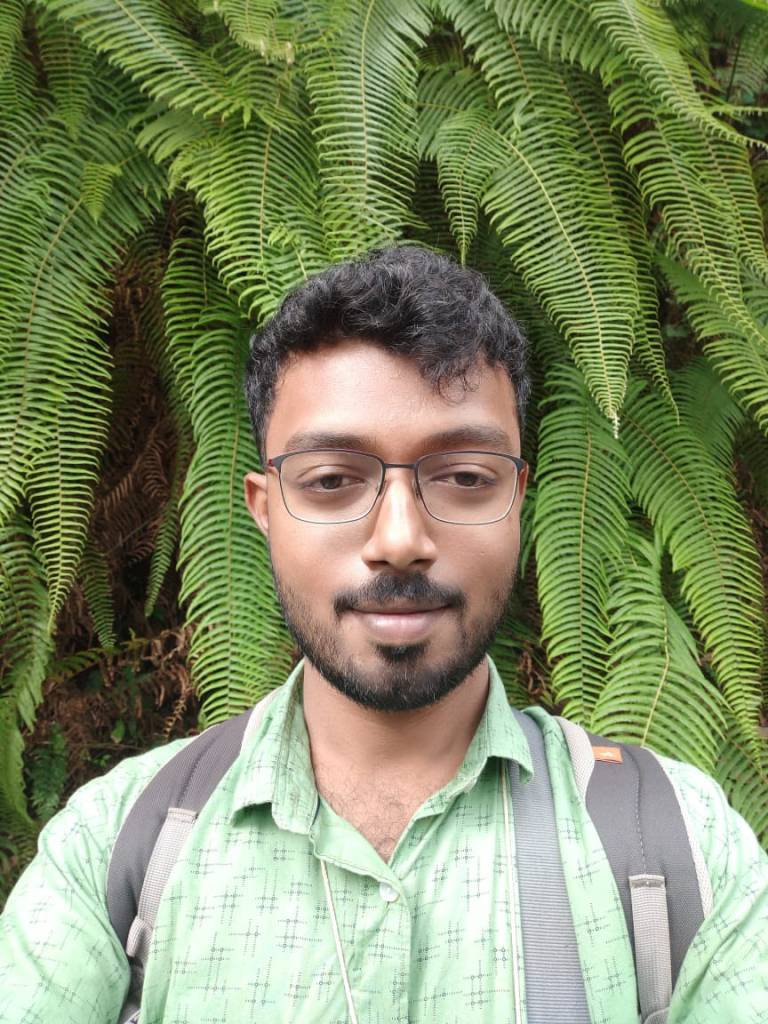
Lalitha Krishnan:

But thanks for opening our eyes. Maybe people who make the policies you know, are listening and somewhere as it will change somebody’s mind and they will do the right thing.

Nariman Vazifdar:

12:20: I mean, you can’t force this one on anyone. Including my friends, right? Even the ones that are nature-oriented. Even them. For them, no, this is what it is. Dogs and cats need to be here. You cannot even bring up the deer, you know, or the frogs.  If I say, โ€œLetโ€™s kill the frogs, you know they are invasiveโ€ you can see the blood boiling in them when I bring these topics up.

Lalitha Krishnan:

12:41:  Right. Right!  It’s a difficult one. You know, all the locals know you as a snake rescue on the islands. I quote you now, โ€œNo rescue is the best rescueโ€. What do you mean by that?

Nariman Vazifdar:

12:57: So also, yes, I never really did this snake rescue anywhere else that I have lived. Uh, yes. In places where I lived– in smaller placesโ€”if there is a snake in someone’s house. Yes. I’ll be more than happy to remove it for them, but I never did this โ€˜snake rescueโ€™ thing anywhere. It was the same over here. There was a snake in someone’s home.

13:20: I went and helped out, but now Havelock is like a smaller townโ€ฆa larger village, the entire Havelock. So literally, everyone knows everyone from one snake rescue to the second to the third. Now it has become, everyone knows this, but however, I rather not do this because this is not giving anyone a chance to understand how to live with snakes. Right?

13:46: This place always had King cobras; it always has a lot of snakes. But as we are going, as they say, tourism is a double-edged sword. As tourism is spreading people the locals are selling off their land to hotel chains. Of course, right?  And there are literally maybe over 100 accommodations now or places to stay in Havelock. Plus 40 plus dive shops, over 100 restaurantsโ€ฆ  So many of us from the mainland are also living here which basically means more houses are constructed. People are cutting deep into the forest and with that comes โ€ฆ If you’re cutting into the forest there are more snakes entering people’s homes. What tourists are seeing are just the two main roads but there are now a lot of side lanes. I get baffled about where these side lanes are going. I thought I knew Havelock well on all the roads but no.  Every time there is a snake and I go to these places, I am shocked that these houses are deep, deep into the forest. They have cut the forest down. So yes, there is no option for the snakes but to seek refuge in those houses. So now this is what’s happening.

14:58: I basically will not catch a snake or remove a snake unless the snake is in the person’s house. When I say โ€œin the person’s houseโ€ I mean literally in their home. If it is in the garden in a bageecha, I will not catch it because that is where the snake is supposed to be. I understand it is a king cobra; it is a highly venomous snake– the world’s longest venomous snake– but there must be some learning curve.  Otherwise, every snake they see it’s like, โ€œCome and catch it.โ€  

I basically will not catch a snake or remove a snake unless the snake is in the person’s house. When I say โ€œin the person’s houseโ€ I mean literally in their home. If it is in the garden in a bageecha, I will not catch it because that is where the snake is supposed to be. I understand it is a king cobra; it is a highly venomous snake– the world’s longest venomous snake– but there must be some learning curve.  Otherwise, every snake they see it’s like, โ€œCome and catch it.โ€  -Nariman Vazifdar on Heart of Conservation podcast

Andaman pit viper
Photo by Narimam Vazifdar

15:26: But I don’t go unless it is in their home and there’s a situation where I have to, I will remove it otherwise I tell them to wait. I will look, keep calm, take it easy and if the snake was in their home, yes, I will go. But otherwise, I don’t.  

15:42: So, what I mean by this is there is no need to catch every snake.  What are we doing with this (snake) right?  Again, snake catching is not a big deal. It is basic if you understand snakes.  I don’t know why people make this big hoo-ha and show about it. You can catch a snake. Then what are we doing with this?  We are relocating them somewhere else. This is not conservation. This is not research. We are literally removing a snake from A and just dumping it at B. And we think that yes, we’ve done a great job; we’ve saved a life but we don’t know if that snake survives well yet where we are literally releasing it.

Then what are we doing with this?  We are relocating them somewhere else. This is not conservation. This is not research. We are literally removing a snake from A and just dumping it at B. And we think that yes, we’ve done a great job; we’ve saved a life but we don’t know if that snake survives well yet where we are literally releasing it.

-Nariman Vazifdar on Heart of Conservation podcast

16:20:  There have been many debates, many scientific papers; research on this; on this trans locating of snakes. They are saying to try to release the snake as close to the rescue site. Now think about it.  Where I live in Havelock; there are king cobras.  Like I said, my problem is not the rescue, it is the release. Sometimes I feel very bad I’m releasing the snake a kilometre and a half away but there is no option, right? Where do I release these snakes with so much construction?

16:50: So that’s why I feel like, if not required, I will not do anything. A lot of times I get calls: โ€œSnake is in the home.โ€  I say, โ€œOkay give it 10 minutes; let’s see what happens.โ€ And it goes away by itself; there is no need to run, jump, or catch the snake; put pictures or like, free-handle snakes. It is not necessary and this is becoming a massive trend on Instagram now where a lot of the guys, especially in Bombay, Pune, all India, are free-handling. Which basically means picking up venomous snakes with their hands; not using equipment, getting bit on their faces, and kissing cobras. It is not required. There is no need for this bravado, for showboatingโ€ฆ Yesterday or the day before, two boys got bitten doing these stunts in Bombay and what happens if they die or lose their fingers. What is the point of this? There is no point in this. Do it if you really must do it. Yes, catch a snake but then go immediately and release it.

17:48: A lot of guys keep the snakes unethically; they keep them in plastic bottles–they don’t release themfor days and they have one thousand excuses for this.

17:58: To catch a snake, it takes two seconds. What I do when I catch a snake is release it immediately and then I go home. I don’t need to take the snake home. I don’t see the value of taking that snake home. Yeah, anyway these are my thoughts and you know and again everyone has different thoughts about this and a lot of people feel that catching a snake is conservation research but it is absolutely zero. I think we are actually hindering it and not really giving it you know, a place to go to actually.

Lalitha Krishnan:

18:30: That’s a lot of new information. It’s interesting but it’s also scary and enlightening. First of all, they have to learn how to catch a snake. I hope they just don’t follow YouTube videosโ€ฆ

Nariman Vazifdar:

18:45: Yeah. that is all easy but you see all these YouTubers picking up cobras, the vipersโ€ฆ  Why would they do this?  Right? You are literally playing Russian roulette. Nothing happens 100 times. Then, the 101st time you could die. You could lose fingersโ€ฆ you know? Why would you want this Cobra?  

19:05 You know, snakes live in sometimes the filthiest of places. Gutters, septic tanksโ€ฆ  and you’re kissing this Krait! No, not on.

Lalitha Krishnan:

19:14: Sad.  So how often do you get called to get snakes out of the house?

Nariman Vazifar.

19:19: Really, luckily, it’s not like a full-time thing.  I don’t want to do that full-time. But mostly, king cobra breeding season is now mid-February to April-May maybe.  So this time these two-three months are more.  Of course, the random one here and there but uh sometimes maybe twice in the day sometimes not a few daysโ€ฆ It’s very erratic.

19:49: Interestingly, the snakes that I have rescued from the homes over here are either king cobras or rat snakes. I’ve never rescued a pit viper from someone’s home or kraits. None of that. It’s only been either kings or rat snakes, no other snake interestingly.

Lalitha Krishnan:  

20:06: We have rat snakes here also. In fact, one was on my door trying to get a Whistling thrush’s eggs. There’s no way to prevent these situations in places like Havelock, right? Snakes will go into your houseโ€ฆ I don’t know.

Niriman Vazifdar:

 20:21: It’s basic. Doesn’t matter if you are in Havelock or anywhere in the world.  You keep your surroundings clean, keep your litter, don’t keep clutter around, and don’t chuck your organic waste everywhere.  They’re the basic, same rules you follow anywhere. Okay, yes of course, if you’re living in the jungle there is more likelihood that it just comes. But less likely if you keep your place and your area litter-free- free basically.

Lalitha Krishnan:

 20:51: I never thought of a snake attacking your garbage.

Nariman Vazifdar:

20:51: No. It is going for the mice, right? What is going in the garbage?  The mice, the flies then the frogs, right? Then the geckos go for the flies. So prey and predators come wherever there is food right?

21:08: If there is food for say, you chuck some mango outside, right? A rat will come to eat it. Following the rat, maybe a snake will come. Lost in translationโ€ฆ.seeing the gecko and a snake another lizard may come. Seeing that a snake may come right? So it’s a circle and if it is near your home why wouldn’t that animal come?

And there are also some wood piles or thin sheets lying around. It’s a perfect habitat for reptiles to live in.  Where am I finding these snakes? Under thin sheets, in wood piles you know because sadly the locals are dumping all these things. So the day before, there was a rat snake under a pile of wood.  I literally removed it from one pile of wood and  I put it in the next pile of wood. Haha, What do I do?  That’s all. Because there is so much clutter around there is no option right it’s the same principle anywhere more clutter around more hiding spots, more prey base, more reptiles.

Lalitha Krishnan:

22:02 Nariman, thanks for that.  Let’s move on.  So have you ever been bitten by a snake?

Nariman Vazifdar:

22:18:  Yeah, I’ve never been bitten by a venomous snake because I always, of course, it’s been lucky, but safety is my priority for myself and the snakes. If I feel like this isโ€ฆ also all snakes donโ€™t need to be caught, like I said. I’m only doing this when it is in a place where there’s a snake in someone’s home. I will not just catch a snake if I don’t have equipment. I will take my hooks, my snake pads, tubes, whatever I need,  I will wear boots. Whenever I need to go for a snake rescue, I ensure I have all my things with me. Even if the locals tell me it’s a non-venomous snake, I will judge it only when I see the snake. So many times, it’s a rat snake and I’ve gone with all my gear and then I pick it up. But yes, because I can identify venomous and non-venomous species, non-venomous snakes, yes, I have been bitten a few times. But there’s not much to learn from getting bitten. That’s why I have to figure out what because, I know for a fact, that it is a non-venomous snake. On getting bitten: let’s say, everyone asks how much does it hurt?  Of course, it’s basic sense. Smaller snakes hurt less; larger snakes hurt more. Like say, if you get bitten by a non-venomous wolf snake, it hurts a little bit.

23:36: Maybe not even, not even one drop of blood will come out. But if you get bitten by, say, a python, it could even tear your skin. You may even need stitches if it bites you back that badly. You know, you could even cut an artery, you know? So yes, it isโ€ฆ even smaller snakes could hurt you. If it bites you and cuts one of your arteries in your hands. Once it’s happened that more than once–and all of us who do this have experienced it– snakes sometimes when they bite us, their teeth break off in our hands.

24:12: That’s why we tell people, if the snake is biting you, don’t pull the snake off. Because A, the teeth break, the teeth will regrow on the snake. But it is painful for the snake.] Understand, even the snake has emotions, right? Just because it’s not like a mammal or a bird, it can’t speak out. It doesn’t mean it doesn’t get hurt. And, more than that, sometimes these teeth break off and they go into our skin, into our epidermisโ€ฆ  And then the small wound heals, but this tooth is left in our hands or feet or wherever in our body. And of course, it’s a foreign body. Imagine a foreign particle in your body now, right? So, your body slowly, slowly starts pushing it out. And, like once the tooth got stuck in my finger hand somewhere, it was when it was coming out quite naturally, it was hitting one of my veins. So, it’s really painful. You know, and then you literally have to kind of dig into it and pull it out. You know? So, sadly, all of this is sad, it happens.

25:13: But like, again, going back to your question, I’ve not been bitten by a venomous snake ever. Again, safety, (lost in translation) It does happen. I have friends who are super careful, more careful than I am.  It does happen that they have gotten bit. It’s also, you get over-complacent, you know, over-confident. You really need to be in the potential, now you know what you’re doing. You’re like, โ€œAh, I’ll just go and take this cobra out โ€ฆโ€ฆโ€ฆ (lost in translation). And that is bad. And that’s where this happens sadly. Right. Yeah. And we are seeing this more and more often lately.

25:47: So like when we go out looking for snakes, this is what we do. It’s called herping. We go out looking for snakes. We do holidays where we just go out to different places– maybe even abroad, or even just in India, trying to find reptiles of that age. Great.

26:04: I mean, I didn’t know snakes could grow their teeth back, but I don’t want to test that. You know, you wrote a book called Turtles, Tortoises and Terrapins of India with Sushil Chikhane. So that must have been a really interesting project. Would you like to tell us some more? And what’s the difference between the three to begin with?

Nariman Vazifdar:

26:29: So turtles.. everyone thinks when they see a shelled animal, it’s a turtle. That is the first thing that people come for. Of course, they like the book. There are three… Let’s put it this way.] Tortoises are land animals. Tortoises: are very basic distinguishing keys. Tortoises have feet because they’re land animals. Tortoises’ feet are like elephant feet, exactly like an elephant’s feet, of course, smaller. Tortoises can also swim in the water, but they can’t swim in the sea or they can’t swim in a river. A little bit, yes. Now we’ve realized that tortoises also are getting bigger. They’re getting into water bodies and floating to certain areas. But in a general aspect, tortoises are land animals. They will drown in extended periods. They cannot be swimming in the sea or in, sorry, in a pond or a lake. They will, as soon as you put them there, they will struggle a bit and they will drown.

27:28: So, elephant feet are tortoises. Turtles are two now. Turtles are freshwater turtles that live in streams, rivers, ponds, and wells. And there are marine sea turtles that live in the sea, of course. Again, these two are different as well. I cannot put a freshwater turtle in the sea. It will die. Likewise, a marine turtle cannot be put into freshwater. It will also be needed. it can survive. Yes, when you do a treatment and all, yes, you can manage to clean it out to do this. But generally, it needs to live in the sea.

Lalitha Krishnan:

Okay. Just like most river fish and sea fish.

Nariman Vazifdar:

28:10: Yeah. Exactly. River fish and marine fish. Exactly. But they are very simple distinguishing features between a freshwater turtle and a marine turtle. Freshwater turtles, in between their toes, have like a duck’s webbed feet. So they have duck-webbed feet because they need to swim in the water, right? So, their toes, in between there’s a webbing and that makes it a turtle.

28:38: A freshwater turtle, a marine turtle has completely different legs, let’s call them legs, structure. They don’t have those toes. They have fins,โ€ฆ flippers. Right? So as you see, it’s a very, very different structure compared to a freshwater turtle.

22:57: The third one, which everyone gets confused about, which is a terrapin, is basically a river turtle that can also survive in brackish water. Brackish water means where the mangrove area, let’s put it that way, where fresh and saltwater meet.  So some turtle species can survive in that water as well. They’re not going in the sea, but they can survive in fresh water and this brackish mangrove area.

Lalitha Krishnan:

29:24: So even in the Sundarbans and all, you’ll find them?

Nariman Vazifdar:

29:28:  Yes. Predominantly, that is correct. In the Sundarbans, there is a specific species called a Batagur baska that lives in that area. Okay

Lalitha Krishnan:

29:36: Yes. So basically, those with feet on land and the rest more or less in mostly water.

Nariman Vazifdar: Mostly water. Yes.

Lalitha Krishnan:

29:45: Thanks. Do you want to tell me more about your project, and your book?

Nariman Vazifdar:

29:52: So, the book was with me and Sushil because I did a lot ofโ€ฆ I used to work with Turtle Survival Alliance. I worked as a freshwater turtle biologist and I understood turtles and there was a lack… Always, everyone in the reptile world is inclined towards, say, snakes, crocodiles, and lizards. Very few people are inclined towards turtles. It was the same with me as well. We found turtles boring, snow sluggish, not dangerous, just you know, like OK, whatever. But once I started doing this work I realised that wow turtles are really interesting. They have character. They have personality. They are stunning. Some of the turtles like the one I used to study were called Red-crowned roof turtles or (Batagur kachuga). It is absolutely a stunning animal. The males have yellows, reds, and blues on their faces. It looks like a lot of people have asked me when I showed them a photo of this male turtle in breeding colours. If I’ve painted this turtle.

 via www.thethirdpole.net
Photo by Nariman Vazifdar
Red-crowned roofed turtle

30:54 It is that vibrant, you know, and a very cool animal. The ecology of turtles, especially river turtles is something else and some of them are giants, like serious giants and just tough to catch. Because, we used to put transmitters, you know, a lot of stuff we had permits for. Sometimes they are tougher to catch than snakes, you know, more tough, you know. So, like we always thought turtles or sluggish. Everyone thinks turtles are sluggish. But when some of those turtles want to go, they are going and you cannot stop them. Yeah, it is mad. It is a very, very interesting area to live in and to understand how this works. So, there was no book like a field guide. You know there’s always field guides for say, birds to snakes. But again, like I said because turtles are this topic of โ€œNo, it’s OK, not many people interested,โ€ we thought it is the need of the hour to have a turtle book out there you know. And there are books, there are flip cards but not a lot of field guides which cover even marine species. So yes, it took some time. We did this during COVID, and it took about a year and a half to two years to basically complete this book.

Lalitha Krishnan:

32:11: Fantastic

Nariman Vazifdar:

32:12: It was a fun learning experience as well of course.

Lalitha Krishnan:

32:13 Well, Narman, we are down to question 9. And so, I was wondering if you could share a little bit about the Bulletwood Tree that you know showed us in that forest by the beach. It was just so beautiful. Would you like to give us some information about that? I’m so fascinated.

Nariman Vazifdar:

32:40: Oh certainly. So, the bullet wood tree is a predominant tree of the Andamans. It is called Sea-mahua. It is not the mahua of Madhya Pradesh where you get liquor from the flowers. This is completely different. Even the scientific name is different. This is more of a littoral forest basically which means it grows by the seashore like we saw right? You see the giant trees in the sand. These trees could be 5/600 800 years old, extremely hardwood trees. So when we walk through the forest of Havelock or any of the Andaman Islands, you are noticing a lack of termite mounds. There are termite mounds of course, but a lack of termite mounds considering the fact that this is a rainforest. It’s not a rainforest like say the Western guards of India or South America. But nevertheless, it’s still a rainforest and these trees are very tall like we saw 130- 150 feet tall trees.

33:44 Few termite mounds because the termites can’t fully make holes in these trees. It is very interesting. Forget the living trees; we get cyclonic weather, trees rot, trees fall down. The termites we have noticedโ€ฆ Yes of course they try getting onto the trees. They do get onto the trees but they give up and they go away. I feel that this wood is too hard for the termites to make holes. We get another insect called the wood borer. Yes, that sometimes makes holes, but it is also found in Madhya Pradesh, but not like the damage it does to the sal trees of Madhya Pradesh where it kills the trees. It doesn’t manage it. Maybe it eats into the other trees, which is OK; the coconuts, the supari trees, you know? But I think the hardwood trees of the Andamans are something else.

34:37:  Here, there is also a wood called superior wood. You know like we were taught of hard softwood hardwood. There is superior wood you know which is extremely hard where you can’t put a nail into it at times easily you know. So even the sea-mahua or the bullet wood which is called, initially they would burn the base and cut it with an axe. Now they use a chainsaw. The chain saw takes a couple of hours to cut a tree you know? It is incredible. But also, I read somewhere that when the British โ€ฆ the tribesโ€ฆ of course the history of the Andaman, sadly is not nice. It is very you know…  a lot of unfortunate events that led to the British being here, or them treating the tribes very ruthlessly. Japan was here. The same kind of history again repeated itself. But interestingly the tribes had laid a trap for the British and someone told the British about this trap. If the tribes imagine if the tribals had won this battle against the British we may not have been here right now, right?

35:44: History would have been different, yeah. But apparently, they made shields out of this wood. I think I read some of the old books somewhere. They made shields out of the tree and they thought that it would stop bullets. Of course, it can’t stop bullets. It can’t stop cannonballs. So, the tribe literally got decimated in this action. But interestingly, it could also be called the Andaman Bullet Wood because they thought that it could stop bullets.

Lalitha Krishnan:

36:11: Having seen the tree I am in awe of it.

Nariman Vazifdar: 

36:15: Yeah.

Lalitha Krishnan:

36:18: Nariman my last question to you and I ask this of all, my guests is, do you mind sharing a word or a concept or you know, that will help us that’ll add to our understanding of the ecology of the Andaman Islands.

Nariman Vazifdar: 

36:34: Yeah, so like it’s the same thing. Like not just the just let’s say that’s not the Andaman Islands. The change happens in islands, not just with the flora, but with the fauna happening at a faster rate than in mainland any larger space, right? So, let’s just put it like I said, the problem with let’s say Havelock is it is a touristy island. The only source of income that the Andaman Islands as a whole has is tourism. But sadly, we don’t have sustainable tourism on the islands. There are rules, there are regulations, but again, it’s Indiaโ€ฆwe don’t really follow any of these things. A lot of resorts are now claiming to be eco resorts and green resorts, but it is not possible. It is not humanly possible to have an eco-resort without, you know, damaging the environment. So, this is just like a little thing they put up, put a nice website out and say we are an eco resort and we are saving the environment. But actually, none of that exists,

37:48

Not just here but anywhere, even just say Tiger resorts right? Where everyone is claiming to be an eco-resort, it is not possible. We generate waste, we consume electricity. You know, it is not possible to have an eco-resort basically around us unless you are using solar panels, you are doing water harvesting, you know you’re putting groundwater back, you know you are not creating any waste, which is humanly not possible if you are running a property. Basically, no matter what, all the resorts, no, no resort, all the resorts will tell you all the big resorts will tell you that โ€œwe are doing eco management and waste management.โ€ It is all just rubbish, sadly.

Lalitha Krishnan:

38:28: I can imagine.

Nariman Vazidar: Yes, of course, islands getโ€ฆ Now sadly, where was this? Where do you think this waste is going? Right? Island ecology gets damaged very fast. We are not seeing this race. I myself am producing waste, right?  We are cooking. I have a dog. He needs milk. It needs XYZ Right? Even myself, right? We all have to buy stuff to survive, right? So, on a small island with a population say 5000 living over here, now so many of us characters from the mainland live here permanently. Plus there are some 3-4000 tourists a day on this island.  So, if 3-4000 people plus 15,000 or 10,000 people need to eat every day, imagine the waste of 10 -15,000 people a day on 135 or 113 square kilometre island? So now we have a dumping yard, a landfill on an island, imagine? Where they’re just, we’re just burning the waste. It’s like when facilities are poor, infrastructure is poor, right? I thought that the hotels would come up, you know, take their waste back, do something. But no, sadly, no one does these things, including the big chains, Forget the small boutique resorts and the big chains do not really give a *&^. Like, the small ones are really not bothered about anything.

39:51: So this is what happens, right? Like, as a tourist, you are not seeing the impact that tourism has. Don’t get me wrong, everyone’s income depends on tourism. But there is a way of doing this where – see like in a tiger reserve right? They have only XYZ numbers.. like so many numbers of jeeps can enter. The tiger is yeah, one time had a system like that somewhere, you know where you only have so many people on an island per day. Let them stay longer– absolutely fine. But don’t have so many ferries coming in and out like groundwater. Why? What is the natural resource of an island? The freshwater we have, the fresh water is already getting depleted, right? We are seeing tankers come to Havelock already right? This is so– where I live– is a little bit low lying. The mangroves are 20 minutes away from me,

40:44: Yesterday when I came back to take a shower, I could smell the mangroves. You know, like in the kitchen, you know, it’s like that ammonia water, that nitrogen fixation that the mangroves do. You can smell it. And it’s not summer, summer. Summer just started. But now the islands are not getting a break? After COVID, all the hotels are doing this, not giving the island a break. Greed sadly has become a very big part of the islands where everyone is opening… Hotels are opening as we speakโ€ฆ so groundwater gets tapped, and water is getting reduced. It will become a problem later on in life, which a lot of these people are not seeing right now. Havelock is blessed. We have waterfalls, we have streams, but right now it’s all dry. There is not too much water because yeah, the water is drying out, absolutely. The waterfall which I went to last night is completely dried out. There’s no water.

Lalitha Krishnan:

41:45: That’s depressing. We don’t see all this. Thanks for opening our eyes. I have one more last question. You know, you also spoke up about diesel buses when we were there.

Nariman Vazifdar:

42:00: Yeah, so, the main grid of the island is a diesel generator. But now we have electric buses over here. So the diesel generator–they burn diesel to convert it into electricity to run the electric bus. It is the most absurd thing. This is sustainability apparently. This is what and this is just like done and like there is –no everyone here just thinking this stupid thing to do, right? So, we have local buses, you know? There are local buses, and local transportation. Why burn diesel to convert it to electricity to put it in electric buses and say that we are doing โ€œgreenโ€ or whatever the rubbish that is called? You know?

42:47: It’s like this is the thing that we are doing just for the namesake of doing it. We are lost in translation. So now, of course, there should be a bus, a charging station, a bus. You know, all these things have to be put up on the island now.

Lalitha Krishnan:

43:00: Food for thought. Lots of food for thought. Thank you so much.

Nariman Vazifdar:

43:06: My pleasure.

#islandconservation #snakerescue_release #islandecology #islandbiodiversity #kingcobra #turtles #terrapins #tortoises #author #naturalist #researcher #ecologicaldamage #reptiles #narimanvazifdar #invasivespecies #island #animalbehaviour #conservation #endemicfauna #endemicflora #bronzeback #wolfsnake #researchpapers #andamans #tribes #british #japanese #rainforest #development #littorialforest #groundwater #heartofconservation #naturepodcast #storiesfromthewild #earthymattersblog

Birdsong by hillside resident, the collared owlet.
Photos Credit/Courtesy: Nariman Vazifdar. Podcast cover/label design by Lalitha Krishnan

Disclaimer:ย Views, thoughts, and opinions
expressed in the podcast and show notes belong solely to the
guest/guests featured in the episode, and not necessarily to the host of
this podcast/blog or the guestโ€™s employer, organization, committee or
other group or individual

How the Teak Tree Tilted the Course of History in India and Other Stories.

With Mallika Ravikumar and Nishanth Srinivas

Episode #34 Heart of Conservation podcast. Show Notes (Edited)

or listen here.
Mallika Ravikumar
Nishanth Srinivas

0:03

Lalitha Krishnan: Hey there. I am Lalitha Krishna and you are listening to episode #34 of Heart of Conservation. Today I am speaking to two plant and tree lovers, basically tree experts. I find it so fascinating to listen to folks who are passionate and knowledgeable about the things that they love. Some of the fauna we are going to discuss are everyday plants and trees we pass by or sit under or love for their fruits and flowers, but truly we barely notice or know much about them. I promise you some extraordinary insights, botanical facts, myths, history, personal stories and more, on this episode.

0:47

My guest Mallika Ravikumar is a lawyer-turned-writer. She writes about history, culture and nature and has authored over six books mostly for children including one called โ€˜Tracing Rootsโ€™.  She also has her own โ€˜YouTubeโ€™ channel called โ€˜Tree Talk with Mallika Ravikumarโ€™. Youโ€™re very likely to have watched her on Instagram but you can check out more about her work on her website https://mallikaravikumar.com/

1:12

I have also been following โ€˜Trees of Shillongโ€™ on Instagram which belongs to Nishanth Srinivas, my other guest.  Nishant has a Masterโ€™s degree in Biotechnology from Bangalore University and worked as a Junior Research Fellow at the Department of Molecular Reproduction, Development and Genetics at the Indian Institute of Science.  Having changed course, he is now based out of Shillong, and is working with an NGO called Conservation Initiatives. He specializes in satellite mapping and is interested in humanโ€“elephant interactions and landscape ecology. I believe Nishanth loves, doodling, graphic design, and writing and staring at tree canopies. I have a feeling that is true of both of my guests.

1:47

Mallika, and Nishanth thank you both for joining me on Heart of Conservation. I am really looking forward to your stories.

Mallika Ravikumar: Thank you, Lalitha for having me.

Nishanth Srinivas: Thank you so much for having us Lalitha.

2:02

Lalitha Krishnan: My pleasure really. To start with, why donโ€™t you briefly tell me about the fascination for trees? Mallika, why donโ€™t you go first?

2:12

Mallika Ravikumar: I grew up in Mumbai which as you know is a city with a lot of people, with a lot of concrete. Trees are not something you think about or associate with Mumbai. I grew up like any city person, knowing very little about trees and then I happened to shift into a place where I was surrounded by trees. I was very curious; I felt very bad that I didnโ€™t knowโ€ฆ I couldnโ€™t recognize most of the trees around me. I didnโ€™t know their names. It made me feel like something was off because I knew from what I had learnt in science and textbooks that we get our oxygen from trees. We get our food from trees. Trees are such an important part of regulating our environments so the role of trees in textbooks I was aware of, but I was not able to identify more than a handful of trees which made me feel very awkward. That started the process of making me want to learn, and enroll for field botany lessons during weekends at BNHS. I went for some field trips with botanists and ornithologists, to learn about birds and flowers and things. And, that took me down the rabbit hole and that learning process is still on. So, thatโ€™s how it all began.

Lalitha Krishnan: The learning process for all of us will keep going on I hope.  What about you Nishanth?

3:31

Nishanth Srinivas: My story is not much different from what Mallikaโ€™s story is. I am also from the city; I am from Bangalore. Just like she mentioned, trees give us oxygen. I remember when I was so concerned about the environment, reading about all of this. The thing is during summer holidays, the best most outdoorsy thing that I would get to do is go to my grandparentโ€™s place. They had a very big garden and they were every possible fruit tree there. This started my love for gardening. It started with gardening and I took a different route. I studied biotechnology and I happened to work in the Indian Institute of Science. And there, there were more trees and they have a 400-plus acre filled with trees. And, all my free time would be spent observing trees, canopiesโ€ฆ Eventually, somewhere, that fueled my change to a different profession and now, Iโ€™m in conservation and I actually started observing trees beyond what is there in the city. And, thatโ€™s how Trees of Shillong was born and here we are. Right.

Lalitha Krishnan: Itโ€™s amazing how the โ€˜outdoorsโ€™ draws us out of our shelters.  One of my podcast guests, Suniti Bhushan, introduced me to the concept, not his concept of โ€˜Nature Deficiency Syndromeโ€™. Still, I would like to hear from you; why do you think tree stories are important? Nishanth, do you want to go first?

Nishanth Srinivas: Tree stories or stories in general related to myths or folk stories I believe are very important. Coming from a conservation point of view, whenever we approach a place or a region to understand what are peopleโ€™s beliefs and how they connect with their culture, it usually starts with understanding or trying to make sense of their surroundings. And most of this is usually in the form of folk stories. There might be biases as conservationists so I try to bring in this idea of conservation a lot. And even in my stories when I write about Shillong, I usually end it with two lines about conservation which is very much the need of the hour. So, the thing is these stories need that. As a researcher and conservationist, they give me an understanding of the local context and how people relate to it and some sense of the relation of how they understand and make sense of the nature around them.

As a researcher and conservationist, they give me an understanding of the local context and how people relate to it and some sense of the relation of how they understand and make sense of the nature around them.

-Nishanth Srnivas

Lalitha Krishnan: So true. Mallika?

6:21

Mallika Ravikumar: Yes, very similar to what Nishanth said. In a country where we are such an ancient culture-we have such a plethora of stories and folk tales, myths, and legends about trees from various backgrounds: Hinduism, Buddhism, Islamโ€ฆ In every tradition, some people consider trees sacred. There is an association with them. I think, going into the psychology of it, peopleโ€™s actions are not based on reason alone. Although we would like to believe we are rational, reasonable people, intelligence plays a very important role in how we behave but reason is only one of the faculties we use to make decisions. The other huge factor is emotion. Many things we do in our life–the decision to marry somebody, the decision to follow a certain careerโ€”it is based on hope and dreams and are also mixed with emotion. Itโ€™s not โ€˜reasonโ€™ alone that guides us. So, pummeling people with facts aloneโ€”you know, โ€œtrees give us oxygen, trees regulate the environmentโ€ — all this appeals to a certain side of us but all these legends, myths, folktales, and rituals and traditions; appeal to the emotional side of us. Which is also a very important part of human decision-making and psychology.

So, I think they have a very important role. Sometimes, I think emotions play a larger role when I connect with a tree or plant or pet dog emotionally, I feel much more to protect them and save them than if I connected with them academically or you know, intellectually. So, I think they play an important role in the way people behave in general.

8:05

Lalitha Krishnan: OK. And from a male point of view, Nishanth, do you also feel the emotional connection?

8:13

Nishanth Srinivas: Yes, very much so. The whole point of why we are very interested in learning and trying to talk about mythsโ€ฆ is generally when we have a conservation or do a presentation, itโ€™s to have that emotional connection. When we speak of myths and folk stories, they also reveal a lot about the culture and they trying to make sense so yes, the emotional aspect makes a very good point. Itโ€™s important.

8:33

Lalitha Krishnan: Thank you. This question is for both of you. So, how many trees are you going to share with us today?  Mallika if you would like to start, you can tell us some interesting facts that you like and then a myth.

8:57

Mallika Ravikumar: Sure, how many trees? There is no answer to that. It can go on endlessly but I would be happy to start with a tree that I talk about a lot which is the teak tree which is an Indian tree. Itโ€™s called โ€˜Saagaunโ€™ in Hindi, and Thekku maramโ€™ in the south. In fact, the word โ€˜Teakโ€™ itself comes from the word Thekku maramโ€™ which is in Malayalam, and before that in Tamil. It is a tree that changed world history. We have this human-centric way of looking at history and saying, โ€œThis king changed history, this general, Alexander the Great, Akbar the Great, Chandra Gupta Maurya; they did thisโ€ฆand they changed historyโ€ฆโ€ But really, so many of these trees if they could speak, would tell you that they are the ones who changed history and changed the course of time. So, teak is one of those trees you know.

But really, so many of these trees if they could speak, would tell you that they are the ones who changed history and changed the course of time. So, teak is one of those trees you know.

-Mallika Ravikumar

9:45

There is this period in history in the 16th and 17th centuries that was called the period of Teak Rush, which was a time when the French and the British were engaged in several battles before and during Napoleanโ€™s time when the British were very wary of the rise of Napolean because he was a big threat. And, they had completely decimated the oak trees of England to build ships. And we all know the British were able to control a large part of the world because they had a great navy. And what was the basis of their navy? Their ships. And what were their ships made of? Wood. But their oak forests were completely decimated because of the ships they had built in conquering various places and they were on the lookout for wood to build their ships. That is when this period of Teak Rush comes in when both the French and the British are on the lookout for wood for building ships. Because all these battles that used to happen were naval battles. And by chance, it is the British who discovered the teak forests of southern India and then they brought in forest laws to control all our forests. The conservation laws that we have today didnโ€™t start as a measure of protecting the forest as much as wanting to control the resources from the forest.

And what is the main resource they wanted to control? Teak. They had scouts going out to look out for these teak forests. They massacred these forests, they had teak plantations, they converted large forest areas into monoculture teak plantations and it is the teak that they got that helped them get this hegemony and control larger parts of the world. So, it titled the scale of history. We are having this conversation in English today because of teak otherwise we might have been talking in French. Who knows? But itโ€™s teak that changed the tide that was the bedrock of the British empire. So, thatโ€™s just one of the many stories that changed our past and continue to shape our present.

11:37

Lalitha Krishnan: Thatโ€™s amazing. Frankly, I did not know of this. I have only heard of the Gold Rush, not the Teak Rush. Nishanth, what plant, or tree are you bringing home to our listeners?

11:41

Nishanth Srinivas: Well, I thought of four plants but one tree which is very common to our listeners which we all know; it is very common is the coconut. I have always been intrigued; there was a coconut tree near my home in Bangalore, in my neighbourโ€™s house and it stood tall. In 2018 we had very terrible rains; very cyclonic. There were a couple of trees which fell but this one tree did not fall. You do not hear of many instances of coconut trees falling and if you follow the weather channels you will always see that when they talk about coasts or rain in the weather reports, you will always see some palm trees flaying around but itโ€™s not usually uprooting away. I always used to think about why and it is very interesting how coconut trees have adapted to live in a coastal region where geographically, it is quite flat. We know that when the winds come in, they pick up rain, and the first thing they will encounter is the coast. So, how these trees have adapted is quite interesting.

13:00

First of all, the shape of a coconut tree is a tube-like any other palm tree. And if you observe the bottom of the tree, it is a little wider at the bottom than the top. Very marginally. And, the top region of the tree, the crown as we call it is quite flexible. That is one. We have all seen Bahubali (the movie) where he uses the palm tree to make it so flexible that it is wind-borne and things like that. Though, palm trees are not that flexible but the top region is. So, it sways when there is a lot of wind movement. That is one.

13:39

When we talk about the inside structure of the coconut treeโ€ฆ it is a monocot. Monocot trees do not grow by girth every year and itโ€™s made up of spongy tissue inside. It is so much like a concrete mould and is reinforced by lignin fibres. These fibres run longitudinally along the length of the coconut trees so they are fill which is inside the concrete. It provides structural stability to the tree. That is one.

14:11

The other is the roots. We have all seen the roots. These roots are fibrous. They go in every direction and they hold the tree in a place like any other (root system).

14:25

Last but not the least is the frond. So, the coconut tree is almost feather-like; it is pinnate. So, it has a central big stem called the Rachis. So, most of the very tall palm trees have feather-like leaves. So, these are some of the very interesting adaptions that I came across when I was trying to understand how the coconut tree stands cyclones.

14:51

Lalitha Krishnan: Wow. You explained that well. I also believe every part of the coconut tree can be used. Am I right?

15:00

Nishanth Srinivas: Thatโ€™s true. Thatโ€™s one of the reasons why it is called โ€˜Kalpavrikshaโ€™ I guess. Mallika would have many more stories about it. But interestingly, since coconut trees are there in the tropical regions all around, there are multiple stories of โ€˜howโ€™ or โ€˜whatโ€™ when it comes to the folk stories. Each culture or region has its own take on it. It is quite interesting.

15:25

Lalitha Krishnan: O.K. Would you like to share that?

15:30

Nishanth Srinivas: I will quickly share two of them. One of them is from Hindu mythology itself. When Ganesh was very small, he wanted to play with the third eye of Shiva. And then, I guess, one of the demons if I am not mistaken a small model/idol with three eyes and gives it to Ganesh. By mistake, this small idol falls from Ganeshโ€™s hands and falls on earth. They say thatโ€™s how coconut came into existence or how mankind found the coconut.

16:04

That is one of the stories. There is one more very interesting storyโ€”again similar to thisโ€”the three eyes. When you de-husk a coconut, why does it have three eyes? This story is from the Polynesian culture- Hawaii, Melanesia, New Zealand and all of those places.  They say, in an ancient island there used to be a chieftainโ€™s daughter. Her name was Sina. She used to always visit the sea and she sort of became friends with an eel. This eel over time developed feelings for Sina. And it became very violent as time moved on; wanting more of her time and affection. But then, she goes back to her village and complains about this eel which is sort of always stalking her. And then, one of her relatives goes and kills the eel. Before dying, the eelโ€™s head speaks. It tells Sina to bury the head in the sand and that it will be reborn as a tree whose fruit Sina can drink. The three holes are where the coconut shell is the lightest. So, every time, you break it open and drink, itโ€™s like the eel kissing Sina. Thatโ€™s what the story says. These are different stories and they talk about (lost in translation).

17:30

Lalitha Krishnan: Lovely stories. Mallika, would you like to share another one?

17:33

Mallika Ravikumar: Sure, I can talk about a plant which is not a tree but a lot of people think it is a tree which is the Banana. You know, in usual parlance, we say banana tree or kela ka jaad or vฤแธปai maram in Tamil. Botanically, it is not a tree and the reason is- for a plant to be considered a tree, the key feature is the wooden trunk. And the banana, if you notice closely, does not have a wooden trunk so it is not botanically a tree, although we all call it a tree.

Botanically, it is not a tree and the reason is- for a plant to be considered a tree, the key feature is the wooden trunk. And the banana, if you notice closely, does not have a wooden trunk so it is not botanically a tree, although we all call it a tree.

-Mallika Ravikumar

18:03

Thereโ€™s this interesting story from the Gadabas tribe of Odisha which I like very much. So, the story goes that there were five sisters. They were the mango, the tamarind, the fig, the jamun and the banana. As they were growing older, their father was getting worried that they werenโ€™t getting married and he wanted to find husbands for each of them. So, he asked them what kind of husbands they wanted and they all told him. And, he looked for such partners for them but the banana said, โ€œI want children but I donโ€™t want a husband.โ€ This is a very modern, feminist sort of story so I like it for many reasons. She said, โ€œI want children but I am very clear I donโ€™t want a husband.โ€ So, the father grew worried. โ€œHow is this going to work?โ€ But the other girls got married and they had children and it is said that all the mango and fig, tamarind and jamun trees that we have are descendants of those children. But then what about the banana? She said, โ€œI donโ€™t want to marry but I want children.โ€

19:00

The thing is as per the story the banana had children without a husband. The beautiful thing about this story is that bananas reproduce parthenogenetically which is asexual reproduction. In botanical terms, if one were to study that there are two forms of reproduction: one is sexual, and one is asexual; the way the banana reproduces by bypassing the fertilization of the ovule by the pollen is sexual reproduction. And it is fascinating to see that this ancient folktale has captured that in such a simple way. Those daughters wanting to marry and one daughter saying, โ€œI want children but I donโ€™t want a husband.โ€ And to see that very astute scientific observation finds reflection in this folktale. So, I find it very fascinating for many reasons including the fact that itโ€™s a sort of modern, feminist sort of take on life. But, yeah, this is a fascinating story about the banana that I shared on my YouTube channel where I share these sorts of stories that I find.

20:02

Lalitha Krishnan: Fascinating. I agree with you. How on earth did they figure it out then? Nishanth, itโ€™s your turn. Another tree, another plant?

20:10

Nishanth Srinivas: One more tree that is quite common in Bangalore gardens is Nyctanthes arbor-tristis. Itโ€™s called parijata. Itโ€™s also called night jasmine though it does not belong to the Jasmine family. Again, according to legend, what happens is this tree also comes from the churning of the milky ocean. The demons and the gods churn up the mountain. And then, from the ocean arises this tree and Indraloka who plants it in his garden. Once, Narada,–who is usually a mischief-mongerโ€”takes some of the flowers from Indiraโ€™s garden and gives them to Krishna. And, Krishna goes and gives it to Rukmini, his wife. Having known this Narada being Narada, he goes and tells Krishnaโ€™s other wife, Satyabhama, that Rukmini got these heavenly flowers and Satyabhama becomes quite jealous. So then, she asks for the whole tree and so Krishna goes and steals the tree. En route, when he is coming with the tree, he is confronted by Indra and a battle ensues. Eventually what happens is Indra curses the tree such that it never produces fruit. Interestingly, this parijata does not produce fruit. It belongs to the Oleaceae family. It produces a heart-shaped capsule. Oleaceae is the olive family- the olive fruit. So, this does not produce that. It just produces the capsule. And, this is a little bit of humour: he (Indra) says that the owners where this plant is will never get the flowers. What I have observed is that in Bangalore morning time, around 6:00 or 7:00 o’clock, you see all these people coming to pick these flowers and usually the flower never falls in the garden where it is planted but usually falls on the roadside. ( lost in translation )These are some of the things that I find nice. Also, it brings the thought โ€“as we discussed- we donโ€™t know what came first. This or that but it is people trying to make sense of what they observe in nature and putting it into some sort of context.

22:55

Lalitha Krishnan: Very interesting. I can relate to this. I never get any of the fruits or flowers that I plant. They all go mostly to the monkeys. But I donโ€™t feel cursed. I feel privileged. I think itโ€™s the tax one pays for having wildlife around. Mallika, what next?

22:17

 Mallika Ravikumar: The story that Nishanth relatedโ€ฆI had a parijat growing in my house and it was exactly like that. The plant was on one side of the fence and the flowers were falling on the building on the other side of the fence. That story also has another element. You know when he brings back the tree, Rukmani is very upset and says, โ€œWhy did you give Satyabhama the tree?โ€ So, Krishna being very smart, plants it in a way that Satyabhama is happy to have the tree but the flowers come to Rukmaniโ€™s side of the garden because he knew that then both his wives were happy. These folk stories have several narratives or variations. So, thatโ€™s also very interesting that someone has heard one part and you hear another part. This is a version of the story that I had heard but yes, itโ€™s a beautiful tree and flowers and a lovely story also.

These folk stories have several narratives or variations. So, thatโ€™s also very interesting that someone has heard one part and you hear another part.

– Mallika Ravikumar

24:12

Another tree with lovely flowers that I can think of is the silk cotton tree- the semal. This story comes from the Mahabharat. This story is narrated by Bhishma when he is on his bed of arrows; when he is about to die all the others come around him, asking for advice and ask various questions. He narrates this story when he is asked about the qualities of a good king. How must a king behave when a neighbouring king is stronger than him?  What is the diplomacy and relations one must have? So, he narrates this story of the silk cotton tree.

Nishanth mentioned Narada so this story struck me. Narad Muni, as he said was a troublemaker. He is walking along a forest and he comes upon this beautiful silk cotton tree and he is absolutely stunned. He says, โ€œYou know, you are so gorgeous and your flowers are so beautiful, how is it that you are still standing like this? โ€œThe wind is blowing so hard over here; all the trees are bent; all the leaves have fallen because Vayu has blown with such force but you seem to be unaffected by Vayuโ€™s force. How is it possible? So, the silk cotton replies saying, โ€œYou know Vayu may be strong for the others but I am stronger than Vayu and what do you think? I canโ€™t bear the brunt of the breeze?โ€ So, he boasts about how strong he is and Narada is sure that if the wind really wants to blow something down, nobody can stand in its way so he being a troublemaker, goes back to Vayu and says, โ€œ You know there is this proud silk cotton tree in the forest who thinks it is stronger than you and I find it laughable.โ€

Vayu of course says, โ€œThatโ€™s ridiculous. I spared the silk cotton tree because when Brahma created the world, he rested under this tree and therefore, I have respect for this tree and therefore I donโ€™t blow on it. But, if the silk cotton tree is going to interpret this as my weakness, let me show him how strong I am.

26:04

He says, โ€œIโ€™ll show him how strong I am tomorrow. But that night, the silk cotton thinks and reflects and looks at all the trees around and thinks, โ€œIf all these trees are bent and turned over, and leaves have fallen and they are all facing Vayuโ€™s impact, surely it canโ€™t be that I am so strong that I am stronger than Vayu.โ€ So that night, the silk cotton tree decides that before Vayu comes, let me myself, drop my leaves and flowers so that when Vayu comes tomorrow, he cannot inflict any damage on me. So, the next day, when Vayu comes blowing fiercely down the mountainside, the silk cotton has nothing left. No leaves or flowers. Nothing is left on the branches. He says, โ€œI am glad that you learnt the lesson to be humble. Now shorn out of your beauty, you have realized that you donโ€™t need to show off many times. People are being gracious and nice to you and itโ€™s not all about how strong you are.โ€ So Bhisma is narrating this story to say that you have to accept that someone is stronger than you and not be futile and say, โ€œI can take on anyone.โ€ If your neighbouring king is stronger than you, then accept and be humble and bow before him. That was the context of the story.

27:17

But I use this story when I take children out for tree walks to tell them about leaves falling. And, why some trees are deciduous and some trees are evergreen and have you noticed leaves falling? So, if you just start off with deciduous and evergreen, kids sort of get put off. But if you start with a story, it becomes a point of generating curiosity and then they start noticing which trees around them are dropping leaves. Some kids have come back to me and said, โ€œAunty, we remembered this story from the Mahabharat when you told us when we saw this tree outside our school which was dropping leaves. So the important thing is also to connect kids with trees around them because itโ€™s a way to generate curiosity.

27:56

Lalitha Krishnan: wonderful. I am feeling like a kid listening to your stories. Nishanth, why donโ€™t you tell us more? Whatโ€™s your next tree or plant of choice?

28:08

Nishanth Srinivas: The next is a plant, a type of ginger and this takes forward what Mallika said. Some of these stories and myths also serve a purpose to teach kids or the younger generation something. There is some moral behind it. This story is about a type of rock ginger. Rock gingers have very showy flowers and they are quite common in the Himalayan region. Itโ€™s called butterfly-ginger, butterfly rock ginger- itโ€™s got different names but they have very showy flowers and they are quite common in and around the Himalayan region. This particular plant, its scientific name is Hedychium gardenarium.

Since I work in Meghalaya, this is one story which came to me from one of the museums that I visited here. So, they have this plant and they have this story along with it. so, in Khasi, this plant is called Ka tiew lalyngi. โ€˜Lalyngiโ€™ which I understand must be the name and โ€˜tiewโ€™ is flower. There is a saying, โ€œWat long tiew lalyngi pepshadโ€ which roughly translates to: โ€œDo not be late like the Lalyngi flower who missed the dance.โ€

29: 31

So, the story goes that there was a great feast. There was a huge tree called the lei tree. I am sure I am pronouncing these things wrong but if someone knows the correct pronunciation, please get back to me. This large tree was blocking out the sunlight and that itself is a different story. Eventually what happens is that people cut it down and there is sunlight again in the land and there is a celebration that happens. So, to celebrate, all the creatures that is animals, people, birds, and insects were invited to a great dance in the region of Meghalaya. So, what happens is thereโ€™s also this girl who is invited. Her name is Lalyngi. Sheโ€™s a very beautiful young girl and she happens to come.  But the thing is she wants to look the best. What she does is she takes a lot of time to get ready. In that process of getting reading, she loses track of time. So, by the time, she reaches the dance arena, she finds the event is already over and she is quite upset by it. Because nobody is there to see her after all the effort she took. She is so upset she jumps off the cliff and dies. Where she dies, a flower is born and that flower is the Hedychium gardenarium.

The thing is, this flower is so much part of the culture. If you have seen the Khasi dress, they wear these Paila beads which are mostly in shades of golden yellow and red. And, this flower has stamens which are of the same hue of red. And the petals are yellow. In some sense, they feel it is part of their folk story. Most of these stories are oral; part of the oral tradition they have here in Meghalaya. Stories that are passed on through generations; something which they feel is one of their own which tells something about their culture. And, interprets some sort of moral lesson to children to prioritize and give importance to things when they are doing something.

Stories that are passed on through generations; something which they feel is one of their own which tells something about their culture. And, interprets some sort of moral lesson to children to prioritize and give importance to things when they are doing something.

-Niahanth Srinivas

32:12

Lalitha Krishnan: Wow. Thatโ€™s a sad but beautiful story but also such an exotic flower.

32:21

Nishanth Srinivas: It is. Google it and see.

32:28

Lalitha Krishnan: Mallika, would you like to share another story or plant if you like?

32:33

Mallika Ravikumar: Another commonly seen tree in India is the Neem. This is not a story that comes from myths or folk legends. Itโ€™s a historical, current affairs kind of story. Where, as we all know, the neem has been traditional medicine in India for centuries. From ancient times to now, we have all experienced how if you had chickenpox, were told to have a bath in neem-leaf water or brush yourself with neem branches to heal.

33:10

Generally, if thereโ€™s a neem tree around you, one considers mosquitoes wonโ€™t come into your house. Neem is just part of growing up in India. You keep hearing the healing properties of neem. Some decades ago, in the US this company was granted a patent for the use of the neem in their pesticides or herbicides for controlling pests in plants. And, they also applied for a patent in the European patent office and fortunately, this was highlighted and India opposed that.  The Indian Council of Scientific Research opposed that and this is Traditional Knowledge. A patent as we all know is a special right given to you if you have invested in researching something and you have come up with something very novel, and it is original and itโ€™s of use to people. Those are the considerations for a patent. But here is someone asking for a patent for something that was commonly known. Haldi is another one. Basmati, as we know, we also got a patent some time back. So many Indian plants, some of them medicinal whose healing properties have been common knowledgeโ€”even illiterate, uneducatedโ€”everybody in India knows about the healing properties of these plants. You donโ€™t need to be a doctor or anything.

34:17

And, you get a patent for that where you are claiming that you have something original and useful and novel was something that India opposed and that patent was finally revoked after a lot of appeals and several processes. What it highlighted was something called Biopiracy. Piracy we know that if you film a movie in a theatre and you release it and make money out of it, is called a pirated copy of the movie or a book. Because it is making money out of somebody elseโ€™s creativity without giving them their due.

34:50

But, this idea of bio-piracy became a taking point after this Indian Neem incident of biopiracy and India then woke up to the factโ€”even till now, several of the patent applications made by pharmaceutical companies in the West are based on traditional knowledge of ancient cultures including India. And then fortunately this was taken to serious levels. There was this body called the Indian Traditional Knowledge Systems and a database was formed where if someone in the US applies for a patent for, letโ€™s say haldi, obviously they might know this is traditional knowledge in Indiaโ€ฆ But the Patent Office can then search in this database where you have all these plants that have been recorded as traditional healing plants in unani, ayurveda, siddha etc. and it will show up in the search at the patent office. At least in the future, private enterprises will not given rights– exclusive rightsโ€”for traditional healing plants of common knowledge in India. It all began with the neem biopiracy case that triggered all this. Thatโ€™s not a legend or a myth but an interesting story, especially something to be aware of this is a huge amount of traditional knowledge that we are sitting on and some people are using it for private gain. We should be aware of it.

36:14

Lalitha Krishnan: Very true. And biopiracy is a new one for me. And I doubt they are trying to get patents for anything innocently.

36:28

Mallika Ravikumar: Absolutely. There was a very interesting article that I read. In Covid times, a lot of plants were getting stolen out of our botanical gardens. Orchids. Nishanth is in the north-east. He will know better. Orchids are disappearing in the northeast. Some of them are threatened species because there is this craze for owning these exotic plants and keeping them in your gardens and your house. The West has always had this craze but even today it is there. We talk about the tiger and the elephants and big mammals, birds etc. when they are threatened but a large number of species on the IUCN list are actually plants. Many of them are Indian plants. We somehow donโ€™t highlight them because they are not as dramatic as the tiger and elephant and so on. But they are also part of threatened species.

We talk about the tiger and the elephants and big mammals, birds etc. when they are threatened but a large number of species on the IUCN list are actually plants.

-Mallika Ravikumar

37:14

Lalitha Krishnan: Butterflies tooโ€ฆfrom the northeast. Thanks for sharing that, Mallika. Nishanth, would you share some more?

37:21

Nishanth Srinivas: Yes. Mallika has given me segways into different thingsโ€ฆ She mentions the US and how plants are collected and taken to different places. One very common plant which was reversed from the New World to the Old World is scientifically known as Euphorbia pulcherrima. Itโ€™scommonly known as the Christmas flower. Itโ€™s these red bracts; itโ€™s almost like bougainvillaea. It usually flowers during Christmas time. Iโ€™m sure both of you are familiar with seeing this plant. Itโ€™s very common. Especially in the western ghats, itโ€™s grown as a hedge around coffee plantations etc. Here in Shillong, itโ€™s quite a common garden plant.

38:14

Though this plant is a showy ornamental plant, itโ€™s got a very nice and interesting story. And, it highlights something which I shall share at the end. Itโ€™s also commonly known as the poinsettia. The thing is even the names: Why poinsettia? Why Christmas flowers? It has a nice big story to it. This plant is native to the dry forests of Mexico, basically central and northern South America.

38:50

During the Aztec civilization time, this was also a plant of high cultural importance.  In Aztec, it was known as cuetlaxochitl which translates to โ€˜a mortal flower that perishes and withers but is all pure. Apparently, in Aztec legend when it was formed it was white. And, because of the war between two different tribes, the flowers become red.

39: 26

So, the Aztecs would plant this around their habitations or wherever they had their cities and stuff. But we know a little bit about their history and how the Europeans started coming and colonizing the West. So, what happens is, that when the people/missionaries came into the region in the 17th century, they noticed these plants. They sort of took this aspect of how important this plant was and made it part of the Christian culture. How they did this is quite interesting.

40:10

There is one interesting story. In Spanish, this flower is called Flor de Nochebuena which translates to โ€œflower of the Christmas eve.โ€™ The story is all about a girl named Pepita. I am sure youโ€™ll be aware that during Christmas time, they make a manger which is a model of the birth of Jesus/ nativity scene. This girl comes from a very modest background. The story goes that all the people go to the church to offer something to baby Jesus. Everybody is trying to get the best thing to give as an offering. Being of a modest background, she tries her hand at many things. She tries to knit a shawl but she canโ€™t untangle the wool. She then tries to make small boots for baby Jesus but she doesnโ€™t even have the strength to push the needle through the leather.

41:29

She gets quite upset and a stranger comes up to her and tells the young Pepita, โ€œEven if you offer anything with a lot of devotion, it will be accepted.โ€ So, she goes around and gathers a bunch of leaves and twigs and she offers them at the church.  What happens is, magically over time, these greens she has picked, turn red.  This also goes back to the plant as I was saying. They are not flowers but like bougainvillea, they are red bracts. The flowers themselves are quite small. The story weaves the aspect of those and also them coming into flower during winter time around Christmas. That is what I found interesting; it gives a reference point. Some of these myths and stories may stay but this is how some aspects get introduced and become one of their own. So, that was what this story represents to me.

42:45

The word โ€˜poinsettiaโ€™ is also quite interesting. Mallika mentioned how people collect plants. There was a person called Joel Roberts Poinsett who was very much into collecting plants. He was from the US and was working as an ambassador to Mexico sometime in the early 19Th century. When he was there he collected these plants and sent them to the botanical gardens. In honour of him having introduced this to the western plant per se, it got the name, poinsettia. In political terminology, there is a term called poinsettismo which represents a kind of diplomacy which the US follows. Which is very intrusive. It represents how the US is or functions with other countries which they trade with.  This tells us also how words are derived, how there are stories are attached to them and what the roots of the stories are. This is an example of a plant being behind one such name.

44:09

Lalitha Krishnan: Thank you.

44:19

Mallika Ravikumar: I was about to say, I learnt a new word. Poinsettismo. I am going to look it up and read more about it.

44: 27

Lalitha Krishnan: The association is still there. I remember 2 Christmases ago; I gifted a poinsettia to someone.

44:36

Nishanth Srinivas: It all came from one small town in Mexico and got sent to the Philadelphia Botanical Society and from there, if I am not mistaken, just one company had world domination. And, they sent this poinsettia to different parts of the world. So, all of them probably have one or two mother plants if I am not mistaken. Thatโ€™s how it is.

45:09

Lalitha Krishnan: Thank you so much. My last question to you bothโ€”and I feel almost guilty asking you this questionโ€”because both of you have already introduced so many new concepts and words but I am going to ask anyway cos this is how I always end my podcast.

Could you share something about trees or plants that is new to us or significant to you in some way?   It could even be about your relationship with plants.      

43:35

Mallika Ravikumar: Before that, can I add to something that Nishanth said which reminded me of something else?

45:40

Lalitha Krishnan: Of course:

45: 42

Mallika Ravikumar: Nishanth said how beautifully the idea was told to the girl: โ€œYou offer something with devotion and that is the most important thingโ€. There is a mirror story of that even here. That is one of the stories that I thought I could narrate but we donโ€™t have time. This is the popular story of Shabri and the berโ€”the Indian jujubeโ€”where you have, shabri picking ber fruits from the tree and offering them to Ram. It comes from the Odhiya Ramayan. Itโ€™s not in Valmikiโ€™s Ramayan. And, that became a very important story in the Bhakti movement to cut across barriers of caste and varnaโ€ฆ In the Odhiya Ramayan, he accepts this jhutey ber as they say. She has tasted the ber, tasted the fruit to see if they are sweet and gives it to Ram. Laxman says, โ€œI cannot eat this but Ram says, โ€œAnything offered to me with love and devotion is acceptable and nobody is small or lesser or greater and I will take anything that is given to me with love and devotion. That is exactly the mirror story of what he mentioned. So, in every country, or culture, I guess you have such stories and it is really beautiful to study these parallels. Even in the Bhagvat Geeta, you have a slok/verse which is exactly that. “Patram pushpam phalam toyam, yo me bhaktya prayaschati” (You offer me fruit, you offer me flowers, you give me anything. As long as you give it with devotion, I will take it.)

It’s beautiful though and very often those offerings are plants and fruits and flowers which is a form of expressing devotion to whichever divine power that you worship.

47:16

Lalitha Krishnan: I am getting goosebumps. Between you guys, you can start an Oral History of Plants podcast. There are too many stories to go on one episode.

47:30

Nishanth Srinivas: There are a lot more.

47:31

Lalitha Krishnan: I think it will be amazing to have an encyclopedia of stories. So, coming back to my questionโ€ฆ

47:45

Nishanth Srinivas: One word which comes to mind and which is central toโ€ฆ the reason why I am here also is โ€˜Green blindnessโ€™. People do not see green things. What captures our imagination is things which moveโ€”animals, birds, insects. They come to mind very fast but when we talk about plants, a common person may speak of plants in respect of their utility. In respect to food, or in respect to being ornament like a flower. But plants are much more. They are the reason why we are here. Somewhere when it comes to the topic of conservation, as Mallika initially spoke of the British way of forest management, itโ€™s mostly utilitarian purpose. They wanted something which they wanted to extract and that is something which is continuing even today. Even with many forest departments, there have been many instances of people razing down natural forests, razing down places of high diversity and putting down monocultures of teak and mahogany and things like that. There are many examples like that that keep happening. With different forest laws and policies and amendments; time is progressing least in the Indian context, what is happening is not going for the good. In some ways, it is going for the bad because we are also an aspiring nation. We want to develop and be a superpower. We always see this happening in the spectrum of life but the conservation of our natural resources, our trees, what is natural per se, is much more important. Usually, the first thing that gets chopped or which gets the axe is always the tree. When there is any development even in our cities, when there is road broadening or widening, or setting up an economic zone or trying to expand business, anything that relates to land, it is usually the plants and trees which suffer first. Because they canโ€™t move. They will be lost if they are removed from a region.

Usually, the first thing that gets chopped or which gets the axe is always the tree. When there is any development even in our cities, when there is road broadening or widening, or setting up an economic zone or trying to expand business, anything that relates to land, it is usually the plants and trees which suffer first. Because they canโ€™t move. They will be lost if they are removed from a region.

-Nishanth Srinivas

50:40

Green Blindness is also one of the reasons why I started writing about plants though I do not come from a background of botany. So, that is something that I believe people should keep in mind and be more cognizant of what is green around them and living.

50:55

Lalitha Krishnan: So true. And where can we read your writings?

50:59

Nishanth Srinivas: Iโ€™m on Instagram @treesofshillong Otherwise, very much like you, write for magazines like #RoundGlassSustain I saw you had an article about how ants carry flowers soโ€ฆ different things. I also write to the Meghalayan. I have been writing about plants: myths and trees that are very common in Shillong gardens.

51:36

Lalitha Krishnan: Do share these links for my blog. Okay, Mallika; what would you like to share?

51:43

Mallika Ravikumar: Okay. While there are many ideas and words, something I noticed before I started learning about trees, I noticed that when I used to walk, I used to like looking up at the canopies of the trees from below and the reflection and the play of light. I discovered much later, that there is a word in Japanese, for this phenomenon and it is called Komorebi. I was so happy to discover that there was a word for this. Because, sometimes you observe or have certain experiences and you donโ€™t have a word to explain what it is you are experiencing. But I was delighted to know that there was a word for this light filtering through the canopy of trees and the way you see it from below is called Komorebi in Japanese. So thatโ€™s a very wonderful idea and concept.

52:31

And going from that, another associated term called โ€˜crown shynessโ€™.  What is fascinating isโ€”again when I tell children or tell adults about itโ€”if youโ€™re walking below treesโ€”say on the road and there are trees on both sides of the road, if you look up, you will notice the canopy of the trees are meeting up but just about. They touch each other but there is a slight gap between them. Not all trees do this but it is observed in many places and this is called โ€˜crown shynessโ€™ where the crowns of the trees just stay within touching distance of each other. The reason of course is because they both want sunlight and if one covers the other one, the other one is not going to get sunlight. So, the tree is not going to grow under the shade of the other. There is a reason of course for it but we call it โ€œcrown shynessโ€™ and it is very easy to observe when youโ€™re out for a walk. Just look up. There are two beautiful things you can see. Light -whether daylight or moonlight โ€“whatever it is, itโ€™s filtering through these trees and itโ€™s a beautiful Japanese word called Komorebi and this concept of crown shyness which you notice. It almost looks like the trees are having a conversation but they donโ€™t want to be touching each other they are just about touching. Thatโ€™s a beautiful thing to see and anybody can observe that when they are walking under trees.

53:46

Lalitha Krishnan: Itโ€™s like they are being good neighbours, right? Not getting into each other’s space that much.

53:53

Mallika Ravikumar: Live and let liveโ€ฆ

53:55

Lalitha Krishnan:  Exactly. And the Japanese word? Is it the same for forest bathing?

54:00

 Mallika Ravikumar: No, Shinrin-yoku I think. Forest bathing is where you soak in the sounds smells and sights of a forest, and you spend time there. That is also a very beautiful Japanese idea as well. But this is Komorebi which is light filtering in through the canopy, through the leaves. The leaves are moving in the breeze, so the light is playing and dancing around. That idea is called Komorebi.  It is also very beautiful to have a word for it.

54:25

Lalitha Krishnan: It paints such a pretty picture. Thatโ€™s fantastic. Thank you both so much. It was wonderful

54:35

Mallika Ravikumar: it was wonderful being here and chatting and connecting with Nishanth and you; both of you.

54:37

Nishanth Srinivas: Yes, same here. It was very nice to hear about new things and learn and put forthโ€ฆ

Disclaimer: Views, thoughts, and opinions expressed in the podcast and show notes belong solely to the guest/guests featured in the episode, and not necessarily to the host of this podcast/blog or the guestโ€™s employer, organization, committee or other group or individual

Acrobat of the Sky, Dweller of the Heart: The Barn Swallow.

Barn swallow. Photo by Rajdeep Mitra

Heart of Conservation, Episode #33 shownotes. Read or listen on several platforms.

Introduction:

Hi, I am Lalitha Krishnan and youโ€™re listening to Ep# 33 of Heart of Conservation. I bring you stories from the wild that keep us all connected to our natural world. You can listen to Heart of Conservation on several platforms and read the transcript right here on my blog Earthy Matters.

Today I feel very privileged to be speaking to my mentor Dr Suresh Kumar who spiked my interest and knowledge in nature and everything wild during a citizenโ€™s course for wildlife conservation at the Wildlife Institute of India, Dehradun, Dr Suresh is remarkable wildlife biologist who specialises in animal ecology, migration and movement studies, conservation biology. Since 2008 he has been a teacher, trainer and mentor to several students at WII.  He has crisscrossed the country in pursuit of wildlife conservation.  Be it discovering a new species of pheasant, studying macaques, using satellite telemetry to obverse the distribution of olive ridley turtles, tagging and following long distance migration patterns of Amur falcons and mapping habitats of the Great Indian Bustard, Dr Suresh has several feathers in his cap.  He was also part of the 29th Indian Scientific Expedition to Antarctica in 2009, where he conducted aerial surveys for marine mammals and birds. I always look forward to snippets of his many wildlife adventures that he updates us with in his unique storytelling style.

 I am also very happy to have as a guest on todayโ€™s episode, his research student Amarjeet Kaur, completed her graduation and post-graduation from Delhi and then moved to Wildlife Institute of India. At WII, she first started her journey working on the migration and conservation of Amur Falcons in Nagaland and Manipur, and thereafter, joined for her PhD on another long-distance migratory bird. Amarjeet is now completing her PhD on the first study of Barn swallows in India. Together they have been working on a lesser-known species that most of us take for granted.

Thank you both so much. Welcome to the Heart of Conservation podcast.

1. My first question is why is your research focused on the Barn swallow? Why not some big exotic or rarely spotted species?

2:35

Dr Suresh Kumar: Thank you Lalitha for having us in your podcast. Well, you asked quite a challenging question especially when there are so many beautiful birds all over; not that the barn swallows are not beautiful but to me they are very unique. They are an extremely interesting group of birds and that they are long distance migrants, very common;  it’s a human commensal. It lives very close to people. it actually literally requires people to actually survive and they are long distance migrants like I mentioned earlier. They are possibly travelling 1000s of kilometres like many other species.  And in India, the barn swallows come to the Himalayas to breed. So, they are summer breeding visitors and by the time the monsoon arrives, they leave. So where do they go? There are some interesting details about these birds that we still donโ€™t know. I think Amarjeet will possibly be able to  tell you a little bit more about the local connections, the cultural connects of this bird and itโ€™s very interesting.

3:58 

Amarjeet Kaur:

Very interesting question that you asked. So, I just would like to mention that because this podcast is all about barn swallows, I think it is a unique bird also because we are giving it so much importance.

in fact

Lalitha Krishnan: In fact, some of the facts you brought up are also my questions. Barn swallows are often seen –in fact they are still seen as we know–nesting in small shops here in the hills. Why do they nest inside shops and houses so close to humans? You mentioned they need us. No other bird does that except perhaps the Red-rumped swallow which is not as common though.Somehow humans too do not seem to mind barn swallows.  They may not generally like a crow nesting in their shop if you know what I mean.

Amarjeet Kaur:  Again like you rightly mentioned that humans also don’t seem to mind. Barn swallows, they love to go inside the houses inside the shops as we have found out during our surveys and it is not just in India, it is everywhere that they are actually dependent on human buildings or shops and houses.  So what is so unique about these birds? Earlier they never used to, as is mentioned in literature, they never used to nest inside shops. And it is not just in India, it is everywhere that they are actually dependent on human buildings or human houses.

So what is unique about these birds?  Earlier they never used to nest inside shops.They used to nest in caves and crevices. And, they are such a smart species that as they found out humans are coming up with the buildings they found that right opportunity to get in. So what is the use? Why are they actually nesting inside saree shops which are so busy? If you go to Nainital market you will be astounded to see that it is so crowded. Barn swallows donโ€™t seem to mind, they just lie around, feed their chicks and they are just there. Itโ€™s because they actually get an additional protection for their nest from predators. 

Because, when you observe the nest, youโ€™ll see it is a mud nest  but it is open from the top. So I have found in the nest, when there are less nesting spaces, they have to resolve to the outsideโ€“ in corridorsโ€“ and they build their nests in corridors. And those are more prone to attacks by predators or by other commensal species so they see a lot of competitions in other species so that’s why they are more prone to go inside your house and make the nest And, like the red rumped swallow that you mentioned, I will just like to add they again build mud nests but their nest is closed/tunnel shaped so they don’t need that extra protection. That is what red-rumped swallows can nest outside, itโ€™s because their nests are closed.

7:01:

Dr Suresh Kumar: Just adding on to what Amarjeet said, it will be interesting for your listeners to know that while we generally talk about human footprint, and how this has literally shaped the environs around, and we mostly look at it from a negative connect. Right? About displacing species from their natural habitats. But strangely there are certain species which benefit from human activities, changes in land use types because of humans or people. And, I think barn swallows are fantastic examples of that. The name โ€™Barnโ€™–it was otherwise known as the Common swallow earlierโ€“ but the name โ€˜barnโ€™ is because of its strong association to the barn. And, this is a very western thing. Like in America, in the rural areas they have  a barn to stock all the food that is required for their livestock. Here in India, in the Himalayas, we do have such a thing but it is not like they live in the barns. They live in peopleโ€™s houses. And, I think there is an interesting connect here to religion. To the hindu religion, or for that matter to other faiths alsoโ€ฆthe Islamic faith or the Christian faithโ€ฆanywhere you find people of different faiths living here in the Himalayas, they all have a very strong connection to these birds. They refer to these birds as Amarjeet will call the โ€˜Devchidyaโ€™, locally known in some places as โ€˜devchidyaโ€™-the God bird of the Himalayas that we would say. They are related to the significance of wealth or prosperity. So, if these birds come into your property to nest naturally, itโ€™s a sign of prosperity. So itโ€™s welcome. For the hindus, itโ€™s a Laxmi avatar. 

9:9

Coming to the other question as to why barn swallows have evolved this strategy of nesting inside peopleโ€™s houses or in shops. I think in the natural world there is always some competitive force or the other. There is also this major predation pressure. So, there must have been in the evolutionary period of time, there must have been strong predations affecting populations of barn swallows,probably everywhere. And those populations that started to nest closer to peopleโ€™s houses and then taking the benefits of moving into peopleโ€™s houses to nest may have survived. Thatโ€™s how this shift from the natural environment which Amarjeet mentioned–nesting in- caves-might have moved to now, living with people. Also if you see, during this so-called evolutionary period of time, humans have also begun to settle down. I would say, with settled agriculture, these birds also had started to evolve the strategy of living closer to humans and thereafter, literally being commensals. 

10:31 

Now, the other interesting point that Amarjeet mentioned is, then why didnโ€™t the red-rumped swallow also nest inside? Whether it makes a cup-shaped nest or tunnel shaped nestโ€“they are mud nesters.They could have also moved in. Hare, it appears like there is an understanding among the red-rumped swallow and the barn swallow. In a simplistic way of looking at it, โ€œHey, we will nest outside, you nest inside.โ€Compatibility Okay?  So if I have to look at it from a more technical point of view, here it is competition for nesting space. So, they would be highly territorial in terms of holding onto a property. 

Among barn swallow individuals you will see strong territoriality. They will chase one another away. And some of these birds come back to the same nests to nest every year. In the same house. So, territoriality plus competition for space has shaped this. So the red-rumped swallows, the poorer cousins of the barn swallows, are forced to nest outside. So, there also, because of predation pressure, are nesting close to human households. But here, nesting outside would still evoke some predation. So, they have evolved the strategy of completely closing their nest with a very narrow passage tunnel for them to enter in unlike the barn swallowsโ€™ which are cup shaped and exposed. So they build it inside.

12:08

Itโ€™s amazing when you see these birds, all swallows,closely related, and how they are associating with humans and the understanding amongst them. โ€œOkay, I nest inside, you nest outside. My housing architecture will be this way..โ€ โ€œMine will be this way.โ€ 

12:33

Lalitha Krishnan: We have a lot to learn from the swallows. I wish we would behave like that especially when it comes to housing. And be nice to our neighbours. So, all shops shut for the night. Where do barn swallows go when that happens? How do they understand and manage our concept of time?

12:44

Amarjeet Kaurโ€ Thatโ€™s truly an amazing question. Because those who are unaware of barn swallows nesting may wonder  where these birds go at night. These birds perfectly time their arrival and departure from the shops with the shopkeeper. They know the time the shop closes so they enter just before the shops are going to close. Early in the morning, they will actually wake up the humansโ€“if the house is also attached to the shopโ€“they start their chit-chat, chit-chat ..almost like, โ€œLet us out, let us go out.โ€

13:21

I have interviewed so many people and they often say, โ€œthese birds start calling us at 4 o’clock  in the morning and we have to open the shutters for them. Because their chicks are in the nest, the swallows have to go out and fetch food for them. So, somehow for every different shop, the timing matches perfectly. It could be because, every year, they are coming back, they know the shop’s closing time. They were really affected during COVID. What happened everywhere during Corona is that shops were closed. Some birds were actually inside the shops. What some owners did was, they shooed away the adult birds but they couldnโ€™t do anything about the chicks..the juveniles. So a lot of shop owners actually saw failed nesting. But, again, the hill people, they are big hearted. They made a space for barn swallows to enter. They cut their shutters just for barn swallows to enter.

14:30

Dr Suresh Kumar: They would create openings.For example, if the birds were nesting inside the house, we have seen places where they have removed the glass pane from a window so that the birds could enter. This is truly amazing. Weโ€™ve been talking about this from the bird point of view but when you look at it from a people point of view, people just love these birds. Of course, they have that religious connect and look at them as very sacred birds and things like that but even otherwise, like Amarjeet was mentioning, the birds know when the shop is going to be shut. But, there were many times when the birds wouldnโ€™t arrive and the shopkeeper would wait for a few more hours for the birds to come. He would keep the shutter open. So, you can imagine the kind of association that people have with these birds. And, they are very strongly protective. They wouldnโ€™t allow anybody to touch them. It will almost be like touching distance where they would make the nests. Birds also recognise the owner of the shopโ€“seeing him day in and out or the people residing in a particular house. If there is a stranger like me and Amarjeet, walking into a shop, immediately  you will notice an alert  behaviour, they will be looking at us differently. I think in the minds of these birds they know, they have facial recognition clearly. They are able to distinguish. So, when I look at barn swallows,  and when I particularly go back every year and look at those individuals, which we have possibly caught previously and put a ring on them and they look at usโ€ฆthey knowโ€ฆ Hey, these guys have come back.

16:15

Lalitha Krishnan: It almost sounds like a petโ€™s relationship with its owner except these birds are free to come and go but it seems like the same association. 

16:31

Amrjeet Kaur: There is a general perception that in the north-east that everybody is a hunter. If you go into the forests, you donโ€™t see much wildlife, specifically in Nagaland. When we entered Manipur, in Imphal valley, only in this valley are the (swallows) nesting. They are not nesting as they nest in Uttarakhand at higher elevations. They are nesting at 700 metres in the valley. And, there again, people are protecting them. They again consider them as Laxmi or good fortune. If you go there from kids to the elderly know the word โ€˜Sambraang.โ€™ You just have to say the word and they will show you the nest. That bird is that popular. Even in the main city of Imphal centre. 

17:13

Lalitha Krishnan: Amazing. Dr Suresh you did speak about swallows migrating but because of that one doesnโ€™t see barn swallows all year. Where are they migrating from?  What distances do they fly?

17:31

Dr Suresh Kumar: Well, at this point in time, we donโ€™t know. Before I get into the technicalities of this question, Iโ€™d like to tell you about what Amarjeet and I have been reading about what people generally think about barn swallows. Where they come from. I think Amarjeet will be happy to share that information about what people think. They all know the swallows come from somewhere. Or rather, where they go after breeding.

18:08

Amarjeet Kaur: I want to narrate a beautiful story of a shopkeeper I met in north Bengal. .He said.โ€ I think the mother birds, after completing nesting, they go and take a dip in Kashi and they devote their souls to the heavensโ€.  I said, โ€œWhy do you think like this?โ€  He mentioned that his grandmother was curious and since then, they had been observing these birds. One day she tied a thread on this bird because birds were also accustomed to them. They knew them as Dr Suresh had mentioned. She tied the thread and next year, the thread was not there.From that point onwards they thought that adult birds go away after completing the nesting. They go and take a dip in the Kashi -in some river and they never return.  The birds that return they think are their juveniles. Thatโ€™s what people believed. 

19:19

Again, the ringing that we did last year created that amazement in people. They could see their birds returning. They felt good that those are the same birds and that they are not taking a dip in the Kashi but are possibly migrating.

19:41

Suresh Kumar:  From the story that Amarjeet just mentioned, the perceptions that locals have about these birds, if you actually look at it technically, they are in a way right. These are small passerine birds and they have a short life span. Itโ€™s not that they are coming every year for years. Itโ€™s not the same pair of individuals coming. So, I think they may perish and the point is also  these birds being migrants are faced with lots of threats wherever they go. So the chances of probability that they would return back the next year is far lower than for many other species.  

20:24

I would like to add a personal note to this story. Way back when I was in college in 1993 I did a small project for my entomology course in Bangalore. It had a field component to it and I would look at birds and see what they feed on. And thereโ€™s one particular site where I used to look for birds and insects in Bangalore. It happened to be in winter. I happened to see thousands of barn swallows hanging around, foraging there. So, my story of working with barn swallows dates back to that time. I used to wonder where these birds were coming from. Thereafter, I have had a series of such sightings of barn swallows in winter. If it was along the Gujarat coastlineโ€ฆright in the Arabian sea coast, I would see thousands of barn swallows all ganging up, gathering together on a powerline. It would give you a feel that they were all getting together, preparing themselves to go somewhere.

21:40

If you look at the sites where I had seen them, it gave me a feeling. Are they headed in the direction of Africa? Then, you also see barn swallows in the Andamans and Nicobar islands in winter. That would mean they have made oceanic crossings. So, of course in literature what we know about barn swallows is that they are truly long distance migrants. The European birds, the Canadian birds, they would all breed up there in the Northern latitudes and cross the equator and go down into the southern hemisphere. So, they are truly long distance flyers if you are saying that, you know, how many kilometres?  They would be flying 20,000 kms one way; 10,000-20,000 kms. It can vary across populations. Thatโ€™s the story  that we are still not sure of what is happening here in India. What we have been speculating is that along the Himalayan range, thatโ€™s about 2500 kms long, even if say  that barn swallows are nesting in 2000 kms length of the mountains, starting from Kashmir all the way to Bhutan, and thereafter in Arunachal you donโ€™t see them nesting. Thatโ€™s another story. The populations that are nesting as far west as the western Himalaya -thatโ€™s in Kashmir valley,could very likely be going down into Pakistan  and thereafter heading out further south. Which may mean they are going down to Africa and joining the European populations that are migrating  down there. And then, when itโ€™s time to return, they would again go back their different ways and come back to Kashmir or the western Himalaya.

23:19

So, now itโ€™s interesting those populations you see in the east, that you see in Manipur, that you see in Darjeeling, would they also come down to peninsular India and head out down to Africa? We also see populations wintering in peninsular India. Southern India: Kerala, Tamil Nadu and all these areas. So, itโ€™s possible that there are some populations of barn swallows moving within the Indian region. They are all moving to breed in the Himalayas but they all have different routes or different wintering ranges. So some populations would go down to Africa, some populations would be coming down to peninsular India or Southern India or Sri Lanka.  Some populations are going down into South-east Asia. Some of those could be actually heading down into the Andamans and Nicobar islands.

So incredible migration stories are still to be unearthed. We donโ€™t know but these are possibilities.naturally, even if we talk about within the Indian region, for a small passerine bird weighing about 17-20 gms, they are easily covering about 5000 kms one way. 

24:34

Lalitha Krishnan: Itโ€™s mind boggling.The logistics. How do they manage? I donโ€™t know if this is a silly question after all that youโ€™ve said. Why donโ€™t they stay here till winter? Has it got to do with the availability of their diet?

24:53

Amarjeet Kaur: Yes.

Suresh Kumar: We can answer that question.

24:58

Amarjeet Kaur: Thatโ€™s absolutely trueโ€ฆin response to the availability of food. These birds like pleasant summer weather and thatโ€™s what they are tracking throughout their range. So when they do come to the hills it is at the start of March or end of February-March where you see lots of insects because of the change in weather. And once you hit June or July and it starts to rain heavily..persistent rains that stop these birds from going out to forage, that is the time that they finish nesting, pack up and start to move down possibly to south India or Africa, where it is summer and they again enjoy the availability of food.

25:50

Suresh Kumar: We saw a very interesting pattern. There are swallows that have adapted to living in urban centres like in the city and there are swallows that live in the village. Just like people. We are city dwellers and there are people who want to stay away from the city. They are happy living in the villages. Like that, we do see swallows behaving that way. 

I have often wondered what it would be like if we picked up some of the swallows from the village and went and left them in the city? They would say โ€œNo.โ€  In the city the question comes up…they are aerial insectivorous birds. So, they are picking up insects in the air, right? Now, what do they get in the city? What do they eat? 

26:39

So, very interestingly we saw swallows in Imphal town foraging at the traffic signals. If there is a major intersection, the moment the red light comes on at a particular section, the swallows would immediately come and forage in front of those vehicles. And they would fly between the vehicles. And, fly very low. The moment the green light comes on, the swallows would shift to the next section. Itโ€™s all learnt. So they are birds that forage there and of course you see other swallows that are foraging in nice, clean environs you know? Smokeless environments like over the lakeโ€ฆvery scenic places. But here they are foraging among all the chaos and people. Sometimes, they are just flying straight to you and flying over your head. They have very high manoeuvrability; they do lots of acrobatic things in the air. Itโ€™s amazing. Actually, Amarjeet and I during our visit to Manipur, we did stop at one such road crossing just to watch how these birds are behaving. I was mind-blown. It was too good.

28:12

Lalitha Krishnan: Very cool.

Amarjeet Kaur: They show high adaptability  and intelligence.

28:18

Lalitha Krishnan: You have also been ringing the barn swallows. This is the first time barn swallows in India have been ringed. Which by itself is amazing. Tell us about that experience and what information does a leg-ring on a bird reveal?

28:39

Dr Suresh Kumar:Rightly mentioned, Amarjeetโ€™s study is the first detailed ecological study of the species in the Indian region. The focus has been to understand their nesting sites. For instance, when do they arrive here? Weโ€™re talking about nesting periodicity. When do they arrive and when do they depart? And, we are also trying to understand this across the HImalayan axis. So, what happens to birds? How do birds in Kashmir valley behave or when do they arrive? When do they nest compared to the east, in Manipur? In Manipur,we have a resident population of barn swallows. They donโ€™t migrate. Thatโ€™s again very very interesting.

29:26

Why don’t those populations migrate? Everywhere else in the Himalayas you will see swallows migrate.

29:32

Lalitha Krishnan: I want to know that.

29:34

Suresh Kumar: Thatโ€™s a different story and itโ€™s very interesting. Now, the first thing that we wanted to as part of our study, what we wanted to understand was whether it is the same pair that is nesting in a particular shop or a home.So how do we know that? They all look alike.Okay. There could be some select featuresโ€“if you observe them very intently, very closely but then your sample size is going to be very small. So one way to get around this is to actually individually colour-mark birds. Ring birds. So you know, this individual is ringed and this is an individual coming back to this particular shop. That is the purpose of ringing.

30:17

And, they are also known to nest multiple times in a season. So they arrive in the month of March and they immediately make a clutch. They would finish and then go in for a second clutch.So, asking for those in depth questions like their reproductive investment in the first clutchโ€“is it more as compared to the second clutch? What dictates all of this? Is it also the fitness of the bird? Does it mean that the heavier birds have larger clutch size v/s individuals that are not  great in terms of plumage or slightly low in weight? Not that, they would vary amongst them a lot but these are all interesting questions.

31:10

You would also notice that barn swallows though territorial around their nest site, they are also social. So, wherever there are barn swallows nesting you would invariably see a lot more. So there is clustering of these birds when it comes to nesting sites .Now, that is the story, they are also taking  benefits of staying together. Maybe it has something to do with looking for food. Or maybe they would gang up together to shoo away  or chase away a predator. Or it could be as simple as giving an alarm like if there were a cat prowling around, they would give an alarm to indicate to the others. So, that;s some benefits there.

31:51

If this is the case, we also do see some individuals nesting solitarily. So why are these birds not taking the benefits? Are these birds not in great reproductive conditions? Are they not dominant enough that they canโ€™t live amongst the flock so they are going and nesting elsewhere? Are these young birds breeding for the first time so they are nesting elsewhere? 

32:15

In order to answer all of these questions, you need to neatly mark individuals so you can try and understand these birds in more detail. Now the last part of it is that they are so small. They are very tiny birdsโ€“like I mentioned earlier:20 gms. And, whether you can put a small transmitter; a small device on these birds and whether they will come back the next year or not is also dependent on you being able to put rings on them. And, checking out whether they are the same individuals who are returning. Confirming that they do show site fidelity. This is very well documented in other populations elsewhere in the world.

33:02

But before you go in for deploying a tracking device, itโ€™s first important to deploy a simple ring. You know? Ask some of these basic questions. Confirm  for site fidelity-that they do come back. Natal homing. They come back to their homes..their respective nest sites.That is the reason why we have started off with this ringing.

I think Amarjeet can further add on the fact on how ringing has actually helped create more conservation awareness.

33:36

Amarjeet Kaur: I will add to the experience first; the experience we had while ringing these birds. We will start from Kashmir and go all the way to Manipur.

When we went to Kashmir, we observed that these birds are nesting inside houses. And everywhere, people were just welcoming (us) strangers who had come to take their birds in our handsโ€“they considered the birds as their own.And when they got to know that we were going to catch them, the first question they asked was, โ€œAre you going to harm our birdsโ€? So thatโ€™s the pressure we had everywhere we went to ring the birds because people are so close to these birds. This was our first time, catching the barn swallows and ringing them. So  there was this doubt: What if the birds donโ€™t return? What if we scare them? These people will be really upset. But luckily nothing of that sort happened. I think this is because these birds are used to humans.Thatโ€™s the advantage.

34:37

And, when we went to ring these birds in Kashmir, it would begin with people greeting us, offering us tea. And then, they would say, โ€œnow you go ahead and catch these birds. But before everything you have to have tea or something from our houseโ€. Thatโ€™s the culture. You canโ€™t just do your work and move out.That was truly an overwhelming experience that I had in Kashmir. It actually brought tears to my eyes. 

35:05

And then we move on to Uttarakhand. So here, most of the nesting happens inside shops. And people have their timings right? People have to shut their shops by 7:00 pm. So what we did was, we caught these birds by night to avoid disturbance. Because, they nest in markets and we cannot place mist nets in daylight and disturb the tourists and everybody. So,  at night, when the birds are resting we catch them, ring them and release them back into the shop. That gives them time to get used to it and by morning they get back to their routine. So, people actually waited for us. They kept their shops open till 1:00 am in the night and they were with us watching everything we were doing. And they were okay with it. They say, โ€œDo your work, no problem. We will manage, we will be here with you.

36:00

Dr Suresh Kumar: Now it has reached to the extent where people who earlier used to be apprehensive are now asking us, โ€œWhy did you not come this year and ring the birds?โ€ Why donโ€™t you ring the chicks? We want to know whether the chicks will come back to our house. So you know, they are also in a way, have become part of our story. Our research. 

And now they have begun to understand that these birds are truly special. They all know that they are very special. Very unique. But the point is when we share the stories of where these birds are possibly going and all our stories of connecting with Kashmir and Manipur, with the people of Uttarakhand, people seem to appreciate this a lot better.

 36:57

So there is this (lost in translation) approach  which is basically- itโ€™s a taboo amongst all of the local communities that you should never touch the bird. โ€œIf you touch the bird, they will not come.โ€ To break that and do our work was a huge challenge. But then, it worked. While I tell you this story, some people have simply refused. They say,โ€Nothing doing. You do research; donโ€™t touch the bird. If you touch the bird, they will not come back, which is a bad omen for us.โ€ Thankfully for us, we managed to convince people.

37:28

Amarjeet Kaur: Coming back to my story in West Bengalโ€ฆ We caught some birds in West Bengal. They were not nesting inside shops but were outside on wires and it was midnight. We didnโ€™t have enough light to process these birds -to take measurements. And, we asked one lady who was just closing her house; โ€œCan we come in and use one room to ring these birds?โ€ She said, โ€œYes, comeโ€. You wonโ€™t believe this; we actually sat in her kitchen while she was cooking food and did our work. It was amazing.

In Manipur, they were again nesting in houses and rooms that were not well lit. There too, people helped us, letting us use their emergency lights. In one house there were multiple rooms and multiple pairs were nesting. The house owners were saying, โ€œyou have to come here. There are birds in this room also.โ€ They helped us hold the poles, they gave us light to work so it was beautiful. And all this, as Sir mentioned, has created a lot more awareness among people. They are now keeping track of these birds. They tell us when the birds come and invite us to come back or ask โ€œwhy didnโ€™t you come this year?โ€ Or say, โ€œ You need to tag more birds.โ€  When I started collecting data, everybody would tell me. โ€œOh we never noticed this.โ€ Itโ€™s good that you came and now we will also pay more attention to these birds.โ€ I think that’s fabulous.

 39:02

Lalitha Krishnan: I think what you are doing is fabulous and unknowingly, thereโ€™s a community of people now in different states doing conservation along with you. Thatโ€™s fantastic. Talking of barn swallows, how long do they live?

39:22

Dr Suresh Kumar: These are small passerine birds and given that they are long distance migrants, there must be a lot of physiological stress on these birds. I suspect that they live for maybe 5-6 years. So, that is what their lifespan is. But they are highly productive so they raise clutches of fiveโ€ฆsometimes, seven to eight chicks in one nest. So the nest is brimming with these chicks and sometimes, there is no space and the chicks fall off. So, the birds are quite productive. I think, to add to all this, their lifespan may not be much. This is the story of what we hear from literature, not something we have documented. That is again possible only through ringing. You ring the chick and you will know if it returns next year to breed. They also possibly mature earlier, and be ready to breed. And how often are they coming back? For how many years after ringing are they coming back. This is a very interesting story to document.

40:34

Lalitha Krishna: Thatโ€™s wonderful. I have something. Red rumped swallows built a nest near my home; I donโ€™t exactly know where. By the time they had their second clutch I felt like the juveniles were helping them build/repair the nest. Because, the numbers just increased. Is that possible?

41:06

Dr Suresh Kumar: Some young birds do practise building nests. You would invariably see this with the weaver birds.The Baya weaver and the other weaver birds also. You would see that while the dominant adults are busy building their nests, the young individualsโ€“you can make them out by their plumage that these guys are youngโ€“they would also build nests. What is interesting is that they are also seeing the adult birds and they are learning. You can see that their construction is not that great. Itโ€™s documented that these birds are practising  their nest building. So, in the case of the red-rumped swallows you observed, it’s very likely that they are also learning to build a nest. 

There are a few other cases where young birdsโ€“especially the cooperative breedersโ€“ the young birds join in to help their parents, the breeding adults, to build the nest though they may not be breeding or coming into breeding immediately. Thatโ€™s a different aspect altogether. This is possible

42:21

Amarjeet Kaur: There could be one more possibility of another pair coming in and competing for the same nest. That could also happen. Or that the male is coming and trying to impress the female.โ€ Okay see, I am also competent enough..ha ha.โ€

42:38

Lalitha Krishnan: Thatโ€™s also possible. My last question to you both is could you share a word or experience or concept  that will help us understand the barn swallow or remember it in a new way? Something that will add to our vocabulary.

41:57

Amarjeet Kaur: I think firstly for the vocabulary, you should remember โ€˜Dev chidiyaโ€™. There are different names across the Himalayan range. In Kashmir they are known as โ€˜Katijโ€™. Thatโ€™s a beautiful name. And when you come to Uttarakhand, there are different names. โ€˜Dev chidiyaโ€™, ‘Dhan chidiyaโ€™. You have Gotayi in eastern Uttarakhand.There is an interesting part here.  Near eastern Uttarakhand you have Nepal. We couldn’t go to Nepal but if you move to north Bengal again they call it โ€˜Gotaliโ€™.

43:37

Dr Suresh Kumar: There is a Nepali influence. The language, the dialects as you transit from the west to the east or east to west, you know there are people of different cultures and regions. They have their own language so the birds have also got their own names. We know very well that in Uttarakhand there is the Nepali influence. So some of these names do have a slightly different touch.

44:16

Amarjeet Kaur: in Manipur, they call the barn swallow โ€˜Sambraangโ€™. Sambraang is the bird  which guides house building. They believe the way the birds build their nests is a sign that humans should also build their house in a particular direction. I will be good for them.

44:31

Thatโ€™s so inspiring

44:33

Amarjeet Kaur: Exactly. I want your listeners to remember this: when yo go to the hills- it has become habitual for us, we consciously do this-if you are going to the hills, to around 1000 metres elevation, do look into the shops or homes and see if the barn swallows are nesting there or not. And stand there for five minutes and observe how they go into crowded spaces and manage to nest there.

45:13

Dr Suresh Kumar: For many of my research stories that I have been working on, the word, โ€˜connectionโ€™ resonates in every aspect of my studies. Or every species that I study.  So the barn swallow is also something that gets me that connection.  There is something from the emotional point of view but it also teaches me about how for these birds, itโ€™s not one region or landscape thatโ€™s important. Itโ€™s the entire Indian or Asian region thatโ€™s important for them. So, itโ€™s connecting multiple cultures. Itโ€™s connecting multiple landscapes. So, when I look at the barn swallow in the Himalayas, it gives me this visual of these birds having gone to my backyard in southern India. And if I see these birds in Southern India,  then I think they must have been in this particular shop somewhere up in the Himalayas. Resting in somebodyโ€™s house, raising its clutch of five-six birdsโ€ฆ So, you know, it connects you and I think when you start to observe things in nature, these connections become very important. I think itโ€™s important for us all to be connected. And, I think these birds are fantastic examples of how important it is to understand nature. Whatโ€™s happening in nature and things like that. You asked me for one word; itโ€™s connection. The barn swallows truly have that connection.

47:01

Culturally also, there are so many stories. Some people think they(the birds) just go and die in the Ganga. So, the Ganga is the holiest river in the world. That holinessโ€ฆpeople are relating to these things. Itโ€™s just incredible. So yes, these connections are big for me.

47:24

Lalitha Krishan: Thank you so much. I am so touched and inspired. Dr Suresh, I think your whole career path is like the swallows. You travel place to place, continent to continent saving the birds and other species.

47:38

Dr Suresh Kumar: I am still on a journey. I wish that this journey never ends. As Amarjeetโ€™s field work is coming to an end, I am now wondering after she is goneโ€ฆlike the barn swallow she too will go away somewhere farโ€“ and I still need to follow the swallows. At this point of time, we are primarily doing this work because itโ€™s her project and we are understanding the barn swallows. Of course there will be someone else also interested in the barn swallows. But I truly wish that this journey not only for me, but also for Amarjeet,never ends. We continue to follow the swallows for the rest of their lives.

48:20

Amarjeet Kaur: It’s never going to end for me as well.The connection word that Sir mentioned has got to me also. Now, Iโ€™m completely connected to the species.

48:32

Lalitha Krishnan: Yes, and also all the people who are homing them, looking after them. Itโ€™s great. Thank you both so much.

Birdsong by hillside resident, the collared owlet.

Photos Credit/Courtesy: Amarjeet Kaur and Rajdeep Mitra. Podcast cover/label design by Lalitha Krishnan.

Disclaimer: Views, thoughts, and opinions expressed in the podcast and show notes belong solely to the guest/guests featured in the episode, and not necessarily to the host of this podcast/blog or the guestโ€™s employer, organization, committee or other group or individual