ReCircle: Young Entrepreneurs Creating a Circular Economy with Waste

Heart of Conservation Podcast Ep#36 Show notes (Edited)

Listen or read

0:00: Call of the Collared owlet

0:04: Host: Lalitha Krishnan

I’m Lalitha Krishnan and you’re listening to episode #36 of Heart of Conservation. Today we are going to be talking about how waste management can be a profitable business. Normally when we sort out our waste, it is off our hands and not our problem anymore. But when garbage dumps start growing into hills polluting air quality and spreading disease, we sit up and wonder why nobody is doing anything. I’m speaking to two amazing Clean Tech innovators, Rahul Nainani, Co-founder and CEO and Gurashish Singh, Co-founder and COO at ReCircle, who converted biomining waste into a booming business. It’s not every day we hear success stories of positive change. Let me begin by welcoming Rahul and Gurashish to Heart of Conservation. Thank you both so much for joining me here on this platform today.

1:06:

Guest 1: Rahul Nainani:

Thank you for having both of us.

Guest 2: Gurashish Singh:

Yes…

1:09:

Lalitha Krishnan: My pleasure. So, Rahul, since you are Bombay-based and ReCircle’s headquarters operates out of Bombay, this question is for you. I heard that you both visited the Deonar waste dump which has existed since 1927. It’s the oldest dump in Asia. Legacy waste: waste that is old land fill, inherited waste, not necessarily even created by your generation. So, what did you see in this mammoth garbage pile that inspired both of you to become clean tech innovators? Most people would have run a mile, including me.
1:50:

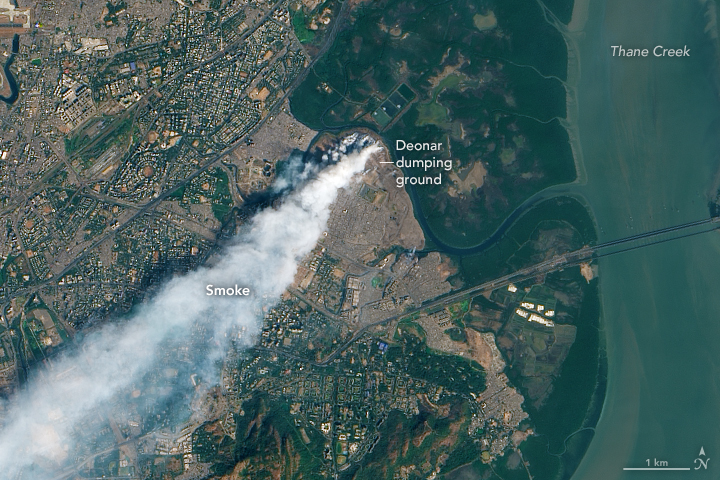
Rahul Nainani:  No, absolutely, Lalitha, I think, I was as ignorant as the rest of us, before we started ReCircle. And having studied finance, nowhere in my mind did I think I’d be working in the waste sector. But I like to believe that, waste and circular economy, is something that just happened to me, and I think that’s for the very right reasons itself. So, we launched in early 2016 under the brand name of RaddiConnect, which is what we rebranded as ReCircle. But just when we were launching, there was this massive fire that took place at the Deonar dump site. You know, there’s this iconic image that NASA took from space where you could see that fire burning even from space. And it went on for a few weeks in fact. And early in our business when we were just launching, the idea was to find, look at what was happening with our base and we were as ignorant as anybody else. It was more of an out-of-sight, out-of-mind mentality. Having lived in Bombay all my life, Deonar was just like, one dump site which you cross on the way to Lonavala. But one fine day when this fire happened, we planned to go down to the dump site and see what went on and why this fire happened itself to start with. So, there were a few things that we found out during this fire. The first thing was that these fires happened regularly. And it’s not just, that one fine day that this escalated. But the only reason in the end, not just us but the entire city woke up is because the wind was blowing towards South Bombay and South Bombay being South Bombay, people started waking up and realising that this was a massive issue. But these fires happen daily. And the dump site, if you look at the map of Mumbai, is pretty much located in the heart of the city, but it has a creek on one side. So generally, when the wind blows towards the creek, you don’t realise the extent of the fire. But this fine day when it was growing towards the city and that’s when we all woke up. The second thing that drove me to take that leap of faith and see how big this problem is and think that we need to work towards a solution was that we worked with an NGO called Apnalaya that works in the Deonar dump sites, in the neighbourhoods surrounding the dump site. And they gave us a very astonishing fact that the average life expectancy of people that just live around the periphery of the dump site–these are again, not the people that work in the dump site, but only live in the slum area next to it–was 38 years of age and, and that was an eye-opening number to me and it helped me realise that if this is impacting the people just living around the downside, how soon is it going to start impacting the rest of the city as well as the rest of the country? This story is not just about Deonar dumpsite in Mumbai, but this is pretty much made with the Ghazipur dump site in Delhi. May be Bangalore, maybe even Kolkata is pretty much the same city, same story across all cities across India. And, together Gurasish and I must have visited more than 50+ dump sites in the country, and the situation is quite dire. So, that helped us realise that of course we need to make an impact in this space. And that’s how our journey began into working towards starting ReCircle.
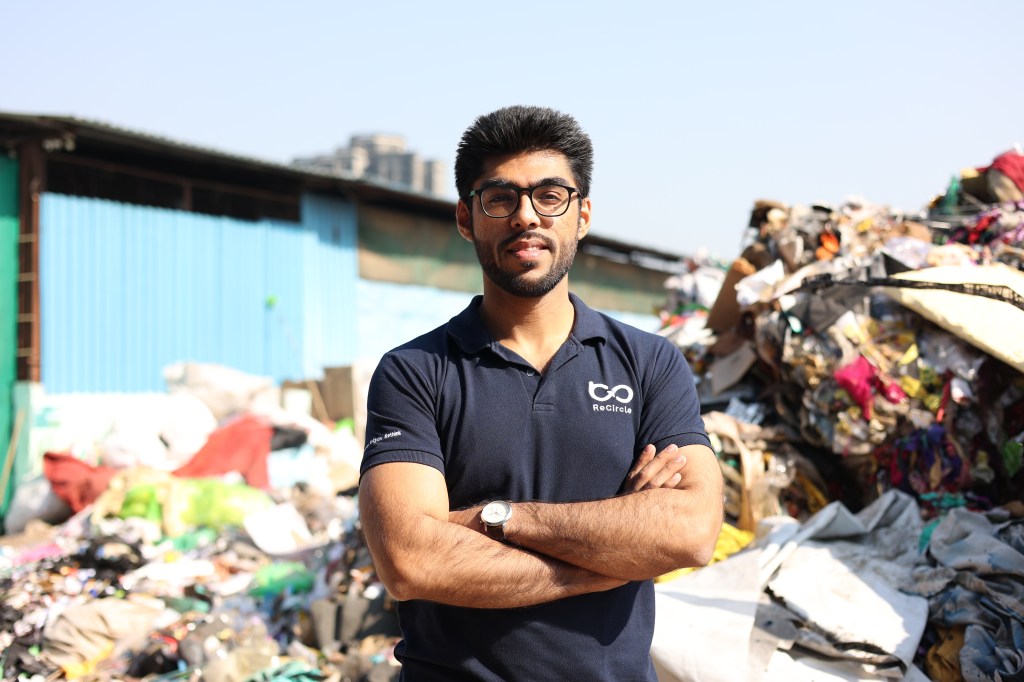
Rahul Nainani, Co-Founder and CEO, ReCircle

5:12:

Lalitha Krishnan: Wow. God bless you guys, somebody had to do it. Gurashish, maybe you can answer this. So, help me draw a picture of ReCircle’s operation by completing the story. OK? So, I’m a rag picker or a saffai karamchari sorting through a pile of garbage in Deonar. What next? What happens?

5:35:

Gurashish Singh: Overall, let me help you understand how waste flows #1 The lady or the man in the house removes the clean recyclable waste, right? So that’s typically your newspapers and things like that that are sent to a raddhiwalla. Then the house helper–who comes to the house has the first dig at the waste– who will remove bigger cardboard boxes or Bisleri bottles, PET bottles, and things like that. After that, the waste goes to the garbage collector of the building or the person who’s putting the garbage in the garbage truck. Post this, the waste will end up in landfills and oceans. So even though it is a pretty informal supply chain right from the start to the end. One of the most astonishing things is that fortunately, we have a very strong-backbone supply-chain where people are removing waste at so many levels. But the unfortunate scenario, and this is in 90% of the cases, the waste is not segregated. So, if we just segregate the waste, it will make it very easy for this extremely long supply chain of people that are, actually making a living out of the waste that we throw out also. So yeah, that’s actually what happens. And, there is a supply side to the supply chain that works. There are scrap dealers, kabadiwalaas, your house help, the person who is, you know, down in the building collecting the garbage right till that truck reaches your dumping grounds. The bigger problem is people not segregating this waste.

7:31:

Lalitha Krishnan: Thanks for that. Talking of ‘sorting’, one generally hears of sorting garbage into glass, metal, cardboard, wet waste and plastic. In one conversation I heard you mention sorting garbage into 40 categories. I mean I was blown away. Could you share a few examples and which materials are the focus of ReCircle?

7:56:

Gurashish Singh: Sure, let us again start with India, where we’re expected to segregate our garbage into three categories that are dry, wet and hazardous right? And out of the dry waste… if you typically see the four major four or five major categories that are there–paper, glass, plastics, metals, e-waste. In India we are not even supposed to segregate different types of waste. When we travel internationally, we do the paper separately, the glass separately, dry separately, and wet separately. So however, given what is actually supposed to be done in India where we segregate our waste into dry, wet and hazardous, this dry waste then reaches our facilities where we first primarily sort the material into paper, plastics, metals, glass and e-waste. Then, in turn, each of these materials is further segregated. So, say paper is segregated into four categories. That’s white, coloured, corrugated boxes, coloured-corrugated. Your glass is segregated into alcohol bottles, and other glass bottles and then colour-segregated. Plastic belongs to seven different categories, right? That’s number one to number seven. #1 being PET #7 being others. This level is then further categorised into colours, transparent and things like that. And so is e-waste. So, leading to all this, we segregate over 40 different categories of waste. We also connect and segregate multi layer plastics or the 7th category which mainly is the packaging material that is composed of multiple layers of different polymers. And we make sure that this either goes into road making or recycling or energy recovery and waste to energy plants or cement factories, which is all the government-approved way of managing this waste. So, yes, the one category of dry waste that we collect from individuals is then further segregated into 40 categories.

10:11:

Lalitha Krishnan: OK, could you give me an example of what 7-layer packaging is? What product are we talking about?
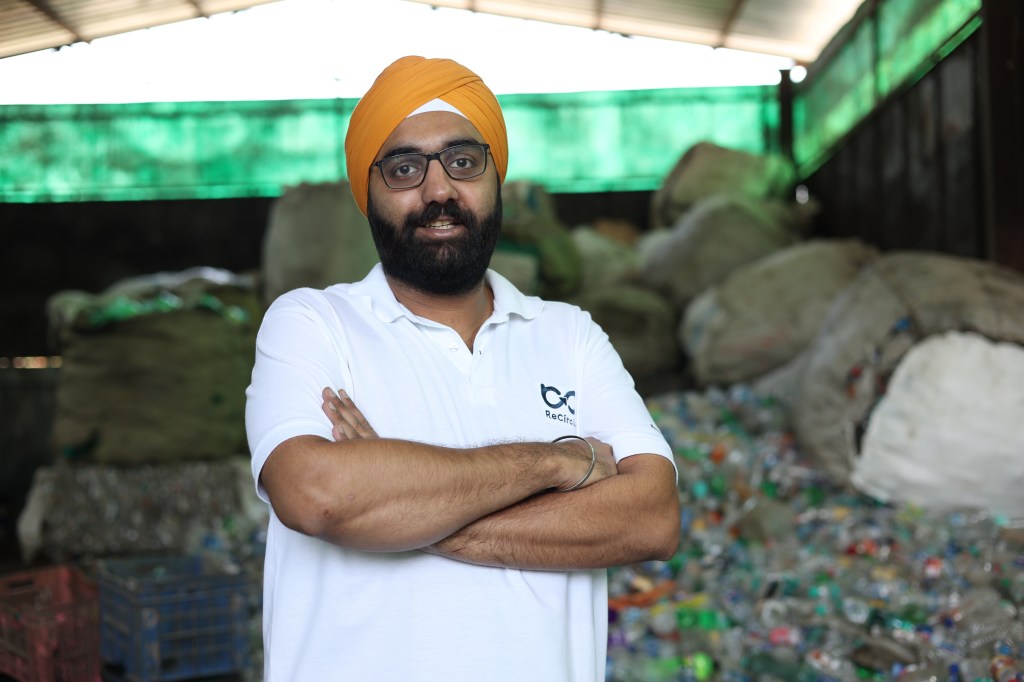
Gurashish Singh, Co-Founder and COO, ReCircle

10:18:

Gurashish:Multiple layers. An easy example would be probably a packet of any chips that we like to get.

Lalitha Krishnan:

OK.

Gurashish Singh: So, if we notice, the top layer would be plastic, there will be an aluminium layer with it, right? So, there is an aluminium foil if you see it on the other side.  This is basically a merging or a combination of multiple polymers and other materials that cannot be recycled. So an easy example is a water bottle which is PET. If we break that down and granulate it, we are going to get PET granules back. But when there are different layers of either different polymers or different materials, the output is never going to be a single material. That’s going to be a mixture of all materials.

11:10:

Lalitha Krishnan: Thanks. Rahul, how many villages, towns and cities does ReCircle reach? And are any of these remote? For instance, do you cover vulnerable areas of India, like the mountainous areas or islands like the Andaman island where there’s really no extra land for dumping garbage? Having been there–and my last podcast guest was a herpetologist who lives in Andaman—he says Andaman island has a landfill now. I mean, there’s nowhere for the garbage to go. It doesn’t come back to the mainland so…

11:45:

Rahul Nainani: Correct. So currently, our operations span over 250+ locations across India covering major cities like Mumbai, Delhi or Bangalore, but also covering tourist locations like Shimla or Haridwar and also, certainly difficult-to-reach locations in the northeastern area which might be in Assam or Meghalaya, where we are actively working on collection of this material. Having visited Andaman island myself, a few years ago, as I’m an avid diver, I did see the need for waste management over there. But how our business model works is that we work with brands, which is a B2B business. So, we work with brands to help them to offset their footprint. So, when I say this, essentially, let’s say we are working with a beverage brand and they’re selling their brand in India. We collect an equivalent amount of beverage bottles on their behalf. Now, while, our mandate for collection of this material comes from the businesses that we work with, we are covering almost 90% plus of the States and Union territories in India. But in certain areas where we need some additional support from brands where we can do the operations like in Andaman, right now, where we are not working. But we know companies that are working over there. We are trying to maximise our footprint as well in terms of collecting from even the harder-to-collect locations. But here my call to the listeners would be that if you are a brand and are looking at consciously making this effort, please do reach out to us. And we would want to work in harder to access locations further as well …to collect material from where it is difficult to collect these resources. But yes, currently we do have a mix of Tier 1, and Tier 2 rural areas as well, where we are actively collecting this material from.

13:38:

Lalitha Krishnan: Good to know. 250 plus locations is quite something. Considering ReCircle’s reach, you’re providing livelihood to a large number of people. How would you say it impacts their lives?

13:55:

Rahul Nainani: Yes. So,  just to take one step back, the waste management sector in India, as Gurashish mentioned, is extremely informal and fragmented and it has a lot of moving parts involved. Now our purpose or our vision at ReCircle is to bring along ethical circularity. And, the idea is that while waste is an environmental problem, it’s also a massive people problem because there are nearly 4 million waste pickers or people who make an income out of scavenging waste from landfills and dump sites across India. So, our business model was, in a way where we wanted to empower these people and formalise them as compared to displace them. Because, we very well understand, that without having these people clean up the trash after us, there would be no waste management that would happen in our country at all. So, we work with local scrap dealers, aggregators, and waste collectors that work across the country at these 250-plus locations. We formalise them with the help of where we’re working with them on, health checkup camps… connecting them with government schemes and also eventually working with them on additional sources of income. So, in simplicity, we charge the polluter, which is the brand owner that we work with and we incentivise the collectors that collect this material on our behalf. And with that intent,  we’ve directly and indirectly impacted more than 3000+ informal workers. While this is not a big number in the larger context of things, this is where we are currently. At a small stage where and we can do this work. And where either with the help of, you know, social security or with health camp with additional sources of livelihood is where we’ve been able to impact these 3000 plus informal workers that are part of our supply chain. And our vision is to work and increase this number as we scale up our progress in terms of waste recovery. We also want to impact more and more waste pickers in the organisation. We don’t like to call them waste pickers, but we call them ‘saffai saathis’ as there are friends who help us clean up the environment as compared to picking our waste because what is waste for us is a resource for them and they can make a living out of this. So, that’s how our mindset is to personally not call them waste pickers because they’re cleaning after us. We are the waste generators and they are the cleaners. They’re cleaning after us. So, it’s very ironical to call them waste pickers or waste workers in that sense. So, rebranding them as essentially saffai saathis, rebranding waste as a resource to start with, because what’s waste to us is a resource to them and also for our ecosystem. And that’s how we intend to build this inclusive business model where we empower these informal waste collectors as a part of our supply chain as compared to displacing them from the ecosystem.

16:55:

Lalitha Krishnan: Nice. I like that whole positive outlook you have towards your business and to everyone who’s involved. Well, could one of you give us three foul facts about garbage that are India-specific that my listeners may not know?

17:09:

Gurashish: One of the most startling facts that we came across was… did you know that India imports 465 crore plastic bottles annually? We stumbled upon this a decade ago and we found it absolutely unacceptable. If there’s one thing that we don’t have a shortage of in India, that’s waste.

Lalitha Krishnan: Why?

17:41:

Gurashish Singh: The reason for this is two ways. One is that again, going back to one of the first questions you asked me, people do not segregate waste. So a lot of it just ends up in landfills and oceans, right? If we just start segregating our waste, multiple people will remove this and send it to a recycling unit close to wherever they are. So that is one of the one of the astonishing or foul facts as you call it. Secondly, India alone produces a massive amount of 3.4 million tonnes of waste. Again, only 30% of this gets recycled, mainly due to non-segregation of waste. We are the third largest waste generator in the world and if we continue at the same pace, we will be the largest by 2048. That’s the estimate and another one would be a 4 million people make an income out of scavenging waste from landfills and oceans and streets. They are unorganised and unrecognised, and we feel that somewhere they are the only reason for the entire waste recycling and waste infrastructure that is being managed in India as well. So again, it will be a call out to all the listeners here that whoever your waste picker, waste collectors or saffai sathis are, they’re invisible warriors, in this entire shadow supply chain. So, the dignity of work is something that they really deserve.

Lalitha Krishnan: Thanks for that. It’s so true. So could you share three positive facts about garbage that emerges from your business?

19:36:

Rahul Nainani: I think looking at the larger landscape of sustainability and clean tech itself, I feel that I’m extremely optimistic in terms of solutions coming out of this space, especially because there’s been more traction that’s been in this space in the last, let’s say, three years as compared to the last three decades put together. So, there’s a lot of movement in the right direction that’s happening. While, in India, we are seeing small movements that are coming along but I think at the larger levels also, there are somethings that are coming along. Let’s, take the example of Indore, which is a very talked-about town in terms of the cleanest town in India itself year after year. And I think there’s a lot of learning that we can take from there where having visited Indore myself and seeing the case study over there, I think they have reached almost 90% plus segregation of waste at source. And, like how Gurashish has been mentioning, I think the biggest problem is that we are not sorting our waste. And if you’re not segregating, then it becomes waste and it doesn’t become a resource. So, there is a silver lining. Having seen a city like Indore do it, I think there’s a lot that we can learn from them and move towards a more sustainable future. The second thing probably is that there’s a lot of policy shift that’s coming along. With global pressure on plastic pollution, sustainable development goals have come across at the global level. Even in India, the plastic waste management rules were for the first time introduced in 2016—they never existed before–which is part of the solid waste management rules earlier. So that’s bringing around a lot more traction in this space. And then of course, our Prime Minister’s global Swachh Bharat movement, which if nothing, has at least brought in awareness to a very large level of population which is that we need to work towards a cleaner India. So, I think there’s a lot of policy pressure, also external pressure that’s coming along, which is moving towards the right direction in that sense. And then finally, I feel that when we started ReCircle in 2016 and as we sit today in 2024, we have seen this industry evolve so much that earlier clean tech as a sector did not even exist. You know, the sustainability term in large organisations did not even exist. And now we’re seeing that it’s becoming a part of board-level conversations. Also, so many innovators and startups that have come up in this space that are working towards solutions, not just for garbage, but for carbon, water, and energy working towards a more sustainable ecosystem altogether. So there’s a lot of movement and innovation that’s happening in this space and that keeps me extremely optimistic about the future while this has been a large problem in the past, there are people and there are solutions out there. It’s a matter of all of us taking those small steps and picking the right solutions.

I feel that when we started ReCircle in 2016 and as we sit today in 2024, we have seen this industry evolve so much that earlier clean tech as a sector did not even exist. The ‘sustainability’ term in large organisations did not even exist. And now we’re seeing that it’s becoming a part of board-level conversations. Also, so many innovators and startups that have come up in this space are working towards solutions, not just for garbage, but for carbon, water, and energy working towards a more sustainable ecosystem altogether. So there’s a lot of movement and innovation that’s happening in this space and that keeps me extremely optimistic about the future while this has been a large problem in the past.-Rahul Nainani

22:47:

Lalitha Krishnan: Right. Thanks for that. All right, so who are your prime customers? Are they brands that we recognise? Are there labels on recycled, repurposed products that we can look for?

23:01:

Gurashish Singh: Right, Some of the brands that we are associated with and work with are prominent organisations such as Hindustan Unilever, United Nations Development Programme, Hindustan Coca-Cola Beverages, Mondelez. We are one of the sole partners for Tata Starbucks, helping them assist in their sustainability objectives and needs. We also work with brands across all sizes. A lot of brands in the D2C (Direct to Consumer) space as well, such as Phases, a skincare Indian brand, Honey Twigs, which is into honey and one-time use packaging. So yeah, quite a few prominent big and small brands and, and it’s, it’s been a good journey working with them.

Some of the brands that we are associated with and work with are prominent organisations such as Hindustan Unilever, United Nations Development Programme, Hindustan Coca-Cola Beverages, Mondelez. We are one of the sole partners for Tata Starbucks, helping them assist in their sustainability objectives and needs. We also work with brands across all sizes. A lot of brands in the D2C (Direct to Consumer) space as well, such as Phases, a skincare Indian brand, Honey Twigs, which is into honey and one-time use packaging. -Gurashish Singh

23:54:

Lalitha Krishnan: Nice. So, everything you do is really impressive. And it’s on an incredible scale as far as I can see, but it’s almost–I mean since I’m speaking to you, I now know–but mostly invisible to the public eye or backstage almost to speak. So, what does ReCircle do to nip the garbage problem at the consumer level? I’m not sure if that’s a clear question.

24:21:

Rahul Nainani: I think I get an idea, in terms of what are we doing in terms of consumer awareness and the consumer-side work? So, to build a business in this space, we realise that we have to make a large impact, we need to get big brands to start taking action. Of course, consumers need to do their bit. But there’s a while we, our main focus has been on B2B and working with big brands to make that change happen, there’s a lot of work that we do on the consumer level as well. Maybe through a collection drive in the city of Mumbai. And if you want to discard your recyclable ways, we’ve also recently started getting into a textile-based collection as well– your old clothes as well as your dry waste. We have a monthly pickup that we provide to consumers where you can sign up free of cost. And we do a door-to-door pickup once a month. And, the schedule of this is something that is already finalised for the entire year. So, if you simply follow us on Instagram, our handle is recircle.in you’ll be able to see & sign up for our next collection drives.

25:28:

Rahul Nainani: We do a lot of work in the form of ‘Waste to Art’ workshops to spread awareness of how waste is not waste. We conduct workshops either in corporate offices or, even otherwise in spaces where you can sign up to see what you can make best out of waste. So, there’s a lot of awareness that happens there. We’ve worked in the past with the Start Art Festival in terms of setting up installations for waste. So, the Evelyn House installation, maybe Lalitha, you remember seeing it last year. The entire building had plastic bags sprouting out of it. We were happy to associate with the artist who helped design that in terms of spreading awareness. So that’s another thing where we use art as a way in terms of spreading awareness.

26:21:

We do have regular clean-up drives in terms of beach cleanups and other stuff that we end up doing as well.

And, finally, we also conduct Zero-waste events. So, events are a massive area where there’s a lot of footfall of people and consumer awareness can be spread. So we work with event organisers to help organise a #zerowaste to landfill event. So may it be a music festival with the likes of let’s say #SoundRise or a #TappedFest or maybe a marathon. So, we’re doing work with the #PowaiMarathon in Mumbai as well. And, the biggest one that we’ve done until now is the #ICCWorldCup matches that happened at the Narendra Modi Stadium in Gujarat, there were more than 1,00,000 people attending each match. We managed to make sure that the entire event was zero-waste over there. More than 1000 tonnes of waste that were generated at all the matches were eventually sent for processing as compared to reaching landfills and oceans.

Lalitha Krishnan: That’s very impressive.

27:27:

Rahul Nainani: So, we believe that consumers need to play a very crucial role and consumers like us and citizens like us, where we try and do a small bit of awareness through the different activities. If you also follow us on Instagram, there’s a lot of awareness material that we put out over there as well. But through these events, through these collection drives, we can touch base with different consumers at different levels as well and thereby, spread the awareness. At the end of it, the idea is that consumers generate the waste, and they also purchase the waste in a way. So, how do we get consumers to become conscious consumers at the end of it? By actually picking brands that are taking action as compared to the ones that are not. So, it is a small, small part of the puzzle that we play. But the idea is that consumers can spread this awareness across different other consumers as well.

Lalitha Krishnan: Right, complete awareness and change in lifestyle. I think you’re doing a great job.

Rahul Nainani: One step at a time. You know, I think the only thing is that it might get overwhelming that you have to do a lot, but take those small steps.

28:40:

Lalitha Krishnan:

Tell me about ReCircle’s initiatives: ClimaOne, Plastic EPR service, and Plastic Neutral Programmes. I don’t have a clear understanding of these things and whether they’ve been included in your earlier replies.

28:58:

Rahul Nainani: So maybe a few of them are something that we did speak about like we do zero waste events. Wherein, if you’re an event organiser, we help you manage the event and ensure that the waste that is generated is firstly reduced, pre-planned, and make sure that the processes are set up. And then, of course, look at managing the waste after the event is closed. We do collection drives for consumers, which is where consumers can participate by disposing of their recyclable waste as well as textile waste now.

But on the B2B side, we have a few services. We have a service where we essentially help brands to offset their plastic footprint. So, in simplicity, let’s say you’re a brand that is selling 10,000 beverage bottles in the market, we collect, sort, segregate and recycle these 10,000 bottles on your behalf and ensure that it’s getting recycled and give you credits for this. So similar to how carbon credits work, we work on plastic credits and within the plastic credit space, we have two of our services. One is our EPR service, which is more compliance based. So as a part of the plastic waste management rules, if you are a big brand, you need to collect back as much plastic as you put in the market. So we help brands offset as well as meet their regulatory compliance requirement. And then we have a similar service for medium and small-sized brands, which currently do not require to do this as a compliance, but are doing this as a voluntary activity where we not only help you offset your footprint under our Plastic Neutral Programme but also help you communicate the impact of this with your consumers. So, your consumers know what are the actions that the brand is taking. At the backbone of this is our clean tech platform called Clima One, where Clima One brings transparency and traceability to this unorganised sector. Where consumers and brands can track what’s happening is that there’s no greenwashing happening, when the material is being collected. So we are digitising and formalising the supply chain with the help of our tech platform which enables us to provide these services to the brand owners that we work with.

31:00:

Lalitha Krishnan: OK. I’m down to the last question. What thoughts would you like to leave with our listeners? Or could you share a word or a concept that adds to you know, our understanding of what you do?

31:17:

Gurashish Singh: For me, it would be segregation of waste. I think that’s where it all starts. That’s where the journey begins. So, to the listeners, it would be like wherever you are, whatever you do, start by segregating your waste. It’s not that difficult. You put segregated dry, wet and you do it the minute you’re throwing your waste. It should be a conscious decision to throw it in the right bin. And that’s what enables a beautiful future for the waste going forward.

Lalitha Krishnan:Thanks for that. I like the fact that you’re emphasising this throughout our conversation and it’s just simply segregate. All right. I hope our listeners remember that. How about you, Rahul?

32:05:

Rahul Nainani: I think, we like to rethink things at ReCircle and one of the primary things of rethinking is that when you look at something as waste, you tend to throw this in a dustbin and you realise that it has no value. But I think what people need to start rethinking is that if you rethink waste as a resource, then you start looking at it from a very different perspective. And, that’s what I want the listeners to take back after this conversation. That, rethink waste as a resource, a resource that can impact the lives of the millions of people who are working in this sector. It can also be a resource to reduce our reliability on fossil fuels and on our ever-depleting resources that we have. So if we use our waste as a resource, we can minimise the requirement of new resources and thereby move towards a more circular and sustainable future.

ReCircle staff at facility. via https://recircle.in/

33:05:

Lalitha Krishnan: True. Thank you so much. That’s being creative with your waste. Think of how you can reuse it like we all did in the 70s but I guess we didn’t have that much plastic to deal with back then.

33:18:

Rahul Nainani: I think being Indians, we’re ingrained with this mindset of reuse and reduce. And if you just look back in terms of what your grandmothers and grandfathers used to do, I think that there’s a lot that we can learn even by just going back to the basics in terms of waste management or circular economy.

Lalitha Krishnan: Thank you so much, this has been great.

Rahul Nainani: Thank you so much.

Gurashish Singh: OK, bye.

Birdsong by hillside resident, the collared owlet.

Photos Credit/Courtesy: ReCircle Podcast cover/label design by Lalitha Krishnan

Disclaimer: Views, thoughts, and opinions
expressed in the podcast and show notes belong solely to the
guest/guests featured in the episode, and not necessarily to the host of
this podcast/blog or the guest’s employer, organization, committee or
other group or individual.
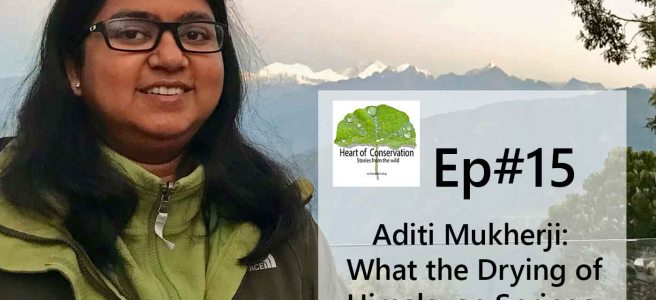

Imagine Living Without Running Water. Aditi Mukherji Tells us What the Drying of Himalayan Springs Means for India.

Heart of Conservation Podcast Episode 15 Show Notes (Edited)

Introduction:

Lalitha Krishnan: Hi guys. Thanks for listening in to Heart of Conservation Podcast (Ep#15).  I’m your host Lalitha Krishnan. I hope you’re staying healthy, washing your hands regularly, and keeping sane. Talking of water, there are a lot of people in our country (India) who don’t have access to running water. I’m not going to say more. Let me introduce my guest Aditi Mukherji. She’s a Principal Researcher at the International Water Management Institute. She is a human geographer by training with a Ph.D. from Cambridge University, the United Kingdom where she was a Gates Cambridge Scholar.  She has over 20 years of experience working on policies and institutions of water resources management with a special focus on water-energy-food nexus. She is the first-ever recipient of the Borlaug Field Award (2012) endowed by the Rockefeller Foundation and given by the World Food Prize Foundation, USA.  

Aditi is the coordinating lead author of the water chapter of the Sixth Assessment Report (AR6) of the Intergovernmental Panel on Climate Change (IPCC), which is to be published in 2021. In her previous job as the Theme Leader of the Water and Air theme at the International Centre for Integrated Mountain Development (ICIMOD) in Nepal, she co-edited a report on the effects of climate change on the Hindu Kush Himalaya (HKH) region. This report that has woken the world to the possible reality that the Hindu Kush Himalayas could lose as much as 90% of its snow and ice by 2100 due to retreating glaciers, glacier-fed rivers, and carbon emissions.

Lalitha Krishnan: Thank you, Aditi for speaking to Heart of Conservation Podcast.  Today you’re going to talk to us about spring water sources in the Hindu-Kush Region and the Indian Himalaya running dry. To start, could you tell us about springs?

Aditi Mukherji: Springs are, as you know, the main source of water in the mountains and even though they come out on the surface, essentially, they’re groundwater. So, what happens when rain falls, it seeps through the cracks and fissures in the mountains and the hills and then they kind of get stored inside the aquifers. There’s a bit of storage that happens and when it comes out…this coming out could be completely on another side of the hill. Basically, when the water comes out, we call it springs. But we have to remember essentially that water is rainwater and it infiltrates through the rocks and fissures in the hills and mountains, and then it comes out at one point. That is the discharge point. So, the discharge point is called the spring. While where the rainwater actually falls, it is called the recharge point and in between is the pathway…the pathway the water follows inside the hill-inside the rocks, coming from the discharge area. Springs are often the point where discharge happens.

Lalitha Krishnan: Thank you for clarifying that for our listeners. If we didn’t exactly know what springs are, there’s no doubt now. Aditi, when we talk about springs in the Hindu Kush, how many are we talking about and what areas are we talking about?  More importantly, how bad is the situation?

Aditi Mukherji: We don’t have the numbers. The best that we have are anecdotal numbers and we have been talking of anything between 2-4 million springs which I personally think is a bit of an underestimate too. Hindu Kush Himalaya is a wide region starting all the way from Afghanistan to Myanmar and in all these eight countries you would find the occurrence of springs. The numbers are kind of huge, we don’t really know. I will give you an example. So, in my previous job when we did some fieldwork in Nepal, in a spring-shed not so far from Kathmandu, it was a very small area, less than 10 km sq.…and we mapped more than 200 springs. So, we are talking of very large numbers. We don’t know what those actual numbers are.  And the best guesstimate we have is anywhere from 2-4 million springs. The areas we’re talking about generally the hills and the mountains of this Hindu Kush Himalayas. Having said that there are also springs in the Eastern Ghats and the Western Ghats in India. So basically, any place with an elevation and the geology, you would find springs.

So your question about how bad it is in terms of drying up…again, our numbers are anecdotal but I would think anything around 30-50% if not more of those springs are drying up and even more, at least 2/3rds of springs have shown a reduction in discharge of the springs. So the numbers are huge, the problem is huge and this is something you would get to know the moment you talk to any hill person, any pahadi. And they would tell you how their springs used to be much more productive when they were children and now, they have to walk further, the spring’s discharge is not enough. It’s a very severe problem in the hills and mountains of our region.  

Lalitha Krishnan: You’re so right. It’s one of the major issues in the hills and mountains. What are the factors that make springs and groundwater dry out?

Aditi Mukherji: I would divide the factors for springs either drying up or reducing. There are a number of things that could happen. Either spring could either dry up completely or the discharge could reduce substantially. Or the springs that used to be annual perianal—they would flow all throughout the year—they become more seasonal and flow during the rainfall. The fourth thing that can happen and often happens is the water quality in the spring deteriorates. We use all these four instances to show that the springs have been affected negatively. To sum up: springs drying up, becoming seasonal, the discharge of the spring reducing from what used to be previously and water quality becoming poorer.

The causes are primarily two broad causes. One could be changes in the rainfall regime. If your rainfall has changed, if your rainfall amount has gone down or it has become more periodic, which means you have shorter spells but more intense rainfall, or even if your total quantity of rain has not gone down, it means it can affect recharge.

As I said, springs are simply rainwater that gets captured on the hills, kind of emerges through the cracks and emerges on another side at discharge points. So, if your rainfall itself has changed that could be one cause. But primarily what we are are finding, and again, we need more evidence on this rainfall changing…changes in rainfall and how it is affecting springs. We don’t have a lot of it (evidence) but what we are finding more of is that often springs are drying for a second reason which are changes in infrastructure. Road construction, hydropower construction. All these kinds of human interventions, we find, more often…we can find immediately that if there’s a hydropower construction happening, there’s a tunnel that was done, and immediately after tunneling, there was some kind of compaction. The spring pathway—I told you the recharge area from the waterfalls and the discharge from where the water comes out—the entire pathway may have been disturbed. We found springs have also dried after earthquakes. Similar thing; there was like a ‘shaking of the inside of the hill’ so to say, in very layman’s language and that disturbs the very underlying geology of the mountains. To sum up two main things: Change in rainfall; the quantity of rainfall, as well as the periodicity of the rainfall and the second, are more human causes; building, construction of a road. You construct a road and you cut off the recharge area form the discharge area. You construct hydropower, do blasting and the underlying geology of the mountains are disturbed. And the third reason is earthquakes which kind of, has a similar effect to what hydropower would be doing in terms of blasting. It’s you know, the same shaking of the mountains and changing of the underlying geology.  

Lalitha Krishnan: Aditi, I know we can’t prevent natural disasters like earthquakes but when you’re talking of human intervention—I don’t know if this is a silly question—aren’t feasibility studies done before building and blasting…making roads or dams, etc?

Aditi Mukherji: No and unfortunately no. And that is not at all a silly question. To me, that is one of the most important questions. Why are infrastructures designed in the hills and mountains without taking into account whether springs would be disturbed? Springs are often the only source of water for these mountain people. There are rivers but the rivers are too deep down. They may be glaciers but they may be too far away from where the people are. Springs are the absolutely the only source of water that people of our hills and mountains in the Himalayas depend so it is quite surprising that most of the infrastructure projects are not designed with an understanding of what that infrastructure would do in terms of disturbing the recharge area. Very often we build roads, where previously, there used to be recharge. When recharge no longer happens springs dry up or we are cutting through the road in such a way that it will disconnect the recharge area from the discharge area. This means because the water can no longer get recharged and flow out to the designated points, the springs will dry. So, I think it’s of paramount interest that these hydro-geological considerations, a proper geological mapping with a focus on springs are undertaken before we design any of these infrastructures.

Interestingly also, you are aware for hydropower, so many communities in our region protect against hydropower. One of the reasons also why they protest is also that their drinking water sources dry up. While there is compensation for things like you know, if your house gets a crack or your assets are destroyed, then there is a system of compensation. But if your spring dries because the hydropower came up then it’s often very difficult for communities to ask for proper compensation. That’s when they really come out on the streets to protest. So I would say, this should become very very important.

Lalitha Krishnan: Thank you so much for that explanation. Aditi, technically speaking, how long does it take to rejuvenate a spring? First of all is it humanly possible to do that? If so, have we successfully achieved that in our country?

Aditi Mukherji: Yes, absolutely. It’s possible. How long it takes to rejuvenate a spring would depend on the nature of the spring. First, let me come to the second part of your question… Is it humanly possible to rejuvenate a spring? Yes, it is possible. It is not rocket science. It is not completed. It is not super complicated. You need people trained in field geology. You need people trained in basic hydrology, hydro-geology but it is possible to demarcate which is the recharge area of the spring. As I said it’s again, all rainwater falling into a plain that is recharging and then there is a flow path inside the hills and the mountains and then the spring comes out in the discharge point. Once you have actually identified the recharge area more or less—you don’t have to do it with super accuracy—but if you know that this is the part of the hill where when the rain falls and because the rocks are sloping in a certain way, they are dipping in a certain way, the water if it falls at that point, say point ‘A’, then water will take a certain path and it will come out as a spring in a point ‘Y’. As soon as you can map that with a certain level of certainty and for that you need expertise in field geology, that’s something that is not very complicated.

We have in India, the mountain state of Sikkim. They have done tremendous work in spring rejuvenation. So, Sikkim has to date rejuvenated more than a hundred springs if not more. They did exactly this.  They trained their community workers, their panchayats, some technical people were trained in this basic understanding of geology. Basically, to know what kind of rocks there are in the hills or mountains, in which way are the rocks dipping, which is the slope of the rock and they could then identify the recharge area. Once you identify the recharge area, then you do very simple watershed activities. You dig a hole, you dig a trench…you know, it depends on the slope of the land, what activities you can do and what you cannot but then there’s a very clear guideline around this. We have been doing this watershed for ages. Now the important part is don’t do watershed activities blindly everywhere. Just identify the recharge area and do the watershed activities such as trenching which will mean that the rainwater that falls on that recharge area…and if you have done things like trenches… that water will reside a bit longer and that will flow down. That’s important to identify the recharge area. Then you can also say, this is the flow path. Let’s not construct a road here. If we do it, it will obstruct the flow.

Now coming to your question, has it been successfully achieved? Yes. We have done this when I was with ICIMOD. We have successfully done it in Nepal. Two springs were rejuvenated in the sense that they discharged more than double in just one season. We did the intervention, we identified the recharge are and did the trenches, etc., before the monsoon. And, right after the monsoon, we kept monitoring those. We saw that the spring but they also continued to have water for longer than usual.

And, how long does it take to rejuvenate a spring? That would really depend on the nature of the storage. You know, there is a bit of an aquifer that is storing that water. So, depending on how big it is or how permeable, how porous it is…that kind of determines. If it’s a fairly large one, that requires recharge coming from various sources, maybe you’re talking of maybe one full year or more…but if it’s a smaller, very localised spring with a localised small recharge area, you can expect the spring to have to have been rejuvenated—by that I mean—if it has become seasonal, to expand its seasonality, to increase its discharge, you can do it within a season.  Since you are talking from Mussoorie, there’s also a very good NGO in Uttarakhand called Peoples Science Institute (PSI). They have also rejuvenated a lot of springs in and around Dehradun. A lot of NGOs are doing this. Springs have been rejuvenated in north-east India; Sikkim is one example. They’ve done the same in Meghalaya, in Darjeeling in West Bengal…

Lalitha Krishnan: That’s good to know. As the lead author of the water chapter of the Sixth Assessment Report (AR6) of the Intergovernmental Panel on Climate Change (IPCC), could you tell what collaborative measures or sharing of information happens between countries?

Aditi Mukherji: Basically, the IPCC report is a scientific report. So, the science gets communicated to all the countries, all the signatory countries of the UNFCCC. What happens is that the scientific report itself is not subject to government negotiation and governments just accept it the way it is. There is one document called the Summary for Policy Makers. That gets vetted during the final plenary session. For example, our cycle finishes in 2021. Sometime in October, 2021there will be a summary for policymakers which will be written for this entire report and that gets presented at that plenary. And, that’s where all the 98 countries, if I am not mistaken, are the signatories. That’s when the countries, you know, negotiate and say, “OK, this wording is not suitable, you can change that wording, etc. etc”. Having said that, the main science report doesn’t get changed by governments. That’s the science behind it. So that’s not up for negotiation. What’s up for negotiation is a bit of the summary for policymakers.

Lalitha Krishnan: Talking at the grass-root level, say the community level what can people do to maintain springs in their area?

Aditi Mukherji: The important part is to identify where the recharge area is. While our field geology can help it, we have seen through experience that the majority of the villagers, somehow or the other know where the recharge is happening. They just have that local knowledge, that traditional knowledge, that understanding of how those rocks are sloping and dipping. So, communities have to identify the recharge area and make sure the recharge area is kept clean. For example, no open defecation in the recharge area, because if that happens then the water quality that flows becomes dirty. Similarly, if possible, keep that recharge area well planted, don’t construct buildings in that recharge area which will impede the actual amount of recharge. So once communities identify where the recharge area is, they need to protect that recharge area through good land management practices.  That kind of happens in many places, in many other places it doesn’t. There’s again this example of Nepal that I’m aware of. Many of the recharge areas were also wallowing ponds for buffalos. At some point, in the 70s, it was thought that those were also breeding ground for mosquitoes. Malaria eradication was big in those days. So many of these ponds were actually covered up and community health centres built on them.

Lalitha Krishnan: Oh no.

Aditi Mukherji: That’s when people started realising that many of their springs were drying up because those ponds were actually the recharge ponds for those springs. So, the measure the communities can take is just protecting the recharge area. Protect it like your life depends on it.

Lalitha Krishnan: What do you think of the measures our government is taking to rejuvenate springs?

Aditi Mukherji: I think it’s very encouraging. The NITI Aayog commission has set up a task force on the Himalayas and Spring Revival is one of those topics of that task force. And now that the report has been finalised and has been shared with all the eleven mountain states…all the elevens states have been doing tremendous activities. So I would say that India is showing very innovative leadership when it comes to spring rejuvenation. Something perhaps, our neighbouring countries can take inspiration from. Sikkim is a great example. There has been a great co-learning between Sikkim and Bhutan. Bhutan has now taken up spring rejuvenation in quite a significant way. India is doing that as well. So, I think, the measures the government is talking is they are now trying to map springs. I recently read that there is some plan to engage drones in spring mapping. I wasn’t quite sure if that was the best approach. What Sikkim did was they really used their panchayat mechanism and got the panchayat officials trained in identifying theses recharge areas and they used the funds from the NREGA (National Rural Employment Guarantee Act) to do those recharge activities like digging of trenches etc. To support that the government has taken this very seriously, perhaps, there has to be a bigger role for the local elected bodies. That might be something that needs a bit more mainstreaming so that it’s the elected panchayats that do more of the work because they are best placed to map springs, identify recharge areas, etc.

Lalitha Krishnan: I have two more questions for you Aditi. We’re living in such unusual times. I wanted to know if the COVID 19 disease or the Coronavirus is impacting people…everyone from having access to running water?

Aditi Mukherji: Yes, it looks like in spite of all our progress, what seems to be the best precaution that everybody is recommending – WHO and the government and the one that’s proven is washing your hands frequently with soap and in running water. Now imagine living in a house where you don’t have running water. Imagine the only spring in your village has dried up and there isn’t any running water. This COVID19 has brought up the importance of having access to water near where you live. That’s again why we have to do something about all these springs drying up. This needs to be done on an emergency basis.

Lalitha Krishnan: When we open our taps to wash our hands we barely think about where the water is coming from. We’re sitting comfortably in our houses, stocking up…we may be quarantined but we are comfortable. So thanks for reminding us that there are people out there who don’t even have access to running water.

Aditi Mukherji: Absolutely. In a relatively well-managed village where springs are in good condition, they would usually have one stand post shared by 8-10 families. So that’s a good case. In villages where the springs have dried up or where there isn’t any infrastructure – where everybody would have to walk to the source of the spring… then there are springs where the waters being rationed…we have come across many springs where the village committee would literally lock up the spring. They would open it for one hour every morning and every evening simply because there isn’t enough water for everyone for 24 hours. In those circumstances, it would be really hard for people to follow this very basic advice of handwashing.

Lalitha Krishnan: Most of us have a lot to be grateful for. Aditi, I do have to ask you. Do you have hope?

Aditi Mukherji: Yes, it would be hard without it right?

Lalitha Krishnan: Of course, you’re right. When our researchers and scientists are optimistic, it gives us hope too. Ok Aditi, this is my last question to you and a request. I ask all my guests to share a new word to help us improve our vocabulary. So, is there a word that you’d like to share with us?

Aditi Mukherji: Yes, I’d like to talk about ‘aquifers’. An aquifer is basically the water-bearing layer. We can’t see it because either if you’re living in the plains then it’s under the ground; in the mountains, it’s basically inside the rocks. It’s super important because the aquifer is where all your groundwater storage is. India completely depends on groundwater. 60% of our irrigated area gets irrigated from groundwater. 80% of our drinking water comes from groundwater. If we don’t take care of our aquifers, don’t ensure that our aquifers are not overexploited, our aquifers don’t get dirty, we would never have water security. That’s the word I would like your audience to know: ‘Aquifer’ which is the water bearing layer from which our life-saving water comes from.

Lalitha Krishnan: Aditi thank you so much for everything you’re doing. It’s been a real honour talking to you.

Aditi Mukherji: Thanks so much.

Lalitha Krishnan: I hope you enjoyed this episode of Heart of Conservation. You can listen to it on many platforms -Spotify, SoundCloud, Apple podcast and many, many more. If you know somebody who’s doing interesting work or whose story should be shared, do write to me earthymatters013@gmail.com. Stay safe. Stay healthy and keep listening.

Photo courtesy Aditi Mukherji.

Podcast interview and Artwork: Lalitha Krishnan

Birdsong by hillside residents


Disclaimer: Views, thoughts, and opinions expressed in the podcast and show notes belong solely to the guests featured in the episode, and not necessarily to the host of this podcast/blog or the guest’s employer, organisation, committee or other group or individual.

Dr. Pasang Sherpa: the only Sherpa Person with a Ph.D. in Anthropology Studying the Sherpa People and Climate Change #1

Welcome to Heart of Conservation Podcast

Show Notes (Edited): Dr. Pasang Sherpa:Episode #1                                                                                                 

I am Lalitha Krishnan and I’m speaking to Dr. Pasang Sherpa, a young and passionate cultural anthropologist, from Nepal. She is the only Sherpa with Ph.D. in Anthropology studying the Sherpas. We are at the Hanifl Centre for Outdoor Education and Environmental Study, in Landour, Uttarakhand, India. Dr. Sherpa is here in the capacity of Professor for Pitt in the Himalaya study abroad programme.

 Her research areas include human dimensions of climate change, indigenous people, and development in the Himalaya. She has worked as a lecturer in the department of anthropology at Penn State University from 2013 till 2015and is currently serving as co-director of Nepal Studies Initiative (NSI) at the University of Washington.

I’ll start with the basic question: What made you pursue cultural anthropology?

Dr. Pasang Sherpa: I was born and raised in Kathmandu. Growing up I was always fascinated by the differences in my grandmother’ s lifetime, then my mother’s lifetime then mine. I was always interested in learning more about the Sherpa culture and wanted to know how my grandmother lived in village herding cows, farming potatoes and my mother as a young bride came to Kathmandu. Then looking at my own life how I was attending English medium schools and speaking Nepali and not having not having any Sherpa friends actually. So, all of that fuelled my interest in the Sherpa culture and I felt that cultural anthropology would be the right academic discipline for me to learn more.

The Sherpa people are often misunderstood or misrepresented? As a Sherpa would you, agree?

Dr. Pasang Sherpa: Yes absolutely. Many people think when they use the word Sherpa, they think it means a trusted guide… and that is how a lot of people use it. Including the assistants to policymakers at important policy meetings like the G8 summit. There’s actually a meeting called Sherpa Meeting for the G8 Summit. The word is also used to mean porters and high altitude guides which is how these occupations are being referred to. But the word ‘Sherpa’ actually comes from the Sherpa language ‘Sherwa’ which means ‘People from the east’ and it is a word that describes our ethnic group.

In your website, you mention being based out of Kathmandu during your Masters and completing a thesis on the Indigenous people of Nepal. Thereon your study progressed to the climate change in the Himalaya. Could you tell us what fuelled your interest in the environment and about that progression?

Dr. Pasang Sherpa: In 2008 when I was working on my Masters’ thesis–this was the time when Nepal was becoming a new Nepal as in abolishing the royal Hindu kingdom– people were very excited about rights and equality and freedom of everyone in the country. That led me to look more into social inclusion and indigenous movements.

But then for my Ph.D. what I quickly realized was instead of taking a more national broad view and trying to understand it in that way it was more important for me as an anthropologist to be more specific to a location, a site, and an issue. And, because at that time I was the only Sherpa person studying Sherpa culture–and I think I still am the only Sherpa Ph.D. in Anthropology studying the Sherpas–it was very important for me to understand what the Sherpas were facing. I come from the Mt. Everest region.

By 2009 when I was starting my Ph.D. programme, in the Everest region, we were hearing a lot about the potential glacial lake outburst flood. This was quite scary actually because if the glacial lake—which was what the scientists and researchers were talking about—if it would flood and if it had flooded my mother’s village would be wiped out. So, this was something very personal to me also. As the first anthropologist from the region but also as somebody who is concerned about my homeland, it was very important for me to look at the climate change aspect of the Sherpa people.

What was the most challenging part of your research?

Dr. Pasang Sherpa: The most challenging part of my research has just been who I am actually. Surprisingly. When I began my work, I thought as a Sherpa person, as a Nepali woman it would be easy for me to meet people, collect information and data and all of that but what I quickly found out again as I was doing my fieldwork as a Nepali woman – and I do look young–if I look young now imagine 10 years ago– many people would just dismiss me as a young woman or not find me as important of a person to talk to. I think those things affected my research but in a different way, opened new ways to be creative about my fieldwork approaches. For example, most of the Sherpa research on Sherpa people previously were focused on men; also men who are very powerful. But most of my work, looking at Sherpa perceptions of climate change in the Everest region and also how various institutions have responded to climate change effects, I ended up looking at people who were previously ignored. Villages, that were not very popular and not very easy to reach for researchers and scientists-which is why they were being ignored.

I also was able to spend a lot of time in the kitchen with my aunt, helping her cook meals for tourists and clean. I was not a good cleaner nor a good cook but I tried my best but I think it did open more opportunities for me to listen to actual farmers who go to the fields and who work day and night with potatoes, cabbage and whatever they were growing at that time. And also, I was able to meet with herders–who are very few now–in the Everest region. So in a way, me being a native Sherpa woman in Nepal opened new doors and helped advance Sherpa studies in that sense but on the other hand, it was also extremely difficult for me to work as a female researcher. Not just in the Everest region but more so when I was in Kathmandu, trying to meet with high-level officials. So that was my experience.

You partly answered my next question…which is how difficult is it to be a woman researcher? I understand your point about people not take you seriously or thinking that you’re too young. I wonder if this is typical across Asia or it’s the same story the world over. Also, are there a lot of women researchers out there? 

Dr. Pesang Sherpa: It’s very interesting, to me – everything is interesting because I love learning and knowing. Being a researcher here in South Asia and a young professional in the US has been very interesting. I think India is different because I am only beginning here and I have been meeting people in different capacities as professionals. So not speaking of my India experience but focusing on my Nepal experience, I definitely experienced what a lot of women researchers do – being dismissed and that just comes with the territory. Also, cases of sexual harassment while in the field, it’s a given. You just have to deal with it as a woman researcher.

 That being said, there are quite a few women researchers in ‘Nepal and Himalayan Studies’. In fact, most of my mentors in ‘Nepal and Himalayan Studies’ are females. But, looking at native Himalayan people, there are extremely few women researchers. I wish more people would become professional researchers. There are very inspiring young, youth leaders in the field of environment and conservation so I think in the next ten years we will see more females leading conservation and environmental work in the Himalayas.

You work must have taken to you to exotic and lesser know regions. Is there one experience that stands outs for you?

Dr. Pasang Sherpa: The thing that comes to mind happened a few years ago. The Everest region is very popular. It’s one of the most popular tourist destinations in the world. Now, in 2018, I think it’s a well-established tourist destination so it’s very easy to have a comfortable time in the Everest region. I want to talk about my experience in west (Nepal), which a lot of people consider remote and rural. Again, ‘remote’ is just a perception. What do you consider rural?

That being said, I remember this one time when we had walked for 16 hours. Some of my colleagues and I wanted to look at old trading routes of northwestern Nepali people going to Tibet. We wanted to see what the route was like…how they travelled and all of that. At around 6:00 pm our vehicle broke down in a flat area with no trees, no shelter or house or anything for kilometers. We had to cross two rivers with no bridge. We’re talking of crossing glacial rivers and icy cold water coming at high speed. We tried to fix the vehicle but it wasn’t happening. Eventually, we gave up and as a group decided to walk. I don’t remember the actual distance but our camp was 17 k away. I do remember—and this is the only time, I’ve done something like this—because there was no bridge, the water was cold and coming at high speed, we had to form a human chain to cross the river. Firstly, we took our clothes off as we didn’t want to get wet and cold. It would be impossible to walk in the night with wet clothes on. We would get sick. So the best idea for us was to take our clothes off, form a human chain and cross the river. And we did that twice. Mind you, we had no food. We were hungry, it was cold, it was windy so I started collecting horse and yak dung to burn in case we needed to start a fire. That was my brilliant idea. We kept on walking. I think some of my friends may have gotten altitude sickness. Another colleague and I were the first to reach the first herder’s hut at 10:00 pm. Luckily it didn’t rain that night and also there was a full moon. We were very lucky with that. Everyone at the herder’s hut was asleep so we had to wake them. I was so grateful to them for giving me butter tea that warmed my body. That experience always stands out for me. We reached the camp at 2:00 am. We got good food and I really enjoyed that dal bath.

Why is what you do you important? In the sense, how does it or will it translate it for ordinary citizens?

Dr. Pasang Sherpa: One thing I have always been very conscious about is making sure of the way I speak, the way I use my professional experience and to present myself in a very relatable and accessible way. What I mean by this is that I try to stay away from theoretical jargons and big academic ideas—not because I think they aren’t important but because I want to be more relatable to the everyday ordinary person outside academia.

I am an academic person and I do continue to pursue academic work and I do continue to write literature but on the other hand, I also actively and consciously, in my day to day life, try to be relatable.

Earlier we were talking about my Master’s research, which was looking at indigenous issues and indigenous concerns in Nepal. Secondly, for my Ph.D. work and postdoctoral work I was looking at climate change and just environmental changes and how it was affecting the people in the mountains. All of these research questions actually come from the experiences of everyday Himalayan people. I am not going after the big, new, theoretical perspective or idea. I am not pursuing those theoretical ideas from within anthropology, the discipline, but rather I find my research questions from the local people or from local experiences. This is why I was led to looking at climate change–which is not something I started with– but later became very important to me just because that is where I am coming from and those are the issues are matter to me as a person.

Dr. Sherpa, where are you at in terms of your own goals?

Dr. Pesang Sherpa: After I finished my education, I worked as a lecturer for two years at Penn State University. I really wanted to be back in the mountains and do more research and so I joined the new school as a postdoctoral fellow and that is where I was able to visit a lot of places in the India, Nepal and the Chinese area some people know as the Kailash sacred landscapes. That is where I spent my most recent time.

In terms of what’s next for me, I am exploring ways to connect to people in different ways. Not just as an academic person but also as a researcher whose work involves what’s relevant to the Himalayan people. I am trying to think more about sustainability and climate change adaptation from the perspective of local people. This year I’ve spent a lot of time thinking about what I would like to do next. Some of the things, I think, might be very helpful and useful in bringing my research findings to the local communities would be using a different medium. That is why I am so excited about this podcast experience.

I want to start a blog and share some of my research findings immediately. The first thing I would be sharing would be my research findings and work on the Sherpa diaspora. Along with Jim Fisher–another senior anthropologist who studied the Sherpas in the 1960s and built the school where my mother attended–I spent the last few years looking at the Sherpa communities in New York, Colorado

Seattle, India, Nepal trying to understand what Sherpa culture is actually. What Sherpa is and what do we mean by it? Because we’re no longer just in Nepal. The first blog that will come out next year would be focused on that project.

Dr. Sherpa do you have a favourite conservation word or term with us. help us improve our conservation vocabulary.

Dr. Pasang Sherpa: I don’t think it’s my favourite word necessarily but I have been thinking about it a lot lately. It’s the word ‘Anthropocene’. The word ‘Anthropocene’ comes from the ancient Greek word: ‘antropose’ meaning human and ‘cene’ meaning recent. This is referring to the geological epoch and talking about current times when human activity is dominating the earth’s systems. The reason I’m interested in that is that I am spending a lot of time thinking about the Himalayas and why it is scared for us Himalayan people.

I’m also trying to connect this notion of sacred Himalaya with the ways people are thinking globally in terms of anthropocine, the new geological epoch. To me, this is interesting because,  first of all in the Himalayas, nature, and human have always lived together. I don’t think humans are perceived as more important or above the natural world, which is the case for the western way of thinking where humans are considered above nature and control nature. From those ways of human nature relationship, I wonder what and how we can think about ‘Anthropocene’ and how it might be relevant to the Himalaya we know. So I‘m also wondering if it’s relevant. On the other hand, living on this planet-if, we consider ourselves global citizens-it might be important for us to think about what ‘Anthropocene’ is and where the conversations about the Himalayas fit in these larger global discussions of this new geological epoch. So those are the kind of questions that are in my head these days. That’s my word contribution to you.

If you’d like to read more about Dr. Sherpa’s work visit: http://www.pasangysherpa.com/If you think of someone interesting whose story should be shared write to me at earthymatters013@gmail.com

Subscribe on Android

Birdsong by hillside residents


Disclaimer: Views, thoughts, and opinions expressed in the podcast and show notes belong solely to the guest featured in the episode, and not necessarily to the host of this podcast/blog or the guest’s employer, organization, committee or other group or individual.

Know your Bycatch before your Bitcoin. And take a good look at your toothpaste.

Lost at sea? Here are ready-mined terms and facts that are easier to comprehend. They might be hard to swallow but follow these leads in the right spirit and we could possibly see some tangible long-term yields across the globe.

cormorant

Did you know that for every kg of prawn you eat this holiday season approx 6-9 kilos, [sometimes more] other fish and marine species would die in trawler nets? The extra, unintentionally fished marine life called bycatch is discarded dead or dying. Often, these are juvenile species that don’t fetch a price but they definitely pay a huge sum themselves in terms of never reaching maturity or reproducing, thereby reducing their total species population.

turtle

Jan 2016-3

OK, so you’re a vegan. But you use plastic.

Get a taste of this. Scientists predict by 2025 the ocean will contain 1 ton of plastic for every 3 tons of fish. Plastics disintegrate very slowly into microplastics (sesame seed sized plastic bits) that move in the ocean, absorb DDT and collect in the currents. The fish, birds and turtles mistake these microplastics for food and bigger fish eat smaller ones. Their bodies can’t rid of the toxins fast enough and it ends quite tragically. This is called Bioaccumulation. It takes place within an organism when the rate of intake of a substance (in this case toxic chemicals) is greater than the rate of excretion or metabolic transformation of that substance.

IMG_20170109_150739

So what does your exfoliating face wash have anything to do with the price of fish?

Your favoured brand stands out in a shop shelf because it probably contains colourful microbeads (a type of microplastic) or tiny plastic pellets generously added to personal care, cosmetic and household cleaning products like your body scrubs, washing powders. And toothpaste. Teeth feel squeaky clean?birds on dead tree trunksYou’re a regular at the sea-front promenade. Ever wonder about the mangroves it replaced? Or why storms batter your city annually?

Mangroves reduce wind and high waves as they pass through mangroves, lessening damage during storms. Wide areas of mangroves have been known to reduce tsunami heights. Mangroves are carbon-rich habitats. Their dense roots build up soils, increasing soil thickness that may be crucial as sea levels rise. Mangroves and seagrasses capture carbon monoxide from the atmosphere a hundred times faster than terrestrial forests. Take a deep breath.IMG_20160715_171123

It seems appropriate to talk of human-induced Marine Death zones now. 

These are hypoxic (low-oxygen) areas in the world’s oceans and large lakes, caused by “excessive nutrient pollution from human activities”. Chemical runoff from our industrial waste, fertilizers and use of fossil fuel to our daily floor cleaners find their way into our rivers and oceans killing massive swathes of fish and marine species. There are 405 identified dead zones worldwide.

IMG_20170108_133459

Planning a long cruise?

I read that a one-week voyage on a cruise ship with 2, 200 passengers and 800 crewmembers generates 210,000 gallons of sewage and eight tons of garbage. Marine pollution analysts in Germany and Brussels say that such a large ship would probably burn at least 150 tones’ of fuel a day, and emit more sulphur than several million cars, more NO2 (nitrogen dioxide) gas than all the traffic passing through a medium-sized town.

Do take the kids [our future stakeholders] to see a coral reef a.s.a.p. #investintheenvironment

Be positive. Stay healthy. Be conscious. Happy holidays.

PS: And oh here’s some further reading for the beach.

Some sources and references via:
https://www.theguardian.com/environment/2016/may/21/the-worlds-largest-cruise-ship-and-its-supersized-pollution-problem

https://www.1millionwomen.com.au/blog/how-do-i-tell-if-product-contains-microbeads/

https://www.marineconservation.org.au/pages/microplastics.html

https://www.treehugger.com/green-food/6-shocking-facts-about-seafood-production.html

https://www.huffingtonpost.com/entry/oceans-plastic-fish-2050_us_569e9963e4b00f3e986327a0

https://en.wikipedia.org/wiki/Fishing_down_the_food_web

http://www.thehindu.com/todays-paper/tp-national/Huge-‘dead-zone’-discovered-in-Bay-of-Bengal/article16908928.ece

https://www.nature.org/media/oceansandcoasts/mangroves-for-coastal-defence.pdf

Photo credit: Lalitha Krishnan. All photos are copyrighted.


Jan 2016-22