How the Teak Tree Tilted the Course of History in India and Other Stories.

With Mallika Ravikumar and Nishanth Srinivas

Episode #34 Heart of Conservation podcast. Show Notes (Edited)

or listen here.
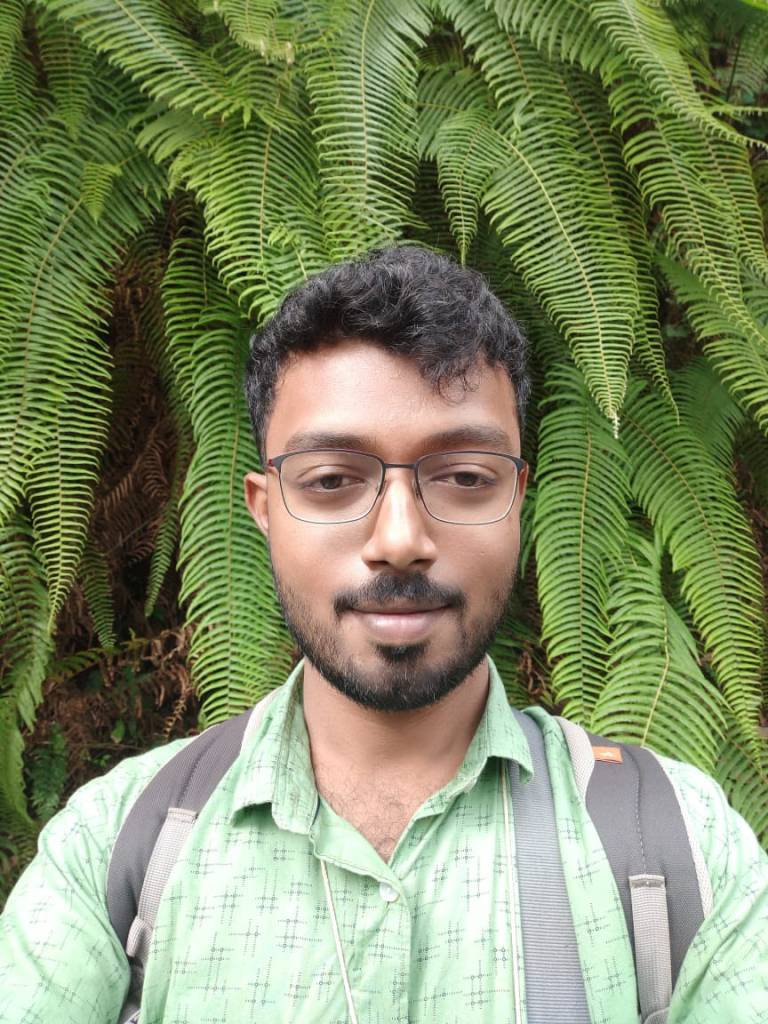
Mallika Ravikumar
Nishanth Srinivas

0:03

Lalitha Krishnan: Hey there. I am Lalitha Krishna and you are listening to episode #34 of Heart of Conservation. Today I am speaking to two plant and tree lovers, basically tree experts. I find it so fascinating to listen to folks who are passionate and knowledgeable about the things that they love. Some of the fauna we are going to discuss are everyday plants and trees we pass by or sit under or love for their fruits and flowers, but truly we barely notice or know much about them. I promise you some extraordinary insights, botanical facts, myths, history, personal stories and more, on this episode.

0:47

My guest Mallika Ravikumar is a lawyer-turned-writer. She writes about history, culture and nature and has authored over six books mostly for children including one called ‘Tracing Roots’.  She also has her own ‘YouTube’ channel called ‘Tree Talk with Mallika Ravikumar’. You’re very likely to have watched her on Instagram but you can check out more about her work on her website https://mallikaravikumar.com/

1:12

I have also been following ‘Trees of Shillong’ on Instagram which belongs to Nishanth Srinivas, my other guest.  Nishant has a Master’s degree in Biotechnology from Bangalore University and worked as a Junior Research Fellow at the Department of Molecular Reproduction, Development and Genetics at the Indian Institute of Science.  Having changed course, he is now based out of Shillong, and is working with an NGO called Conservation Initiatives. He specializes in satellite mapping and is interested in human–elephant interactions and landscape ecology. I believe Nishanth loves, doodling, graphic design, and writing and staring at tree canopies. I have a feeling that is true of both of my guests.

1:47

Mallika, and Nishanth thank you both for joining me on Heart of Conservation. I am really looking forward to your stories.

Mallika Ravikumar: Thank you, Lalitha for having me.

Nishanth Srinivas: Thank you so much for having us Lalitha.

2:02

Lalitha Krishnan: My pleasure really. To start with, why don’t you briefly tell me about the fascination for trees? Mallika, why don’t you go first?

2:12

Mallika Ravikumar: I grew up in Mumbai which as you know is a city with a lot of people, with a lot of concrete. Trees are not something you think about or associate with Mumbai. I grew up like any city person, knowing very little about trees and then I happened to shift into a place where I was surrounded by trees. I was very curious; I felt very bad that I didn’t know… I couldn’t recognize most of the trees around me. I didn’t know their names. It made me feel like something was off because I knew from what I had learnt in science and textbooks that we get our oxygen from trees. We get our food from trees. Trees are such an important part of regulating our environments so the role of trees in textbooks I was aware of, but I was not able to identify more than a handful of trees which made me feel very awkward. That started the process of making me want to learn, and enroll for field botany lessons during weekends at BNHS. I went for some field trips with botanists and ornithologists, to learn about birds and flowers and things. And, that took me down the rabbit hole and that learning process is still on. So, that’s how it all began.

Lalitha Krishnan: The learning process for all of us will keep going on I hope.  What about you Nishanth?

3:31

Nishanth Srinivas: My story is not much different from what Mallika’s story is. I am also from the city; I am from Bangalore. Just like she mentioned, trees give us oxygen. I remember when I was so concerned about the environment, reading about all of this. The thing is during summer holidays, the best most outdoorsy thing that I would get to do is go to my grandparent’s place. They had a very big garden and they were every possible fruit tree there. This started my love for gardening. It started with gardening and I took a different route. I studied biotechnology and I happened to work in the Indian Institute of Science. And there, there were more trees and they have a 400-plus acre filled with trees. And, all my free time would be spent observing trees, canopies… Eventually, somewhere, that fueled my change to a different profession and now, I’m in conservation and I actually started observing trees beyond what is there in the city. And, that’s how Trees of Shillong was born and here we are. Right.

Lalitha Krishnan: It’s amazing how the ‘outdoors’ draws us out of our shelters.  One of my podcast guests, Suniti Bhushan, introduced me to the concept, not his concept of ‘Nature Deficiency Syndrome’. Still, I would like to hear from you; why do you think tree stories are important? Nishanth, do you want to go first?

Nishanth Srinivas: Tree stories or stories in general related to myths or folk stories I believe are very important. Coming from a conservation point of view, whenever we approach a place or a region to understand what are people’s beliefs and how they connect with their culture, it usually starts with understanding or trying to make sense of their surroundings. And most of this is usually in the form of folk stories. There might be biases as conservationists so I try to bring in this idea of conservation a lot. And even in my stories when I write about Shillong, I usually end it with two lines about conservation which is very much the need of the hour. So, the thing is these stories need that. As a researcher and conservationist, they give me an understanding of the local context and how people relate to it and some sense of the relation of how they understand and make sense of the nature around them.

As a researcher and conservationist, they give me an understanding of the local context and how people relate to it and some sense of the relation of how they understand and make sense of the nature around them.

-Nishanth Srnivas

Lalitha Krishnan: So true. Mallika?

6:21

Mallika Ravikumar: Yes, very similar to what Nishanth said. In a country where we are such an ancient culture-we have such a plethora of stories and folk tales, myths, and legends about trees from various backgrounds: Hinduism, Buddhism, Islam… In every tradition, some people consider trees sacred. There is an association with them. I think, going into the psychology of it, people’s actions are not based on reason alone. Although we would like to believe we are rational, reasonable people, intelligence plays a very important role in how we behave but reason is only one of the faculties we use to make decisions. The other huge factor is emotion. Many things we do in our life–the decision to marry somebody, the decision to follow a certain career—it is based on hope and dreams and are also mixed with emotion. It’s not ‘reason’ alone that guides us. So, pummeling people with facts alone—you know, “trees give us oxygen, trees regulate the environment” — all this appeals to a certain side of us but all these legends, myths, folktales, and rituals and traditions; appeal to the emotional side of us. Which is also a very important part of human decision-making and psychology.

So, I think they have a very important role. Sometimes, I think emotions play a larger role when I connect with a tree or plant or pet dog emotionally, I feel much more to protect them and save them than if I connected with them academically or you know, intellectually. So, I think they play an important role in the way people behave in general.

8:05

Lalitha Krishnan: OK. And from a male point of view, Nishanth, do you also feel the emotional connection?

8:13

Nishanth Srinivas: Yes, very much so. The whole point of why we are very interested in learning and trying to talk about myths… is generally when we have a conservation or do a presentation, it’s to have that emotional connection. When we speak of myths and folk stories, they also reveal a lot about the culture and they trying to make sense so yes, the emotional aspect makes a very good point. It’s important.

8:33

Lalitha Krishnan: Thank you. This question is for both of you. So, how many trees are you going to share with us today?  Mallika if you would like to start, you can tell us some interesting facts that you like and then a myth.

8:57

Mallika Ravikumar: Sure, how many trees? There is no answer to that. It can go on endlessly but I would be happy to start with a tree that I talk about a lot which is the teak tree which is an Indian tree. It’s called ‘Saagaun’ in Hindi, and Thekku maram’ in the south. In fact, the word ‘Teak’ itself comes from the word Thekku maram’ which is in Malayalam, and before that in Tamil. It is a tree that changed world history. We have this human-centric way of looking at history and saying, “This king changed history, this general, Alexander the Great, Akbar the Great, Chandra Gupta Maurya; they did this…and they changed history…” But really, so many of these trees if they could speak, would tell you that they are the ones who changed history and changed the course of time. So, teak is one of those trees you know.

But really, so many of these trees if they could speak, would tell you that they are the ones who changed history and changed the course of time. So, teak is one of those trees you know.

-Mallika Ravikumar

9:45

There is this period in history in the 16th and 17th centuries that was called the period of Teak Rush, which was a time when the French and the British were engaged in several battles before and during Napolean’s time when the British were very wary of the rise of Napolean because he was a big threat. And, they had completely decimated the oak trees of England to build ships. And we all know the British were able to control a large part of the world because they had a great navy. And what was the basis of their navy? Their ships. And what were their ships made of? Wood. But their oak forests were completely decimated because of the ships they had built in conquering various places and they were on the lookout for wood to build their ships. That is when this period of Teak Rush comes in when both the French and the British are on the lookout for wood for building ships. Because all these battles that used to happen were naval battles. And by chance, it is the British who discovered the teak forests of southern India and then they brought in forest laws to control all our forests. The conservation laws that we have today didn’t start as a measure of protecting the forest as much as wanting to control the resources from the forest.

And what is the main resource they wanted to control? Teak. They had scouts going out to look out for these teak forests. They massacred these forests, they had teak plantations, they converted large forest areas into monoculture teak plantations and it is the teak that they got that helped them get this hegemony and control larger parts of the world. So, it titled the scale of history. We are having this conversation in English today because of teak otherwise we might have been talking in French. Who knows? But it’s teak that changed the tide that was the bedrock of the British empire. So, that’s just one of the many stories that changed our past and continue to shape our present.

11:37

Lalitha Krishnan: That’s amazing. Frankly, I did not know of this. I have only heard of the Gold Rush, not the Teak Rush. Nishanth, what plant, or tree are you bringing home to our listeners?

11:41

Nishanth Srinivas: Well, I thought of four plants but one tree which is very common to our listeners which we all know; it is very common is the coconut. I have always been intrigued; there was a coconut tree near my home in Bangalore, in my neighbour’s house and it stood tall. In 2018 we had very terrible rains; very cyclonic. There were a couple of trees which fell but this one tree did not fall. You do not hear of many instances of coconut trees falling and if you follow the weather channels you will always see that when they talk about coasts or rain in the weather reports, you will always see some palm trees flaying around but it’s not usually uprooting away. I always used to think about why and it is very interesting how coconut trees have adapted to live in a coastal region where geographically, it is quite flat. We know that when the winds come in, they pick up rain, and the first thing they will encounter is the coast. So, how these trees have adapted is quite interesting.

13:00

First of all, the shape of a coconut tree is a tube-like any other palm tree. And if you observe the bottom of the tree, it is a little wider at the bottom than the top. Very marginally. And, the top region of the tree, the crown as we call it is quite flexible. That is one. We have all seen Bahubali (the movie) where he uses the palm tree to make it so flexible that it is wind-borne and things like that. Though, palm trees are not that flexible but the top region is. So, it sways when there is a lot of wind movement. That is one.

13:39

When we talk about the inside structure of the coconut tree… it is a monocot. Monocot trees do not grow by girth every year and it’s made up of spongy tissue inside. It is so much like a concrete mould and is reinforced by lignin fibres. These fibres run longitudinally along the length of the coconut trees so they are fill which is inside the concrete. It provides structural stability to the tree. That is one.

14:11

The other is the roots. We have all seen the roots. These roots are fibrous. They go in every direction and they hold the tree in a place like any other (root system).

14:25

Last but not the least is the frond. So, the coconut tree is almost feather-like; it is pinnate. So, it has a central big stem called the Rachis. So, most of the very tall palm trees have feather-like leaves. So, these are some of the very interesting adaptions that I came across when I was trying to understand how the coconut tree stands cyclones.

14:51

Lalitha Krishnan: Wow. You explained that well. I also believe every part of the coconut tree can be used. Am I right?

15:00

Nishanth Srinivas: That’s true. That’s one of the reasons why it is called ‘Kalpavriksha’ I guess. Mallika would have many more stories about it. But interestingly, since coconut trees are there in the tropical regions all around, there are multiple stories of ‘how’ or ‘what’ when it comes to the folk stories. Each culture or region has its own take on it. It is quite interesting.

15:25

Lalitha Krishnan: O.K. Would you like to share that?

15:30

Nishanth Srinivas: I will quickly share two of them. One of them is from Hindu mythology itself. When Ganesh was very small, he wanted to play with the third eye of Shiva. And then, I guess, one of the demons if I am not mistaken a small model/idol with three eyes and gives it to Ganesh. By mistake, this small idol falls from Ganesh’s hands and falls on earth. They say that’s how coconut came into existence or how mankind found the coconut.

16:04

That is one of the stories. There is one more very interesting story—again similar to this—the three eyes. When you de-husk a coconut, why does it have three eyes? This story is from the Polynesian culture- Hawaii, Melanesia, New Zealand and all of those places.  They say, in an ancient island there used to be a chieftain’s daughter. Her name was Sina. She used to always visit the sea and she sort of became friends with an eel. This eel over time developed feelings for Sina. And it became very violent as time moved on; wanting more of her time and affection. But then, she goes back to her village and complains about this eel which is sort of always stalking her. And then, one of her relatives goes and kills the eel. Before dying, the eel’s head speaks. It tells Sina to bury the head in the sand and that it will be reborn as a tree whose fruit Sina can drink. The three holes are where the coconut shell is the lightest. So, every time, you break it open and drink, it’s like the eel kissing Sina. That’s what the story says. These are different stories and they talk about (lost in translation).

17:30

Lalitha Krishnan: Lovely stories. Mallika, would you like to share another one?

17:33

Mallika Ravikumar: Sure, I can talk about a plant which is not a tree but a lot of people think it is a tree which is the Banana. You know, in usual parlance, we say banana tree or kela ka jaad or vāḻai maram in Tamil. Botanically, it is not a tree and the reason is- for a plant to be considered a tree, the key feature is the wooden trunk. And the banana, if you notice closely, does not have a wooden trunk so it is not botanically a tree, although we all call it a tree.

Botanically, it is not a tree and the reason is- for a plant to be considered a tree, the key feature is the wooden trunk. And the banana, if you notice closely, does not have a wooden trunk so it is not botanically a tree, although we all call it a tree.

-Mallika Ravikumar

18:03

There’s this interesting story from the Gadabas tribe of Odisha which I like very much. So, the story goes that there were five sisters. They were the mango, the tamarind, the fig, the jamun and the banana. As they were growing older, their father was getting worried that they weren’t getting married and he wanted to find husbands for each of them. So, he asked them what kind of husbands they wanted and they all told him. And, he looked for such partners for them but the banana said, “I want children but I don’t want a husband.” This is a very modern, feminist sort of story so I like it for many reasons. She said, “I want children but I am very clear I don’t want a husband.” So, the father grew worried. “How is this going to work?” But the other girls got married and they had children and it is said that all the mango and fig, tamarind and jamun trees that we have are descendants of those children. But then what about the banana? She said, “I don’t want to marry but I want children.”

19:00

The thing is as per the story the banana had children without a husband. The beautiful thing about this story is that bananas reproduce parthenogenetically which is asexual reproduction. In botanical terms, if one were to study that there are two forms of reproduction: one is sexual, and one is asexual; the way the banana reproduces by bypassing the fertilization of the ovule by the pollen is sexual reproduction. And it is fascinating to see that this ancient folktale has captured that in such a simple way. Those daughters wanting to marry and one daughter saying, “I want children but I don’t want a husband.” And to see that very astute scientific observation finds reflection in this folktale. So, I find it very fascinating for many reasons including the fact that it’s a sort of modern, feminist sort of take on life. But, yeah, this is a fascinating story about the banana that I shared on my YouTube channel where I share these sorts of stories that I find.

20:02

Lalitha Krishnan: Fascinating. I agree with you. How on earth did they figure it out then? Nishanth, it’s your turn. Another tree, another plant?

20:10

Nishanth Srinivas: One more tree that is quite common in Bangalore gardens is Nyctanthes arbor-tristis. It’s called parijata. It’s also called night jasmine though it does not belong to the Jasmine family. Again, according to legend, what happens is this tree also comes from the churning of the milky ocean. The demons and the gods churn up the mountain. And then, from the ocean arises this tree and Indraloka who plants it in his garden. Once, Narada,–who is usually a mischief-monger—takes some of the flowers from Indira’s garden and gives them to Krishna. And, Krishna goes and gives it to Rukmini, his wife. Having known this Narada being Narada, he goes and tells Krishna’s other wife, Satyabhama, that Rukmini got these heavenly flowers and Satyabhama becomes quite jealous. So then, she asks for the whole tree and so Krishna goes and steals the tree. En route, when he is coming with the tree, he is confronted by Indra and a battle ensues. Eventually what happens is Indra curses the tree such that it never produces fruit. Interestingly, this parijata does not produce fruit. It belongs to the Oleaceae family. It produces a heart-shaped capsule. Oleaceae is the olive family- the olive fruit. So, this does not produce that. It just produces the capsule. And, this is a little bit of humour: he (Indra) says that the owners where this plant is will never get the flowers. What I have observed is that in Bangalore morning time, around 6:00 or 7:00 o’clock, you see all these people coming to pick these flowers and usually the flower never falls in the garden where it is planted but usually falls on the roadside. ( lost in translation )These are some of the things that I find nice. Also, it brings the thought –as we discussed- we don’t know what came first. This or that but it is people trying to make sense of what they observe in nature and putting it into some sort of context.

22:55

Lalitha Krishnan: Very interesting. I can relate to this. I never get any of the fruits or flowers that I plant. They all go mostly to the monkeys. But I don’t feel cursed. I feel privileged. I think it’s the tax one pays for having wildlife around. Mallika, what next?

22:17

 Mallika Ravikumar: The story that Nishanth related…I had a parijat growing in my house and it was exactly like that. The plant was on one side of the fence and the flowers were falling on the building on the other side of the fence. That story also has another element. You know when he brings back the tree, Rukmani is very upset and says, “Why did you give Satyabhama the tree?” So, Krishna being very smart, plants it in a way that Satyabhama is happy to have the tree but the flowers come to Rukmani’s side of the garden because he knew that then both his wives were happy. These folk stories have several narratives or variations. So, that’s also very interesting that someone has heard one part and you hear another part. This is a version of the story that I had heard but yes, it’s a beautiful tree and flowers and a lovely story also.

These folk stories have several narratives or variations. So, that’s also very interesting that someone has heard one part and you hear another part.

– Mallika Ravikumar

24:12

Another tree with lovely flowers that I can think of is the silk cotton tree- the semal. This story comes from the Mahabharat. This story is narrated by Bhishma when he is on his bed of arrows; when he is about to die all the others come around him, asking for advice and ask various questions. He narrates this story when he is asked about the qualities of a good king. How must a king behave when a neighbouring king is stronger than him?  What is the diplomacy and relations one must have? So, he narrates this story of the silk cotton tree.

Nishanth mentioned Narada so this story struck me. Narad Muni, as he said was a troublemaker. He is walking along a forest and he comes upon this beautiful silk cotton tree and he is absolutely stunned. He says, “You know, you are so gorgeous and your flowers are so beautiful, how is it that you are still standing like this? “The wind is blowing so hard over here; all the trees are bent; all the leaves have fallen because Vayu has blown with such force but you seem to be unaffected by Vayu’s force. How is it possible? So, the silk cotton replies saying, “You know Vayu may be strong for the others but I am stronger than Vayu and what do you think? I can’t bear the brunt of the breeze?” So, he boasts about how strong he is and Narada is sure that if the wind really wants to blow something down, nobody can stand in its way so he being a troublemaker, goes back to Vayu and says, “ You know there is this proud silk cotton tree in the forest who thinks it is stronger than you and I find it laughable.”

Vayu of course says, “That’s ridiculous. I spared the silk cotton tree because when Brahma created the world, he rested under this tree and therefore, I have respect for this tree and therefore I don’t blow on it. But, if the silk cotton tree is going to interpret this as my weakness, let me show him how strong I am.

26:04

He says, “I’ll show him how strong I am tomorrow. But that night, the silk cotton thinks and reflects and looks at all the trees around and thinks, “If all these trees are bent and turned over, and leaves have fallen and they are all facing Vayu’s impact, surely it can’t be that I am so strong that I am stronger than Vayu.” So that night, the silk cotton tree decides that before Vayu comes, let me myself, drop my leaves and flowers so that when Vayu comes tomorrow, he cannot inflict any damage on me. So, the next day, when Vayu comes blowing fiercely down the mountainside, the silk cotton has nothing left. No leaves or flowers. Nothing is left on the branches. He says, “I am glad that you learnt the lesson to be humble. Now shorn out of your beauty, you have realized that you don’t need to show off many times. People are being gracious and nice to you and it’s not all about how strong you are.” So Bhisma is narrating this story to say that you have to accept that someone is stronger than you and not be futile and say, “I can take on anyone.” If your neighbouring king is stronger than you, then accept and be humble and bow before him. That was the context of the story.

27:17

But I use this story when I take children out for tree walks to tell them about leaves falling. And, why some trees are deciduous and some trees are evergreen and have you noticed leaves falling? So, if you just start off with deciduous and evergreen, kids sort of get put off. But if you start with a story, it becomes a point of generating curiosity and then they start noticing which trees around them are dropping leaves. Some kids have come back to me and said, “Aunty, we remembered this story from the Mahabharat when you told us when we saw this tree outside our school which was dropping leaves. So the important thing is also to connect kids with trees around them because it’s a way to generate curiosity.

27:56

Lalitha Krishnan: wonderful. I am feeling like a kid listening to your stories. Nishanth, why don’t you tell us more? What’s your next tree or plant of choice?

28:08

Nishanth Srinivas: The next is a plant, a type of ginger and this takes forward what Mallika said. Some of these stories and myths also serve a purpose to teach kids or the younger generation something. There is some moral behind it. This story is about a type of rock ginger. Rock gingers have very showy flowers and they are quite common in the Himalayan region. It’s called butterfly-ginger, butterfly rock ginger- it’s got different names but they have very showy flowers and they are quite common in and around the Himalayan region. This particular plant, its scientific name is Hedychium gardenarium.

Since I work in Meghalaya, this is one story which came to me from one of the museums that I visited here. So, they have this plant and they have this story along with it. so, in Khasi, this plant is called Ka tiew lalyngi. ‘Lalyngi’ which I understand must be the name and ‘tiew’ is flower. There is a saying, “Wat long tiew lalyngi pepshad” which roughly translates to: “Do not be late like the Lalyngi flower who missed the dance.”

29: 31

So, the story goes that there was a great feast. There was a huge tree called the lei tree. I am sure I am pronouncing these things wrong but if someone knows the correct pronunciation, please get back to me. This large tree was blocking out the sunlight and that itself is a different story. Eventually what happens is that people cut it down and there is sunlight again in the land and there is a celebration that happens. So, to celebrate, all the creatures that is animals, people, birds, and insects were invited to a great dance in the region of Meghalaya. So, what happens is there’s also this girl who is invited. Her name is Lalyngi. She’s a very beautiful young girl and she happens to come.  But the thing is she wants to look the best. What she does is she takes a lot of time to get ready. In that process of getting reading, she loses track of time. So, by the time, she reaches the dance arena, she finds the event is already over and she is quite upset by it. Because nobody is there to see her after all the effort she took. She is so upset she jumps off the cliff and dies. Where she dies, a flower is born and that flower is the Hedychium gardenarium.

The thing is, this flower is so much part of the culture. If you have seen the Khasi dress, they wear these Paila beads which are mostly in shades of golden yellow and red. And, this flower has stamens which are of the same hue of red. And the petals are yellow. In some sense, they feel it is part of their folk story. Most of these stories are oral; part of the oral tradition they have here in Meghalaya. Stories that are passed on through generations; something which they feel is one of their own which tells something about their culture. And, interprets some sort of moral lesson to children to prioritize and give importance to things when they are doing something.

Stories that are passed on through generations; something which they feel is one of their own which tells something about their culture. And, interprets some sort of moral lesson to children to prioritize and give importance to things when they are doing something.

-Niahanth Srinivas

32:12

Lalitha Krishnan: Wow. That’s a sad but beautiful story but also such an exotic flower.

32:21

Nishanth Srinivas: It is. Google it and see.

32:28

Lalitha Krishnan: Mallika, would you like to share another story or plant if you like?

32:33

Mallika Ravikumar: Another commonly seen tree in India is the Neem. This is not a story that comes from myths or folk legends. It’s a historical, current affairs kind of story. Where, as we all know, the neem has been traditional medicine in India for centuries. From ancient times to now, we have all experienced how if you had chickenpox, were told to have a bath in neem-leaf water or brush yourself with neem branches to heal.

33:10

Generally, if there’s a neem tree around you, one considers mosquitoes won’t come into your house. Neem is just part of growing up in India. You keep hearing the healing properties of neem. Some decades ago, in the US this company was granted a patent for the use of the neem in their pesticides or herbicides for controlling pests in plants. And, they also applied for a patent in the European patent office and fortunately, this was highlighted and India opposed that.  The Indian Council of Scientific Research opposed that and this is Traditional Knowledge. A patent as we all know is a special right given to you if you have invested in researching something and you have come up with something very novel, and it is original and it’s of use to people. Those are the considerations for a patent. But here is someone asking for a patent for something that was commonly known. Haldi is another one. Basmati, as we know, we also got a patent some time back. So many Indian plants, some of them medicinal whose healing properties have been common knowledge—even illiterate, uneducated—everybody in India knows about the healing properties of these plants. You don’t need to be a doctor or anything.

34:17

And, you get a patent for that where you are claiming that you have something original and useful and novel was something that India opposed and that patent was finally revoked after a lot of appeals and several processes. What it highlighted was something called Biopiracy. Piracy we know that if you film a movie in a theatre and you release it and make money out of it, is called a pirated copy of the movie or a book. Because it is making money out of somebody else’s creativity without giving them their due.

34:50

But, this idea of bio-piracy became a taking point after this Indian Neem incident of biopiracy and India then woke up to the fact—even till now, several of the patent applications made by pharmaceutical companies in the West are based on traditional knowledge of ancient cultures including India. And then fortunately this was taken to serious levels. There was this body called the Indian Traditional Knowledge Systems and a database was formed where if someone in the US applies for a patent for, let’s say haldi, obviously they might know this is traditional knowledge in India… But the Patent Office can then search in this database where you have all these plants that have been recorded as traditional healing plants in unani, ayurveda, siddha etc. and it will show up in the search at the patent office. At least in the future, private enterprises will not given rights– exclusive rights—for traditional healing plants of common knowledge in India. It all began with the neem biopiracy case that triggered all this. That’s not a legend or a myth but an interesting story, especially something to be aware of this is a huge amount of traditional knowledge that we are sitting on and some people are using it for private gain. We should be aware of it.

36:14

Lalitha Krishnan: Very true. And biopiracy is a new one for me. And I doubt they are trying to get patents for anything innocently.

36:28

Mallika Ravikumar: Absolutely. There was a very interesting article that I read. In Covid times, a lot of plants were getting stolen out of our botanical gardens. Orchids. Nishanth is in the north-east. He will know better. Orchids are disappearing in the northeast. Some of them are threatened species because there is this craze for owning these exotic plants and keeping them in your gardens and your house. The West has always had this craze but even today it is there. We talk about the tiger and the elephants and big mammals, birds etc. when they are threatened but a large number of species on the IUCN list are actually plants. Many of them are Indian plants. We somehow don’t highlight them because they are not as dramatic as the tiger and elephant and so on. But they are also part of threatened species.

We talk about the tiger and the elephants and big mammals, birds etc. when they are threatened but a large number of species on the IUCN list are actually plants.

-Mallika Ravikumar

37:14

Lalitha Krishnan: Butterflies too…from the northeast. Thanks for sharing that, Mallika. Nishanth, would you share some more?

37:21

Nishanth Srinivas: Yes. Mallika has given me segways into different things… She mentions the US and how plants are collected and taken to different places. One very common plant which was reversed from the New World to the Old World is scientifically known as Euphorbia pulcherrima. It’scommonly known as the Christmas flower. It’s these red bracts; it’s almost like bougainvillaea. It usually flowers during Christmas time. I’m sure both of you are familiar with seeing this plant. It’s very common. Especially in the western ghats, it’s grown as a hedge around coffee plantations etc. Here in Shillong, it’s quite a common garden plant.

38:14

Though this plant is a showy ornamental plant, it’s got a very nice and interesting story. And, it highlights something which I shall share at the end. It’s also commonly known as the poinsettia. The thing is even the names: Why poinsettia? Why Christmas flowers? It has a nice big story to it. This plant is native to the dry forests of Mexico, basically central and northern South America.

38:50

During the Aztec civilization time, this was also a plant of high cultural importance.  In Aztec, it was known as cuetlaxochitl which translates to ‘a mortal flower that perishes and withers but is all pure. Apparently, in Aztec legend when it was formed it was white. And, because of the war between two different tribes, the flowers become red.

39: 26

So, the Aztecs would plant this around their habitations or wherever they had their cities and stuff. But we know a little bit about their history and how the Europeans started coming and colonizing the West. So, what happens is, that when the people/missionaries came into the region in the 17th century, they noticed these plants. They sort of took this aspect of how important this plant was and made it part of the Christian culture. How they did this is quite interesting.

40:10

There is one interesting story. In Spanish, this flower is called Flor de Nochebuena which translates to “flower of the Christmas eve.’ The story is all about a girl named Pepita. I am sure you’ll be aware that during Christmas time, they make a manger which is a model of the birth of Jesus/ nativity scene. This girl comes from a very modest background. The story goes that all the people go to the church to offer something to baby Jesus. Everybody is trying to get the best thing to give as an offering. Being of a modest background, she tries her hand at many things. She tries to knit a shawl but she can’t untangle the wool. She then tries to make small boots for baby Jesus but she doesn’t even have the strength to push the needle through the leather.

41:29

She gets quite upset and a stranger comes up to her and tells the young Pepita, “Even if you offer anything with a lot of devotion, it will be accepted.” So, she goes around and gathers a bunch of leaves and twigs and she offers them at the church.  What happens is, magically over time, these greens she has picked, turn red.  This also goes back to the plant as I was saying. They are not flowers but like bougainvillea, they are red bracts. The flowers themselves are quite small. The story weaves the aspect of those and also them coming into flower during winter time around Christmas. That is what I found interesting; it gives a reference point. Some of these myths and stories may stay but this is how some aspects get introduced and become one of their own. So, that was what this story represents to me.

42:45

The word ‘poinsettia’ is also quite interesting. Mallika mentioned how people collect plants. There was a person called Joel Roberts Poinsett who was very much into collecting plants. He was from the US and was working as an ambassador to Mexico sometime in the early 19Th century. When he was there he collected these plants and sent them to the botanical gardens. In honour of him having introduced this to the western plant per se, it got the name, poinsettia. In political terminology, there is a term called poinsettismo which represents a kind of diplomacy which the US follows. Which is very intrusive. It represents how the US is or functions with other countries which they trade with.  This tells us also how words are derived, how there are stories are attached to them and what the roots of the stories are. This is an example of a plant being behind one such name.

44:09

Lalitha Krishnan: Thank you.

44:19

Mallika Ravikumar: I was about to say, I learnt a new word. Poinsettismo. I am going to look it up and read more about it.

44: 27

Lalitha Krishnan: The association is still there. I remember 2 Christmases ago; I gifted a poinsettia to someone.

44:36

Nishanth Srinivas: It all came from one small town in Mexico and got sent to the Philadelphia Botanical Society and from there, if I am not mistaken, just one company had world domination. And, they sent this poinsettia to different parts of the world. So, all of them probably have one or two mother plants if I am not mistaken. That’s how it is.

45:09

Lalitha Krishnan: Thank you so much. My last question to you both—and I feel almost guilty asking you this question—because both of you have already introduced so many new concepts and words but I am going to ask anyway cos this is how I always end my podcast.

Could you share something about trees or plants that is new to us or significant to you in some way?   It could even be about your relationship with plants.      

43:35

Mallika Ravikumar: Before that, can I add to something that Nishanth said which reminded me of something else?

45:40

Lalitha Krishnan: Of course:

45: 42

Mallika Ravikumar: Nishanth said how beautifully the idea was told to the girl: “You offer something with devotion and that is the most important thing”. There is a mirror story of that even here. That is one of the stories that I thought I could narrate but we don’t have time. This is the popular story of Shabri and the ber—the Indian jujube—where you have, shabri picking ber fruits from the tree and offering them to Ram. It comes from the Odhiya Ramayan. It’s not in Valmiki’s Ramayan. And, that became a very important story in the Bhakti movement to cut across barriers of caste and varna… In the Odhiya Ramayan, he accepts this jhutey ber as they say. She has tasted the ber, tasted the fruit to see if they are sweet and gives it to Ram. Laxman says, “I cannot eat this but Ram says, “Anything offered to me with love and devotion is acceptable and nobody is small or lesser or greater and I will take anything that is given to me with love and devotion. That is exactly the mirror story of what he mentioned. So, in every country, or culture, I guess you have such stories and it is really beautiful to study these parallels. Even in the Bhagvat Geeta, you have a slok/verse which is exactly that. “Patram pushpam phalam toyam, yo me bhaktya prayaschati” (You offer me fruit, you offer me flowers, you give me anything. As long as you give it with devotion, I will take it.)

It’s beautiful though and very often those offerings are plants and fruits and flowers which is a form of expressing devotion to whichever divine power that you worship.

47:16

Lalitha Krishnan: I am getting goosebumps. Between you guys, you can start an Oral History of Plants podcast. There are too many stories to go on one episode.

47:30

Nishanth Srinivas: There are a lot more.

47:31

Lalitha Krishnan: I think it will be amazing to have an encyclopedia of stories. So, coming back to my question…

47:45

Nishanth Srinivas: One word which comes to mind and which is central to… the reason why I am here also is ‘Green blindness’. People do not see green things. What captures our imagination is things which move—animals, birds, insects. They come to mind very fast but when we talk about plants, a common person may speak of plants in respect of their utility. In respect to food, or in respect to being ornament like a flower. But plants are much more. They are the reason why we are here. Somewhere when it comes to the topic of conservation, as Mallika initially spoke of the British way of forest management, it’s mostly utilitarian purpose. They wanted something which they wanted to extract and that is something which is continuing even today. Even with many forest departments, there have been many instances of people razing down natural forests, razing down places of high diversity and putting down monocultures of teak and mahogany and things like that. There are many examples like that that keep happening. With different forest laws and policies and amendments; time is progressing least in the Indian context, what is happening is not going for the good. In some ways, it is going for the bad because we are also an aspiring nation. We want to develop and be a superpower. We always see this happening in the spectrum of life but the conservation of our natural resources, our trees, what is natural per se, is much more important. Usually, the first thing that gets chopped or which gets the axe is always the tree. When there is any development even in our cities, when there is road broadening or widening, or setting up an economic zone or trying to expand business, anything that relates to land, it is usually the plants and trees which suffer first. Because they can’t move. They will be lost if they are removed from a region.

Usually, the first thing that gets chopped or which gets the axe is always the tree. When there is any development even in our cities, when there is road broadening or widening, or setting up an economic zone or trying to expand business, anything that relates to land, it is usually the plants and trees which suffer first. Because they can’t move. They will be lost if they are removed from a region.

-Nishanth Srinivas

50:40

Green Blindness is also one of the reasons why I started writing about plants though I do not come from a background of botany. So, that is something that I believe people should keep in mind and be more cognizant of what is green around them and living.

50:55

Lalitha Krishnan: So true. And where can we read your writings?

50:59

Nishanth Srinivas: I’m on Instagram @treesofshillong Otherwise, very much like you, write for magazines like #RoundGlassSustain I saw you had an article about how ants carry flowers so… different things. I also write to the Meghalayan. I have been writing about plants: myths and trees that are very common in Shillong gardens.

51:36

Lalitha Krishnan: Do share these links for my blog. Okay, Mallika; what would you like to share?

51:43

Mallika Ravikumar: Okay. While there are many ideas and words, something I noticed before I started learning about trees, I noticed that when I used to walk, I used to like looking up at the canopies of the trees from below and the reflection and the play of light. I discovered much later, that there is a word in Japanese, for this phenomenon and it is called Komorebi. I was so happy to discover that there was a word for this. Because, sometimes you observe or have certain experiences and you don’t have a word to explain what it is you are experiencing. But I was delighted to know that there was a word for this light filtering through the canopy of trees and the way you see it from below is called Komorebi in Japanese. So that’s a very wonderful idea and concept.

52:31

And going from that, another associated term called ‘crown shyness’.  What is fascinating is—again when I tell children or tell adults about it—if you’re walking below trees—say on the road and there are trees on both sides of the road, if you look up, you will notice the canopy of the trees are meeting up but just about. They touch each other but there is a slight gap between them. Not all trees do this but it is observed in many places and this is called ‘crown shyness’ where the crowns of the trees just stay within touching distance of each other. The reason of course is because they both want sunlight and if one covers the other one, the other one is not going to get sunlight. So, the tree is not going to grow under the shade of the other. There is a reason of course for it but we call it “crown shyness’ and it is very easy to observe when you’re out for a walk. Just look up. There are two beautiful things you can see. Light -whether daylight or moonlight –whatever it is, it’s filtering through these trees and it’s a beautiful Japanese word called Komorebi and this concept of crown shyness which you notice. It almost looks like the trees are having a conversation but they don’t want to be touching each other they are just about touching. That’s a beautiful thing to see and anybody can observe that when they are walking under trees.

53:46

Lalitha Krishnan: It’s like they are being good neighbours, right? Not getting into each other’s space that much.

53:53

Mallika Ravikumar: Live and let live…

53:55

Lalitha Krishnan:  Exactly. And the Japanese word? Is it the same for forest bathing?

54:00

 Mallika Ravikumar: No, Shinrin-yoku I think. Forest bathing is where you soak in the sounds smells and sights of a forest, and you spend time there. That is also a very beautiful Japanese idea as well. But this is Komorebi which is light filtering in through the canopy, through the leaves. The leaves are moving in the breeze, so the light is playing and dancing around. That idea is called Komorebi.  It is also very beautiful to have a word for it.

54:25

Lalitha Krishnan: It paints such a pretty picture. That’s fantastic. Thank you both so much. It was wonderful

54:35

Mallika Ravikumar: it was wonderful being here and chatting and connecting with Nishanth and you; both of you.

54:37

Nishanth Srinivas: Yes, same here. It was very nice to hear about new things and learn and put forth…

Disclaimer: Views, thoughts, and opinions expressed in the podcast and show notes belong solely to the guest/guests featured in the episode, and not necessarily to the host of this podcast/blog or the guest’s employer, organization, committee or other group or individual

Know Your Dugong. A High Priority Species Like the Tiger.

Dugong photo by Darius Quadros

Ep#32 Heart of Conservation Podcast Show Notes (Edited)

00:00

Audio: Collared owlet 

00:09

Hi I’m Lalitha Krishnan and you’re listening to episode #32 of Heart of Conservation. You can listen to Heart of Conservation on several platforms but you can also always read the transcript right here, on my blog Earthy Matters. Today we are going to be talking about an animal that is an old relative of the elephant but it lives in water. I’m talking about the Dugong spelt ‘Dugong’. It’s also a cousin of the manatee. The dugong is a marine mammal that once lived in large numbers in Indian coastal waters and yet we know very little about it.

I am very excited to be speaking to not one but three amazing researchers Prachi Sachchidanand Hatkar, Chinmaya Ghanekar and Swapnali Gole about their work with Dugongs and their habitats.

Prachi Sachchidanand Hatkar is a PhD Scholar, Project Fellow- CAMPA Recovery of Dugongs and their habitats in India at WII. Currently, she is working on seagrass-associated fauna in the gulf of Kutch and Gujarat. Chinmaya is a wildlife biologist and certified scuba diver. She is currently working on projects involving seagrass, fish, dugongs and their threats under ‘CAMPA Recovery of Dugongs and their habitats in India.’ She is pursuing a Ph.D. in seagrass-associated fish and works in the Gulf of Mannar and Palk Bay region.

Swapnali Gole is a marine researcher and a National Geographic Explorer. Affiliated with WII, she has been working on the insular population of dugongs in the Andaman and Nicobar Islands, India, for the last seven years.  Between the three of them they have all the dugong habitats of India covered, I think. 

A special thank you to Dr Dr. J. A.Johnson, Scientist and faculty at Wildlife Institute of India and also Head of Department of Habitat Ecology for facilitating this conversation. And for the lovely ladies on my screen, welcome and thank you all for joining me.

2:14

Lalitha Krishnan: Swapnali do you want to start with what are dugongs? 

2:18

Swapnali Gole: When I start introducing dugongs, what I have experienced is that there is a big question mark on everybody’s face. “Do you want to say ‘Dolphin’? Are you talking about some whale species?” Generally, we are always bombarded or greeted with these kinds of reactions. Dugong is a very simple elusive animal which is a marine mammal species. A marine mammal is an animal that lives its life in the sea–of course there are variations–there are some marine mammals that live partly in the sea and partly on land but dugongs are exclusively marine mammals which means right from when they are born to the time they die, they spend their entire life cycle in the sea. And, they are just like dolphins and whales; also, marine mammals.  But they are more popularly known compared to dugongs. 

Dugongs are also more popularly known as sea cows; the reason being the dugong is the only exclusively herbivorous marine mammal. Which means the only diet a dugong prefers is a vegetarian diet in layman’s language. And, they are generally found in around 42 countries in the world globally in the Indo-Pacific belt out of which in India we have only three distribution sites i.e., Gujarat, Tamil Nadu and Andaman and Nicobar Islands. So, people must remember the dugong as animals that live in the sea, they give birth to animals–they do not lay eggs like some other marine species and there is strong parental care in dugongs. From the time the calf is born, the calf will be strongly dependent on its mother for one to two years. These dugong mothers nurse their babies which is why they fall in the category of marine mammals. Marine means related to the sea and mammals mean animals that give birth to the calf and not lay eggs.

4:23

Lalitha Krishnan: That is so interesting. There is so much we do not know. How long have you three been researching dugongs and how extensive is the area you work in in these three different parts of India? 

4:39

Prachi Hatkar: I have been working in the Gulf of Kutch for five years now. The Gulf of Kutch is situated between the Saurashtra and the Kutch peninsula so the coastline of the Gulf of Kutch is about 170 km long. It starts from the Okha to the inner gulf and the mouth is about 75 km wide at the mount and the water spreads around 7300 square kms across the Gulf of Kutch. So, the Gulf of Kutch is a Marine National Park and marine sanctuary which was established in 1995. It was the first Indian marine sanctuary which was declared and it has 42 islands which covers various habitats like the grasses, corals, mangroves and intertidal zones etc. 

5:32

Lalitha Krishnan: What about you Chinmaya?

5:34

Chinmaya Ghanekar: So, like Prachi, I have also been working in Tamil Nadu – in the Gulf of Mannar and Palk Bay. These are two regions of separate seas.  One comes in Bay of Bengal which is Palk Bay and one is part of the Indian Ocean which is the Gulf of Mannar, so we kind of work at the confluence of both.  The area, to describe it, is a long, long stretch of Indian coastline – around 500 kilometres. So, from Adirampattinam if you consider till Kanyakumari it is approximately 500 km of the shore line.  And then the sea extends…in Palk Bay it extends to Sri Lanka but because of international borders we cannot access that area. But we generally restrict our area to 10 to 12 kilometres of coast. So, it is around 5000 square kilometres we cover for our study for dugongs and sea grasses and other fauna, and other factors of the project. To tell you about Park Bay, it is a very closed sea; it is like if you see Palk Bay – like I saw Palk Bay for the first time. I thought it was a lake.  It is very calm and has very glass like water most of the time but Gulf of Mannar on the opposite hand has waves and islands. These are two completely different areas so you working in both of them is pretty different from each other. Palk bay has a lot of sea grasses. Gulf of Mannar has corals, sea grasses, algae beds, rocky patches, habitat diversity so to say.  We can encompass most things of marine habitats in both areas.

7:28 

Lalitha Krishnan: Amazing. It also means that the dugong likes both habitats.

7:33

Chinmaya Ghanekar: They definitely do.

7:34

Lalitha Krishnan: Interesting. Swapnali?

7:37

Swapnali Gole: I have been working in the Andaman and Nicobar Islands studying dugongs for more than seven years now. Our study site if you see…because it is an insular set-up, it adds up to the work of our team. Because, the entire stretch is around 1962 kms, right from the northernmost island……..  till Great Nicobar it is 1962 kms. And, we have more than 800 islands, 836 to be precise. Then on each island there is a coast because it is an island, hence, we have more study areas I would say. For every island there are four coasts. And, what we have been doing is working in patches because it is not possible-considering the manpower that we have-to be present everywhere. So, we started our survey with say, the north……Andaman covered that and slowly came to the southern side. And, very recently we covered the Nicobar groups of islands. Practically the entire Andaman and Nicobar is our study area.

8:48

Laitha Krishnan: Sounds like a lifetime of work.

8:50

Swapnali Gole: It was. It took us six years to do what we did and it was very intensive.

8:57

Lalitha Krishnan:  When you say ‘team’ wherever you are, what size teams are you talking about?

9:05

Swapnali Gole: For the islands we never had a team of more than three. There was always a lot to do. I do not know why but we always had the smallest team…two or three people. For the seagrass and dugong (study) especially, the maximum I remember we had was a team of four, never more than that. 

9:27

Chinmaya Ghanekar: I have been fortunate enough to work with a team of eight people on a boat working on different aspects of the project and then we work together and it’s amazing.  But then sometimes we are just two people who are going by an auto to a coast then doing our surveys and coming back so there is variation across the years. 

9:52

Lalitha Krishnan: Prachi, I am going to ask you this question just to know more about the dugong. If a Dugong were a person, how would you describe it? 

10:03

Prachi Hatkar: I would like to describe the dugong as a gentle giant.  We have heard stories that describe the Dugong. If you see dugongs, they look similar to somewhat like a pig you can say, or mermaids… the stories we have been hearing about sailors saying, “We have been seeing mermaids in the sea”, they weren’t mermaids, they were actually seeing dugongs but perceiving them as mermaids. 

10:32

Lalitha Krishnan: Where do these stories come from?

10:36

Swapnali Gole: It was given by Christopher Columbus. In his excerpts—while he was voyaging around the West-Indies side–he wrote that, “I happened to see three mermaids today but they are not as beautiful as they have been described.” Honestly speaking, dugongs do not look like mermaids (or what we think we know of them). Only the tail resembles the mermaid but also later it was detected that maybe he did not see dugongs but manatees which are sisters of dugongs.

11:10

Lalitha Krishna: Right. Chinmaya, where can we find dugongs? In India of course, we now know but where in the rest of the world?

11:19

Chinmaya Ghanekar: So, in India as we have already mentioned it is in Gujarat, Tamil Nadu and Andaman Nicobar. So, these three areas are like pockets. If you see the map, it is like one pocket on the left-hand side of the map, one on the south and one on the right-hand side. So, we call this a pocket distribution of dugongs.  

But in the world scenario, we have the greatest number of dugongs as of now in Australia. So, after that, we have this population in Red Sea, so that is also kind of pockets so these mostly as distributed in Indo-Pacific region; very technically saying and they are present in some island countries like Philippines, Indonesia…Southeast Asian countries. They are also there in our neighbouring countries like Sri Lanka. So, they extend from the Indian ocean to the Pacific Ocean completely. But China had dugongs a few years ago and very sadly they have now declared them as functionally extinct so the population cannot grow basically any more. They do not have dugongs anymore which is kind of sad news but we should be alarmed that populations in other countries also are quite threatened. We should look at them and give them the importance they deserve.

12:51

Lalitha Krishnan: True. Swapnali, talking of habitats where do dugongs prefer to live? Tell us a bit about their biology. How long they live, up to what size they grow etc. I know you call them gentle giants but exactly how big are they?

13:15

Swapnali Gole:  Dugongs spend considerable time in the day-I am not talking of their whole night -in shallow waters. So, it is directly linked to the sea grasses that they feed upon. And seagrasses being true plants they need sunlight just like any other plant on land for creating their own energy i.e. their photosynthesis process. So, wherever light reaches the water – and this is a very local concept. In the Andamans for example, the water is very clear so it (sunlight) is going to reach much deeper there compared to Gujarat for example where the water is very turbid. So, depending on how deep the sunlight reaches, it decides on where sea grasses will be found and that automatically regulates where dugongs will be found. It is all very linked. And, because dugongs primarily feed on seagrasses, wherever their food is, their distribution is going to be centred around those areas the most and that differs from place to place. That being one. Also, there have been tagging experiments done in Australia where it has been scientifically proven that more than 70- 80% of time of a day, dugongs have been found in shallow/sheltered waters 1 metre to 5 metres because they were spending a lot of time just feeding on seagrasses. On a similar line, dugongs, as I said, feed on seagrasses. An adult dugong will eat up to, say, 35-40 kgs of sea grasses, that is a lot of seagrasses for an individual. And, when l say, ‘adult dugong’ it goes up to 3.5 to 4 metres. So, the gentle giant’s size limit is 4 metres. Dugongs are generally not recorded to grow more than that. I have never heard of dugongs growing to say, 7-8 metres. Generally, people mistake dugongs for other species. There has been misidentification in my experience also. My informant spotted a whale and thought it was a dugong. He said it was 10 metres long. That is not biologically possible because the limit for dugongs is 3.4- 4 metres. When a dugong calf is born, it is around the 9-1.2 metres size range and around 40 kgs. But as the baby grows older, and it puts on weight after eating a lot of seagrasses, the maximum weight of a dugong, I can say, can go up to 350- 400 kgs on an average. Which is why they are called gentle giants. They are massive. They are very docile animals.

15:45

Lalitha Krishnan: When you say they grow to 4 metres, has this been their size historically? I do not know if there have been any fossil finds etc? 

15:56

Swapnali Gore: Whatever documentation we have come across where dugongs have been mentioned it is beneath the size range of 3.5 to 4 metres. Relatives of the dugongs–there was a species called Steller’s Sea cow– which was really massive. It was much larger than the dugongs in size. But if you talk about the species of dugong the upper limit of dugong size is always given as 3.5-4 metres

16:20

Lalitha Krishnan: OK. Thank you so much. Prachi, now to you. You know the term seagrass meadow paints a lovely picture in the imagination. What are they really like? Also, I read that dugongs regulate seagrass ecosystems. How so?

16:42

Prachy Hatkar: So, as Swapnali mentioned earlier, dugongs are vegetarians; that they prefer seagrass. So the seagrass are present in shallow waters where the dugong reside so they are basically residing where the food is. They graze upon beds of seagrasses regulating the biomass of seagrasses. In the clear water of the Andamans for e.g. the seagrass bed looks like a football field or ground basically. It will be spread across the whole land. It is a beautiful sight. Dugongs prefer a seagrass species called Halodule specifically. Halodule and Halophila species have low fibre content and rich nitrogen content. So basically, the dugongs graze upon the seagrass meadows regulating the biomass and type of varieties of seagrass that grow in these meadows. So, they actually act as gardeners.

17:53

Lalitha Krishnan: Are you three covering aspects of dugong research in the Gulf of Kutch, Gulf of Mannar and the Andamans and Nicobar Islands?

18:02

Chinmaya Ghanekar: To talk about Tamil Nadu, Palk Bay, Gulf of Mannar, we are covering research aspects of dugongs and seagrass projects. We are also covering the outreach and capacity building and these are true for both the other sides. So, these are main four objectives which are divided into a lot of smaller sections. So, if we are talking of dugong research, we are looking at where dugongs are distributed. What are they eating? Where are they going? If they are breeding in some areas how frequently are they sighted? These are some questions we answer with dugongs. With seagrasses we look at what species are there. What types of meadows are there. What are the associated species of fish – on which my PhD is based upon. So, I am looking at how seagrasses and fish interact with each other. How they are dependent on each other. This is not exactly I would say, a direct connection to see but when we say “fish” we obviously think of food. And we have already addressed this previously; dugongs are regulating the sea grasses, and seagrasses are habitat for fish and we are connected to dugongs.

This connection and the layers in between are what we are trying to study. So, there are two things which are my main-focus. I mentioned seagrass-associated fish. What is the diversity? How do they utilise seagrasses? Are they using the space between these? Are they eating seagrasses? Are they hiding in it? Are they laying eggs on them? I am trying to answer these kinds of questions.

20:00

In terms of dugongs, I have mostly looked at the distribution of dugongs and threats associated with them. There are many, many threats like possibly a boat dashing into them or a net entanglement or pollution or coastal development. The threats that we generally hear about in marine ecosystems are also threats for dugongs. I also study that; something like plastic pollution and then we have also looked at primarily what dugongs eat in India. So, the dugong research in India has not investigated this before this so I and one of my colleagues Sumeet have done gut-content. When we get a dead dugong, we get the gut content out of it and we see what seagrass they have eaten and what they prefer. And, we have also found some plastic fragments in the gut. Those aspects we investigate from the research point of view.

In the outreach and capacity building, we mostly interact with people, different stakeholders like the Forest dept., police, marine police…all of those and try to make them aware of dugongs and give them more and more training to continuously monitor dugongs and their habitats.

21:21

Lalitha Krishnan: Well said, So, it’s not one mammal but it’s the whole world around it. Swapnali, my next question was about interacting with fishers and other folk in the coasts that you work in. What have their reactions been?  What are the challenges? And, how do dugongs behave when they encounter humans? Are we perceived as threats? Sorry, that’s a lot of questions.

21:50

Swapnali Gole: The first question is always my favourite question, honestly. It is all about communities and that is my favourite part of the work that I have done. To talk to people- the local people. So, it started with me just interacting with the fishermen. For all marine researchers, the primary stakeholder is always the fisherfolk of that particular area because they have practically spent their entire life by the sea. And nobody can have that kind of knowledge or degree of curiosity, honestly speaking. The interaction that they have with the sea and the creatures living in the sea is immense. So, we started talking with the fishermen initially to understand their idea or perceptions of dugongs and seagrasses. Also, where dugongs and seagrasses are found. So, that would be used as a baseline for our research work.

22:46

Eventually we started talking with many other people who are going out to sea in the Andamans. The benefit is that the entire area is an insular set up. Whether you are a sea-person or not, you are dependent on the sea even for commuting from one island to the other. So, your interface with the sea and these areas is going to be very much pronounced. So, we started talking to different stakeholders you know…sailors, scuba divers or for the first time, the Indian Navy and Indian coast guards. Because, there are many, many regions in the islands which are firstly geographically isolated. So, considering the limited logistics we have, we don’t always get to go to these islands. Secondly, there are restricted areas. So, there is a defense-restricted area, there is a tribal-restricted area. Again, as researchers, we don’t have permits or we need to work on the permits a lot and that takes considerable time. So, we started targeting different stakeholder agencies, who are sea-farers. That’s the only mandate required to be part of this programme which turned out to be something called The Dugong Monitoring programme – a citizen science approach. And, initially whenever we interacted with these stakeholders, not just fishermen but other people also, there was this big question mark on their face as I had mentioned in the opening statement. When you say, “dugong’, people say, “What? Are you talking about dolphins? 

Multiple times, they also correct us. “No Ma’am, you’re probably talking of dolphins.”

“No, we are talking of dugongs.”

That was the kind of response we got initially. Most of the people we spoke to were clueless of what we are studying.

The saddest part is that the dugong is the state animal of Andaman and Nicobar Islands.

24:30

Lalitha Krishnan: Really?

24:31

Swapnali Gole: Yes, even in local schools, we were surprised that the local school kids were not aware of what a dugong is. Our work starts there, with that. It’s like Chinmaya mentioned, there are many elements to the work we are doing. It starts with resources but a massive, massive chunk of our work in all three sites is sensitisation of the people. Right from dugongs to the species identity, telling them, “There is a species that lives near you and why it is important, and how you can contribute to saving them…”  in a nutshell is the kind of work we are doing at three sites.

23:11

To answer your second question, I would not say that dugongs avoid humans but in Andamans especially there is an island called Shaheed Dweep which is full of tourists. There is so much anthropogenic footprint in that area and boat traffic. You will see every type of boat there, from ferry boats to speed vessels to normal dinghy boats of fishermen. All sorts of boats are there in the water and dugongs are still coming into those areas again and again. It is said globally also, that in places like Southeast Asia which are hubs of harbours and anthropogenic footprints, dugongs are still coming into those areas.

I would like to add that dugongs behave individualistically too which goes for any species. Even in the Andamans, in Shaeed Dweep, I have seen the dugongs coming into areas where there is a lot of human interfaces. But a neighbouring island group which is a Marine National Park area…when we spotted a dugong there, and got into the water, this is my personal experience, those individuals just swam away to the other island altogether. So maybe because those individual dugongs were inside a marine protected area and not used to human-interface, they were not okay with humans coming close to them but in some other areas where humans were coming in and out every day, maybe the dugongs living in that area have become adapted to that traffic or pressure.

26:39

Lalitha Krishnan: This is so interesting, thank you.

26:42

Chinmaya Ghanekar: Can I add something?

26:44

Lalitha Krishnan: Of course. Please go ahead.

26:45

Chinmaya Ghanekar: Very recently, a week ago, a fisherman told us by phone that, “We are seeing dugongs every day in the Gulf of Mannar” in an area which is kind of a tourist area–the Tourism dept. also manages tourism there. So, he (fisherman) said that, “whenever we go out for fishing, we see dugongs daily. They come near the boat at so close a distance, you can almost pet them”. This is a different kind of interaction they have with the dugong and there is a kind of friendship between them. So, the boat comes, the dugong comes, they see it and feel happy about it. So, it is also a very, very positive interaction between the community and the dugong.

27:28

Lalitha Krishnan: That is such a wonderful thing to hear. It is making me love the dugong, a mammal I have never seen in my life. Dolphins are also known to behave like that. Maybe it is one of the reasons why they mistake them.

27:42

Chinmaya Ghanekar: Maybe but people will have different interactions with different individuals or populations differently. Like Swapnali rightly said, “There are individual reactions”. Something like in the Red sea. If you follow #dugong on Instagram, every day, you will see a photo of the Red sea where the dugong is  surrounded by divers. And, it’s feeding and kind or sleeping or doing its thing. But, that doesn’t happen here. So, the individualistic behaviour is very pronounced and it may vary with different populations also.

26:15

Ep#32 Podcast label design by Lalitha Krishnan. Dugong Photo Credit: Darius Quadros. Researchers photos courtesy Swapnali, Chinmaya and Prachi.

Lalitha Krishnan: So, the dugong is also been accorded the highest protection status i.e. Schedule-I of the Wildlife Protection Act, 1972. How does it translate in the real world? Would you like to answer that?

28.33

Chinmaya Ghanekar: 

This Wildlife Protection Act is considered one of the strongest conservation acts in the world because it has schedules. It has a lot of animals that receive protection. There are different schedules in the Wildlife Protection Act giving different status of protection to different species. The infamous one is the tiger out of all. The tiger has Schedule I protection, so do dugongs. Which is the highest kind of protection the Wildlife Act can provide. There are so many restrictions. Like, you cannot touch that animal. You cannot research that animal without permission. You cannot utilise any part of the animal in that case, not any part…even if it is excreta which happens in ambergris fish like whales. It is still part of the whale so we cannot utilise that. To even touch that kind of animal, you need permission. It is that kind of protection.

-Chinmaya Ghanekar

29:41

Lalitha Krishnan: Sorry…does that apply to even a dead animal?

29:43

Chinmaya Ghanekar: Yes, even for dead animals. Wildlife Institute of India has acquired all the permissions and we collect those samples and work with it. So, with this kind of protection, we always need permission from the government and the government is always very, very strict about it. We cannot work without permission anywhere. 

30:11

I will give you an example which happened in Thondi (Palk Bay), when I joined the project. It was a case of dugong hunting. It created a lot of fishermen agitating because it is part of their tradition and we struggle with it. They hunted it (the dugong) and the marine police put charges on them. Their boat was confiscated, their nets were confiscated. They were put in jail for seven straight years. The fisherman was about 50 years old. This kind of completely puts all kinds of restrictions on their lives. They cannot get their boat back, they lose all the money they put in for their equipment. So, the implementation of the Wildlife Protection Act is very strict in the real world.

31:05

There is one more story. When I was going on a boat, by mistake, there was a communication gap between the highest forest official and the field people and they did not allow me to go on the boat and research the dugong. So it is that strict, you need all things in place and the Wildlife Protection Act makes things happen at least in case of dugongs which I have seen personally.

31:35

Lalitha Krishnan: It is actually a good thing, isn’t it? In a way, it is protecting the animal which is what it is supposed to do.

31:43

Chinmaya Ghanekar: It might not be so straightforward as it sounded in the answer. There are a lot of agencies that come into it but then it happens. It does happen.

32:00

Lalitha Krishnan: Prachi, what part of the dugong research do you like personally? Or what has been your most amazing take away or encounter.

32:05

Prachy Hatkar: As I mentioned that I have been working with dugongs since the last five years. When I started working in Gujarat, like Swapnali said, when we went for the awareness programme, in schools or interacted with the locals, the fishermen, they mentioned that they had sighted dugongs in Gujarat-in the Gulf of Kutch-long back. Maybe 15-20 years ago. Recently they have not seen any live dugongs as such.

We were fortunate enough to see a live dugong which was the first photographic evidence in the Gulf of Kutch two years ago through the drone survey with one of my colleagues who accompanied me in the field. When we went seagrass mapping, we could actually see two dugongs.

33:02

Lalitha Krishnan: Really? Were they of the same size?

33:05

Prachy Hatkar: They were actually adult sized. We thought we could see a mother and calf pair in another sighting. But we were fortunate enough to have a dugong sighting. We knew then the dugong was not locally extinct from Gujarat.  

33:26

Lalitha Krishnan: Such a positive sighting. Swapnali, how about you?

33:28

Swapnali Gole: On a similar line, I have spent more than seven years studying dugongs. And my first sighting…from boats I had spotted dugongs. Honestly speaking, in the Andamans it is pretty possible to spot a dugong considering the water is also clean. My first underwater sighting–despite diving so much throughout the islands, happened after five years. I remember I had spent 45 minutes with this individual. I had almost given up all hope… “I won’t see it” I said to myself. 

So then when I spotted that individual, it was like “Wow”. You know, your entire journey as a dugong researcher flashes just right in front of you. I was literally crying underwater. I cried so much my mask filled up with my tears.

-Swapnali Gole

I was so happy and then I realised I had left all my friends who had been diving with me behind and I was literally following the individual.

34:38

And in those 45 minutes, it was just me and the dugong. You know, it was a surreal moment for me. Then I was a very happy soul. Finally, after all the hard work I had put in.

34:48

Lalitha Krishnan: That’s an exclusive. First of all, who gets 45 minutes alone with an animal? You are extremely lucky.

34:55

Swapnali Gole: I am lucky. I have so much gratitude for those 45 minutes.

35:01

Lalitha Krishnan: But you all deserve it for the work you have done. That is your reward to see a free, happy, healthy animal living in its habitat. Chinmaya, do you want to add to that?

35:17

Chinmaya Ghanekar: The first ever live dugong sighting I had…  I was dying to see a dugong. Because, everybody was telling you they saw a dugong here, a dugong there but you are not seeing one. It is frustrating. It’s very frustrating after spending a long, long time in the sea. I was talking about the other work I was doing per different aspects of seagrasses and other related fauna… So, we were doing that, sitting on the boat, and sieving the sand out. So, I was doing the sieving and behind me, I just heard this loud breath in the water. It was a loud, loud breath. I left the sieve down and when I turned around, I saw the tail of a dugong which was going underwater. I cannot tell you how beautiful that was. I have a picture-memory of that and I really want to see that again but the first experience will always be special. And this was special.

36:21

Lalitha Krishnan: True. Talking of breath, are dugongs vocal?

36:27

Prachy Hatkar: Yes, they are very much. They chirp like birds. They actually chirp under water. As you know, sound travels four times faster underwater compared to land. So, obviously, that’s the only communication that works for them – underwater sound.

36:49

Swapnali Gole: in addition to what Prachy said, there are various categories of vocalisation patterns which have been identified for dugongs. We unfortunately do not have any dugong vocalisation study happening in India by WII or any other researchers. But in Japan, people have studied dugong vocalisation patterns. So, they have categorised dugong vocalisation patterns…they also bark. So, it is a different frequency range for each category. And, then they chirp as Prachy has mentioned. But then, there is the possibility that dugongs will vocalise very rarely; and only when it is fully needed. They are not like dolphins who echolocate and communicate.

17:28

So there have been studies where the sample size of what researchers have put forward to study communication patterns has been immense but compared to the efforts that have gone into it, there have been very few recordings of dugong communications. So, that is also one point to be understood: that not always do dugongs communicate as dolphins do or other marine mammals do.

37:53

Lalitha Krishnan: Sounds like such a very self-sufficient mammal and very smart too. What is the role of WII in Dugong conservation in India? What are the government initiatives in place right now for protecting it? And what is the way forward? Also, I always ask three questions at a time.

38:18

Chinmaya Ghanekar: Yes, because they are very much connected to each other. Wildlife Institute of India is part of the government. Though it is autonomous it works very, very closely with the government…different, different departments; not only the forest department. As Swapnali mentioned we also work with the Indian navy, coast guard, all of these defence bodies. 

The Wildlife Institute of India initiated the CAMPA dugong recovery programme in 2016. From that time, Swapnali is the most eligible person to comment as she is one of the first researchers from WII who has started work on dugongs. Before that, in 2013, Dr ShivKumar and one more researcher called Aditi Nayar. They both had a research programme regarding dugongs in Gujarat, Tamil Nadu and Andamans and Nicobar; where they have seen the perspective of people about dugongs typically, the local communities who interact with the sea on a daily basis. From that they had come up with something called the Critical Dugong Habitats where dugong sightings or populations are more. And also, human pressure is a lot in the area. So, both those things combined are called Critical Dugong Habitats.

39:45 

And based on that we started our work in the CAMPA Dugong Recovery Programme. But as I mentioned earlier, we started with four objectives. One is dugong research, the other is seagrass and associated fauna research; one is outreach and the other is capacity building. So, WII has been actively working on all four of the objectives.

40:17

Research we have touched upon what kind of research we do. But in outreach programmes, there is this highlighted programme called the Dugong Scholarship programme which is a very novel initiative as it targets the fishermen-kids. So, we go from school to school, identify fishermen-kids and we give scholarships to them which is Rs 500/- per month and these scholarships are  given at such a time-in 9th or 11th grade-when they might not have money to go for further education.  At least they will have this one 10th pass certificate or 12th pass certificate which is at least the basic level of education one would expect from someone. So, the scholarship is given at that time.

41:09

And through them, as Swapnali mentioned, the dugong volunteer network or volunteer programme network. Their scholarship student-parents being fisherfolk, they also provide us information. So, we give them the scholarship and we get information. It’s a barter and it’s a beautiful barter because we get to know so many things which we might not be knowing about dugongs through research papers. Because, the local experience is somebody’s father who has been fishing probably for the last 20 years. He will have the experience which we might not expect. Something like, the dugong-friendship story we told you about. This Dugong Scholarship programme has immensely grown in all the three main states. We now have about 500 students who are part of that programme. And we will continue it for the next few years or so. 

42:05

In terms of capacity building specifically–the word capacity building itself says we need to strengthen the stakeholder’s capacity. So, we give them scuba diving training programmes or drone training programmes to monitor and understand more about their habitats. Because, in the end, maybe we will be there, or somebody else will come, but the forest department and other stakeholders…they’re going to stay forever. So, they are the people who should actually see this diversity and have long term monitoring, and WII is kind of hand holding them all the time. And it’s not true only for dugong projects, iit’s for all the outreach and research combined projects WII has, hand holding is a huge, huge part which we play all the time.

42:57

We have also held Marine mammals stranding workshops in Tamil Nadu to state veterinarians and range forest officers. In that, what happens is –you always see videos on facebook or other social media or the news that a whale is stranded or a dolphin or turtles are stranded/dead or something similar. It is a pretty unique situation because we don’t know what to do. If it is a live animal, we may want to rescue it but how, we do not know. Or if it is a dead animal, should we bury it? What samples should be collected? What information can we get out of it? Since marine mammals are very distinct, as researchers or forest officials also, we cannot interact with them on a daily basis. It is only part of the job we do. We have so many other things. So, if a dugong is stranded, we can actually understand the size of it, why it has died or is there any other associated information viz. the gut content I was talking about.

44:07

To get this kind of response, they should be trained people and there should be veterinarians to understand what the reason of death is. Are there any diseases? Are there any infections? All those kinds of questions, veterinarians can answer. So, giving them training on what to do, how to do was a huge, huge part of that workshop.

44:29

We also came up with a book on how to respond to these events. And, hopefully that workshop is going to be repeated with other sets of people so more people can be aware of what to do. WII always provides these kinds of workshops to strengthen the data collection and in the end it all strengthens our understanding of dugong and seagrass populations, of course other marine life populations.

And, the government has been very proactive in dugong conservation. Recently, and this is a huge success story for the government, a new Dugong Conservation Reserve has been declared in north Palk Bay which is around a 50 kms stretch and 10 kms of shore, so approx. a 500 sq kms. area which is a specifically designated area. And, this is the first conservation reserve for dugongs in the country. So, we were notified in 2022. Now they are coming up with a management plan for local people. How to give training to say, stakeholders like tourists. They are planning a dugong conservation centre, an interpretation centre where people can learn more about dugongs. Maybe learn snorkelling, see the fish, seagrasses, and all of it. So, this is a government initiative which they are doing really, really proactively.

46:13

Lalitha Krishnan. Well, good to know. There’s so much work you’ll are doing, individually, as an organisation and with the government, That’s great. OK. The next question. Prachy, I am going to start with you. Could you share a word that will help us increase our understanding/vocabulary of dugongs? Maybe a concept or a word. Something that is significant to you.

46:42

Prachy Hatkar: It (Dugongs) is a part of our marine life and needs to be preserved. The fact is I didn’t know about dugongs before joining the project. I literally saw an advertisement and I did not know such an animal existed, that is a vegetarian mammal. The manatees are already there but they are basically living in freshwater. This one (dugong) is one which is still surviving after so many years and that is so incredible. That’s my thought that we should be saving this marine animal which will go extinct if we don’t make the effort.

47:40

Swapnali Gole:  If I must send this message across in one word, I would say, people should remember the word ‘umbrella’. When it rains and you open the umbrella, whoever is standing under the umbrella gets saved from the rain.  That is exactly, that is exactly what dugongs are for seagrass meadows. It is also called an umbrella species. So, if you save dugongs, you save seagrasses. Chinmaya said she was working on fishes. It saves fish. Me and Prachy are working on associated invertebrates of seagrass habitats for our PhDs. They also get saved. Every single individual which is associated with seagrasses, including dugongs will be saved if you save dugongs. An umbrella. 

48:22

Lalitha Krishnan: Fantastic. And, also eventually, the humans around those habitats. 

48:49

Swapnali Gole: Exactly. And also, the economy. Sorry, I missed out on that. So, the people who are dependent on seagrasses will be saved.

48:42

Chinmaya Ghanekar: I would say, ‘family.’ Not only because as researchers we have developed this emotional connection with the animal over the years but it’s the family structure they have. It is mostly a maternal family. And, the bond between the mother and the calf is so beautiful, so special that people may imagine having the bond with their own mother. It is as special as that.

We must also recognise that these animals will have their life and we are kind of interfering with that so maybe we need to hold back a little and see what we are doing to the families.

-Chinmaya Ghanekar

49:34

Lalitha Krishnan: Very good. Thank you all.

49:45

Prachy Hatkar: I wanted to say a few things. We celebrate World Dugong Day on 20th May every year. We have a huge month of celebration; we carry out activities in the field. So, please stay tuned on our social media, website where we keep updating our activities. There was this school teacher from the Andamans, Chanchal Singha Roy who wrote a book called “Dugong My Friend’. We have translated that in regional languages and we do circulate these in schools. So that copy is also available on the website if somebody wants to check.

50:18

Lalitha Krishnan: Hey guys, that was fantastic. You’ll rock, really! Three amazing women. There is so much you’ll are doing. I am genuinely grateful for you’ll coming on for this interview and speaking your hearts and minds and sharing everything you know. I learnt so much, I really feel like going out there and checking these places out….

50:47

Chinmaya Ghanekar: You’re always welcome. Please come.

Audio: Birdsong

Birdsong by hillside resident, the collared owlet.

Dugong Photo Credit: Darius Quadros. Researchers photos courtesy Swapnali, Chinmaya and Prachi. Podcast cover/label design by Lalitha Krishnan.

Disclaimer: Views, thoughts, and opinions expressed in the podcast and show notes belong solely to the guest/guests featured in the episode, and not necessarily to the host of this podcast/blog or the guest’s employer, organization, committee or other group or individual

It’s not every day a yet-to-hatch cuttlefish stares back at you through its thin egg membrane. Listen to Shaunak Modi unravel the marine wonders of Mumbai. Ep#26

Heart of Conservation podcast has been listed on Feedspot’s Best 35 Wildlife Podcasts
as of Jan 24, 2022,⋅ About this list: The best Wildlife podcasts from thousands of podcasts on the web ranked by traffic, social media followers, domain authority & freshness.

Show notes (Edited)

0:05    Lalitha Krishnan: Hi there, thanks for listening in to Season 4 episode 26 of Heart of Conservation. I’m Lalitha Krishnan, `bringing you stories from the wild that keep us connected with the natural world. You can read the show notes for this podcast episode on my blog Earthy Matters. Today I’m to speaking to Shaunak Modi. Shaunak is the co-founder and director of Coastal Conservation Foundation and a key member of Marine Life of Mumbai. He speaks of being a nature photographer in the past tense but I keep seeing his splendid photographs on social media. Do check them out.  

Shaunak has worked in the wilderness travel space where he founded his startup, Naturenama.

I’ve been wanting to have you on Heart of Conservation for so long. Finally, it’s happened. So, thank you sincerely for making the time. And a very warm welcome to you.

Shaunak Modi: Thank you Lalitha for having me.

0:15    Lalitha Krishnan: Shaunak, you studied amphibians but your work and passion now have taken you to the source – the ocean. Tell us how that happened.  

0:24 Shaunak Modi: OK. I didn’t study amphibians, I studied herpetology at Bombay Natural History Society (BHNS). That was another lifetime it feels like now. I have been going to forests for more than a decade now. And, there was a little hesitation whenever I came across a snake. What I realised was I would need to know them better I would need to not have that discomfort and I wanted to learn more about them. That is why I studied herpetology. So, that’s how that happened.

Then for a very long time, I was associated one way or the other with the wildlife community. I have been doing photography for a very long time. I also had a news website called ‘Project (lost in translation)? where I used to share wildlife news. That went on for almost 6 years before I shut it down. After Project Bhiwan, I was also working. I was in the wildlife travel space, that was where my work was; along with which there was a whale stranding that had happened in Mumbai and that was my introduction to the sea.

A lot has happened since and I’m sure we will have that conversation later in the podcast but that is how I am where I am today.

1: 40   Lalitha Krishnan:  Alright, thanks. It’s very interesting to me to see that you’ve plotted a map of whale strandings. I’m not sure if this is the first of its kind in India of stranded/beached marine life. Why don’t you tell us more about this map?  

 1:58 Shaunak Modi: Yes. So, in fact, that was what I was talking about earlier. In 2016, there was a Bryde whale that had beached on Juhu beach. I was there. I had spent a considerable amount of time on the beach that night because 1) out of the fascination of seeing a whale for the first time in my life and 2) because there was some crowd control that needed to be done and I was just helping with that. And, you know, when a creature of this size washes ashore, you would expect it to cause, you know, to be a topic of discussion. Especially in a community of wildlife enthusiasts and conservationists. But what I realised back then was that beyond the news that is 24 hours or 48 hours after that beaching, there was not a blip. I did not hear anything about it in the conservation community, largely the terrestrial conservation community. That’s when I realised that if something like this can happen and go without being noticed, I just wanted to see how often it happens. I started following news articles and news stories about whale and dolphin strandings happening across the country and I started mapping them. I did that for a year and realised that there was a considerable amount of activity that was happening. What I did not know is that the marine biologists and the marine scientific researcher community were already mapping this. So, clearly, I was not the first one to do it. There’s a wonderful website that has been documenting sightings and strandings for a very, very long time. It’s called the Marine Mammal Research and Conservation Network of India. And, the website is marinemammals.in. It’s been there since 2008. And, there is a database of strandings that is happening there. But, like I’m saying, you know, there’s sometimes a sort of echo chamber when it comes to conservation because there is so much to be done, so much happening that within the terrestrial conservation community, talk of anything beyond forests and big cats rarely makes a blip. That was exactly what I was going through. I was in an echo chamber of my own at that time and I had no idea these things existed. So that’s how I started mapping it but eventually, I realised that it wasn’t really a useful thing because this website already had all that data. But what that did was also sort of, inculcate this interest in me to know more about this ecosystem and this habitat that I had no idea existed.

But, like I’m saying, you know, there’s sometimes a sort of echo chamber when it comes to conservation because there is so much to be done, so much happening that within the terrestrial conservation community, talk of anything beyond forests and big cats rarely makes a blip.

Shaunak Modi
Indian ocean humpback dolphin in Mumbai

4:54: Lalitha Krishnan:  It’s amazing what’s out there and how little we know. There are apps where citizens can report road kills of all wildlife. We have, correct me if I’m wrong, around 6000km of coastline. Do you think a similar app can be created for marine life? Especially for marine life?

5:21    Shaunak Modi: See, again, the equivalent to a road-kill for marine life would be strandings and since this website already exists, I think it’s a great national database. There are a lot of researchers who are a part of it, there are a lot of people who contribute data to it. Rather than having another app, it would be great if people would contribute to this website. No one really owns this data so to speak. But it does help to keep everything in one place. There is no point having different silos-so to speak- for something like this because it’s always very helpful if everything is being co-related in one place. This website is a great place instead of an app. Hopefully someday if something happens an app can be made for this website perhaps–I don’t know—that would depend on the people who are in charge.

6:20    Lalitha Krishnan:  Yes, I feel there are too many (apps) for birds but you’re right. If it’s all in one place then it would make absolute sense and accessibility also would be easier for everyone involved.

6:33    Shaunak Modi: For sure. eBird is a great example of that. I mean there is so much data that one gets by just by visiting ebird. You can search by species; you can search by national park or you can search by your own neighbourhood and see which birds are found there or documented from there. And, it’s not like eBird is saying, “We own this data.” You know, the data is still contributed by people, by citizens, by enthusiasts and wild lifers. It’s great that something like this already exists. It makes sense not to add more to it.

7:07    Lalitha Krishnan: Yes. So, CCF’s flagship project Marine life of Mumbai has become very popular. What exactly is the focus here and what citizen science activities do you’ll undertake?  

7:23    Shaunak Modi: I’d like to say something here CCF, that’s Coastal Conservation Foundation came much after MLOM was there. Marine Life of Mumbai, for the first three years of its existence, was a collective. We were a bunch of people who came together from various backgrounds and we started working in different capacities doing different things with the single aim of basically sending out a message to … Our aim was to do outreach and familiarise the people to a very lesser-known side of Mumbai. So, outreach, again, was the main objective of the project.

So, it was started by Pradip Patade, Abhisek Jamalabad and Siddharth Chakravarthy in 2017. They started conducting shore walks. It’s basically like a nature trail but 2on a beach, during low tide so you can see the animals that live there. Along with shore walks, they also started uploading photographs to social media and that’s how a lot of people came to know that animals like this live in the city, with whom they share their natural spaces. That’s been one of the main aims of MLOM. It continues to be one of the main aims but what started happening was that we were collecting so much data. Because there were a lot of wildlife photographers even in the group. We were constantly taking photos.

8:50       What we started realising is that the things we were photographing were not documented before. So, we decided to have an open-access database. That is the second side of Marine Life of Mumbai, the first being outreach. The second is data gathering. So, we have a project on our website called iNatularist.org It’s a global database of enthusiasts, researchers, scientists…I mean it’s a mixed bag of people who are on the website. What we decided is, again, like I told you earlier, is instead of having our own database hosted on our own website, we started contributing all of our data to that website. So, we created a project there called Marine Life of Mumbai and started uploading everything to that and started getting help from across the world trying to ID things. If not help we started getting pointers as to how we should click a photograph, what we should look for in an animal to ID it… we got a lot of help from the scientific and non-scientific community from across the world. That was again, 2018; the start of 2018 was when we started uploading our data there and today, we have more than 41/2 thousand observations of about 500 odd species., just from the Mumbai metropolitan region. That’s where we are.

10:21    Again you asked what the aim of Marine Life of Mumbai was? One is to familiarise the people with the marine life of the city and the second was to document it in a structured way and also have all of this data that we have accumulated open access so that anybody could make use of it.

10:40    Lalitha Krishnan:  So, this outreach programme and data gathering, the documentation… Do you think all this is the secret of MLOM’s success? What do you think?  Also, you mentioned around 500 odd species, right? Tell us some of this.

Cuttlefish at Juhu beach – photographed on the shores of Mumbai

11:00    Shaunak Modi: If you’re going to ask me what the secret of MLOM or what its success is, I would flat out say the people. After the three of them started MLOM, people started gathering. Some stayed, some didn’t. But there was a very strong group of about 13 people. We were all just enamoured by our shoreline. We come from various backgrounds. There are editors, there are scientists, there are artists, there are water sports instructors; I come from a travel background… All of us are from various backgrounds but we were just united by our love for marine life and curiosity. We were just curious about the shoreline. That’s what brought us all together. For me, that would be the main reason why we succeeded. Because everybody was giving it everything they had and that’s how you end up with something so nice.

12:03    And if you were to ask me about species, I would like to be clear here that these are not species that are washed ashore dead or stranded like the dolphins or the whales we spoke of earlier.  Our work is mainly in the intertidal zone. That is basically the part of the shoreline which is underwater during high tide and exposed to air during low tide. And, this is a highly dynamic ecosystem where you have a lot of animals that live right here.

So, you have, from the smallest ones being snails and clams that people are familiar with, you have octopuses, you have cnidarians(??) like zoanthids. Cnidarians are the same group of animals in which jellyfish are. So, you have zoanthids, you have coral—you have a lot of coral in Mumbai. This is something that no one really thought of you know, earlier? You have all sorts of things—the smallest animal being a few millimetres to the largest one being a couple of feet large. You find a lot of stuff here.

13:14    Lalitha Krishnan: It’s amazing that there was no record in the public domain of the marine life of Mumbai before MLOM started documenting it. What is the most amazing thing you have photographed on Mumbai’s shores? Or what has been the most fascinating thing you’ve seen?

13:33:   Shaunak Modi: OK. There has been some research done from the city. One of the oldest and seniormost marine biologists in India, Dr Chappgar was based out of Mumbai and there has been some work done but all of that exists in scientific journals. What I meant when I said there is no work in the public domain is that there was nothing accessible to the people. People did not know. So, if you were to ask anybody about the wildlife of the city, the first thing people would talk about was Sanjay Gandhi National Park which is great because here you have a city which is filled to the brim with people and then you have a park right in the middle of it where leopards roam. You don’t see this everywhere in the world you know? That’s great and you have a lot of wetland spots where you have wetland birds which come every winter. You have some spots where you can see a lot of wildlife in the city but there is something that has been completely ignored all this while and that was the marine life. Again, it’s because this is so unfamiliar. Not a lot of people thought that they should go out looking for marine life.

              So, ever since I was a kid, I’ve lived in Juhu OK? It’s a suburb. An area very close to the Juhu beach—that’s a very famous beach in the city—and I had never thought that there would be marine life here. In fact, the first time I saw, came across the Marine life of Mumbai’s Instagram account, and then shared some photographs taken in Juhu, there was disbelief. “No this can’t here”.   Because, you know, in Mumbai, in the last 20 odd years, there has been such a strong narrative around the pollution and the sewage and the dirt and the beaches being dirty….the beaches need cleanups. While all of that is true, despite all the stress that the ecosystem is under, there is a thriving ecosystem right there. And that is the fascinating thing for me. These are not ideal conditions. And this is not a beautiful island on the Pacific where you walk on a very clean white beach and you happen to come across a coral reef or a coral.

You know, in Mumbai, in the last 20 odd years, there has been such a strong narrative around the pollution and the sewage and the dirt and the beaches being dirty….the beaches need cleanups. While all of that is true, but despite all the stress that the ecosystem is under, there is a thriving ecosystem right there.

-Shaunak Modi
False pillow coral at Haji Ali

15:57    Here there are areas, I don’t know if you are familiar with it, we have a very old dargah in the city called the Haji Ali dargah. It’s a little bit into the sea and there’s a pathway which leads to the dargah but on either side of the pathway is a rocky shore.  And on some days when the tide is low enough and you go there—in fact, I have taken a video because I find it extremely fascinating—that you look down and you see corals; and you look up and you see the dargah. And you look in another direction you’ll probably see 1000 people walking to and from the dargah. Where else would you find something like this?  And all this while, it’s sort of being hidden in plain sight. So that is the mind-blowing part for me.

Arabian carpet shark from Napean Sea Road

16:53    Again you asked me what I find fascinating or what is something I have photographed that has been fascinating? If you had asked me this last year, or before last year, I would have said that I happened to be walking on one of the shores and I happened to walk by a shark which was in a tide pool.

Lalitha Krishnan: Did you say tidepool?

Shaunak Modi: A tidepool, yes. OK, it’s not a large shark, it’s called the Arabian Carpet Shark. It’s a smaller species of shark that are found in the shore waters. But even then, to walk and reach a place where there is a shark in the water, it’s not something you say every day. It’s not a sentence you would say every day. But that was before last year.

Last year, between the lockdowns in the city we happened to go to Juhu beach which again, is a very crowded beach and just by the tideline, there was this bunch of black grapelike things. This is something that is seasonally found around this time in the city – a lot of cuttlefish which are similar to octopuses and squids. It’s an animal; they come and they lay their eggs on the beach. So, if you happen to walk on the beach when the tide is low enough, you can actually just walk up to those eggs. So last year a group of us happened to walk and we saw these eggs and we waited there. And there was this moment when I was taking pictures of the eggs and I am looking down at it, shining a light on it and this tiny baby which has not even hatched yet looked back at me.

Lalitha Krishnan: What a thing to happen. Fantastic.

Unhatched cuttlefish looking through its egg membrane at the photographer, Shaunak Modi.

So last year a group of us happened to walk and we saw these eggs and we waited there. And there was this moment when I was taking pictures of the eggs and I am looking down at it, shining a light on it and this tiny baby which has not even hatched yet looked back at me.-Shaunak Modi

Shaunak Modi: Yes, from within the egg. I have a photograph of it. I am not doing the sighting justice just by talking about it but something in me sort of changed at that time. And then, a few minutes after that, we saw some of them hatch. And when the tide came in, they just went into the sea. So again, not a lot of ecosystems…there aren’t too many times when you get to witness something like this. And when you do, it sort of changes you in some ways, you know? It’s a very personal thing, it may not mean the same to someone else but to me, that is the most fascinating thing and the most amazing thing I have photographed and seen in the city. 

19:32:   Lalitha Krishnan: That’s the most amazing thing I’ve heard happen to somebody on the shores of Mumbai. That’s your reward I think for being persistent, doing what you do to conserve the shoreline. It’s truly amazing. It’s also amazing that all of this marine life exists and survives when we can barely handle bad air quality. So Shaunak, is there a good time or better season for spotting marine life?

20:11    Shaunak Modi: I think other than the monsoon months, once it starts raining there’s not much point in going tide pooling, because you won’t see too much. But other than that, I think the shores are open throughout the year.

              There are a lot of changes that happen seasonally. There are some things that you will only see in winter for example, the cuttlefish eggs that I spoke about. Similarly, there are squid eggs that happen during the winter months. So, those are seasonal. Other than that, I think, pretty much throughout the year, you can easily go tide pooling and see a bunch of animals. But along with that, you need to remember that a large part of the shore will open up only for a few days a month.

There is something called Spring tides and Neap tides. Neap tides are essentially the time of the month when the difference in the high tide and low tide is very less. So, a large part of the shore will probably be underwater. And during spring tides, the difference between the high tide and the low tide is much greater. So, the days of spring tide is when we go for tide pooling. So, I think other than that, seasons don’t really matter but you need to have a good tide. Any tide which is below, maybe 0.07 mts. on your tide chart or the tide app that you may check is a good tide for Mumbai.

20:30:  Lalitha Krishnan: So, one should actually check the tide chart to have a better idea.

Shaunak Modi: Yes.

21:26    Lalitha Krishnan: OK great. What photographic equipment does one need for intertidal photography? 

21:42    Shaunak Modi: I am so happy that you asked me this. Nothing. Your phone is enough. Again, it depends on the kind of photographs you want to take but we regularly have participants on your shore walks who have brought just their phones and taken beautiful photographs. I am also, increasingly taking more and more photos with my phone…unless you want a really macro photograph of a really tiny animal, you will need an SLR with a microlens but other than that, a point and shoot camera or your mobile phone are good enough. These days you even get macro lenses just for your mobile phone, you know, the clip one ones. So, with that, you can come out with really, really great photos and videos. So yeah, I don’t think you need much.

22:27    Lalitha Krishnan: That’s heartening to hear. Who wants to lug around stuff when you can do so much with so little?  Perfect.

Shaunak Modi:

22:38    Lalitha Krishnan: I liked exploring the interactive map on your CCF website with all the popup photos and information. What is the CCF team busy with these days?

22:52    Shaunak Modi: Yes. So, that was part of the Confluence exhibit we did with Mumbai Water Narratives. The whole idea was to do a virtual shore walk for people. This happened during the lockdown so anyway, we could not go out, nor see the shore. So, Abhishek and Sarang, who were part of this project decided to do, a virtual shore where all three types of ecosystems that you find near the intertidal were close to each other and you would find an illustrated map – done by Gaurav. And, you click on an animal and you get more information about it and also the photograph. Again, the idea here was to familiarise people who are one, either not in Mumbai or at that time, could not go to the shore to see and probably learn more about what this intertidal zone is or what type of marine life Mumbai has, and things like that.

And what we are busy with now?

22:54    So CCF essentially was started by a few members of the MLOM collective. It was started to scale up MLOM’s work and have a more sustained impact. That is what we are working on right now. The main focus areas, for us, is outreach, research, education and citizen science. And within that, we are taking the work that we have done as a collective—that’s MLOM—and we are trying to scale it up to different cities, scaling it up to different audiences. We are constantly trying to find newer ways to get more people, to appreciate, and become ambassadors for marine life. That’s pretty much what we are doing.

24:38    Lalitha Krishnan: I enjoyed reading the water narratives project e about the old water fountains of Mumbai. We’ve always seen it but one never thinks of it. And, also the bhistees as the water carriers were called in a time before pipes. We so take tap water for granted. Tell us about your other two projects the Coastwise Marine Festival and Inhabited Sea. 

25:11    Shaunak Modi: Sure. Yes, I’ll start with Inhabited Sea. It’s a wonderful project. I had an opportunity to work with a great group of people. What we were doing is essentially documenting Mumbai’s waters, basically the coastal areas and the sea in different ways, different aspects. There were architecture students, architecture professors who were doing it from their perspective. There’s Nikhil Anand whose project it was- he’s a professor at the University of Pennslyvania- who was looking at the artisanal fishing that happens in Mumbai. Sejal and I were representing Marine Life of Mumbai and of course, we were documenting the biodiversity bit of it. All of our projects are on a website called Inhabited Sea.org That was that project.

26:03    Coastwise is something we came up with. We’ve done 3 editions of this festival so far in three years. It’s a festival that is co-organised by CCF, the Mangrove Foundation which is a foundation of the mangrove cell of the Forest department of Maharashtra, and WWF India. So, the idea here was to again, create a festival that sort of familiarises people with different marine ecosystems. While our work at MLOM has mostly to do with the intertidal zone, as an extension, of course, there is marine life-but here, the idea was to do it at scale. So, we have a month-long festival in February. We do it every year when we host different events. Like there’s an art workshop, a photography workshop…  Of course, the theme of all of this is to do with marine life in some way. We also host an annual photo competition which is a marine photo competition for photographers from across the country.   We also do flamingo boat rides, mangrove walks… we also do walks at the fish….. centres in different cities. We started this a couple of years ago and started just in Mumbai and it has sort of grown. We’ve had more states, we’ve had our partners in different states come and be partners in the festival. And we’ve had ………………..(lost in translation) walks in Chennai. We’ve had shore walks in Goa as part of the festival. This year unfortunately we’ve had to delay the festival because of the current third wave that’s happening but hopefully, at the end of the year, we’ll have the festival with even more states. That’s what Coastwise is.

27:56    Lalitha Krishnan: There’s so much one can do with people from so many different fields coming together. Really interesting. I hope you get more people joining you next time.

Your website has a lot of resources as well for those who are interested. Would you like to talk about that?

28:13    Shaunak Modi: Sure. On the MLOM website, we have a Tide Chart. Of course, it needs to be updated for 2022—I’ll do it soon—but that has the low tides and the high tides for each month of the year so that people can plan their shore walks around it. We’ve also created small guides for different shores in Mumbai where it has illustrations and information about the most common animals you ought to see on the shore. So, anyone who wants to explore can download them, make use of them. We also have a lot of photographs that we’ve taken and under those photographs, there’s information about it. About what the animal is, where it is found, what its habitat is. This is also something that we do on our Instagram and Facebook accounts. We have a post every week about a different animal. We talk about what makes it interesting, where it is found, again, what its habitat is, how big is it? Things like that. All that can be found on our website, it can also be found on our social media accounts and that’s part of the digital outreach

30:11    Lalitha Krishnan: Fantastic. Do you have any advice for young or old citizens (because I think we are never too old to learn) who have never seen the marine life of Mumbai?

30:24    Shaunak Modi: Just pick a day with a good low tide. There are a lot of apps today which tell you what time the low tide is. An hour before that time, just go out on the shore. Whether it’s Juhu beach, Girgaon Chowpatty, whether it’s Carter Road in Bandra, it’s Bandstand in Bandra, it’s Haji Ali, just go out and look down. And, all of this marine life is right there.

30:49    We do walks every month. You can come and join us. We will show you around, we’ll explain what you’re looking at. Again, my personal goal is to make tide pooling a—and this is also what other people in the group want to do—our goal is to make tide -pooling like birding. People wake up on the weekend, pick up their cameras, binoculars and go birding. We would like to make tide pooling that. It’s an activity that you can do on your own, it does not cost money, you don’t have to travel for it. There are no tickets to be bought. You literally have to put on your shoes, go out on a shore, look down and you will see much marine life. It’s not limited. We have a 71/2 1000 km coastline in the country. And, there’s marine life everywhere. So, it’s one of those ecosystems where you don’t really need guides.

Of course, there will be times when you don’t really understand what you’re looking at because here you have plants that look like animals, animals that look like plants…it’s a mixed bag of things. I think it’s a great activity to do on your own. I would request people to go out and if they’ve seen something they don’t know what they see, they can send it to us, they can send it to me personally. I will help them ID, explain what they are looking out for. Yeah, just go out and go to the shore.

32:19    Lalitha Krishnan:  It’s a whole different world from what we’re used to.  Most of us are not used to it. 

32:26    Shaunak Modi: You know Lalitha, there’s actually a reason why it’s gone like this for so long. Because there is no familiarity. This is why, as part of MLOM’s education pillar and now CCF’s education pillar, what we’re doing is also constantly going to schools and colleges, and giving presentations to very young students. If you look at other countries, for example, Australia. There’s a very strong beach culture in many of the cities there, right? Even in parts of the US, it’s like that. Even in parts of the United Kingdom, it’s like that. And, you’ll find this on a lot of pacific islands also. It’s not limited to these developed countries. Here we don’t have that.

For a very long time, even for me, I would associate Juhu beach with food. It’s not the kind of association that you’d make with an ecosystem. So, we really want kids to have a different mindset about it while they’re doing it/growing up. So, we take them on the shore, we show them all of this. We do presentations with a lot of photographs, with a lot of videos. We want to sort of pass on the message to them that there is something that is beyond our forests. I love my trips to the forests but you don’t always get a chance to do that. You probably take one or two holidays a year. Most of us do at least. But here you have an opportunity to –even if you have an hour or even half an hour before class—and you’re close to a beach just walk down. You’ll definitely see something. That’s the idea we want to familiarise people with. That this really exists and exists everywhere. And we want people from other cities to have their own MLOs. By MLOs, I mean Marine Life Of… and their own city. It’s not that we want to go there and create, we want them to have that. We’ll of course help them. We made some mistakes in the last few years and we’ve learnt a lot. We’re ready to share all of that information with them but it would be nice if groups or individuals or organisations came forward and sort of want to create their own collectives in their own city.

34:45    Lalitha Krishnan: And take ownership for what’s theirs. It’s their land, their backyard.

Shaunak Modi: That’s exactly why we don’t want to do it. It’s not our backyard. So, while we may be able to do it, we really need a partner who is local, because that is how these things should be.

35:07    Lalitha Krishnan: That’s really great. Shaunak, we are almost at the end of our conversation but before I let you go could you share a word or two that’s relevant for you that will improve our seaworthiness.

35:23    Shaunak Modi: I think we should start respecting the sea. There’s a lot that’s going wrong right now with our seas. We always hear about the sea in a negative way. We hear about it more in a negative way than a positive way whether it’s climate change or rising sea levels. There’s a lot that’s happening. Not a lot of it is easy to change or alter or reverse. But I think a good first step would be to respect the sea. Because we are if the sea lets us be. That’s all I would say.

36:00    Lalitha Krishnan: Thanks, Shaunak. That was poignant and relevant, and so interesting. Thank you so much.

Shaunak Modi: Thank you. This was a lovely chat. So much fun.

Shaunak at the shoreline in Mumbai. Photo courtesy Shaunak Modi

36:17    Lalitha Krishnan: I hope you enjoyed listening to Shaunak Modi as much as I have. Do check out CCF links and the whole transcript for this podcast right here on Earthy Matters. You can listen to Heart of Conservation on many platforms. You can also write to me at earthymatters013@gmail.com. I’m Lalitha Krishnan signing off. Till next time stay as safe as possible please and do subscribe for more episodes.

Birdsong by hillside resident, the collared owlet.

All photos including podcast cover photo courtesy of Shaunak Modi. Artwork: Lalitha Krishnan

Disclaimer: Views, thoughts, and opinions expressed in the podcast and show notes belong solely to the guest featured in the episode, and not necessarily to the host of this podcast/blog or the guest’s employer, organization, committee or other group or individual.