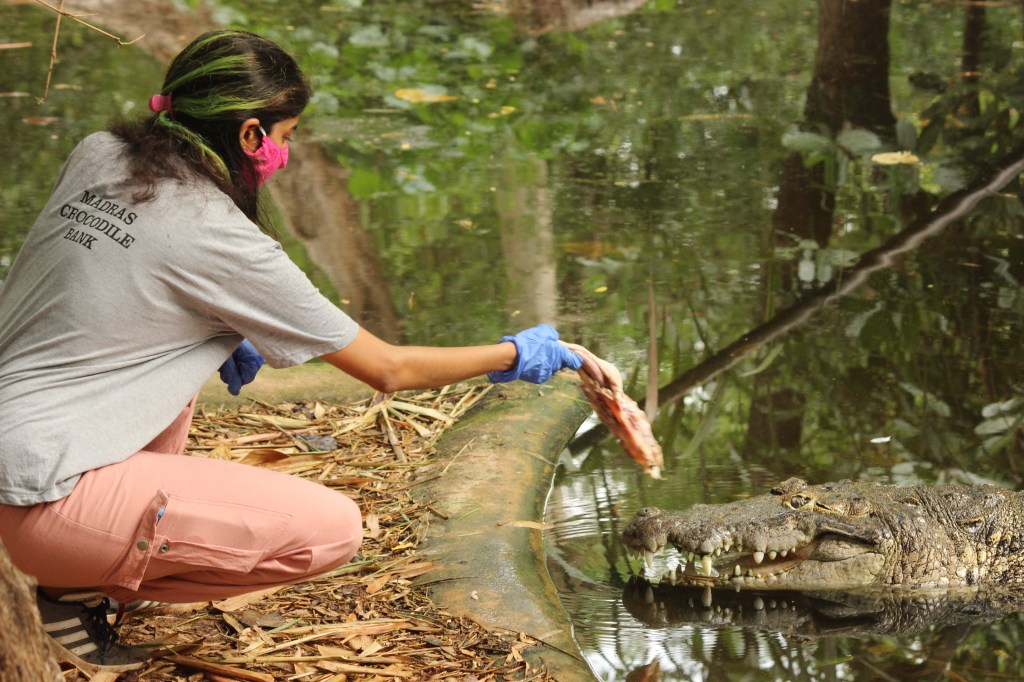
Ethical Writing for Conservation with Journalist, Vikhar Ahmed Sayeed

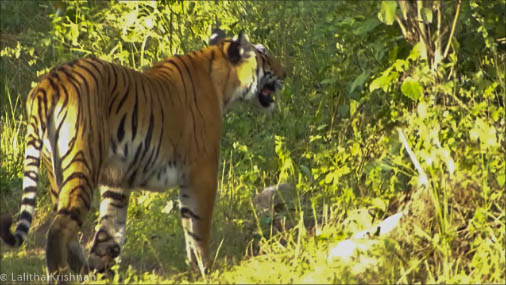
Photo credit https://frontline.thehindu.com/static/content/frontline/flipbook/20200917161213/index.html#p=93

Heart of Conservation Podcast Episode #39 Show notes (Edited)
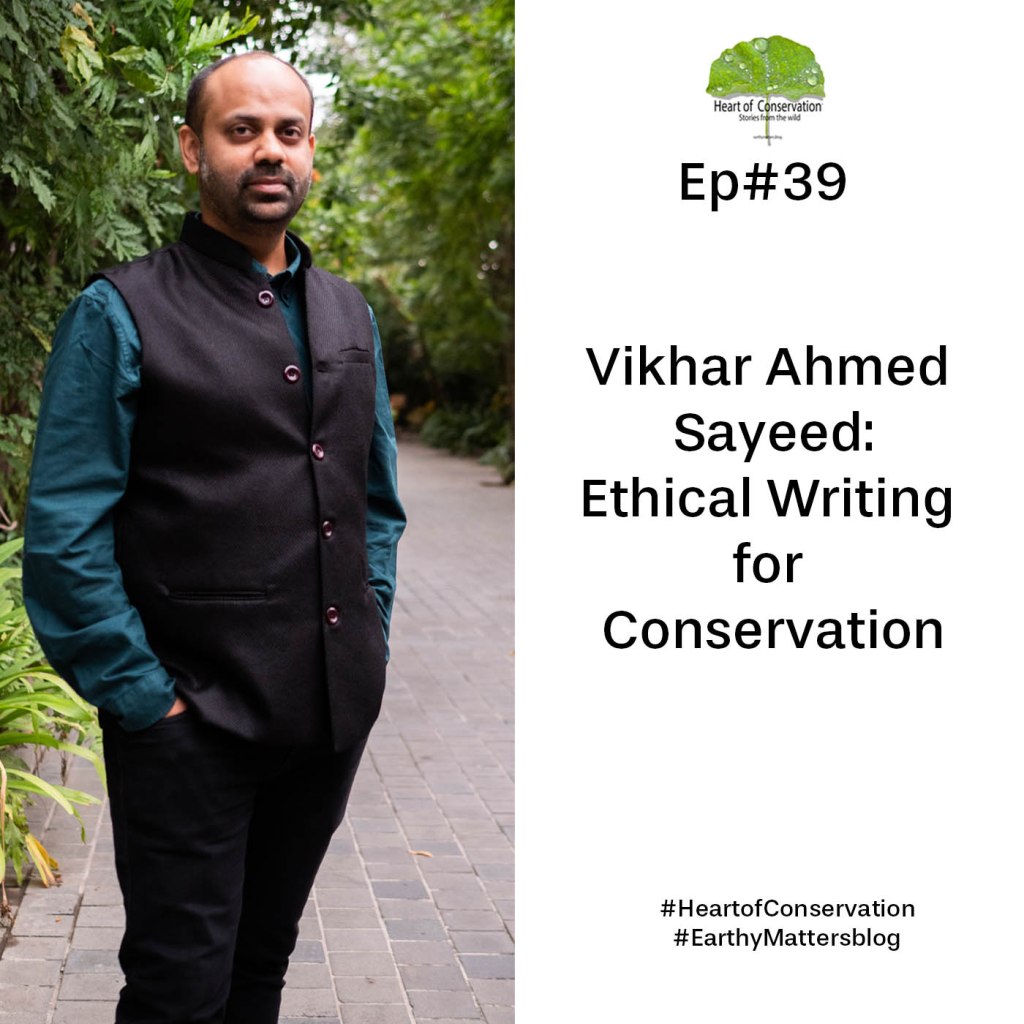
00:06

Lalitha Krishnan:

Hi, I’m Lalitha Krishnan and you’re listening to episode #39 of Heart of Conservation. I bring you stories from the wild that keep us all connected with our natural world. You can read the transcript for this podcast on my blog, Earthy Matters.

00:21

I’m speaking with Vikhar Ahmed Sayeed. He’s a journalist at Frontline magazine. He has degrees in history from JNU -New Delhi and the University of Oxford. I first met Vikhar at the Wildlife Institute of India in 2016, where we attended a course for nature enthusiasts.

00:40

Vikhar considers himself more of a political and social writer, though he has written some wonderful nature conservation articles that are well researched and fascinating to read. We are going to discuss some of those today as great examples of ethical writing for conservation. In a time where short snippets of fake or sensational news draws more attention, I consider Vikhar a rare breed of journalist. I admire his no-nonsense style in the long form, written with the eloquence of the seasoned journalist that he is.

01:15

Vikhar, welcome to Heart of Conservation. I’m so grateful that you made the time between your travel and work to speak with me.

1:20:

Vikhar Ahmed Sayeed: Thank you so much, Lalitha, for being so patient with me while I’ve been travelling these past few weeks. And as I mentioned earlier, most of my work has been on the politics of Karnataka and social issues, rural affairs. I have a very diversified portfolio of work. Since we met in 2016, I’ve tried to sort of also work on issues of conservation through my journalism.

01:53

It’s not easy to report on issues of wildlife, human-animal conflict, but because of the long form that Frontline allows me to use and because it gives me time, I’ve sort of written a few good articles so I’m happy to chat with with you about these.

2:15

Lalitha Krishnan: Thank you so much it’s been worth the wait. You have as you said published a great many stories and one of them is about Kenneth Douglas Stewart Anderson the Scotsman who was born in India. He is considered a pioneer of wildlife conservation in southern India. But unlike Corbett, little is known about Kenneth Anderson. Would you like to tell us something about him?

02:43

Vikhar Ahmed Sayeed: Lalitha, growing up in Bangalore, and you know, when I was a child, I used to read a lot. And at some point, I came across the works of Jim Corbett. And later, I think, if I recall now, I was in college when I first encountered the works of Kenneth Anderson, which resonated far more with me because I learnt that he lived in Bangalore and he would often foray into the forests around Bangalore. And initially my fascination was like, “Oh my God, wow, these were all forests?” I visit these places now and they are part of the sprawl of urban Bangalore.

03:27

And even further on, what were forests once upon a time are now towns. So that was my fascination. And then he was such an eloquent writer and the adventure. When I was young, I primarily used to engage with the works of Kenneth Anderson because of the adventurous element in them. I found that fascinating how he would go and track these man-eating large carnivores such as tigers and leopards and bears and elephants as well at times and he’d write so mellifluously about these encounters. So that was the thrill and then later when I became a journalist, I used to meet a wide variety of people.

04:18

And then a seed of doubt was sowed in my mind when someone casually mentioned, you know, I mean, “You love Kenneth Anderson, but have you ever considered the possibility that he was fibbing, that he was perhaps exaggerating?” So that casual comment made me think more deeply about his work.

04:44

And I wrote a rather detailed article. The primary motivation was to examine the claim of whether he had actually shot all these tigers and other animals that he wrote about or whether he was exaggerating. So through the course of writing the article, I learned a little bit about him.

05:05

So I learnt that he was born somewhere near Hyderabad in 1910 and then shifted along with his family at some point to Bangalore where he lived in the heart of Bangalore. Right now, the place where he lived would be unrecognizable but it was very close to Cubbon Park and he died in 1974.

05:31

You described him as a Scotsman but to add a bit I think he described himself–he was aware that he was an Anglo Indian because his family had been resident in India for several generations. That is one thing that is important perhaps. Also, among the many books that he wrote, he wrote a work of fiction set around the Anglo-Indian community in India. This had this had nothing to do with animals. So this just as a tidbit And then he worked in Hindustan Aeronautics Limited.

06:16

And often he had a wide network of informants in the villages around Bangalore and what is now Tamil Nadu also. At some point he would hear stories or reports of marauding wild animals, he would set off in his trusted Studebaker… I don’t know how you pronounce the name of that car, but he mentions it often in his writings. And then he would go and he’d write sort of very detailed reports of tracking these animals and then shooting them. And, you may also be interested to know what was the result of my sort of delayed investigation, right?

07:10

I set out to examine the claim whether he actually shot these animals as he claimed. The result of my investigation was ambiguous. I cannot certainly say that he did kill these tigers or whether he didn’t kill these tigers.

07:30

But while writing the article and meeting several people who knew him and meeting younger people who were motivated to become conservationists because of Kenneth Anderson’s work, this question became irrelevant. That was the most interesting development through the course of working on this article.

07:56

He has inspired several, I don’t know, maybe thousands of people to be aware of the importance of wildlife. Even someone like Ullas Karanth who is one of the pioneering tiger conservationists in India, also writes very sort of evocatively about his early forays into the forest with Kenneth Anderson. If you look at his book, A View from the Machan, Karanth has written about these encounters and certainly these early encounters inspired him. This is just one person, but apart from that, there must be hundreds, if not thousands more who have taken an interest in wildlife and conservation because of their reading of the Shikar literature of Kenneth Anderson.

8:52

Lalitha Krishnan: So interesting. I didn’t know any of that. Great. So, more recently you wrote a very disturbing article about how snake bites kill more Indians than all other wildlife combined. That was a real shocker. I quote your article now, “The World Health Organization has classified snake bites as a neglected tropical disease.” It’s a complicated subject to write about. So tell us about that.

9:23

Vikhar Ahmed Sayeed: It’s certainly complicated Lalitha, I agree with your assessment and it’s complicated for a few reasons, primarily because it’s so overwhelming, right? When you actually start looking at the statistical data, which is clearly under reported, it is scary, shocking, humongous and extremely complex.

09:54

So just to start off with some numbers. The numbers come from something called the Million Death Study (MDS), which looked at unnatural mortality among Indians. What emerged from this vast work is that more than 50,000 people were dying of snakebites in India annually, which is more than all other instances of man and animal conflict combined in the country. So it just seems it’s also complicated because it is so pervasive, right? It’s not restricted to a particular geographical region. It’s not restricted to one species of snake. And it primarily affects a certain poorer class of the country, primarily agriculturists who are out working in the field. So it just doesn’t get the media attention necessary also. For instance, if a marauding tiger accidentally encounters a human and kills that person, there’s so much attention paid to that one incident. Whereas the snakebites, over the past few months, I have sort of started following reportage of snakebite deaths. And often these are not reported. And when they are reported, they are consigned to some corner in the regional media.

11:44

And they rarely make it to the English newspapers, forget sort of the television channels because they are so widespread and common and also there is a feeling that simply because of the nature of the conflict right?  A snake slithers through a paddy field; a farmer bends down either harvesting or so planting crops the snake bites the victim somewhere below the knee, on the ankle, on the talus, on the heel and slithers away. So what can you do about this? So it’s incredibly complex and it’s a bureaucratic tangle also because unlike instances of conflict with other animals where it’s usually the forest department of the respective state that becomes the mediating state authority when it comes to snake bites–even though the vast number of poisonous snakes are considered… come under the ambit of wildlife protection act these are often…I mean it’s a more wider problem. So the department of agriculture is involved, the revenue department is involved, the health department is involved, the education department is involved. So there is, I mean, it’s a bureaucratic minefield to negotiate with. So, but through the course of working on this article, I did meet some very passionate, diligent, hardworking herpetologists who are coming up with simple solutions.

13:35

For instance, in the rural hinterland of Mysuru, Gerry Martin/Gerard Martin, the well-known herpetologist has been involved in a lot of local outreach, where he, through the aegis organization is distributing gumboots to farmers and advising them not to go out late at night. I mean it’s funny, a lot of these bites happen because of erratic power supply to agricultural fields. Farmers have to pump water and electricity is provided only at night. So late at night, in the middle of the night in fact, the farmers have to go to their fields and turn on their pumps. So a lot of bites take place at this time.

So Gerry Martin by simply encouraging them to wear closed footwear, by wearing gum boots when they go out at night… when they can’t see what’s slithering around them… I don’t know the efficacy of this yet, because it’s still something that he’s put in place recently.

14:49

But there are simple solutions, but it is extremely complicated. And there are other problems as well. The state of antivenom, for instance, is a huge concern. And then also the tendency of villagers to go to a local quack, a local healer who has attained some kind of notoriety for treating victims of snakebites because of which they delay going to a hospital. All of this, you know, means that it is extremely complicated to sort of, find easy solutions to this conflict. Any issue of man-animal conflict, as I’ve reported over the past few years, is extremely, extremely complex to resolve. But when it comes to man-snake conflict, it is the problems are of another degree.

15:50

Lalitha Krishnan: Yes, it’s so complex I don’t even know what to say. As far as your conservation pieces go, you also have a knack for researching and writing about lesser-known people and topics. You wrote about a famous taxidermist also known as Van Ingen of Mysore, I don’t know if I’m pronouncing his name right either, who stuffed shikar trophies for international nobility and maharajas of India. He was considered quite an artist in “making a lion look more terrifying than it looked”. So please share some interesting facts you came upon while writing this story.

16:29

Vikhar Ahmed Sayeed: Thank you Lalitha. This was an article that I enjoyed writing tremendously, you know, because I’m primarily interested in history so it gave me a chance to indulge in my passion for research and combine it with journalism. So this this article that you mentioned, I must congratulate you for finding this and reading this because it is written more than 10 years ago. It still remains relevant. Anyone can google for it, read it. It reads very well even now. What sparked my curiosity, if you can indulge me for a bit, is that I read a very, very sort of brief report in the newspaper, like a one paragraph report around 10 years ago if I remember correctly. And, all it said was, (Edwin) Joubert Van Ingen, leading taxidermist of Mysore passes away. That’s all, right? And the one paragraph news item stated that Van Ingen was the last member of the famous family of the Van Ingen taxidermist. And he had passed away at the ripe old age of 101. So for all these reasons I was very very intrigued.

18:01

And at just at that time I think I had read R.K Narayan’s book where the main character is a taxidermist. It’s called The Maneater of Malgudi. So for all these reasons I was very sort of intrigued and I went off to Mysore and I was so fascinated to learn more about this character. So he was the last surviving member of the Van Ingen family. So they were actually Dutch Boers who had moved to South India and Mysore at some point during the reign of the Wadiars of Mysore when Mysore was a princely state. So, Joubert Van Ingen’s father started this taxidermy firm sometime in the 1920s and he had four sons, all of whom carried on the legacy after their father’s death. and they had a vast factory.
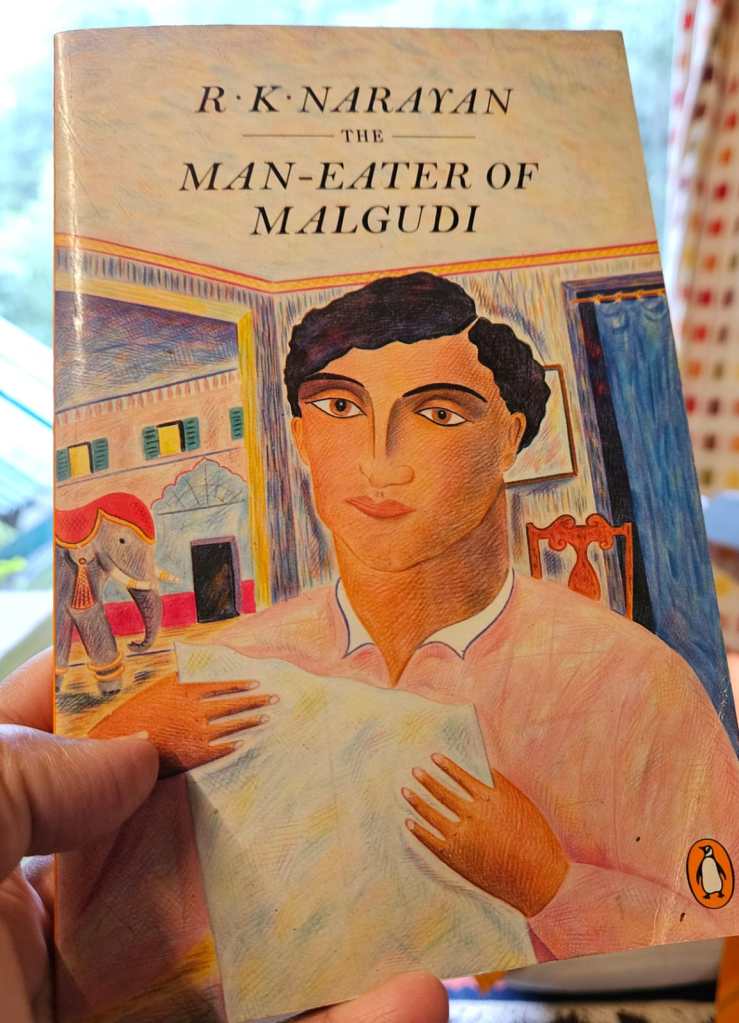
Photo by Lalitha Krishnan

19:10

So this was the time that you should be aware that hunting was wide bred, was considered a sort of, there are many sort of studies on hunting during the British colonial period. But hunting was in a way considered a rite of passage for both colonial officers and the Indian nobility. So, it was perhaps a valued hobby, a pastime, a networking arena if I could sort of use that very modern phrase. And everyone was hunting and they wanted to preserve this memento that they acquired for posterity.

20:01

So taxidermist became very important and it became a very skilled profession. During my research I met a number of people  including employees who worked for the Van Ingen factory and other old residents of Mysore who were aware of the Van Ingens, who had spent time with them, who sort of spoke about Joubert Van Ingen’s great knowledge of the forest and his skill as a taxidermist. it is a little overwhelming for me when I recount this because as I mentioned earlier.

20:46

I mean they had a vast factory and they were the favoured taxidermist across South Asia and thousands of animals, skins primarily, would be sent to them from all over the country, right from Nepal from sort of the furthest boundaries of British India and then these thousands of skins would be processed for example if they are processing tigers they would make full mounts meaning the entire body of the tiger or like only the head or even rug right? And, we now have a population of between 3000 and 4000 tigers in India.

26 Dec 1992, Wankaner, India — Dining Room with Mounted Tiger Heads — Image by © Lindsay Hebberd/CORBIS (Laymens68, CC BY 3.0 https://creativecommons.org/licenses/by/3.0, via Wikimedia

21:33

You will be fascinated to learn Lalitha that just sort of say in a five year period, according to the data that I discovered in the 1930s, when the factory was working at its full efficiency  perhaps, more than 3000 tigers were just processed through the Van Ingen factory in five years.

21:59

This was sort of like a line. So they had sort of prefabricated models, mannequins which they would use. It was an elaborate art also.  But, the Van Ingens could err and refine their models simply because they had thousands and cumulatively perhaps lakhs of animal skins being processed in their factory. So, I mean, when we look back and just say a hundred years ago, this is not even a hundred years ago, say 70-80 years ago, large carnivores were so widespread. Even then, their numbers were depleting because there was no awareness of the importance of conservation. But it was just so easy to foray into the forest, to head to the forest, kill a tiger, shoot a tiger and then transfer the skin, transport the skin.

23:11

And Van Ingens had produced several manuals which were available, I am presuming, all over the country at that time, which described in detail what a hunter was supposed to do as soon as he shot an animal, how the skin should be preserved and how it should be transported safely so that it arrives in immaculate condition and then can be transformed into this great work of art that reflects a living animal itself. So, tigers were just one animal, there were leopards, there were elephants—not full elephants–elephant heads.

23:55

Even now, if you go to the Mysore Palace, right at the entrance there are two elephant heads which are mounted at the entrance. These also have been processed by Van Ingen. In the Mysore Palace there is a restricted enclosure. Enclosure may not be the right word. A room– a state room, a huge large room where you need special permission to go. And because the Mysore Maharajas were patrons of the Van Ingens, several of their trophies are available in this room, including a mount of the pet of one of the Mysore Maharajas, a mastiff known as Brumell. So Van Ingen, Joubert Van Ingen, you know, it is unfortunate that I was a journalist even before his passing, but I was unaware of the stature of this person. And I became aware of him only after his death. And all this, I found out after his death, you know, the only great regret I have is that I never met this man when he was alive.

25:06

Lalitha Krishnan: Wow, now I understand why you were overwhelmed. I mean, a factory processing tigers and elephants. It’s hard to imagine, you know? Vikhar, both your articles, Mumbo Jumbo Responses and Tiger on the Trail, cover again a very serious matter of human animal conflict. I like that you covered both sides of the story, the people’s view and the challenges that wild animals have to face living on the edge of human habitat. Karnataka has the highest count of elephants in India according to the 2017 census and probably, correct me if I’m wrong, human deaths by elephants.
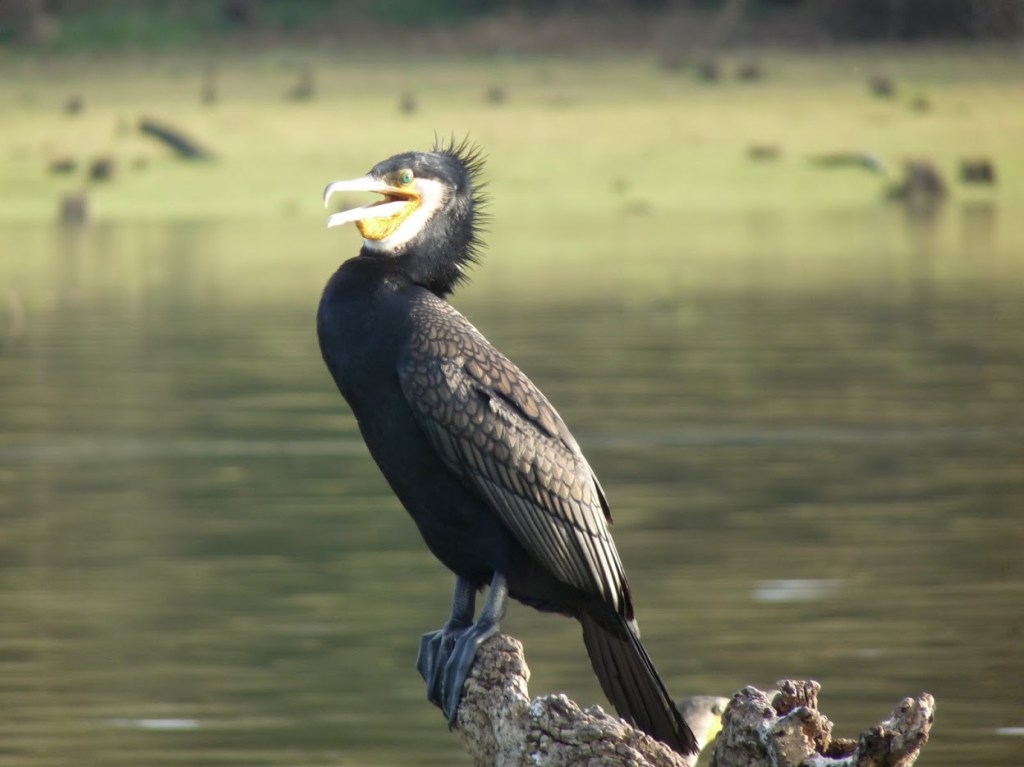
25:47

According to the National Tiger Conservation Authority’s “Status of Tiger Report” (2022), there are 3000+ tigers in the Nilgiri Biosphere.  Despite ‘Early Warning Systems’, trenches, tracking, fencing, relocation, building of corridors, radio collaring etc, this again, is such a complex issue and must have been a very difficult one to cover. What were the challenges you discovered writing about these conflicts?

26;17

Vikhar Ahmed Sayeed: Oh, thank you for that question, Lalitha. These pertain to two of my detailed articles. The first one, Mambo Jumbo Responses is on the human elephant conflict in the hills of Hassan, which has been a pervasive problem over the past few decades. And the second one is titled Tiger on the Trail, which pertains to tiger-human conflict on the fringes of two very well-known protected areas, the Nagarhole Wildlife Sanctuary and the Bandipur Tiger Sanctuary. So both of these are different. I mean, there was a point in my career, in my life when man-animal conflict issues were seen as humans encroaching into forests and because of which all this conflict takes place.

27:14 That was the sense that I had, which as I later learned, I was quite badly informed. So for instance, in the hills of Hassan, there is a resident herd, I mean it is not a single herd. There are several smaller herds and even individual male elephants who form their own bands or who are sort of rambling alone. So there are no forests, there is no protected area or even if they are there, these patches are so small and scanty that they cannot sustain this herd. So basically you have this large group of elephants that are just sort of walking around through the extensive coffee plantations in that region. So that is why you have these instances of conflict and over the past two decades. Some 70 people have been killed and various solutions have been devised but none have worked so far.

28:28

The only solution seems to be that humans and elephants need to learn to coexist and moving to the tiger issue… See, tigers in Nagarole and Bandipur… Bandipur and Nagarole are touted as sort of marquee examples of conservation success, especially of Project Tiger which began in 1970s, somewhere in the 1970s.

28:57

And when Project Tiger commenced, there were 12 tigers in Bandipur. There are more than 200 tigers and as you know, tigers are very territorial. So it is, I mean it is ironic, the conflict is a result of the success of conservation.

29:21

So these areas have been protected very well. So tigers are territorial beasts, they are also very fecund. So they have reproduced, they have taken advantage, there is a robust deer population…cheetal. So the population has grown and considering that these animals are territorial, they do end up on the fringes of these forests and even are often spotted outside the protected areas as well. So it is a little more complicated. Right?  Again, through the course of writing this article where I met a variety of stakeholders there is no easy solution to issues of man-animal conflict. That’s what I realize and the intervention of non-state actors has been crucial in mitigating instances of human-animal conflict.

30:18

Lalitha Krishnan:  Thank you for that. You gave a good explanation or understanding of what the real issues are. So, Vikhar, as a fellow of the Asian Journalism Fellowship, you were lucky to listen to Jane Goodall in Singapore. Your wonderful and erudite article, The Chimpanzee Lady, I presume is inspired by this encounter. So what was the most inspiring thing (I am sure there are a zillion) about her that influenced this article?

30:51

Vikhar Ahmed Sayeed: Lalitha, it’s kind of a very sort of basic question. It’s not a question at all. Because well, Jane Goodall… but we need to go back to the time that we spent together at Wildlife Institute of India (WII ) and one of the classes there which was a discussion on wildlife literature.

31:22

So I carefully sort of made a list of all the books that were recommended and the first book that I read once I came back from Dehradun back to Bangalore was Jane Goodall’s In the Shadow of Man. And I felt so deeply moved by that book and the honesty of Jane Goodall and her sincere effort at conducting what is now clearly seen as pioneering research on the ethology, on the behavior of chimpanzees that I sort of told myself that if ever an opportunity presented where I could listen to this great lady directly,I’ll sort of move heaven and earth to get there. Coincidentally, after that time after reading her book I was in Singapore and she was speaking at a venue in Singapore. And in Singapore, unlike a lot of events in India where everything is free and people can just walk in where in fact there’s a paucity of attendees sometimes… Singapore, it was a ticketed event. Someone, I think if I recall correctly, my fellowship administrators procured a ticket for me after they became aware of my eagerness to listen to Jane Goodall. So I went. I listened to her. Jane Goodall’s work is fascinating on many many levels. There are many other greater people who can comment more authoritatively on the extensive corpus of her work. But for me, what struck me was, I haven’t gone through advanced postgraduate academic studies. It’s very difficult to challenge the established discourse that has been set in academia. It can be in any discipline.

33:41

So Jane Goodall goes to Gombe in Tanzania and she doesn’t have any background, she doesn’t have a degree even in wildlife sciences or anthropology or anything and very intuitively starts studying the chimpanzees of Gombe and builds such profound relationships with generations of chimpanzees. And she writes very beautifully about this connection that she built. So I heard her and also a very interesting point that she made was at some point, Goodall does enrol for a PhD and even completes it at Cambridge University. But when she realises that her research has greater significance, she very brutally, very confidently disconnects with academia, which I think is a very bold sort of move to make because how do we legitimize knowledge, right?

34:57

How do we legitimize that a certain mould of research is the correct way? We strive for recognition by a peer community and she breaks away from this and moves full-time into conservation. She says, no, I don’t want to be a wildlife scientist.

35:20

She takes this decision sometime in the 1980s. She’s done so much for conservation all over the world. What I recall very sort of clearly, is how optimistic she is. You and me are perhaps more pessimistic but even at her advanced age she remains very optimistic that humans and animals in the wild can coexist.

35:51

Lalitha Krishnan:  What conservation needs!  Hope. Optimism. I think she’s 90 now and still inspiring so many generations. She’s amazing. I had to ask you that question. I’m sorry. Besides, I am so jealous… Thanks for that, Vikhar. And, this is for budding conservationists or journalists, writers and documenters. What guidelines would you suggest for ethical representation?

36:22

Vikhar Ahmed Sayeed: That’s a tough question, Lalitha.

Lalitha Krishnan: Well, they can just read your articles.

36:29

Vikhar Ahmed Sayeed: Yes, yes, I certainly recommend that. Along with that, see, I mean, I came to writing about issues of wildlife and conservation in a convoluted way. At a midpoint in my career, I’d like to think… I’ve been a journalist for 16 years now. So I started paying attention to issues of man-animal conflict /conservation only over the past few years. So before that, my journalistic sense was finally honed. So using that same methodology and tools, I sort of applied it to understanding issues of conservation.

37:21

And very practically, what I did is, first, I befriended wildlife scientists as well as conservationists. And there is a fine difference between these two categories of people.  I befriended these people who are working towards on issues of conservation and then started sort of hanging out with them and getting a sense of how they engaged and interpreted issues of wildlife because wildlife science is a very advanced discipline. So obviously I couldn’t master it, right? But I tried to familiarize myself with how they think, how they thought. And using this sort of connection, I gained the confidence of writing on these issues. So these friends have been of great help.

38:32

When it comes to issues of conflict, again, I sort of work very clearly in a very straightforward manner as a journalist. Some people who identify themselves only as environmental writers or wildlife writers make the mistake of approaching the story with a bias. The bias is towards animals and even me, I mean, the whole purpose of my work is to ensure that how conservation can be improved. But I sort of don’t go to the field with this bias. I go with a very open mind and issues of conflict are extremely complex, right? They cannot be seen in terms of a black and white understanding.

39:19

They are very grey, they are very complicated and I enjoy that process of unravelling the intricate complexities of these issues. So, I savour that challenge. So, my advice to people who are writing about the wildlife and issues of conflict especially, is to be aware that there are multiple stakeholders and it’s very tricky to sort of unravel the complexities of conflict. But the advantage with these stories is first that wildlife. Scientists and conservationists are very studious people, right? So you have an incredible and rich source from which you can draw.

40:07

These people have been thinking so they would have generated data, they would have a strong perspective, they would have developed a strong point of view. So that is one advantage compared to the reportage that I do on other issues. I report in Karnataka and the bureaucrats of the forest department—I don’t know, I can’t speak for the forest department bureaucrats in other states—but at least in Karnataka are accessible, which means that to understand the state point of view, the government point of view, you have an avenue for a journalist or for a writer. Because, like I’ve mentioned that I report on a wide variety of issues, right? Agriculture, caste issues… communalism. Often my struggle is to gain access to an officer or a bureaucrat of some authority who can comment articulately and clearly on an issue, which half the time is a big struggle.

41:19

Whereas when it comes to issues of wildlife, there is some struggle. People are not sitting as soon as you call them, they are just waiting, rolling out the red carpet for you. But at least they are willing to talk, which is important. So those are some learnings. And I don’t know if it works as advice, but certainly those are learning and which is why I’m excited to write more about issues of wildlife and conflict from Karnataka.

41:48

Lalitha Krishnan:  I so look forward to that. Thank you so much.

41:51

Vikhar Ahmed Sayeed: Thank you. You’re welcome Lalitha. I mean, I’m so happy that we had this conversation because I know that, you keenly read my articles. So it’s always a pleasure engaging with someone who takes your work seriously, who pays close attention to it. I should thank you for taking the time to read, go through some of my own articles, which I had forgotten.

42:20

Lalitha Krishnan: Absolutely my pleasure. I learnt so much. From listening to you even more.

The end.

Listen to the podcast here.

Birdsong by hillside resident, the collared owlet. All photos courtesy as mentioned in caption /photo. Guest photo credit: Vikhar Ahmed Sayeed. Podcast artwork by Lalitha Krishnan
Disclaimer:Views, thoughts, and opinions
expressed in the podcast and show notes belong solely to the
guest/guests featured in the episode, and not necessarily to the host of
this podcast/blog or the guest’s employer, organization, committee or
other group or individual.

Acrobat of the Sky, Dweller of the Heart: The Barn Swallow.

Barn swallow. Photo by Rajdeep Mitra

Heart of Conservation, Episode #33 shownotes. Read or listen on several platforms.

Introduction:

Hi, I am Lalitha Krishnan and you’re listening to Ep# 33 of Heart of Conservation. I bring you stories from the wild that keep us all connected to our natural world. You can listen to Heart of Conservation on several platforms and read the transcript right here on my blog Earthy Matters.

Today I feel very privileged to be speaking to my mentor Dr Suresh Kumar who spiked my interest and knowledge in nature and everything wild during a citizen’s course for wildlife conservation at the Wildlife Institute of India, Dehradun, Dr Suresh is remarkable wildlife biologist who specialises in animal ecology, migration and movement studies, conservation biology. Since 2008 he has been a teacher, trainer and mentor to several students at WII.  He has crisscrossed the country in pursuit of wildlife conservation.  Be it discovering a new species of pheasant, studying macaques, using satellite telemetry to obverse the distribution of olive ridley turtles, tagging and following long distance migration patterns of Amur falcons and mapping habitats of the Great Indian Bustard, Dr Suresh has several feathers in his cap.  He was also part of the 29th Indian Scientific Expedition to Antarctica in 2009, where he conducted aerial surveys for marine mammals and birds. I always look forward to snippets of his many wildlife adventures that he updates us with in his unique storytelling style.

 I am also very happy to have as a guest on today’s episode, his research student Amarjeet Kaur, completed her graduation and post-graduation from Delhi and then moved to Wildlife Institute of India. At WII, she first started her journey working on the migration and conservation of Amur Falcons in Nagaland and Manipur, and thereafter, joined for her PhD on another long-distance migratory bird. Amarjeet is now completing her PhD on the first study of Barn swallows in India. Together they have been working on a lesser-known species that most of us take for granted.

Thank you both so much. Welcome to the Heart of Conservation podcast.

1. My first question is why is your research focused on the Barn swallow? Why not some big exotic or rarely spotted species?

2:35

Dr Suresh Kumar: Thank you Lalitha for having us in your podcast. Well, you asked quite a challenging question especially when there are so many beautiful birds all over; not that the barn swallows are not beautiful but to me they are very unique. They are an extremely interesting group of birds and that they are long distance migrants, very common;  it’s a human commensal. It lives very close to people. it actually literally requires people to actually survive and they are long distance migrants like I mentioned earlier. They are possibly travelling 1000s of kilometres like many other species.  And in India, the barn swallows come to the Himalayas to breed. So, they are summer breeding visitors and by the time the monsoon arrives, they leave. So where do they go? There are some interesting details about these birds that we still don’t know. I think Amarjeet will possibly be able to  tell you a little bit more about the local connections, the cultural connects of this bird and it’s very interesting.

3:58 

Amarjeet Kaur:

Very interesting question that you asked. So, I just would like to mention that because this podcast is all about barn swallows, I think it is a unique bird also because we are giving it so much importance.

in fact

Lalitha Krishnan: In fact, some of the facts you brought up are also my questions. Barn swallows are often seen –in fact they are still seen as we know–nesting in small shops here in the hills. Why do they nest inside shops and houses so close to humans? You mentioned they need us. No other bird does that except perhaps the Red-rumped swallow which is not as common though.Somehow humans too do not seem to mind barn swallows.  They may not generally like a crow nesting in their shop if you know what I mean.

Amarjeet Kaur:  Again like you rightly mentioned that humans also don’t seem to mind. Barn swallows, they love to go inside the houses inside the shops as we have found out during our surveys and it is not just in India, it is everywhere that they are actually dependent on human buildings or shops and houses.  So what is so unique about these birds? Earlier they never used to, as is mentioned in literature, they never used to nest inside shops. And it is not just in India, it is everywhere that they are actually dependent on human buildings or human houses.

So what is unique about these birds?  Earlier they never used to nest inside shops.They used to nest in caves and crevices. And, they are such a smart species that as they found out humans are coming up with the buildings they found that right opportunity to get in. So what is the use? Why are they actually nesting inside saree shops which are so busy? If you go to Nainital market you will be astounded to see that it is so crowded. Barn swallows don’t seem to mind, they just lie around, feed their chicks and they are just there. It’s because they actually get an additional protection for their nest from predators. 

Because, when you observe the nest, you’ll see it is a mud nest  but it is open from the top. So I have found in the nest, when there are less nesting spaces, they have to resolve to the outside– in corridors– and they build their nests in corridors. And those are more prone to attacks by predators or by other commensal species so they see a lot of competitions in other species so that’s why they are more prone to go inside your house and make the nest And, like the red rumped swallow that you mentioned, I will just like to add they again build mud nests but their nest is closed/tunnel shaped so they don’t need that extra protection. That is what red-rumped swallows can nest outside, it’s because their nests are closed.

7:01:

Dr Suresh Kumar: Just adding on to what Amarjeet said, it will be interesting for your listeners to know that while we generally talk about human footprint, and how this has literally shaped the environs around, and we mostly look at it from a negative connect. Right? About displacing species from their natural habitats. But strangely there are certain species which benefit from human activities, changes in land use types because of humans or people. And, I think barn swallows are fantastic examples of that. The name ’Barn’–it was otherwise known as the Common swallow earlier– but the name ‘barn’ is because of its strong association to the barn. And, this is a very western thing. Like in America, in the rural areas they have  a barn to stock all the food that is required for their livestock. Here in India, in the Himalayas, we do have such a thing but it is not like they live in the barns. They live in people’s houses. And, I think there is an interesting connect here to religion. To the hindu religion, or for that matter to other faiths also…the Islamic faith or the Christian faith…anywhere you find people of different faiths living here in the Himalayas, they all have a very strong connection to these birds. They refer to these birds as Amarjeet will call the ‘Devchidya’, locally known in some places as ‘devchidya’-the God bird of the Himalayas that we would say. They are related to the significance of wealth or prosperity. So, if these birds come into your property to nest naturally, it’s a sign of prosperity. So it’s welcome. For the hindus, it’s a Laxmi avatar. 

9:9

Coming to the other question as to why barn swallows have evolved this strategy of nesting inside people’s houses or in shops. I think in the natural world there is always some competitive force or the other. There is also this major predation pressure. So, there must have been in the evolutionary period of time, there must have been strong predations affecting populations of barn swallows,probably everywhere. And those populations that started to nest closer to people’s houses and then taking the benefits of moving into people’s houses to nest may have survived. That’s how this shift from the natural environment which Amarjeet mentioned–nesting in- caves-might have moved to now, living with people. Also if you see, during this so-called evolutionary period of time, humans have also begun to settle down. I would say, with settled agriculture, these birds also had started to evolve the strategy of living closer to humans and thereafter, literally being commensals. 

10:31 

Now, the other interesting point that Amarjeet mentioned is, then why didn’t the red-rumped swallow also nest inside? Whether it makes a cup-shaped nest or tunnel shaped nest–they are mud nesters.They could have also moved in. Hare, it appears like there is an understanding among the red-rumped swallow and the barn swallow. In a simplistic way of looking at it, “Hey, we will nest outside, you nest inside.”Compatibility Okay?  So if I have to look at it from a more technical point of view, here it is competition for nesting space. So, they would be highly territorial in terms of holding onto a property. 

Among barn swallow individuals you will see strong territoriality. They will chase one another away. And some of these birds come back to the same nests to nest every year. In the same house. So, territoriality plus competition for space has shaped this. So the red-rumped swallows, the poorer cousins of the barn swallows, are forced to nest outside. So, there also, because of predation pressure, are nesting close to human households. But here, nesting outside would still evoke some predation. So, they have evolved the strategy of completely closing their nest with a very narrow passage tunnel for them to enter in unlike the barn swallows’ which are cup shaped and exposed. So they build it inside.

12:08

It’s amazing when you see these birds, all swallows,closely related, and how they are associating with humans and the understanding amongst them. “Okay, I nest inside, you nest outside. My housing architecture will be this way..” “Mine will be this way.” 

12:33

Lalitha Krishnan: We have a lot to learn from the swallows. I wish we would behave like that especially when it comes to housing. And be nice to our neighbours. So, all shops shut for the night. Where do barn swallows go when that happens? How do they understand and manage our concept of time?

12:44

Amarjeet Kaur” That’s truly an amazing question. Because those who are unaware of barn swallows nesting may wonder  where these birds go at night. These birds perfectly time their arrival and departure from the shops with the shopkeeper. They know the time the shop closes so they enter just before the shops are going to close. Early in the morning, they will actually wake up the humans–if the house is also attached to the shop–they start their chit-chat, chit-chat ..almost like, “Let us out, let us go out.”

13:21

I have interviewed so many people and they often say, “these birds start calling us at 4 o’clock  in the morning and we have to open the shutters for them. Because their chicks are in the nest, the swallows have to go out and fetch food for them. So, somehow for every different shop, the timing matches perfectly. It could be because, every year, they are coming back, they know the shop’s closing time. They were really affected during COVID. What happened everywhere during Corona is that shops were closed. Some birds were actually inside the shops. What some owners did was, they shooed away the adult birds but they couldn’t do anything about the chicks..the juveniles. So a lot of shop owners actually saw failed nesting. But, again, the hill people, they are big hearted. They made a space for barn swallows to enter. They cut their shutters just for barn swallows to enter.

14:30

Dr Suresh Kumar: They would create openings.For example, if the birds were nesting inside the house, we have seen places where they have removed the glass pane from a window so that the birds could enter. This is truly amazing. We’ve been talking about this from the bird point of view but when you look at it from a people point of view, people just love these birds. Of course, they have that religious connect and look at them as very sacred birds and things like that but even otherwise, like Amarjeet was mentioning, the birds know when the shop is going to be shut. But, there were many times when the birds wouldn’t arrive and the shopkeeper would wait for a few more hours for the birds to come. He would keep the shutter open. So, you can imagine the kind of association that people have with these birds. And, they are very strongly protective. They wouldn’t allow anybody to touch them. It will almost be like touching distance where they would make the nests. Birds also recognise the owner of the shop–seeing him day in and out or the people residing in a particular house. If there is a stranger like me and Amarjeet, walking into a shop, immediately  you will notice an alert  behaviour, they will be looking at us differently. I think in the minds of these birds they know, they have facial recognition clearly. They are able to distinguish. So, when I look at barn swallows,  and when I particularly go back every year and look at those individuals, which we have possibly caught previously and put a ring on them and they look at us…they know… Hey, these guys have come back.

16:15

Lalitha Krishnan: It almost sounds like a pet’s relationship with its owner except these birds are free to come and go but it seems like the same association. 

16:31

Amrjeet Kaur: There is a general perception that in the north-east that everybody is a hunter. If you go into the forests, you don’t see much wildlife, specifically in Nagaland. When we entered Manipur, in Imphal valley, only in this valley are the (swallows) nesting. They are not nesting as they nest in Uttarakhand at higher elevations. They are nesting at 700 metres in the valley. And, there again, people are protecting them. They again consider them as Laxmi or good fortune. If you go there from kids to the elderly know the word ‘Sambraang.’ You just have to say the word and they will show you the nest. That bird is that popular. Even in the main city of Imphal centre. 

17:13

Lalitha Krishnan: Amazing. Dr Suresh you did speak about swallows migrating but because of that one doesn’t see barn swallows all year. Where are they migrating from?  What distances do they fly?

17:31

Dr Suresh Kumar: Well, at this point in time, we don’t know. Before I get into the technicalities of this question, I’d like to tell you about what Amarjeet and I have been reading about what people generally think about barn swallows. Where they come from. I think Amarjeet will be happy to share that information about what people think. They all know the swallows come from somewhere. Or rather, where they go after breeding.

18:08

Amarjeet Kaur: I want to narrate a beautiful story of a shopkeeper I met in north Bengal. .He said.” I think the mother birds, after completing nesting, they go and take a dip in Kashi and they devote their souls to the heavens”.  I said, “Why do you think like this?”  He mentioned that his grandmother was curious and since then, they had been observing these birds. One day she tied a thread on this bird because birds were also accustomed to them. They knew them as Dr Suresh had mentioned. She tied the thread and next year, the thread was not there.From that point onwards they thought that adult birds go away after completing the nesting. They go and take a dip in the Kashi -in some river and they never return.  The birds that return they think are their juveniles. That’s what people believed. 

19:19

Again, the ringing that we did last year created that amazement in people. They could see their birds returning. They felt good that those are the same birds and that they are not taking a dip in the Kashi but are possibly migrating.

19:41

Suresh Kumar:  From the story that Amarjeet just mentioned, the perceptions that locals have about these birds, if you actually look at it technically, they are in a way right. These are small passerine birds and they have a short life span. It’s not that they are coming every year for years. It’s not the same pair of individuals coming. So, I think they may perish and the point is also  these birds being migrants are faced with lots of threats wherever they go. So the chances of probability that they would return back the next year is far lower than for many other species.  

20:24

I would like to add a personal note to this story. Way back when I was in college in 1993 I did a small project for my entomology course in Bangalore. It had a field component to it and I would look at birds and see what they feed on. And there’s one particular site where I used to look for birds and insects in Bangalore. It happened to be in winter. I happened to see thousands of barn swallows hanging around, foraging there. So, my story of working with barn swallows dates back to that time. I used to wonder where these birds were coming from. Thereafter, I have had a series of such sightings of barn swallows in winter. If it was along the Gujarat coastline…right in the Arabian sea coast, I would see thousands of barn swallows all ganging up, gathering together on a powerline. It would give you a feel that they were all getting together, preparing themselves to go somewhere.

21:40

If you look at the sites where I had seen them, it gave me a feeling. Are they headed in the direction of Africa? Then, you also see barn swallows in the Andamans and Nicobar islands in winter. That would mean they have made oceanic crossings. So, of course in literature what we know about barn swallows is that they are truly long distance migrants. The European birds, the Canadian birds, they would all breed up there in the Northern latitudes and cross the equator and go down into the southern hemisphere. So, they are truly long distance flyers if you are saying that, you know, how many kilometres?  They would be flying 20,000 kms one way; 10,000-20,000 kms. It can vary across populations. That’s the story  that we are still not sure of what is happening here in India. What we have been speculating is that along the Himalayan range, that’s about 2500 kms long, even if say  that barn swallows are nesting in 2000 kms length of the mountains, starting from Kashmir all the way to Bhutan, and thereafter in Arunachal you don’t see them nesting. That’s another story. The populations that are nesting as far west as the western Himalaya -that’s in Kashmir valley,could very likely be going down into Pakistan  and thereafter heading out further south. Which may mean they are going down to Africa and joining the European populations that are migrating  down there. And then, when it’s time to return, they would again go back their different ways and come back to Kashmir or the western Himalaya.

23:19

So, now it’s interesting those populations you see in the east, that you see in Manipur, that you see in Darjeeling, would they also come down to peninsular India and head out down to Africa? We also see populations wintering in peninsular India. Southern India: Kerala, Tamil Nadu and all these areas. So, it’s possible that there are some populations of barn swallows moving within the Indian region. They are all moving to breed in the Himalayas but they all have different routes or different wintering ranges. So some populations would go down to Africa, some populations would be coming down to peninsular India or Southern India or Sri Lanka.  Some populations are going down into South-east Asia. Some of those could be actually heading down into the Andamans and Nicobar islands.

So incredible migration stories are still to be unearthed. We don’t know but these are possibilities.naturally, even if we talk about within the Indian region, for a small passerine bird weighing about 17-20 gms, they are easily covering about 5000 kms one way. 

24:34

Lalitha Krishnan: It’s mind boggling.The logistics. How do they manage? I don’t know if this is a silly question after all that you’ve said. Why don’t they stay here till winter? Has it got to do with the availability of their diet?

24:53

Amarjeet Kaur: Yes.

Suresh Kumar: We can answer that question.

24:58

Amarjeet Kaur: That’s absolutely true…in response to the availability of food. These birds like pleasant summer weather and that’s what they are tracking throughout their range. So when they do come to the hills it is at the start of March or end of February-March where you see lots of insects because of the change in weather. And once you hit June or July and it starts to rain heavily..persistent rains that stop these birds from going out to forage, that is the time that they finish nesting, pack up and start to move down possibly to south India or Africa, where it is summer and they again enjoy the availability of food.

25:50

Suresh Kumar: We saw a very interesting pattern. There are swallows that have adapted to living in urban centres like in the city and there are swallows that live in the village. Just like people. We are city dwellers and there are people who want to stay away from the city. They are happy living in the villages. Like that, we do see swallows behaving that way. 

I have often wondered what it would be like if we picked up some of the swallows from the village and went and left them in the city? They would say “No.”  In the city the question comes up…they are aerial insectivorous birds. So, they are picking up insects in the air, right? Now, what do they get in the city? What do they eat? 

26:39

So, very interestingly we saw swallows in Imphal town foraging at the traffic signals. If there is a major intersection, the moment the red light comes on at a particular section, the swallows would immediately come and forage in front of those vehicles. And they would fly between the vehicles. And, fly very low. The moment the green light comes on, the swallows would shift to the next section. It’s all learnt. So they are birds that forage there and of course you see other swallows that are foraging in nice, clean environs you know? Smokeless environments like over the lake…very scenic places. But here they are foraging among all the chaos and people. Sometimes, they are just flying straight to you and flying over your head. They have very high manoeuvrability; they do lots of acrobatic things in the air. It’s amazing. Actually, Amarjeet and I during our visit to Manipur, we did stop at one such road crossing just to watch how these birds are behaving. I was mind-blown. It was too good.

28:12

Lalitha Krishnan: Very cool.

Amarjeet Kaur: They show high adaptability  and intelligence.

28:18

Lalitha Krishnan: You have also been ringing the barn swallows. This is the first time barn swallows in India have been ringed. Which by itself is amazing. Tell us about that experience and what information does a leg-ring on a bird reveal?

28:39

Dr Suresh Kumar:Rightly mentioned, Amarjeet’s study is the first detailed ecological study of the species in the Indian region. The focus has been to understand their nesting sites. For instance, when do they arrive here? We’re talking about nesting periodicity. When do they arrive and when do they depart? And, we are also trying to understand this across the HImalayan axis. So, what happens to birds? How do birds in Kashmir valley behave or when do they arrive? When do they nest compared to the east, in Manipur? In Manipur,we have a resident population of barn swallows. They don’t migrate. That’s again very very interesting.

29:26

Why don’t those populations migrate? Everywhere else in the Himalayas you will see swallows migrate.

29:32

Lalitha Krishnan: I want to know that.

29:34

Suresh Kumar: That’s a different story and it’s very interesting. Now, the first thing that we wanted to as part of our study, what we wanted to understand was whether it is the same pair that is nesting in a particular shop or a home.So how do we know that? They all look alike.Okay. There could be some select features–if you observe them very intently, very closely but then your sample size is going to be very small. So one way to get around this is to actually individually colour-mark birds. Ring birds. So you know, this individual is ringed and this is an individual coming back to this particular shop. That is the purpose of ringing.

30:17

And, they are also known to nest multiple times in a season. So they arrive in the month of March and they immediately make a clutch. They would finish and then go in for a second clutch.So, asking for those in depth questions like their reproductive investment in the first clutch–is it more as compared to the second clutch? What dictates all of this? Is it also the fitness of the bird? Does it mean that the heavier birds have larger clutch size v/s individuals that are not  great in terms of plumage or slightly low in weight? Not that, they would vary amongst them a lot but these are all interesting questions.

31:10

You would also notice that barn swallows though territorial around their nest site, they are also social. So, wherever there are barn swallows nesting you would invariably see a lot more. So there is clustering of these birds when it comes to nesting sites .Now, that is the story, they are also taking  benefits of staying together. Maybe it has something to do with looking for food. Or maybe they would gang up together to shoo away  or chase away a predator. Or it could be as simple as giving an alarm like if there were a cat prowling around, they would give an alarm to indicate to the others. So, that;s some benefits there.

31:51

If this is the case, we also do see some individuals nesting solitarily. So why are these birds not taking the benefits? Are these birds not in great reproductive conditions? Are they not dominant enough that they can’t live amongst the flock so they are going and nesting elsewhere? Are these young birds breeding for the first time so they are nesting elsewhere? 

32:15

In order to answer all of these questions, you need to neatly mark individuals so you can try and understand these birds in more detail. Now the last part of it is that they are so small. They are very tiny birds–like I mentioned earlier:20 gms. And, whether you can put a small transmitter; a small device on these birds and whether they will come back the next year or not is also dependent on you being able to put rings on them. And, checking out whether they are the same individuals who are returning. Confirming that they do show site fidelity. This is very well documented in other populations elsewhere in the world.

33:02

But before you go in for deploying a tracking device, it’s first important to deploy a simple ring. You know? Ask some of these basic questions. Confirm  for site fidelity-that they do come back. Natal homing. They come back to their homes..their respective nest sites.That is the reason why we have started off with this ringing.

I think Amarjeet can further add on the fact on how ringing has actually helped create more conservation awareness.

33:36

Amarjeet Kaur: I will add to the experience first; the experience we had while ringing these birds. We will start from Kashmir and go all the way to Manipur.

When we went to Kashmir, we observed that these birds are nesting inside houses. And everywhere, people were just welcoming (us) strangers who had come to take their birds in our hands–they considered the birds as their own.And when they got to know that we were going to catch them, the first question they asked was, “Are you going to harm our birds”? So that’s the pressure we had everywhere we went to ring the birds because people are so close to these birds. This was our first time, catching the barn swallows and ringing them. So  there was this doubt: What if the birds don’t return? What if we scare them? These people will be really upset. But luckily nothing of that sort happened. I think this is because these birds are used to humans.That’s the advantage.

34:37

And, when we went to ring these birds in Kashmir, it would begin with people greeting us, offering us tea. And then, they would say, “now you go ahead and catch these birds. But before everything you have to have tea or something from our house”. That’s the culture. You can’t just do your work and move out.That was truly an overwhelming experience that I had in Kashmir. It actually brought tears to my eyes. 

35:05

And then we move on to Uttarakhand. So here, most of the nesting happens inside shops. And people have their timings right? People have to shut their shops by 7:00 pm. So what we did was, we caught these birds by night to avoid disturbance. Because, they nest in markets and we cannot place mist nets in daylight and disturb the tourists and everybody. So,  at night, when the birds are resting we catch them, ring them and release them back into the shop. That gives them time to get used to it and by morning they get back to their routine. So, people actually waited for us. They kept their shops open till 1:00 am in the night and they were with us watching everything we were doing. And they were okay with it. They say, “Do your work, no problem. We will manage, we will be here with you.

36:00

Dr Suresh Kumar: Now it has reached to the extent where people who earlier used to be apprehensive are now asking us, “Why did you not come this year and ring the birds?” Why don’t you ring the chicks? We want to know whether the chicks will come back to our house. So you know, they are also in a way, have become part of our story. Our research. 

And now they have begun to understand that these birds are truly special. They all know that they are very special. Very unique. But the point is when we share the stories of where these birds are possibly going and all our stories of connecting with Kashmir and Manipur, with the people of Uttarakhand, people seem to appreciate this a lot better.

 36:57

So there is this (lost in translation) approach  which is basically- it’s a taboo amongst all of the local communities that you should never touch the bird. “If you touch the bird, they will not come.” To break that and do our work was a huge challenge. But then, it worked. While I tell you this story, some people have simply refused. They say,”Nothing doing. You do research; don’t touch the bird. If you touch the bird, they will not come back, which is a bad omen for us.” Thankfully for us, we managed to convince people.

37:28

Amarjeet Kaur: Coming back to my story in West Bengal… We caught some birds in West Bengal. They were not nesting inside shops but were outside on wires and it was midnight. We didn’t have enough light to process these birds -to take measurements. And, we asked one lady who was just closing her house; “Can we come in and use one room to ring these birds?” She said, “Yes, come”. You won’t believe this; we actually sat in her kitchen while she was cooking food and did our work. It was amazing.

In Manipur, they were again nesting in houses and rooms that were not well lit. There too, people helped us, letting us use their emergency lights. In one house there were multiple rooms and multiple pairs were nesting. The house owners were saying, “you have to come here. There are birds in this room also.” They helped us hold the poles, they gave us light to work so it was beautiful. And all this, as Sir mentioned, has created a lot more awareness among people. They are now keeping track of these birds. They tell us when the birds come and invite us to come back or ask “why didn’t you come this year?” Or say, “ You need to tag more birds.”  When I started collecting data, everybody would tell me. “Oh we never noticed this.” It’s good that you came and now we will also pay more attention to these birds.” I think that’s fabulous.

 39:02

Lalitha Krishnan: I think what you are doing is fabulous and unknowingly, there’s a community of people now in different states doing conservation along with you. That’s fantastic. Talking of barn swallows, how long do they live?

39:22

Dr Suresh Kumar: These are small passerine birds and given that they are long distance migrants, there must be a lot of physiological stress on these birds. I suspect that they live for maybe 5-6 years. So, that is what their lifespan is. But they are highly productive so they raise clutches of five…sometimes, seven to eight chicks in one nest. So the nest is brimming with these chicks and sometimes, there is no space and the chicks fall off. So, the birds are quite productive. I think, to add to all this, their lifespan may not be much. This is the story of what we hear from literature, not something we have documented. That is again possible only through ringing. You ring the chick and you will know if it returns next year to breed. They also possibly mature earlier, and be ready to breed. And how often are they coming back? For how many years after ringing are they coming back. This is a very interesting story to document.

40:34

Lalitha Krishna: That’s wonderful. I have something. Red rumped swallows built a nest near my home; I don’t exactly know where. By the time they had their second clutch I felt like the juveniles were helping them build/repair the nest. Because, the numbers just increased. Is that possible?

41:06

Dr Suresh Kumar: Some young birds do practise building nests. You would invariably see this with the weaver birds.The Baya weaver and the other weaver birds also. You would see that while the dominant adults are busy building their nests, the young individuals–you can make them out by their plumage that these guys are young–they would also build nests. What is interesting is that they are also seeing the adult birds and they are learning. You can see that their construction is not that great. It’s documented that these birds are practising  their nest building. So, in the case of the red-rumped swallows you observed, it’s very likely that they are also learning to build a nest. 

There are a few other cases where young birds–especially the cooperative breeders– the young birds join in to help their parents, the breeding adults, to build the nest though they may not be breeding or coming into breeding immediately. That’s a different aspect altogether. This is possible

42:21

Amarjeet Kaur: There could be one more possibility of another pair coming in and competing for the same nest. That could also happen. Or that the male is coming and trying to impress the female.” Okay see, I am also competent enough..ha ha.”

42:38

Lalitha Krishnan: That’s also possible. My last question to you both is could you share a word or experience or concept  that will help us understand the barn swallow or remember it in a new way? Something that will add to our vocabulary.

41:57

Amarjeet Kaur: I think firstly for the vocabulary, you should remember ‘Dev chidiya’. There are different names across the Himalayan range. In Kashmir they are known as ‘Katij’. That’s a beautiful name. And when you come to Uttarakhand, there are different names. ‘Dev chidiya’, ‘Dhan chidiya’. You have Gotayi in eastern Uttarakhand.There is an interesting part here.  Near eastern Uttarakhand you have Nepal. We couldn’t go to Nepal but if you move to north Bengal again they call it ‘Gotali’.

43:37

Dr Suresh Kumar: There is a Nepali influence. The language, the dialects as you transit from the west to the east or east to west, you know there are people of different cultures and regions. They have their own language so the birds have also got their own names. We know very well that in Uttarakhand there is the Nepali influence. So some of these names do have a slightly different touch.

44:16

Amarjeet Kaur: in Manipur, they call the barn swallow ‘Sambraang’. Sambraang is the bird  which guides house building. They believe the way the birds build their nests is a sign that humans should also build their house in a particular direction. I will be good for them.

44:31

That’s so inspiring

44:33

Amarjeet Kaur: Exactly. I want your listeners to remember this: when yo go to the hills- it has become habitual for us, we consciously do this-if you are going to the hills, to around 1000 metres elevation, do look into the shops or homes and see if the barn swallows are nesting there or not. And stand there for five minutes and observe how they go into crowded spaces and manage to nest there.

45:13

Dr Suresh Kumar: For many of my research stories that I have been working on, the word, ‘connection’ resonates in every aspect of my studies. Or every species that I study.  So the barn swallow is also something that gets me that connection.  There is something from the emotional point of view but it also teaches me about how for these birds, it’s not one region or landscape that’s important. It’s the entire Indian or Asian region that’s important for them. So, it’s connecting multiple cultures. It’s connecting multiple landscapes. So, when I look at the barn swallow in the Himalayas, it gives me this visual of these birds having gone to my backyard in southern India. And if I see these birds in Southern India,  then I think they must have been in this particular shop somewhere up in the Himalayas. Resting in somebody’s house, raising its clutch of five-six birds… So, you know, it connects you and I think when you start to observe things in nature, these connections become very important. I think it’s important for us all to be connected. And, I think these birds are fantastic examples of how important it is to understand nature. What’s happening in nature and things like that. You asked me for one word; it’s connection. The barn swallows truly have that connection.

47:01

Culturally also, there are so many stories. Some people think they(the birds) just go and die in the Ganga. So, the Ganga is the holiest river in the world. That holiness…people are relating to these things. It’s just incredible. So yes, these connections are big for me.

47:24

Lalitha Krishan: Thank you so much. I am so touched and inspired. Dr Suresh, I think your whole career path is like the swallows. You travel place to place, continent to continent saving the birds and other species.

47:38

Dr Suresh Kumar: I am still on a journey. I wish that this journey never ends. As Amarjeet’s field work is coming to an end, I am now wondering after she is gone…like the barn swallow she too will go away somewhere far– and I still need to follow the swallows. At this point of time, we are primarily doing this work because it’s her project and we are understanding the barn swallows. Of course there will be someone else also interested in the barn swallows. But I truly wish that this journey not only for me, but also for Amarjeet,never ends. We continue to follow the swallows for the rest of their lives.

48:20

Amarjeet Kaur: It’s never going to end for me as well.The connection word that Sir mentioned has got to me also. Now, I’m completely connected to the species.

48:32

Lalitha Krishnan: Yes, and also all the people who are homing them, looking after them. It’s great. Thank you both so much.

Birdsong by hillside resident, the collared owlet.

Photos Credit/Courtesy: Amarjeet Kaur and Rajdeep Mitra. Podcast cover/label design by Lalitha Krishnan.

Disclaimer: Views, thoughts, and opinions expressed in the podcast and show notes belong solely to the guest/guests featured in the episode, and not necessarily to the host of this podcast/blog or the guest’s employer, organization, committee or other group or individual

Minimum resources, Maximum Impact. Avian and Reptile Rehabilitation Centre (ARRC), India.

A conversation with Jayanthi Kallam, Executive Director of ARRC and the team.

Podcast Episode #27 Part 1. Show notes (Edited).

Introduction:

Lalitha Krishnan: Hi there, I’m Lalitha Krishnan and you’re listening to Season 4, part 1, Episode 27 of Heart of Conservation. I bring you stories from the wild that keep us all connected to the natural world.

O:16

We may all have at some point in our lives called an animal rescue centre. But how many of us know you know what goes after the animals is picked up?  How many people does it take to look after an injured animal? What treatments are given? What is it fed? Or not fed? How long does it take to heal? What precautions are taken to speed up its recovery and how and where is it released?  I’m speaking with the Executive Director of Avian and Reptile Rehabilitation centre ARRC, Jayanthi Kalam and the ARRC team in Bangalore to find out makes a wildlife rescue centre a professionally run enterprise

Jayanthi has served as a board member of the International Wildlife Rehabilitation Council (IWRC).  She holds a Master’s in Business Administration from NYU.  She worked in various MNCs in the U.S. and quit after 12 years to pursue her interests in wildlife conservation.

Jayanthi, thank you so much for joining me on Heart of Conservation. Before we start with your relationship with the wild, I’d like to ask you about human behaviour? We, animal lovers, are a very enthusiastic bunch. The first thing we do, when we pick up an injured animal is to try to feed it food and water. Is that an OK thing to do? What is the right way to handle an animal before we even contact you?

1:50

 Jayanthi Kallam: That’s a really great question because this happens quite often. Like, people want to help animals but the very first they want to do is feed the animal.  To give you an analogy, if you have a human that was in a road accident you’re not going to try and feed him something right? You’ll take him to a hospital first or you’ll call an ambulance. The same thing applies to wild animals also, particularly in places where there are wildlife centres and wildlife rehabilitation centres. The best way to deal with a wild animal when you find one is to call the rehabilitation centre and take their guidance. Because there are many nuances in this. Sometimes, an animal does not need rescue at all. Sometimes it has to be kept in a certain way before the rescue team arrives. Or, maybe the most important thing to do in certain cases would be just doing crowd control so no one disturbs the animal. So, it varies based upon the situation, that’s why it’s important to call the rescue centre for guidance first before acting. Because, feeding an animal or giving water, like in the case of birds… if you just pour water down the throat, it can enter the lungs directly. Because their airway system is different from mammal airway system. Or if you try and feed an animal without knowing what species it is or what is the right diet and how much to feed and is it even in a condition to eat at that point? You can do more harm than good. So, while wanting to help is a great thing and we do find a lot of people in Bangalore who want to help the animals, we always tell people to learn the right way or call us first and take our guidance and then approach the animal accordingly.

3:52

Lalitha Krishnan: That’s great. There are several animal rescue centres in Bangalore but it is so remarkable that, and correct me if I am wrong, you’re one of only two Certified Wildlife Rehabilitators (CWR) in India. And you were the first. So, congratulations on this CWR certification from the International Rehabilitation Council. So, how did this come to be? Tell us this story.

Jayanthi there are over several rescue centres in Bangalore but it’s so remarkable that you are one of only two Certified Wildlife Rehabilitators (CWR) in India. And you’re the first.  Congratulations on the CWR Certification from the International Wildlife Rehabilitation Council. How did this come to be? Tell us this story.

4:23

Jayanthi Kallam: My journey into wildlife rehabilitation started in the U.S. Until 2012, I was just working my cooperate job. I didn’t know much about wildlife rehabilitation but when I started looking into something to do with conservation, something to do with social causes, wildlife rehabilitation happened to be one of the things I was interested in. And, when I wanted to get into it, there are not many formal courses one can take to become a good wildlife rehabilitator. There may be related coursed one can take but Wildlife Rehabilitation as a course is not offered, was not offered at that time. So the way I learnt wildlife rehabilitation is to actually get hands-on experience by volunteering at different places. And, taking these conferences and courses on wildlife rehabilitation offered by different universities. And I wanted to make sure that I have the right information with me and the IWRC, the International Wildlife Rehabilitation Council offers this test called Certified Wildlife rehabilitator ensuring that any person who passes this test has an understanding of all different aspects of wildlife rehabilitation. Because it’s not just the veterinary field, it has ecology as part of it, nutrition and many other aspects for someone to become a successful wildlife rehabilitator.  So, to make sure I have my concepts right, I was looking for some certification and that is how I found this certification and took it sometime in 2014, I think. I’m happy to be qualified as a Certified Wildlife Rehabilitator. Having done that, not only am I a Certified Wildlife rehabilitator now, I am also one of the instructors for the International Wildlife Rehabilitation Council (IWRC) who offer these training courses into wildlife rehabilitation.

6:34

Lalitha Krishnan: I am glad for all the people you work with and all the animals you rescue. They’re in good hands. You studied veterinary technology. It’s not a familiar term. Could you explain that line of study?

6:50

Jayanthi Kallam: In India, again we don’t have this specific field of veterinary technology. In the US there’s this defined role as a veterinary technician. Veterinary technicians can do a lot of things except for performing surgery or prognosis in medical outcomes but they receive knowledge and training and skills like animal anatomy, animal handling, pharmacology, anaesthesia, radiology, surgical nursing you know, many different skills that go along with handling an animal and taking care of an animal even including giving medications. Since, that was not the path I wanted to fast track my career into wildlife rehabilitation because even when I started this, my goal was ultimately to start a wildlife rehabilitation centre of my own. I wanted to make sure that I am familiar enough–since I don’t come from a vet background—familiar enough with the concepts and things like that. That’s why I took this Veterinary Technology course. It’s a two-year course to basically get familiarized, to understand how to take care of an animal medically.

8:13

Lalitha Krishnan: That’s amazing. It’s so interesting to know that there are so many options to study. It’s been7 years since you established Avian and Reptile Rehabilitation Centre (ARRC) with Saleem Hameed, who is a noted environmentalist, illustrator and photographer, also the winner of the David Shepherd Award from Wildlife Trust of India (WTI) and Nature Forever Society’s Sparrow award. I would love to hear how you began … there are so many stories to tell.

8:43

Jayanthi Kallam: Again, going back into my journey, in 2012, I quit my corporate career. I wanted to do something that mattered to me. In 2012-2014, I was in the US, trying to get into fields like conservation, land restoration, organic farming, wildlife rehabilitation etc. Suddenly I felt like, you know, why not do this in my home country? And, I wanted to explore possibilities if it would be feasible for me to come back here and do something. So, I took a trip to India and I went to different cities here trying to find like-minded people, figuring out what possibilities exist. One such person I met is Saleem Hameed. At that time, what he said to me definitely inspired me a lot and that’s how I ended up starting up ARRC in Bangalore along with him. He is one of the pioneers in wildlife rehabilitation in Bangalore. He has dedicated his life for a very long time. That was when wildlife rehabilitation did not exist as a field at the time. When I spoke to him it became very clear that many people here care about wildlife, the formal way of taking care of them or the science part of it, the finances part of it makes it a little bit difficult to give the highest standards of rehabilitation. So, that looked like an opportunity for me because I was exposed in the US to different wildlife rehabilitation centres that existed for years which run with a scientific approach and all that. So, I wanted to get some of that back to India and thanks to the support of a few other friends who are also trustees of ARRC now, we can financially start this as a philanthropic initiative from all of us. So, our passion also was in wildlife rehabilitation, the finances were there and the guidance of Saleem is also there. With all this, we thought we could make a difference by starting a wildlife rehabilitation centre here in India and thankfully, it did work out for us today. In 2016 we started and in 2021 about 6600 animals have been rehabilitated through our centre. I feel it’s been a good journey so far.

11:28

Lalitha Krishnan: Truly. In fact, I was very impressed with how the professional way your staff rescued a bird from a park in front of my house. He was quiet, he was quick and he was efficient. What according to you makes a good rescue centre excellent? Tell us about the training your staff undergo at ARRC?

11:52

Jayanthi Kallam: All our people who work, particularly the rescuers, don’t have any formal background in wildlife rescues as such. Some of them have probably passed their higher secondary school, you know. It’s not like they studied wildlife and then come and become wildlife rescuers. But, even when we hire someone, we look for that passion in them, like wanting to do right… It’s not just a job for them, they also want to do something good. So, we hire people like that and once they start working with us, we take a lot of time in fact, to culturally get them inducted into our own philosophy at ARRC as such where the animal matters first. Whenever you do a rescue it’s important to ensure the animal is safe, the rescuer is safe and the public at large is safe. Initially, when someone joins us, he will shadow a senior rescuer and they will learn from them on the job. And, all of that will be reinforced back through the training sessions and one on one coaching that we give. That’s how a Wildlife Rescuer becomes so efficient but it stems from a larger philosophy that we have which if you’re okay with, I will go into…

13:22

Lalitha Krishnan: Go ahead

13:23

One of the things that drive us to be efficient is the understanding that most non-profits including ours are limited by resources whether it is financial resources or technical resources etc. So we have to use these minimal resources to do the maximum impact. -Jayanthi Kallam, Executive Director (ARRC)

And, in doing so being efficient, being quick and being to the point helps a lot. So that is why we train our rescuers also to get information about the rescue ahead of time, discuss with the team, go with the plan, finish the rescue with minimal stress to the animal and carry the animal back because after the animal is rescued, it has to come back to the rehabilitation centre to get treatment. That’s how they are trained to make sure that it (a rescue) is done efficiently so that they can rescue more animals and they can get those animals back to the hospital in time so that their treatment can start.

14:30

Lalitha Krishnan: Alright. There are so many people at ARRC who play so many different roles. Starting with the vet, you have the Outreach Coordinator, the Rescue Coordinator, the Wildlife rehabilitator, the Animal Care Manager, the Animal Rescuer, the Animal caretaker and of course the Maintenance Staff. I was wondering if you could briefly tell us about one of these roles, perhaps the Rescue Coordinator?

15:00

Jayanthi Kallam: Generally, I think Rescue Coordinator is one of the most important—a key role—for a rescue centre because the first interface that the public have when they find an animal is they call the rescue helpline and it reaches the rescue centre. So, it is important for this person to calm the person, assess the situation, try to get the key information from the caller and then accurately access the situation and figure out how the animal needs help. And, if it does, how to go about it, and assign the right rescue team which can handle that rescue safely.  

They will have to deal with different types of personalities. Some people who call are very nervous when they find an animal. Some people who call, they get very aggressive you know.” How long are you going to take? Can you not come in the next five minutes?” Some people will not be sure. They want to help but they don’t want to. They’re scared of the animal…all kinds of people call the Rescue Coordinator. Through all this, they have to keep their objective in mind which is helping the animal which cannot speak for itself. There is no caretaker for that animal who can accurately give a history of all that had happened. So to keep the person calm, to keep themselves calm and to be able to help the animal is the role that a rescue Coordinator has to play. Day in, day out, someday there could be 50 calls on the phone. It doesn’t matter. They have to keep going through one rescue call after another and ensure that every call gets the same kind of proper care, proper instructions: Animal is safe, the person is safe, our rescue team is safe. That’s why I think the Rescue Coordinator role is a key role and thankfully we do have some good people handling these rescue calls at our centre.

17:07

Lalitha Krishnan: It’s an important role but I think each of you’ll in your way have very important roles. Thank you.

I also spoke with some members of the team who work behind the scenes including the vet, Dr Ashwata.

17:20

Dr Ashwatha: Hi, I’m Dr Ashwatha and I’ve been working with ARRC for a little over three years now. Wildlife is not exactly, entirely deeply taught in veterinary studies in India. So, it was quite a new field for me and I have been learning ever since I joined here and I am still learning. It’s very rewarding to work here I feel.

Lalitha Krishnan: What’s a normal day for you?

Dr Ashwatha: I come around 10 am and my main aim when I come is to recap on what has happened from the time, I left in the previous evening till the morning that I reach there so I recap with all that has happened overnight and then I move on to what we have to do that day. What birds and animals need more attention? Like, the whole course for the day. And, who’s going to handle what feeds? Basically, a whole overview, a take-up on that and also, this is peak season…

Lalitha Krishnan: I didn’t know that.

Dr Ashwatha: Yes, we have to excessively stress on how to manage the large number of birds that we are getting so that is one main thing we are busy with right now. So, all the cages are full and we have to release the birds that are good and everything has to be monitored. There’s always one work or the other.

Lalitha Krishnan: When one rescues an animal, apart from what you physically see, one doesn’t know its history. How do you figure that out and resolve issues?

Dr Ashwatha: OK. Obviously, we all know animals can’t speak; that is one of the biggest problems that we face. But otherwise also, whenever something is wrong…like even for us, if we are having a cold, it is manifested by some or other symptoms. We’ll cough or see dullness at least. The same things are correlated in animals also. So, if an individual is not feeling well, they are going to be dull. That in itself is a major symptom. So, to treat dullness, the first thing (that needs to be done) is to get them back to health. Once that is taken care of, you can find out what other issues are there. And there will be a lot of information in the history of the animal. We get many cases of animal attacks. Then we would search for injuries; accordingly, we treat them. If a person is reporting a bird that would have fallen from the nest, then we know it’s a young one. We check it for fractures and accordingly we treat it after that.

Recuperating Black Kite At ARRC. Photo taken with permission.

So, one main thing about wildlife is that they get stressed very easily. In wildlife, it’s a very common thing that stress kills. Sometimes even if a bird is dull and we don’t find any physical abnormalities or any injuries or anything like that, it so happens that just the presence of a human can cause a bird’s death. We have to be very careful about how much human interaction, these birds and animals are facing. We try to keep it minimal. We always handle them with a cloth.- Dr Ashwathi, Vet (ARRC)

Sometimes, we can’t quite ascertain the causes of why they have come to us. In case we administer palliative treatment based on our assumptions and what we see. It’s dull, we give it fluids. It’s not able to eat, we keep it on fluids. We go ahead with such treatment till we are certain about what may have caused it to be dull. Usually, that resolves it. Invasive treatments in wildlife lead to stress; that would anyway cause its death.

21:47

Recently, I have been dealing with a lot of collision cases in kites. Usually, we see a lot of collision cases in small birds like koels (cuckoos)

Lalitha Krishnan: Collision meaning glass?

Dr Ashwatha: Mostly it’s glass. They won’t be able to see it and they just crash. Koels are fruit-eating birds. They would be foraging in the garden and all of a sudden they’d fly up and not see a window and crash into them. Those are common cases with koels. But Kites, as such fly high. But once in a while, they do crash into a skyscraper. We’ve been getting those cases—not a lot but a little more in number—and I’ve been wanting to figure out how to deal with those. The kited head-on crash into something and their face gets affected.  We have been seeing that their eyes get affected. As such, dealing with an affected eye is very difficult. They need to see to catch their prey or scavenge or whatever. So yes, we have been dealing with those and have been finding them very challenging. Even, to find out which antibiotics are more preferable for eye infections and all that. Recently we did surgery for a male kite who had an eye deformity. We are still waiting on how his recovery will be but usually, these birds actually, can live with one eye. They manage to adjust to their surroundings and learn how to fly around them. As long as their claws are fine, they can actually live in the wild also.

23:39

Jayanthi Kallam: First aid for animals particularly for wildlife? There are certain rules and laws. You don’t want people to end up keeping them at home. Or keep them for too long. What would be more appropriate for citizens would be how to coexist with wildlife.

All photos of a recuperating owl and other animals at ARRC were taken with permission.

We get a lot of calls from apartment complexes or Resident Welfare Associations: “We have a problem with bats around us”, “We have a problem with owls.” Right now, in the current season, I just heard from my Rescue Coordinator that we’re getting a lot of calls about Kite conflicts. We are living in an urban environment which we share with this wildlife. They use this space; we use this space. We are all using these common spaces so encounters are inevitable. Depends on our perspective whether we see it as a conflict or an encounter with an animal.

So how to coexist with wild animals or wild neighbours is important. We can all do something to promote wildlife in our neighbourhoods. Those kinds of talks or presentations would be more appropriate for general citizens I feel.

25:16

Lalitha Krishnan: That sounds more practical. You made a career in wildlife rescue. What would you tell somebody who is contemplating the same?

25:30

Jayanthi Kallam: Wildlife rescue or rehabilitation is now a way of life I would say for me. When you empathise with urban wildlife or wildlife in general, you will understand that they are suffering a lot because of how our goals are not in alignment with what is good for them. Our own developmental goals are directly putting us in conflict with animals. We are taking away their habitat, we are constructing things that are obstructing their pathways and things like that. So, if somebody wants to get into wildlife, I would say, first, one should understand the ecology behind it. The importance of the eco-services that wildlife provides for us. And, once you understand why it’s important still you have to be prepared for this career because it’s not an easy career. That I would say. There’s not great pay in it. That’s unfortunate but still, people are working in it because they’re passionate about it. It (lost in translation) a social engineering causes for all of us.  If we are aware of the things we are causing knowingly and unknowingly to the wildlife we share the space with, this person who makes a career or wildlife rescues would be a conduit. Or be this person who will make the society around him aware of the disconnect between wildlife and humans. And, how we can be compassionate and can live in a way in which we can co-exist with wildlife. So, the career needs a lot of dedication, a lot of understanding of the wild animals in general because these animals will not be able to tell us what they need. You have to try and figure it out. You have to understand animal behaviour. It’s quite an interesting field I would say because it combines a lot of different aspects. Like I keep repeating, it’s about animal behaviour, it’s about ecology, it’s about urban development and the confluence of all these things and figure out a response to this conflict that we are facing today and turn it into coexistence. That is the role of this wildlife rescuer or rehabilitator. So, career-wise, it is extremely interesting. A person would grow by working in this but it has to come from the passion because it’s not one of those high paid careers out there.

28:17

Lalitha Krishnan: Like most outdoor careers. Well said. Thank you. I also spoke to Veerababu, Wildlife Rescuer at ARRC who has been working there since 2016.

When you get a rescue request what do you feel?

(Since English is not Veerababu’s first language, I have translated the gist of his conversation)

VeeraBabu: Actually, the animal does not express its pain to me but I feel its pain. We have a voice. Animals are voiceless.  I don’t understand what it’s expressing but, in my heart, I feel its pain 100%. When I get a rescue call, we go and evaluate the situation, plan and discuss with the team also on how to proceed with the rescue. Then taking precautions we safely rescue the bird and bring it here to the rehabilitation team at the centre and after it has healed, I release it in the same location. I release and rescue both. Rescue first. Before taking the bird to the centre I inform them of the bird’s condition so they prepare for it in advance. When it has healed and can fly, I help to release it back where it was picked up.

Lalitha Krishnan: You must feel very good then?

Veerbabu. Actually, I can proudly say, we have job satisfaction which is most important. I never had that in my previous places of employment. I am happy to do good work.

Lalitha Krishnan: What does your wife think about your job?

Veerababu: My wife is very supportive. She also works in a hospital, also in service. Her mindset and mine are aligned about doing service. My family is not rich. My father is a carpenter. I do this work without thinking of what financial profits will come my way.

Lalitha Krishnan: So, both of you are in the caring line of work.

Veerababu: Yes. Always.

Conclusion:

Lalitha Krishnan: Guys, hold on, this is not the end. Do listen to part 2 to find out how Jayanthi Kallam and her team at ARRC are raising the standards of wildlife rescue and rehabilitation in India.

You can listen to Heart of Conservation on many platforms.

Birdsong by hillside resident, the collared owlet and others on site

Podcast cover photo: Lalitha Krishnan. Artwork: Lalitha Krishnan

Disclaimer: Views, thoughts, and opinions expressed in the podcast and show notes belong solely to the guest featured in the episode, and not necessarily to the host of this podcast/blog or the guest’s employer, organization, committee or other group or individual.

When was the last time you visited a zoo? Is it time to rethink zoos?

A conversation with the Assistant Curator of the Madras Crocodile Bank Trust (MCBT)

Heart of Conservation podcast Ep#23 Show Notes (Edited)

Scroll for show notes. Cover photo courtesy @zoologistambika All photos courtesy: Ambika Yelahanka


I am speaking to Ambika Yelahanka whose has a very enviable job involving lots of animals. Ambika’s has a Masters in Zoo Conservation and a specialization in feline behaviour and reptilian husbandry. She’s the Assistant curator at Madras Crocodile Bank Trust in Chennai. Find out what a day at the Madras Crocodile Bank Trust as Assistant Curator looks like. Ambika explains why enrichment is as important for reptiles as it is for carnivores and other animals. She also tells us why zoos play an important role in conservations and explains in detail about captive breeding. She also regales us with her experiences in the game parks of Africa and has interesting info about volunteering at the MCBT (Chennai) and sound advice for future zoologists.

Some useful link – MCBT website – https://madrascrocodilebank.org/

For MCBT volunteer program info: education@madrascrocodilebank.org

Adoption of animals – https://madrascrocodilebank.org/web/adopt_a_reptile

Photo courtesy Ambika Yelanhanka at MCBT https://earthymatters.blog/

SHOW NOTES (EDITED)

Lalitha Krishnan: Hi there, Thanks for listening in to ep #23 of Heart of Conservation. This is season three and I’m Lalitha Krishnan bringing you more stories from the wild that keep us connected with the natural world.  I am speaking to Ambika Yelahanka whose has a very enviable job involving lots of animals.  Ambika has a Masters in Zoo Conservation and  specialization in feline behaviour and reptilian husbandry. She the Assistant curator at Madras Crocodile Bank Trust in Chennai. Without wasting more time let’s listen to her amazing story.

Lalitha Krishnan: Ambika, thank you so much for joining me on Heart of Conservation. It’s really nice of you.

Ambika Yelankha: Thank you for having me.

Lalitha Krishnan:  So, Ambika tell us why zoo conservation? What inspired you?

Ambika Yelankha: Basically, my inspiration came from my family. My family is not directly involved with conservation but I haven’t ever been alone in the house in a way because my mom and dad have rescued over 200 cats and about  100 dogs. So, from the time I can remember, there have been at least about10 animals in the house along with the humans. So when I selected zoology it was not a big shock to my parents because they knew it was going to be something similar to what I’ve grown up around. That’s why I got into zoo conservation as well. I did do internships in field research and captivity and I fell in love with doing captive work.  Field research is great but I didn’t think that was for me so I did my Masters in Zoo Conservation got into zoos and working here.

Lalitha Krishnan: Such a lovely childhood!

Ambika Yelankha: Yes.

Lalitha Krishnan: What is a typical day at the Madras Crocodile Bank Trust [MCBT] look like as the assistant curator?

Ambika Yelankha: As the Assistant Curator, my day usually starts off with a general check-up round so I go around and take a look at all the animals with the help of keepers. So, keepers will report to me or the curator depending on if there is anything to report or if everything is normal. Since these animals are nocturnal- most of the reptiles that we have here are nocturnal- there is a lot of activity at the night and we tend to miss out on most of it because we are not active at night. So, we do a general check-up in the morning to see if everybody is okay. If there’s any leftover food, any faeces that need to be removed from enclosures… Kind of decide what enclosures need to be cleaned for that day. That’s basically my morning. It takes about an hour to go around and check up on all the animals especially the babies to see they’re okay. After that, we tend to get into food preparation. So, with the help of keepers, we will prepare food for the herbivores that we have. For carnivores it’s pretty much basic food…so the meat comes frozen. All we have to do is thaw it and serve the food. Whereas for the herbivores it needs a little bit of preparation, a little bit of chopping for appropriately sized animals. After the food has been distributed, I do have some paperwork so I get some two hours of paperwork done. Then, if any medical treatments are required, I also assist the veterinarian with any medicals treatments that are required to be done that day. So currently we have an animal recovering from surgery so we have him on an alert watch so we check up on him every hour. If we have any special needs animals as such that will take up part of the day as well.

Lalitha Krishnan: So, you have a full day really. There’s a saying (actually a quote) that if you pet a dog, you have a full-time job or something like that but you have a zoo full of animals and keepers. When you speak of keepers and their wards, how many are you talking about?

Ambika Yelankha: We have about 50 people working as a team here. And all of them are separated into different designations. We have the Curatorial team, the Education team, the Veterinarian team and then Management. Our combined total is 50 but people are divided into four sections mostly.

Lalitha Krishnan: OK. I saw a post where you were proving engaging activity for a reptile. It almost looked like play but of course, it was sort of an enrichment activity. How important is this for captive animals?

Ambika Yelankha: As many people know and it’s one of the reasons why zoos get a lot of negative comments is because you tend to have wild animals that tend to have usually a lot of mental stimulation as well as physical stimulation in the wild. And, when you house them in smaller enclosures -especially in zoos- you need to sort of providing that sort of mental stimulation especially. Otherwise, like all humans, if you’re not active then you tend to deteriorate in your mental health. So that is something that is not been studied a lot in reptiles but is very common for mammals. Zoos actually provide enrichment ideas, especially for cats. You have your ‘carcass feeding’ or a big ball to play with… There’s a lot of enrichment for mammals but people tend to usually ignore reptiles when it comes to this because they are generally seen as lazy but they seem lazy because they need to conserve their energy. They don’t have that much energy as mammals do expend. That does not mean that they do not require mental stimulation and physical stimulation, especially in captivity. So a saltwater crocodiles that can swim from one continent to another continent needs exercise especially when it’s in captivity. Otherwise weight gain becomes a problem. To stop animals from displaying stereotypical behaviour, to stop the decline in mental health, enrichment is provided.

I am now training with an alligator, ‘Ally’. She is the only alligator bred in India, in captivity. So, I do enrichment activities with her and some of our juvenile gharials and also with our commodore dragons. So, depending on the species, the enrichment activities will change. Most of them will include a positive reinforcing stimulus such as food. So, any behaviour I want them to display will be rewarded with food. But if they display negative behaviour there will not be a punishment as such. She is open to display any sort of behaviour she wants but if she wants food, she will kind of do what I ask her to do.

When I’m talking about enrichment in captivity, especially in zoos, the enrichment is trying to get them to how they would naturally. So that is what separates this from circuses because a circus will make them do human-like tricks, jumping through the hoops and things like that. That is not what we are aiming to do. We just want her to swim really fast. Or jump up to get her food which are things that these animals do in the wild. And we just want her to display those same wild behaviour just in captivity. So there is not unnatural behaviour that will be encouraged.

Lalitha Krishnan:  I like the way you differentiated what they do in a circus. You know it is exactly this photograph you had put up on Instagram that made your work so interesting to me. I’m so glad (I saw it). You’ve explained enrichment in much detail. So, one of the most important questions for you and for people who have negative views about zoos, is why are places like the MCBT and zoos important for conservation?

Ambika Yelankha: As manypeople already know MCBT as such has contributed to reptile conservation the most in India. Rom and Zia Whitaker started this facility because the crocodilian population especially the marsh crocodile and the gharial had declined so much, they were about to be critically endangered. Therefore, they started this breeding facility where most of the mugger crocodiles that were bred here were reintroduced in the wild. And that is how we still have a large population of mugger crocodiles in India right now. So, zoos as such, especially those focused on conservation breeding-especially for critically endangered animals- is very essential because one of the most popular stories are currently with critically endangered species is with the right rhino. Where the only last male passed away and the species has been declared functionally extinct. But there are two females in captivity which people are hoping to breed and bring back the species. So, for animals that have been hunted to that extent, bringing them back would only be from a captive place as such. So, zoos play a very important role in conservation breeding. Apart from that, zoos play a very important role in conservation education. I think, pretty much everybody saw wild animals for the first time in a zoo. As a kid, the parents would have taken them to a zoo and that’s where they see a wild animal and you get to learn about an animal that you didn’t even think existed in this world. I think it sort of builds a sort of curiosity.

We have a great education programme at MCBT as well as explaining why reptiles are important. Why you shouldn’t have an irrational fear of them.  Irrational fear of snakes is generational. It’s passed on by grandparents, parents and things like that.  So, if they visit the zoo and we help kind of eradicate that fear, maybe that person will not kill a snake if it enters his house next time. So, we’re hoping that education plays a big role in kind of eliminating fears especially of reptiles and kind of builds that curiosity…okay, maybe they want to join conservation. Because more people in conservation, the better.

Lalitha Krishnan: I think education and awareness makes a big difference. Tell me if I’m wrong but is it more likely that a younger child or a younger person is more likely to be influenced by you than say, an adult who has lived his life in fear?

Ambika Yelankha: Definitely.

Lalitha Krishnan: The last I visited a zoo was in Nanital aeons ago and to tell you the truth I had never seen healthier animals in any other zoo. They also had the opportunity for the public to sponsor animals which was pretty unique back in the day. I believe the MCBT also does that.  But are people as receptive to sponsoring reptiles?

Ambika Yelankha: I think, with MCBT especially there are a lot of sponsors and a lot of people adopting the animals. Because the curiosity for snakes and crocodiles has exponentially grown over the years. And the outreach programmes done by MCBT has really made a big impact. My coworkers travel around the country and visit schools and hospitals to try to bring these species to light. And, they talk about why conserving them and why respecting their boundaries is also very important. So, I think these outreach programmes have played a very big role as well as social media. We have a big following on social media and a big following for our founders as well since they have done great conservation work for the country. They have a, I would say a fan following, very loyal people. So, the adoption scheme is going quite good especially the sponsorships. There are a lot of people who want to adopt crocodiles.

Lalitha Krishnan:  So, are these people from India or abroad mostly?

Ambika Yelankha: Most of our adopters are Indian. We do have a couple of people from abroad. We have a lot of parents adopting for their children’s birthdays. Birthday gifts…

Lalitha Krishnan:  How nice. Very cool. They’re changing the whole mindset.

Lalitha Krishnan:  So, when you’re speaking of outreach and schools, what kind of schools do you go to? Are they private or govt? Or do you cover the whole spectrum?

Ambika Yelankha: I think the entire spectrum is covered. We started with govt. schools especially around Chennai because we are situated in Chennai. It was first initiated in all the govt. schools in and around Chennai and the radius slowly expanded from there. Now we have sister organisations that have taken up/are doing it in different states as well. So we have a bunch of organisations that collaborate with us and do it in the state that they’re present in as in Andhra Pradesh and Karnataka. It started with govt. schools but we started advertising it more on our social media and that got the attention of public schools and private schools as well. We’re now in collaboration with companies that will sponsor our travels and things like that and are going to schools all around the country right now, including the North East especially. Now we’re concentrating on schools and hospitals in the northeast and are hoping that it’ll be fruitful.

Lalitha Krishnan:  So, if some school were to approach you directly you would make a presentation to them too?

Ambika Yelankha: Yes, definitely. Before the pandemic, we used to go to the schools. Any school that calls us, we will happily go and give them a presentation. So for multiple classes, I think my colleagues went every day for two weeks to give talks in multiple classrooms. Snakes, especially are a big fascination. King Cobra always brings out a lot of screams from the children.

Lalitha Krishnan:  But, I bet it’s better than sitting behind a desk and looking at a textbook. That’s cool. So many renowned animal centres around the world like MCBT have breeding programmes that are bringing wildlife back from the brink of extinction like the Arabian Oryx, the California condor or the Amur Leopard. I know MCBT also has great success when it comes to captive breeding. Could you elaborate on that?

Ambika Yelankha: Yes, MCBT started with the goal of captive breeding and reintroduction. That was the main reason why the entire park was built in the first place. The first main species that was concentrated on was the Indian population of crocodiles. India has three species of crocodiles which is the marsh crocodile, the gharial and the saltwater crocodile. So, the main aim was to bring all three back to sustainable population because the Wild Life Act was published, crocodiles were almost hunted to extinction for their meat and their hide. So, after the Wild Life Act was published, hunting them was banned. It was still a big struggle because the population was so fragmented that without the captive breeding programme it would very difficult to bring them back to a sustainable population. Rom and Zai Whitaker started this park where animals and eggs that were collected in the wild- to ensure a 100% hatch rate- collected eggs from the wild and also a couple of animals from the wild. All this with permission from the forest dept., with permission from the state govt. and the central govt. and they were bred here, especially the marsh crocodiles. Once they reached a size and an age where the crocodiles could fend for themselves, they were reintroduced into pre-selected sights. So researchers from MCBT went to these wild sites and you know, did the research and saw what would be the best sites for reintroduction throughout India. These particular sites were selected and marsh crocodiles were transported from here to those sites and reintroduced. Now we have a thriving population of marsh crocodiles in India.

Lalitha Krishnan:  It’s a huge project. Getting so many permissions to start with and to ensure that these marsh crocodiles adapt and survive in so many different parts of India is quite amazing.

Ambika Yelankha: Because the work doesn’t stop after you reintroduce the animals. You have to constantly monitor the reintroduced animals to see how they are doing. Because once you have reintroduced them and they are not doing great and reducing again then your site was not great then you have to change sites again. It’s a lot of work that continues after your animals have left the facility as well.

Lalitha Krishnan:  Right. So, you’re still looking after them for a long time. Being a zoologist can have its perks apart from the obvious one of working with animals. You seem to have travelled/worked in many countries. Tell us about your experiences. I‘m sure the young people who are listening and want to be zoologists will be even more inspired.

Ambika Yelankha: Yes, I ‘ve had the privilege of working in a couple of places around the world. That was mostly during my Master’s degree. During my Bachelor’s degree, most of my internships and volunteering were within India. I did my Master in Zoo Conservation from Manchester Metropolitan University. Through the university…they provided a lot of opportunities, especially since I was doing Zoo Conservation… they had a collaboration with Chester Zoo which is in the UK. I got to do a six-month internship with Chester zoo. So, basically, while most college students go to their classrooms, my classroom was the zoo. So for six months, I had to take my class in the zoo. I had a lot of hands on experience. I got to do my Masters thesis as well at the zoo with some incredible researchers, incredible scientists. People who have been involved with zoos for over 40 years. I got to learn a lot of things.

Along with that, we did have the opportunity to go do a field project as well for which we were taken to Tanzania in Africa. We went to over eight national parks kind of doing research projects.  I selected the grassland density of butterflies. I got to walk around the savannah with armed guards because hyenas were lurking right behind the bushes where I had to collect data. It was an experience that I shall never forget.

Lalitha Krishnan: I can imagine. I’m sure you have some particularly memorable moments which are part of these experiences at the zoo and the savannah.

Ambika Yelankha: When we were in Tanzania we were camping…so, the campgrounds are in the middle of the savannah. So, basically, you’re living inside the protected area. They warn you saying, the animals have become quite comfortable with visitors and do not shy away from entering campsites even if there are people there. So we were always told to be on the lookout. When we were in the Serengeti and we were camping out in the night, a bunch of us girls went to use the washroom and we opened the door and there were three hyenas right inside the washroom. We screamed and the hyenas kind of -I don’t know what the sound was-but I would say, they sort of screamed. They ran in one direction and we ran in another direction. It was almost comical.

Lalitha Krishnan: But scary at the same time. For both animals and humans. Lovely. So, you know, do you take volunteers and what sort of work can someone who wants to volunteer expect to do?

Ambika Yelankha: MCBT has a great volunteering programme as well as internship programmes.  Currently, due to the pandemic, we are not taking any volunteers at moment but we will soon be opening programmes for people. And, anybody from any background can apply for this. It doesn’t have to necessarily have to be a zoology background. You can be from any background if you want to come and work with animals just for a week. That’s also OK. You get to be part of all of our four sections other than the management section. If you’re interested in the curatorial aspect you get to follow our keepers around, kind of observe what they do. And they’ll teach you the ropes of taking care of the animals. If you are more of a people person, then you can always tail our education officers who’ll teach you how zoo education works. How it is talking about animals. There are a lot of myths and false beliefs about animals and how you need to tackle those things. So you can do that. We also have some veterinary students that want to come and volunteer. They get to work with our doctor here and learn how reptile medication works.

Lalitha Krishnan: OK. You said you can be from any background. What about an age limit? Do you have an age limit?

Ambika Yelankha: As long as you’re 18 and above, there’s no upper limit for the age.

Lalitha Krishnan: You might just find me at your doorstep one of these days. So, I usually ask my guests to share a word or a term or concept something significant for them. Would you like to share something?

Ambika Yelankha: I may have just about have a few words (of advice) for people who want to get into conservation and study wildlife. I would say if you have the opportunity and you have the financial aid, please go ahead and spend that to further your education. Otherwise please look into getting internships and volunteering programmes rather than taking out loans. Don’t get into debt to try and get into this field. Because this field will not help you pay your debt back.

Lalitha Krishnan: That’s if you study abroad right? Can’t you study here in India?

Ambika Yelankha: Yes, you can study it here. It’s quite cheap as well. There’s the Wildlife Institute of India, there’s NCBS and ….. There’s ATREE and a lot of other institutions that offer you programmes to further your education while they get you internships and volunteering opportunities. If that is the case, yes.

Lalitha Krishnan: That’s good advice. Thank you so much.  OK Bye.

Check out the useful links provided above by Ambika Yelanka. I hope you enjoyed Episode 23, stay tuned. I’m Lalitha Krishna and you’re listening to Heart of Conservation. You can read all show notes right here on my blog Earthy Matters. If you know someone whose story should be shared do write to me at earthymatters013@gmail.com. Heart of Conservation podcast is available on several platforms so do check it out. Till then stay safe and keep listening.

Birdsong by hillside resident, the collared owlet.

Disclaimer: Views, thoughts, and opinions expressed in the podcast and show notes belong solely to the guest featured in the episode, and not necessarily to the host of this podcast/blog or the guest’s employer, organization, committee or other group or individual

Women for Nature: Vena Kapoor Ep #22 Part II. Heart of Conservation Podcast

Show notes (Edited)

Lalitha Krishnan: Hi! I am Lalitha Krishnan and I’m back with part 2 of episode #22 of the Heart of Conservation podcast. This is season 3. I bring you stories from the wild that keep us connected with the natural world. I’m speaking to Vena Kapoor one of the leading members of the Education and Public Engagement Programme at Nature Conservation Foundation. As an ecologist conservation researcher, she has had interesting experiences which include exploring spiders as a natural pest control agent in the rainforests of Valparai, to working in finance for NCF in Mysore. She is a recipient of the Ravi Shankaran INLAKS scholarship and holds an M.Phil in Conservation & Leadership from the University of Cambridge. She also writes conservation-related stories for children. You can read more about her on the NCF website ncf-india.org but for now, let’s hear it in her words. This interview was conducted over Skype.

Lalitha Krishnan: Vena, thank you so much for coming on Heart of Conservation and it really means a great deal to me.

Vena Kapoor: Thank you for inviting me here, Lalitha.

Lalitha Krishnan: My pleasure! So at some point in your career you were studying spiders and snakes also I think and helping restore forests in the Western ghats and then apart from, you know, you write about urban wildlife on pavements and walls, etc…  So could you tell us about the transition from your earlier work to now?

Vena Kapoor: Sure Lalitha, I’m happy to do that. So just to set the context, I do not have a science degree I actually did my under graduation in B.Com and I think like a lot of people just went to a regular convent school which really had absolutely no kind of career guidance thing and I really didn’t have a family who, you know, where there was anybody who’s working in this, in the field that I was really interested in and my only exposure to conservation and wildlife as such were through, you know, the documentaries that they would show on Doordarshan once in a while and whatever books I could get hold of either in the school library or something that my grandfather would bring from his friends. They used to be the BBC wildlife books and things like that. So, I used to kind of pore over them and look at these pictures of exotic wildlife all over the world and really didn’t think that you know, a career in this line would be possible. Soon after my B.Com, I kind of spoke to one of my teachers who put me in touch with a couple who was running an organization in Chennai called Center for Indian Knowledge Systems. They were working on traditional agriculture and healthcare and they needed someone to help him do some research on the effects of pesticides, you know, on agricultural plants and I was very excited about kind of, you know, trying this out. And, it was quite amazing that they took on someone like me with zero work experience to kind of help them with this work. Over there, Dr Vijayalaxmi, who was one of the people who founded the organization, she for her PhD did work on spiders especially one species of spider which specializes in catching cockroaches and so the office was full of books and photographs of spiders and it just, it was completely by both accident as well as a little bit of encouragement from them that I started just looking at this group and it just got very very kind of excited about, you know, reading about the amazing diversity of spiders around us and, you know, and they were interested specifically on seeing if spiders can be used as natural pest control agents in agricultural fields, especially in paddy and so I started kind of looking into that and my first field kind of research work in fact was in the Guindy National Park in the heart of Chennai city and I started documenting the spiders there for the organization as well as for the Forest Department and that’s where my interest in spider started kind of growing and, you know, I started doing workshops and giving talks to people because I had this huge kind of collection of pictures with me and so when I finished my Masters, sorry after I worked in this organization in Chennai, I decided to kind of look at getting a degree in ecology and wildlife sciences but the only place that would accept me as a non science student was the Pondicherry University because all the other places which had a Masters programme, the requirement was that you had a kind of undergrad degree in science. So I was disappointed but, as I said Ok, you know, let me join the Pondicherry University programme and so I did my 2 years Masters there. As part of my Masters’ thesis I looked at particular species of spider-the Green Lynx spider had a relationship with a kind of plant–the jatropha plant–and the kind of foraging techniques that they were using with the plant… it seemed to have a mutualistic kind of relationship. So soon after that there was an offer up that I heard about that the Nature Conservation Foundation was looking for someone to help them with their rainforest restoration programme that they had just started a couple of years before. So in 2004, sorry in 2003 I went to Valparai, very excited because I had you know, experienced working and living in the forest just once before that for a few days and so the prospect of doing actual fieldwork and field research in a rainforest area thriving with wildlife and these really cool kind of wildlife biologist was very exciting and so… What was supposed to be a six-month stint turned out to be a 4 year kind of engagement with the work and the programme. And so, while I was in Valparai, I ended up doing a lot of things which really helped I think, me think about you know the kind of multi-disciplinarity that feel like conservation has potential for. And so in Valparai while we were doing the rainforest restoration kind of work with the tea and coffee estate companies over there, there were studies which were being done on birds in certain rain forest fragments, small mammals and fragments and but there was really a dearth of information about spider and insect life in a lot of these forest patches. So, you know, we started discussing whether I should look at documenting spiders in this particular landscape and see if the community composition, you know, changed between each of these forest fragments and what did this mean for rainforest restoration work that we were doing. Were certain groups of spiders or a certain species of spiders was it completely absent in a rain forest fragment for example that was extremely disturbed? Right? And so, there were studies to show that birds get affected by extreme fragmentation or a lot of disturbance. Some groups seem to thrive, some completely disappear, so was this the case for spiders as well? And so, I did this year-long kind of field research work in that landscape and that turned out to be not only just fun and interesting but it also became very useful to add to the documentation work that was going on in that landscape and, so you, know the species that we found were not only used to see certain, you know, some of these rainforests fragments that we were trying to restore were also bringing back the wildlife or not. It was also used a lot in public engagement programmes where specially in exhibition setups in places like that and also for writing a lot of articles and, you know, research papers and things like that. After four years in Valparai, I felt that I needed to take a break, you feel being in a kind of a place like Valparai can also kind of completely cut you off from quote-unquote normal the normal world. I felt like I was living in a bubble for too long.  So I decided to come back and I relocated to Mysore and over there I wanted to kind of assess what I wanted to do further, you know, moving forward and so I kind of went into a part-time position to start with helping the organization with a lot of the admin and accounts kind of work, hoping that that kind of work would give me the flexibility to dabble with other kinds of things that I wanted including writing and, you know, assessing whether I wanted to get into a research field or not. There was also this brief flirtation with doing, whether I wanted to do a Ph.D. or not, and then I quickly realized that a PhD wasn’t for me at that point in time at least and so while I was helping, the organization it was also going through an interesting transition at that point of time. We were having to raise funds for the institution but we were also growing slowly and so systems had to be put in place and so I headed the admin and accounts team for about 2 1/2 years and but at the same time I was also, you know, I co-wrote a book for children with Aparajita Datta on the rain forests of the North East and the animals and the plant life for the children in the schools over there. Yeah, so it’s called the Secrets of the Rainforest, again a book which is available for download for free, I can also send you a copy later on too.

But so again yeah so then after that is when I found out in 2010, early 2010, I found out that there was this kind of a new course being set up in the Cambridge University called the M.Phil in Conservation Leadership Programme and it was meant for people who had at least three to five years of experience in the conservation field and it was meant to be a programme to engage with conservation with a very multi-disciplinary kind of a lens and so, you know, there were different departments that were going to be involved – the Management Department at Cambridge, the Economics Department in Cambridge, the Geography Department in Cambridge and so it was very exciting to kind of look at, you know, the prospect of having to engage with conservation in a very disciplinary, interdisciplinary lens?

And also the kind of step back and allow me to get back in to touch with recent research which was going on. And so I was fortunate to get a scholarship from the Ravi Shankaran INLAKS fellowship programme that was again set up that year and so I got a full scholarship to go to Cambridge and it was a one year course and it was an excellent course in terms of also giving us the ability to critique conservation in the way it was being done. You know, it was also the first time I had to write essays, that was a bit challenging for me, you know, our education system is so different in terms of examination, you know, very unidirectional kind of teaching. This is the first time I was exposed to, you know, a space where we could question our teachers and have discussions and group discussions and critique and, you know, you had to do a lot of self-learning, there was library access with any book or journal that you wanted access to, so it was intense but it was extremely useful for me I think at that point in my career to get into that course.

Lalitha Krishnan: That sounds so interesting starting with your work. I had no idea spiders eat cockroaches but the only problem is, who if you ask somebody, which one would you prefer I’m not sure what they would say.

Vena Kapoor: Well the good thing about this particular species which loves to eat cockroaches is it’s nocturnal. You may have seen it, it comes quite often to bathroom spaces at night.

Lalitha Krishnan: Yeah we have large ones in our bathrooms always, they just live there so we just let them be, but we don’t have cockroaches, I don’t know what they are living on.

Lalitha Krishnan: On a more serious note, how do you persuade teachers to incorporate your nature learning curriculum and use your outreach material into their existing programme or plan?

Vena Kapoor: You know, it works sometimes, it also doesn’t work sometimes because we find that we have to keep going back to the teacher and reminding him or her that, you know, “Are you including the nature learning element in it? What do you think should be the nature learning element in it?”

Lalitha Krishnan: And not everybody is so receptive.

Vena Kapoor: At that point, they see the value in it but often because you are rushing to have to finish the portion and, you know, then you go back to your traditional kind of learning methods, right, because there’s comfort in that, there’s familiarity in that.

Lalitha Krishnan: So then do you want to talk about what resources you’ll are working on and what you’ll use?

Vena Kapoor: Sure, so we are actually now in that phase in our work where we are kind of designing our modules and our curriculum and thinking of all the different kinds of tools that we can use and one of our main goals is to make it age-appropriate and this is where we are engaging with a lot of kind of theory and practice around the education field. What other people in the education sector have been using, right?  So we kind of try and read research papers to see what kind of tools work for which age group, what are they more receptive to, right? And again, as the conservation community, we tend to rely heavily on things like posters and books, you know, and flashcards which are good but sometimes it may not be appropriate for a particular age group, so we’re also trying to bring in elements like storytelling, poems, theater, language. You know, it can just be stick doodles, you know, it could be building blocks. So those are the kind of tools that we are trying to see what might work with different age groups, also keeping in mind that again each school will have access to a certain amount of outdoor space, right. One of the Govt. schools that we work with has absolutely no outdoor space, right? So what can we do in a situation like that? How do we make use of the fact that they may have one Singapore cherry tree outside the campus school campus?

So Lalitha, the other thing we do is again as part of our engagement with the teachers, are we also try and take them for a short walk around their schools, you know, because we have also realized often teachers think nature is out there. It is far away, you have to take children to a park or the zoo, you know, so often teachers would tell us you know we need a day off or two days then will take the children to Cubbon Park or to Lal Bagh which is in Bangalore and you know then we can show them the trees and the shrubs and the creepers over there because they’re learning that in the textbook. And then we have to tell them, you know, come with us for a short walk, just a 10 minute walk around the school and we see all the examples that you want to show your children are all here actually. So you just have to kind of look around and explore your area a little bit and you will find all sorts of examples in nature that you can use. So we find that’s also sometimes very kind of powerful for a teacher to kind of come to that kind of understanding that, oh you know, “I really don’t need to take too much time off to get my children to experience nature outside the school or even within the school campus”.

Lalitha Krishnan: Yeah exactly. I’m a big believer and, you know, just knowing your backyard and just discovering what’s there, so I think that’s great.

Vena Kapoor: Often they say, oh there is nothing, you know, what can we, how can we, what will we show children? Then we start taking them and pointing out its ‘X’, pointing out spiders, pointing out the birds and you can start seeing, you know, they really get excited about this. They say, “We have been here for 10 years in this school and we’ve never seen this”.

“Oh, I didn’t know that this was here”.

 “Oh, I didn’t realize”.

You know, that itself is again for us also it’s a form of trust-building and getting to know the teachers better. A lot of them also, you know, have become good friends of ours that also helps I think, a little bit when you have engagement with them.

Lalitha Krishnan: Yes. You also partner with larger organizations like WIPRO so how does that work?

Vena Kapoor: Again WIPRO has a huge network of organizations and educators that they work with and support and so we try and work with some of them because they have access to schools in different parts of India and they are embedded within that school system.

Lalitha Krishnan: So what kind of organizations are we talking about?

Vena Kapoor: So there’s this organization in Madhya Pradesh called Samavesh, they’ve been around for quite a while and they work with schools and teachers in and around Panna, the Panna Tiger Reserve. So we’ve been kind of working with them and training their trainers, so it’s like training the trainers’ programme, right? And then they take a lot of our ideas, and our kind of processes and some of the tools that we’ve designed to the teachers over there and then they end up training teachers over there based on, of course, on their local requirements. So we kind of encourage them to use their, you know, local natural history stories, you know, what is it that, what are the myths that some of the people in those areas have, right?  And so to kind of deconstruct that and to talk about that. Can that be included as part of the nature learning that they discussed with the teachers?  And then, in turn, translate to the children and to keep stressing it has to be localized, right, to their situation. So those are the kind of training programmes that we’ve also been doing and for the last one year because of COVID we’ve hardly had any, we have had almost no physical contact with the school kids, all the teachers that we work with and so most of it has gone online. So the training that we’ve been doing online, unfortunately, we have not had a chance to connect with any of the government schools that we were working with earlier because they don’t have access to the internet

Lalitha Krishnan: And they also shutting and opening so randomly one never knows there’s no stability at all right now.

Vena Kapoor: Exactly, exactly, so we are also trying to figure out, you know, how we have to approach and restructure some work. A lot of the training that we’ve been doing online has been received very well thankfully so far. People are now going back to their field areas, you know, having the discussions within their own teams as well and we’re hoping that maybe in about 5-6 months we also open this out to anybody who’s interested. So far we have been only working with groups of teachers or organizations that we, have either approached us or you know, we know and then we said OK we can offer this training to you.

Lalitha Krishnan: So what kind of ….open to who? Give me an example?

Vena Kapoor: Open to any teacher educator who is interested in the space. It can be you also, we will be very happy for you to kind of participate in our workshops. And again all these workshops are open source, we are conducting them free of cost, you know, and we kind of showcase the kind of materials and the other approach that we take in the nature-learning work that we’re doing. So in a few months, we are hoping that we’d be able to conduct, you know, do workshops for anyone who’s interested in. It can be even parents who are kind of homeschooling their children, right, for example, because we think we have enough content, and also very specific examples people can use along with their school curriculum and textbooks that they use in the class.

Lalitha Krishnan: What about, you know, like village schools that don’t have Internet and very few resources and… would it be possible?

Vena Kapoor: Yes! So there again, extremely kind of cognizant of this and in fact, one of the schools, two of the schools, government schools that we worked with earlier, like I said, we didn’t have any access to them and many of them are also first-generation learners, right?  And many of them are also migrant workers’ children. So, for example in Bangalore the kids are familiar with Kannada, they can speak Kannada fluently but they still can’t read because they’ll come typically from, you know, Bihar, Rajasthan, UP, and other places. There is one Urdu medium school where Kannada again is understood and spoken but the medium of instruction for them is in Urdu, right? So they can’t read and many of them are first-generation learners, so what we did is we put together a few physical learning kits which had to be very, very kind, of which didn’t have too much text in it but relied on things like very simple poems, riddles, games put together some of these physical learning kits which we are calling. Some books from Pratham as well, storybooks from Pratham as well, and we kind of distributed them to their kits so that, with the hope that their learning is not just completely cut off or shut down. There it had some pages in which they could colour and engage and you know they had to narrate stories to us and they didn’t have to do it in Kannada, they could write it in any other language or they could record it on their phones and bring it back to us if they wanted. So we gave them that flexibility.

Lalitha Krishnan: OK, nice!

Vena Kapoor: It really helped that, especially in one of the schools we are working with another partner organization in that space and so two of the teachers are in that particular village.  So they would also, you know, occasionally try and connect with the children at a social distance, asked if they had any problems with some of the work that was given, you know, so there’s also some kind of dialogue which is happening occasionally. What the 2nd wave means we don’t know as yet, we are all a little worried, lots of kids have gone back to their hometowns, so we don’t even know if we meet them again, when we meet them again, what this means for their learning. So yeah, it is very painful and heartbreaking in these spaces.

Lalitha Krishnan: True, these are trying times as it is but you seem to have challenging situations, to begin with, so how do you cope?

Vena Kapoor: So within the programme and across NCF also we’re trying to kind of collaborate much more and try and do joint training sessions, now that each of us has our own little experience in our own little silos, we are now starting to talk to each other to see how we can, you know, not work… I mean yes it’s important to work you know separately as well teams because we each have our own experiences and training and, you know, on-ground experiences that we have but can we think of a more holistic kind of training programme that we can do not something that we start talking to people.

I want to maybe add that you know a lot of the work that the nature classrooms project does, a lot of it is to do with the people who are part of it as well, right?  So I have two extremely motivated wonderful colleagues, you know, who are part of this work and each of them come in with their own kind of skill sets and experiences to this work and that’s really strengthened it. So for example, early on in the work when I was thinking of this project I wanted and a person with a background in education to join, right, because we are really, because the idea was to work with schools and teachers and I thought that’s a very important kind of skill set to have or a person to kind of, you know, head that part of the work. So Roshni came on board, she doesn’t have any kind of formal training in education but she has been a teacher for 6-7 years in a school set up and she comes with a psychology background as well and she has kind of really given shape to the work in terms of understanding what teachers would, you know, react to work. How teachers would respond to certain kinds of things. The empathy factor with the teacher is also there, right, because she was a teacher herself in the space and so that became very important. Last year I had my colleague Laboni joined the project where she comes in with some experience in education and teaching and outreach but she also comes to training in design and illustration, right? So that becomes very important for us for designing our material and tools because she thinks with that hat on and she comes with that skill set and so you know. What is the kind of material and what are the shape of the material and these tools need to take in order to get someone like a teacher excited about and a child excited about as well, right? And those could take very different forms and so and so really the strength of the work right now and the way moving forward will, is the fact that all three of us come with such different skill sets and experiences and yeah and it’s exciting to work with such a diverse set of people.

Lalitha Krishnan: Yeah, could you share a word with us that’s significant for you …related to conservation.

Vena Kapoor: For me, I think it would be ‘Natural History’ and I think that’s really what’s missing in our very well-intentioned reason for, you know, making environmental sciences compulsory in schools, there seems to be this missing element of, you know, the fascinating aspects of nature, the inter-connectedness of nature, the ability to explore and discover and connect and sensorial experiences that you can get in nature. A lot of this is part of also learning about the Natural History of different organisms and there are so many fascinating stories waiting to be told to be shared with so many people and I think they’re really missing out on the crucial element. I mean, the little bit of Twitter engagement that I have and I would think that OK people should know this, but so many people in fact say, “Oh my God, I didn’t know this, thank you for sharing”.  I keep thinking, you know,  we really need to push for more natural history stories and I think that’s what is a key to get people excited and interested in nature and without that excitement and love and a feeling of wonder and connection for nature as a starting point why would people want to protect it, right, later on in life?

So, you know, we kind of push people with the narrative of climate change, climate destruction, deforestation, yes it’s important to talk about these issues which are happening maybe to adults and maybe to slightly older children but to put that emotional burden on young children I think is extremely unfair and we really need to start with getting children specially excited with nature and to feel a sense of love for nature and then to start introducing them to, you know, the connections and the inter-connectedness and then issues which are going on, the problems which we need to kind of solve.

Lalitha Krishnan: Nice, yeah, it’s the right way to think. Thank you so much.

Vena Kapoor: Thank you for giving me this opportunity to share our story and journey.

Lalitha Krishnan: I hope you enjoyed this episode, stay tuned. I’m Lalitha Krishna and you’re listening to Heart of Conservation. You can read the show notes on my blog Earthy Matters. You can also write to me at earthymatters013@gmail.com. Heart of Conservation podcast is available on several platforms so do check it out. Until next time, stay safe and keep listening.

Birdsong by hillside resident, the collared owlet.

Disclaimer: Views, thoughts, and opinions expressed in the podcast and show notes belong solely to the guest featured in the episode, and not necessarily to the host of this podcast/blog or the guest’s employer, organization, committee or other group or individual.

Photos courtesy: Vena Kapoor. Artwork: Lalitha Krishnan. Special thanks to Akshay Shah who helped transcribe the show notes.