Ethical Writing for Conservation with Journalist, Vikhar Ahmed Sayeed

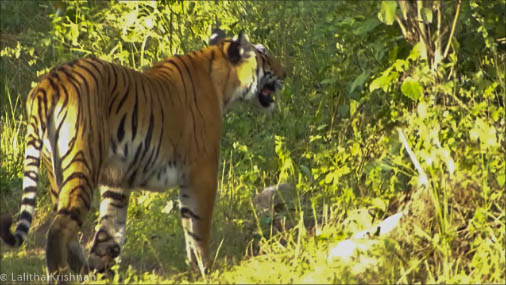
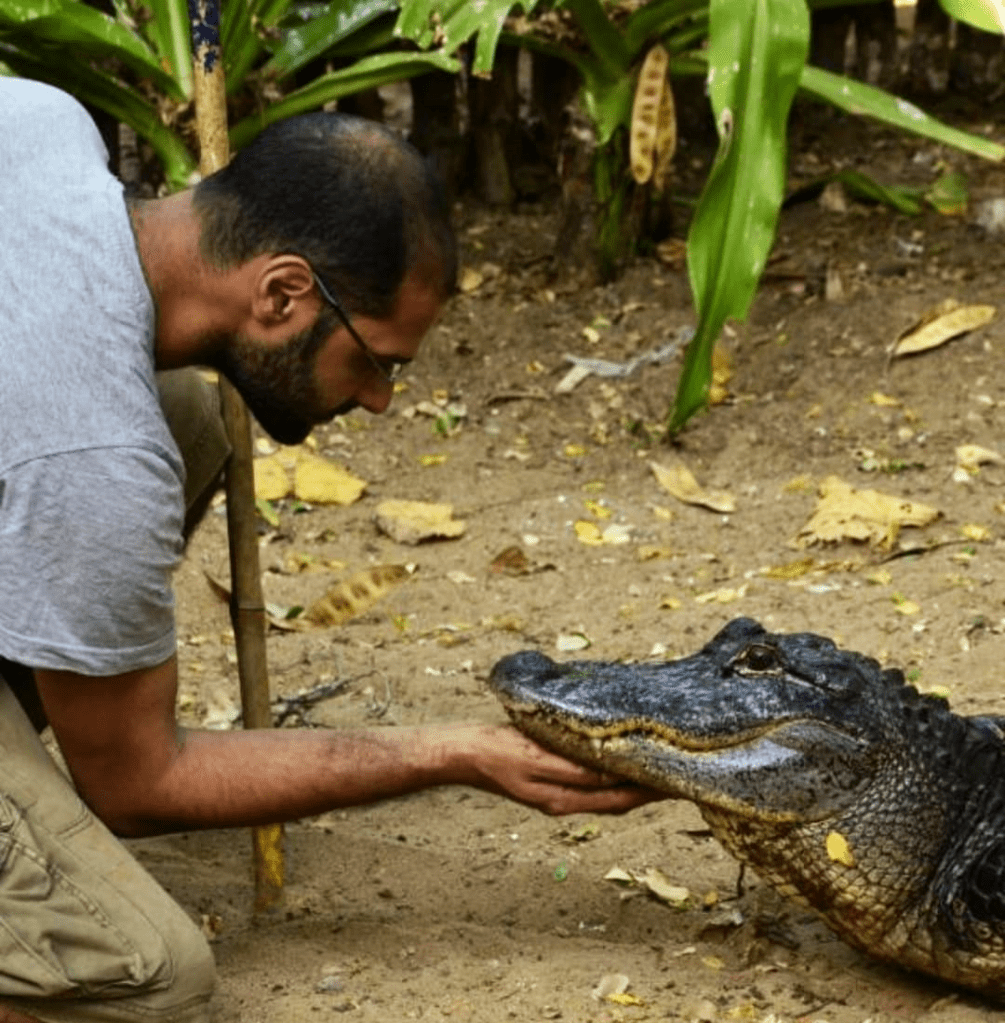
Photo credit https://frontline.thehindu.com/static/content/frontline/flipbook/20200917161213/index.html#p=93

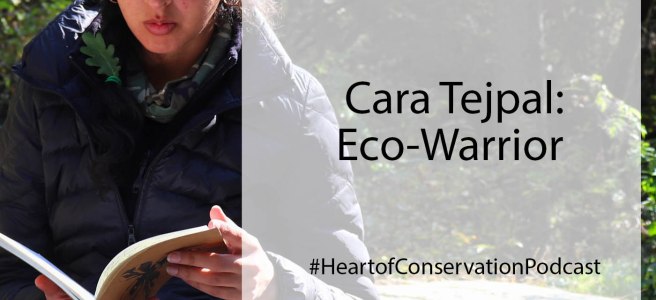
Heart of Conservation Podcast Episode #39 Show notes (Edited)
00:06

Lalitha Krishnan:

Hi, I’m Lalitha Krishnan and you’re listening to episode #39 of Heart of Conservation. I bring you stories from the wild that keep us all connected with our natural world. You can read the transcript for this podcast on my blog, Earthy Matters.

00:21

I’m speaking with Vikhar Ahmed Sayeed. He’s a journalist at Frontline magazine. He has degrees in history from JNU -New Delhi and the University of Oxford. I first met Vikhar at the Wildlife Institute of India in 2016, where we attended a course for nature enthusiasts.

00:40

Vikhar considers himself more of a political and social writer, though he has written some wonderful nature conservation articles that are well researched and fascinating to read. We are going to discuss some of those today as great examples of ethical writing for conservation. In a time where short snippets of fake or sensational news draws more attention, I consider Vikhar a rare breed of journalist. I admire his no-nonsense style in the long form, written with the eloquence of the seasoned journalist that he is.

01:15

Vikhar, welcome to Heart of Conservation. I’m so grateful that you made the time between your travel and work to speak with me.

1:20:

Vikhar Ahmed Sayeed: Thank you so much, Lalitha, for being so patient with me while I’ve been travelling these past few weeks. And as I mentioned earlier, most of my work has been on the politics of Karnataka and social issues, rural affairs. I have a very diversified portfolio of work. Since we met in 2016, I’ve tried to sort of also work on issues of conservation through my journalism.

01:53

It’s not easy to report on issues of wildlife, human-animal conflict, but because of the long form that Frontline allows me to use and because it gives me time, I’ve sort of written a few good articles so I’m happy to chat with with you about these.

2:15

Lalitha Krishnan: Thank you so much it’s been worth the wait. You have as you said published a great many stories and one of them is about Kenneth Douglas Stewart Anderson the Scotsman who was born in India. He is considered a pioneer of wildlife conservation in southern India. But unlike Corbett, little is known about Kenneth Anderson. Would you like to tell us something about him?

02:43

Vikhar Ahmed Sayeed: Lalitha, growing up in Bangalore, and you know, when I was a child, I used to read a lot. And at some point, I came across the works of Jim Corbett. And later, I think, if I recall now, I was in college when I first encountered the works of Kenneth Anderson, which resonated far more with me because I learnt that he lived in Bangalore and he would often foray into the forests around Bangalore. And initially my fascination was like, “Oh my God, wow, these were all forests?” I visit these places now and they are part of the sprawl of urban Bangalore.

03:27

And even further on, what were forests once upon a time are now towns. So that was my fascination. And then he was such an eloquent writer and the adventure. When I was young, I primarily used to engage with the works of Kenneth Anderson because of the adventurous element in them. I found that fascinating how he would go and track these man-eating large carnivores such as tigers and leopards and bears and elephants as well at times and he’d write so mellifluously about these encounters. So that was the thrill and then later when I became a journalist, I used to meet a wide variety of people.

04:18

And then a seed of doubt was sowed in my mind when someone casually mentioned, you know, I mean, “You love Kenneth Anderson, but have you ever considered the possibility that he was fibbing, that he was perhaps exaggerating?” So that casual comment made me think more deeply about his work.

04:44

And I wrote a rather detailed article. The primary motivation was to examine the claim of whether he had actually shot all these tigers and other animals that he wrote about or whether he was exaggerating. So through the course of writing the article, I learned a little bit about him.

05:05

So I learnt that he was born somewhere near Hyderabad in 1910 and then shifted along with his family at some point to Bangalore where he lived in the heart of Bangalore. Right now, the place where he lived would be unrecognizable but it was very close to Cubbon Park and he died in 1974.

05:31

You described him as a Scotsman but to add a bit I think he described himself–he was aware that he was an Anglo Indian because his family had been resident in India for several generations. That is one thing that is important perhaps. Also, among the many books that he wrote, he wrote a work of fiction set around the Anglo-Indian community in India. This had this had nothing to do with animals. So this just as a tidbit And then he worked in Hindustan Aeronautics Limited.

06:16

And often he had a wide network of informants in the villages around Bangalore and what is now Tamil Nadu also. At some point he would hear stories or reports of marauding wild animals, he would set off in his trusted Studebaker… I don’t know how you pronounce the name of that car, but he mentions it often in his writings. And then he would go and he’d write sort of very detailed reports of tracking these animals and then shooting them. And, you may also be interested to know what was the result of my sort of delayed investigation, right?

07:10

I set out to examine the claim whether he actually shot these animals as he claimed. The result of my investigation was ambiguous. I cannot certainly say that he did kill these tigers or whether he didn’t kill these tigers.

07:30

But while writing the article and meeting several people who knew him and meeting younger people who were motivated to become conservationists because of Kenneth Anderson’s work, this question became irrelevant. That was the most interesting development through the course of working on this article.

07:56

He has inspired several, I don’t know, maybe thousands of people to be aware of the importance of wildlife. Even someone like Ullas Karanth who is one of the pioneering tiger conservationists in India, also writes very sort of evocatively about his early forays into the forest with Kenneth Anderson. If you look at his book, A View from the Machan, Karanth has written about these encounters and certainly these early encounters inspired him. This is just one person, but apart from that, there must be hundreds, if not thousands more who have taken an interest in wildlife and conservation because of their reading of the Shikar literature of Kenneth Anderson.

8:52

Lalitha Krishnan: So interesting. I didn’t know any of that. Great. So, more recently you wrote a very disturbing article about how snake bites kill more Indians than all other wildlife combined. That was a real shocker. I quote your article now, “The World Health Organization has classified snake bites as a neglected tropical disease.” It’s a complicated subject to write about. So tell us about that.

9:23

Vikhar Ahmed Sayeed: It’s certainly complicated Lalitha, I agree with your assessment and it’s complicated for a few reasons, primarily because it’s so overwhelming, right? When you actually start looking at the statistical data, which is clearly under reported, it is scary, shocking, humongous and extremely complex.

09:54

So just to start off with some numbers. The numbers come from something called the Million Death Study (MDS), which looked at unnatural mortality among Indians. What emerged from this vast work is that more than 50,000 people were dying of snakebites in India annually, which is more than all other instances of man and animal conflict combined in the country. So it just seems it’s also complicated because it is so pervasive, right? It’s not restricted to a particular geographical region. It’s not restricted to one species of snake. And it primarily affects a certain poorer class of the country, primarily agriculturists who are out working in the field. So it just doesn’t get the media attention necessary also. For instance, if a marauding tiger accidentally encounters a human and kills that person, there’s so much attention paid to that one incident. Whereas the snakebites, over the past few months, I have sort of started following reportage of snakebite deaths. And often these are not reported. And when they are reported, they are consigned to some corner in the regional media.

11:44

And they rarely make it to the English newspapers, forget sort of the television channels because they are so widespread and common and also there is a feeling that simply because of the nature of the conflict right?  A snake slithers through a paddy field; a farmer bends down either harvesting or so planting crops the snake bites the victim somewhere below the knee, on the ankle, on the talus, on the heel and slithers away. So what can you do about this? So it’s incredibly complex and it’s a bureaucratic tangle also because unlike instances of conflict with other animals where it’s usually the forest department of the respective state that becomes the mediating state authority when it comes to snake bites–even though the vast number of poisonous snakes are considered… come under the ambit of wildlife protection act these are often…I mean it’s a more wider problem. So the department of agriculture is involved, the revenue department is involved, the health department is involved, the education department is involved. So there is, I mean, it’s a bureaucratic minefield to negotiate with. So, but through the course of working on this article, I did meet some very passionate, diligent, hardworking herpetologists who are coming up with simple solutions.

13:35

For instance, in the rural hinterland of Mysuru, Gerry Martin/Gerard Martin, the well-known herpetologist has been involved in a lot of local outreach, where he, through the aegis organization is distributing gumboots to farmers and advising them not to go out late at night. I mean it’s funny, a lot of these bites happen because of erratic power supply to agricultural fields. Farmers have to pump water and electricity is provided only at night. So late at night, in the middle of the night in fact, the farmers have to go to their fields and turn on their pumps. So a lot of bites take place at this time.

So Gerry Martin by simply encouraging them to wear closed footwear, by wearing gum boots when they go out at night… when they can’t see what’s slithering around them… I don’t know the efficacy of this yet, because it’s still something that he’s put in place recently.

14:49

But there are simple solutions, but it is extremely complicated. And there are other problems as well. The state of antivenom, for instance, is a huge concern. And then also the tendency of villagers to go to a local quack, a local healer who has attained some kind of notoriety for treating victims of snakebites because of which they delay going to a hospital. All of this, you know, means that it is extremely complicated to sort of, find easy solutions to this conflict. Any issue of man-animal conflict, as I’ve reported over the past few years, is extremely, extremely complex to resolve. But when it comes to man-snake conflict, it is the problems are of another degree.

15:50

Lalitha Krishnan: Yes, it’s so complex I don’t even know what to say. As far as your conservation pieces go, you also have a knack for researching and writing about lesser-known people and topics. You wrote about a famous taxidermist also known as Van Ingen of Mysore, I don’t know if I’m pronouncing his name right either, who stuffed shikar trophies for international nobility and maharajas of India. He was considered quite an artist in “making a lion look more terrifying than it looked”. So please share some interesting facts you came upon while writing this story.

16:29

Vikhar Ahmed Sayeed: Thank you Lalitha. This was an article that I enjoyed writing tremendously, you know, because I’m primarily interested in history so it gave me a chance to indulge in my passion for research and combine it with journalism. So this this article that you mentioned, I must congratulate you for finding this and reading this because it is written more than 10 years ago. It still remains relevant. Anyone can google for it, read it. It reads very well even now. What sparked my curiosity, if you can indulge me for a bit, is that I read a very, very sort of brief report in the newspaper, like a one paragraph report around 10 years ago if I remember correctly. And, all it said was, (Edwin) Joubert Van Ingen, leading taxidermist of Mysore passes away. That’s all, right? And the one paragraph news item stated that Van Ingen was the last member of the famous family of the Van Ingen taxidermist. And he had passed away at the ripe old age of 101. So for all these reasons I was very very intrigued.

18:01

And at just at that time I think I had read R.K Narayan’s book where the main character is a taxidermist. It’s called The Maneater of Malgudi. So for all these reasons I was very sort of intrigued and I went off to Mysore and I was so fascinated to learn more about this character. So he was the last surviving member of the Van Ingen family. So they were actually Dutch Boers who had moved to South India and Mysore at some point during the reign of the Wadiars of Mysore when Mysore was a princely state. So, Joubert Van Ingen’s father started this taxidermy firm sometime in the 1920s and he had four sons, all of whom carried on the legacy after their father’s death. and they had a vast factory.
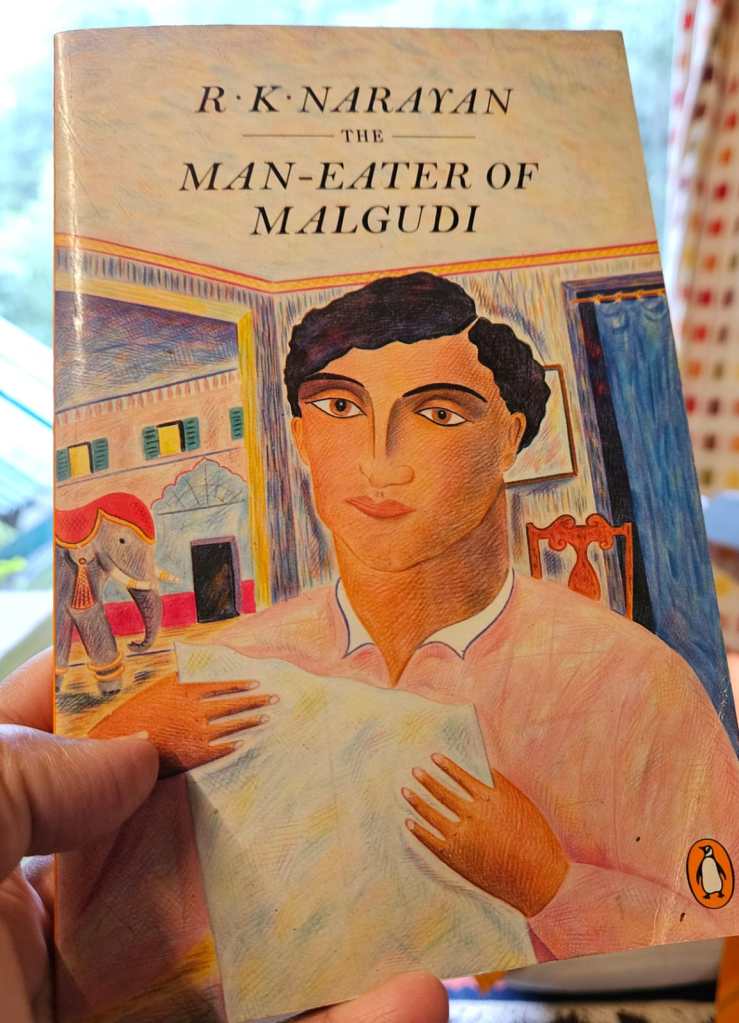
Photo by Lalitha Krishnan

19:10

So this was the time that you should be aware that hunting was wide bred, was considered a sort of, there are many sort of studies on hunting during the British colonial period. But hunting was in a way considered a rite of passage for both colonial officers and the Indian nobility. So, it was perhaps a valued hobby, a pastime, a networking arena if I could sort of use that very modern phrase. And everyone was hunting and they wanted to preserve this memento that they acquired for posterity.

20:01

So taxidermist became very important and it became a very skilled profession. During my research I met a number of people  including employees who worked for the Van Ingen factory and other old residents of Mysore who were aware of the Van Ingens, who had spent time with them, who sort of spoke about Joubert Van Ingen’s great knowledge of the forest and his skill as a taxidermist. it is a little overwhelming for me when I recount this because as I mentioned earlier.

20:46

I mean they had a vast factory and they were the favoured taxidermist across South Asia and thousands of animals, skins primarily, would be sent to them from all over the country, right from Nepal from sort of the furthest boundaries of British India and then these thousands of skins would be processed for example if they are processing tigers they would make full mounts meaning the entire body of the tiger or like only the head or even rug right? And, we now have a population of between 3000 and 4000 tigers in India.

26 Dec 1992, Wankaner, India — Dining Room with Mounted Tiger Heads — Image by © Lindsay Hebberd/CORBIS (Laymens68, CC BY 3.0 https://creativecommons.org/licenses/by/3.0, via Wikimedia

21:33

You will be fascinated to learn Lalitha that just sort of say in a five year period, according to the data that I discovered in the 1930s, when the factory was working at its full efficiency  perhaps, more than 3000 tigers were just processed through the Van Ingen factory in five years.

21:59

This was sort of like a line. So they had sort of prefabricated models, mannequins which they would use. It was an elaborate art also.  But, the Van Ingens could err and refine their models simply because they had thousands and cumulatively perhaps lakhs of animal skins being processed in their factory. So, I mean, when we look back and just say a hundred years ago, this is not even a hundred years ago, say 70-80 years ago, large carnivores were so widespread. Even then, their numbers were depleting because there was no awareness of the importance of conservation. But it was just so easy to foray into the forest, to head to the forest, kill a tiger, shoot a tiger and then transfer the skin, transport the skin.

23:11

And Van Ingens had produced several manuals which were available, I am presuming, all over the country at that time, which described in detail what a hunter was supposed to do as soon as he shot an animal, how the skin should be preserved and how it should be transported safely so that it arrives in immaculate condition and then can be transformed into this great work of art that reflects a living animal itself. So, tigers were just one animal, there were leopards, there were elephants—not full elephants–elephant heads.

23:55

Even now, if you go to the Mysore Palace, right at the entrance there are two elephant heads which are mounted at the entrance. These also have been processed by Van Ingen. In the Mysore Palace there is a restricted enclosure. Enclosure may not be the right word. A room– a state room, a huge large room where you need special permission to go. And because the Mysore Maharajas were patrons of the Van Ingens, several of their trophies are available in this room, including a mount of the pet of one of the Mysore Maharajas, a mastiff known as Brumell. So Van Ingen, Joubert Van Ingen, you know, it is unfortunate that I was a journalist even before his passing, but I was unaware of the stature of this person. And I became aware of him only after his death. And all this, I found out after his death, you know, the only great regret I have is that I never met this man when he was alive.

25:06

Lalitha Krishnan: Wow, now I understand why you were overwhelmed. I mean, a factory processing tigers and elephants. It’s hard to imagine, you know? Vikhar, both your articles, Mumbo Jumbo Responses and Tiger on the Trail, cover again a very serious matter of human animal conflict. I like that you covered both sides of the story, the people’s view and the challenges that wild animals have to face living on the edge of human habitat. Karnataka has the highest count of elephants in India according to the 2017 census and probably, correct me if I’m wrong, human deaths by elephants.
25:47

According to the National Tiger Conservation Authority’s “Status of Tiger Report” (2022), there are 3000+ tigers in the Nilgiri Biosphere.  Despite ‘Early Warning Systems’, trenches, tracking, fencing, relocation, building of corridors, radio collaring etc, this again, is such a complex issue and must have been a very difficult one to cover. What were the challenges you discovered writing about these conflicts?

26;17

Vikhar Ahmed Sayeed: Oh, thank you for that question, Lalitha. These pertain to two of my detailed articles. The first one, Mambo Jumbo Responses is on the human elephant conflict in the hills of Hassan, which has been a pervasive problem over the past few decades. And the second one is titled Tiger on the Trail, which pertains to tiger-human conflict on the fringes of two very well-known protected areas, the Nagarhole Wildlife Sanctuary and the Bandipur Tiger Sanctuary. So both of these are different. I mean, there was a point in my career, in my life when man-animal conflict issues were seen as humans encroaching into forests and because of which all this conflict takes place.

27:14 That was the sense that I had, which as I later learned, I was quite badly informed. So for instance, in the hills of Hassan, there is a resident herd, I mean it is not a single herd. There are several smaller herds and even individual male elephants who form their own bands or who are sort of rambling alone. So there are no forests, there is no protected area or even if they are there, these patches are so small and scanty that they cannot sustain this herd. So basically you have this large group of elephants that are just sort of walking around through the extensive coffee plantations in that region. So that is why you have these instances of conflict and over the past two decades. Some 70 people have been killed and various solutions have been devised but none have worked so far.

28:28

The only solution seems to be that humans and elephants need to learn to coexist and moving to the tiger issue… See, tigers in Nagarole and Bandipur… Bandipur and Nagarole are touted as sort of marquee examples of conservation success, especially of Project Tiger which began in 1970s, somewhere in the 1970s.

28:57

And when Project Tiger commenced, there were 12 tigers in Bandipur. There are more than 200 tigers and as you know, tigers are very territorial. So it is, I mean it is ironic, the conflict is a result of the success of conservation.

29:21

So these areas have been protected very well. So tigers are territorial beasts, they are also very fecund. So they have reproduced, they have taken advantage, there is a robust deer population…cheetal. So the population has grown and considering that these animals are territorial, they do end up on the fringes of these forests and even are often spotted outside the protected areas as well. So it is a little more complicated. Right?  Again, through the course of writing this article where I met a variety of stakeholders there is no easy solution to issues of man-animal conflict. That’s what I realize and the intervention of non-state actors has been crucial in mitigating instances of human-animal conflict.

30:18

Lalitha Krishnan:  Thank you for that. You gave a good explanation or understanding of what the real issues are. So, Vikhar, as a fellow of the Asian Journalism Fellowship, you were lucky to listen to Jane Goodall in Singapore. Your wonderful and erudite article, The Chimpanzee Lady, I presume is inspired by this encounter. So what was the most inspiring thing (I am sure there are a zillion) about her that influenced this article?

30:51

Vikhar Ahmed Sayeed: Lalitha, it’s kind of a very sort of basic question. It’s not a question at all. Because well, Jane Goodall… but we need to go back to the time that we spent together at Wildlife Institute of India (WII ) and one of the classes there which was a discussion on wildlife literature.

31:22

So I carefully sort of made a list of all the books that were recommended and the first book that I read once I came back from Dehradun back to Bangalore was Jane Goodall’s In the Shadow of Man. And I felt so deeply moved by that book and the honesty of Jane Goodall and her sincere effort at conducting what is now clearly seen as pioneering research on the ethology, on the behavior of chimpanzees that I sort of told myself that if ever an opportunity presented where I could listen to this great lady directly,I’ll sort of move heaven and earth to get there. Coincidentally, after that time after reading her book I was in Singapore and she was speaking at a venue in Singapore. And in Singapore, unlike a lot of events in India where everything is free and people can just walk in where in fact there’s a paucity of attendees sometimes… Singapore, it was a ticketed event. Someone, I think if I recall correctly, my fellowship administrators procured a ticket for me after they became aware of my eagerness to listen to Jane Goodall. So I went. I listened to her. Jane Goodall’s work is fascinating on many many levels. There are many other greater people who can comment more authoritatively on the extensive corpus of her work. But for me, what struck me was, I haven’t gone through advanced postgraduate academic studies. It’s very difficult to challenge the established discourse that has been set in academia. It can be in any discipline.

33:41

So Jane Goodall goes to Gombe in Tanzania and she doesn’t have any background, she doesn’t have a degree even in wildlife sciences or anthropology or anything and very intuitively starts studying the chimpanzees of Gombe and builds such profound relationships with generations of chimpanzees. And she writes very beautifully about this connection that she built. So I heard her and also a very interesting point that she made was at some point, Goodall does enrol for a PhD and even completes it at Cambridge University. But when she realises that her research has greater significance, she very brutally, very confidently disconnects with academia, which I think is a very bold sort of move to make because how do we legitimize knowledge, right?

34:57

How do we legitimize that a certain mould of research is the correct way? We strive for recognition by a peer community and she breaks away from this and moves full-time into conservation. She says, no, I don’t want to be a wildlife scientist.

35:20

She takes this decision sometime in the 1980s. She’s done so much for conservation all over the world. What I recall very sort of clearly, is how optimistic she is. You and me are perhaps more pessimistic but even at her advanced age she remains very optimistic that humans and animals in the wild can coexist.

35:51

Lalitha Krishnan:  What conservation needs!  Hope. Optimism. I think she’s 90 now and still inspiring so many generations. She’s amazing. I had to ask you that question. I’m sorry. Besides, I am so jealous… Thanks for that, Vikhar. And, this is for budding conservationists or journalists, writers and documenters. What guidelines would you suggest for ethical representation?

36:22

Vikhar Ahmed Sayeed: That’s a tough question, Lalitha.

Lalitha Krishnan: Well, they can just read your articles.

36:29

Vikhar Ahmed Sayeed: Yes, yes, I certainly recommend that. Along with that, see, I mean, I came to writing about issues of wildlife and conservation in a convoluted way. At a midpoint in my career, I’d like to think… I’ve been a journalist for 16 years now. So I started paying attention to issues of man-animal conflict /conservation only over the past few years. So before that, my journalistic sense was finally honed. So using that same methodology and tools, I sort of applied it to understanding issues of conservation.

37:21

And very practically, what I did is, first, I befriended wildlife scientists as well as conservationists. And there is a fine difference between these two categories of people.  I befriended these people who are working towards on issues of conservation and then started sort of hanging out with them and getting a sense of how they engaged and interpreted issues of wildlife because wildlife science is a very advanced discipline. So obviously I couldn’t master it, right? But I tried to familiarize myself with how they think, how they thought. And using this sort of connection, I gained the confidence of writing on these issues. So these friends have been of great help.

38:32

When it comes to issues of conflict, again, I sort of work very clearly in a very straightforward manner as a journalist. Some people who identify themselves only as environmental writers or wildlife writers make the mistake of approaching the story with a bias. The bias is towards animals and even me, I mean, the whole purpose of my work is to ensure that how conservation can be improved. But I sort of don’t go to the field with this bias. I go with a very open mind and issues of conflict are extremely complex, right? They cannot be seen in terms of a black and white understanding.

39:19

They are very grey, they are very complicated and I enjoy that process of unravelling the intricate complexities of these issues. So, I savour that challenge. So, my advice to people who are writing about the wildlife and issues of conflict especially, is to be aware that there are multiple stakeholders and it’s very tricky to sort of unravel the complexities of conflict. But the advantage with these stories is first that wildlife. Scientists and conservationists are very studious people, right? So you have an incredible and rich source from which you can draw.

40:07

These people have been thinking so they would have generated data, they would have a strong perspective, they would have developed a strong point of view. So that is one advantage compared to the reportage that I do on other issues. I report in Karnataka and the bureaucrats of the forest department—I don’t know, I can’t speak for the forest department bureaucrats in other states—but at least in Karnataka are accessible, which means that to understand the state point of view, the government point of view, you have an avenue for a journalist or for a writer. Because, like I’ve mentioned that I report on a wide variety of issues, right? Agriculture, caste issues… communalism. Often my struggle is to gain access to an officer or a bureaucrat of some authority who can comment articulately and clearly on an issue, which half the time is a big struggle.

41:19

Whereas when it comes to issues of wildlife, there is some struggle. People are not sitting as soon as you call them, they are just waiting, rolling out the red carpet for you. But at least they are willing to talk, which is important. So those are some learnings. And I don’t know if it works as advice, but certainly those are learning and which is why I’m excited to write more about issues of wildlife and conflict from Karnataka.

41:48

Lalitha Krishnan:  I so look forward to that. Thank you so much.

41:51

Vikhar Ahmed Sayeed: Thank you. You’re welcome Lalitha. I mean, I’m so happy that we had this conversation because I know that, you keenly read my articles. So it’s always a pleasure engaging with someone who takes your work seriously, who pays close attention to it. I should thank you for taking the time to read, go through some of my own articles, which I had forgotten.

42:20

Lalitha Krishnan: Absolutely my pleasure. I learnt so much. From listening to you even more.

The end.

Listen to the podcast here.
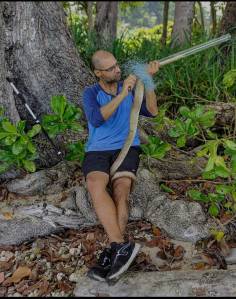
Birdsong by hillside resident, the collared owlet. All photos courtesy as mentioned in caption /photo. Guest photo credit: Vikhar Ahmed Sayeed. Podcast artwork by Lalitha Krishnan
Disclaimer:Views, thoughts, and opinions
expressed in the podcast and show notes belong solely to the
guest/guests featured in the episode, and not necessarily to the host of
this podcast/blog or the guest’s employer, organization, committee or
other group or individual.

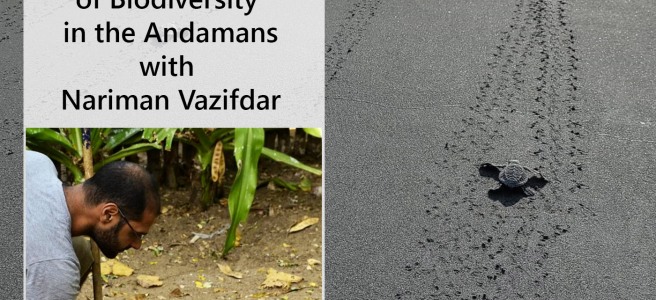
The Dynamics of Biodiversity in the Andaman Islands with Herpetologist, Researcher, Author, Nariman Vazifdar.

Heart of Conservation Episode #35 Show Notes (Edited)

Host:Lalitha Krishnan:

00:03: Hi there, I’m Lalitha Krishnan, your host on episode #35 of Heart of Conservation. As usual, I bring you stories from the wild that keep us all connected with our natural world. I’m back after a very long spell during which I visited the Andaman and Nicobar Islands. I still can’t get over those amazing beaches, the old forest and the incredible species that I spotted there. All new to me, but endemic to the island. But the question is, for how long? I can’t think of a better person than naturalist, herpetologist on ground in the Andamans, Nariman Vazifdar, to answer that and more.

You can read his writings on the web, including on ResearchGate, and follow his Insta handle @reptilian_666 to see what he’s up to. And do look out for the transcript and links for this podcast coming soon on my blog, Earthy Matters. Welcome to Heart of Conservation, Nariman. Thank you so much for speaking to me about this. And the ecology of the islands.Ever since you guided us through that beautiful Andaman bulletwood forest by the beach, my curiosity has only grown. ] So since your first love is reptiles, could you enlighten us about the diversity of reptiles found on the island? And first, do tell us a little bit about yourself and about the diversity of endemic species on the island.

Guest: Nariman Vazifdar:

Hi, Lalitha. Thanks for having me on Heart of Conservation podcast.

01:36: Yes, basically reptiles are what, let’s not put it as reptiles, but wildlife. I was really attached to wildlife at an early age. When in school, I joined this program called the Duke of Edinburgh Award Scheme Program, which basically took us outdoors, a lot of outdoor activities, kayaking, camping, and lots of social service fun. And of course, it was just being out there, especially because I was a kid from South Bombay. There is not much greenery where I live.

02:13: As soon as I stepped out of my comfort zone, the beauty of the sea, the forest around Bombay, kind of Lonavala side, and it took over my life, basically. And I saw my first snake, I remember very clearly over there, just whilst we were camping around. And I got inquisitive about this, and it just kind of took over my life slowly and slowly.

02:37: But more interestingly, when my mom comes from a place called Baroda in Gujarat, and I remember as a four-year-old child, she had taken us to this zoo over there, and she knew some of these zoos, and they had got out some snake, I think it was a python, for the kids to touch for me and my younger cousins. And I remember all of us as children were very scared of this. But my mom, for some reason, pushed me to touch the snake, and I touched the snake, and now I think she’s repenting this decision of hers.

03:10: But I basically took over. That’s all I’ve done since 2005. I have been involved in wildlife conservation research, in different parts of India, from Chennai, Bangalore, the Chambal Valley, and a couple of tiger reserves. And now, of course, finally, I live and work in Havelock Island, in the Andaman Islands.

03:31: But what draws me to this place more is, like you said, all the animals are more, because they are predominantly reptiles and less…the mammal diversity of the Andaman Islands is very poor. So, it is predominantly reptiles and more endemic species of reptiles is what we get here.
03:51: There are over, say, 23 species of snakes, of which nine are endemic. But because it’s an island–and island ecology is very different–we have terrestrial snakes, snakes that live on the land. We have mangrove snakes. We have sea snakes. So, like that, there are many, many various species of snakes on the island.

Lalitha Krishnan:

04:14: Wow. I have not even heard of mangrove snakes. Sorry for interrupting.

Nariman Vazifdar:

Yeah. No, no, no. But like, there are… you see them in high abundance. It’s just that people are not getting out there to look for them.So we have 308 islands in the Andaman Islands, and a lot of the islands are undiscovered. We don’t know what is on those islands.

04:38: The north-easternmost island of the Andaman Islands is called Narcondam Island. It is a dormant volcano, or let’s put an inactive volcano. And recently, a snake was found on that island. It’s called the Narcondam cat snake. Not found anywhere else on any other island, or not been discovered yet. So, it’s very interesting. It’s very interesting, you know, how the islands, individual islands have individual kind of small ecosystems.

Lalitha Krishnan:

05:06: That’s so incredible. So, you know, speaking of fauna in general, it’s a well-known fact that introduced species are a threat to endemic species on islands everywhere in the world. So, I just wanted to know, were there any species introduced to Andaman and Nicobar Islands? And what could be, is or could be the consequence of this?

Nariman Vazidar:

05:32: So, yes, of course, invasive species or introduced species make a massive difference to any ecological environment. Not necessarily islands, but islands face it more drastically.

Let’s say the invasive animals that are on the island currently are also due to a lot of the animals put by, say, the British when they took over the islands and they built the penal colony. So, they were only tribes living on these islands initially, the four indigenous tribes, and the British got, say, dogs, which are now everywhere on the island, to give as a gift to the Jarawas, who were one of the tribal communities, to hunt the endemic wild boar off the islands.

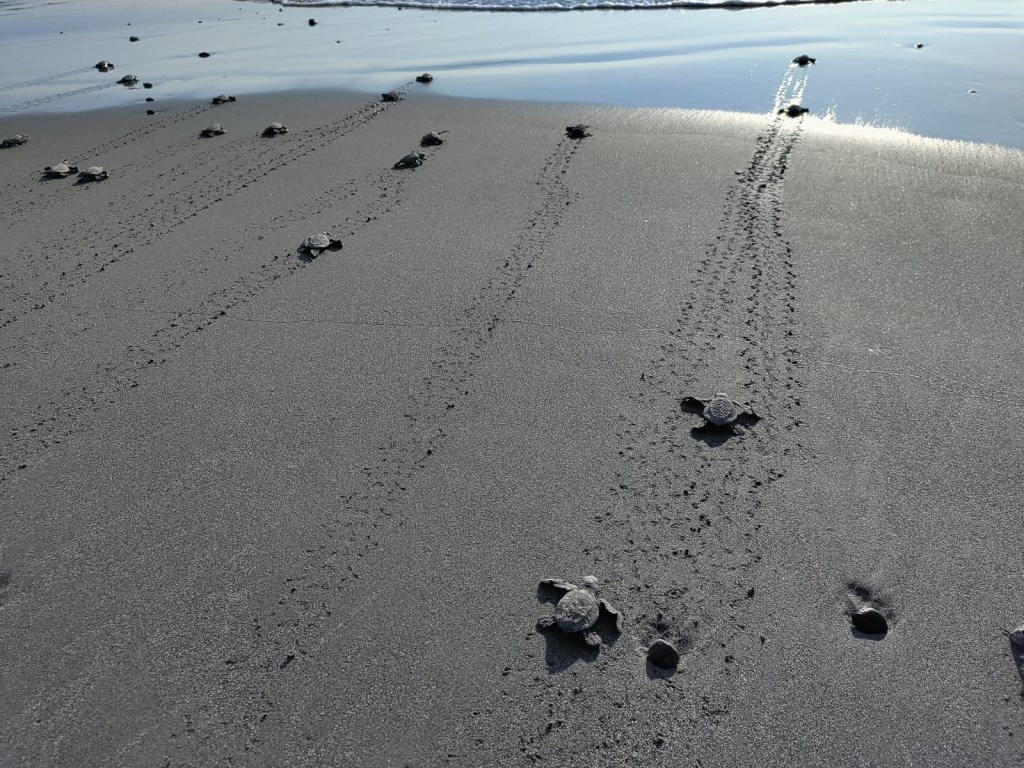
06:19: The dogs have now taken over the island, sadly. Don’t get me wrong. I love dogs. I’ve adopted one of the dogs from the beach. He lives with me. But these dogs, let’s say, hunt everything, right? Including the sea turtles. When the sea turtles come up to nest, they not only eat the sea turtle eggs, but sometimes I’ve seen them sadly even killing the female sea turtles when she’s coming to lay her eggs. The baby sea turtles that hatch, the snakes, the lizards. But see, it’s not the dog’s fault, right? We sadly do not have a proper neutering project on the islands. We still have a long way to go on the islands.

06:59: It is a serious problem, right? In a small place like Havelock there possibly could be 700 dogs. That is a lot of dogs for a tiny island. Of course, ecological damage happens.

Yes, the dogs are fed by the tourists, by the locals, but still, it is still a large amount of dogs on a tiny, small little island. But more than that, let’s say the other animals that people think of, but at least these are street dogs. People think all the animals in the forest also belong there. No!

07:29: Also, the British were very fond of game hunting, shikaar, so they brought three species of deer, which are barking deer, hog, deer, spotted deer. Interestingly, they also introduced three leopards to the islands in the hopes that leopards will reproduce and will do shikaar on the islands. But interestingly, the leopards did not survive in the mangrove forest, maybe they got eaten by the tribes. We do not know

…the British were very fond of game hunting, shikaar, so they brought three species of deer, which are barking deer, hog, deer, spotted deer. Interestingly, they also introduced three leopards to the islands in the hopes that leopards will reproduce and will do shikaar on the islands. But interestingly, the leopards did not survive in the mangrove forest, maybe they got eaten by the tribes. We do not know. Out of the three species of deer bark, the spotted deer is the only deer that survived  and is flourishing throughout the islands. Then again, on the island, there is no large mammal, say, no tiger, no bear. There are no monkeys. There are no squirrels on the island. Well, because of this, the deer roam freely, literally eat the undergrowth of the islands and which has more insects, more lizards…which depend on this undergrowth that gets eaten away, nothing survives then.

-Nariman Vazifdar on Heart of Conservation podcast

07:59: Out of the three species of deer bark, the spotted deer is the only deer that survived  and is flourishing throughout the islands. Then again, on the island, there is no large mammal, say, no tiger, no bear. There are no monkeys. There are no squirrels on the island. Well, because of this, the deer roam freely, literally eat the undergrowth of the islands and which has more insects, more lizards…which depend on this undergrowth that gets eaten away, nothing survives then.

08:36: The deer, the spotted deer, one species of deer is basically or literally eating the islands alive. See, there is no food left on the islands. This happens. Smaller island get (lost in translation) completely. The deer does two interesting things: 1: they wade/wait at the shore line. Wait for the tide to come in and hope that some (lost in translation)       will come.

09:02: If that doesn’t suffice, they have learnt…… to swim in the sea. Imagine. Deer. They’re swimming in the sea and going from one island to the other. It is incredible. We’ve seen this while we go diving sometimes.

09:15:A lot of them must be drowning. As conservationists, sometimes you put a heavy heart …….. and say, “Yes, it’s okay if this specific invasive animal doesn’t survive for the better good of the environment.” A lot of people will be against what I’m saying, but I stand my ground to say yes. Sometimes for the betterment of the entire ecosystem, it is okay if these animals are maybe eradicated, send back to mainland, whatever, because once islands lose their endemic fauna, it is not coming back. Right?

09:53: We have lots of (lost in translation). We have a bullfrog. You think it’s a frog, it doesn’t do much. But it grows big. There are scientific papers of (frogs) eating chickens. (lost in translation) You know, I have (lost in translation) of a bullfrog, trying to catch and eat an endemic bronzeback of the islands.

[10:10 – 10:23] So it is only a frog which does a lot of damage.

Lalitha Krishnan:

 Sorry. You saying the frog eating the chicken sounds crazy.

Nariman Vazifdar:

My friends have documented it. There is a research paper on this. Of how invasive—you know–what damage these things do. There are many of them that we do not know, right? Like, we do not really know what cats, and rats, do to the ecosystem.

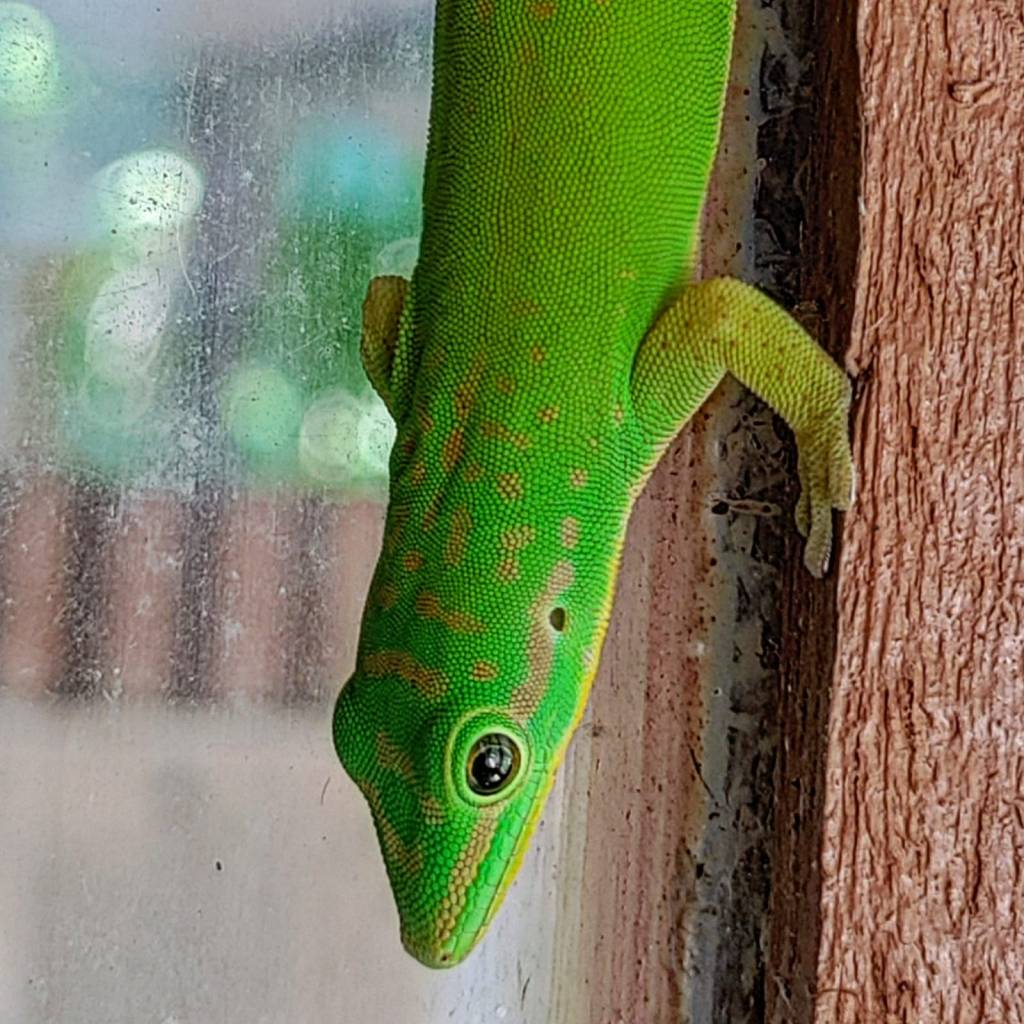
10:39: I have, my friends who have cats and the cats, when they come to my home, they’re bringing emerald geckos, skinks, lizards, you know, to the house all the time.

Lalitha Krishnan:

See, we don’t see these things.

Nariman Vazifdar:

10:50: Yes, of course.  We live here, right? Long. We don’t go home much. It’s just home now. You know?  So, it’s massive, I am seeing the difference. Forget just invasive species.

11:01: The more construction that is happening over the years has also drastically driven the endemic flora fauna down.

Lalitha Krishnan: It’s so strange. Like you think, uh, you know, a deer is harmless or a cat, okay, only kills rats. We do not think what else it can do.

Nariman Vazidar:

 A lot of countries—for that matter–Australia has a rule. They can shoot the feral cats or kill the feral cats. Right? If we start this in India (lost in translation) We are not open to this right?

Photo by Nariman Vazifdar

11:30: We need to get rid of the cats and the dogs; have this conversation with people who are not thinking logically, you know, it is just a battle, a nonstop battle that people like me have with them. So we just bring this up before it’s never-ending. The topic never ends, right? It’s always nonstop. “No, this is that, but…”

From an ecological, scientific point of view, you cannot… everything can’t be driven by your heart. But, sadly, I agree. You know, but unfortunately for the betterment of the better of the other animals that belong to this place, sadly, a lot of these animals have to be out of here.

Lalitha Krishnan:

But thanks for opening our eyes. Maybe people who make the policies you know, are listening and somewhere as it will change somebody’s mind and they will do the right thing.

Nariman Vazifdar:

12:20: I mean, you can’t force this one on anyone. Including my friends, right? Even the ones that are nature-oriented. Even them. For them, no, this is what it is. Dogs and cats need to be here. You cannot even bring up the deer, you know, or the frogs.  If I say, “Let’s kill the frogs, you know they are invasive” you can see the blood boiling in them when I bring these topics up.

Lalitha Krishnan:

12:41:  Right. Right!  It’s a difficult one. You know, all the locals know you as a snake rescue on the islands. I quote you now, “No rescue is the best rescue”. What do you mean by that?

Nariman Vazifdar:

12:57: So also, yes, I never really did this snake rescue anywhere else that I have lived. Uh, yes. In places where I lived– in smaller places—if there is a snake in someone’s house. Yes. I’ll be more than happy to remove it for them, but I never did this ‘snake rescue’ thing anywhere. It was the same over here. There was a snake in someone’s home.

13:20: I went and helped out, but now Havelock is like a smaller town…a larger village, the entire Havelock. So literally, everyone knows everyone from one snake rescue to the second to the third. Now it has become, everyone knows this, but however, I rather not do this because this is not giving anyone a chance to understand how to live with snakes. Right?

13:46: This place always had King cobras; it always has a lot of snakes. But as we are going, as they say, tourism is a double-edged sword. As tourism is spreading people the locals are selling off their land to hotel chains. Of course, right?  And there are literally maybe over 100 accommodations now or places to stay in Havelock. Plus 40 plus dive shops, over 100 restaurants…  So many of us from the mainland are also living here which basically means more houses are constructed. People are cutting deep into the forest and with that comes … If you’re cutting into the forest there are more snakes entering people’s homes. What tourists are seeing are just the two main roads but there are now a lot of side lanes. I get baffled about where these side lanes are going. I thought I knew Havelock well on all the roads but no.  Every time there is a snake and I go to these places, I am shocked that these houses are deep, deep into the forest. They have cut the forest down. So yes, there is no option for the snakes but to seek refuge in those houses. So now this is what’s happening.

14:58: I basically will not catch a snake or remove a snake unless the snake is in the person’s house. When I say “in the person’s house” I mean literally in their home. If it is in the garden in a bageecha, I will not catch it because that is where the snake is supposed to be. I understand it is a king cobra; it is a highly venomous snake– the world’s longest venomous snake– but there must be some learning curve.  Otherwise, every snake they see it’s like, “Come and catch it.”  

I basically will not catch a snake or remove a snake unless the snake is in the person’s house. When I say “in the person’s house” I mean literally in their home. If it is in the garden in a bageecha, I will not catch it because that is where the snake is supposed to be. I understand it is a king cobra; it is a highly venomous snake– the world’s longest venomous snake– but there must be some learning curve.  Otherwise, every snake they see it’s like, “Come and catch it.”  -Nariman Vazifdar on Heart of Conservation podcast

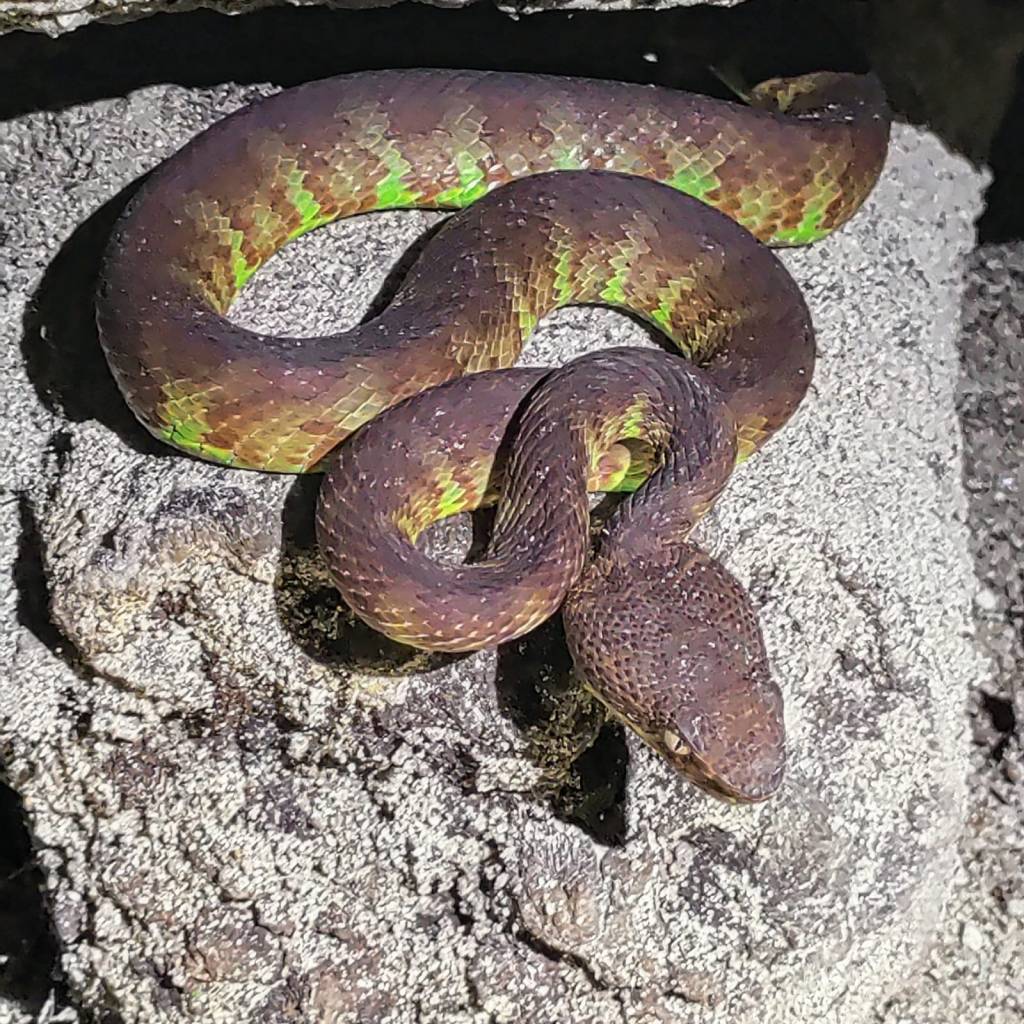
Andaman pit viper
Photo by Narimam Vazifdar

15:26: But I don’t go unless it is in their home and there’s a situation where I have to, I will remove it otherwise I tell them to wait. I will look, keep calm, take it easy and if the snake was in their home, yes, I will go. But otherwise, I don’t.  

15:42: So, what I mean by this is there is no need to catch every snake.  What are we doing with this (snake) right?  Again, snake catching is not a big deal. It is basic if you understand snakes.  I don’t know why people make this big hoo-ha and show about it. You can catch a snake. Then what are we doing with this?  We are relocating them somewhere else. This is not conservation. This is not research. We are literally removing a snake from A and just dumping it at B. And we think that yes, we’ve done a great job; we’ve saved a life but we don’t know if that snake survives well yet where we are literally releasing it.

Then what are we doing with this?  We are relocating them somewhere else. This is not conservation. This is not research. We are literally removing a snake from A and just dumping it at B. And we think that yes, we’ve done a great job; we’ve saved a life but we don’t know if that snake survives well yet where we are literally releasing it.

-Nariman Vazifdar on Heart of Conservation podcast

16:20:  There have been many debates, many scientific papers; research on this; on this trans locating of snakes. They are saying to try to release the snake as close to the rescue site. Now think about it.  Where I live in Havelock; there are king cobras.  Like I said, my problem is not the rescue, it is the release. Sometimes I feel very bad I’m releasing the snake a kilometre and a half away but there is no option, right? Where do I release these snakes with so much construction?

16:50: So that’s why I feel like, if not required, I will not do anything. A lot of times I get calls: “Snake is in the home.”  I say, “Okay give it 10 minutes; let’s see what happens.” And it goes away by itself; there is no need to run, jump, or catch the snake; put pictures or like, free-handle snakes. It is not necessary and this is becoming a massive trend on Instagram now where a lot of the guys, especially in Bombay, Pune, all India, are free-handling. Which basically means picking up venomous snakes with their hands; not using equipment, getting bit on their faces, and kissing cobras. It is not required. There is no need for this bravado, for showboating… Yesterday or the day before, two boys got bitten doing these stunts in Bombay and what happens if they die or lose their fingers. What is the point of this? There is no point in this. Do it if you really must do it. Yes, catch a snake but then go immediately and release it.

17:48: A lot of guys keep the snakes unethically; they keep them in plastic bottles–they don’t release themfor days and they have one thousand excuses for this.

17:58: To catch a snake, it takes two seconds. What I do when I catch a snake is release it immediately and then I go home. I don’t need to take the snake home. I don’t see the value of taking that snake home. Yeah, anyway these are my thoughts and you know and again everyone has different thoughts about this and a lot of people feel that catching a snake is conservation research but it is absolutely zero. I think we are actually hindering it and not really giving it you know, a place to go to actually.

Lalitha Krishnan:

18:30: That’s a lot of new information. It’s interesting but it’s also scary and enlightening. First of all, they have to learn how to catch a snake. I hope they just don’t follow YouTube videos…

Nariman Vazifdar:

18:45: Yeah. that is all easy but you see all these YouTubers picking up cobras, the vipers…  Why would they do this?  Right? You are literally playing Russian roulette. Nothing happens 100 times. Then, the 101st time you could die. You could lose fingers… you know? Why would you want this Cobra?  

19:05 You know, snakes live in sometimes the filthiest of places. Gutters, septic tanks…  and you’re kissing this Krait! No, not on.

Lalitha Krishnan:

19:14: Sad.  So how often do you get called to get snakes out of the house?

Nariman Vazifar.

19:19: Really, luckily, it’s not like a full-time thing.  I don’t want to do that full-time. But mostly, king cobra breeding season is now mid-February to April-May maybe.  So this time these two-three months are more.  Of course, the random one here and there but uh sometimes maybe twice in the day sometimes not a few days… It’s very erratic.

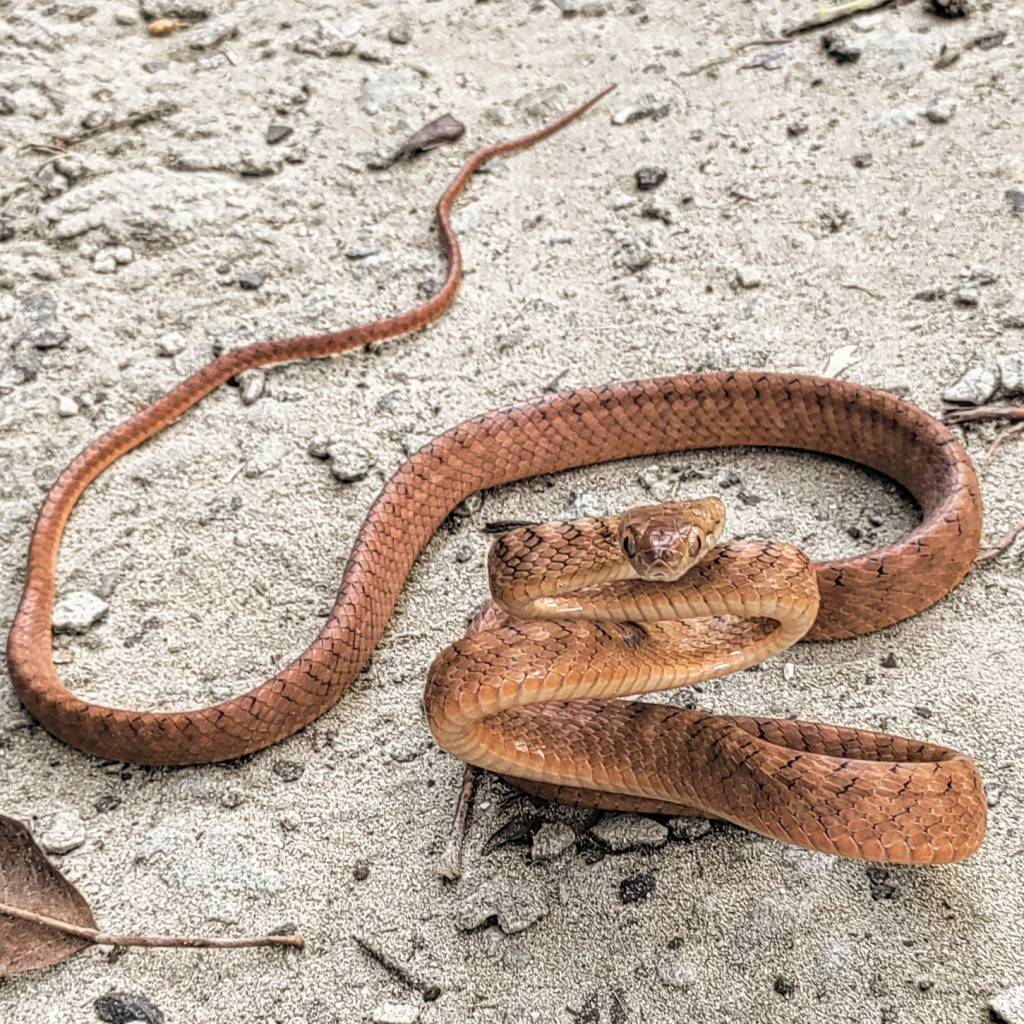
19:49: Interestingly, the snakes that I have rescued from the homes over here are either king cobras or rat snakes. I’ve never rescued a pit viper from someone’s home or kraits. None of that. It’s only been either kings or rat snakes, no other snake interestingly.

Lalitha Krishnan:  

20:06: We have rat snakes here also. In fact, one was on my door trying to get a Whistling thrush’s eggs. There’s no way to prevent these situations in places like Havelock, right? Snakes will go into your house… I don’t know.

Niriman Vazifdar:

 20:21: It’s basic. Doesn’t matter if you are in Havelock or anywhere in the world.  You keep your surroundings clean, keep your litter, don’t keep clutter around, and don’t chuck your organic waste everywhere.  They’re the basic, same rules you follow anywhere. Okay, yes of course, if you’re living in the jungle there is more likelihood that it just comes. But less likely if you keep your place and your area litter-free- free basically.

Lalitha Krishnan:

 20:51: I never thought of a snake attacking your garbage.

Nariman Vazifdar:

20:51: No. It is going for the mice, right? What is going in the garbage?  The mice, the flies then the frogs, right? Then the geckos go for the flies. So prey and predators come wherever there is food right?

21:08: If there is food for say, you chuck some mango outside, right? A rat will come to eat it. Following the rat, maybe a snake will come. Lost in translation….seeing the gecko and a snake another lizard may come. Seeing that a snake may come right? So it’s a circle and if it is near your home why wouldn’t that animal come?

And there are also some wood piles or thin sheets lying around. It’s a perfect habitat for reptiles to live in.  Where am I finding these snakes? Under thin sheets, in wood piles you know because sadly the locals are dumping all these things. So the day before, there was a rat snake under a pile of wood.  I literally removed it from one pile of wood and  I put it in the next pile of wood. Haha, What do I do?  That’s all. Because there is so much clutter around there is no option right it’s the same principle anywhere more clutter around more hiding spots, more prey base, more reptiles.

Lalitha Krishnan:

22:02 Nariman, thanks for that.  Let’s move on.  So have you ever been bitten by a snake?

Nariman Vazifdar:

22:18:  Yeah, I’ve never been bitten by a venomous snake because I always, of course, it’s been lucky, but safety is my priority for myself and the snakes. If I feel like this is… also all snakes don’t need to be caught, like I said. I’m only doing this when it is in a place where there’s a snake in someone’s home. I will not just catch a snake if I don’t have equipment. I will take my hooks, my snake pads, tubes, whatever I need,  I will wear boots. Whenever I need to go for a snake rescue, I ensure I have all my things with me. Even if the locals tell me it’s a non-venomous snake, I will judge it only when I see the snake. So many times, it’s a rat snake and I’ve gone with all my gear and then I pick it up. But yes, because I can identify venomous and non-venomous species, non-venomous snakes, yes, I have been bitten a few times. But there’s not much to learn from getting bitten. That’s why I have to figure out what because, I know for a fact, that it is a non-venomous snake. On getting bitten: let’s say, everyone asks how much does it hurt?  Of course, it’s basic sense. Smaller snakes hurt less; larger snakes hurt more. Like say, if you get bitten by a non-venomous wolf snake, it hurts a little bit.

23:36: Maybe not even, not even one drop of blood will come out. But if you get bitten by, say, a python, it could even tear your skin. You may even need stitches if it bites you back that badly. You know, you could even cut an artery, you know? So yes, it is… even smaller snakes could hurt you. If it bites you and cuts one of your arteries in your hands. Once it’s happened that more than once–and all of us who do this have experienced it– snakes sometimes when they bite us, their teeth break off in our hands.

24:12: That’s why we tell people, if the snake is biting you, don’t pull the snake off. Because A, the teeth break, the teeth will regrow on the snake. But it is painful for the snake.] Understand, even the snake has emotions, right? Just because it’s not like a mammal or a bird, it can’t speak out. It doesn’t mean it doesn’t get hurt. And, more than that, sometimes these teeth break off and they go into our skin, into our epidermis…  And then the small wound heals, but this tooth is left in our hands or feet or wherever in our body. And of course, it’s a foreign body. Imagine a foreign particle in your body now, right? So, your body slowly, slowly starts pushing it out. And, like once the tooth got stuck in my finger hand somewhere, it was when it was coming out quite naturally, it was hitting one of my veins. So, it’s really painful. You know, and then you literally have to kind of dig into it and pull it out. You know? So, sadly, all of this is sad, it happens.

25:13: But like, again, going back to your question, I’ve not been bitten by a venomous snake ever. Again, safety, (lost in translation) It does happen. I have friends who are super careful, more careful than I am.  It does happen that they have gotten bit. It’s also, you get over-complacent, you know, over-confident. You really need to be in the potential, now you know what you’re doing. You’re like, “Ah, I’ll just go and take this cobra out ……… (lost in translation). And that is bad. And that’s where this happens sadly. Right. Yeah. And we are seeing this more and more often lately.

25:47: So like when we go out looking for snakes, this is what we do. It’s called herping. We go out looking for snakes. We do holidays where we just go out to different places– maybe even abroad, or even just in India, trying to find reptiles of that age. Great.

26:04: I mean, I didn’t know snakes could grow their teeth back, but I don’t want to test that. You know, you wrote a book called Turtles, Tortoises and Terrapins of India with Sushil Chikhane. So that must have been a really interesting project. Would you like to tell us some more? And what’s the difference between the three to begin with?

Nariman Vazifdar:

26:29: So turtles.. everyone thinks when they see a shelled animal, it’s a turtle. That is the first thing that people come for. Of course, they like the book. There are three… Let’s put it this way.] Tortoises are land animals. Tortoises: are very basic distinguishing keys. Tortoises have feet because they’re land animals. Tortoises’ feet are like elephant feet, exactly like an elephant’s feet, of course, smaller. Tortoises can also swim in the water, but they can’t swim in the sea or they can’t swim in a river. A little bit, yes. Now we’ve realized that tortoises also are getting bigger. They’re getting into water bodies and floating to certain areas. But in a general aspect, tortoises are land animals. They will drown in extended periods. They cannot be swimming in the sea or in, sorry, in a pond or a lake. They will, as soon as you put them there, they will struggle a bit and they will drown.

27:28: So, elephant feet are tortoises. Turtles are two now. Turtles are freshwater turtles that live in streams, rivers, ponds, and wells. And there are marine sea turtles that live in the sea, of course. Again, these two are different as well. I cannot put a freshwater turtle in the sea. It will die. Likewise, a marine turtle cannot be put into freshwater. It will also be needed. it can survive. Yes, when you do a treatment and all, yes, you can manage to clean it out to do this. But generally, it needs to live in the sea.

Lalitha Krishnan:

Okay. Just like most river fish and sea fish.

Nariman Vazifdar:

28:10: Yeah. Exactly. River fish and marine fish. Exactly. But they are very simple distinguishing features between a freshwater turtle and a marine turtle. Freshwater turtles, in between their toes, have like a duck’s webbed feet. So they have duck-webbed feet because they need to swim in the water, right? So, their toes, in between there’s a webbing and that makes it a turtle.

28:38: A freshwater turtle, a marine turtle has completely different legs, let’s call them legs, structure. They don’t have those toes. They have fins,… flippers. Right? So as you see, it’s a very, very different structure compared to a freshwater turtle.

22:57: The third one, which everyone gets confused about, which is a terrapin, is basically a river turtle that can also survive in brackish water. Brackish water means where the mangrove area, let’s put it that way, where fresh and saltwater meet.  So some turtle species can survive in that water as well. They’re not going in the sea, but they can survive in fresh water and this brackish mangrove area.

Lalitha Krishnan:

29:24: So even in the Sundarbans and all, you’ll find them?

Nariman Vazifdar:

29:28:  Yes. Predominantly, that is correct. In the Sundarbans, there is a specific species called a Batagur baska that lives in that area. Okay

Lalitha Krishnan:

29:36: Yes. So basically, those with feet on land and the rest more or less in mostly water.

Nariman Vazifdar: Mostly water. Yes.

Lalitha Krishnan:

29:45: Thanks. Do you want to tell me more about your project, and your book?

Nariman Vazifdar:

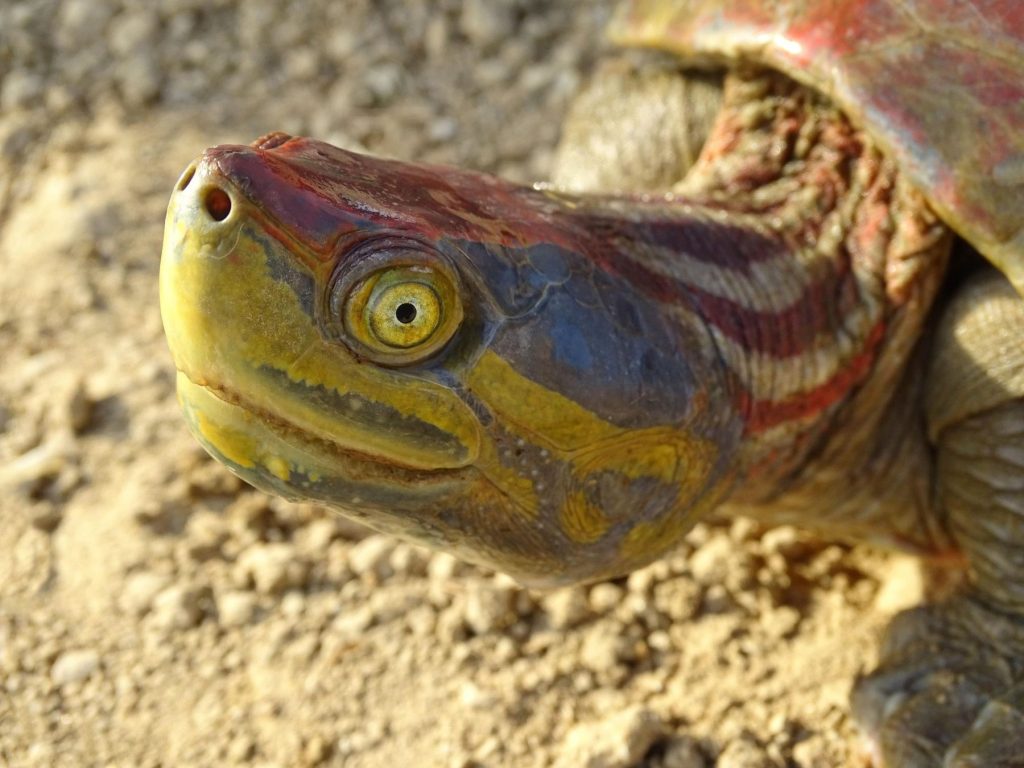
29:52: So, the book was with me and Sushil because I did a lot of… I used to work with Turtle Survival Alliance. I worked as a freshwater turtle biologist and I understood turtles and there was a lack… Always, everyone in the reptile world is inclined towards, say, snakes, crocodiles, and lizards. Very few people are inclined towards turtles. It was the same with me as well. We found turtles boring, snow sluggish, not dangerous, just you know, like OK, whatever. But once I started doing this work I realised that wow turtles are really interesting. They have character. They have personality. They are stunning. Some of the turtles like the one I used to study were called Red-crowned roof turtles or (Batagur kachuga). It is absolutely a stunning animal. The males have yellows, reds, and blues on their faces. It looks like a lot of people have asked me when I showed them a photo of this male turtle in breeding colours. If I’ve painted this turtle.

 via www.thethirdpole.net
Photo by Nariman Vazifdar
Red-crowned roofed turtle

30:54 It is that vibrant, you know, and a very cool animal. The ecology of turtles, especially river turtles is something else and some of them are giants, like serious giants and just tough to catch. Because, we used to put transmitters, you know, a lot of stuff we had permits for. Sometimes they are tougher to catch than snakes, you know, more tough, you know. So, like we always thought turtles or sluggish. Everyone thinks turtles are sluggish. But when some of those turtles want to go, they are going and you cannot stop them. Yeah, it is mad. It is a very, very interesting area to live in and to understand how this works. So, there was no book like a field guide. You know there’s always field guides for say, birds to snakes. But again, like I said because turtles are this topic of “No, it’s OK, not many people interested,” we thought it is the need of the hour to have a turtle book out there you know. And there are books, there are flip cards but not a lot of field guides which cover even marine species. So yes, it took some time. We did this during COVID, and it took about a year and a half to two years to basically complete this book.

Lalitha Krishnan:

32:11: Fantastic

Nariman Vazifdar:

32:12: It was a fun learning experience as well of course.

Lalitha Krishnan:

32:13 Well, Narman, we are down to question 9. And so, I was wondering if you could share a little bit about the Bulletwood Tree that you know showed us in that forest by the beach. It was just so beautiful. Would you like to give us some information about that? I’m so fascinated.

Nariman Vazifdar:

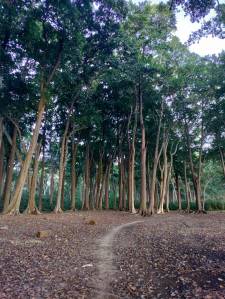
32:40: Oh certainly. So, the bullet wood tree is a predominant tree of the Andamans. It is called Sea-mahua. It is not the mahua of Madhya Pradesh where you get liquor from the flowers. This is completely different. Even the scientific name is different. This is more of a littoral forest basically which means it grows by the seashore like we saw right? You see the giant trees in the sand. These trees could be 5/600 800 years old, extremely hardwood trees. So when we walk through the forest of Havelock or any of the Andaman Islands, you are noticing a lack of termite mounds. There are termite mounds of course, but a lack of termite mounds considering the fact that this is a rainforest. It’s not a rainforest like say the Western guards of India or South America. But nevertheless, it’s still a rainforest and these trees are very tall like we saw 130- 150 feet tall trees.

33:44 Few termite mounds because the termites can’t fully make holes in these trees. It is very interesting. Forget the living trees; we get cyclonic weather, trees rot, trees fall down. The termites we have noticed… Yes of course they try getting onto the trees. They do get onto the trees but they give up and they go away. I feel that this wood is too hard for the termites to make holes. We get another insect called the wood borer. Yes, that sometimes makes holes, but it is also found in Madhya Pradesh, but not like the damage it does to the sal trees of Madhya Pradesh where it kills the trees. It doesn’t manage it. Maybe it eats into the other trees, which is OK; the coconuts, the supari trees, you know? But I think the hardwood trees of the Andamans are something else.

34:37:  Here, there is also a wood called superior wood. You know like we were taught of hard softwood hardwood. There is superior wood you know which is extremely hard where you can’t put a nail into it at times easily you know. So even the sea-mahua or the bullet wood which is called, initially they would burn the base and cut it with an axe. Now they use a chainsaw. The chain saw takes a couple of hours to cut a tree you know? It is incredible. But also, I read somewhere that when the British … the tribes… of course the history of the Andaman, sadly is not nice. It is very you know…  a lot of unfortunate events that led to the British being here, or them treating the tribes very ruthlessly. Japan was here. The same kind of history again repeated itself. But interestingly the tribes had laid a trap for the British and someone told the British about this trap. If the tribes imagine if the tribals had won this battle against the British we may not have been here right now, right?

35:44: History would have been different, yeah. But apparently, they made shields out of this wood. I think I read some of the old books somewhere. They made shields out of the tree and they thought that it would stop bullets. Of course, it can’t stop bullets. It can’t stop cannonballs. So, the tribe literally got decimated in this action. But interestingly, it could also be called the Andaman Bullet Wood because they thought that it could stop bullets.

Lalitha Krishnan:

36:11: Having seen the tree I am in awe of it.

Nariman Vazifdar: 

36:15: Yeah.

Lalitha Krishnan:

36:18: Nariman my last question to you and I ask this of all, my guests is, do you mind sharing a word or a concept or you know, that will help us that’ll add to our understanding of the ecology of the Andaman Islands.

Nariman Vazifdar: 

36:34: Yeah, so like it’s the same thing. Like not just the just let’s say that’s not the Andaman Islands. The change happens in islands, not just with the flora, but with the fauna happening at a faster rate than in mainland any larger space, right? So, let’s just put it like I said, the problem with let’s say Havelock is it is a touristy island. The only source of income that the Andaman Islands as a whole has is tourism. But sadly, we don’t have sustainable tourism on the islands. There are rules, there are regulations, but again, it’s India…we don’t really follow any of these things. A lot of resorts are now claiming to be eco resorts and green resorts, but it is not possible. It is not humanly possible to have an eco-resort without, you know, damaging the environment. So, this is just like a little thing they put up, put a nice website out and say we are an eco resort and we are saving the environment. But actually, none of that exists,

37:48

Not just here but anywhere, even just say Tiger resorts right? Where everyone is claiming to be an eco-resort, it is not possible. We generate waste, we consume electricity. You know, it is not possible to have an eco-resort basically around us unless you are using solar panels, you are doing water harvesting, you know you’re putting groundwater back, you know you are not creating any waste, which is humanly not possible if you are running a property. Basically, no matter what, all the resorts, no, no resort, all the resorts will tell you all the big resorts will tell you that “we are doing eco management and waste management.” It is all just rubbish, sadly.

Lalitha Krishnan:

38:28: I can imagine.

Nariman Vazidar: Yes, of course, islands get… Now sadly, where was this? Where do you think this waste is going? Right? Island ecology gets damaged very fast. We are not seeing this race. I myself am producing waste, right?  We are cooking. I have a dog. He needs milk. It needs XYZ Right? Even myself, right? We all have to buy stuff to survive, right? So, on a small island with a population say 5000 living over here, now so many of us characters from the mainland live here permanently. Plus there are some 3-4000 tourists a day on this island.  So, if 3-4000 people plus 15,000 or 10,000 people need to eat every day, imagine the waste of 10 -15,000 people a day on 135 or 113 square kilometre island? So now we have a dumping yard, a landfill on an island, imagine? Where they’re just, we’re just burning the waste. It’s like when facilities are poor, infrastructure is poor, right? I thought that the hotels would come up, you know, take their waste back, do something. But no, sadly, no one does these things, including the big chains, Forget the small boutique resorts and the big chains do not really give a *&^. Like, the small ones are really not bothered about anything.

39:51: So this is what happens, right? Like, as a tourist, you are not seeing the impact that tourism has. Don’t get me wrong, everyone’s income depends on tourism. But there is a way of doing this where – see like in a tiger reserve right? They have only XYZ numbers.. like so many numbers of jeeps can enter. The tiger is yeah, one time had a system like that somewhere, you know where you only have so many people on an island per day. Let them stay longer– absolutely fine. But don’t have so many ferries coming in and out like groundwater. Why? What is the natural resource of an island? The freshwater we have, the fresh water is already getting depleted, right? We are seeing tankers come to Havelock already right? This is so– where I live– is a little bit low lying. The mangroves are 20 minutes away from me,

40:44: Yesterday when I came back to take a shower, I could smell the mangroves. You know, like in the kitchen, you know, it’s like that ammonia water, that nitrogen fixation that the mangroves do. You can smell it. And it’s not summer, summer. Summer just started. But now the islands are not getting a break? After COVID, all the hotels are doing this, not giving the island a break. Greed sadly has become a very big part of the islands where everyone is opening… Hotels are opening as we speak… so groundwater gets tapped, and water is getting reduced. It will become a problem later on in life, which a lot of these people are not seeing right now. Havelock is blessed. We have waterfalls, we have streams, but right now it’s all dry. There is not too much water because yeah, the water is drying out, absolutely. The waterfall which I went to last night is completely dried out. There’s no water.

Lalitha Krishnan:

41:45: That’s depressing. We don’t see all this. Thanks for opening our eyes. I have one more last question. You know, you also spoke up about diesel buses when we were there.

Nariman Vazifdar:

42:00: Yeah, so, the main grid of the island is a diesel generator. But now we have electric buses over here. So the diesel generator–they burn diesel to convert it into electricity to run the electric bus. It is the most absurd thing. This is sustainability apparently. This is what and this is just like done and like there is –no everyone here just thinking this stupid thing to do, right? So, we have local buses, you know? There are local buses, and local transportation. Why burn diesel to convert it to electricity to put it in electric buses and say that we are doing “green” or whatever the rubbish that is called? You know?

42:47: It’s like this is the thing that we are doing just for the namesake of doing it. We are lost in translation. So now, of course, there should be a bus, a charging station, a bus. You know, all these things have to be put up on the island now.

Lalitha Krishnan:

43:00: Food for thought. Lots of food for thought. Thank you so much.

Nariman Vazifdar:

43:06: My pleasure.

#islandconservation #snakerescue_release #islandecology #islandbiodiversity #kingcobra #turtles #terrapins #tortoises #author #naturalist #researcher #ecologicaldamage #reptiles #narimanvazifdar #invasivespecies #island #animalbehaviour #conservation #endemicfauna #endemicflora #bronzeback #wolfsnake #researchpapers #andamans #tribes #british #japanese #rainforest #development #littorialforest #groundwater #heartofconservation #naturepodcast #storiesfromthewild #earthymattersblog

Birdsong by hillside resident, the collared owlet.
Photos Credit/Courtesy: Nariman Vazifdar. Podcast cover/label design by Lalitha Krishnan

Disclaimer: Views, thoughts, and opinions
expressed in the podcast and show notes belong solely to the
guest/guests featured in the episode, and not necessarily to the host of
this podcast/blog or the guest’s employer, organization, committee or
other group or individual

How the Teak Tree Tilted the Course of History in India and Other Stories.

With Mallika Ravikumar and Nishanth Srinivas

Episode #34 Heart of Conservation podcast. Show Notes (Edited)

or listen here.
Mallika Ravikumar
Nishanth Srinivas

0:03

Lalitha Krishnan: Hey there. I am Lalitha Krishna and you are listening to episode #34 of Heart of Conservation. Today I am speaking to two plant and tree lovers, basically tree experts. I find it so fascinating to listen to folks who are passionate and knowledgeable about the things that they love. Some of the fauna we are going to discuss are everyday plants and trees we pass by or sit under or love for their fruits and flowers, but truly we barely notice or know much about them. I promise you some extraordinary insights, botanical facts, myths, history, personal stories and more, on this episode.

0:47

My guest Mallika Ravikumar is a lawyer-turned-writer. She writes about history, culture and nature and has authored over six books mostly for children including one called ‘Tracing Roots’.  She also has her own ‘YouTube’ channel called ‘Tree Talk with Mallika Ravikumar’. You’re very likely to have watched her on Instagram but you can check out more about her work on her website https://mallikaravikumar.com/

1:12

I have also been following ‘Trees of Shillong’ on Instagram which belongs to Nishanth Srinivas, my other guest.  Nishant has a Master’s degree in Biotechnology from Bangalore University and worked as a Junior Research Fellow at the Department of Molecular Reproduction, Development and Genetics at the Indian Institute of Science.  Having changed course, he is now based out of Shillong, and is working with an NGO called Conservation Initiatives. He specializes in satellite mapping and is interested in human–elephant interactions and landscape ecology. I believe Nishanth loves, doodling, graphic design, and writing and staring at tree canopies. I have a feeling that is true of both of my guests.

1:47

Mallika, and Nishanth thank you both for joining me on Heart of Conservation. I am really looking forward to your stories.

Mallika Ravikumar: Thank you, Lalitha for having me.

Nishanth Srinivas: Thank you so much for having us Lalitha.

2:02

Lalitha Krishnan: My pleasure really. To start with, why don’t you briefly tell me about the fascination for trees? Mallika, why don’t you go first?

2:12

Mallika Ravikumar: I grew up in Mumbai which as you know is a city with a lot of people, with a lot of concrete. Trees are not something you think about or associate with Mumbai. I grew up like any city person, knowing very little about trees and then I happened to shift into a place where I was surrounded by trees. I was very curious; I felt very bad that I didn’t know… I couldn’t recognize most of the trees around me. I didn’t know their names. It made me feel like something was off because I knew from what I had learnt in science and textbooks that we get our oxygen from trees. We get our food from trees. Trees are such an important part of regulating our environments so the role of trees in textbooks I was aware of, but I was not able to identify more than a handful of trees which made me feel very awkward. That started the process of making me want to learn, and enroll for field botany lessons during weekends at BNHS. I went for some field trips with botanists and ornithologists, to learn about birds and flowers and things. And, that took me down the rabbit hole and that learning process is still on. So, that’s how it all began.

Lalitha Krishnan: The learning process for all of us will keep going on I hope.  What about you Nishanth?

3:31

Nishanth Srinivas: My story is not much different from what Mallika’s story is. I am also from the city; I am from Bangalore. Just like she mentioned, trees give us oxygen. I remember when I was so concerned about the environment, reading about all of this. The thing is during summer holidays, the best most outdoorsy thing that I would get to do is go to my grandparent’s place. They had a very big garden and they were every possible fruit tree there. This started my love for gardening. It started with gardening and I took a different route. I studied biotechnology and I happened to work in the Indian Institute of Science. And there, there were more trees and they have a 400-plus acre filled with trees. And, all my free time would be spent observing trees, canopies… Eventually, somewhere, that fueled my change to a different profession and now, I’m in conservation and I actually started observing trees beyond what is there in the city. And, that’s how Trees of Shillong was born and here we are. Right.

Lalitha Krishnan: It’s amazing how the ‘outdoors’ draws us out of our shelters.  One of my podcast guests, Suniti Bhushan, introduced me to the concept, not his concept of ‘Nature Deficiency Syndrome’. Still, I would like to hear from you; why do you think tree stories are important? Nishanth, do you want to go first?

Nishanth Srinivas: Tree stories or stories in general related to myths or folk stories I believe are very important. Coming from a conservation point of view, whenever we approach a place or a region to understand what are people’s beliefs and how they connect with their culture, it usually starts with understanding or trying to make sense of their surroundings. And most of this is usually in the form of folk stories. There might be biases as conservationists so I try to bring in this idea of conservation a lot. And even in my stories when I write about Shillong, I usually end it with two lines about conservation which is very much the need of the hour. So, the thing is these stories need that. As a researcher and conservationist, they give me an understanding of the local context and how people relate to it and some sense of the relation of how they understand and make sense of the nature around them.

As a researcher and conservationist, they give me an understanding of the local context and how people relate to it and some sense of the relation of how they understand and make sense of the nature around them.

-Nishanth Srnivas

Lalitha Krishnan: So true. Mallika?

6:21

Mallika Ravikumar: Yes, very similar to what Nishanth said. In a country where we are such an ancient culture-we have such a plethora of stories and folk tales, myths, and legends about trees from various backgrounds: Hinduism, Buddhism, Islam… In every tradition, some people consider trees sacred. There is an association with them. I think, going into the psychology of it, people’s actions are not based on reason alone. Although we would like to believe we are rational, reasonable people, intelligence plays a very important role in how we behave but reason is only one of the faculties we use to make decisions. The other huge factor is emotion. Many things we do in our life–the decision to marry somebody, the decision to follow a certain career—it is based on hope and dreams and are also mixed with emotion. It’s not ‘reason’ alone that guides us. So, pummeling people with facts alone—you know, “trees give us oxygen, trees regulate the environment” — all this appeals to a certain side of us but all these legends, myths, folktales, and rituals and traditions; appeal to the emotional side of us. Which is also a very important part of human decision-making and psychology.

So, I think they have a very important role. Sometimes, I think emotions play a larger role when I connect with a tree or plant or pet dog emotionally, I feel much more to protect them and save them than if I connected with them academically or you know, intellectually. So, I think they play an important role in the way people behave in general.

8:05

Lalitha Krishnan: OK. And from a male point of view, Nishanth, do you also feel the emotional connection?

8:13

Nishanth Srinivas: Yes, very much so. The whole point of why we are very interested in learning and trying to talk about myths… is generally when we have a conservation or do a presentation, it’s to have that emotional connection. When we speak of myths and folk stories, they also reveal a lot about the culture and they trying to make sense so yes, the emotional aspect makes a very good point. It’s important.

8:33

Lalitha Krishnan: Thank you. This question is for both of you. So, how many trees are you going to share with us today?  Mallika if you would like to start, you can tell us some interesting facts that you like and then a myth.

8:57

Mallika Ravikumar: Sure, how many trees? There is no answer to that. It can go on endlessly but I would be happy to start with a tree that I talk about a lot which is the teak tree which is an Indian tree. It’s called ‘Saagaun’ in Hindi, and Thekku maram’ in the south. In fact, the word ‘Teak’ itself comes from the word Thekku maram’ which is in Malayalam, and before that in Tamil. It is a tree that changed world history. We have this human-centric way of looking at history and saying, “This king changed history, this general, Alexander the Great, Akbar the Great, Chandra Gupta Maurya; they did this…and they changed history…” But really, so many of these trees if they could speak, would tell you that they are the ones who changed history and changed the course of time. So, teak is one of those trees you know.

But really, so many of these trees if they could speak, would tell you that they are the ones who changed history and changed the course of time. So, teak is one of those trees you know.

-Mallika Ravikumar

9:45

There is this period in history in the 16th and 17th centuries that was called the period of Teak Rush, which was a time when the French and the British were engaged in several battles before and during Napolean’s time when the British were very wary of the rise of Napolean because he was a big threat. And, they had completely decimated the oak trees of England to build ships. And we all know the British were able to control a large part of the world because they had a great navy. And what was the basis of their navy? Their ships. And what were their ships made of? Wood. But their oak forests were completely decimated because of the ships they had built in conquering various places and they were on the lookout for wood to build their ships. That is when this period of Teak Rush comes in when both the French and the British are on the lookout for wood for building ships. Because all these battles that used to happen were naval battles. And by chance, it is the British who discovered the teak forests of southern India and then they brought in forest laws to control all our forests. The conservation laws that we have today didn’t start as a measure of protecting the forest as much as wanting to control the resources from the forest.

And what is the main resource they wanted to control? Teak. They had scouts going out to look out for these teak forests. They massacred these forests, they had teak plantations, they converted large forest areas into monoculture teak plantations and it is the teak that they got that helped them get this hegemony and control larger parts of the world. So, it titled the scale of history. We are having this conversation in English today because of teak otherwise we might have been talking in French. Who knows? But it’s teak that changed the tide that was the bedrock of the British empire. So, that’s just one of the many stories that changed our past and continue to shape our present.

11:37

Lalitha Krishnan: That’s amazing. Frankly, I did not know of this. I have only heard of the Gold Rush, not the Teak Rush. Nishanth, what plant, or tree are you bringing home to our listeners?

11:41

Nishanth Srinivas: Well, I thought of four plants but one tree which is very common to our listeners which we all know; it is very common is the coconut. I have always been intrigued; there was a coconut tree near my home in Bangalore, in my neighbour’s house and it stood tall. In 2018 we had very terrible rains; very cyclonic. There were a couple of trees which fell but this one tree did not fall. You do not hear of many instances of coconut trees falling and if you follow the weather channels you will always see that when they talk about coasts or rain in the weather reports, you will always see some palm trees flaying around but it’s not usually uprooting away. I always used to think about why and it is very interesting how coconut trees have adapted to live in a coastal region where geographically, it is quite flat. We know that when the winds come in, they pick up rain, and the first thing they will encounter is the coast. So, how these trees have adapted is quite interesting.

13:00

First of all, the shape of a coconut tree is a tube-like any other palm tree. And if you observe the bottom of the tree, it is a little wider at the bottom than the top. Very marginally. And, the top region of the tree, the crown as we call it is quite flexible. That is one. We have all seen Bahubali (the movie) where he uses the palm tree to make it so flexible that it is wind-borne and things like that. Though, palm trees are not that flexible but the top region is. So, it sways when there is a lot of wind movement. That is one.

13:39

When we talk about the inside structure of the coconut tree… it is a monocot. Monocot trees do not grow by girth every year and it’s made up of spongy tissue inside. It is so much like a concrete mould and is reinforced by lignin fibres. These fibres run longitudinally along the length of the coconut trees so they are fill which is inside the concrete. It provides structural stability to the tree. That is one.

14:11

The other is the roots. We have all seen the roots. These roots are fibrous. They go in every direction and they hold the tree in a place like any other (root system).

14:25

Last but not the least is the frond. So, the coconut tree is almost feather-like; it is pinnate. So, it has a central big stem called the Rachis. So, most of the very tall palm trees have feather-like leaves. So, these are some of the very interesting adaptions that I came across when I was trying to understand how the coconut tree stands cyclones.

14:51

Lalitha Krishnan: Wow. You explained that well. I also believe every part of the coconut tree can be used. Am I right?

15:00

Nishanth Srinivas: That’s true. That’s one of the reasons why it is called ‘Kalpavriksha’ I guess. Mallika would have many more stories about it. But interestingly, since coconut trees are there in the tropical regions all around, there are multiple stories of ‘how’ or ‘what’ when it comes to the folk stories. Each culture or region has its own take on it. It is quite interesting.

15:25

Lalitha Krishnan: O.K. Would you like to share that?

15:30

Nishanth Srinivas: I will quickly share two of them. One of them is from Hindu mythology itself. When Ganesh was very small, he wanted to play with the third eye of Shiva. And then, I guess, one of the demons if I am not mistaken a small model/idol with three eyes and gives it to Ganesh. By mistake, this small idol falls from Ganesh’s hands and falls on earth. They say that’s how coconut came into existence or how mankind found the coconut.

16:04

That is one of the stories. There is one more very interesting story—again similar to this—the three eyes. When you de-husk a coconut, why does it have three eyes? This story is from the Polynesian culture- Hawaii, Melanesia, New Zealand and all of those places.  They say, in an ancient island there used to be a chieftain’s daughter. Her name was Sina. She used to always visit the sea and she sort of became friends with an eel. This eel over time developed feelings for Sina. And it became very violent as time moved on; wanting more of her time and affection. But then, she goes back to her village and complains about this eel which is sort of always stalking her. And then, one of her relatives goes and kills the eel. Before dying, the eel’s head speaks. It tells Sina to bury the head in the sand and that it will be reborn as a tree whose fruit Sina can drink. The three holes are where the coconut shell is the lightest. So, every time, you break it open and drink, it’s like the eel kissing Sina. That’s what the story says. These are different stories and they talk about (lost in translation).

17:30

Lalitha Krishnan: Lovely stories. Mallika, would you like to share another one?

17:33

Mallika Ravikumar: Sure, I can talk about a plant which is not a tree but a lot of people think it is a tree which is the Banana. You know, in usual parlance, we say banana tree or kela ka jaad or vāḻai maram in Tamil. Botanically, it is not a tree and the reason is- for a plant to be considered a tree, the key feature is the wooden trunk. And the banana, if you notice closely, does not have a wooden trunk so it is not botanically a tree, although we all call it a tree.

Botanically, it is not a tree and the reason is- for a plant to be considered a tree, the key feature is the wooden trunk. And the banana, if you notice closely, does not have a wooden trunk so it is not botanically a tree, although we all call it a tree.

-Mallika Ravikumar

18:03

There’s this interesting story from the Gadabas tribe of Odisha which I like very much. So, the story goes that there were five sisters. They were the mango, the tamarind, the fig, the jamun and the banana. As they were growing older, their father was getting worried that they weren’t getting married and he wanted to find husbands for each of them. So, he asked them what kind of husbands they wanted and they all told him. And, he looked for such partners for them but the banana said, “I want children but I don’t want a husband.” This is a very modern, feminist sort of story so I like it for many reasons. She said, “I want children but I am very clear I don’t want a husband.” So, the father grew worried. “How is this going to work?” But the other girls got married and they had children and it is said that all the mango and fig, tamarind and jamun trees that we have are descendants of those children. But then what about the banana? She said, “I don’t want to marry but I want children.”

19:00

The thing is as per the story the banana had children without a husband. The beautiful thing about this story is that bananas reproduce parthenogenetically which is asexual reproduction. In botanical terms, if one were to study that there are two forms of reproduction: one is sexual, and one is asexual; the way the banana reproduces by bypassing the fertilization of the ovule by the pollen is sexual reproduction. And it is fascinating to see that this ancient folktale has captured that in such a simple way. Those daughters wanting to marry and one daughter saying, “I want children but I don’t want a husband.” And to see that very astute scientific observation finds reflection in this folktale. So, I find it very fascinating for many reasons including the fact that it’s a sort of modern, feminist sort of take on life. But, yeah, this is a fascinating story about the banana that I shared on my YouTube channel where I share these sorts of stories that I find.

20:02

Lalitha Krishnan: Fascinating. I agree with you. How on earth did they figure it out then? Nishanth, it’s your turn. Another tree, another plant?

20:10

Nishanth Srinivas: One more tree that is quite common in Bangalore gardens is Nyctanthes arbor-tristis. It’s called parijata. It’s also called night jasmine though it does not belong to the Jasmine family. Again, according to legend, what happens is this tree also comes from the churning of the milky ocean. The demons and the gods churn up the mountain. And then, from the ocean arises this tree and Indraloka who plants it in his garden. Once, Narada,–who is usually a mischief-monger—takes some of the flowers from Indira’s garden and gives them to Krishna. And, Krishna goes and gives it to Rukmini, his wife. Having known this Narada being Narada, he goes and tells Krishna’s other wife, Satyabhama, that Rukmini got these heavenly flowers and Satyabhama becomes quite jealous. So then, she asks for the whole tree and so Krishna goes and steals the tree. En route, when he is coming with the tree, he is confronted by Indra and a battle ensues. Eventually what happens is Indra curses the tree such that it never produces fruit. Interestingly, this parijata does not produce fruit. It belongs to the Oleaceae family. It produces a heart-shaped capsule. Oleaceae is the olive family- the olive fruit. So, this does not produce that. It just produces the capsule. And, this is a little bit of humour: he (Indra) says that the owners where this plant is will never get the flowers. What I have observed is that in Bangalore morning time, around 6:00 or 7:00 o’clock, you see all these people coming to pick these flowers and usually the flower never falls in the garden where it is planted but usually falls on the roadside. ( lost in translation )These are some of the things that I find nice. Also, it brings the thought –as we discussed- we don’t know what came first. This or that but it is people trying to make sense of what they observe in nature and putting it into some sort of context.

22:55

Lalitha Krishnan: Very interesting. I can relate to this. I never get any of the fruits or flowers that I plant. They all go mostly to the monkeys. But I don’t feel cursed. I feel privileged. I think it’s the tax one pays for having wildlife around. Mallika, what next?

22:17

 Mallika Ravikumar: The story that Nishanth related…I had a parijat growing in my house and it was exactly like that. The plant was on one side of the fence and the flowers were falling on the building on the other side of the fence. That story also has another element. You know when he brings back the tree, Rukmani is very upset and says, “Why did you give Satyabhama the tree?” So, Krishna being very smart, plants it in a way that Satyabhama is happy to have the tree but the flowers come to Rukmani’s side of the garden because he knew that then both his wives were happy. These folk stories have several narratives or variations. So, that’s also very interesting that someone has heard one part and you hear another part. This is a version of the story that I had heard but yes, it’s a beautiful tree and flowers and a lovely story also.

These folk stories have several narratives or variations. So, that’s also very interesting that someone has heard one part and you hear another part.

– Mallika Ravikumar

24:12

Another tree with lovely flowers that I can think of is the silk cotton tree- the semal. This story comes from the Mahabharat. This story is narrated by Bhishma when he is on his bed of arrows; when he is about to die all the others come around him, asking for advice and ask various questions. He narrates this story when he is asked about the qualities of a good king. How must a king behave when a neighbouring king is stronger than him?  What is the diplomacy and relations one must have? So, he narrates this story of the silk cotton tree.

Nishanth mentioned Narada so this story struck me. Narad Muni, as he said was a troublemaker. He is walking along a forest and he comes upon this beautiful silk cotton tree and he is absolutely stunned. He says, “You know, you are so gorgeous and your flowers are so beautiful, how is it that you are still standing like this? “The wind is blowing so hard over here; all the trees are bent; all the leaves have fallen because Vayu has blown with such force but you seem to be unaffected by Vayu’s force. How is it possible? So, the silk cotton replies saying, “You know Vayu may be strong for the others but I am stronger than Vayu and what do you think? I can’t bear the brunt of the breeze?” So, he boasts about how strong he is and Narada is sure that if the wind really wants to blow something down, nobody can stand in its way so he being a troublemaker, goes back to Vayu and says, “ You know there is this proud silk cotton tree in the forest who thinks it is stronger than you and I find it laughable.”

Vayu of course says, “That’s ridiculous. I spared the silk cotton tree because when Brahma created the world, he rested under this tree and therefore, I have respect for this tree and therefore I don’t blow on it. But, if the silk cotton tree is going to interpret this as my weakness, let me show him how strong I am.

26:04

He says, “I’ll show him how strong I am tomorrow. But that night, the silk cotton thinks and reflects and looks at all the trees around and thinks, “If all these trees are bent and turned over, and leaves have fallen and they are all facing Vayu’s impact, surely it can’t be that I am so strong that I am stronger than Vayu.” So that night, the silk cotton tree decides that before Vayu comes, let me myself, drop my leaves and flowers so that when Vayu comes tomorrow, he cannot inflict any damage on me. So, the next day, when Vayu comes blowing fiercely down the mountainside, the silk cotton has nothing left. No leaves or flowers. Nothing is left on the branches. He says, “I am glad that you learnt the lesson to be humble. Now shorn out of your beauty, you have realized that you don’t need to show off many times. People are being gracious and nice to you and it’s not all about how strong you are.” So Bhisma is narrating this story to say that you have to accept that someone is stronger than you and not be futile and say, “I can take on anyone.” If your neighbouring king is stronger than you, then accept and be humble and bow before him. That was the context of the story.

27:17

But I use this story when I take children out for tree walks to tell them about leaves falling. And, why some trees are deciduous and some trees are evergreen and have you noticed leaves falling? So, if you just start off with deciduous and evergreen, kids sort of get put off. But if you start with a story, it becomes a point of generating curiosity and then they start noticing which trees around them are dropping leaves. Some kids have come back to me and said, “Aunty, we remembered this story from the Mahabharat when you told us when we saw this tree outside our school which was dropping leaves. So the important thing is also to connect kids with trees around them because it’s a way to generate curiosity.

27:56

Lalitha Krishnan: wonderful. I am feeling like a kid listening to your stories. Nishanth, why don’t you tell us more? What’s your next tree or plant of choice?

28:08

Nishanth Srinivas: The next is a plant, a type of ginger and this takes forward what Mallika said. Some of these stories and myths also serve a purpose to teach kids or the younger generation something. There is some moral behind it. This story is about a type of rock ginger. Rock gingers have very showy flowers and they are quite common in the Himalayan region. It’s called butterfly-ginger, butterfly rock ginger- it’s got different names but they have very showy flowers and they are quite common in and around the Himalayan region. This particular plant, its scientific name is Hedychium gardenarium.

Since I work in Meghalaya, this is one story which came to me from one of the museums that I visited here. So, they have this plant and they have this story along with it. so, in Khasi, this plant is called Ka tiew lalyngi. ‘Lalyngi’ which I understand must be the name and ‘tiew’ is flower. There is a saying, “Wat long tiew lalyngi pepshad” which roughly translates to: “Do not be late like the Lalyngi flower who missed the dance.”

29: 31

So, the story goes that there was a great feast. There was a huge tree called the lei tree. I am sure I am pronouncing these things wrong but if someone knows the correct pronunciation, please get back to me. This large tree was blocking out the sunlight and that itself is a different story. Eventually what happens is that people cut it down and there is sunlight again in the land and there is a celebration that happens. So, to celebrate, all the creatures that is animals, people, birds, and insects were invited to a great dance in the region of Meghalaya. So, what happens is there’s also this girl who is invited. Her name is Lalyngi. She’s a very beautiful young girl and she happens to come.  But the thing is she wants to look the best. What she does is she takes a lot of time to get ready. In that process of getting reading, she loses track of time. So, by the time, she reaches the dance arena, she finds the event is already over and she is quite upset by it. Because nobody is there to see her after all the effort she took. She is so upset she jumps off the cliff and dies. Where she dies, a flower is born and that flower is the Hedychium gardenarium.

The thing is, this flower is so much part of the culture. If you have seen the Khasi dress, they wear these Paila beads which are mostly in shades of golden yellow and red. And, this flower has stamens which are of the same hue of red. And the petals are yellow. In some sense, they feel it is part of their folk story. Most of these stories are oral; part of the oral tradition they have here in Meghalaya. Stories that are passed on through generations; something which they feel is one of their own which tells something about their culture. And, interprets some sort of moral lesson to children to prioritize and give importance to things when they are doing something.

Stories that are passed on through generations; something which they feel is one of their own which tells something about their culture. And, interprets some sort of moral lesson to children to prioritize and give importance to things when they are doing something.

-Niahanth Srinivas

32:12

Lalitha Krishnan: Wow. That’s a sad but beautiful story but also such an exotic flower.

32:21

Nishanth Srinivas: It is. Google it and see.

32:28

Lalitha Krishnan: Mallika, would you like to share another story or plant if you like?

32:33

Mallika Ravikumar: Another commonly seen tree in India is the Neem. This is not a story that comes from myths or folk legends. It’s a historical, current affairs kind of story. Where, as we all know, the neem has been traditional medicine in India for centuries. From ancient times to now, we have all experienced how if you had chickenpox, were told to have a bath in neem-leaf water or brush yourself with neem branches to heal.

33:10

Generally, if there’s a neem tree around you, one considers mosquitoes won’t come into your house. Neem is just part of growing up in India. You keep hearing the healing properties of neem. Some decades ago, in the US this company was granted a patent for the use of the neem in their pesticides or herbicides for controlling pests in plants. And, they also applied for a patent in the European patent office and fortunately, this was highlighted and India opposed that.  The Indian Council of Scientific Research opposed that and this is Traditional Knowledge. A patent as we all know is a special right given to you if you have invested in researching something and you have come up with something very novel, and it is original and it’s of use to people. Those are the considerations for a patent. But here is someone asking for a patent for something that was commonly known. Haldi is another one. Basmati, as we know, we also got a patent some time back. So many Indian plants, some of them medicinal whose healing properties have been common knowledge—even illiterate, uneducated—everybody in India knows about the healing properties of these plants. You don’t need to be a doctor or anything.

34:17

And, you get a patent for that where you are claiming that you have something original and useful and novel was something that India opposed and that patent was finally revoked after a lot of appeals and several processes. What it highlighted was something called Biopiracy. Piracy we know that if you film a movie in a theatre and you release it and make money out of it, is called a pirated copy of the movie or a book. Because it is making money out of somebody else’s creativity without giving them their due.

34:50

But, this idea of bio-piracy became a taking point after this Indian Neem incident of biopiracy and India then woke up to the fact—even till now, several of the patent applications made by pharmaceutical companies in the West are based on traditional knowledge of ancient cultures including India. And then fortunately this was taken to serious levels. There was this body called the Indian Traditional Knowledge Systems and a database was formed where if someone in the US applies for a patent for, let’s say haldi, obviously they might know this is traditional knowledge in India… But the Patent Office can then search in this database where you have all these plants that have been recorded as traditional healing plants in unani, ayurveda, siddha etc. and it will show up in the search at the patent office. At least in the future, private enterprises will not given rights– exclusive rights—for traditional healing plants of common knowledge in India. It all began with the neem biopiracy case that triggered all this. That’s not a legend or a myth but an interesting story, especially something to be aware of this is a huge amount of traditional knowledge that we are sitting on and some people are using it for private gain. We should be aware of it.

36:14

Lalitha Krishnan: Very true. And biopiracy is a new one for me. And I doubt they are trying to get patents for anything innocently.

36:28

Mallika Ravikumar: Absolutely. There was a very interesting article that I read. In Covid times, a lot of plants were getting stolen out of our botanical gardens. Orchids. Nishanth is in the north-east. He will know better. Orchids are disappearing in the northeast. Some of them are threatened species because there is this craze for owning these exotic plants and keeping them in your gardens and your house. The West has always had this craze but even today it is there. We talk about the tiger and the elephants and big mammals, birds etc. when they are threatened but a large number of species on the IUCN list are actually plants. Many of them are Indian plants. We somehow don’t highlight them because they are not as dramatic as the tiger and elephant and so on. But they are also part of threatened species.

We talk about the tiger and the elephants and big mammals, birds etc. when they are threatened but a large number of species on the IUCN list are actually plants.

-Mallika Ravikumar

37:14

Lalitha Krishnan: Butterflies too…from the northeast. Thanks for sharing that, Mallika. Nishanth, would you share some more?

37:21

Nishanth Srinivas: Yes. Mallika has given me segways into different things… She mentions the US and how plants are collected and taken to different places. One very common plant which was reversed from the New World to the Old World is scientifically known as Euphorbia pulcherrima. It’scommonly known as the Christmas flower. It’s these red bracts; it’s almost like bougainvillaea. It usually flowers during Christmas time. I’m sure both of you are familiar with seeing this plant. It’s very common. Especially in the western ghats, it’s grown as a hedge around coffee plantations etc. Here in Shillong, it’s quite a common garden plant.

38:14

Though this plant is a showy ornamental plant, it’s got a very nice and interesting story. And, it highlights something which I shall share at the end. It’s also commonly known as the poinsettia. The thing is even the names: Why poinsettia? Why Christmas flowers? It has a nice big story to it. This plant is native to the dry forests of Mexico, basically central and northern South America.

38:50

During the Aztec civilization time, this was also a plant of high cultural importance.  In Aztec, it was known as cuetlaxochitl which translates to ‘a mortal flower that perishes and withers but is all pure. Apparently, in Aztec legend when it was formed it was white. And, because of the war between two different tribes, the flowers become red.

39: 26

So, the Aztecs would plant this around their habitations or wherever they had their cities and stuff. But we know a little bit about their history and how the Europeans started coming and colonizing the West. So, what happens is, that when the people/missionaries came into the region in the 17th century, they noticed these plants. They sort of took this aspect of how important this plant was and made it part of the Christian culture. How they did this is quite interesting.

40:10

There is one interesting story. In Spanish, this flower is called Flor de Nochebuena which translates to “flower of the Christmas eve.’ The story is all about a girl named Pepita. I am sure you’ll be aware that during Christmas time, they make a manger which is a model of the birth of Jesus/ nativity scene. This girl comes from a very modest background. The story goes that all the people go to the church to offer something to baby Jesus. Everybody is trying to get the best thing to give as an offering. Being of a modest background, she tries her hand at many things. She tries to knit a shawl but she can’t untangle the wool. She then tries to make small boots for baby Jesus but she doesn’t even have the strength to push the needle through the leather.

41:29

She gets quite upset and a stranger comes up to her and tells the young Pepita, “Even if you offer anything with a lot of devotion, it will be accepted.” So, she goes around and gathers a bunch of leaves and twigs and she offers them at the church.  What happens is, magically over time, these greens she has picked, turn red.  This also goes back to the plant as I was saying. They are not flowers but like bougainvillea, they are red bracts. The flowers themselves are quite small. The story weaves the aspect of those and also them coming into flower during winter time around Christmas. That is what I found interesting; it gives a reference point. Some of these myths and stories may stay but this is how some aspects get introduced and become one of their own. So, that was what this story represents to me.

42:45

The word ‘poinsettia’ is also quite interesting. Mallika mentioned how people collect plants. There was a person called Joel Roberts Poinsett who was very much into collecting plants. He was from the US and was working as an ambassador to Mexico sometime in the early 19Th century. When he was there he collected these plants and sent them to the botanical gardens. In honour of him having introduced this to the western plant per se, it got the name, poinsettia. In political terminology, there is a term called poinsettismo which represents a kind of diplomacy which the US follows. Which is very intrusive. It represents how the US is or functions with other countries which they trade with.  This tells us also how words are derived, how there are stories are attached to them and what the roots of the stories are. This is an example of a plant being behind one such name.

44:09

Lalitha Krishnan: Thank you.

44:19

Mallika Ravikumar: I was about to say, I learnt a new word. Poinsettismo. I am going to look it up and read more about it.

44: 27

Lalitha Krishnan: The association is still there. I remember 2 Christmases ago; I gifted a poinsettia to someone.

44:36

Nishanth Srinivas: It all came from one small town in Mexico and got sent to the Philadelphia Botanical Society and from there, if I am not mistaken, just one company had world domination. And, they sent this poinsettia to different parts of the world. So, all of them probably have one or two mother plants if I am not mistaken. That’s how it is.

45:09

Lalitha Krishnan: Thank you so much. My last question to you both—and I feel almost guilty asking you this question—because both of you have already introduced so many new concepts and words but I am going to ask anyway cos this is how I always end my podcast.

Could you share something about trees or plants that is new to us or significant to you in some way?   It could even be about your relationship with plants.      

43:35

Mallika Ravikumar: Before that, can I add to something that Nishanth said which reminded me of something else?

45:40

Lalitha Krishnan: Of course:

45: 42

Mallika Ravikumar: Nishanth said how beautifully the idea was told to the girl: “You offer something with devotion and that is the most important thing”. There is a mirror story of that even here. That is one of the stories that I thought I could narrate but we don’t have time. This is the popular story of Shabri and the ber—the Indian jujube—where you have, shabri picking ber fruits from the tree and offering them to Ram. It comes from the Odhiya Ramayan. It’s not in Valmiki’s Ramayan. And, that became a very important story in the Bhakti movement to cut across barriers of caste and varna… In the Odhiya Ramayan, he accepts this jhutey ber as they say. She has tasted the ber, tasted the fruit to see if they are sweet and gives it to Ram. Laxman says, “I cannot eat this but Ram says, “Anything offered to me with love and devotion is acceptable and nobody is small or lesser or greater and I will take anything that is given to me with love and devotion. That is exactly the mirror story of what he mentioned. So, in every country, or culture, I guess you have such stories and it is really beautiful to study these parallels. Even in the Bhagvat Geeta, you have a slok/verse which is exactly that. “Patram pushpam phalam toyam, yo me bhaktya prayaschati” (You offer me fruit, you offer me flowers, you give me anything. As long as you give it with devotion, I will take it.)

It’s beautiful though and very often those offerings are plants and fruits and flowers which is a form of expressing devotion to whichever divine power that you worship.

47:16

Lalitha Krishnan: I am getting goosebumps. Between you guys, you can start an Oral History of Plants podcast. There are too many stories to go on one episode.

47:30

Nishanth Srinivas: There are a lot more.

47:31

Lalitha Krishnan: I think it will be amazing to have an encyclopedia of stories. So, coming back to my question…

47:45

Nishanth Srinivas: One word which comes to mind and which is central to… the reason why I am here also is ‘Green blindness’. People do not see green things. What captures our imagination is things which move—animals, birds, insects. They come to mind very fast but when we talk about plants, a common person may speak of plants in respect of their utility. In respect to food, or in respect to being ornament like a flower. But plants are much more. They are the reason why we are here. Somewhere when it comes to the topic of conservation, as Mallika initially spoke of the British way of forest management, it’s mostly utilitarian purpose. They wanted something which they wanted to extract and that is something which is continuing even today. Even with many forest departments, there have been many instances of people razing down natural forests, razing down places of high diversity and putting down monocultures of teak and mahogany and things like that. There are many examples like that that keep happening. With different forest laws and policies and amendments; time is progressing least in the Indian context, what is happening is not going for the good. In some ways, it is going for the bad because we are also an aspiring nation. We want to develop and be a superpower. We always see this happening in the spectrum of life but the conservation of our natural resources, our trees, what is natural per se, is much more important. Usually, the first thing that gets chopped or which gets the axe is always the tree. When there is any development even in our cities, when there is road broadening or widening, or setting up an economic zone or trying to expand business, anything that relates to land, it is usually the plants and trees which suffer first. Because they can’t move. They will be lost if they are removed from a region.

Usually, the first thing that gets chopped or which gets the axe is always the tree. When there is any development even in our cities, when there is road broadening or widening, or setting up an economic zone or trying to expand business, anything that relates to land, it is usually the plants and trees which suffer first. Because they can’t move. They will be lost if they are removed from a region.

-Nishanth Srinivas

50:40

Green Blindness is also one of the reasons why I started writing about plants though I do not come from a background of botany. So, that is something that I believe people should keep in mind and be more cognizant of what is green around them and living.

50:55

Lalitha Krishnan: So true. And where can we read your writings?

50:59

Nishanth Srinivas: I’m on Instagram @treesofshillong Otherwise, very much like you, write for magazines like #RoundGlassSustain I saw you had an article about how ants carry flowers so… different things. I also write to the Meghalayan. I have been writing about plants: myths and trees that are very common in Shillong gardens.

51:36

Lalitha Krishnan: Do share these links for my blog. Okay, Mallika; what would you like to share?

51:43

Mallika Ravikumar: Okay. While there are many ideas and words, something I noticed before I started learning about trees, I noticed that when I used to walk, I used to like looking up at the canopies of the trees from below and the reflection and the play of light. I discovered much later, that there is a word in Japanese, for this phenomenon and it is called Komorebi. I was so happy to discover that there was a word for this. Because, sometimes you observe or have certain experiences and you don’t have a word to explain what it is you are experiencing. But I was delighted to know that there was a word for this light filtering through the canopy of trees and the way you see it from below is called Komorebi in Japanese. So that’s a very wonderful idea and concept.

52:31

And going from that, another associated term called ‘crown shyness’.  What is fascinating is—again when I tell children or tell adults about it—if you’re walking below trees—say on the road and there are trees on both sides of the road, if you look up, you will notice the canopy of the trees are meeting up but just about. They touch each other but there is a slight gap between them. Not all trees do this but it is observed in many places and this is called ‘crown shyness’ where the crowns of the trees just stay within touching distance of each other. The reason of course is because they both want sunlight and if one covers the other one, the other one is not going to get sunlight. So, the tree is not going to grow under the shade of the other. There is a reason of course for it but we call it “crown shyness’ and it is very easy to observe when you’re out for a walk. Just look up. There are two beautiful things you can see. Light -whether daylight or moonlight –whatever it is, it’s filtering through these trees and it’s a beautiful Japanese word called Komorebi and this concept of crown shyness which you notice. It almost looks like the trees are having a conversation but they don’t want to be touching each other they are just about touching. That’s a beautiful thing to see and anybody can observe that when they are walking under trees.

53:46

Lalitha Krishnan: It’s like they are being good neighbours, right? Not getting into each other’s space that much.

53:53

Mallika Ravikumar: Live and let live…

53:55

Lalitha Krishnan:  Exactly. And the Japanese word? Is it the same for forest bathing?

54:00

 Mallika Ravikumar: No, Shinrin-yoku I think. Forest bathing is where you soak in the sounds smells and sights of a forest, and you spend time there. That is also a very beautiful Japanese idea as well. But this is Komorebi which is light filtering in through the canopy, through the leaves. The leaves are moving in the breeze, so the light is playing and dancing around. That idea is called Komorebi.  It is also very beautiful to have a word for it.

54:25

Lalitha Krishnan: It paints such a pretty picture. That’s fantastic. Thank you both so much. It was wonderful

54:35

Mallika Ravikumar: it was wonderful being here and chatting and connecting with Nishanth and you; both of you.

54:37

Nishanth Srinivas: Yes, same here. It was very nice to hear about new things and learn and put forth…

Disclaimer: Views, thoughts, and opinions expressed in the podcast and show notes belong solely to the guest/guests featured in the episode, and not necessarily to the host of this podcast/blog or the guest’s employer, organization, committee or other group or individual

Sudarshan Shaw:Breaking Definitions of Art & Nature.

Ep#30 Season 4 Heart of Conservation Transcript (Edited)

Read or Listen. All paintings-photos courtesy Sudarshan Shaw.

Sudarshan Shaw artwork on Cover art

0:05

Lalitha Krishnan:  I’m Lalitha Krishnan and you’re listening to episode #30, season 4 of Heart of Conservation. I bring you stories from the wild that keep us all connected to the natural world.

For someone who has no sense of direction and couldn’t probably read a map to save her life, I have to say I practically drooled over one visually delightful map that I came across on Instagram.  It conveyed a spectacular visually-rich story of a place, its people and art and biodiversity on a single sheet.  This is one, I would easily put up on my wall permanently. I will be putting them up on my blog, Earthy Matters very soon, so do have a look.

My guest today is not a cartographer by profession but a young, extremely talented visual artist from NIFT, whose keen sense of perception and belonging, passion for depicting, and preserving local art, and love for natural history is tangible in his stunning artworks which go way beyond creating maps. I am speaking to one of India’s rising young, inspiring artists and authors, Sudarshan Shaw. Welcome to Heart of Conservation Sudarshan. Thank you for joining me.

1:19

Sudarshan Shaw:  Thank you so much for having me on Heart of Conservation Lalitha. It’s an absolute honour to be here.

Lalitha Krishnan:  My pleasure. Sudarshan why don’t we start by you telling us a little bit about yourself and what influences your work?

Sudarshan Shaw:  I was born and brought up in the culturally rich cities of Bhubaneshwar and Kolkata. And I grew up feeding on art forms and colours of all types. And, I have always been a history buff so… all of which came together after I discovered my calling towards wildlife while I pursuing my final year of college. That’s when I visited Ranthambore National Park which was my first ever formal introduction to the wild world. It was also for my graduation project and while the forest look all great and beautiful, I always felt that connection was missing; some sort of connection. Thus, I started to explore more and more regions to understand myself and the situation better and have a better understanding of the wider world.

2:25

Lalitha Krishnan:   Nice. Let’s talk briefly about all the maps you created. You created more than one for Orissa, biodiversity maps for Andhra Pradesh, Gujarat, Rajasthan and West Bengal, a special Elephant corridor one for Kerala and other clients like the one for the Shiv Nadar University etc.  The first one which is the wildlife map of Orissa- your home state was self-funded. Am I right? What I love about that map is how you incorporated the local tribes and hotspots in the traditional pattachitra style of Orissa. It almost feels like a tribute. So, what made you create this one?

3:13

Sudarshan Shaw: Yes, it is a tribute indeed. It’s a tribute to the land, the wild and the cultural heritage of my state. It’s also a tribute to the strong relationship among them that enhances their meaning of each other. I always felt a huge disjoint in the natural and cultural heritage of India and the kind of graphic language the young communicators use in the country. I feel it is heavily influenced by the west and does not have that connection with the native land and hence it’s not acceptable to the masses in a certain way. So, the vibrance and diversity that folk arts have in store have disappeared from the contemporary visual language that we used to in recent time used to communicate our stories. This was my humble attempt to bring it back with all dignity and pride. Another reason would be Odisha itself. Odisha has an abundance of wildlife. We almost know all the stories regarding Odisha but it never found a place, I mean materially in our surroundings.

What I saw is the pattachitra paintings which are quite prevalent in Odisha -which is the folk-art form in Odisha – and it has a place in our homes over here. There are depictions of gods and goddesses and many other folklores on the walls. I thought this could give me an important platform if I drew it in that style and I depicted wildlife in that style. Eventually, it worked out well and the wildlife map found a place in people’s homes. So, they put it up where they used to put pattachitra paintings.

5:00

Lalitha Krishnan:  That’s such an honour. That’s fantastic. What is your creative process? How do you create a map-I don’t mean technically- but I want to know how you think you know, and how long it takes, who commissions these maps. How does it work?

5:23

Sudarshan Shaw: The process usually starts with intense research, which is both online and in the field. It’s quite impossible to do justice to ….(lost in translation)  with short timelines or deadlines. So, I try my best to gather as much as I can; so more of essence than information. I must say, the internet has negligent information on this so most of the interaction and interpretations have travelled orally with tradition or in folk art forms. So, the idea is to go through and explore as many of these. The next step is where Is it down to innovate a graphic style which is more often inspired but local art and traditions. Then, I design a layout and then spend about one to two months to complete/render it depending on the amount of details. Most of these maps have been funded by the forest departments of various states or other wildlife NGOs if not other private institutions.

Lalitha Krishnan:   Great. Being from Odisha, does practising the traditional art of Odisha come naturally to you? Is it something you learnt as a child or is it something that you learnt in art school?

6:45

Sudarshan Shaw: Naturally it was in my subconscious because we’d always be looking at these art forms on stone sculptures, wall paintings of different buildings in Odisha and also in homes, as I said earlier. But, consciously I started practising and grasping it after I visited Ranthambore wherein I first had that interaction with Phad paintings of Rajasthan. There are these common folk paintings of Rajasthan, wherein they had drawn stories from the wild in their artworks. For example, in the story of ‘Machhli’ the Tiger, wherein they had depicted the tiger in a very beautiful style in stories from its birth to its death and everything. This was the main reason why I started grasping art forms more and this is how I implemented it. I get a story from one place and try to incorporate the folk-art of that place into it (the art).

Lalitha Krishnan: O.K. That’s very sensitive and thoughtful of you to do that. You have depicted wildlife, for example, the striped hyena, otters etc that are also listed as endangered or vulnerable by the IUCN (International Union for Conservation of Nature) Tell us something about these. I love the little camera trap you have put along with the ‘Black tiger’, the pseudo-melanistic black tiger painting of yours. I don’t know if the Fishing cat’ (see podcast cover) is part of this series but that too just caught my eye.


8:27
Sudarshan Shaw: The Fishing cat was the first painting that I did for this series but that was also a self-funded one. The main idea always starts with a self-funded one and the Fishing cat was one of those. The idea behind drawing the Fishing cat was–which is also a mud painting by the way—during that time, I heard a lot about fishing cats. You know they are found on the outskirts of my hometown. It was very interesting to know that these kinds of creatures live nearby. So, I started looking at images of fishing cats in Odisha and West Bengal and other regions of India. I found images of fishing cats which are mostly nocturnal. The images were quite similar. Once I got a glimpse of a fishing cat drawn in the Kalighat form of painting in Bengal, and I saw a very distinct flavour to it. That cat was depicted holding a fish, it had a stance of its own and it almost looked like that fishing cat is Bengal and it was very different from that of Odisha or any other region of the world. So, a depiction of that species in that art form you know helped in sensitising the people of that particular region regarding that species. That was my whole idea. To incorporate that style and show the world that all these creatures have their distinct characters from the places that they belong to. That was my main idea behind that. The other artworks: the Smooth-coated (otters), the (striped) hyena, you know, they tagged along, people understood my reasoning behind the Fishing cat and they wanted similar species to be shown in their own characters so that they would help in spreading awareness and in sensitising people about the species.


10:30
Lalitha Krishnan: It’s true when you say, (species) have their own stance, their own character of the place. That’s an interesting take. You know, tigers have been part of the Indian psyche forever and they feature a lot in your paintings. I saw one of The 9 Tigers depicted in different folk styles which tells us so much in one go.
I also want to talk about the ‘Tiger Boundary’ piece which is nothing short of mesmerising.
I like that you said somewhere that the boundary in the frame instead of blocking in gives you the artist and the subject, in this case, the tiger, free reign. Did I get that right? What do you mean by that? And what draws to the tiger?

11:17

Sudarshan Shaw: Absolutely. Apart from being as popular as ‘T’ for Tiger, and one of the epic predators of the forest systems in India, I feel tigers are truly beautiful beings in all senses. They are as gentle as they are fierce, the air of pride and mystery around the creature makes them much larger than their actual size -which is both inside the forest and outside. So, what draws me and the whole forest and nation to the tiger are that it’s like another mystery. I never met a tiger in the wild. But fortunately, I met so many in folk art and in my imagination and they are all different from each other.
So, yes, as an artist I always felt conflicted about having boundaries around my artworks. On the face, the borders look like confinements, a kind of limitation but they are very common, if you observe, in all the folk-art forms of India. So, one fine day, during an interaction with a pattachitra folk artist, he was explaining to me why they drew borders on the canvas before they started the painting inside. That was the instance when I thought that is how tigers also mark the territories for themselves in the forest and both the artist and tiger would then paint their minds and live inside it. I could then understand how boundaries set by self, bring a sense of safety, depth of connection and commitment to our responsibility. All of which actually sets us free.


12:56
Lalitha Krishnan: Wow. That’s all I can say. You authored your first children’s book called “When a Forest Wakes up”. Congratulations. The name itself evokes a visual flood but the book is also very magical. Your interpretation of nature… where trees are antlers sending messages and elephants block out the sun and birds fly to flowers in gratitude for the colours and where hills are sleeping rhinos…it’s so wonderous and I can just imagine the wonder and oneness that any child will love. I believe you said, “The basic idea of the book is ‘breaking definitions”. Yes?

13:41

Sudarshan Shaw: yes, one of the ideas behind the book was to see beyond rigid definitions that we have set for ourselves. To dive into a world of imagination and the endless possibilities that it has for us. So, another idea behind the book was actually inspired by animism. A belief system by the various ancient indigenous communities in India, according to which everything from the stones to the mountains to the trees and rivers are living forces and beings bigger than us or just like us. All of these live in relation to each other.

I remember how we were taught in our school days that nature is full of resources and had multiple uses for us humans. And the distinction between biotic and abiotic, the living and non-living things. We have been told to see a river or soil as a non-living resource it would be very difficult to respect and have a relationship with them. This book is an attempt to change that perception from a very young age.

14:47

If I give you another example, of it, when we ask a child to see towards the sky and the clouds, they would always say the clouds look like different animals or objects and everything. Suddenly, with time, you’d see how the animals and the various objects turn towards being a single cloud. When you ask an adult, what is that they would say, “That’s a cloud. Either it’s going to rain or not going to rain. But when you ask the child, “That is a tiger”. “That’s a leopard…that’s a dinosaur” and whatnot. All those imaginations with time are suppressed and you know, along with the coming of rigid definitions, that ends it for us. So, I wanted to break that stereotype fear out of understanding and definitions.

15:38

Lalitha Krishnan:  You’re freeing my mind as you speak. So, I believe you have travelled to Uttarakhand–that’s where I live mostly–and walking in the forests there impacted you. How was it different and is that where you got your studio name. ‘Kyari’ from?

15:56

Sudarshan Shaw: Yes. Uttarakhand has been like a second home. I have travelled to Uttarakhand quite frequently as much as I could. You know, I was in college in Delhi so Uttarakhand wasn’t so far from there. Living there, you can totally understand how special the land is. It is almost beaming with life and beauty, to say the least, and ‘Kyari’ is a very small village near Ram Nagar in Uttarakhand and my studio name lends its name from it and the meaning of it; you know how kyari is a small nursery kind of thing where in they put up small plants and flowers. Then they grow wild from it. That’s the main philosophy of starting my studio wherein I’d be experimenting with different forms and art styles, and stories and those would be going into the wide world.

16:52

Lalitha Krishnan: A nursery of ideas. Lovely

16:54

Sudarshan Shaw:  A nursery I would say is one of my best teachers of all the ways I see the world and understand the world the studio is a lifelong tribute to that.

17:05   

Lalitha Krishnan:  I’d like to know briefly about the ‘My Pictures of Divinity’ series your visual stories about the turtle and sea, and the vulture and the dead e.g. though steeped in lore and also educating us about the animals’ role in the world and their vulnerability today.

17:26

Sudarshan Shaw:  Yes, I strongly believe that existence has its meaning in relation and not in isolation. So, my picture of divinity is the search for that godliness that lies in the relationship between the humble life forms that we see and the magnificent ecosystems of sustenance that surround them.  So, it is an attempt to override conventional portraits of God that centralised humans while all the legendary powers that they invented were inspired by the ways of the wild. So, it’s a tribute to our true ancestors, the teachers, the deities of the art of thriving and surviving. So, e.g.

I’d say, Uttarakhand and Odisha have been my main source for drawing this series. One story would be the Olive Ridley Turtles of the Odisha coast. If people talk about the species, they talk about the species in isolation but if you actually get to experience that place, you would see how the species is actually a connection between the land and the sea. It’s tying both of them together. That’s the beauty of seeing things in relation and not in isolation. –Sudarshan Shaw

18:40

Lalitha Krishnan: Beautifully put. Coming to my last question, could you share a word, concept or something you believe is important—you’ve mentioned a lot of things—something for all of us to know or imbibe.

18:59

Sudarshan Shaw:  Sure. So, being an artist, I’ll say a few lines on how we understand art and nature. For me, art and nature are two sisters of the same fate. Nature has been an inseparable part of native peoples’ being. Folk art has also been practised routinely by all in different ways and forms. So once, the colonial influences came, they alienated our art as a speciality which was quite pristine, exclusive and polished and very far away from us. They did the same to nature and wilderness which became (lost in translation). Art is the nature of all living beings; we must understand this. And, separating them in our words and worlds may have separated us from our true selves and denied us access to the strongest relations which are nature and art. So, I believe we can turn folk art for the reunion and reassurance for everybody, which is free too, we must draw, sing and dance to ourselves and our surroundings better.

20:14 So true, Sudarshan, thank you so much. You’re going to go a long way and all the best for your journey ahead.  I am so touched by everything you’ve said and everything you do. Thank you

20:29

Sudarshan Shaw: Thank you so much Lalitha.

Lalitha Krishnan: I hope you enjoyed this episode of Heart of Conservation. Do check out Sudarshan’s artworks. You might want to buy, commission it or gift it to somebody else or yourself. The transcript for this show will be out very soon on Earthy Matters (my blog). You can listen to Heart of Conservation on several platforms so check it out and spread the word, guys. Thanks.

Birdsong by hillside resident, the collared owlet.

All photos courtesy Sudarshan Shaw including Fishing Cat. Podcast cover artwork by Lalitha Krishnan

Disclaimer: Views, thoughts, and opinions expressed in the podcast and show notes belong solely to the guest featured in the episode, and not necessarily to the host of this podcast/blog or the guest’s employer, organization, committee or other group or individual.

How Tea is Becoming a Powerful Force for Elephant Conservation in India.

Heart of Conservation podcast Episode #16 Show Notes (Edited)

Lalitha Krishnan: Hi guys. Thanks for listening in to Heart of Conservation Podcast (ep#16).  I’m your host Lalitha Krishnan bringing you stories that keep you connected with our natural world.

How about a cup of chai? Join the club. Apparently, 25,000 cups of tea are drunk around the world every second.  Tea is the second most-consumed drink in the world being second, only to water. I wonder if the number has gone up with self-isolation? Fact is the Coronavirus has been a rude awakening forcing us to rethink how we live and consciously try and change how and what we consume. Say hello to Elephant Friendly tea. Yes, you heard right.

Today I ‘m speaking to Lisa Mills, program director at the Wildlife Conservation Enterprise Program at the University of Montana – Broader Impact Group.  The University of Montana in partnership with the Wildlife Friendly Enterprise Network (WFEN), has released a science-based guide or standards for the certification of tea producers under the Certified Elephant Friendly™ Tea label. Lisa has been working to save the globally endangered Asian elephant for the past 10 years and is now facilitating the ‘Elephant Friendly Tea Certificate Program’ in northeast India.

https://soundcloud.com/heart_of_conservation/lisa-mills-how-every-single-cup-of-elephant-friendly-tea-counts-ep16

Lalitha Krishnan: Lisa, welcome, and thank you so much for speaking to us on Heart of Conservation Podcast.


Lisa Mills: Thank you this is exciting.


Lalitha Krishnan: For me as well Lisa. Thank you. So, when and how did you start working with the Asian elephant?


Lisa Mills: Well it’s a bit of a long story but the brief version is that I am married to a wildlife biology professor and I also was working with the University of Montana when he got a sabbatical to go work in Asia and I needed to leave my position at the University to go spend six months in the country of Bhutan where he was training wildlife biologists. I’m a wildlife educator so I was looking for something to do. Our children were in school, in a village school in Bhutan and they were ages 8 and 10. I needed something to do. So I offered my services to the country of Bhutan. They said why don’t you do an education program on elephants. I said well I don’t know much about elephants but I’m certainly willing to pull together information with some research and see what we can do with lesson plans for teachers about elephants so that they can teach science-based information to children and think about human-elephant conflict, and what can be done and what’s helpful to people living in elephant zones. Well, this took a turn in that I realized that elephants are transboundary between India and Bhutan and the more I looked into this the more I saw that there was an opportunity for something more than lesson plans to give to teachers. There was a lot of interest in doing something transboundary with both countries involved in having the villages that lie in high human-elephant conflict zones coming together for a purpose to improve things for both people and elephants. I began that and then we got a couple of different grants that help start some… we did citizens science. So we actually had a group of volunteers from across six village sectors across the India side collecting information about elephants, what was happening and we had made the education program very real and alive in that they were able to share things that were really happening on a daily basis. And, we started mapping that. We got students here in the United States -college students involved in the product as well- taking information and mapping what was happening. So sort of what came of it was the very beginnings. It laid the groundwork for my current work but I wanted you to know it just started as something we would develop for teachers to use.


Lalitha Krishnan: But that sounds so interesting. Lisa, I have a very basic question. Could you explain the connection between elephants and tea? I don’t see everybody seeing that connection automatically.

Lisa Mills: So, back in the 1800s when the British established tea gardens in India there wasn’t a lot of thought about elephants and their movements of course and there wasn’t a lot of scientific work back then in this area but what happened was those tea plantations were established using …you know…the tea plants are not eaten by elephants but it was a plant that was derived from a native plant… there were different types some from China some from the far North East which is today the Northeast India region. These plants became useful commercially and the British established these tea gardens. They just plopped them right into the middle of where elephants have been moving forever and so what happened there is these tea garden stayed and they’re still there to this day and these elephants will move when they can as long as there are corridors and their movement areas are still open they use these areas. They don’t eat the tea plant but they use these as stopping places. They are quieter sometimes than the outside areas. Sometimes they’ll even birth their young inside these tea plantations. So you know, for elephants there is often no way to avoid tea plantations and just walk around them because they are sometimes quite large and they are in the middle of an area that they need to get from one forest fragment to another. Of course, as we lose more habitat overtime elephants have to really figure out how do they get what they need to get their needs met. Tea plantations play an important role certainly in some areas as far as, you know, what happens in those tea plantations really matters for elephants.


Lalitha Krishnan: Right. I knew some tea estates are part of elephant corridors and it’s news to me that the elephants sometimes even birth there. So basically, as elephant habitat is shrinking I suppose the number of elephants is also shrinking in all of Asia. Right?

Lisa Mills: All of Asia…India of course still has the most significant numbers of Asian elephant so when you are talking.. by some figures there is only 40,000 left in the world…of.Asian elephants and this species are quite different from the African elephant it’s cousin, right?
And India… the current estimates—we could check the numbers—the numbers are ever-changing depending on how the counts are done…they’re not perfect numbers because of course, these elephants are not easy e to tell the difference between individuals and they’re difficult to count in within a couple of days. So anyway, these counts are done in a way that gives us a pretty good estimate. So we are looking at under 40,000 elephants in all of Asia and in India, somewhere closer to, it looks like 27,000 or so. But we can check the latest numbers. And there is a percentage that are captive elephants in India as well. It is historical that elephants are kept in captivity but they also might play a role in conservation…even captive elephants at some point.


Lalitha Krishnan: Lisa what are the main reasons for elephant mortality in Assam?

Lisa Mills: Well, it’s beyond just Assam but where we did the original collecting of information with this idea in mind that something is causing extremely high mortality rate of elephants and we are trying to figure out what that is; it’s not perhaps a simple answer. But what we found is that back when we started this work in 2012-13, there was a lot of poisoning of elephants, and it’s kind of hard to tell what was the source of the poisoning was. We also found a lot of electrocutions and ditch deaths. So, there were these deep narrow ditches in tea plantations that carry the water out of the area during the monsoon season. They’re also difficult for young elephants to cross over without falling in. Sometimes…many times, the outcome is fine. The baby elephants move with the herd and can traverse these, but the numbers are also pretty surprising how many don’t make it. They get caught in there, and as the mother and other elephants try to dig them out, they often get covered in mud. We’ve seen a lot of ditch deaths but the number today the No 1 mortality cause over the last year has been electrocutions. So this is low hanging livewires. Also, people illegally tapping those live electric lines and putting, say, a wire around their crop field as preventing elephants from raiding a crop but the problem is, you know, it’s extremely dangerous for both elephants and humans, and other animals as well. So we’re finding a really high number of elephants are getting electrocuted. And this is entirely preventable.


Lalitha Krishnan: I’m a little surprised. I thought you were going to say elephant being hit by trains is the main cause of elephant deaths.

Lisa Mills: Yeah, those numbers are on the rise, for sure. I’d like to look at what those numbers are coming to that. Electrocutions, because they happen here and there all over the place, you know, and the numbers are adding up right? And I think people don’t always have the tools to think about an alternative for protecting their crops. you know there is such a thing as safe electrical fencing if you must fence. If you are just desperate and you must fence you can use electrical fencing in a way that is safe. And we do it with livestock all the time around the world. But training and having the proper supplies to do this takes up a lot of effort and you know, it needs to be a concentrated effort. And the people who are using these methods that are dangerous aren’t always in a position to go to a store and buy proper supplies or access training. Not that we want to encourage everything getting fenced off anyway but we understand it’s not easy to live in elephant movement zones and grow what you need to grow to survive.


Lalitha Krishnan: So, in situations like this how would a planter kind of resolve these conflicts?


Lisa Mills: Human elephant conflict is a very broad category. OK. For example, we have found over time if we bring science to this we see that elephant behaviour is often a reaction to what’s happening around it. So, when elephants get highly stressed, they have stress hormones go up and you can test for this even in the feces. You can test and see that their hormone level…certain hormones go up. These stress hormones also you know, relate to behaviour. So when an elephant is feeling highly stressed, like when they being chased, and harassed and constantly moved… nobody wants them. They’re being pushed, yelled at, things are being thrown at them… rocks are being thrown up them…When this is happening especially you watch, there is usually a male protecting the herd and this male can get quite aggressive towards people. So, a conflict might be an example that I saw in November and I see every year. I go to India every year to observe what’s happening in different places—what you’ll see is especially around the harvest time you know, around November, early December even late October, these elephants are trying to get a free meal along their pathway. A lot of the forest is gone and they’re just looking for that rice field that is coming… they can smell it from miles away and there just like, “We’re just got to get a meal”. In the dark of night, they might go out and try and raid a crop field. Well, of course, people have poured an entire year of work into this crop and it’s what the family needs to survive so there’s going to be conflicts from that. But also as elephants move through tea estates and tea farms, between these, between the farms where they can raid crops and between the forest where they can get native vegetation to forage on, and get to the water that they need and so on, they are going to keep encountering people. Like “We don’t want you near our village, near our crops.” So, there are people chasing them in one direction and then people chasing them in another direction and the stress levels get high and the aggression. Elephants can take a person and drop him and kill him just like just like that. I think one another thing we are seeing is those tea plantations where they have a plan and they manage it tightly, where people can’t come into the tea estate and harass elephants, where it is kept calm—there are some good examples of this out there—elephants can relax a bit there is less danger. Now, there are some best practices for guarding your crops. There are some ways to do things. It’s not always 100% safe but you don’t want elephants to get habituated to eating rice. You want them to go back to the forest. You want them to eat native vegetation but when they get habituated, they do regular crop-raiding. So, there are, sort of, some elephants that are more wild and there are some that are absolutely getting away with moving around during the harvest season close to the harvest season and raiding crops. And how to manage this? The forest department overseas elephants. But they, don’t of course, on their own have enough people to control crowds of these sizes or to stop all of this from happening. And they really don’t come into the tea estates themselves and handle it. So, what happens within the boundaries of the tea estate is up to the management. We see real differences in what happens. We also see where its kept calm there tend to be fewer conflicts that lead to you know, people getting hurt and killed, and elephants of course also can get killed from conflicts. I hope that helps.


Lalitha Krishnan: Yes, you painted a clearer picture for us. I read somewhere that sometimes elephants die because of chemical poisoning. How do you convince tea planter to go organic? It can’t be easy.


Lisa Mills: OK, first of all with the Elephant Friendly Certification Program that we had to establish what were the things causing problems with elephants. And this took a pilot …this took years of work and information. Early on we started including tea growers and even large companies were involved were saying. “What would it take to reduce all these hazards? What would it take to eliminate all these hazards?”. Elephants don’t appear to get poisoned by just walking through a conventional tea estate because that has been sprayed. That’s not at all what we are finding. What we are finding is improperly stored chemicals, curious elephants especially young elephants might get into some chemicals because they have salts in them and they might take them into the bodies and die a few hours later in another location. So, we are nesting on a campaign to go 100% organic but we find that organic growers will tend to… they’ve already you know, completely eliminated one of the potential hazards for elephants which are chemicals contributing to the potential for chemical poisoning of elephants. So, they have one major step already taken care of for it being elephant-friendly. Now a conventional tea grower might say, “Well if we could get an economic opportunity that would come from you know, doing what needs to be done to improve things then we would do it”. And they need to be able to offset those costs of changing what has been an industry that’s been running for long before we thought about this elephant-friendly certification program. By the way that is a partnership between the Wildlife Friendly Enterprise Network. They are the certifying body and the University of Montana basically initiated this project and brought the science to this. But the certifying body is now is a group that is very, very used to doing certifications around the world that benefit wildlife. They understand fully that compliance takes effort time and often money to change things that have been not friendly towards wildlife in some way. The industry can change. It’s just often you have to find how you’re going to pay for it. That’s what tea growers tell us. If the market was developed for Elephant friendly products then it will be easier if we could see a price premium come from the sale of certified products it would be much easier for us to implement this. Because they are dealing with a number of different certification programs and pressures from industry. But we are seeing more and more tea growers showing interest and more and more are coming on board and some are going through certification at this time.


Lalitha Krishnan: So, did you manage to get a good mix of the smaller and bigger tea estates on board?

Lisa Mills: Yeah, we started with really…the pilot involved two small farms one small…l I should say smallish… for the organised sector tea gardens but now we are getting some interest from what I understand… the Wildlife Friendly Enterprise Network is coordinating the actual certification- from what I understand, interests have come from really large growers to small growers. It is I would say right now, the ones going through the certification process this time I would consider to be small to medium operations but we are definitely beginning to see interest from not just from small grower sector but from the large grower organised tea sector where we’re seeing the interest. But part of that is the markets beginning to respond. We’re seeing brands beginning to say, “We will carry the certified elephant-friendly products”. That drives a lot of this. If there is a market, I think there is an opportunity here for the growers.


Lalitha Krishnan: That really sounds encouraging.

Lisa Mills: It is. I didn’t know because we’ve had our bumps believe me. The pilot was full of bumps along the way but we learned a lot and we keep learning. I think if we can continue to find ways to connect growers and brands and make sure this scale of opportunity happens and keeps happening, I think we can do a lot of good.


Lalitha Krishnan: Could you give an idea or a few examples of some elephant-friendly practices that are being employed in some tea estates?


Lisa Mills: Elephant friendly standards… there’s a link to it on the Wildlife Friendly Enterprise Network; there is a whole page for Elephant friendly and now a link to the standards is posted there. So, anyone can go look at them there. I am just going to give you some highlights for those interested they can read the whole document which is quite extensive. But basically, they’re looking at eliminating the risk of electrocution; so, no low hanging electrical live wires that elephant can touch even with their trunk. There has to be no electrical fencing that is you know, unsafe for livestock. So basically, elephants are kind of like equivalent to horses or cows or people in that if they touch a fence it is just as hazardous to a person or an elephant. So, you know you’re looking for that as well. They can use electric electrical fencing if it is safe and there is a way to do that. We’re are also looking at keeping the elephant corridors open so there is no news of elephant movement you reduce conflict by allowing elephants to move without encountering fences and walls. And so basically as they one of the requirements is that they know the elephant movement patterns and they make sure these corridors of movement remain open and that elephants can move freely disturbed. The other thing is there has to be a human-elephant man conflict management plan in place. So that’s a requirement. We have some tips and helpers for folks who want to develop those plans but those are based on research. They have been tried and proved. There is no perfect solution; it is difficult no doubt but there are best practices and there are some things that make things worse. So, we look at those and then also ditches…. these deep narrow ditches that are about the size that a baby elephant would fall into and not be able to come out… you are really looking for… like some tea plantations have mitigated these. They have filled them if there were some problematic ones in the elephant movement areas. They might fill them a bit with rock and make them less steep or give them soft angles to the sides so that elephants can cross more safely in these zones. They’re also looking at if the use chemicals how they store them. Are they elephant proof? And also, safety issues like wells water wells and ponds. Are they safe so that elephants can’t fall in them and not be able to get back out? So, having either if it’s a well is it covered safely so that elephants, especially young elephants, can’t get trapped but also a pond having safely graded slope on the edges so that elephants can get back out. You’ve seen probably pictures of these where elephants get trapped in the water area and can get back out it happens.


Lalitha Krishnan: It happens.


Lisa Mills: Those are some of them. There are others as well but a lot of it has to do with you know, are you allowing people to come into the tea plantation from outside and harass and chase elephants? That would be an absolute NO. That should not be allowed as it only increases stress levels of these elephants and makes it more dangerous perhaps for the people in the next town over but elephants need safe passage and tea growers in these zones are a part of the bigger picture. We hope if we get enough tea plantations co-operating and coordinating together and helping the forest department calm the situation, then you get your, you know, think about… I don’t know… in some cases is there an alternative to growing crops that are attractive to elephants in key movement areas. A few folks have worked on this. What can be done? Are there alternate crops that elephants won’t raid? Are there opportunities for growing these crops elsewhere so people will have the food they need without it being raided in the middle of the night where elephants must move you know? These are just a few of the highlights but you can look up the rest and read it all

Lalitha Krishnan: This is important Lisa so I’m going to summarise what you said.1 Ensuring that there are no low hanging electric live wiring or unsafe fencing, keeping elephant corridors open, having a human-elephant conflict management plan in place based on best practice; fixing deep ditches, making storing of chemicals elephant-proof and managing safety issues with wells and ponds. And restricting people from outside the estates from coming into the estate to chase elephants. These are just some of the requirements for elephant-friendly tea certification. One can read up some of the rest online.
Would it be right to say that part of the elephant-friendly tea profits goes back into conservation?


Lisa Mills: Depends on the commercial company. Elephant Origins is one company that is putting money right back into a fund that helps communities basically with their co-existence work with elephants. Any company sourcing certified elephant-friendly tea basically they are all helping support the program itself and to help it expand and spread. So, any sales will help both the farms themselves and will also help, you know, raise these issues more broadly. Whether they donate an extra percentage back or not. That is just something that Elephant Origins has made part of its mission as a company to be philanthropic and give back and raise money for…so much more is needed. Meeting certification alone is a significant step towards conservation though.


Lalitha Krishnan: Moving on, unlike the US, as far as I know, there aren’t any specific-species-friendly products in India. Do you see a future market here for say ‘leopard-friendly coffee’ or something similar?


Lisa Mills: Well, there was one… a couple of attempts have been made. There’s been a ‘wildlife-friendly certified’ coffee. I am not sure if they are actively continuing. I think they’re working on it… they did a pilot I think they are working on it with the farmers now. That would be a more general ‘wildlife-friendly’ it would include a number of species. There’s also someone working on spices under ‘wildlife-friendly’ as well. Ok here’s an example there is a ‘Jaguar Friendly’ program’ kind of like the University of Montana is involved with elephant-friendly there is a group called Procat Columbia and they are working in South America with coffee farmers to protect jaguar habitat. Like elephants move through tea, jaguars move through these coffee plantations in Costa Rica and Colombia, and maybe other countries as well. And they are doing really well because they founded a company that sells coffee that has a good market and they are selling that into the supply chain as Jaguar Friendly Coffee. And I think that… so far so good. There’s also a project called Ibis Rice out of Cambodia. It’s a partnership with the Wildlife Conservation Society and the Wildlife Friendly Enterprise Network who we partner with for certification. And that has been really successful. The rice goes into European markets I believe and also in Asian markets and it protects the Ibis Bird. These farmers have to commit to not cutting down any additional forest they have…certain things but they get a price premium for that rice. And it has been a really effective program from what I understand. I think the potential in India is huge. The biodiversity that India has and the need for producing foods, beverages are great and there is also an international market that is there already and can be expanded I believe. So, I think absolutely, leopard friendly, hornbill-friendly… you have so much biodiversity. How to protect it? Getting creative. I will say these things aren’t easy. It’s many years of work for us and we are just getting started.


Lalitha Krishnan: This is the beginning. The coronavirus is already making us think about changing our evil ways so to speak and making us more conscious about what we’re doing and consuming.


Lisa Mills: I hope that is the outcome. It is absolutely… I noticed there is a change here even people are starting gardens. I know I am. People are thinking about where their money is going…. in ways that we have never been, truly, forced to. My hope is that it will inspire conservation by the average person. You can’t always think of how to help; it all seems like too much to do but what choices you make at the grocery store… the market, do really matter.


Lalitha Krishnan: Lisa do you have something you’d like people to remember?


Lisa Mills: I think for me, I want to make sure that the message is that we don’t necessarily want people to drink less tea. That is not our message. Tea is an affordable beverage that people can enjoy. It has health benefits and anti-oxidants. We don’t want people to shun away from it because they are afraid that it is harmful to elephants. Think about the industries that could take its place. That could be much more harmful to elephants. I think my message is encouraging good farming practices with things like certification but also other things. Knowing who your farmer is, you know, knowing what their practices are, make a difference. Not just for tea but for about anything in kind of that your relationship between where your food and beverages are grown versus just blindly picking up products. You know, it’s such a powerful force for change.


Lalitha Krishnan: Anyway, in India, you needn’t worry about people drinking less chai.


Lisa Mills: We have tea everywhere we go. I love it. I love India. Tea ..its the social fabric of society.

Lalitha Krishnan: Absolutely. I usually ask my guests to share a new word or term that’s conservation-related. I think elephant-friendly is a good one for many of us. But do you want to add something more?


Lisa Mills: I would say is that don’t ever doubt the power of just a single cup of tea. 1 cup of tea… that drinking one that is elephant-friendly you know is supporting that farmer whenever they took the steps… a lot of work went into meeting the criteria and what I would say is I will leave you with the thought it’s extremely powerful, this one cup of tea. Imagine that multiplied by all the people that drink tea and how powerful a change will happen. I mean these are elephants that are truly endangered. They’re globally endangered. We could lose them, literally lose them in the next 20 to 40 years on this planet if we don’t intervene. And that’s what these cups of tea are basically like a major intervention for conservation. I’d love to see people drinking elephant-friendly tea and sending stories of how they felt and how they feel about that. Drinking tea that is truly not harming elephants is a wonderful thing and we invite those big brands… those big growers to get on board. I think there is going to be more opportunity overtime for them to see economic benefit. They got to see it sometimes to make changes happen. Because you know they are working on thin margins often but it’s a powerful force. So, thank you.


Lalitha Krishnan: In India, we love our chai and we love our elephants. The elephant-friendly label means we enjoy chai while elephants can roam free and safe like they were meant to. Do read up The Wildlife Friendly Enterprise Network (WFEN)- India for more info.


I’m Lalitha Krishnan. I hope you enjoyed this episode of Heart of Conservation podcast. You can listen to previous episodes on Spotify, Soundcloud, Apple podcasts, or several other platforms. If you know somebody who’s doing interesting work or whose story should be shared, do write to me at earthymatters013@gmail.com. Stay safe. Stay consciously healthy and keep listening.

#wildlifefriendly #elephantfriendly #assam #tea #chai #humanwildlifeconflict #teagrowers #teamarkets #wildlife #heartofconservationpodcast

Batman and MothLady

Ep# 12 An Interview with Rohit Chakravarty and Pritha Dey.

EP#12 Show notes (Edited).

[Photos courtesy: Rohit Chakravarty. Top-L-R Clockwise: Leisler’s Bat (Nyctalus leisleri), Eastern Barbastelle (Barbastella darjelingensis), .Woolly Horseshoe Bat (Rhinolophus luctus), Kashmir Long-eared Bat (Plecotus wardi), Pearson’s Horseshoe Bat (Rhinolophus pearsonii)]

Lalitha Krishnan: Hi. You’re listening to Episode 12 of the Heart of Conservation Podcast. Your very own podcast from the Himalaya. I’m your host Lalitha Krishnan bringing you stories that keep you connected to our natural world. Today for the first time I am speaking to an interesting young researcher-couple who are both experts in their fields. Pritha Dey and Rohit Chakravarty. Pritha’s doctoral work included the study of insect biodiversity loss due to anthropogenic disturbances. My second guest is Pritha’s husband, Rohit Chakravarty. He is a bat biologist currently pursuing a PhD at the Institute for Zoo and Wildlife Research, in Berlin. I met Pritha during a butterfly workshop in Devalsari, Uttarakhand and her knowledge and presentation on moths just blew me away. And so, I invited them to be guests on my show.


Pritha, Rohit, thank you so much for being on Heart of Conservation Podcast. It’s so fascinating to interview researchers anyway but to interview two who are a couple is a special bonus, I think. It’s intriguing that both of you are researching nocturnal creatures. Both of you have travelled in Uttarakhand in pursuit of your subjects. Let’ start with the basics. So Pritha, why moths?


Pritha Dey: Hi Lalitha, thank you for asking us to talk to you about our research.

Lalitha Krishnan: My pleasure.

Pritha Dey: We are highly interested to talk about our research all the time. It’s new for us that both of us are doing it at the same time. So, I’ll start with my pursuits of moths. I finished my Master and immediately joined Wildlife Institute of India where there was a project to document the diversity of moths in twelve different protected areas. Initially it is was just the excitement to roam about in different places and studying moths but eventually, I started reading about them and learning about moths. What intrigued me most was how diverse they are and at the same time how understudied, they are…being ecologically so important.

Lalitha Krishnan: OK.


Pritha Dey: And the myths that we find in movies, that they are evil creatures are absolutely not true. I wanted to look into that more and yes, that’s why moths.


Lalitha Krishnan: I think you have passed on a little of that love to all of us who heard your presentation at the butterfly workshop. I for one was totally inspired and now want to know more. Rohit how about you?

Rohit Chakravarty: Yes, it’s a privilege to be on HOC. I would simply say I chose bats because more than half of India is busy looking at tigers, leopards, lions, elephants, bears and all other charismatic animals. It started off with me looking for an empty niche for my research but in the end, it just took me beyond that empty niche. As we’re going to talk more about bats, we will hopefully convince the audience that bats are rather extraordinary animals. So more about that as we talk.


Lalitha Krishnan: Definitely. So Pritha, you completed your Ph.D. on the diversity patterns of the Geometridae family of moths along the elevation gradients in the western Himalaya. Could you tell us about this family of moths? And why you studied them in the Himalaya?

Pritha Dey: So, when I started working on the project on moths in the Himalayas, I found this particular family called the Geometridae family or commonly known as the Looper Moths. They are very abundant in mountain habitats. In mountains, you find them in huge numbers and they exhibit amazing variation in wing patterns and are hugely diverse with about 24000 species worldwide. Their taxonomy at the same time is very challenging and interesting. So, my idea was to work in the mountains and merge it with moth-study. So, moths and mountains were the ideal study group for me. I chose the western Himalayas because it’s very interesting biogeographically as the tropical and the temperate elements kind of merge in this part of the country and we find very interesting diversity across all taxa. It is far less diverse than the eastern Himalaya where you find double the number of species of moths or other taxa. Yes, this was very interesting as a study group as well as a study area.

Lalitha Krishnan: Great. And the combination of moths and mountains just works right? And Rohit, correct me if I am wrong, I read that there are a thousand species of bats. Right? How many bat species do we have in India? There are so many myths about bats in general. They are not your everyday mammal either. What is the role of bats in nature?

Rohit Chakravarty: You’re correct about the 1000 species. There are close to 1,300 species of bats in the world. India has about 120 species so we have a really large diversity. And, bats are actually the most diverse group of mammals in India. They even outnumber rodents in India. You’re right. Bats are really not your everyday mammal. They are way more extraordinary than most mammals we come across in our day to day life. They are the only mammals that can fly. They use ultrasound to navigate and they have very long lifespans. From the point, for an animal that is barely the size of a mouse, it actually lives way longer than a tiger would.

Lalitha Krishnan: Wow

Rohit Chakravarty: So, bats are really long-lived and their role in nature… There are two broad categories. There are fruit bats and there are insectivores bats. So, fruit bats pollinate flowers and they disperse seeds of different trees. Some of the flowers that they pollinate include extremely important cash crops like agave and durian. Durian is a very important food plant.

Lalitha Krishnan: Of course.

Rohit Chakravarty: Agave is the plant that is responsible for producing tequila.

Lalitha Krishnan: Yes.

Rohit Chakravarty: So, without bats, there won’t be any tequila. People are also trying to find out more about how bats are important in systems that produce cocoa. There might be many interesting results coming out soon. Insectivores bats eat tons of pest insects, which also include moths, unfortunately.

Lalitha Krishnan: I know, I am going to ask you about that. That’s interesting because considering there are so many bats, we barely see them. And now, you’ve added a twist by saying they pollinate agave. It just made me think, do people actually breed bats by any chance?

Rohit Chakravarty: I’m not sure about it. People don’t breed bats for economic benefits. The only breeding facility that I know of is for research. Not really for economic benefits.

Lalitha Krishnan: OK. Pritha, tell us about the whole moth’s attraction to the flame/the whole moon connection and how many species of moths there are in the world and the Himalayas?


Pritha Dey: We are all very familiar with the phrase,” Like moths to the flame”. Actually, it’s very interesting. It’s very unique to this group of insects that their communication or orientation is towards the light. There’s a theory called the light compass theory which means that they orient their flight towards celestial light. They try to keep the celestial light parallel and orient their flight towards the moon. So if we put any artificial source of light in their pathway, they get confused and try to orient their flight along that pathway along with that artificial light. So you mostly find moths flying in a circular manner around the lights in our houses or street lights if you see them. So that’s the reason. It’s kind of confusing for them so they fly towards the light and we are increasing their confusion by adopting artificial illumination. It’s kind of hampering their ecology.

Lalitha Krishnan: It’s like we know the way home but we use Google maps and end up in some small lane right?

Pritha Dey: Absolutely. Talking about the number of species, India has about 10,000 species of moths. I cannot even imagine how diverse they are. In the Himalayas, the eastern Himalayas have 50-60% of the total diversity, which is 5000-6000 but if you come to the western Himalayas, it’s only 20-30% which is an estimated 2000-3000 species in western Himalaya. You can imagine.

Lalitha Krishnan: Yes, and a major part of it is unexplored right. Both in the west and in the east?

Pritha Dey: Right. When I started out, I was the first person to study moths in Nanda Devi Biosphere Reserve…

Lalitha Krishnan: Oh wow. Nice.

Pritha Dey: …to document them properly. So, such important areas are known for other kinds of wildlife but we don’t know much about moths from such a biodiverse state like Uttarakhand.

Lalitha Krishnan: I’m glad you’re doing that and you can have a lifetime of doing that if you want. There are so many moths. Rohit you did mention that bats are the only mammals that fly. Do they migrate like birds do?

Rohit Chakravarti: They do and we know very little about that in India. Most of the studies on bat migration come from Europe and the US. Because the bat’s flight is not as efficient as that of birds, they cannot fly to the same order as birds do. Some birds can migrate from one pole to the other but bats are not capable of that. The maximum distance that they can cover is about 1000-3000 km.

Lalitha Krishnan: That’s quite a bit.

Rohit Chakravarty: That itself is a lot for an animal of that size. The interesting part though about bat migration is that unlike birds that migrate to remain active in a warmer climate, a lot of bats actually migrate and then they hibernate in much warmer conditions and much cooler conditions. So, bats do all sorts of interesting things that are rather unusual from the point of view of birds.

Lalitha Krishnan: Did you say to warmer and cooler conditions?

Rohit Chakravarty: Yes, I say that because particularly the studies on bats migrating on mountains have shown that the females go lower down because they mate just before migrating. So, they have a growing embryo in them; the females carry a growing pup and they have to remain active for some period of time in order to let the pup grow in their body. But the males do not have any such pressures so what they do is they actually migrate uphill to much colder conditions where it is easier to go into hibernation. It’s just like us sleeping in winters. We tend to sleep longer in winter because it’s much nicer to sleep in colder conditions. It’s much easier for us to fall asleep in colder conditions so that’s what the males do.

Lalitha Krishnan: Ok and save energy, I guess.

Rohit Chakravarty: Yes.

[Photos courtesy: Pritha Dey. Top:Tanaorhinus kina. Below L-R: Amblychia sp., Naga Hawk moth (Acosmeryx naga), Peach blossom moth (Thyatira batis)}

Lalitha Krishnan: OK. Pritha, back to you. There are day-flying moths and night-flying moths. I know this is a very basic question for you but for all of us who don’t know anything about moths, could you tell us 4 easy ways to help us differentiate a moth from a butterfly?

Pritha Dey: I’m very happy to answer very basic questions. So, moths and butterflies, they both belong to this order, Lepidoptera. Moths came earlier than butterflies. Butterflies evolved from moths. So, there are some connecting groups in the evolutionary tree which are the day-flying moths. So they have bright coloured wings like a butterfly do but mostly moths are nocturnal in behaviour.

The easiest way to differentiate between a butterfly and a moth is to look at the antennas. The antenna for butterflies is club-shaped. They have a round ball-like structure at the end of it whereas moths, they have fuzzy, hairy antennas. Looking at them also, butterflies are more slender but moths are fuzzy and hairy. If you look at them sitting also, butterflies close their wings when they sit on a leaf or a flower and moths sit with their wings open and flat on the surface.

Lalitha Krishnan: OK.

Pritha Dey: Of course, there are exceptions to these things that I’m telling you which actually prove the rule. Another difference is the pupal stage which is very scientific or taxonomic but I’ll still mention it. The moths in a pupal stage spin a covering around their developing stage which is called a cocoon. Which is spun by the moths. But for butterflies, the covering in which the developing stage is there is called chrysalis. It is part of their body that develops into this cover.

Another interesting thing that differentiates moths and butterflies is something called a wing coupling device. In moths, there is a tiny structure called the frenulum which actually joins the forewing and the hindwing but there is no structure like that in butterflies. So, that’s why you find their flight also a bit different. Butterflies, if you see them in flight it’s clearer and in moths, it’s a bit fuzzier and confused flight.

Lalitha Krishnan: OK. And can one see this? Is this visible…the joint between the wings?

Pritha Dey: No. it’s visible under a microscope. So, the last two differentiations that I said are very scientific and taxonomic but for a layperson to differentiate between a moth and a butterfly, is to look at the antenna. That’s the giveaway.

Lalitha Krishnan: This is an easy and practical way for people who might be interested but don’t know how to start looking in their own garden to differentiate the moths and butterflies. Thank you so much. Rohit, since 2016 you have been working on bats in Uttarakhand. Could you tell us more about the bats in the Himalayas?

Rohit Chakravarty: So, Himalayan bats are quite unique. Like Pritha spoke about moths we see very similar patterns with bats as well. Just because of the geographical location of Uttarakhand, there are species that are at the edge of their distribution from Europe, from Eastern Asia like China, Japan, etc. and peninsular India. All of these species sort of merge in Uttarakhand. So it results in a unique diversity of tropical and temperate species. But what is even more fascinating for me is to see these small animals that fly. And flight, as you know, takes up a lot of energy. These small animals live in such elevation and they fly continuously throughout the night. So it’s very interesting from the point of view of physiology to know how these animals do that. At some point in time, it would be great to study these things. There are bats going even further, even in Ladakh which is at 3800-4000 metres. I don’t think there is any place in the whole world where bats occur at such high elevation. That’s unique.

Lalitha Krishnan: One had a concept in one’s head that bats usually live in caves. But now they’re all over urban areas, right?

Rohit Chakravarty: Bats have actually been in urban areas for a very long time. It’s really their ability to keep themselves concealed. Most people have bats in their houses but they don’t know about them until they see a pup lying on the ground or until they see a dead body in their house. But bats really have the ability to conceal themselves. And, they fly out at night, which again helps them conceal. So, bats have been with people for a very long time and it’s just that their secretive behaviour had helped them keep away from people while being close to them.

Lalitha Krishnan: Pretty smart. Pritha, back to you. Could you tell us about the independent project that followed your PhD work?

Pritha Dey: When I came back from Germany after doing part of my Ph.D., I got funding from the Rufford Foundation (UK) where I got to study the moths from the Kedarnath wildlife sanctuary. It is another protected area in the western Himalaya which has not been explored for moths. We know the Himalayan Monal, we know the Musk deer, we know the Rhododendrons from this particular part of Uttarakhand but nothing about moths. In 2018 I did fieldwork there in the summer for two consecutive years. In 2019 also, I did some fieldwork. It’s been a very different diversity that I found from my earlier work in the Nanda Devi Biosphere Reserve because it’s more oak-dominated, rhododendron dominated moist forest in that part of Uttarakhand. I already reported a new species to the western Himalayas from that project. Most importantly I got to do a lot of outreach activities from that project where I could reach out to people from non-scientific backgrounds to talk about moths; how they’re important to our ecosystems and how is it important to conserve them. During that time also, I got to meet you at the Devalsari meet, which was also part of my outreach activity when I could give a talk about moths. Apart from science, I really like to reach out to people about my research which I think is very important for any kind of research. I take that from my independent project.


Lalitha Krishnan: That’s great. And what is the species you discovered?


Pritha Dey: I didn’t discover. it’s an already existing species. It the Drepanid moth which is a hook tip moth that was previously known to be found only in the eastern Himalaya. So, I reported this along with Mr Sanjay Sondhi. He also found it near Chakrata, in a place called Kanasar and I found it in Kedarnath wildlife sanctuary. Both of these records are first-time records from the western Himalayas. That was really something exciting.

Lalitha Krishnan: So cool. This might be a really stupid question but I haven’t heard of a …you know we have a national bird, a national animal, but do we have a national moth? Is that something we could do to promote moths?


Pritha Dey: We don’t as yet but we have state butterflies. We don’t have state moths as of yet. That gives me another reason to talk about moths more and to continue my research.

Lalitha Krishnan: It’s an idea.

Pritha Dey: It’s an idea.

Lalitha Krishnan: Rohit, bats use many senses as you said but mostly their sense of hearing to communicate? You have trapped and recorded their ultrasonic calls. Could you tell us more about how they hunt, how they pick up sounds or avoid threats and stuff like that?

Rohit Chakravarty: Bats use ultrasound to navigate. They make these sounds that we can’t hear. We can’t hear ultrasounds. These sounds that bats make are really loud and sometimes they can be as loud as a firecracker. We are fortunate that we can’t hear it. When those sounds hit objects and come back to them, bats make all these mental calculations in split seconds in their minds where they calculate their distance with respect to the object, their position, their speed, etc. and they navigate. If it’s a hard object, for example, if it’s wood, or it’s a tree or a brick wall in front of them…hard objects reflect almost all of the sound that has hit on them. Whereas if it is a person, or if it’s an animal, that’s in front of a bat, the skin absorbs some sound and reflects part of the sound back to the bat. Depending on the time that it takes for the sound to be emitted and to be returned, and the intensity of the sound that is emitted and the intensity of the sound that comes back to the bats, bats make these calculations and they figure out if it’s an object that’s in front of them – whether it’s an enemy, whether they’re edging toward danger or towards food. So despite our politicians telling us that mathematics is not important, it’s really important for an animal to survive in the wild and they do it subconsciously.

Lalitha Krishnan: I won’t say anything about politicians but bats sound pretty smart. That’s so cool. You also mentioned earlier that bats also feed on moths. I just read part of an article in a scientific journal which mention that a species of tiger moth has developed a defensive ultrasonic clicking technique that jams the sonar–exactly what you were talking about— of echolocating bats to avoid being eaten. They’re saying this is the “first conclusive evidence of sonar jamming in nature”. Who wants to talk about this?

Rohit Chakravarty: I’ll let Pritha answer.

Pritha Dey: Yes.

Lalitha Krishnan: What do they mean by moth-clicks?

Pritha Dey: Moths are majorly predated upon by bats. In the conversation so far we know that bats echolocate to hunt also. They hunt for moths by echolocating. One group of moths known as the tiger moth; they have—you talk about one species—but the entire family has developed this way of combating this echolocation by producing ultrasonic clicks. What they do is basically they produce the clicks at a certain frequency which are also ultrasonic. A frequency that hampers the echolocation of the flying bat and it confuses the bat as to where the moth is located. So, the bat gets confused about the location of the flying moth and cannot really predate on it. So, that’s how it functions and that’s how it evolved. So, the moths echolocate; they produce these ultrasonic clicks only in response to echolocating bats otherwise they do not use any ultrasound to communicate. They are mostly herbivores insects so they communicate only for mating which is mostly through pheromones.
This moth-bat ultrasound warfare is an evolutionary arms race and they are co-evolving new strategies. There is something called a ‘stealth echolocation’ by the bats also where they have devised a way to avoid this sonar jabbing by the tiger moths and at the same time, the moths are also devising new strategies to combat these echolocating bats. So yes, it’s eco-evolving, ongoing warfare in nature.

Lalitha Krishnan: This sounds like something straight out of the movies. You know this could be a hit and miss for both right?

Pritha Dey: Yes.

Rohit Chakravarty: It sounds more like the US and North Korea saying, “My button is bigger than yours.”

Lalitha Krishnan: Haha. Ok. You’ll have both studied abroad. Did anything stand out from those experiences? What did you bring back to your respective fields?

Pritha Dey: For me, I was in Germany for part of my PhD. After I completed my fieldwork in India, I came to Germany to complete the rest of it. My supervisor here (Germany) is a very funny and kind-hearted man who took me to South America and different parts of Europe for fieldwork.

Lalitha Krishnan: Oh nice.

Pritha Dey: I was exposed to a lot of—for the first time—I have seen so many people working on moths come together which I hardly see in India. The efficient networking that they share like all the scientists here – I am talking about the European community – the scientific networking and the taxonomic exchange that is required for lesser-known taxa is very efficient here. Which I took- something positive about my stay in Germany and want to take this culture back to India where more scientists work together toward conserving particular taxa. It would be more encouraging. We have so much diversity in India but very few people working on this kind of diversity. So yes, I took that back from my stay in Germany.

Lalitha Krishnan: That sounds so good. That sounds like a good thing to bring back. What about you Rohit.

Rohit Chakravarty: In the case of Bats, Germany is a great place to study because Germany treats its bats like we treat our large animals. So, bats receive the highest levels of protection in German law. Whereas in India, they are completed unprotected except for a few species. What is even more heartening to see is almost every month, there are citizen science events where people go around the city either recording bat calls in a scientific framework. Or they are citizen groups that put identification rings on bats much like how people put rings to study migratory birds. So groups put rings on bats before they go into hibernation or during autumn. They do this to see how populations are faring in the city or see how populations are migrating from one part of Europe to another. Most of these studies have been going on for decades now. So, this culture of studying bats is really ingrained in them. That’s something I would really like to see in India- to bring it to India and continue for many years to come.
Other than that, of course, Germany is a technological hub. The technology we have here to study bats e.g. miniature GPS tracking devices that you can put on bats to study their movements, study their foraging, and everything. So, that technology is something that I would ideally like to bring back to India.

Lalitha Krishnan: So nice to hear that you’re interested. We don’t have enough of citizen science projects. They’re a good way of creating awareness and conserving wildlife. I’m going to get back to citizen science as both of you are interested. If somebody in India is interested in moths and starts off by taking photographs or wants to id or post pictures online what or where should he/she be looking? What sites or what forums?

Pritha Dey: Yes, you correctly pointed out that both of us are interested in the citizen science framework. There are many forums like the India Biodiversity Portal or different social media groups where people put up pictures of moths and get them identified. Here, I would like to emphasise a particular portal – the Moths of India website which comes under the Biodiversity Atlas Project in India. It is completely citizen science-based. I’m a team member of this initiative. How it functions is that you see a moth, you click a good resolution picture as others can identify it and you can just put it up as an observation with a date and the location. These two things are important. Anybody can register themselves and upload their observations. Then, there’s a team of reviewers. We get these observation uploads every day and we -a team of 7-8 people-we review it, try to properly identify it if it hasn’t already been done and then it is put up on our website. The website is very easily searchable. You can search by location or if you are a bit more oriented toward the moth taxonomy you can search by family or genus names and you can get your moth identified and see their distribution also which is based on whatever observations we have from different parts of the country.

Lalitha Krishnan: That will help. And for bats Rohit? What resources would a bat fan use? What website?

Rohit Chakravarty: So, I have written a detailed article on this and I would really urge the audience to google ‘A Beginner’s Guide to Bat watching’ and the article is up on ‘Conservation India’ You’ll be able to find it as soon as you google it. In that article, I have listed down all the resources that people can refer to, and all the equipment a bat watcher needs to start watching bats and to start identifying bats. Unfortunately, there are not any online portals that allow Indians to know more about Indian bats but there’s a lot of self-learning that people can do and I’m sure this article will help you get started.

Lalitha Krishnan: One could always start a group of sorts, right?

Rohit Chakravarty: Yes and we definitely do need something bat focused in due course of time but at the moment like ‘Moths of India’, we also have ‘Mammals of India’. Of course, we receive a lot more photographs of other large mammals but I would urge the audience to click photos of bats wherever they can find them and post them to groups of ‘Mammals of India’ and also India Biodiversity Portal.

Lalitha Krishnan: OK. That helps, Thanks. I request both of you to share a conservation-related word/concept and tell us why it’s significant for you.

Pritha Dey: What concerns me at the moment is the ongoing insect species decline that we see globally. It has gathered attention from scientists and politicians alike. We need more young people to be interested to study lesser-known taxa or less charismatic taxa from a country which is so hugely biodiverse like India. With the right techniques and tools, India has the potential to stand out in insect conservation. I would really reach out to the young people through this conversation that: Please be interested more in moths, butterflies, and other insects. Apart from science, it’s very important to reach out to the non-scientific community to achieve larger conservation goals and I would end by saying there’s a famous scientific article by the scientist, EO Wilson which says:” Little things that run the world”; he talks about insects and arthropods. As long as you believe that so that’s the message that I would like to spread through this conversation.

Lalitha Krishnan: Bravo.

Rohit Chakravarty: My message is pretty similar to Pritha’s. As someone who works on a lesser-known group of animals. I believe that every animal is different and every animal tells a different story about the world. For e.g. a tiger might tell you a lot about forests and about how deer populations need to be controlled, how human interference needs to be managed, how corridors need to be connected etc. But a bat is a completely different animal and so is a moth and so is a frog. So, every animal tells a different story about the world. And, only when you study them, do you understand what story it conveys and how you should protect its world in order to save the animal itself.


The other message that I would like to younger people is to have faith in science. To not lose hope in science and to develop an objective view of the world; not a subjective one. And to include science in the way we conserve species. Science is not the end result and it’s not the destination but it’s definitely something important we need to incorporate into conservation measures.

Lalitha Krishnan: That was interesting and relevant for anyone who’s listening. Really great. Thank you so much Pritha and Rohit.

I hope you enjoyed this episode of Heart of Conservation Podcast. I’d love your feedback. Do write to me at earthymatters013@gmail.com. If you know somebody whose story should be told or is doing interesting work, do contact me.

If you want to know more about Pritha’s and Rohit’s work scroll down for the links. You can download Heart of Conservation podcast episodes for free on Soundcloud, Apple podcast, Spotify, Google Podcast or wherever you listen to your podcasts. Bye for now.


For more info on bats write to rohit.chakravarty77@gmail.com. For more on moths, write to dey.pritha126@gmail.com

Also, check out “A beginners guide to bat watching

Mammals of the Indian Subcontinent

Moths Of India

https://www.sanctuaryasia.com/conservation/field-reports/10693-like-a-moth-to-a-flame.

htmlhttps://www.livemint.com/Leisure/6vGVslxDp407q8vYzCsoVM/Searching-for-nightfliers-in-Uttarakhand.html

Birdsong by hillside residents


Disclaimer: Views, thoughts, and opinions expressed in the podcast and show notes belong solely to the guests featured in the episode, and not necessarily to the host of this podcast/blog or the guest’s employer, organisation, committee or other group or individual.

Cara Tejpal: Eco Warrior Ep#9

#HeartofConservationPodcast #storiesfromthewild

Heart of Conservation Show notes (Edited)

Lalitha Krishnan: You’re listening to Ep#9 of Heart of Conservation. Your podcast from the Himalaya. I’m your host Lalitha Krishnan, bringing you stories from the wild. Stay tuned for interesting interviews and exciting stories that keep you connected to our natural world. 

My guest today is Sanctuary’s  ‘Young Naturalist of 2012’ winner, Eco-warrior  Cara Tejpal. She describes herself as conservation generalist, who lends her skills to help confront the gamut of conservation challenges in India. She writes, fundraises, works on policy documents and develops campaigns under the umbrella of the Sanctuary Nature Foundation, while also heading their unique Mud on Boots Project. As an independent writer, her articles on wildlife have appeared in publications such as Outlook, Sanctuary Asia, Scroll, Conde Nast Traveller and National Herald. I interviewed Cara over Skype. 

Lalitha Krishnan: Hi Cara. A big welcome to you Cara on Heart of Conservation Podcast. It’s so refreshing to talk to a young, inspiring eco- achiever as yourself. So thank you for taking the time to talk to me today.

Cara Tejpal: Thanks Lalitha. I am happy to be on with you too.

Lalitha Krishnan: Cara could you first tell us about the Mud on Boots project. How does it work?

Cara Tejpal: OK.  So, the Mud on Boots Project is essentially an empowerment programme for grassroots conservation. Now, historically there continues to be a lot of scope for wildlife researchers, wildlife lawyers, wildlife journalists… But when it comes to grassroots conservationists, those individuals working in the fields, who may not be very well educated or who may not speak English or have access to technology, they are very seldom recognized for their contribution to conservation. So, that’s how the Mud on Boots Project developed. It’s a two-year programme. We select individuals from across the country based on a closed nomination process. Which means we have a number of experts within Sanctuary’s network who nominate people to us. Once they’re selected, over a two-year period, we give them a small grant and depending on their conservation cause/call –it could be a species or a landscape or any other issue, we customize our support to them.

Lalitha Krishnan:  How do you coordinate and monitor these projects?

Cara Tejpal: We absolutely work alongside each of our project leaders through these two years that we are supporting them and giving them the grant. It’s interesting because a lot of these individuals cannot meet the kind of corporate regulations and formats that a lot of conservation organizations demand. We have a much more flexible system. So, our project leaders can talk to us over Facetime, they can WhatsApp us information, they can send us a voice note, those who have emails will email us. Some of them don’t speak Hindi, or English or Marathi, which are the languages me and my team speak, so they have a contact person who acts as a go between. Through the two-year period, we are constantly in touch with them are finding out what’s happening on the ground. We go on field visits and they continue to update us and ask for support as and when they need it.

Lalitha Krishnan:  You’re been visiting people in remote areas.  Does anything stand out for you from that experience?

Cara Tejpal: What really strikes me every time I go on a field visit especially to locations is that conservation is impossible in a vacuum. Conservation exists alongside a million and one other social issues in this country. And therefore, you need to take a holistic approach to any issue. And by that I mean, in December, my project coordinator and I, we travelled to two wildlife parks, one in Rajasthan and the Chambal Wildlife Sanctuary in U.P. In both states, the levels of illiteracy are very high, they are very patriarchal, and only when you are in these settings you can understand how these factors affect conservation implementations and solutions. I really think that is my big takeaway from my travels over the past decade across this country – that conservation cannot exist without community.

Lalitha Krishnan: Seeing that do you think the Mud On Boots project is too short and should be longer than two years?

Cara Tejpal: Oh, I hear you. Actually, this is a question, I get asked quite often. Most of these issues are long-term issues of course. I think there are two ways in which I look at this. One is that we are a booster-programme. We are giving someone—who would anyway be doing this work—an opportunity to expand their work, an opportunity to build capacity, the expertise and network that an organization like Sanctuary has – which otherwise would be unattainable. And towards the last six months of each project term we kind of start finding ways for our project leaders to embed themselves further into the conservation community that may not have been accessible to them.

Lalitha Krishnan: That sounds encouraging and promising, and probably gives them a lot of confidence.

Cara Tejpal: I want to talk a little about capacity building. You know, of course. the monetary aspect of the project is very important. It gives our project leaders a kind of breather…they can breathe a sigh of relief that they don’t have to be struggling for funds and pursuing jobs that have nothing to do with their passions… But at the same time, another aspect we’ve realized is so crucial is capacity building. For a long of our project leaders, they’ve never left their hometowns or their home districts or villages. And so, they do not have a broader idea of the conservation scape of India. So to be able to either bring an expert from outside to them or take them for a field experience in another state say, but on a similar issue, is really important and it has proved and is proving to be quite exceptional in their growth.

Lalitha Krishnan: I’m sure it is. Now let’s talk about the campaign to protect the Great Indian Bustard, Rajasthan’s state bird. The GIB is going extinct right before our very eyes. From what I’ve read there are less than 150 birds in India. Its decline has been attributed to the loss of grasslands, a low genetic diversity, and its narrow field of vision, which is why they keep crashing into power lines and wind turbines. So, tell us about this collaborative campaign to save this poor bird? We really need some positive stories now.

Cara Tejpal: You know, the funny thing is we, collectively as a nation, have known that the GIB is going extinct over the past 40 years. It’s not something new. The alarm bells have been ringing for a long time. Scientists and conservationists have been calling for help. The problem is that the GIB is not a sexy animal. It’s not a tiger; it’s not an elephant. It doesn’t have the charisma of a lot of our megafauna and subsequently, there is very little public support and political will to save it. So, this campaign is simply being projected out into the larger world, by us, at Sanctuary, but it is based on the work of dozens of scientists and conservationists, who have been protecting this species; and because of whom, the species is still alive today.

The most immediate threat to the Great Indian Bustard is the overhead power lines, which are crisscrossing their grassland habitats. The birds are flying into these overhead power lines and dying. Now, these power lines stretch across very large areas so you can’t have an actual count of the number of (bird) deaths. But the Wildlife Institute of India has extrapolated a number from the surveys that they’ve been conducting. And they’re saying up to 15 Great Indian Bustards are dying by power line collision every year. When you are looking at a species that has a global population of fewer than 150 individuals, losing 15 a year to such an unnatural cause is devastating. And at this rate, we are looking at extinction in the very, very near future.

Lalitha Krishnan: So could you elaborate some more on your campaign?

Cara Tejpal: So, we’ve launched this campaign in collaboration with the Corbett Foundation which is doing fantastic work with the Great Indian Bustard habitat in Gujarat, in the Kutch region and with Conservation India which is a Bangalore based conservation portal with very …effective campaigns. The thrust of the campaign right now is to get enough publicity and put enough pressure on the powers that be to enact solutions for the conservation of the Great Indian Bustard.

I think what is very important to highlight is that solutions to save the species exist. What is missing entirely in all these years has been political will and cooperation. So, we have a Wildlife Institute of Indian scientist telling us that the riskiest power lines in the Great Indian Bustard habitat need to be put underground, and the rest should be fitted with bird diverters. And that this first step can give the species a few more years during which you can do habitat protection, habitat…you know…I don’t want to say upliftment but enhancement. You can give the GIB better protection. The other thing that has been pending for years now is the development of a captive breeding centre for the GIB. The middle east has been very successful in breeding a similar Bustard species and repopulating them in the wild. There’s no reason why India cannot do this too. Especially when you’re looking at a bird whose numbers are so, so critically low.

Lalitha Krishnan: Sorry, I didn’t get you. Which country (in the Middle East) has started a breeding programme?

Cara Tejpal: Talks have been on for ages, in India, to set up this captive breeding programme. I think it’s the U.A.E. that has set up the Houbara bustard, breeding programme. It’s been very successful and they ’ve released dozens and dozens, 1000s even, back into the wild.

Lalitha Krishnan: Having worked on these campaigns, what social media tools do you think are best employed to capture an audience or prompt an immediate response?

Cara Tejpal: It’s such a tragedy that India is such an ecologically illiterate nation. We have such stunning biodiversity but the truth is most people know anything about it. And what social media has done is made stories and images and news from wild spaces, accessible to the larger public.

So Sanctuary itself has a huge social media presence with over a million followers on Facebook, 50,000 on Instagram, above 25,000 on twitter. I’m personally on Instagram. That’s definitely a channel I use for both fundraising and awareness.

Lalitha Krishnan: O.K. Now with social media, do you think the younger generation is more aware or do they not care?

Cara Tejpal: I definitely think that those who do care or are inclined towards nature and wildlife are able to find conservation much more accessible through social media. But that being said, social media is so noisy you know? For every one person talking about wildlife, there are 2000 fashion bloggers who are getting much more attention. I think it definitely falls upon conservationists to communicate much better. I think that something we have been failing for a long time. And, I am seeing now with my own generation, a lot of researchers and conservationists, and project managers kind of using social media to talk about wildlife issues.

I’d like to add that social media has also made citizens science so much easier. I know there’s something like the ‘Wild Canids’ project where individuals from across India are encouraged to record their wild canine sightings on a website so that one can look at this data and see vulnerable spots etcetera And to be able to get this out to a much larger audience and group of people, social media has been undeniably helpful.

Lalitha Krishnan: Alright. You’ve been a busy eco-warrior. Carawhere do you see yourself, say five to ten years from now?

Cara Tejpal: Oh wow, I have no idea. Hopefully in five–ten years the Mud on Boots project has enabled and connected a massive, massive group of grassroots conservationists at the table alongside policy makers, researchers, journalists, and lawyers so that when we’re making decisions about wildlife conservation we have representatives from the community involved.

Lalitha Krishnan: I definitely hope all of that happens. I wish you all the best. Now could you tell me about Sanctuary’s Community based rewilding project?

Cara Tejpal: This is, you know, kind of the brainchild of Bittu Saighal who is the founders of the Sanctuary Nature Foundation and the editor of Sanctuary Asia. It’s a project called COCOON, which stands for Community Owned Community Operated Nature Conservancy. The idea is for rewilding to be beneficial to people. There’s a pilot project underway in Maharashtra where farm owners of failing farmlands have come together. pooled in their farmlands and stopped cultivating. These collective farmlands are now being re-wilded. They are being left alone for a three year period during which time the farmers are receiving a crop guarantee – that’s money to compensate them for not farming. They have formed a cooperative and in the future, we are looking at very low-impact ecotourism in these areas with the benefits going towards the farm owners and the community. We are looking at protected areas outside of government designated protected areas but which are owned by the community. So land ownership never changes.

Lalitha Krishnan:  So they were actually willing to do this? Or is a portion of the land retained for farming?

Cara Tejpal: Farm owners have completely pooled their lands together and allowed it to rewild. It has also involved years of incredible community outreach by conservationists on the ground, such as my colleague Rohit _________. It has involved co-operation and collaboration from village leaders and elders and the gram panchayat. Of course, it hasn’t been easy. But at this point, I think, everyone is seeing the long-term benefits of such a project.

Lalitha Krishnan: I think getting farmers involved in conservation is wonderful. So, have you had any poignant moments? Is there something else you’d like to share with us?

Cara Tejpal: Another one of my focuses over the years has been on Asian elephants and Asian elephants conservation. I think what I wanted to talk about is both the inspiration I receive from nature and the heartbreak of working in conservation. That’s something we don’t talk about often.

So, a few years ago I ran something called the ‘Giant Refugees’ campaign with co-campaigner Aditya Panda, who is Orissa based. I had been hearing about this herd of elephants who have been trapped on the outskirts of Bhubaneshwar from Aditya and my mentor, Prerna Bindra; and this one year, along with my cousins who are filmmakers, we decided to visit. What we witnessed was so heartbreaking. It was a mob of 300 men harassing a herd of elephants. It was absolutely savage on the part of humans not on the part of wild animals. I’m bringing this up because it was such an emotional moment for me. It was one of the first big campaigns I ran and it fizzled out after a few months. I learned a lot of lessons from it and I hope to revive it soon. But I think why I brought this up is because of a conversation I was having with many of my conservation colleagues and friends is a feeling of the absence of hope. I think we must all adhere to this religion of conservation optimism because that is the only way we are going to be able to inspire others. If all we project is a sinking ship then no one is going to want to stay on it.

Lalitha Krishnan: Conservation optimism is the need of the hour. So I couldn’t agree more. I am going to end by asking you what I ask all my guests; that is to share a conservation-related word or concept that’s inspiring for you or significant for you. So, do you have one that you’d like to share with us?

Cara Tejpal: I have so many. I’m trying to think which one I should talk about. I think ‘rewilding’ is a word I love because it’s a word that is full of hope. It’s a word that can be used not just for land and habitat but animals. I think it’s people who really, really need to be rewilded. In an urban context collectively we have lost so much of our empathy and compassion, and understanding that as humans we are not apart from nature but we are a part of nature… It’s a sense of awe and returning home. That’s why rewilding really resonates with me.

Lalitha Krishnan:Rewilding’ really is a lovely word but you also gave me ‘conservation optimism’. So thank you so much, Cara. It’s been wonderful talking to you.

Cara Tejpal: Thank you Lalitha. This has been great.

Lalitha Krishnan: Hope you’re enjoying the conservations about conservation. I would love some feedback. If you know someone who’s doing some interesting work or whose work should be showcased, do write to me at earthymatters013@gmail.com. And stay tuned for news view and updates from the world of conservation by subscribing to Heart of Conservation. Your podcast from the Himalaya.

Photo used on cover courtesy, Cara Tejpal

Birdsong by hillside residents


Disclaimer: Views, thoughts, and opinions expressed in the podcast and show notes belong solely to the guest featured in the episode, and not necessarily to the host of this podcast/blog or the guest’s employer, organization, committee or other group or individual.

—————————————————————————————