
Heart of Conservation podcast Ep #38 Show notes (Edited)

0:00:07: Hi, I’m Lalitha Krishnan, and you’re listening to Heart of Conservation. I bring you stories from the wild that keep us all connected to our natural world. Today, I have a very special guest, and we are going to be talking about the illegal wildlife trade. Illegal trade in vulnerable to critically endangered plants and animals is an organized crime network that has spread its tentacles across every continent.
0:00:31 Lalitha Krishnan: It takes a huge world network of very specialized partner organizations to bring down illegal wildlife trade. I’m speaking with Deepankar Ghose. Senior Director, Biodiversity Conservation, WWF India, to get the scope on illegal wildlife trade in India and abroad. He’s a conservator with three decades of experience under his belt, and I’m impatient to tap into his insights and hear of his battles on tackling the dark side of nature conservation.
0:01:00 Lalitha Krishnan: Deepankar, welcome to Heart of Conservation. I’m so happy to have you on board.
0:01:05 Dr Dipankar Ghose: Thank you, Lalitha. It’s an honour to be on this podcast.
0:01:12 Lalitha Krishnan: So, you know, if one were to dig deep enough online, one could possibly see illegal wildlife trade routes for wildlife and exotic plants originating from our own country. With the demand growing, how serious a problem exactly is wildlife crime in India? And what numbers are we talking about?
0:01:36 Dr Dipankar Ghose: Well, first of all, let me congratulate you, or rather also thank you for bringing up a very important topic on wildlife trade. And today we are going to talking about the wildlife trade, more about the illegal wildlife trade. It is very big, unthinkably big globally. Now, when we come to India, wildlife trade in India is thriving because India is a source country. As long as countries, of course not India, but other countries continue to believe that rhino horn will cure cancer or a tiger bone vine will increase somebody’s strength our animals will continue to get poached. With a very high level of protection and dedication from the forest guards and tremendous support from the local community, poaching has been contained in many places, but it is still there. So we can’t say that poaching has stopped. What we need to also recognize is the fact that the culture of conservation in India, does not allow a tiger to be poached easily, right?
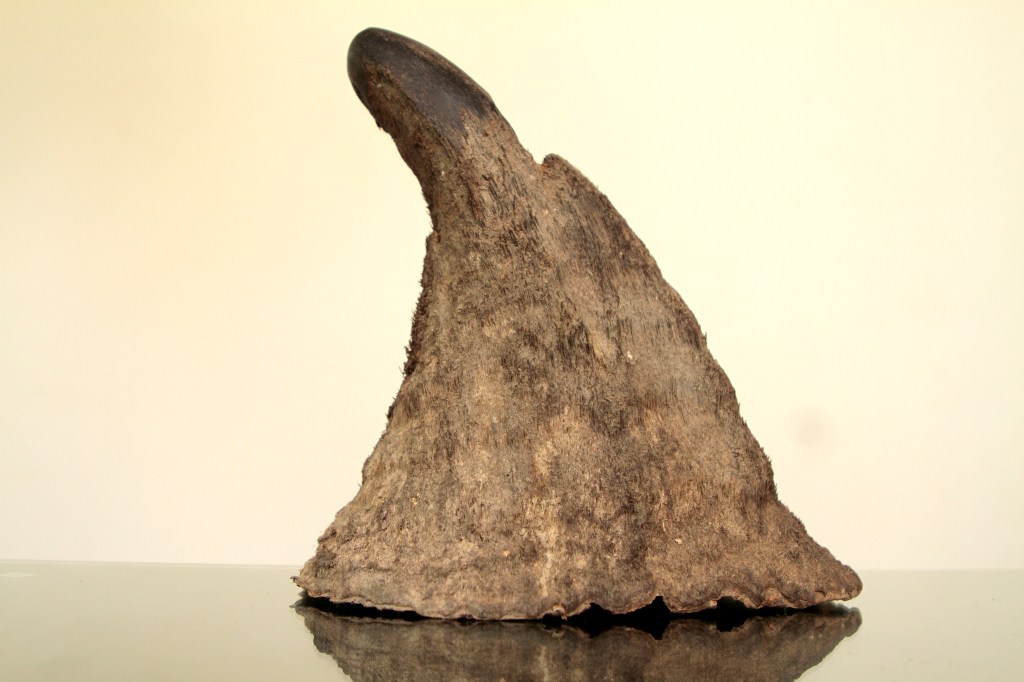
0:02:52 Dr Dipankar Ghose: So if, and we have actually seen it, that once a poacher in a village was identified, the person was kind of boycotted. So the local people support conservation, but it is the commercial nature of illegal wildlife trade. It is the very high demand and at times, pricing that allows the trade to thrive. Believe you me, rhino horn is nothing but a cluster of hair, which means it is keratin. Keratin does not cure cancer.
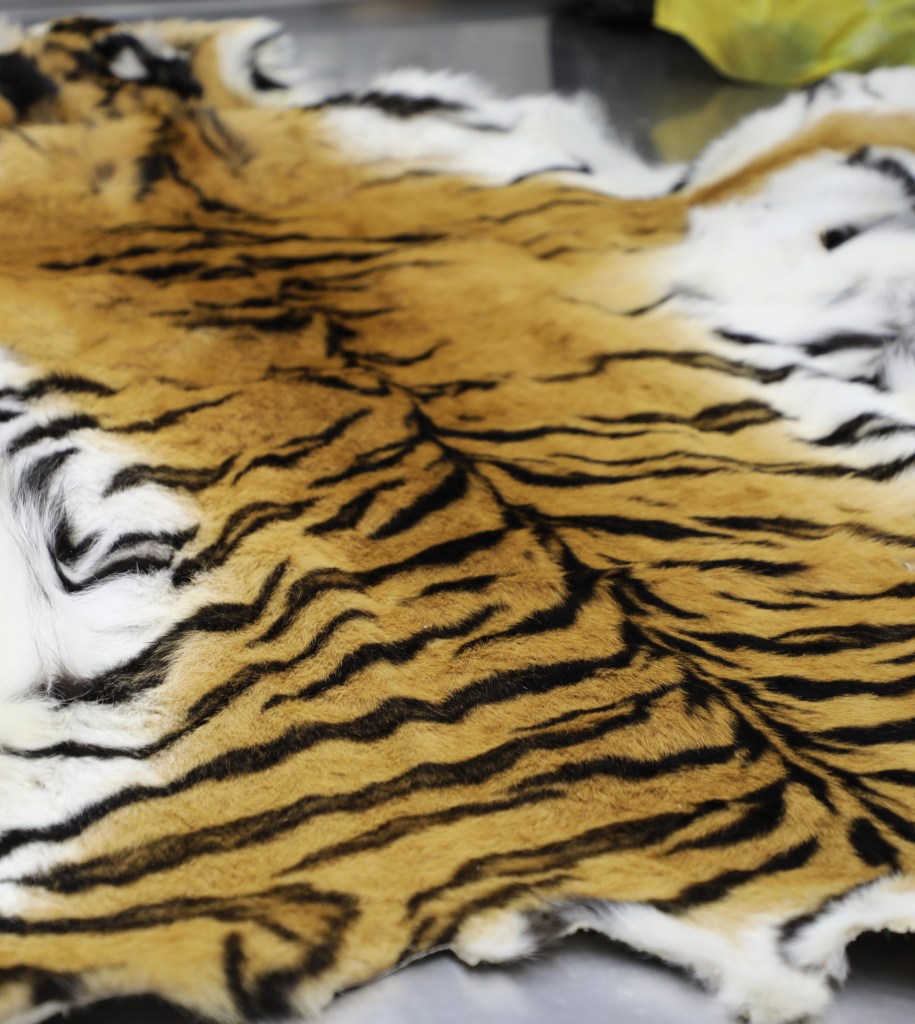
0:03:25 Dr Dipankar Ghose: Same thing with tiger bone. It’s similar to any other carnivore bone. It will not add to the strength of a person. So while we are working in the country on strengthening protection and using modern tools to carve poaching, one also needs to work outside the country, which global organizations are doing to ensure that the demand is also reduced. So to answer your question, it is big, it is thriving, and India as a country acts as a source for some of these charismatic threatened animals. And we are talking about tiger body parts, rhino horns, elephant tusks, and sometimes even elephant bones and skins and blood bits.
0:04:17 Dr Dipankar Ghose: We are also talking about marine species, freshwater turtles, pangolin scales, you name it. Most of the threatened species from India, animal species particularly, are in the illegal market.
0:04:33 Lalitha Krishnan: Right. It’s also like a catch 22 situation where we have so much and so much has been done to look after it. But at the same time, there’s a demand for all of this. So, you know, most of us have heard of tigers, rhinos being sold for medicine and skin, and the exotic pet trade of fish and birds. But most of us, I’m sure, in India, I’m not talking of the general public, who knows about the ‘conservation’ field… But, you know, a good number of us don’t even recognize the timid pangolin, which is part of this ongoing illegal network.
0:05:11 Lalitha Krishnan: And I read that 23.5 tons of pangolin were traded in 2021 alone. Of course, I don’t have the latest numbers, but why is it so? Could we speak about why pangolins are the new tigers or the new most fashionable thing to trade?
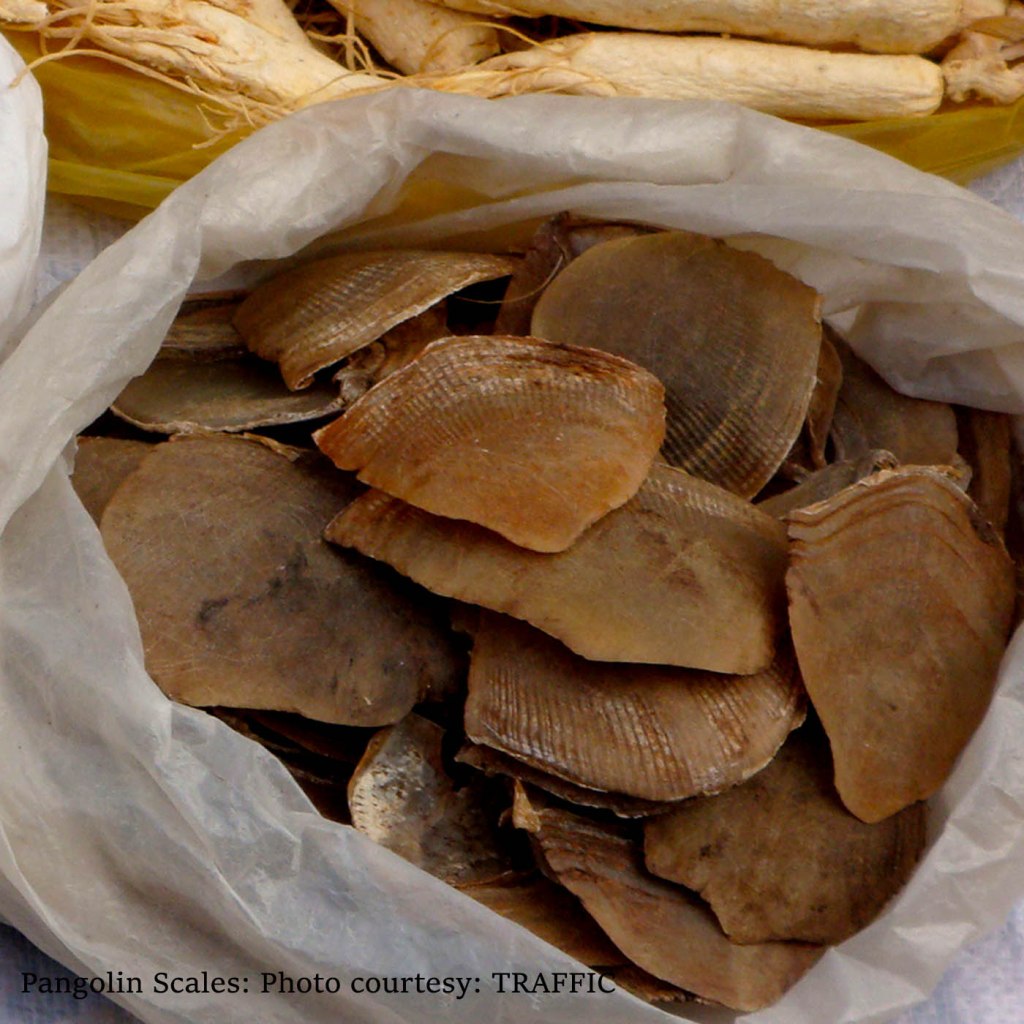
0:05:29 Dr Dipankar Ghose: So pangolin scales are used in traditional oriental medicine, right? They’re never used in their fresh form, they’re used in their dried form. And there are papers published in reputed scientific journals which say that— there’s one particular paper I can send it to you—which says scales are burnt, roasted, ashed, cooked in oil, butter vinegar, boy’s urine, or roasted with oyster shells to cure a variety of ills.
0:06:00 Dr Dipankar Ghose: Among these are excessive nervousness and hysterical crying in children, women possessed by devils and ogres, malarial fever and deafness. So many pangolin skeleton requests for this purpose that yearly, the scales from some 5000 individuals were imported from a particular country. And these are all going into traditional Chinese medicine. The challenge again is the belief whether the scales have that kind of a property is not scientifically proven, but they are going to be used all the same as the rhino horn. It is keratin, which we know, does not cure cancer.
0:06:44 Dr Dipankar Ghose: Right. If it could be a cure, then probably we would have eaten up all our hair or bitten off all our nails just to prevent cancer from happening. But it doesn’t help in any way. So same thing with pangolin scales. And what we are also hearing is that pangolin scales, because the belief is they cure a lot of illnesses, they help women to lactate and stuff. People started using dry pangolin scales as a hair comb for combing their hair and brushing their hair.
0:07:20 Dr Dipankar Ghose: They make tiny combs out of those scales or use them as guitar plucks just to have a feel, just to touch a pangolin scale. So it’s deep in the belief that the challenge is that the users do not understand that a species is going to be exterminated from nature. Just because there is an unscientific belief in their mind, in oriental medicine, that’s the challenge.
0:07:51 Lalitha Krishnan: And this is such a small creature, it makes it even more vulnerable to ignorance you know?
0:07:58 Dr Dipankar Ghose: Absolutely. I tell you about 20 years back when many tiger skin seizures happened from India and Nepal, some of those seizures had also recorded the trade of otter skin. And then one found out, and I had been to Tibet and figured out this otter skin was used to make collars of coats of chuba. Why? Because otter skins have a very good waterproofing quality or character. So when it is snowing or it is raining, snow won’t settle on a coat which has got an otter skin collar. Now, my point is that in this time and age, when we have so much synthetic material use why kill a poor otter in the wild?
0:08:47 Dr Dipankar Ghose: And you’re not, not using farmed sablel hair, but you’re actually killing wild otters to use their skins on your coat.
0:08:56 Lalitha Krishnan: Makes my skin crawl. Is this still going on?
0:08:59 Dr Dipankar Ghose: Yes, we still hear otter skins getting seized. It’s like—at some point of time—in some parts of eastern India, Banded Krait, which is a very… it’s a poisonous snake, but a very docile snake. The Banded Krait was almost exterminated because there was high demand from the fashion industry to manufacture leather bags of Banded Krait skins. You know, yellow and very bright yellow and black stripes.
0:09:30 Dr Dipankar Ghose: That kind of exterminated the Banded Krait, which created another problem, because the Banded Krait, thrived on smaller snakes. They ate small snakes, and one of their food snakes was the Common Krait. So in Sundarbans, the hypothesis was that many people started encountering Common Krait. You see them inside your homes and fields, and you’re somebody getting into the farming room and stuff and getting bitten and bitten in odd places, odd times and dying.
0:10:04 Dr Dipankar Ghose: And one of the reasons scientists and naturalists who were working on this had said, “If bandit crates were there and there were a high number of Banded Kraits, they would have kept the population of Common Kraits.” I mean, that exactly is a typical maintenance of ecological balance. You know, one creature maintains the balance of another. But we took out the Banded Kraits, they were poached for fitting into the fashion industry.
0:10:33 Dr Dipankar Ghose: Demand for snake skin all gone, you know. So, I mean, we sometimes do not even think of… there is the whole illegality of it, but there is also the ecological aspect of it. And many a time one doesn’t see the ecological aspect. At some point in time, in the southern part of the country, the large tuskers were all poached, and most of the tuskers were poached. So the sex ratio was skewed and breeding success went down because the makhnas or the tuskers with smaller tasks were not selected by breeding-age females.
0:11:10 Dr Dipankar Ghose: Now that’s getting recovered in successful conservation initiatives, its population is recovering. So there is this whole ecological aspect which also needs to be looked at when we deal with illegal wildlife trade, right?
0:11:25 Lalitha Krishnan: And also communicated, I don’t think people realize what happens if you take all these species, especially keystone species off the picture. Wow, that’s interesting. Have you ever personally out of choice or otherwise been involved in particularly monitoring or witnessing wildlife training?
0:11:49 Dr Dipankar Ghose: Well, in my previous avatar, I was working with another organization and I was in charge of the enforcement unit: Wildlife Enforcement unit. So NGO’s and civilians… we are not authorized to take any enforcement action. So we worked very closely with government agencies, and enforcement agencies and monitored illegal wildlife trade and at some point in time also helped the government to bring an end to that trade. So this was around 2003, 2004 when I was working with another organization and we worked with the government of Uttar Pradesh to curb trade, or rather illegal trade in mongoose hair paintbrush.
0:12:35 Dr Dipankar Ghose: And initially what looked like a small industry of manufacturing paintbrushes, which is sold to the artists and students, we figured out that some of these brushes were actually getting into the fashion industry because that was one of the most preferred brushes, organic brushes for painting or face painting or colouring or masking. It was quite a long process. When we monitored this trade, often working with government agencies involved a lot of meticulous planning, careful planning and taking utmost care not to expose some of the people who were giving that information.
0:13:20 Dr Dipankar Ghose: And ultimately working with the government to curb the trade and bring the offenders to the book. So yes, I did that. But from WWF currently, we are not into any of these enforcement actions. If we get to know about any illegal trade, whether it’s through online monitoring or whether it’s based on information received by any of our field members, we immediately pass on the information to the nearest government authority, either the wildlife crime control bureau or the forest department.
0:13:56 Lalitha Krishnan: I mean, who would imagine part of your makeup is from a mongoose? To even think that, it’s just so sad. Could you explain what the wildlife trade chain is? Just to have some basic understanding.

Sable fur skins in Milan. Photo by Kuerschner – Own work, Public Domain, https://commons.wikimedia.org/w/index.php?curid=3734346
0:14:18 Dr Dipankar Ghose: It’s very, very interesting. And I will take the example of Sansar Chand. And often people used to say that Sansar Chand is the Veerappan of north India, but that’s not true. So Veerappan was a person who was extracting sandalwood and who was also trading in sandalwood. But mostly his job was extraction and some bit of trade. Right? When I say extraction because it was plants, it was trees, which he was into, timber, which he was trading in and smuggling. Come to north India, a Sansar Chand, Sansar Chand was not a direct poacher. He might have instigated or asked somebody to poach an animal, but he was essentially a trader, a big-time trader of wildlife derivatives.
0:15:08 Dr Dipankar Ghose: So there is a change in the process that we are seeing. Earlier, there used to be poaching syndicates and illegal wildlife trade syndicates which used to manage some of these. But with the advent of the Internet and social media and the dark web, a lot of supply chains and logistics solutions, we are seeing that the trade of illegal wildlife products is now going online. There was somebody who was announcing that, “Hey, I have this particular animal and a live specimen. If you would like, contact me”.
0:15:46 Dr Dipankar Ghose: And not even through the dark web in a masked way…he was presenting it on an online platform. Obviously, enforcement action was initiated against the person. So the chain happens is that from the point of poaching, from the source point, it crosses our borders, land borders, primarily through Nepal or through Bhutan or through Bangladesh. Otherwise, it’s through the seaports. A lot of seizures of star tortoises have happened in the seaports.
0:16:18 Dr Dipankar Ghose: Marine products through the seaports. And some fancy products are also very expensive, like shatu shawls. They are also transported by human carriers. E.g., a passenger would buy a shahtoosh shawl in India and they would take it in person when they would fly out of the country. So it’s mixed and there is no one particular trade route, but essentially a land route through the northern and eastern border.
0:16:46 Dr Dipankar Ghose: Northeast has become, especially the Indo-Myanmar border has become particularly vulnerable to illegal wildlife trade. So, yes, land routes from those sides, seaports and sometimes also air routes.
0:16:59 Lalitha Krishnan: It’s more complicated than we can sort of figure out or understand.
0:17:06 Dr Dipankar Ghose: Yeah, indeed.
0:17:08 Lalitha Krishnan: At the same time, it looks so simple. I mean, a passenger taking a shawl across would be not suspected at all. Crazy.

0:17:17 Lalitha Krishnan: You know, talking of technology, it’s always evolving. Would you like to tell us something about environmental DNA or eDNA that WWF uses or something new that we might not even be aware of?
0:17:35 Dr Dipankar Ghose: A very good question. We do not have a laboratory and we work primarily with government agencies. eDNA, technology is evolving and I hope that one day, subject to the availability of our resources, we will be able to get into the eDNA space and strengthen the work that researchers and officers from the government are doing. But there is something that we started about seven, eight years back. This is called the RhODIS® -Rhino DNA indexing system, where we have been partnering with the Ministry of Environment, Forest and Climate Change Government of India (MoEFCC) and the Wildlife Institute of India(WII) to establish this system.
0:18:21 Dr Dipankar Ghose: The technology was borrowed from South Africa. I would say, users and initiators of the technology transferred the technology to the laboratories here and now the Wildlife Institute of India have the marker for rhino populations from all the wild, rhino-bearing areas of India. So what happens is that once a rhino is poached and its horn is collected, and if there is any tissue in it and DNA can be salvaged from there, then the rhino DNA is matched and the population where from it was collected is identified, which helps in strengthening the case. The prosecutor can then pinpoint and say that, okay, hey, this particular rhino horn, which might have been seized in a city, can say that, well, this matches with the population here.
0:19:17 Dr Dipankar Ghose: And if a carcass has been found and the DNA samples obviously, have been collected from that carcass, then that horn might even be matched with the carcass of rhino, which was poached. And, using this information, in the recent past, one conviction has happened where a person who was in possession of a rhino horn, was matched with a poached rhino. And then the call details record also showed that the suspected poachers were also talking to this person who was a trader. So this kind of technology also helps. Earlier, it would have been impossible to establish a link between the trader and the poacher. And although the case would be there when a ScheduleI species derivative would be seized from the possession of a civilian, the case would get strengthened if it could be linked with a particular poaching incident.
0:20:14 Lalitha Krishnan: That’s so interesting and so nice to hear that. So it’s not only concrete evidence, but it’s speeding up the whole process of catching them before they leave the territory, wherever that is. Or the country, I suppose. Apart from the latest technology, which is also available to crime networks, what other methods or soft tools do you think are imperative to keep illegal wildlife trade at bay? What does WWF do?
0:20:50 Dr Dipankar Ghose: Again, a very good question. I think technology is important and we are working with the government agencies to help them with technology. There is a simple tool which was promoted by WWF and now many agencies use it. It’s called Deep Search Metal Detector, used to find leg snares. Sometimes these leg trap snares, metal snares, are put on the forest floor, primarily meant for catching carnivores like tigers and leopards and sometimes even herbivores. Now these DSMDs, the Deep Search Metal Detector would help a person, a forester, a forest guard, or a ranger, to find a snare.
0:21:38 Dr Dipankar Ghose: It would also, in a crime situation, help the officers to find empty cartridges or bullets or shells or metal cells or even a weapon if that was hidden in the nearby area or near the crime scene. So we also use forensic kits and stuff. But the most important fact remains that protection can be strengthened by increased patrolling, surveillance and support from the local communities who are residing within or adjacent to these wildlife habitats.
0:22:18 Dr Dipankar Ghose: These three things are of primary importance. Protection, surveillance, and community support. So we work a lot with the authorities, with the protected area managers or reserve forest managers, which are wildlife habitats, to strengthen protection, help them in surveillance using something like sniffer dogs, which could continue or which could help in the investigation, finding a spoor and also work on securing community support against wildlife crime.
0:22:56 Dr Dipankar Ghose: There is one area I would like to mention in the Terai particularly, in Uttar Pradesh. We have been able to establish, together with the forest department and local panchayats, a group of volunteers who are there to protect tigers. They’re called Bhag Mitras and there are about 500 of them. It’s a fully voluntary force and their primary role is to help the authorities in managing human-tiger conflict.
0:23:25 Dr Dipankar Ghose: Whenever there is a challenge: a tiger is in human dominated landscape, these people come out and they form the first line of defense. So this really helps in managing conflict. But this also deters a suspected poacher. Because with so many people trying to protect the tiger, a poacher would not dare to go there because this particular group of people would then not support or would do something to stop poaching.
0:24:01 Lalitha Krishnan: First line of defence.
0:24:04 Dr Dipankar Ghose: Yes, indeed.
0:24:05 Lalitha Krishnan: My next question is how does your partnership with other agencies like TRAFFIC (Trade Records Analysis of Flora and Fauna in Commerce) help fight wildlife trade in India? Or do you have other partners and what are their different roles?
0:24:18 Dr Dipankar Ghose: So traffic is part of WWF and I am also the Interim Head of TRAFFIC in India for the last two years. And so it’s the same team which is working whether we call it TRAFFIC or WWF. But in terms of partnership, we partner a lot with not just government agencies but also NGOs and other intergovernmental bodies. We recently partnered is the South Asian Wildlife Enforcement Network (SAWEN) and the Global Tiger Forum in capacity building of enforcement authorities along the Indo Napal border at a very, very high level and a strategic level.
0:24:57 Dr Dipankar Ghose: We also work with other NGOs while it talking about capacity building or curriculum development for ranges. So most of the partnerships are through the government agencies coordinated by the Wildlife Crime Control Bureau or the State Forest Department or the Ministry of Environment, Forest and Climate Change where we partner with other enforcement agencies or with other NGOs.
0:25:25 Lalitha Krishnan: Dipankar, whatever you’ve been telling me, it’s such an insight. There’s so much, as ordinary citizens that I don’t know, and I’m sure most people don’t know most of what you’re talking about. So thank you so much for those insights.
0:25:39 Dr Dipankar Ghose:: You’re welcome.
0:25:40 Lalitha Krishnan: I kind of know the answer, but I don’t know the answer. So is illegal wildlife trade a people problem or is it a government problem?
0:25:52 C: It’s a problem of both sides.
0:25:55 Lalitha Krishnan: All right.
0:25:56 Dr Dipankar Ghose: Why is it a people problem? It’s the people who do the poaching. They are normal people. What is driving them to poaching is different, but they are poaching.
0:26:08 It’s the people who are the traders, right? It’s the people who know about it but are keeping silent about it. And I’ll give you another insight, which is India is also becoming a consumer country, right? For what? For exotic pets. We have created a report from TRAFFIC India last year and you can download the soft copy from our WWF India website. We are becoming consumers of exotic pets in the country. All the way from a kangaroo roaming around on the highways of north Bengal, to vultures, to wildcats, to a lot of exotic primates from Latin America. Where are they all going? We don’t have these animals. They are all coming to India as pets. The more people have affordability and more people have disposable money, they would like to do something exclusive.
0:27:08 C: Dr Dipankar Ghose: And you can’t keep any Indian bird or an Indian mammal as a pet because that’s illegal under the Wildlife Protection Act. Right? So instead of going the legal ways of, you know, keeping budgerigars or there are some captive-bred birds which can be kept as pets legally, people are trying to find exclusivity. It’s like, okay, this person has a ball pen, and that’s a Reynolds or Uniball. I want something exclusive. It doesn’t mean that the price has to be double or triple or four times, but it has to be exclusive. So people are always looking for that exclusivity. People are always looking for the attention. So it is a people’s problem.
0:27:51 Dr Dipankar Ghose: It is also a government problem because people can reduce the demand, but ultimately, enforcement actions will have to be taken by the government.
0:28:00 Lalitha Krishnan: Right.
0:28:00 Dr Dipankar Ghose: So it’s a problem of both. That is why I have always been saying on this podcast, as well as whenever I am talking about it or writing about this particular issue, that the support of local communities around the forest areas is of paramount importance if we are trying to stop poaching. Similarly, the support of people, of the business people or the people who are engaged in supply chain management is of paramount importance if we have to stop illegal wildlife trade through the usual supply chain or the usual logistics channel. So that is why there has to be an active involvement of people and, of course, government actions which are already going on.
0:28:47 Lalitha Krishnan: Okay. And, you know, what can a citizen do to report a crime of this level without risking his own life? Is there a channel? Is there any way he can report stuff that you see?
0:29:02 Dr Dipankar Ghose: Of course, one can make anonymous calls to the Wildlife Crime Control Bureau and it’s a very responsible government authority. But sometimes what happens is that in these anonymous calls, the veracity of the call or the verification can’t be done. So if a person is giving any information to the Wildlife Crime Control Bureau, they take care of it, you know… so they, they take care of what’s the problem and why this problem has happened and stuff.
0:29:35 Lalitha Krishnan: Great. So I’d love to hear some, you know, positive stories or personal stories that give us all hope. I’m sure you have quite a few of them.
0:29:48 Dr Dipankar Ghose: There is hope because if you see so many tigers moving out of the protected areas-India has 3600 plus tigers, where that’s the mean number. It could be more, it could be a few hundred tigers more or so, right? If we are considering about 4000 tigers, adults and maybe some young ones included, 25% of those tigers are moving outside the forest areas, outside protected areas, and they are in the agriculture fields.
0:30:24 C: They are passing through here and there, right? Passing through human-dominated landscapes. There are challenges, but the tolerance of people for those tigers or to keep those tigers or tolerate allowing those tigers to be in the human-dominated space is tremendous. The tigers are allowed to be there, otherwise there would have been challenges. There have been occasional incidents where people got killed, or injured, tigers got lynched.
0:30:53 C: But if you look at the scale, in a country of 1.4 billion people, we still have 4000 tigers, we still have 27,000 plus elephants, so many rhinos, so many herbivores, leopards, conflict is there, poaching is happening, but still we have all these. Right, show me any other country which has got very high, I won’t say numbers, but a very high density of human population like we have, but still has so much wildlife wealth. It’s there in India only. Right?So that talks a lot about our tolerance and I think that is the positive story.
0:31:30 Lalitha Krishnan:: You know, also those numbers may bring cheer, whatever said and done. Yeah. No, no other country has that I think. This is my last question to you. You’ve shared a lot, a lot of food for thought, but would you like to share a word or an idea or something that you feel strongly about that you would like our listeners to remember, about wildlife crime? It could be anything.
0:31:57 Dr Dipankar Ghose: Only one thing. If you see anything unusual about wildlife, whether one is travelling by public transport or travelling by a forest area, village, or urban area, report it. I’m sure that anybody who is listening to the podcasts also has an email ID, right? So send an email to the authorities, to the Wildlife Crime Control Bureau. You don’t need to judge whether it’s a crime or it’s not a crime but inform, you know, just stay alert and inform that, like we do, when we see any unusual movement in the neighbourhood and we call up the police, a similar sort of alacrity has to be there if we are to stop wildlife crime.
0:32:42 Dr Dipankar Ghose: I would just like to leave that thought with our, with our listeners.
0:32:47 Lalitha Krishnan: That’s a great thought. You know, sometimes we don’t think we can do anything of the sort. We’re so scared of the consequences. But when you say it’s safe to report, then I think more people will and should.
0:33:00 Dr Dipankar Ghose: Yes. Send an email. Send an email to Wildlife Crime. Send an email to the Wildlife Crime Control Bureau and with just an email ID; let the authorities reach out to you if they see that this is, this is important, this is something that they could work on. I know they might come back to you saying that, “Okay. We would like to work on it”. Or maybe some officer might contact you.
0:33:21 Lalitha Krishnan: Okay. That’s super. That’s great. Thank you so much. This has been so enlightening and so good.
0:33:30 Dr Dipankar Ghose: Thank you.
DipankarGhose #WWF_INDIA #TRAFFIC #IUCN #Tigers #Rhino #Poaching #IllegalWildlifeTrade #Veerappan #CITIES #WildlifeLawEnforcement #ExoticPets #SAWEN #Pangolin #SansarChand #SmugglingSpecies #wildlifeproducts #exoticplants #rhinohorns #tigerskin #pangolinscales #LalithaKrishnan #HeartofConservation #critically_endangered #storiesfromthewild #podcast
Pangolin photo: Rajesh Kumar Mohapatra Podcast cover art created by Lalitha Krishnan
Birdsong by hillside resident, the collared owlet.
All photos courtesy as mentioned in caption /photo
Podcast artwork by Lalitha Krishnan




 Earthy Matters