A Yearning to Save Wolves.

#Wolfprints

(This blog was written in 2016 when I began my pursuit of wolves)

I am smitten and this is unchartered territory for me. This whole yearning, trailing, nearly obsessive wolf thing, I got going here. Somewhere in my subconscious, I still carry this image of Farley Mowat transporting jerry cans of vodka in the guise of aviation fuel as he prepares to fly out in search of wolves alone, in sub-artic Canada. He lived like the wolves, urine marking his territory and eating mice when there was no caribou.

I can picture Jiang Rong*, the young Chinese student, during his harsh posting in inner Mongolia, stumbling on the pack of wolves that inspired his most fascinating novel in the thick of the Chinese revolution.

You may have heard of Mark Rowland, the philosophy professor, who kept a wolf called Brenin−posing as a pet dog−in the US for the whole duration of its lifetime. Rowland got away with it. Running and living with Brenin, nursing him through sickness, Rowland finally, gave him the noble burial he deserved and went on to write about lessons learned from the wild. I never wanted this book to end. That just about sums up my limited reading on wolves; all of which sound like romantic fiction but isn’t.

As much as I enjoyed these true accounts, by very real wolf adoring people, what set me off on the wolf trail is a mere conversation in a remote Himalayan village, which I had visited with my family. There were suggestions of smoking out wolves from dens and killing of cubs for a price. All hearsay but nonetheless, one conversation led to another that left me all the more bothered and restless. I have always been a sucker for the underdog. As you probably guessed, the wolf in my narrative is one and I think it deserves a second chance.

There was one problem. I was clueless on where to begin. For starters, I had never heard of a Himalayan wolf till then. I am neither qualified nor trained to a conservationist. But I am beginning to wish I were. It’s a sure pass to visit areas that are wolf habitats or off limit, and also work with experts in the field. It was too late for regrets. I made a deal with myself. I decided to go look for wolves and convince myself they exist before chasing ghosts. The determining factor would be actually spotting one. I needed a sign. The chances were bleak. No one I personally know has seen Himalayan wolves** or knows anything about them. Or, unusually, had any good counsel for me.*** Was I chasing rainbows? A few local folks in the area thought so. “It’s impossible,” they said. “You need to stay in one place long enough.” “Don’t believe what so and so says.” “You may see dogs.” “Come back next winter.” “I guarantee you won’t see one where you’re going.”

I had a single day, a single window to try and stay true to the wolf and myself. I turned a deaf ear and marched on regardless, in search of my elusive underdog. It wasn’t easy. On a cold evening, I travelled to an unfamiliar village, the base for my ascent to a high altitude lake at approx. 15000 ft. Starting out at 3:30 am, I trekked under a star-dusted sky accompanied by Kunga, a local. The territory was new to both of us. In no time at all, we were both cold and lost. I was clambering up−sometimes on all fours−a 60º scree slope that felt more like 75º. I moved on mindlessly, like a determined, migrating beast. By the time I ascended to the top, I was so breathless I wondered if was high-altitude or plain exhaustion that would kill me first.

#HimalayanWolf?
#HimalayanWolf

Then, in one instant, all thoughts and doubts were erased. I stood frozen to the spot. There, before me, in the first light of dawn, I saw running one after another across the dry lake, a pack of what looked like wolves. Not one but three or four. Could they be dogs? They certainly looked like wolves. Almost immediately, I heard a short bark to my right and then, a howl.

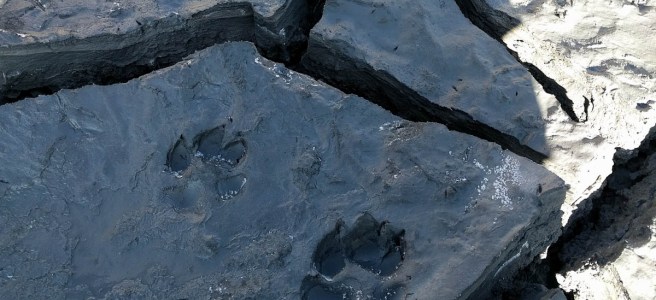
I felt the surface of my skin suddenly chill in response to my first wolf howl in the wild. I turned to see a solitary wolf, classically silhouetted on a rock, head thrust back towards the sky, communicating our presence to the rest of the pack. In a matter of seconds, they were all gone. Just like that. My mirage disappeared as rapidly as it had emerged leaving only footprints. Luckily my companion saw them too. We looked at each other, idiotic grins morphing our faces. I got my sign. A whole pack full! Suddenly, I was hungry for more.

*Pseudonym

**The Himalayan wolf is a newly discovered species distinct from the Tibetan wolf. (Wikipedia)

***I am extremely grateful to Mr. Chauhan, Range Forest Officer at Kaza who encouraged me to make the effort and also to Spiti Ecosphere for providing me volunteering opportunities to interact with locals and understand their perceptions towards wildlife.

My new story about wolves in two continents got published in Sanctuary Asia magazine . 
Back to basics. Wilderness first aid is about paying it forward.

I have in my possession two little cards that slide into my wallet that qualify me to administer CPR and first aid. These will stay put, unseen for another two years, till I do a refresher. It’s nothing to crow about but I silently feel empowered with life-saving skills.

I live in the hills where like anywhere else, emergencies are aplenty but opportunities like this course, rare and far in between. When Hanifl Centre for Outdoor Education in partnership with Aerie Backcountry medicine offered this course, I  enrolled immediately.


“Do no harm.”

Wilderness First Aid (WFA) makes sense because of where I am. It would make as much sense in an urban setting. The difference as far as I can see is the high-caliber of the course for a reasonable price. The idea, I think, is to make it affordable for everyone – paying it forward right there. The other huge advantage of this wilderness first aid training is that it teaches you to be resourceful. To make do with what you have or what is around you, in order to prevent serious injuries from potentially becoming deadly. I especially like the emphasis on “do no harm” while doing good!


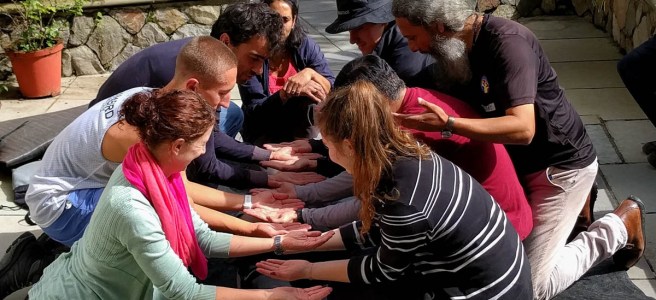
Unlike first aid courses often held in air-conditioned conference rooms, this one also exposes you to the elements, where scenarios, complete with blood* and gore, make it scary-real. It’s also a very interactive course (with many light moments thrown in) that builds confidence to go solo and work as a team. What really sticks is the creative use of the body as a teaching aid and unconventional props.

Hanifl Centre has trained 370 people in small batches across India, in 1 1/2 years including professionals from the outdoor/tourism industry, corporate world, housewives, university students, and teachers. I would highly recommend it. Take it forward. Share.

IMG_20160828_103455-2

Write to info@haniflcentre to know more.

*Realistic makeup

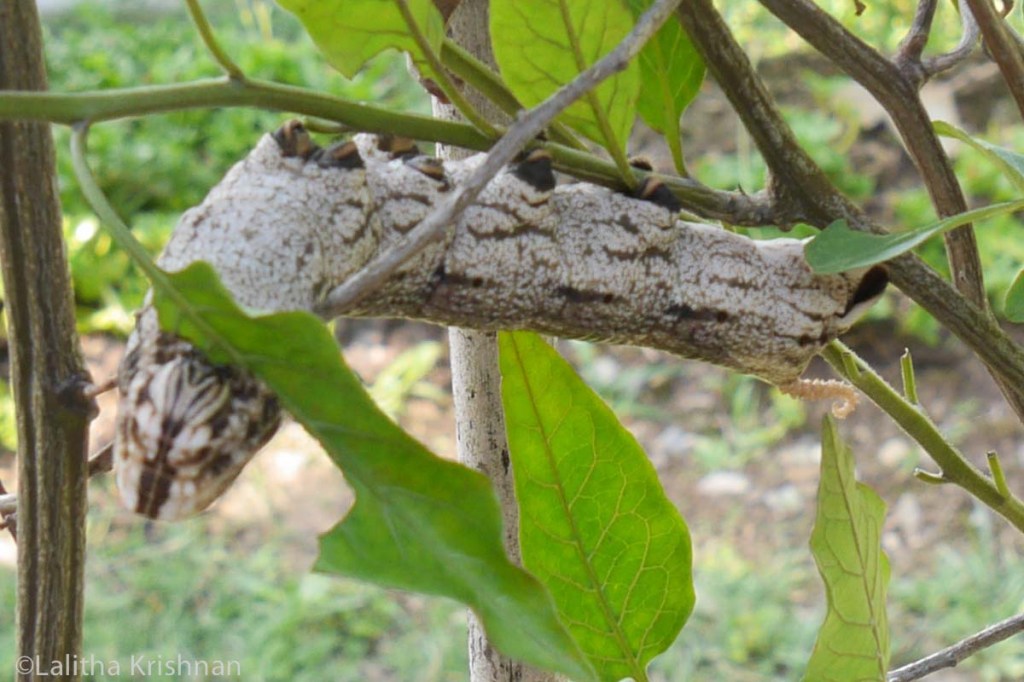
The most humungous Himalayan caterpillar I have ever set my eyes on, resides right at my door step.

The mouth of an Himalayan caterpillar up close with cobra-like markings

To say I am surprised by the size and length of this caterpillar is an understatement. It’s about the same length as a pen and thrice as thick. Appearance wise, it would do very well in a creepy sci-fi movie.

I was pottering around my flowers beds when I noticed some movement.  What I mistook for a rather limp looking piece of a bamboo trellis, turned out to be the fattest and longest caterpillar I have ever set my eyes on. It was gnawing away at a leaf and would freeze if I went up too close. After a few fuzzy takes and some patience,  I caught it make a slow move.

Caterpillar hanging upside down whilst feeding on a leaf
Caterpillar hanging upside down whilst feeding on a leaf.

Much to my disappointment, it had disappeared the next morning. It might have camouflaged itself a little better after its encounter with a giant creature -meaning me! I would have loved the chance to document it spin itself into a silky cocoon and watch the complete metamorphosis. I was told by Peter Smetacek, India’s leading lepidopterist, that this one will turn into a spectacular large Hawk-moth.

Do comment.

Watch out for my video. With the local internet speeds pretty much as slow as my caterpillar, it will reach you in a week or two.

Here it is, as promised:

See more of my nature videos on:http://bit.ly/LalithaKrishnanonYouTube

Follow me on @lalithainsta

Related articles.

http://www.woodstockschool.in/hovers-like-a-hummingbird-looks-like-a-bee/

Caterpillar to butterflies/moths.

#Caterpillars #HimalayanMoths #IndianButterfliesAndMoths #Ranikhet #HawkMoths #FloraAndFaunaOfUttarakhand #NaturalWonders #AnimalBehaviour #Insects #cocoons

8 life skills to be learnt from a crafty little woodpecker.

  1. Never disclose your location to just anyone.

For the past month or so, every time I leave the house, I’ve been hearing a rapid flutter of wings accompanied by a slightly high-pitched screech, followed by gentle tapping. I spent weeks looking for what I recognized to be a woodpecker but never caught it perching in one place for too long. It seemed strange; I kept hearing it in the middle of the afternoon when sane birds take cover. So what was this pesky little bird up to? It was doing nothing but distracting me and probably warning its mate of imminent danger.

P1160032-2
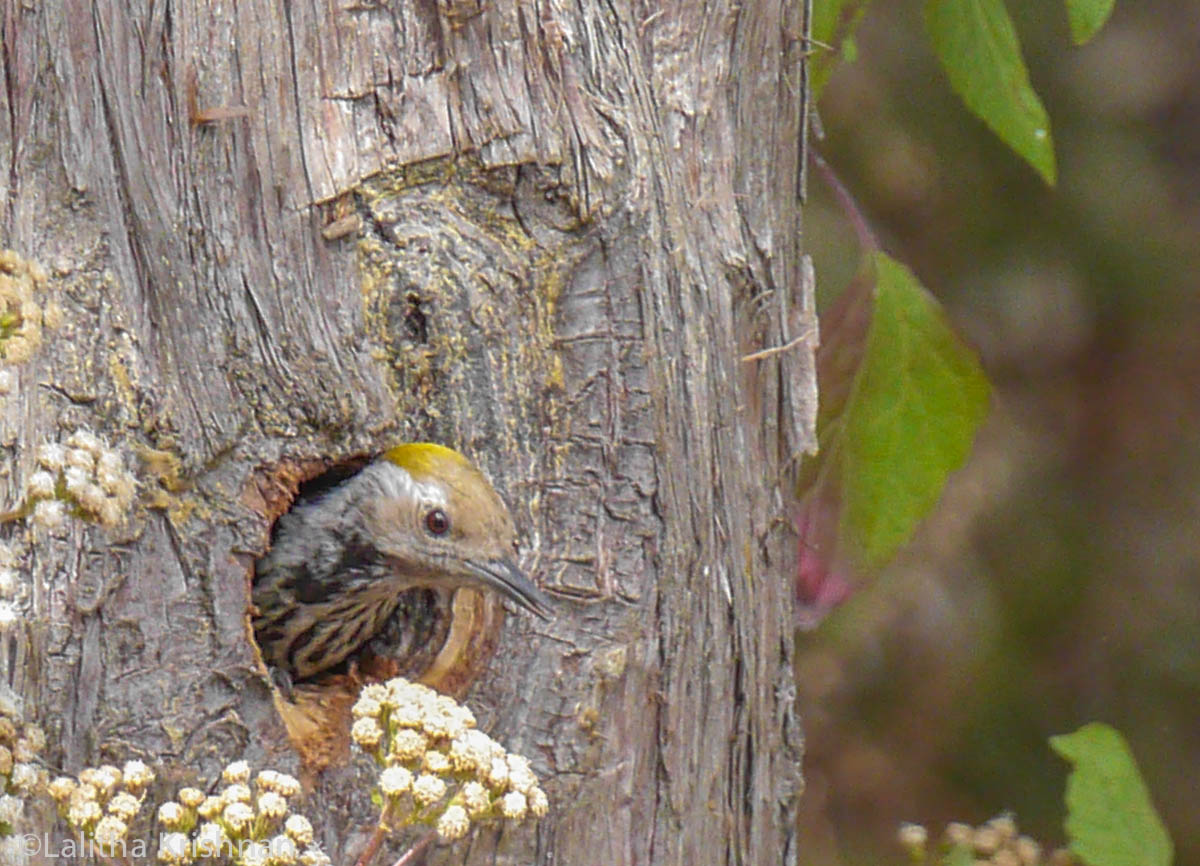
The brown fronted woodpecker (female) is cautious at all times.

  1. Be conscious of your surroundings.

Blame it on the fact that I am a wildlife enthusiast of sorts and curious enough to spend the better part of my day looking for anything that I can digitally capture. Luckily, I do not have the distractions of employment interfering with my rambles; and so it came to be I noticed an old hollow with fresh drilling marks.


P1160135
The female brown fronted woodpecker drills its nest out of a hollow.


  1. Be ready for contingencies.

Feeling like a photojournalist about to enter the NG hall of fame, I started by keeping my camera cleaned and charged, my SD card empty, played my music real low and kept an ear out for any tapping throughout the day.


P1160109
I was surprised by the size of some of the wood chips the woodpeckers cleared out.


  1. Keep your house clean.

In the meanwhile we were expecting houseguests and as is the norm at our home, just before their arrival we conducted a monumental clean-up effort. As you can guess, this included wiping our windows clean. And we have a lot of them! As I drew the curtains to proceed, I realised I was standing four feet away from the tree hollow. And lo and beyond there was the brown fronted woodpecker sticking its little head out.


  1. Always work in good light.

Whilst spying on the woodpeckers, I noticed they were most active when the sun lit up the inside of their hollow. They were using natural light to their advantage and mine. Though I was photographing them from behind a dark glass window, they were perfectly lit up as I captured their activities.


P1160444
Woodpecker using its bill to disperse wood chips to the wind.


  1. Share responsibilities as a team.

Though the pair worked together I rarely saw them both at the hollow at the same time. One of them would spend a few minutes inside the hollow carving out the nest and then would take time clearing out the wood chips before starting again. Reminded me of me cooking while my spouse did dishes later. An arrangement that always works out well!

I also noticed the woodpecker pick up wood chips and with a quick shake of the head and bill, disperse it to the wind instead of just dropping it off like dead weight. They left no trace of their nest building that way.


  1. Use all the resources you can.

In my enthusiasm, I shot a lot of shaky movie clips at different times of the day before I realized I could just as well have planted my tripod in place. I found better use of ankle weights (which I never use) for weighing down the tripod in the hope my mountain dogs wouldn’t topple it over. They have the uncanny knack of snuggling up by my feet just when I don’t want them to!


P1160472
The old tree hollow was refurbished with a lot of skill and effort to make a new nest.


  1. Whatever you do, give it your best shot.

These minuscule woodpeckers have been drilling out their home to perfection for a few weeks now.

I tried to get a glimpse of the inside of the nest but it was deep and cleverly spiralled out. Making it relatively safe from larger predators! They had functionality and safety all figured out! Makes you wonder why the word birdbrain has such negative connotations. Seriously!


  1. Be patient.

As you can see, I was rewarded with a private viewing of the secret life of the yellow-crowned woodpecker.

Woodpecker chicks are hopefully on their way soon. Their intelligent parents are bound to teach them more than 8 life skills to survive. I have seen timber martens claw away at a woodpecker nest before and I’m hoping they never sniff this one out. Hope you enjoy the photos. All of them were shot through my (recently cleaned) window.

I would love to hear your comments.

Follow me on Instagram and Google+

A related article about bird intelligence  via HuffPost India


My hometown south of the Himalayas is fading fast.

P1120894

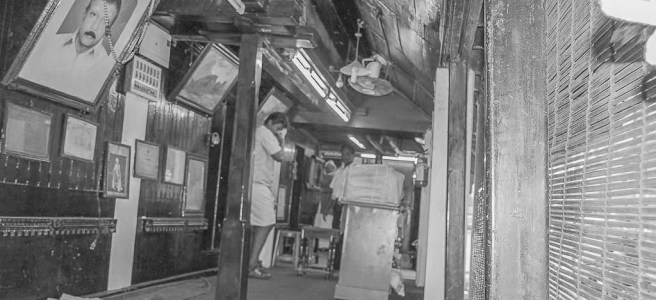
Kaithamukku, the town of my childhood is in Kerala. It’s the place where my mother and her whole tharvad of siblings, cousins, aunts, uncles and numerous grand old relatives grew up under one roof. We used to make the two and a half day’s journey there every summer, travelling in a non-air conditioned train carrying games, homemade delicacies, and bulky canvas bedding. The little that is left of my mother’s world includes two ancient Ayurvedic shops. Read the whole story here:

https://maptia.com/lalitha_krishnan/stories/sos-hometown-fading-fast

P1120862


Why you should visit a nature reserve closer to home.


Invite an expert and take your family along.

We have a saying in India, “the home-bred chicken is as ordinary as your daily dal (lentil)”. If you have a nature reserve or green and wide open spaces in your backyard, you’re likely to take it for granted. You don’t visit it because you think it’s not going away. That’s how I felt about Jaberkhet Nature Reserve (earlier known as Flag Hill), which is only a twenty-minute walk from my home. I walk the forest trails often but not often enough. I visit the reserve to click photographs without quite observing or consciously listening.

Recently I joined an organized walk with expert environmentalists from two different fields: Chris Hails and Dr. Gopal S Rawat. Chris Hails who works at the Director level for WWI in Switzerland was recording bird sounds at the JNR while Dr. Gopal S Rawat, Dean, Faculty of Wildlife Sciences,  Wildlife Institute of India, Dehradun, was walking us through the local ecology of the area.

It was a rare opportunity and privilege to walk with these two very knowledgeable people besides being a great way to spend a morning.  I began to hear and learn new things every step of the way. The  JNR* has undergone an astounding transformation in a short span of time. Revived species of plants are visible everywhere. The forest is resounding with bird calls.  One sees a variety of scat. The reserve takes on a different look every season. Right now, the Rhododendron trees are adding vivid bursts of red to the hillside. JNR is also home to various animals and birds that we didn’t know existed in our vicinity but for camera-traps that have digitally captured them. Seeing is believing!

I came away with a deeper appreciation of the space I share with wildlife and more respect for conservationists like Hails and Rawat, and their fellow environmentalist Sejal Wohra, who runs the reserve with a lot of passion and sparse funding. Moreover, it made me realise that the onus of preserving wild spaces like this rests equally on people like me and you – the community. 

Nature reserves and green spaces are vulnerable and do disappear to make way for “developmental” projects for several reasons. When that happens, species disappear overnight. So please, if you haven’t already, do visit a nature reserve or forest/lake/natural open space close to you. Pack a picnic lunch. Learn about species you share the habitat with. You may well be surprised by who and what resides so close to you. Take your friends along. Donate. It’s easy. Volunteer. It’s a little harder but certainly doable. Contribute in any way you can. Start a club. Share on social media. Keep your backyard and enjoy it too.

*JNR is a part of an initiative set up as a private partnership between the owners of the land (the family of the Late Shri J P Jain) and Sejal Wohra (Programme Director WWF-India). Thanks to their joint efforts JNR is a perfect example of what can be achieved with the cooperation of locals and the know-how of professional environmentalists.

viru
The local villages are involved in the protection of the reserve. Tree lopping and cow grazing have altogether stopped. The local are receiving training and employment and have turned into protector of the forests

Follow me on Google Plus and Instagram


If you would like to get involved with JNR write to sejalwohra@gmail.com or visit http://www.Jaberkhetnature.com


Tigress, Tigress Burning Bright

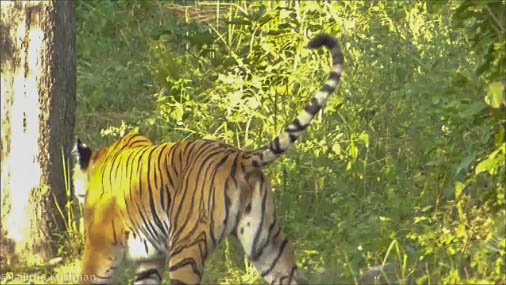
William Blake knew what he was talking about when he penned his poem, The Tiger. I saw this beautiful tigress scent her territory in Corbett, seemingly unperturbed by jeep loads of tourists capturing her every move. It was around 3-4pm , her coat looked like it was aflame in the dappled light. She confidently strolled ahead of us scenting every tree – letting us know we were trespassing.

Watch her on my You Tube channel:


The Tiger by William Blake.

TIGER, tiger, burning bright

In the forests of the night,

What immortal hand or eye

Could frame thy fearful symmetry?


In what distant deeps or skies

Burnt the fire of thine eyes?

On what wings dare he aspire?

What the hand dare seize the fire?


And what shoulder and what art

Could twist the sinews of thy heart?

And when thy heart began to beat,

What dread hand and what dread feet?


What the hammer? what the chain?

In what furnace was thy brain?

What the anvil? What dread grasp

Dare its deadly terrors clasp?


When the stars threw down their spears,

And water’d heaven with their tears,

Did He smile His work to see?

Did He who made the lamb make thee?


Tiger, tiger, burning bright

In the forests of the night,

What immortal hand or eye

Dare frame thy fearful symmetry?

Snapshot 3 (1-31-2016 6-35 PM)-3