The last time I met Bill Aitken was in September 2024. (Photo by Lalitha Krishnan)
October 16, 2025, marks six months since Bill Aitken passed on. I see the Nanda Devi peaks stark against the blue winter sky from my home these days, and I think of him. I have known Bill for twenty-odd years, but I can’t say I truly knew him completely, apart from the obvious. His impactful books, of course, with their whimsical wit and offbeat insights. His love for the mountains, railways, bikes, music, and the spiritual journeys that led him through ashrams across India. Of Scottish descent, Bill was a naturalised citizen of India, living in Mussoorie, where my husband and I spent 12 years. It was there that we got better acquainted.
Nanda Devi peak on the right as seen from my home in Ranikhet. “The station master at Kathgodam had made one feel immediately welcome and the first thing that cheered my eyes outside the station was a sepoy of the Kumaon Regiment feeding a dog called Tommy.”- Bill Aitken The Nanda Devi Affair
Since his unexpected passing in April 2025, much has been written about his writing. But he once said to me during a podcast interview, “I’m a traveller who writes, not a writer who travels.” Those words stayed with me. It carried a kind of truth that was unmistakably Bill: wry and rich with layered meaning. I think of him as a maverick. Well-known. Generally loved. A man of mystery. Little understood but never to be forgotten. And yet, there was another side to him, quieter but just as defining. A deep and steady love for dogs ran through his life like a hidden thread.
His passing was unexpected. I never saw Bill as a 90-year-old. He did not look nor speak, or carry himself like one. He moved through the world with a lightness, a spring in his step, a glint in his eyes that time never seemed to dull. Even when recovering from a broken hip or being advised to slow down for his heart, he did not stop. Most of us saw him out on the road, not indoors. On a walk, pausing to chat, greeting a stray.
Harish Kapadia and BIll sharing a lighter moment in MussoorieBill Aitken (Sept. 2024, Mussoorie)
When my husband and I visited him in Mussoorie last year with mountaineer Harish Kapadia to celebrate, rather late, Bill’s 90th birthday, he insisted on walking to the restaurant. And he did so at a pace that put me to shame. He had lived independently for years, with some help at home and a small network of neighbours and friends who looked in on him. Ruskin Bond and Bill were especially close. I remember a time when they celebrated their birthdays together. I can only imagine the silence that now fills the spaces they once shared.
What I came to realise rather late, and wish I had known earlier, was just how much dogs shaped Bill’s world. When he heard I was writing a memoir on the strays of Landour, he handed me something extraordinary. It was a dog registry, kept by him and his companion of thirty-eight years, HH Maharani Prithwi Bir Kaur of Jind. At first glance, it looked like an ordinary notebook. Inside, it is anything but. There are names, birth dates, breeds, lineages, illnesses, and deaths. And in between the lines…deep, abiding love.
The “crabbity” one from the dog registry.
The descriptions are more than factual. They are intimate sketches of characters. Dolma, a Tibetan Spaniel, is defined as “crabbity, weak hindquarters, excellent mother, bites ankle from behind.” Her photograph, black and white and grainy, is still pasted on the first page. Chow Chow, her son, is labelled as a “great soul conscious of his masculinity,” a dog who hated being touched in certain places, excelled at chasing monkeys, and carried a “golden goodness”. He is referred to as Dieu Donné, or God-given.
The pages hold both detail and playful affection. A hungry, lonely dog found at the gate became Paras, named after the Crown Prince of Nepal. A red Pekingese pup was adopted after an audience with Sai Baba. She was renamed Gurumai, “because it sounded more euphonic,” Bill wrote.
The notebook moves between cities and decades. Delhi. Almora. Mussoorie. The dogs, like their humans, are always in motion. And yet each entry feels definite, rooted in care. You can tell they paid attention. You can feel the weight of loss in each passing. One dog “achieved nirvana.” Another simply “left a huge void.”
Last year, Bill lost Frederika (Freddy), a golden Labrador who had been his companion for ten years. “Her treatment was in vain,” he wrote to me, “and after eating only eggs and papaya, she passed away quietly just before Christmas.” Then came Maximus, a pup who arrived in March 2025. “He is white with a black patch over one eye like a miniature panda with the colour scheme reversed,” Bill wrote. “I’ll send a photo.” But he never did.
When Bill passed soon after, I was filled with remorse. I didn’t get a chance to send him a copy of my newly published book. But more than anything, I miss him. His company. His cheerful laugh. A visit with Bill always made me feel that all was well with the world. He had that effect. He was one of a kind. Gentle. Observant. Always ready with a witty joke. Sometimes, ending on a philosophical note. And in his lifelong love for dogs, there was something telling. His kindness and attention to the overlooked. The sense that even the smallest lives deserved to be seen, remembered, and cherished.
He wrote:
“What I love most about dogs is their instinctual nature and how they intelligently sum up any situation. When we drove to Delhi after six months in Mussoorie, on crossing the Yamuna, the hitherto listless dogs would jump up excitedly, having picked up the scent of the Friends Colony garden still several kilometres away.
And when I trekked alone in the Himalaya, invariably a dog unasked would attach himself to the outing as if to say, ‘This dumb-ass looks like he could do with my guidance.’
Daily on my morning walk, whenever I pass a dog, he gives me a good sniffing over, then looks at me approvingly as if to say, ‘This guy is not as dumb as he looks. He only keeps lady dogs.”
And again, in Bill’s words:
“Dogs are not only our best friends but the best therapy.”
Heart of Conservation PodcastEp#31 Show Notes (Edited)
Introduction:
Hi, I am Lalitha Krishnan and you’re listening to Ep# 31 of Heart of Conservation. I bring you stories from the wild that keep us all connected to our natural world. You can listen to Heart of Conservation on several platforms and also read the transcript right here on my blog Earthy Matters.
Today’s episode is about the Sundarbans. I recently made a trip there and I have to tell I am so spell bound by the immensity and biodiversity of the world’s largest delta which we share with Bangladesh. To be honest, I didn’t know about these 2 facts earlier. Almost everything I saw was unique somehow, something I had never seen before. I knew I had to find an expert to learn more about the Sundarbans ecosystem. As luck would have it, I came across a social media account @onesundarban which belongs to Dr Radhika Bhargava, my guest here on episode # 31.
In her own words, Dr Radhika wears multiple hats as a coastal geographer, geospatial analyst, and a National Geographic Explorer. She is a Research Fellow at the NUS Centre for Nature-based Climate Solutions working with wetland conservation in Asia. She recently completed her PhD at the National University of Singapore. We will discuss her research some more but for now, Radhika, welcome and congratulations on your PhD. I feel so privileged to have you share your knowledge and experiences with us.
Radhika Bhargava: Hi Lalitha, thank you so much for having me on your podcast. I am so excited and I am so happy that you recently visited the Sundarbans. I am really looking forward to your questions and interacting with you on Sundarbans.
Lalitha Krishnan: Lovely. So, let us start. Radhika, what made you, first, focus on the mangroves for your research and why must we be watching the mangroves to check on the health of our planet?
Radhika Bhargava: I started working on mangroves during my Masters actually. I was part of a project where they were looking for someone to do coding or use coding /computer languages to identify mangroves of South East Asia. So, you use satellite images and you have to interpret where the mangroves are. There were many other forest classes that I was interested in studying but somebody had taken up those classes or somebody had taken up those forest areas to study using satellite imagery. They were only left with mangroves and then, I joined the lab. Nobody was willing to take up this project because there was a lot of computer coding required. And, coming from ecology, biology or management backgrounds, we were not trained in it. I saw this gap and evenI didn’t know any computer programming at that time. But then, looking at this desperate need that nobody is doing, I said, “Sure, why not? I will give it a try.” I started learning coding from scratch and then my focus was mangroves. So, that is how I learnt a lot about mangroves. I became so curious that through the two years of my Masters which was at University of San Francisco, the focus was Environmental Management. I ended up with all my class projects or side projects related to mangroves. That’s how I came across the Sundarbans.
3:56
You asked me, “why must we be watching the mangroves to check on the health of our planet?” There are many reasons. Especially that mangroves are coastal protectors. They protect the sea from storms and cyclones. Their roots help in purifying water but specially they store or remove carbon dioxide which causes global warming. They store it within themselves and keep it there for millions and millions of years. They have such characteristics that can tell about the health of the planet and actually help in improving the health.
4:30
Lalitha Krishnan: That’s quite amazing. I love the part about you learning coding from scratch. Look where it has taken you. Radhika, I’m curious about your social media handle. Why its called ‘One Sundarban? There must be something to it. There must be a good reason why you have called it so?
4:56
Radhika Bhargava: So glad you asked me this question because initially, people thought that maybe I did not get the handle “Sundarbans’ and that it why I went with ‘One Sundarbans’. Also, I think, I have had that account for maybe two years. I only joined social media because I felt the urge to share about the Sundarbans. When I realised that a storm can come, a cyclone can come in that area and nobody would even know that somethings happening… So, I felt that I am at a place that I can share so I should take that initiative. So, I only joined social media to share about Sundarbans.
And why ‘One Sundarban’?
Sundarbans is across India and Bangladesh. It is one ecosystem. As a researcher, it really annoyed me initially when I would come across studies or management plans or government records that focused on just one side-either India or Bangladesh. So, for me, ‘One Sundarban’ is one ecosystem so hence ‘One Sundarban’ but after I pondered about it a bit more, about the terminology, I realised that “sundar” is in Hindi, In Bangla and in many local Indian languages, “sundar” is beautiful and “ban” or “van” is forest. So, it is just one beautiful forest. If I branch out of onesundarban, this name still holds.
-Radhika Bhargava
6:37
Lalitha Krishnan: Right. That is a beautiful thought and it makes so much sense because you cannot save it in part. It is half the story then. Radhika, how much ground did you cover during your research and what techniques did you employ to cover this vast area?
6:59
Radhika Bhargava: Right. So, I worked across India and Bangladesh. So, Sundarbans, for those who are not familiar, is 10,000 sq. kilometres of just mangrove forests. It is made up of many small islands-I do not even know the exact count-but, adding both India and Bangladesh, it is going to be more than 200 islands. My initial idea was to capture the ecosystem. Since I use geo-spatial analysis, which means using satellite maps and satellite data to understand what is happening on the ground, I was able to understand that from one aspect, right? Since satellite images can help you cover that vast area but when I went into the field, I still intended to go from the easternmost to the westernmost and northernmost to the southernmost island. For that, I first recorded shorelines from on top of a boat. I installed a Go Pro camera on a boat and then we would go parallel across shorelines and then I would be doing a commentary on those videos. Later on, I converted those videos into multiple images, and so from the observations in those images and my commentary, I collected some data.
8:25
So, we covered around 240 kilometres just of observation. The travelling kilometres were much more. And then, I went to around 16 villages to conduct interviews with the communities to understand their part of the story of the work I was doing.
8:53
Lalitha Krishnan: That is very extensive. You must have learnt a lot. That is quite amazing Radhika.
9:01
Radhika Bhargava: Thank you so much. If not for COVID, I had another few methods I wanted to try out too which would have made me go into the forest to collect some forest bio-physical measurements within the forests but because of COVID, I had a shorter amount of time and PhD scholarship and all restricted me. So, there was still more that I wanted to do.
9:24
Lalitha Krishnan: But you must have amassed quite a lot of information.
9:29
Radhika Bhargava: It took a long time to process it. I think I would still go back to that data set although I have written my thesis on it, there is still so much more to get from it. I hope I get a chance to do that in the future.
9:41
Lalitha Krishnan: I am sure (you will). These things never go to waste – what you’ve observed, what you’ve learnt and what you have surveyed. You know, even though I have lived by the sea, I never bothered to familiarize myself with mangroves. It was in the Sundarbans, that too on a boat that I witnessed up close, the diversity of mangroves species. They are quite different from each other apart from the fact that they seem to be thriving in this cocktail of river and sea. Could you talk about some of these mangroves species and how unique they are? The snake roots, breathing roots for e.g. or the way some species propagate themselves with seed balls that float till they find a suitable location? It is all so fascinating.
10: 34
Radhika Bhargava: In just a few lines you actually explained how one comes across and becomes fixated with mangroves. Initially you lived by the sea, I come from a land-locked place. So, I had not even heard the word ‘mangroves’. So even today when I tell people I am doing research on mangroves, they assume I am researching mangoes. The word is so unfamiliar.
Lalitha Krishnan: There’s somebody worse than me that means.
11:13
Radhika Bhargava: I was worse than you. Despite visiting coastal areas with my parents, I never processed why there are trees on the beach or why there are trees on the water. Especially in Bombay. Goa, Gujarat side of India. So, I also learnt about it through books and through reading research papers until I went to the Caribbeans to do some project on coral reefs. So, we had a small project where we were snorkelling and looking at fish nurseries around mangrove roots. So, I thought that was cool. But I did not realise that there’s this amazing ecosystem like Sundarbans or Bhitarkanika in Odisha, where in sediment-rich mangroves you can’t even see what’s happening under water. So, I also came to mangroves in a similar way; I said “what are these crazy roots?” A lot of people whom I have talked to say mangroves for them are like some sci-fi movie, when they come to the Sundarbans.
12:14
It is mainly because of the roots like you said. Mangroves have this crazy kind of roots, especially to adapt to the extreme environment they grow in. By extreme environment, I mean they grow at the interface of land and water. So, they are often flooded with salt water although they receive some fresh water from rivers as well. They get flooded twice a day during high tide. They are exposed to extreme waves. When I am explaining this, I like people to imagine that these mangroves are humans. Or to become mangroves themselves. So, if you’re standing at such a place or if you are to stay there for so long, you would develop some kind of adaptation that would help you first, stand there steadily. That the hold of the roots… the snake roots or the prop roots as it is called. that helps them stay aground. There are four to five kinds of mangroves roots. Basically, the first role they play is help them stay in that silty, flooded land. The second thing specially in the Sundarbans or Bhitarkanika, where there is a lot of sediment that these mangroves are standing on, the second thing they need to do is to be able to breathe. But the soil and the water mix are so poor in oxygen content that they have to grow their roots up or their roots have to come from their branches and then go into the ground, unlike other plants which grow roots hidden in the ground. So the roots that are propping up from the ground-there’s a type of root called pencil roots- which look like if you’ve stuck pencils in the soil, they look like that. Or buttress roots… All of these roots apart from giving them stability, they also help them get oxygen from the air. So, many plants get oxygen from the atmosphere directly and through their leaves and through their stems but mangrove roots also get oxygen content from the air to support breathing for the plants. So, these are some adaptations that mangroves must bring in to stand tall in that extreme environment.
Source: Nature Picture Library
You also asked about propogation of species. How mangroves grow mangrove babies, right? So, if you are a mangrove and you’ve figured out how you are going to stand and how to breathe in this fragile, dynamic ecosystem then the next thing is to figure out how are we going to reproduce? Unlike many trees which produce seeds–those seeds get propagated by wind or by animals or by water–some of the mangrove trees do produce fruits. And then within these fruits, there are seeds which finally find a ground and grow. But, it’s also common in certain kinds of mangrove species to not produce seeds but produce a mangrove propagule. That propagule is just a mangrove baby that’s growing on top of its mom. You might have come across these green sticks hanging from the tree, they are mangrove propagules. They hang from the tree and until they are ready to go- the weather conditions, the time of year, the tidal conditions etc are good-the mom drops them in the water. Now they are floating in the water but these are not seeds ready to be germinated. These are germinated plants which function like any other plant and it keeps floating until it finds the right elevation, the right tidal conditions, the right slope, and the right area to settle in. So, that stick or propagule has that much sense to find the right place for its survival. It floats horizontally. Once it finds the right place, it becomes vertical, the centre of mass changes and it automatically goes into the soil. Which is just mind-blowing for me. In a way, they are like mammals. In mammals…humans, babies grown within the mum until they are ready to come out. I find equal similarities.
17:19
Lalitha Krishnan: It sounds like they have an intelligence of their own. There is so much we do not know.
17: 25
Radhika Bhargava: There are things people who study these processes are still finding out. Things we know have been published but there is so much more, so much unknown when it comes to mangroves.
17:41
Lalitha Krishnan: Thank you so much for explaining that. Talking of species, the animals that exist in the Sundarbans also seem to have adapted to this unique environment. We saw the rare Mangrove pitta, the Fishing cat we didn’t see but I know it’s there and the swimming Bengal tiger, which is the only tiger that lives in a mangrove system. How cool is that? What makes them so different or what can you tell us about them?
18:19
Radhika Bhargava: If we are talking about Sundarbans, how can not (talk) about the tiger? The Royal Bengal tiger is found in many places in India or in the South Asian subcontinent. However, the subspecies of the Royal Bengal tiger—I’m not sure if sub-species is the correct word—but the evolution of the Royal Bengal tiger that found in the Sundarbans is quite different from the other Royal Bengal tigers that are found, in say, Central India, where I come from.
18:59
The main difference in their adaptation to living in the Sundarban Delta. In those mangroves, in that flooded ecosystem. Just like I was explaining earlier how mangroves adapted to this soil, sediment, flooding conditions, the tigers of the Sundarbans also have to.
19:22
If you are a tiger, you would need sweet water or fresh water, as they say, to survive. But the tigers of the Sundarbans are living in a delta filled with salt water. Their houses or their land or their habitat, gets flooded twice a day which tigers of Central India do not experience.
They go to a fresh water pond within their forest to get water but then they can go back to their caves to chill. But there are no such structures that are dry all year around for the tigers of the Sundarbans. And if they want to go from one place to another, there are huge rivers and streams in between which they have to traverse. So, tigers and other kinds of cats can swim naturally but the tigers of the Sundarbans use swimming as their means of transportation. When their islands get completely flooded because of high tide they climb on to a tree and stay on the tree twice a day during high tide conditions. Hunting also, for for these animals is very different. Now you don’t have a grassland to run and catch deer but you have to very strategically traverse the silty, quick-sand type or quick-mud type of terrain where you cannot run a lot because of the roots–that I just explained about earlier—would stop you from running far distances.
21;10
So, it so amazing how the Royal Bengal tigers of the Sundarbans have adapted to live in these conditions. However, these extreme conditions- lack of habitat these days, lack of availability of sweet-water ponds and extreme environmental and anthropogenic pressures are affecting these tigers in a way that now, they are more exposed to the local villages. A lot of human and tiger negative interactions have started to take place. There are a lot of theories of why some of these tigers are also maneaters. These theories that make sense to me are related to the extreme environment and increasing environmental and anthropogenic pressures that are making them encounter humans in a negative aspect.
22:19
Lalitha Krishnan: Right. I imagine tigers or for that matter any other animal there having to climb a tree twice a day to escape drowning if they cannot swim. I never would have even thought that far. Thank you for explaining that. It is quite a hard life even for a tiger. I was thinking of the deer…
22:40
Radhika Bhargava: Did you see any tiger?
22:41
Lalitha Krishnan: No, we did not see any tiger and we did not expect toeither. They told us not to expect to see a tiger. But we did see paw prints. What is fascinating is that—I have seen scratch marks of tigers on trees but here, we actually saw scratch marks on the mud. We had such an excellent forest guide. Mud looks like mud; it was all wet but he manged to point that out to us. It was quite distinct. That was fascinating.
23:14
Coming back to the Sundarbans and the ravages of nature, Cyclone Bulbul in 2019, Cyclone Amphan in 2020, Cyclone Yaas and Jawad in 2021 have all struck and affected these low-lying islands. What makes them so defenceless? What were the losses incurred with every cyclone-hit?
23:50
Radhika Bhargava: The “defenceless” word here is something I should talk about. It’s Yes and No. Mangroves are known to protect inland areas from the impacts of storms and cyclones. So, in a way they are not defenceless. They have those defences. And, even the all the cyclones that you named just now; Kolkata was the least impacted if we are speaking from India’s perspective or Khulna or Dacca if we are speaking from Bangladesh’s perspective. They were impacted but the impact was so small compared to what it could have been if the Sundarbans was not there. So, Sundarbans is still holding ground, defending inland areas.
However, because of ongoing anthropogenic pressures; to name a few: the shipping channel that has been formed within the Sundarbans which is a protected area. It should not be converted into a water highway.
Or a coal plant coming into Sundarbans or other aspects, the extreme erosion of land; the loss of land which was the focus of my research, causing mangroves to degrade and get lost is causing them to reduce the amount of defence they could have provided.
25:28
When you are talking of defence I would also talk about the people. The people of the Sundarbans, I feel are resilient especially in terms of how they manage when these reoccurring cyclones, with the frequency of three to four times a year, impact them. However, with reduced options of livelihood, with reduced preparedness because they are managing a lot of land, and cyclones, lack of livelihoods, lack of protection altogether, their resiliency is also getting reduced.
So, although the people are not defenceless to start with, the conditions are making them such. So, if you hear, I just made a parallel between the resiliency of the mangroves and the resiliency of the people; yet both their resiliencies are getting reduced or impacted. Which on a side note is the conclusion of PhD thesis.
26:38
Lalitha Krishnan: Good. So, during my visit to the Sundarbans, I noticed that the embankment to my resort was half washed away. I was told it was the cyclone which is a recurring factor there. Is there more to it?
26:51
Radhika Bhargava: Great observation Lalitha. I am so glad that you didn’t buy into just the story that a cyclone comes and destroys the structure. So, to give a bit more context to our audience, the soil in the Sundarbans , the sub-sediment in the Sundarbans is silty; it’s clayish. So, if you want to understand this, clay that a potter uses to mold clay into, it is that kind of clay, on which if you put a step, just as a 55kg human, the soil is going to get compressed and you’re going to slip away.
Imagine putting concrete slab on this silty and soft soil? It’s like creating a hard line in a very dynamic system. That concrete is going to eventually collapse. I’ll explain very quickly how. So, there’s a concrete slab but underneath, is a soft silty soil. And underneath, there are waves that are coming in and out throughout the day, So the waves are going to take some of that soil with them. Or that soil which may be a bit harder during low tide is going to get mixed with water and become soft. So, the concrete slab on top is eventually and slowly and slowly going to collapse. And, then, it’s going to be like the embankment that you saw during your visit.
So, when a cyclone comes, all of this just gets exaggerated. But these processes are happening on a daily basis, causing these embankments to fall and collapse. Yet, when these embankments fall, another embankment of such poor design is built maybe 200 mts. away from the current shoreline. This keeps on repeating to the point where the place you stayed, you saw the 5th embankment collapse in the past 40 years or so. This is something I also worked on during my PhD to understand why this poorly designed embankments are still around and how are they impacting the local people. So, what I explained earlier about the reduced preparedness or resiliency of the people, that lack of preparedness, that lack of having other options make them rely on these quick yet poor solutions. So, the demand also increases for these. One thing collapses, yet the second time, they want the same thing to be built so that they can get some short-term benefits of prevention of flood or some people start living in tents- who have also lost houses because of all of this, start living around the embankment. So, it becomes like a vicious cycle of land loss, poorly designed embankments come in, poorly designed embankments cause more land loss yet more of these embankments come in and the cycle continues.
30:00
Lalitha Krishnan: Again, I never thought of it. I am learning so much from you Radhika. Finally, my last question for you. Could you share a word that was perhaps part of your research or significant to you in some way? Something new for all of us.
30:16
Radhika Bhargava: So, the word I want to use, building off of what I just explained about embankments, is a word called ‘maladaptation’. It is very relevant because in the last IPCC report, it was used to highlight a pressing issue in our fight against climate change. I will explain it in pieces. Adaptation means any form of project, idea or implementation that comes in to reduce impact or anything. But in climate change context, climate change adaptation is an adaptation such as building a sea wall, or other things that help you reduce the impact of climate change. So one impact could be flooding, sea-levels rising and so on. Maladaptation to climate change means when that adaptation which is built to reduce the impact of climate change fails but not only does it fail but it causes other negative impacts to the local community or the global community.
31:31
So, when an adaptation fails and causes more negative impact it turns into a maladaptation. This is a word that I realise through the work I have done in the Sundarbans, or through my research in the Sundarbans, and I am hoping that I can contribute more to the growing literature of maladaptation.
31:56
Lalitha Krishnan: You have increased our vocabulary. Thank you so much Radhika, we have covered a lot and learnt a lot from you. It’s been a real pleasure talking to you.
Radhika Bhargava: Thank you so much Lalitha. I love talking about the Sundarbans and sharing about it from a place where I did not know and then I had the privilege to go and learn about it. So, I feel that it’s my responsibility in a way to share about it in any medium and form I can. So, thank you so much for giving me this platform to talk more about Sundarbans and the issues people and the forests are facing over there.
32:35
Lalitha Krishnan: Thank you Radhika, I feel the same way. I feel there’s so much we don’t know and I want to share. I am luck I found you.
32:47
Radhika Bhargava: One quick thing to add for our listeners. So, you learnt a lot about Sundarbans, and mangroves. So, one takeaway you can do for me and Lalitha would be if you can go and tell more people in your social circles about how cool and awesome mangroves are and how amazing Sundarbans is. Thank you.
Lalitha Krishnan: I hope you enjoyed listening to episode #31 and Dr Radhika as much as I did. If you know somebody who is doing incredible work and his/her story needs to be shared do write to me at earthymatters013@gmail.com Watch out for my next episode. Till then, take care. Bye.
Birdsong by hillside resident, the collared owlet.
Cover photo: courtesy Dr Radhika Bhargava. Podcast cover artwork by Lalitha Krishnan
Disclaimer: Views, thoughts, and opinions expressed in the podcast and show notes belong solely to the guest featured in the episode, and not necessarily to the host of this podcast/blog or the guest’s employer, organization, committee or other group or individual.
Heart of Conservation podcast has been listed on Feedspot’s Best 35 Wildlife Podcasts as of Jan 24, 2022,⋅ About this list: The best Wildlife podcasts from thousands of podcasts on the web ranked by traffic, social media followers, domain authority & freshness.
Show notes (Edited)
0:05 Lalitha Krishnan: Hi there, thanks for listening in to Season 4 episode 26 of Heart of Conservation. I’m Lalitha Krishnan, `bringing you stories from the wild that keep us connected with the natural world. You can read the show notes for this podcast episode on my blog Earthy Matters. Today I’m to speaking to Shaunak Modi. Shaunak is the co-founder and director of Coastal Conservation Foundation and a key member of Marine Life of Mumbai. He speaks of being a nature photographer in the past tense but I keep seeing his splendid photographs on social media. Do check them out.
Shaunak has worked in the wilderness travel space where he founded his startup, Naturenama.
I’ve been wanting to have you on Heart of Conservation for so long. Finally, it’s happened. So, thank you sincerely for making the time. And a very warm welcome to you.
Shaunak Modi: Thank you Lalitha for having me.
0:15 Lalitha Krishnan: Shaunak, you studied amphibians but your work and passion now have taken you to the source – the ocean. Tell us how that happened.
0:24 Shaunak Modi: OK. I didn’t study amphibians, I studied herpetology at Bombay Natural History Society (BHNS). That was another lifetime it feels like now. I have been going to forests for more than a decade now. And, there was a little hesitation whenever I came across a snake. What I realised was I would need to know them better I would need to not have that discomfort and I wanted to learn more about them. That is why I studied herpetology. So, that’s how that happened.
Then for a very long time, I was associated one way or the other with the wildlife community. I have been doing photography for a very long time. I also had a news website called ‘Project (lost in translation)? where I used to share wildlife news. That went on for almost 6 years before I shut it down. After Project Bhiwan, I was also working. I was in the wildlife travel space, that was where my work was; along with which there was a whale stranding that had happened in Mumbai and that was my introduction to the sea.
A lot has happened since and I’m sure we will have that conversation later in the podcast but that is how I am where I am today.
1: 40 Lalitha Krishnan: Alright, thanks. It’s very interesting to me to see that you’ve plotted a map of whale strandings. I’m not sure if this is the first of its kind in India of stranded/beached marine life. Why don’t you tell us more about this map?
1:58 Shaunak Modi: Yes. So, in fact, that was what I was talking about earlier. In 2016, there was a Bryde whale that had beached on Juhu beach. I was there. I had spent a considerable amount of time on the beach that night because 1) out of the fascination of seeing a whale for the first time in my life and 2) because there was some crowd control that needed to be done and I was just helping with that. And, you know, when a creature of this size washes ashore, you would expect it to cause, you know, to be a topic ofdiscussion. Especially in a community of wildlife enthusiasts and conservationists. But what I realised back then was that beyond the news that is 24 hours or 48 hours after that beaching, there was not a blip. I did not hear anything about it in the conservation community, largely the terrestrial conservation community. That’s when I realised that if something like this can happen and go without being noticed, I just wanted to see how often it happens. I started following news articles and news stories about whale and dolphin strandings happening across the country and I started mapping them. I did that for a year and realised that there was a considerable amount of activity that was happening. What I did not know is that the marine biologists and the marine scientific researcher community were already mapping this. So, clearly, I was not the first one to do it. There’s a wonderful website that has been documenting sightings and strandings for a very, very long time. It’s called the Marine Mammal Research and Conservation Network of India. And, the website is marinemammals.in. It’s been there since 2008. And, there is a database of strandings that is happening there. But, like I’m saying, you know, there’s sometimes a sort of echo chamber when it comes to conservation because there is so much to be done, so much happening that within the terrestrial conservation community, talk of anything beyond forests and big cats rarely makes a blip. That was exactly what I was going through. I was in an echo chamber of my own at that time and I had no idea these things existed. So that’s how I started mapping it but eventually, I realised that it wasn’t really a useful thing because this website already had all that data. But what that did was also sort of, inculcate this interest in me to know more about this ecosystem and this habitat that I had no idea existed.
But, like I’m saying, you know, there’s sometimes a sort of echo chamber when it comes to conservation because there is so much to be done, so much happening that within the terrestrial conservation community, talk of anything beyond forests and big cats rarely makes a blip.
–Shaunak Modi
Indian ocean humpback dolphin in Mumbai
4:54: Lalitha Krishnan: It’s amazing what’s out there and how little we know. There are apps where citizens can report road kills of all wildlife. We have, correct me if I’m wrong, around 6000km of coastline. Do you think a similar app can be created for marine life? Especially for marine life?
5:21 Shaunak Modi: See, again, the equivalent to a road-kill for marine life would be strandings and since this website already exists, I think it’s a great national database. There are a lot of researchers who are a part of it, there are a lot of people who contribute data to it. Rather than having another app, it would be great if people would contribute to this website. No one really owns this data so to speak. But it does help to keep everything in one place. There is no point having different silos-so to speak- for something like this because it’s always very helpful if everything is being co-related in one place. This website is a great place instead of an app. Hopefully someday if something happens an app can be made for this website perhaps–I don’t know—that would depend on the people who are in charge.
6:20 Lalitha Krishnan: Yes, I feel there are too many (apps) for birds but you’re right. If it’s all in one place then it would make absolute sense and accessibility also would be easier for everyone involved.
6:33 Shaunak Modi: For sure. eBird is a great example of that. I mean there is so much data that one gets by just by visiting ebird. You can search by species; you can search by national park or you can search by your own neighbourhood and see which birds are found there or documented from there. And, it’s not like eBird is saying, “We own this data.” You know, the data is still contributed by people, by citizens, by enthusiasts and wild lifers. It’s great that something like this already exists. It makes sense not to add more to it.
7:07 Lalitha Krishnan: Yes. So, CCF’s flagship project Marine life of Mumbai has become very popular. What exactly is the focus here and what citizen science activities do you’ll undertake?
7:23 Shaunak Modi: I’d like to say something here CCF, that’s Coastal Conservation Foundation came much after MLOM was there. Marine Life of Mumbai, for the first three years of its existence, was a collective. We were a bunch of people who came together from various backgrounds and we started working in different capacities doing different things with the single aim of basically sending out a message to … Our aim was to do outreach and familiarise the people to a very lesser-known side of Mumbai. So, outreach, again, was the main objective of the project.
So, it was started by Pradip Patade, Abhisek Jamalabad and Siddharth Chakravarthy in 2017. They started conducting shore walks. It’s basically like a nature trail but 2on a beach, during low tide so you can see the animals that live there. Along with shore walks, they also started uploading photographs to social media and that’s how a lot of people came to know that animals like this live in the city, with whom they share their natural spaces. That’s been one of the main aims of MLOM. It continues to be one of the main aims but what started happening was that we were collecting so much data. Because there were a lot of wildlife photographers even in the group. We were constantly taking photos.
8:50 What we started realising is that the things we were photographing were not documented before. So, we decided to have an open-access database. That is the second side of Marine Life of Mumbai, the first being outreach. The second is data gathering. So, we have a project on our website called iNatularist.org It’s a global database of enthusiasts, researchers, scientists…I mean it’s a mixed bag of people who are on the website. What we decided is, again, like I told you earlier, is instead of having our own database hosted on our own website, we started contributing all of our data to that website. So, we created a project there called Marine Life of Mumbai and started uploading everything to that and started getting help from across the world trying to ID things. If not help we started getting pointers as to how we should click a photograph, what we should look for in an animal to ID it… we got a lot of help from the scientific and non-scientific community from across the world. That was again, 2018; the start of 2018 was when we started uploading our data there and today, we have more than 41/2 thousand observations of about 500 odd species., just from the Mumbai metropolitan region. That’s where we are.
10:21 Again you asked what the aim of Marine Life of Mumbai was? One is to familiarise the people with the marine life of the city and the second was to document it in a structured way and also have all of this data that we have accumulated open access so that anybody could make use of it.
10:40 Lalitha Krishnan: So, this outreach programme and data gathering, the documentation… Do you think all this is the secret of MLOM’s success? What do you think? Also, you mentioned around 500 odd species, right? Tell us some of this.
Cuttlefish at Juhu beach – photographed on the shores of Mumbai
11:00 Shaunak Modi: If you’re going to ask me what the secret of MLOM or what its success is, I would flat out say the people. After the three of them started MLOM, people started gathering. Some stayed, some didn’t. But there was a very strong group of about 13 people. We were all just enamoured by our shoreline. We come from various backgrounds. There are editors, there are scientists, there are artists, there are water sports instructors; I come from a travel background… All of us are from various backgrounds but we were just united by our love for marine life and curiosity. We were just curious about the shoreline. That’s what brought us all together. For me, that would be the main reason why we succeeded. Because everybody was giving it everything they had and that’s how you end up with something so nice.
12:03 And if you were to ask me about species, I would like to be clear here that these are not species that are washed ashore dead or stranded like the dolphins or the whales we spoke of earlier. Our work is mainly in the intertidal zone. That is basically the part of the shoreline which is underwater during high tide and exposed to air during low tide. And, this is a highly dynamic ecosystem where you have a lot of animals that live right here.
So, you have, from the smallest ones being snails and clams that people are familiar with, you have octopuses, you have cnidarians(??) like zoanthids. Cnidarians are the same group of animals in which jellyfish are. So, you have zoanthids, you have coral—you have a lot of coral in Mumbai. This is something that no one really thought of you know, earlier? You have all sorts of things—the smallest animal being a few millimetres to the largest one being a couple of feet large. You find a lot of stuff here.
13:14 Lalitha Krishnan: It’s amazing that there was no record in the public domain of the marine life of Mumbai before MLOM started documenting it. What is the most amazing thing you have photographed on Mumbai’s shores? Or what has been the most fascinating thing you’ve seen?
13:33: Shaunak Modi: OK. There has been some research done from the city. One of the oldest and seniormost marine biologists in India, Dr Chappgar was based out of Mumbai and there has been some work done but all of that exists in scientific journals. What I meant when I said there is no work in the public domain is that there was nothing accessible to the people. People did not know. So, if you were to ask anybody about the wildlife of the city, the first thing people would talk about was Sanjay Gandhi National Park which is great because here you have a city which is filled to the brim with people and then you have a park right in the middle of it where leopards roam. You don’t see this everywhere in the world you know? That’s great and you have a lot of wetland spots where you have wetland birds which come every winter. You have some spots where you can see a lot of wildlife in the city but there is something that has been completely ignored all this while and that was the marine life. Again, it’s because this is so unfamiliar. Not a lot of people thought that they should go out looking for marine life.
So, ever since I was a kid, I’ve lived in Juhu OK? It’s a suburb. An area very close to the Juhu beach—that’s a very famous beach in the city—and I had never thought that there would be marine life here. In fact, the first time I saw, came across the Marine life of Mumbai’s Instagram account, and then shared some photographs taken in Juhu, there was disbelief. “No this can’t here”. Because, you know, in Mumbai, in the last 20 odd years, there has been such a strong narrative around the pollution and the sewage and the dirt and the beaches being dirty….the beaches need cleanups. While all of that is true, despite all the stress that the ecosystem is under, there is a thriving ecosystem right there. And that is the fascinating thing for me. These are not ideal conditions. And this is not a beautiful island on the Pacific where you walk on a very clean white beach and you happen to come across a coral reef or a coral.
You know, in Mumbai, in the last 20 odd years, there has been such a strong narrative around the pollution and the sewage and the dirt and the beaches being dirty….the beaches need cleanups. While all of that is true, but despite all the stress that the ecosystem is under, there is a thriving ecosystem right there.
-Shaunak Modi
False pillow coral at Haji Ali
15:57 Here there are areas, I don’t know if you are familiar with it, we have a very old dargah in the city called the Haji Ali dargah. It’s a little bit into the sea and there’s a pathway which leads to the dargah but on either side of the pathway is a rocky shore. And on some days when the tide is low enough and you go there—in fact, I have taken a video because I find it extremely fascinating—that you look down and you see corals; and you look up and you see the dargah. And you look in another direction you’ll probably see 1000 people walking to and from the dargah. Where else would you find something like this? And all this while, it’s sort of being hidden in plain sight. So that is the mind-blowing part for me.
Arabian carpet shark from Napean Sea Road
16:53 Again you asked me what I find fascinating or what is something I have photographed that has been fascinating? If you had asked me this last year, or before last year, I would have said that I happened to be walking on one of the shores and I happened to walk by a shark which was in a tide pool.
Lalitha Krishnan: Did you say tidepool?
Shaunak Modi: A tidepool, yes. OK, it’s not a large shark, it’s called the Arabian Carpet Shark. It’s a smaller species of shark that are found in the shore waters. But even then, to walk and reach a place where there is a shark in the water, it’s not something you say every day. It’s not a sentence you would say every day. But that was before last year.
Last year, between the lockdowns in the city we happened to go to Juhu beach which again, is a very crowded beach and just by the tideline, there was this bunch of black grapelike things. This is something that is seasonally found around this time in the city – a lot of cuttlefish which are similar to octopuses and squids. It’s an animal; they come and they lay their eggs on the beach. So, if you happen to walk on the beach when the tide is low enough, you can actually just walk up to those eggs. So last year a group of us happened to walk and we saw these eggs and we waited there. And there was this moment when I was taking pictures of the eggs and I am looking down at it, shining a light on it and this tiny baby which has not even hatched yet looked back at me.
Lalitha Krishnan: What a thing to happen. Fantastic.
Unhatched cuttlefish looking through its egg membrane at the photographer, Shaunak Modi.
So last year a group of us happened to walk and we saw these eggs and we waited there. And there was this moment when I was taking pictures of the eggs and I am looking down at it, shining a light on it and this tiny baby which has not even hatched yet looked back at me.-Shaunak Modi
Shaunak Modi: Yes, from within the egg. I have a photograph of it. I am not doing the sighting justice just by talking about it but something in me sort of changed at that time. And then, a few minutes after that, we saw some of them hatch. And when the tide came in, they just went into the sea. So again, not a lot of ecosystems…there aren’t too many times when you get to witness something like this. And when you do, it sort of changes you in some ways, you know? It’s a very personal thing, it may not mean the same to someone else but to me, that is the most fascinating thing and the most amazing thing I have photographed and seen in the city.
19:32: Lalitha Krishnan: That’s the most amazing thing I’ve heard happen to somebody on the shores of Mumbai. That’s your reward I think for being persistent, doing what you do to conserve the shoreline. It’s truly amazing. It’s also amazing that all of this marine life exists and survives when we can barely handle bad air quality. So Shaunak, is there a good time or better season for spotting marine life?
20:11 Shaunak Modi: I think other than the monsoon months, once it starts raining there’s not much point in going tide pooling, because you won’t see too much. But other than that, I think the shores are open throughout the year.
There are a lot of changes that happen seasonally. There are some things that you will only see in winter for example, the cuttlefish eggs that I spoke about. Similarly, there are squid eggs that happen during the winter months. So, those are seasonal. Other than that, I think, pretty much throughout the year, you can easily go tide pooling and see a bunch of animals. But along with that, you need to remember that a large part of the shore will open up only for a few days a month.
There is something called Spring tides and Neap tides. Neap tides are essentially the time of the month when the difference in the high tide and low tide is very less. So, a large part of the shore will probably be underwater. And during spring tides, the difference between the high tide and the low tide is much greater. So, the days of spring tide is when we go for tide pooling. So, I think other than that, seasons don’t really matter but you need to have a good tide. Any tide which is below, maybe 0.07 mts. on your tide chart or the tide app that you may check is a good tide for Mumbai.
20:30: Lalitha Krishnan: So, one should actually check the tide chart to have a better idea.
Shaunak Modi: Yes.
21:26 Lalitha Krishnan: OK great. What photographic equipment does one need for intertidal photography?
21:42 Shaunak Modi: I am so happy that you asked me this. Nothing. Your phone is enough. Again, it depends on the kind of photographs you want to take but we regularly have participants on your shore walks who have brought just their phones and taken beautiful photographs. I am also, increasingly taking more and more photos with my phone…unless you want a really macro photograph of a really tiny animal, you will need an SLR with a microlens but other than that, a point and shoot camera or your mobile phone are good enough. These days you even get macro lenses just for your mobile phone, you know, the clip one ones. So, with that, you can come out with really, really great photos and videos. So yeah, I don’t think you need much.
22:27 Lalitha Krishnan: That’s heartening to hear. Who wants to lug around stuff when you can do so much with so little? Perfect.
Shaunak Modi:
22:38 Lalitha Krishnan: I liked exploring the interactive map on your CCF website with all the popup photos and information. What is the CCF team busy with these days?
22:52 Shaunak Modi: Yes. So, that was part of the Confluence exhibit we did with Mumbai Water Narratives. The whole idea was to do a virtual shore walk for people. This happened during the lockdown so anyway, we could not go out, nor see the shore. So, Abhishek and Sarang, who were part of this project decided to do, a virtual shore where all three types of ecosystems that you find near the intertidal were close to each other and you would find an illustrated map – done by Gaurav. And, you click on an animal and you get more information about it and also the photograph. Again, the idea here was to familiarise people who are one, either not in Mumbai or at that time, could not go to the shore to see and probably learn more about what this intertidal zone is or what type of marine life Mumbai has, and things like that.
And what we are busy with now?
22:54 So CCF essentially was started by a few members of the MLOM collective. It was started to scale up MLOM’s work and have a more sustained impact. That is what we are working on right now. The main focus areas, for us, is outreach, research, education and citizen science.And within that, we are taking the work that we have done as a collective—that’s MLOM—and we are trying to scale it up to different cities, scaling it up to different audiences. We are constantly trying to find newer ways to get more people, to appreciate, and become ambassadors for marine life. That’s pretty much what we are doing.
24:38 Lalitha Krishnan: I enjoyed reading the water narratives project e about the old water fountains of Mumbai. We’ve always seen it but one never thinks of it. And, also the bhistees as the water carriers were called in a time before pipes. We so take tap water for granted. Tell us about your other two projects the Coastwise Marine Festival and Inhabited Sea.
25:11 Shaunak Modi: Sure. Yes, I’ll start with Inhabited Sea. It’s a wonderful project. I had an opportunity to work with a great group of people. What we were doing is essentially documenting Mumbai’s waters, basically the coastal areas and the sea in different ways, different aspects. There were architecture students, architecture professors who were doing it from their perspective. There’s Nikhil Anand whose project it was- he’s a professor at the University of Pennslyvania- who was looking at the artisanal fishing that happens in Mumbai. Sejal and I were representing Marine Life of Mumbai and of course, we were documenting the biodiversity bit of it. All of our projects are on a website called Inhabited Sea.org That was that project.
26:03 Coastwise is something we came up with. We’ve done 3 editions of this festival so far in three years. It’s a festival that is co-organised by CCF, the Mangrove Foundation which is a foundation of the mangrove cell of the Forest department of Maharashtra, and WWF India. So, the idea here was to again, create a festival that sort of familiarises people with different marine ecosystems. While our work at MLOM has mostly to do with the intertidal zone, as an extension, of course, there is marine life-but here, the idea was to do it at scale. So, we have a month-long festival in February. We do it every year when we host different events. Like there’s an art workshop, a photography workshop… Of course, the theme of all of this is to do with marine life in some way. We also host an annual photo competition which is a marine photo competition for photographers from across the country. We also do flamingo boat rides, mangrove walks… we also do walks at the fish….. centres in different cities. We started this a couple of years ago and started just in Mumbai and it has sort of grown. We’ve had more states, we’ve had our partners in different states come and be partners in the festival. And we’ve had ………………..(lost in translation) walks in Chennai. We’ve had shore walks in Goa as part of the festival. This year unfortunately we’ve had to delay the festival because of the current third wave that’s happening but hopefully, at the end of the year, we’ll have the festival with even more states. That’s what Coastwise is.
27:56 Lalitha Krishnan: There’s so much one can do with people from so many different fields coming together. Really interesting. I hope you get more people joining you next time.
Your website has a lot of resources as well for those who are interested. Would you like to talk about that?
28:13 Shaunak Modi: Sure. On the MLOM website, we have a Tide Chart. Of course, it needs to be updated for 2022—I’ll do it soon—but that has the low tides and the high tides for each month of the year so that people can plan their shore walks around it. We’ve also created small guides for different shores in Mumbai where it has illustrations and information about the most common animals you ought to see on the shore. So, anyone who wants to explore can download them, make use of them. We also have a lot of photographs that we’ve taken and under those photographs, there’s information about it. About what the animal is, where it is found, what its habitat is. This is also something that we do on our Instagram and Facebook accounts. We have a post every week about a different animal. We talk about what makes it interesting, where it is found, again, what its habitat is, how big is it? Things like that. All that can be found on our website, it can also be found on our social media accounts and that’s part of the digital outreach
30:11 Lalitha Krishnan: Fantastic. Do you have any advice for young or old citizens (because I think we are never too old to learn) who have never seen the marine life of Mumbai?
30:24 Shaunak Modi: Just pick a day with a good low tide. There are a lot of apps today which tell you what time the low tide is. An hour before that time, just go out on the shore. Whether it’s Juhu beach, Girgaon Chowpatty, whether it’s Carter Road in Bandra, it’s Bandstand in Bandra, it’s Haji Ali, just go out and look down. And, all of this marine life is right there.
30:49 We do walks every month. You can come and join us. We will show you around, we’ll explain what you’re looking at. Again, my personal goal is to make tide pooling a—and this is also what other people in the group want to do—our goal is to make tide -pooling like birding. People wake up on the weekend, pick up their cameras, binoculars and go birding. We would like to make tide pooling that. It’s an activity that you can do on your own, it does not cost money, you don’t have to travel for it. There are no tickets to be bought. You literally have to put on your shoes, go out on a shore, look down and you will see much marine life. It’s not limited. We have a 71/2 1000 km coastline in the country. And, there’s marine life everywhere. So, it’s one of those ecosystems where you don’t really need guides.
Of course, there will be times when you don’t really understand what you’re looking at because here you have plants that look like animals, animals that look like plants…it’s a mixed bag of things. I think it’s a great activity to do on your own. I would request people to go out and if they’ve seen something they don’t know what they see, they can send it to us, they can send it to me personally. I will help them ID, explain what they are looking out for. Yeah, just go out and go to the shore.
32:19 Lalitha Krishnan: It’s a whole different world from what we’re used to. Most of us are not used to it.
32:26 Shaunak Modi: You know Lalitha, there’s actually a reason why it’s gone like this for so long. Because there is no familiarity. This is why, as part of MLOM’s education pillar and now CCF’s education pillar, what we’re doing is also constantly going to schools and colleges, and giving presentations to very young students. If you look at other countries, for example, Australia. There’s a very strong beach culture in many of the cities there, right? Even in parts of the US, it’s like that. Even in parts of the United Kingdom, it’s like that. And, you’ll find this on a lot of pacific islands also. It’s not limited to these developed countries. Here we don’t have that.
For a very long time, even for me, I would associate Juhu beach with food. It’s not the kind of association that you’d make with an ecosystem. So, we really want kids to have a different mindset about it while they’re doing it/growing up. So, we take them on the shore, we show them all of this. We do presentations with a lot of photographs, with a lot of videos. We want to sort of pass on the message to them that there is something that is beyond our forests. I love my trips to the forests but you don’t always get a chance to do that. You probably take one or two holidays a year. Most of us do at least. But here you have an opportunity to –even if you have an hour or even half an hour before class—and you’re close to a beach just walk down. You’ll definitely see something. That’s the idea we want to familiarise people with. That this really exists and exists everywhere. And we want people from other cities to have their own MLOs. By MLOs, I mean Marine Life Of… and their own city. It’s not that we want to go there and create, we want them to have that. We’ll of course help them. We made some mistakes in the last few years and we’ve learnt a lot. We’re ready to share all of that information with them but it would be nice if groups or individuals or organisations came forward and sort of want to create their own collectives in their own city.
34:45 Lalitha Krishnan: And take ownership for what’s theirs. It’s their land, their backyard.
Shaunak Modi: That’s exactly why we don’t want to do it. It’s not our backyard. So, while we may be able to do it, we really need a partner who is local, because that is how these things should be.
35:07 Lalitha Krishnan: That’s really great. Shaunak, we are almost at the end of our conversation but before I let you go could you share a word or two that’s relevant for you that will improve our seaworthiness.
35:23 Shaunak Modi: I think we should start respecting the sea. There’s a lot that’s going wrong right now with our seas. We always hear about the sea in a negative way. We hear about it more in a negative way than a positive way whether it’s climate change or rising sea levels. There’s a lot that’s happening. Not a lot of it is easy to change or alter or reverse. But I think a good first step would be to respect the sea. Because we are if the sea lets us be. That’s all I would say.
36:00 Lalitha Krishnan: Thanks, Shaunak. That was poignant and relevant, and so interesting. Thank you so much.
Shaunak Modi: Thank you. This was a lovely chat. So much fun.
Shaunak at the shoreline in Mumbai. Photo courtesy Shaunak Modi
36:17 Lalitha Krishnan: I hope you enjoyed listening to Shaunak Modi as much as I have. Do check out CCF links and the whole transcript for this podcast right here on Earthy Matters. You can listen to Heart of Conservation on many platforms. You can also write to me at earthymatters013@gmail.com. I’m Lalitha Krishnan signing off. Till next time stay as safe as possible please and do subscribe for more episodes.
Birdsong by hillside resident, the collared owlet.
All photos including podcast cover photo courtesy of Shaunak Modi. Artwork: Lalitha Krishnan
Disclaimer: Views, thoughts, and opinions expressed in the podcast and show notes belong solely to the guest featured in the episode, and not necessarily to the host of this podcast/blog or the guest’s employer, organization, committee or other group or individual.
Heart of Conservation Podcast. Ep #22 Part I Show Notes (Edited)
Lalitha Krishnan: Hi! I am Lalitha Krishnan and I am back after a very long time. You are listening to part one of episode #22 of Heart of Conservation podcast. This is season three. I bring you stories from the wild that keep us connected to our natural world. This episode focuses on bird life. I am speaking to three amazing women who are working for Nature Conservation Foundation, they manage and coordinate three programmes, Bird Count India, Early Bird and Nature Classrooms. Let’s find out what they’re all about.
A little warning. These interviews were conducted over Skype separately and they are not all of a consistent quality.
.
Lalitha Krishnan:First, I am talking to Mittal Gala. She took the plunge into wildlife after several years of working a corporate job. She has worked at Agumbe, one of the wettest places in India, at a reptile zoo in Chennai and as the chief naturalist at an eagle lodge near Ranthambore National Park.
Lalitha Krishnan: Thank you so much for speaking to me on Heart of Conservation podcast Mittal.
Mittal Gala: Thank you, Lalitha
Lalitha Krishnan:So, you are a naturalist who runs Bird Count India at NCF, so can you explain what bird count is and your role?
Mittal Gala: Yes, so Bird Count India is an informal partnership of organizations and groups and then this includes government, non-government organizations, groups on Facebook, birding groups on Facebook, WhatsApp and naturalist birding communities, so with all of them we work together to increase their knowledge of bird distributions and the populations and Bird Count India aims to promote bird watching and bird monitoring with a view to generating knowledge and we do this through eBird. It’s a very useful tool to monitor birds.
Lalitha Krishnan:OK, so Mittal how did you start working for NCF?
Mittal Gala: So, for the last many years I have been birding but it was it was not until 2013 when I actually started looking at citizen science projects in India. I was introduced to this Citizen Science Sparrow where we conducted interviews with various public visiting the park that I was working and we were collecting information on sparrows because at that time it was believed that the sparrows are declining and we wanted to find out reasons and I was told that with this kind of documentation, scientists will be able to find out what is happening to sparrows, so that fascinated me a lot and then I started exploring other programmes in India that involve citizen science and I came across eBird and I think I’ve been using eBird for almost, since 2014 or so and then when there was an opportunity in Bird Count India to work with birds and promoting citizen science, I went for it.
Lalitha Krishnan:Great! Do you want to briefly tell us about eBird?
Mittal Gala:So eBird is one of the largest citizen science projects in the world that involves gathering information in the form of checklists, bird lists uploaded by birdwatchers. So many bird watchers like to keep a diary of the birds that they saw, where they saw it and how many they saw. So, all these lists were just gathering dust in their diaries, there were not being used for anything and when eBird became popular in India and the idea of having all this information put on a common platform and people started seeing this, it was a game-changer and a lot of birders got highly excited about it. A lot of old birders also went back to their diaries and then uploaded all their information on eBird. Like a digital diary that not only helps a birdwatcher to keep a record of his or her sightings but also helps the scientific community because all the information is gathered at one place for them to analyze and look at.
Lalitha Krishnan: Yeah, I think that’ll be useful for people who still haven’t used eBird.
Since the pandemic, a lot of people are just birding from their garden. They have got hooked to eBird on their phone so it’s very easy.
Lalitha Krishnan: Bird Count like you explained is pro citizen science right, so then give us a little detail about the projects that you all are working on.
Mittal Gala:A few years back if someone would have asked what is the most common bird in India there would not be a single answer to it. Everybody in different parts of the country will have different answers but now we have data to say that common mynah is the most common species in most parts of the country. This data is based on the list that gets uploaded during the great backyard bird count. It’s just based on this four-day data we were able to analyze to see what are the most common species, the most reported species in India across different regions, North, West, East, South and we found out that in most regions common mynah makes the top first species and this great backyard bird count happens every year in February with bird watchers across the world engaging in watching listening and listing birds through eBird and since this event is carried out around the same time of the year in February, it helps to create an annual real-time snapshot of bird distributions. This is a global event and it’s celebrated widely across the world but we also have national events and regional events following the same concept and yeah and a lot of interesting things come out when people participate in this event.
Lalitha Krishnan: So that’s interesting and so your regional and other events they would be spread out through the year, is it or is it around the same time?
Mittal Gala:No, most of the time it is, so for example, most of the time it is the harvest, some regions like Tamil Nadu, Kerala, Assam, they have it during the harvest festival, Pongal, Onam and Bihu bird count in Assam and then we have the national…BNHS has its Salim Ali Bird Count in October, yeah, during Salim Ali’s birthday, so yeah, it is you can say they are spread out but most of the events happen between October to March, I would say.
Lalitha Krishnan: OK, great! The monthly birding challenges also you have apart from all this. How well is that received?
Mittal Gala: The monthly challenges were designed to supplement the annual bird events and they were designed in a way that birdwatchers can keep a track of the birds they see on a regular basis, maybe on a daily basis. So for example in the winter months when we have a winter month that is December, January, our challenges are focused on the winter migrants that arrived in India from various parts of the globe and then again when it is too hot we have challenges where people can just be at one place, which is called stationary birding and they can make lists standing from one place from the garden or from the balcony and things like that. So, these monthly challenges also contribute towards our understanding of the distribution and abundance of birds. It also serves as a kind of motivation for many birdwatchers to go and observe birds regularly.
Lalitha Krishnan: Right, and specially I think now they must enjoy the number of birders must have increased, I am sure.
Mittal Gala: Yes, yes!
Lalitha Krishnan: So, what kind of groups or organisations of people approach you for help, you know, in studying birds of their locality?
Mittal Gala: So, we are approached by birding groups, mostly nonscientific organizations that are interested in training workshops on bird documentation and monitoring. We also support regional events as I talked about Pongal Bird Count in Tamil Nadu, Onam Bird Count in Kerala. So, initially, we used to help give support to these events but now over the years these events are doing so great they don’t need any help from us and we just help them to advertise that events on our platform, on our website but otherwise they are just doing well on their own and then many cities are interested in creating bird atlases.
I’m not sure if you’re aware of Bird Atlas of India. OK, so a bird atlas is a, is again a citizen science project intended to map the distribution and abundance of a region’s birds. So, in an active project, the region of interest is typically divided into cells that are often subdivided into smaller cells and then a design is created so that volunteer birdwatchers can go and do uniform sampling. So, Mysore city finished its two-year bird atlas and Kerala state had an amazing five-year bird atlas that just got finished, I think, maybe January this year or something and they are now working on the analysis. And Pune and Coimbatore just started their atlas, but with the pandemic, things are going a bit slow.
Lalitha Krishnan: Yeah sure yeah! Wow!
Mittal Gala: It is amazing to know that birders are interested to know what birds are migratory or what is the status in the city, they want to know each and every part of the city, they want to know what’s happening to their birds.
Lalitha Krishnan: It’s fascinating I myself amhearing my friends who are not, who probably don’t look at the birds, suddenly wondering what is this bird? Can you tell me what this is? You know and it’s so nice to hear that, not that I’m an expert but I do have books.
Mittal Gala: That’s really heartening to know because they started paying attention to these things which have always been around but ignored but now it’s nice to know that people are noticing it.
Lalitha Krishnan: Right, right! Do you also train birding guides?
Mittal Gala: Whenever possible. So, this is how it works, as I said people approach us to conduct workshops in their areas for the birding community and if when we are conducting such workshops we make sure that not only the bird watchers over there but if there are nature guides around they are also invited for those workshops and sometimes we also get approached by Forest Department. So, a few years ago we did a workshop for the guides from the Kanha Tiger Reserve and then recently we did workshops in East Sikkim where there were a lot of freelance birding guides who had attended this workshop and then in Rajasthan we did for the nature guide for the Bharatpur Bird Sanctuary and the guides for the Forest Department in Jaipur. So yes, we do train bird guides.
Lalitha Krishnan: This is so exciting for you also to travel to all these exotic places. Nice! Do you have any memorable moments you’d like to share with us?
Mittal Gala: Quite a few actually, so I would just share maybe a couple here. So at this place where I was working as a naturalist, this was in Ranthambore, so my lodge was quiet…it was outside the National Park but quite close, so we used to have wild animals walking in all the time. And I had been observing a pair of kingfishers that were nesting-this is in our lodge campus-and so I used to wake up early morning with my breakfast, go there and just wait to see with the first light what would the kingfishers do today? And at one point while I was watching them, at the corner of my eye I felt something is walking around and then I took my binoculars and I see that it is a small cat but it had spots on it and it happened to be a leopard cub.
Lalitha Krishnan: You are kidding me, Wow!
Mittal Gala: Well maybe the adult was around, maybe would have gone ahead or must be hiding somewhere but I saw the leopard cub, one single cub trotting along with this fallow land. So again, while birding I have passed a tiger, in a sitting… hiding behind grass, I had no idea and I had been just looking through my binoculars and I didn’t notice the tiger tracks on the path that I was walking and it was only when I turned around I saw my, the staff of the hotel telling me to come back because of the tiger in the grass.
Lalitha Krishnan: So birding has a lot of benefits, other benefits.
Mittal Gala: So yeah, you have to concentrate on the calls also, you have to make sure that you don’t miss any movement in the trees or around you, could be a bird so that makes you very, I mean, you are, your senses are active all the time and that’s when you see all the other things.
Lalitha Krishnan: Hmm! That’s really lovely actually, you’re so right, you stay still and you observe. Could you finally share word that’ll add to our birding vocabulary please?
Mittal Gala: Yeah, so one word which I learnt, a couple of years back, an interesting thing called ‘twitcher’. Twitcher is an obsessive list keeping birder who pursues rare birds discovered by others and sometimes these twitchers can go to great lengths to see that bird. They might just fly from one state to the other in few hours just to see that bird.
Lalitha Krishnan: Really!!
Mittal Gala: They are crazy birders.
Lalitha Krishnan: So that’s really a new word for me. So tell me people who lookat still looking for the Himalayan quail are they twitchers or are they optimistic?
Mittal Gala: If the bird is seen, for example, just a few months back there was a Red-breasted goose seen in Gujarat. Because of the pandemic lot of people in the rest of India couldn’t, but if there was no pandemic then people from Jammu or people from other states of North or sometimes Northeast would have taken a flight and gone to see it.
Lalitha Krishnan: Wow! I can imagine but I think at least they’re looking in our country, I feel we have so much diversity and you know when people go across continents to go to some National Park, you know, I keep saying hey there’s so much here come back, you know.
Lalitha Krishnan: Wow! I can imagine but I think at least they’re looking in our country, I feel we have so much diversity and you know when people go across continents to go to some National Park, you know, I keep saying hey there’s so much here come back, you know.
Mittal Gala: Yeah, that’s true.
Lalitha Krishnan: Anyway, this has been so great. Thank you so much!
Mittal Gala: Thank you Lalitha, I enjoyed it a lot.
Lalitha Krishnan: I’m now speaking with Garima Bhatia, she calls herself a chemical engineer by profession and a nature lover by passion. She followed her love for birds and joined the NCF and is now the project manager, education and public engagement, Early Bird programme. Garima, welcome to heart of conservation and thank you so much for being a guest on this show.
Garima Bhatia: Thank you so much Lalitha, it’s a pleasure to be here.
Lalitha Krishnan: Garima, let’s start with how you switched professions from engineering to more nature based ones.
Garima Bhatia: Sure Lalitha. So, I, as I, as you rightly mentioned I’m a chemical engineer by training and along the way, I got interested in bird watching as a hobby. And yes there were some seeds of it in early childhood because my father used to point out birds from our balcony, so while I was in an engineering job I got fascinated by birds and that’s mostly due to where I live in Bangalore. There was this huge abandoned lot where I would observe a number of colourful birds every morning and that got me interested again, and over time it just grew into an obsession really. So every holiday, every weekend whenever I had free time I would be out birding. So by the time, you know, it so happened that the company I was working for decided to close down its Bangalore operations and we were given three months of advance notice and to look for other jobs but then I decided that instead of looking for another engineering job I would try and do something related to my passion which was bird watching and travelling and I was also passionate about passing this on to the next generation. So one thing led to another and I joined NCS to start off this project called Early Bird which was six years ago.
Lalitha Krishnan: This is lovely Garima, you sort of opened the door for yourself and not many people are able to do that and to be able to work with nature is really nice. So are you the brain behind Early Bird? Tell me something about that.
Garima Bhatia: Yes. So I joined at the time, I was hired by Suhail who heads our programme in NCF, it’s called Education and Public engagement and this was a new project that he wanted to start off. And so I won’t say that I am alone, you know, solely the brain behind Early Bird, it’s a collaborative effort with Suhail and with lots of other people who helped along the way, joined the project and also a lot of partners on the ground. Because, we have always been a very small team, so we have a great network of well-wishers and supporters who give us feedback, who try out what we have developed and, you know, help us distributed it. So, it’s really been a collaborative effort in many ways.
Lalitha Krishnan: OK and could you tell me something more about Early Bird? What is the goal of this programme?
Garima Bhatia: So, when we started, this was six and a half years ago, we realized that bird watching is growing very fast as a hobby in India and we could see it in, you know, the number of people who were interested in birds, who were travelling to watch birds, the number of books that were coming out but we realized that there isn’t too much material for children. How do we pass on this wonderful hobby to children and get them excited? So, that was the motivation, you know, to try and get children excited about birds and the first step in doing so was to produce material that’s attractive, that’s very produced, that really get children hooked onto birds. So that was the start.
Lalitha Krishnan: That’s a great start. I also read something you have called the birding buddies and training the trainers, so would you like to tell us something about that?
Garima Bhatia: Yeah, so eventually we realized that you know, as a small team we don’t have that much reach, we really can’t do too many engagements directly with children but what we can do to amplify our impact is to train the teachers and the educators who really work with children on the ground. So we started this series of workshops called ‘how to be a birding buddy’ and these were meant actually not just for teachers but for any amateur birdwatcher because, you know, as birdwatchers we often get requests from our friends and family, you know, people we know in our neighbourhood to take children on a bird walk or children and adults or to come and give a talk about birds and, you know, what is it that one can really do to pass this on to children. So we designed a workshop where we take the participant through, you know, different techniques tips and tricks that they can use to get children excited about birds and it’s a lot more than just knowing how to identify birds, there are various different techniques to use, there is art, there is poetry, change and you know all kinds of creative techniques to use. So, we designed this workshop a few years back and we recently had an online version of this workshop because in the past year we haven’t been able to conduct any one on one sessions really, so a couple of weeks back was our first online birding buddy workshop and we hope to offer more of these going forward.
Lalitha Krishnan: Alright! That must have been quite a change, so how was it received?
Garima Bhatia: So, it was received quite well we had a lot of interest and the advantage of an online workshop is that you know, anyone can join from anywhere. So, we had a large number of applicants but we had to select a smaller group because, you know, while online we can host a much bigger group but our workshops are usually interactive and we like people to really talk to each other and share their experiences. So, we selected a small group of 30 educators, so most of them were actually teachers at different schools and many of them were people who are involved in nature education either in a voluntary capacity or through some organization that conducts awareness and outreach.
Lalitha Krishnan: With the pandemic I’m sure all your workshops must have come to a complete halt. So then what do you all guys do?
Garima Bhatia: Yeah, so with the pandemic, you know, we were really constrained in terms of not being able to conduct any events and also our partners who work with children were not able to conduct events, schools were closed and nobody was conducting bird walks. So we decided to do a series of online sessions about birds and we realized that there was a lot of interest in birds because people were homebound and suddenly started observing nature around them. So, there was a lot of interest in watching birds and nature, so we started a series of webinars and we’ve conducted 33 sessions in the last year in five different languages. And they start from a very introductory kind of level where you introduce two birds and the sounds around you, to sessions by scientists who speak about their work in very simple terms that even a child c could understand. So, we did a series of these webinars which are all available on our YouTube channel.
Lalitha Krishnan: For those of you who are listening, do check it out and I’d love to join a future webinar so yeah do let me know.
Garima Bhatia: So actually there’s been a lot of, there have been a lot of requests to us to restart the webinars, so initially, in the initial few months of the pandemic we did a lot of sessions but after a while, you know, every organization was conducting webinars and there was what seemed like an overload of online sessions, so we decided to give a break and take a step back but we may do, you know, maybe once in two months going forward, a session from a scientist talking about something interesting.
Lalitha Krishnan: That’s fascinating and interesting Garima, I wish you luck. I also wanted to ask you where can I find, you know, other resources?
Garima Bhatia: So, we have a website where we have a number of resources that are available for free download. And there are games that children can play, individual games as well as group games that a teacher can use in the classroom. There are interactive posters on birds of different habitats where you can really learn about their calls and these are available in nine different languages. We have print materials also that can be purchased, but our website is www.early-bird.in and that’s where you can find all of these. We are also very active on social media so you can look this up on Facebook, Twitter, Instagram and of course our YouTube channel.
Lalitha Krishnan: Thanks for that Garima. I also wanted to ask you do you have any advice for birders, you know, most of us are still in our balconies not venturing too far and the seasons are changing, the birds are nesting, so do you have any advice for birders especially those with cameras and who might have something interesting going on just outside the window?
Garima Bhatia: Yeah, well my advice would be to start noticing, you know, even common birds that are around us because often now photographers are always searching for that new species that they haven’t seen before or some, you know, exotic bird but there’s a lot of beauty right around us and, you know, wildlife exists around us. So, to become a little more aware of that. And as we get into the summer and the monsoon so a lot of resident birds start nesting, so that can be fascinating to watch if you’re lucky enough to have a nest of a sunbird, a tailorbird in your neighbourhood but the advice would be to keep a distance and, you know, the welfare of the bird should always come first and that’s the cardinal rule of birding.
Lalitha Krishnan: Garima I just heard a bird behind you agreeing wholeheartedly. So Garima I have one last question, could you share a word related to birding, if possible, that would help us increase our vocabulary.
Garima Bhatia: Yes, I have one, it’s not one word, it’s two words. It’s a brood parasite. So a brood parasite is a species that relies upon another species to bring up its young and in the world of birds we have a lot of brood parasites around us and they are the cuckoo family and the most common one is the Asian koel which is spread across India and what’s fascinating about it is that it lays its eggs in the nest of another bird usually a crow’s nest. And the crow or the other target species brings up the chicks not knowing that, you know, it’s some somebody else’s egg that they are helping to incubate and hatch and bring up the babies. So that’s my word for the day.
Lalitha Krishnan: Thanks Garima! I have also seen pictures of, you know, these cuckoos laying their eggs in the nests of really small birds and it’s fascinating and how these little birds are feeding these chicks that are really double their size sometimes.
Garima Bhatia: So yeah, absolutely, and actually it’s really fascinating because the reason for that is that the cuckoo tries to match the colour of its eggs to the colour of the host species’ eggs, so that, you know, they won’t find out that there’s an extra egg because they all look the same. So, it turns out that, you know, sometimes those host species are much smaller birds, you know, I think the evolutionarly, they are evolved to, you know, to ignore any visual differences and maybe they just think of they have a really special offspring that looks different from all other offsprings.
Lalitha Krishnan: They won’t be the first species to want super kids, right! Anyway, thank you so much Garima it’s been so interesting talking to you.
Garima Bhatia: Thank you Lalitha, it was a pleasure talking to you.
Lalitha Krishnan: I hope you enjoyed this episode, stayed tuned for Part 2. I am Lalitha Krishnan and you are listening to Heart of Conservation. You can read the show notes on my blog Earthymatters. You can also write to me at earthymatters013@gmail.com. Heart of Conservation is available on several platforms, so do check it out and till next time stay safe and keep listening.
Birdsong by hillside resident, the collared owlet.
Disclaimer: Views, thoughts, and opinions expressed in the podcast and show notes belong solely to the guest featured in the episode, and not necessarily to the host of this podcast/blog or the guest’s employer, organization, committee or other group or individual.
Photos courtesy: Mittal Gala and Garima Bhatia. Artwork: Lalitha Krishnan. Special thanks to Akshay Shah who helped transcribe the show notes.
Let’s Talk about Thano. Ep 21 Lokesh Ohri. Abhijay Negi. Sanjay Sondhi. Show notes (Edited).
Lalitha Krishnan: Hi, I’m Lalitha Krishnan and you’re listening to Season three, Episode 21 of the Heart of Conservation podcast. I bring you stories from the wild that keep us connected with the natural world. This episode is about the Thano forest in the Doon valley (Uttarakhand- the state where I live.) This forest in Dehradun has been in the news lately because the Uttarakhand government has sought the National Wildlife Board’s approval to transfer 243 acres of forest land to the Airports Authority of India. The what, where and why are questions everyone wants answered. You can hear the facts from three prominent Doon citizens who are my guests on this episode. Lokesh Ohri is an anthropologist, historian, writer, and a cultural activist & also the founder of BTDT which is the ‘Been There Doon That’ group. Abhijay Negi is a young activist-lawyer, also the founder of MAD which stands for Making a Difference. Both are active drivers of the #savethano movement. I am also speaking with Sanjay Sondhi, who is a well-known naturalist, founder of the Titli Trust, and community development and livelihood expert.
Lalitha Krishnan: Lokesh Ohri,Thank you for speaking with me. With reference to your article in the (Daily) Pioneer, you heard about these plans way back in 2003. This expansion will flatten a large chunk of the Thano forest. Could you start by telling us what transpired in that conversation? I think it’s important to know the history.
Lokesh Ohri: Yes, so it was a meeting for tourism stakeholders which was happening in the Tourism Dept. and because I do several projects with the Tourism Dept. I was part of that meeting. The chief minister was also part of that meeting. He was addressing all of us. At that point in time, the Union civil aviation minister walked in. It was unscheduled. He was probably visiting Dehradun and he decided to call on the chief minister right there at that meeting. And, that’s where I first heard about this plan of expanding the airport and having the night landing facilities, because until now, Dehradun airport does not have night landing facilities.
Lalitha Krishnan: That’s right.
Lokesh Ohri: We don’t have a lit-up runaway, we only have flights in the day time. So that was the time when the state’s civil aviation secretary first introduced this idea that perhaps we could have night-landing facilities and we could expand the airport. So, the minister questioned him about why they wanted to do it. The reasoning he gave at that point in time was that at times there’s a lot of congestion at the Delhi airport, So Dehradun being just 45 flying-mins away from Delhi, probably, the aircraft could here and give some additional business to the state. So that argument was rebutted by the (civil aviation) minister saying that these services would not be required because very close to Delhi we have a place called Greater Noida…in Jewar…we’re already building India’s biggest international airport. Even bigger than the Indira Gandhi Terminal which is the Delhi airport. So, all the night landing…if there is congestion or if there is fog in Delhi–which there is during winter-time, there is a lot of fog in Delhi—so, visibility being poor, the flights cannot land. So, he suggested that perhaps they could perhaps take a call later on. At that point in time, one of us realized that the expansion would happen at the expense of the forest. Right now, the airport abuts, you know, two areas. One is the Thano forest area and the other area on the other side, toward the western side is already an agricultural area. As long as the airport expands in the agricultural area and people get compensated for the land the govt. acquires, we don’t have any issue…we don’t mind expansion of the airport. But we are concerned about the 10,000 trees that will fall for this planned expansion. This has only come to light now because once we have seen the environmental impact assessment report of the National Airports Authority and then we’ve come to realise that this is what the government is planning. And that raises the hackles.
Lalitha Krishnan: I know. Doon citizens have been working for years to save the rivers. The Rispana has been given a special ‘perirenal stream’ status
Lokesh Ohri: Yes.
Lalitha Krishnan: And this proposed airport also, if constructed will be close to the Song river. The implications of this for the river, for wildlife for all life around it, would be quite huge.
Lokesh Ohri: Yes, definitely. It’s a huge cost involved.
Lalitha Krishnan: Right. There’s also talk of the airport not only being used for commercial flights, parking of the aircrafts in the night and stuff but also for use by the air-force- both of which according to you is really not necessary because there’s another (air-force) airport/base close by.
Lokesh Ohri: That’s a veracious argument. I think all the projects being undertaken in Uttarakhand now…so the moment people start opposing them, they use this, you know, a smokescreen to say that it’s because of national security. And all these people who are crying about the environment and ecology, these people are posing a security risk to the nation. So, I just wanted to counter that argument. What is the security issue? What about India’s water security? Because if the Song gets polluted, and the Song contaminates the Ganga, then one-tenth of humanity is at risk because the Ganga supports one-tenth of humanity in terms of its water requirements.
Lalitha Krishnan:True.
Lokesh Ohri: Now, we already have two air-force bases. We have an air-force base at Sarsawa, near Saharanpur which is like, you know… an air-force aircraft takes about eight minutes to reach Dehradun from Sarsawa. We have another big air-force base near Delhi. I think…so most of these fighter aircrafts are super-sonic, stuff like that. They take a very, very short time to reach the Himalayan frontiers. So, if we already have air-force bases which already have air-force materials, how is a commercial airport going to help the security of the nation? That is something I don’t understand.
Lalitha Krishnan: Point. If it’s already there, why (build) another one?
Lokesh Ohri: So, I’m saying, because we already have these two air-force bases and we have air-fields much closer to the border…so we have two airfields, one, right in Pithoragarh and one in Gauchar which cover Garhwal and Kumaon—which are the regions on the India-China frontier. So, expanding the runaway in Dehradun means you are expanding it only for airbus flights to land. Now airbus flights are essentially commercial flights. They have no security angle to them. Now we have been talking to various agencies, like agencies under the Ministry of Environments and Forests. The sense I am getting from Delhi is that Uttarakhand as a state has been the most reckless in terms of forwarding proposals for infrastructure. They have not looked at the wildlife angle. They have not looked at the forest angle. And, they are very callous about the ecological angles. I am getting information that even states like Arunachal Pradesh, Sikkim which are much more precariously placed in India, in terms of security issues…they still look at the environmental costs in great detail. In the case of the airport in Dehradun, the forest land has been transferred to the National Airports Authority by making just one reference to the environmental angle saying that: “in conversations with forest officials it was found that no Schedule I species were found in the forest.
Lalitha Krishnan: Yes. That’s amazing because it’s an Elephant Reserve. What were they thinking?
Lokesh Ohri: Why did they name it Shivalik Elephant Reserve if no elephants are found there? It is common knowledge. Even when we went to the protests, we saw deer marks on the sand. There are so many research papers that say that this is the last surviving habitat of the Great Slaty Woodpecker.So, the Great Slaty Woodpecker is the largest woodpecker species found in the world—it’s the largest bird among all the woodpeckers in the world. The Thano forest is the last surviving habitat for the Great Slaty Woodpecker. And, you know, this is a highly endangered species. And even when we look at Schedule I, it has the elephant, it has peafowl; and all these species are very commonly seen in the Thano forest. Any person who has walked through the forest can tell you that these species are found there. So, what were they thinking, who was consulted? They said, “We have consulted forest officials”. They did not even name forest officials. That’s why I wrote in the article that if they had named forest officials, these forest officials should be sacked. If a forest official does not even know what Schedule I is, then how is he expected to know the other schedules. And it’s their job to protect the forests. That’s what they are paid for. That’s what they are trained for.
Lalitha Krishnan:What you said is so true in many ways. We are creating tourism infrastructure by destroying the very experience a visitor seeks.
Lokesh Ohri:Yes, it’s very ironical.
Lalitha Krishnan: Also, very sad. What next? When are they going to make this decision?
Lokesh Ohri: Actually, they still need approvals from two key bodies, from the government. So we are working on a strategy that we should raise that much noise that these permissions do not come through. But, given Uttarakhand’s track record…they don’t even wait for the final approvals to come and they start work on the project. We have seen that in the case of the Char Dham Mahamarg project: 4 lane highways going all the way up to Badrinath, Kedarnath, (Gangotri and Yamunotri). They did not even conduct an environmental impact assessment report and just went ahead with construction. So, given that track record, we are also keeping all legal options open. We are collecting the data; we are consulting the lawyers. A lot of groups in Dehradun have come together. For the first time, I am seeing that all the environmentally conscious, socially conscious groups have come together and we are all working in a coordinated way so that a legal option is also ready.
Lalitha Krishnan:That’s good to hear. That’s hope. And I hope the Jolly grant stays the way it is. It’s so quaint and lovely. There’s a sense of homecoming when you reach there unlike these big commercial airports. Thank you so much for your time and for enlightening us about what’s happening on the ground.
Lokesh Ohri: You’re welcome.
Lalitha Krishnan: Thanks Abhijay for speaking to me on the Heart of Conservation podcast.
Abhijay Negi: Most welcome and thank you for having me.
Lalitha Krishnan: My pleasure. As the activist founder of MAD which stands for Making A Difference by being the difference, you have spearheaded several environmental causes including river rejuvenation, wall transformations, plantation activities, earthquake relief operations, etc. You are an original Doon resident. Now with the proposed expansion of the Doon airport, up to 10,000 trees, they’re saying, could be chopped down. This must be very close to your heart…as a resident of Doon. What does Thano mean for you? I thought let me ask you that first.
Protest Photo Courtesy MAD
Abhijay Negi: So, Thano means to me and to every nature-loving Doonite…one of the last remaining green spaces where you could hear birds talking in their own language, where you can spot the occasional deer. Where you can just be lost in the awe of nature and be at one with your inner self. People called Dehradun the city of grey hair and green hedges. It was meant to be this kind of a conservation bastion for the country, for the state. It was not a burden imposed on Dehradun. It came naturally to the Doon valley because it was a valley. If you look at Dehradun district or the Doon valley, it is uniquely placed between two major river systems of India. Ganga is on its east and Yamuna is on its west. When we talk of Ganga, four tributaries go into this river, and one of these main tributaries, which is the Song river comes and cuts across right through Thano. Maldevta is also very close by. Thano is very close to the Rajaji National park and acts likes a natural bump (lost in translation) to it. That entire route to Rishikesh via Thano is also one of the most beautiful drives the city residents can find. So Thano means a lot to any nature-loving Doonite and therefore this crazy, crazy plan deserves to be opposed tooth and nail.
Lalitha Krishnan: Right. It is the prettiest stretch. Even going to the airport …it’s so lovely to drive through that forest. I’m always looking out to see if I will spot any wildlife and invariably, I see some beautiful birds, you know, and it makes my day. So, this approval hasn’t come as yet from the…
Abhijay Negi: National Board of Wildlife
Lalitha Krishnan: …and MAD and other concerned citizens have held protests to oppose this expansion. It’s been compared to the Chipko movement, right? So, tell me something about it. How did it start? How did you organise and get so many people to participate?
Abhijay Negi: Yes,one thing about MAD, if I can give you a small context, the organisation started functioning in 2011. And more than an organisation it is like a movement. Much before this entire talk about Swachh Bharat, we as teenagers who had just passed out from school had got together, pooled in our resources, and started organising activities every Sunday—because that was the time when we free. And, we used our own pocket money resources to conduct these activities.
Gradually, with time, we started realising that just us cleaning waste or us planting trees is not going to solve systemic or chronic issues which is why we needed to work on policy. Even before this Thano movement, MAD has been successful in protecting the teas estates in Doon valley near Premnagar where an equally foolish and hellish plan was being discussed which was to concretize the tea gardens of Doon valley. And, to replace the lush green tea estates with repulsive structures in the name of a ‘smart city’. So, we at that time, in 2016, had campaigned that we should first be making the existing city smart instead of trying to be the most unsmart people and concretise green areas.
In addition to that we have also been successful in pressuring the then Chief Minister of Uttarakhand—and directly so– because we went and met him -Mr. Harish Rawat in reversing the cycle ban in Mussoorie. Imagine, they were banning cycling. We had some success with that. So, this is probably the third or fourth major policy initiative of the government which we are opposing. I wouldn’t count the river rejuvenation here because that is something we are proposing. So, it is not just a group of opposition. Many people who are our detractors look at us as permanent pessimists. No. We do oppose anything and everything that has no green footprint. Which has no green thought. But that doesn’t mean we are people who are opposing things. Now coming back to Thano specifically, we have a very large volunteer base of around 50-60 youngsters who themselves get activated on such issues. And I would really, Lalithaji, attract your attention to some of the visuals of the Thano protest where you will see that all the banners that MAD volunteers carried…they were all carrying cloth banners.
Lalitha Krishnan: Yes, I noticed that.
Abhijay Negi: We didn’t use any plastic banners. We were wearing our masks, we were very conscious, and then too, we were on the streets because this required to be challenged. It was not just MAD as you rightly noticed. Several organisations, individuals turned (up) on their own for something like this. And, we will do it many times. All of us are loosely in touch. We are coordinating amongst ourselves (to) what should be the next step. MAD for one, has been organising daily nukad-nataks outside Gandhi park—I just got back from one this evening. We will be having one tomorrow, the day after. We are also planning a series of other protests. We are having meetings. We had one with the Principal Chief Conservator of Forests—a pretty disappointing one—none the less, we had one and we had one with the Uttarakhand Biodiversity Board. And we have urged the biodiversity board to into this situation. So, we are doing all that we can to stop this both on the street and off it.
Lalitha Krishnan: That’s incredible. I was reading somewhere that you attended an internship in an ashram in Thano run by senior lawyer Mr. Mehta, is that right? I wasn’t sure what internship that was. Would you like to speak about it?
Abhijay Negi: Yes. In fact, I’m glad that you brought it up. It was in June 2015 that Mr. M C Mehta who is India’s most renowned environmental lawyer; he organised this camp at an ashram that he owns in Thano. There, we went for birdwatching…it was an experience of a kind where we were one with nature. We went into the forest, into the jungle, we heard the birds, spotted the deer, weren’t very lucky with the panther (aka leopard), but never the less we could always sense it around. That is how I can tell you that I know that place first hand. It is a beautiful place. That is why it is very sad for us to hear the Chief minister… The day before yesterday, he said, it’s a political conspiracy. He labelled all our efforts as a political conspiracy. And, it’s very sad that in the 21st century, for a hill state created on environmental issues—as one of the important issues why this state was created. And here we have a chief minister who would probably have even labelled the Chipko movement a political conspiracy. So anything that is celebrated worldwide would be a political conspiracy to him. He doesn’t even make the effort to understand these issues and that’s why we are trying to sensitize the forest dept., the Biodiversity Board… It’s just looking at it from the context of cutting and felling trees. It’s not just the trees. It’s an entire ecosystem you are jeopardising. It’s the air of the valley. Nobody’s stopping them from going into Doiwala and buying private land. Please buy private land and expand your airport as you please. But, why do you have to so easily and readily come into the Thano forest like this?
Lalitha Krishnan: What is the timeline here. What next? There’s a petition for it already.
Abhijay Negi: We are alert and prepared for any eventuality. If we get to know that they are actually getting on the ground with any tree felling our 100s of volunteers will be rushing there and stopping it be so physically. The second thing is we are preparing legally for all the steps we have to take. So far, we are still waiting to hear from the National Wildlife Board. We are trusting our institutions and we hope that the Uttarakhand Biodiversity Board specifically will play a role here. (It) will step up to save the biodiversity of the area that the government is so eagerly willing to put on the axe. We are also working with other like-minded organisations since this is genuinely a city effort. Several organisations are up in arms against it and we are coordinating with each one of them. At the same time, we are also working to get into a dialogue with this government. We plan to call upon the relevant bureaucrats, relevant ministers, if possible, even the chief minister to put forward our point of view and to request them to roll it back. So, we will do everything in our power.
Lalitha Krishnan: Good to know. One more question. Does your activism come in the way of your career as a lawyer?
Abhijay Negi: Yes, that is why…I wanted to have this conversation myself in the afternoon. It does come in the way of my lawyering sometimes. If we do file a public interest ligation where I am representing the cause, then all the interviews and everything will stop. I restrict myself to the courtroom as our legal ethics require. I have been involved in several public interest litigations, even for environmental causes. One of them…we’ve got a stay on any construction activity between the Rajpur area of Doon valley which is on…………. (lost in translation), a stay on any blasting activity in the Nanda Devi Biosphere Reserve. We also have worked on the health care system in Uttarakhand wherein an ongoing public interest litigation we’ve asked all primary health centres, community health centres, and district hospitals to submit to a questioner that we have prepared. We asked them if they have the basics of health care. So, these are issues I am actively grappling (lost in translation) within the courtroom…in the Nainital High Court. So of course, I can’t generate public opinion on them as much as I might want to but since the organisation is involved here, and we are very, very ably led by Mr. Karan Kapoor who is the current president, who has been working very hard in facilitating all these meetings. And with several volunteers, who are also up and doing the job, the movement goes on.
Lalitha Krishnan: I wish you all the best for your career and your activism and thank you for your efforts.
Abhijay Negi: Thank you for having me Lalithaji.
Lalitha Krishnan: My pleasure. This is close to my heart too because the thought of it (Thano ) disappearing forever is not acceptable.
Great slaty woodpecker photo courtesy Sanjay Sondhi
Lalitha Krishnan: Sanjay, thank you so much for speaking with me on the Heart of Conservation podcast. As a naturalist, I’m sure you’ve gone to the Thano forest a zillion times. Could you tell us a little about its biodiversity, the species, or what it is you love about it?
Sanjay Sondhi: So, you know, we’ve been going to Thano on multiple occasions in the last decade and I think close to Dehradun, it’s one of the best bird-watching sites you can have. In fact, in recognition of this, its bird diversity, the 5th Uttarakhand Spring Bird Festival was held from 9th-11th March by the Uttarakhand Forest Dept. and during the festival, we released the Preliminary Checklist of Birds of Thano. At that point in time, the checklist was 175 birds. Of course, this is just a preliminary list because even during the festival, we added another 6 or 7 species. My estimate is that it would have more than 250 species if properly surveyed. It’s incredible.
Lalitha Krishnan: That’s incredible. And there’s so much there than just birds. The forest itself…the trees over there…what species of trees are more common.
Sanjay Sondhi: The forest itself, it’s a lot a broad-leaved forest. There’s a lot of sal over there. It’s a great spot for woodpeckers. I’m sure other people have also mentioned that it’s one of the few locations close to Dehradun where the Great Slaty woodpecker can be sighted.
Lalitha Krishnan: Which is (IUCN) vulnerable, right?
Sanjay Sondhi: Which is IUCN Vulnerable listed. Absolutely. You will not believe it that if you go to Thano, and you stand just in front of the forest rest house, just standing beside the road, you will spot between 30 – 35 species in the forest around. Just standing in one single location. That’s the kind of avian richness the forest has.
You’re right, it’s not just birds. There are butterflies, there’s a lot of other stuff which actually hasn’t been properly documented. The butterflies… has just been opportunistic. We’re out there for a bird walk and whatever butterflies we see we document. But the quality of forest in that area is such that it’s clearly a biodiversity hotspot. And, to be cutting that to build an airport which is not required is just a travesty of justice I think. Somebody said we need fresh air. We don’t need more planes and another airport.
Lalitha Krishnan: Yes, and nobody is talking about the noise pollution that airports create or an international airport would.
Sanjay Sondhi: Correct.
Lalitha Krishnan: But Thano is not a designated hotspot is it?
Sanjay Sondhi: No, I don’t think there’s a formal designation as a hot spot but…There are designated important bird areas…I don’t think it is even designated as an important bird area but solely by the number of species that we see…and not just birds but other things…it’s a very, very rich biodiversity hotspot which is so close to Dehradun and so easily accessible.
Lalitha Krishnan: Right. Sanjay we’ve covered the wildlife, but you also wanted to speak about the people in and around Thano.
Sanjay Sondhi: I said, Thano is such a biodiverse area and if we develop it properly, it has such a great potential for birdwatching, homestays with benefits going to the local community. In fact, Titli Trust-that’s our NGO and Cedar, jointly we are running a nature guide training programme for rural youth which extends from Thano to…………jheel and it’s a 2-year programme where we’re training local youth in that area to become bird guides and nature guides in the hope that it becomes a livelihood opportunity plus they are strongly focused on conservation because if the biodiversity is not there, they won’t earn anything from nature guiding. And the response has been great. There have been lots of people who have joined and the youth is very enthused because they see this as a win-win where they earn from the area’s biodiversity and they also help conserving.
Lalitha Krishnan: And they can stay at home rather than leave the state
Sanjay Sondhi: Absolutely. And the benefit goes to the local community who belong to that area. What could be better than that?
Lalitha Krishnan: Right. Absolute win-win.
Sanjay Sondhi: There’s no better incentive for conservation than livelihoods that they can earn living in or near their home.
Lalitha Krishnan: It’s a great initiative. Thank you for this Sanjay.
( I hope enjoyed episode 21 of the Heart of Conservation podcast. I’m Lalitha Krishnan. You can read the show notes on my blog: Earthy matters. If you want to know more about the Thano movement, or about the work my guests do there’s lots of information on the net. You can also hear my podcast on Spotify, Apple podcast, or other platforms of your choice. Till next time, stay safe and keep listening.)
Heart of Conservation podcast Ep#18 Show notes (edited)
Lalitha Krishnan:Hi. I’m Lalitha Krishnan and you’re listening to episode 18 of Heart of Conservation podcast. I bring you stories from the wild that keep you connected with our natural world. This monsoon has turned everything green and fresh and wild again, maybe a bit too wild for some of us. S,o what do you do when you see a weed occupying space with your favorite flower? Fling it aside, right? I pretty much do the same, I actually find weeding quite therapeutic. But how can you be sure you’re getting rid of the right plant? My guest today will enlighten us about the ordinary weed. She is Nina Sengupta an ecologist who lives in Auroville and works around the globe as an independent consultant, integrating biodiversity conservation and sustainable development options. She’s worked in South & Southeast Asia, Africa, Finland, and the USA. She’s passionate about food forest, food gardening, art, films, and making life science active and participatory for all. She’s also published a coloring book for adults, the first of its kind on edible weeds.
Lalitha Krishnan:Thank you so much for coming on Heart of Conservation podcast and am excited to talk to you. I will start with a very basic question. So, what is urban foraging and how did you get into it.
Nina Sengupta: Get into it is entirely by chance but what is urban foraging? What is foraging? Let me explain that, that may help. Foraging involves searching, wandering and collecting food on your own from the wild or where it grows naturally but for free typically the items that are foraged are vegetables, fruits, roots, honey, and edibles but if you look at it ecologically, the theory foraging involves two key decisions of the foragers – what do forage and where to forage and for most animals who are surviving in the wild, wild animals, these are the two very critical decisions. So up until you know about 10,000 years back when humans started agriculture, humans were hunter-gatherers, and out for a lot of their survival they depended on their skills to forage. So urban foraging is nothing but within the concrete jungle of urban areas that you find areas where things are growing wild, where you can forage or collect your food or greens or whatever you choose to, sometimes it’s also flowers for beautification but also definitely food items for free, for yourself, not for selling, you know, for yourself. That’s the key thing about foraging.
Lalitha Krishnan: That’s interesting! I never thought of flowers as foraging but you so right and also to me, you know, foraging has always been a western concept, you know, you hear people picking mushrooms and strawberries and stuff like that in the woods. But I am sure in our country in rural areas, people with traditional knowledge do this all the time regularly and already and I’m sure their kids also, you know, know what is edible and what’s not. So I’m curious in urban India when you’re talking of foraging and for free is this, you think, is a recreational activity or are the people doing this regularly?
Nina Sengupta: Let me address this whole idea of the western concept, the term foraging is perhaps what we have tagged to a certain recreationally activity which is primarily coming to us from the West but, you know, if you really step back from it, how can gathering food that is seasonal, accessible and you can get it for free, how can that not be part of any culture and in any century really. So, you know, once I worked with a tribal group in India and one person, I clearly remember him saying, he kind of famously made a statement; that as long as the forest lives tribal people will not starve, you know, so I kind of remember, like it was amazing to me, because then I kind of thought that I am not there, I mean, where he is and there’s a huge truth to that and if you really look into the, you know, traditional village life you have there are people who would say, you know, after school they would come by while coming back home they will pick up this and this, this and that which they learned from their parents what to pick and those are the greens they seasonally picked. So, picking where, you know, it was not recreational at all, it was often not poverty-driven either. It was part of the lifestyle whereas if you right now look at, you know, what the foraging is, in the urban areas you find people who are consciously shifting to a healthier lifestyle. They are getting into foraging and those are, I won’t say recreational, it’s really going back to a more sensitive way of living but you can call it, you know, borderline recreational too but you also find, you know, people who are foraging when they have the access to, urban poor, those who actually forage to supplement their income. I always find this, you know, amazing this – typically old ladies who would come to the fringes of a market. They never get probably a place in the market but they would have their fares on the footpath, next to the footpath, in little portions, no weight or nothing and they always bring the seasonal, you know, greens and seasonal this and that, very small portions of each. Now what they’re doing is basically they are foraging, they are foraging for themselves and a little bit extra they go and sell for this little extra money. There is some kind of seasonal weed-like what you call chickweed (Portulaca quadrifida) this you actually rarely ever find in any of the supermarkets or any of the, you know, formal shops, you always find seasonally with these ladies. So, we do have a tradition of foraging, even urban foraging, but yes, the middle-class foraging perhaps came to us from the West.
Lalitha Krishnan: Right. When you speak about it, I do remember seeing, you know, women with very little selling these greens and I always presumed it was from their garden but it’s interesting that they probably foraged it. So, Nina, in a city where would one, you know, I mean without being specific, what is an ideal spot to start forging in the city.
Nina Sengupta: My recommendation would be – the first step to foraging is recognizing. In your city if you have weed walks, like the one I conduct and many cities do actually, it’s best to join them because if you are new to this, not just once, join it as many times as possible until you recognize a handful say 5-6 of them almost like second nature, like you know, kind of see that and you know it is that. Now where you are seeing and recognizing it may not be the ideal place for collecting it because often these are in the cities, these are next to the gutter or next to a leaky pipe, or pretty terribly bad polluted water but these are actually quite excellent places to see them, know them, and recognize them. It’s actually a good source of collecting seeds because you cannot collect and eat them because these plants also often bio-accumulate & bio-concentrate which means that if they’re growing in polluted water they are actually would concentrate those and heavy metals and pollution in them, so you definitely don’t want to collect and eat where you are not very sure that the water is relatively clean. So in an urban area, once you have recognized and if you’re going for a guided walk you will already know where you know it’s a safe place to collect but otherwise, you know, you say you are very confident of 5-6 plants that you are sure you can collect, then look at the fringes of the gardens even the edges of a flowering bed often, you know, where they get a lot of TLC -tender loving care every day the Flowers and all that get but you know the edges of that they start getting a little wild and start getting, you know, other plants which are not intentional, these are the places where it is absolutely safe to collect from and if you know that what they are you can. And sometimes, like you know each area in India for example has a primary seasonal flowering time. Once the garden kind of gets over there is a period when it says lull, know there is not the next, you know, set of plants hasn’t been planted, these are also the absolutely ideal time to forage because the weeds kind of takes over and it’s very easy to pick them at that time and you’re also very sure that they are safe.
Lalitha Krishnan: Wow! That’s interesting. Nina, I hope you’re going to be free after COVID time because I don’t know anyone else who takes people out on weed walks. Is there a network of people who do that or is, I think, it’s only you?
Nina Sengupta: I think is there somebody I mean there are lots of this you know pop up lunches and dinners where they do farm to plate kind of thing, you know, so I am just guessing when they’re doing farm to plate some of the things that they’re collecting, I am hoping, they’re also wild and not necessarily the vegetables but yes I know I didn’t realize that I was only one but you know hopefully not, hopefully, we are a tribe.
Lalitha Krishnan: And, you know, you’re also talking about foraging being free but, you know, free for us but is there a law, is it legal, I mean, could you be arrested for eating wood sorrel or would you be doing a city a favor by clearing the weeds out?
Nina Sengupta: In India, really, who cares what (plants) you eat or as long as what you eat is not commercially super attractive or declared a narcotic. If it’s not either of this category whether, you know, I have, you know; whether I’m surviving on wood sorrel or something else really, you know, nobody, to me it feels like, that they have the time to but there’s an interesting anecdote I must share with you. There is a particular solanum like you know Solanaceae which is in the nightshade family is usually you don’t eat the leaves usually, you know, people kind of stay away from it, but there is a particular Solanaceae which is a lot in Solanum nigrum which is very, very nutritious, wonderful to eat and tasty and all that and I, it is it’s quite popular in South India, even though the plant grows anywhere actually pantropical not only everywhere in India but you know beyond, it is not something very popular elsewhere in India. So I went to Calcutta and I see that I am eyeing, that right all along on both sides of the road I’m walking there this Solanum nigrum is fruiting, beautiful, lush and nobody is collecting because nobody eats them and I have eyed them and eyed them for several days as I walked up and down. And then one day I decided I’d stop and just take some fruits as you know seeds so that you know I bring them back and plant them and as soon as I start collecting them, there were lots of benevolent people who just kind of crowded around me and said “Madam don’t, don’t you are going to die” so I must say that they were very sweet, very concerned people who were very bothered that what I eat I might, you know, might kill me but otherwise there is no particular law to stop me from eating something which is I collect, not that I have encountered but I don’t think so.
Lalitha Krishnan: Tell me why do you forage? Is it just for the pleasure of I,t for the taste and also what do you get what do you get from it personally and also what would you forage for, you did mention a few?
Nina Sengupta: Actually to begin with it, I mean I primarily again it still is, it’s fun, it’s a sense of discovery and there’s a wow factor because there is that sense of discovery and if you see something beautiful, you know, you inhale a chest full of air in wonder and that wonder-appreciation of nature is quite priceless and it almost does not happen it doesn’t matter if ultimately I get to pick something, you know, I think or eat or collect enough but that I know that they are there kind of has a huge a sense of security and well-being. That is, you know, it’s hard to articulate that sense that you get that despite being an urban area I have this amazing, you know, a wonderful bounty around me, it’s like even in a concrete jungle like nature kind of lets you know that it is there for you, you know, very close to you if you choose to pay attention. So for me, I actually got very attracted to this tiny little flowers which many of the weeds have and you wonder at the detailing, you know, it’s just too good and you know, I have a haiku which I actually had included in my coloring book which says that ‘a flowering weed hearing its name, I looked anew at it’ and it’s so true because you figure out its name because of course I, first of all, it was a wonder for me, then being a trained ecologist it’s not that difficult even though I’m not a botanist, it’s not that hard to figure out, OK! let’s identify this species and then you read about it and then you’re like amazed by the different qualities of it and soon you realize that many of them, you know, natural remedies that you are very familiar, which comes in bottles, familiar bottles, they’re actually growing right next to you. So, this is how they look and some of them you can actually eat so that’s where it is that it started and it continues to be that because I still am discovering and figuring out absolutely new things almost regularly. So the things which I get to absolutely love, there is this particular weed, one I already mentioned, Solanum nigrum locally called manathakkali and there is a cousin of it called Solanumvillosum which looks like tiny little red tomatoes and it’s beautiful and for me personally, there is a plant called Commelina benghalensis and it grows… it’s prolific, and has one of the most delicate blue and beautiful flowers and it turned out to be that it is amazing for, you know, intestinal health, gut health and yeah so and of course punarnava- it’s a very well-known ayurvedic medicine but it is also amazingly edible and quite tasty too. What I actually personally revel in discovering is that the ones which are not traditional, there so many greens, you know, locally if you ask they will say, you know, it’s a goat food. When there is terminology like that, you know that they are perhaps not in their traditional pantheon or things that they are using which also may indicate that it had become naturalized much later it is not part of Ayurveda sidha and all the other medicinal tradition but if you really investigate and find out about them we can be edible, they can be amazingly medicinal, they are just, you know, awesome. So, I’m still discovering, I’m still at that wow stage.
Lalitha Krishnan: I can hear the wow in your voice. I guess every time you are attracted to something it sort of begins a whole voyage of discovery because then you go into it and find out more and more and more. Nina, you created a coloring book called “Edible Weeds and Naturally Growing Plants of Auroville for Adults” on weeds, I love the idea but what made you think about it? And what do you think the experience of drawing weeds does, you know, for a person?
Nina Sengupta: It’s a variety of things and since I have kind of come up with the book it has also extended into several other things which kind of justifies it, but for me it was, you know, I was very bothered about one character in me, I have noticed in me, that for example, there is deforestation going on in some part of our country and we’re all very bothered, we are, you know, signing up in some kind of a petition signature and then something else comes up – social, environmental, other factors, we’re totally, you know, shift to that but hardly ever there is an update on what actually happened to the other one and it bothered me that how we can let go of that, you know because there are people who for them it’s a part and parcel of their lives and they are, whether you forget or not, they will not be able to forget it. So I kind of thought that perhaps that nature doesn’t, you know, in urban life, nature is not such an integral part because you know we get our food from a grocery store, supermarkets, we, you know, have a park nearby too, so it’s not like if one goes, we go to the other , you know, it’s not such an end of the story and I kind of started asking people that you know how do they connect with nature and somebody who had made a statement famously that “I really don’t have the time and I don’t afford to go and a visit, I don’t connect with nature because I really don’t have the time and I don’t afford to go to a National Park every now and then”. And it struck me that, Oh my God is nature so disconnected that for an urban individual to connect to nature one has to actually physically take themselves out of the urban areas and go somewhere? Now, of course, there is always the bird watcher group and the other you know other wonderful tree groups and in different cities but what about people in general like they do they connect with nature? And I started thinking that what I can offer? What I can kind of point out for me and for all of us that we cannot ignore that it is right there in the cities? And I could come up with weeds because they are everywhere and so that’s how I started on, you know, focusing on weeds more carefully to make into a book. The reason I wanted to make it into a coloring book for adults because it is a concept that has remained with me since I was doing my studies abroad, that I had walked into a genetics class and I always, you know, was interested in art and here I walked into a genetics class and the professor was telling that you know you can pick yourself a coloring book and you can see the snow, learn about the cell structure that that way and for me mainstreaming coloring which is doodling and coloring was always like and you shouldn’t be doing in the class kind of training I had. So suddenly mainstreaming coloring as part of your education really seemed very attractive and from then on I always thought that you know, we should have our education also made a little more fun, little more light so that you can do it yourself so that when I made the coloring book I want it to be experiential that by holding the book it feels different, it is made in handmade paper, it is hand-stitched, it has no use of plastic in it and when you are a coloring, when you are sitting and coloring, I really believe that this calming act of coloring has an effect like osmosis, the kind of the information gets to you even without you paying attention and so it kind of gets to you in many levels, it kind of wraps you in in a certain experience, it informs you about plants. If you want to, you know, paint it crazy purple – that’s fine but you can still have a colored insert by which you can take outside and identify the weeds you want because everything is drawn to scale. So yeah that’s why.
Lalitha Krishnan: You know, I really hope people are listening with this lockdown we’re talking about growing our vegetables and microgreens, and people are thinking of taking up farming seriously. I mean, this sounds like the perfect climate to go foraging. Don’t you agree?
Nina Sengupta: It happened in our community how as I was and how it evolves here is… I had made the book and I actually thought everything has been very organic, you know, making thinking about making the book, making the book and I let it be, you know, I didn’t, you know, start off with uh doing weed walks and it turned out to be that some people… they were gathering up to know about local food and it didn’t have so much of interest that, you know if you publish a recipe people look at it but you know they’re not very sure so they didn’t know. So, there was a group which started, they started taking people’s small groups to different farms and actually there will be a demo on how to cook it. So one of them in one of these farm demo visits that they had gone, they found that they are using my coloring book as a reference so for a lot of people that was the first time they were getting to know there is something called you know edible weeds so they called me up and said you know can you show us a few? So that was the beginning of the weed walks and I realized that you know, one weed walk and one session was not enough so it kind of became regular but even then, even when you know very well, that this is edible, people are very interested learning, taking notes. I saw, barring a few exceptions, there not many people who graduated from knowing the weed to actually cooking and eating them. Even though, you know, we have plenty of safe places where it can be collected. But come lock down suddenly with this knowledge which was already they had gathered, they decided that let’s, you know, use it so there was absolutely amazing amount of energy we had, you know, there was a WhatsApp group but with hardly about 10 members it became soon a group of 90 which each one sharing their recipe on how differently they can use this weed and that weed, incorporate that a little technique, taking pictures and, you know, getting congratulation from each other. It actually really brought it into a full circle in which right now there are several people who who eat it and also this is their way of avoiding to go and stand in the line in a grocery store, they know that, you know, they can just go around and collect and how healthy and I call it ultra organic food and, you know, it has been right simply wonderful, you know, there are recipes which I would have never thought which, you know, part of this community, you know, it has developed so it’s yeah it has been a great journey as far as that is concerned.
Lalitha Krishnan: ‘Weed recipes’, that’s your new book I think. Yeah but definitely I think, you should do a webinar. There will be thousands of people who’d be really, really interested so that’s another way to promote but so do you do a lot of walks and how else can we promote foraging – school groups? I mean now it’s all online. Is there a platform that one can go to and read or forums to participate in?
Nina Sengupta: There are forums to participate, I have actually initiated a new Facebook group and also a Youtube channel where I actually, regularly, tell more about the weeds, individual weeds so that they, you know, sometimes if you see 10 and then you forget all of them. So we thought that we will concentrate on one or two at a time so that, you know, it can percolate and you know make more concentrated writeups on that, make a little video how it actually looks in the because… you know, the walks we cannot do at the moment until like, since the lockdown in March, we haven’t had a walk and we thought that it’s, instead of people using what they had already gained other than the ones which are already using, it’s a good way to connect to people who are… who can just look around their own homestead and start foraging from then on? So, yes, we do have… and also, you know, I feel that this activity is such a calming and grounding activity in a way that this has to come to each individual at their own pace. So, if it’s OK to just, you know, sit with a coloring book, read about it and then go out and, you know, get something, read about it before you actually try out. It’s OK, but there are others who do it much, you know, at a faster pace, so the pace is decided by you, but out once you already what is really nice is that…a couple of things. Most of the foraging weed that we are talking about they’re pantropical, there available everywhere and sometimes even in the temperate regions, in the summer months they are available. So I find it an amazing connection that I am eating a wild here in that wild grows in somebody else’s backyard halfway across the world or a half way across the country and I find it very connecting, you know, that factors are very connecting and we make those connections to our websites and the channels that we are trying to make and so what we’re trying to do here is …part of it is reclaiming our tradition because many of the weeds as you get to know you see that there are traditional users then we just, you know, we may have forgotten or lifestyle didn’t permit so we didn’t know whatever, so we are reclaiming our past in a way then we’re building on it at the present because culture and tradition are never static. It is dynamic and part of that dynamism is that there are weeds which are probably not part of our tradition but they’re here and now so you learn about them and you add to that… add to your repertoire of weeds that you forage from and thus kind of you are building on that culture, you know, that you are connecting with the past and your building in the present and the next obvious step is to take it to the future which you have not touched upon just now in your question, is to take it to the next generation. And I think that there cannot be anything more amazing that as parents and adults we can do is to take this knowledge to the kids and have them that sense of wonder from a much earlier age and so that’s one of the things that we are trying. Personally in my effort, I’m trying to reprint this book because now it is out of print… reprint this book and have two more volumes and the way I want to do is through crowdfunding because one more uh interest in doing so in that way that I want to involve people not just printing and publishing book but also take it as a package to the schools, you know, the schools will have all the three books may be and as part of this whole initiative, the teachers will get trained. I will have different sessions with the teachers and then with the kids so that there will be many more of this weed walks and the weed knowledge that will go and percolate amongst the children in the schools and that’s where, you know, that’s where you start picking up you know things will really get rolling, I think.
Lalitha Krishnan: You’ve given us so much food for thought…
Nina Sengupta: And the idea that it is getting in touch with the wild, it is actually the best wilderness that you can remain in touch with being an urbanite. So it, you know, when I am really connected to the natural world around me I am much more sensitive and sympathetic to somebody else elsewhere and I hope that that kind of feeling comes in the decision making in the choices that we make as consumers or as individual citizens in making our decisions. So that is hope from weed to changing the world.
Lalitha Krishnan: Well this is the time to change the world. Nina, I also wanted to ask you where do you draw the line when it comes to foraging?
Nina Sengupta: I say the word foraging comes from a very western concept of foraging, where actually people do go and collect themselves to eat but it has also escalated to being a part of tourism, you know, that eating wild is part of the exotic feeling sometimes not even going to the wild, you know, sitting in the city there are famously this some restaurants in Nairobi, famous for over decades but we also now have started having them in India is that if you go there you will be served wild food.Now that’s to me is not foraging for if you are sitting in your city and somebody else is smoking the heck out of the rock bee to provide you the most amazing honey then that honey has a lot more ecological problems with it then values because the demand actually forces— demand beyond self and beyond the local area— forces a greater amount of, you know, taking off these resources and it’s a concern. One of the things that I probably … one of the things that I also am very interested in films, I do screen an environmental film series every year and I’m … you know a lot of my metaphors come from films… and if you even look at Satyajit Ray films or any films as such, you see people treat the forest as the edge of civilization. So when you go to the forest you let your hair down and you be somebody else and this feeling remains there and as people have in the risk they say the last couple of 20 years people have started moving more. You know there are more people who are working you know young people there working away from their family; they are traveling, they are going into tourism, there lot more people movement and these people when they’re moving and going into a very exotic place, they’re not necessarily sticking to their, you know, traditional meals or even the very hardcore vegetarians don’t remain vegetarian. So many wild foods are getting overexploited to serve… one thing is to serve the people who have moved away from their own community elsewhere so that they have, you know, a touch of their home and other people who are visiting and as tourists to their place and want to experience that taste of the wild without foraging. So, these two are actually very even, though it is termed as foraging, it’s called forest food you are eating local honey. You know, how healthy can it be? How sustainable it can be? It is actually anything but sustainable.
Lalitha Krishnan: One more question Nina, I usually ask my guests to share a word to improve our vocabulary and I know, I’m suggesting now, ecotonal and the term edge effect. So, would you mind explaining both?
Nina Sengupta: Yes, gladly but I will start with that I will take again a little step before I go to ecotonal, that much of our lives are now locked up in the screens, you know, be it, you know, in our mobile phone or computer screen and that bit hasn’t probably changed in our lockdown period either but, you know, life happens in the periphery. So it is that peripheral vision individuals have started losing more urbanities than not but there are you know it’s becoming our character like you know we are all if you’re going in the bus or train or plane you’re still looking at a screen, we’re looking at a screen, many are watching… The screen is our lives yet our lives are happening around so this is kind of in ecologically speaking ecotone is the region which is a transition between the two 2 biological communities two ecological areas. For example, an estuary is an ecotonal area because the river meets the ocean and the land is there in that area… that confluence is the ecotonal area and naturally, the ecotone between which is the confluence between the two habitats is always richer in species than either of the two. So, you know, given the area, you know, per unit area, there usually ecotones hold more species. Now the edge effect. You can have both, a positive and negative tilt to that. Edge is something that you create, it’s not always the ecotone, not always the natural boundary. Suppose I have a boundary of the forest, the natural boundary of the forest and grassland, that is an equal ecotonal area, that area will have more species but say I have cut a forest, I have cut a road in the forest and have created an edge, that edge is the boundary between the two communities, like nothing and forest would also have quite a bit of different, you know, different creatures but usually they tend to have the more generalist species. So suddenly you are favoring the generalist species rather than the forest dweller one, so it has, it can have negative impacts also and therefore, you know, as an ecologist always say that if you were actually… have a forest is better not to have it fragmented, better not to have a cut a road or cut a railway through it because you are creating more edge and that will actually affect the forest interior species or the overall health of the forests.
Lalitha Krishnan: That’s great. Thank you so much, Nina!! That was enlightening, to say the least. You have introduced foraging, I mean, we knew it was somewhere on the edge of our consciousness now you have brought it right to our minds, into our hearts. Thank you so much.
I hope you enjoyed this episode of Heart of Conservation, I’m Lalitha Krishnan. You can listen to Heart of Conservation on Spotify or SoundCloud and other platforms of your choice. Keep listening and do check out Nina Sengupta’s YouTube channel. It’s called ‘Edible Weed Walk’. Stay safe and start foraging.
Photo courtesy Nina Sengupta.. Podcast interview and Artwork: Lalitha Krishnan. Special thanks to Akshay Shah who helped transcribe the show notes.
Birdsong by hillside residents.
Disclaimer: Views, thoughts, and opinions expressed in the podcast and show notes belong solely to the guests featured in the episode, and not necessarily to the host of this podcast/blog or the guest’s employer, organisation, committee or other group or individual.


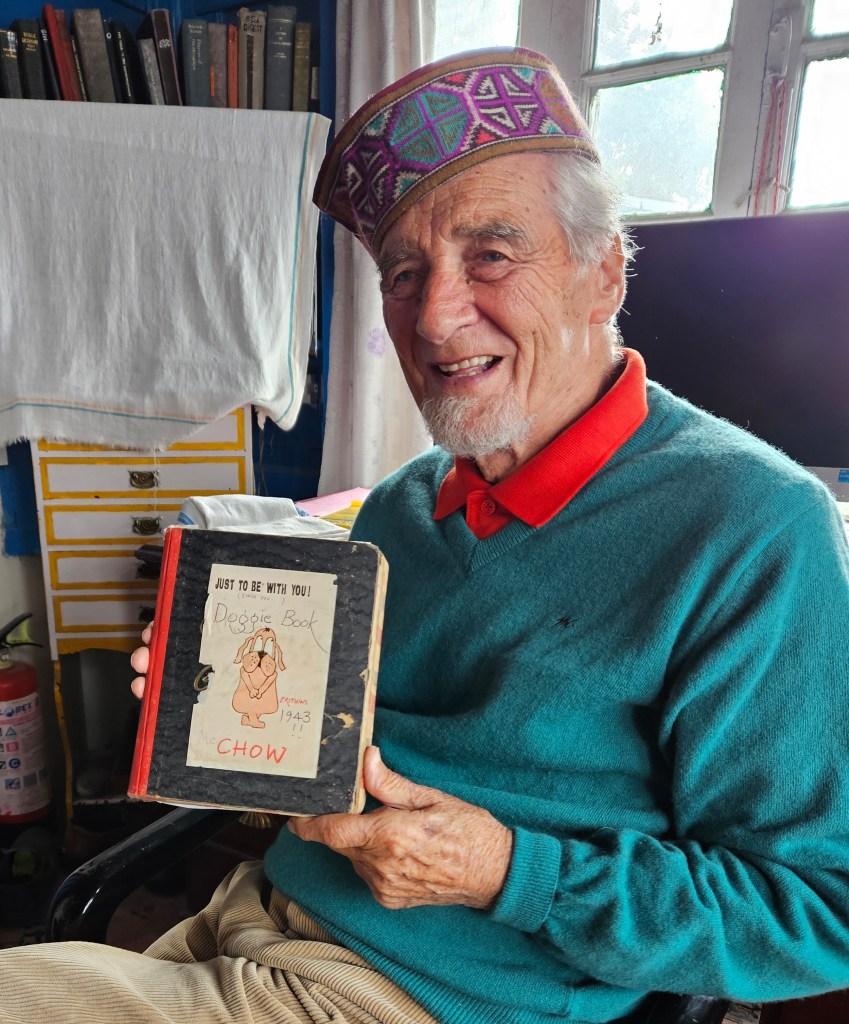
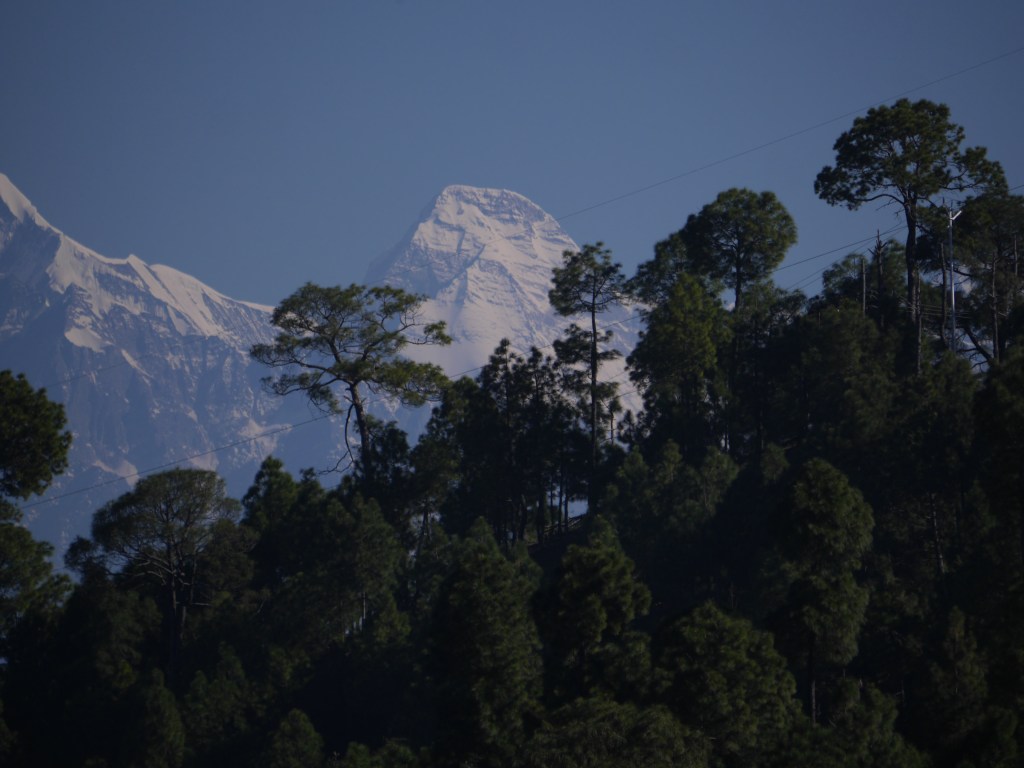



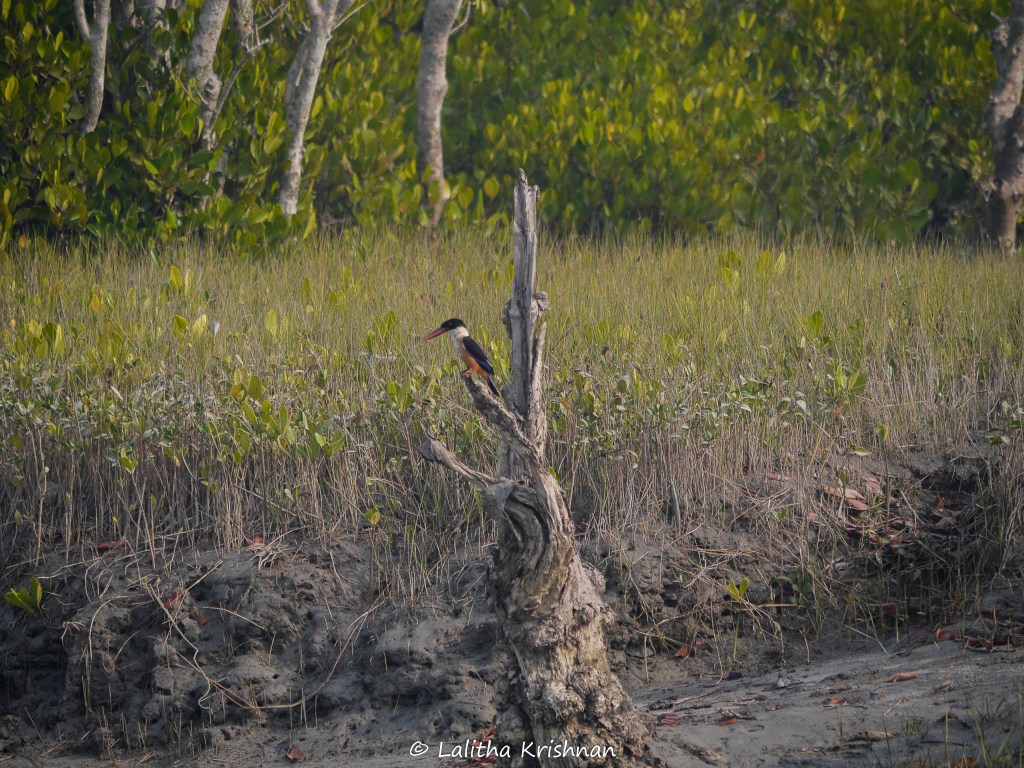

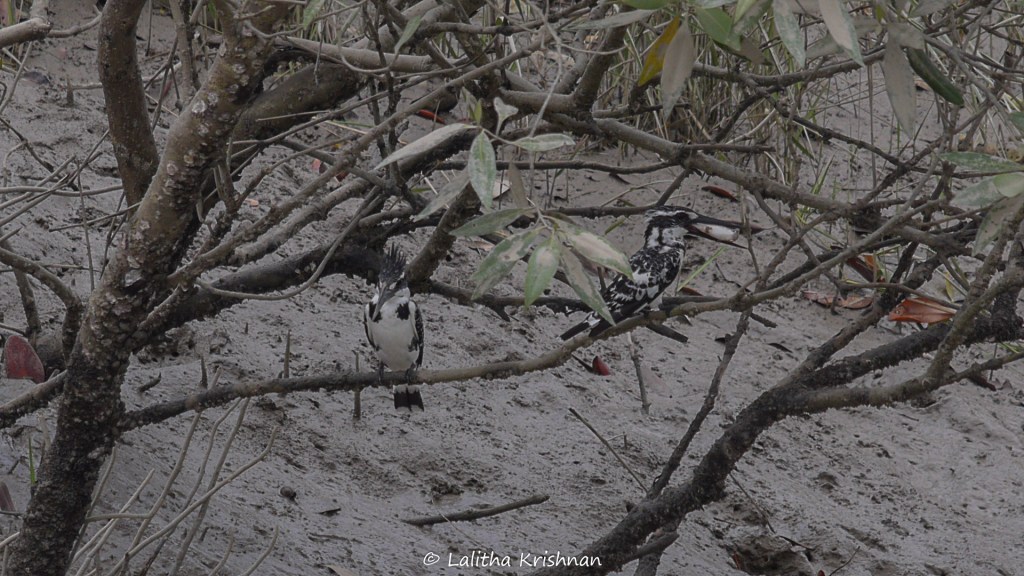


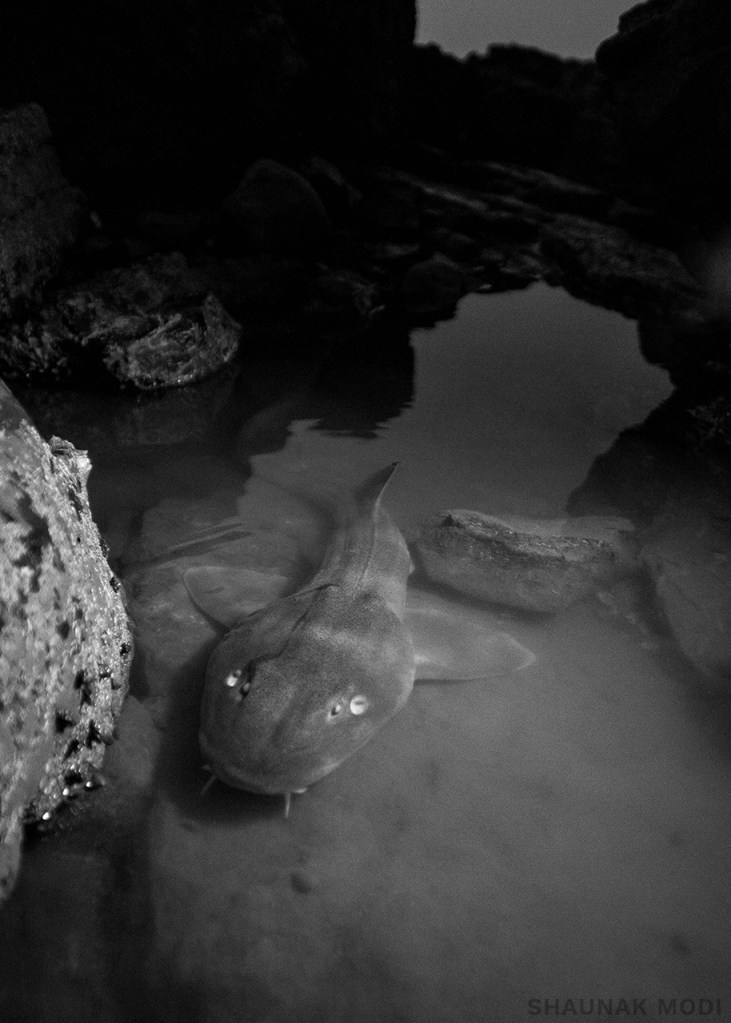




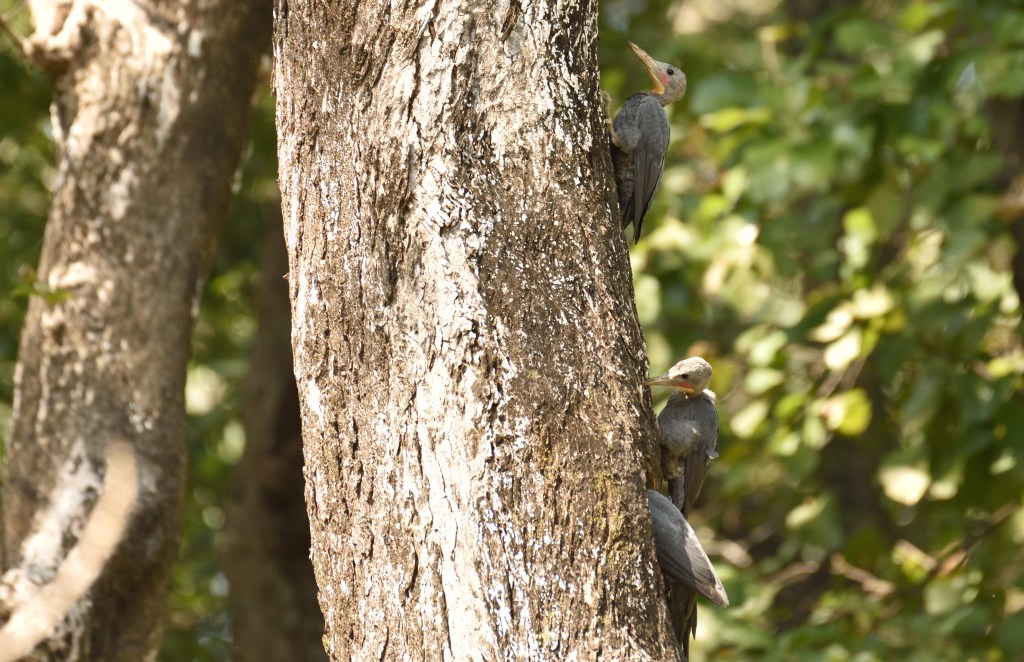


 Earthy Matters