ReCircle: Young Entrepreneurs Creating a Circular Economy with Waste

Heart of Conservation Podcast Ep#36 Show notes (Edited)

Listen or read

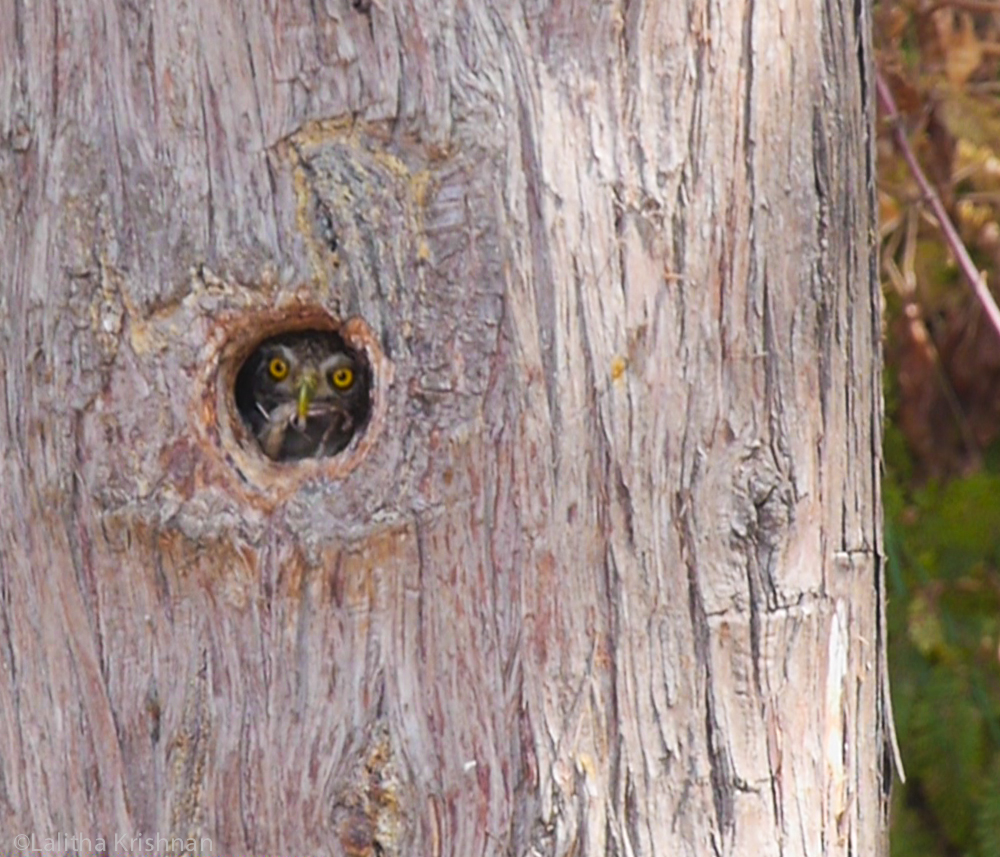
0:00: Call of the Collared owlet

0:04: Host: Lalitha Krishnan

I’m Lalitha Krishnan and you’re listening to episode #36 of Heart of Conservation. Today we are going to be talking about how waste management can be a profitable business. Normally when we sort out our waste, it is off our hands and not our problem anymore. But when garbage dumps start growing into hills polluting air quality and spreading disease, we sit up and wonder why nobody is doing anything. I’m speaking to two amazing Clean Tech innovators, Rahul Nainani, Co-founder and CEO and Gurashish Singh, Co-founder and COO at ReCircle, who converted biomining waste into a booming business. It’s not every day we hear success stories of positive change. Let me begin by welcoming Rahul and Gurashish to Heart of Conservation. Thank you both so much for joining me here on this platform today.

1:06:

Guest 1: Rahul Nainani:

Thank you for having both of us.

Guest 2: Gurashish Singh:

Yes…

1:09:

Lalitha Krishnan: My pleasure. So, Rahul, since you are Bombay-based and ReCircle’s headquarters operates out of Bombay, this question is for you. I heard that you both visited the Deonar waste dump which has existed since 1927. It’s the oldest dump in Asia. Legacy waste: waste that is old land fill, inherited waste, not necessarily even created by your generation. So, what did you see in this mammoth garbage pile that inspired both of you to become clean tech innovators? Most people would have run a mile, including me.
1:50:

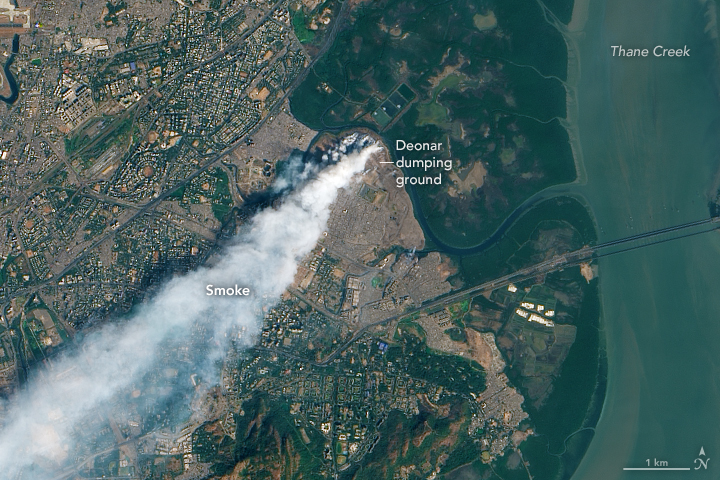
Rahul Nainani:  No, absolutely, Lalitha, I think, I was as ignorant as the rest of us, before we started ReCircle. And having studied finance, nowhere in my mind did I think I’d be working in the waste sector. But I like to believe that, waste and circular economy, is something that just happened to me, and I think that’s for the very right reasons itself. So, we launched in early 2016 under the brand name of RaddiConnect, which is what we rebranded as ReCircle. But just when we were launching, there was this massive fire that took place at the Deonar dump site. You know, there’s this iconic image that NASA took from space where you could see that fire burning even from space. And it went on for a few weeks in fact. And early in our business when we were just launching, the idea was to find, look at what was happening with our base and we were as ignorant as anybody else. It was more of an out-of-sight, out-of-mind mentality. Having lived in Bombay all my life, Deonar was just like, one dump site which you cross on the way to Lonavala. But one fine day when this fire happened, we planned to go down to the dump site and see what went on and why this fire happened itself to start with. So, there were a few things that we found out during this fire. The first thing was that these fires happened regularly. And it’s not just, that one fine day that this escalated. But the only reason in the end, not just us but the entire city woke up is because the wind was blowing towards South Bombay and South Bombay being South Bombay, people started waking up and realising that this was a massive issue. But these fires happen daily. And the dump site, if you look at the map of Mumbai, is pretty much located in the heart of the city, but it has a creek on one side. So generally, when the wind blows towards the creek, you don’t realise the extent of the fire. But this fine day when it was growing towards the city and that’s when we all woke up. The second thing that drove me to take that leap of faith and see how big this problem is and think that we need to work towards a solution was that we worked with an NGO called Apnalaya that works in the Deonar dump sites, in the neighbourhoods surrounding the dump site. And they gave us a very astonishing fact that the average life expectancy of people that just live around the periphery of the dump site–these are again, not the people that work in the dump site, but only live in the slum area next to it–was 38 years of age and, and that was an eye-opening number to me and it helped me realise that if this is impacting the people just living around the downside, how soon is it going to start impacting the rest of the city as well as the rest of the country? This story is not just about Deonar dumpsite in Mumbai, but this is pretty much made with the Ghazipur dump site in Delhi. May be Bangalore, maybe even Kolkata is pretty much the same city, same story across all cities across India. And, together Gurasish and I must have visited more than 50+ dump sites in the country, and the situation is quite dire. So, that helped us realise that of course we need to make an impact in this space. And that’s how our journey began into working towards starting ReCircle.
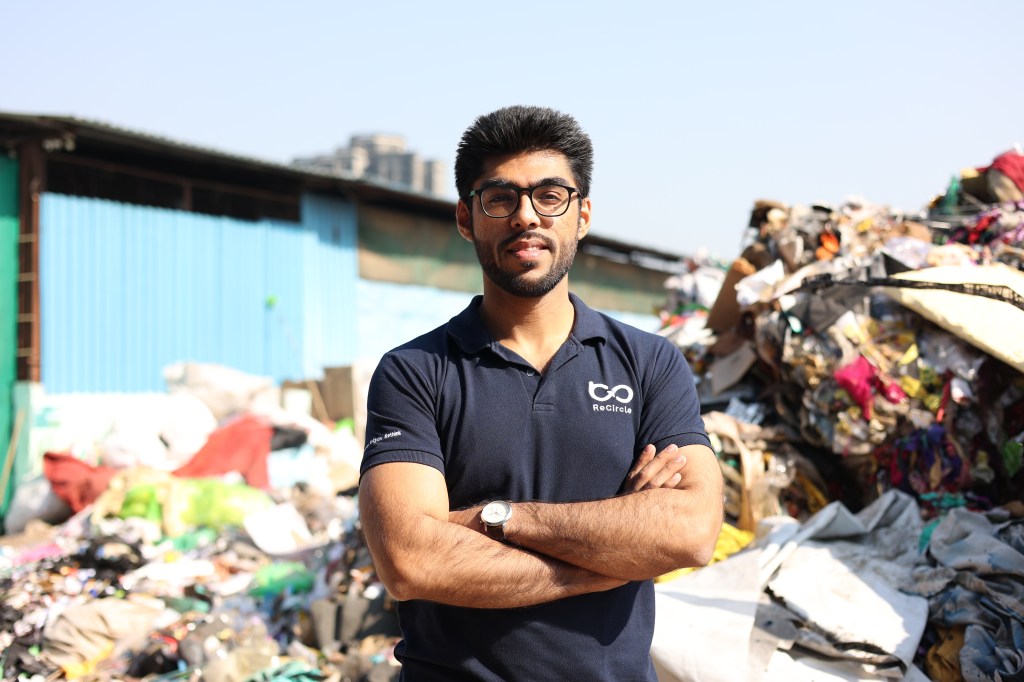
Rahul Nainani, Co-Founder and CEO, ReCircle

5:12:

Lalitha Krishnan: Wow. God bless you guys, somebody had to do it. Gurashish, maybe you can answer this. So, help me draw a picture of ReCircle’s operation by completing the story. OK? So, I’m a rag picker or a saffai karamchari sorting through a pile of garbage in Deonar. What next? What happens?

5:35:

Gurashish Singh: Overall, let me help you understand how waste flows #1 The lady or the man in the house removes the clean recyclable waste, right? So that’s typically your newspapers and things like that that are sent to a raddhiwalla. Then the house helper–who comes to the house has the first dig at the waste– who will remove bigger cardboard boxes or Bisleri bottles, PET bottles, and things like that. After that, the waste goes to the garbage collector of the building or the person who’s putting the garbage in the garbage truck. Post this, the waste will end up in landfills and oceans. So even though it is a pretty informal supply chain right from the start to the end. One of the most astonishing things is that fortunately, we have a very strong-backbone supply-chain where people are removing waste at so many levels. But the unfortunate scenario, and this is in 90% of the cases, the waste is not segregated. So, if we just segregate the waste, it will make it very easy for this extremely long supply chain of people that are, actually making a living out of the waste that we throw out also. So yeah, that’s actually what happens. And, there is a supply side to the supply chain that works. There are scrap dealers, kabadiwalaas, your house help, the person who is, you know, down in the building collecting the garbage right till that truck reaches your dumping grounds. The bigger problem is people not segregating this waste.

7:31:

Lalitha Krishnan: Thanks for that. Talking of ‘sorting’, one generally hears of sorting garbage into glass, metal, cardboard, wet waste and plastic. In one conversation I heard you mention sorting garbage into 40 categories. I mean I was blown away. Could you share a few examples and which materials are the focus of ReCircle?

7:56:

Gurashish Singh: Sure, let us again start with India, where we’re expected to segregate our garbage into three categories that are dry, wet and hazardous right? And out of the dry waste… if you typically see the four major four or five major categories that are there–paper, glass, plastics, metals, e-waste. In India we are not even supposed to segregate different types of waste. When we travel internationally, we do the paper separately, the glass separately, dry separately, and wet separately. So however, given what is actually supposed to be done in India where we segregate our waste into dry, wet and hazardous, this dry waste then reaches our facilities where we first primarily sort the material into paper, plastics, metals, glass and e-waste. Then, in turn, each of these materials is further segregated. So, say paper is segregated into four categories. That’s white, coloured, corrugated boxes, coloured-corrugated. Your glass is segregated into alcohol bottles, and other glass bottles and then colour-segregated. Plastic belongs to seven different categories, right? That’s number one to number seven. #1 being PET #7 being others. This level is then further categorised into colours, transparent and things like that. And so is e-waste. So, leading to all this, we segregate over 40 different categories of waste. We also connect and segregate multi layer plastics or the 7th category which mainly is the packaging material that is composed of multiple layers of different polymers. And we make sure that this either goes into road making or recycling or energy recovery and waste to energy plants or cement factories, which is all the government-approved way of managing this waste. So, yes, the one category of dry waste that we collect from individuals is then further segregated into 40 categories.

10:11:

Lalitha Krishnan: OK, could you give me an example of what 7-layer packaging is? What product are we talking about?
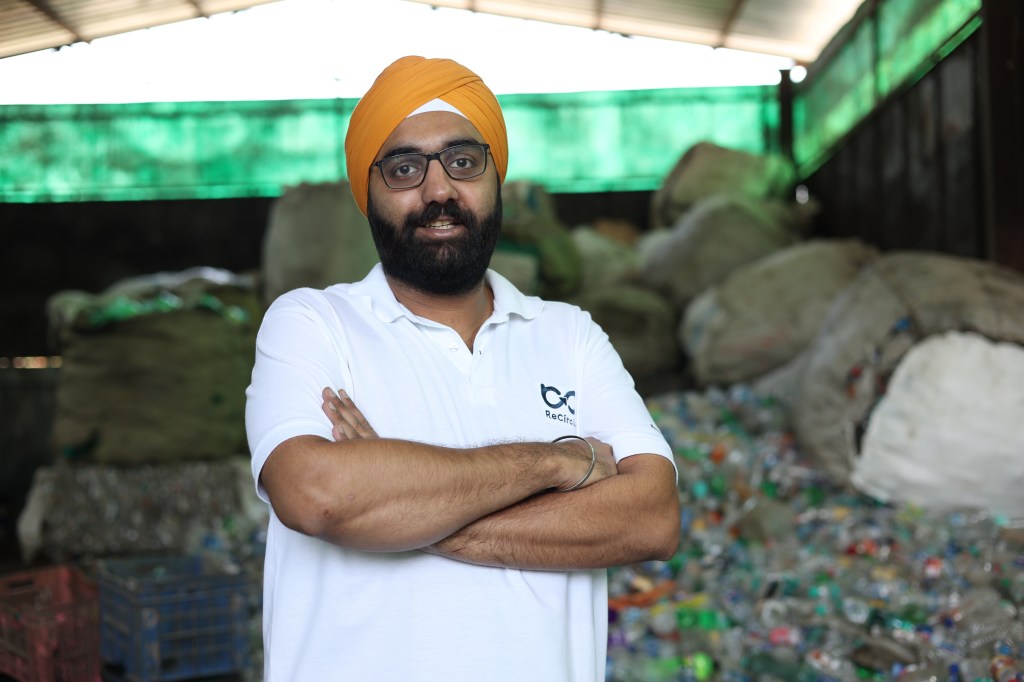
Gurashish Singh, Co-Founder and COO, ReCircle

10:18:

Gurashish:Multiple layers. An easy example would be probably a packet of any chips that we like to get.

Lalitha Krishnan:

OK.

Gurashish Singh: So, if we notice, the top layer would be plastic, there will be an aluminium layer with it, right? So, there is an aluminium foil if you see it on the other side.  This is basically a merging or a combination of multiple polymers and other materials that cannot be recycled. So an easy example is a water bottle which is PET. If we break that down and granulate it, we are going to get PET granules back. But when there are different layers of either different polymers or different materials, the output is never going to be a single material. That’s going to be a mixture of all materials.

11:10:

Lalitha Krishnan: Thanks. Rahul, how many villages, towns and cities does ReCircle reach? And are any of these remote? For instance, do you cover vulnerable areas of India, like the mountainous areas or islands like the Andaman island where there’s really no extra land for dumping garbage? Having been there–and my last podcast guest was a herpetologist who lives in Andaman—he says Andaman island has a landfill now. I mean, there’s nowhere for the garbage to go. It doesn’t come back to the mainland so…

11:45:

Rahul Nainani: Correct. So currently, our operations span over 250+ locations across India covering major cities like Mumbai, Delhi or Bangalore, but also covering tourist locations like Shimla or Haridwar and also, certainly difficult-to-reach locations in the northeastern area which might be in Assam or Meghalaya, where we are actively working on collection of this material. Having visited Andaman island myself, a few years ago, as I’m an avid diver, I did see the need for waste management over there. But how our business model works is that we work with brands, which is a B2B business. So, we work with brands to help them to offset their footprint. So, when I say this, essentially, let’s say we are working with a beverage brand and they’re selling their brand in India. We collect an equivalent amount of beverage bottles on their behalf. Now, while, our mandate for collection of this material comes from the businesses that we work with, we are covering almost 90% plus of the States and Union territories in India. But in certain areas where we need some additional support from brands where we can do the operations like in Andaman, right now, where we are not working. But we know companies that are working over there. We are trying to maximise our footprint as well in terms of collecting from even the harder-to-collect locations. But here my call to the listeners would be that if you are a brand and are looking at consciously making this effort, please do reach out to us. And we would want to work in harder to access locations further as well …to collect material from where it is difficult to collect these resources. But yes, currently we do have a mix of Tier 1, and Tier 2 rural areas as well, where we are actively collecting this material from.

13:38:

Lalitha Krishnan: Good to know. 250 plus locations is quite something. Considering ReCircle’s reach, you’re providing livelihood to a large number of people. How would you say it impacts their lives?

13:55:

Rahul Nainani: Yes. So,  just to take one step back, the waste management sector in India, as Gurashish mentioned, is extremely informal and fragmented and it has a lot of moving parts involved. Now our purpose or our vision at ReCircle is to bring along ethical circularity. And, the idea is that while waste is an environmental problem, it’s also a massive people problem because there are nearly 4 million waste pickers or people who make an income out of scavenging waste from landfills and dump sites across India. So, our business model was, in a way where we wanted to empower these people and formalise them as compared to displace them. Because, we very well understand, that without having these people clean up the trash after us, there would be no waste management that would happen in our country at all. So, we work with local scrap dealers, aggregators, and waste collectors that work across the country at these 250-plus locations. We formalise them with the help of where we’re working with them on, health checkup camps… connecting them with government schemes and also eventually working with them on additional sources of income. So, in simplicity, we charge the polluter, which is the brand owner that we work with and we incentivise the collectors that collect this material on our behalf. And with that intent,  we’ve directly and indirectly impacted more than 3000+ informal workers. While this is not a big number in the larger context of things, this is where we are currently. At a small stage where and we can do this work. And where either with the help of, you know, social security or with health camp with additional sources of livelihood is where we’ve been able to impact these 3000 plus informal workers that are part of our supply chain. And our vision is to work and increase this number as we scale up our progress in terms of waste recovery. We also want to impact more and more waste pickers in the organisation. We don’t like to call them waste pickers, but we call them ‘saffai saathis’ as there are friends who help us clean up the environment as compared to picking our waste because what is waste for us is a resource for them and they can make a living out of this. So, that’s how our mindset is to personally not call them waste pickers because they’re cleaning after us. We are the waste generators and they are the cleaners. They’re cleaning after us. So, it’s very ironical to call them waste pickers or waste workers in that sense. So, rebranding them as essentially saffai saathis, rebranding waste as a resource to start with, because what’s waste to us is a resource to them and also for our ecosystem. And that’s how we intend to build this inclusive business model where we empower these informal waste collectors as a part of our supply chain as compared to displacing them from the ecosystem.

16:55:

Lalitha Krishnan: Nice. I like that whole positive outlook you have towards your business and to everyone who’s involved. Well, could one of you give us three foul facts about garbage that are India-specific that my listeners may not know?

17:09:

Gurashish: One of the most startling facts that we came across was… did you know that India imports 465 crore plastic bottles annually? We stumbled upon this a decade ago and we found it absolutely unacceptable. If there’s one thing that we don’t have a shortage of in India, that’s waste.

Lalitha Krishnan: Why?

17:41:

Gurashish Singh: The reason for this is two ways. One is that again, going back to one of the first questions you asked me, people do not segregate waste. So a lot of it just ends up in landfills and oceans, right? If we just start segregating our waste, multiple people will remove this and send it to a recycling unit close to wherever they are. So that is one of the one of the astonishing or foul facts as you call it. Secondly, India alone produces a massive amount of 3.4 million tonnes of waste. Again, only 30% of this gets recycled, mainly due to non-segregation of waste. We are the third largest waste generator in the world and if we continue at the same pace, we will be the largest by 2048. That’s the estimate and another one would be a 4 million people make an income out of scavenging waste from landfills and oceans and streets. They are unorganised and unrecognised, and we feel that somewhere they are the only reason for the entire waste recycling and waste infrastructure that is being managed in India as well. So again, it will be a call out to all the listeners here that whoever your waste picker, waste collectors or saffai sathis are, they’re invisible warriors, in this entire shadow supply chain. So, the dignity of work is something that they really deserve.

Lalitha Krishnan: Thanks for that. It’s so true. So could you share three positive facts about garbage that emerges from your business?

19:36:

Rahul Nainani: I think looking at the larger landscape of sustainability and clean tech itself, I feel that I’m extremely optimistic in terms of solutions coming out of this space, especially because there’s been more traction that’s been in this space in the last, let’s say, three years as compared to the last three decades put together. So, there’s a lot of movement in the right direction that’s happening. While, in India, we are seeing small movements that are coming along but I think at the larger levels also, there are somethings that are coming along. Let’s, take the example of Indore, which is a very talked-about town in terms of the cleanest town in India itself year after year. And I think there’s a lot of learning that we can take from there where having visited Indore myself and seeing the case study over there, I think they have reached almost 90% plus segregation of waste at source. And, like how Gurashish has been mentioning, I think the biggest problem is that we are not sorting our waste. And if you’re not segregating, then it becomes waste and it doesn’t become a resource. So, there is a silver lining. Having seen a city like Indore do it, I think there’s a lot that we can learn from them and move towards a more sustainable future. The second thing probably is that there’s a lot of policy shift that’s coming along. With global pressure on plastic pollution, sustainable development goals have come across at the global level. Even in India, the plastic waste management rules were for the first time introduced in 2016—they never existed before–which is part of the solid waste management rules earlier. So that’s bringing around a lot more traction in this space. And then of course, our Prime Minister’s global Swachh Bharat movement, which if nothing, has at least brought in awareness to a very large level of population which is that we need to work towards a cleaner India. So, I think there’s a lot of policy pressure, also external pressure that’s coming along, which is moving towards the right direction in that sense. And then finally, I feel that when we started ReCircle in 2016 and as we sit today in 2024, we have seen this industry evolve so much that earlier clean tech as a sector did not even exist. You know, the sustainability term in large organisations did not even exist. And now we’re seeing that it’s becoming a part of board-level conversations. Also, so many innovators and startups that have come up in this space that are working towards solutions, not just for garbage, but for carbon, water, and energy working towards a more sustainable ecosystem altogether. So there’s a lot of movement and innovation that’s happening in this space and that keeps me extremely optimistic about the future while this has been a large problem in the past, there are people and there are solutions out there. It’s a matter of all of us taking those small steps and picking the right solutions.

I feel that when we started ReCircle in 2016 and as we sit today in 2024, we have seen this industry evolve so much that earlier clean tech as a sector did not even exist. The ‘sustainability’ term in large organisations did not even exist. And now we’re seeing that it’s becoming a part of board-level conversations. Also, so many innovators and startups that have come up in this space are working towards solutions, not just for garbage, but for carbon, water, and energy working towards a more sustainable ecosystem altogether. So there’s a lot of movement and innovation that’s happening in this space and that keeps me extremely optimistic about the future while this has been a large problem in the past.-Rahul Nainani

22:47:

Lalitha Krishnan: Right. Thanks for that. All right, so who are your prime customers? Are they brands that we recognise? Are there labels on recycled, repurposed products that we can look for?

23:01:

Gurashish Singh: Right, Some of the brands that we are associated with and work with are prominent organisations such as Hindustan Unilever, United Nations Development Programme, Hindustan Coca-Cola Beverages, Mondelez. We are one of the sole partners for Tata Starbucks, helping them assist in their sustainability objectives and needs. We also work with brands across all sizes. A lot of brands in the D2C (Direct to Consumer) space as well, such as Phases, a skincare Indian brand, Honey Twigs, which is into honey and one-time use packaging. So yeah, quite a few prominent big and small brands and, and it’s, it’s been a good journey working with them.

Some of the brands that we are associated with and work with are prominent organisations such as Hindustan Unilever, United Nations Development Programme, Hindustan Coca-Cola Beverages, Mondelez. We are one of the sole partners for Tata Starbucks, helping them assist in their sustainability objectives and needs. We also work with brands across all sizes. A lot of brands in the D2C (Direct to Consumer) space as well, such as Phases, a skincare Indian brand, Honey Twigs, which is into honey and one-time use packaging. -Gurashish Singh

23:54:

Lalitha Krishnan: Nice. So, everything you do is really impressive. And it’s on an incredible scale as far as I can see, but it’s almost–I mean since I’m speaking to you, I now know–but mostly invisible to the public eye or backstage almost to speak. So, what does ReCircle do to nip the garbage problem at the consumer level? I’m not sure if that’s a clear question.

24:21:

Rahul Nainani: I think I get an idea, in terms of what are we doing in terms of consumer awareness and the consumer-side work? So, to build a business in this space, we realise that we have to make a large impact, we need to get big brands to start taking action. Of course, consumers need to do their bit. But there’s a while we, our main focus has been on B2B and working with big brands to make that change happen, there’s a lot of work that we do on the consumer level as well. Maybe through a collection drive in the city of Mumbai. And if you want to discard your recyclable ways, we’ve also recently started getting into a textile-based collection as well– your old clothes as well as your dry waste. We have a monthly pickup that we provide to consumers where you can sign up free of cost. And we do a door-to-door pickup once a month. And, the schedule of this is something that is already finalised for the entire year. So, if you simply follow us on Instagram, our handle is recircle.in you’ll be able to see & sign up for our next collection drives.

25:28:

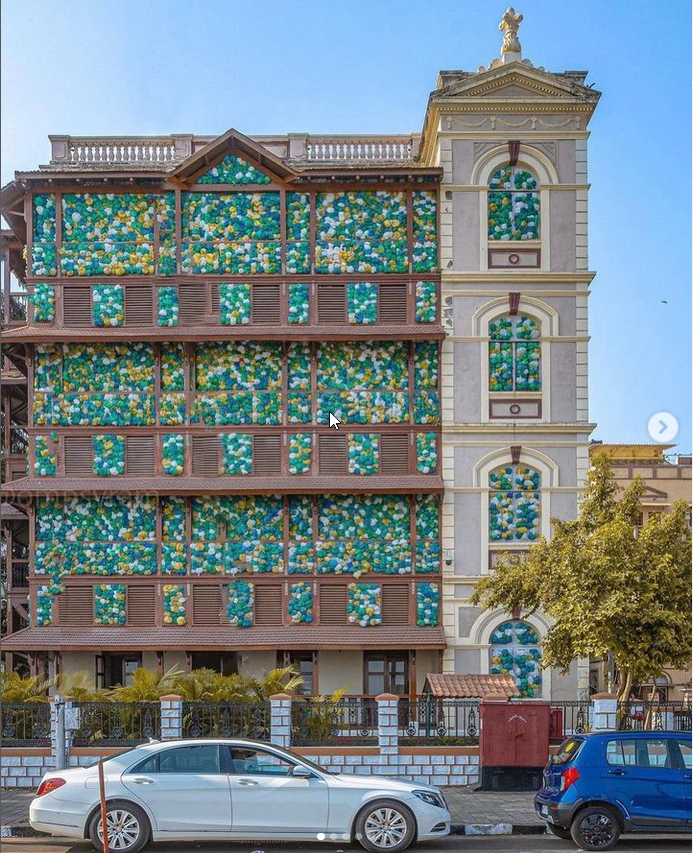
Rahul Nainani: We do a lot of work in the form of ‘Waste to Art’ workshops to spread awareness of how waste is not waste. We conduct workshops either in corporate offices or, even otherwise in spaces where you can sign up to see what you can make best out of waste. So, there’s a lot of awareness that happens there. We’ve worked in the past with the Start Art Festival in terms of setting up installations for waste. So, the Evelyn House installation, maybe Lalitha, you remember seeing it last year. The entire building had plastic bags sprouting out of it. We were happy to associate with the artist who helped design that in terms of spreading awareness. So that’s another thing where we use art as a way in terms of spreading awareness.
26:21:

We do have regular clean-up drives in terms of beach cleanups and other stuff that we end up doing as well.

And, finally, we also conduct Zero-waste events. So, events are a massive area where there’s a lot of footfall of people and consumer awareness can be spread. So we work with event organisers to help organise a #zerowaste to landfill event. So may it be a music festival with the likes of let’s say #SoundRise or a #TappedFest or maybe a marathon. So, we’re doing work with the #PowaiMarathon in Mumbai as well. And, the biggest one that we’ve done until now is the #ICCWorldCup matches that happened at the Narendra Modi Stadium in Gujarat, there were more than 1,00,000 people attending each match. We managed to make sure that the entire event was zero-waste over there. More than 1000 tonnes of waste that were generated at all the matches were eventually sent for processing as compared to reaching landfills and oceans.

Lalitha Krishnan: That’s very impressive.

27:27:

Rahul Nainani: So, we believe that consumers need to play a very crucial role and consumers like us and citizens like us, where we try and do a small bit of awareness through the different activities. If you also follow us on Instagram, there’s a lot of awareness material that we put out over there as well. But through these events, through these collection drives, we can touch base with different consumers at different levels as well and thereby, spread the awareness. At the end of it, the idea is that consumers generate the waste, and they also purchase the waste in a way. So, how do we get consumers to become conscious consumers at the end of it? By actually picking brands that are taking action as compared to the ones that are not. So, it is a small, small part of the puzzle that we play. But the idea is that consumers can spread this awareness across different other consumers as well.

Lalitha Krishnan: Right, complete awareness and change in lifestyle. I think you’re doing a great job.

Rahul Nainani: One step at a time. You know, I think the only thing is that it might get overwhelming that you have to do a lot, but take those small steps.

28:40:

Lalitha Krishnan:

Tell me about ReCircle’s initiatives: ClimaOne, Plastic EPR service, and Plastic Neutral Programmes. I don’t have a clear understanding of these things and whether they’ve been included in your earlier replies.

28:58:

Rahul Nainani: So maybe a few of them are something that we did speak about like we do zero waste events. Wherein, if you’re an event organiser, we help you manage the event and ensure that the waste that is generated is firstly reduced, pre-planned, and make sure that the processes are set up. And then, of course, look at managing the waste after the event is closed. We do collection drives for consumers, which is where consumers can participate by disposing of their recyclable waste as well as textile waste now.

But on the B2B side, we have a few services. We have a service where we essentially help brands to offset their plastic footprint. So, in simplicity, let’s say you’re a brand that is selling 10,000 beverage bottles in the market, we collect, sort, segregate and recycle these 10,000 bottles on your behalf and ensure that it’s getting recycled and give you credits for this. So similar to how carbon credits work, we work on plastic credits and within the plastic credit space, we have two of our services. One is our EPR service, which is more compliance based. So as a part of the plastic waste management rules, if you are a big brand, you need to collect back as much plastic as you put in the market. So we help brands offset as well as meet their regulatory compliance requirement. And then we have a similar service for medium and small-sized brands, which currently do not require to do this as a compliance, but are doing this as a voluntary activity where we not only help you offset your footprint under our Plastic Neutral Programme but also help you communicate the impact of this with your consumers. So, your consumers know what are the actions that the brand is taking. At the backbone of this is our clean tech platform called Clima One, where Clima One brings transparency and traceability to this unorganised sector. Where consumers and brands can track what’s happening is that there’s no greenwashing happening, when the material is being collected. So we are digitising and formalising the supply chain with the help of our tech platform which enables us to provide these services to the brand owners that we work with.

31:00:

Lalitha Krishnan: OK. I’m down to the last question. What thoughts would you like to leave with our listeners? Or could you share a word or a concept that adds to you know, our understanding of what you do?

31:17:

Gurashish Singh: For me, it would be segregation of waste. I think that’s where it all starts. That’s where the journey begins. So, to the listeners, it would be like wherever you are, whatever you do, start by segregating your waste. It’s not that difficult. You put segregated dry, wet and you do it the minute you’re throwing your waste. It should be a conscious decision to throw it in the right bin. And that’s what enables a beautiful future for the waste going forward.

Lalitha Krishnan:Thanks for that. I like the fact that you’re emphasising this throughout our conversation and it’s just simply segregate. All right. I hope our listeners remember that. How about you, Rahul?

32:05:

Rahul Nainani: I think, we like to rethink things at ReCircle and one of the primary things of rethinking is that when you look at something as waste, you tend to throw this in a dustbin and you realise that it has no value. But I think what people need to start rethinking is that if you rethink waste as a resource, then you start looking at it from a very different perspective. And, that’s what I want the listeners to take back after this conversation. That, rethink waste as a resource, a resource that can impact the lives of the millions of people who are working in this sector. It can also be a resource to reduce our reliability on fossil fuels and on our ever-depleting resources that we have. So if we use our waste as a resource, we can minimise the requirement of new resources and thereby move towards a more circular and sustainable future.

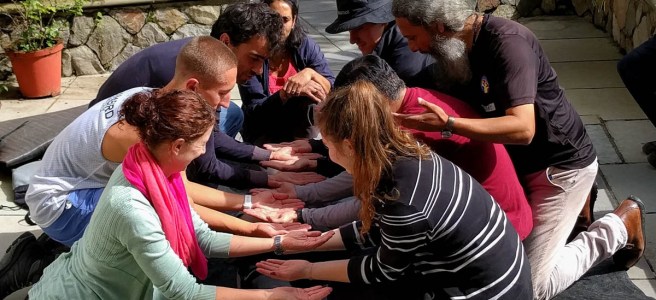
ReCircle staff at facility. via https://recircle.in/

33:05:

Lalitha Krishnan: True. Thank you so much. That’s being creative with your waste. Think of how you can reuse it like we all did in the 70s but I guess we didn’t have that much plastic to deal with back then.

33:18:

Rahul Nainani: I think being Indians, we’re ingrained with this mindset of reuse and reduce. And if you just look back in terms of what your grandmothers and grandfathers used to do, I think that there’s a lot that we can learn even by just going back to the basics in terms of waste management or circular economy.

Lalitha Krishnan: Thank you so much, this has been great.

Rahul Nainani: Thank you so much.

Gurashish Singh: OK, bye.

Birdsong by hillside resident, the collared owlet.

Photos Credit/Courtesy: ReCircle Podcast cover/label design by Lalitha Krishnan

Disclaimer: Views, thoughts, and opinions
expressed in the podcast and show notes belong solely to the
guest/guests featured in the episode, and not necessarily to the host of
this podcast/blog or the guest’s employer, organization, committee or
other group or individual.

Know Your Dugong. A High Priority Species Like the Tiger.

Dugong photo by Darius Quadros

Ep#32 Heart of Conservation Podcast Show Notes (Edited)

00:00

Audio: Collared owlet 

00:09

Hi I’m Lalitha Krishnan and you’re listening to episode #32 of Heart of Conservation. You can listen to Heart of Conservation on several platforms but you can also always read the transcript right here, on my blog Earthy Matters. Today we are going to be talking about an animal that is an old relative of the elephant but it lives in water. I’m talking about the Dugong spelt ‘Dugong’. It’s also a cousin of the manatee. The dugong is a marine mammal that once lived in large numbers in Indian coastal waters and yet we know very little about it.

I am very excited to be speaking to not one but three amazing researchers Prachi Sachchidanand Hatkar, Chinmaya Ghanekar and Swapnali Gole about their work with Dugongs and their habitats.

Prachi Sachchidanand Hatkar is a PhD Scholar, Project Fellow- CAMPA Recovery of Dugongs and their habitats in India at WII. Currently, she is working on seagrass-associated fauna in the gulf of Kutch and Gujarat. Chinmaya is a wildlife biologist and certified scuba diver. She is currently working on projects involving seagrass, fish, dugongs and their threats under ‘CAMPA Recovery of Dugongs and their habitats in India.’ She is pursuing a Ph.D. in seagrass-associated fish and works in the Gulf of Mannar and Palk Bay region.

Swapnali Gole is a marine researcher and a National Geographic Explorer. Affiliated with WII, she has been working on the insular population of dugongs in the Andaman and Nicobar Islands, India, for the last seven years.  Between the three of them they have all the dugong habitats of India covered, I think. 

A special thank you to Dr Dr. J. A.Johnson, Scientist and faculty at Wildlife Institute of India and also Head of Department of Habitat Ecology for facilitating this conversation. And for the lovely ladies on my screen, welcome and thank you all for joining me.

2:14

Lalitha Krishnan: Swapnali do you want to start with what are dugongs? 

2:18

Swapnali Gole: When I start introducing dugongs, what I have experienced is that there is a big question mark on everybody’s face. “Do you want to say ‘Dolphin’? Are you talking about some whale species?” Generally, we are always bombarded or greeted with these kinds of reactions. Dugong is a very simple elusive animal which is a marine mammal species. A marine mammal is an animal that lives its life in the sea–of course there are variations–there are some marine mammals that live partly in the sea and partly on land but dugongs are exclusively marine mammals which means right from when they are born to the time they die, they spend their entire life cycle in the sea. And, they are just like dolphins and whales; also, marine mammals.  But they are more popularly known compared to dugongs. 

Dugongs are also more popularly known as sea cows; the reason being the dugong is the only exclusively herbivorous marine mammal. Which means the only diet a dugong prefers is a vegetarian diet in layman’s language. And, they are generally found in around 42 countries in the world globally in the Indo-Pacific belt out of which in India we have only three distribution sites i.e., Gujarat, Tamil Nadu and Andaman and Nicobar Islands. So, people must remember the dugong as animals that live in the sea, they give birth to animals–they do not lay eggs like some other marine species and there is strong parental care in dugongs. From the time the calf is born, the calf will be strongly dependent on its mother for one to two years. These dugong mothers nurse their babies which is why they fall in the category of marine mammals. Marine means related to the sea and mammals mean animals that give birth to the calf and not lay eggs.

4:23

Lalitha Krishnan: That is so interesting. There is so much we do not know. How long have you three been researching dugongs and how extensive is the area you work in in these three different parts of India? 

4:39

Prachi Hatkar: I have been working in the Gulf of Kutch for five years now. The Gulf of Kutch is situated between the Saurashtra and the Kutch peninsula so the coastline of the Gulf of Kutch is about 170 km long. It starts from the Okha to the inner gulf and the mouth is about 75 km wide at the mount and the water spreads around 7300 square kms across the Gulf of Kutch. So, the Gulf of Kutch is a Marine National Park and marine sanctuary which was established in 1995. It was the first Indian marine sanctuary which was declared and it has 42 islands which covers various habitats like the grasses, corals, mangroves and intertidal zones etc. 

5:32

Lalitha Krishnan: What about you Chinmaya?

5:34

Chinmaya Ghanekar: So, like Prachi, I have also been working in Tamil Nadu – in the Gulf of Mannar and Palk Bay. These are two regions of separate seas.  One comes in Bay of Bengal which is Palk Bay and one is part of the Indian Ocean which is the Gulf of Mannar, so we kind of work at the confluence of both.  The area, to describe it, is a long, long stretch of Indian coastline – around 500 kilometres. So, from Adirampattinam if you consider till Kanyakumari it is approximately 500 km of the shore line.  And then the sea extends…in Palk Bay it extends to Sri Lanka but because of international borders we cannot access that area. But we generally restrict our area to 10 to 12 kilometres of coast. So, it is around 5000 square kilometres we cover for our study for dugongs and sea grasses and other fauna, and other factors of the project. To tell you about Park Bay, it is a very closed sea; it is like if you see Palk Bay – like I saw Palk Bay for the first time. I thought it was a lake.  It is very calm and has very glass like water most of the time but Gulf of Mannar on the opposite hand has waves and islands. These are two completely different areas so you working in both of them is pretty different from each other. Palk bay has a lot of sea grasses. Gulf of Mannar has corals, sea grasses, algae beds, rocky patches, habitat diversity so to say.  We can encompass most things of marine habitats in both areas.

7:28 

Lalitha Krishnan: Amazing. It also means that the dugong likes both habitats.

7:33

Chinmaya Ghanekar: They definitely do.

7:34

Lalitha Krishnan: Interesting. Swapnali?

7:37

Swapnali Gole: I have been working in the Andaman and Nicobar Islands studying dugongs for more than seven years now. Our study site if you see…because it is an insular set-up, it adds up to the work of our team. Because, the entire stretch is around 1962 kms, right from the northernmost island……..  till Great Nicobar it is 1962 kms. And, we have more than 800 islands, 836 to be precise. Then on each island there is a coast because it is an island, hence, we have more study areas I would say. For every island there are four coasts. And, what we have been doing is working in patches because it is not possible-considering the manpower that we have-to be present everywhere. So, we started our survey with say, the north……Andaman covered that and slowly came to the southern side. And, very recently we covered the Nicobar groups of islands. Practically the entire Andaman and Nicobar is our study area.

8:48

Laitha Krishnan: Sounds like a lifetime of work.

8:50

Swapnali Gole: It was. It took us six years to do what we did and it was very intensive.

8:57

Lalitha Krishnan:  When you say ‘team’ wherever you are, what size teams are you talking about?

9:05

Swapnali Gole: For the islands we never had a team of more than three. There was always a lot to do. I do not know why but we always had the smallest team…two or three people. For the seagrass and dugong (study) especially, the maximum I remember we had was a team of four, never more than that. 

9:27

Chinmaya Ghanekar: I have been fortunate enough to work with a team of eight people on a boat working on different aspects of the project and then we work together and it’s amazing.  But then sometimes we are just two people who are going by an auto to a coast then doing our surveys and coming back so there is variation across the years. 

9:52

Lalitha Krishnan: Prachi, I am going to ask you this question just to know more about the dugong. If a Dugong were a person, how would you describe it? 

10:03

Prachi Hatkar: I would like to describe the dugong as a gentle giant.  We have heard stories that describe the Dugong. If you see dugongs, they look similar to somewhat like a pig you can say, or mermaids… the stories we have been hearing about sailors saying, “We have been seeing mermaids in the sea”, they weren’t mermaids, they were actually seeing dugongs but perceiving them as mermaids. 

10:32

Lalitha Krishnan: Where do these stories come from?

10:36

Swapnali Gole: It was given by Christopher Columbus. In his excerpts—while he was voyaging around the West-Indies side–he wrote that, “I happened to see three mermaids today but they are not as beautiful as they have been described.” Honestly speaking, dugongs do not look like mermaids (or what we think we know of them). Only the tail resembles the mermaid but also later it was detected that maybe he did not see dugongs but manatees which are sisters of dugongs.

11:10

Lalitha Krishna: Right. Chinmaya, where can we find dugongs? In India of course, we now know but where in the rest of the world?

11:19

Chinmaya Ghanekar: So, in India as we have already mentioned it is in Gujarat, Tamil Nadu and Andaman Nicobar. So, these three areas are like pockets. If you see the map, it is like one pocket on the left-hand side of the map, one on the south and one on the right-hand side. So, we call this a pocket distribution of dugongs.  

But in the world scenario, we have the greatest number of dugongs as of now in Australia. So, after that, we have this population in Red Sea, so that is also kind of pockets so these mostly as distributed in Indo-Pacific region; very technically saying and they are present in some island countries like Philippines, Indonesia…Southeast Asian countries. They are also there in our neighbouring countries like Sri Lanka. So, they extend from the Indian ocean to the Pacific Ocean completely. But China had dugongs a few years ago and very sadly they have now declared them as functionally extinct so the population cannot grow basically any more. They do not have dugongs anymore which is kind of sad news but we should be alarmed that populations in other countries also are quite threatened. We should look at them and give them the importance they deserve.

12:51

Lalitha Krishnan: True. Swapnali, talking of habitats where do dugongs prefer to live? Tell us a bit about their biology. How long they live, up to what size they grow etc. I know you call them gentle giants but exactly how big are they?

13:15

Swapnali Gole:  Dugongs spend considerable time in the day-I am not talking of their whole night -in shallow waters. So, it is directly linked to the sea grasses that they feed upon. And seagrasses being true plants they need sunlight just like any other plant on land for creating their own energy i.e. their photosynthesis process. So, wherever light reaches the water – and this is a very local concept. In the Andamans for example, the water is very clear so it (sunlight) is going to reach much deeper there compared to Gujarat for example where the water is very turbid. So, depending on how deep the sunlight reaches, it decides on where sea grasses will be found and that automatically regulates where dugongs will be found. It is all very linked. And, because dugongs primarily feed on seagrasses, wherever their food is, their distribution is going to be centred around those areas the most and that differs from place to place. That being one. Also, there have been tagging experiments done in Australia where it has been scientifically proven that more than 70- 80% of time of a day, dugongs have been found in shallow/sheltered waters 1 metre to 5 metres because they were spending a lot of time just feeding on seagrasses. On a similar line, dugongs, as I said, feed on seagrasses. An adult dugong will eat up to, say, 35-40 kgs of sea grasses, that is a lot of seagrasses for an individual. And, when l say, ‘adult dugong’ it goes up to 3.5 to 4 metres. So, the gentle giant’s size limit is 4 metres. Dugongs are generally not recorded to grow more than that. I have never heard of dugongs growing to say, 7-8 metres. Generally, people mistake dugongs for other species. There has been misidentification in my experience also. My informant spotted a whale and thought it was a dugong. He said it was 10 metres long. That is not biologically possible because the limit for dugongs is 3.4- 4 metres. When a dugong calf is born, it is around the 9-1.2 metres size range and around 40 kgs. But as the baby grows older, and it puts on weight after eating a lot of seagrasses, the maximum weight of a dugong, I can say, can go up to 350- 400 kgs on an average. Which is why they are called gentle giants. They are massive. They are very docile animals.

15:45

Lalitha Krishnan: When you say they grow to 4 metres, has this been their size historically? I do not know if there have been any fossil finds etc? 

15:56

Swapnali Gore: Whatever documentation we have come across where dugongs have been mentioned it is beneath the size range of 3.5 to 4 metres. Relatives of the dugongs–there was a species called Steller’s Sea cow– which was really massive. It was much larger than the dugongs in size. But if you talk about the species of dugong the upper limit of dugong size is always given as 3.5-4 metres

16:20

Lalitha Krishnan: OK. Thank you so much. Prachi, now to you. You know the term seagrass meadow paints a lovely picture in the imagination. What are they really like? Also, I read that dugongs regulate seagrass ecosystems. How so?

16:42

Prachy Hatkar: So, as Swapnali mentioned earlier, dugongs are vegetarians; that they prefer seagrass. So the seagrass are present in shallow waters where the dugong reside so they are basically residing where the food is. They graze upon beds of seagrasses regulating the biomass of seagrasses. In the clear water of the Andamans for e.g. the seagrass bed looks like a football field or ground basically. It will be spread across the whole land. It is a beautiful sight. Dugongs prefer a seagrass species called Halodule specifically. Halodule and Halophila species have low fibre content and rich nitrogen content. So basically, the dugongs graze upon the seagrass meadows regulating the biomass and type of varieties of seagrass that grow in these meadows. So, they actually act as gardeners.

17:53

Lalitha Krishnan: Are you three covering aspects of dugong research in the Gulf of Kutch, Gulf of Mannar and the Andamans and Nicobar Islands?

18:02

Chinmaya Ghanekar: To talk about Tamil Nadu, Palk Bay, Gulf of Mannar, we are covering research aspects of dugongs and seagrass projects. We are also covering the outreach and capacity building and these are true for both the other sides. So, these are main four objectives which are divided into a lot of smaller sections. So, if we are talking of dugong research, we are looking at where dugongs are distributed. What are they eating? Where are they going? If they are breeding in some areas how frequently are they sighted? These are some questions we answer with dugongs. With seagrasses we look at what species are there. What types of meadows are there. What are the associated species of fish – on which my PhD is based upon. So, I am looking at how seagrasses and fish interact with each other. How they are dependent on each other. This is not exactly I would say, a direct connection to see but when we say “fish” we obviously think of food. And we have already addressed this previously; dugongs are regulating the sea grasses, and seagrasses are habitat for fish and we are connected to dugongs.

This connection and the layers in between are what we are trying to study. So, there are two things which are my main-focus. I mentioned seagrass-associated fish. What is the diversity? How do they utilise seagrasses? Are they using the space between these? Are they eating seagrasses? Are they hiding in it? Are they laying eggs on them? I am trying to answer these kinds of questions.

20:00

In terms of dugongs, I have mostly looked at the distribution of dugongs and threats associated with them. There are many, many threats like possibly a boat dashing into them or a net entanglement or pollution or coastal development. The threats that we generally hear about in marine ecosystems are also threats for dugongs. I also study that; something like plastic pollution and then we have also looked at primarily what dugongs eat in India. So, the dugong research in India has not investigated this before this so I and one of my colleagues Sumeet have done gut-content. When we get a dead dugong, we get the gut content out of it and we see what seagrass they have eaten and what they prefer. And, we have also found some plastic fragments in the gut. Those aspects we investigate from the research point of view.

In the outreach and capacity building, we mostly interact with people, different stakeholders like the Forest dept., police, marine police…all of those and try to make them aware of dugongs and give them more and more training to continuously monitor dugongs and their habitats.

21:21

Lalitha Krishnan: Well said, So, it’s not one mammal but it’s the whole world around it. Swapnali, my next question was about interacting with fishers and other folk in the coasts that you work in. What have their reactions been?  What are the challenges? And, how do dugongs behave when they encounter humans? Are we perceived as threats? Sorry, that’s a lot of questions.

21:50

Swapnali Gole: The first question is always my favourite question, honestly. It is all about communities and that is my favourite part of the work that I have done. To talk to people- the local people. So, it started with me just interacting with the fishermen. For all marine researchers, the primary stakeholder is always the fisherfolk of that particular area because they have practically spent their entire life by the sea. And nobody can have that kind of knowledge or degree of curiosity, honestly speaking. The interaction that they have with the sea and the creatures living in the sea is immense. So, we started talking with the fishermen initially to understand their idea or perceptions of dugongs and seagrasses. Also, where dugongs and seagrasses are found. So, that would be used as a baseline for our research work.

22:46

Eventually we started talking with many other people who are going out to sea in the Andamans. The benefit is that the entire area is an insular set up. Whether you are a sea-person or not, you are dependent on the sea even for commuting from one island to the other. So, your interface with the sea and these areas is going to be very much pronounced. So, we started talking to different stakeholders you know…sailors, scuba divers or for the first time, the Indian Navy and Indian coast guards. Because, there are many, many regions in the islands which are firstly geographically isolated. So, considering the limited logistics we have, we don’t always get to go to these islands. Secondly, there are restricted areas. So, there is a defense-restricted area, there is a tribal-restricted area. Again, as researchers, we don’t have permits or we need to work on the permits a lot and that takes considerable time. So, we started targeting different stakeholder agencies, who are sea-farers. That’s the only mandate required to be part of this programme which turned out to be something called The Dugong Monitoring programme – a citizen science approach. And, initially whenever we interacted with these stakeholders, not just fishermen but other people also, there was this big question mark on their face as I had mentioned in the opening statement. When you say, “dugong’, people say, “What? Are you talking about dolphins? 

Multiple times, they also correct us. “No Ma’am, you’re probably talking of dolphins.”

“No, we are talking of dugongs.”

That was the kind of response we got initially. Most of the people we spoke to were clueless of what we are studying.

The saddest part is that the dugong is the state animal of Andaman and Nicobar Islands.

24:30

Lalitha Krishnan: Really?

24:31

Swapnali Gole: Yes, even in local schools, we were surprised that the local school kids were not aware of what a dugong is. Our work starts there, with that. It’s like Chinmaya mentioned, there are many elements to the work we are doing. It starts with resources but a massive, massive chunk of our work in all three sites is sensitisation of the people. Right from dugongs to the species identity, telling them, “There is a species that lives near you and why it is important, and how you can contribute to saving them…”  in a nutshell is the kind of work we are doing at three sites.

23:11

To answer your second question, I would not say that dugongs avoid humans but in Andamans especially there is an island called Shaheed Dweep which is full of tourists. There is so much anthropogenic footprint in that area and boat traffic. You will see every type of boat there, from ferry boats to speed vessels to normal dinghy boats of fishermen. All sorts of boats are there in the water and dugongs are still coming into those areas again and again. It is said globally also, that in places like Southeast Asia which are hubs of harbours and anthropogenic footprints, dugongs are still coming into those areas.

I would like to add that dugongs behave individualistically too which goes for any species. Even in the Andamans, in Shaeed Dweep, I have seen the dugongs coming into areas where there is a lot of human interfaces. But a neighbouring island group which is a Marine National Park area…when we spotted a dugong there, and got into the water, this is my personal experience, those individuals just swam away to the other island altogether. So maybe because those individual dugongs were inside a marine protected area and not used to human-interface, they were not okay with humans coming close to them but in some other areas where humans were coming in and out every day, maybe the dugongs living in that area have become adapted to that traffic or pressure.

26:39

Lalitha Krishnan: This is so interesting, thank you.

26:42

Chinmaya Ghanekar: Can I add something?

26:44

Lalitha Krishnan: Of course. Please go ahead.

26:45

Chinmaya Ghanekar: Very recently, a week ago, a fisherman told us by phone that, “We are seeing dugongs every day in the Gulf of Mannar” in an area which is kind of a tourist area–the Tourism dept. also manages tourism there. So, he (fisherman) said that, “whenever we go out for fishing, we see dugongs daily. They come near the boat at so close a distance, you can almost pet them”. This is a different kind of interaction they have with the dugong and there is a kind of friendship between them. So, the boat comes, the dugong comes, they see it and feel happy about it. So, it is also a very, very positive interaction between the community and the dugong.

27:28

Lalitha Krishnan: That is such a wonderful thing to hear. It is making me love the dugong, a mammal I have never seen in my life. Dolphins are also known to behave like that. Maybe it is one of the reasons why they mistake them.

27:42

Chinmaya Ghanekar: Maybe but people will have different interactions with different individuals or populations differently. Like Swapnali rightly said, “There are individual reactions”. Something like in the Red sea. If you follow #dugong on Instagram, every day, you will see a photo of the Red sea where the dugong is  surrounded by divers. And, it’s feeding and kind or sleeping or doing its thing. But, that doesn’t happen here. So, the individualistic behaviour is very pronounced and it may vary with different populations also.

26:15

Ep#32 Podcast label design by Lalitha Krishnan. Dugong Photo Credit: Darius Quadros. Researchers photos courtesy Swapnali, Chinmaya and Prachi.

Lalitha Krishnan: So, the dugong is also been accorded the highest protection status i.e. Schedule-I of the Wildlife Protection Act, 1972. How does it translate in the real world? Would you like to answer that?

28.33

Chinmaya Ghanekar: 

This Wildlife Protection Act is considered one of the strongest conservation acts in the world because it has schedules. It has a lot of animals that receive protection. There are different schedules in the Wildlife Protection Act giving different status of protection to different species. The infamous one is the tiger out of all. The tiger has Schedule I protection, so do dugongs. Which is the highest kind of protection the Wildlife Act can provide. There are so many restrictions. Like, you cannot touch that animal. You cannot research that animal without permission. You cannot utilise any part of the animal in that case, not any part…even if it is excreta which happens in ambergris fish like whales. It is still part of the whale so we cannot utilise that. To even touch that kind of animal, you need permission. It is that kind of protection.

-Chinmaya Ghanekar

29:41

Lalitha Krishnan: Sorry…does that apply to even a dead animal?

29:43

Chinmaya Ghanekar: Yes, even for dead animals. Wildlife Institute of India has acquired all the permissions and we collect those samples and work with it. So, with this kind of protection, we always need permission from the government and the government is always very, very strict about it. We cannot work without permission anywhere. 

30:11

I will give you an example which happened in Thondi (Palk Bay), when I joined the project. It was a case of dugong hunting. It created a lot of fishermen agitating because it is part of their tradition and we struggle with it. They hunted it (the dugong) and the marine police put charges on them. Their boat was confiscated, their nets were confiscated. They were put in jail for seven straight years. The fisherman was about 50 years old. This kind of completely puts all kinds of restrictions on their lives. They cannot get their boat back, they lose all the money they put in for their equipment. So, the implementation of the Wildlife Protection Act is very strict in the real world.

31:05

There is one more story. When I was going on a boat, by mistake, there was a communication gap between the highest forest official and the field people and they did not allow me to go on the boat and research the dugong. So it is that strict, you need all things in place and the Wildlife Protection Act makes things happen at least in case of dugongs which I have seen personally.

31:35

Lalitha Krishnan: It is actually a good thing, isn’t it? In a way, it is protecting the animal which is what it is supposed to do.

31:43

Chinmaya Ghanekar: It might not be so straightforward as it sounded in the answer. There are a lot of agencies that come into it but then it happens. It does happen.

32:00

Lalitha Krishnan: Prachi, what part of the dugong research do you like personally? Or what has been your most amazing take away or encounter.

32:05

Prachy Hatkar: As I mentioned that I have been working with dugongs since the last five years. When I started working in Gujarat, like Swapnali said, when we went for the awareness programme, in schools or interacted with the locals, the fishermen, they mentioned that they had sighted dugongs in Gujarat-in the Gulf of Kutch-long back. Maybe 15-20 years ago. Recently they have not seen any live dugongs as such.

We were fortunate enough to see a live dugong which was the first photographic evidence in the Gulf of Kutch two years ago through the drone survey with one of my colleagues who accompanied me in the field. When we went seagrass mapping, we could actually see two dugongs.

33:02

Lalitha Krishnan: Really? Were they of the same size?

33:05

Prachy Hatkar: They were actually adult sized. We thought we could see a mother and calf pair in another sighting. But we were fortunate enough to have a dugong sighting. We knew then the dugong was not locally extinct from Gujarat.  

33:26

Lalitha Krishnan: Such a positive sighting. Swapnali, how about you?

33:28

Swapnali Gole: On a similar line, I have spent more than seven years studying dugongs. And my first sighting…from boats I had spotted dugongs. Honestly speaking, in the Andamans it is pretty possible to spot a dugong considering the water is also clean. My first underwater sighting–despite diving so much throughout the islands, happened after five years. I remember I had spent 45 minutes with this individual. I had almost given up all hope… “I won’t see it” I said to myself. 

So then when I spotted that individual, it was like “Wow”. You know, your entire journey as a dugong researcher flashes just right in front of you. I was literally crying underwater. I cried so much my mask filled up with my tears.

-Swapnali Gole

I was so happy and then I realised I had left all my friends who had been diving with me behind and I was literally following the individual.

34:38

And in those 45 minutes, it was just me and the dugong. You know, it was a surreal moment for me. Then I was a very happy soul. Finally, after all the hard work I had put in.

34:48

Lalitha Krishnan: That’s an exclusive. First of all, who gets 45 minutes alone with an animal? You are extremely lucky.

34:55

Swapnali Gole: I am lucky. I have so much gratitude for those 45 minutes.

35:01

Lalitha Krishnan: But you all deserve it for the work you have done. That is your reward to see a free, happy, healthy animal living in its habitat. Chinmaya, do you want to add to that?

35:17

Chinmaya Ghanekar: The first ever live dugong sighting I had…  I was dying to see a dugong. Because, everybody was telling you they saw a dugong here, a dugong there but you are not seeing one. It is frustrating. It’s very frustrating after spending a long, long time in the sea. I was talking about the other work I was doing per different aspects of seagrasses and other related fauna… So, we were doing that, sitting on the boat, and sieving the sand out. So, I was doing the sieving and behind me, I just heard this loud breath in the water. It was a loud, loud breath. I left the sieve down and when I turned around, I saw the tail of a dugong which was going underwater. I cannot tell you how beautiful that was. I have a picture-memory of that and I really want to see that again but the first experience will always be special. And this was special.

36:21

Lalitha Krishnan: True. Talking of breath, are dugongs vocal?

36:27

Prachy Hatkar: Yes, they are very much. They chirp like birds. They actually chirp under water. As you know, sound travels four times faster underwater compared to land. So, obviously, that’s the only communication that works for them – underwater sound.

36:49

Swapnali Gole: in addition to what Prachy said, there are various categories of vocalisation patterns which have been identified for dugongs. We unfortunately do not have any dugong vocalisation study happening in India by WII or any other researchers. But in Japan, people have studied dugong vocalisation patterns. So, they have categorised dugong vocalisation patterns…they also bark. So, it is a different frequency range for each category. And, then they chirp as Prachy has mentioned. But then, there is the possibility that dugongs will vocalise very rarely; and only when it is fully needed. They are not like dolphins who echolocate and communicate.

17:28

So there have been studies where the sample size of what researchers have put forward to study communication patterns has been immense but compared to the efforts that have gone into it, there have been very few recordings of dugong communications. So, that is also one point to be understood: that not always do dugongs communicate as dolphins do or other marine mammals do.

37:53

Lalitha Krishnan: Sounds like such a very self-sufficient mammal and very smart too. What is the role of WII in Dugong conservation in India? What are the government initiatives in place right now for protecting it? And what is the way forward? Also, I always ask three questions at a time.

38:18

Chinmaya Ghanekar: Yes, because they are very much connected to each other. Wildlife Institute of India is part of the government. Though it is autonomous it works very, very closely with the government…different, different departments; not only the forest department. As Swapnali mentioned we also work with the Indian navy, coast guard, all of these defence bodies. 

The Wildlife Institute of India initiated the CAMPA dugong recovery programme in 2016. From that time, Swapnali is the most eligible person to comment as she is one of the first researchers from WII who has started work on dugongs. Before that, in 2013, Dr ShivKumar and one more researcher called Aditi Nayar. They both had a research programme regarding dugongs in Gujarat, Tamil Nadu and Andamans and Nicobar; where they have seen the perspective of people about dugongs typically, the local communities who interact with the sea on a daily basis. From that they had come up with something called the Critical Dugong Habitats where dugong sightings or populations are more. And also, human pressure is a lot in the area. So, both those things combined are called Critical Dugong Habitats.

39:45 

And based on that we started our work in the CAMPA Dugong Recovery Programme. But as I mentioned earlier, we started with four objectives. One is dugong research, the other is seagrass and associated fauna research; one is outreach and the other is capacity building. So, WII has been actively working on all four of the objectives.

40:17

Research we have touched upon what kind of research we do. But in outreach programmes, there is this highlighted programme called the Dugong Scholarship programme which is a very novel initiative as it targets the fishermen-kids. So, we go from school to school, identify fishermen-kids and we give scholarships to them which is Rs 500/- per month and these scholarships are  given at such a time-in 9th or 11th grade-when they might not have money to go for further education.  At least they will have this one 10th pass certificate or 12th pass certificate which is at least the basic level of education one would expect from someone. So, the scholarship is given at that time.

41:09

And through them, as Swapnali mentioned, the dugong volunteer network or volunteer programme network. Their scholarship student-parents being fisherfolk, they also provide us information. So, we give them the scholarship and we get information. It’s a barter and it’s a beautiful barter because we get to know so many things which we might not be knowing about dugongs through research papers. Because, the local experience is somebody’s father who has been fishing probably for the last 20 years. He will have the experience which we might not expect. Something like, the dugong-friendship story we told you about. This Dugong Scholarship programme has immensely grown in all the three main states. We now have about 500 students who are part of that programme. And we will continue it for the next few years or so. 

42:05

In terms of capacity building specifically–the word capacity building itself says we need to strengthen the stakeholder’s capacity. So, we give them scuba diving training programmes or drone training programmes to monitor and understand more about their habitats. Because, in the end, maybe we will be there, or somebody else will come, but the forest department and other stakeholders…they’re going to stay forever. So, they are the people who should actually see this diversity and have long term monitoring, and WII is kind of hand holding them all the time. And it’s not true only for dugong projects, iit’s for all the outreach and research combined projects WII has, hand holding is a huge, huge part which we play all the time.

42:57

We have also held Marine mammals stranding workshops in Tamil Nadu to state veterinarians and range forest officers. In that, what happens is –you always see videos on facebook or other social media or the news that a whale is stranded or a dolphin or turtles are stranded/dead or something similar. It is a pretty unique situation because we don’t know what to do. If it is a live animal, we may want to rescue it but how, we do not know. Or if it is a dead animal, should we bury it? What samples should be collected? What information can we get out of it? Since marine mammals are very distinct, as researchers or forest officials also, we cannot interact with them on a daily basis. It is only part of the job we do. We have so many other things. So, if a dugong is stranded, we can actually understand the size of it, why it has died or is there any other associated information viz. the gut content I was talking about.

44:07

To get this kind of response, they should be trained people and there should be veterinarians to understand what the reason of death is. Are there any diseases? Are there any infections? All those kinds of questions, veterinarians can answer. So, giving them training on what to do, how to do was a huge, huge part of that workshop.

44:29

We also came up with a book on how to respond to these events. And, hopefully that workshop is going to be repeated with other sets of people so more people can be aware of what to do. WII always provides these kinds of workshops to strengthen the data collection and in the end it all strengthens our understanding of dugong and seagrass populations, of course other marine life populations.

And, the government has been very proactive in dugong conservation. Recently, and this is a huge success story for the government, a new Dugong Conservation Reserve has been declared in north Palk Bay which is around a 50 kms stretch and 10 kms of shore, so approx. a 500 sq kms. area which is a specifically designated area. And, this is the first conservation reserve for dugongs in the country. So, we were notified in 2022. Now they are coming up with a management plan for local people. How to give training to say, stakeholders like tourists. They are planning a dugong conservation centre, an interpretation centre where people can learn more about dugongs. Maybe learn snorkelling, see the fish, seagrasses, and all of it. So, this is a government initiative which they are doing really, really proactively.

46:13

Lalitha Krishnan. Well, good to know. There’s so much work you’ll are doing, individually, as an organisation and with the government, That’s great. OK. The next question. Prachy, I am going to start with you. Could you share a word that will help us increase our understanding/vocabulary of dugongs? Maybe a concept or a word. Something that is significant to you.

46:42

Prachy Hatkar: It (Dugongs) is a part of our marine life and needs to be preserved. The fact is I didn’t know about dugongs before joining the project. I literally saw an advertisement and I did not know such an animal existed, that is a vegetarian mammal. The manatees are already there but they are basically living in freshwater. This one (dugong) is one which is still surviving after so many years and that is so incredible. That’s my thought that we should be saving this marine animal which will go extinct if we don’t make the effort.

47:40

Swapnali Gole:  If I must send this message across in one word, I would say, people should remember the word ‘umbrella’. When it rains and you open the umbrella, whoever is standing under the umbrella gets saved from the rain.  That is exactly, that is exactly what dugongs are for seagrass meadows. It is also called an umbrella species. So, if you save dugongs, you save seagrasses. Chinmaya said she was working on fishes. It saves fish. Me and Prachy are working on associated invertebrates of seagrass habitats for our PhDs. They also get saved. Every single individual which is associated with seagrasses, including dugongs will be saved if you save dugongs. An umbrella. 

48:22

Lalitha Krishnan: Fantastic. And, also eventually, the humans around those habitats. 

48:49

Swapnali Gole: Exactly. And also, the economy. Sorry, I missed out on that. So, the people who are dependent on seagrasses will be saved.

48:42

Chinmaya Ghanekar: I would say, ‘family.’ Not only because as researchers we have developed this emotional connection with the animal over the years but it’s the family structure they have. It is mostly a maternal family. And, the bond between the mother and the calf is so beautiful, so special that people may imagine having the bond with their own mother. It is as special as that.

We must also recognise that these animals will have their life and we are kind of interfering with that so maybe we need to hold back a little and see what we are doing to the families.

-Chinmaya Ghanekar

49:34

Lalitha Krishnan: Very good. Thank you all.

49:45

Prachy Hatkar: I wanted to say a few things. We celebrate World Dugong Day on 20th May every year. We have a huge month of celebration; we carry out activities in the field. So, please stay tuned on our social media, website where we keep updating our activities. There was this school teacher from the Andamans, Chanchal Singha Roy who wrote a book called “Dugong My Friend’. We have translated that in regional languages and we do circulate these in schools. So that copy is also available on the website if somebody wants to check.

50:18

Lalitha Krishnan: Hey guys, that was fantastic. You’ll rock, really! Three amazing women. There is so much you’ll are doing. I am genuinely grateful for you’ll coming on for this interview and speaking your hearts and minds and sharing everything you know. I learnt so much, I really feel like going out there and checking these places out….

50:47

Chinmaya Ghanekar: You’re always welcome. Please come.

Audio: Birdsong

Birdsong by hillside resident, the collared owlet.

Dugong Photo Credit: Darius Quadros. Researchers photos courtesy Swapnali, Chinmaya and Prachi. Podcast cover/label design by Lalitha Krishnan.

Disclaimer: Views, thoughts, and opinions expressed in the podcast and show notes belong solely to the guest/guests featured in the episode, and not necessarily to the host of this podcast/blog or the guest’s employer, organization, committee or other group or individual

Tigers of The Tide, Breathing Roots et al. The Sundarbans with Dr Radhika Bhargava.

Heart of Conservation Podcast Ep#31 Show Notes (Edited)

Introduction:

Hi, I am Lalitha Krishnan and you’re listening to Ep# 31 of Heart of Conservation. I bring you stories from the wild that keep us all connected to our natural world. You can listen to Heart of Conservation on several platforms and also read the transcript right here on my blog Earthy Matters.

Today’s episode is about the Sundarbans. I recently made a trip there and I have to tell I am so spell bound by the immensity and biodiversity of the world’s largest delta which we share with Bangladesh. To be honest, I didn’t know about these 2 facts earlier.  Almost everything I saw was unique somehow, something I had never seen before. I knew I had to find an expert to learn more about the Sundarbans ecosystem. As luck would have it, I came across a social media account @onesundarban which belongs to Dr Radhika Bhargava, my guest here on episode # 31.

In her own words, Dr Radhika wears multiple hats as a coastal geographer, geospatial analyst, and a National Geographic Explorer. She is a Research Fellow at the NUS Centre for Nature-based Climate Solutions working with wetland conservation in Asia. She recently completed her PhD at the National University of Singapore. We will discuss her research some more but for now, Radhika, welcome and congratulations on your PhD. I feel so privileged to have you share your knowledge and experiences with us.

Radhika Bhargava: Hi Lalitha, thank you so much for having me on your podcast. I am so excited and I am so happy that you recently visited the Sundarbans. I am really looking forward to your questions and interacting with you on Sundarbans. 

Lalitha Krishnan: Lovely. So, let us start. Radhika, what made you, first, focus on the mangroves for your research and why must we be watching the mangroves to check on the health of our planet? 

Radhika Bhargava: I started working on mangroves during my Masters actually. I was part of a project where they were looking for someone to do coding or use coding /computer languages to identify mangroves of South East Asia. So, you use satellite images and you have to interpret where the mangroves are. There were many other forest classes that I was interested in studying but somebody had taken up those classes or somebody had taken up those forest areas to study using satellite imagery. They were only left with mangroves and then, I joined the lab. Nobody was willing to take up this project because there was a lot of computer coding required. And, coming from ecology, biology or management backgrounds, we were not trained in it. I saw this gap and even I didn’t know any computer programming at that time. But then, looking at this desperate need that nobody is doing, I said, “Sure, why not? I will give it a try.” I started learning coding from scratch and then my focus was mangroves. So, that is how I learnt a lot about mangroves. I became so curious that through the two years of my Masters which was at University of San Francisco, the focus was Environmental Management. I ended up with all my class projects or side projects related to mangroves. That’s how I came across the Sundarbans.

3:56

You asked me, “why must we be watching the mangroves to check on the health of our planet?” There are many reasons. Especially that mangroves are coastal protectors. They protect the sea from storms and cyclones. Their roots help in purifying water but specially they store or remove carbon dioxide which causes global warming. They store it within themselves and keep it there for millions and millions of years. They have such characteristics that can tell about the health of the planet and actually help in improving the health.

4:30

Lalitha Krishnan:  That’s quite amazing. I love the part about you learning coding from scratch. Look where it has taken you.  Radhika, I’m curious about your social media handle. Why its called ‘One Sundarban? There must be something to it. There must be a good reason why you have called it so?

4:56

Radhika Bhargava: So glad you asked me this question because initially, people thought that maybe I did not get the handle “Sundarbans’ and that it why I went with ‘One Sundarbans’. Also, I think, I have had that account for maybe two years. I only joined social media because I felt the urge to share about the Sundarbans. When I realised that a storm can come, a cyclone can come in that area and nobody would even know that somethings happening…  So, I felt that I am at a place that I can share so I should take that initiative. So, I only joined social media to share about Sundarbans.

And why ‘One Sundarban’?

Sundarbans is across India and Bangladesh. It is one ecosystem. As a researcher, it really annoyed me initially when I would come across studies or management plans or government records that focused on just one side-either India or Bangladesh. So, for me, ‘One Sundarban’ is one ecosystem so hence ‘One Sundarban’ but after I pondered about it a bit more, about the terminology, I realised that “sundar” is in Hindi, In Bangla and in many local Indian languages, “sundar” is beautiful and “ban” or “van” is forest. So, it is just one beautiful forest. If I branch out of onesundarban, this name still holds.

-Radhika Bhargava

6:37

Lalitha Krishnan: Right. That is a beautiful thought and it makes so much sense because you cannot save it in part. It is half the story then. Radhika, how much ground did you cover during your research and what techniques did you employ to cover this vast area?

6:59

Radhika Bhargava: Right. So, I worked across India and Bangladesh. So, Sundarbans, for those who are not familiar, is 10,000 sq. kilometres of just mangrove forests. It is made up of many small islands-I do not even know the exact count-but, adding both India and Bangladesh, it is going to be more than 200 islands. My initial idea was to capture the ecosystem. Since I use geo-spatial analysis, which means using satellite maps and satellite data to understand what is happening on the ground, I was able to understand that from one aspect, right? Since satellite images can help you cover that vast area but when I went into the field, I still intended to go from the easternmost to the westernmost and northernmost to the southernmost island. For that, I first recorded shorelines from on top of a boat. I installed a Go Pro camera on a boat and then we would go parallel across shorelines and then I would be doing a commentary on those videos. Later on, I converted those videos into multiple images, and so from the observations in those images and my commentary, I collected some data.

8:25

So, we covered around 240 kilometres just of observation. The travelling kilometres were much more. And then, I went to around 16 villages to conduct interviews with the communities to understand their part of the story of the work I was doing.

8:53

Lalitha Krishnan: That is very extensive. You must have learnt a lot. That is quite amazing Radhika.

 9:01

Radhika Bhargava: Thank you so much. If not for COVID, I had another few methods I wanted to try out too which would have made me go into the forest to collect some  forest bio-physical  measurements  within the forests but because of COVID, I had a shorter amount of time and PhD scholarship and all restricted me. So, there was still more that I wanted to do.

9:24

Lalitha Krishnan: But you must have amassed quite a lot of information.

9:29

Radhika Bhargava: It took a long time to process it. I think I would still go back to that data set although I have written my thesis on it, there is still so much more to get from it. I hope I get a chance to do that in the future.

9:41

Lalitha Krishnan: I am sure (you will). These things never go to waste – what you’ve observed, what you’ve learnt and what you have surveyed. You know, even though I have lived by the sea, I never bothered to familiarize myself with mangroves. It was in the Sundarbans, that too on a boat that I witnessed up close, the diversity of mangroves species.  They are quite different from each other apart from the fact that they seem to be thriving in this cocktail of river and sea. Could you talk about some of these mangroves species and how unique they are? The snake roots, breathing roots for e.g. or the way some species propagate themselves with seed balls that float till they find a suitable location? It is all so fascinating.

10: 34

Radhika Bhargava: In just a few lines you actually explained how one comes across and becomes fixated with mangroves. Initially you lived by the sea, I come from a land-locked place. So, I had not even heard the word ‘mangroves’. So even today when I tell people I am doing research on mangroves, they assume I am researching mangoes. The word is so unfamiliar.

Lalitha Krishnan: There’s somebody worse than me that means.

11:13

Radhika Bhargava: I was worse than you. Despite visiting coastal areas with my parents, I never processed why there are trees on the beach or why there are trees on the water. Especially in Bombay. Goa, Gujarat side of India. So, I also learnt about it through books and through reading research papers until I went to the Caribbeans to do some project on coral reefs. So, we had a small project where we were snorkelling and looking at fish nurseries around mangrove roots. So, I thought that was cool. But I did not realise that there’s this amazing ecosystem like Sundarbans  or Bhitarkanika in Odisha, where in sediment-rich mangroves you can’t even see what’s happening under water. So, I also came to mangroves in a similar way; I said “what are these crazy roots?” A lot of people whom I have talked to say mangroves for them are like some sci-fi movie, when they come to the Sundarbans.

12:14

It is mainly because of the roots like you said. Mangroves have this crazy kind of roots, especially to adapt to the extreme environment they grow in. By extreme environment, I mean they grow at the interface of land and water. So, they are often flooded with salt water although they receive some fresh water from rivers as well. They get flooded twice a day during high tide. They are exposed to extreme waves. When I am explaining this, I like people to imagine that these mangroves are humans. Or to become mangroves themselves. So, if you’re standing at such a place or if you are to stay there for so long, you would develop some kind of adaptation that would help you first, stand there steadily. That the hold of the roots… the snake roots or the prop roots as it is called. that helps them stay aground. There are four to five kinds of mangroves roots. Basically, the first role they play is help them stay in that silty, flooded land. The second thing specially in the Sundarbans or Bhitarkanika, where there is a lot of sediment that these mangroves are standing on, the second thing they need to do is to be able to breathe. But the soil and the water mix are so poor in oxygen content that they have to grow their roots up or their roots have to come from their branches and then go into the ground, unlike other plants which grow roots hidden in the ground. So the roots that are propping up from the ground-there’s a type of root called pencil roots- which look like if you’ve stuck pencils in the soil, they look like that. Or buttress roots… All of these roots apart from giving them stability, they also help them get oxygen from the air. So, many plants get oxygen from the atmosphere directly and through their leaves and through their stems but mangrove roots also get oxygen content from the air to support breathing for the plants. So, these are some adaptations that mangroves must bring in to stand tall in that extreme environment.

Source: Nature Picture Library

You also asked about propogation of species. How mangroves grow mangrove babies, right? So, if you are a mangrove and you’ve figured out how you are going to stand and how to breathe in this fragile, dynamic ecosystem then the next thing is to figure out how are we going to reproduce? Unlike many trees which produce seeds–those seeds get propagated by wind or by animals or by water–some of the mangrove trees do produce fruits. And then within these fruits, there are seeds which finally find a ground and grow. But, it’s also common in certain kinds of mangrove species to not produce seeds but produce a mangrove propagule. That propagule is just a mangrove baby that’s growing on top of its mom. You might have come across these green sticks hanging from the tree, they are mangrove propagules. They hang from the tree and until they are ready to go- the weather conditions, the time of year, the tidal conditions etc are good-the mom drops them in the water. Now they are floating in the water but these are not seeds ready to be germinated. These are germinated plants which function like any other plant and it keeps floating until it finds the right elevation, the right tidal conditions, the right slope, and the right area to settle in. So, that stick or propagule has that much sense to find the right place for its survival.  It floats horizontally. Once it finds the right place, it becomes vertical, the centre of mass changes and it automatically goes into the soil. Which is just mind-blowing for me. In a way, they are like mammals. In mammals…humans, babies grown within the mum until they are ready to come out. I find equal similarities.

17:19

Lalitha Krishnan: It sounds like they have an intelligence of their own. There is so much we do not know.

17: 25

Radhika Bhargava: There are things people who study these processes are still finding out. Things we know have been published but there is so much more, so much unknown when it comes to mangroves.

17:41

Lalitha Krishnan: Thank you so much for explaining that. Talking of species, the animals that exist in the Sundarbans also seem to have adapted to this unique environment. We saw the rare Mangrove pitta, the Fishing cat we didn’t see but I know it’s there and the swimming Bengal tiger, which is the only tiger that lives in a mangrove system. How cool is that? What makes them so different or what can you tell us about them?

18:19

Radhika Bhargava: If we are talking about Sundarbans, how can not (talk) about the tiger? The Royal Bengal tiger is found in many places in India or in the South Asian subcontinent. However, the subspecies of the Royal Bengal tiger—I’m not sure if sub-species is the correct word—but the evolution of the Royal Bengal tiger that found in the Sundarbans is quite different from the other Royal Bengal tigers that are found, in say, Central India, where I come from.

18:59

The main difference in their adaptation to living in the Sundarban Delta. In those mangroves, in that flooded ecosystem. Just like I was explaining earlier how mangroves adapted to this soil, sediment, flooding conditions, the tigers of the Sundarbans also have to.

19:22

If you are a tiger, you would need sweet water or fresh water, as they say, to survive. But the tigers of the Sundarbans are living in a delta filled with salt water. Their houses or their land or their habitat, gets flooded twice a day which tigers of Central India do not experience.

They go to a fresh water pond within their forest to get water but then they can go back to their caves to chill. But there are no such structures that are dry all year around for the tigers of the Sundarbans. And if they want to go from one place to another, there are huge rivers and streams in between which they have to traverse. So, tigers and other kinds of cats can swim naturally but the tigers of the Sundarbans use swimming as their means of transportation. When their islands get completely flooded because of high tide they climb on to a tree and stay on the tree twice a day during high tide conditions. Hunting also, for  for these animals is very different. Now you don’t have a grassland to run and catch deer but you have to very strategically traverse the silty, quick-sand type or quick-mud type of terrain where you cannot run a lot because of the roots–that I just explained about earlier—would stop you from running far distances.

 21;10

So, it so amazing how the Royal Bengal tigers of the Sundarbans have adapted to live in these conditions. However, these extreme conditions- lack of habitat these days, lack of availability of sweet-water ponds and extreme environmental and anthropogenic pressures are affecting these tigers in a way that now, they are more exposed to the local villages. A lot of human and tiger negative interactions have started to take place. There are a lot of theories of why some of these tigers are also maneaters. These theories that make sense to me are related to the extreme environment and increasing environmental and anthropogenic pressures that are making them encounter humans in a negative aspect.

22:19

Lalitha Krishnan: Right. I imagine tigers or for that matter any other animal there having to climb a tree twice a day to escape drowning if they cannot swim. I never would have even thought that far.  Thank you for explaining that.  It is quite a hard life even for a tiger. I was thinking of the deer…

22:40

Radhika Bhargava: Did you see any tiger?

22:41

Lalitha Krishnan: No, we did not see any tiger and we did not expect toeither. They told us not to expect to see a tiger. But we did see paw prints. What is fascinating is that—I have seen scratch marks of tigers on trees but here, we actually saw scratch marks on the mud. We had such an excellent forest guide. Mud looks like mud; it was all wet but he manged to point that out to us. It was quite distinct. That was fascinating.

23:14

Coming back to the Sundarbans and the ravages of nature, Cyclone Bulbul in 2019, Cyclone Amphan in 2020, Cyclone Yaas and Jawad in 2021 have all struck and affected these low-lying islands.  What makes them so defenceless? What were the losses incurred with every cyclone-hit?

23:50

Radhika Bhargava: The “defenceless” word here is something I should talk about. It’s Yes and No. Mangroves are known to protect inland areas from the impacts of storms and cyclones. So, in a way they are not defenceless. They have those defences. And, even the all the cyclones that you named just now; Kolkata was the least impacted if we are speaking from India’s perspective or Khulna or Dacca if we are speaking from Bangladesh’s perspective. They were impacted but the impact was so small compared to what it could have been if the Sundarbans was not there. So, Sundarbans is still holding ground, defending inland areas.

However, because of ongoing anthropogenic pressures; to name a few: the shipping channel that has been formed within the Sundarbans which is a protected area. It should not be converted into a water highway.

Or a coal plant coming into Sundarbans or other aspects, the extreme erosion of land; the loss of land which was the focus of my research, causing mangroves to degrade and get lost is causing them to reduce the amount of defence they could have provided.

25:28

When you are talking of defence I would also talk about the people. The people of the Sundarbans, I feel are resilient especially in terms of how they manage when these reoccurring cyclones, with the frequency of three to four times a year, impact them. However, with reduced options of livelihood, with reduced preparedness because they are managing a lot of land, and cyclones, lack of livelihoods, lack of protection altogether, their resiliency is also getting reduced.

So, although the people are not defenceless to start with, the conditions are making them such. So, if you hear, I just made a parallel between the resiliency of the mangroves and the resiliency of the people; yet both their resiliencies are getting reduced or impacted. Which on a side note is the conclusion of PhD thesis.

26:38

Lalitha Krishnan: Good. So, during my visit to the Sundarbans, I noticed that the embankment to my resort was half washed away. I was told it was the cyclone which is a recurring factor there. Is there more to it?

26:51

Radhika Bhargava: Great observation Lalitha. I am so glad that you didn’t buy into just the story that a cyclone comes and destroys the structure. So, to give a bit more context to our audience, the soil in the Sundarbans , the sub-sediment in the Sundarbans is silty;  it’s clayish. So, if you want to understand this, clay that a potter uses to mold clay into, it is that kind of clay, on which if you put a step, just as a 55kg human, the soil is going to get compressed and you’re going to slip away.

Imagine putting concrete slab on this silty and soft soil? It’s like creating a hard line in a very dynamic system. That concrete is going to eventually collapse. I’ll explain very quickly how. So, there’s a concrete slab but underneath, is a soft silty soil. And underneath, there are waves that are coming in and out throughout the day, So the waves are going to take some of that soil with them. Or that soil which may be a bit harder during low tide is going to get mixed with water and become soft. So, the concrete slab on top is eventually and slowly and slowly going to collapse. And, then, it’s going to be like the embankment that you saw during your visit.

So, when a cyclone comes, all of this just gets exaggerated. But these processes are happening on a daily basis, causing these embankments to fall and collapse. Yet, when these embankments fall, another embankment of such poor design is built maybe 200 mts. away from the current shoreline. This keeps on repeating to the point where the place you stayed, you saw the 5th embankment collapse in the past 40 years or so. This is something I also worked on during my PhD to understand why this poorly designed embankments are still around and how are they impacting the local people. So, what I explained earlier about the reduced preparedness or resiliency of the people, that lack of preparedness, that lack of having other options make them rely on these quick yet poor solutions. So, the demand also increases for these. One thing collapses, yet the second time, they want the same thing to be built so that they can get some short-term benefits of prevention of flood or some people start living in tents- who have also lost houses because of all of this, start living around the embankment. So, it becomes like a vicious cycle of land loss, poorly designed embankments come in, poorly designed embankments cause more land loss yet more of these embankments come in and the cycle continues.

30:00

Lalitha Krishnan: Again, I never thought of it. I am learning so much from you Radhika.  Finally, my last question for you. Could you share a word that was perhaps part of your research or significant to you in some way? Something new for all of us.

30:16

Radhika Bhargava: So, the word I want to use, building off of what I just explained about embankments, is a word called ‘maladaptation’. It is very relevant because in the last IPCC report, it was used to highlight a pressing issue in our fight against climate change. I will explain it in pieces. Adaptation means any form of project, idea or implementation that comes in to reduce impact or anything. But in climate change context, climate change adaptation is an adaptation such as building a sea wall, or other things that help you reduce the impact of climate change. So one impact could be flooding, sea-levels rising and so on. Maladaptation to climate change means when that adaptation which is built to reduce the impact of climate change fails but not only does it fail but it causes other negative impacts to the local community or the global community.

31:31

So, when an adaptation fails and causes more negative impact it turns into a maladaptation. This is a word that I realise through the work I have done in the Sundarbans, or through my research in the Sundarbans, and I am hoping that I can contribute more to the growing literature of maladaptation.

31:56

Lalitha Krishnan: You have increased our vocabulary. Thank you so much Radhika, we have covered a lot and learnt a lot from you. It’s been a real pleasure talking to you.

Radhika Bhargava: Thank you so much Lalitha. I love talking about the Sundarbans and sharing about it from a place where I did not know and then I had the privilege to go and learn about it. So, I feel that it’s my responsibility in a way to share about it in any medium and form I can. So, thank you so much for giving me this platform to talk more about Sundarbans and the issues people and the forests are facing over there.

32:35

Lalitha Krishnan: Thank you Radhika, I feel the same way. I feel there’s so much we don’t know and I want to share. I am luck I found you.

32:47

Radhika Bhargava: One quick thing to add for our listeners. So, you learnt a lot about Sundarbans, and mangroves. So, one takeaway you can do for me and Lalitha would be if you can go and tell more people in your social circles about how cool and awesome mangroves are and how amazing Sundarbans is. Thank you.

Lalitha Krishnan: I hope you enjoyed listening to episode #31 and Dr Radhika as much as I did. If you know somebody who is doing incredible work and his/her story needs to be shared do write to me at earthymatters013@gmail.com Watch out for my next episode. Till then, take care. Bye.

Birdsong by hillside resident, the collared owlet.

Cover photo: courtesy Dr Radhika Bhargava. Podcast cover artwork by Lalitha Krishnan

Disclaimer: Views, thoughts, and opinions expressed in the podcast and show notes belong solely to the guest featured in the episode, and not necessarily to the host of this podcast/blog or the guest’s employer, organization, committee or other group or individual.

The curious case of an owl which wrestled a woodpecker for housing benefits.

I recently witnessed a pint-sized owl (Asia’s smallest) taking on a woodpecker. It happened even before I could shout out “owlet”. I barely believed what I had seen. I’ve been following this particular owl couple for a month now. I noticed they make three different owl calls or utterances*. Unlike what I’ve heard, these little munchkins are easy to spot and observe. That’s mostly because they’re also active when I am—diurnal and crepuscular birds—calling, mating, giving me multiple chances of focusing right and behaving like they look. Adorably.

I watched them turn their heads poltergeist style multiple times. It’s fascinating and spooky at the same time as they have false eyes on the back of their head that seemed to look directly at me. I was warming up to them until I saw one of them literally clash with this little yellow crowned woodpecker while it was on the verge of squeezing into the burrow which it had carved out with the finesse of a master craftsman. I know that for a fact because I’d documented the woodpeckers last year and marveled at the time and effort it took them to renovate the hole-in-the-tree into a home that’s woodpecker worthy*.*  When I heard the woodpecker shriek, I thought its fate was sealed; it was going to end up as owl tapas. But that wasn’t the case.

One morning I responded to owl hoots and walked out with the camera but I just couldn’t locate them. Dumbfounded and annoyed, I almost gave up. Suddenly there was a flutter of activity and I saw the male make a dash for the tree hollow. I absolutely knew then, that the woodpeckers were evacuated from their premises and were probably house hunting again. The female was calling from inside the hollow which I why I never spotted her.

P1210642P1160444

The male owl was carrying a pale, largish insect which it promptly began feeding to its mate. The lifeless insect was probably a cicada. They’re plenty around; their deafening buzz crescendoes overhead. I noticed the owls feeding on them twice; they must be beak-smacking good. Watch the video.

I miss my old neighbours but I’m keeping an eye out (spying actually) for my new ones without intervening. If I see hungry little owlets peek out of that hollow anytime soon, I’ll let you know. Follow me.

Read more about the woodpeckers here: http://bit.ly/8LifeSkillsFromABird

Watch collared owlets makes three distinct calls:http://bit.ly/MyCollaredOwlet

Back to basics. Wilderness first aid is about paying it forward.

I have in my possession two little cards that slide into my wallet that qualify me to administer CPR and first aid. These will stay put, unseen for another two years, till I do a refresher. It’s nothing to crow about but I silently feel empowered with life-saving skills.

I live in the hills where like anywhere else, emergencies are aplenty but opportunities like this course, rare and far in between. When Hanifl Centre for Outdoor Education in partnership with Aerie Backcountry medicine offered this course, I  enrolled immediately.


“Do no harm.”

Wilderness First Aid (WFA) makes sense because of where I am. It would make as much sense in an urban setting. The difference as far as I can see is the high-caliber of the course for a reasonable price. The idea, I think, is to make it affordable for everyone – paying it forward right there. The other huge advantage of this wilderness first aid training is that it teaches you to be resourceful. To make do with what you have or what is around you, in order to prevent serious injuries from potentially becoming deadly. I especially like the emphasis on “do no harm” while doing good!


Unlike first aid courses often held in air-conditioned conference rooms, this one also exposes you to the elements, where scenarios, complete with blood* and gore, make it scary-real. It’s also a very interactive course (with many light moments thrown in) that builds confidence to go solo and work as a team. What really sticks is the creative use of the body as a teaching aid and unconventional props.

Hanifl Centre has trained 370 people in small batches across India, in 1 1/2 years including professionals from the outdoor/tourism industry, corporate world, housewives, university students, and teachers. I would highly recommend it. Take it forward. Share.

IMG_20160828_103455-2

Write to info@haniflcentre to know more.

*Realistic makeup

The most humungous Himalayan caterpillar I have ever set my eyes on, resides right at my door step.

The mouth of an Himalayan caterpillar up close with cobra-like markings

To say I am surprised by the size and length of this caterpillar is an understatement. It’s about the same length as a pen and thrice as thick. Appearance wise, it would do very well in a creepy sci-fi movie.

I was pottering around my flowers beds when I noticed some movement.  What I mistook for a rather limp looking piece of a bamboo trellis, turned out to be the fattest and longest caterpillar I have ever set my eyes on. It was gnawing away at a leaf and would freeze if I went up too close. After a few fuzzy takes and some patience,  I caught it make a slow move.

Caterpillar hanging upside down whilst feeding on a leaf
Caterpillar hanging upside down whilst feeding on a leaf.

Much to my disappointment, it had disappeared the next morning. It might have camouflaged itself a little better after its encounter with a giant creature -meaning me! I would have loved the chance to document it spin itself into a silky cocoon and watch the complete metamorphosis. I was told by Peter Smetacek, India’s leading lepidopterist, that this one will turn into a spectacular large Hawk-moth.

Do comment.

Watch out for my video. With the local internet speeds pretty much as slow as my caterpillar, it will reach you in a week or two.

Here it is, as promised:

See more of my nature videos on:http://bit.ly/LalithaKrishnanonYouTube

Follow me on @lalithainsta

Related articles.

http://www.woodstockschool.in/hovers-like-a-hummingbird-looks-like-a-bee/

Caterpillar to butterflies/moths.

#Caterpillars #HimalayanMoths #IndianButterfliesAndMoths #Ranikhet #HawkMoths #FloraAndFaunaOfUttarakhand #NaturalWonders #AnimalBehaviour #Insects #cocoons

8 life skills to be learnt from a crafty little woodpecker.

  1. Never disclose your location to just anyone.

For the past month or so, every time I leave the house, I’ve been hearing a rapid flutter of wings accompanied by a slightly high-pitched screech, followed by gentle tapping. I spent weeks looking for what I recognized to be a woodpecker but never caught it perching in one place for too long. It seemed strange; I kept hearing it in the middle of the afternoon when sane birds take cover. So what was this pesky little bird up to? It was doing nothing but distracting me and probably warning its mate of imminent danger.

P1160032-2
The brown fronted woodpecker (female) is cautious at all times.

  1. Be conscious of your surroundings.

Blame it on the fact that I am a wildlife enthusiast of sorts and curious enough to spend the better part of my day looking for anything that I can digitally capture. Luckily, I do not have the distractions of employment interfering with my rambles; and so it came to be I noticed an old hollow with fresh drilling marks.


P1160135
The female brown fronted woodpecker drills its nest out of a hollow.


  1. Be ready for contingencies.

Feeling like a photojournalist about to enter the NG hall of fame, I started by keeping my camera cleaned and charged, my SD card empty, played my music real low and kept an ear out for any tapping throughout the day.


P1160109
I was surprised by the size of some of the wood chips the woodpeckers cleared out.


  1. Keep your house clean.

In the meanwhile we were expecting houseguests and as is the norm at our home, just before their arrival we conducted a monumental clean-up effort. As you can guess, this included wiping our windows clean. And we have a lot of them! As I drew the curtains to proceed, I realised I was standing four feet away from the tree hollow. And lo and beyond there was the brown fronted woodpecker sticking its little head out.


  1. Always work in good light.

Whilst spying on the woodpeckers, I noticed they were most active when the sun lit up the inside of their hollow. They were using natural light to their advantage and mine. Though I was photographing them from behind a dark glass window, they were perfectly lit up as I captured their activities.


P1160444
Woodpecker using its bill to disperse wood chips to the wind.


  1. Share responsibilities as a team.

Though the pair worked together I rarely saw them both at the hollow at the same time. One of them would spend a few minutes inside the hollow carving out the nest and then would take time clearing out the wood chips before starting again. Reminded me of me cooking while my spouse did dishes later. An arrangement that always works out well!

I also noticed the woodpecker pick up wood chips and with a quick shake of the head and bill, disperse it to the wind instead of just dropping it off like dead weight. They left no trace of their nest building that way.


  1. Use all the resources you can.

In my enthusiasm, I shot a lot of shaky movie clips at different times of the day before I realized I could just as well have planted my tripod in place. I found better use of ankle weights (which I never use) for weighing down the tripod in the hope my mountain dogs wouldn’t topple it over. They have the uncanny knack of snuggling up by my feet just when I don’t want them to!


P1160472
The old tree hollow was refurbished with a lot of skill and effort to make a new nest.


  1. Whatever you do, give it your best shot.

These minuscule woodpeckers have been drilling out their home to perfection for a few weeks now.

I tried to get a glimpse of the inside of the nest but it was deep and cleverly spiralled out. Making it relatively safe from larger predators! They had functionality and safety all figured out! Makes you wonder why the word birdbrain has such negative connotations. Seriously!


  1. Be patient.

As you can see, I was rewarded with a private viewing of the secret life of the yellow-crowned woodpecker.

Woodpecker chicks are hopefully on their way soon. Their intelligent parents are bound to teach them more than 8 life skills to survive. I have seen timber martens claw away at a woodpecker nest before and I’m hoping they never sniff this one out. Hope you enjoy the photos. All of them were shot through my (recently cleaned) window.

I would love to hear your comments.

Follow me on Instagram and Google+

A related article about bird intelligence  via HuffPost India