ReCircle: Young Entrepreneurs Creating a Circular Economy with Waste

Heart of Conservation Podcast Ep#36 Show notes (Edited)

Listen or read

0:00: Call of the Collared owlet

0:04: Host: Lalitha Krishnan

I’m Lalitha Krishnan and you’re listening to episode #36 of Heart of Conservation. Today we are going to be talking about how waste management can be a profitable business. Normally when we sort out our waste, it is off our hands and not our problem anymore. But when garbage dumps start growing into hills polluting air quality and spreading disease, we sit up and wonder why nobody is doing anything. I’m speaking to two amazing Clean Tech innovators, Rahul Nainani, Co-founder and CEO and Gurashish Singh, Co-founder and COO at ReCircle, who converted biomining waste into a booming business. It’s not every day we hear success stories of positive change. Let me begin by welcoming Rahul and Gurashish to Heart of Conservation. Thank you both so much for joining me here on this platform today.

1:06:

Guest 1: Rahul Nainani:

Thank you for having both of us.

Guest 2: Gurashish Singh:

Yes…

1:09:

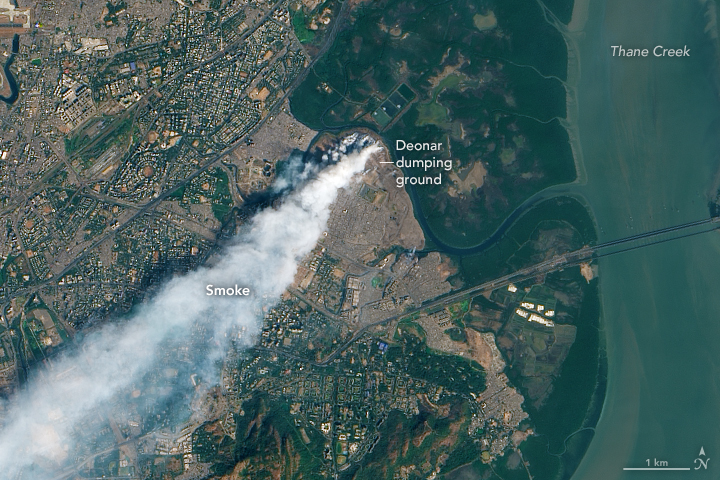
Lalitha Krishnan: My pleasure. So, Rahul, since you are Bombay-based and ReCircle’s headquarters operates out of Bombay, this question is for you. I heard that you both visited the Deonar waste dump which has existed since 1927. It’s the oldest dump in Asia. Legacy waste: waste that is old land fill, inherited waste, not necessarily even created by your generation. So, what did you see in this mammoth garbage pile that inspired both of you to become clean tech innovators? Most people would have run a mile, including me.
1:50:

Rahul Nainani:  No, absolutely, Lalitha, I think, I was as ignorant as the rest of us, before we started ReCircle. And having studied finance, nowhere in my mind did I think I’d be working in the waste sector. But I like to believe that, waste and circular economy, is something that just happened to me, and I think that’s for the very right reasons itself. So, we launched in early 2016 under the brand name of RaddiConnect, which is what we rebranded as ReCircle. But just when we were launching, there was this massive fire that took place at the Deonar dump site. You know, there’s this iconic image that NASA took from space where you could see that fire burning even from space. And it went on for a few weeks in fact. And early in our business when we were just launching, the idea was to find, look at what was happening with our base and we were as ignorant as anybody else. It was more of an out-of-sight, out-of-mind mentality. Having lived in Bombay all my life, Deonar was just like, one dump site which you cross on the way to Lonavala. But one fine day when this fire happened, we planned to go down to the dump site and see what went on and why this fire happened itself to start with. So, there were a few things that we found out during this fire. The first thing was that these fires happened regularly. And it’s not just, that one fine day that this escalated. But the only reason in the end, not just us but the entire city woke up is because the wind was blowing towards South Bombay and South Bombay being South Bombay, people started waking up and realising that this was a massive issue. But these fires happen daily. And the dump site, if you look at the map of Mumbai, is pretty much located in the heart of the city, but it has a creek on one side. So generally, when the wind blows towards the creek, you don’t realise the extent of the fire. But this fine day when it was growing towards the city and that’s when we all woke up. The second thing that drove me to take that leap of faith and see how big this problem is and think that we need to work towards a solution was that we worked with an NGO called Apnalaya that works in the Deonar dump sites, in the neighbourhoods surrounding the dump site. And they gave us a very astonishing fact that the average life expectancy of people that just live around the periphery of the dump site–these are again, not the people that work in the dump site, but only live in the slum area next to it–was 38 years of age and, and that was an eye-opening number to me and it helped me realise that if this is impacting the people just living around the downside, how soon is it going to start impacting the rest of the city as well as the rest of the country? This story is not just about Deonar dumpsite in Mumbai, but this is pretty much made with the Ghazipur dump site in Delhi. May be Bangalore, maybe even Kolkata is pretty much the same city, same story across all cities across India. And, together Gurasish and I must have visited more than 50+ dump sites in the country, and the situation is quite dire. So, that helped us realise that of course we need to make an impact in this space. And that’s how our journey began into working towards starting ReCircle.
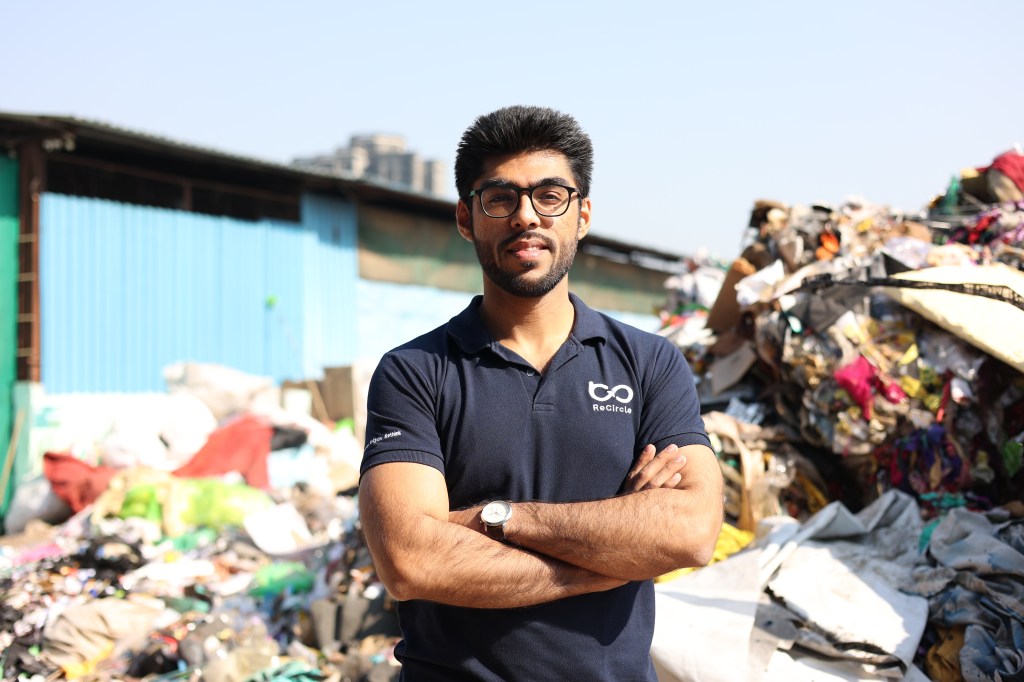
Rahul Nainani, Co-Founder and CEO, ReCircle

5:12:

Lalitha Krishnan: Wow. God bless you guys, somebody had to do it. Gurashish, maybe you can answer this. So, help me draw a picture of ReCircle’s operation by completing the story. OK? So, I’m a rag picker or a saffai karamchari sorting through a pile of garbage in Deonar. What next? What happens?

5:35:

Gurashish Singh: Overall, let me help you understand how waste flows #1 The lady or the man in the house removes the clean recyclable waste, right? So that’s typically your newspapers and things like that that are sent to a raddhiwalla. Then the house helper–who comes to the house has the first dig at the waste– who will remove bigger cardboard boxes or Bisleri bottles, PET bottles, and things like that. After that, the waste goes to the garbage collector of the building or the person who’s putting the garbage in the garbage truck. Post this, the waste will end up in landfills and oceans. So even though it is a pretty informal supply chain right from the start to the end. One of the most astonishing things is that fortunately, we have a very strong-backbone supply-chain where people are removing waste at so many levels. But the unfortunate scenario, and this is in 90% of the cases, the waste is not segregated. So, if we just segregate the waste, it will make it very easy for this extremely long supply chain of people that are, actually making a living out of the waste that we throw out also. So yeah, that’s actually what happens. And, there is a supply side to the supply chain that works. There are scrap dealers, kabadiwalaas, your house help, the person who is, you know, down in the building collecting the garbage right till that truck reaches your dumping grounds. The bigger problem is people not segregating this waste.

7:31:

Lalitha Krishnan: Thanks for that. Talking of ‘sorting’, one generally hears of sorting garbage into glass, metal, cardboard, wet waste and plastic. In one conversation I heard you mention sorting garbage into 40 categories. I mean I was blown away. Could you share a few examples and which materials are the focus of ReCircle?

7:56:

Gurashish Singh: Sure, let us again start with India, where we’re expected to segregate our garbage into three categories that are dry, wet and hazardous right? And out of the dry waste… if you typically see the four major four or five major categories that are there–paper, glass, plastics, metals, e-waste. In India we are not even supposed to segregate different types of waste. When we travel internationally, we do the paper separately, the glass separately, dry separately, and wet separately. So however, given what is actually supposed to be done in India where we segregate our waste into dry, wet and hazardous, this dry waste then reaches our facilities where we first primarily sort the material into paper, plastics, metals, glass and e-waste. Then, in turn, each of these materials is further segregated. So, say paper is segregated into four categories. That’s white, coloured, corrugated boxes, coloured-corrugated. Your glass is segregated into alcohol bottles, and other glass bottles and then colour-segregated. Plastic belongs to seven different categories, right? That’s number one to number seven. #1 being PET #7 being others. This level is then further categorised into colours, transparent and things like that. And so is e-waste. So, leading to all this, we segregate over 40 different categories of waste. We also connect and segregate multi layer plastics or the 7th category which mainly is the packaging material that is composed of multiple layers of different polymers. And we make sure that this either goes into road making or recycling or energy recovery and waste to energy plants or cement factories, which is all the government-approved way of managing this waste. So, yes, the one category of dry waste that we collect from individuals is then further segregated into 40 categories.

10:11:

Lalitha Krishnan: OK, could you give me an example of what 7-layer packaging is? What product are we talking about?
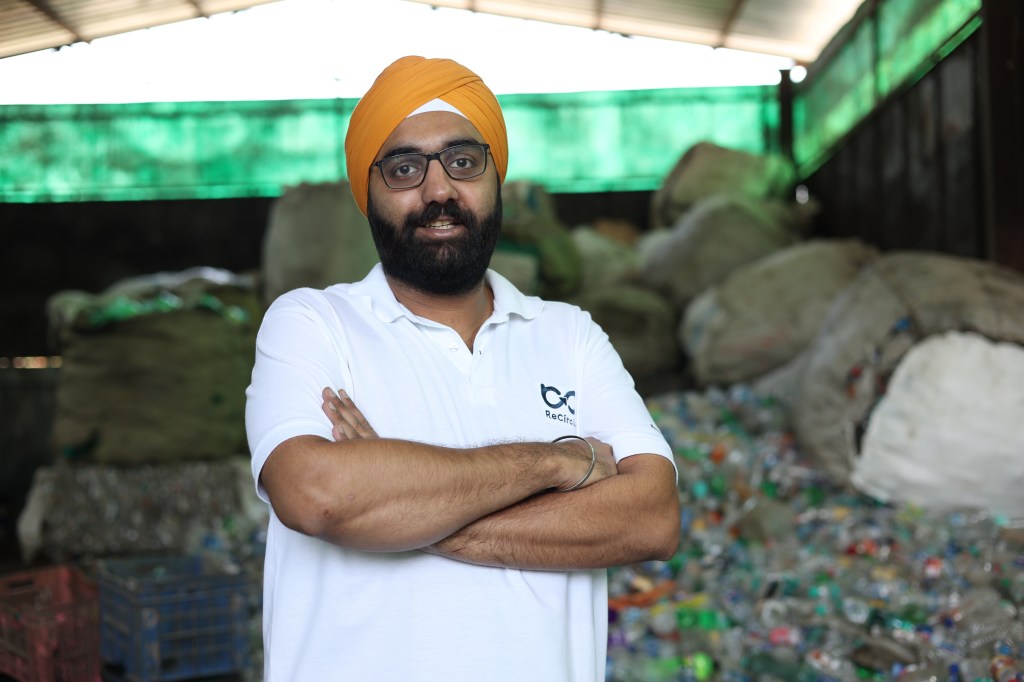
Gurashish Singh, Co-Founder and COO, ReCircle

10:18:

Gurashish:Multiple layers. An easy example would be probably a packet of any chips that we like to get.

Lalitha Krishnan:

OK.

Gurashish Singh: So, if we notice, the top layer would be plastic, there will be an aluminium layer with it, right? So, there is an aluminium foil if you see it on the other side.  This is basically a merging or a combination of multiple polymers and other materials that cannot be recycled. So an easy example is a water bottle which is PET. If we break that down and granulate it, we are going to get PET granules back. But when there are different layers of either different polymers or different materials, the output is never going to be a single material. That’s going to be a mixture of all materials.

11:10:

Lalitha Krishnan: Thanks. Rahul, how many villages, towns and cities does ReCircle reach? And are any of these remote? For instance, do you cover vulnerable areas of India, like the mountainous areas or islands like the Andaman island where there’s really no extra land for dumping garbage? Having been there–and my last podcast guest was a herpetologist who lives in Andaman—he says Andaman island has a landfill now. I mean, there’s nowhere for the garbage to go. It doesn’t come back to the mainland so…

11:45:

Rahul Nainani: Correct. So currently, our operations span over 250+ locations across India covering major cities like Mumbai, Delhi or Bangalore, but also covering tourist locations like Shimla or Haridwar and also, certainly difficult-to-reach locations in the northeastern area which might be in Assam or Meghalaya, where we are actively working on collection of this material. Having visited Andaman island myself, a few years ago, as I’m an avid diver, I did see the need for waste management over there. But how our business model works is that we work with brands, which is a B2B business. So, we work with brands to help them to offset their footprint. So, when I say this, essentially, let’s say we are working with a beverage brand and they’re selling their brand in India. We collect an equivalent amount of beverage bottles on their behalf. Now, while, our mandate for collection of this material comes from the businesses that we work with, we are covering almost 90% plus of the States and Union territories in India. But in certain areas where we need some additional support from brands where we can do the operations like in Andaman, right now, where we are not working. But we know companies that are working over there. We are trying to maximise our footprint as well in terms of collecting from even the harder-to-collect locations. But here my call to the listeners would be that if you are a brand and are looking at consciously making this effort, please do reach out to us. And we would want to work in harder to access locations further as well …to collect material from where it is difficult to collect these resources. But yes, currently we do have a mix of Tier 1, and Tier 2 rural areas as well, where we are actively collecting this material from.

13:38:

Lalitha Krishnan: Good to know. 250 plus locations is quite something. Considering ReCircle’s reach, you’re providing livelihood to a large number of people. How would you say it impacts their lives?

13:55:

Rahul Nainani: Yes. So,  just to take one step back, the waste management sector in India, as Gurashish mentioned, is extremely informal and fragmented and it has a lot of moving parts involved. Now our purpose or our vision at ReCircle is to bring along ethical circularity. And, the idea is that while waste is an environmental problem, it’s also a massive people problem because there are nearly 4 million waste pickers or people who make an income out of scavenging waste from landfills and dump sites across India. So, our business model was, in a way where we wanted to empower these people and formalise them as compared to displace them. Because, we very well understand, that without having these people clean up the trash after us, there would be no waste management that would happen in our country at all. So, we work with local scrap dealers, aggregators, and waste collectors that work across the country at these 250-plus locations. We formalise them with the help of where we’re working with them on, health checkup camps… connecting them with government schemes and also eventually working with them on additional sources of income. So, in simplicity, we charge the polluter, which is the brand owner that we work with and we incentivise the collectors that collect this material on our behalf. And with that intent,  we’ve directly and indirectly impacted more than 3000+ informal workers. While this is not a big number in the larger context of things, this is where we are currently. At a small stage where and we can do this work. And where either with the help of, you know, social security or with health camp with additional sources of livelihood is where we’ve been able to impact these 3000 plus informal workers that are part of our supply chain. And our vision is to work and increase this number as we scale up our progress in terms of waste recovery. We also want to impact more and more waste pickers in the organisation. We don’t like to call them waste pickers, but we call them ‘saffai saathis’ as there are friends who help us clean up the environment as compared to picking our waste because what is waste for us is a resource for them and they can make a living out of this. So, that’s how our mindset is to personally not call them waste pickers because they’re cleaning after us. We are the waste generators and they are the cleaners. They’re cleaning after us. So, it’s very ironical to call them waste pickers or waste workers in that sense. So, rebranding them as essentially saffai saathis, rebranding waste as a resource to start with, because what’s waste to us is a resource to them and also for our ecosystem. And that’s how we intend to build this inclusive business model where we empower these informal waste collectors as a part of our supply chain as compared to displacing them from the ecosystem.

16:55:

Lalitha Krishnan: Nice. I like that whole positive outlook you have towards your business and to everyone who’s involved. Well, could one of you give us three foul facts about garbage that are India-specific that my listeners may not know?

17:09:

Gurashish: One of the most startling facts that we came across was… did you know that India imports 465 crore plastic bottles annually? We stumbled upon this a decade ago and we found it absolutely unacceptable. If there’s one thing that we don’t have a shortage of in India, that’s waste.

Lalitha Krishnan: Why?

17:41:

Gurashish Singh: The reason for this is two ways. One is that again, going back to one of the first questions you asked me, people do not segregate waste. So a lot of it just ends up in landfills and oceans, right? If we just start segregating our waste, multiple people will remove this and send it to a recycling unit close to wherever they are. So that is one of the one of the astonishing or foul facts as you call it. Secondly, India alone produces a massive amount of 3.4 million tonnes of waste. Again, only 30% of this gets recycled, mainly due to non-segregation of waste. We are the third largest waste generator in the world and if we continue at the same pace, we will be the largest by 2048. That’s the estimate and another one would be a 4 million people make an income out of scavenging waste from landfills and oceans and streets. They are unorganised and unrecognised, and we feel that somewhere they are the only reason for the entire waste recycling and waste infrastructure that is being managed in India as well. So again, it will be a call out to all the listeners here that whoever your waste picker, waste collectors or saffai sathis are, they’re invisible warriors, in this entire shadow supply chain. So, the dignity of work is something that they really deserve.

Lalitha Krishnan: Thanks for that. It’s so true. So could you share three positive facts about garbage that emerges from your business?

19:36:

Rahul Nainani: I think looking at the larger landscape of sustainability and clean tech itself, I feel that I’m extremely optimistic in terms of solutions coming out of this space, especially because there’s been more traction that’s been in this space in the last, let’s say, three years as compared to the last three decades put together. So, there’s a lot of movement in the right direction that’s happening. While, in India, we are seeing small movements that are coming along but I think at the larger levels also, there are somethings that are coming along. Let’s, take the example of Indore, which is a very talked-about town in terms of the cleanest town in India itself year after year. And I think there’s a lot of learning that we can take from there where having visited Indore myself and seeing the case study over there, I think they have reached almost 90% plus segregation of waste at source. And, like how Gurashish has been mentioning, I think the biggest problem is that we are not sorting our waste. And if you’re not segregating, then it becomes waste and it doesn’t become a resource. So, there is a silver lining. Having seen a city like Indore do it, I think there’s a lot that we can learn from them and move towards a more sustainable future. The second thing probably is that there’s a lot of policy shift that’s coming along. With global pressure on plastic pollution, sustainable development goals have come across at the global level. Even in India, the plastic waste management rules were for the first time introduced in 2016—they never existed before–which is part of the solid waste management rules earlier. So that’s bringing around a lot more traction in this space. And then of course, our Prime Minister’s global Swachh Bharat movement, which if nothing, has at least brought in awareness to a very large level of population which is that we need to work towards a cleaner India. So, I think there’s a lot of policy pressure, also external pressure that’s coming along, which is moving towards the right direction in that sense. And then finally, I feel that when we started ReCircle in 2016 and as we sit today in 2024, we have seen this industry evolve so much that earlier clean tech as a sector did not even exist. You know, the sustainability term in large organisations did not even exist. And now we’re seeing that it’s becoming a part of board-level conversations. Also, so many innovators and startups that have come up in this space that are working towards solutions, not just for garbage, but for carbon, water, and energy working towards a more sustainable ecosystem altogether. So there’s a lot of movement and innovation that’s happening in this space and that keeps me extremely optimistic about the future while this has been a large problem in the past, there are people and there are solutions out there. It’s a matter of all of us taking those small steps and picking the right solutions.

I feel that when we started ReCircle in 2016 and as we sit today in 2024, we have seen this industry evolve so much that earlier clean tech as a sector did not even exist. The ‘sustainability’ term in large organisations did not even exist. And now we’re seeing that it’s becoming a part of board-level conversations. Also, so many innovators and startups that have come up in this space are working towards solutions, not just for garbage, but for carbon, water, and energy working towards a more sustainable ecosystem altogether. So there’s a lot of movement and innovation that’s happening in this space and that keeps me extremely optimistic about the future while this has been a large problem in the past.-Rahul Nainani

22:47:

Lalitha Krishnan: Right. Thanks for that. All right, so who are your prime customers? Are they brands that we recognise? Are there labels on recycled, repurposed products that we can look for?

23:01:

Gurashish Singh: Right, Some of the brands that we are associated with and work with are prominent organisations such as Hindustan Unilever, United Nations Development Programme, Hindustan Coca-Cola Beverages, Mondelez. We are one of the sole partners for Tata Starbucks, helping them assist in their sustainability objectives and needs. We also work with brands across all sizes. A lot of brands in the D2C (Direct to Consumer) space as well, such as Phases, a skincare Indian brand, Honey Twigs, which is into honey and one-time use packaging. So yeah, quite a few prominent big and small brands and, and it’s, it’s been a good journey working with them.

Some of the brands that we are associated with and work with are prominent organisations such as Hindustan Unilever, United Nations Development Programme, Hindustan Coca-Cola Beverages, Mondelez. We are one of the sole partners for Tata Starbucks, helping them assist in their sustainability objectives and needs. We also work with brands across all sizes. A lot of brands in the D2C (Direct to Consumer) space as well, such as Phases, a skincare Indian brand, Honey Twigs, which is into honey and one-time use packaging. -Gurashish Singh

23:54:

Lalitha Krishnan: Nice. So, everything you do is really impressive. And it’s on an incredible scale as far as I can see, but it’s almost–I mean since I’m speaking to you, I now know–but mostly invisible to the public eye or backstage almost to speak. So, what does ReCircle do to nip the garbage problem at the consumer level? I’m not sure if that’s a clear question.

24:21:

Rahul Nainani: I think I get an idea, in terms of what are we doing in terms of consumer awareness and the consumer-side work? So, to build a business in this space, we realise that we have to make a large impact, we need to get big brands to start taking action. Of course, consumers need to do their bit. But there’s a while we, our main focus has been on B2B and working with big brands to make that change happen, there’s a lot of work that we do on the consumer level as well. Maybe through a collection drive in the city of Mumbai. And if you want to discard your recyclable ways, we’ve also recently started getting into a textile-based collection as well– your old clothes as well as your dry waste. We have a monthly pickup that we provide to consumers where you can sign up free of cost. And we do a door-to-door pickup once a month. And, the schedule of this is something that is already finalised for the entire year. So, if you simply follow us on Instagram, our handle is recircle.in you’ll be able to see & sign up for our next collection drives.

25:28:

Rahul Nainani: We do a lot of work in the form of ‘Waste to Art’ workshops to spread awareness of how waste is not waste. We conduct workshops either in corporate offices or, even otherwise in spaces where you can sign up to see what you can make best out of waste. So, there’s a lot of awareness that happens there. We’ve worked in the past with the Start Art Festival in terms of setting up installations for waste. So, the Evelyn House installation, maybe Lalitha, you remember seeing it last year. The entire building had plastic bags sprouting out of it. We were happy to associate with the artist who helped design that in terms of spreading awareness. So that’s another thing where we use art as a way in terms of spreading awareness.

26:21:

We do have regular clean-up drives in terms of beach cleanups and other stuff that we end up doing as well.

And, finally, we also conduct Zero-waste events. So, events are a massive area where there’s a lot of footfall of people and consumer awareness can be spread. So we work with event organisers to help organise a #zerowaste to landfill event. So may it be a music festival with the likes of let’s say #SoundRise or a #TappedFest or maybe a marathon. So, we’re doing work with the #PowaiMarathon in Mumbai as well. And, the biggest one that we’ve done until now is the #ICCWorldCup matches that happened at the Narendra Modi Stadium in Gujarat, there were more than 1,00,000 people attending each match. We managed to make sure that the entire event was zero-waste over there. More than 1000 tonnes of waste that were generated at all the matches were eventually sent for processing as compared to reaching landfills and oceans.

Lalitha Krishnan: That’s very impressive.

27:27:

Rahul Nainani: So, we believe that consumers need to play a very crucial role and consumers like us and citizens like us, where we try and do a small bit of awareness through the different activities. If you also follow us on Instagram, there’s a lot of awareness material that we put out over there as well. But through these events, through these collection drives, we can touch base with different consumers at different levels as well and thereby, spread the awareness. At the end of it, the idea is that consumers generate the waste, and they also purchase the waste in a way. So, how do we get consumers to become conscious consumers at the end of it? By actually picking brands that are taking action as compared to the ones that are not. So, it is a small, small part of the puzzle that we play. But the idea is that consumers can spread this awareness across different other consumers as well.

Lalitha Krishnan: Right, complete awareness and change in lifestyle. I think you’re doing a great job.

Rahul Nainani: One step at a time. You know, I think the only thing is that it might get overwhelming that you have to do a lot, but take those small steps.

28:40:

Lalitha Krishnan:

Tell me about ReCircle’s initiatives: ClimaOne, Plastic EPR service, and Plastic Neutral Programmes. I don’t have a clear understanding of these things and whether they’ve been included in your earlier replies.

28:58:

Rahul Nainani: So maybe a few of them are something that we did speak about like we do zero waste events. Wherein, if you’re an event organiser, we help you manage the event and ensure that the waste that is generated is firstly reduced, pre-planned, and make sure that the processes are set up. And then, of course, look at managing the waste after the event is closed. We do collection drives for consumers, which is where consumers can participate by disposing of their recyclable waste as well as textile waste now.

But on the B2B side, we have a few services. We have a service where we essentially help brands to offset their plastic footprint. So, in simplicity, let’s say you’re a brand that is selling 10,000 beverage bottles in the market, we collect, sort, segregate and recycle these 10,000 bottles on your behalf and ensure that it’s getting recycled and give you credits for this. So similar to how carbon credits work, we work on plastic credits and within the plastic credit space, we have two of our services. One is our EPR service, which is more compliance based. So as a part of the plastic waste management rules, if you are a big brand, you need to collect back as much plastic as you put in the market. So we help brands offset as well as meet their regulatory compliance requirement. And then we have a similar service for medium and small-sized brands, which currently do not require to do this as a compliance, but are doing this as a voluntary activity where we not only help you offset your footprint under our Plastic Neutral Programme but also help you communicate the impact of this with your consumers. So, your consumers know what are the actions that the brand is taking. At the backbone of this is our clean tech platform called Clima One, where Clima One brings transparency and traceability to this unorganised sector. Where consumers and brands can track what’s happening is that there’s no greenwashing happening, when the material is being collected. So we are digitising and formalising the supply chain with the help of our tech platform which enables us to provide these services to the brand owners that we work with.

31:00:

Lalitha Krishnan: OK. I’m down to the last question. What thoughts would you like to leave with our listeners? Or could you share a word or a concept that adds to you know, our understanding of what you do?

31:17:

Gurashish Singh: For me, it would be segregation of waste. I think that’s where it all starts. That’s where the journey begins. So, to the listeners, it would be like wherever you are, whatever you do, start by segregating your waste. It’s not that difficult. You put segregated dry, wet and you do it the minute you’re throwing your waste. It should be a conscious decision to throw it in the right bin. And that’s what enables a beautiful future for the waste going forward.

Lalitha Krishnan:Thanks for that. I like the fact that you’re emphasising this throughout our conversation and it’s just simply segregate. All right. I hope our listeners remember that. How about you, Rahul?

32:05:

Rahul Nainani: I think, we like to rethink things at ReCircle and one of the primary things of rethinking is that when you look at something as waste, you tend to throw this in a dustbin and you realise that it has no value. But I think what people need to start rethinking is that if you rethink waste as a resource, then you start looking at it from a very different perspective. And, that’s what I want the listeners to take back after this conversation. That, rethink waste as a resource, a resource that can impact the lives of the millions of people who are working in this sector. It can also be a resource to reduce our reliability on fossil fuels and on our ever-depleting resources that we have. So if we use our waste as a resource, we can minimise the requirement of new resources and thereby move towards a more circular and sustainable future.

ReCircle staff at facility. via https://recircle.in/

33:05:

Lalitha Krishnan: True. Thank you so much. That’s being creative with your waste. Think of how you can reuse it like we all did in the 70s but I guess we didn’t have that much plastic to deal with back then.

33:18:

Rahul Nainani: I think being Indians, we’re ingrained with this mindset of reuse and reduce. And if you just look back in terms of what your grandmothers and grandfathers used to do, I think that there’s a lot that we can learn even by just going back to the basics in terms of waste management or circular economy.

Lalitha Krishnan: Thank you so much, this has been great.

Rahul Nainani: Thank you so much.

Gurashish Singh: OK, bye.

Birdsong by hillside resident, the collared owlet.

Photos Credit/Courtesy: ReCircle Podcast cover/label design by Lalitha Krishnan

Disclaimer: Views, thoughts, and opinions
expressed in the podcast and show notes belong solely to the
guest/guests featured in the episode, and not necessarily to the host of
this podcast/blog or the guest’s employer, organization, committee or
other group or individual.

Know Your Dugong. A High Priority Species Like the Tiger.

Dugong photo by Darius Quadros

Ep#32 Heart of Conservation Podcast Show Notes (Edited)

00:00

Audio: Collared owlet 

00:09

Hi I’m Lalitha Krishnan and you’re listening to episode #32 of Heart of Conservation. You can listen to Heart of Conservation on several platforms but you can also always read the transcript right here, on my blog Earthy Matters. Today we are going to be talking about an animal that is an old relative of the elephant but it lives in water. I’m talking about the Dugong spelt ‘Dugong’. It’s also a cousin of the manatee. The dugong is a marine mammal that once lived in large numbers in Indian coastal waters and yet we know very little about it.

I am very excited to be speaking to not one but three amazing researchers Prachi Sachchidanand Hatkar, Chinmaya Ghanekar and Swapnali Gole about their work with Dugongs and their habitats.

Prachi Sachchidanand Hatkar is a PhD Scholar, Project Fellow- CAMPA Recovery of Dugongs and their habitats in India at WII. Currently, she is working on seagrass-associated fauna in the gulf of Kutch and Gujarat. Chinmaya is a wildlife biologist and certified scuba diver. She is currently working on projects involving seagrass, fish, dugongs and their threats under ‘CAMPA Recovery of Dugongs and their habitats in India.’ She is pursuing a Ph.D. in seagrass-associated fish and works in the Gulf of Mannar and Palk Bay region.

Swapnali Gole is a marine researcher and a National Geographic Explorer. Affiliated with WII, she has been working on the insular population of dugongs in the Andaman and Nicobar Islands, India, for the last seven years.  Between the three of them they have all the dugong habitats of India covered, I think. 

A special thank you to Dr Dr. J. A.Johnson, Scientist and faculty at Wildlife Institute of India and also Head of Department of Habitat Ecology for facilitating this conversation. And for the lovely ladies on my screen, welcome and thank you all for joining me.

2:14

Lalitha Krishnan: Swapnali do you want to start with what are dugongs? 

2:18

Swapnali Gole: When I start introducing dugongs, what I have experienced is that there is a big question mark on everybody’s face. “Do you want to say ‘Dolphin’? Are you talking about some whale species?” Generally, we are always bombarded or greeted with these kinds of reactions. Dugong is a very simple elusive animal which is a marine mammal species. A marine mammal is an animal that lives its life in the sea–of course there are variations–there are some marine mammals that live partly in the sea and partly on land but dugongs are exclusively marine mammals which means right from when they are born to the time they die, they spend their entire life cycle in the sea. And, they are just like dolphins and whales; also, marine mammals.  But they are more popularly known compared to dugongs. 

Dugongs are also more popularly known as sea cows; the reason being the dugong is the only exclusively herbivorous marine mammal. Which means the only diet a dugong prefers is a vegetarian diet in layman’s language. And, they are generally found in around 42 countries in the world globally in the Indo-Pacific belt out of which in India we have only three distribution sites i.e., Gujarat, Tamil Nadu and Andaman and Nicobar Islands. So, people must remember the dugong as animals that live in the sea, they give birth to animals–they do not lay eggs like some other marine species and there is strong parental care in dugongs. From the time the calf is born, the calf will be strongly dependent on its mother for one to two years. These dugong mothers nurse their babies which is why they fall in the category of marine mammals. Marine means related to the sea and mammals mean animals that give birth to the calf and not lay eggs.

4:23

Lalitha Krishnan: That is so interesting. There is so much we do not know. How long have you three been researching dugongs and how extensive is the area you work in in these three different parts of India? 

4:39

Prachi Hatkar: I have been working in the Gulf of Kutch for five years now. The Gulf of Kutch is situated between the Saurashtra and the Kutch peninsula so the coastline of the Gulf of Kutch is about 170 km long. It starts from the Okha to the inner gulf and the mouth is about 75 km wide at the mount and the water spreads around 7300 square kms across the Gulf of Kutch. So, the Gulf of Kutch is a Marine National Park and marine sanctuary which was established in 1995. It was the first Indian marine sanctuary which was declared and it has 42 islands which covers various habitats like the grasses, corals, mangroves and intertidal zones etc. 

5:32

Lalitha Krishnan: What about you Chinmaya?

5:34

Chinmaya Ghanekar: So, like Prachi, I have also been working in Tamil Nadu – in the Gulf of Mannar and Palk Bay. These are two regions of separate seas.  One comes in Bay of Bengal which is Palk Bay and one is part of the Indian Ocean which is the Gulf of Mannar, so we kind of work at the confluence of both.  The area, to describe it, is a long, long stretch of Indian coastline – around 500 kilometres. So, from Adirampattinam if you consider till Kanyakumari it is approximately 500 km of the shore line.  And then the sea extends…in Palk Bay it extends to Sri Lanka but because of international borders we cannot access that area. But we generally restrict our area to 10 to 12 kilometres of coast. So, it is around 5000 square kilometres we cover for our study for dugongs and sea grasses and other fauna, and other factors of the project. To tell you about Park Bay, it is a very closed sea; it is like if you see Palk Bay – like I saw Palk Bay for the first time. I thought it was a lake.  It is very calm and has very glass like water most of the time but Gulf of Mannar on the opposite hand has waves and islands. These are two completely different areas so you working in both of them is pretty different from each other. Palk bay has a lot of sea grasses. Gulf of Mannar has corals, sea grasses, algae beds, rocky patches, habitat diversity so to say.  We can encompass most things of marine habitats in both areas.

7:28 

Lalitha Krishnan: Amazing. It also means that the dugong likes both habitats.

7:33

Chinmaya Ghanekar: They definitely do.

7:34

Lalitha Krishnan: Interesting. Swapnali?

7:37

Swapnali Gole: I have been working in the Andaman and Nicobar Islands studying dugongs for more than seven years now. Our study site if you see…because it is an insular set-up, it adds up to the work of our team. Because, the entire stretch is around 1962 kms, right from the northernmost island……..  till Great Nicobar it is 1962 kms. And, we have more than 800 islands, 836 to be precise. Then on each island there is a coast because it is an island, hence, we have more study areas I would say. For every island there are four coasts. And, what we have been doing is working in patches because it is not possible-considering the manpower that we have-to be present everywhere. So, we started our survey with say, the north……Andaman covered that and slowly came to the southern side. And, very recently we covered the Nicobar groups of islands. Practically the entire Andaman and Nicobar is our study area.

8:48

Laitha Krishnan: Sounds like a lifetime of work.

8:50

Swapnali Gole: It was. It took us six years to do what we did and it was very intensive.

8:57

Lalitha Krishnan:  When you say ‘team’ wherever you are, what size teams are you talking about?

9:05

Swapnali Gole: For the islands we never had a team of more than three. There was always a lot to do. I do not know why but we always had the smallest team…two or three people. For the seagrass and dugong (study) especially, the maximum I remember we had was a team of four, never more than that. 

9:27

Chinmaya Ghanekar: I have been fortunate enough to work with a team of eight people on a boat working on different aspects of the project and then we work together and it’s amazing.  But then sometimes we are just two people who are going by an auto to a coast then doing our surveys and coming back so there is variation across the years. 

9:52

Lalitha Krishnan: Prachi, I am going to ask you this question just to know more about the dugong. If a Dugong were a person, how would you describe it? 

10:03

Prachi Hatkar: I would like to describe the dugong as a gentle giant.  We have heard stories that describe the Dugong. If you see dugongs, they look similar to somewhat like a pig you can say, or mermaids… the stories we have been hearing about sailors saying, “We have been seeing mermaids in the sea”, they weren’t mermaids, they were actually seeing dugongs but perceiving them as mermaids. 

10:32

Lalitha Krishnan: Where do these stories come from?

10:36

Swapnali Gole: It was given by Christopher Columbus. In his excerpts—while he was voyaging around the West-Indies side–he wrote that, “I happened to see three mermaids today but they are not as beautiful as they have been described.” Honestly speaking, dugongs do not look like mermaids (or what we think we know of them). Only the tail resembles the mermaid but also later it was detected that maybe he did not see dugongs but manatees which are sisters of dugongs.

11:10

Lalitha Krishna: Right. Chinmaya, where can we find dugongs? In India of course, we now know but where in the rest of the world?

11:19

Chinmaya Ghanekar: So, in India as we have already mentioned it is in Gujarat, Tamil Nadu and Andaman Nicobar. So, these three areas are like pockets. If you see the map, it is like one pocket on the left-hand side of the map, one on the south and one on the right-hand side. So, we call this a pocket distribution of dugongs.  

But in the world scenario, we have the greatest number of dugongs as of now in Australia. So, after that, we have this population in Red Sea, so that is also kind of pockets so these mostly as distributed in Indo-Pacific region; very technically saying and they are present in some island countries like Philippines, Indonesia…Southeast Asian countries. They are also there in our neighbouring countries like Sri Lanka. So, they extend from the Indian ocean to the Pacific Ocean completely. But China had dugongs a few years ago and very sadly they have now declared them as functionally extinct so the population cannot grow basically any more. They do not have dugongs anymore which is kind of sad news but we should be alarmed that populations in other countries also are quite threatened. We should look at them and give them the importance they deserve.

12:51

Lalitha Krishnan: True. Swapnali, talking of habitats where do dugongs prefer to live? Tell us a bit about their biology. How long they live, up to what size they grow etc. I know you call them gentle giants but exactly how big are they?

13:15

Swapnali Gole:  Dugongs spend considerable time in the day-I am not talking of their whole night -in shallow waters. So, it is directly linked to the sea grasses that they feed upon. And seagrasses being true plants they need sunlight just like any other plant on land for creating their own energy i.e. their photosynthesis process. So, wherever light reaches the water – and this is a very local concept. In the Andamans for example, the water is very clear so it (sunlight) is going to reach much deeper there compared to Gujarat for example where the water is very turbid. So, depending on how deep the sunlight reaches, it decides on where sea grasses will be found and that automatically regulates where dugongs will be found. It is all very linked. And, because dugongs primarily feed on seagrasses, wherever their food is, their distribution is going to be centred around those areas the most and that differs from place to place. That being one. Also, there have been tagging experiments done in Australia where it has been scientifically proven that more than 70- 80% of time of a day, dugongs have been found in shallow/sheltered waters 1 metre to 5 metres because they were spending a lot of time just feeding on seagrasses. On a similar line, dugongs, as I said, feed on seagrasses. An adult dugong will eat up to, say, 35-40 kgs of sea grasses, that is a lot of seagrasses for an individual. And, when l say, ‘adult dugong’ it goes up to 3.5 to 4 metres. So, the gentle giant’s size limit is 4 metres. Dugongs are generally not recorded to grow more than that. I have never heard of dugongs growing to say, 7-8 metres. Generally, people mistake dugongs for other species. There has been misidentification in my experience also. My informant spotted a whale and thought it was a dugong. He said it was 10 metres long. That is not biologically possible because the limit for dugongs is 3.4- 4 metres. When a dugong calf is born, it is around the 9-1.2 metres size range and around 40 kgs. But as the baby grows older, and it puts on weight after eating a lot of seagrasses, the maximum weight of a dugong, I can say, can go up to 350- 400 kgs on an average. Which is why they are called gentle giants. They are massive. They are very docile animals.

15:45

Lalitha Krishnan: When you say they grow to 4 metres, has this been their size historically? I do not know if there have been any fossil finds etc? 

15:56

Swapnali Gore: Whatever documentation we have come across where dugongs have been mentioned it is beneath the size range of 3.5 to 4 metres. Relatives of the dugongs–there was a species called Steller’s Sea cow– which was really massive. It was much larger than the dugongs in size. But if you talk about the species of dugong the upper limit of dugong size is always given as 3.5-4 metres

16:20

Lalitha Krishnan: OK. Thank you so much. Prachi, now to you. You know the term seagrass meadow paints a lovely picture in the imagination. What are they really like? Also, I read that dugongs regulate seagrass ecosystems. How so?

16:42

Prachy Hatkar: So, as Swapnali mentioned earlier, dugongs are vegetarians; that they prefer seagrass. So the seagrass are present in shallow waters where the dugong reside so they are basically residing where the food is. They graze upon beds of seagrasses regulating the biomass of seagrasses. In the clear water of the Andamans for e.g. the seagrass bed looks like a football field or ground basically. It will be spread across the whole land. It is a beautiful sight. Dugongs prefer a seagrass species called Halodule specifically. Halodule and Halophila species have low fibre content and rich nitrogen content. So basically, the dugongs graze upon the seagrass meadows regulating the biomass and type of varieties of seagrass that grow in these meadows. So, they actually act as gardeners.

17:53

Lalitha Krishnan: Are you three covering aspects of dugong research in the Gulf of Kutch, Gulf of Mannar and the Andamans and Nicobar Islands?

18:02

Chinmaya Ghanekar: To talk about Tamil Nadu, Palk Bay, Gulf of Mannar, we are covering research aspects of dugongs and seagrass projects. We are also covering the outreach and capacity building and these are true for both the other sides. So, these are main four objectives which are divided into a lot of smaller sections. So, if we are talking of dugong research, we are looking at where dugongs are distributed. What are they eating? Where are they going? If they are breeding in some areas how frequently are they sighted? These are some questions we answer with dugongs. With seagrasses we look at what species are there. What types of meadows are there. What are the associated species of fish – on which my PhD is based upon. So, I am looking at how seagrasses and fish interact with each other. How they are dependent on each other. This is not exactly I would say, a direct connection to see but when we say “fish” we obviously think of food. And we have already addressed this previously; dugongs are regulating the sea grasses, and seagrasses are habitat for fish and we are connected to dugongs.

This connection and the layers in between are what we are trying to study. So, there are two things which are my main-focus. I mentioned seagrass-associated fish. What is the diversity? How do they utilise seagrasses? Are they using the space between these? Are they eating seagrasses? Are they hiding in it? Are they laying eggs on them? I am trying to answer these kinds of questions.

20:00

In terms of dugongs, I have mostly looked at the distribution of dugongs and threats associated with them. There are many, many threats like possibly a boat dashing into them or a net entanglement or pollution or coastal development. The threats that we generally hear about in marine ecosystems are also threats for dugongs. I also study that; something like plastic pollution and then we have also looked at primarily what dugongs eat in India. So, the dugong research in India has not investigated this before this so I and one of my colleagues Sumeet have done gut-content. When we get a dead dugong, we get the gut content out of it and we see what seagrass they have eaten and what they prefer. And, we have also found some plastic fragments in the gut. Those aspects we investigate from the research point of view.

In the outreach and capacity building, we mostly interact with people, different stakeholders like the Forest dept., police, marine police…all of those and try to make them aware of dugongs and give them more and more training to continuously monitor dugongs and their habitats.

21:21

Lalitha Krishnan: Well said, So, it’s not one mammal but it’s the whole world around it. Swapnali, my next question was about interacting with fishers and other folk in the coasts that you work in. What have their reactions been?  What are the challenges? And, how do dugongs behave when they encounter humans? Are we perceived as threats? Sorry, that’s a lot of questions.

21:50

Swapnali Gole: The first question is always my favourite question, honestly. It is all about communities and that is my favourite part of the work that I have done. To talk to people- the local people. So, it started with me just interacting with the fishermen. For all marine researchers, the primary stakeholder is always the fisherfolk of that particular area because they have practically spent their entire life by the sea. And nobody can have that kind of knowledge or degree of curiosity, honestly speaking. The interaction that they have with the sea and the creatures living in the sea is immense. So, we started talking with the fishermen initially to understand their idea or perceptions of dugongs and seagrasses. Also, where dugongs and seagrasses are found. So, that would be used as a baseline for our research work.

22:46

Eventually we started talking with many other people who are going out to sea in the Andamans. The benefit is that the entire area is an insular set up. Whether you are a sea-person or not, you are dependent on the sea even for commuting from one island to the other. So, your interface with the sea and these areas is going to be very much pronounced. So, we started talking to different stakeholders you know…sailors, scuba divers or for the first time, the Indian Navy and Indian coast guards. Because, there are many, many regions in the islands which are firstly geographically isolated. So, considering the limited logistics we have, we don’t always get to go to these islands. Secondly, there are restricted areas. So, there is a defense-restricted area, there is a tribal-restricted area. Again, as researchers, we don’t have permits or we need to work on the permits a lot and that takes considerable time. So, we started targeting different stakeholder agencies, who are sea-farers. That’s the only mandate required to be part of this programme which turned out to be something called The Dugong Monitoring programme – a citizen science approach. And, initially whenever we interacted with these stakeholders, not just fishermen but other people also, there was this big question mark on their face as I had mentioned in the opening statement. When you say, “dugong’, people say, “What? Are you talking about dolphins? 

Multiple times, they also correct us. “No Ma’am, you’re probably talking of dolphins.”

“No, we are talking of dugongs.”

That was the kind of response we got initially. Most of the people we spoke to were clueless of what we are studying.

The saddest part is that the dugong is the state animal of Andaman and Nicobar Islands.

24:30

Lalitha Krishnan: Really?

24:31

Swapnali Gole: Yes, even in local schools, we were surprised that the local school kids were not aware of what a dugong is. Our work starts there, with that. It’s like Chinmaya mentioned, there are many elements to the work we are doing. It starts with resources but a massive, massive chunk of our work in all three sites is sensitisation of the people. Right from dugongs to the species identity, telling them, “There is a species that lives near you and why it is important, and how you can contribute to saving them…”  in a nutshell is the kind of work we are doing at three sites.

23:11

To answer your second question, I would not say that dugongs avoid humans but in Andamans especially there is an island called Shaheed Dweep which is full of tourists. There is so much anthropogenic footprint in that area and boat traffic. You will see every type of boat there, from ferry boats to speed vessels to normal dinghy boats of fishermen. All sorts of boats are there in the water and dugongs are still coming into those areas again and again. It is said globally also, that in places like Southeast Asia which are hubs of harbours and anthropogenic footprints, dugongs are still coming into those areas.

I would like to add that dugongs behave individualistically too which goes for any species. Even in the Andamans, in Shaeed Dweep, I have seen the dugongs coming into areas where there is a lot of human interfaces. But a neighbouring island group which is a Marine National Park area…when we spotted a dugong there, and got into the water, this is my personal experience, those individuals just swam away to the other island altogether. So maybe because those individual dugongs were inside a marine protected area and not used to human-interface, they were not okay with humans coming close to them but in some other areas where humans were coming in and out every day, maybe the dugongs living in that area have become adapted to that traffic or pressure.

26:39

Lalitha Krishnan: This is so interesting, thank you.

26:42

Chinmaya Ghanekar: Can I add something?

26:44

Lalitha Krishnan: Of course. Please go ahead.

26:45

Chinmaya Ghanekar: Very recently, a week ago, a fisherman told us by phone that, “We are seeing dugongs every day in the Gulf of Mannar” in an area which is kind of a tourist area–the Tourism dept. also manages tourism there. So, he (fisherman) said that, “whenever we go out for fishing, we see dugongs daily. They come near the boat at so close a distance, you can almost pet them”. This is a different kind of interaction they have with the dugong and there is a kind of friendship between them. So, the boat comes, the dugong comes, they see it and feel happy about it. So, it is also a very, very positive interaction between the community and the dugong.

27:28

Lalitha Krishnan: That is such a wonderful thing to hear. It is making me love the dugong, a mammal I have never seen in my life. Dolphins are also known to behave like that. Maybe it is one of the reasons why they mistake them.

27:42

Chinmaya Ghanekar: Maybe but people will have different interactions with different individuals or populations differently. Like Swapnali rightly said, “There are individual reactions”. Something like in the Red sea. If you follow #dugong on Instagram, every day, you will see a photo of the Red sea where the dugong is  surrounded by divers. And, it’s feeding and kind or sleeping or doing its thing. But, that doesn’t happen here. So, the individualistic behaviour is very pronounced and it may vary with different populations also.

26:15

Ep#32 Podcast label design by Lalitha Krishnan. Dugong Photo Credit: Darius Quadros. Researchers photos courtesy Swapnali, Chinmaya and Prachi.

Lalitha Krishnan: So, the dugong is also been accorded the highest protection status i.e. Schedule-I of the Wildlife Protection Act, 1972. How does it translate in the real world? Would you like to answer that?

28.33

Chinmaya Ghanekar: 

This Wildlife Protection Act is considered one of the strongest conservation acts in the world because it has schedules. It has a lot of animals that receive protection. There are different schedules in the Wildlife Protection Act giving different status of protection to different species. The infamous one is the tiger out of all. The tiger has Schedule I protection, so do dugongs. Which is the highest kind of protection the Wildlife Act can provide. There are so many restrictions. Like, you cannot touch that animal. You cannot research that animal without permission. You cannot utilise any part of the animal in that case, not any part…even if it is excreta which happens in ambergris fish like whales. It is still part of the whale so we cannot utilise that. To even touch that kind of animal, you need permission. It is that kind of protection.

-Chinmaya Ghanekar

29:41

Lalitha Krishnan: Sorry…does that apply to even a dead animal?

29:43

Chinmaya Ghanekar: Yes, even for dead animals. Wildlife Institute of India has acquired all the permissions and we collect those samples and work with it. So, with this kind of protection, we always need permission from the government and the government is always very, very strict about it. We cannot work without permission anywhere. 

30:11

I will give you an example which happened in Thondi (Palk Bay), when I joined the project. It was a case of dugong hunting. It created a lot of fishermen agitating because it is part of their tradition and we struggle with it. They hunted it (the dugong) and the marine police put charges on them. Their boat was confiscated, their nets were confiscated. They were put in jail for seven straight years. The fisherman was about 50 years old. This kind of completely puts all kinds of restrictions on their lives. They cannot get their boat back, they lose all the money they put in for their equipment. So, the implementation of the Wildlife Protection Act is very strict in the real world.

31:05

There is one more story. When I was going on a boat, by mistake, there was a communication gap between the highest forest official and the field people and they did not allow me to go on the boat and research the dugong. So it is that strict, you need all things in place and the Wildlife Protection Act makes things happen at least in case of dugongs which I have seen personally.

31:35

Lalitha Krishnan: It is actually a good thing, isn’t it? In a way, it is protecting the animal which is what it is supposed to do.

31:43

Chinmaya Ghanekar: It might not be so straightforward as it sounded in the answer. There are a lot of agencies that come into it but then it happens. It does happen.

32:00

Lalitha Krishnan: Prachi, what part of the dugong research do you like personally? Or what has been your most amazing take away or encounter.

32:05

Prachy Hatkar: As I mentioned that I have been working with dugongs since the last five years. When I started working in Gujarat, like Swapnali said, when we went for the awareness programme, in schools or interacted with the locals, the fishermen, they mentioned that they had sighted dugongs in Gujarat-in the Gulf of Kutch-long back. Maybe 15-20 years ago. Recently they have not seen any live dugongs as such.

We were fortunate enough to see a live dugong which was the first photographic evidence in the Gulf of Kutch two years ago through the drone survey with one of my colleagues who accompanied me in the field. When we went seagrass mapping, we could actually see two dugongs.

33:02

Lalitha Krishnan: Really? Were they of the same size?

33:05

Prachy Hatkar: They were actually adult sized. We thought we could see a mother and calf pair in another sighting. But we were fortunate enough to have a dugong sighting. We knew then the dugong was not locally extinct from Gujarat.  

33:26

Lalitha Krishnan: Such a positive sighting. Swapnali, how about you?

33:28

Swapnali Gole: On a similar line, I have spent more than seven years studying dugongs. And my first sighting…from boats I had spotted dugongs. Honestly speaking, in the Andamans it is pretty possible to spot a dugong considering the water is also clean. My first underwater sighting–despite diving so much throughout the islands, happened after five years. I remember I had spent 45 minutes with this individual. I had almost given up all hope… “I won’t see it” I said to myself. 

So then when I spotted that individual, it was like “Wow”. You know, your entire journey as a dugong researcher flashes just right in front of you. I was literally crying underwater. I cried so much my mask filled up with my tears.

-Swapnali Gole

I was so happy and then I realised I had left all my friends who had been diving with me behind and I was literally following the individual.

34:38

And in those 45 minutes, it was just me and the dugong. You know, it was a surreal moment for me. Then I was a very happy soul. Finally, after all the hard work I had put in.

34:48

Lalitha Krishnan: That’s an exclusive. First of all, who gets 45 minutes alone with an animal? You are extremely lucky.

34:55

Swapnali Gole: I am lucky. I have so much gratitude for those 45 minutes.

35:01

Lalitha Krishnan: But you all deserve it for the work you have done. That is your reward to see a free, happy, healthy animal living in its habitat. Chinmaya, do you want to add to that?

35:17

Chinmaya Ghanekar: The first ever live dugong sighting I had…  I was dying to see a dugong. Because, everybody was telling you they saw a dugong here, a dugong there but you are not seeing one. It is frustrating. It’s very frustrating after spending a long, long time in the sea. I was talking about the other work I was doing per different aspects of seagrasses and other related fauna… So, we were doing that, sitting on the boat, and sieving the sand out. So, I was doing the sieving and behind me, I just heard this loud breath in the water. It was a loud, loud breath. I left the sieve down and when I turned around, I saw the tail of a dugong which was going underwater. I cannot tell you how beautiful that was. I have a picture-memory of that and I really want to see that again but the first experience will always be special. And this was special.

36:21

Lalitha Krishnan: True. Talking of breath, are dugongs vocal?

36:27

Prachy Hatkar: Yes, they are very much. They chirp like birds. They actually chirp under water. As you know, sound travels four times faster underwater compared to land. So, obviously, that’s the only communication that works for them – underwater sound.

36:49

Swapnali Gole: in addition to what Prachy said, there are various categories of vocalisation patterns which have been identified for dugongs. We unfortunately do not have any dugong vocalisation study happening in India by WII or any other researchers. But in Japan, people have studied dugong vocalisation patterns. So, they have categorised dugong vocalisation patterns…they also bark. So, it is a different frequency range for each category. And, then they chirp as Prachy has mentioned. But then, there is the possibility that dugongs will vocalise very rarely; and only when it is fully needed. They are not like dolphins who echolocate and communicate.

17:28

So there have been studies where the sample size of what researchers have put forward to study communication patterns has been immense but compared to the efforts that have gone into it, there have been very few recordings of dugong communications. So, that is also one point to be understood: that not always do dugongs communicate as dolphins do or other marine mammals do.

37:53

Lalitha Krishnan: Sounds like such a very self-sufficient mammal and very smart too. What is the role of WII in Dugong conservation in India? What are the government initiatives in place right now for protecting it? And what is the way forward? Also, I always ask three questions at a time.

38:18

Chinmaya Ghanekar: Yes, because they are very much connected to each other. Wildlife Institute of India is part of the government. Though it is autonomous it works very, very closely with the government…different, different departments; not only the forest department. As Swapnali mentioned we also work with the Indian navy, coast guard, all of these defence bodies. 

The Wildlife Institute of India initiated the CAMPA dugong recovery programme in 2016. From that time, Swapnali is the most eligible person to comment as she is one of the first researchers from WII who has started work on dugongs. Before that, in 2013, Dr ShivKumar and one more researcher called Aditi Nayar. They both had a research programme regarding dugongs in Gujarat, Tamil Nadu and Andamans and Nicobar; where they have seen the perspective of people about dugongs typically, the local communities who interact with the sea on a daily basis. From that they had come up with something called the Critical Dugong Habitats where dugong sightings or populations are more. And also, human pressure is a lot in the area. So, both those things combined are called Critical Dugong Habitats.

39:45 

And based on that we started our work in the CAMPA Dugong Recovery Programme. But as I mentioned earlier, we started with four objectives. One is dugong research, the other is seagrass and associated fauna research; one is outreach and the other is capacity building. So, WII has been actively working on all four of the objectives.

40:17

Research we have touched upon what kind of research we do. But in outreach programmes, there is this highlighted programme called the Dugong Scholarship programme which is a very novel initiative as it targets the fishermen-kids. So, we go from school to school, identify fishermen-kids and we give scholarships to them which is Rs 500/- per month and these scholarships are  given at such a time-in 9th or 11th grade-when they might not have money to go for further education.  At least they will have this one 10th pass certificate or 12th pass certificate which is at least the basic level of education one would expect from someone. So, the scholarship is given at that time.

41:09

And through them, as Swapnali mentioned, the dugong volunteer network or volunteer programme network. Their scholarship student-parents being fisherfolk, they also provide us information. So, we give them the scholarship and we get information. It’s a barter and it’s a beautiful barter because we get to know so many things which we might not be knowing about dugongs through research papers. Because, the local experience is somebody’s father who has been fishing probably for the last 20 years. He will have the experience which we might not expect. Something like, the dugong-friendship story we told you about. This Dugong Scholarship programme has immensely grown in all the three main states. We now have about 500 students who are part of that programme. And we will continue it for the next few years or so. 

42:05

In terms of capacity building specifically–the word capacity building itself says we need to strengthen the stakeholder’s capacity. So, we give them scuba diving training programmes or drone training programmes to monitor and understand more about their habitats. Because, in the end, maybe we will be there, or somebody else will come, but the forest department and other stakeholders…they’re going to stay forever. So, they are the people who should actually see this diversity and have long term monitoring, and WII is kind of hand holding them all the time. And it’s not true only for dugong projects, iit’s for all the outreach and research combined projects WII has, hand holding is a huge, huge part which we play all the time.

42:57

We have also held Marine mammals stranding workshops in Tamil Nadu to state veterinarians and range forest officers. In that, what happens is –you always see videos on facebook or other social media or the news that a whale is stranded or a dolphin or turtles are stranded/dead or something similar. It is a pretty unique situation because we don’t know what to do. If it is a live animal, we may want to rescue it but how, we do not know. Or if it is a dead animal, should we bury it? What samples should be collected? What information can we get out of it? Since marine mammals are very distinct, as researchers or forest officials also, we cannot interact with them on a daily basis. It is only part of the job we do. We have so many other things. So, if a dugong is stranded, we can actually understand the size of it, why it has died or is there any other associated information viz. the gut content I was talking about.

44:07

To get this kind of response, they should be trained people and there should be veterinarians to understand what the reason of death is. Are there any diseases? Are there any infections? All those kinds of questions, veterinarians can answer. So, giving them training on what to do, how to do was a huge, huge part of that workshop.

44:29

We also came up with a book on how to respond to these events. And, hopefully that workshop is going to be repeated with other sets of people so more people can be aware of what to do. WII always provides these kinds of workshops to strengthen the data collection and in the end it all strengthens our understanding of dugong and seagrass populations, of course other marine life populations.

And, the government has been very proactive in dugong conservation. Recently, and this is a huge success story for the government, a new Dugong Conservation Reserve has been declared in north Palk Bay which is around a 50 kms stretch and 10 kms of shore, so approx. a 500 sq kms. area which is a specifically designated area. And, this is the first conservation reserve for dugongs in the country. So, we were notified in 2022. Now they are coming up with a management plan for local people. How to give training to say, stakeholders like tourists. They are planning a dugong conservation centre, an interpretation centre where people can learn more about dugongs. Maybe learn snorkelling, see the fish, seagrasses, and all of it. So, this is a government initiative which they are doing really, really proactively.

46:13

Lalitha Krishnan. Well, good to know. There’s so much work you’ll are doing, individually, as an organisation and with the government, That’s great. OK. The next question. Prachy, I am going to start with you. Could you share a word that will help us increase our understanding/vocabulary of dugongs? Maybe a concept or a word. Something that is significant to you.

46:42

Prachy Hatkar: It (Dugongs) is a part of our marine life and needs to be preserved. The fact is I didn’t know about dugongs before joining the project. I literally saw an advertisement and I did not know such an animal existed, that is a vegetarian mammal. The manatees are already there but they are basically living in freshwater. This one (dugong) is one which is still surviving after so many years and that is so incredible. That’s my thought that we should be saving this marine animal which will go extinct if we don’t make the effort.

47:40

Swapnali Gole:  If I must send this message across in one word, I would say, people should remember the word ‘umbrella’. When it rains and you open the umbrella, whoever is standing under the umbrella gets saved from the rain.  That is exactly, that is exactly what dugongs are for seagrass meadows. It is also called an umbrella species. So, if you save dugongs, you save seagrasses. Chinmaya said she was working on fishes. It saves fish. Me and Prachy are working on associated invertebrates of seagrass habitats for our PhDs. They also get saved. Every single individual which is associated with seagrasses, including dugongs will be saved if you save dugongs. An umbrella. 

48:22

Lalitha Krishnan: Fantastic. And, also eventually, the humans around those habitats. 

48:49

Swapnali Gole: Exactly. And also, the economy. Sorry, I missed out on that. So, the people who are dependent on seagrasses will be saved.

48:42

Chinmaya Ghanekar: I would say, ‘family.’ Not only because as researchers we have developed this emotional connection with the animal over the years but it’s the family structure they have. It is mostly a maternal family. And, the bond between the mother and the calf is so beautiful, so special that people may imagine having the bond with their own mother. It is as special as that.

We must also recognise that these animals will have their life and we are kind of interfering with that so maybe we need to hold back a little and see what we are doing to the families.

-Chinmaya Ghanekar

49:34

Lalitha Krishnan: Very good. Thank you all.

49:45

Prachy Hatkar: I wanted to say a few things. We celebrate World Dugong Day on 20th May every year. We have a huge month of celebration; we carry out activities in the field. So, please stay tuned on our social media, website where we keep updating our activities. There was this school teacher from the Andamans, Chanchal Singha Roy who wrote a book called “Dugong My Friend’. We have translated that in regional languages and we do circulate these in schools. So that copy is also available on the website if somebody wants to check.

50:18

Lalitha Krishnan: Hey guys, that was fantastic. You’ll rock, really! Three amazing women. There is so much you’ll are doing. I am genuinely grateful for you’ll coming on for this interview and speaking your hearts and minds and sharing everything you know. I learnt so much, I really feel like going out there and checking these places out….

50:47

Chinmaya Ghanekar: You’re always welcome. Please come.

Audio: Birdsong

Birdsong by hillside resident, the collared owlet.

Dugong Photo Credit: Darius Quadros. Researchers photos courtesy Swapnali, Chinmaya and Prachi. Podcast cover/label design by Lalitha Krishnan.

Disclaimer: Views, thoughts, and opinions expressed in the podcast and show notes belong solely to the guest/guests featured in the episode, and not necessarily to the host of this podcast/blog or the guest’s employer, organization, committee or other group or individual

Tigers of The Tide, Breathing Roots et al. The Sundarbans with Dr Radhika Bhargava.

Heart of Conservation Podcast Ep#31 Show Notes (Edited)

Introduction:

Hi, I am Lalitha Krishnan and you’re listening to Ep# 31 of Heart of Conservation. I bring you stories from the wild that keep us all connected to our natural world. You can listen to Heart of Conservation on several platforms and also read the transcript right here on my blog Earthy Matters.

Today’s episode is about the Sundarbans. I recently made a trip there and I have to tell I am so spell bound by the immensity and biodiversity of the world’s largest delta which we share with Bangladesh. To be honest, I didn’t know about these 2 facts earlier.  Almost everything I saw was unique somehow, something I had never seen before. I knew I had to find an expert to learn more about the Sundarbans ecosystem. As luck would have it, I came across a social media account @onesundarban which belongs to Dr Radhika Bhargava, my guest here on episode # 31.

In her own words, Dr Radhika wears multiple hats as a coastal geographer, geospatial analyst, and a National Geographic Explorer. She is a Research Fellow at the NUS Centre for Nature-based Climate Solutions working with wetland conservation in Asia. She recently completed her PhD at the National University of Singapore. We will discuss her research some more but for now, Radhika, welcome and congratulations on your PhD. I feel so privileged to have you share your knowledge and experiences with us.

Radhika Bhargava: Hi Lalitha, thank you so much for having me on your podcast. I am so excited and I am so happy that you recently visited the Sundarbans. I am really looking forward to your questions and interacting with you on Sundarbans. 

Lalitha Krishnan: Lovely. So, let us start. Radhika, what made you, first, focus on the mangroves for your research and why must we be watching the mangroves to check on the health of our planet? 

Radhika Bhargava: I started working on mangroves during my Masters actually. I was part of a project where they were looking for someone to do coding or use coding /computer languages to identify mangroves of South East Asia. So, you use satellite images and you have to interpret where the mangroves are. There were many other forest classes that I was interested in studying but somebody had taken up those classes or somebody had taken up those forest areas to study using satellite imagery. They were only left with mangroves and then, I joined the lab. Nobody was willing to take up this project because there was a lot of computer coding required. And, coming from ecology, biology or management backgrounds, we were not trained in it. I saw this gap and even I didn’t know any computer programming at that time. But then, looking at this desperate need that nobody is doing, I said, “Sure, why not? I will give it a try.” I started learning coding from scratch and then my focus was mangroves. So, that is how I learnt a lot about mangroves. I became so curious that through the two years of my Masters which was at University of San Francisco, the focus was Environmental Management. I ended up with all my class projects or side projects related to mangroves. That’s how I came across the Sundarbans.

3:56

You asked me, “why must we be watching the mangroves to check on the health of our planet?” There are many reasons. Especially that mangroves are coastal protectors. They protect the sea from storms and cyclones. Their roots help in purifying water but specially they store or remove carbon dioxide which causes global warming. They store it within themselves and keep it there for millions and millions of years. They have such characteristics that can tell about the health of the planet and actually help in improving the health.

4:30

Lalitha Krishnan:  That’s quite amazing. I love the part about you learning coding from scratch. Look where it has taken you.  Radhika, I’m curious about your social media handle. Why its called ‘One Sundarban? There must be something to it. There must be a good reason why you have called it so?

4:56

Radhika Bhargava: So glad you asked me this question because initially, people thought that maybe I did not get the handle “Sundarbans’ and that it why I went with ‘One Sundarbans’. Also, I think, I have had that account for maybe two years. I only joined social media because I felt the urge to share about the Sundarbans. When I realised that a storm can come, a cyclone can come in that area and nobody would even know that somethings happening…  So, I felt that I am at a place that I can share so I should take that initiative. So, I only joined social media to share about Sundarbans.

And why ‘One Sundarban’?

Sundarbans is across India and Bangladesh. It is one ecosystem. As a researcher, it really annoyed me initially when I would come across studies or management plans or government records that focused on just one side-either India or Bangladesh. So, for me, ‘One Sundarban’ is one ecosystem so hence ‘One Sundarban’ but after I pondered about it a bit more, about the terminology, I realised that “sundar” is in Hindi, In Bangla and in many local Indian languages, “sundar” is beautiful and “ban” or “van” is forest. So, it is just one beautiful forest. If I branch out of onesundarban, this name still holds.

-Radhika Bhargava

6:37

Lalitha Krishnan: Right. That is a beautiful thought and it makes so much sense because you cannot save it in part. It is half the story then. Radhika, how much ground did you cover during your research and what techniques did you employ to cover this vast area?

6:59

Radhika Bhargava: Right. So, I worked across India and Bangladesh. So, Sundarbans, for those who are not familiar, is 10,000 sq. kilometres of just mangrove forests. It is made up of many small islands-I do not even know the exact count-but, adding both India and Bangladesh, it is going to be more than 200 islands. My initial idea was to capture the ecosystem. Since I use geo-spatial analysis, which means using satellite maps and satellite data to understand what is happening on the ground, I was able to understand that from one aspect, right? Since satellite images can help you cover that vast area but when I went into the field, I still intended to go from the easternmost to the westernmost and northernmost to the southernmost island. For that, I first recorded shorelines from on top of a boat. I installed a Go Pro camera on a boat and then we would go parallel across shorelines and then I would be doing a commentary on those videos. Later on, I converted those videos into multiple images, and so from the observations in those images and my commentary, I collected some data.

8:25

So, we covered around 240 kilometres just of observation. The travelling kilometres were much more. And then, I went to around 16 villages to conduct interviews with the communities to understand their part of the story of the work I was doing.

8:53

Lalitha Krishnan: That is very extensive. You must have learnt a lot. That is quite amazing Radhika.

 9:01

Radhika Bhargava: Thank you so much. If not for COVID, I had another few methods I wanted to try out too which would have made me go into the forest to collect some  forest bio-physical  measurements  within the forests but because of COVID, I had a shorter amount of time and PhD scholarship and all restricted me. So, there was still more that I wanted to do.

9:24

Lalitha Krishnan: But you must have amassed quite a lot of information.

9:29

Radhika Bhargava: It took a long time to process it. I think I would still go back to that data set although I have written my thesis on it, there is still so much more to get from it. I hope I get a chance to do that in the future.

9:41

Lalitha Krishnan: I am sure (you will). These things never go to waste – what you’ve observed, what you’ve learnt and what you have surveyed. You know, even though I have lived by the sea, I never bothered to familiarize myself with mangroves. It was in the Sundarbans, that too on a boat that I witnessed up close, the diversity of mangroves species.  They are quite different from each other apart from the fact that they seem to be thriving in this cocktail of river and sea. Could you talk about some of these mangroves species and how unique they are? The snake roots, breathing roots for e.g. or the way some species propagate themselves with seed balls that float till they find a suitable location? It is all so fascinating.

10: 34

Radhika Bhargava: In just a few lines you actually explained how one comes across and becomes fixated with mangroves. Initially you lived by the sea, I come from a land-locked place. So, I had not even heard the word ‘mangroves’. So even today when I tell people I am doing research on mangroves, they assume I am researching mangoes. The word is so unfamiliar.

Lalitha Krishnan: There’s somebody worse than me that means.

11:13

Radhika Bhargava: I was worse than you. Despite visiting coastal areas with my parents, I never processed why there are trees on the beach or why there are trees on the water. Especially in Bombay. Goa, Gujarat side of India. So, I also learnt about it through books and through reading research papers until I went to the Caribbeans to do some project on coral reefs. So, we had a small project where we were snorkelling and looking at fish nurseries around mangrove roots. So, I thought that was cool. But I did not realise that there’s this amazing ecosystem like Sundarbans  or Bhitarkanika in Odisha, where in sediment-rich mangroves you can’t even see what’s happening under water. So, I also came to mangroves in a similar way; I said “what are these crazy roots?” A lot of people whom I have talked to say mangroves for them are like some sci-fi movie, when they come to the Sundarbans.

12:14

It is mainly because of the roots like you said. Mangroves have this crazy kind of roots, especially to adapt to the extreme environment they grow in. By extreme environment, I mean they grow at the interface of land and water. So, they are often flooded with salt water although they receive some fresh water from rivers as well. They get flooded twice a day during high tide. They are exposed to extreme waves. When I am explaining this, I like people to imagine that these mangroves are humans. Or to become mangroves themselves. So, if you’re standing at such a place or if you are to stay there for so long, you would develop some kind of adaptation that would help you first, stand there steadily. That the hold of the roots… the snake roots or the prop roots as it is called. that helps them stay aground. There are four to five kinds of mangroves roots. Basically, the first role they play is help them stay in that silty, flooded land. The second thing specially in the Sundarbans or Bhitarkanika, where there is a lot of sediment that these mangroves are standing on, the second thing they need to do is to be able to breathe. But the soil and the water mix are so poor in oxygen content that they have to grow their roots up or their roots have to come from their branches and then go into the ground, unlike other plants which grow roots hidden in the ground. So the roots that are propping up from the ground-there’s a type of root called pencil roots- which look like if you’ve stuck pencils in the soil, they look like that. Or buttress roots… All of these roots apart from giving them stability, they also help them get oxygen from the air. So, many plants get oxygen from the atmosphere directly and through their leaves and through their stems but mangrove roots also get oxygen content from the air to support breathing for the plants. So, these are some adaptations that mangroves must bring in to stand tall in that extreme environment.

Source: Nature Picture Library

You also asked about propogation of species. How mangroves grow mangrove babies, right? So, if you are a mangrove and you’ve figured out how you are going to stand and how to breathe in this fragile, dynamic ecosystem then the next thing is to figure out how are we going to reproduce? Unlike many trees which produce seeds–those seeds get propagated by wind or by animals or by water–some of the mangrove trees do produce fruits. And then within these fruits, there are seeds which finally find a ground and grow. But, it’s also common in certain kinds of mangrove species to not produce seeds but produce a mangrove propagule. That propagule is just a mangrove baby that’s growing on top of its mom. You might have come across these green sticks hanging from the tree, they are mangrove propagules. They hang from the tree and until they are ready to go- the weather conditions, the time of year, the tidal conditions etc are good-the mom drops them in the water. Now they are floating in the water but these are not seeds ready to be germinated. These are germinated plants which function like any other plant and it keeps floating until it finds the right elevation, the right tidal conditions, the right slope, and the right area to settle in. So, that stick or propagule has that much sense to find the right place for its survival.  It floats horizontally. Once it finds the right place, it becomes vertical, the centre of mass changes and it automatically goes into the soil. Which is just mind-blowing for me. In a way, they are like mammals. In mammals…humans, babies grown within the mum until they are ready to come out. I find equal similarities.

17:19

Lalitha Krishnan: It sounds like they have an intelligence of their own. There is so much we do not know.

17: 25

Radhika Bhargava: There are things people who study these processes are still finding out. Things we know have been published but there is so much more, so much unknown when it comes to mangroves.

17:41

Lalitha Krishnan: Thank you so much for explaining that. Talking of species, the animals that exist in the Sundarbans also seem to have adapted to this unique environment. We saw the rare Mangrove pitta, the Fishing cat we didn’t see but I know it’s there and the swimming Bengal tiger, which is the only tiger that lives in a mangrove system. How cool is that? What makes them so different or what can you tell us about them?

18:19

Radhika Bhargava: If we are talking about Sundarbans, how can not (talk) about the tiger? The Royal Bengal tiger is found in many places in India or in the South Asian subcontinent. However, the subspecies of the Royal Bengal tiger—I’m not sure if sub-species is the correct word—but the evolution of the Royal Bengal tiger that found in the Sundarbans is quite different from the other Royal Bengal tigers that are found, in say, Central India, where I come from.

18:59

The main difference in their adaptation to living in the Sundarban Delta. In those mangroves, in that flooded ecosystem. Just like I was explaining earlier how mangroves adapted to this soil, sediment, flooding conditions, the tigers of the Sundarbans also have to.

19:22

If you are a tiger, you would need sweet water or fresh water, as they say, to survive. But the tigers of the Sundarbans are living in a delta filled with salt water. Their houses or their land or their habitat, gets flooded twice a day which tigers of Central India do not experience.

They go to a fresh water pond within their forest to get water but then they can go back to their caves to chill. But there are no such structures that are dry all year around for the tigers of the Sundarbans. And if they want to go from one place to another, there are huge rivers and streams in between which they have to traverse. So, tigers and other kinds of cats can swim naturally but the tigers of the Sundarbans use swimming as their means of transportation. When their islands get completely flooded because of high tide they climb on to a tree and stay on the tree twice a day during high tide conditions. Hunting also, for  for these animals is very different. Now you don’t have a grassland to run and catch deer but you have to very strategically traverse the silty, quick-sand type or quick-mud type of terrain where you cannot run a lot because of the roots–that I just explained about earlier—would stop you from running far distances.

 21;10

So, it so amazing how the Royal Bengal tigers of the Sundarbans have adapted to live in these conditions. However, these extreme conditions- lack of habitat these days, lack of availability of sweet-water ponds and extreme environmental and anthropogenic pressures are affecting these tigers in a way that now, they are more exposed to the local villages. A lot of human and tiger negative interactions have started to take place. There are a lot of theories of why some of these tigers are also maneaters. These theories that make sense to me are related to the extreme environment and increasing environmental and anthropogenic pressures that are making them encounter humans in a negative aspect.

22:19

Lalitha Krishnan: Right. I imagine tigers or for that matter any other animal there having to climb a tree twice a day to escape drowning if they cannot swim. I never would have even thought that far.  Thank you for explaining that.  It is quite a hard life even for a tiger. I was thinking of the deer…

22:40

Radhika Bhargava: Did you see any tiger?

22:41

Lalitha Krishnan: No, we did not see any tiger and we did not expect toeither. They told us not to expect to see a tiger. But we did see paw prints. What is fascinating is that—I have seen scratch marks of tigers on trees but here, we actually saw scratch marks on the mud. We had such an excellent forest guide. Mud looks like mud; it was all wet but he manged to point that out to us. It was quite distinct. That was fascinating.

23:14

Coming back to the Sundarbans and the ravages of nature, Cyclone Bulbul in 2019, Cyclone Amphan in 2020, Cyclone Yaas and Jawad in 2021 have all struck and affected these low-lying islands.  What makes them so defenceless? What were the losses incurred with every cyclone-hit?

23:50

Radhika Bhargava: The “defenceless” word here is something I should talk about. It’s Yes and No. Mangroves are known to protect inland areas from the impacts of storms and cyclones. So, in a way they are not defenceless. They have those defences. And, even the all the cyclones that you named just now; Kolkata was the least impacted if we are speaking from India’s perspective or Khulna or Dacca if we are speaking from Bangladesh’s perspective. They were impacted but the impact was so small compared to what it could have been if the Sundarbans was not there. So, Sundarbans is still holding ground, defending inland areas.

However, because of ongoing anthropogenic pressures; to name a few: the shipping channel that has been formed within the Sundarbans which is a protected area. It should not be converted into a water highway.

Or a coal plant coming into Sundarbans or other aspects, the extreme erosion of land; the loss of land which was the focus of my research, causing mangroves to degrade and get lost is causing them to reduce the amount of defence they could have provided.

25:28

When you are talking of defence I would also talk about the people. The people of the Sundarbans, I feel are resilient especially in terms of how they manage when these reoccurring cyclones, with the frequency of three to four times a year, impact them. However, with reduced options of livelihood, with reduced preparedness because they are managing a lot of land, and cyclones, lack of livelihoods, lack of protection altogether, their resiliency is also getting reduced.

So, although the people are not defenceless to start with, the conditions are making them such. So, if you hear, I just made a parallel between the resiliency of the mangroves and the resiliency of the people; yet both their resiliencies are getting reduced or impacted. Which on a side note is the conclusion of PhD thesis.

26:38

Lalitha Krishnan: Good. So, during my visit to the Sundarbans, I noticed that the embankment to my resort was half washed away. I was told it was the cyclone which is a recurring factor there. Is there more to it?

26:51

Radhika Bhargava: Great observation Lalitha. I am so glad that you didn’t buy into just the story that a cyclone comes and destroys the structure. So, to give a bit more context to our audience, the soil in the Sundarbans , the sub-sediment in the Sundarbans is silty;  it’s clayish. So, if you want to understand this, clay that a potter uses to mold clay into, it is that kind of clay, on which if you put a step, just as a 55kg human, the soil is going to get compressed and you’re going to slip away.

Imagine putting concrete slab on this silty and soft soil? It’s like creating a hard line in a very dynamic system. That concrete is going to eventually collapse. I’ll explain very quickly how. So, there’s a concrete slab but underneath, is a soft silty soil. And underneath, there are waves that are coming in and out throughout the day, So the waves are going to take some of that soil with them. Or that soil which may be a bit harder during low tide is going to get mixed with water and become soft. So, the concrete slab on top is eventually and slowly and slowly going to collapse. And, then, it’s going to be like the embankment that you saw during your visit.

So, when a cyclone comes, all of this just gets exaggerated. But these processes are happening on a daily basis, causing these embankments to fall and collapse. Yet, when these embankments fall, another embankment of such poor design is built maybe 200 mts. away from the current shoreline. This keeps on repeating to the point where the place you stayed, you saw the 5th embankment collapse in the past 40 years or so. This is something I also worked on during my PhD to understand why this poorly designed embankments are still around and how are they impacting the local people. So, what I explained earlier about the reduced preparedness or resiliency of the people, that lack of preparedness, that lack of having other options make them rely on these quick yet poor solutions. So, the demand also increases for these. One thing collapses, yet the second time, they want the same thing to be built so that they can get some short-term benefits of prevention of flood or some people start living in tents- who have also lost houses because of all of this, start living around the embankment. So, it becomes like a vicious cycle of land loss, poorly designed embankments come in, poorly designed embankments cause more land loss yet more of these embankments come in and the cycle continues.

30:00

Lalitha Krishnan: Again, I never thought of it. I am learning so much from you Radhika.  Finally, my last question for you. Could you share a word that was perhaps part of your research or significant to you in some way? Something new for all of us.

30:16

Radhika Bhargava: So, the word I want to use, building off of what I just explained about embankments, is a word called ‘maladaptation’. It is very relevant because in the last IPCC report, it was used to highlight a pressing issue in our fight against climate change. I will explain it in pieces. Adaptation means any form of project, idea or implementation that comes in to reduce impact or anything. But in climate change context, climate change adaptation is an adaptation such as building a sea wall, or other things that help you reduce the impact of climate change. So one impact could be flooding, sea-levels rising and so on. Maladaptation to climate change means when that adaptation which is built to reduce the impact of climate change fails but not only does it fail but it causes other negative impacts to the local community or the global community.

31:31

So, when an adaptation fails and causes more negative impact it turns into a maladaptation. This is a word that I realise through the work I have done in the Sundarbans, or through my research in the Sundarbans, and I am hoping that I can contribute more to the growing literature of maladaptation.

31:56

Lalitha Krishnan: You have increased our vocabulary. Thank you so much Radhika, we have covered a lot and learnt a lot from you. It’s been a real pleasure talking to you.

Radhika Bhargava: Thank you so much Lalitha. I love talking about the Sundarbans and sharing about it from a place where I did not know and then I had the privilege to go and learn about it. So, I feel that it’s my responsibility in a way to share about it in any medium and form I can. So, thank you so much for giving me this platform to talk more about Sundarbans and the issues people and the forests are facing over there.

32:35

Lalitha Krishnan: Thank you Radhika, I feel the same way. I feel there’s so much we don’t know and I want to share. I am luck I found you.

32:47

Radhika Bhargava: One quick thing to add for our listeners. So, you learnt a lot about Sundarbans, and mangroves. So, one takeaway you can do for me and Lalitha would be if you can go and tell more people in your social circles about how cool and awesome mangroves are and how amazing Sundarbans is. Thank you.

Lalitha Krishnan: I hope you enjoyed listening to episode #31 and Dr Radhika as much as I did. If you know somebody who is doing incredible work and his/her story needs to be shared do write to me at earthymatters013@gmail.com Watch out for my next episode. Till then, take care. Bye.

Birdsong by hillside resident, the collared owlet.

Cover photo: courtesy Dr Radhika Bhargava. Podcast cover artwork by Lalitha Krishnan

Disclaimer: Views, thoughts, and opinions expressed in the podcast and show notes belong solely to the guest featured in the episode, and not necessarily to the host of this podcast/blog or the guest’s employer, organization, committee or other group or individual.

When was the last time you visited a zoo? Is it time to rethink zoos?

A conversation with the Assistant Curator of the Madras Crocodile Bank Trust (MCBT)

Heart of Conservation podcast Ep#23 Show Notes (Edited)

Scroll for show notes. Cover photo courtesy @zoologistambika All photos courtesy: Ambika Yelahanka


I am speaking to Ambika Yelahanka whose has a very enviable job involving lots of animals. Ambika’s has a Masters in Zoo Conservation and a specialization in feline behaviour and reptilian husbandry. She’s the Assistant curator at Madras Crocodile Bank Trust in Chennai. Find out what a day at the Madras Crocodile Bank Trust as Assistant Curator looks like. Ambika explains why enrichment is as important for reptiles as it is for carnivores and other animals. She also tells us why zoos play an important role in conservations and explains in detail about captive breeding. She also regales us with her experiences in the game parks of Africa and has interesting info about volunteering at the MCBT (Chennai) and sound advice for future zoologists.

Some useful link – MCBT website – https://madrascrocodilebank.org/

For MCBT volunteer program info: education@madrascrocodilebank.org

Adoption of animals – https://madrascrocodilebank.org/web/adopt_a_reptile

Photo courtesy Ambika Yelanhanka at MCBT https://earthymatters.blog/

SHOW NOTES (EDITED)

Lalitha Krishnan: Hi there, Thanks for listening in to ep #23 of Heart of Conservation. This is season three and I’m Lalitha Krishnan bringing you more stories from the wild that keep us connected with the natural world.  I am speaking to Ambika Yelahanka whose has a very enviable job involving lots of animals.  Ambika has a Masters in Zoo Conservation and  specialization in feline behaviour and reptilian husbandry. She the Assistant curator at Madras Crocodile Bank Trust in Chennai. Without wasting more time let’s listen to her amazing story.

Lalitha Krishnan: Ambika, thank you so much for joining me on Heart of Conservation. It’s really nice of you.

Ambika Yelankha: Thank you for having me.

Lalitha Krishnan:  So, Ambika tell us why zoo conservation? What inspired you?

Ambika Yelankha: Basically, my inspiration came from my family. My family is not directly involved with conservation but I haven’t ever been alone in the house in a way because my mom and dad have rescued over 200 cats and about  100 dogs. So, from the time I can remember, there have been at least about10 animals in the house along with the humans. So when I selected zoology it was not a big shock to my parents because they knew it was going to be something similar to what I’ve grown up around. That’s why I got into zoo conservation as well. I did do internships in field research and captivity and I fell in love with doing captive work.  Field research is great but I didn’t think that was for me so I did my Masters in Zoo Conservation got into zoos and working here.

Lalitha Krishnan: Such a lovely childhood!

Ambika Yelankha: Yes.

Lalitha Krishnan: What is a typical day at the Madras Crocodile Bank Trust [MCBT] look like as the assistant curator?

Ambika Yelankha: As the Assistant Curator, my day usually starts off with a general check-up round so I go around and take a look at all the animals with the help of keepers. So, keepers will report to me or the curator depending on if there is anything to report or if everything is normal. Since these animals are nocturnal- most of the reptiles that we have here are nocturnal- there is a lot of activity at the night and we tend to miss out on most of it because we are not active at night. So, we do a general check-up in the morning to see if everybody is okay. If there’s any leftover food, any faeces that need to be removed from enclosures… Kind of decide what enclosures need to be cleaned for that day. That’s basically my morning. It takes about an hour to go around and check up on all the animals especially the babies to see they’re okay. After that, we tend to get into food preparation. So, with the help of keepers, we will prepare food for the herbivores that we have. For carnivores it’s pretty much basic food…so the meat comes frozen. All we have to do is thaw it and serve the food. Whereas for the herbivores it needs a little bit of preparation, a little bit of chopping for appropriately sized animals. After the food has been distributed, I do have some paperwork so I get some two hours of paperwork done. Then, if any medical treatments are required, I also assist the veterinarian with any medicals treatments that are required to be done that day. So currently we have an animal recovering from surgery so we have him on an alert watch so we check up on him every hour. If we have any special needs animals as such that will take up part of the day as well.

Lalitha Krishnan: So, you have a full day really. There’s a saying (actually a quote) that if you pet a dog, you have a full-time job or something like that but you have a zoo full of animals and keepers. When you speak of keepers and their wards, how many are you talking about?

Ambika Yelankha: We have about 50 people working as a team here. And all of them are separated into different designations. We have the Curatorial team, the Education team, the Veterinarian team and then Management. Our combined total is 50 but people are divided into four sections mostly.

Lalitha Krishnan: OK. I saw a post where you were proving engaging activity for a reptile. It almost looked like play but of course, it was sort of an enrichment activity. How important is this for captive animals?

Ambika Yelankha: As many people know and it’s one of the reasons why zoos get a lot of negative comments is because you tend to have wild animals that tend to have usually a lot of mental stimulation as well as physical stimulation in the wild. And, when you house them in smaller enclosures -especially in zoos- you need to sort of providing that sort of mental stimulation especially. Otherwise, like all humans, if you’re not active then you tend to deteriorate in your mental health. So that is something that is not been studied a lot in reptiles but is very common for mammals. Zoos actually provide enrichment ideas, especially for cats. You have your ‘carcass feeding’ or a big ball to play with… There’s a lot of enrichment for mammals but people tend to usually ignore reptiles when it comes to this because they are generally seen as lazy but they seem lazy because they need to conserve their energy. They don’t have that much energy as mammals do expend. That does not mean that they do not require mental stimulation and physical stimulation, especially in captivity. So a saltwater crocodiles that can swim from one continent to another continent needs exercise especially when it’s in captivity. Otherwise weight gain becomes a problem. To stop animals from displaying stereotypical behaviour, to stop the decline in mental health, enrichment is provided.

I am now training with an alligator, ‘Ally’. She is the only alligator bred in India, in captivity. So, I do enrichment activities with her and some of our juvenile gharials and also with our commodore dragons. So, depending on the species, the enrichment activities will change. Most of them will include a positive reinforcing stimulus such as food. So, any behaviour I want them to display will be rewarded with food. But if they display negative behaviour there will not be a punishment as such. She is open to display any sort of behaviour she wants but if she wants food, she will kind of do what I ask her to do.

When I’m talking about enrichment in captivity, especially in zoos, the enrichment is trying to get them to how they would naturally. So that is what separates this from circuses because a circus will make them do human-like tricks, jumping through the hoops and things like that. That is not what we are aiming to do. We just want her to swim really fast. Or jump up to get her food which are things that these animals do in the wild. And we just want her to display those same wild behaviour just in captivity. So there is not unnatural behaviour that will be encouraged.

Lalitha Krishnan:  I like the way you differentiated what they do in a circus. You know it is exactly this photograph you had put up on Instagram that made your work so interesting to me. I’m so glad (I saw it). You’ve explained enrichment in much detail. So, one of the most important questions for you and for people who have negative views about zoos, is why are places like the MCBT and zoos important for conservation?

Ambika Yelankha: As manypeople already know MCBT as such has contributed to reptile conservation the most in India. Rom and Zia Whitaker started this facility because the crocodilian population especially the marsh crocodile and the gharial had declined so much, they were about to be critically endangered. Therefore, they started this breeding facility where most of the mugger crocodiles that were bred here were reintroduced in the wild. And that is how we still have a large population of mugger crocodiles in India right now. So, zoos as such, especially those focused on conservation breeding-especially for critically endangered animals- is very essential because one of the most popular stories are currently with critically endangered species is with the right rhino. Where the only last male passed away and the species has been declared functionally extinct. But there are two females in captivity which people are hoping to breed and bring back the species. So, for animals that have been hunted to that extent, bringing them back would only be from a captive place as such. So, zoos play a very important role in conservation breeding. Apart from that, zoos play a very important role in conservation education. I think, pretty much everybody saw wild animals for the first time in a zoo. As a kid, the parents would have taken them to a zoo and that’s where they see a wild animal and you get to learn about an animal that you didn’t even think existed in this world. I think it sort of builds a sort of curiosity.

We have a great education programme at MCBT as well as explaining why reptiles are important. Why you shouldn’t have an irrational fear of them.  Irrational fear of snakes is generational. It’s passed on by grandparents, parents and things like that.  So, if they visit the zoo and we help kind of eradicate that fear, maybe that person will not kill a snake if it enters his house next time. So, we’re hoping that education plays a big role in kind of eliminating fears especially of reptiles and kind of builds that curiosity…okay, maybe they want to join conservation. Because more people in conservation, the better.

Lalitha Krishnan: I think education and awareness makes a big difference. Tell me if I’m wrong but is it more likely that a younger child or a younger person is more likely to be influenced by you than say, an adult who has lived his life in fear?

Ambika Yelankha: Definitely.

Lalitha Krishnan: The last I visited a zoo was in Nanital aeons ago and to tell you the truth I had never seen healthier animals in any other zoo. They also had the opportunity for the public to sponsor animals which was pretty unique back in the day. I believe the MCBT also does that.  But are people as receptive to sponsoring reptiles?

Ambika Yelankha: I think, with MCBT especially there are a lot of sponsors and a lot of people adopting the animals. Because the curiosity for snakes and crocodiles has exponentially grown over the years. And the outreach programmes done by MCBT has really made a big impact. My coworkers travel around the country and visit schools and hospitals to try to bring these species to light. And, they talk about why conserving them and why respecting their boundaries is also very important. So, I think these outreach programmes have played a very big role as well as social media. We have a big following on social media and a big following for our founders as well since they have done great conservation work for the country. They have a, I would say a fan following, very loyal people. So, the adoption scheme is going quite good especially the sponsorships. There are a lot of people who want to adopt crocodiles.

Lalitha Krishnan:  So, are these people from India or abroad mostly?

Ambika Yelankha: Most of our adopters are Indian. We do have a couple of people from abroad. We have a lot of parents adopting for their children’s birthdays. Birthday gifts…

Lalitha Krishnan:  How nice. Very cool. They’re changing the whole mindset.

Lalitha Krishnan:  So, when you’re speaking of outreach and schools, what kind of schools do you go to? Are they private or govt? Or do you cover the whole spectrum?

Ambika Yelankha: I think the entire spectrum is covered. We started with govt. schools especially around Chennai because we are situated in Chennai. It was first initiated in all the govt. schools in and around Chennai and the radius slowly expanded from there. Now we have sister organisations that have taken up/are doing it in different states as well. So we have a bunch of organisations that collaborate with us and do it in the state that they’re present in as in Andhra Pradesh and Karnataka. It started with govt. schools but we started advertising it more on our social media and that got the attention of public schools and private schools as well. We’re now in collaboration with companies that will sponsor our travels and things like that and are going to schools all around the country right now, including the North East especially. Now we’re concentrating on schools and hospitals in the northeast and are hoping that it’ll be fruitful.

Lalitha Krishnan:  So, if some school were to approach you directly you would make a presentation to them too?

Ambika Yelankha: Yes, definitely. Before the pandemic, we used to go to the schools. Any school that calls us, we will happily go and give them a presentation. So for multiple classes, I think my colleagues went every day for two weeks to give talks in multiple classrooms. Snakes, especially are a big fascination. King Cobra always brings out a lot of screams from the children.

Lalitha Krishnan:  But, I bet it’s better than sitting behind a desk and looking at a textbook. That’s cool. So many renowned animal centres around the world like MCBT have breeding programmes that are bringing wildlife back from the brink of extinction like the Arabian Oryx, the California condor or the Amur Leopard. I know MCBT also has great success when it comes to captive breeding. Could you elaborate on that?

Ambika Yelankha: Yes, MCBT started with the goal of captive breeding and reintroduction. That was the main reason why the entire park was built in the first place. The first main species that was concentrated on was the Indian population of crocodiles. India has three species of crocodiles which is the marsh crocodile, the gharial and the saltwater crocodile. So, the main aim was to bring all three back to sustainable population because the Wild Life Act was published, crocodiles were almost hunted to extinction for their meat and their hide. So, after the Wild Life Act was published, hunting them was banned. It was still a big struggle because the population was so fragmented that without the captive breeding programme it would very difficult to bring them back to a sustainable population. Rom and Zai Whitaker started this park where animals and eggs that were collected in the wild- to ensure a 100% hatch rate- collected eggs from the wild and also a couple of animals from the wild. All this with permission from the forest dept., with permission from the state govt. and the central govt. and they were bred here, especially the marsh crocodiles. Once they reached a size and an age where the crocodiles could fend for themselves, they were reintroduced into pre-selected sights. So researchers from MCBT went to these wild sites and you know, did the research and saw what would be the best sites for reintroduction throughout India. These particular sites were selected and marsh crocodiles were transported from here to those sites and reintroduced. Now we have a thriving population of marsh crocodiles in India.

Lalitha Krishnan:  It’s a huge project. Getting so many permissions to start with and to ensure that these marsh crocodiles adapt and survive in so many different parts of India is quite amazing.

Ambika Yelankha: Because the work doesn’t stop after you reintroduce the animals. You have to constantly monitor the reintroduced animals to see how they are doing. Because once you have reintroduced them and they are not doing great and reducing again then your site was not great then you have to change sites again. It’s a lot of work that continues after your animals have left the facility as well.

Lalitha Krishnan:  Right. So, you’re still looking after them for a long time. Being a zoologist can have its perks apart from the obvious one of working with animals. You seem to have travelled/worked in many countries. Tell us about your experiences. I‘m sure the young people who are listening and want to be zoologists will be even more inspired.

Ambika Yelankha: Yes, I ‘ve had the privilege of working in a couple of places around the world. That was mostly during my Master’s degree. During my Bachelor’s degree, most of my internships and volunteering were within India. I did my Master in Zoo Conservation from Manchester Metropolitan University. Through the university…they provided a lot of opportunities, especially since I was doing Zoo Conservation… they had a collaboration with Chester Zoo which is in the UK. I got to do a six-month internship with Chester zoo. So, basically, while most college students go to their classrooms, my classroom was the zoo. So for six months, I had to take my class in the zoo. I had a lot of hands on experience. I got to do my Masters thesis as well at the zoo with some incredible researchers, incredible scientists. People who have been involved with zoos for over 40 years. I got to learn a lot of things.

Along with that, we did have the opportunity to go do a field project as well for which we were taken to Tanzania in Africa. We went to over eight national parks kind of doing research projects.  I selected the grassland density of butterflies. I got to walk around the savannah with armed guards because hyenas were lurking right behind the bushes where I had to collect data. It was an experience that I shall never forget.

Lalitha Krishnan: I can imagine. I’m sure you have some particularly memorable moments which are part of these experiences at the zoo and the savannah.

Ambika Yelankha: When we were in Tanzania we were camping…so, the campgrounds are in the middle of the savannah. So, basically, you’re living inside the protected area. They warn you saying, the animals have become quite comfortable with visitors and do not shy away from entering campsites even if there are people there. So we were always told to be on the lookout. When we were in the Serengeti and we were camping out in the night, a bunch of us girls went to use the washroom and we opened the door and there were three hyenas right inside the washroom. We screamed and the hyenas kind of -I don’t know what the sound was-but I would say, they sort of screamed. They ran in one direction and we ran in another direction. It was almost comical.

Lalitha Krishnan: But scary at the same time. For both animals and humans. Lovely. So, you know, do you take volunteers and what sort of work can someone who wants to volunteer expect to do?

Ambika Yelankha: MCBT has a great volunteering programme as well as internship programmes.  Currently, due to the pandemic, we are not taking any volunteers at moment but we will soon be opening programmes for people. And, anybody from any background can apply for this. It doesn’t have to necessarily have to be a zoology background. You can be from any background if you want to come and work with animals just for a week. That’s also OK. You get to be part of all of our four sections other than the management section. If you’re interested in the curatorial aspect you get to follow our keepers around, kind of observe what they do. And they’ll teach you the ropes of taking care of the animals. If you are more of a people person, then you can always tail our education officers who’ll teach you how zoo education works. How it is talking about animals. There are a lot of myths and false beliefs about animals and how you need to tackle those things. So you can do that. We also have some veterinary students that want to come and volunteer. They get to work with our doctor here and learn how reptile medication works.

Lalitha Krishnan: OK. You said you can be from any background. What about an age limit? Do you have an age limit?

Ambika Yelankha: As long as you’re 18 and above, there’s no upper limit for the age.

Lalitha Krishnan: You might just find me at your doorstep one of these days. So, I usually ask my guests to share a word or a term or concept something significant for them. Would you like to share something?

Ambika Yelankha: I may have just about have a few words (of advice) for people who want to get into conservation and study wildlife. I would say if you have the opportunity and you have the financial aid, please go ahead and spend that to further your education. Otherwise please look into getting internships and volunteering programmes rather than taking out loans. Don’t get into debt to try and get into this field. Because this field will not help you pay your debt back.

Lalitha Krishnan: That’s if you study abroad right? Can’t you study here in India?

Ambika Yelankha: Yes, you can study it here. It’s quite cheap as well. There’s the Wildlife Institute of India, there’s NCBS and ….. There’s ATREE and a lot of other institutions that offer you programmes to further your education while they get you internships and volunteering opportunities. If that is the case, yes.

Lalitha Krishnan: That’s good advice. Thank you so much.  OK Bye.

Check out the useful links provided above by Ambika Yelanka. I hope you enjoyed Episode 23, stay tuned. I’m Lalitha Krishna and you’re listening to Heart of Conservation. You can read all show notes right here on my blog Earthy Matters. If you know someone whose story should be shared do write to me at earthymatters013@gmail.com. Heart of Conservation podcast is available on several platforms so do check it out. Till then stay safe and keep listening.

Birdsong by hillside resident, the collared owlet.

Disclaimer: Views, thoughts, and opinions expressed in the podcast and show notes belong solely to the guest featured in the episode, and not necessarily to the host of this podcast/blog or the guest’s employer, organization, committee or other group or individual

How Tea is Becoming a Powerful Force for Elephant Conservation in India.

Heart of Conservation podcast Episode #16 Show Notes (Edited)

Lalitha Krishnan: Hi guys. Thanks for listening in to Heart of Conservation Podcast (ep#16).  I’m your host Lalitha Krishnan bringing you stories that keep you connected with our natural world.

How about a cup of chai? Join the club. Apparently, 25,000 cups of tea are drunk around the world every second.  Tea is the second most-consumed drink in the world being second, only to water. I wonder if the number has gone up with self-isolation? Fact is the Coronavirus has been a rude awakening forcing us to rethink how we live and consciously try and change how and what we consume. Say hello to Elephant Friendly tea. Yes, you heard right.

Today I ‘m speaking to Lisa Mills, program director at the Wildlife Conservation Enterprise Program at the University of Montana – Broader Impact Group.  The University of Montana in partnership with the Wildlife Friendly Enterprise Network (WFEN), has released a science-based guide or standards for the certification of tea producers under the Certified Elephant Friendly™ Tea label. Lisa has been working to save the globally endangered Asian elephant for the past 10 years and is now facilitating the ‘Elephant Friendly Tea Certificate Program’ in northeast India.

https://soundcloud.com/heart_of_conservation/lisa-mills-how-every-single-cup-of-elephant-friendly-tea-counts-ep16

Lalitha Krishnan: Lisa, welcome, and thank you so much for speaking to us on Heart of Conservation Podcast.


Lisa Mills: Thank you this is exciting.


Lalitha Krishnan: For me as well Lisa. Thank you. So, when and how did you start working with the Asian elephant?


Lisa Mills: Well it’s a bit of a long story but the brief version is that I am married to a wildlife biology professor and I also was working with the University of Montana when he got a sabbatical to go work in Asia and I needed to leave my position at the University to go spend six months in the country of Bhutan where he was training wildlife biologists. I’m a wildlife educator so I was looking for something to do. Our children were in school, in a village school in Bhutan and they were ages 8 and 10. I needed something to do. So I offered my services to the country of Bhutan. They said why don’t you do an education program on elephants. I said well I don’t know much about elephants but I’m certainly willing to pull together information with some research and see what we can do with lesson plans for teachers about elephants so that they can teach science-based information to children and think about human-elephant conflict, and what can be done and what’s helpful to people living in elephant zones. Well, this took a turn in that I realized that elephants are transboundary between India and Bhutan and the more I looked into this the more I saw that there was an opportunity for something more than lesson plans to give to teachers. There was a lot of interest in doing something transboundary with both countries involved in having the villages that lie in high human-elephant conflict zones coming together for a purpose to improve things for both people and elephants. I began that and then we got a couple of different grants that help start some… we did citizens science. So we actually had a group of volunteers from across six village sectors across the India side collecting information about elephants, what was happening and we had made the education program very real and alive in that they were able to share things that were really happening on a daily basis. And, we started mapping that. We got students here in the United States -college students involved in the product as well- taking information and mapping what was happening. So sort of what came of it was the very beginnings. It laid the groundwork for my current work but I wanted you to know it just started as something we would develop for teachers to use.


Lalitha Krishnan: But that sounds so interesting. Lisa, I have a very basic question. Could you explain the connection between elephants and tea? I don’t see everybody seeing that connection automatically.

Lisa Mills: So, back in the 1800s when the British established tea gardens in India there wasn’t a lot of thought about elephants and their movements of course and there wasn’t a lot of scientific work back then in this area but what happened was those tea plantations were established using …you know…the tea plants are not eaten by elephants but it was a plant that was derived from a native plant… there were different types some from China some from the far North East which is today the Northeast India region. These plants became useful commercially and the British established these tea gardens. They just plopped them right into the middle of where elephants have been moving forever and so what happened there is these tea garden stayed and they’re still there to this day and these elephants will move when they can as long as there are corridors and their movement areas are still open they use these areas. They don’t eat the tea plant but they use these as stopping places. They are quieter sometimes than the outside areas. Sometimes they’ll even birth their young inside these tea plantations. So you know, for elephants there is often no way to avoid tea plantations and just walk around them because they are sometimes quite large and they are in the middle of an area that they need to get from one forest fragment to another. Of course, as we lose more habitat overtime elephants have to really figure out how do they get what they need to get their needs met. Tea plantations play an important role certainly in some areas as far as, you know, what happens in those tea plantations really matters for elephants.


Lalitha Krishnan: Right. I knew some tea estates are part of elephant corridors and it’s news to me that the elephants sometimes even birth there. So basically, as elephant habitat is shrinking I suppose the number of elephants is also shrinking in all of Asia. Right?

Lisa Mills: All of Asia…India of course still has the most significant numbers of Asian elephant so when you are talking.. by some figures there is only 40,000 left in the world…of.Asian elephants and this species are quite different from the African elephant it’s cousin, right?
And India… the current estimates—we could check the numbers—the numbers are ever-changing depending on how the counts are done…they’re not perfect numbers because of course, these elephants are not easy e to tell the difference between individuals and they’re difficult to count in within a couple of days. So anyway, these counts are done in a way that gives us a pretty good estimate. So we are looking at under 40,000 elephants in all of Asia and in India, somewhere closer to, it looks like 27,000 or so. But we can check the latest numbers. And there is a percentage that are captive elephants in India as well. It is historical that elephants are kept in captivity but they also might play a role in conservation…even captive elephants at some point.


Lalitha Krishnan: Lisa what are the main reasons for elephant mortality in Assam?

Lisa Mills: Well, it’s beyond just Assam but where we did the original collecting of information with this idea in mind that something is causing extremely high mortality rate of elephants and we are trying to figure out what that is; it’s not perhaps a simple answer. But what we found is that back when we started this work in 2012-13, there was a lot of poisoning of elephants, and it’s kind of hard to tell what was the source of the poisoning was. We also found a lot of electrocutions and ditch deaths. So, there were these deep narrow ditches in tea plantations that carry the water out of the area during the monsoon season. They’re also difficult for young elephants to cross over without falling in. Sometimes…many times, the outcome is fine. The baby elephants move with the herd and can traverse these, but the numbers are also pretty surprising how many don’t make it. They get caught in there, and as the mother and other elephants try to dig them out, they often get covered in mud. We’ve seen a lot of ditch deaths but the number today the No 1 mortality cause over the last year has been electrocutions. So this is low hanging livewires. Also, people illegally tapping those live electric lines and putting, say, a wire around their crop field as preventing elephants from raiding a crop but the problem is, you know, it’s extremely dangerous for both elephants and humans, and other animals as well. So we’re finding a really high number of elephants are getting electrocuted. And this is entirely preventable.


Lalitha Krishnan: I’m a little surprised. I thought you were going to say elephant being hit by trains is the main cause of elephant deaths.

Lisa Mills: Yeah, those numbers are on the rise, for sure. I’d like to look at what those numbers are coming to that. Electrocutions, because they happen here and there all over the place, you know, and the numbers are adding up right? And I think people don’t always have the tools to think about an alternative for protecting their crops. you know there is such a thing as safe electrical fencing if you must fence. If you are just desperate and you must fence you can use electrical fencing in a way that is safe. And we do it with livestock all the time around the world. But training and having the proper supplies to do this takes up a lot of effort and you know, it needs to be a concentrated effort. And the people who are using these methods that are dangerous aren’t always in a position to go to a store and buy proper supplies or access training. Not that we want to encourage everything getting fenced off anyway but we understand it’s not easy to live in elephant movement zones and grow what you need to grow to survive.


Lalitha Krishnan: So, in situations like this how would a planter kind of resolve these conflicts?


Lisa Mills: Human elephant conflict is a very broad category. OK. For example, we have found over time if we bring science to this we see that elephant behaviour is often a reaction to what’s happening around it. So, when elephants get highly stressed, they have stress hormones go up and you can test for this even in the feces. You can test and see that their hormone level…certain hormones go up. These stress hormones also you know, relate to behaviour. So when an elephant is feeling highly stressed, like when they being chased, and harassed and constantly moved… nobody wants them. They’re being pushed, yelled at, things are being thrown at them… rocks are being thrown up them…When this is happening especially you watch, there is usually a male protecting the herd and this male can get quite aggressive towards people. So, a conflict might be an example that I saw in November and I see every year. I go to India every year to observe what’s happening in different places—what you’ll see is especially around the harvest time you know, around November, early December even late October, these elephants are trying to get a free meal along their pathway. A lot of the forest is gone and they’re just looking for that rice field that is coming… they can smell it from miles away and there just like, “We’re just got to get a meal”. In the dark of night, they might go out and try and raid a crop field. Well, of course, people have poured an entire year of work into this crop and it’s what the family needs to survive so there’s going to be conflicts from that. But also as elephants move through tea estates and tea farms, between these, between the farms where they can raid crops and between the forest where they can get native vegetation to forage on, and get to the water that they need and so on, they are going to keep encountering people. Like “We don’t want you near our village, near our crops.” So, there are people chasing them in one direction and then people chasing them in another direction and the stress levels get high and the aggression. Elephants can take a person and drop him and kill him just like just like that. I think one another thing we are seeing is those tea plantations where they have a plan and they manage it tightly, where people can’t come into the tea estate and harass elephants, where it is kept calm—there are some good examples of this out there—elephants can relax a bit there is less danger. Now, there are some best practices for guarding your crops. There are some ways to do things. It’s not always 100% safe but you don’t want elephants to get habituated to eating rice. You want them to go back to the forest. You want them to eat native vegetation but when they get habituated, they do regular crop-raiding. So, there are, sort of, some elephants that are more wild and there are some that are absolutely getting away with moving around during the harvest season close to the harvest season and raiding crops. And how to manage this? The forest department overseas elephants. But they, don’t of course, on their own have enough people to control crowds of these sizes or to stop all of this from happening. And they really don’t come into the tea estates themselves and handle it. So, what happens within the boundaries of the tea estate is up to the management. We see real differences in what happens. We also see where its kept calm there tend to be fewer conflicts that lead to you know, people getting hurt and killed, and elephants of course also can get killed from conflicts. I hope that helps.


Lalitha Krishnan: Yes, you painted a clearer picture for us. I read somewhere that sometimes elephants die because of chemical poisoning. How do you convince tea planter to go organic? It can’t be easy.


Lisa Mills: OK, first of all with the Elephant Friendly Certification Program that we had to establish what were the things causing problems with elephants. And this took a pilot …this took years of work and information. Early on we started including tea growers and even large companies were involved were saying. “What would it take to reduce all these hazards? What would it take to eliminate all these hazards?”. Elephants don’t appear to get poisoned by just walking through a conventional tea estate because that has been sprayed. That’s not at all what we are finding. What we are finding is improperly stored chemicals, curious elephants especially young elephants might get into some chemicals because they have salts in them and they might take them into the bodies and die a few hours later in another location. So, we are nesting on a campaign to go 100% organic but we find that organic growers will tend to… they’ve already you know, completely eliminated one of the potential hazards for elephants which are chemicals contributing to the potential for chemical poisoning of elephants. So, they have one major step already taken care of for it being elephant-friendly. Now a conventional tea grower might say, “Well if we could get an economic opportunity that would come from you know, doing what needs to be done to improve things then we would do it”. And they need to be able to offset those costs of changing what has been an industry that’s been running for long before we thought about this elephant-friendly certification program. By the way that is a partnership between the Wildlife Friendly Enterprise Network. They are the certifying body and the University of Montana basically initiated this project and brought the science to this. But the certifying body is now is a group that is very, very used to doing certifications around the world that benefit wildlife. They understand fully that compliance takes effort time and often money to change things that have been not friendly towards wildlife in some way. The industry can change. It’s just often you have to find how you’re going to pay for it. That’s what tea growers tell us. If the market was developed for Elephant friendly products then it will be easier if we could see a price premium come from the sale of certified products it would be much easier for us to implement this. Because they are dealing with a number of different certification programs and pressures from industry. But we are seeing more and more tea growers showing interest and more and more are coming on board and some are going through certification at this time.


Lalitha Krishnan: So, did you manage to get a good mix of the smaller and bigger tea estates on board?

Lisa Mills: Yeah, we started with really…the pilot involved two small farms one small…l I should say smallish… for the organised sector tea gardens but now we are getting some interest from what I understand… the Wildlife Friendly Enterprise Network is coordinating the actual certification- from what I understand, interests have come from really large growers to small growers. It is I would say right now, the ones going through the certification process this time I would consider to be small to medium operations but we are definitely beginning to see interest from not just from small grower sector but from the large grower organised tea sector where we’re seeing the interest. But part of that is the markets beginning to respond. We’re seeing brands beginning to say, “We will carry the certified elephant-friendly products”. That drives a lot of this. If there is a market, I think there is an opportunity here for the growers.


Lalitha Krishnan: That really sounds encouraging.

Lisa Mills: It is. I didn’t know because we’ve had our bumps believe me. The pilot was full of bumps along the way but we learned a lot and we keep learning. I think if we can continue to find ways to connect growers and brands and make sure this scale of opportunity happens and keeps happening, I think we can do a lot of good.


Lalitha Krishnan: Could you give an idea or a few examples of some elephant-friendly practices that are being employed in some tea estates?


Lisa Mills: Elephant friendly standards… there’s a link to it on the Wildlife Friendly Enterprise Network; there is a whole page for Elephant friendly and now a link to the standards is posted there. So, anyone can go look at them there. I am just going to give you some highlights for those interested they can read the whole document which is quite extensive. But basically, they’re looking at eliminating the risk of electrocution; so, no low hanging electrical live wires that elephant can touch even with their trunk. There has to be no electrical fencing that is you know, unsafe for livestock. So basically, elephants are kind of like equivalent to horses or cows or people in that if they touch a fence it is just as hazardous to a person or an elephant. So, you know you’re looking for that as well. They can use electric electrical fencing if it is safe and there is a way to do that. We’re are also looking at keeping the elephant corridors open so there is no news of elephant movement you reduce conflict by allowing elephants to move without encountering fences and walls. And so basically as they one of the requirements is that they know the elephant movement patterns and they make sure these corridors of movement remain open and that elephants can move freely disturbed. The other thing is there has to be a human-elephant man conflict management plan in place. So that’s a requirement. We have some tips and helpers for folks who want to develop those plans but those are based on research. They have been tried and proved. There is no perfect solution; it is difficult no doubt but there are best practices and there are some things that make things worse. So, we look at those and then also ditches…. these deep narrow ditches that are about the size that a baby elephant would fall into and not be able to come out… you are really looking for… like some tea plantations have mitigated these. They have filled them if there were some problematic ones in the elephant movement areas. They might fill them a bit with rock and make them less steep or give them soft angles to the sides so that elephants can cross more safely in these zones. They’re also looking at if the use chemicals how they store them. Are they elephant proof? And also, safety issues like wells water wells and ponds. Are they safe so that elephants can’t fall in them and not be able to get back out? So, having either if it’s a well is it covered safely so that elephants, especially young elephants, can’t get trapped but also a pond having safely graded slope on the edges so that elephants can get back out. You’ve seen probably pictures of these where elephants get trapped in the water area and can get back out it happens.


Lalitha Krishnan: It happens.


Lisa Mills: Those are some of them. There are others as well but a lot of it has to do with you know, are you allowing people to come into the tea plantation from outside and harass and chase elephants? That would be an absolute NO. That should not be allowed as it only increases stress levels of these elephants and makes it more dangerous perhaps for the people in the next town over but elephants need safe passage and tea growers in these zones are a part of the bigger picture. We hope if we get enough tea plantations co-operating and coordinating together and helping the forest department calm the situation, then you get your, you know, think about… I don’t know… in some cases is there an alternative to growing crops that are attractive to elephants in key movement areas. A few folks have worked on this. What can be done? Are there alternate crops that elephants won’t raid? Are there opportunities for growing these crops elsewhere so people will have the food they need without it being raided in the middle of the night where elephants must move you know? These are just a few of the highlights but you can look up the rest and read it all

Lalitha Krishnan: This is important Lisa so I’m going to summarise what you said.1 Ensuring that there are no low hanging electric live wiring or unsafe fencing, keeping elephant corridors open, having a human-elephant conflict management plan in place based on best practice; fixing deep ditches, making storing of chemicals elephant-proof and managing safety issues with wells and ponds. And restricting people from outside the estates from coming into the estate to chase elephants. These are just some of the requirements for elephant-friendly tea certification. One can read up some of the rest online.
Would it be right to say that part of the elephant-friendly tea profits goes back into conservation?


Lisa Mills: Depends on the commercial company. Elephant Origins is one company that is putting money right back into a fund that helps communities basically with their co-existence work with elephants. Any company sourcing certified elephant-friendly tea basically they are all helping support the program itself and to help it expand and spread. So, any sales will help both the farms themselves and will also help, you know, raise these issues more broadly. Whether they donate an extra percentage back or not. That is just something that Elephant Origins has made part of its mission as a company to be philanthropic and give back and raise money for…so much more is needed. Meeting certification alone is a significant step towards conservation though.


Lalitha Krishnan: Moving on, unlike the US, as far as I know, there aren’t any specific-species-friendly products in India. Do you see a future market here for say ‘leopard-friendly coffee’ or something similar?


Lisa Mills: Well, there was one… a couple of attempts have been made. There’s been a ‘wildlife-friendly certified’ coffee. I am not sure if they are actively continuing. I think they’re working on it… they did a pilot I think they are working on it with the farmers now. That would be a more general ‘wildlife-friendly’ it would include a number of species. There’s also someone working on spices under ‘wildlife-friendly’ as well. Ok here’s an example there is a ‘Jaguar Friendly’ program’ kind of like the University of Montana is involved with elephant-friendly there is a group called Procat Columbia and they are working in South America with coffee farmers to protect jaguar habitat. Like elephants move through tea, jaguars move through these coffee plantations in Costa Rica and Colombia, and maybe other countries as well. And they are doing really well because they founded a company that sells coffee that has a good market and they are selling that into the supply chain as Jaguar Friendly Coffee. And I think that… so far so good. There’s also a project called Ibis Rice out of Cambodia. It’s a partnership with the Wildlife Conservation Society and the Wildlife Friendly Enterprise Network who we partner with for certification. And that has been really successful. The rice goes into European markets I believe and also in Asian markets and it protects the Ibis Bird. These farmers have to commit to not cutting down any additional forest they have…certain things but they get a price premium for that rice. And it has been a really effective program from what I understand. I think the potential in India is huge. The biodiversity that India has and the need for producing foods, beverages are great and there is also an international market that is there already and can be expanded I believe. So, I think absolutely, leopard friendly, hornbill-friendly… you have so much biodiversity. How to protect it? Getting creative. I will say these things aren’t easy. It’s many years of work for us and we are just getting started.


Lalitha Krishnan: This is the beginning. The coronavirus is already making us think about changing our evil ways so to speak and making us more conscious about what we’re doing and consuming.


Lisa Mills: I hope that is the outcome. It is absolutely… I noticed there is a change here even people are starting gardens. I know I am. People are thinking about where their money is going…. in ways that we have never been, truly, forced to. My hope is that it will inspire conservation by the average person. You can’t always think of how to help; it all seems like too much to do but what choices you make at the grocery store… the market, do really matter.


Lalitha Krishnan: Lisa do you have something you’d like people to remember?


Lisa Mills: I think for me, I want to make sure that the message is that we don’t necessarily want people to drink less tea. That is not our message. Tea is an affordable beverage that people can enjoy. It has health benefits and anti-oxidants. We don’t want people to shun away from it because they are afraid that it is harmful to elephants. Think about the industries that could take its place. That could be much more harmful to elephants. I think my message is encouraging good farming practices with things like certification but also other things. Knowing who your farmer is, you know, knowing what their practices are, make a difference. Not just for tea but for about anything in kind of that your relationship between where your food and beverages are grown versus just blindly picking up products. You know, it’s such a powerful force for change.


Lalitha Krishnan: Anyway, in India, you needn’t worry about people drinking less chai.


Lisa Mills: We have tea everywhere we go. I love it. I love India. Tea ..its the social fabric of society.

Lalitha Krishnan: Absolutely. I usually ask my guests to share a new word or term that’s conservation-related. I think elephant-friendly is a good one for many of us. But do you want to add something more?


Lisa Mills: I would say is that don’t ever doubt the power of just a single cup of tea. 1 cup of tea… that drinking one that is elephant-friendly you know is supporting that farmer whenever they took the steps… a lot of work went into meeting the criteria and what I would say is I will leave you with the thought it’s extremely powerful, this one cup of tea. Imagine that multiplied by all the people that drink tea and how powerful a change will happen. I mean these are elephants that are truly endangered. They’re globally endangered. We could lose them, literally lose them in the next 20 to 40 years on this planet if we don’t intervene. And that’s what these cups of tea are basically like a major intervention for conservation. I’d love to see people drinking elephant-friendly tea and sending stories of how they felt and how they feel about that. Drinking tea that is truly not harming elephants is a wonderful thing and we invite those big brands… those big growers to get on board. I think there is going to be more opportunity overtime for them to see economic benefit. They got to see it sometimes to make changes happen. Because you know they are working on thin margins often but it’s a powerful force. So, thank you.


Lalitha Krishnan: In India, we love our chai and we love our elephants. The elephant-friendly label means we enjoy chai while elephants can roam free and safe like they were meant to. Do read up The Wildlife Friendly Enterprise Network (WFEN)- India for more info.


I’m Lalitha Krishnan. I hope you enjoyed this episode of Heart of Conservation podcast. You can listen to previous episodes on Spotify, Soundcloud, Apple podcasts, or several other platforms. If you know somebody who’s doing interesting work or whose story should be shared, do write to me at earthymatters013@gmail.com. Stay safe. Stay consciously healthy and keep listening.

#wildlifefriendly #elephantfriendly #assam #tea #chai #humanwildlifeconflict #teagrowers #teamarkets #wildlife #heartofconservationpodcast

Cara Tejpal: Eco Warrior Ep#9

#HeartofConservationPodcast #storiesfromthewild

Heart of Conservation Show notes (Edited)

Lalitha Krishnan: You’re listening to Ep#9 of Heart of Conservation. Your podcast from the Himalaya. I’m your host Lalitha Krishnan, bringing you stories from the wild. Stay tuned for interesting interviews and exciting stories that keep you connected to our natural world. 

My guest today is Sanctuary’s  ‘Young Naturalist of 2012’ winner, Eco-warrior  Cara Tejpal. She describes herself as conservation generalist, who lends her skills to help confront the gamut of conservation challenges in India. She writes, fundraises, works on policy documents and develops campaigns under the umbrella of the Sanctuary Nature Foundation, while also heading their unique Mud on Boots Project. As an independent writer, her articles on wildlife have appeared in publications such as Outlook, Sanctuary Asia, Scroll, Conde Nast Traveller and National Herald. I interviewed Cara over Skype. 

Lalitha Krishnan: Hi Cara. A big welcome to you Cara on Heart of Conservation Podcast. It’s so refreshing to talk to a young, inspiring eco- achiever as yourself. So thank you for taking the time to talk to me today.

Cara Tejpal: Thanks Lalitha. I am happy to be on with you too.

Lalitha Krishnan: Cara could you first tell us about the Mud on Boots project. How does it work?

Cara Tejpal: OK.  So, the Mud on Boots Project is essentially an empowerment programme for grassroots conservation. Now, historically there continues to be a lot of scope for wildlife researchers, wildlife lawyers, wildlife journalists… But when it comes to grassroots conservationists, those individuals working in the fields, who may not be very well educated or who may not speak English or have access to technology, they are very seldom recognized for their contribution to conservation. So, that’s how the Mud on Boots Project developed. It’s a two-year programme. We select individuals from across the country based on a closed nomination process. Which means we have a number of experts within Sanctuary’s network who nominate people to us. Once they’re selected, over a two-year period, we give them a small grant and depending on their conservation cause/call –it could be a species or a landscape or any other issue, we customize our support to them.

Lalitha Krishnan:  How do you coordinate and monitor these projects?

Cara Tejpal: We absolutely work alongside each of our project leaders through these two years that we are supporting them and giving them the grant. It’s interesting because a lot of these individuals cannot meet the kind of corporate regulations and formats that a lot of conservation organizations demand. We have a much more flexible system. So, our project leaders can talk to us over Facetime, they can WhatsApp us information, they can send us a voice note, those who have emails will email us. Some of them don’t speak Hindi, or English or Marathi, which are the languages me and my team speak, so they have a contact person who acts as a go between. Through the two-year period, we are constantly in touch with them are finding out what’s happening on the ground. We go on field visits and they continue to update us and ask for support as and when they need it.

Lalitha Krishnan:  You’re been visiting people in remote areas.  Does anything stand out for you from that experience?

Cara Tejpal: What really strikes me every time I go on a field visit especially to locations is that conservation is impossible in a vacuum. Conservation exists alongside a million and one other social issues in this country. And therefore, you need to take a holistic approach to any issue. And by that I mean, in December, my project coordinator and I, we travelled to two wildlife parks, one in Rajasthan and the Chambal Wildlife Sanctuary in U.P. In both states, the levels of illiteracy are very high, they are very patriarchal, and only when you are in these settings you can understand how these factors affect conservation implementations and solutions. I really think that is my big takeaway from my travels over the past decade across this country – that conservation cannot exist without community.

Lalitha Krishnan: Seeing that do you think the Mud On Boots project is too short and should be longer than two years?

Cara Tejpal: Oh, I hear you. Actually, this is a question, I get asked quite often. Most of these issues are long-term issues of course. I think there are two ways in which I look at this. One is that we are a booster-programme. We are giving someone—who would anyway be doing this work—an opportunity to expand their work, an opportunity to build capacity, the expertise and network that an organization like Sanctuary has – which otherwise would be unattainable. And towards the last six months of each project term we kind of start finding ways for our project leaders to embed themselves further into the conservation community that may not have been accessible to them.

Lalitha Krishnan: That sounds encouraging and promising, and probably gives them a lot of confidence.

Cara Tejpal: I want to talk a little about capacity building. You know, of course. the monetary aspect of the project is very important. It gives our project leaders a kind of breather…they can breathe a sigh of relief that they don’t have to be struggling for funds and pursuing jobs that have nothing to do with their passions… But at the same time, another aspect we’ve realized is so crucial is capacity building. For a long of our project leaders, they’ve never left their hometowns or their home districts or villages. And so, they do not have a broader idea of the conservation scape of India. So to be able to either bring an expert from outside to them or take them for a field experience in another state say, but on a similar issue, is really important and it has proved and is proving to be quite exceptional in their growth.

Lalitha Krishnan: I’m sure it is. Now let’s talk about the campaign to protect the Great Indian Bustard, Rajasthan’s state bird. The GIB is going extinct right before our very eyes. From what I’ve read there are less than 150 birds in India. Its decline has been attributed to the loss of grasslands, a low genetic diversity, and its narrow field of vision, which is why they keep crashing into power lines and wind turbines. So, tell us about this collaborative campaign to save this poor bird? We really need some positive stories now.

Cara Tejpal: You know, the funny thing is we, collectively as a nation, have known that the GIB is going extinct over the past 40 years. It’s not something new. The alarm bells have been ringing for a long time. Scientists and conservationists have been calling for help. The problem is that the GIB is not a sexy animal. It’s not a tiger; it’s not an elephant. It doesn’t have the charisma of a lot of our megafauna and subsequently, there is very little public support and political will to save it. So, this campaign is simply being projected out into the larger world, by us, at Sanctuary, but it is based on the work of dozens of scientists and conservationists, who have been protecting this species; and because of whom, the species is still alive today.

The most immediate threat to the Great Indian Bustard is the overhead power lines, which are crisscrossing their grassland habitats. The birds are flying into these overhead power lines and dying. Now, these power lines stretch across very large areas so you can’t have an actual count of the number of (bird) deaths. But the Wildlife Institute of India has extrapolated a number from the surveys that they’ve been conducting. And they’re saying up to 15 Great Indian Bustards are dying by power line collision every year. When you are looking at a species that has a global population of fewer than 150 individuals, losing 15 a year to such an unnatural cause is devastating. And at this rate, we are looking at extinction in the very, very near future.

Lalitha Krishnan: So could you elaborate some more on your campaign?

Cara Tejpal: So, we’ve launched this campaign in collaboration with the Corbett Foundation which is doing fantastic work with the Great Indian Bustard habitat in Gujarat, in the Kutch region and with Conservation India which is a Bangalore based conservation portal with very …effective campaigns. The thrust of the campaign right now is to get enough publicity and put enough pressure on the powers that be to enact solutions for the conservation of the Great Indian Bustard.

I think what is very important to highlight is that solutions to save the species exist. What is missing entirely in all these years has been political will and cooperation. So, we have a Wildlife Institute of Indian scientist telling us that the riskiest power lines in the Great Indian Bustard habitat need to be put underground, and the rest should be fitted with bird diverters. And that this first step can give the species a few more years during which you can do habitat protection, habitat…you know…I don’t want to say upliftment but enhancement. You can give the GIB better protection. The other thing that has been pending for years now is the development of a captive breeding centre for the GIB. The middle east has been very successful in breeding a similar Bustard species and repopulating them in the wild. There’s no reason why India cannot do this too. Especially when you’re looking at a bird whose numbers are so, so critically low.

Lalitha Krishnan: Sorry, I didn’t get you. Which country (in the Middle East) has started a breeding programme?

Cara Tejpal: Talks have been on for ages, in India, to set up this captive breeding programme. I think it’s the U.A.E. that has set up the Houbara bustard, breeding programme. It’s been very successful and they ’ve released dozens and dozens, 1000s even, back into the wild.

Lalitha Krishnan: Having worked on these campaigns, what social media tools do you think are best employed to capture an audience or prompt an immediate response?

Cara Tejpal: It’s such a tragedy that India is such an ecologically illiterate nation. We have such stunning biodiversity but the truth is most people know anything about it. And what social media has done is made stories and images and news from wild spaces, accessible to the larger public.

So Sanctuary itself has a huge social media presence with over a million followers on Facebook, 50,000 on Instagram, above 25,000 on twitter. I’m personally on Instagram. That’s definitely a channel I use for both fundraising and awareness.

Lalitha Krishnan: O.K. Now with social media, do you think the younger generation is more aware or do they not care?

Cara Tejpal: I definitely think that those who do care or are inclined towards nature and wildlife are able to find conservation much more accessible through social media. But that being said, social media is so noisy you know? For every one person talking about wildlife, there are 2000 fashion bloggers who are getting much more attention. I think it definitely falls upon conservationists to communicate much better. I think that something we have been failing for a long time. And, I am seeing now with my own generation, a lot of researchers and conservationists, and project managers kind of using social media to talk about wildlife issues.

I’d like to add that social media has also made citizens science so much easier. I know there’s something like the ‘Wild Canids’ project where individuals from across India are encouraged to record their wild canine sightings on a website so that one can look at this data and see vulnerable spots etcetera And to be able to get this out to a much larger audience and group of people, social media has been undeniably helpful.

Lalitha Krishnan: Alright. You’ve been a busy eco-warrior. Carawhere do you see yourself, say five to ten years from now?

Cara Tejpal: Oh wow, I have no idea. Hopefully in five–ten years the Mud on Boots project has enabled and connected a massive, massive group of grassroots conservationists at the table alongside policy makers, researchers, journalists, and lawyers so that when we’re making decisions about wildlife conservation we have representatives from the community involved.

Lalitha Krishnan: I definitely hope all of that happens. I wish you all the best. Now could you tell me about Sanctuary’s Community based rewilding project?

Cara Tejpal: This is, you know, kind of the brainchild of Bittu Saighal who is the founders of the Sanctuary Nature Foundation and the editor of Sanctuary Asia. It’s a project called COCOON, which stands for Community Owned Community Operated Nature Conservancy. The idea is for rewilding to be beneficial to people. There’s a pilot project underway in Maharashtra where farm owners of failing farmlands have come together. pooled in their farmlands and stopped cultivating. These collective farmlands are now being re-wilded. They are being left alone for a three year period during which time the farmers are receiving a crop guarantee – that’s money to compensate them for not farming. They have formed a cooperative and in the future, we are looking at very low-impact ecotourism in these areas with the benefits going towards the farm owners and the community. We are looking at protected areas outside of government designated protected areas but which are owned by the community. So land ownership never changes.

Lalitha Krishnan:  So they were actually willing to do this? Or is a portion of the land retained for farming?

Cara Tejpal: Farm owners have completely pooled their lands together and allowed it to rewild. It has also involved years of incredible community outreach by conservationists on the ground, such as my colleague Rohit _________. It has involved co-operation and collaboration from village leaders and elders and the gram panchayat. Of course, it hasn’t been easy. But at this point, I think, everyone is seeing the long-term benefits of such a project.

Lalitha Krishnan: I think getting farmers involved in conservation is wonderful. So, have you had any poignant moments? Is there something else you’d like to share with us?

Cara Tejpal: Another one of my focuses over the years has been on Asian elephants and Asian elephants conservation. I think what I wanted to talk about is both the inspiration I receive from nature and the heartbreak of working in conservation. That’s something we don’t talk about often.

So, a few years ago I ran something called the ‘Giant Refugees’ campaign with co-campaigner Aditya Panda, who is Orissa based. I had been hearing about this herd of elephants who have been trapped on the outskirts of Bhubaneshwar from Aditya and my mentor, Prerna Bindra; and this one year, along with my cousins who are filmmakers, we decided to visit. What we witnessed was so heartbreaking. It was a mob of 300 men harassing a herd of elephants. It was absolutely savage on the part of humans not on the part of wild animals. I’m bringing this up because it was such an emotional moment for me. It was one of the first big campaigns I ran and it fizzled out after a few months. I learned a lot of lessons from it and I hope to revive it soon. But I think why I brought this up is because of a conversation I was having with many of my conservation colleagues and friends is a feeling of the absence of hope. I think we must all adhere to this religion of conservation optimism because that is the only way we are going to be able to inspire others. If all we project is a sinking ship then no one is going to want to stay on it.

Lalitha Krishnan: Conservation optimism is the need of the hour. So I couldn’t agree more. I am going to end by asking you what I ask all my guests; that is to share a conservation-related word or concept that’s inspiring for you or significant for you. So, do you have one that you’d like to share with us?

Cara Tejpal: I have so many. I’m trying to think which one I should talk about. I think ‘rewilding’ is a word I love because it’s a word that is full of hope. It’s a word that can be used not just for land and habitat but animals. I think it’s people who really, really need to be rewilded. In an urban context collectively we have lost so much of our empathy and compassion, and understanding that as humans we are not apart from nature but we are a part of nature… It’s a sense of awe and returning home. That’s why rewilding really resonates with me.

Lalitha Krishnan:Rewilding’ really is a lovely word but you also gave me ‘conservation optimism’. So thank you so much, Cara. It’s been wonderful talking to you.

Cara Tejpal: Thank you Lalitha. This has been great.

Lalitha Krishnan: Hope you’re enjoying the conservations about conservation. I would love some feedback. If you know someone who’s doing some interesting work or whose work should be showcased, do write to me at earthymatters013@gmail.com. And stay tuned for news view and updates from the world of conservation by subscribing to Heart of Conservation. Your podcast from the Himalaya.

Photo used on cover courtesy, Cara Tejpal

Birdsong by hillside residents


Disclaimer: Views, thoughts, and opinions expressed in the podcast and show notes belong solely to the guest featured in the episode, and not necessarily to the host of this podcast/blog or the guest’s employer, organization, committee or other group or individual.

—————————————————————————————

Ep#7 Ajay Rastogi. The Pursuit of Consumerism and Science of Happiness.

Ajay Rastogi #HeartofConservationPodcast #storiesfromthewild

Heart of Conservation Podcast . Show notes (Edited)

Lalitha Krishnan: Hi, you’re listening to Episode #7 of Heart of Conservation, your podcast from the Himalaya. I’m your host Lalitha Krishnan bringing you stories from the wild. Stay tuned for interesting interviews and exciting stories that keep you connected to the natural world.

My guest today is Ajay Rastogi, He is the Co-founder & Director of the Vrikshalaya Himalayan Centre in the Majkhali a village fringing Ranikhet in the Kumaon part of Uttarakhand, India. Ajay is the one responsible for introducing the term nature contemplation to me. He is an applied ethics practitioner, philosopher and a yoga instructor I can vouch for.

Ajay studied agriculture and environmental science at Pantnagar University. He’s a recipient of the South Asia Youth Leaders Award, European Union Erasmus Mundus Fellowship in Applied Ethics, and the Nehru-Fulbright Environmental Leadership Award for Contemplative Education.

He has been invited to conduct workshops world over and has spoken at several forums including Fortune 500 events. His work has been also been translated and published in Spanish. (La Contemplacion De La Naturaleza).

Thank you so much for joining me on this podcast.

Ajay Rastogi: Thank you so much Lalitha. It’s indeed a delight to meet you. I’ve known you as a friend for so many years. I’m happy to join your podcast.

Lalitha Krishnan: You’re so welcome. Ajay, you so do so many wonderful things but what do you call yourself professionally these days.

Ajay Rastogi: What I call myself is just a teacher now…and a mentor because I am working with a lot of young people and I find that young people are only motivated if they see (you) leading by example. So I think from a conservationist to an ethicist to yoga teacher, I think now, I don’t want any prefixes or suffixes. I just want to be a simple mentor or a teacher.

Lalitha Krishnan: Ajay I remember you were into nature contemplation. That was a long time back. Are you still doing that?

Ajay Rastogi: Very much. In fact, we are getting a little deeper as time goes by and learning many more things.

Lalitha Krishnan: What is nature contemplation? Is it the same as soaking in nature? How is it different from just enjoying nature or forest bathing? What is it specifically? Could you define it for us please?


Ajay Rastogi: I think you have, right in the beginning of the conversation asked the question, which is important. See, the thing is, that we are driven by the rational mind. And, even if the rational mind calms down to a level of tranquility, through forest bathing or anything else, it is still the rational mind. Now the fact is that now, the whole science is kind of talking that this can relax you. Because, it can put your internal physiology in order. There’s something called the deeper trigger of physiological relaxation which can happen when the mind calms down. And all these things are excellent. Nature is definitely very healing on that account.

Where the mindfulness…the contemplative bit comes into the picture is that we are trying to say this is where we are trying to mix the east with the latest neuroscience, is that somehow we need to somehow transcend the the mind. And then you connect very deeply with yourself. That’s where the contemplative aspects are. While forest bathing if you get lost, and you forget this whole sense of mind, then, that is the contemplative way of being in the forest or connecting with nature. But if you are still trying to observe, or still making your checklist or you’re still trying to imbibe—which is all very beautiful, all very healing—but it is not transcending. I’ll be happy to explain more.

Lalitha Krishnan: So what I understand is that if you’re very conscious of what you’re doing while you’re observing nature or making your checklist then you’re not actually transcending. Am I right?

Ajay Rastogi: The conscious is the universal consciousness. The tree has a consciousness. The bird also has a consciousness. The rock also has a consciousness. I also have a consciousness and I am part of that universal consciousness. The rational mind is not willing to accept. The thing is, I still view that I am a subject (and that) I am viewing some object. The rock, the bird, the tree, the bark. I am observing, I am interacting of course, but then I am different. This is a subject, I am the object and I am viewing it…whether I am viewing it with my ears, nose…mean all senses…eyes, but I cannot feel that I am part of the same consciousness with the rational mind. It’s only when I go beyond, that I feel that I am part of the universal consciousness. That’s what important. It’s important because it connects us with the very root of our being on earth. You know this thing about five elements of panch thatva… Kabir and everybody has said it but how do you actually feel it? Watch your third eye or watch your breath? It’s sometimes very abstract. With nature, nature automatically does it. It’s our mother. We have been born in nature. If you look at our evolutionary pathway we are definitely a product of nature. We are biological organisms. We tend to forget (that) because of our intellect. As Joana Macy , one of the very famous mindfulness teacher in nature—She says that, “Often we feel, that we are a brain at the end of a stick.” We often fail to feel our somatic awareness, our emotional awareness…most often get into our intellect stuff. It happens in our daily lives you know. You’re in an office situation, you’re dealing with an issue, you’re only applying the intellect. But I’m not just that. I’m a biological organism. My emotions are equally important. My somatic awareness is equally important. So we are talking of the critical awareness. Critical awareness can only happen if we somehow not be under the influence of the brain all the time. I have to give myself, my body, my feelings, my internal depth a time to connect with my own self.

Lalitha Krishnan: Tell me Ajay, how much time do you need to connect with your whole self? After all you don’t exist by yourself. You exist in an office or a queue. You exist in community. So to deal with other “intellects” of the world, who don’t meditate or contemplate nature, how much time do you need to do what you’re doing without being an isolated person or alien who can actually look within but practically does not know how to deal with the real..the rest of the world.

Ajay Rastogi: Beautiful. If I say that you need maybe 25 minutes a day…just like every other practice. You know that something may have happened 20 years ago between you and me. And I suddenly meet you on the roadside. Do you remember what happened 20 years ago? Often you will. And that will colour the way we will meet. Whereas you may have forgiven me in 20 years. While I may have realized in 20 years. We may both be different individuals at the moment but when we meet, we are still carrying that intellectual baggage. That’s the idea of transcending. The idea of transcending is not , kind of, get in your cocoon. It’s the idea of universal consciousness. That’s the idea -that I am meeting you, I am meeting you now, I’m meeting you now, afresh.

Let’s say a colleague of mine had not responded to an email and I am his supervisor. In the morning, I am furious because there’s another reminder. I still have to point it out to my colleague. But if I don’t have any baggage, we talk and we talk now. And maybe that’s more motivating. That’s what we call ‘Authentic leadership’. Authentic leadership is about now. Because, most disputes in the workplace take place either because of egos.. relationships are spoilt because of peripheral things. We all work in offices with people. 90% of issues have to do with peripheral things not the content we are working with. We question how you talk, or we question, “Did you actually mean that?” We are trying to keep a little distance from that judgmental mind. I would once again, come back to the evolutionary pathway. The reason Lalitha, why we are suffering so much…see, we have never had a better time in this world, at least for 5% of the population. We have all the gadgets, we have all the comforts, we have all the money, we have all the resources. But still we are suffering with a lot of anxiety issues, we are suffering in our relationships. It has come because of all our fearfulness. Where is this fear coming from -inside? When everything is going good where is the fear (coming from)? The root of the fear is in our biology. What is happening is because of our flight and fight that we have evolved now there are so many things to judge—we were never so judgmental. I would recommend a beautiful book by the University of Stanford, Why Zebras have no ulcers?

Lalitha Krishnan:: Don’t they get ulcers?

Ajay Rastogi: Maybe a few, but not like us. The hospitals are full of patients and patients of that class who have everything going for them. If you go a hospital for a visit, you spend 5000 rupees. That means you’re already in that class and you’re paying for your illnesses instead of enjoying a more beautiful life. What I’m talking about is prevention. How do we prevent that level of insecurity, that level of fearfulness? I was talking of zebras. Let’s say a herd of zebras is going and a lion attacks. It’s a matter of moments. The rest of the day the zebras are peaceful. One zebra is gone. The rest are moving. It’s not a big deal of worrying all the time. Now imagine ourselves in an office situation going from home. You meet the traffic all the time, you meet the gateman, then you meet the boss, your colleagues. Every time you have to take a judgment call. All the time, you’re worked up. This working up is not coping up with our evolutionary pathway. You are not designed as a biological organism to be able to do that 24×7. That’s why we say we need to get away from this whole judgment thing. That can only happen by transcending the mind. Because if the mind is involved it is already taking some decisions for you. That’s why we are talking about 25 min. of going beyond.

Lalitha Krishnan:: Ajay are you saying this can only happen in nature?

Ajay Rastogi: I am not saying this can only happen in nature. This is ancient technology yaar. 5000-10000 years of wisdom (from) Buddha, and everybody else. I was in Sarajevo and we (visited) a shrine of a saint. They were doing it (contemplation) with a waterfall…and many people from Nanak…. everybody does it…all the prophets, you know, have done it I think.

The reason I’m talking about nature is that nature creates a multi sensuous experience in a particular direction. In the 8 fold path of yoga—I’m once again coming back to east because I’m trying to mix it with neuroscience—you know they’re coming together. They’re coming together very, very quickly. We’re putting, you know the 8 fold path -yama, niyama, asana, pranayam,dharana & Samadhi. The step of the dharana is when you can, over a longer period, focus on one particular aspect, one particular thing. That’s what nature does by itself. All the senses are involved in the same direction. My feeling is that we have tried to recreate it in our religious places of worship. We light incense. We have a big statue, which is larger than life. We are ringing a bell. We are lighting a lamp. We are trying to put all the senses in that particular direction. Nature automatically does it so it is very helpful. It is in our internal nature to feel safe. But it cannot happen deep in a forest. It cannot happen in a tiger or elephant territory or core areas. It can happen where you feel secure. There has been a lot of work done by psychologists and neurologists that I can point out. On our website: foundnature.org you’ll find a lot of references. Last year’s Noble prize (2017) in medical physiology is related to biological rhythm, connect with internal and external nature. So, contemplation is very state of the art now.

Why I feel very fortunate in India, we have a big tradition of this knowledge: of wisdom from the traditions and yoga, and other things and I feel fortunate enough as a Fulbright to interact with the best in the world on the scientific aspect. That’s why life is so beautiful in the sense I am very deeply into nature contemplation. A university in the US is offering a three-credit course on various aspects of nature contemplation, which we ran last year. I was there again and part of the course we are doing there, a part of the course over here.

Lalitha Krishnan: Ajay you’re teaching in the east as well as the west. What is the response you’re getting?

Ajay Rastogi: You used the word ‘practical’ which I really love as to, “what is the use to me?” Practically, how does it help me? See, how do we learn? We learn either the cognitive ways, which means we read and write or you learn by experience. We join mother in the kitchen or join Lalitha in her beautiful kitchen and learn how to cook…huh? Or you learn intuitively as well. As a woman, you will not undermine the value of intuition?Lalitha Krishnan: Certainly not.

Ajay Rastogi: OK? So what is the biggest force? Once you get a feeling from inside it’s almost like a truth. You don’t question that. So, the reason why we are unable to transform the world into a more sustainable society is because we are only influenced through reading and writing. Reading and writing can make me aware. Reading and writing can perhaps also make me more knowledgeable but the chances of influencing my decisions and actions, and changing my behaviour so that the elephant also can have the required level of habitat mean that I compromise a little on my food consumption. Am I willing to do that? Or am I just willing to just talk about it and write about it?

The elephant is my brother. That’s what all traditional cultures did. The tiger was the brother of the Mishi people in Arunachal Pradesh. And that will only come from inside.

How much will you explain or teach me? OK, you buy this Fair Trade chocolate so the farmer will get a better price. OK, don’t wear this Tee shirt; it is made in a sweatshop. Don’t wear this shoe. There was cruelty on this buffalo. How much will you teach me Lalitha? Every now and then? If it only comes internally, from me, then you don’t have to teach me. I will be motivated to act.

Lalitha Krishnan: Just listening to Ajay, I feel we have lost it completely in India. We’re ruining our oceans. We’re dumping it with all our garbage, all our industrial waste, even our religious festivals like Ganesh Chaturthi. You’ve seen the number of dead fish that float up the next day. We’re killing all marine life. We have completely lost it, I think.

Ajay Rastogi:: Exactly. We have completely lost it in a big way. We need a huge transformation. We need an almost 180 degree turnabout in society if we need to have beautiful nature and beautiful relationships, and equity in society you know? Everybody needs to drink clean water, have healthy food and breathe healthy air. But do we really care when we put an extra air-conditioner in our home? Do we really care? We only just think we are saving some electricity bill with the 5-star rating and I can say thank you to my consciousness that I’m an energy efficient consumer. You think this will change the world? This will not change the world. It will not save our tiger. This will not save our oceans. This will not save our rivers. This will not save us.

For that, the science of happiness is coming around in a huge, huge way…as to what actually makes us happy. I already told you that all the hospitals are running because of rich people. We are all falling sick all the time despite having everything good going for us. 


Highest number of cases of depression present in the world are in North America where there is no dearth of infrastructure, no dearth of economic incentives, where there is no dearth of security. So now the science of happiness is coming up in a huge way as to what makes us happy because we thought that in the pursuit of all that consumerism we will be happy. We in India, are still following that. 2% of us have gotten there at the cost of 98% and the rest of us will also go there. But, is that making us happier? So the science of happiness is really coming back and that is also part of our workshop.

So what is it that I am doing? I feel that my job is done as a mentor if a student starts to question only two things at the end of it. One is, “Oh ho, what is it that I should do?” Taking individual responsibility, I think, is the call of the hour. You cannot change the family without changing yourself. Without changing the family, I cannot change the neighbour. I cannot change society without changing my neigbhour. OK? So I have to begin with myself.

The second thing I feel, our job is done, when the students ask, “what is it that can give me a larger purpose? A larger than life purpose that will drive (me) passionately? Passion combined with simplicity leads to happiness on a lot of occasions. You can have the most expensive brand of canvas, the most expensive brush and the most expensive Fine Arts education in the world. But that will not make you a happy painter. You can be a happy painter by just painting on mud…if you feel happy about it. What we are saying is that it is simplicity (Keep it simple), have less clutter and have time for yourself. Otherwise, we are time-poverty people. What are you doing? We’re just managing our stuff. Where is the time to meet friends, chit-chat, sunbathe, go and swim in the river and do what we feel like? That doesn’t cost money. You don’t need a diving suit to sit next to a river and swim in it.

Lalitha Krishnan: Ajay, you mentioned a methodology to nature contemplation. I’m curious to know whom you’re teaching it to or as part of what course you’re teaching it.

Ajay Rastogi: You see, I think it all began with (Krishnan) Kutty when he was the Director of NOLS* because he wanted to start with this Nature and Culture Section based in homestays. We were approached in Machkali to set up a women’s collective. A self-help group so that students can learn. I was just back from the US after doing my nature contemplation course, as a Fulbright. So I said, “We’ll start to work with the contemplation of nature as well”. So, it is students and we have been offering it as a side event in conferences. For e.g., in 2012, there was a conference on the Convention of Biological Diversity. This is called Conference of Parties, so 160 countries were participating in Hyderabad. I did a side event there. As a result, some Chilean delegate who really loved this idea  invited me to Chile in 2014. Then we offered workshops there. Of course, in Santiago, you do it in a church. It was dark, we rearranged the seating in the church, (put up) flower arrangements for people to contemplate… It was very beautiful. And they translated the whole thing in Spanish. Then in 2016, they got a book out in Spanish, La Contemplacion De La Naturaleza, which is available on Amazon. In 2014, I think we did it (workshop) as part of the International Parks Congress in the Olympic Park in Sydney. So, that was big. A couple of years’ back one of the participants from the National Parks service in Australia wrote (to say) how much it has helped them. She actually wrote an email, a year later, after attending this, to say how beautiful it was for her through the years and now she’s talking to others in the National Park Service. At the same time, I also feel—see I used to work for the United Nations—how detached one can be. I’m writing, let’s say, “small farmers,” “poor people”, “marginal environments”, “impacts of climate change…” I am just using these words. Do they really hit me in the heart? Do I really feel for that small farmer when I’m actually typing my tour report? I feel like unless I feel it in my heart, when I put that word down “marginal environment”, “poor and vulnerable communities,” “women and children,” “undernourishment,” then I should feel it. If I doing it without feeling then I am not attaching my full being into it. I am just trying to say things for others to read. Therefore, I also tried to do it with the FAO headquarters in Rome. We suggested that before people meet in a workshop; let them contemplate before they take important decisions. So we had these little flower arrangement in the room; everybody contemplated nature for 20 min. then we started the meeting.

Lalitha Krishnan: Ajay, I know you work at the grassroots level, you personally know people in the villages here, you speak to the farmers, you know what the issues are. But, all these people who write these great sounding reports–who attend these meets and contemplate on nature—do they know the ground realities of the people they’re basing their findings on? How much do they really know?

Ajay Rastogi:You are right Lalitha. Many of them actually don’t. Many of them do also. They go on trips and they come back and learn from the situation –rural appraisals, appreciative inquiry, indigenous knowledge systems —these kinds of the methodology are quite mainstream. But the fact is do we attach that much of value or importance to it or not? In my own selfish or wasted way—ok I am already concerned about my colleagues; whether I am getting my due promotion or not? Whether my accounts were settled or not by the accounts officers rightly? Whether my supervisor will send me to the next conference or not? If I am worried about those, instead of the fact I am getting paid—because some taxpayer is paying to serve that small farmer—that’s the paradigm shift we need in these bureaucrats. So work with a conscience you know? And it should prick your heart. If I am wasting the amount of money in one flight from say, Rome-Papua New Guinea, and back, the amount of money that one trip of mine will cost may perhaps be good enough for a whole village yaar—to do a drinking water project. Just if that thought can be in your mind. I’m not saying I should not make that trip but that will make a huge difference in how I view the project. And, how I put my foot forward in the next meeting, next trip.

So we are trying to work with diverse people as I told you. We have worked with the Wildlife Institute of India you were there. The Director told us it was very useful. The Director and the Dean were there at the contemplation of nature session. He said for the first seven minutes, he was making a checklist of the tasks to do – which is fine- but later on, he could feel the tranquility of the contemplative practice. We have done this (workshops) in Bhutan, in the US in different cities and different settings; including in the University of Washington Medical School because they are teaching mindfulness for the past 18 years. It’s happening in India of course. I was a speaker at the Fortune 500 event three years ago. I spoke about it (nature contemplation) and people were very enamoured. It so happened that the CEO of Nestle Mr. Narayanan was the speaker before me. So we shared the dais.

My only worry is that we do all the beautiful conference about poverty in five-star hotels. We are known for that. For the environment also, we have gone, almost the same route. Now in India, the first Mindfulness Summit is taking place in the hotel West Inn in Mumbai. So, my worry is if we are going that route then my worry is that we are not reaching where we want to reach…Even with this kind of technology of mindfulness, it will go the same way and will continue to destroy the world.

Lalitha Krishnan: Ajay what you’re doing is wonderful but could you tell us the impact it’s creating here in the hills? All these people interacting during homestays and stuff…do you see any change in them? In the locals who are the hosts and the university students who are coming from abroad? Could you tell us something about that?

Ajay Rastogi: There’s been a lot of learning for us. When we set up the village homestay in the traditional homes of the agrarian people, we made a self-help group of women. They call themselves Jagriti Sayam Sahayata Group. They have a common bank account; they have these responsibilities to decide where the students will stay and what will be the code of conduct in the house. Hygiene issues– all the food– because we have to be careful of the nutritional side of it at the same time, the food should be culturally compatible. We don’t want different foods to be cooked in the home or served. They have a rotation system so everybody gets their turn. A lot has happened on its own, organically. This model works very well because the hosts are not just the women. In our case, everybody has to address it as part of the family. Say, if I am a young person and I have siblings of my age group, I will address the host mom as Eja – ‘mom’ in the local language. You have to. Grandfather is Bubu. If there is a sister, who is elder to you, then ‘Didi,’ etc. So, it’s like being in a family. There is a lot of language issues in the beginning because the women don’t even read proper Hindi you know? Even for their bank accounts they only put their thumb impressions. Language has been (an issue) but some younger children go to schools and have started learning preliminary English-3th, 4th, 5th standards and they can help translate. Kids pick up very fast.

In terms of cultural exchange, our kids have learned a lot of beautiful things from the kids who have come. For e.g., Planning ahead. Now arranging your school bag on the previous night you know? Or our kids will shout at 7 in the morning. If you can organize your socks the previous evening, then the mother can peacefully do other things. You don’t have to shout at her. Those kinds of things.

Ajay Rastogi: Then the gender equity had been huge for us.

Lalitha Krishnan:: Really?

Ajay Rastogi: In the western situation, there is no disparity with the girl child. In our society, it’s big. When they see this in their own peer group, they question it. When Abhishek comes, he throws the bag away and goes out to play. When Geeta comes, she has to help with the cowshed work. Or fetch water. Why is that? “She should also come and play with us because she is our sister.” Now you know it’s a family. That had gone a big way. Now we have a standard – in the cricket pitch in the evening, all the girls are also there.

The third thing is the cleanliness of the toilets. In our own house, neither the father will clean the toilet neither will the male child clean the toilet. Usually, the toilet will be cleaned by the mom or sister. But with these people (visitors) it is not a task. They have to. So, this is also a big thing – that the children have started helping with cleaning toilets. When I say “toilets,” it is the last thing they would have done.

So, we have gained a lot culturally from the visitors. Visitors also gained as they have learned to handle hand tools. Grow small patches of vegetables. Then they begin to comprehend that nothing much goes to waste because whatever is generated mostly comes locally. For e.g. a student did a project from an urban area as to when they get a litre of milk what all goes into it vs. getting a litre of milk here. You can see the whole economic enterprise of that whole litre of milk in the urban area. And the plastic and the waste, the human resources and the transportation, the energy involved and the quality. That opens up their mind to what small things you can do. Not everybody can rear a cow but grow a patch of vegetables. Consume fresh.

But to come to the brass-tacks of nature conservation, I think we rest it on three pillars. I am not talking about the steps of contemplation of nature. I am talking of the three pillars of this whole initiative we have.

One is what we call The Dignity of Physical Work. The reason why we are suffering so much and so dependent on fossil fuels and why (costs) of fossil fuels have gone up is because we don’t value the dignity of physical work. Because we believe machines do this or that and we also look down sometimes on men who do manual work. We feel they are inferior in some way as compared to somebody who is doing something white collared. We want to divide that whole thing because if we have to move forward for a sustainable society we have to remove the barriers. If I don’t have a pump, I can still get two buckets of water. And I will only care for that water source if I don’t have a water filter at home. If I have a water filter at home and there is some distant pipeline coming to my home, how does it matter? When I start to see this then it starts to influence me. And that’s part of the dignity of physical work.

The second pillar, which I already spoke about is interdependence. To see, the interdependence of communities! Otherwise, in our current economic ways, somehow we have become very transactional. I feel if I have enough money in my pocket, I can buy the services, I can buy the goods, I can buy a holiday in a nice place. But it’s not like that. That’s where it becomes unsustainable.
You see, the communitarian ways of life of helping each other, going out, doing things together… in the villages, we still have this huge tradition that is still continuing. If you don’t have a cow that is not currently giving milk, it’s not like your child will not get enough milk. All the neighbours, whose cows are giving milk will come with at least one glass of milk.

Lalitha Krishnan: It literally takes a village to raise a child over here. What is especially true of the villages in the hills is that if you need help in any way, it could be a death, or it could be changing your slate roof, the whole community will come together and help you do it.

Ajay Rastogi: That is so beautiful and that is the interdependence thing we are losing as a culture.

The third is interconnectedness. You see that your cow is going to graze in the forest so you should take care of that forest. If you put litter in that forest, it will go into the stomach of that cow, it will come to you. You see the interconnectedness. You see how some sacred tree in the catchment is rejuvenating the springs. Maybe, that’s why the trees are sacred because you think they are so important. You see culturally how traditions are interwoven into nature conservation. So it’s a big deal to comprehend all that – elements that are integral to the whole programme that we run with the village homestays.

Then there are other aspects. The women self-help groups get a lot of financial benefits out of it by hosting these guests. What is better is that this financial incentive of accommodating them, serving them food is all based on local affairs. They don’t have to move out in search of jobs. Out-migration is such a big issue. Now if somebody is coming to your home and accepting your cultural ways, helping you physically to do things you are supposed to do like fetching water, taking care of the cowshed or a younger sibling, you know? It’s so very beautiful. It works for everybody in a very beautiful way including the guest.

Lalitha Krishnan:: It’s so wonderful to hear because one doesn’t connect all these things you’re talking about to home-stays.

Would you care to share one word or term or concept that you think is significant to you?

Ajay Rastogi: All species—you are a dog lover and you have had dogs practically all your life—if you look at their behaviour, do you see them carry grudges? I think if we can stop carrying grudges, start looking inside and with that reflection, try and bring integrity into our lives: then what I am feeling inside I’m trying to act outside as honestly as I can. Lalitha is also doing that. Chingoo-Mingoo is also doing that. Then I think we’ll make a better society. So my keyword is integrity. My only thing is if we can value the privileges we have, then let go some of it so that others can have an equally good life. But we are still insecure and I don’t know why, despite everything going.

Lalitha Krishnan: That’s so true. We can’t seem to have enough of anything. We always want more.

Ajay Rastogi: Whatever it is. This is it. I think we have to start sharing.

Lalitha Krishnan: Thank you so much for joining me on this podcast today.

Ajay Rastogi: Lovely talking to you Lalitha.

Lalitha Krishnan: I was talking to Ajay Rastogi. Do check him out on foundnature.org I hope you’re enjoying the conversations about conservation. Do subscribe for news, views, and updates from the world of conservation. 
If you do know somebody who is doing interesting work or whose story should be shared do write to me at earthymatters013@gmail.com