The last time I met Bill Aitken was in September 2024. (Photo by Lalitha Krishnan)
October 16, 2025, marks six months since Bill Aitken passed on. I see the Nanda Devi peaks stark against the blue winter sky from my home these days, and I think of him. I have known Bill for twenty-odd years, but I can’t say I truly knew him completely, apart from the obvious. His impactful books, of course, with their whimsical wit and offbeat insights. His love for the mountains, railways, bikes, music, and the spiritual journeys that led him through ashrams across India. Of Scottish descent, Bill was a naturalised citizen of India, living in Mussoorie, where my husband and I spent 12 years. It was there that we got better acquainted.
Nanda Devi peak on the right as seen from my home in Ranikhet. “The station master at Kathgodam had made one feel immediately welcome and the first thing that cheered my eyes outside the station was a sepoy of the Kumaon Regiment feeding a dog called Tommy.”- Bill Aitken The Nanda Devi Affair
Since his unexpected passing in April 2025, much has been written about his writing. But he once said to me during a podcast interview, “I’m a traveller who writes, not a writer who travels.” Those words stayed with me. It carried a kind of truth that was unmistakably Bill: wry and rich with layered meaning. I think of him as a maverick. Well-known. Generally loved. A man of mystery. Little understood but never to be forgotten. And yet, there was another side to him, quieter but just as defining. A deep and steady love for dogs ran through his life like a hidden thread.
His passing was unexpected. I never saw Bill as a 90-year-old. He did not look nor speak, or carry himself like one. He moved through the world with a lightness, a spring in his step, a glint in his eyes that time never seemed to dull. Even when recovering from a broken hip or being advised to slow down for his heart, he did not stop. Most of us saw him out on the road, not indoors. On a walk, pausing to chat, greeting a stray.
Harish Kapadia and BIll sharing a lighter moment in MussoorieBill Aitken (Sept. 2024, Mussoorie)
When my husband and I visited him in Mussoorie last year with mountaineer Harish Kapadia to celebrate, rather late, Bill’s 90th birthday, he insisted on walking to the restaurant. And he did so at a pace that put me to shame. He had lived independently for years, with some help at home and a small network of neighbours and friends who looked in on him. Ruskin Bond and Bill were especially close. I remember a time when they celebrated their birthdays together. I can only imagine the silence that now fills the spaces they once shared.
What I came to realise rather late, and wish I had known earlier, was just how much dogs shaped Bill’s world. When he heard I was writing a memoir on the strays of Landour, he handed me something extraordinary. It was a dog registry, kept by him and his companion of thirty-eight years, HH Maharani Prithwi Bir Kaur of Jind. At first glance, it looked like an ordinary notebook. Inside, it is anything but. There are names, birth dates, breeds, lineages, illnesses, and deaths. And in between the lines…deep, abiding love.
The “crabbity” one from the dog registry.
The descriptions are more than factual. They are intimate sketches of characters. Dolma, a Tibetan Spaniel, is defined as “crabbity, weak hindquarters, excellent mother, bites ankle from behind.” Her photograph, black and white and grainy, is still pasted on the first page. Chow Chow, her son, is labelled as a “great soul conscious of his masculinity,” a dog who hated being touched in certain places, excelled at chasing monkeys, and carried a “golden goodness”. He is referred to as Dieu Donné, or God-given.
The pages hold both detail and playful affection. A hungry, lonely dog found at the gate became Paras, named after the Crown Prince of Nepal. A red Pekingese pup was adopted after an audience with Sai Baba. She was renamed Gurumai, “because it sounded more euphonic,” Bill wrote.
The notebook moves between cities and decades. Delhi. Almora. Mussoorie. The dogs, like their humans, are always in motion. And yet each entry feels definite, rooted in care. You can tell they paid attention. You can feel the weight of loss in each passing. One dog “achieved nirvana.” Another simply “left a huge void.”
Last year, Bill lost Frederika (Freddy), a golden Labrador who had been his companion for ten years. “Her treatment was in vain,” he wrote to me, “and after eating only eggs and papaya, she passed away quietly just before Christmas.” Then came Maximus, a pup who arrived in March 2025. “He is white with a black patch over one eye like a miniature panda with the colour scheme reversed,” Bill wrote. “I’ll send a photo.” But he never did.
When Bill passed soon after, I was filled with remorse. I didn’t get a chance to send him a copy of my newly published book. But more than anything, I miss him. His company. His cheerful laugh. A visit with Bill always made me feel that all was well with the world. He had that effect. He was one of a kind. Gentle. Observant. Always ready with a witty joke. Sometimes, ending on a philosophical note. And in his lifelong love for dogs, there was something telling. His kindness and attention to the overlooked. The sense that even the smallest lives deserved to be seen, remembered, and cherished.
He wrote:
“What I love most about dogs is their instinctual nature and how they intelligently sum up any situation. When we drove to Delhi after six months in Mussoorie, on crossing the Yamuna, the hitherto listless dogs would jump up excitedly, having picked up the scent of the Friends Colony garden still several kilometres away.
And when I trekked alone in the Himalaya, invariably a dog unasked would attach himself to the outing as if to say, ‘This dumb-ass looks like he could do with my guidance.’
Daily on my morning walk, whenever I pass a dog, he gives me a good sniffing over, then looks at me approvingly as if to say, ‘This guy is not as dumb as he looks. He only keeps lady dogs.”
And again, in Bill’s words:
“Dogs are not only our best friends but the best therapy.”
Heart of Conservation, Episode #33 shownotes. Read or listen on several platforms.
Introduction:
Hi, I am Lalitha Krishnan and you’re listening to Ep# 33 of Heart of Conservation. I bring you stories from the wild that keep us all connected to our natural world. You can listen to Heart of Conservation on several platforms and read the transcript right here on my blog Earthy Matters.
Today I feel very privileged to be speaking to my mentor Dr Suresh Kumar who spiked my interest and knowledge in nature and everything wild during a citizen’s course for wildlife conservation at the Wildlife Institute of India, Dehradun, Dr Suresh is remarkable wildlife biologist who specialises in animal ecology, migration and movement studies, conservation biology. Since 2008 he has been a teacher, trainer and mentor to several students at WII. He has crisscrossed the country in pursuit of wildlife conservation. Be it discovering a new species of pheasant, studying macaques, using satellite telemetry to obverse the distribution of olive ridley turtles, tagging and following long distance migration patterns of Amur falcons and mapping habitats of the Great Indian Bustard, Dr Suresh has several feathers in his cap. He was also part of the 29th Indian Scientific Expedition to Antarctica in 2009, where he conducted aerial surveys for marine mammals and birds. I always look forward to snippets of his many wildlife adventures that he updates us with in his unique storytelling style.
I am also very happy to have as a guest on today’s episode, his research student Amarjeet Kaur, completed her graduation and post-graduation from Delhi and then moved to Wildlife Institute of India. At WII, she first started her journey working on the migration and conservation of Amur Falcons in Nagaland and Manipur, and thereafter, joined for her PhD on another long-distance migratory bird. Amarjeet is now completing her PhD on the first study of Barn swallows in India. Together they have been working on a lesser-known species that most of us take for granted.
Thank you both so much. Welcome to the Heart of Conservation podcast.
1. My first question is why is your research focused on the Barn swallow? Why not some big exotic or rarely spotted species?
2:35
Dr Suresh Kumar: Thank you Lalitha for having us in your podcast. Well, you asked quite a challenging question especially when there are so many beautiful birds all over; not that the barn swallows are not beautiful but to me they are very unique. They are an extremely interesting group of birds and that they are long distance migrants, very common; it’s a human commensal. It lives very close to people. it actually literally requires people to actually survive and they are long distance migrants like I mentioned earlier. They are possibly travelling 1000s of kilometres like many other species. And in India, the barn swallows come to the Himalayas to breed. So, they are summer breeding visitors and by the time the monsoon arrives, they leave. So where do they go? There are some interesting details about these birds that we still don’t know. I think Amarjeet will possibly be able to tell you a little bit more about the local connections, the cultural connects of this bird and it’s very interesting.
3:58
Amarjeet Kaur:
Very interesting question that you asked. So, I just would like to mention that because this podcast is all about barn swallows, I think it is a unique bird also because we are giving it so much importance.
in fact
Lalitha Krishnan: In fact, some of the facts you brought up are also my questions. Barn swallows are often seen –in fact they are still seen as we know–nesting in small shops here in the hills. Why do they nest inside shops and houses so close to humans? You mentioned they need us. No other bird does that except perhaps the Red-rumped swallow which is not as common though.Somehow humans too do not seem to mind barn swallows. They may not generally like a crow nesting in their shop if you know what I mean.
Amarjeet Kaur: Again like you rightly mentioned that humans also don’t seem to mind. Barn swallows, they love to go inside the houses inside the shops as we have found out during our surveys and it is not just in India, it is everywhere that they are actually dependent on human buildings or shops and houses. So what is so unique about these birds? Earlier they never used to, as is mentioned in literature, they never used to nest inside shops. And it is not just in India, it is everywhere that they are actually dependent on human buildings or human houses.
So what is unique about these birds? Earlier they never used to nest inside shops.They used to nest in caves and crevices. And, they are such a smart species that as they found out humans are coming up with the buildings they found that right opportunity to get in. So what is the use? Why are they actually nesting inside saree shops which are so busy? If you go to Nainital market you will be astounded to see that it is so crowded. Barn swallows don’t seem to mind, they just lie around, feed their chicks and they are just there. It’s because they actually get an additional protection for their nest from predators.
Because, when you observe the nest, you’ll see it is a mud nest but it is open from the top. So I have found in the nest, when there are less nesting spaces, they have to resolve to the outside– in corridors– and they build their nests in corridors. And those are more prone to attacks by predators or by other commensal species so they see a lot of competitions in other species so that’s why they are more prone to go inside your house and make the nest And, like the red rumped swallow that you mentioned, I will just like to add they again build mud nests but their nest is closed/tunnel shaped so they don’t need that extra protection. That is what red-rumped swallows can nest outside, it’s because their nests are closed.
7:01:
Dr Suresh Kumar: Just adding on to what Amarjeet said, it will be interesting for your listeners to know that while we generally talk about human footprint, and how this has literally shaped the environs around, and we mostly look at it from a negative connect. Right? About displacing species from their natural habitats. But strangely there are certain species which benefit from human activities, changes in land use types because of humans or people. And, I think barn swallows are fantastic examples of that. The name ’Barn’–it was otherwise known as the Common swallow earlier– but the name ‘barn’ is because of its strong association to the barn. And, this is a very western thing. Like in America, in the rural areas they have a barn to stock all the food that is required for their livestock. Here in India, in the Himalayas, we do have such a thing but it is not like they live in the barns. They live in people’s houses. And, I think there is an interesting connect here to religion. To the hindu religion, or for that matter to other faiths also…the Islamic faith or the Christian faith…anywhere you find people of different faiths living here in the Himalayas, they all have a very strong connection to these birds. They refer to these birds as Amarjeet will call the ‘Devchidya’, locally known in some places as ‘devchidya’-the God bird of the Himalayas that we would say. They are related to the significance of wealth or prosperity. So, if these birds come into your property to nest naturally, it’s a sign of prosperity. So it’s welcome. For the hindus, it’s a Laxmi avatar.
9:9
Coming to the other question as to why barn swallows have evolved this strategy of nesting inside people’s houses or in shops. I think in the natural world there is always some competitive force or the other. There is also this major predation pressure. So, there must have been in the evolutionary period of time, there must have been strong predations affecting populations of barn swallows,probably everywhere. And those populations that started to nest closer to people’s houses and then taking the benefits of moving into people’s houses to nest may have survived. That’s how this shift from the natural environment which Amarjeet mentioned–nesting in- caves-might have moved to now, living with people. Also if you see, during this so-called evolutionary period of time, humans have also begun to settle down. I would say, with settled agriculture, these birds also had started to evolve the strategy of living closer to humans and thereafter, literally being commensals.
10:31
Now, the other interesting point that Amarjeet mentioned is, then why didn’t the red-rumped swallow also nest inside? Whether it makes a cup-shaped nest or tunnel shaped nest–they are mud nesters.They could have also moved in. Hare, it appears like there is an understanding among the red-rumped swallow and the barn swallow. In a simplistic way of looking at it, “Hey, we will nest outside, you nest inside.”Compatibility Okay? So if I have to look at it from a more technical point of view, here it is competition for nesting space. So, they would be highly territorial in terms of holding onto a property.
Among barn swallow individuals you will see strong territoriality. They will chase one another away. And some of these birds come back to the same nests to nest every year. In the same house. So, territoriality plus competition for space has shaped this. So the red-rumped swallows, the poorer cousins of the barn swallows, are forced to nest outside. So, there also, because of predation pressure, are nesting close to human households. But here, nesting outside would still evoke some predation. So, they have evolved the strategy of completely closing their nest with a very narrow passage tunnel for them to enter in unlike the barn swallows’ which are cup shaped and exposed. So they build it inside.
12:08
It’s amazing when you see these birds, all swallows,closely related, and how they are associating with humans and the understanding amongst them. “Okay, I nest inside, you nest outside. My housing architecture will be this way..” “Mine will be this way.”
12:33
Lalitha Krishnan: We have a lot to learn from the swallows. I wish we would behave like that especially when it comes to housing. And be nice to our neighbours. So, all shops shut for the night. Where do barn swallows go when that happens? How do they understand and manage our concept of time?
12:44
Amarjeet Kaur” That’s truly an amazing question. Because those who are unaware of barn swallows nesting may wonder where these birds go at night. These birds perfectly time their arrival and departure from the shops with the shopkeeper. They know the time the shop closes so they enter just before the shops are going to close. Early in the morning, they will actually wake up the humans–if the house is also attached to the shop–they start their chit-chat, chit-chat ..almost like, “Let us out, let us go out.”
13:21
I have interviewed so many people and they often say, “these birds start calling us at 4 o’clock in the morning and we have to open the shutters for them. Because their chicks are in the nest, the swallows have to go out and fetch food for them. So, somehow for every different shop, the timing matches perfectly. It could be because, every year, they are coming back, they know the shop’s closing time. They were really affected during COVID. What happened everywhere during Corona is that shops were closed. Some birds were actually inside the shops. What some owners did was, they shooed away the adult birds but they couldn’t do anything about the chicks..the juveniles. So a lot of shop owners actually saw failed nesting. But, again, the hill people, they are big hearted. They made a space for barn swallows to enter. They cut their shutters just for barn swallows to enter.
14:30
Dr Suresh Kumar: They would create openings.For example, if the birds were nesting inside the house, we have seen places where they have removed the glass pane from a window so that the birds could enter. This is truly amazing. We’ve been talking about this from the bird point of view but when you look at it from a people point of view, people just love these birds. Of course, they have that religious connect and look at them as very sacred birds and things like that but even otherwise, like Amarjeet was mentioning, the birds know when the shop is going to be shut. But, there were many times when the birds wouldn’t arrive and the shopkeeper would wait for a few more hours for the birds to come. He would keep the shutter open. So, you can imagine the kind of association that people have with these birds. And, they are very strongly protective. They wouldn’t allow anybody to touch them. It will almost be like touching distance where they would make the nests. Birds also recognise the owner of the shop–seeing him day in and out or the people residing in a particular house. If there is a stranger like me and Amarjeet, walking into a shop, immediately you will notice an alert behaviour, they will be looking at us differently. I think in the minds of these birds they know, they have facial recognition clearly. They are able to distinguish. So, when I look at barn swallows, and when I particularly go back every year and look at those individuals, which we have possibly caught previously and put a ring on them and they look at us…they know… Hey, these guys have come back.
16:15
Lalitha Krishnan: It almost sounds like a pet’s relationship with its owner except these birds are free to come and go but it seems like the same association.
16:31
Amrjeet Kaur: There is a general perception that in the north-east that everybody is a hunter. If you go into the forests, you don’t see much wildlife, specifically in Nagaland. When we entered Manipur, in Imphal valley, only in this valley are the (swallows) nesting. They are not nesting as they nest in Uttarakhand at higher elevations. They are nesting at 700 metres in the valley. And, there again, people are protecting them. They again consider them as Laxmi or good fortune. If you go there from kids to the elderly know the word ‘Sambraang.’ You just have to say the word and they will show you the nest. That bird is that popular. Even in the main city of Imphal centre.
17:13
Lalitha Krishnan: Amazing. Dr Suresh you did speak about swallows migrating but because of that one doesn’t see barn swallows all year. Where are they migrating from? What distances do they fly?
17:31
Dr Suresh Kumar: Well, at this point in time, we don’t know. Before I get into the technicalities of this question, I’d like to tell you about what Amarjeet and I have been reading about what people generally think about barn swallows. Where they come from. I think Amarjeet will be happy to share that information about what people think. They all know the swallows come from somewhere. Or rather, where they go after breeding.
18:08
Amarjeet Kaur: I want to narrate a beautiful story of a shopkeeper I met in north Bengal. .He said.” I think the mother birds, after completing nesting, they go and take a dip in Kashi and they devote their souls to the heavens”. I said, “Why do you think like this?” He mentioned that his grandmother was curious and since then, they had been observing these birds. One day she tied a thread on this bird because birds were also accustomed to them. They knew them as Dr Suresh had mentioned. She tied the thread and next year, the thread was not there.From that point onwards they thought that adult birds go away after completing the nesting. They go and take a dip in the Kashi -in some river and they never return. The birds that return they think are their juveniles. That’s what people believed.
19:19
Again, the ringing that we did last year created that amazement in people. They could see their birds returning. They felt good that those are the same birds and that they are not taking a dip in the Kashi but are possibly migrating.
19:41
Suresh Kumar: From the story that Amarjeet just mentioned, the perceptions that locals have about these birds, if you actually look at it technically, they are in a way right. These are small passerine birds and they have a short life span. It’s not that they are coming every year for years. It’s not the same pair of individuals coming. So, I think they may perish and the point is also these birds being migrants are faced with lots of threats wherever they go. So the chances of probability that they would return back the next year is far lower than for many other species.
20:24
I would like to add a personal note to this story. Way back when I was in college in 1993 I did a small project for my entomology course in Bangalore. It had a field component to it and I would look at birds and see what they feed on. And there’s one particular site where I used to look for birds and insects in Bangalore. It happened to be in winter. I happened to see thousands of barn swallows hanging around, foraging there. So, my story of working with barn swallows dates back to that time. I used to wonder where these birds were coming from. Thereafter, I have had a series of such sightings of barn swallows in winter. If it was along the Gujarat coastline…right in the Arabian sea coast, I would see thousands of barn swallows all ganging up, gathering together on a powerline. It would give you a feel that they were all getting together, preparing themselves to go somewhere.
21:40
If you look at the sites where I had seen them, it gave me a feeling. Are they headed in the direction of Africa? Then, you also see barn swallows in the Andamans and Nicobar islands in winter. That would mean they have made oceanic crossings. So, of course in literature what we know about barn swallows is that they are truly long distance migrants. The European birds, the Canadian birds, they would all breed up there in the Northern latitudes and cross the equator and go down into the southern hemisphere. So, they are truly long distance flyers if you are saying that, you know, how many kilometres? They would be flying 20,000 kms one way; 10,000-20,000 kms. It can vary across populations. That’s the story that we are still not sure of what is happening here in India. What we have been speculating is that along the Himalayan range, that’s about 2500 kms long, even if say that barn swallows are nesting in 2000 kms length of the mountains, starting from Kashmir all the way to Bhutan, and thereafter in Arunachal you don’t see them nesting. That’s another story. The populations that are nesting as far west as the western Himalaya -that’s in Kashmir valley,could very likely be going down into Pakistan and thereafter heading out further south. Which may mean they are going down to Africa and joining the European populations that are migrating down there. And then, when it’s time to return, they would again go back their different ways and come back to Kashmir or the western Himalaya.
23:19
So, now it’s interesting those populations you see in the east, that you see in Manipur, that you see in Darjeeling, would they also come down to peninsular India and head out down to Africa? We also see populations wintering in peninsular India. Southern India: Kerala, Tamil Nadu and all these areas. So, it’s possible that there are some populations of barn swallows moving within the Indian region. They are all moving to breed in the Himalayas but they all have different routes or different wintering ranges. So some populations would go down to Africa, some populations would be coming down to peninsular India or Southern India or Sri Lanka. Some populations are going down into South-east Asia. Some of those could be actually heading down into the Andamans and Nicobar islands.
So incredible migration stories are still to be unearthed. We don’t know but these are possibilities.naturally, even if we talk about within the Indian region, for a small passerine bird weighing about 17-20 gms, they are easily covering about 5000 kms one way.
24:34
Lalitha Krishnan: It’s mind boggling.The logistics. How do they manage? I don’t know if this is a silly question after all that you’ve said. Why don’t they stay here till winter? Has it got to do with the availability of their diet?
24:53
Amarjeet Kaur: Yes.
Suresh Kumar: We can answer that question.
24:58
Amarjeet Kaur: That’s absolutely true…in response to the availability of food. These birds like pleasant summer weather and that’s what they are tracking throughout their range. So when they do come to the hills it is at the start of March or end of February-March where you see lots of insects because of the change in weather. And once you hit June or July and it starts to rain heavily..persistent rains that stop these birds from going out to forage, that is the time that they finish nesting, pack up and start to move down possibly to south India or Africa, where it is summer and they again enjoy the availability of food.
25:50
Suresh Kumar: We saw a very interesting pattern. There are swallows that have adapted to living in urban centres like in the city and there are swallows that live in the village. Just like people. We are city dwellers and there are people who want to stay away from the city. They are happy living in the villages. Like that, we do see swallows behaving that way.
I have often wondered what it would be like if we picked up some of the swallows from the village and went and left them in the city? They would say “No.” In the city the question comes up…they are aerial insectivorous birds. So, they are picking up insects in the air, right? Now, what do they get in the city? What do they eat?
26:39
So, very interestingly we saw swallows in Imphal town foraging at the traffic signals. If there is a major intersection, the moment the red light comes on at a particular section, the swallows would immediately come and forage in front of those vehicles. And they would fly between the vehicles. And, fly very low. The moment the green light comes on, the swallows would shift to the next section. It’s all learnt. So they are birds that forage there and of course you see other swallows that are foraging in nice, clean environs you know? Smokeless environments like over the lake…very scenic places. But here they are foraging among all the chaos and people. Sometimes, they are just flying straight to you and flying over your head. They have very high manoeuvrability; they do lots of acrobatic things in the air. It’s amazing. Actually, Amarjeet and I during our visit to Manipur, we did stop at one such road crossing just to watch how these birds are behaving. I was mind-blown. It was too good.
28:12
Lalitha Krishnan: Very cool.
Amarjeet Kaur: They show high adaptability and intelligence.
28:18
Lalitha Krishnan: You have also been ringing the barn swallows. This is the first time barn swallows in India have been ringed. Which by itself is amazing. Tell us about that experience and what information does a leg-ring on a bird reveal?
28:39
Dr Suresh Kumar:Rightly mentioned, Amarjeet’s study is the first detailed ecological study of the species in the Indian region. The focus has been to understand their nesting sites. For instance, when do they arrive here? We’re talking about nesting periodicity. When do they arrive and when do they depart? And, we are also trying to understand this across the HImalayan axis. So, what happens to birds? How do birds in Kashmir valley behave or when do they arrive? When do they nest compared to the east, in Manipur? In Manipur,we have a resident population of barn swallows. They don’t migrate. That’s again very very interesting.
29:26
Why don’t those populations migrate? Everywhere else in the Himalayas you will see swallows migrate.
29:32
Lalitha Krishnan: I want to know that.
29:34
Suresh Kumar: That’s a different story and it’s very interesting. Now, the first thing that we wanted to as part of our study, what we wanted to understand was whether it is the same pair that is nesting in a particular shop or a home.So how do we know that? They all look alike.Okay. There could be some select features–if you observe them very intently, very closely but then your sample size is going to be very small. So one way to get around this is to actually individually colour-mark birds. Ring birds. So you know, this individual is ringed and this is an individual coming back to this particular shop. That is the purpose of ringing.
30:17
And, they are also known to nest multiple times in a season. So they arrive in the month of March and they immediately make a clutch. They would finish and then go in for a second clutch.So, asking for those in depth questions like their reproductive investment in the first clutch–is it more as compared to the second clutch? What dictates all of this? Is it also the fitness of the bird? Does it mean that the heavier birds have larger clutch size v/s individuals that are not great in terms of plumage or slightly low in weight? Not that, they would vary amongst them a lot but these are all interesting questions.
31:10
You would also notice that barn swallows though territorial around their nest site, they are also social. So, wherever there are barn swallows nesting you would invariably see a lot more. So there is clustering of these birds when it comes to nesting sites .Now, that is the story, they are also taking benefits of staying together. Maybe it has something to do with looking for food. Or maybe they would gang up together to shoo away or chase away a predator. Or it could be as simple as giving an alarm like if there were a cat prowling around, they would give an alarm to indicate to the others. So, that;s some benefits there.
31:51
If this is the case, we also do see some individuals nesting solitarily. So why are these birds not taking the benefits? Are these birds not in great reproductive conditions? Are they not dominant enough that they can’t live amongst the flock so they are going and nesting elsewhere? Are these young birds breeding for the first time so they are nesting elsewhere?
32:15
In order to answer all of these questions, you need to neatly mark individuals so you can try and understand these birds in more detail. Now the last part of it is that they are so small. They are very tiny birds–like I mentioned earlier:20 gms. And, whether you can put a small transmitter; a small device on these birds and whether they will come back the next year or not is also dependent on you being able to put rings on them. And, checking out whether they are the same individuals who are returning. Confirming that they do show site fidelity. This is very well documented in other populations elsewhere in the world.
33:02
But before you go in for deploying a tracking device, it’s first important to deploy a simple ring. You know? Ask some of these basic questions. Confirm for site fidelity-that they do come back. Natal homing. They come back to their homes..their respective nest sites.That is the reason why we have started off with this ringing.
I think Amarjeet can further add on the fact on how ringing has actually helped create more conservation awareness.
33:36
Amarjeet Kaur: I will add to the experience first; the experience we had while ringing these birds. We will start from Kashmir and go all the way to Manipur.
When we went to Kashmir, we observed that these birds are nesting inside houses. And everywhere, people were just welcoming (us) strangers who had come to take their birds in our hands–they considered the birds as their own.And when they got to know that we were going to catch them, the first question they asked was, “Are you going to harm our birds”? So that’s the pressure we had everywhere we went to ring the birds because people are so close to these birds. This was our first time, catching the barn swallows and ringing them. So there was this doubt: What if the birds don’t return? What if we scare them? These people will be really upset. But luckily nothing of that sort happened. I think this is because these birds are used to humans.That’s the advantage.
34:37
And, when we went to ring these birds in Kashmir, it would begin with people greeting us, offering us tea. And then, they would say, “now you go ahead and catch these birds. But before everything you have to have tea or something from our house”. That’s the culture. You can’t just do your work and move out.That was truly an overwhelming experience that I had in Kashmir. It actually brought tears to my eyes.
35:05
And then we move on to Uttarakhand. So here, most of the nesting happens inside shops. And people have their timings right? People have to shut their shops by 7:00 pm. So what we did was, we caught these birds by night to avoid disturbance. Because, they nest in markets and we cannot place mist nets in daylight and disturb the tourists and everybody. So, at night, when the birds are resting we catch them, ring them and release them back into the shop. That gives them time to get used to it and by morning they get back to their routine. So, people actually waited for us. They kept their shops open till 1:00 am in the night and they were with us watching everything we were doing. And they were okay with it. They say, “Do your work, no problem. We will manage, we will be here with you.
36:00
Dr Suresh Kumar: Now it has reached to the extent where people who earlier used to be apprehensive are now asking us, “Why did you not come this year and ring the birds?” Why don’t you ring the chicks? We want to know whether the chicks will come back to our house. So you know, they are also in a way, have become part of our story. Our research.
And now they have begun to understand that these birds are truly special. They all know that they are very special. Very unique. But the point is when we share the stories of where these birds are possibly going and all our stories of connecting with Kashmir and Manipur, with the people of Uttarakhand, people seem to appreciate this a lot better.
36:57
So there is this (lost in translation) approach which is basically- it’s a taboo amongst all of the local communities that you should never touch the bird. “If you touch the bird, they will not come.” To break that and do our work was a huge challenge. But then, it worked. While I tell you this story, some people have simply refused. They say,”Nothing doing. You do research; don’t touch the bird. If you touch the bird, they will not come back, which is a bad omen for us.” Thankfully for us, we managed to convince people.
37:28
Amarjeet Kaur: Coming back to my story in West Bengal… We caught some birds in West Bengal. They were not nesting inside shops but were outside on wires and it was midnight. We didn’t have enough light to process these birds -to take measurements. And, we asked one lady who was just closing her house; “Can we come in and use one room to ring these birds?” She said, “Yes, come”. You won’t believe this; we actually sat in her kitchen while she was cooking food and did our work. It was amazing.
In Manipur, they were again nesting in houses and rooms that were not well lit. There too, people helped us, letting us use their emergency lights. In one house there were multiple rooms and multiple pairs were nesting. The house owners were saying, “you have to come here. There are birds in this room also.” They helped us hold the poles, they gave us light to work so it was beautiful. And all this, as Sir mentioned, has created a lot more awareness among people. They are now keeping track of these birds. They tell us when the birds come and invite us to come back or ask “why didn’t you come this year?” Or say, “ You need to tag more birds.” When I started collecting data, everybody would tell me. “Oh we never noticed this.” It’s good that you came and now we will also pay more attention to these birds.” I think that’s fabulous.
39:02
Lalitha Krishnan: I think what you are doing is fabulous and unknowingly, there’s a community of people now in different states doing conservation along with you. That’s fantastic. Talking of barn swallows, how long do they live?
39:22
Dr Suresh Kumar:These are small passerine birds and given that they are long distance migrants, there must be a lot of physiological stress on these birds. I suspect that they live for maybe 5-6 years. So, that is what their lifespan is. But they are highly productive so they raise clutches of five…sometimes, seven to eight chicks in one nest. So the nest is brimming with these chicks and sometimes, there is no space and the chicks fall off. So, the birds are quite productive. I think, to add to all this, their lifespan may not be much. This is the story of what we hear from literature, not something we have documented. That is again possible only through ringing. You ring the chick and you will know if it returns next year to breed. They also possibly mature earlier, and be ready to breed. And how often are they coming back? For how many years after ringing are they coming back. This is a very interesting story to document.
40:34
Lalitha Krishna: That’s wonderful. I have something. Red rumped swallows built a nest near my home; I don’t exactly know where. By the time they had their second clutch I felt like the juveniles were helping them build/repair the nest. Because, the numbers just increased. Is that possible?
41:06
Dr Suresh Kumar: Some young birds do practise building nests. You would invariably see this with the weaver birds.The Baya weaver and the other weaver birds also. You would see that while the dominant adults are busy building their nests, the young individuals–you can make them out by their plumage that these guys are young–they would also build nests. What is interesting is that they are also seeing the adult birds and they are learning. You can see that their construction is not that great. It’s documented that these birds are practising their nest building. So, in the case of the red-rumped swallows you observed, it’s very likely that they are also learning to build a nest.
There are a few other cases where young birds–especially the cooperative breeders– the young birds join in to help their parents, the breeding adults, to build the nest though they may not be breeding or coming into breeding immediately. That’s a different aspect altogether. This is possible
42:21
Amarjeet Kaur: There could be one more possibility of another pair coming in and competing for the same nest. That could also happen. Or that the male is coming and trying to impress the female.” Okay see, I am also competent enough..ha ha.”
42:38
Lalitha Krishnan: That’s also possible. My last question to you both is could you share a word or experience or concept that will help us understand the barn swallow or remember it in a new way? Something that will add to our vocabulary.
41:57
Amarjeet Kaur: I think firstly for the vocabulary, you should remember ‘Dev chidiya’. There are different names across the Himalayan range. In Kashmir they are known as ‘Katij’. That’s a beautiful name. And when you come to Uttarakhand, there are different names. ‘Dev chidiya’, ‘Dhan chidiya’. You have Gotayi in eastern Uttarakhand.There is an interesting part here. Near eastern Uttarakhand you have Nepal. We couldn’t go to Nepal but if you move to north Bengal again they call it ‘Gotali’.
43:37
Dr Suresh Kumar: There is a Nepali influence. The language, the dialects as you transit from the west to the east or east to west, you know there are people of different cultures and regions. They have their own language so the birds have also got their own names. We know very well that in Uttarakhand there is the Nepali influence. So some of these names do have a slightly different touch.
44:16
Amarjeet Kaur: in Manipur, they call the barn swallow ‘Sambraang’. Sambraang is the bird which guides house building. They believe the way the birds build their nests is a sign that humans should also build their house in a particular direction. I will be good for them.
44:31
That’s so inspiring
44:33
Amarjeet Kaur: Exactly. I want your listeners to remember this: when yo go to the hills- it has become habitual for us, we consciously do this-if you are going to the hills, to around 1000 metres elevation, do look into the shops or homes and see if the barn swallows are nesting there or not. And stand there for five minutes and observe how they go into crowded spaces and manage to nest there.
45:13
Dr Suresh Kumar: For many of my research stories that I have been working on, the word, ‘connection’ resonates in every aspect of my studies. Or every species that I study. So the barn swallow is also something that gets me that connection. There is something from the emotional point of view but it also teaches me about how for these birds, it’s not one region or landscape that’s important. It’s the entire Indian or Asian region that’s important for them. So, it’s connecting multiple cultures. It’s connecting multiple landscapes. So, when I look at the barn swallow in the Himalayas, it gives me this visual of these birds having gone to my backyard in southern India. And if I see these birds in Southern India, then I think they must have been in this particular shop somewhere up in the Himalayas. Resting in somebody’s house, raising its clutch of five-six birds… So, you know, it connects you and I think when you start to observe things in nature, these connections become very important. I think it’s important for us all to be connected. And, I think these birds are fantastic examples of how important it is to understand nature. What’s happening in nature and things like that. You asked me for one word; it’s connection. The barn swallows truly have that connection.
47:01
Culturally also, there are so many stories. Some people think they(the birds) just go and die in the Ganga. So, the Ganga is the holiest river in the world. That holiness…people are relating to these things. It’s just incredible. So yes, these connections are big for me.
47:24
Lalitha Krishan: Thank you so much. I am so touched and inspired. Dr Suresh, I think your whole career path is like the swallows. You travel place to place, continent to continent saving the birds and other species.
47:38
Dr Suresh Kumar: I am still on a journey. I wish that this journey never ends. As Amarjeet’s field work is coming to an end, I am now wondering after she is gone…like the barn swallow she too will go away somewhere far– and I still need to follow the swallows. At this point of time, we are primarily doing this work because it’s her project and we are understanding the barn swallows. Of course there will be someone else also interested in the barn swallows. But I truly wish that this journey not only for me, but also for Amarjeet,never ends. We continue to follow the swallows for the rest of their lives.
48:20
Amarjeet Kaur: It’s never going to end for me as well.The connection word that Sir mentioned has got to me also. Now, I’m completely connected to the species.
48:32
Lalitha Krishnan: Yes, and also all the people who are homing them, looking after them. It’s great. Thank you both so much.
Birdsong by hillside resident, the collared owlet.
Photos Credit/Courtesy: Amarjeet Kaur and Rajdeep Mitra. Podcast cover/label design by Lalitha Krishnan.
Disclaimer: Views, thoughts, and opinions expressed in the podcast and show notes belong solely to the guest/guests featured in the episode, and not necessarily to the host of this podcast/blog or the guest’s employer, organization, committee or other group or individual
Let’s Talk about Thano. Ep 21 Lokesh Ohri. Abhijay Negi. Sanjay Sondhi. Show notes (Edited).
Lalitha Krishnan: Hi, I’m Lalitha Krishnan and you’re listening to Season three, Episode 21 of the Heart of Conservation podcast. I bring you stories from the wild that keep us connected with the natural world. This episode is about the Thano forest in the Doon valley (Uttarakhand- the state where I live.) This forest in Dehradun has been in the news lately because the Uttarakhand government has sought the National Wildlife Board’s approval to transfer 243 acres of forest land to the Airports Authority of India. The what, where and why are questions everyone wants answered. You can hear the facts from three prominent Doon citizens who are my guests on this episode. Lokesh Ohri is an anthropologist, historian, writer, and a cultural activist & also the founder of BTDT which is the ‘Been There Doon That’ group. Abhijay Negi is a young activist-lawyer, also the founder of MAD which stands for Making a Difference. Both are active drivers of the #savethano movement. I am also speaking with Sanjay Sondhi, who is a well-known naturalist, founder of the Titli Trust, and community development and livelihood expert.
Lalitha Krishnan: Lokesh Ohri,Thank you for speaking with me. With reference to your article in the (Daily) Pioneer, you heard about these plans way back in 2003. This expansion will flatten a large chunk of the Thano forest. Could you start by telling us what transpired in that conversation? I think it’s important to know the history.
Lokesh Ohri: Yes, so it was a meeting for tourism stakeholders which was happening in the Tourism Dept. and because I do several projects with the Tourism Dept. I was part of that meeting. The chief minister was also part of that meeting. He was addressing all of us. At that point in time, the Union civil aviation minister walked in. It was unscheduled. He was probably visiting Dehradun and he decided to call on the chief minister right there at that meeting. And, that’s where I first heard about this plan of expanding the airport and having the night landing facilities, because until now, Dehradun airport does not have night landing facilities.
Lalitha Krishnan: That’s right.
Lokesh Ohri: We don’t have a lit-up runaway, we only have flights in the day time. So that was the time when the state’s civil aviation secretary first introduced this idea that perhaps we could have night-landing facilities and we could expand the airport. So, the minister questioned him about why they wanted to do it. The reasoning he gave at that point in time was that at times there’s a lot of congestion at the Delhi airport, So Dehradun being just 45 flying-mins away from Delhi, probably, the aircraft could here and give some additional business to the state. So that argument was rebutted by the (civil aviation) minister saying that these services would not be required because very close to Delhi we have a place called Greater Noida…in Jewar…we’re already building India’s biggest international airport. Even bigger than the Indira Gandhi Terminal which is the Delhi airport. So, all the night landing…if there is congestion or if there is fog in Delhi–which there is during winter-time, there is a lot of fog in Delhi—so, visibility being poor, the flights cannot land. So, he suggested that perhaps they could perhaps take a call later on. At that point in time, one of us realized that the expansion would happen at the expense of the forest. Right now, the airport abuts, you know, two areas. One is the Thano forest area and the other area on the other side, toward the western side is already an agricultural area. As long as the airport expands in the agricultural area and people get compensated for the land the govt. acquires, we don’t have any issue…we don’t mind expansion of the airport. But we are concerned about the 10,000 trees that will fall for this planned expansion. This has only come to light now because once we have seen the environmental impact assessment report of the National Airports Authority and then we’ve come to realise that this is what the government is planning. And that raises the hackles.
Lalitha Krishnan: I know. Doon citizens have been working for years to save the rivers. The Rispana has been given a special ‘perirenal stream’ status
Lokesh Ohri: Yes.
Lalitha Krishnan: And this proposed airport also, if constructed will be close to the Song river. The implications of this for the river, for wildlife for all life around it, would be quite huge.
Lokesh Ohri: Yes, definitely. It’s a huge cost involved.
Lalitha Krishnan: Right. There’s also talk of the airport not only being used for commercial flights, parking of the aircrafts in the night and stuff but also for use by the air-force- both of which according to you is really not necessary because there’s another (air-force) airport/base close by.
Lokesh Ohri: That’s a veracious argument. I think all the projects being undertaken in Uttarakhand now…so the moment people start opposing them, they use this, you know, a smokescreen to say that it’s because of national security. And all these people who are crying about the environment and ecology, these people are posing a security risk to the nation. So, I just wanted to counter that argument. What is the security issue? What about India’s water security? Because if the Song gets polluted, and the Song contaminates the Ganga, then one-tenth of humanity is at risk because the Ganga supports one-tenth of humanity in terms of its water requirements.
Lalitha Krishnan:True.
Lokesh Ohri: Now, we already have two air-force bases. We have an air-force base at Sarsawa, near Saharanpur which is like, you know… an air-force aircraft takes about eight minutes to reach Dehradun from Sarsawa. We have another big air-force base near Delhi. I think…so most of these fighter aircrafts are super-sonic, stuff like that. They take a very, very short time to reach the Himalayan frontiers. So, if we already have air-force bases which already have air-force materials, how is a commercial airport going to help the security of the nation? That is something I don’t understand.
Lalitha Krishnan: Point. If it’s already there, why (build) another one?
Lokesh Ohri: So, I’m saying, because we already have these two air-force bases and we have air-fields much closer to the border…so we have two airfields, one, right in Pithoragarh and one in Gauchar which cover Garhwal and Kumaon—which are the regions on the India-China frontier. So, expanding the runaway in Dehradun means you are expanding it only for airbus flights to land. Now airbus flights are essentially commercial flights. They have no security angle to them. Now we have been talking to various agencies, like agencies under the Ministry of Environments and Forests. The sense I am getting from Delhi is that Uttarakhand as a state has been the most reckless in terms of forwarding proposals for infrastructure. They have not looked at the wildlife angle. They have not looked at the forest angle. And, they are very callous about the ecological angles. I am getting information that even states like Arunachal Pradesh, Sikkim which are much more precariously placed in India, in terms of security issues…they still look at the environmental costs in great detail. In the case of the airport in Dehradun, the forest land has been transferred to the National Airports Authority by making just one reference to the environmental angle saying that: “in conversations with forest officials it was found that no Schedule I species were found in the forest.
Lalitha Krishnan: Yes. That’s amazing because it’s an Elephant Reserve. What were they thinking?
Lokesh Ohri: Why did they name it Shivalik Elephant Reserve if no elephants are found there? It is common knowledge. Even when we went to the protests, we saw deer marks on the sand. There are so many research papers that say that this is the last surviving habitat of the Great Slaty Woodpecker.So, the Great Slaty Woodpecker is the largest woodpecker species found in the world—it’s the largest bird among all the woodpeckers in the world. The Thano forest is the last surviving habitat for the Great Slaty Woodpecker. And, you know, this is a highly endangered species. And even when we look at Schedule I, it has the elephant, it has peafowl; and all these species are very commonly seen in the Thano forest. Any person who has walked through the forest can tell you that these species are found there. So, what were they thinking, who was consulted? They said, “We have consulted forest officials”. They did not even name forest officials. That’s why I wrote in the article that if they had named forest officials, these forest officials should be sacked. If a forest official does not even know what Schedule I is, then how is he expected to know the other schedules. And it’s their job to protect the forests. That’s what they are paid for. That’s what they are trained for.
Lalitha Krishnan:What you said is so true in many ways. We are creating tourism infrastructure by destroying the very experience a visitor seeks.
Lokesh Ohri:Yes, it’s very ironical.
Lalitha Krishnan: Also, very sad. What next? When are they going to make this decision?
Lokesh Ohri: Actually, they still need approvals from two key bodies, from the government. So we are working on a strategy that we should raise that much noise that these permissions do not come through. But, given Uttarakhand’s track record…they don’t even wait for the final approvals to come and they start work on the project. We have seen that in the case of the Char Dham Mahamarg project: 4 lane highways going all the way up to Badrinath, Kedarnath, (Gangotri and Yamunotri). They did not even conduct an environmental impact assessment report and just went ahead with construction. So, given that track record, we are also keeping all legal options open. We are collecting the data; we are consulting the lawyers. A lot of groups in Dehradun have come together. For the first time, I am seeing that all the environmentally conscious, socially conscious groups have come together and we are all working in a coordinated way so that a legal option is also ready.
Lalitha Krishnan:That’s good to hear. That’s hope. And I hope the Jolly grant stays the way it is. It’s so quaint and lovely. There’s a sense of homecoming when you reach there unlike these big commercial airports. Thank you so much for your time and for enlightening us about what’s happening on the ground.
Lokesh Ohri: You’re welcome.
Lalitha Krishnan: Thanks Abhijay for speaking to me on the Heart of Conservation podcast.
Abhijay Negi: Most welcome and thank you for having me.
Lalitha Krishnan: My pleasure. As the activist founder of MAD which stands for Making A Difference by being the difference, you have spearheaded several environmental causes including river rejuvenation, wall transformations, plantation activities, earthquake relief operations, etc. You are an original Doon resident. Now with the proposed expansion of the Doon airport, up to 10,000 trees, they’re saying, could be chopped down. This must be very close to your heart…as a resident of Doon. What does Thano mean for you? I thought let me ask you that first.
Protest Photo Courtesy MAD
Abhijay Negi: So, Thano means to me and to every nature-loving Doonite…one of the last remaining green spaces where you could hear birds talking in their own language, where you can spot the occasional deer. Where you can just be lost in the awe of nature and be at one with your inner self. People called Dehradun the city of grey hair and green hedges. It was meant to be this kind of a conservation bastion for the country, for the state. It was not a burden imposed on Dehradun. It came naturally to the Doon valley because it was a valley. If you look at Dehradun district or the Doon valley, it is uniquely placed between two major river systems of India. Ganga is on its east and Yamuna is on its west. When we talk of Ganga, four tributaries go into this river, and one of these main tributaries, which is the Song river comes and cuts across right through Thano. Maldevta is also very close by. Thano is very close to the Rajaji National park and acts likes a natural bump (lost in translation) to it. That entire route to Rishikesh via Thano is also one of the most beautiful drives the city residents can find. So Thano means a lot to any nature-loving Doonite and therefore this crazy, crazy plan deserves to be opposed tooth and nail.
Lalitha Krishnan: Right. It is the prettiest stretch. Even going to the airport …it’s so lovely to drive through that forest. I’m always looking out to see if I will spot any wildlife and invariably, I see some beautiful birds, you know, and it makes my day. So, this approval hasn’t come as yet from the…
Abhijay Negi: National Board of Wildlife
Lalitha Krishnan: …and MAD and other concerned citizens have held protests to oppose this expansion. It’s been compared to the Chipko movement, right? So, tell me something about it. How did it start? How did you organise and get so many people to participate?
Abhijay Negi: Yes,one thing about MAD, if I can give you a small context, the organisation started functioning in 2011. And more than an organisation it is like a movement. Much before this entire talk about Swachh Bharat, we as teenagers who had just passed out from school had got together, pooled in our resources, and started organising activities every Sunday—because that was the time when we free. And, we used our own pocket money resources to conduct these activities.
Gradually, with time, we started realising that just us cleaning waste or us planting trees is not going to solve systemic or chronic issues which is why we needed to work on policy. Even before this Thano movement, MAD has been successful in protecting the teas estates in Doon valley near Premnagar where an equally foolish and hellish plan was being discussed which was to concretize the tea gardens of Doon valley. And, to replace the lush green tea estates with repulsive structures in the name of a ‘smart city’. So, we at that time, in 2016, had campaigned that we should first be making the existing city smart instead of trying to be the most unsmart people and concretise green areas.
In addition to that we have also been successful in pressuring the then Chief Minister of Uttarakhand—and directly so– because we went and met him -Mr. Harish Rawat in reversing the cycle ban in Mussoorie. Imagine, they were banning cycling. We had some success with that. So, this is probably the third or fourth major policy initiative of the government which we are opposing. I wouldn’t count the river rejuvenation here because that is something we are proposing. So, it is not just a group of opposition. Many people who are our detractors look at us as permanent pessimists. No. We do oppose anything and everything that has no green footprint. Which has no green thought. But that doesn’t mean we are people who are opposing things. Now coming back to Thano specifically, we have a very large volunteer base of around 50-60 youngsters who themselves get activated on such issues. And I would really, Lalithaji, attract your attention to some of the visuals of the Thano protest where you will see that all the banners that MAD volunteers carried…they were all carrying cloth banners.
Lalitha Krishnan: Yes, I noticed that.
Abhijay Negi: We didn’t use any plastic banners. We were wearing our masks, we were very conscious, and then too, we were on the streets because this required to be challenged. It was not just MAD as you rightly noticed. Several organisations, individuals turned (up) on their own for something like this. And, we will do it many times. All of us are loosely in touch. We are coordinating amongst ourselves (to) what should be the next step. MAD for one, has been organising daily nukad-nataks outside Gandhi park—I just got back from one this evening. We will be having one tomorrow, the day after. We are also planning a series of other protests. We are having meetings. We had one with the Principal Chief Conservator of Forests—a pretty disappointing one—none the less, we had one and we had one with the Uttarakhand Biodiversity Board. And we have urged the biodiversity board to into this situation. So, we are doing all that we can to stop this both on the street and off it.
Lalitha Krishnan: That’s incredible. I was reading somewhere that you attended an internship in an ashram in Thano run by senior lawyer Mr. Mehta, is that right? I wasn’t sure what internship that was. Would you like to speak about it?
Abhijay Negi: Yes. In fact, I’m glad that you brought it up. It was in June 2015 that Mr. M C Mehta who is India’s most renowned environmental lawyer; he organised this camp at an ashram that he owns in Thano. There, we went for birdwatching…it was an experience of a kind where we were one with nature. We went into the forest, into the jungle, we heard the birds, spotted the deer, weren’t very lucky with the panther (aka leopard), but never the less we could always sense it around. That is how I can tell you that I know that place first hand. It is a beautiful place. That is why it is very sad for us to hear the Chief minister… The day before yesterday, he said, it’s a political conspiracy. He labelled all our efforts as a political conspiracy. And, it’s very sad that in the 21st century, for a hill state created on environmental issues—as one of the important issues why this state was created. And here we have a chief minister who would probably have even labelled the Chipko movement a political conspiracy. So anything that is celebrated worldwide would be a political conspiracy to him. He doesn’t even make the effort to understand these issues and that’s why we are trying to sensitize the forest dept., the Biodiversity Board… It’s just looking at it from the context of cutting and felling trees. It’s not just the trees. It’s an entire ecosystem you are jeopardising. It’s the air of the valley. Nobody’s stopping them from going into Doiwala and buying private land. Please buy private land and expand your airport as you please. But, why do you have to so easily and readily come into the Thano forest like this?
Lalitha Krishnan: What is the timeline here. What next? There’s a petition for it already.
Abhijay Negi: We are alert and prepared for any eventuality. If we get to know that they are actually getting on the ground with any tree felling our 100s of volunteers will be rushing there and stopping it be so physically. The second thing is we are preparing legally for all the steps we have to take. So far, we are still waiting to hear from the National Wildlife Board. We are trusting our institutions and we hope that the Uttarakhand Biodiversity Board specifically will play a role here. (It) will step up to save the biodiversity of the area that the government is so eagerly willing to put on the axe. We are also working with other like-minded organisations since this is genuinely a city effort. Several organisations are up in arms against it and we are coordinating with each one of them. At the same time, we are also working to get into a dialogue with this government. We plan to call upon the relevant bureaucrats, relevant ministers, if possible, even the chief minister to put forward our point of view and to request them to roll it back. So, we will do everything in our power.
Lalitha Krishnan: Good to know. One more question. Does your activism come in the way of your career as a lawyer?
Abhijay Negi: Yes, that is why…I wanted to have this conversation myself in the afternoon. It does come in the way of my lawyering sometimes. If we do file a public interest ligation where I am representing the cause, then all the interviews and everything will stop. I restrict myself to the courtroom as our legal ethics require. I have been involved in several public interest litigations, even for environmental causes. One of them…we’ve got a stay on any construction activity between the Rajpur area of Doon valley which is on…………. (lost in translation), a stay on any blasting activity in the Nanda Devi Biosphere Reserve. We also have worked on the health care system in Uttarakhand wherein an ongoing public interest litigation we’ve asked all primary health centres, community health centres, and district hospitals to submit to a questioner that we have prepared. We asked them if they have the basics of health care. So, these are issues I am actively grappling (lost in translation) within the courtroom…in the Nainital High Court. So of course, I can’t generate public opinion on them as much as I might want to but since the organisation is involved here, and we are very, very ably led by Mr. Karan Kapoor who is the current president, who has been working very hard in facilitating all these meetings. And with several volunteers, who are also up and doing the job, the movement goes on.
Lalitha Krishnan: I wish you all the best for your career and your activism and thank you for your efforts.
Abhijay Negi: Thank you for having me Lalithaji.
Lalitha Krishnan: My pleasure. This is close to my heart too because the thought of it (Thano ) disappearing forever is not acceptable.
Great slaty woodpecker photo courtesy Sanjay Sondhi
Lalitha Krishnan: Sanjay, thank you so much for speaking with me on the Heart of Conservation podcast. As a naturalist, I’m sure you’ve gone to the Thano forest a zillion times. Could you tell us a little about its biodiversity, the species, or what it is you love about it?
Sanjay Sondhi: So, you know, we’ve been going to Thano on multiple occasions in the last decade and I think close to Dehradun, it’s one of the best bird-watching sites you can have. In fact, in recognition of this, its bird diversity, the 5th Uttarakhand Spring Bird Festival was held from 9th-11th March by the Uttarakhand Forest Dept. and during the festival, we released the Preliminary Checklist of Birds of Thano. At that point in time, the checklist was 175 birds. Of course, this is just a preliminary list because even during the festival, we added another 6 or 7 species. My estimate is that it would have more than 250 species if properly surveyed. It’s incredible.
Lalitha Krishnan: That’s incredible. And there’s so much there than just birds. The forest itself…the trees over there…what species of trees are more common.
Sanjay Sondhi: The forest itself, it’s a lot a broad-leaved forest. There’s a lot of sal over there. It’s a great spot for woodpeckers. I’m sure other people have also mentioned that it’s one of the few locations close to Dehradun where the Great Slaty woodpecker can be sighted.
Lalitha Krishnan: Which is (IUCN) vulnerable, right?
Sanjay Sondhi: Which is IUCN Vulnerable listed. Absolutely. You will not believe it that if you go to Thano, and you stand just in front of the forest rest house, just standing beside the road, you will spot between 30 – 35 species in the forest around. Just standing in one single location. That’s the kind of avian richness the forest has.
You’re right, it’s not just birds. There are butterflies, there’s a lot of other stuff which actually hasn’t been properly documented. The butterflies… has just been opportunistic. We’re out there for a bird walk and whatever butterflies we see we document. But the quality of forest in that area is such that it’s clearly a biodiversity hotspot. And, to be cutting that to build an airport which is not required is just a travesty of justice I think. Somebody said we need fresh air. We don’t need more planes and another airport.
Lalitha Krishnan: Yes, and nobody is talking about the noise pollution that airports create or an international airport would.
Sanjay Sondhi: Correct.
Lalitha Krishnan: But Thano is not a designated hotspot is it?
Sanjay Sondhi: No, I don’t think there’s a formal designation as a hot spot but…There are designated important bird areas…I don’t think it is even designated as an important bird area but solely by the number of species that we see…and not just birds but other things…it’s a very, very rich biodiversity hotspot which is so close to Dehradun and so easily accessible.
Lalitha Krishnan: Right. Sanjay we’ve covered the wildlife, but you also wanted to speak about the people in and around Thano.
Sanjay Sondhi: I said, Thano is such a biodiverse area and if we develop it properly, it has such a great potential for birdwatching, homestays with benefits going to the local community. In fact, Titli Trust-that’s our NGO and Cedar, jointly we are running a nature guide training programme for rural youth which extends from Thano to…………jheel and it’s a 2-year programme where we’re training local youth in that area to become bird guides and nature guides in the hope that it becomes a livelihood opportunity plus they are strongly focused on conservation because if the biodiversity is not there, they won’t earn anything from nature guiding. And the response has been great. There have been lots of people who have joined and the youth is very enthused because they see this as a win-win where they earn from the area’s biodiversity and they also help conserving.
Lalitha Krishnan: And they can stay at home rather than leave the state
Sanjay Sondhi: Absolutely. And the benefit goes to the local community who belong to that area. What could be better than that?
Lalitha Krishnan: Right. Absolute win-win.
Sanjay Sondhi: There’s no better incentive for conservation than livelihoods that they can earn living in or near their home.
Lalitha Krishnan: It’s a great initiative. Thank you for this Sanjay.
( I hope enjoyed episode 21 of the Heart of Conservation podcast. I’m Lalitha Krishnan. You can read the show notes on my blog: Earthy matters. If you want to know more about the Thano movement, or about the work my guests do there’s lots of information on the net. You can also hear my podcast on Spotify, Apple podcast, or other platforms of your choice. Till next time, stay safe and keep listening.)
Heart of Conservation podcast Ep#18 Show notes (edited)
Lalitha Krishnan:Hi. I’m Lalitha Krishnan and you’re listening to episode 18 of Heart of Conservation podcast. I bring you stories from the wild that keep you connected with our natural world. This monsoon has turned everything green and fresh and wild again, maybe a bit too wild for some of us. S,o what do you do when you see a weed occupying space with your favorite flower? Fling it aside, right? I pretty much do the same, I actually find weeding quite therapeutic. But how can you be sure you’re getting rid of the right plant? My guest today will enlighten us about the ordinary weed. She is Nina Sengupta an ecologist who lives in Auroville and works around the globe as an independent consultant, integrating biodiversity conservation and sustainable development options. She’s worked in South & Southeast Asia, Africa, Finland, and the USA. She’s passionate about food forest, food gardening, art, films, and making life science active and participatory for all. She’s also published a coloring book for adults, the first of its kind on edible weeds.
Lalitha Krishnan:Thank you so much for coming on Heart of Conservation podcast and am excited to talk to you. I will start with a very basic question. So, what is urban foraging and how did you get into it.
Nina Sengupta: Get into it is entirely by chance but what is urban foraging? What is foraging? Let me explain that, that may help. Foraging involves searching, wandering and collecting food on your own from the wild or where it grows naturally but for free typically the items that are foraged are vegetables, fruits, roots, honey, and edibles but if you look at it ecologically, the theory foraging involves two key decisions of the foragers – what do forage and where to forage and for most animals who are surviving in the wild, wild animals, these are the two very critical decisions. So up until you know about 10,000 years back when humans started agriculture, humans were hunter-gatherers, and out for a lot of their survival they depended on their skills to forage. So urban foraging is nothing but within the concrete jungle of urban areas that you find areas where things are growing wild, where you can forage or collect your food or greens or whatever you choose to, sometimes it’s also flowers for beautification but also definitely food items for free, for yourself, not for selling, you know, for yourself. That’s the key thing about foraging.
Lalitha Krishnan: That’s interesting! I never thought of flowers as foraging but you so right and also to me, you know, foraging has always been a western concept, you know, you hear people picking mushrooms and strawberries and stuff like that in the woods. But I am sure in our country in rural areas, people with traditional knowledge do this all the time regularly and already and I’m sure their kids also, you know, know what is edible and what’s not. So I’m curious in urban India when you’re talking of foraging and for free is this, you think, is a recreational activity or are the people doing this regularly?
Nina Sengupta: Let me address this whole idea of the western concept, the term foraging is perhaps what we have tagged to a certain recreationally activity which is primarily coming to us from the West but, you know, if you really step back from it, how can gathering food that is seasonal, accessible and you can get it for free, how can that not be part of any culture and in any century really. So, you know, once I worked with a tribal group in India and one person, I clearly remember him saying, he kind of famously made a statement; that as long as the forest lives tribal people will not starve, you know, so I kind of remember, like it was amazing to me, because then I kind of thought that I am not there, I mean, where he is and there’s a huge truth to that and if you really look into the, you know, traditional village life you have there are people who would say, you know, after school they would come by while coming back home they will pick up this and this, this and that which they learned from their parents what to pick and those are the greens they seasonally picked. So, picking where, you know, it was not recreational at all, it was often not poverty-driven either. It was part of the lifestyle whereas if you right now look at, you know, what the foraging is, in the urban areas you find people who are consciously shifting to a healthier lifestyle. They are getting into foraging and those are, I won’t say recreational, it’s really going back to a more sensitive way of living but you can call it, you know, borderline recreational too but you also find, you know, people who are foraging when they have the access to, urban poor, those who actually forage to supplement their income. I always find this, you know, amazing this – typically old ladies who would come to the fringes of a market. They never get probably a place in the market but they would have their fares on the footpath, next to the footpath, in little portions, no weight or nothing and they always bring the seasonal, you know, greens and seasonal this and that, very small portions of each. Now what they’re doing is basically they are foraging, they are foraging for themselves and a little bit extra they go and sell for this little extra money. There is some kind of seasonal weed-like what you call chickweed (Portulaca quadrifida) this you actually rarely ever find in any of the supermarkets or any of the, you know, formal shops, you always find seasonally with these ladies. So, we do have a tradition of foraging, even urban foraging, but yes, the middle-class foraging perhaps came to us from the West.
Lalitha Krishnan: Right. When you speak about it, I do remember seeing, you know, women with very little selling these greens and I always presumed it was from their garden but it’s interesting that they probably foraged it. So, Nina, in a city where would one, you know, I mean without being specific, what is an ideal spot to start forging in the city.
Nina Sengupta: My recommendation would be – the first step to foraging is recognizing. In your city if you have weed walks, like the one I conduct and many cities do actually, it’s best to join them because if you are new to this, not just once, join it as many times as possible until you recognize a handful say 5-6 of them almost like second nature, like you know, kind of see that and you know it is that. Now where you are seeing and recognizing it may not be the ideal place for collecting it because often these are in the cities, these are next to the gutter or next to a leaky pipe, or pretty terribly bad polluted water but these are actually quite excellent places to see them, know them, and recognize them. It’s actually a good source of collecting seeds because you cannot collect and eat them because these plants also often bio-accumulate & bio-concentrate which means that if they’re growing in polluted water they are actually would concentrate those and heavy metals and pollution in them, so you definitely don’t want to collect and eat where you are not very sure that the water is relatively clean. So in an urban area, once you have recognized and if you’re going for a guided walk you will already know where you know it’s a safe place to collect but otherwise, you know, you say you are very confident of 5-6 plants that you are sure you can collect, then look at the fringes of the gardens even the edges of a flowering bed often, you know, where they get a lot of TLC -tender loving care every day the Flowers and all that get but you know the edges of that they start getting a little wild and start getting, you know, other plants which are not intentional, these are the places where it is absolutely safe to collect from and if you know that what they are you can. And sometimes, like you know each area in India for example has a primary seasonal flowering time. Once the garden kind of gets over there is a period when it says lull, know there is not the next, you know, set of plants hasn’t been planted, these are also the absolutely ideal time to forage because the weeds kind of takes over and it’s very easy to pick them at that time and you’re also very sure that they are safe.
Lalitha Krishnan: Wow! That’s interesting. Nina, I hope you’re going to be free after COVID time because I don’t know anyone else who takes people out on weed walks. Is there a network of people who do that or is, I think, it’s only you?
Nina Sengupta: I think is there somebody I mean there are lots of this you know pop up lunches and dinners where they do farm to plate kind of thing, you know, so I am just guessing when they’re doing farm to plate some of the things that they’re collecting, I am hoping, they’re also wild and not necessarily the vegetables but yes I know I didn’t realize that I was only one but you know hopefully not, hopefully, we are a tribe.
Lalitha Krishnan: And, you know, you’re also talking about foraging being free but, you know, free for us but is there a law, is it legal, I mean, could you be arrested for eating wood sorrel or would you be doing a city a favor by clearing the weeds out?
Nina Sengupta: In India, really, who cares what (plants) you eat or as long as what you eat is not commercially super attractive or declared a narcotic. If it’s not either of this category whether, you know, I have, you know; whether I’m surviving on wood sorrel or something else really, you know, nobody, to me it feels like, that they have the time to but there’s an interesting anecdote I must share with you. There is a particular solanum like you know Solanaceae which is in the nightshade family is usually you don’t eat the leaves usually, you know, people kind of stay away from it, but there is a particular Solanaceae which is a lot in Solanum nigrum which is very, very nutritious, wonderful to eat and tasty and all that and I, it is it’s quite popular in South India, even though the plant grows anywhere actually pantropical not only everywhere in India but you know beyond, it is not something very popular elsewhere in India. So I went to Calcutta and I see that I am eyeing, that right all along on both sides of the road I’m walking there this Solanum nigrum is fruiting, beautiful, lush and nobody is collecting because nobody eats them and I have eyed them and eyed them for several days as I walked up and down. And then one day I decided I’d stop and just take some fruits as you know seeds so that you know I bring them back and plant them and as soon as I start collecting them, there were lots of benevolent people who just kind of crowded around me and said “Madam don’t, don’t you are going to die” so I must say that they were very sweet, very concerned people who were very bothered that what I eat I might, you know, might kill me but otherwise there is no particular law to stop me from eating something which is I collect, not that I have encountered but I don’t think so.
Lalitha Krishnan: Tell me why do you forage? Is it just for the pleasure of I,t for the taste and also what do you get what do you get from it personally and also what would you forage for, you did mention a few?
Nina Sengupta: Actually to begin with it, I mean I primarily again it still is, it’s fun, it’s a sense of discovery and there’s a wow factor because there is that sense of discovery and if you see something beautiful, you know, you inhale a chest full of air in wonder and that wonder-appreciation of nature is quite priceless and it almost does not happen it doesn’t matter if ultimately I get to pick something, you know, I think or eat or collect enough but that I know that they are there kind of has a huge a sense of security and well-being. That is, you know, it’s hard to articulate that sense that you get that despite being an urban area I have this amazing, you know, a wonderful bounty around me, it’s like even in a concrete jungle like nature kind of lets you know that it is there for you, you know, very close to you if you choose to pay attention. So for me, I actually got very attracted to this tiny little flowers which many of the weeds have and you wonder at the detailing, you know, it’s just too good and you know, I have a haiku which I actually had included in my coloring book which says that ‘a flowering weed hearing its name, I looked anew at it’ and it’s so true because you figure out its name because of course I, first of all, it was a wonder for me, then being a trained ecologist it’s not that difficult even though I’m not a botanist, it’s not that hard to figure out, OK! let’s identify this species and then you read about it and then you’re like amazed by the different qualities of it and soon you realize that many of them, you know, natural remedies that you are very familiar, which comes in bottles, familiar bottles, they’re actually growing right next to you. So, this is how they look and some of them you can actually eat so that’s where it is that it started and it continues to be that because I still am discovering and figuring out absolutely new things almost regularly. So the things which I get to absolutely love, there is this particular weed, one I already mentioned, Solanum nigrum locally called manathakkali and there is a cousin of it called Solanumvillosum which looks like tiny little red tomatoes and it’s beautiful and for me personally, there is a plant called Commelina benghalensis and it grows… it’s prolific, and has one of the most delicate blue and beautiful flowers and it turned out to be that it is amazing for, you know, intestinal health, gut health and yeah so and of course punarnava- it’s a very well-known ayurvedic medicine but it is also amazingly edible and quite tasty too. What I actually personally revel in discovering is that the ones which are not traditional, there so many greens, you know, locally if you ask they will say, you know, it’s a goat food. When there is terminology like that, you know that they are perhaps not in their traditional pantheon or things that they are using which also may indicate that it had become naturalized much later it is not part of Ayurveda sidha and all the other medicinal tradition but if you really investigate and find out about them we can be edible, they can be amazingly medicinal, they are just, you know, awesome. So, I’m still discovering, I’m still at that wow stage.
Lalitha Krishnan: I can hear the wow in your voice. I guess every time you are attracted to something it sort of begins a whole voyage of discovery because then you go into it and find out more and more and more. Nina, you created a coloring book called “Edible Weeds and Naturally Growing Plants of Auroville for Adults” on weeds, I love the idea but what made you think about it? And what do you think the experience of drawing weeds does, you know, for a person?
Nina Sengupta: It’s a variety of things and since I have kind of come up with the book it has also extended into several other things which kind of justifies it, but for me it was, you know, I was very bothered about one character in me, I have noticed in me, that for example, there is deforestation going on in some part of our country and we’re all very bothered, we are, you know, signing up in some kind of a petition signature and then something else comes up – social, environmental, other factors, we’re totally, you know, shift to that but hardly ever there is an update on what actually happened to the other one and it bothered me that how we can let go of that, you know because there are people who for them it’s a part and parcel of their lives and they are, whether you forget or not, they will not be able to forget it. So I kind of thought that perhaps that nature doesn’t, you know, in urban life, nature is not such an integral part because you know we get our food from a grocery store, supermarkets, we, you know, have a park nearby too, so it’s not like if one goes, we go to the other , you know, it’s not such an end of the story and I kind of started asking people that you know how do they connect with nature and somebody who had made a statement famously that “I really don’t have the time and I don’t afford to go and a visit, I don’t connect with nature because I really don’t have the time and I don’t afford to go to a National Park every now and then”. And it struck me that, Oh my God is nature so disconnected that for an urban individual to connect to nature one has to actually physically take themselves out of the urban areas and go somewhere? Now, of course, there is always the bird watcher group and the other you know other wonderful tree groups and in different cities but what about people in general like they do they connect with nature? And I started thinking that what I can offer? What I can kind of point out for me and for all of us that we cannot ignore that it is right there in the cities? And I could come up with weeds because they are everywhere and so that’s how I started on, you know, focusing on weeds more carefully to make into a book. The reason I wanted to make it into a coloring book for adults because it is a concept that has remained with me since I was doing my studies abroad, that I had walked into a genetics class and I always, you know, was interested in art and here I walked into a genetics class and the professor was telling that you know you can pick yourself a coloring book and you can see the snow, learn about the cell structure that that way and for me mainstreaming coloring which is doodling and coloring was always like and you shouldn’t be doing in the class kind of training I had. So suddenly mainstreaming coloring as part of your education really seemed very attractive and from then on I always thought that you know, we should have our education also made a little more fun, little more light so that you can do it yourself so that when I made the coloring book I want it to be experiential that by holding the book it feels different, it is made in handmade paper, it is hand-stitched, it has no use of plastic in it and when you are a coloring, when you are sitting and coloring, I really believe that this calming act of coloring has an effect like osmosis, the kind of the information gets to you even without you paying attention and so it kind of gets to you in many levels, it kind of wraps you in in a certain experience, it informs you about plants. If you want to, you know, paint it crazy purple – that’s fine but you can still have a colored insert by which you can take outside and identify the weeds you want because everything is drawn to scale. So yeah that’s why.
Lalitha Krishnan: You know, I really hope people are listening with this lockdown we’re talking about growing our vegetables and microgreens, and people are thinking of taking up farming seriously. I mean, this sounds like the perfect climate to go foraging. Don’t you agree?
Nina Sengupta: It happened in our community how as I was and how it evolves here is… I had made the book and I actually thought everything has been very organic, you know, making thinking about making the book, making the book and I let it be, you know, I didn’t, you know, start off with uh doing weed walks and it turned out to be that some people… they were gathering up to know about local food and it didn’t have so much of interest that, you know if you publish a recipe people look at it but you know they’re not very sure so they didn’t know. So, there was a group which started, they started taking people’s small groups to different farms and actually there will be a demo on how to cook it. So one of them in one of these farm demo visits that they had gone, they found that they are using my coloring book as a reference so for a lot of people that was the first time they were getting to know there is something called you know edible weeds so they called me up and said you know can you show us a few? So that was the beginning of the weed walks and I realized that you know, one weed walk and one session was not enough so it kind of became regular but even then, even when you know very well, that this is edible, people are very interested learning, taking notes. I saw, barring a few exceptions, there not many people who graduated from knowing the weed to actually cooking and eating them. Even though, you know, we have plenty of safe places where it can be collected. But come lock down suddenly with this knowledge which was already they had gathered, they decided that let’s, you know, use it so there was absolutely amazing amount of energy we had, you know, there was a WhatsApp group but with hardly about 10 members it became soon a group of 90 which each one sharing their recipe on how differently they can use this weed and that weed, incorporate that a little technique, taking pictures and, you know, getting congratulation from each other. It actually really brought it into a full circle in which right now there are several people who who eat it and also this is their way of avoiding to go and stand in the line in a grocery store, they know that, you know, they can just go around and collect and how healthy and I call it ultra organic food and, you know, it has been right simply wonderful, you know, there are recipes which I would have never thought which, you know, part of this community, you know, it has developed so it’s yeah it has been a great journey as far as that is concerned.
Lalitha Krishnan: ‘Weed recipes’, that’s your new book I think. Yeah but definitely I think, you should do a webinar. There will be thousands of people who’d be really, really interested so that’s another way to promote but so do you do a lot of walks and how else can we promote foraging – school groups? I mean now it’s all online. Is there a platform that one can go to and read or forums to participate in?
Nina Sengupta: There are forums to participate, I have actually initiated a new Facebook group and also a Youtube channel where I actually, regularly, tell more about the weeds, individual weeds so that they, you know, sometimes if you see 10 and then you forget all of them. So we thought that we will concentrate on one or two at a time so that, you know, it can percolate and you know make more concentrated writeups on that, make a little video how it actually looks in the because… you know, the walks we cannot do at the moment until like, since the lockdown in March, we haven’t had a walk and we thought that it’s, instead of people using what they had already gained other than the ones which are already using, it’s a good way to connect to people who are… who can just look around their own homestead and start foraging from then on? So, yes, we do have… and also, you know, I feel that this activity is such a calming and grounding activity in a way that this has to come to each individual at their own pace. So, if it’s OK to just, you know, sit with a coloring book, read about it and then go out and, you know, get something, read about it before you actually try out. It’s OK, but there are others who do it much, you know, at a faster pace, so the pace is decided by you, but out once you already what is really nice is that…a couple of things. Most of the foraging weed that we are talking about they’re pantropical, there available everywhere and sometimes even in the temperate regions, in the summer months they are available. So I find it an amazing connection that I am eating a wild here in that wild grows in somebody else’s backyard halfway across the world or a half way across the country and I find it very connecting, you know, that factors are very connecting and we make those connections to our websites and the channels that we are trying to make and so what we’re trying to do here is …part of it is reclaiming our tradition because many of the weeds as you get to know you see that there are traditional users then we just, you know, we may have forgotten or lifestyle didn’t permit so we didn’t know whatever, so we are reclaiming our past in a way then we’re building on it at the present because culture and tradition are never static. It is dynamic and part of that dynamism is that there are weeds which are probably not part of our tradition but they’re here and now so you learn about them and you add to that… add to your repertoire of weeds that you forage from and thus kind of you are building on that culture, you know, that you are connecting with the past and your building in the present and the next obvious step is to take it to the future which you have not touched upon just now in your question, is to take it to the next generation. And I think that there cannot be anything more amazing that as parents and adults we can do is to take this knowledge to the kids and have them that sense of wonder from a much earlier age and so that’s one of the things that we are trying. Personally in my effort, I’m trying to reprint this book because now it is out of print… reprint this book and have two more volumes and the way I want to do is through crowdfunding because one more uh interest in doing so in that way that I want to involve people not just printing and publishing book but also take it as a package to the schools, you know, the schools will have all the three books may be and as part of this whole initiative, the teachers will get trained. I will have different sessions with the teachers and then with the kids so that there will be many more of this weed walks and the weed knowledge that will go and percolate amongst the children in the schools and that’s where, you know, that’s where you start picking up you know things will really get rolling, I think.
Lalitha Krishnan: You’ve given us so much food for thought…
Nina Sengupta: And the idea that it is getting in touch with the wild, it is actually the best wilderness that you can remain in touch with being an urbanite. So it, you know, when I am really connected to the natural world around me I am much more sensitive and sympathetic to somebody else elsewhere and I hope that that kind of feeling comes in the decision making in the choices that we make as consumers or as individual citizens in making our decisions. So that is hope from weed to changing the world.
Lalitha Krishnan: Well this is the time to change the world. Nina, I also wanted to ask you where do you draw the line when it comes to foraging?
Nina Sengupta: I say the word foraging comes from a very western concept of foraging, where actually people do go and collect themselves to eat but it has also escalated to being a part of tourism, you know, that eating wild is part of the exotic feeling sometimes not even going to the wild, you know, sitting in the city there are famously this some restaurants in Nairobi, famous for over decades but we also now have started having them in India is that if you go there you will be served wild food.Now that’s to me is not foraging for if you are sitting in your city and somebody else is smoking the heck out of the rock bee to provide you the most amazing honey then that honey has a lot more ecological problems with it then values because the demand actually forces— demand beyond self and beyond the local area— forces a greater amount of, you know, taking off these resources and it’s a concern. One of the things that I probably … one of the things that I also am very interested in films, I do screen an environmental film series every year and I’m … you know a lot of my metaphors come from films… and if you even look at Satyajit Ray films or any films as such, you see people treat the forest as the edge of civilization. So when you go to the forest you let your hair down and you be somebody else and this feeling remains there and as people have in the risk they say the last couple of 20 years people have started moving more. You know there are more people who are working you know young people there working away from their family; they are traveling, they are going into tourism, there lot more people movement and these people when they’re moving and going into a very exotic place, they’re not necessarily sticking to their, you know, traditional meals or even the very hardcore vegetarians don’t remain vegetarian. So many wild foods are getting overexploited to serve… one thing is to serve the people who have moved away from their own community elsewhere so that they have, you know, a touch of their home and other people who are visiting and as tourists to their place and want to experience that taste of the wild without foraging. So, these two are actually very even, though it is termed as foraging, it’s called forest food you are eating local honey. You know, how healthy can it be? How sustainable it can be? It is actually anything but sustainable.
Lalitha Krishnan: One more question Nina, I usually ask my guests to share a word to improve our vocabulary and I know, I’m suggesting now, ecotonal and the term edge effect. So, would you mind explaining both?
Nina Sengupta: Yes, gladly but I will start with that I will take again a little step before I go to ecotonal, that much of our lives are now locked up in the screens, you know, be it, you know, in our mobile phone or computer screen and that bit hasn’t probably changed in our lockdown period either but, you know, life happens in the periphery. So it is that peripheral vision individuals have started losing more urbanities than not but there are you know it’s becoming our character like you know we are all if you’re going in the bus or train or plane you’re still looking at a screen, we’re looking at a screen, many are watching… The screen is our lives yet our lives are happening around so this is kind of in ecologically speaking ecotone is the region which is a transition between the two 2 biological communities two ecological areas. For example, an estuary is an ecotonal area because the river meets the ocean and the land is there in that area… that confluence is the ecotonal area and naturally, the ecotone between which is the confluence between the two habitats is always richer in species than either of the two. So, you know, given the area, you know, per unit area, there usually ecotones hold more species. Now the edge effect. You can have both, a positive and negative tilt to that. Edge is something that you create, it’s not always the ecotone, not always the natural boundary. Suppose I have a boundary of the forest, the natural boundary of the forest and grassland, that is an equal ecotonal area, that area will have more species but say I have cut a forest, I have cut a road in the forest and have created an edge, that edge is the boundary between the two communities, like nothing and forest would also have quite a bit of different, you know, different creatures but usually they tend to have the more generalist species. So suddenly you are favoring the generalist species rather than the forest dweller one, so it has, it can have negative impacts also and therefore, you know, as an ecologist always say that if you were actually… have a forest is better not to have it fragmented, better not to have a cut a road or cut a railway through it because you are creating more edge and that will actually affect the forest interior species or the overall health of the forests.
Lalitha Krishnan: That’s great. Thank you so much, Nina!! That was enlightening, to say the least. You have introduced foraging, I mean, we knew it was somewhere on the edge of our consciousness now you have brought it right to our minds, into our hearts. Thank you so much.
I hope you enjoyed this episode of Heart of Conservation, I’m Lalitha Krishnan. You can listen to Heart of Conservation on Spotify or SoundCloud and other platforms of your choice. Keep listening and do check out Nina Sengupta’s YouTube channel. It’s called ‘Edible Weed Walk’. Stay safe and start foraging.
Photo courtesy Nina Sengupta.. Podcast interview and Artwork: Lalitha Krishnan. Special thanks to Akshay Shah who helped transcribe the show notes.
Birdsong by hillside residents.
Disclaimer: Views, thoughts, and opinions expressed in the podcast and show notes belong solely to the guests featured in the episode, and not necessarily to the host of this podcast/blog or the guest’s employer, organisation, committee or other group or individual.
Lost at sea? Here are ready-mined terms and facts that are easier to comprehend. They might be hard to swallow but follow these leads in the right spirit and we could possibly see some tangible long-term yields across the globe.
Did you know that for every kg of prawn you eat this holiday season approx 6-9 kilos, [sometimes more] other fish and marine species would die in trawler nets? The extra, unintentionally fished marine life called bycatch is discarded dead or dying. Often, these are juvenile species that don’t fetch a price but they definitely pay a huge sum themselves in terms of never reaching maturity or reproducing, thereby reducing their total species population.
OK, so you’re a vegan. But you use plastic.
Get a taste of this. Scientists predict by 2025 the ocean will contain 1 ton of plastic for every 3 tons of fish. Plastics disintegrate very slowly into microplastics (sesame seed sized plastic bits) that move in the ocean, absorb DDT and collect in the currents. The fish, birds and turtles mistake these microplastics for food and bigger fish eat smaller ones. Their bodies can’t rid of the toxins fast enough and it ends quite tragically. This is called Bioaccumulation. It takes place within an organism when the rate of intake of a substance (in this case toxic chemicals) is greater than the rate of excretion or metabolic transformation of that substance.
So what does your exfoliating face wash have anything to do with the price of fish?
Your favoured brand stands out in a shop shelf because it probably contains colourful microbeads (a type of microplastic) or tiny plastic pellets generously added to personal care, cosmetic and household cleaning products like your body scrubs, washing powders. And toothpaste. Teeth feel squeaky clean?You’re a regular at the sea-front promenade. Ever wonder about the mangroves it replaced? Or why storms batter your city annually?
Mangroves reduce wind and high waves as they pass through mangroves, lessening damage during storms. Wide areas of mangroves have been known to reduce tsunami heights. Mangroves are carbon-rich habitats. Their dense roots build up soils, increasing soil thickness that may be crucial as sea levels rise. Mangroves and seagrasses capture carbon monoxide from the atmosphere a hundred times faster than terrestrial forests. Take a deep breath.
It seems appropriate to talk of human-induced Marine Death zones now.
These are hypoxic (low-oxygen) areas in the world’s oceans and large lakes, caused by “excessive nutrient pollution from human activities”. Chemical runoff from our industrial waste, fertilizers and use of fossil fuel to our daily floor cleaners find their way into our rivers and oceans killing massive swathes of fish and marine species. There are405 identified dead zones worldwide.
Planning a long cruise?
I read that a one-week voyage on a cruise ship with 2, 200 passengers and 800 crewmembers generates 210,000 gallons of sewage and eight tons of garbage. Marine pollution analysts in Germany and Brussels say that such a large ship would probably burn at least 150 tones’ of fuel a day, and emit more sulphur than several million cars, more NO2 (nitrogen dioxide) gas than all the traffic passing through a medium-sized town.
Do take the kids [our future stakeholders] to see a coral reef a.s.a.p. #investintheenvironment
Be positive. Stay healthy. Be conscious. Happy holidays.
PS: And oh here’s some further reading for the beach.
I recently witnessed a pint-sized owl (Asia’s smallest) taking on a woodpecker. It happened even before I could shout out “owlet”. I barely believed what I had seen. I’ve been following this particular owl couple for a month now. I noticed they make three different owl calls or utterances*. Unlike what I’ve heard, these little munchkins are easy to spot and observe. That’s mostly because they’re also active when I am—diurnal and crepuscular birds—calling, mating, giving me multiple chances of focusing right and behaving like they look. Adorably.
I watched them turn their heads poltergeist style multiple times. It’s fascinating and spooky at the same time as they have false eyes on the back of their head that seemed to look directly at me. I was warming up to them until I saw one of them literally clash with this little yellow crowned woodpecker while it was on the verge of squeezing into the burrow which it had carved out with the finesse of a master craftsman. I know that for a fact because I’d documented the woodpeckers last year and marveled at the time and effort it took them to renovate the hole-in-the-tree into a home that’s woodpecker worthy*.* When I heard the woodpecker shriek, I thought its fate was sealed; it was going to end up as owl tapas. But that wasn’t the case.
One morning I responded to owl hoots and walked out with the camera but I just couldn’t locate them. Dumbfounded and annoyed, I almost gave up. Suddenly there was a flutter of activity and I saw the male make a dash for the tree hollow. I absolutely knew then, that the woodpeckers were evacuated from their premises and were probably house hunting again. The female was calling from inside the hollow which I why I never spotted her.
The male owl was carrying a pale, largish insect which it promptly began feeding to its mate. The lifeless insect was probably a cicada. They’re plenty around; their deafening buzz crescendoes overhead. I noticed the owls feeding on them twice; they must be beak-smacking good. Watch the video.
I miss my old neighbours but I’m keeping an eye out (spying actually) for my new ones without intervening. If I see hungry little owlets peek out of that hollow anytime soon, I’ll let you know. Follow me.

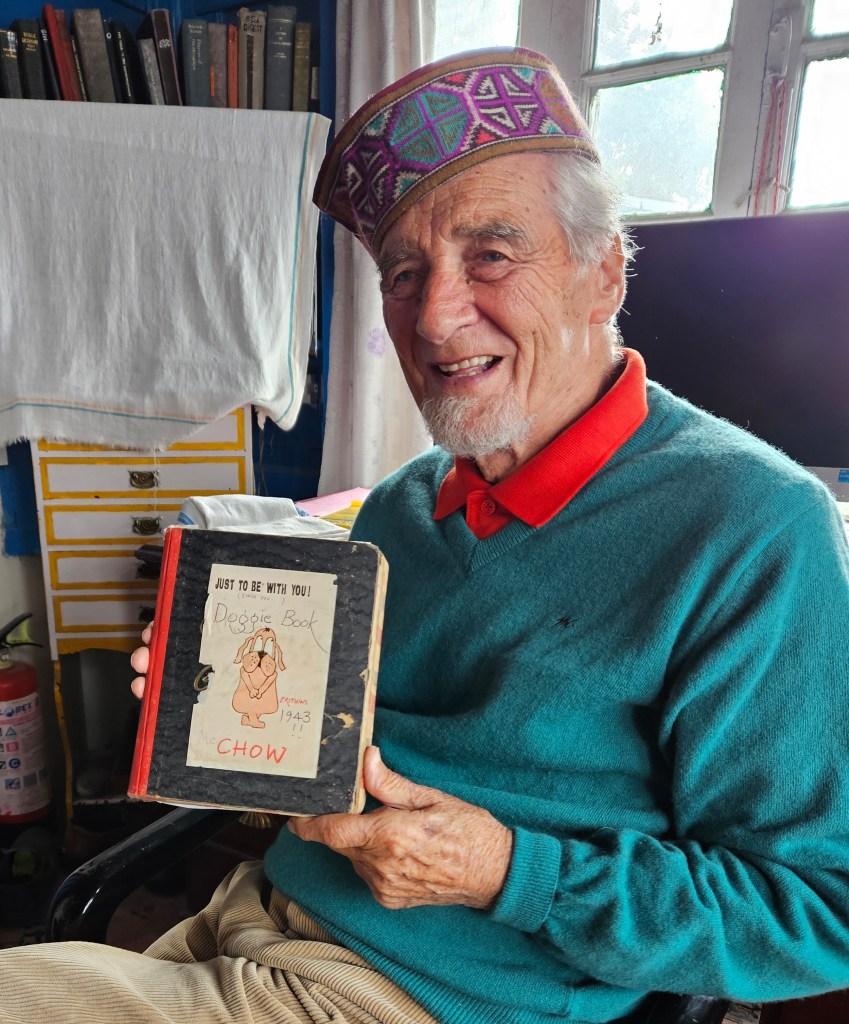
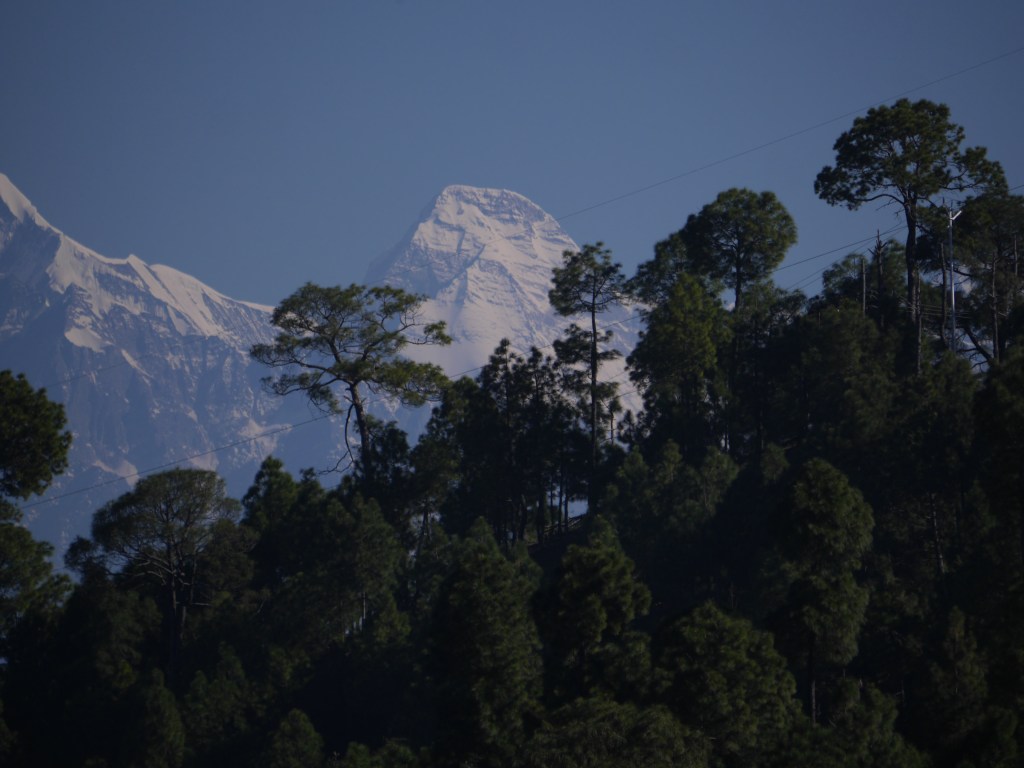





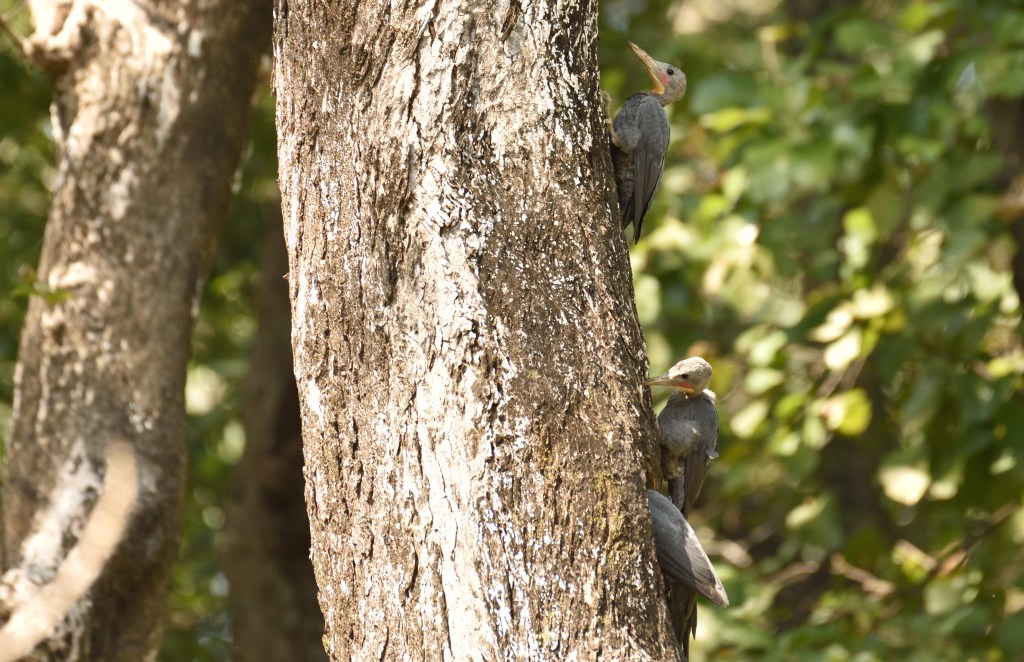



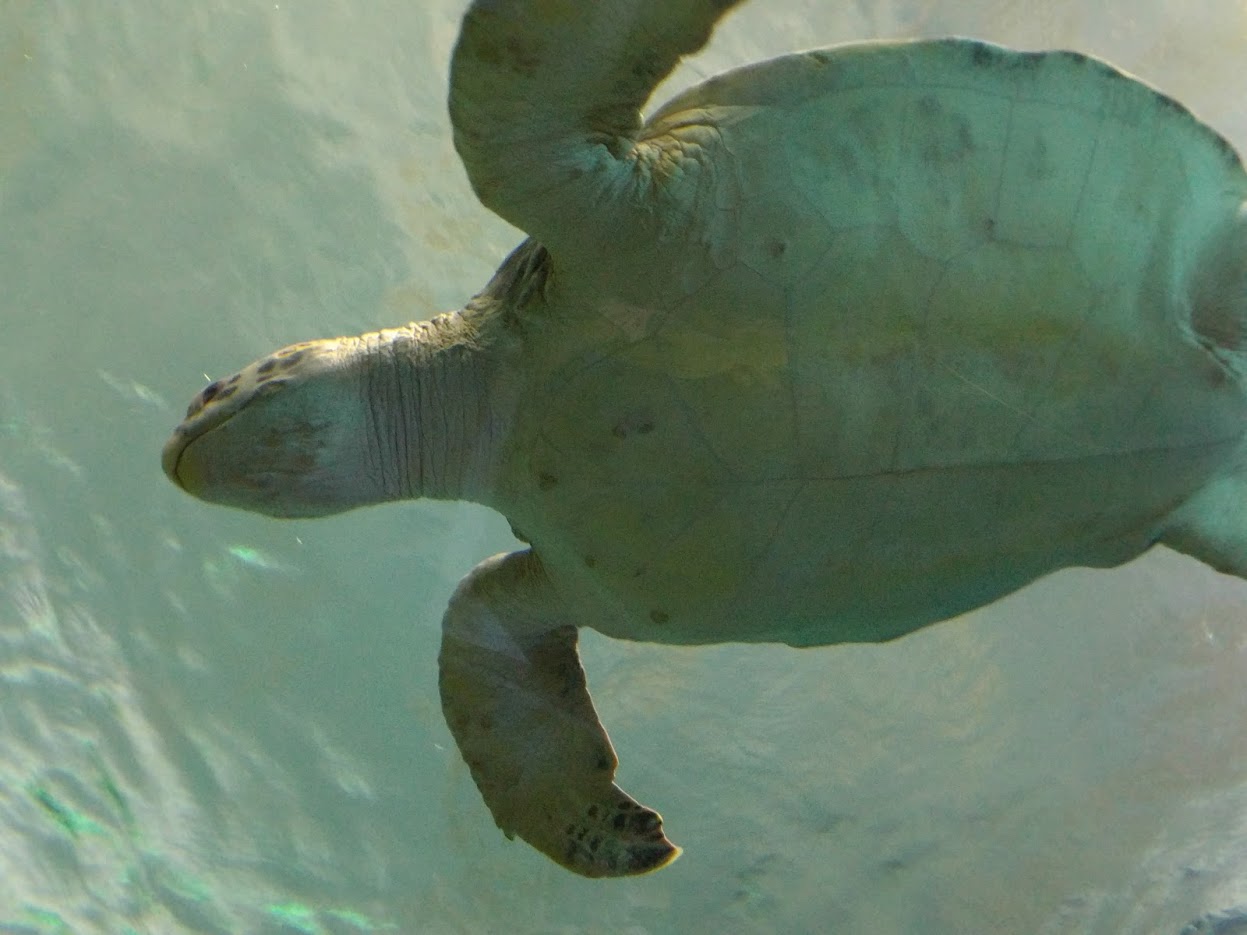


 You’re a regular at the sea-front promenade. Ever wonder about the mangroves it replaced? Or why storms batter your city annually?

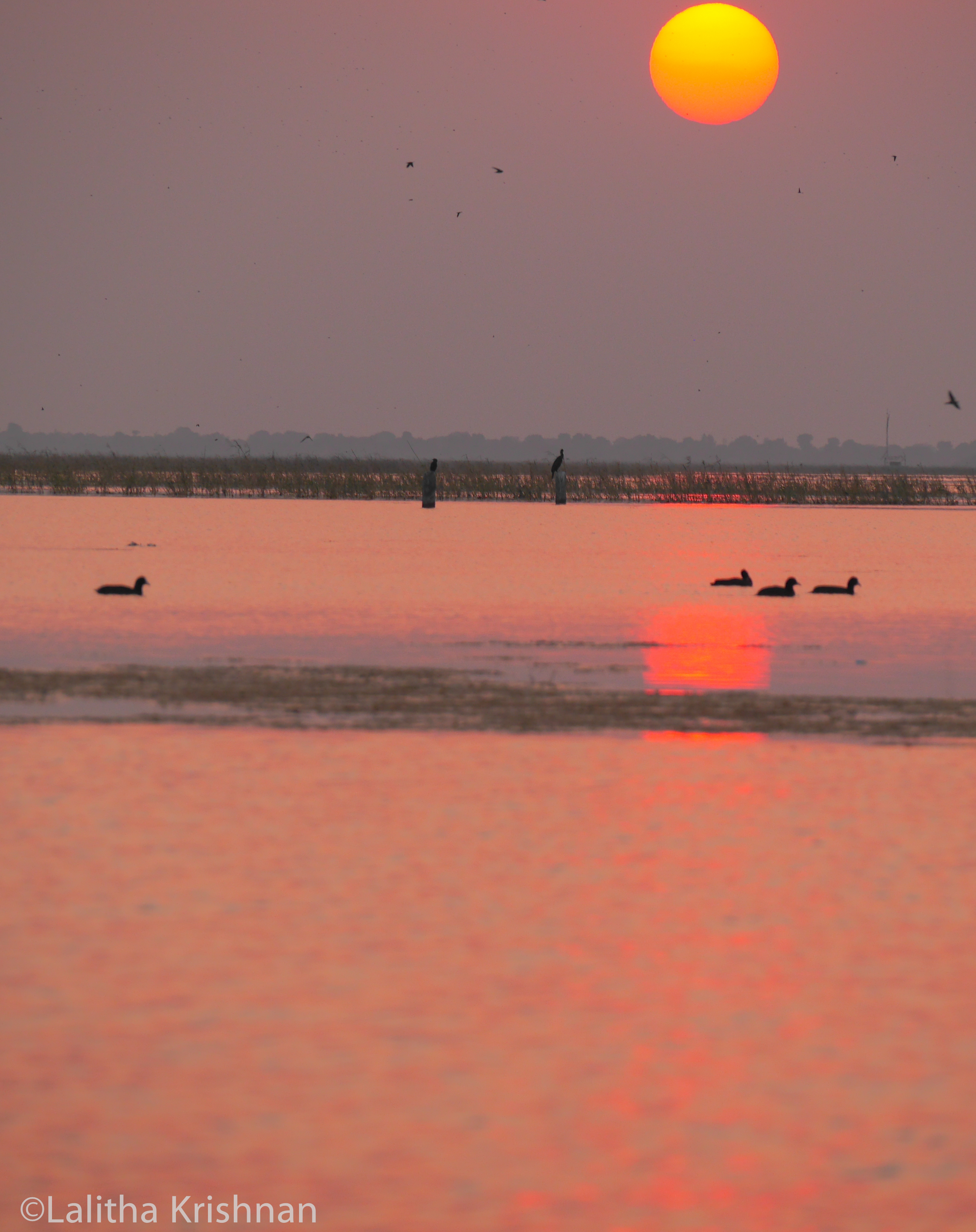
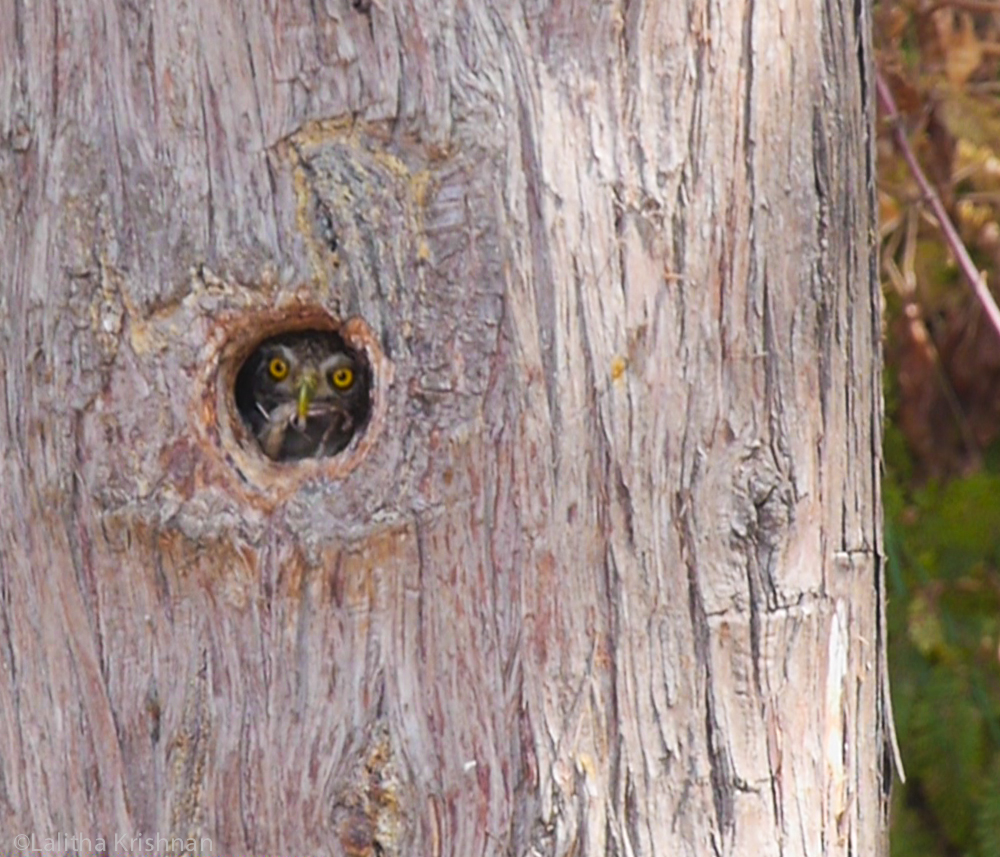

 Earthy Matters