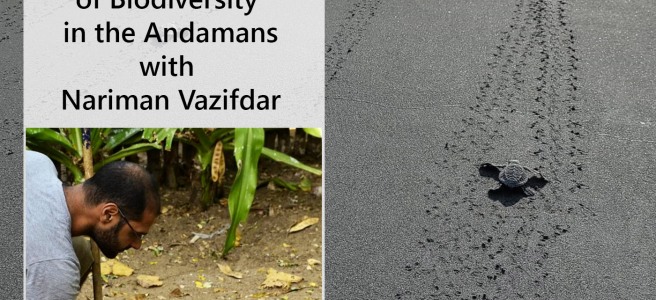
The Dynamics of Biodiversity in the Andaman Islands with Herpetologist, Researcher, Author, Nariman Vazifdar.

Heart of Conservation Episode #35 Show Notes (Edited)
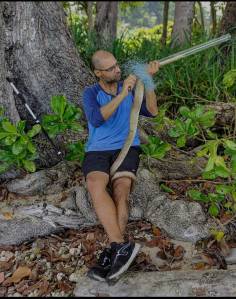
Host:Lalitha Krishnan:

00:03: Hi there, I’m Lalitha Krishnan, your host on episode #35 of Heart of Conservation. As usual, I bring you stories from the wild that keep us all connected with our natural world. I’m back after a very long spell during which I visited the Andaman and Nicobar Islands. I still can’t get over those amazing beaches, the old forest and the incredible species that I spotted there. All new to me, but endemic to the island. But the question is, for how long? I can’t think of a better person than naturalist, herpetologist on ground in the Andamans, Nariman Vazifdar, to answer that and more.

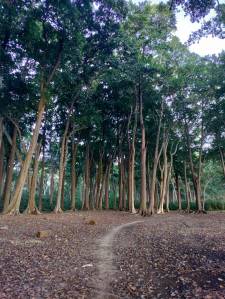
You can read his writings on the web, including on ResearchGate, and follow his Insta handle @reptilian_666 to see what he’s up to. And do look out for the transcript and links for this podcast coming soon on my blog, Earthy Matters. Welcome to Heart of Conservation, Nariman. Thank you so much for speaking to me about this. And the ecology of the islands.Ever since you guided us through that beautiful Andaman bulletwood forest by the beach, my curiosity has only grown. ] So since your first love is reptiles, could you enlighten us about the diversity of reptiles found on the island? And first, do tell us a little bit about yourself and about the diversity of endemic species on the island.

Guest: Nariman Vazifdar:

Hi, Lalitha. Thanks for having me on Heart of Conservation podcast.

01:36: Yes, basically reptiles are what, let’s not put it as reptiles, but wildlife. I was really attached to wildlife at an early age. When in school, I joined this program called the Duke of Edinburgh Award Scheme Program, which basically took us outdoors, a lot of outdoor activities, kayaking, camping, and lots of social service fun. And of course, it was just being out there, especially because I was a kid from South Bombay. There is not much greenery where I live.

02:13: As soon as I stepped out of my comfort zone, the beauty of the sea, the forest around Bombay, kind of Lonavala side, and it took over my life, basically. And I saw my first snake, I remember very clearly over there, just whilst we were camping around. And I got inquisitive about this, and it just kind of took over my life slowly and slowly.

02:37: But more interestingly, when my mom comes from a place called Baroda in Gujarat, and I remember as a four-year-old child, she had taken us to this zoo over there, and she knew some of these zoos, and they had got out some snake, I think it was a python, for the kids to touch for me and my younger cousins. And I remember all of us as children were very scared of this. But my mom, for some reason, pushed me to touch the snake, and I touched the snake, and now I think she’s repenting this decision of hers.

03:10: But I basically took over. That’s all I’ve done since 2005. I have been involved in wildlife conservation research, in different parts of India, from Chennai, Bangalore, the Chambal Valley, and a couple of tiger reserves. And now, of course, finally, I live and work in Havelock Island, in the Andaman Islands.

03:31: But what draws me to this place more is, like you said, all the animals are more, because they are predominantly reptiles and less…the mammal diversity of the Andaman Islands is very poor. So, it is predominantly reptiles and more endemic species of reptiles is what we get here.

03:51: There are over, say, 23 species of snakes, of which nine are endemic. But because it’s an island–and island ecology is very different–we have terrestrial snakes, snakes that live on the land. We have mangrove snakes. We have sea snakes. So, like that, there are many, many various species of snakes on the island.

Lalitha Krishnan:

04:14: Wow. I have not even heard of mangrove snakes. Sorry for interrupting.

Nariman Vazifdar:

Yeah. No, no, no. But like, there are… you see them in high abundance. It’s just that people are not getting out there to look for them.So we have 308 islands in the Andaman Islands, and a lot of the islands are undiscovered. We don’t know what is on those islands.

04:38: The north-easternmost island of the Andaman Islands is called Narcondam Island. It is a dormant volcano, or let’s put an inactive volcano. And recently, a snake was found on that island. It’s called the Narcondam cat snake. Not found anywhere else on any other island, or not been discovered yet. So, it’s very interesting. It’s very interesting, you know, how the islands, individual islands have individual kind of small ecosystems.

Lalitha Krishnan:

05:06: That’s so incredible. So, you know, speaking of fauna in general, it’s a well-known fact that introduced species are a threat to endemic species on islands everywhere in the world. So, I just wanted to know, were there any species introduced to Andaman and Nicobar Islands? And what could be, is or could be the consequence of this?

Nariman Vazidar:

05:32: So, yes, of course, invasive species or introduced species make a massive difference to any ecological environment. Not necessarily islands, but islands face it more drastically.

Let’s say the invasive animals that are on the island currently are also due to a lot of the animals put by, say, the British when they took over the islands and they built the penal colony. So, they were only tribes living on these islands initially, the four indigenous tribes, and the British got, say, dogs, which are now everywhere on the island, to give as a gift to the Jarawas, who were one of the tribal communities, to hunt the endemic wild boar off the islands.

06:19: The dogs have now taken over the island, sadly. Don’t get me wrong. I love dogs. I’ve adopted one of the dogs from the beach. He lives with me. But these dogs, let’s say, hunt everything, right? Including the sea turtles. When the sea turtles come up to nest, they not only eat the sea turtle eggs, but sometimes I’ve seen them sadly even killing the female sea turtles when she’s coming to lay her eggs. The baby sea turtles that hatch, the snakes, the lizards. But see, it’s not the dog’s fault, right? We sadly do not have a proper neutering project on the islands. We still have a long way to go on the islands.

06:59: It is a serious problem, right? In a small place like Havelock there possibly could be 700 dogs. That is a lot of dogs for a tiny island. Of course, ecological damage happens.

Yes, the dogs are fed by the tourists, by the locals, but still, it is still a large amount of dogs on a tiny, small little island. But more than that, let’s say the other animals that people think of, but at least these are street dogs. People think all the animals in the forest also belong there. No!

07:29: Also, the British were very fond of game hunting, shikaar, so they brought three species of deer, which are barking deer, hog, deer, spotted deer. Interestingly, they also introduced three leopards to the islands in the hopes that leopards will reproduce and will do shikaar on the islands. But interestingly, the leopards did not survive in the mangrove forest, maybe they got eaten by the tribes. We do not know

…the British were very fond of game hunting, shikaar, so they brought three species of deer, which are barking deer, hog, deer, spotted deer. Interestingly, they also introduced three leopards to the islands in the hopes that leopards will reproduce and will do shikaar on the islands. But interestingly, the leopards did not survive in the mangrove forest, maybe they got eaten by the tribes. We do not know. Out of the three species of deer bark, the spotted deer is the only deer that survived  and is flourishing throughout the islands. Then again, on the island, there is no large mammal, say, no tiger, no bear. There are no monkeys. There are no squirrels on the island. Well, because of this, the deer roam freely, literally eat the undergrowth of the islands and which has more insects, more lizards…which depend on this undergrowth that gets eaten away, nothing survives then.

-Nariman Vazifdar on Heart of Conservation podcast

07:59: Out of the three species of deer bark, the spotted deer is the only deer that survived  and is flourishing throughout the islands. Then again, on the island, there is no large mammal, say, no tiger, no bear. There are no monkeys. There are no squirrels on the island. Well, because of this, the deer roam freely, literally eat the undergrowth of the islands and which has more insects, more lizards…which depend on this undergrowth that gets eaten away, nothing survives then.

08:36: The deer, the spotted deer, one species of deer is basically or literally eating the islands alive. See, there is no food left on the islands. This happens. Smaller island get (lost in translation) completely. The deer does two interesting things: 1: they wade/wait at the shore line. Wait for the tide to come in and hope that some (lost in translation)       will come.

09:02: If that doesn’t suffice, they have learnt…… to swim in the sea. Imagine. Deer. They’re swimming in the sea and going from one island to the other. It is incredible. We’ve seen this while we go diving sometimes.

09:15:A lot of them must be drowning. As conservationists, sometimes you put a heavy heart …….. and say, “Yes, it’s okay if this specific invasive animal doesn’t survive for the better good of the environment.” A lot of people will be against what I’m saying, but I stand my ground to say yes. Sometimes for the betterment of the entire ecosystem, it is okay if these animals are maybe eradicated, send back to mainland, whatever, because once islands lose their endemic fauna, it is not coming back. Right?

09:53: We have lots of (lost in translation). We have a bullfrog. You think it’s a frog, it doesn’t do much. But it grows big. There are scientific papers of (frogs) eating chickens. (lost in translation) You know, I have (lost in translation) of a bullfrog, trying to catch and eat an endemic bronzeback of the islands.

[10:10 – 10:23] So it is only a frog which does a lot of damage.

Lalitha Krishnan:

 Sorry. You saying the frog eating the chicken sounds crazy.

Nariman Vazifdar:

My friends have documented it. There is a research paper on this. Of how invasive—you know–what damage these things do. There are many of them that we do not know, right? Like, we do not really know what cats, and rats, do to the ecosystem.

10:39: I have, my friends who have cats and the cats, when they come to my home, they’re bringing emerald geckos, skinks, lizards, you know, to the house all the time.

Lalitha Krishnan:

See, we don’t see these things.

Nariman Vazifdar:

10:50: Yes, of course.  We live here, right? Long. We don’t go home much. It’s just home now. You know?  So, it’s massive, I am seeing the difference. Forget just invasive species.

11:01: The more construction that is happening over the years has also drastically driven the endemic flora fauna down.

Lalitha Krishnan: It’s so strange. Like you think, uh, you know, a deer is harmless or a cat, okay, only kills rats. We do not think what else it can do.

Nariman Vazidar:

 A lot of countries—for that matter–Australia has a rule. They can shoot the feral cats or kill the feral cats. Right? If we start this in India (lost in translation) We are not open to this right?
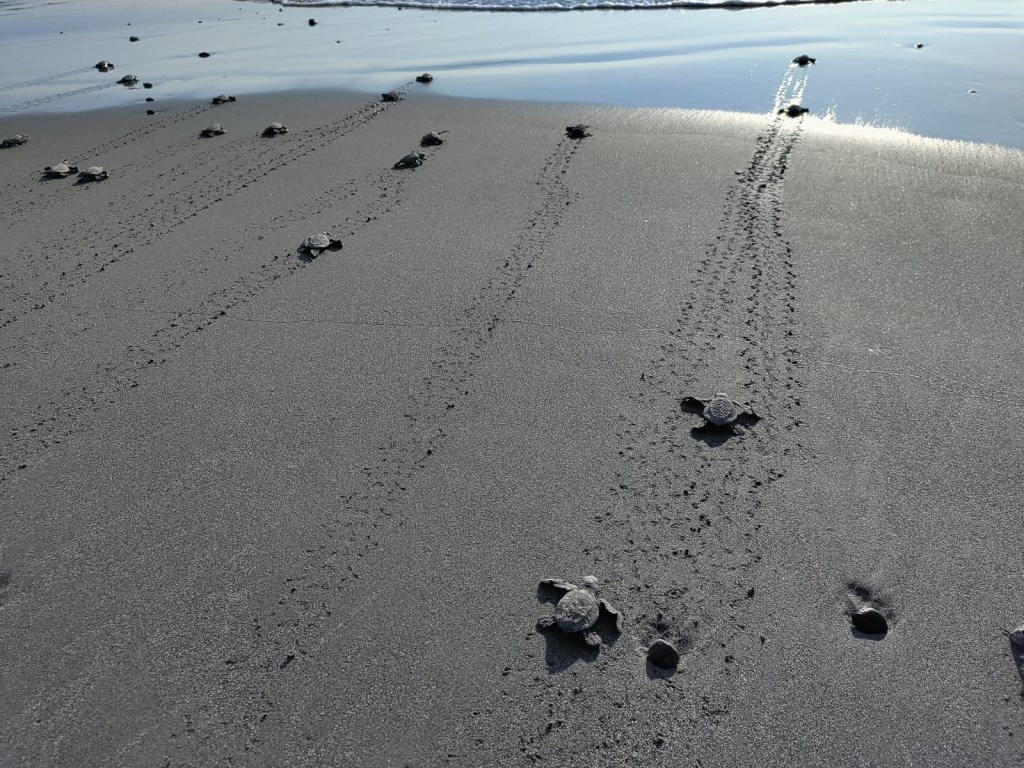
Photo by Nariman Vazifdar

11:30: We need to get rid of the cats and the dogs; have this conversation with people who are not thinking logically, you know, it is just a battle, a nonstop battle that people like me have with them. So we just bring this up before it’s never-ending. The topic never ends, right? It’s always nonstop. “No, this is that, but…”

From an ecological, scientific point of view, you cannot… everything can’t be driven by your heart. But, sadly, I agree. You know, but unfortunately for the betterment of the better of the other animals that belong to this place, sadly, a lot of these animals have to be out of here.

Lalitha Krishnan:

But thanks for opening our eyes. Maybe people who make the policies you know, are listening and somewhere as it will change somebody’s mind and they will do the right thing.

Nariman Vazifdar:

12:20: I mean, you can’t force this one on anyone. Including my friends, right? Even the ones that are nature-oriented. Even them. For them, no, this is what it is. Dogs and cats need to be here. You cannot even bring up the deer, you know, or the frogs.  If I say, “Let’s kill the frogs, you know they are invasive” you can see the blood boiling in them when I bring these topics up.

Lalitha Krishnan:

12:41:  Right. Right!  It’s a difficult one. You know, all the locals know you as a snake rescue on the islands. I quote you now, “No rescue is the best rescue”. What do you mean by that?

Nariman Vazifdar:

12:57: So also, yes, I never really did this snake rescue anywhere else that I have lived. Uh, yes. In places where I lived– in smaller places—if there is a snake in someone’s house. Yes. I’ll be more than happy to remove it for them, but I never did this ‘snake rescue’ thing anywhere. It was the same over here. There was a snake in someone’s home.

13:20: I went and helped out, but now Havelock is like a smaller town…a larger village, the entire Havelock. So literally, everyone knows everyone from one snake rescue to the second to the third. Now it has become, everyone knows this, but however, I rather not do this because this is not giving anyone a chance to understand how to live with snakes. Right?

13:46: This place always had King cobras; it always has a lot of snakes. But as we are going, as they say, tourism is a double-edged sword. As tourism is spreading people the locals are selling off their land to hotel chains. Of course, right?  And there are literally maybe over 100 accommodations now or places to stay in Havelock. Plus 40 plus dive shops, over 100 restaurants…  So many of us from the mainland are also living here which basically means more houses are constructed. People are cutting deep into the forest and with that comes … If you’re cutting into the forest there are more snakes entering people’s homes. What tourists are seeing are just the two main roads but there are now a lot of side lanes. I get baffled about where these side lanes are going. I thought I knew Havelock well on all the roads but no.  Every time there is a snake and I go to these places, I am shocked that these houses are deep, deep into the forest. They have cut the forest down. So yes, there is no option for the snakes but to seek refuge in those houses. So now this is what’s happening.

14:58: I basically will not catch a snake or remove a snake unless the snake is in the person’s house. When I say “in the person’s house” I mean literally in their home. If it is in the garden in a bageecha, I will not catch it because that is where the snake is supposed to be. I understand it is a king cobra; it is a highly venomous snake– the world’s longest venomous snake– but there must be some learning curve.  Otherwise, every snake they see it’s like, “Come and catch it.”  

I basically will not catch a snake or remove a snake unless the snake is in the person’s house. When I say “in the person’s house” I mean literally in their home. If it is in the garden in a bageecha, I will not catch it because that is where the snake is supposed to be. I understand it is a king cobra; it is a highly venomous snake– the world’s longest venomous snake– but there must be some learning curve.  Otherwise, every snake they see it’s like, “Come and catch it.”  -Nariman Vazifdar on Heart of Conservation podcast
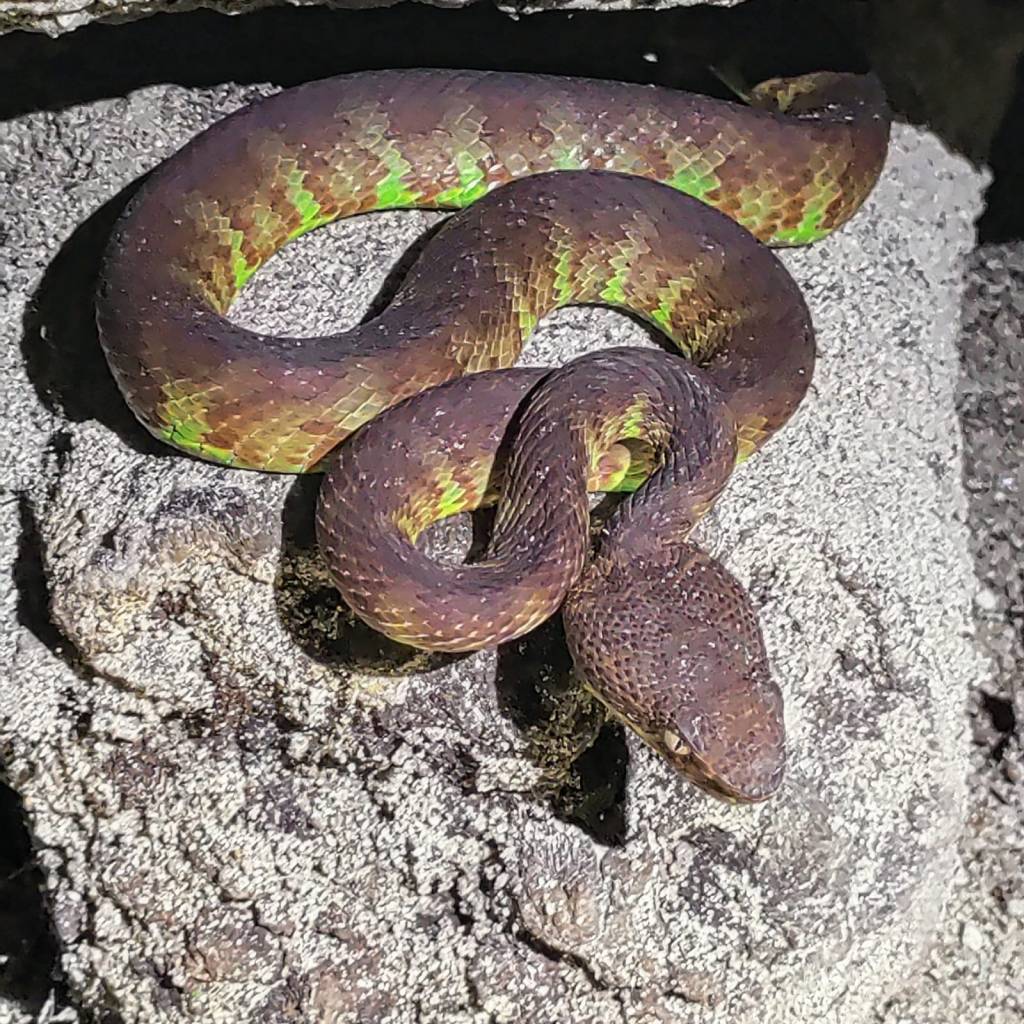
Andaman pit viper
Photo by Narimam Vazifdar

15:26: But I don’t go unless it is in their home and there’s a situation where I have to, I will remove it otherwise I tell them to wait. I will look, keep calm, take it easy and if the snake was in their home, yes, I will go. But otherwise, I don’t.  

15:42: So, what I mean by this is there is no need to catch every snake.  What are we doing with this (snake) right?  Again, snake catching is not a big deal. It is basic if you understand snakes.  I don’t know why people make this big hoo-ha and show about it. You can catch a snake. Then what are we doing with this?  We are relocating them somewhere else. This is not conservation. This is not research. We are literally removing a snake from A and just dumping it at B. And we think that yes, we’ve done a great job; we’ve saved a life but we don’t know if that snake survives well yet where we are literally releasing it.

Then what are we doing with this?  We are relocating them somewhere else. This is not conservation. This is not research. We are literally removing a snake from A and just dumping it at B. And we think that yes, we’ve done a great job; we’ve saved a life but we don’t know if that snake survives well yet where we are literally releasing it.

-Nariman Vazifdar on Heart of Conservation podcast

16:20:  There have been many debates, many scientific papers; research on this; on this trans locating of snakes. They are saying to try to release the snake as close to the rescue site. Now think about it.  Where I live in Havelock; there are king cobras.  Like I said, my problem is not the rescue, it is the release. Sometimes I feel very bad I’m releasing the snake a kilometre and a half away but there is no option, right? Where do I release these snakes with so much construction?

16:50: So that’s why I feel like, if not required, I will not do anything. A lot of times I get calls: “Snake is in the home.”  I say, “Okay give it 10 minutes; let’s see what happens.” And it goes away by itself; there is no need to run, jump, or catch the snake; put pictures or like, free-handle snakes. It is not necessary and this is becoming a massive trend on Instagram now where a lot of the guys, especially in Bombay, Pune, all India, are free-handling. Which basically means picking up venomous snakes with their hands; not using equipment, getting bit on their faces, and kissing cobras. It is not required. There is no need for this bravado, for showboating… Yesterday or the day before, two boys got bitten doing these stunts in Bombay and what happens if they die or lose their fingers. What is the point of this? There is no point in this. Do it if you really must do it. Yes, catch a snake but then go immediately and release it.

17:48: A lot of guys keep the snakes unethically; they keep them in plastic bottles–they don’t release themfor days and they have one thousand excuses for this.

17:58: To catch a snake, it takes two seconds. What I do when I catch a snake is release it immediately and then I go home. I don’t need to take the snake home. I don’t see the value of taking that snake home. Yeah, anyway these are my thoughts and you know and again everyone has different thoughts about this and a lot of people feel that catching a snake is conservation research but it is absolutely zero. I think we are actually hindering it and not really giving it you know, a place to go to actually.

Lalitha Krishnan:

18:30: That’s a lot of new information. It’s interesting but it’s also scary and enlightening. First of all, they have to learn how to catch a snake. I hope they just don’t follow YouTube videos…

Nariman Vazifdar:

18:45: Yeah. that is all easy but you see all these YouTubers picking up cobras, the vipers…  Why would they do this?  Right? You are literally playing Russian roulette. Nothing happens 100 times. Then, the 101st time you could die. You could lose fingers… you know? Why would you want this Cobra?  

19:05 You know, snakes live in sometimes the filthiest of places. Gutters, septic tanks…  and you’re kissing this Krait! No, not on.

Lalitha Krishnan:

19:14: Sad.  So how often do you get called to get snakes out of the house?

Nariman Vazifar.

19:19: Really, luckily, it’s not like a full-time thing.  I don’t want to do that full-time. But mostly, king cobra breeding season is now mid-February to April-May maybe.  So this time these two-three months are more.  Of course, the random one here and there but uh sometimes maybe twice in the day sometimes not a few days… It’s very erratic.

19:49: Interestingly, the snakes that I have rescued from the homes over here are either king cobras or rat snakes. I’ve never rescued a pit viper from someone’s home or kraits. None of that. It’s only been either kings or rat snakes, no other snake interestingly.

Lalitha Krishnan:  

20:06: We have rat snakes here also. In fact, one was on my door trying to get a Whistling thrush’s eggs. There’s no way to prevent these situations in places like Havelock, right? Snakes will go into your house… I don’t know.

Niriman Vazifdar:

 20:21: It’s basic. Doesn’t matter if you are in Havelock or anywhere in the world.  You keep your surroundings clean, keep your litter, don’t keep clutter around, and don’t chuck your organic waste everywhere.  They’re the basic, same rules you follow anywhere. Okay, yes of course, if you’re living in the jungle there is more likelihood that it just comes. But less likely if you keep your place and your area litter-free- free basically.

Lalitha Krishnan:

 20:51: I never thought of a snake attacking your garbage.

Nariman Vazifdar:

20:51: No. It is going for the mice, right? What is going in the garbage?  The mice, the flies then the frogs, right? Then the geckos go for the flies. So prey and predators come wherever there is food right?

21:08: If there is food for say, you chuck some mango outside, right? A rat will come to eat it. Following the rat, maybe a snake will come. Lost in translation….seeing the gecko and a snake another lizard may come. Seeing that a snake may come right? So it’s a circle and if it is near your home why wouldn’t that animal come?

And there are also some wood piles or thin sheets lying around. It’s a perfect habitat for reptiles to live in.  Where am I finding these snakes? Under thin sheets, in wood piles you know because sadly the locals are dumping all these things. So the day before, there was a rat snake under a pile of wood.  I literally removed it from one pile of wood and  I put it in the next pile of wood. Haha, What do I do?  That’s all. Because there is so much clutter around there is no option right it’s the same principle anywhere more clutter around more hiding spots, more prey base, more reptiles.

Lalitha Krishnan:

22:02 Nariman, thanks for that.  Let’s move on.  So have you ever been bitten by a snake?

Nariman Vazifdar:

22:18:  Yeah, I’ve never been bitten by a venomous snake because I always, of course, it’s been lucky, but safety is my priority for myself and the snakes. If I feel like this is… also all snakes don’t need to be caught, like I said. I’m only doing this when it is in a place where there’s a snake in someone’s home. I will not just catch a snake if I don’t have equipment. I will take my hooks, my snake pads, tubes, whatever I need,  I will wear boots. Whenever I need to go for a snake rescue, I ensure I have all my things with me. Even if the locals tell me it’s a non-venomous snake, I will judge it only when I see the snake. So many times, it’s a rat snake and I’ve gone with all my gear and then I pick it up. But yes, because I can identify venomous and non-venomous species, non-venomous snakes, yes, I have been bitten a few times. But there’s not much to learn from getting bitten. That’s why I have to figure out what because, I know for a fact, that it is a non-venomous snake. On getting bitten: let’s say, everyone asks how much does it hurt?  Of course, it’s basic sense. Smaller snakes hurt less; larger snakes hurt more. Like say, if you get bitten by a non-venomous wolf snake, it hurts a little bit.

23:36: Maybe not even, not even one drop of blood will come out. But if you get bitten by, say, a python, it could even tear your skin. You may even need stitches if it bites you back that badly. You know, you could even cut an artery, you know? So yes, it is… even smaller snakes could hurt you. If it bites you and cuts one of your arteries in your hands. Once it’s happened that more than once–and all of us who do this have experienced it– snakes sometimes when they bite us, their teeth break off in our hands.

24:12: That’s why we tell people, if the snake is biting you, don’t pull the snake off. Because A, the teeth break, the teeth will regrow on the snake. But it is painful for the snake.] Understand, even the snake has emotions, right? Just because it’s not like a mammal or a bird, it can’t speak out. It doesn’t mean it doesn’t get hurt. And, more than that, sometimes these teeth break off and they go into our skin, into our epidermis…  And then the small wound heals, but this tooth is left in our hands or feet or wherever in our body. And of course, it’s a foreign body. Imagine a foreign particle in your body now, right? So, your body slowly, slowly starts pushing it out. And, like once the tooth got stuck in my finger hand somewhere, it was when it was coming out quite naturally, it was hitting one of my veins. So, it’s really painful. You know, and then you literally have to kind of dig into it and pull it out. You know? So, sadly, all of this is sad, it happens.

25:13: But like, again, going back to your question, I’ve not been bitten by a venomous snake ever. Again, safety, (lost in translation) It does happen. I have friends who are super careful, more careful than I am.  It does happen that they have gotten bit. It’s also, you get over-complacent, you know, over-confident. You really need to be in the potential, now you know what you’re doing. You’re like, “Ah, I’ll just go and take this cobra out ……… (lost in translation). And that is bad. And that’s where this happens sadly. Right. Yeah. And we are seeing this more and more often lately.

25:47: So like when we go out looking for snakes, this is what we do. It’s called herping. We go out looking for snakes. We do holidays where we just go out to different places– maybe even abroad, or even just in India, trying to find reptiles of that age. Great.

26:04: I mean, I didn’t know snakes could grow their teeth back, but I don’t want to test that. You know, you wrote a book called Turtles, Tortoises and Terrapins of India with Sushil Chikhane. So that must have been a really interesting project. Would you like to tell us some more? And what’s the difference between the three to begin with?

Nariman Vazifdar:

26:29: So turtles.. everyone thinks when they see a shelled animal, it’s a turtle. That is the first thing that people come for. Of course, they like the book. There are three… Let’s put it this way.] Tortoises are land animals. Tortoises: are very basic distinguishing keys. Tortoises have feet because they’re land animals. Tortoises’ feet are like elephant feet, exactly like an elephant’s feet, of course, smaller. Tortoises can also swim in the water, but they can’t swim in the sea or they can’t swim in a river. A little bit, yes. Now we’ve realized that tortoises also are getting bigger. They’re getting into water bodies and floating to certain areas. But in a general aspect, tortoises are land animals. They will drown in extended periods. They cannot be swimming in the sea or in, sorry, in a pond or a lake. They will, as soon as you put them there, they will struggle a bit and they will drown.

27:28: So, elephant feet are tortoises. Turtles are two now. Turtles are freshwater turtles that live in streams, rivers, ponds, and wells. And there are marine sea turtles that live in the sea, of course. Again, these two are different as well. I cannot put a freshwater turtle in the sea. It will die. Likewise, a marine turtle cannot be put into freshwater. It will also be needed. it can survive. Yes, when you do a treatment and all, yes, you can manage to clean it out to do this. But generally, it needs to live in the sea.

Lalitha Krishnan:

Okay. Just like most river fish and sea fish.

Nariman Vazifdar:

28:10: Yeah. Exactly. River fish and marine fish. Exactly. But they are very simple distinguishing features between a freshwater turtle and a marine turtle. Freshwater turtles, in between their toes, have like a duck’s webbed feet. So they have duck-webbed feet because they need to swim in the water, right? So, their toes, in between there’s a webbing and that makes it a turtle.

28:38: A freshwater turtle, a marine turtle has completely different legs, let’s call them legs, structure. They don’t have those toes. They have fins,… flippers. Right? So as you see, it’s a very, very different structure compared to a freshwater turtle.

22:57: The third one, which everyone gets confused about, which is a terrapin, is basically a river turtle that can also survive in brackish water. Brackish water means where the mangrove area, let’s put it that way, where fresh and saltwater meet.  So some turtle species can survive in that water as well. They’re not going in the sea, but they can survive in fresh water and this brackish mangrove area.

Lalitha Krishnan:

29:24: So even in the Sundarbans and all, you’ll find them?

Nariman Vazifdar:

29:28:  Yes. Predominantly, that is correct. In the Sundarbans, there is a specific species called a Batagur baska that lives in that area. Okay

Lalitha Krishnan:

29:36: Yes. So basically, those with feet on land and the rest more or less in mostly water.

Nariman Vazifdar: Mostly water. Yes.

Lalitha Krishnan:

29:45: Thanks. Do you want to tell me more about your project, and your book?

Nariman Vazifdar:

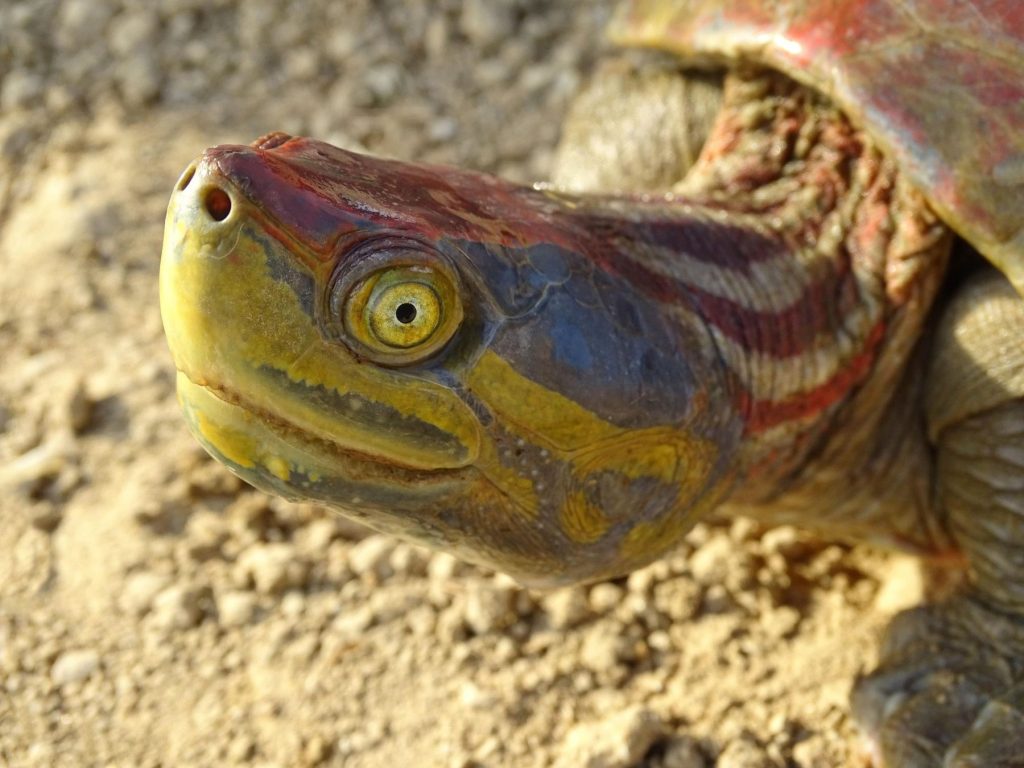
29:52: So, the book was with me and Sushil because I did a lot of… I used to work with Turtle Survival Alliance. I worked as a freshwater turtle biologist and I understood turtles and there was a lack… Always, everyone in the reptile world is inclined towards, say, snakes, crocodiles, and lizards. Very few people are inclined towards turtles. It was the same with me as well. We found turtles boring, snow sluggish, not dangerous, just you know, like OK, whatever. But once I started doing this work I realised that wow turtles are really interesting. They have character. They have personality. They are stunning. Some of the turtles like the one I used to study were called Red-crowned roof turtles or (Batagur kachuga). It is absolutely a stunning animal. The males have yellows, reds, and blues on their faces. It looks like a lot of people have asked me when I showed them a photo of this male turtle in breeding colours. If I’ve painted this turtle.
 via www.thethirdpole.net
Photo by Nariman Vazifdar
Red-crowned roofed turtle

30:54 It is that vibrant, you know, and a very cool animal. The ecology of turtles, especially river turtles is something else and some of them are giants, like serious giants and just tough to catch. Because, we used to put transmitters, you know, a lot of stuff we had permits for. Sometimes they are tougher to catch than snakes, you know, more tough, you know. So, like we always thought turtles or sluggish. Everyone thinks turtles are sluggish. But when some of those turtles want to go, they are going and you cannot stop them. Yeah, it is mad. It is a very, very interesting area to live in and to understand how this works. So, there was no book like a field guide. You know there’s always field guides for say, birds to snakes. But again, like I said because turtles are this topic of “No, it’s OK, not many people interested,” we thought it is the need of the hour to have a turtle book out there you know. And there are books, there are flip cards but not a lot of field guides which cover even marine species. So yes, it took some time. We did this during COVID, and it took about a year and a half to two years to basically complete this book.

Lalitha Krishnan:

32:11: Fantastic

Nariman Vazifdar:

32:12: It was a fun learning experience as well of course.

Lalitha Krishnan:

32:13 Well, Narman, we are down to question 9. And so, I was wondering if you could share a little bit about the Bulletwood Tree that you know showed us in that forest by the beach. It was just so beautiful. Would you like to give us some information about that? I’m so fascinated.

Nariman Vazifdar:

32:40: Oh certainly. So, the bullet wood tree is a predominant tree of the Andamans. It is called Sea-mahua. It is not the mahua of Madhya Pradesh where you get liquor from the flowers. This is completely different. Even the scientific name is different. This is more of a littoral forest basically which means it grows by the seashore like we saw right? You see the giant trees in the sand. These trees could be 5/600 800 years old, extremely hardwood trees. So when we walk through the forest of Havelock or any of the Andaman Islands, you are noticing a lack of termite mounds. There are termite mounds of course, but a lack of termite mounds considering the fact that this is a rainforest. It’s not a rainforest like say the Western guards of India or South America. But nevertheless, it’s still a rainforest and these trees are very tall like we saw 130- 150 feet tall trees.

33:44 Few termite mounds because the termites can’t fully make holes in these trees. It is very interesting. Forget the living trees; we get cyclonic weather, trees rot, trees fall down. The termites we have noticed… Yes of course they try getting onto the trees. They do get onto the trees but they give up and they go away. I feel that this wood is too hard for the termites to make holes. We get another insect called the wood borer. Yes, that sometimes makes holes, but it is also found in Madhya Pradesh, but not like the damage it does to the sal trees of Madhya Pradesh where it kills the trees. It doesn’t manage it. Maybe it eats into the other trees, which is OK; the coconuts, the supari trees, you know? But I think the hardwood trees of the Andamans are something else.

34:37:  Here, there is also a wood called superior wood. You know like we were taught of hard softwood hardwood. There is superior wood you know which is extremely hard where you can’t put a nail into it at times easily you know. So even the sea-mahua or the bullet wood which is called, initially they would burn the base and cut it with an axe. Now they use a chainsaw. The chain saw takes a couple of hours to cut a tree you know? It is incredible. But also, I read somewhere that when the British … the tribes… of course the history of the Andaman, sadly is not nice. It is very you know…  a lot of unfortunate events that led to the British being here, or them treating the tribes very ruthlessly. Japan was here. The same kind of history again repeated itself. But interestingly the tribes had laid a trap for the British and someone told the British about this trap. If the tribes imagine if the tribals had won this battle against the British we may not have been here right now, right?

35:44: History would have been different, yeah. But apparently, they made shields out of this wood. I think I read some of the old books somewhere. They made shields out of the tree and they thought that it would stop bullets. Of course, it can’t stop bullets. It can’t stop cannonballs. So, the tribe literally got decimated in this action. But interestingly, it could also be called the Andaman Bullet Wood because they thought that it could stop bullets.

Lalitha Krishnan:

36:11: Having seen the tree I am in awe of it.

Nariman Vazifdar: 

36:15: Yeah.

Lalitha Krishnan:

36:18: Nariman my last question to you and I ask this of all, my guests is, do you mind sharing a word or a concept or you know, that will help us that’ll add to our understanding of the ecology of the Andaman Islands.

Nariman Vazifdar: 

36:34: Yeah, so like it’s the same thing. Like not just the just let’s say that’s not the Andaman Islands. The change happens in islands, not just with the flora, but with the fauna happening at a faster rate than in mainland any larger space, right? So, let’s just put it like I said, the problem with let’s say Havelock is it is a touristy island. The only source of income that the Andaman Islands as a whole has is tourism. But sadly, we don’t have sustainable tourism on the islands. There are rules, there are regulations, but again, it’s India…we don’t really follow any of these things. A lot of resorts are now claiming to be eco resorts and green resorts, but it is not possible. It is not humanly possible to have an eco-resort without, you know, damaging the environment. So, this is just like a little thing they put up, put a nice website out and say we are an eco resort and we are saving the environment. But actually, none of that exists,

37:48

Not just here but anywhere, even just say Tiger resorts right? Where everyone is claiming to be an eco-resort, it is not possible. We generate waste, we consume electricity. You know, it is not possible to have an eco-resort basically around us unless you are using solar panels, you are doing water harvesting, you know you’re putting groundwater back, you know you are not creating any waste, which is humanly not possible if you are running a property. Basically, no matter what, all the resorts, no, no resort, all the resorts will tell you all the big resorts will tell you that “we are doing eco management and waste management.” It is all just rubbish, sadly.

Lalitha Krishnan:

38:28: I can imagine.

Nariman Vazidar: Yes, of course, islands get… Now sadly, where was this? Where do you think this waste is going? Right? Island ecology gets damaged very fast. We are not seeing this race. I myself am producing waste, right?  We are cooking. I have a dog. He needs milk. It needs XYZ Right? Even myself, right? We all have to buy stuff to survive, right? So, on a small island with a population say 5000 living over here, now so many of us characters from the mainland live here permanently. Plus there are some 3-4000 tourists a day on this island.  So, if 3-4000 people plus 15,000 or 10,000 people need to eat every day, imagine the waste of 10 -15,000 people a day on 135 or 113 square kilometre island? So now we have a dumping yard, a landfill on an island, imagine? Where they’re just, we’re just burning the waste. It’s like when facilities are poor, infrastructure is poor, right? I thought that the hotels would come up, you know, take their waste back, do something. But no, sadly, no one does these things, including the big chains, Forget the small boutique resorts and the big chains do not really give a *&^. Like, the small ones are really not bothered about anything.

39:51: So this is what happens, right? Like, as a tourist, you are not seeing the impact that tourism has. Don’t get me wrong, everyone’s income depends on tourism. But there is a way of doing this where – see like in a tiger reserve right? They have only XYZ numbers.. like so many numbers of jeeps can enter. The tiger is yeah, one time had a system like that somewhere, you know where you only have so many people on an island per day. Let them stay longer– absolutely fine. But don’t have so many ferries coming in and out like groundwater. Why? What is the natural resource of an island? The freshwater we have, the fresh water is already getting depleted, right? We are seeing tankers come to Havelock already right? This is so– where I live– is a little bit low lying. The mangroves are 20 minutes away from me,

40:44: Yesterday when I came back to take a shower, I could smell the mangroves. You know, like in the kitchen, you know, it’s like that ammonia water, that nitrogen fixation that the mangroves do. You can smell it. And it’s not summer, summer. Summer just started. But now the islands are not getting a break? After COVID, all the hotels are doing this, not giving the island a break. Greed sadly has become a very big part of the islands where everyone is opening… Hotels are opening as we speak… so groundwater gets tapped, and water is getting reduced. It will become a problem later on in life, which a lot of these people are not seeing right now. Havelock is blessed. We have waterfalls, we have streams, but right now it’s all dry. There is not too much water because yeah, the water is drying out, absolutely. The waterfall which I went to last night is completely dried out. There’s no water.

Lalitha Krishnan:

41:45: That’s depressing. We don’t see all this. Thanks for opening our eyes. I have one more last question. You know, you also spoke up about diesel buses when we were there.

Nariman Vazifdar:

42:00: Yeah, so, the main grid of the island is a diesel generator. But now we have electric buses over here. So the diesel generator–they burn diesel to convert it into electricity to run the electric bus. It is the most absurd thing. This is sustainability apparently. This is what and this is just like done and like there is –no everyone here just thinking this stupid thing to do, right? So, we have local buses, you know? There are local buses, and local transportation. Why burn diesel to convert it to electricity to put it in electric buses and say that we are doing “green” or whatever the rubbish that is called? You know?

42:47: It’s like this is the thing that we are doing just for the namesake of doing it. We are lost in translation. So now, of course, there should be a bus, a charging station, a bus. You know, all these things have to be put up on the island now.

Lalitha Krishnan:

43:00: Food for thought. Lots of food for thought. Thank you so much.

Nariman Vazifdar:

43:06: My pleasure.

#islandconservation #snakerescue_release #islandecology #islandbiodiversity #kingcobra #turtles #terrapins #tortoises #author #naturalist #researcher #ecologicaldamage #reptiles #narimanvazifdar #invasivespecies #island #animalbehaviour #conservation #endemicfauna #endemicflora #bronzeback #wolfsnake #researchpapers #andamans #tribes #british #japanese #rainforest #development #littorialforest #groundwater #heartofconservation #naturepodcast #storiesfromthewild #earthymattersblog

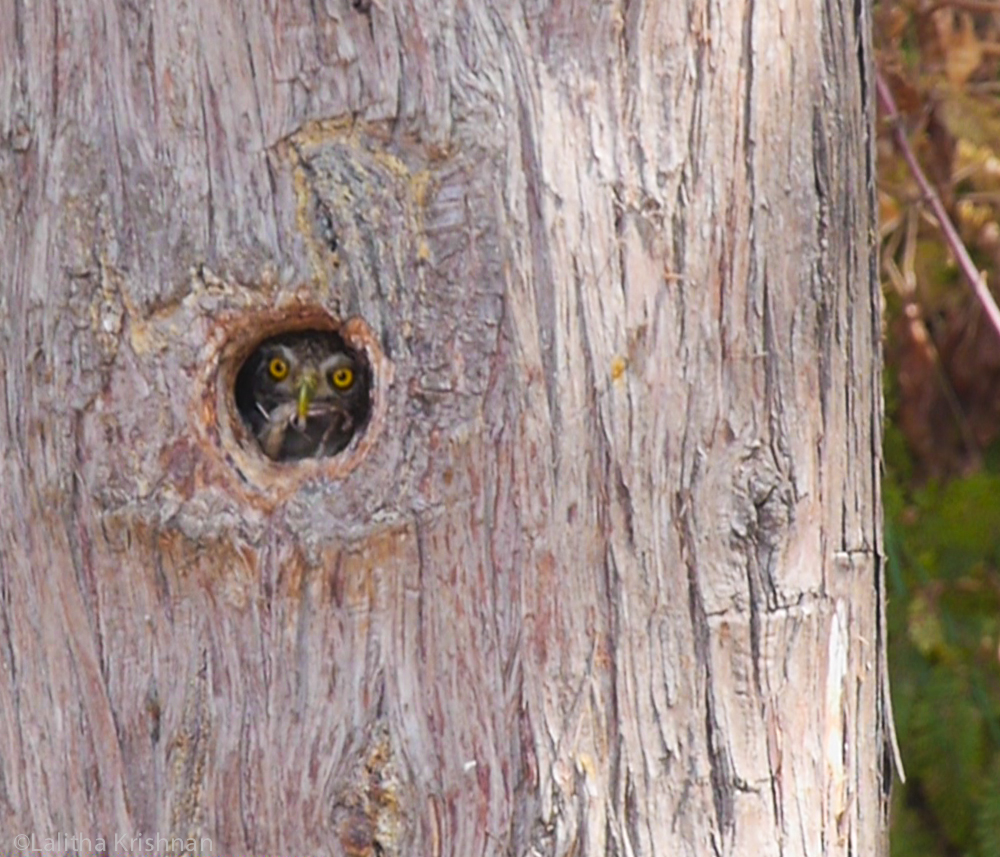
Birdsong by hillside resident, the collared owlet.
Photos Credit/Courtesy: Nariman Vazifdar. Podcast cover/label design by Lalitha Krishnan

Disclaimer: Views, thoughts, and opinions
expressed in the podcast and show notes belong solely to the
guest/guests featured in the episode, and not necessarily to the host of
this podcast/blog or the guest’s employer, organization, committee or
other group or individual

Acrobat of the Sky, Dweller of the Heart: The Barn Swallow.

Barn swallow. Photo by Rajdeep Mitra

Heart of Conservation, Episode #33 shownotes. Read or listen on several platforms.

Introduction:

Hi, I am Lalitha Krishnan and you’re listening to Ep# 33 of Heart of Conservation. I bring you stories from the wild that keep us all connected to our natural world. You can listen to Heart of Conservation on several platforms and read the transcript right here on my blog Earthy Matters.

Today I feel very privileged to be speaking to my mentor Dr Suresh Kumar who spiked my interest and knowledge in nature and everything wild during a citizen’s course for wildlife conservation at the Wildlife Institute of India, Dehradun, Dr Suresh is remarkable wildlife biologist who specialises in animal ecology, migration and movement studies, conservation biology. Since 2008 he has been a teacher, trainer and mentor to several students at WII.  He has crisscrossed the country in pursuit of wildlife conservation.  Be it discovering a new species of pheasant, studying macaques, using satellite telemetry to obverse the distribution of olive ridley turtles, tagging and following long distance migration patterns of Amur falcons and mapping habitats of the Great Indian Bustard, Dr Suresh has several feathers in his cap.  He was also part of the 29th Indian Scientific Expedition to Antarctica in 2009, where he conducted aerial surveys for marine mammals and birds. I always look forward to snippets of his many wildlife adventures that he updates us with in his unique storytelling style.

 I am also very happy to have as a guest on today’s episode, his research student Amarjeet Kaur, completed her graduation and post-graduation from Delhi and then moved to Wildlife Institute of India. At WII, she first started her journey working on the migration and conservation of Amur Falcons in Nagaland and Manipur, and thereafter, joined for her PhD on another long-distance migratory bird. Amarjeet is now completing her PhD on the first study of Barn swallows in India. Together they have been working on a lesser-known species that most of us take for granted.

Thank you both so much. Welcome to the Heart of Conservation podcast.

1. My first question is why is your research focused on the Barn swallow? Why not some big exotic or rarely spotted species?

2:35

Dr Suresh Kumar: Thank you Lalitha for having us in your podcast. Well, you asked quite a challenging question especially when there are so many beautiful birds all over; not that the barn swallows are not beautiful but to me they are very unique. They are an extremely interesting group of birds and that they are long distance migrants, very common;  it’s a human commensal. It lives very close to people. it actually literally requires people to actually survive and they are long distance migrants like I mentioned earlier. They are possibly travelling 1000s of kilometres like many other species.  And in India, the barn swallows come to the Himalayas to breed. So, they are summer breeding visitors and by the time the monsoon arrives, they leave. So where do they go? There are some interesting details about these birds that we still don’t know. I think Amarjeet will possibly be able to  tell you a little bit more about the local connections, the cultural connects of this bird and it’s very interesting.

3:58 

Amarjeet Kaur:

Very interesting question that you asked. So, I just would like to mention that because this podcast is all about barn swallows, I think it is a unique bird also because we are giving it so much importance.

in fact

Lalitha Krishnan: In fact, some of the facts you brought up are also my questions. Barn swallows are often seen –in fact they are still seen as we know–nesting in small shops here in the hills. Why do they nest inside shops and houses so close to humans? You mentioned they need us. No other bird does that except perhaps the Red-rumped swallow which is not as common though.Somehow humans too do not seem to mind barn swallows.  They may not generally like a crow nesting in their shop if you know what I mean.

Amarjeet Kaur:  Again like you rightly mentioned that humans also don’t seem to mind. Barn swallows, they love to go inside the houses inside the shops as we have found out during our surveys and it is not just in India, it is everywhere that they are actually dependent on human buildings or shops and houses.  So what is so unique about these birds? Earlier they never used to, as is mentioned in literature, they never used to nest inside shops. And it is not just in India, it is everywhere that they are actually dependent on human buildings or human houses.

So what is unique about these birds?  Earlier they never used to nest inside shops.They used to nest in caves and crevices. And, they are such a smart species that as they found out humans are coming up with the buildings they found that right opportunity to get in. So what is the use? Why are they actually nesting inside saree shops which are so busy? If you go to Nainital market you will be astounded to see that it is so crowded. Barn swallows don’t seem to mind, they just lie around, feed their chicks and they are just there. It’s because they actually get an additional protection for their nest from predators. 

Because, when you observe the nest, you’ll see it is a mud nest  but it is open from the top. So I have found in the nest, when there are less nesting spaces, they have to resolve to the outside– in corridors– and they build their nests in corridors. And those are more prone to attacks by predators or by other commensal species so they see a lot of competitions in other species so that’s why they are more prone to go inside your house and make the nest And, like the red rumped swallow that you mentioned, I will just like to add they again build mud nests but their nest is closed/tunnel shaped so they don’t need that extra protection. That is what red-rumped swallows can nest outside, it’s because their nests are closed.

7:01:

Dr Suresh Kumar: Just adding on to what Amarjeet said, it will be interesting for your listeners to know that while we generally talk about human footprint, and how this has literally shaped the environs around, and we mostly look at it from a negative connect. Right? About displacing species from their natural habitats. But strangely there are certain species which benefit from human activities, changes in land use types because of humans or people. And, I think barn swallows are fantastic examples of that. The name ’Barn’–it was otherwise known as the Common swallow earlier– but the name ‘barn’ is because of its strong association to the barn. And, this is a very western thing. Like in America, in the rural areas they have  a barn to stock all the food that is required for their livestock. Here in India, in the Himalayas, we do have such a thing but it is not like they live in the barns. They live in people’s houses. And, I think there is an interesting connect here to religion. To the hindu religion, or for that matter to other faiths also…the Islamic faith or the Christian faith…anywhere you find people of different faiths living here in the Himalayas, they all have a very strong connection to these birds. They refer to these birds as Amarjeet will call the ‘Devchidya’, locally known in some places as ‘devchidya’-the God bird of the Himalayas that we would say. They are related to the significance of wealth or prosperity. So, if these birds come into your property to nest naturally, it’s a sign of prosperity. So it’s welcome. For the hindus, it’s a Laxmi avatar. 

9:9

Coming to the other question as to why barn swallows have evolved this strategy of nesting inside people’s houses or in shops. I think in the natural world there is always some competitive force or the other. There is also this major predation pressure. So, there must have been in the evolutionary period of time, there must have been strong predations affecting populations of barn swallows,probably everywhere. And those populations that started to nest closer to people’s houses and then taking the benefits of moving into people’s houses to nest may have survived. That’s how this shift from the natural environment which Amarjeet mentioned–nesting in- caves-might have moved to now, living with people. Also if you see, during this so-called evolutionary period of time, humans have also begun to settle down. I would say, with settled agriculture, these birds also had started to evolve the strategy of living closer to humans and thereafter, literally being commensals. 

10:31 

Now, the other interesting point that Amarjeet mentioned is, then why didn’t the red-rumped swallow also nest inside? Whether it makes a cup-shaped nest or tunnel shaped nest–they are mud nesters.They could have also moved in. Hare, it appears like there is an understanding among the red-rumped swallow and the barn swallow. In a simplistic way of looking at it, “Hey, we will nest outside, you nest inside.”Compatibility Okay?  So if I have to look at it from a more technical point of view, here it is competition for nesting space. So, they would be highly territorial in terms of holding onto a property. 

Among barn swallow individuals you will see strong territoriality. They will chase one another away. And some of these birds come back to the same nests to nest every year. In the same house. So, territoriality plus competition for space has shaped this. So the red-rumped swallows, the poorer cousins of the barn swallows, are forced to nest outside. So, there also, because of predation pressure, are nesting close to human households. But here, nesting outside would still evoke some predation. So, they have evolved the strategy of completely closing their nest with a very narrow passage tunnel for them to enter in unlike the barn swallows’ which are cup shaped and exposed. So they build it inside.

12:08

It’s amazing when you see these birds, all swallows,closely related, and how they are associating with humans and the understanding amongst them. “Okay, I nest inside, you nest outside. My housing architecture will be this way..” “Mine will be this way.” 

12:33

Lalitha Krishnan: We have a lot to learn from the swallows. I wish we would behave like that especially when it comes to housing. And be nice to our neighbours. So, all shops shut for the night. Where do barn swallows go when that happens? How do they understand and manage our concept of time?

12:44

Amarjeet Kaur” That’s truly an amazing question. Because those who are unaware of barn swallows nesting may wonder  where these birds go at night. These birds perfectly time their arrival and departure from the shops with the shopkeeper. They know the time the shop closes so they enter just before the shops are going to close. Early in the morning, they will actually wake up the humans–if the house is also attached to the shop–they start their chit-chat, chit-chat ..almost like, “Let us out, let us go out.”

13:21

I have interviewed so many people and they often say, “these birds start calling us at 4 o’clock  in the morning and we have to open the shutters for them. Because their chicks are in the nest, the swallows have to go out and fetch food for them. So, somehow for every different shop, the timing matches perfectly. It could be because, every year, they are coming back, they know the shop’s closing time. They were really affected during COVID. What happened everywhere during Corona is that shops were closed. Some birds were actually inside the shops. What some owners did was, they shooed away the adult birds but they couldn’t do anything about the chicks..the juveniles. So a lot of shop owners actually saw failed nesting. But, again, the hill people, they are big hearted. They made a space for barn swallows to enter. They cut their shutters just for barn swallows to enter.

14:30

Dr Suresh Kumar: They would create openings.For example, if the birds were nesting inside the house, we have seen places where they have removed the glass pane from a window so that the birds could enter. This is truly amazing. We’ve been talking about this from the bird point of view but when you look at it from a people point of view, people just love these birds. Of course, they have that religious connect and look at them as very sacred birds and things like that but even otherwise, like Amarjeet was mentioning, the birds know when the shop is going to be shut. But, there were many times when the birds wouldn’t arrive and the shopkeeper would wait for a few more hours for the birds to come. He would keep the shutter open. So, you can imagine the kind of association that people have with these birds. And, they are very strongly protective. They wouldn’t allow anybody to touch them. It will almost be like touching distance where they would make the nests. Birds also recognise the owner of the shop–seeing him day in and out or the people residing in a particular house. If there is a stranger like me and Amarjeet, walking into a shop, immediately  you will notice an alert  behaviour, they will be looking at us differently. I think in the minds of these birds they know, they have facial recognition clearly. They are able to distinguish. So, when I look at barn swallows,  and when I particularly go back every year and look at those individuals, which we have possibly caught previously and put a ring on them and they look at us…they know… Hey, these guys have come back.

16:15

Lalitha Krishnan: It almost sounds like a pet’s relationship with its owner except these birds are free to come and go but it seems like the same association. 

16:31

Amrjeet Kaur: There is a general perception that in the north-east that everybody is a hunter. If you go into the forests, you don’t see much wildlife, specifically in Nagaland. When we entered Manipur, in Imphal valley, only in this valley are the (swallows) nesting. They are not nesting as they nest in Uttarakhand at higher elevations. They are nesting at 700 metres in the valley. And, there again, people are protecting them. They again consider them as Laxmi or good fortune. If you go there from kids to the elderly know the word ‘Sambraang.’ You just have to say the word and they will show you the nest. That bird is that popular. Even in the main city of Imphal centre. 

17:13

Lalitha Krishnan: Amazing. Dr Suresh you did speak about swallows migrating but because of that one doesn’t see barn swallows all year. Where are they migrating from?  What distances do they fly?

17:31

Dr Suresh Kumar: Well, at this point in time, we don’t know. Before I get into the technicalities of this question, I’d like to tell you about what Amarjeet and I have been reading about what people generally think about barn swallows. Where they come from. I think Amarjeet will be happy to share that information about what people think. They all know the swallows come from somewhere. Or rather, where they go after breeding.

18:08

Amarjeet Kaur: I want to narrate a beautiful story of a shopkeeper I met in north Bengal. .He said.” I think the mother birds, after completing nesting, they go and take a dip in Kashi and they devote their souls to the heavens”.  I said, “Why do you think like this?”  He mentioned that his grandmother was curious and since then, they had been observing these birds. One day she tied a thread on this bird because birds were also accustomed to them. They knew them as Dr Suresh had mentioned. She tied the thread and next year, the thread was not there.From that point onwards they thought that adult birds go away after completing the nesting. They go and take a dip in the Kashi -in some river and they never return.  The birds that return they think are their juveniles. That’s what people believed. 

19:19

Again, the ringing that we did last year created that amazement in people. They could see their birds returning. They felt good that those are the same birds and that they are not taking a dip in the Kashi but are possibly migrating.

19:41

Suresh Kumar:  From the story that Amarjeet just mentioned, the perceptions that locals have about these birds, if you actually look at it technically, they are in a way right. These are small passerine birds and they have a short life span. It’s not that they are coming every year for years. It’s not the same pair of individuals coming. So, I think they may perish and the point is also  these birds being migrants are faced with lots of threats wherever they go. So the chances of probability that they would return back the next year is far lower than for many other species.  

20:24

I would like to add a personal note to this story. Way back when I was in college in 1993 I did a small project for my entomology course in Bangalore. It had a field component to it and I would look at birds and see what they feed on. And there’s one particular site where I used to look for birds and insects in Bangalore. It happened to be in winter. I happened to see thousands of barn swallows hanging around, foraging there. So, my story of working with barn swallows dates back to that time. I used to wonder where these birds were coming from. Thereafter, I have had a series of such sightings of barn swallows in winter. If it was along the Gujarat coastline…right in the Arabian sea coast, I would see thousands of barn swallows all ganging up, gathering together on a powerline. It would give you a feel that they were all getting together, preparing themselves to go somewhere.

21:40

If you look at the sites where I had seen them, it gave me a feeling. Are they headed in the direction of Africa? Then, you also see barn swallows in the Andamans and Nicobar islands in winter. That would mean they have made oceanic crossings. So, of course in literature what we know about barn swallows is that they are truly long distance migrants. The European birds, the Canadian birds, they would all breed up there in the Northern latitudes and cross the equator and go down into the southern hemisphere. So, they are truly long distance flyers if you are saying that, you know, how many kilometres?  They would be flying 20,000 kms one way; 10,000-20,000 kms. It can vary across populations. That’s the story  that we are still not sure of what is happening here in India. What we have been speculating is that along the Himalayan range, that’s about 2500 kms long, even if say  that barn swallows are nesting in 2000 kms length of the mountains, starting from Kashmir all the way to Bhutan, and thereafter in Arunachal you don’t see them nesting. That’s another story. The populations that are nesting as far west as the western Himalaya -that’s in Kashmir valley,could very likely be going down into Pakistan  and thereafter heading out further south. Which may mean they are going down to Africa and joining the European populations that are migrating  down there. And then, when it’s time to return, they would again go back their different ways and come back to Kashmir or the western Himalaya.

23:19

So, now it’s interesting those populations you see in the east, that you see in Manipur, that you see in Darjeeling, would they also come down to peninsular India and head out down to Africa? We also see populations wintering in peninsular India. Southern India: Kerala, Tamil Nadu and all these areas. So, it’s possible that there are some populations of barn swallows moving within the Indian region. They are all moving to breed in the Himalayas but they all have different routes or different wintering ranges. So some populations would go down to Africa, some populations would be coming down to peninsular India or Southern India or Sri Lanka.  Some populations are going down into South-east Asia. Some of those could be actually heading down into the Andamans and Nicobar islands.

So incredible migration stories are still to be unearthed. We don’t know but these are possibilities.naturally, even if we talk about within the Indian region, for a small passerine bird weighing about 17-20 gms, they are easily covering about 5000 kms one way. 

24:34

Lalitha Krishnan: It’s mind boggling.The logistics. How do they manage? I don’t know if this is a silly question after all that you’ve said. Why don’t they stay here till winter? Has it got to do with the availability of their diet?

24:53

Amarjeet Kaur: Yes.

Suresh Kumar: We can answer that question.

24:58

Amarjeet Kaur: That’s absolutely true…in response to the availability of food. These birds like pleasant summer weather and that’s what they are tracking throughout their range. So when they do come to the hills it is at the start of March or end of February-March where you see lots of insects because of the change in weather. And once you hit June or July and it starts to rain heavily..persistent rains that stop these birds from going out to forage, that is the time that they finish nesting, pack up and start to move down possibly to south India or Africa, where it is summer and they again enjoy the availability of food.

25:50

Suresh Kumar: We saw a very interesting pattern. There are swallows that have adapted to living in urban centres like in the city and there are swallows that live in the village. Just like people. We are city dwellers and there are people who want to stay away from the city. They are happy living in the villages. Like that, we do see swallows behaving that way. 

I have often wondered what it would be like if we picked up some of the swallows from the village and went and left them in the city? They would say “No.”  In the city the question comes up…they are aerial insectivorous birds. So, they are picking up insects in the air, right? Now, what do they get in the city? What do they eat? 

26:39

So, very interestingly we saw swallows in Imphal town foraging at the traffic signals. If there is a major intersection, the moment the red light comes on at a particular section, the swallows would immediately come and forage in front of those vehicles. And they would fly between the vehicles. And, fly very low. The moment the green light comes on, the swallows would shift to the next section. It’s all learnt. So they are birds that forage there and of course you see other swallows that are foraging in nice, clean environs you know? Smokeless environments like over the lake…very scenic places. But here they are foraging among all the chaos and people. Sometimes, they are just flying straight to you and flying over your head. They have very high manoeuvrability; they do lots of acrobatic things in the air. It’s amazing. Actually, Amarjeet and I during our visit to Manipur, we did stop at one such road crossing just to watch how these birds are behaving. I was mind-blown. It was too good.

28:12

Lalitha Krishnan: Very cool.

Amarjeet Kaur: They show high adaptability  and intelligence.

28:18

Lalitha Krishnan: You have also been ringing the barn swallows. This is the first time barn swallows in India have been ringed. Which by itself is amazing. Tell us about that experience and what information does a leg-ring on a bird reveal?

28:39

Dr Suresh Kumar:Rightly mentioned, Amarjeet’s study is the first detailed ecological study of the species in the Indian region. The focus has been to understand their nesting sites. For instance, when do they arrive here? We’re talking about nesting periodicity. When do they arrive and when do they depart? And, we are also trying to understand this across the HImalayan axis. So, what happens to birds? How do birds in Kashmir valley behave or when do they arrive? When do they nest compared to the east, in Manipur? In Manipur,we have a resident population of barn swallows. They don’t migrate. That’s again very very interesting.

29:26

Why don’t those populations migrate? Everywhere else in the Himalayas you will see swallows migrate.

29:32

Lalitha Krishnan: I want to know that.

29:34

Suresh Kumar: That’s a different story and it’s very interesting. Now, the first thing that we wanted to as part of our study, what we wanted to understand was whether it is the same pair that is nesting in a particular shop or a home.So how do we know that? They all look alike.Okay. There could be some select features–if you observe them very intently, very closely but then your sample size is going to be very small. So one way to get around this is to actually individually colour-mark birds. Ring birds. So you know, this individual is ringed and this is an individual coming back to this particular shop. That is the purpose of ringing.

30:17

And, they are also known to nest multiple times in a season. So they arrive in the month of March and they immediately make a clutch. They would finish and then go in for a second clutch.So, asking for those in depth questions like their reproductive investment in the first clutch–is it more as compared to the second clutch? What dictates all of this? Is it also the fitness of the bird? Does it mean that the heavier birds have larger clutch size v/s individuals that are not  great in terms of plumage or slightly low in weight? Not that, they would vary amongst them a lot but these are all interesting questions.

31:10

You would also notice that barn swallows though territorial around their nest site, they are also social. So, wherever there are barn swallows nesting you would invariably see a lot more. So there is clustering of these birds when it comes to nesting sites .Now, that is the story, they are also taking  benefits of staying together. Maybe it has something to do with looking for food. Or maybe they would gang up together to shoo away  or chase away a predator. Or it could be as simple as giving an alarm like if there were a cat prowling around, they would give an alarm to indicate to the others. So, that;s some benefits there.

31:51

If this is the case, we also do see some individuals nesting solitarily. So why are these birds not taking the benefits? Are these birds not in great reproductive conditions? Are they not dominant enough that they can’t live amongst the flock so they are going and nesting elsewhere? Are these young birds breeding for the first time so they are nesting elsewhere? 

32:15

In order to answer all of these questions, you need to neatly mark individuals so you can try and understand these birds in more detail. Now the last part of it is that they are so small. They are very tiny birds–like I mentioned earlier:20 gms. And, whether you can put a small transmitter; a small device on these birds and whether they will come back the next year or not is also dependent on you being able to put rings on them. And, checking out whether they are the same individuals who are returning. Confirming that they do show site fidelity. This is very well documented in other populations elsewhere in the world.

33:02

But before you go in for deploying a tracking device, it’s first important to deploy a simple ring. You know? Ask some of these basic questions. Confirm  for site fidelity-that they do come back. Natal homing. They come back to their homes..their respective nest sites.That is the reason why we have started off with this ringing.

I think Amarjeet can further add on the fact on how ringing has actually helped create more conservation awareness.

33:36

Amarjeet Kaur: I will add to the experience first; the experience we had while ringing these birds. We will start from Kashmir and go all the way to Manipur.

When we went to Kashmir, we observed that these birds are nesting inside houses. And everywhere, people were just welcoming (us) strangers who had come to take their birds in our hands–they considered the birds as their own.And when they got to know that we were going to catch them, the first question they asked was, “Are you going to harm our birds”? So that’s the pressure we had everywhere we went to ring the birds because people are so close to these birds. This was our first time, catching the barn swallows and ringing them. So  there was this doubt: What if the birds don’t return? What if we scare them? These people will be really upset. But luckily nothing of that sort happened. I think this is because these birds are used to humans.That’s the advantage.

34:37

And, when we went to ring these birds in Kashmir, it would begin with people greeting us, offering us tea. And then, they would say, “now you go ahead and catch these birds. But before everything you have to have tea or something from our house”. That’s the culture. You can’t just do your work and move out.That was truly an overwhelming experience that I had in Kashmir. It actually brought tears to my eyes. 

35:05

And then we move on to Uttarakhand. So here, most of the nesting happens inside shops. And people have their timings right? People have to shut their shops by 7:00 pm. So what we did was, we caught these birds by night to avoid disturbance. Because, they nest in markets and we cannot place mist nets in daylight and disturb the tourists and everybody. So,  at night, when the birds are resting we catch them, ring them and release them back into the shop. That gives them time to get used to it and by morning they get back to their routine. So, people actually waited for us. They kept their shops open till 1:00 am in the night and they were with us watching everything we were doing. And they were okay with it. They say, “Do your work, no problem. We will manage, we will be here with you.

36:00

Dr Suresh Kumar: Now it has reached to the extent where people who earlier used to be apprehensive are now asking us, “Why did you not come this year and ring the birds?” Why don’t you ring the chicks? We want to know whether the chicks will come back to our house. So you know, they are also in a way, have become part of our story. Our research. 

And now they have begun to understand that these birds are truly special. They all know that they are very special. Very unique. But the point is when we share the stories of where these birds are possibly going and all our stories of connecting with Kashmir and Manipur, with the people of Uttarakhand, people seem to appreciate this a lot better.

 36:57

So there is this (lost in translation) approach  which is basically- it’s a taboo amongst all of the local communities that you should never touch the bird. “If you touch the bird, they will not come.” To break that and do our work was a huge challenge. But then, it worked. While I tell you this story, some people have simply refused. They say,”Nothing doing. You do research; don’t touch the bird. If you touch the bird, they will not come back, which is a bad omen for us.” Thankfully for us, we managed to convince people.

37:28

Amarjeet Kaur: Coming back to my story in West Bengal… We caught some birds in West Bengal. They were not nesting inside shops but were outside on wires and it was midnight. We didn’t have enough light to process these birds -to take measurements. And, we asked one lady who was just closing her house; “Can we come in and use one room to ring these birds?” She said, “Yes, come”. You won’t believe this; we actually sat in her kitchen while she was cooking food and did our work. It was amazing.

In Manipur, they were again nesting in houses and rooms that were not well lit. There too, people helped us, letting us use their emergency lights. In one house there were multiple rooms and multiple pairs were nesting. The house owners were saying, “you have to come here. There are birds in this room also.” They helped us hold the poles, they gave us light to work so it was beautiful. And all this, as Sir mentioned, has created a lot more awareness among people. They are now keeping track of these birds. They tell us when the birds come and invite us to come back or ask “why didn’t you come this year?” Or say, “ You need to tag more birds.”  When I started collecting data, everybody would tell me. “Oh we never noticed this.” It’s good that you came and now we will also pay more attention to these birds.” I think that’s fabulous.

 39:02

Lalitha Krishnan: I think what you are doing is fabulous and unknowingly, there’s a community of people now in different states doing conservation along with you. That’s fantastic. Talking of barn swallows, how long do they live?

39:22

Dr Suresh Kumar: These are small passerine birds and given that they are long distance migrants, there must be a lot of physiological stress on these birds. I suspect that they live for maybe 5-6 years. So, that is what their lifespan is. But they are highly productive so they raise clutches of five…sometimes, seven to eight chicks in one nest. So the nest is brimming with these chicks and sometimes, there is no space and the chicks fall off. So, the birds are quite productive. I think, to add to all this, their lifespan may not be much. This is the story of what we hear from literature, not something we have documented. That is again possible only through ringing. You ring the chick and you will know if it returns next year to breed. They also possibly mature earlier, and be ready to breed. And how often are they coming back? For how many years after ringing are they coming back. This is a very interesting story to document.

40:34

Lalitha Krishna: That’s wonderful. I have something. Red rumped swallows built a nest near my home; I don’t exactly know where. By the time they had their second clutch I felt like the juveniles were helping them build/repair the nest. Because, the numbers just increased. Is that possible?

41:06

Dr Suresh Kumar: Some young birds do practise building nests. You would invariably see this with the weaver birds.The Baya weaver and the other weaver birds also. You would see that while the dominant adults are busy building their nests, the young individuals–you can make them out by their plumage that these guys are young–they would also build nests. What is interesting is that they are also seeing the adult birds and they are learning. You can see that their construction is not that great. It’s documented that these birds are practising  their nest building. So, in the case of the red-rumped swallows you observed, it’s very likely that they are also learning to build a nest. 

There are a few other cases where young birds–especially the cooperative breeders– the young birds join in to help their parents, the breeding adults, to build the nest though they may not be breeding or coming into breeding immediately. That’s a different aspect altogether. This is possible

42:21

Amarjeet Kaur: There could be one more possibility of another pair coming in and competing for the same nest. That could also happen. Or that the male is coming and trying to impress the female.” Okay see, I am also competent enough..ha ha.”

42:38

Lalitha Krishnan: That’s also possible. My last question to you both is could you share a word or experience or concept  that will help us understand the barn swallow or remember it in a new way? Something that will add to our vocabulary.

41:57

Amarjeet Kaur: I think firstly for the vocabulary, you should remember ‘Dev chidiya’. There are different names across the Himalayan range. In Kashmir they are known as ‘Katij’. That’s a beautiful name. And when you come to Uttarakhand, there are different names. ‘Dev chidiya’, ‘Dhan chidiya’. You have Gotayi in eastern Uttarakhand.There is an interesting part here.  Near eastern Uttarakhand you have Nepal. We couldn’t go to Nepal but if you move to north Bengal again they call it ‘Gotali’.

43:37

Dr Suresh Kumar: There is a Nepali influence. The language, the dialects as you transit from the west to the east or east to west, you know there are people of different cultures and regions. They have their own language so the birds have also got their own names. We know very well that in Uttarakhand there is the Nepali influence. So some of these names do have a slightly different touch.

44:16

Amarjeet Kaur: in Manipur, they call the barn swallow ‘Sambraang’. Sambraang is the bird  which guides house building. They believe the way the birds build their nests is a sign that humans should also build their house in a particular direction. I will be good for them.

44:31

That’s so inspiring

44:33

Amarjeet Kaur: Exactly. I want your listeners to remember this: when yo go to the hills- it has become habitual for us, we consciously do this-if you are going to the hills, to around 1000 metres elevation, do look into the shops or homes and see if the barn swallows are nesting there or not. And stand there for five minutes and observe how they go into crowded spaces and manage to nest there.

45:13

Dr Suresh Kumar: For many of my research stories that I have been working on, the word, ‘connection’ resonates in every aspect of my studies. Or every species that I study.  So the barn swallow is also something that gets me that connection.  There is something from the emotional point of view but it also teaches me about how for these birds, it’s not one region or landscape that’s important. It’s the entire Indian or Asian region that’s important for them. So, it’s connecting multiple cultures. It’s connecting multiple landscapes. So, when I look at the barn swallow in the Himalayas, it gives me this visual of these birds having gone to my backyard in southern India. And if I see these birds in Southern India,  then I think they must have been in this particular shop somewhere up in the Himalayas. Resting in somebody’s house, raising its clutch of five-six birds… So, you know, it connects you and I think when you start to observe things in nature, these connections become very important. I think it’s important for us all to be connected. And, I think these birds are fantastic examples of how important it is to understand nature. What’s happening in nature and things like that. You asked me for one word; it’s connection. The barn swallows truly have that connection.

47:01

Culturally also, there are so many stories. Some people think they(the birds) just go and die in the Ganga. So, the Ganga is the holiest river in the world. That holiness…people are relating to these things. It’s just incredible. So yes, these connections are big for me.

47:24

Lalitha Krishan: Thank you so much. I am so touched and inspired. Dr Suresh, I think your whole career path is like the swallows. You travel place to place, continent to continent saving the birds and other species.

47:38

Dr Suresh Kumar: I am still on a journey. I wish that this journey never ends. As Amarjeet’s field work is coming to an end, I am now wondering after she is gone…like the barn swallow she too will go away somewhere far– and I still need to follow the swallows. At this point of time, we are primarily doing this work because it’s her project and we are understanding the barn swallows. Of course there will be someone else also interested in the barn swallows. But I truly wish that this journey not only for me, but also for Amarjeet,never ends. We continue to follow the swallows for the rest of their lives.

48:20

Amarjeet Kaur: It’s never going to end for me as well.The connection word that Sir mentioned has got to me also. Now, I’m completely connected to the species.

48:32

Lalitha Krishnan: Yes, and also all the people who are homing them, looking after them. It’s great. Thank you both so much.

Birdsong by hillside resident, the collared owlet.

Photos Credit/Courtesy: Amarjeet Kaur and Rajdeep Mitra. Podcast cover/label design by Lalitha Krishnan.

Disclaimer: Views, thoughts, and opinions expressed in the podcast and show notes belong solely to the guest/guests featured in the episode, and not necessarily to the host of this podcast/blog or the guest’s employer, organization, committee or other group or individual

Tigers of The Tide, Breathing Roots et al. The Sundarbans with Dr Radhika Bhargava.

Heart of Conservation Podcast Ep#31 Show Notes (Edited)

Introduction:

Hi, I am Lalitha Krishnan and you’re listening to Ep# 31 of Heart of Conservation. I bring you stories from the wild that keep us all connected to our natural world. You can listen to Heart of Conservation on several platforms and also read the transcript right here on my blog Earthy Matters.

Today’s episode is about the Sundarbans. I recently made a trip there and I have to tell I am so spell bound by the immensity and biodiversity of the world’s largest delta which we share with Bangladesh. To be honest, I didn’t know about these 2 facts earlier.  Almost everything I saw was unique somehow, something I had never seen before. I knew I had to find an expert to learn more about the Sundarbans ecosystem. As luck would have it, I came across a social media account @onesundarban which belongs to Dr Radhika Bhargava, my guest here on episode # 31.

In her own words, Dr Radhika wears multiple hats as a coastal geographer, geospatial analyst, and a National Geographic Explorer. She is a Research Fellow at the NUS Centre for Nature-based Climate Solutions working with wetland conservation in Asia. She recently completed her PhD at the National University of Singapore. We will discuss her research some more but for now, Radhika, welcome and congratulations on your PhD. I feel so privileged to have you share your knowledge and experiences with us.

Radhika Bhargava: Hi Lalitha, thank you so much for having me on your podcast. I am so excited and I am so happy that you recently visited the Sundarbans. I am really looking forward to your questions and interacting with you on Sundarbans. 

Lalitha Krishnan: Lovely. So, let us start. Radhika, what made you, first, focus on the mangroves for your research and why must we be watching the mangroves to check on the health of our planet? 

Radhika Bhargava: I started working on mangroves during my Masters actually. I was part of a project where they were looking for someone to do coding or use coding /computer languages to identify mangroves of South East Asia. So, you use satellite images and you have to interpret where the mangroves are. There were many other forest classes that I was interested in studying but somebody had taken up those classes or somebody had taken up those forest areas to study using satellite imagery. They were only left with mangroves and then, I joined the lab. Nobody was willing to take up this project because there was a lot of computer coding required. And, coming from ecology, biology or management backgrounds, we were not trained in it. I saw this gap and even I didn’t know any computer programming at that time. But then, looking at this desperate need that nobody is doing, I said, “Sure, why not? I will give it a try.” I started learning coding from scratch and then my focus was mangroves. So, that is how I learnt a lot about mangroves. I became so curious that through the two years of my Masters which was at University of San Francisco, the focus was Environmental Management. I ended up with all my class projects or side projects related to mangroves. That’s how I came across the Sundarbans.

3:56

You asked me, “why must we be watching the mangroves to check on the health of our planet?” There are many reasons. Especially that mangroves are coastal protectors. They protect the sea from storms and cyclones. Their roots help in purifying water but specially they store or remove carbon dioxide which causes global warming. They store it within themselves and keep it there for millions and millions of years. They have such characteristics that can tell about the health of the planet and actually help in improving the health.

4:30

Lalitha Krishnan:  That’s quite amazing. I love the part about you learning coding from scratch. Look where it has taken you.  Radhika, I’m curious about your social media handle. Why its called ‘One Sundarban? There must be something to it. There must be a good reason why you have called it so?

4:56

Radhika Bhargava: So glad you asked me this question because initially, people thought that maybe I did not get the handle “Sundarbans’ and that it why I went with ‘One Sundarbans’. Also, I think, I have had that account for maybe two years. I only joined social media because I felt the urge to share about the Sundarbans. When I realised that a storm can come, a cyclone can come in that area and nobody would even know that somethings happening…  So, I felt that I am at a place that I can share so I should take that initiative. So, I only joined social media to share about Sundarbans.

And why ‘One Sundarban’?

Sundarbans is across India and Bangladesh. It is one ecosystem. As a researcher, it really annoyed me initially when I would come across studies or management plans or government records that focused on just one side-either India or Bangladesh. So, for me, ‘One Sundarban’ is one ecosystem so hence ‘One Sundarban’ but after I pondered about it a bit more, about the terminology, I realised that “sundar” is in Hindi, In Bangla and in many local Indian languages, “sundar” is beautiful and “ban” or “van” is forest. So, it is just one beautiful forest. If I branch out of onesundarban, this name still holds.

-Radhika Bhargava

6:37

Lalitha Krishnan: Right. That is a beautiful thought and it makes so much sense because you cannot save it in part. It is half the story then. Radhika, how much ground did you cover during your research and what techniques did you employ to cover this vast area?

6:59

Radhika Bhargava: Right. So, I worked across India and Bangladesh. So, Sundarbans, for those who are not familiar, is 10,000 sq. kilometres of just mangrove forests. It is made up of many small islands-I do not even know the exact count-but, adding both India and Bangladesh, it is going to be more than 200 islands. My initial idea was to capture the ecosystem. Since I use geo-spatial analysis, which means using satellite maps and satellite data to understand what is happening on the ground, I was able to understand that from one aspect, right? Since satellite images can help you cover that vast area but when I went into the field, I still intended to go from the easternmost to the westernmost and northernmost to the southernmost island. For that, I first recorded shorelines from on top of a boat. I installed a Go Pro camera on a boat and then we would go parallel across shorelines and then I would be doing a commentary on those videos. Later on, I converted those videos into multiple images, and so from the observations in those images and my commentary, I collected some data.

8:25

So, we covered around 240 kilometres just of observation. The travelling kilometres were much more. And then, I went to around 16 villages to conduct interviews with the communities to understand their part of the story of the work I was doing.

8:53

Lalitha Krishnan: That is very extensive. You must have learnt a lot. That is quite amazing Radhika.

 9:01

Radhika Bhargava: Thank you so much. If not for COVID, I had another few methods I wanted to try out too which would have made me go into the forest to collect some  forest bio-physical  measurements  within the forests but because of COVID, I had a shorter amount of time and PhD scholarship and all restricted me. So, there was still more that I wanted to do.

9:24

Lalitha Krishnan: But you must have amassed quite a lot of information.

9:29

Radhika Bhargava: It took a long time to process it. I think I would still go back to that data set although I have written my thesis on it, there is still so much more to get from it. I hope I get a chance to do that in the future.

9:41

Lalitha Krishnan: I am sure (you will). These things never go to waste – what you’ve observed, what you’ve learnt and what you have surveyed. You know, even though I have lived by the sea, I never bothered to familiarize myself with mangroves. It was in the Sundarbans, that too on a boat that I witnessed up close, the diversity of mangroves species.  They are quite different from each other apart from the fact that they seem to be thriving in this cocktail of river and sea. Could you talk about some of these mangroves species and how unique they are? The snake roots, breathing roots for e.g. or the way some species propagate themselves with seed balls that float till they find a suitable location? It is all so fascinating.

10: 34

Radhika Bhargava: In just a few lines you actually explained how one comes across and becomes fixated with mangroves. Initially you lived by the sea, I come from a land-locked place. So, I had not even heard the word ‘mangroves’. So even today when I tell people I am doing research on mangroves, they assume I am researching mangoes. The word is so unfamiliar.

Lalitha Krishnan: There’s somebody worse than me that means.

11:13

Radhika Bhargava: I was worse than you. Despite visiting coastal areas with my parents, I never processed why there are trees on the beach or why there are trees on the water. Especially in Bombay. Goa, Gujarat side of India. So, I also learnt about it through books and through reading research papers until I went to the Caribbeans to do some project on coral reefs. So, we had a small project where we were snorkelling and looking at fish nurseries around mangrove roots. So, I thought that was cool. But I did not realise that there’s this amazing ecosystem like Sundarbans  or Bhitarkanika in Odisha, where in sediment-rich mangroves you can’t even see what’s happening under water. So, I also came to mangroves in a similar way; I said “what are these crazy roots?” A lot of people whom I have talked to say mangroves for them are like some sci-fi movie, when they come to the Sundarbans.

12:14

It is mainly because of the roots like you said. Mangroves have this crazy kind of roots, especially to adapt to the extreme environment they grow in. By extreme environment, I mean they grow at the interface of land and water. So, they are often flooded with salt water although they receive some fresh water from rivers as well. They get flooded twice a day during high tide. They are exposed to extreme waves. When I am explaining this, I like people to imagine that these mangroves are humans. Or to become mangroves themselves. So, if you’re standing at such a place or if you are to stay there for so long, you would develop some kind of adaptation that would help you first, stand there steadily. That the hold of the roots… the snake roots or the prop roots as it is called. that helps them stay aground. There are four to five kinds of mangroves roots. Basically, the first role they play is help them stay in that silty, flooded land. The second thing specially in the Sundarbans or Bhitarkanika, where there is a lot of sediment that these mangroves are standing on, the second thing they need to do is to be able to breathe. But the soil and the water mix are so poor in oxygen content that they have to grow their roots up or their roots have to come from their branches and then go into the ground, unlike other plants which grow roots hidden in the ground. So the roots that are propping up from the ground-there’s a type of root called pencil roots- which look like if you’ve stuck pencils in the soil, they look like that. Or buttress roots… All of these roots apart from giving them stability, they also help them get oxygen from the air. So, many plants get oxygen from the atmosphere directly and through their leaves and through their stems but mangrove roots also get oxygen content from the air to support breathing for the plants. So, these are some adaptations that mangroves must bring in to stand tall in that extreme environment.

Source: Nature Picture Library

You also asked about propogation of species. How mangroves grow mangrove babies, right? So, if you are a mangrove and you’ve figured out how you are going to stand and how to breathe in this fragile, dynamic ecosystem then the next thing is to figure out how are we going to reproduce? Unlike many trees which produce seeds–those seeds get propagated by wind or by animals or by water–some of the mangrove trees do produce fruits. And then within these fruits, there are seeds which finally find a ground and grow. But, it’s also common in certain kinds of mangrove species to not produce seeds but produce a mangrove propagule. That propagule is just a mangrove baby that’s growing on top of its mom. You might have come across these green sticks hanging from the tree, they are mangrove propagules. They hang from the tree and until they are ready to go- the weather conditions, the time of year, the tidal conditions etc are good-the mom drops them in the water. Now they are floating in the water but these are not seeds ready to be germinated. These are germinated plants which function like any other plant and it keeps floating until it finds the right elevation, the right tidal conditions, the right slope, and the right area to settle in. So, that stick or propagule has that much sense to find the right place for its survival.  It floats horizontally. Once it finds the right place, it becomes vertical, the centre of mass changes and it automatically goes into the soil. Which is just mind-blowing for me. In a way, they are like mammals. In mammals…humans, babies grown within the mum until they are ready to come out. I find equal similarities.

17:19

Lalitha Krishnan: It sounds like they have an intelligence of their own. There is so much we do not know.

17: 25

Radhika Bhargava: There are things people who study these processes are still finding out. Things we know have been published but there is so much more, so much unknown when it comes to mangroves.

17:41

Lalitha Krishnan: Thank you so much for explaining that. Talking of species, the animals that exist in the Sundarbans also seem to have adapted to this unique environment. We saw the rare Mangrove pitta, the Fishing cat we didn’t see but I know it’s there and the swimming Bengal tiger, which is the only tiger that lives in a mangrove system. How cool is that? What makes them so different or what can you tell us about them?

18:19

Radhika Bhargava: If we are talking about Sundarbans, how can not (talk) about the tiger? The Royal Bengal tiger is found in many places in India or in the South Asian subcontinent. However, the subspecies of the Royal Bengal tiger—I’m not sure if sub-species is the correct word—but the evolution of the Royal Bengal tiger that found in the Sundarbans is quite different from the other Royal Bengal tigers that are found, in say, Central India, where I come from.

18:59

The main difference in their adaptation to living in the Sundarban Delta. In those mangroves, in that flooded ecosystem. Just like I was explaining earlier how mangroves adapted to this soil, sediment, flooding conditions, the tigers of the Sundarbans also have to.

19:22

If you are a tiger, you would need sweet water or fresh water, as they say, to survive. But the tigers of the Sundarbans are living in a delta filled with salt water. Their houses or their land or their habitat, gets flooded twice a day which tigers of Central India do not experience.

They go to a fresh water pond within their forest to get water but then they can go back to their caves to chill. But there are no such structures that are dry all year around for the tigers of the Sundarbans. And if they want to go from one place to another, there are huge rivers and streams in between which they have to traverse. So, tigers and other kinds of cats can swim naturally but the tigers of the Sundarbans use swimming as their means of transportation. When their islands get completely flooded because of high tide they climb on to a tree and stay on the tree twice a day during high tide conditions. Hunting also, for  for these animals is very different. Now you don’t have a grassland to run and catch deer but you have to very strategically traverse the silty, quick-sand type or quick-mud type of terrain where you cannot run a lot because of the roots–that I just explained about earlier—would stop you from running far distances.

 21;10

So, it so amazing how the Royal Bengal tigers of the Sundarbans have adapted to live in these conditions. However, these extreme conditions- lack of habitat these days, lack of availability of sweet-water ponds and extreme environmental and anthropogenic pressures are affecting these tigers in a way that now, they are more exposed to the local villages. A lot of human and tiger negative interactions have started to take place. There are a lot of theories of why some of these tigers are also maneaters. These theories that make sense to me are related to the extreme environment and increasing environmental and anthropogenic pressures that are making them encounter humans in a negative aspect.

22:19

Lalitha Krishnan: Right. I imagine tigers or for that matter any other animal there having to climb a tree twice a day to escape drowning if they cannot swim. I never would have even thought that far.  Thank you for explaining that.  It is quite a hard life even for a tiger. I was thinking of the deer…

22:40

Radhika Bhargava: Did you see any tiger?

22:41

Lalitha Krishnan: No, we did not see any tiger and we did not expect toeither. They told us not to expect to see a tiger. But we did see paw prints. What is fascinating is that—I have seen scratch marks of tigers on trees but here, we actually saw scratch marks on the mud. We had such an excellent forest guide. Mud looks like mud; it was all wet but he manged to point that out to us. It was quite distinct. That was fascinating.

23:14

Coming back to the Sundarbans and the ravages of nature, Cyclone Bulbul in 2019, Cyclone Amphan in 2020, Cyclone Yaas and Jawad in 2021 have all struck and affected these low-lying islands.  What makes them so defenceless? What were the losses incurred with every cyclone-hit?

23:50

Radhika Bhargava: The “defenceless” word here is something I should talk about. It’s Yes and No. Mangroves are known to protect inland areas from the impacts of storms and cyclones. So, in a way they are not defenceless. They have those defences. And, even the all the cyclones that you named just now; Kolkata was the least impacted if we are speaking from India’s perspective or Khulna or Dacca if we are speaking from Bangladesh’s perspective. They were impacted but the impact was so small compared to what it could have been if the Sundarbans was not there. So, Sundarbans is still holding ground, defending inland areas.

However, because of ongoing anthropogenic pressures; to name a few: the shipping channel that has been formed within the Sundarbans which is a protected area. It should not be converted into a water highway.

Or a coal plant coming into Sundarbans or other aspects, the extreme erosion of land; the loss of land which was the focus of my research, causing mangroves to degrade and get lost is causing them to reduce the amount of defence they could have provided.

25:28

When you are talking of defence I would also talk about the people. The people of the Sundarbans, I feel are resilient especially in terms of how they manage when these reoccurring cyclones, with the frequency of three to four times a year, impact them. However, with reduced options of livelihood, with reduced preparedness because they are managing a lot of land, and cyclones, lack of livelihoods, lack of protection altogether, their resiliency is also getting reduced.

So, although the people are not defenceless to start with, the conditions are making them such. So, if you hear, I just made a parallel between the resiliency of the mangroves and the resiliency of the people; yet both their resiliencies are getting reduced or impacted. Which on a side note is the conclusion of PhD thesis.

26:38

Lalitha Krishnan: Good. So, during my visit to the Sundarbans, I noticed that the embankment to my resort was half washed away. I was told it was the cyclone which is a recurring factor there. Is there more to it?

26:51

Radhika Bhargava: Great observation Lalitha. I am so glad that you didn’t buy into just the story that a cyclone comes and destroys the structure. So, to give a bit more context to our audience, the soil in the Sundarbans , the sub-sediment in the Sundarbans is silty;  it’s clayish. So, if you want to understand this, clay that a potter uses to mold clay into, it is that kind of clay, on which if you put a step, just as a 55kg human, the soil is going to get compressed and you’re going to slip away.

Imagine putting concrete slab on this silty and soft soil? It’s like creating a hard line in a very dynamic system. That concrete is going to eventually collapse. I’ll explain very quickly how. So, there’s a concrete slab but underneath, is a soft silty soil. And underneath, there are waves that are coming in and out throughout the day, So the waves are going to take some of that soil with them. Or that soil which may be a bit harder during low tide is going to get mixed with water and become soft. So, the concrete slab on top is eventually and slowly and slowly going to collapse. And, then, it’s going to be like the embankment that you saw during your visit.

So, when a cyclone comes, all of this just gets exaggerated. But these processes are happening on a daily basis, causing these embankments to fall and collapse. Yet, when these embankments fall, another embankment of such poor design is built maybe 200 mts. away from the current shoreline. This keeps on repeating to the point where the place you stayed, you saw the 5th embankment collapse in the past 40 years or so. This is something I also worked on during my PhD to understand why this poorly designed embankments are still around and how are they impacting the local people. So, what I explained earlier about the reduced preparedness or resiliency of the people, that lack of preparedness, that lack of having other options make them rely on these quick yet poor solutions. So, the demand also increases for these. One thing collapses, yet the second time, they want the same thing to be built so that they can get some short-term benefits of prevention of flood or some people start living in tents- who have also lost houses because of all of this, start living around the embankment. So, it becomes like a vicious cycle of land loss, poorly designed embankments come in, poorly designed embankments cause more land loss yet more of these embankments come in and the cycle continues.

30:00

Lalitha Krishnan: Again, I never thought of it. I am learning so much from you Radhika.  Finally, my last question for you. Could you share a word that was perhaps part of your research or significant to you in some way? Something new for all of us.

30:16

Radhika Bhargava: So, the word I want to use, building off of what I just explained about embankments, is a word called ‘maladaptation’. It is very relevant because in the last IPCC report, it was used to highlight a pressing issue in our fight against climate change. I will explain it in pieces. Adaptation means any form of project, idea or implementation that comes in to reduce impact or anything. But in climate change context, climate change adaptation is an adaptation such as building a sea wall, or other things that help you reduce the impact of climate change. So one impact could be flooding, sea-levels rising and so on. Maladaptation to climate change means when that adaptation which is built to reduce the impact of climate change fails but not only does it fail but it causes other negative impacts to the local community or the global community.

31:31

So, when an adaptation fails and causes more negative impact it turns into a maladaptation. This is a word that I realise through the work I have done in the Sundarbans, or through my research in the Sundarbans, and I am hoping that I can contribute more to the growing literature of maladaptation.

31:56

Lalitha Krishnan: You have increased our vocabulary. Thank you so much Radhika, we have covered a lot and learnt a lot from you. It’s been a real pleasure talking to you.

Radhika Bhargava: Thank you so much Lalitha. I love talking about the Sundarbans and sharing about it from a place where I did not know and then I had the privilege to go and learn about it. So, I feel that it’s my responsibility in a way to share about it in any medium and form I can. So, thank you so much for giving me this platform to talk more about Sundarbans and the issues people and the forests are facing over there.

32:35

Lalitha Krishnan: Thank you Radhika, I feel the same way. I feel there’s so much we don’t know and I want to share. I am luck I found you.

32:47

Radhika Bhargava: One quick thing to add for our listeners. So, you learnt a lot about Sundarbans, and mangroves. So, one takeaway you can do for me and Lalitha would be if you can go and tell more people in your social circles about how cool and awesome mangroves are and how amazing Sundarbans is. Thank you.

Lalitha Krishnan: I hope you enjoyed listening to episode #31 and Dr Radhika as much as I did. If you know somebody who is doing incredible work and his/her story needs to be shared do write to me at earthymatters013@gmail.com Watch out for my next episode. Till then, take care. Bye.

Birdsong by hillside resident, the collared owlet.

Cover photo: courtesy Dr Radhika Bhargava. Podcast cover artwork by Lalitha Krishnan

Disclaimer: Views, thoughts, and opinions expressed in the podcast and show notes belong solely to the guest featured in the episode, and not necessarily to the host of this podcast/blog or the guest’s employer, organization, committee or other group or individual.

When was the last time you visited a zoo? Is it time to rethink zoos?

A conversation with the Assistant Curator of the Madras Crocodile Bank Trust (MCBT)

Heart of Conservation podcast Ep#23 Show Notes (Edited)

Scroll for show notes. Cover photo courtesy @zoologistambika All photos courtesy: Ambika Yelahanka


I am speaking to Ambika Yelahanka whose has a very enviable job involving lots of animals. Ambika’s has a Masters in Zoo Conservation and a specialization in feline behaviour and reptilian husbandry. She’s the Assistant curator at Madras Crocodile Bank Trust in Chennai. Find out what a day at the Madras Crocodile Bank Trust as Assistant Curator looks like. Ambika explains why enrichment is as important for reptiles as it is for carnivores and other animals. She also tells us why zoos play an important role in conservations and explains in detail about captive breeding. She also regales us with her experiences in the game parks of Africa and has interesting info about volunteering at the MCBT (Chennai) and sound advice for future zoologists.

Some useful link – MCBT website – https://madrascrocodilebank.org/

For MCBT volunteer program info: education@madrascrocodilebank.org

Adoption of animals – https://madrascrocodilebank.org/web/adopt_a_reptile

Photo courtesy Ambika Yelanhanka at MCBT https://earthymatters.blog/

SHOW NOTES (EDITED)

Lalitha Krishnan: Hi there, Thanks for listening in to ep #23 of Heart of Conservation. This is season three and I’m Lalitha Krishnan bringing you more stories from the wild that keep us connected with the natural world.  I am speaking to Ambika Yelahanka whose has a very enviable job involving lots of animals.  Ambika has a Masters in Zoo Conservation and  specialization in feline behaviour and reptilian husbandry. She the Assistant curator at Madras Crocodile Bank Trust in Chennai. Without wasting more time let’s listen to her amazing story.

Lalitha Krishnan: Ambika, thank you so much for joining me on Heart of Conservation. It’s really nice of you.

Ambika Yelankha: Thank you for having me.

Lalitha Krishnan:  So, Ambika tell us why zoo conservation? What inspired you?

Ambika Yelankha: Basically, my inspiration came from my family. My family is not directly involved with conservation but I haven’t ever been alone in the house in a way because my mom and dad have rescued over 200 cats and about  100 dogs. So, from the time I can remember, there have been at least about10 animals in the house along with the humans. So when I selected zoology it was not a big shock to my parents because they knew it was going to be something similar to what I’ve grown up around. That’s why I got into zoo conservation as well. I did do internships in field research and captivity and I fell in love with doing captive work.  Field research is great but I didn’t think that was for me so I did my Masters in Zoo Conservation got into zoos and working here.

Lalitha Krishnan: Such a lovely childhood!

Ambika Yelankha: Yes.

Lalitha Krishnan: What is a typical day at the Madras Crocodile Bank Trust [MCBT] look like as the assistant curator?

Ambika Yelankha: As the Assistant Curator, my day usually starts off with a general check-up round so I go around and take a look at all the animals with the help of keepers. So, keepers will report to me or the curator depending on if there is anything to report or if everything is normal. Since these animals are nocturnal- most of the reptiles that we have here are nocturnal- there is a lot of activity at the night and we tend to miss out on most of it because we are not active at night. So, we do a general check-up in the morning to see if everybody is okay. If there’s any leftover food, any faeces that need to be removed from enclosures… Kind of decide what enclosures need to be cleaned for that day. That’s basically my morning. It takes about an hour to go around and check up on all the animals especially the babies to see they’re okay. After that, we tend to get into food preparation. So, with the help of keepers, we will prepare food for the herbivores that we have. For carnivores it’s pretty much basic food…so the meat comes frozen. All we have to do is thaw it and serve the food. Whereas for the herbivores it needs a little bit of preparation, a little bit of chopping for appropriately sized animals. After the food has been distributed, I do have some paperwork so I get some two hours of paperwork done. Then, if any medical treatments are required, I also assist the veterinarian with any medicals treatments that are required to be done that day. So currently we have an animal recovering from surgery so we have him on an alert watch so we check up on him every hour. If we have any special needs animals as such that will take up part of the day as well.

Lalitha Krishnan: So, you have a full day really. There’s a saying (actually a quote) that if you pet a dog, you have a full-time job or something like that but you have a zoo full of animals and keepers. When you speak of keepers and their wards, how many are you talking about?

Ambika Yelankha: We have about 50 people working as a team here. And all of them are separated into different designations. We have the Curatorial team, the Education team, the Veterinarian team and then Management. Our combined total is 50 but people are divided into four sections mostly.

Lalitha Krishnan: OK. I saw a post where you were proving engaging activity for a reptile. It almost looked like play but of course, it was sort of an enrichment activity. How important is this for captive animals?

Ambika Yelankha: As many people know and it’s one of the reasons why zoos get a lot of negative comments is because you tend to have wild animals that tend to have usually a lot of mental stimulation as well as physical stimulation in the wild. And, when you house them in smaller enclosures -especially in zoos- you need to sort of providing that sort of mental stimulation especially. Otherwise, like all humans, if you’re not active then you tend to deteriorate in your mental health. So that is something that is not been studied a lot in reptiles but is very common for mammals. Zoos actually provide enrichment ideas, especially for cats. You have your ‘carcass feeding’ or a big ball to play with… There’s a lot of enrichment for mammals but people tend to usually ignore reptiles when it comes to this because they are generally seen as lazy but they seem lazy because they need to conserve their energy. They don’t have that much energy as mammals do expend. That does not mean that they do not require mental stimulation and physical stimulation, especially in captivity. So a saltwater crocodiles that can swim from one continent to another continent needs exercise especially when it’s in captivity. Otherwise weight gain becomes a problem. To stop animals from displaying stereotypical behaviour, to stop the decline in mental health, enrichment is provided.

I am now training with an alligator, ‘Ally’. She is the only alligator bred in India, in captivity. So, I do enrichment activities with her and some of our juvenile gharials and also with our commodore dragons. So, depending on the species, the enrichment activities will change. Most of them will include a positive reinforcing stimulus such as food. So, any behaviour I want them to display will be rewarded with food. But if they display negative behaviour there will not be a punishment as such. She is open to display any sort of behaviour she wants but if she wants food, she will kind of do what I ask her to do.

When I’m talking about enrichment in captivity, especially in zoos, the enrichment is trying to get them to how they would naturally. So that is what separates this from circuses because a circus will make them do human-like tricks, jumping through the hoops and things like that. That is not what we are aiming to do. We just want her to swim really fast. Or jump up to get her food which are things that these animals do in the wild. And we just want her to display those same wild behaviour just in captivity. So there is not unnatural behaviour that will be encouraged.

Lalitha Krishnan:  I like the way you differentiated what they do in a circus. You know it is exactly this photograph you had put up on Instagram that made your work so interesting to me. I’m so glad (I saw it). You’ve explained enrichment in much detail. So, one of the most important questions for you and for people who have negative views about zoos, is why are places like the MCBT and zoos important for conservation?

Ambika Yelankha: As manypeople already know MCBT as such has contributed to reptile conservation the most in India. Rom and Zia Whitaker started this facility because the crocodilian population especially the marsh crocodile and the gharial had declined so much, they were about to be critically endangered. Therefore, they started this breeding facility where most of the mugger crocodiles that were bred here were reintroduced in the wild. And that is how we still have a large population of mugger crocodiles in India right now. So, zoos as such, especially those focused on conservation breeding-especially for critically endangered animals- is very essential because one of the most popular stories are currently with critically endangered species is with the right rhino. Where the only last male passed away and the species has been declared functionally extinct. But there are two females in captivity which people are hoping to breed and bring back the species. So, for animals that have been hunted to that extent, bringing them back would only be from a captive place as such. So, zoos play a very important role in conservation breeding. Apart from that, zoos play a very important role in conservation education. I think, pretty much everybody saw wild animals for the first time in a zoo. As a kid, the parents would have taken them to a zoo and that’s where they see a wild animal and you get to learn about an animal that you didn’t even think existed in this world. I think it sort of builds a sort of curiosity.

We have a great education programme at MCBT as well as explaining why reptiles are important. Why you shouldn’t have an irrational fear of them.  Irrational fear of snakes is generational. It’s passed on by grandparents, parents and things like that.  So, if they visit the zoo and we help kind of eradicate that fear, maybe that person will not kill a snake if it enters his house next time. So, we’re hoping that education plays a big role in kind of eliminating fears especially of reptiles and kind of builds that curiosity…okay, maybe they want to join conservation. Because more people in conservation, the better.

Lalitha Krishnan: I think education and awareness makes a big difference. Tell me if I’m wrong but is it more likely that a younger child or a younger person is more likely to be influenced by you than say, an adult who has lived his life in fear?

Ambika Yelankha: Definitely.

Lalitha Krishnan: The last I visited a zoo was in Nanital aeons ago and to tell you the truth I had never seen healthier animals in any other zoo. They also had the opportunity for the public to sponsor animals which was pretty unique back in the day. I believe the MCBT also does that.  But are people as receptive to sponsoring reptiles?

Ambika Yelankha: I think, with MCBT especially there are a lot of sponsors and a lot of people adopting the animals. Because the curiosity for snakes and crocodiles has exponentially grown over the years. And the outreach programmes done by MCBT has really made a big impact. My coworkers travel around the country and visit schools and hospitals to try to bring these species to light. And, they talk about why conserving them and why respecting their boundaries is also very important. So, I think these outreach programmes have played a very big role as well as social media. We have a big following on social media and a big following for our founders as well since they have done great conservation work for the country. They have a, I would say a fan following, very loyal people. So, the adoption scheme is going quite good especially the sponsorships. There are a lot of people who want to adopt crocodiles.

Lalitha Krishnan:  So, are these people from India or abroad mostly?

Ambika Yelankha: Most of our adopters are Indian. We do have a couple of people from abroad. We have a lot of parents adopting for their children’s birthdays. Birthday gifts…

Lalitha Krishnan:  How nice. Very cool. They’re changing the whole mindset.

Lalitha Krishnan:  So, when you’re speaking of outreach and schools, what kind of schools do you go to? Are they private or govt? Or do you cover the whole spectrum?

Ambika Yelankha: I think the entire spectrum is covered. We started with govt. schools especially around Chennai because we are situated in Chennai. It was first initiated in all the govt. schools in and around Chennai and the radius slowly expanded from there. Now we have sister organisations that have taken up/are doing it in different states as well. So we have a bunch of organisations that collaborate with us and do it in the state that they’re present in as in Andhra Pradesh and Karnataka. It started with govt. schools but we started advertising it more on our social media and that got the attention of public schools and private schools as well. We’re now in collaboration with companies that will sponsor our travels and things like that and are going to schools all around the country right now, including the North East especially. Now we’re concentrating on schools and hospitals in the northeast and are hoping that it’ll be fruitful.

Lalitha Krishnan:  So, if some school were to approach you directly you would make a presentation to them too?

Ambika Yelankha: Yes, definitely. Before the pandemic, we used to go to the schools. Any school that calls us, we will happily go and give them a presentation. So for multiple classes, I think my colleagues went every day for two weeks to give talks in multiple classrooms. Snakes, especially are a big fascination. King Cobra always brings out a lot of screams from the children.

Lalitha Krishnan:  But, I bet it’s better than sitting behind a desk and looking at a textbook. That’s cool. So many renowned animal centres around the world like MCBT have breeding programmes that are bringing wildlife back from the brink of extinction like the Arabian Oryx, the California condor or the Amur Leopard. I know MCBT also has great success when it comes to captive breeding. Could you elaborate on that?

Ambika Yelankha: Yes, MCBT started with the goal of captive breeding and reintroduction. That was the main reason why the entire park was built in the first place. The first main species that was concentrated on was the Indian population of crocodiles. India has three species of crocodiles which is the marsh crocodile, the gharial and the saltwater crocodile. So, the main aim was to bring all three back to sustainable population because the Wild Life Act was published, crocodiles were almost hunted to extinction for their meat and their hide. So, after the Wild Life Act was published, hunting them was banned. It was still a big struggle because the population was so fragmented that without the captive breeding programme it would very difficult to bring them back to a sustainable population. Rom and Zai Whitaker started this park where animals and eggs that were collected in the wild- to ensure a 100% hatch rate- collected eggs from the wild and also a couple of animals from the wild. All this with permission from the forest dept., with permission from the state govt. and the central govt. and they were bred here, especially the marsh crocodiles. Once they reached a size and an age where the crocodiles could fend for themselves, they were reintroduced into pre-selected sights. So researchers from MCBT went to these wild sites and you know, did the research and saw what would be the best sites for reintroduction throughout India. These particular sites were selected and marsh crocodiles were transported from here to those sites and reintroduced. Now we have a thriving population of marsh crocodiles in India.

Lalitha Krishnan:  It’s a huge project. Getting so many permissions to start with and to ensure that these marsh crocodiles adapt and survive in so many different parts of India is quite amazing.

Ambika Yelankha: Because the work doesn’t stop after you reintroduce the animals. You have to constantly monitor the reintroduced animals to see how they are doing. Because once you have reintroduced them and they are not doing great and reducing again then your site was not great then you have to change sites again. It’s a lot of work that continues after your animals have left the facility as well.

Lalitha Krishnan:  Right. So, you’re still looking after them for a long time. Being a zoologist can have its perks apart from the obvious one of working with animals. You seem to have travelled/worked in many countries. Tell us about your experiences. I‘m sure the young people who are listening and want to be zoologists will be even more inspired.

Ambika Yelankha: Yes, I ‘ve had the privilege of working in a couple of places around the world. That was mostly during my Master’s degree. During my Bachelor’s degree, most of my internships and volunteering were within India. I did my Master in Zoo Conservation from Manchester Metropolitan University. Through the university…they provided a lot of opportunities, especially since I was doing Zoo Conservation… they had a collaboration with Chester Zoo which is in the UK. I got to do a six-month internship with Chester zoo. So, basically, while most college students go to their classrooms, my classroom was the zoo. So for six months, I had to take my class in the zoo. I had a lot of hands on experience. I got to do my Masters thesis as well at the zoo with some incredible researchers, incredible scientists. People who have been involved with zoos for over 40 years. I got to learn a lot of things.

Along with that, we did have the opportunity to go do a field project as well for which we were taken to Tanzania in Africa. We went to over eight national parks kind of doing research projects.  I selected the grassland density of butterflies. I got to walk around the savannah with armed guards because hyenas were lurking right behind the bushes where I had to collect data. It was an experience that I shall never forget.

Lalitha Krishnan: I can imagine. I’m sure you have some particularly memorable moments which are part of these experiences at the zoo and the savannah.

Ambika Yelankha: When we were in Tanzania we were camping…so, the campgrounds are in the middle of the savannah. So, basically, you’re living inside the protected area. They warn you saying, the animals have become quite comfortable with visitors and do not shy away from entering campsites even if there are people there. So we were always told to be on the lookout. When we were in the Serengeti and we were camping out in the night, a bunch of us girls went to use the washroom and we opened the door and there were three hyenas right inside the washroom. We screamed and the hyenas kind of -I don’t know what the sound was-but I would say, they sort of screamed. They ran in one direction and we ran in another direction. It was almost comical.

Lalitha Krishnan: But scary at the same time. For both animals and humans. Lovely. So, you know, do you take volunteers and what sort of work can someone who wants to volunteer expect to do?

Ambika Yelankha: MCBT has a great volunteering programme as well as internship programmes.  Currently, due to the pandemic, we are not taking any volunteers at moment but we will soon be opening programmes for people. And, anybody from any background can apply for this. It doesn’t have to necessarily have to be a zoology background. You can be from any background if you want to come and work with animals just for a week. That’s also OK. You get to be part of all of our four sections other than the management section. If you’re interested in the curatorial aspect you get to follow our keepers around, kind of observe what they do. And they’ll teach you the ropes of taking care of the animals. If you are more of a people person, then you can always tail our education officers who’ll teach you how zoo education works. How it is talking about animals. There are a lot of myths and false beliefs about animals and how you need to tackle those things. So you can do that. We also have some veterinary students that want to come and volunteer. They get to work with our doctor here and learn how reptile medication works.

Lalitha Krishnan: OK. You said you can be from any background. What about an age limit? Do you have an age limit?

Ambika Yelankha: As long as you’re 18 and above, there’s no upper limit for the age.

Lalitha Krishnan: You might just find me at your doorstep one of these days. So, I usually ask my guests to share a word or a term or concept something significant for them. Would you like to share something?

Ambika Yelankha: I may have just about have a few words (of advice) for people who want to get into conservation and study wildlife. I would say if you have the opportunity and you have the financial aid, please go ahead and spend that to further your education. Otherwise please look into getting internships and volunteering programmes rather than taking out loans. Don’t get into debt to try and get into this field. Because this field will not help you pay your debt back.

Lalitha Krishnan: That’s if you study abroad right? Can’t you study here in India?

Ambika Yelankha: Yes, you can study it here. It’s quite cheap as well. There’s the Wildlife Institute of India, there’s NCBS and ….. There’s ATREE and a lot of other institutions that offer you programmes to further your education while they get you internships and volunteering opportunities. If that is the case, yes.

Lalitha Krishnan: That’s good advice. Thank you so much.  OK Bye.

Check out the useful links provided above by Ambika Yelanka. I hope you enjoyed Episode 23, stay tuned. I’m Lalitha Krishna and you’re listening to Heart of Conservation. You can read all show notes right here on my blog Earthy Matters. If you know someone whose story should be shared do write to me at earthymatters013@gmail.com. Heart of Conservation podcast is available on several platforms so do check it out. Till then stay safe and keep listening.

Birdsong by hillside resident, the collared owlet.

Disclaimer: Views, thoughts, and opinions expressed in the podcast and show notes belong solely to the guest featured in the episode, and not necessarily to the host of this podcast/blog or the guest’s employer, organization, committee or other group or individual

Not so Pleasant Pheasants in my Garden

Khaleej Pheasant


I was lingering over my morning brew of South Indian coffee in Ranikhet [29.6434° N, 79.4322° E] when I spotted one of my favourite Himalayan pheasants pecking away below the dangling wisteria. The Khaleej is a common sight on the hillside,  it is categorized with a conservation status of ‘LC’ [Least Concern] by the International Union for Conservation of Nature (IUCN). That means there’s a healthy population of Khaleej pheasants around and you’re very likely to spot them if you’re in the Himalayan foothills.

Common not ordinary

I find the Khaleej nothing less than dramatic. If you haven’t seen a Khaleej rooster up close, think of a dandy draped in iridescent blue-grey-black, donning a swanky brush-stroked neckpiece, delicate scalloped patterns on his coattail; hiding behind a bloodred masquerade mask. It’s quite the show stopper. The all brown hen with white-edged feather patterns doesn’t look so dull on her own. But put alongside her male counterpart and her chances are bleak. In the breeding season which is right about now, things get interesting.

The Khaleej [pheasant female]

You barely notice the female Khaleej
Plain Jane on the left


Coming back to my tale of two pheasants, our solo traveller cocked up his head; I too heard the clucking that got him into an instant splayed-crest mode. Then I heard an urgent onslaught of clucks and saw a rapid blur of pheasants clash behind the screen of yellow banksia. I missed all the action. The impact of the chest a/g chest or whatever that encounter was, made them recoil violently. They both kept at that raucous clucking but didn’t engage again. I noticed the hen leave the scene in a hurry. Romeo clucked himself downhill reluctantly. I spied on the pheasants for two more days to see if he would brave the competition again but he was a picture of foraging-innocence. The hen had chosen her rooster and stood her ground. The very red-wattled one who succeeded in thwarting her 2nd suitor was strutting around like a puff fish. How I just love watching wild performances over coffee.

You can watch it on my youtube channel:http://bit.ly/KhaleejFaceOff

Watch the split second faceoff:


Of Dogs and Nests.

P1250687                 View from Jaberkeht Nature Reserve, Mussoorie, Uttarakhand, India

My mountain dog, Chingoo, sheds like there is no tomorrow. His fur coats everything I own, borrow or dream of. If I needed an autopsy, they’d probably find traces of it in my stomach lining as well. Not that I care.

On the other hand, fur on my jacket seems to get some folks into a tizzy. These ‘uncontrollables’ start brushing it off without so much as pausing to ask. Hello, take your hand off my… This is me, fur et al. Restrain yourself. Shed the thought or face the consequences, I think to myself. But of course, I say the very opposite looking as obliged as someone rescued from a terrible wardrobe malfunction just in the nick of time.

Guests are pre-warned of unique conditions in my home. It’s not about so much about being unafraid of dogs as of being prepared. My dog is allergic to some people I tell them. Honestly, he sneezes. (I don’t tell them we share the same allergies.) Don’t pack blacks I say. And don’t bother to remove your shoes. Oh definitely don’t walk in socks…you’re in the doghouse now. Every time I sweep the house (I don’t vacuum), Chingoo’s fur takes on a life of its own. It swirls into individual fur devils taking flight routes of their own making. Not even our large hills spiders are spared. I often see them donning a fur-cloak as they drag themselves to safety behind the flush tank.

Unlike anything I’ve seen, Chingoo’s fur seems to have a survival instinct. It has gone forth and seems to have multiplied over the years. You only have to step onto my porch. My entire ecosystem has paled out. The deodars, the oaks the little weeds that are surfacing the hard earth, the little bugs that are on these weeds and even dung left behind by roaming cows have been consecrated by the travelling Furburys.


This slideshow requires JavaScript.

Not all has gone to waste. Once in a while I see little creatures of the wood pick and collect Chingoo’s fur to line their nests. They go at it all day long collecting as much fluff as their beaks can hold before flying out to their new home-in-the-making. I love the idea of comfy fur-lined nests. It feels like giving back…through your dog. More so, if you own a down-jacket or two. I’m just saying.


The curious case of an owl which wrestled a woodpecker for housing benefits.

I recently witnessed a pint-sized owl (Asia’s smallest) taking on a woodpecker. It happened even before I could shout out “owlet”. I barely believed what I had seen. I’ve been following this particular owl couple for a month now. I noticed they make three different owl calls or utterances*. Unlike what I’ve heard, these little munchkins are easy to spot and observe. That’s mostly because they’re also active when I am—diurnal and crepuscular birds—calling, mating, giving me multiple chances of focusing right and behaving like they look. Adorably.

I watched them turn their heads poltergeist style multiple times. It’s fascinating and spooky at the same time as they have false eyes on the back of their head that seemed to look directly at me. I was warming up to them until I saw one of them literally clash with this little yellow crowned woodpecker while it was on the verge of squeezing into the burrow which it had carved out with the finesse of a master craftsman. I know that for a fact because I’d documented the woodpeckers last year and marveled at the time and effort it took them to renovate the hole-in-the-tree into a home that’s woodpecker worthy*.*  When I heard the woodpecker shriek, I thought its fate was sealed; it was going to end up as owl tapas. But that wasn’t the case.

One morning I responded to owl hoots and walked out with the camera but I just couldn’t locate them. Dumbfounded and annoyed, I almost gave up. Suddenly there was a flutter of activity and I saw the male make a dash for the tree hollow. I absolutely knew then, that the woodpeckers were evacuated from their premises and were probably house hunting again. The female was calling from inside the hollow which I why I never spotted her.

P1210642P1160444

The male owl was carrying a pale, largish insect which it promptly began feeding to its mate. The lifeless insect was probably a cicada. They’re plenty around; their deafening buzz crescendoes overhead. I noticed the owls feeding on them twice; they must be beak-smacking good. Watch the video.

I miss my old neighbours but I’m keeping an eye out (spying actually) for my new ones without intervening. If I see hungry little owlets peek out of that hollow anytime soon, I’ll let you know. Follow me.

Read more about the woodpeckers here: http://bit.ly/8LifeSkillsFromABird

Watch collared owlets makes three distinct calls:http://bit.ly/MyCollaredOwlet