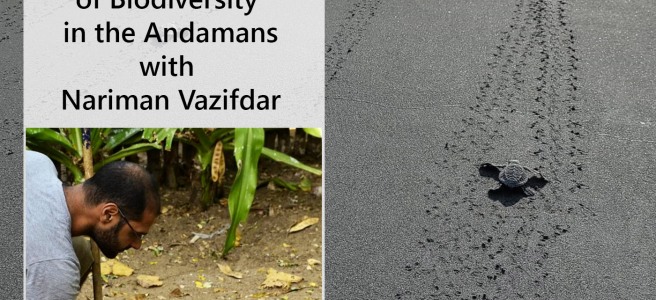
The Dynamics of Biodiversity in the Andaman Islands with Herpetologist, Researcher, Author, Nariman Vazifdar.

Heart of Conservation Episode #35 Show Notes (Edited)
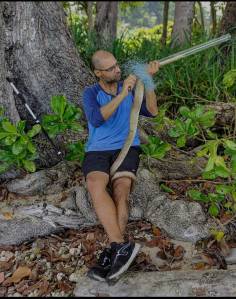
Host:Lalitha Krishnan:

00:03: Hi there, I’m Lalitha Krishnan, your host on episode #35 of Heart of Conservation. As usual, I bring you stories from the wild that keep us all connected with our natural world. I’m back after a very long spell during which I visited the Andaman and Nicobar Islands. I still can’t get over those amazing beaches, the old forest and the incredible species that I spotted there. All new to me, but endemic to the island. But the question is, for how long? I can’t think of a better person than naturalist, herpetologist on ground in the Andamans, Nariman Vazifdar, to answer that and more.

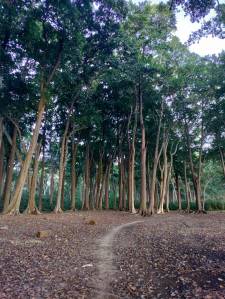
You can read his writings on the web, including on ResearchGate, and follow his Insta handle @reptilian_666 to see what he’s up to. And do look out for the transcript and links for this podcast coming soon on my blog, Earthy Matters. Welcome to Heart of Conservation, Nariman. Thank you so much for speaking to me about this. And the ecology of the islands.Ever since you guided us through that beautiful Andaman bulletwood forest by the beach, my curiosity has only grown. ] So since your first love is reptiles, could you enlighten us about the diversity of reptiles found on the island? And first, do tell us a little bit about yourself and about the diversity of endemic species on the island.

Guest: Nariman Vazifdar:

Hi, Lalitha. Thanks for having me on Heart of Conservation podcast.

01:36: Yes, basically reptiles are what, let’s not put it as reptiles, but wildlife. I was really attached to wildlife at an early age. When in school, I joined this program called the Duke of Edinburgh Award Scheme Program, which basically took us outdoors, a lot of outdoor activities, kayaking, camping, and lots of social service fun. And of course, it was just being out there, especially because I was a kid from South Bombay. There is not much greenery where I live.

02:13: As soon as I stepped out of my comfort zone, the beauty of the sea, the forest around Bombay, kind of Lonavala side, and it took over my life, basically. And I saw my first snake, I remember very clearly over there, just whilst we were camping around. And I got inquisitive about this, and it just kind of took over my life slowly and slowly.

02:37: But more interestingly, when my mom comes from a place called Baroda in Gujarat, and I remember as a four-year-old child, she had taken us to this zoo over there, and she knew some of these zoos, and they had got out some snake, I think it was a python, for the kids to touch for me and my younger cousins. And I remember all of us as children were very scared of this. But my mom, for some reason, pushed me to touch the snake, and I touched the snake, and now I think she’s repenting this decision of hers.

03:10: But I basically took over. That’s all I’ve done since 2005. I have been involved in wildlife conservation research, in different parts of India, from Chennai, Bangalore, the Chambal Valley, and a couple of tiger reserves. And now, of course, finally, I live and work in Havelock Island, in the Andaman Islands.

03:31: But what draws me to this place more is, like you said, all the animals are more, because they are predominantly reptiles and less…the mammal diversity of the Andaman Islands is very poor. So, it is predominantly reptiles and more endemic species of reptiles is what we get here.

03:51: There are over, say, 23 species of snakes, of which nine are endemic. But because it’s an island–and island ecology is very different–we have terrestrial snakes, snakes that live on the land. We have mangrove snakes. We have sea snakes. So, like that, there are many, many various species of snakes on the island.

Lalitha Krishnan:

04:14: Wow. I have not even heard of mangrove snakes. Sorry for interrupting.

Nariman Vazifdar:

Yeah. No, no, no. But like, there are… you see them in high abundance. It’s just that people are not getting out there to look for them.So we have 308 islands in the Andaman Islands, and a lot of the islands are undiscovered. We don’t know what is on those islands.

04:38: The north-easternmost island of the Andaman Islands is called Narcondam Island. It is a dormant volcano, or let’s put an inactive volcano. And recently, a snake was found on that island. It’s called the Narcondam cat snake. Not found anywhere else on any other island, or not been discovered yet. So, it’s very interesting. It’s very interesting, you know, how the islands, individual islands have individual kind of small ecosystems.

Lalitha Krishnan:

05:06: That’s so incredible. So, you know, speaking of fauna in general, it’s a well-known fact that introduced species are a threat to endemic species on islands everywhere in the world. So, I just wanted to know, were there any species introduced to Andaman and Nicobar Islands? And what could be, is or could be the consequence of this?

Nariman Vazidar:

05:32: So, yes, of course, invasive species or introduced species make a massive difference to any ecological environment. Not necessarily islands, but islands face it more drastically.

Let’s say the invasive animals that are on the island currently are also due to a lot of the animals put by, say, the British when they took over the islands and they built the penal colony. So, they were only tribes living on these islands initially, the four indigenous tribes, and the British got, say, dogs, which are now everywhere on the island, to give as a gift to the Jarawas, who were one of the tribal communities, to hunt the endemic wild boar off the islands.

06:19: The dogs have now taken over the island, sadly. Don’t get me wrong. I love dogs. I’ve adopted one of the dogs from the beach. He lives with me. But these dogs, let’s say, hunt everything, right? Including the sea turtles. When the sea turtles come up to nest, they not only eat the sea turtle eggs, but sometimes I’ve seen them sadly even killing the female sea turtles when she’s coming to lay her eggs. The baby sea turtles that hatch, the snakes, the lizards. But see, it’s not the dog’s fault, right? We sadly do not have a proper neutering project on the islands. We still have a long way to go on the islands.

06:59: It is a serious problem, right? In a small place like Havelock there possibly could be 700 dogs. That is a lot of dogs for a tiny island. Of course, ecological damage happens.

Yes, the dogs are fed by the tourists, by the locals, but still, it is still a large amount of dogs on a tiny, small little island. But more than that, let’s say the other animals that people think of, but at least these are street dogs. People think all the animals in the forest also belong there. No!

07:29: Also, the British were very fond of game hunting, shikaar, so they brought three species of deer, which are barking deer, hog, deer, spotted deer. Interestingly, they also introduced three leopards to the islands in the hopes that leopards will reproduce and will do shikaar on the islands. But interestingly, the leopards did not survive in the mangrove forest, maybe they got eaten by the tribes. We do not know

…the British were very fond of game hunting, shikaar, so they brought three species of deer, which are barking deer, hog, deer, spotted deer. Interestingly, they also introduced three leopards to the islands in the hopes that leopards will reproduce and will do shikaar on the islands. But interestingly, the leopards did not survive in the mangrove forest, maybe they got eaten by the tribes. We do not know. Out of the three species of deer bark, the spotted deer is the only deer that survived  and is flourishing throughout the islands. Then again, on the island, there is no large mammal, say, no tiger, no bear. There are no monkeys. There are no squirrels on the island. Well, because of this, the deer roam freely, literally eat the undergrowth of the islands and which has more insects, more lizards…which depend on this undergrowth that gets eaten away, nothing survives then.

-Nariman Vazifdar on Heart of Conservation podcast

07:59: Out of the three species of deer bark, the spotted deer is the only deer that survived  and is flourishing throughout the islands. Then again, on the island, there is no large mammal, say, no tiger, no bear. There are no monkeys. There are no squirrels on the island. Well, because of this, the deer roam freely, literally eat the undergrowth of the islands and which has more insects, more lizards…which depend on this undergrowth that gets eaten away, nothing survives then.

08:36: The deer, the spotted deer, one species of deer is basically or literally eating the islands alive. See, there is no food left on the islands. This happens. Smaller island get (lost in translation) completely. The deer does two interesting things: 1: they wade/wait at the shore line. Wait for the tide to come in and hope that some (lost in translation)       will come.

09:02: If that doesn’t suffice, they have learnt…… to swim in the sea. Imagine. Deer. They’re swimming in the sea and going from one island to the other. It is incredible. We’ve seen this while we go diving sometimes.

09:15:A lot of them must be drowning. As conservationists, sometimes you put a heavy heart …….. and say, “Yes, it’s okay if this specific invasive animal doesn’t survive for the better good of the environment.” A lot of people will be against what I’m saying, but I stand my ground to say yes. Sometimes for the betterment of the entire ecosystem, it is okay if these animals are maybe eradicated, send back to mainland, whatever, because once islands lose their endemic fauna, it is not coming back. Right?

09:53: We have lots of (lost in translation). We have a bullfrog. You think it’s a frog, it doesn’t do much. But it grows big. There are scientific papers of (frogs) eating chickens. (lost in translation) You know, I have (lost in translation) of a bullfrog, trying to catch and eat an endemic bronzeback of the islands.

[10:10 – 10:23] So it is only a frog which does a lot of damage.

Lalitha Krishnan:

 Sorry. You saying the frog eating the chicken sounds crazy.

Nariman Vazifdar:

My friends have documented it. There is a research paper on this. Of how invasive—you know–what damage these things do. There are many of them that we do not know, right? Like, we do not really know what cats, and rats, do to the ecosystem.

10:39: I have, my friends who have cats and the cats, when they come to my home, they’re bringing emerald geckos, skinks, lizards, you know, to the house all the time.

Lalitha Krishnan:

See, we don’t see these things.

Nariman Vazifdar:

10:50: Yes, of course.  We live here, right? Long. We don’t go home much. It’s just home now. You know?  So, it’s massive, I am seeing the difference. Forget just invasive species.

11:01: The more construction that is happening over the years has also drastically driven the endemic flora fauna down.

Lalitha Krishnan: It’s so strange. Like you think, uh, you know, a deer is harmless or a cat, okay, only kills rats. We do not think what else it can do.

Nariman Vazidar:

 A lot of countries—for that matter–Australia has a rule. They can shoot the feral cats or kill the feral cats. Right? If we start this in India (lost in translation) We are not open to this right?
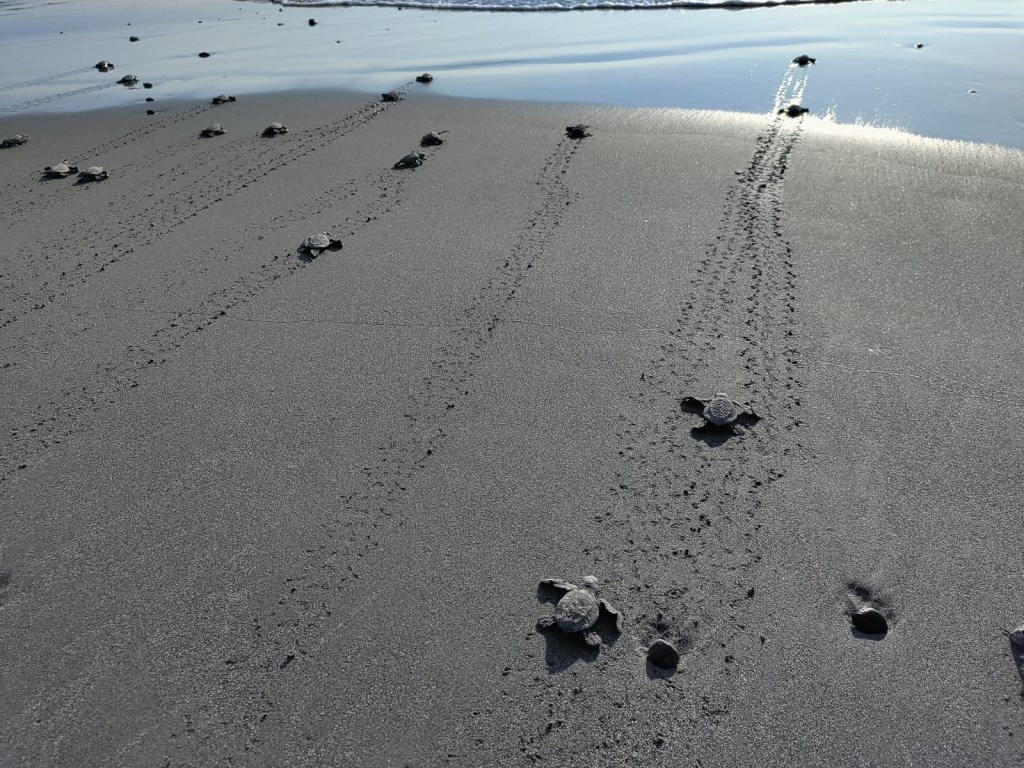
Photo by Nariman Vazifdar

11:30: We need to get rid of the cats and the dogs; have this conversation with people who are not thinking logically, you know, it is just a battle, a nonstop battle that people like me have with them. So we just bring this up before it’s never-ending. The topic never ends, right? It’s always nonstop. “No, this is that, but…”

From an ecological, scientific point of view, you cannot… everything can’t be driven by your heart. But, sadly, I agree. You know, but unfortunately for the betterment of the better of the other animals that belong to this place, sadly, a lot of these animals have to be out of here.

Lalitha Krishnan:

But thanks for opening our eyes. Maybe people who make the policies you know, are listening and somewhere as it will change somebody’s mind and they will do the right thing.

Nariman Vazifdar:

12:20: I mean, you can’t force this one on anyone. Including my friends, right? Even the ones that are nature-oriented. Even them. For them, no, this is what it is. Dogs and cats need to be here. You cannot even bring up the deer, you know, or the frogs.  If I say, “Let’s kill the frogs, you know they are invasive” you can see the blood boiling in them when I bring these topics up.

Lalitha Krishnan:

12:41:  Right. Right!  It’s a difficult one. You know, all the locals know you as a snake rescue on the islands. I quote you now, “No rescue is the best rescue”. What do you mean by that?

Nariman Vazifdar:

12:57: So also, yes, I never really did this snake rescue anywhere else that I have lived. Uh, yes. In places where I lived– in smaller places—if there is a snake in someone’s house. Yes. I’ll be more than happy to remove it for them, but I never did this ‘snake rescue’ thing anywhere. It was the same over here. There was a snake in someone’s home.

13:20: I went and helped out, but now Havelock is like a smaller town…a larger village, the entire Havelock. So literally, everyone knows everyone from one snake rescue to the second to the third. Now it has become, everyone knows this, but however, I rather not do this because this is not giving anyone a chance to understand how to live with snakes. Right?

13:46: This place always had King cobras; it always has a lot of snakes. But as we are going, as they say, tourism is a double-edged sword. As tourism is spreading people the locals are selling off their land to hotel chains. Of course, right?  And there are literally maybe over 100 accommodations now or places to stay in Havelock. Plus 40 plus dive shops, over 100 restaurants…  So many of us from the mainland are also living here which basically means more houses are constructed. People are cutting deep into the forest and with that comes … If you’re cutting into the forest there are more snakes entering people’s homes. What tourists are seeing are just the two main roads but there are now a lot of side lanes. I get baffled about where these side lanes are going. I thought I knew Havelock well on all the roads but no.  Every time there is a snake and I go to these places, I am shocked that these houses are deep, deep into the forest. They have cut the forest down. So yes, there is no option for the snakes but to seek refuge in those houses. So now this is what’s happening.

14:58: I basically will not catch a snake or remove a snake unless the snake is in the person’s house. When I say “in the person’s house” I mean literally in their home. If it is in the garden in a bageecha, I will not catch it because that is where the snake is supposed to be. I understand it is a king cobra; it is a highly venomous snake– the world’s longest venomous snake– but there must be some learning curve.  Otherwise, every snake they see it’s like, “Come and catch it.”  

I basically will not catch a snake or remove a snake unless the snake is in the person’s house. When I say “in the person’s house” I mean literally in their home. If it is in the garden in a bageecha, I will not catch it because that is where the snake is supposed to be. I understand it is a king cobra; it is a highly venomous snake– the world’s longest venomous snake– but there must be some learning curve.  Otherwise, every snake they see it’s like, “Come and catch it.”  -Nariman Vazifdar on Heart of Conservation podcast
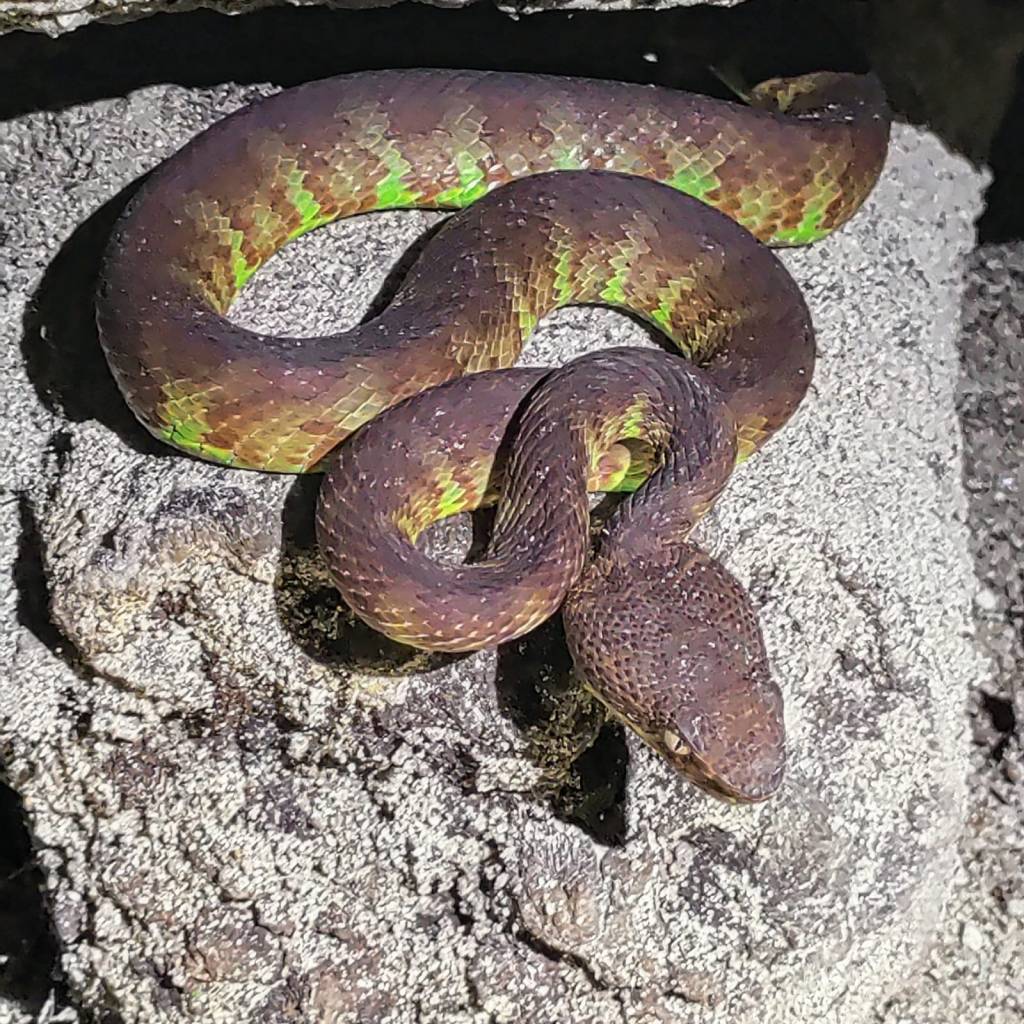
Andaman pit viper
Photo by Narimam Vazifdar

15:26: But I don’t go unless it is in their home and there’s a situation where I have to, I will remove it otherwise I tell them to wait. I will look, keep calm, take it easy and if the snake was in their home, yes, I will go. But otherwise, I don’t.  

15:42: So, what I mean by this is there is no need to catch every snake.  What are we doing with this (snake) right?  Again, snake catching is not a big deal. It is basic if you understand snakes.  I don’t know why people make this big hoo-ha and show about it. You can catch a snake. Then what are we doing with this?  We are relocating them somewhere else. This is not conservation. This is not research. We are literally removing a snake from A and just dumping it at B. And we think that yes, we’ve done a great job; we’ve saved a life but we don’t know if that snake survives well yet where we are literally releasing it.

Then what are we doing with this?  We are relocating them somewhere else. This is not conservation. This is not research. We are literally removing a snake from A and just dumping it at B. And we think that yes, we’ve done a great job; we’ve saved a life but we don’t know if that snake survives well yet where we are literally releasing it.

-Nariman Vazifdar on Heart of Conservation podcast

16:20:  There have been many debates, many scientific papers; research on this; on this trans locating of snakes. They are saying to try to release the snake as close to the rescue site. Now think about it.  Where I live in Havelock; there are king cobras.  Like I said, my problem is not the rescue, it is the release. Sometimes I feel very bad I’m releasing the snake a kilometre and a half away but there is no option, right? Where do I release these snakes with so much construction?

16:50: So that’s why I feel like, if not required, I will not do anything. A lot of times I get calls: “Snake is in the home.”  I say, “Okay give it 10 minutes; let’s see what happens.” And it goes away by itself; there is no need to run, jump, or catch the snake; put pictures or like, free-handle snakes. It is not necessary and this is becoming a massive trend on Instagram now where a lot of the guys, especially in Bombay, Pune, all India, are free-handling. Which basically means picking up venomous snakes with their hands; not using equipment, getting bit on their faces, and kissing cobras. It is not required. There is no need for this bravado, for showboating… Yesterday or the day before, two boys got bitten doing these stunts in Bombay and what happens if they die or lose their fingers. What is the point of this? There is no point in this. Do it if you really must do it. Yes, catch a snake but then go immediately and release it.

17:48: A lot of guys keep the snakes unethically; they keep them in plastic bottles–they don’t release themfor days and they have one thousand excuses for this.

17:58: To catch a snake, it takes two seconds. What I do when I catch a snake is release it immediately and then I go home. I don’t need to take the snake home. I don’t see the value of taking that snake home. Yeah, anyway these are my thoughts and you know and again everyone has different thoughts about this and a lot of people feel that catching a snake is conservation research but it is absolutely zero. I think we are actually hindering it and not really giving it you know, a place to go to actually.

Lalitha Krishnan:

18:30: That’s a lot of new information. It’s interesting but it’s also scary and enlightening. First of all, they have to learn how to catch a snake. I hope they just don’t follow YouTube videos…

Nariman Vazifdar:

18:45: Yeah. that is all easy but you see all these YouTubers picking up cobras, the vipers…  Why would they do this?  Right? You are literally playing Russian roulette. Nothing happens 100 times. Then, the 101st time you could die. You could lose fingers… you know? Why would you want this Cobra?  

19:05 You know, snakes live in sometimes the filthiest of places. Gutters, septic tanks…  and you’re kissing this Krait! No, not on.

Lalitha Krishnan:

19:14: Sad.  So how often do you get called to get snakes out of the house?

Nariman Vazifar.

19:19: Really, luckily, it’s not like a full-time thing.  I don’t want to do that full-time. But mostly, king cobra breeding season is now mid-February to April-May maybe.  So this time these two-three months are more.  Of course, the random one here and there but uh sometimes maybe twice in the day sometimes not a few days… It’s very erratic.

19:49: Interestingly, the snakes that I have rescued from the homes over here are either king cobras or rat snakes. I’ve never rescued a pit viper from someone’s home or kraits. None of that. It’s only been either kings or rat snakes, no other snake interestingly.

Lalitha Krishnan:  

20:06: We have rat snakes here also. In fact, one was on my door trying to get a Whistling thrush’s eggs. There’s no way to prevent these situations in places like Havelock, right? Snakes will go into your house… I don’t know.

Niriman Vazifdar:

 20:21: It’s basic. Doesn’t matter if you are in Havelock or anywhere in the world.  You keep your surroundings clean, keep your litter, don’t keep clutter around, and don’t chuck your organic waste everywhere.  They’re the basic, same rules you follow anywhere. Okay, yes of course, if you’re living in the jungle there is more likelihood that it just comes. But less likely if you keep your place and your area litter-free- free basically.

Lalitha Krishnan:

 20:51: I never thought of a snake attacking your garbage.

Nariman Vazifdar:

20:51: No. It is going for the mice, right? What is going in the garbage?  The mice, the flies then the frogs, right? Then the geckos go for the flies. So prey and predators come wherever there is food right?

21:08: If there is food for say, you chuck some mango outside, right? A rat will come to eat it. Following the rat, maybe a snake will come. Lost in translation….seeing the gecko and a snake another lizard may come. Seeing that a snake may come right? So it’s a circle and if it is near your home why wouldn’t that animal come?

And there are also some wood piles or thin sheets lying around. It’s a perfect habitat for reptiles to live in.  Where am I finding these snakes? Under thin sheets, in wood piles you know because sadly the locals are dumping all these things. So the day before, there was a rat snake under a pile of wood.  I literally removed it from one pile of wood and  I put it in the next pile of wood. Haha, What do I do?  That’s all. Because there is so much clutter around there is no option right it’s the same principle anywhere more clutter around more hiding spots, more prey base, more reptiles.

Lalitha Krishnan:

22:02 Nariman, thanks for that.  Let’s move on.  So have you ever been bitten by a snake?

Nariman Vazifdar:

22:18:  Yeah, I’ve never been bitten by a venomous snake because I always, of course, it’s been lucky, but safety is my priority for myself and the snakes. If I feel like this is… also all snakes don’t need to be caught, like I said. I’m only doing this when it is in a place where there’s a snake in someone’s home. I will not just catch a snake if I don’t have equipment. I will take my hooks, my snake pads, tubes, whatever I need,  I will wear boots. Whenever I need to go for a snake rescue, I ensure I have all my things with me. Even if the locals tell me it’s a non-venomous snake, I will judge it only when I see the snake. So many times, it’s a rat snake and I’ve gone with all my gear and then I pick it up. But yes, because I can identify venomous and non-venomous species, non-venomous snakes, yes, I have been bitten a few times. But there’s not much to learn from getting bitten. That’s why I have to figure out what because, I know for a fact, that it is a non-venomous snake. On getting bitten: let’s say, everyone asks how much does it hurt?  Of course, it’s basic sense. Smaller snakes hurt less; larger snakes hurt more. Like say, if you get bitten by a non-venomous wolf snake, it hurts a little bit.

23:36: Maybe not even, not even one drop of blood will come out. But if you get bitten by, say, a python, it could even tear your skin. You may even need stitches if it bites you back that badly. You know, you could even cut an artery, you know? So yes, it is… even smaller snakes could hurt you. If it bites you and cuts one of your arteries in your hands. Once it’s happened that more than once–and all of us who do this have experienced it– snakes sometimes when they bite us, their teeth break off in our hands.

24:12: That’s why we tell people, if the snake is biting you, don’t pull the snake off. Because A, the teeth break, the teeth will regrow on the snake. But it is painful for the snake.] Understand, even the snake has emotions, right? Just because it’s not like a mammal or a bird, it can’t speak out. It doesn’t mean it doesn’t get hurt. And, more than that, sometimes these teeth break off and they go into our skin, into our epidermis…  And then the small wound heals, but this tooth is left in our hands or feet or wherever in our body. And of course, it’s a foreign body. Imagine a foreign particle in your body now, right? So, your body slowly, slowly starts pushing it out. And, like once the tooth got stuck in my finger hand somewhere, it was when it was coming out quite naturally, it was hitting one of my veins. So, it’s really painful. You know, and then you literally have to kind of dig into it and pull it out. You know? So, sadly, all of this is sad, it happens.

25:13: But like, again, going back to your question, I’ve not been bitten by a venomous snake ever. Again, safety, (lost in translation) It does happen. I have friends who are super careful, more careful than I am.  It does happen that they have gotten bit. It’s also, you get over-complacent, you know, over-confident. You really need to be in the potential, now you know what you’re doing. You’re like, “Ah, I’ll just go and take this cobra out ……… (lost in translation). And that is bad. And that’s where this happens sadly. Right. Yeah. And we are seeing this more and more often lately.

25:47: So like when we go out looking for snakes, this is what we do. It’s called herping. We go out looking for snakes. We do holidays where we just go out to different places– maybe even abroad, or even just in India, trying to find reptiles of that age. Great.

26:04: I mean, I didn’t know snakes could grow their teeth back, but I don’t want to test that. You know, you wrote a book called Turtles, Tortoises and Terrapins of India with Sushil Chikhane. So that must have been a really interesting project. Would you like to tell us some more? And what’s the difference between the three to begin with?

Nariman Vazifdar:

26:29: So turtles.. everyone thinks when they see a shelled animal, it’s a turtle. That is the first thing that people come for. Of course, they like the book. There are three… Let’s put it this way.] Tortoises are land animals. Tortoises: are very basic distinguishing keys. Tortoises have feet because they’re land animals. Tortoises’ feet are like elephant feet, exactly like an elephant’s feet, of course, smaller. Tortoises can also swim in the water, but they can’t swim in the sea or they can’t swim in a river. A little bit, yes. Now we’ve realized that tortoises also are getting bigger. They’re getting into water bodies and floating to certain areas. But in a general aspect, tortoises are land animals. They will drown in extended periods. They cannot be swimming in the sea or in, sorry, in a pond or a lake. They will, as soon as you put them there, they will struggle a bit and they will drown.

27:28: So, elephant feet are tortoises. Turtles are two now. Turtles are freshwater turtles that live in streams, rivers, ponds, and wells. And there are marine sea turtles that live in the sea, of course. Again, these two are different as well. I cannot put a freshwater turtle in the sea. It will die. Likewise, a marine turtle cannot be put into freshwater. It will also be needed. it can survive. Yes, when you do a treatment and all, yes, you can manage to clean it out to do this. But generally, it needs to live in the sea.

Lalitha Krishnan:

Okay. Just like most river fish and sea fish.

Nariman Vazifdar:

28:10: Yeah. Exactly. River fish and marine fish. Exactly. But they are very simple distinguishing features between a freshwater turtle and a marine turtle. Freshwater turtles, in between their toes, have like a duck’s webbed feet. So they have duck-webbed feet because they need to swim in the water, right? So, their toes, in between there’s a webbing and that makes it a turtle.

28:38: A freshwater turtle, a marine turtle has completely different legs, let’s call them legs, structure. They don’t have those toes. They have fins,… flippers. Right? So as you see, it’s a very, very different structure compared to a freshwater turtle.

22:57: The third one, which everyone gets confused about, which is a terrapin, is basically a river turtle that can also survive in brackish water. Brackish water means where the mangrove area, let’s put it that way, where fresh and saltwater meet.  So some turtle species can survive in that water as well. They’re not going in the sea, but they can survive in fresh water and this brackish mangrove area.

Lalitha Krishnan:

29:24: So even in the Sundarbans and all, you’ll find them?

Nariman Vazifdar:

29:28:  Yes. Predominantly, that is correct. In the Sundarbans, there is a specific species called a Batagur baska that lives in that area. Okay

Lalitha Krishnan:

29:36: Yes. So basically, those with feet on land and the rest more or less in mostly water.

Nariman Vazifdar: Mostly water. Yes.

Lalitha Krishnan:

29:45: Thanks. Do you want to tell me more about your project, and your book?

Nariman Vazifdar:

29:52: So, the book was with me and Sushil because I did a lot of… I used to work with Turtle Survival Alliance. I worked as a freshwater turtle biologist and I understood turtles and there was a lack… Always, everyone in the reptile world is inclined towards, say, snakes, crocodiles, and lizards. Very few people are inclined towards turtles. It was the same with me as well. We found turtles boring, snow sluggish, not dangerous, just you know, like OK, whatever. But once I started doing this work I realised that wow turtles are really interesting. They have character. They have personality. They are stunning. Some of the turtles like the one I used to study were called Red-crowned roof turtles or (Batagur kachuga). It is absolutely a stunning animal. The males have yellows, reds, and blues on their faces. It looks like a lot of people have asked me when I showed them a photo of this male turtle in breeding colours. If I’ve painted this turtle.
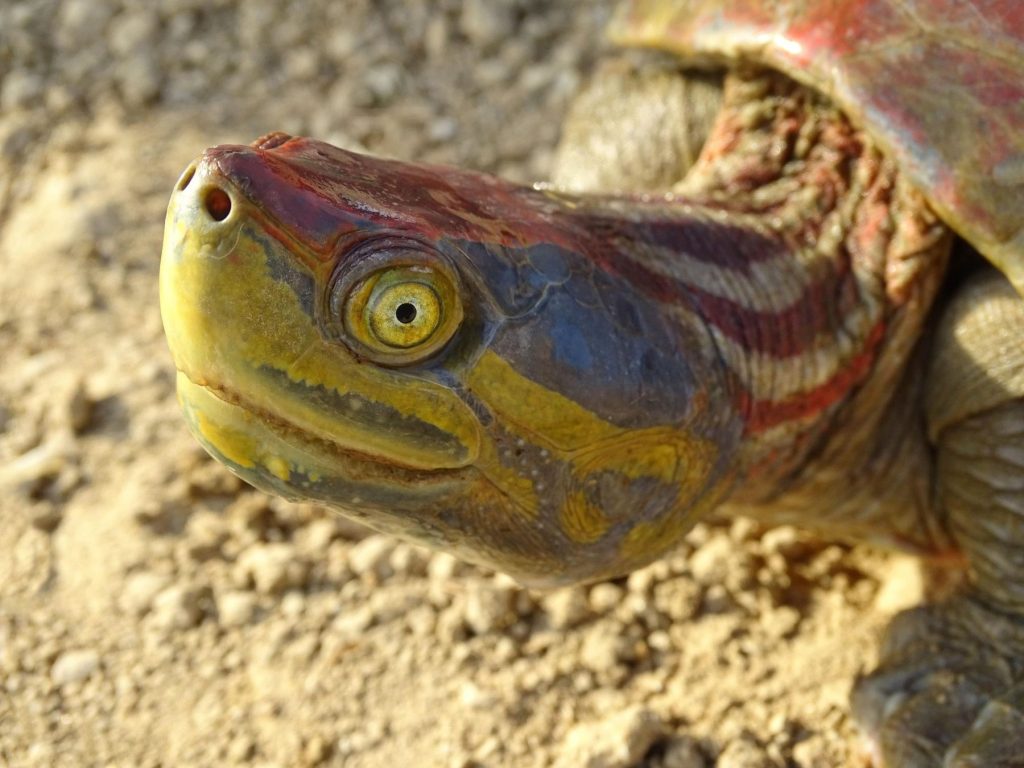
 via www.thethirdpole.net
Photo by Nariman Vazifdar
Red-crowned roofed turtle

30:54 It is that vibrant, you know, and a very cool animal. The ecology of turtles, especially river turtles is something else and some of them are giants, like serious giants and just tough to catch. Because, we used to put transmitters, you know, a lot of stuff we had permits for. Sometimes they are tougher to catch than snakes, you know, more tough, you know. So, like we always thought turtles or sluggish. Everyone thinks turtles are sluggish. But when some of those turtles want to go, they are going and you cannot stop them. Yeah, it is mad. It is a very, very interesting area to live in and to understand how this works. So, there was no book like a field guide. You know there’s always field guides for say, birds to snakes. But again, like I said because turtles are this topic of “No, it’s OK, not many people interested,” we thought it is the need of the hour to have a turtle book out there you know. And there are books, there are flip cards but not a lot of field guides which cover even marine species. So yes, it took some time. We did this during COVID, and it took about a year and a half to two years to basically complete this book.

Lalitha Krishnan:

32:11: Fantastic

Nariman Vazifdar:

32:12: It was a fun learning experience as well of course.

Lalitha Krishnan:

32:13 Well, Narman, we are down to question 9. And so, I was wondering if you could share a little bit about the Bulletwood Tree that you know showed us in that forest by the beach. It was just so beautiful. Would you like to give us some information about that? I’m so fascinated.

Nariman Vazifdar:

32:40: Oh certainly. So, the bullet wood tree is a predominant tree of the Andamans. It is called Sea-mahua. It is not the mahua of Madhya Pradesh where you get liquor from the flowers. This is completely different. Even the scientific name is different. This is more of a littoral forest basically which means it grows by the seashore like we saw right? You see the giant trees in the sand. These trees could be 5/600 800 years old, extremely hardwood trees. So when we walk through the forest of Havelock or any of the Andaman Islands, you are noticing a lack of termite mounds. There are termite mounds of course, but a lack of termite mounds considering the fact that this is a rainforest. It’s not a rainforest like say the Western guards of India or South America. But nevertheless, it’s still a rainforest and these trees are very tall like we saw 130- 150 feet tall trees.

33:44 Few termite mounds because the termites can’t fully make holes in these trees. It is very interesting. Forget the living trees; we get cyclonic weather, trees rot, trees fall down. The termites we have noticed… Yes of course they try getting onto the trees. They do get onto the trees but they give up and they go away. I feel that this wood is too hard for the termites to make holes. We get another insect called the wood borer. Yes, that sometimes makes holes, but it is also found in Madhya Pradesh, but not like the damage it does to the sal trees of Madhya Pradesh where it kills the trees. It doesn’t manage it. Maybe it eats into the other trees, which is OK; the coconuts, the supari trees, you know? But I think the hardwood trees of the Andamans are something else.

34:37:  Here, there is also a wood called superior wood. You know like we were taught of hard softwood hardwood. There is superior wood you know which is extremely hard where you can’t put a nail into it at times easily you know. So even the sea-mahua or the bullet wood which is called, initially they would burn the base and cut it with an axe. Now they use a chainsaw. The chain saw takes a couple of hours to cut a tree you know? It is incredible. But also, I read somewhere that when the British … the tribes… of course the history of the Andaman, sadly is not nice. It is very you know…  a lot of unfortunate events that led to the British being here, or them treating the tribes very ruthlessly. Japan was here. The same kind of history again repeated itself. But interestingly the tribes had laid a trap for the British and someone told the British about this trap. If the tribes imagine if the tribals had won this battle against the British we may not have been here right now, right?

35:44: History would have been different, yeah. But apparently, they made shields out of this wood. I think I read some of the old books somewhere. They made shields out of the tree and they thought that it would stop bullets. Of course, it can’t stop bullets. It can’t stop cannonballs. So, the tribe literally got decimated in this action. But interestingly, it could also be called the Andaman Bullet Wood because they thought that it could stop bullets.

Lalitha Krishnan:

36:11: Having seen the tree I am in awe of it.

Nariman Vazifdar: 

36:15: Yeah.

Lalitha Krishnan:

36:18: Nariman my last question to you and I ask this of all, my guests is, do you mind sharing a word or a concept or you know, that will help us that’ll add to our understanding of the ecology of the Andaman Islands.

Nariman Vazifdar: 

36:34: Yeah, so like it’s the same thing. Like not just the just let’s say that’s not the Andaman Islands. The change happens in islands, not just with the flora, but with the fauna happening at a faster rate than in mainland any larger space, right? So, let’s just put it like I said, the problem with let’s say Havelock is it is a touristy island. The only source of income that the Andaman Islands as a whole has is tourism. But sadly, we don’t have sustainable tourism on the islands. There are rules, there are regulations, but again, it’s India…we don’t really follow any of these things. A lot of resorts are now claiming to be eco resorts and green resorts, but it is not possible. It is not humanly possible to have an eco-resort without, you know, damaging the environment. So, this is just like a little thing they put up, put a nice website out and say we are an eco resort and we are saving the environment. But actually, none of that exists,

37:48

Not just here but anywhere, even just say Tiger resorts right? Where everyone is claiming to be an eco-resort, it is not possible. We generate waste, we consume electricity. You know, it is not possible to have an eco-resort basically around us unless you are using solar panels, you are doing water harvesting, you know you’re putting groundwater back, you know you are not creating any waste, which is humanly not possible if you are running a property. Basically, no matter what, all the resorts, no, no resort, all the resorts will tell you all the big resorts will tell you that “we are doing eco management and waste management.” It is all just rubbish, sadly.

Lalitha Krishnan:

38:28: I can imagine.

Nariman Vazidar: Yes, of course, islands get… Now sadly, where was this? Where do you think this waste is going? Right? Island ecology gets damaged very fast. We are not seeing this race. I myself am producing waste, right?  We are cooking. I have a dog. He needs milk. It needs XYZ Right? Even myself, right? We all have to buy stuff to survive, right? So, on a small island with a population say 5000 living over here, now so many of us characters from the mainland live here permanently. Plus there are some 3-4000 tourists a day on this island.  So, if 3-4000 people plus 15,000 or 10,000 people need to eat every day, imagine the waste of 10 -15,000 people a day on 135 or 113 square kilometre island? So now we have a dumping yard, a landfill on an island, imagine? Where they’re just, we’re just burning the waste. It’s like when facilities are poor, infrastructure is poor, right? I thought that the hotels would come up, you know, take their waste back, do something. But no, sadly, no one does these things, including the big chains, Forget the small boutique resorts and the big chains do not really give a *&^. Like, the small ones are really not bothered about anything.

39:51: So this is what happens, right? Like, as a tourist, you are not seeing the impact that tourism has. Don’t get me wrong, everyone’s income depends on tourism. But there is a way of doing this where – see like in a tiger reserve right? They have only XYZ numbers.. like so many numbers of jeeps can enter. The tiger is yeah, one time had a system like that somewhere, you know where you only have so many people on an island per day. Let them stay longer– absolutely fine. But don’t have so many ferries coming in and out like groundwater. Why? What is the natural resource of an island? The freshwater we have, the fresh water is already getting depleted, right? We are seeing tankers come to Havelock already right? This is so– where I live– is a little bit low lying. The mangroves are 20 minutes away from me,

40:44: Yesterday when I came back to take a shower, I could smell the mangroves. You know, like in the kitchen, you know, it’s like that ammonia water, that nitrogen fixation that the mangroves do. You can smell it. And it’s not summer, summer. Summer just started. But now the islands are not getting a break? After COVID, all the hotels are doing this, not giving the island a break. Greed sadly has become a very big part of the islands where everyone is opening… Hotels are opening as we speak… so groundwater gets tapped, and water is getting reduced. It will become a problem later on in life, which a lot of these people are not seeing right now. Havelock is blessed. We have waterfalls, we have streams, but right now it’s all dry. There is not too much water because yeah, the water is drying out, absolutely. The waterfall which I went to last night is completely dried out. There’s no water.

Lalitha Krishnan:

41:45: That’s depressing. We don’t see all this. Thanks for opening our eyes. I have one more last question. You know, you also spoke up about diesel buses when we were there.

Nariman Vazifdar:

42:00: Yeah, so, the main grid of the island is a diesel generator. But now we have electric buses over here. So the diesel generator–they burn diesel to convert it into electricity to run the electric bus. It is the most absurd thing. This is sustainability apparently. This is what and this is just like done and like there is –no everyone here just thinking this stupid thing to do, right? So, we have local buses, you know? There are local buses, and local transportation. Why burn diesel to convert it to electricity to put it in electric buses and say that we are doing “green” or whatever the rubbish that is called? You know?

42:47: It’s like this is the thing that we are doing just for the namesake of doing it. We are lost in translation. So now, of course, there should be a bus, a charging station, a bus. You know, all these things have to be put up on the island now.

Lalitha Krishnan:

43:00: Food for thought. Lots of food for thought. Thank you so much.

Nariman Vazifdar:

43:06: My pleasure.

#islandconservation #snakerescue_release #islandecology #islandbiodiversity #kingcobra #turtles #terrapins #tortoises #author #naturalist #researcher #ecologicaldamage #reptiles #narimanvazifdar #invasivespecies #island #animalbehaviour #conservation #endemicfauna #endemicflora #bronzeback #wolfsnake #researchpapers #andamans #tribes #british #japanese #rainforest #development #littorialforest #groundwater #heartofconservation #naturepodcast #storiesfromthewild #earthymattersblog

Birdsong by hillside resident, the collared owlet.
Photos Credit/Courtesy: Nariman Vazifdar. Podcast cover/label design by Lalitha Krishnan

Disclaimer: Views, thoughts, and opinions
expressed in the podcast and show notes belong solely to the
guest/guests featured in the episode, and not necessarily to the host of
this podcast/blog or the guest’s employer, organization, committee or
other group or individual
How Tea is Becoming a Powerful Force for Elephant Conservation in India.

Heart of Conservation podcast Episode #16 Show Notes (Edited)

Lalitha Krishnan: Hi guys. Thanks for listening in to Heart of Conservation Podcast (ep#16).  I’m your host Lalitha Krishnan bringing you stories that keep you connected with our natural world.

How about a cup of chai? Join the club. Apparently, 25,000 cups of tea are drunk around the world every second.  Tea is the second most-consumed drink in the world being second, only to water. I wonder if the number has gone up with self-isolation? Fact is the Coronavirus has been a rude awakening forcing us to rethink how we live and consciously try and change how and what we consume. Say hello to Elephant Friendly tea. Yes, you heard right.

Today I ‘m speaking to Lisa Mills, program director at the Wildlife Conservation Enterprise Program at the University of Montana – Broader Impact Group.  The University of Montana in partnership with the Wildlife Friendly Enterprise Network (WFEN), has released a science-based guide or standards for the certification of tea producers under the Certified Elephant Friendly™ Tea label. Lisa has been working to save the globally endangered Asian elephant for the past 10 years and is now facilitating the ‘Elephant Friendly Tea Certificate Program’ in northeast India.

https://soundcloud.com/heart_of_conservation/lisa-mills-how-every-single-cup-of-elephant-friendly-tea-counts-ep16

Lalitha Krishnan: Lisa, welcome, and thank you so much for speaking to us on Heart of Conservation Podcast.


Lisa Mills: Thank you this is exciting.


Lalitha Krishnan: For me as well Lisa. Thank you. So, when and how did you start working with the Asian elephant?


Lisa Mills: Well it’s a bit of a long story but the brief version is that I am married to a wildlife biology professor and I also was working with the University of Montana when he got a sabbatical to go work in Asia and I needed to leave my position at the University to go spend six months in the country of Bhutan where he was training wildlife biologists. I’m a wildlife educator so I was looking for something to do. Our children were in school, in a village school in Bhutan and they were ages 8 and 10. I needed something to do. So I offered my services to the country of Bhutan. They said why don’t you do an education program on elephants. I said well I don’t know much about elephants but I’m certainly willing to pull together information with some research and see what we can do with lesson plans for teachers about elephants so that they can teach science-based information to children and think about human-elephant conflict, and what can be done and what’s helpful to people living in elephant zones. Well, this took a turn in that I realized that elephants are transboundary between India and Bhutan and the more I looked into this the more I saw that there was an opportunity for something more than lesson plans to give to teachers. There was a lot of interest in doing something transboundary with both countries involved in having the villages that lie in high human-elephant conflict zones coming together for a purpose to improve things for both people and elephants. I began that and then we got a couple of different grants that help start some… we did citizens science. So we actually had a group of volunteers from across six village sectors across the India side collecting information about elephants, what was happening and we had made the education program very real and alive in that they were able to share things that were really happening on a daily basis. And, we started mapping that. We got students here in the United States -college students involved in the product as well- taking information and mapping what was happening. So sort of what came of it was the very beginnings. It laid the groundwork for my current work but I wanted you to know it just started as something we would develop for teachers to use.


Lalitha Krishnan: But that sounds so interesting. Lisa, I have a very basic question. Could you explain the connection between elephants and tea? I don’t see everybody seeing that connection automatically.

Lisa Mills: So, back in the 1800s when the British established tea gardens in India there wasn’t a lot of thought about elephants and their movements of course and there wasn’t a lot of scientific work back then in this area but what happened was those tea plantations were established using …you know…the tea plants are not eaten by elephants but it was a plant that was derived from a native plant… there were different types some from China some from the far North East which is today the Northeast India region. These plants became useful commercially and the British established these tea gardens. They just plopped them right into the middle of where elephants have been moving forever and so what happened there is these tea garden stayed and they’re still there to this day and these elephants will move when they can as long as there are corridors and their movement areas are still open they use these areas. They don’t eat the tea plant but they use these as stopping places. They are quieter sometimes than the outside areas. Sometimes they’ll even birth their young inside these tea plantations. So you know, for elephants there is often no way to avoid tea plantations and just walk around them because they are sometimes quite large and they are in the middle of an area that they need to get from one forest fragment to another. Of course, as we lose more habitat overtime elephants have to really figure out how do they get what they need to get their needs met. Tea plantations play an important role certainly in some areas as far as, you know, what happens in those tea plantations really matters for elephants.


Lalitha Krishnan: Right. I knew some tea estates are part of elephant corridors and it’s news to me that the elephants sometimes even birth there. So basically, as elephant habitat is shrinking I suppose the number of elephants is also shrinking in all of Asia. Right?

Lisa Mills: All of Asia…India of course still has the most significant numbers of Asian elephant so when you are talking.. by some figures there is only 40,000 left in the world…of.Asian elephants and this species are quite different from the African elephant it’s cousin, right?
And India… the current estimates—we could check the numbers—the numbers are ever-changing depending on how the counts are done…they’re not perfect numbers because of course, these elephants are not easy e to tell the difference between individuals and they’re difficult to count in within a couple of days. So anyway, these counts are done in a way that gives us a pretty good estimate. So we are looking at under 40,000 elephants in all of Asia and in India, somewhere closer to, it looks like 27,000 or so. But we can check the latest numbers. And there is a percentage that are captive elephants in India as well. It is historical that elephants are kept in captivity but they also might play a role in conservation…even captive elephants at some point.


Lalitha Krishnan: Lisa what are the main reasons for elephant mortality in Assam?

Lisa Mills: Well, it’s beyond just Assam but where we did the original collecting of information with this idea in mind that something is causing extremely high mortality rate of elephants and we are trying to figure out what that is; it’s not perhaps a simple answer. But what we found is that back when we started this work in 2012-13, there was a lot of poisoning of elephants, and it’s kind of hard to tell what was the source of the poisoning was. We also found a lot of electrocutions and ditch deaths. So, there were these deep narrow ditches in tea plantations that carry the water out of the area during the monsoon season. They’re also difficult for young elephants to cross over without falling in. Sometimes…many times, the outcome is fine. The baby elephants move with the herd and can traverse these, but the numbers are also pretty surprising how many don’t make it. They get caught in there, and as the mother and other elephants try to dig them out, they often get covered in mud. We’ve seen a lot of ditch deaths but the number today the No 1 mortality cause over the last year has been electrocutions. So this is low hanging livewires. Also, people illegally tapping those live electric lines and putting, say, a wire around their crop field as preventing elephants from raiding a crop but the problem is, you know, it’s extremely dangerous for both elephants and humans, and other animals as well. So we’re finding a really high number of elephants are getting electrocuted. And this is entirely preventable.


Lalitha Krishnan: I’m a little surprised. I thought you were going to say elephant being hit by trains is the main cause of elephant deaths.

Lisa Mills: Yeah, those numbers are on the rise, for sure. I’d like to look at what those numbers are coming to that. Electrocutions, because they happen here and there all over the place, you know, and the numbers are adding up right? And I think people don’t always have the tools to think about an alternative for protecting their crops. you know there is such a thing as safe electrical fencing if you must fence. If you are just desperate and you must fence you can use electrical fencing in a way that is safe. And we do it with livestock all the time around the world. But training and having the proper supplies to do this takes up a lot of effort and you know, it needs to be a concentrated effort. And the people who are using these methods that are dangerous aren’t always in a position to go to a store and buy proper supplies or access training. Not that we want to encourage everything getting fenced off anyway but we understand it’s not easy to live in elephant movement zones and grow what you need to grow to survive.


Lalitha Krishnan: So, in situations like this how would a planter kind of resolve these conflicts?


Lisa Mills: Human elephant conflict is a very broad category. OK. For example, we have found over time if we bring science to this we see that elephant behaviour is often a reaction to what’s happening around it. So, when elephants get highly stressed, they have stress hormones go up and you can test for this even in the feces. You can test and see that their hormone level…certain hormones go up. These stress hormones also you know, relate to behaviour. So when an elephant is feeling highly stressed, like when they being chased, and harassed and constantly moved… nobody wants them. They’re being pushed, yelled at, things are being thrown at them… rocks are being thrown up them…When this is happening especially you watch, there is usually a male protecting the herd and this male can get quite aggressive towards people. So, a conflict might be an example that I saw in November and I see every year. I go to India every year to observe what’s happening in different places—what you’ll see is especially around the harvest time you know, around November, early December even late October, these elephants are trying to get a free meal along their pathway. A lot of the forest is gone and they’re just looking for that rice field that is coming… they can smell it from miles away and there just like, “We’re just got to get a meal”. In the dark of night, they might go out and try and raid a crop field. Well, of course, people have poured an entire year of work into this crop and it’s what the family needs to survive so there’s going to be conflicts from that. But also as elephants move through tea estates and tea farms, between these, between the farms where they can raid crops and between the forest where they can get native vegetation to forage on, and get to the water that they need and so on, they are going to keep encountering people. Like “We don’t want you near our village, near our crops.” So, there are people chasing them in one direction and then people chasing them in another direction and the stress levels get high and the aggression. Elephants can take a person and drop him and kill him just like just like that. I think one another thing we are seeing is those tea plantations where they have a plan and they manage it tightly, where people can’t come into the tea estate and harass elephants, where it is kept calm—there are some good examples of this out there—elephants can relax a bit there is less danger. Now, there are some best practices for guarding your crops. There are some ways to do things. It’s not always 100% safe but you don’t want elephants to get habituated to eating rice. You want them to go back to the forest. You want them to eat native vegetation but when they get habituated, they do regular crop-raiding. So, there are, sort of, some elephants that are more wild and there are some that are absolutely getting away with moving around during the harvest season close to the harvest season and raiding crops. And how to manage this? The forest department overseas elephants. But they, don’t of course, on their own have enough people to control crowds of these sizes or to stop all of this from happening. And they really don’t come into the tea estates themselves and handle it. So, what happens within the boundaries of the tea estate is up to the management. We see real differences in what happens. We also see where its kept calm there tend to be fewer conflicts that lead to you know, people getting hurt and killed, and elephants of course also can get killed from conflicts. I hope that helps.


Lalitha Krishnan: Yes, you painted a clearer picture for us. I read somewhere that sometimes elephants die because of chemical poisoning. How do you convince tea planter to go organic? It can’t be easy.


Lisa Mills: OK, first of all with the Elephant Friendly Certification Program that we had to establish what were the things causing problems with elephants. And this took a pilot …this took years of work and information. Early on we started including tea growers and even large companies were involved were saying. “What would it take to reduce all these hazards? What would it take to eliminate all these hazards?”. Elephants don’t appear to get poisoned by just walking through a conventional tea estate because that has been sprayed. That’s not at all what we are finding. What we are finding is improperly stored chemicals, curious elephants especially young elephants might get into some chemicals because they have salts in them and they might take them into the bodies and die a few hours later in another location. So, we are nesting on a campaign to go 100% organic but we find that organic growers will tend to… they’ve already you know, completely eliminated one of the potential hazards for elephants which are chemicals contributing to the potential for chemical poisoning of elephants. So, they have one major step already taken care of for it being elephant-friendly. Now a conventional tea grower might say, “Well if we could get an economic opportunity that would come from you know, doing what needs to be done to improve things then we would do it”. And they need to be able to offset those costs of changing what has been an industry that’s been running for long before we thought about this elephant-friendly certification program. By the way that is a partnership between the Wildlife Friendly Enterprise Network. They are the certifying body and the University of Montana basically initiated this project and brought the science to this. But the certifying body is now is a group that is very, very used to doing certifications around the world that benefit wildlife. They understand fully that compliance takes effort time and often money to change things that have been not friendly towards wildlife in some way. The industry can change. It’s just often you have to find how you’re going to pay for it. That’s what tea growers tell us. If the market was developed for Elephant friendly products then it will be easier if we could see a price premium come from the sale of certified products it would be much easier for us to implement this. Because they are dealing with a number of different certification programs and pressures from industry. But we are seeing more and more tea growers showing interest and more and more are coming on board and some are going through certification at this time.


Lalitha Krishnan: So, did you manage to get a good mix of the smaller and bigger tea estates on board?

Lisa Mills: Yeah, we started with really…the pilot involved two small farms one small…l I should say smallish… for the organised sector tea gardens but now we are getting some interest from what I understand… the Wildlife Friendly Enterprise Network is coordinating the actual certification- from what I understand, interests have come from really large growers to small growers. It is I would say right now, the ones going through the certification process this time I would consider to be small to medium operations but we are definitely beginning to see interest from not just from small grower sector but from the large grower organised tea sector where we’re seeing the interest. But part of that is the markets beginning to respond. We’re seeing brands beginning to say, “We will carry the certified elephant-friendly products”. That drives a lot of this. If there is a market, I think there is an opportunity here for the growers.


Lalitha Krishnan: That really sounds encouraging.

Lisa Mills: It is. I didn’t know because we’ve had our bumps believe me. The pilot was full of bumps along the way but we learned a lot and we keep learning. I think if we can continue to find ways to connect growers and brands and make sure this scale of opportunity happens and keeps happening, I think we can do a lot of good.


Lalitha Krishnan: Could you give an idea or a few examples of some elephant-friendly practices that are being employed in some tea estates?


Lisa Mills: Elephant friendly standards… there’s a link to it on the Wildlife Friendly Enterprise Network; there is a whole page for Elephant friendly and now a link to the standards is posted there. So, anyone can go look at them there. I am just going to give you some highlights for those interested they can read the whole document which is quite extensive. But basically, they’re looking at eliminating the risk of electrocution; so, no low hanging electrical live wires that elephant can touch even with their trunk. There has to be no electrical fencing that is you know, unsafe for livestock. So basically, elephants are kind of like equivalent to horses or cows or people in that if they touch a fence it is just as hazardous to a person or an elephant. So, you know you’re looking for that as well. They can use electric electrical fencing if it is safe and there is a way to do that. We’re are also looking at keeping the elephant corridors open so there is no news of elephant movement you reduce conflict by allowing elephants to move without encountering fences and walls. And so basically as they one of the requirements is that they know the elephant movement patterns and they make sure these corridors of movement remain open and that elephants can move freely disturbed. The other thing is there has to be a human-elephant man conflict management plan in place. So that’s a requirement. We have some tips and helpers for folks who want to develop those plans but those are based on research. They have been tried and proved. There is no perfect solution; it is difficult no doubt but there are best practices and there are some things that make things worse. So, we look at those and then also ditches…. these deep narrow ditches that are about the size that a baby elephant would fall into and not be able to come out… you are really looking for… like some tea plantations have mitigated these. They have filled them if there were some problematic ones in the elephant movement areas. They might fill them a bit with rock and make them less steep or give them soft angles to the sides so that elephants can cross more safely in these zones. They’re also looking at if the use chemicals how they store them. Are they elephant proof? And also, safety issues like wells water wells and ponds. Are they safe so that elephants can’t fall in them and not be able to get back out? So, having either if it’s a well is it covered safely so that elephants, especially young elephants, can’t get trapped but also a pond having safely graded slope on the edges so that elephants can get back out. You’ve seen probably pictures of these where elephants get trapped in the water area and can get back out it happens.


Lalitha Krishnan: It happens.


Lisa Mills: Those are some of them. There are others as well but a lot of it has to do with you know, are you allowing people to come into the tea plantation from outside and harass and chase elephants? That would be an absolute NO. That should not be allowed as it only increases stress levels of these elephants and makes it more dangerous perhaps for the people in the next town over but elephants need safe passage and tea growers in these zones are a part of the bigger picture. We hope if we get enough tea plantations co-operating and coordinating together and helping the forest department calm the situation, then you get your, you know, think about… I don’t know… in some cases is there an alternative to growing crops that are attractive to elephants in key movement areas. A few folks have worked on this. What can be done? Are there alternate crops that elephants won’t raid? Are there opportunities for growing these crops elsewhere so people will have the food they need without it being raided in the middle of the night where elephants must move you know? These are just a few of the highlights but you can look up the rest and read it all

Lalitha Krishnan: This is important Lisa so I’m going to summarise what you said.1 Ensuring that there are no low hanging electric live wiring or unsafe fencing, keeping elephant corridors open, having a human-elephant conflict management plan in place based on best practice; fixing deep ditches, making storing of chemicals elephant-proof and managing safety issues with wells and ponds. And restricting people from outside the estates from coming into the estate to chase elephants. These are just some of the requirements for elephant-friendly tea certification. One can read up some of the rest online.
Would it be right to say that part of the elephant-friendly tea profits goes back into conservation?


Lisa Mills: Depends on the commercial company. Elephant Origins is one company that is putting money right back into a fund that helps communities basically with their co-existence work with elephants. Any company sourcing certified elephant-friendly tea basically they are all helping support the program itself and to help it expand and spread. So, any sales will help both the farms themselves and will also help, you know, raise these issues more broadly. Whether they donate an extra percentage back or not. That is just something that Elephant Origins has made part of its mission as a company to be philanthropic and give back and raise money for…so much more is needed. Meeting certification alone is a significant step towards conservation though.


Lalitha Krishnan: Moving on, unlike the US, as far as I know, there aren’t any specific-species-friendly products in India. Do you see a future market here for say ‘leopard-friendly coffee’ or something similar?


Lisa Mills: Well, there was one… a couple of attempts have been made. There’s been a ‘wildlife-friendly certified’ coffee. I am not sure if they are actively continuing. I think they’re working on it… they did a pilot I think they are working on it with the farmers now. That would be a more general ‘wildlife-friendly’ it would include a number of species. There’s also someone working on spices under ‘wildlife-friendly’ as well. Ok here’s an example there is a ‘Jaguar Friendly’ program’ kind of like the University of Montana is involved with elephant-friendly there is a group called Procat Columbia and they are working in South America with coffee farmers to protect jaguar habitat. Like elephants move through tea, jaguars move through these coffee plantations in Costa Rica and Colombia, and maybe other countries as well. And they are doing really well because they founded a company that sells coffee that has a good market and they are selling that into the supply chain as Jaguar Friendly Coffee. And I think that… so far so good. There’s also a project called Ibis Rice out of Cambodia. It’s a partnership with the Wildlife Conservation Society and the Wildlife Friendly Enterprise Network who we partner with for certification. And that has been really successful. The rice goes into European markets I believe and also in Asian markets and it protects the Ibis Bird. These farmers have to commit to not cutting down any additional forest they have…certain things but they get a price premium for that rice. And it has been a really effective program from what I understand. I think the potential in India is huge. The biodiversity that India has and the need for producing foods, beverages are great and there is also an international market that is there already and can be expanded I believe. So, I think absolutely, leopard friendly, hornbill-friendly… you have so much biodiversity. How to protect it? Getting creative. I will say these things aren’t easy. It’s many years of work for us and we are just getting started.


Lalitha Krishnan: This is the beginning. The coronavirus is already making us think about changing our evil ways so to speak and making us more conscious about what we’re doing and consuming.


Lisa Mills: I hope that is the outcome. It is absolutely… I noticed there is a change here even people are starting gardens. I know I am. People are thinking about where their money is going…. in ways that we have never been, truly, forced to. My hope is that it will inspire conservation by the average person. You can’t always think of how to help; it all seems like too much to do but what choices you make at the grocery store… the market, do really matter.


Lalitha Krishnan: Lisa do you have something you’d like people to remember?


Lisa Mills: I think for me, I want to make sure that the message is that we don’t necessarily want people to drink less tea. That is not our message. Tea is an affordable beverage that people can enjoy. It has health benefits and anti-oxidants. We don’t want people to shun away from it because they are afraid that it is harmful to elephants. Think about the industries that could take its place. That could be much more harmful to elephants. I think my message is encouraging good farming practices with things like certification but also other things. Knowing who your farmer is, you know, knowing what their practices are, make a difference. Not just for tea but for about anything in kind of that your relationship between where your food and beverages are grown versus just blindly picking up products. You know, it’s such a powerful force for change.


Lalitha Krishnan: Anyway, in India, you needn’t worry about people drinking less chai.


Lisa Mills: We have tea everywhere we go. I love it. I love India. Tea ..its the social fabric of society.

Lalitha Krishnan: Absolutely. I usually ask my guests to share a new word or term that’s conservation-related. I think elephant-friendly is a good one for many of us. But do you want to add something more?


Lisa Mills: I would say is that don’t ever doubt the power of just a single cup of tea. 1 cup of tea… that drinking one that is elephant-friendly you know is supporting that farmer whenever they took the steps… a lot of work went into meeting the criteria and what I would say is I will leave you with the thought it’s extremely powerful, this one cup of tea. Imagine that multiplied by all the people that drink tea and how powerful a change will happen. I mean these are elephants that are truly endangered. They’re globally endangered. We could lose them, literally lose them in the next 20 to 40 years on this planet if we don’t intervene. And that’s what these cups of tea are basically like a major intervention for conservation. I’d love to see people drinking elephant-friendly tea and sending stories of how they felt and how they feel about that. Drinking tea that is truly not harming elephants is a wonderful thing and we invite those big brands… those big growers to get on board. I think there is going to be more opportunity overtime for them to see economic benefit. They got to see it sometimes to make changes happen. Because you know they are working on thin margins often but it’s a powerful force. So, thank you.


Lalitha Krishnan: In India, we love our chai and we love our elephants. The elephant-friendly label means we enjoy chai while elephants can roam free and safe like they were meant to. Do read up The Wildlife Friendly Enterprise Network (WFEN)- India for more info.


I’m Lalitha Krishnan. I hope you enjoyed this episode of Heart of Conservation podcast. You can listen to previous episodes on Spotify, Soundcloud, Apple podcasts, or several other platforms. If you know somebody who’s doing interesting work or whose story should be shared, do write to me at earthymatters013@gmail.com. Stay safe. Stay consciously healthy and keep listening.

#wildlifefriendly #elephantfriendly #assam #tea #chai #humanwildlifeconflict #teagrowers #teamarkets #wildlife #heartofconservationpodcast

Dritiman Mukherjee: The Philosophy of Photography. EP#11

Show Notes: Episode #11 Dhritiman Mukherjee. [Edited]

You’re listening to Heart of Conservation, your very own podcast from the Himalaya. I’m your host, Lalitha Krishnan bringing you stories that keep you connected with our natural world.
My guest today is Dhitriman Mukerjee one of India’s most reputed & sought out, nature photographers. Chances are you’ve seen Dhritiman’s photographs more than once. His work has been featured and associated with Saveus, Sanctuary Asia, BBC, National Geographic, New York Times. It’s a long and enviable top-notch list that every photographer would love on their portfolio.

But what most people don’t know about him is that he is also a self-taught photographer, a mountaineer, climber, and advanced Scuba diver. Dhritiman is also of the founding members of ‘Saevus’, one of India’s leading natural history and conservation magazines. Dhritiman’s work is extraordinary but here is a photographer with a conscience. His work impacts you as it creates awareness and evokes a sense of pride and, belonging in this beautiful world of ours. This interview was recorded over Skype.

(All photos courtesy/copyrighted: Dhritiman Mukherjee)

Lalitha Krishnan: Dhritiman, Welcome to Heart of Conservation Podcast. I can’t tell you how delighted I am to have you as a guest on my show.

Dhritiman Mukherjee: Thank you and I am honoured.

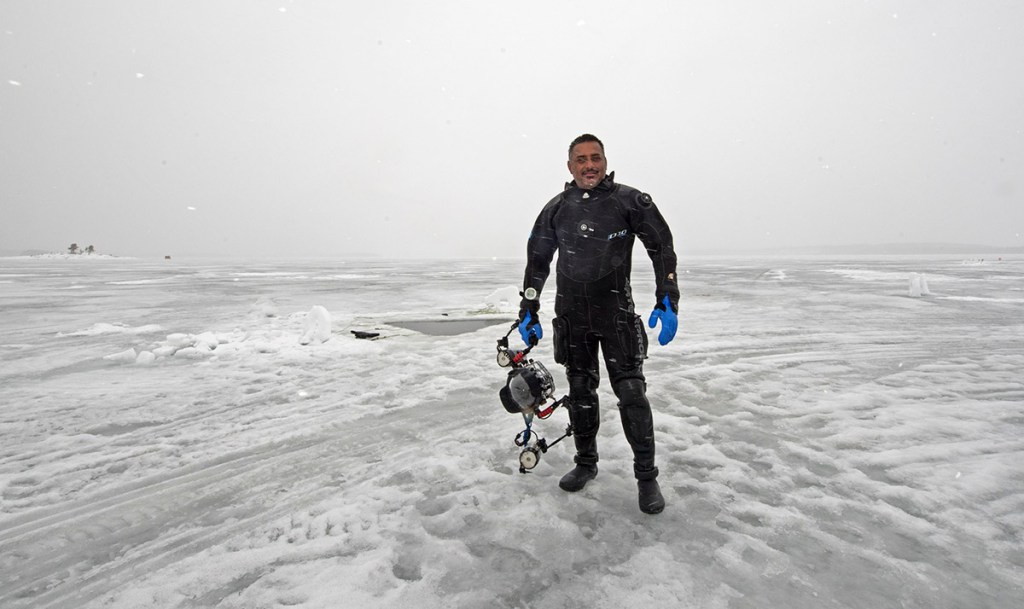
Lalitha Krishnan: Dhritiman, you’ve been known to jump off cliffs to photographs vultures and get into dry suits and immerse yourself into the sub-zero waters to shoot penguins and seals. Could you describe what attracts you to wildlife in places like this and also explain the process of your photography in inhospitable places? It can’t be easy.

Dhritiman Mukherjee: The way I work; when I discovered people were started working with different subjects. Most people work on easily available subjects; of course, you go to Corbett, or Kahna or Kenya. You can actually drive into the park with a vehicle and see wildlife and shoot them. This is fantastic. Many people are doing this. If I am doing this then it will be a repetition. My point of view was whenever I planned my work, I try to do something which is different- less done or never done- which is actually not readily available to the mass(es). So, what is my goal? Initially, when I started photography, the most interesting part was that there was no better work like this. In wildlife photography life is always beautiful-what more can you want? You get a chance to be in the forest always or the ocean or any interesting landscape. It’s amazing. So that part was initially there. I loved to be in the field because it is away from normal life, which is, of course, good but sometimes….my main point is that I was liking it, I was enjoying it but with addition I realised that I can also contribute to science and you know, social reasons like creating awareness for conservation. For that, I mean, it becomes meaningful. So slowly, along with my enjoyment, I always tried to think about what should I do? Which work can actually contribute to science or create awareness? From that point of view, I always thought of those works that which are not done by many people. That way it becomes exclusive. Exclusive in the sense, whatever I will do, when I share it with people, it will be interesting or contributory. That way I always selected rare subjects, difficult habitats, difficult places, difficult subjects to work with. Because not many people are doing this. Also, my background is I was into outdoors. I was into mountaineering and climbing. I always loved adventure. So that was an added tool for me. So, I thought that I could actually use that tool for my photography, because, that will help in a different way. And, from that point of view actually, I started looking for difficult and challenging places and subjects.


If you talk about jumping into the frozen Baikal or Antarctica or climbing a volcano, or diving with a crocodile or Anaconda, these things I did later. Maybe, in the last three-four years. But there is another reason also. I was mostly working in India, in all landscapes, in all habitats, in different subjects. I worked in most of the landscapes of India—all the states actually— all the states of India. You saw that book I have done, The Magical Biodiversity of India? It was done to show how good our country is from a biodiversity point of view. Because India is amazing.

Lalitha Krishnan: True


Dhritiman Mukherjee: Every time I went out of India, I realised, India is best. It has so much…


Lalitha Krishnan: I agree.


Dhritiman Mukherjee: Yes, all kinds of landscapes. It’s kind of a mini-world.


Lalitha Krishnan: Yeah.


Dhritiman Mukherjee: We have deserts, 10000 km of coast, we have the Himalaya, Deccan plateau, rain forests, mangroves, sets of islands. So, you know, everything, like one complete package. So definitely, India was, you know, a most lucrative place for me to work. And the main important point was that when I started not much was done. India has so many life forms but not much was done.

Lalitha Krishnan: Can I interrupt you? When did you start?

Dhritiman Mukherjee: I started photography in 1997 but started wildlife (photography) in 2000; end of 2000 actually. In India, I covered most of the landscape and did that book Magical Biodiversity of India. Then, I thought, OK, I have done a little bit in India, if I want to see the world if I want to do something interesting outside India… with that continuation, I thought what can be the concept? So, I thought, let’s go for a magical arch; that was the kind of concept I was following. The world is so big and has so much, I cannot cover everything. So, what I can go for? I decided to work on interesting things, so that’s why I decided to include an interesting phenomenon on earth. Like you know, I climbed an active volcano, dived in Antarctica’s icebergs, in Greenland, diving with the crocodiles. Basically, from one point of view, these were difficult and challenging subjects but many people have worked with it and secondly, they (subjects) are very interesting and surprising and so I planned from that perspective. My main goal is to work on less done subjects so that I can bring those events, species or places to the masses who somewhere they are disconnected with those things. I mean, in the last 10-15 years there’s a revolution is connecting the masses with different things via the internet and you know, different media. People who have access to TV have seen a lot of things but still, there are some things that haven’ reached the masses. So that is one of the goals.

Dhritiman Mukherjee diving in the waters of Costa Rica


Lalitha Krishnan: That’ amazing and I think it reflects in all your photography. It’s not just a photograph. When you look at it you see so many things. That’s why I think your photographs are so special. And also, you’re talking of different media. The purpose of this podcast is also to reconnect people to nature. That’s great. So, along the same lines, I want to talk about something I just read about and it’s fascinated me. In 2018, you along with 5 scientists went on the iconic Abhor expedition, right? In Arunachal Pradesh. The expedition is one of great significance because of the amazing biodiversity of the area. Abhor was also visited 106 years ago as a punitive mission following the murder of Mr. Noel Williamson who was the assistant political officer of Assam back then. Your expedition almost sounds like a Darwinian kind of exploratory; a once in a lifetime adventure. You travelled into parts unknown, you discovered and recorded multiple new species as well. Can you tell us a little bit about this expedition? Because it’s huge, it’s humongous, and I think everyone should know about it.


Dhritiman Mukherjee: It is actually super interesting how it started. When I was at WII, I was discussing with my friends. I always thought of this multi-taxa mission because, in India, this kind of thing is not happening in good numbers. At least, I don’t know of any such kind of expeditions where scientists from different subjects participated. So, I always had a dream to go for something like this. I was discussing this there and gave a proposal to all these people, let’s all do something which will be contributory and let’s work in some area which is not explored yet. Actually, Abhijeet gave the idea about the place because he also was thinking about this Abhor expedition which was done 106 years back. So actually, it is a contemplation of the same route and a little more actually. Actually, this area is unexplored so why we called it the Abhor expedition is because that expedition which was done 106 years ago, was the baseline. When we do something in some area, after finishing the expedition, after getting all the data, we can compare the data with the past, available data which was gathered 100s of years back. That helps us see the impact of changes. We can see what is actually not there, if things have improved or what amount of destruction happened; what is the status actually? What are the changes? That gives us some ecological parameters. So, we split this area in where something was done 100+ years back and after that, not much was done. So, we went in one part and travelled along the Siang river then we went to bowling National Park… These scientists are amazing in their own field. So, I was documenting everything. For me, there were two things actually; I could see the entire region which was mostly unexplored and I got a chance to be with five scientists. I got a chance to learn a lot – I always prefer to. And, we got a few new species, new information… But we also got evidence of huge destruction and you know, habitat loss and much more. The final report is about to come but overall it was a very unique expedition for me.


Lalitha Krishnan: it sounds like a wonderful, wonderful opportunity for them and you. You bringing out the beauty of the place combined with the scientific information and discoveries… You said it so casually, “We discovered a few species”. It’s not every day that people discover new species.


Dhritiman Mukherjee: No. The truth is we were expecting more species. We actually failed to give more time in some places. And maybe the timing is very important. We went there in October and if we had gone in May or June, then probably, it might have been much better because for the herpetiform like snakes and other things they are more active during that time. So, I feel if we can do another expedition in the same route in a different time, then, probably we will get more things (species) actually.


Lalitha Krishnan: OK

Dhritiman Mukherjee: That’s the beauty of an expedition. When you go the first time, you will get to know many things you never imagined. After being there you realise OK this can be corrected or we could have done this differently. That’s the best part. So, it will be a good thing if we can repeat the same expedition.


Lalitha Krishnan: I’m going to ask you another question that you’ve been probably asked many times before. The list of cameras, lens, scopes, etc. available in the market these days is endless. How much of photography, do you think, is equipment nowadays? I don’t know if this is a good question. You’re a professional photographer but what would you tell somebody who is sort of mid-way? Is it necessary to buy rather than perfect your art?


Dhritiman Mukherjee: This is a good question actually. A question regarding equipment is a very interesting questioning for others so I would like to share. Equipment is very important for sure but sometimes what happens in wildlife photography is first we buy equipment and then we plan. This should be the reverse. You should plan something and then go for equipment. Equipment is just for your certain need and equipment can’t and shouldn’t restrict your work. Nowadays, everyone can buy equipment, it is all available here. Once upon a time, say 20-30 years back, when very few people had good equipment, the quality was very important for good or bad photography. It defined it. If you had good equipment you could develop good quality photos and people would like it. That was one important parameter. But now everyone has the equipment. People can produce good quality photos. Now what is important is the story in the photo. For me also, quality is OK. If you’re using good equipment or mediocre equipment, there will be a difference in quality but when the story becomes an important factor then, this has no value. If you produce a very interesting story with average equipment then that becomes much more important. The story or the natural history information you are providing – that becomes more important than the quality. At least for me. I take it this way. I have access to most equipment but I am not fussy about equipment these days. Once upon a time, I was very emotional about it. But now, it’s not of much importance for me because the story is the ultimate thing. What I’m showing is very important – what a photo is talking about. That is much more important than how the quality is. People see the quality; it is available actually. You can’t restrict yourself because of the equipment. Sometimes you say, “I don’t have equipment”. Work with whatever equipment you have. Even with a mobile, you can get a great snap.


Lalitha Krishnan: True.

Dhritiman Mukherjee: You can go for different stories that your mobile can take. Wildlife photography is not always about getting some tight shots. I think that time has gone. Now the content is far more important. What you’re talking about and what you’re showing.


Lalitha Krishnan: That’s great advice for anyone who is into any sort of photography I think, especially for wildlife. They just seem to think bigger is better. This is great thanks. So when I see wildlife posts on FB today, especially, if you go to a certain wildlife group or page, it’s mostly full of tiger surrounded by at least 15 jeeps and photographers carrying huge equipment. And they won’t leave that tiger alone till they get that perfect shot. I’m as guilty. I’ve also gone to national parks, gone in a jeep and tried to click a tiger but it is ridiculous. I have seen people change tires, talk on the cell phone if there’s coverage… But the scale of this in our parks today makes me just feel this is not ethical at all. The way the tiger is cornered, the patience of that animal, it’s tolerance for us…tolerating us humans…I feel it’s no different from the old shikar days when the tiger was hunted. Now we just use cameras and jeeps to hassle them. What are your thoughts on this?


Dhritiman Mukherjee: Ah, this is a very complex question.


Lalitha Krishnan: I know.


[Dhritiman Mukherjee: It’s not that easy to explain. Of course, there are issues. I have been to many tiger reserves and I have seen the situation. There are different points of view. I believe tourism is one of the finest conservation tools. If people are not going into the forest, if they are not connected or interested, there will be no lobby for wildlife. We need a huge lobby for all the participants of our ecosystem. Tourism is [word lost in translation] The problem is how we manage it. So, it is not bad if some jeeps are going into the forests. In any case, the tourism zone is not that big. It is a little part of that forest. And in that part, the road is covering 10-20% of that area. In some cases, animals don’t always get stressed. Sometimes, you see photographs of tigers just sitting while many jeeps are standing there. Sometimes it gives way. There is another perspective also. The tiger is a wild animal and it is just sitting in front of the cars. If it wants, it can actually jump 10 feet to be away from everything. But the tiger is not going. It is sitting there. It is not moving. In most of these places or some situations, the tiger can move away from the crowd but they don’t. In tourism zones, these animals are somewhere, comfortable with people. Comfortable in the sense they have accepted the presence of people and are kind of habituated to tourists. Sometimes they just ignore. That is not where you can see the stress level of the animal. But in some cases, there’s a tigress with her cubs, or they’re in a particular area and people are chasing them…sometimes, these things happen. There is no problem with tourism but rather the problem is the way we do it. Some management policies or awareness campaign or something for e.g. when people enter the park and if they can be given some instructions or advise, I think that will be helpful. I feel tourism is always fantastic.

There are some behavioural changes due to tourism that we see in wildlife but I don’t feel it is heavily harmful to animals or for the ecosystem. I feel it is helping rather than it is harming actually. So that way I am in favour of tourism. Of course, it has to be organised and sensitive tourism.


Lalitha Krishnan: : You’re so right. We absolutely need tourism but like you said, the way we do it is more important. Talking about wildlife, nowadays everybody is a photographer. We have our mobile phones and whatever. We all claim we are photographers. What in your opinion is responsible photography? How should or shouldn’t nature be documented? I think coming from you, it will be a lot for people who love wildlife but have no idea on how to be a responsible photographer.


Dhritiman Mukherjee: Ok, I always love to talk about the way I work but I would never like to tell you, “you do it like this or you should do this”. I believe everyone is a sensible human being and they can take a call. I cannot suggest to people to somethings but I can tell you what I believe. If that helps then it’s fine.
For me, responsibility is the backbone of anything I do actually. The word ‘responsibility’ is a very important word for me. So, whenever I work there are two things actually: Why am I doing this? Why I am doing this is very important. There is an ethical point of view. The ‘ethical’ thing is a function of time and space and the situation. 20 years back what was ethical is not ethical now because it’s changing. What is the problem now? 20 years back you could hand count the number of wildlife photographers. But now, the wildlife photographers are close to a million in India…if you count the hobbyist or the amateur. These numbers are huge. In a narrow road, if there are one or two vehicles moving, it’s fine but if a hundred are moving then it’s not fine. It changes with time or the situation. In a park, earlier when one or two photographers were working it was not a problem. If a hundred photographers are there at a time, it becomes an issue. I am telling you this so you understand the dynamism of the situation. You have to take the call. What I do… I have some experience in the field, I try to understand in the field what I should go for or what I shouldn’t do… I take the call on the basis of the situation, not by something which is provided by someone else. It is always a call of mine on the basis of my experience, my knowledge and the present scenery of the place. For example, when 20 or 30 years back, if we saw an image of a charging elephant, we used to be very excited to see the image. We used to clap for it. We appreciated those images. Now, for me, it is no longer a good image. Because, if the elephant is charging me, it’s telling me that I was in its personal space. Someway, that animal was disturbed by me. It can be disturbed by anything. The main fundamental thing is when I am working in an ecosystem, the impact of my presence should be as minimum as possible. A charging animal shows the huge impact of my presence. That way, for me, it is no longer a good image.


Lalitha Krishnan: : You’re being invasive.

Dhritiman Mukherjee: I had images of charging animals before but evolution happens. If I am stuck in the old mindset then it is a problem of mine. We need to move on. We have to take the call. You have to understand that whatever you are doing, you are doing it for them. Why are we doing this (Wildlife Photography)? Because we’re enjoying ——-[word lost in translation]. We are lobbying for wildlife. To connect the masses with animals. And not to disturb them; not to create stress for them. So, as a photographer, I always try to take the call in the field to see to what extent I can go. I take a lot of photographs where I go very close to the subject. But it is not like I’m pushing boundaries. It is based on a lot of experiences. I love to study the individual (subject) before doing anything. So, when I photographed an American crocodile in Mexico-you can see I am taking the photo from one foot away-but it is not like I can do it for every individual. First, I try to understand the situation. If that animal is comfortable with me, it allows me…then only can I do that. I can’t push or stress them with my presence.
For sharks also, for all underwater photography, you need to be very careful, or you cannot take good shots. It is more like the animal comes close to me rather than I go close to them. In most cases, you have to be careful how much you can push. Because, after all, they are important. Whatever we are doing is for them. If we are caring about their comfort or wellness it’s not good. For me, it’s always a personal call.
When you talk about responsibility, I want to give a different example which is not directly related. I heard many people say—when they talk about their children’s career—they say, “If you go for IAS, then you’ll have a lot of power”. You’ll do your office work but if you are an IAS officer, you will have a lot of power. This is confusing. In our society, this is one type of schooling which is not right. It should be: when you are an IAS officer, you will have a lot of responsibility, not power.


Lalitha Krishnan: : Correct.


Dhritiman Mukherjee: The higher you go you will not have more “power” you will have responsibility. That is one perspective I feel we confuse with many things. Because, I have been into wildlife photography for a long time and I work a lot with many institutions, many conservation organisations, many people and many forest departments, sometimes, I get a little more access than others. Some people can think this is power. But this is not power. The more I get into into all this, the more my responsibility increases. Because I am taking that responsibility. So, whatever I do, the word ‘responsibility’ is the backbone of everything I do. I am responsible for this because I am doing this. From that point of view, it is very important for me to be sensible and responsible in the field.
I want to add another thing. There is another kind of issue which I think of which not many people will think of. I don’t know if you’re e going to ask this question…

Coral reefs:Andaman Islands, India


Lalitha Krishnan: Tell me.

Dhritiman Mukherjee: What is your favourite place or what is your favourite animal to work on?


Lalitha Krishnan: I was going to ask you… you know your photography is making an impact but if there is one project you are proud of for the change it has created? Not…


Dhritiman Mukherjee: This is a proper question. This question is fine but if you ask me, what is your favourite subject or species, or favourite places? If I name some species or place to answer that then I feel I am very much irresponsible.


Lalitha Krishnan: Okay. Why?

Dhritiman Mukherjee: There are some ethical responsibilities what I was talking about; that is how we work in the field where we have to keep this word (responsibility) in our mind. Where we cannot do anything which will actually do harm or damage the ecosystem. That is one part. Then, there is another part – our thought process. Though the process which I am going to tell you now about favourite species etc. It’s like this. You have 10 children and I ask you, who is your favourite? If you mention one, it’ll be a very illogical and irresponsible answer. Because in the ecosystem, every species and habitat is equally important.


Lalitha Krishnan: : True. True.

Dhritiman Mukherjee: Whether it’s grassland,——-[word lost in translation] or a mountain, they are equally serving their role. They have their own participants. They are all equally important. If you talk about species, from small insects to bug elephants, they all are important in the ecosystem. They have their own roles. So, you cannot be biased. So, if I am biased about a subject, then I think it is an irresponsible thought process. And you have to develop it. It is not as if when I started, I had these thoughts. Because it is a human tendency, we always love predators. That’s why we love tigers, leopards, birds … that hunt or look ferocious attract us more. It was the same with me but I had to develop This is the part of the evolution of my thought process. I developed that thinking that I cannot be biased about any ecosystem or any species. That becomes irresponsibility. So then, with those consequences you can ask me about certain choices I make: why are you working or selecting these (species)? My thought process is like this. You can have 10 children and you cannot be biased on anyone but there is a chance that one child is weaker than the others and you have to take more care of them. That is not bias. What it is when one species is injured, another is in a good state, you can work on the endangered one or give more time to that species so that it can come out of its current bad state. That is the way of selecting my priorities. It’s not being biased. I work on those subjects or place which actually are in need at that time for different reasons. Endangered species or the habitat has some problems or it is scientifically less documented. So that my way of thinking; of selecting species and places. So, if I have favourites, I think it’s irresponsible for me. This is one perspective I always thought of.


Lalitha Krishnan: Right. I’m glad you said it even though I didn’t ask the question because I’m sure a lot of people have asked you that. It’s a completely different perspective you’ve given and it makes so much sense and seriously my respect for you has gone up many, many notches because it’s all about being mindful I suppose…and responsible (while you’re) out there photographing.


Lalitha Krishnan: Cool. Now I know how you choose your subjects to photograph. But which photographer has been your inspiration?


Dhritiman Mukherjee: I want to add something. Let me answer this at the end.


Lalitha Krishnan: OK.


Dhritiman Mukherjee: I initiated but forgot to tell you; I have some problems with the words, ‘best’, ‘success’, ‘failure’… Let me explain a little bit because I think it’s required. It’s similar to “favourite” things we were talking about. People sometimes people say, “Dhritiman is the best photographer”. I am surprised how one can be defined as best because it is a qualitative thing. For qualitative things, you cannot use these words: ‘best,’ ‘worst’. You cannot even say ‘good’, or ‘bad’. Think of the first tiger-photo. If you see it now, maybe you will think: Oh, it is an average photo. But when it was taken it was surprising for everyone because there were no other (tiger) photos before. It was the first tiger photo. Imagine the first tiger-photo when there were no photos at the time, then it was the best photo (available).


Lalitha Krishnan: Right.


Dhritiman Mukherjee: It is all so subjective. All photos are documentation of some moments, some time and some species. Time, which is already gone so somewhere it is very unique. So, all the photos are unique. It cannot be good, bad or best. So, what do we go for? Basically, what happens is people actually want to see new things. When we mistakenly say it is a bad photo, it’s a ‘seen’ photo, that which we have seen already.


Lalitha Krishnan: Hmmm.


Dhritiman Mukherjee: It is not surprising you. So, what do we go for? We go for different things, new things. We don’t go for old things that are done. What is done becomes a “bad photo”. But it is not actually a “bad” photo. It was very much a good photo at that time. At some point in time, it was fantastic but now because people have seen it, it becomes a little bit boring and then people say, Oh it is OK or not good. So, you have to understand that this good, bad, best…these words do not exist in photography or any qualitative thing. It has to be different. I mean if you are a photographer, what are you going for? You’re not going for a “good photo” or “best photo” but a different photo. Not what is done but new stories, new events.
So, what I’m saying is whether you realise this the word, ‘competition’ does not exist. When you’re out of the competition, your mind becomes healthier.


Lalitha Krishnan: Right.


Dhritiman Mukherjee: Then, you’ll be out of all unethical practices where competition sometimes pushes you to do something unethical. These words don’t exist for me. I cannot be the “best” photographer. It doesn’t exist. Rather I would for being a contributory photographer where I can contribute to science or conservation.
To answer your question, who inspired me…that way, except for me, all that photographers inspire me. Whatever they are doing, all other photographers inspire me. Even what an amateur is doing is new for me. I am not doing that. That surprises and inspires me. So, what all other photographers, naturalists are doing is equally inspiring. So basically, everyone is inspiring me.


Lalitha Krishnan: That’s such a novel way of thinking. Lovely.


Dhritiman Mukherjee: It’s actually a rational way of thinking. For me, the right way. So, when you think like that it’s not novel.


Lalitha Krishnan: Maybe, not novel for you but for anybody else who is competitive for instance? This is just a different perspective no? Makes sense? Can I get back to the question about one project that you’re proud of because of the change it has created or is creating some change while we speak?


Dhritiman Mukherjee: As I told you, I have a problem with some words that I told you.


Lalitha Krishnan: Yes.

The rare Narcunda Horn Bill found only on Narkunda Island, India.


Dhritiman Mukherjee:
I try to solve some issues with these eg. ‘proud’, ‘best’, ’worst’, ‘competition’ or ‘achievement’, success-failure’…These words do not work for me. I can be a little happy not proud. The word ‘proud’ has some sort of unhealthiness. People will have different opinions on that I’m sure. Whatever one does actually, for me, I feel it has not been done to the extent it can be done. I have worked on different subjects, like the Narkundam hornbill…you know about the Narkunda island which is the easternmost island in India. The Narkundam hornbill is only found on this island. They are nowhere else in the world. So me and Dr. Rahmani, Dr. Shirish Manchi, we actually went there, stayed there for 18 days. We worked there and got a lot of information on that hornbill…photographed them. So, that was pretty much a rewarding experience. In later days there were issues with the island. The Indian Navy wanted to put a radar station on the Narkunda island. The scientist and others were not happy to know that because you know, it’s such a tiny island and that kind of activity can actually ruin the ecosystem of the island. Everybody wanted to stop that activity on the island. My photos helped to convey those (conservation) messages. Everyone used my photos, even National Geographic News also used my photos. So somewhere those photos were used for conservation. So, I feel it was a little bit contributory but it’s not like a 100% thing done. It could be better.

Lalitha Krishnan: : Yes. But a start.


Dhritiman Mukherjee: I worked on different subjects. The Bengal Florican which was less documented, then, the snow leopard project was very interesting. I have been working on the brown bear which is very less done. I photographed the Western Trogopan in Himachal Pradesh which is the state bird of Himachal. There weren’t many photos of it in the wild. I did different kinds of interesting things but I never feel I did a great job. I did Okay. Sometimes I was happy about how that work helped conservation but it is not like I am satisfied. I need to be more hardworking or more fruitful with my work. I cannot be satisfied with that or proud even. In any case, I have no relation with the word.


Lalitha Krishnan: I love that. But you set very high standards for yourself and it’s actually very inspiring. So, do you have a conservation-linked term or a photography-linked word or concept that you’d like to share?


Dhritiman Mukherjee: There’s a disconnect between the natural world and the masses and mostly I found, many policymakers are also disconnected with the natural world. So, what I am doing right now, what I am very much concerned about or what is very relevant for this time to me, is about ‘inclusion’. Inclusion of our ecosystem, in regular policy, social structure, everything. Because there is a disconnection, it is not included in our social system. So, whenever we see things, it looks like it’s separate. When we talk about development, we feel like nature, ecosystem, the natural world, forests…is a separate world from the word ‘development’. Actually, it is all included or inbuilt. When we talk about development…if someone is doing some deforestation, and we ask, why are you doing this? They say it’s a need for development.
Development is about keeping the ecosystem inside. Do everything but keep the ecosystem intact. It is about inclusion. It is inbuilt. So, I feel we have to understand that we have to all of this into our regular system. For that, we have to connect the entire masses with nature. I do photography for this purpose. Photos are the strongest tool to connect to people emotionally. If I speak about some species you have never heard of, you cannot be emotional about it. Only when you know a little bit about it even then you can think of it. So, photos actually do that. It connects people with the natural world.
So what I did as my responsibility is to lobby for the natural world or in other words, I can say I am on a mission to create as many as possible voters for the natural world. They will talk for them (wildlife). I am, one by one, connecting individuals with different species, different landscapes so that they will be in favour of them. Actually, it will create a huge lobby for them. For me, it’s one step to the conservation of the natural world. This is what I tell newcomers to wildlife photography. Connect as many people as you can to the natural world. That will be the best step towards other things. Once the lobby is made, then you can play with it. So that’s why I try to show my images to the policymakers whenever I get a chance. Also, students or collages and schools so they will be inspired by the natural world and they will be in favour of it. If something happens where a mass voice is needed it will be easier to get that voice in favour of the natural world. That’s why I make it my baseline responsibility.


Lalitha Krishnan: : That’s a great word and the way to go forward.


Dhritiman Mukherjee: Thank you for initiating this.


Lalitha Krishnan: Dhritiman thank you so much. It’s been a really wonderful conversation and getting to know the person behind the lens is quite fascinating. I’ve put you there as a photographer with a conscience and clearly, you are. So, thanks a lot.


I hope you enjoyed this episode of Heart of Conservation Podcast. If you know somebody whose story should be told, don’t hesitate to write to me at earthymatters013@gmail.com. I would love to hear from you, I would love feedback. Stay tuned, Heart of Conservation is available on Spotify, Apple Podcasts, SoundCloud, Google Podcast, Himalaya app, Android, or where you listen to your podcasts. Bye for now.

Not so Pleasant Pheasants in my Garden

Khaleej Pheasant


I was lingering over my morning brew of South Indian coffee in Ranikhet [29.6434° N, 79.4322° E] when I spotted one of my favourite Himalayan pheasants pecking away below the dangling wisteria. The Khaleej is a common sight on the hillside,  it is categorized with a conservation status of ‘LC’ [Least Concern] by the International Union for Conservation of Nature (IUCN). That means there’s a healthy population of Khaleej pheasants around and you’re very likely to spot them if you’re in the Himalayan foothills.

Common not ordinary

I find the Khaleej nothing less than dramatic. If you haven’t seen a Khaleej rooster up close, think of a dandy draped in iridescent blue-grey-black, donning a swanky brush-stroked neckpiece, delicate scalloped patterns on his coattail; hiding behind a bloodred masquerade mask. It’s quite the show stopper. The all brown hen with white-edged feather patterns doesn’t look so dull on her own. But put alongside her male counterpart and her chances are bleak. In the breeding season which is right about now, things get interesting.

The Khaleej [pheasant female]

You barely notice the female Khaleej
Plain Jane on the left


Coming back to my tale of two pheasants, our solo traveller cocked up his head; I too heard the clucking that got him into an instant splayed-crest mode. Then I heard an urgent onslaught of clucks and saw a rapid blur of pheasants clash behind the screen of yellow banksia. I missed all the action. The impact of the chest a/g chest or whatever that encounter was, made them recoil violently. They both kept at that raucous clucking but didn’t engage again. I noticed the hen leave the scene in a hurry. Romeo clucked himself downhill reluctantly. I spied on the pheasants for two more days to see if he would brave the competition again but he was a picture of foraging-innocence. The hen had chosen her rooster and stood her ground. The very red-wattled one who succeeded in thwarting her 2nd suitor was strutting around like a puff fish. How I just love watching wild performances over coffee.

You can watch it on my youtube channel:http://bit.ly/KhaleejFaceOff

Watch the split second faceoff:


To be or not to bee. The bee-moth or hummingbird-hawk moth is back.

The proboscis of the hawk moth is curled under its chin in flight.

What’s growing in your garden?

The bee moth, also known as the hummingbird hawk moth is here again. I look forward to its annual dusk time visits. I have to be quick with my camera for this moth never lingers for too long.  It clearly favors the colour purple: African lilies [Agapanthus] and verbena [Verbena bonariensis] and larkspur [Delphinium]  -which is toxic to us. I have seen them sip up the nectar of pink zinnias and cosmos, so perhaps they are a bit partial to these flowers. To be honest, this hawkmoth does look hover like a hummingbird and hum like a bee.

Agapanthus, verbena and cosmos attract hawk moths.
Agapanthus, verbena, zinnias, larkspur, and cosmos attract hawk moths.

The hawk moth looks dull when sipping.
The hawk moth looks dull when sipping/at rest.

The proboscis of the hawk moth is curled under its chin in flight.
The long proboscis of the hawk moth is curled under its chin in flight.

The mouth of an Himalayan caterpillar up close with cobra-like markings
The mouth of a caterpillar up close with cobra-like markings

Caterpillar hanging upside down whilst feeding on a leaf
Caterpillar hanging on un-delicately whilst feeding on a potato creeper.  Note the tail.

Watch the hawk moth:

Watch the hawk moth caterpillar on my YouTube channel. 

My friend and India’s leading lepidopterist, Peter Smetacek calls butterflies and moths bio-indicator species. Read about him: https://www.woodstockschool.in/hovers-like-a-hummingbird-looks-like-a-bee/


A Flight of Barn Swallows

Hirundo rustica revisits Landour at 7000 ft

Migratory Barn swallows in Landour . Lalitha Krishnan Photos

Like summer visitors on the hillside, barn swallows descended on me in troves, unannounced, one fine morning. Then as swiftly (pardon the pun), they shot up, flew past a corner, looped around a tree or two, took a nose dive, twisted and turned and swung by again fleetingly. I stood rooted to my spot for a good few minutes, hypnotized by their acrobatics in the sky. What an air show…and a pain in the neck.

I noticed the swallows didn’t stay together like, say, white-throated laughing thrushes do, instead, they did their own thing, taking random flight paths “tweet-tweeting” without seeming to take a break.  Almost like they had left their kids at home alone and needed to get back soon. It is the breeding season. Landour town shops already have swallow-nesting inside.

P1260089-2

If there was a pattern to the swallows’ flight, I didn’t get it. It was impossible to stay focused on one bird continuously, let alone a flock. What I was watching was, in fact, nothing but a feeding frenzy. Summer bugs are out as well and the dives and swoops were directed by where the bugs were.  Swallows catch them in mid-flight making a competitive reality TV game show look like child play. Not to be left behind,  I zipped in and out with a camera and started randomly taking shots of swallows. 50+ blurs-in-the-sky has been promptly deposited in the trash. The rest I’m sharing with you.

P1260100-2

Migratory Barn swallows in Landour . Lalitha Krishnan Photos

P1260112-2

P1260124-2

P1260101-2


Spot the bug
Spot the bug

P1260116-2

P1260154-2

A summer visitor - swallows in Landour
A summer visitor – swallows in Landour

Read more about Swallows, Swifts via eden.uktv: https://eden.uktv.co.uk/animals/birds/article/swifts-and-swallows/

via BBC Nature: http://www.bbc.co.uk/nature/22527420

Sharing my piece ‘Confessions of a porch photographer’ which was published in the Hindu.

Deodar cones dispersing seeds in winter. Photo credit: Lalitha Krishnan

How did I manage to get published? I’m clueless. I only know that The Hindu-Open Page editor’s click of approval transported me to a new level of thrilled.  All those zillion rewrites, years of rejections and no replies from other publications finally paid off. This piece was way shorter, the timing was right perhaps–around Salim Ali’s birth anniversary–and I think my writing struck a chord with nature-loving folk who are missing the ‘wild’ connect. Reading their appreciative emails brought me as much joy as writing. There is no greater reward. Will I get published again? I can’t tell but you will know if I do.:) Why don’t you read the article (via The Hindu link below) and tell me what you think of it in the comments space?

http://www.thehindu.com/opinion/open-page/confessions-of-a-porch-photographer/article20217923.ece

A Grey langur watches me watch him. Photo credit: Lalitha Krishnan
A Grey langur watches me watch him. Photo credit: Lalitha Krishnan”

“I learned this, at least, by my experiment: that if one advances confidently in the direction of his dreams, and endeavors to live the life which he has imagined, he will meet with a success unexpected in common hours.” – Henry David Thoreau, in Walden, or Life in the Woods