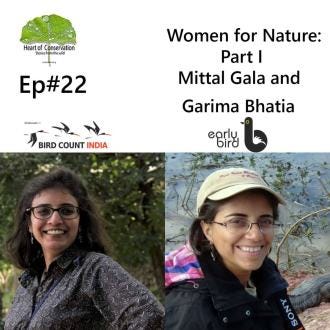
Women for Nature: Mittal Gala and Garima Bhatia.

Heart of Conservation Podcast. Ep #22 Part I Show Notes (Edited)

Lalitha Krishnan: Hi! I am Lalitha Krishnan and I am back after a very long time. You are listening to part one of episode #22 of Heart of Conservation podcast. This is season three. I bring you stories from the wild that keep us connected to our natural world. This episode focuses on bird life. I am speaking to three amazing women who are working for Nature Conservation Foundation, they manage and coordinate three programmes, Bird Count India, Early Bird and Nature Classrooms. Let’s find out what they’re all about.

A little warning. These interviews were conducted over Skype separately and they are not all of a consistent quality.
.

Lalitha Krishnan: First, I am talking to Mittal Gala. She took the plunge into wildlife after several years of working a corporate job. She has worked at Agumbe, one of the wettest places in India, at a reptile zoo in Chennai and as the chief naturalist at an eagle lodge near Ranthambore National Park.

Lalitha Krishnan: Thank you so much for speaking to me on Heart of Conservation podcast Mittal.

Mittal Gala: Thank you, Lalitha

Lalitha Krishnan: So, you are a naturalist who runs Bird Count India at NCF, so can you explain what bird count is and your role?

Mittal Gala: Yes, so Bird Count India is an informal partnership of organizations and groups and then this includes government, non-government organizations, groups on Facebook, birding groups on Facebook, WhatsApp and naturalist birding communities, so with all of them we work together to increase their knowledge of bird distributions and the populations and Bird Count India aims to promote bird watching and bird monitoring with a view to generating knowledge and we do this through eBird. Itโ€™s a very useful tool to monitor birds.

Lalitha Krishnan: OK, so Mittal how did you start working for NCF?

Mittal Gala: So, for the last many years I have been birding but it was it was not until 2013 when I actually started looking at citizen science projects in India. I was introduced to this Citizen Science Sparrow where we conducted interviews with various public visiting the park that I was working and we were collecting information on sparrows because at that time it was believed that the sparrows are declining and we wanted to find out reasons and I was told that with this kind of documentation, scientists will be able to find out what is happening to sparrows, so that fascinated me a lot and then I started exploring other programmes in India that involve citizen science and I came across eBird and I think Iโ€™ve been using eBird for almost, since 2014 or so and then when there was an opportunity in Bird Count India to work with birds and promoting citizen science, I went for it.

Lalitha Krishnan: Great! Do you want to briefly tell us about eBird?

Mittal Gala: So eBird is one of the largest citizen science projects in the world that involves gathering information in the form of checklists, bird lists uploaded by birdwatchers. So many bird watchers like to keep a diary of the birds that they saw, where they saw it and how many they saw. So, all these lists were just gathering dust in their diaries, there were not being used for anything and when eBird became popular in India and the idea of having all this information put on a common platform and people started seeing this, it was a game-changer and a lot of birders got highly excited about it. A lot of old birders also went back to their diaries and then uploaded all their information on eBird. Like a digital diary that not only helps a birdwatcher to keep a record of his or her sightings but also helps the scientific community because all the information is gathered at one place for them to analyze and look at.

Lalitha Krishnan: Yeah, I think that’ll be useful for people who still haven’t used eBird.

Since the pandemic, a lot of people are just birding from their garden. They have got hooked to eBird on their phone so itโ€™s very easy.

Lalitha Krishnan: Bird Count like you explained is pro citizen science right, so then give us a little detail about the projects that you all are working on.

Mittal Gala: A few years back if someone would have asked what is the most common bird in India there would not be a single answer to it. Everybody in different parts of the country will have different answers but now we have data to say that common mynah is the most common species in most parts of the country. This data is based on the list that gets uploaded during the great backyard bird count. Itโ€™s just based on this four-day data we were able to analyze to see what are the most common species, the most reported species in India across different regions, North, West, East, South and we found out that in most regions common mynah makes the top first species and this great backyard bird count happens every year in February with bird watchers across the world engaging in watching listening and listing birds through eBird and since this event is carried out around the same time of the year in February, it helps to create an annual real-time snapshot of bird distributions. This is a global event and itโ€™s celebrated widely across the world but we also have national events and regional events following the same concept and yeah and a lot of interesting things come out when people participate in this event.

Lalitha Krishnan: So that’s interesting and so your regional and other events they would be spread out through the year, is it or is it around the same time?

Mittal Gala: No, most of the time it is, so for example, most of the time it is the harvest, some regions like Tamil Nadu, Kerala, Assam, they have it during the harvest festival, Pongal, Onam and Bihu bird count in Assam and then we have the nationalโ€ฆBNHS has its Salim Ali Bird Count in October, yeah, during Salim Aliโ€™s birthday, so yeah, it is you can say they are spread out but most of the events happen between October to March, I would say.

Lalitha Krishnan: OK, great! The monthly birding challenges also you have apart from all this. How well is that received?

Mittal Gala: The monthly challenges were designed to supplement the annual bird events and they were designed in a way that birdwatchers can keep a track of the birds they see on a regular basis, maybe on a daily basis. So for example in the winter months when we have a winter month that is December, January, our challenges are focused on the winter migrants that arrived in India from various parts of the globe and then again when it is too hot we have challenges where people can just be at one place, which is called stationary birding and they can make lists standing from one place from the garden or from the balcony and things like that. So, these monthly challenges also contribute towards our understanding of the distribution and abundance of birds. It also serves as a kind of motivation for many birdwatchers to go and observe birds regularly.

Lalitha Krishnan: Right, and specially I think now they must enjoy the number of birders must have increased, I am sure.

Mittal Gala: Yes, yes!

Lalitha Krishnan: So, what kind of groups or organisations of people approach you for help, you know, in studying birds of their locality?

Mittal Gala: So, we are approached by birding groups, mostly nonscientific organizations that are interested in training workshops on bird documentation and monitoring. We also support regional events as I talked about Pongal Bird Count in Tamil Nadu, Onam Bird Count in Kerala. So, initially, we used to help give support to these events but now over the years these events are doing so great they donโ€™t need any help from us and we just help them to advertise that events on our platform, on our website but otherwise they are just doing well on their own and then many cities are interested in creating bird atlases.

Iโ€™m not sure if youโ€™re aware of Bird Atlas of India. OK, so a bird atlas is a, is again a citizen science project intended to map the distribution and abundance of a regionโ€™s birds. So, in an active project, the region of interest is typically divided into cells that are often subdivided into smaller cells and then a design is created so that volunteer birdwatchers can go and do uniform sampling. So, Mysore city finished its two-year bird atlas and Kerala state had an amazing five-year bird atlas that just got finished, I think, maybe January this year or something and they are now working on the analysis. And Pune and Coimbatore just started their atlas, but with the pandemic, things are going a bit slow.

Lalitha Krishnan: Yeah sure yeah! Wow!

Mittal Gala: It is amazing to know that birders are interested to know what birds are migratory or what is the status in the city, they want to know each and every part of the city, they want to know whatโ€™s happening to their birds.

Lalitha Krishnan: It’s fascinating I myself amhearing my friends who are not, who probably don’t look at the birds, suddenly wondering what is this bird? Can you tell me what this is? You know and it’s so nice to hear that, not that
I’m an expert but I do have books.

Mittal Gala: Thatโ€™s really heartening to know because they started paying attention to these things which have always been around but ignored but now itโ€™s nice to know that people are noticing it.

Lalitha Krishnan: Right, right! Do you also train birding guides?

Mittal Gala: Whenever possible. So, this is how it works, as I said people approach us to conduct workshops in their areas for the birding community and if when we are conducting such workshops we make sure that not only the bird watchers over there but if there are nature guides around they are also invited for those workshops and sometimes we also get approached by Forest Department. So, a few years ago we did a workshop for the guides from the Kanha Tiger Reserve and then recently we did workshops in East Sikkim where there were a lot of freelance birding guides who had attended this workshop and then in Rajasthan we did for the nature guide for the Bharatpur Bird Sanctuary and the guides for the Forest Department in Jaipur. So yes, we do train bird guides.

Lalitha Krishnan: This is so exciting for you also to travel to all these exotic places. Nice! Do you have any memorable moments you’d like to share with
us?

Mittal Gala: Quite a few actually, so I would just share maybe a couple here. So at this place where I was working as a naturalist, this was in Ranthambore, so my lodge was quietโ€ฆit was outside the National Park but quite close, so we used to have wild animals walking in all the time. And I had been observing a pair of kingfishers that were nesting-this is in our lodge campus-and so I used to wake up early morning with my breakfast, go there and just wait to see with the first light what would the kingfishers do today? And at one point while I was watching them, at the corner of my eye I felt something is walking around and then I took my binoculars and I see that it is a small cat but it had spots on it and it happened to be a leopard cub.

Lalitha Krishnan: You are kidding me, Wow!

Mittal Gala: Well maybe the adult was around, maybe would have gone ahead or must be hiding somewhere but I saw the leopard cub, one single cub trotting along with this fallow land. So again, while birding I have passed a tiger, in a sittingโ€ฆ hiding behind grass, I had no idea and I had been just looking through my binoculars and I didnโ€™t notice the tiger tracks on the path that I was walking and it was only when I turned around I saw my, the staff of the hotel telling me to come back because of the tiger in the grass.

Lalitha Krishnan: So birding has a lot of benefits, other benefits.

Mittal Gala: So yeah, you have to concentrate on the calls also, you have to make sure that you donโ€™t miss any movement in the trees or around you, could be a bird so that makes you very, I mean, you are, your senses are active all the time and thatโ€™s when you see all the other things.

Lalitha Krishnan: Hmm! Thatโ€™s really lovely actually, you’re so right, you stay still and you observe. Could you finally share word that’ll add to our birding vocabulary please?

Mittal Gala: Yeah, so one word which I learnt, a couple of years back, an interesting thing called โ€˜twitcherโ€™. Twitcher is an obsessive list keeping birder who pursues rare birds discovered by others and sometimes these twitchers can go to great lengths to see that bird. They might just fly from one state to the other in few hours just to see that bird.

Lalitha Krishnan: Really!!

Mittal Gala: They are crazy birders.

Lalitha Krishnan: So that’s really a new word for me. So tell me people who lookat still looking for the Himalayan quail are they twitchers or are they optimistic?

Mittal Gala: If the bird is seen, for example, just a few months back there was a Red-breasted goose seen in Gujarat. Because of the pandemic lot of people in the rest of India couldnโ€™t, but if there was no pandemic then people from Jammu or people from other states of North or sometimes Northeast would have taken a flight and gone to see it.

Lalitha Krishnan: Wow! I can imagine but I think at least they’re looking in our country, I feel we have so much diversity and you know when people go across continents to go to some National Park, you know, I keep saying hey there’s so
much here come back, you know.

Lalitha Krishnan: Wow! I can imagine but I think at least theyโ€™re looking in our country, I feel we have so much diversity and you know when people go across continents to go to some National Park, you know, I keep saying hey thereโ€™s so much here come back, you know.

Mittal Gala: Yeah, thatโ€™s true.

Lalitha Krishnan: Anyway, this has been so great. Thank you so much!

Mittal Gala: Thank you Lalitha, I enjoyed it a lot.

Lalitha Krishnan: I’m now speaking with Garima Bhatia, she calls herself a chemical engineer by profession and a nature lover by passion. She followed her love for birds and joined the NCF and is now the project manager, education and public engagement, Early Bird programme. Garima, welcome to heart of conservation and thank you so much for being a guest on this show.


Garima Bhatia: Thank you so much Lalitha, itโ€™s a pleasure to be here.


Lalitha Krishnan: Garima, let’s start with how you switched professions from
engineering to more nature based ones.

Garima Bhatia: Sure Lalitha. So, I, as I, as you rightly mentioned Iโ€™m a chemical engineer by training and along the way, I got interested in bird watching as a hobby. And yes there were some seeds of it in early childhood because my father used to point out birds from our balcony, so while I was in an engineering job I got fascinated by birds and thatโ€™s mostly due to where I live in Bangalore. There was this huge abandoned lot where I would observe a number of colourful birds every morning and that got me interested again, and over time it just grew into an obsession really. So every holiday, every weekend whenever I had free time I would be out birding. So by the time, you know, it so happened that the company I was working for decided to close down its Bangalore operations and we were given three months of advance notice and to look for other jobs but then I decided that instead of looking for another engineering job I would try and do something related to my passion which was bird watching and travelling and I was also passionate about passing this on to the next generation. So one thing led to another and I joined NCS to start off this project called Early Bird which was six years ago.

Lalitha Krishnan: This is lovely Garima, you sort of opened the door for yourself and not many people are able to do that and to be able to work with nature is really nice. So are you the brain behind Early Bird? Tell me something about that.

Garima Bhatia: Yes. So I joined at the time, I was hired by Suhail who heads our programme in NCF, itโ€™s called Education and Public engagement and this was a new project that he wanted to start off. And so I wonโ€™t say that I am alone, you know, solely the brain behind Early Bird, itโ€™s a collaborative effort with Suhail and with lots of other people who helped along the way, joined the project and also a lot of partners on the ground. Because, we have always been a very small team, so we have a great network of well-wishers and supporters who give us feedback, who try out what we have developed and, you know, help us distributed it. So, itโ€™s really been a collaborative effort in many ways.

Lalitha Krishnan: OK and could you tell me something more about Early Bird? What is the goal of this programme?

Garima Bhatia: So, when we started, this was six and a half years ago, we realized that bird watching is growing very fast as a hobby in India and we could see it in, you know, the number of people who were interested in birds, who were travelling to watch birds, the number of books that were coming out but we realized that there isnโ€™t too much material for children. How do we pass on this wonderful hobby to children and get them excited? So, that was the motivation, you know, to try and get children excited about birds and the first step in doing so was to produce material thatโ€™s attractive, thatโ€™s very produced, that really get children hooked onto birds. So that was the start.

Lalitha Krishnan: That’s a great start. I also read something you have called the birding buddies and training the trainers, so would you like to tell us something about that?

Garima Bhatia: Yeah, so eventually we realized that you know, as a small team we donโ€™t have that much reach, we really canโ€™t do too many engagements directly with children but what we can do to amplify our impact is to train the teachers and the educators who really work with children on the ground. So we started this series of workshops called โ€˜how to be a birding buddyโ€™ and these were meant actually not just for teachers but for any amateur birdwatcher because, you know, as birdwatchers we often get requests from our friends and family, you know, people we know in our neighbourhood to take children on a bird walk or children and adults or to come and give a talk about birds and, you know, what is it that one can really do to pass this on to children. So we designed a workshop where we take the participant through, you know, different techniques tips and tricks that they can use to get children excited about birds and itโ€™s a lot more than just knowing how to identify birds, there are various different techniques to use, there is art, there is poetry, change and you know all kinds of creative techniques to use. So, we designed this workshop a few years back and we recently had an online version of this workshop because in the past year we havenโ€™t been able to conduct any one on one sessions really, so a couple of weeks back was our first online birding buddy workshop and we hope to offer more of these going forward.

Lalitha Krishnan: Alright! That must have been quite a change, so how was it received?

Garima Bhatia: So, it was received quite well we had a lot of interest and the advantage of an online workshop is that you know, anyone can join from anywhere. So, we had a large number of applicants but we had to select a smaller group because, you know, while online we can host a much bigger group but our workshops are usually interactive and we like people to really talk to each other and share their experiences. So, we selected a small group of 30 educators, so most of them were actually teachers at different schools and many of them were people who are involved in nature education either in a voluntary capacity or through some organization that conducts awareness and outreach.

Lalitha Krishnan: With the pandemic I’m sure all your workshops must have come to a complete halt. So then what do you all guys do?

Garima Bhatia: Yeah, so with the pandemic, you know, we were really constrained in terms of not being able to conduct any events and also our partners who work with children were not able to conduct events, schools were closed and nobody was conducting bird walks. So we decided to do a series of online sessions about birds and we realized that there was a lot of interest in birds because people were homebound and suddenly started observing nature around them. So, there was a lot of interest in watching birds and nature, so we started a series of webinars and weโ€™ve conducted 33 sessions in the last year in five different languages. And they start from a very introductory kind of level where you introduce two birds and the sounds around you, to sessions by scientists who speak about their work in very simple terms that even a child c could understand. So, we did a series of these webinars which are all available on our YouTube channel.

Lalitha Krishnan: For those of you who are listening, do check it out and I’d love to join a future webinar so yeah do let me know.

Garima Bhatia: So actually thereโ€™s been a lot of, there have been a lot of requests to us to restart the webinars, so initially, in the initial few months of the pandemic we did a lot of sessions but after a while, you know, every organization was conducting webinars and there was what seemed like an overload of online sessions, so we decided to give a break and take a step back but we may do, you know, maybe once in two months going forward, a session from a scientist talking about something interesting.

Lalitha Krishnan: That’s fascinating and interesting Garima, I wish you luck. I also wanted to ask you where can I find, you know, other resources?

Garima Bhatia: So, we have a website where we have a number of resources that are available for free download. And there are games that children can play, individual games as well as group games that a teacher can use in the classroom. There are interactive posters on birds of different habitats where you can really learn about their calls and these are available in nine different languages. We have print materials also that can be purchased, but our website is www.early-bird.in and thatโ€™s where you can find all of these. We are also very active on social media so you can look this up on Facebook, Twitter, Instagram and of course our YouTube channel.

Lalitha Krishnan: Thanks for that Garima. I also wanted to ask you do you have any advice for birders, you know, most of us are still in our balconies not venturing too far and the seasons are changing, the birds are nesting, so do you
have any advice for birders especially those with cameras and who might have something interesting going on just outside the window?

Garima Bhatia: Yeah, well my advice would be to start noticing, you know, even common birds that are around us because often now photographers are always searching for that new species that they havenโ€™t seen before or some, you know, exotic bird but thereโ€™s a lot of beauty right around us and, you know, wildlife exists around us. So, to become a little more aware of that. And as we get into the summer and the monsoon so a lot of resident birds start nesting, so that can be fascinating to watch if youโ€™re lucky enough to have a nest of a sunbird, a tailorbird in your neighbourhood but the advice would be to keep a distance and, you know, the welfare of the bird should always come first and thatโ€™s the cardinal rule of birding.

Lalitha Krishnan: Garima I just heard a bird behind you agreeing wholeheartedly. So Garima I have one last question, could you share a word related to birding, if possible, that would help us increase our vocabulary.

Garima Bhatia: Yes, I have one, itโ€™s not one word, itโ€™s two words. Itโ€™s a brood parasite. So a brood parasite is a species that relies upon another species to bring up its young and in the world of birds we have a lot of brood parasites around us and they are the cuckoo family and the most common one is the Asian koel which is spread across India and whatโ€™s fascinating about it is that it lays its eggs in the nest of another bird usually a crowโ€™s nest. And the crow or the other target species brings up the chicks not knowing that, you know, itโ€™s some somebody elseโ€™s egg that they are helping to incubate and hatch and bring up the babies. So thatโ€™s my word for the day.

Lalitha Krishnan: Thanks Garima! I have also seen pictures of, you know, these cuckoos laying their eggs in the nests of really small birds and it’s fascinating and how these little birds are feeding these chicks that are really double their size
sometimes.

Garima Bhatia: So yeah, absolutely, and actually itโ€™s really fascinating because the reason for that is that the cuckoo tries to match the colour of its eggs to the colour of the host speciesโ€™ eggs, so that, you know, they wonโ€™t find out that thereโ€™s an extra egg because they all look the same. So, it turns out that, you know, sometimes those host species are much smaller birds, you know, I think the evolutionarly, they are evolved to, you know, to ignore any visual differences and maybe they just think of they have a really special offspring that looks different from all other offsprings.

Lalitha Krishnan: They won’t be the first species to want super kids, right! Anyway, thank you so much Garima it’s been so interesting talking to you.

Garima Bhatia: Thank you Lalitha, it was a pleasure talking to you.

Lalitha Krishnan: I hope you enjoyed this episode, stayed tuned for Part 2. I am Lalitha Krishnan and you are listening to Heart of Conservation. You can read the show notes on my blog Earthymatters. You can also write to me at earthymatters013@gmail.com. Heart of Conservation is available on several platforms, so do check it out and till next time stay safe and keep listening.

Birdsong by hillside resident, the collared owlet.

Disclaimer: Views, thoughts, and opinions expressed in the podcast and show notes belong solely to the guest featured in the episode, and not necessarily to the host of this podcast/blog or the guestโ€™s employer, organization, committee or other group or individual.

Photos courtesy: Mittal Gala and Garima Bhatia. Artwork: Lalitha Krishnan. Special thanks to Akshay Shah who helped transcribe the show notes.
Saving Thano Forest from an Airport Expansion Proposal

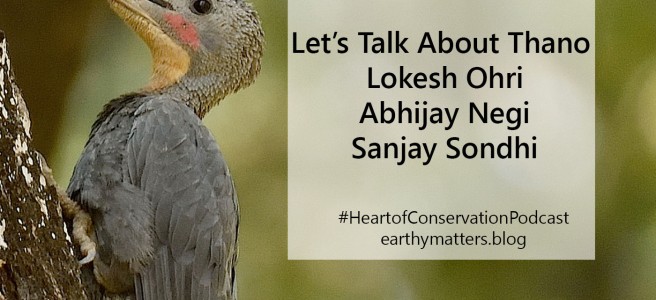
Great Slaty woodpecker pic by Sanjay Sondhi

Ep#21 Read the Show notes or Listen now.

Listen now

Download a Preliminary Checklist of birds of Thano here created by Titli Trust and Cedar.

Thano forest overview photo courtesy Mr Lokesh Ohri

Letโ€™s Talk about Thano. Ep 21 Lokesh Ohri. Abhijay Negi. Sanjay Sondhi. Show notes (Edited).

Lalitha Krishnan: Hi, Iโ€™m Lalitha Krishnan and youโ€™re listening to Season three, Episode 21 of the Heart of Conservation podcast. I bring you stories from the wild that keep us connected with the natural world. This episode is about the Thano forest in the Doon valley (Uttarakhand- the state where I live.) This forest in Dehradun has been in the news lately because the Uttarakhand government has sought the National Wildlife Board’s approval to transfer 243 acres of forest land to the Airports Authority of India. The what, where and why are questions everyone wants answered. You can hear the facts from three prominent Doon citizens who are my guests on this episode. Lokesh Ohri is an anthropologist, historian, writer, and a cultural activist & also the founder of BTDT which is the ‘Been There Doon That’ group. Abhijay Negi is a young activist-lawyer, also the founder of MAD which stands for Making a Difference. Both are active drivers of the #savethano movement. I am also speaking with Sanjay Sondhi, who is a well-known naturalist, founder of the Titli Trust, and community development and livelihood expert.

Lalitha Krishnan: Lokesh Ohri, Thank you for speaking with me. With reference to your article in the (Daily) Pioneer, you heard about these plans way back in 2003. This expansion will flatten a large chunk of the Thano forest. Could you start by telling us what transpired in that conversation? I think itโ€™s important to know the history.

Lokesh Ohri:  Yes, so it was a meeting for tourism stakeholders which was happening in the Tourism Dept. and because I do several projects with the Tourism Dept. I was part of that meeting. The chief minister was also part of that meeting. He was addressing all of us. At that point in time, the Union civil aviation minister walked in. It was unscheduled. He was probably visiting Dehradun and he decided to call on the chief minister right there at that meeting. And, thatโ€™s where I first heard about this plan of expanding the airport and having the night landing facilities, because until now, Dehradun airport does not have night landing facilities.

Lalitha Krishnan: Thatโ€™s right.

Lokesh Ohri:  We donโ€™t have a lit-up runaway, we only have flights in the day time. So that was the time when the stateโ€™s civil aviation secretary first introduced this idea that perhaps we could have night-landing facilities and we could expand the airport. So, the minister questioned him about why they wanted to do it. The reasoning he gave at that point in time was that at times thereโ€™s a lot of congestion at the Delhi airport, So Dehradun being just 45 flying-mins away from Delhi, probably, the aircraft could here and give some additional business to the state. So that argument was rebutted by the (civil aviation) minister saying that these services would not be required because very close to Delhi we have a place called Greater Noidaโ€ฆin Jewarโ€ฆweโ€™re already building Indiaโ€™s biggest international airport. Even bigger than the Indira Gandhi Terminal which is the Delhi airport. So, all the night landingโ€ฆif there is congestion or if there is fog in Delhi–which there is during winter-time, there is a lot of fog in Delhiโ€”so, visibility being poor, the flights cannot land. So, he suggested that perhaps they could perhaps take a call later on. At that point in time, one of us realized that the expansion would happen at the expense of the forest. Right now, the airport abuts, you know, two areas. One is the Thano forest area and the other area on the other side, toward the western side is already an agricultural area. As long as the airport expands in the agricultural area and people get compensated for the land the govt. acquires, we donโ€™t have any issueโ€ฆwe donโ€™t mind expansion of the airport. But we are concerned about the 10,000 trees that will fall for this planned expansion. This has only come to light now because once we have seen the environmental impact assessment report of the National Airports Authority and then weโ€™ve come to realise that this is what the government is planning. And that raises the hackles.

Lalitha Krishnan: I know. Doon citizens have been working for years to save the rivers. The Rispana has been given a special โ€˜perirenal streamโ€™ status

Lokesh Ohri:  Yes.

Lalitha Krishnan: And this proposed airport also, if constructed will be close to the Song river. The implications of this for the river, for wildlife for all life around it, would be quite huge.

Lokesh Ohri:  Yes, definitely. Itโ€™s a huge cost involved.

Lalitha Krishnan: Right. Thereโ€™s also talk of the airport not only being used for commercial flights, parking of the aircrafts in the night and stuff but also for use by the air-force- both of which according to you is really not necessary because thereโ€™s another (air-force) airport/base close by.

Lokesh Ohri: Thatโ€™s a veracious argument. I think all the projects being undertaken in Uttarakhand nowโ€ฆso the moment people start opposing them, they use this, you know, a smokescreen to say that itโ€™s because of national security. And all these people who are crying about the environment and ecology, these people are posing a security risk to the nation. So, I just wanted to counter that argument. What is the security issue? What about Indiaโ€™s water security? Because if the Song gets polluted, and the Song contaminates the Ganga, then one-tenth of humanity is at risk because the Ganga supports one-tenth of humanity in terms of its water requirements.

Lalitha Krishnan: True.

Lokesh Ohri:ย  Now, we already have two air-force bases. We have an air-force base at Sarsawa, near Saharanpur which is like, you knowโ€ฆ an air-force aircraft takes about eight minutes to reach Dehradun from Sarsawa. We have another big air-force base near Delhi. I think…so most of these fighter aircrafts are super-sonic, stuff like that. They take a very, very short time to reach the Himalayan frontiers. So, if we already have air-force bases which already have air-force materials, how is a commercial airport going to help the security of the nation? That is something I donโ€™t understand.

Lalitha Krishnan: Point. If itโ€™s already there, why (build) another one?

Lokesh Ohri: So, Iโ€™m saying, because we already have these two air-force bases and we have air-fields much closer to the borderโ€ฆso we have two airfields, one, right in Pithoragarh and one in Gauchar which cover Garhwal and Kumaonโ€”which are the regions on the India-China frontier. So, expanding the runaway in Dehradun means you are expanding it only for airbus flights to land. Now airbus flights are essentially commercial flights. They have no security angle to them. Now we have been talking to various agencies, like agencies under the Ministry of Environments and Forests. The sense I am getting from Delhi is that Uttarakhand as a state has been the most reckless in terms of forwarding proposals for infrastructure. They have not looked at the wildlife angle. They have not looked at the forest angle. And, they are very callous about the ecological angles. I am getting information that even states like Arunachal Pradesh, Sikkim which are much more precariously placed in India, in terms of security issuesโ€ฆthey still look at the environmental costs in great detail. In the case of the airport in Dehradun, the forest land has been transferred to the National Airports Authority by making just one reference to the environmental angle saying that: โ€œin conversations with forest officials it was found that no Schedule I species were found in the forest.

Lalitha Krishnan: Yes. Thatโ€™s amazing because itโ€™s an Elephant Reserve. What were they thinking?

Lokesh Ohri: Why did they name it Shivalik Elephant Reserve if no elephants are found there? It is common knowledge. Even when we went to the protests, we saw deer marks on the sand. There are so many research papers that say that this is the last surviving habitat of the Great Slaty Woodpecker. ย So, the Great Slaty Woodpecker is the largest woodpecker species found in the worldโ€”itโ€™s the largest bird among all the woodpeckers in the world. The Thano forest is the last surviving habitat for the Great Slaty Woodpecker. And, you know, this is a highly endangered species. And even when we look at Schedule I, it has the elephant, it has peafowl; and all these species are very commonly seen in the Thano forest. Any person who has walked through the forest can tell you that these species are found there. So, what were they thinking, who was consulted? They said, โ€œWe have consulted forest officialsโ€. They did not even name forest officials. Thatโ€™s why I wrote in the article that if they had named forest officials, these forest officials should be sacked. If a forest official does not even know what Schedule I is, then how is he expected to know the other schedules. And itโ€™s their job to protect the forests. Thatโ€™s what they are paid for. Thatโ€™s what they are trained for.

Lalitha Krishnan: What you said is so true in many ways. We are creating tourism infrastructure by destroying the very experience a visitor seeks.

Lokesh Ohri: Yes, itโ€™s very ironical.

Lalitha Krishnan: Also, very sad. What next? When are they going to make this decision?

 Lokesh Ohri: Actually, they still need approvals from two key bodies, from the government. So we are working on a strategy that we should raise that much noise that these permissions do not come through. But, given Uttarakhandโ€™s track recordโ€ฆthey donโ€™t even wait for the final approvals to come and they start work on the project. We have seen that in the case of the Char Dham Mahamarg project: 4 lane highways going all the way up to Badrinath, Kedarnath, (Gangotri and Yamunotri). They did not even conduct an environmental impact assessment report and just went ahead with construction. So, given that track record, we are also keeping all legal options open. We are collecting the data; we are consulting the lawyers. A lot of groups in Dehradun have come together. For the first time, I am seeing that all the environmentally conscious, socially conscious groups have come together and we are all working in a coordinated way so that a legal option is also ready.

Lalitha Krishnan: Thatโ€™s good to hear. Thatโ€™s hope. And I hope the Jolly grant stays the way it is. Itโ€™s so quaint and lovely. Thereโ€™s a sense of homecoming when you reach there unlike these big commercial airports. Thank you so much for your time and for enlightening us about whatโ€™s happening on the ground. 

Lokesh Ohri: Youโ€™re welcome.

Lalitha Krishnan: Thanks Abhijay for speaking to me on the Heart of Conservation podcast.

Abhijay Negi: Most welcome and thank you for having me.

Lalitha Krishnan: My pleasure. As the activist founder of MAD which stands for Making A Difference by being the difference, you have spearheaded several environmental causes including river rejuvenation, wall transformations, plantation activities, earthquake relief operations, etc. You are an original Doon resident. Now with the proposed expansion of the Doon airport, up to 10,000 trees, theyโ€™re saying, could be chopped down. This must be very close to your heartโ€ฆas a resident of Doon. What does Thano mean for you? I thought let me ask you that first.

Protest Photo Courtesy MAD

Abhijay Negi: So, Thano means to me and to every nature-loving Dooniteโ€ฆone of the last remaining green spaces where you could hear birds talking in their own language, where you can spot the occasional deer. Where you can just be lost in the awe of nature and be at one with your inner self. People called Dehradun the city of grey hair and green hedges. It was meant to be this kind of a conservation bastion for the country, for the state. It was not a burden imposed on Dehradun. It came naturally to the Doon valley because it was a valley. If you look at Dehradun district or the Doon valley, it is uniquely placed between two major river systems of India. Ganga is on its east and Yamuna is on its west. When we talk of Ganga, four tributaries go into this river, and one of these main tributaries, which is the Song river comes and cuts across right through Thano.  Maldevta is also very close by. Thano is very close to the Rajaji National park and acts likes a natural bump (lost in translation) to it. That entire route to Rishikesh via Thano is also one of the most beautiful drives the city residents can find. So Thano means a lot to any nature-loving Doonite and therefore this crazy, crazy plan deserves to be opposed tooth and nail.

Lalitha Krishnan: Right. It is the prettiest stretch. Even going to the airport โ€ฆitโ€™s so lovely to drive through that forest. Iโ€™m always looking out to see if I will spot any wildlife and invariably, I see some beautiful birds, you know, and it makes my day. So, this approval hasnโ€™t come as yet from theโ€ฆ

Abhijay Negi: National Board of Wildlife

Lalitha Krishnan: โ€ฆand MAD and other concerned citizens have held protests to oppose this expansion. Itโ€™s been compared to the Chipko movement, right? So, tell me something about it. How did it start? How did you organise and get so many people to participate?

Abhijay Negi: Yes,one thing about MAD, if I can give you a small context, the organisation started functioning in 2011. And more than an organisation it is like a movement. Much before this entire talk about Swachh Bharat, we as teenagers who had just passed out from school had got together, pooled in our resources, and started organising activities every Sundayโ€”because that was the time when we free. And, we used our own pocket money resources to conduct these activities.

Gradually, with time, we started realising that just us cleaning waste or us planting trees is not going to solve systemic or chronic issues which is why we needed to work on policy. Even before this Thano movement, MAD has been successful in protecting the teas estates in Doon valley near Premnagar where an equally foolish and hellish plan was being discussed which was to concretize the tea gardens of Doon valley. And, to replace the lush green tea estates with repulsive structures in the name of a โ€˜smart cityโ€™. So, we at that time, in 2016, had campaigned that we should first be making the existing city smart instead of trying to be the most unsmart people and concretise green areas.

In addition to that we have also been successful in pressuring the then Chief Minister of Uttarakhandโ€”and directly so– because we went and met him -Mr. Harish Rawat in reversing the cycle ban in Mussoorie. Imagine, they were banning cycling. We had some success with that. So, this is probably the third or fourth major policy initiative of the government which we are opposing. I wouldnโ€™t count the river rejuvenation here because that is something we are proposing. So, it is not just a group of opposition. Many people who are our detractors look at us as permanent pessimists. No. We do oppose anything and everything that has no green footprint. Which has no green thought. But that doesnโ€™t mean we are people who are opposing things. Now coming back to Thano specifically, we have a very large volunteer base of around 50-60 youngsters who themselves get activated on such issues. And I would really, Lalithaji, attract your attention to some of the visuals of the Thano protest where you will see that all the banners that MAD volunteers carriedโ€ฆthey were all carrying cloth banners.

Lalitha Krishnan: Yes, I noticed that.

Abhijay Negi: We didnโ€™t use any plastic banners. We were wearing our masks, we were very conscious, and then too, we were on the streets because this required to be challenged. It was not just MAD as you rightly noticed. Several organisations, individuals turned (up) on their own for something like this. And, we will do it many times. All of us are loosely in touch. We are coordinating amongst ourselves (to) what should be the next step. MAD for one, has been organising daily nukad-nataks outside Gandhi parkโ€”I just got back from one this evening. We will be having one tomorrow, the day after. We are also planning a series of other protests. We are having meetings. We had one with the Principal Chief Conservator of Forestsโ€”a pretty disappointing oneโ€”none the less, we had one and we had one with the Uttarakhand Biodiversity Board.  And we have urged the biodiversity board to into this situation. So, we are doing all that we can to stop this both on the street and off it.

Lalitha Krishnan: Thatโ€™s incredible. I was reading somewhere that you attended an internship in an ashram in Thano run by senior lawyer Mr. Mehta, is that right? I wasnโ€™t sure what internship that was. Would you like to speak about it?

Abhijay Negi: Yes. In fact, Iโ€™m glad that you brought it up. It was in June 2015 that Mr. M C Mehta who is Indiaโ€™s most renowned environmental lawyer; he organised this camp at an ashram that he owns in Thano. There, we went for birdwatchingโ€ฆit was an experience of a kind where we were one with nature. We went into the forest, into the jungle, we heard the birds, spotted the deer, werenโ€™t very lucky with the panther (aka leopard), but never the less we could always sense it around. That is how I can tell you that I know that place first hand. It is a beautiful place. That is why it is very sad for us to hear the Chief ministerโ€ฆ The day before yesterday, he said, itโ€™s a political conspiracy. He labelled all our efforts as a political conspiracy. And, itโ€™s very sad that in the 21st century, for a hill state created on environmental issuesโ€”as one of the important issues why this state was created. And here we have a chief minister who would probably have even labelled the Chipko movement a political conspiracy. So anything that is celebrated worldwide would be a political conspiracy to him. He doesnโ€™t even make the effort to understand these issues and thatโ€™s why we are trying to sensitize the forest dept., the Biodiversity Boardโ€ฆ Itโ€™s just looking at it from the context of cutting and felling trees. Itโ€™s not just the trees. Itโ€™s an entire ecosystem you are jeopardising.  Itโ€™s the air of the valley. Nobodyโ€™s stopping them from going into Doiwala and buying private land. Please buy private land and expand your airport as you please. But, why do you have to so easily and readily come into the Thano forest like this?    

Lalitha Krishnan: What is the timeline here. What next? Thereโ€™s a petition for it already.

Abhijay Negi: We are alert and prepared for any eventuality. If we get to know that they are actually getting on the ground with any tree felling our 100s of volunteers will be rushing there and stopping it be so physically. The second thing is we are preparing legally for all the steps we have to take. So far, we are still waiting to hear from the National Wildlife Board. We are trusting our institutions and we hope that the Uttarakhand Biodiversity Board specifically will play a role here. (It) will step up to save the biodiversity of the area that the government is so eagerly willing to put on the axe. We are also working with other like-minded organisations since this is genuinely a city effort. Several organisations are up in arms against it and we are coordinating with each one of them. At the same time, we are also working to get into a dialogue with this government. We plan to call upon the relevant bureaucrats, relevant ministers, if possible, even the chief minister to put forward our point of view and to request them to roll it back.  So, we will do everything in our power.

Lalitha Krishnan: Good to know. One more question. Does your activism come in the way of your career as a lawyer?

Abhijay Negi: Yes, that is whyโ€ฆI wanted to have this conversation myself in the afternoon. It does come in the way of my lawyering sometimes. If we do file a public interest ligation where I am representing the cause, then all the interviews and everything will stop. I restrict myself to the courtroom as our legal ethics require. I have been involved in several public interest litigations, even for environmental causes. One of themโ€ฆweโ€™ve got a stay on any construction activity between the Rajpur area of Doon valley which is onโ€ฆโ€ฆโ€ฆโ€ฆ. (lost in translation), a stay on any blasting activity in the Nanda Devi Biosphere Reserve. We also have worked on the health care system in Uttarakhand wherein an ongoing public interest litigation weโ€™ve asked all primary health centres, community health centres, and district hospitals to submit to a questioner that we have prepared. We asked them if they have the basics of health care. So, these are issues I am actively grappling (lost in translation) within the courtroomโ€ฆin the Nainital High Court. So of course, I canโ€™t generate public opinion on them as much as I might want to but since the organisation is involved here, and we are very, very ably led by Mr. Karan Kapoor who is the current president, who has been working very hard in facilitating all these meetings. And with several volunteers, who are also up and doing the job, the movement goes on.

Lalitha Krishnan: I wish you all the best for your career and your activism and thank you for your efforts.

Abhijay Negi: Thank you for having me Lalithaji.

Lalitha Krishnan: My pleasure. This is close to my heart too because the thought of it (Thano ) disappearing forever is not acceptable.

Great slaty woodpecker photo courtesy Sanjay Sondhi

Lalitha Krishnan: Sanjay, thank you so much for speaking with me on the Heart of Conservation podcast. As a naturalist, Iโ€™m sure youโ€™ve gone to the Thano forest a zillion times. Could you tell us a little about its biodiversity, the species, or what it is you love about it?

Sanjay Sondhi: So, you know, weโ€™ve been going to Thano on multiple occasions in the last decade and I think close to  Dehradun, itโ€™s one of the best bird-watching sites you can have. In fact, in recognition of this, its bird diversity, the 5th Uttarakhand Spring Bird Festival was held from 9th-11th March by the Uttarakhand Forest Dept. and during the festival, we released the Preliminary Checklist of Birds of Thano. At that point in time, the checklist was 175 birds. Of course, this is just a preliminary list because even during the festival, we added another 6 or 7 species. My estimate is that it would have more than 250 species if properly surveyed. Itโ€™s incredible.

Lalitha Krishnan: Thatโ€™s incredible. And thereโ€™s so much there than just birds. The forest itselfโ€ฆthe trees over thereโ€ฆwhat species of trees are more common.

Sanjay Sondhi: The forest itself, itโ€™s a lot a broad-leaved forest. Thereโ€™s a lot of sal over there. Itโ€™s a great spot for woodpeckers. Iโ€™m sure other people have also mentioned that itโ€™s one of the few locations close to Dehradun where the Great Slaty woodpecker can be sighted.

Lalitha Krishnan: Which is (IUCN) vulnerable, right?

Sanjay Sondhi: Which is IUCN Vulnerable listed. Absolutely. You will not believe it that if you go to Thano, and you stand just in front of the forest rest house, just standing beside the road, you will spot between 30 โ€“ 35 species in the forest around. Just standing in one single location. Thatโ€™s the kind of avian richness the forest has.

Youโ€™re right, itโ€™s not just birds. There are butterflies, thereโ€™s a lot of other stuff which actually hasnโ€™t been properly documented. The butterfliesโ€ฆ has just been opportunistic. Weโ€™re out there for a bird walk and whatever butterflies we see we document. But the quality of forest in that area is such that itโ€™s clearly a biodiversity hotspot. And, to be cutting that to build an airport which is not required is just a travesty of justice I think.  Somebody said we need fresh air.  We donโ€™t need more planes and another airport.

Lalitha Krishnan: Yes, and nobody is talking about the noise pollution that airports create or an international airport would.

Sanjay Sondhi: Correct.

Lalitha Krishnan: But Thano is not a designated hotspot is it?

Sanjay Sondhi: No, I donโ€™t think thereโ€™s a formal designation as a hot spot butโ€ฆThere are designated important bird areasโ€ฆI donโ€™t think it is even designated as an important bird area but solely by the number of species that we seeโ€ฆand not just birds but other thingsโ€ฆitโ€™s a very, very rich biodiversity hotspot which is so close to Dehradun and so easily accessible.  

Lalitha Krishnan: Right. Sanjay weโ€™ve covered the wildlife, but you also wanted to speak about the people in and around Thano.

Sanjay Sondhi: I said, Thano is such a biodiverse area and if we develop it properly, it has such a great potential for birdwatching, homestays with benefits going to the local community. In fact,  Titli Trust-thatโ€™s our NGO and Cedar, jointly we are running a nature guide training programme for rural youth which extends from Thano toโ€ฆโ€ฆโ€ฆโ€ฆjheel  and itโ€™s a 2-year programme where weโ€™re training local youth in that area to become bird guides and nature guides in the hope that it becomes a livelihood opportunity plus they are strongly focused on conservation because if the biodiversity is not there, they won’t earn anything from nature guiding. And the response has been great. There have been lots of people who have joined and the youth is very enthused because they see this as a win-win where they earn from the areaโ€™s biodiversity and they also help conserving.   

Lalitha Krishnan: And they can stay at home rather than leave the state

Sanjay Sondhi: Absolutely. And the benefit goes to the local community who belong to that area. What could be better than that?

Lalitha Krishnan: Right. Absolute win-win.

Sanjay Sondhi: Thereโ€™s no better incentive for conservation than livelihoods that they can earn living in or near their home.

Lalitha Krishnan: Itโ€™s a great initiative. Thank you for this Sanjay.

( I hope enjoyed episode 21 of the Heart of Conservation podcast. Iโ€™m Lalitha Krishnan. You can read the show notes on my blog: Earthy matters. If you want to know more about the Thano movement, or about the work my guests do thereโ€™s lots of information on the net. You can also hear my podcast on Spotify, Apple podcast, or other platforms of your choice. Till next time, stay safe and keep listening.)

Collective Wisdom:The Best From My Guests Ep#20

Listen/Read: 2 Seasons’ worth: Conservation-related Terms, Novel Ideas, Inspiring Messages & Reasons for Hope.

Hi, I’m Lalitha Krishnan and you’re listening to Heart of Conservation. I bring you stories from the wild that keep you connected with our natural world. This is Episode #20 the last episode on season two. I am ever so grateful for your support and encouragement. I hope you are looking forward to Season 3 as much as I am. Episode 20 is special because I bring you the best of my guest so far. At the end of every episode, I usually ask my guest to share something that’s significant to them. It could be a new word for us, a novel concept or idea we could adopt or their thoughts, views and hopes. I hope you enjoy this collection and rare opportunity to hear from the best.

Dr. Pasang Sherpa: the only Sherpa Person with a Ph.D. in Anthropology Studying the Sherpas #1

Dr. Pasang Sherpa: I donโ€™t think itโ€™s my favourite word necessarily but I have been thinking about it a lot lately. Itโ€™s the word โ€˜Anthropoceneโ€™. The word โ€˜Anthropoceneโ€™ comes from the ancient Greek word: โ€˜antroposeโ€™ meaning human and โ€˜ceneโ€™ meaning recent. This is referring to the geological epoch and talking about current times when human activity is dominating the earthโ€™s systems. The reason Iโ€™m interested in that is that I am spending a lot of time thinking about the Himalayas and why it is scared for us Himalayan people.

Iโ€™m also trying to connect this notion of sacred Himalaya with the ways people are thinking globally in terms of anthropocine, the new geological epoch. To me, this is interesting because, first of all in the Himalayas, nature, and human have always lived together. I donโ€™t think humans are perceived as more important or above the natural world, which is the case for the western way of thinking where humans are considered above nature and control nature. From those ways of human nature relationship, I wonder what and how we can think about โ€˜Anthropoceneโ€™ and how it might be relevant to the Himalaya we know. So Iโ€˜m also wondering if itโ€™s relevant. On the other hand, living on this planet-if, we consider ourselves global citizens-it might be important for us to think about what โ€˜Anthropoceneโ€™ is and where the conversations about the Himalayas fit in these larger global discussions of this new geological epoch. So those are the kind of questions that are in my head these days. Thatโ€™s my word contribution to you.

Ajay Rastogi. The Pursuit of Consumerism and Science of Happiness Ep#7.

Ajay Rastogi: All speciesโ€”you are a dog lover and you have had dogs practically all your lifeโ€”if you look at their behaviour, do you see them carry grudges? I think if we can stop carrying grudges, start looking inside and with that reflection, try and bring integrity into our lives: then what I am feeling inside Iโ€™m trying to act outside as honestly as I can. Lalitha is also doing that. Chingoo-Mingoo is also doing that. Then I think weโ€™ll make a better society. So my keyword is integrity. My only thing is if we can value the privileges we have, then let go some of it so that others can have an equally good life. But we are still insecure and I donโ€™t know why, despite everything going.

Dritiman Mukherjee: The Philosophy of Photography. EP#11

(From original podcast:Thereโ€™s a disconnect between the natural world and the masses and mostly I found, many policymakers are also disconnected with the natural world. So, what I am doing right now, what I am very much concerned about or what is very relevant for this time to me, is about โ€˜inclusionโ€™. Inclusion of our ecosystem, in regular policy, social structure, everything. Because there is a disconnection, it is not included in our social system. So, whenever we see things, it looks like itโ€™s separate. When we talk about development, we feel like nature, ecosystem, the natural world, forestsโ€ฆis a separate world from the word โ€˜developmentโ€™. Actually, it is all included or inbuilt. When we talk about developmentโ€ฆif someone is doing some deforestation, and we ask, why are you doing this? They say itโ€™s a need for development.)
Development is about keeping the ecosystem inside. Do everything but keep the ecosystem intact. It is about inclusion. It is inbuilt. So, I feel we have to understand that we have to all of this into our regular system. For that, we have to connect the entire masses with nature. I do photography for this purpose. Photos are the strongest tool to connect to people emotionally

Bhavna Menon: Saving the Wilderness Through Community Participation Ep#14

Right. Mine would be inclusion and acceptance. Actually two words maybe, almost meaning the same thing. Itโ€™s a word I choose or associate with conservation very deeply because had I not accepted the people/community members around tiger reserves for whom they areโ€ฆbecause Last Wilderness believes you should not change people. You should work with them to understand them and then find a solution together. So acceptance and inclusion are extremely important. They have accepted me for who I am so and so have Iโ€ฆwhich has helped me work for the past nine years in conservation and enjoy every bit of it.

Rohit Chakravarty and Pritha Dey: BatMan and Moth Lady Ep#12

Pritha Dey: What concerns me at the moment is the ongoing insect species decline that we see globally. It has gathered attention from scientists and politicians alike. We need more young people to be interested to study lesser-known taxa or less charismatic taxa from a country which is so hugely biodiverse like India. With the right techniques and tools, India has the potential to stand out in insect conservation. I would really reach out to the young people through this conversation that: Please be interested more in moths, butterflies, and other insects. Apart from science, itโ€™s very important to reach out to the non-scientific community to achieve larger conservation goals and I would end by saying thereโ€™s a famous scientific article by the scientist, EO Wilson which says that:โ€ Little things that run the worldโ€; he talks about insects and arthropods. As long as you believe that so thatโ€™s the message that I would like to spread through this conversation.

Rohit Chakravarty: So, every animal tells a different story about the world. And, only when you study them, you understand what story it conveys and how you should protect its world in order to save the animal itself.
The other message that I would like to younger people is to have faith in science. To not lose hope in science and to develop an objective view of the world; not a subjective one. And to include science in the way we conserve species. Science is not the end result and itโ€™s not the destination but itโ€™s definitely something important we need to incorporate it in conservation measures.

Dr. Dinesh Vinherkar: The Turtle Healer Ep#4

Volunteer Sagar Patel. (Translated): Our motto is: Go forward, donโ€™t see backward. Iโ€™m Sagar Patel. I am a committee member of WCAWA. I have been working here for the past 7-8 years. Our main problem is to rescue injured turtles that are caught in nets. Once they are out, we treat them and once again return them into their natural habitat. Our area falls in the green zone. There are a lot of snakes here. Why should we rescue snakes? Snakes actually eat rats. They help farmers. Where do snakes come? Snakes come where there are rats. Snakes follow rats into homes. Earlier, people here used to kill a lot of snakes. When we started an awareness programme, the mortality rate of snakes came down. They call us when they see a snake and ask us to rescue it. We get 15-20 calls per day..we rescue that many snakes per day…..What is possible for us, we do. We donโ€™t have proper facilities, we do the best we can with what we have.

Dr. Dinesh Vinherkar: All these volunteers have been here before me. From childhood maybe, some have been involved in this great work. They are doing amazing work and I am very happy to say that they are doing this voluntarily without thinking of any gain they are going to get out of it. Of course, when our centre will grow, I will definitely see to it that each one of them will have some livelihood doing something they love. I donโ€™t want them to do some work where they donโ€™t have any interest. Their whole interest is in wildlife so they should get a good job here itself and they should do whatever they love. Because I feel what you love, you will do with more interest. They have this beautiful interest.

You call them at two oโ€™clock in the night, you call them at three oโ€™ clock in the night, within one call, they will be standing in front of you.

Wild Otters Pvt. Ltd. A Business Model for Conservation? Ep#10

Katrina Fernandes: Wild otters was started as a sole proprietorship. The aim was always to create a sustainable business model for conservation in the sense, trying toโ€ฆrather than depending on funding and all the time writing grants, this, that and the other โ€”sort of just trying to generate some sort of income to keep the place floating. That was the idea. Subsequently, we also realised that is not even possible. In terms that you canโ€™t sell research. You canโ€™t monetise research. You canโ€™t make money out of pure research. You can do things that kind of help in other ways which is the internships and volunteers programmes, the workshops and the training programmes. So we do a bunch of those things. We get students from all over the world who do their placement years and their internships. We are also working with schools. We are working with one particular school called The Learning Centre which is into experiential learning. So everything is more tangible, more tactile, more outdoors and stuff like that. We are also working with The Owl House, with neurologically disabled kids. We do things with them like building insect hotels, also again tangible because we are trying to get them to be outdoors, tactile, using motor skills and stuff like that.

Katherine Bradshaw: So โ€˜spraintโ€™ is otter poop and we mark this using a GPS device so this GPS device marks the exact point where this spraint is. And we can use this to create maps of otter activity and this allows us to see month to month where otter activity is and high activity and low activity and if theyโ€™re on the move.

Vijay Dhasmana: Rewilder of Urban India Ep # 3

This term is relatively new. And it is a convenient term because you know scientists use various kinds of terminology. But, in landscape terms, I think rewilding fits pretty well, where itโ€™s also self-explanatory. Rewilding. Wilderness is the approach to the landscape treatment. Essentially what rewilding means is any fissured land, any landscape damaged due to human activity is restored to what one thinksโ€”after referring to enough documentation, visiting forests and landscapes around thenโ€”and then imitating from nature and recreating those landscapes which were damaged. That, in a nutshell, is what rewilding is.

Rewilding is important as a vocabulary because it has its own direction. It has its own momentum. Rewilding. Itโ€™s not an ornamental garden path but re-wilding which is all-inclusive. Itโ€™s inclusive of the plant community, animals, insects, birds, higher plants, lower plants โ€“all of that. So I think it is a sweet word.

Dr. Sejal Wohra: Intrepid Woman Leader Ep#5

Dr. Sejal Wohra: Itโ€™s not necessarily a scientific term but I think the term of great importance in the conservational and environmental movement, which is โ€˜consumptionโ€™. To me, the future of this planet lies in us individually and collectively as human beings, to really question whether we need so much. I am as guilty as anybody else on that.When I look around and see just stuffโ€” I think do we really need all this? If all of us humans lived with what we need this would be a very different planet. Unfortunately, the model of development that we have today is geared entirely towards consumption. Itโ€™s about getting people to consume more. Economies and countries thrive and build their economies on consumption rather than on sustainability. My dream is that we actually start questioning the whole concept of: โ€œ Do we need to consume so much?โ€ And weโ€™ll have a different planet.

Iโ€™m going to make a plug here for some friends of mine who have started a very interesting venture. Itโ€™s called, โ€˜We shareโ€™. And the idea is to not buy stuff but to share stuff. They are going to set up a web platform where it will be a platform for sharing. So, itโ€™s things that you buy but you only going to use once. Or you might just need now and then. And you can share it with others. So everybody starts buying less stuff and start sharing more stuff.

Bill Aitken: Nature as the Footprint of the Divine Ep#19

I give you that quote from Salim Ali, I thought Iโ€™d written it down I havenโ€™t, anyway itโ€™s to the effect that, you know, there are so many problems for a wildlifer that you just look on the bright side and just get on with what you love doing, donโ€™t be weighed down by all the problems.

(The original Salim Ali quote: โ€ Be more realistic. Accept that we are all currently sailing through turbulent waters and should therefore avoid frittering our efforts on inconsequentials. In other words, be constructive and revel in the simple joy of lifeโ€-Salim Ali)

Mrs. Gandhi was a great wildlifer and he regretted that he hadnโ€™t sort of pushed her to do more, but the main thing is, you know, stay positive because the worst thing is if you give up then nothing is going to happen. You have to see the bright side, just look on the bright side.

Cara Tejpal: Eco Warrior Ep#9

Another one of my focuses over the years has been on Asian elephants and Asian elephants conservation. I think what I wanted to talk about is both the inspiration I receive from nature and the heartbreak of working in conservation. Thatโ€™s something we donโ€™t talk about often.

So, a few years ago I ran something called the โ€˜Giant Refugeesโ€™ campaign with co-campaigner Aditya Panda, who is Orissa based. I had been hearing about this herd of elephants who have been trapped on the outskirts of Bhubaneshwar from Aditya and my mentor, Prerna Bindra; and this one year, along with my cousins who are filmmakers, we decided to visit. What we witnessed was so heartbreaking. It was a mob of 300 men harassing a herd of elephants. It was absolutely savage on the part of humans not on the part of wild animals. Iโ€™m bringing this up because it was such an emotional moment for me. It was one of the first big campaigns I ran and it fizzled out after a few months. I learned a lot of lessons from it and I hope to revive it soon. But I think why I brought this up is because of a conversation I was having with many of my conservation colleagues and friends is a feeling of the absence of hope. I think we must all adhere to this religion of conservation optimism because that is the only way we are going to be able to inspire others. If all we project is a sinking ship then no one is going to want to stay on it.

Aditi Mukherji: What the Drying of Himalayan Springs Means for India Ep#14

Iโ€™d like to talk about โ€˜aquifersโ€™. An aquifer is basically the water-bearing layer. We canโ€™t see it because either if youโ€™re living in the plains then itโ€™s under the ground; in the mountains, itโ€™s basically inside the rocks. Itโ€™s super important because the aquifer is where all your groundwater storage is. India completely depends on groundwater. 60% of our irrigated area gets irrigated from groundwater. 80% of our drinking water comes from groundwater. If we donโ€™t take care of our aquifers, donโ€™t ensure that our aquifers are not overexploited, our aquifers donโ€™t get dirty, we would never have water security. Thatโ€™s the word I would like your audience to know: โ€˜Aquiferโ€™ which is the water bearing layer from which our life-saving water comes from.

Suniti Bhushan: Reconnecting Children to Nature Ep#6

If I may, there are two wordsโ€ฆthat have played a major role in my life. One is this is called โ€˜Nature Deficit Disorderโ€™ which is I heard about 10 years ago. That has influenced a lot of what I do today. Basically working with children and getting them aware of nature, aware, of their surroundings, aware of their environment.

But recently, as I mentioned earlier, I became aware of this term โ€˜Plant Blindnessโ€™ and that actually struck a chord with me. Even when I am walking like just now when I was walking from the Hanifl Centre to your house, I was very aware of the fact that there were certain plants that were blooming- which are still blooming after the monsoon…The oak trees were getting new set of leaves and the ferns were going brown. The concept of plant blindness seems sad to me. That somebody can walk down a street even a city avenue street and not notice the trees or not know anything about the trees. Yeah, that struck a chord with me. I think it plays into the whole nature deficit disorder, which is also affecting adults. I know certain adults who have no clue. They live in citiesโ€ฆI mean two trees put together for them is a forest. Many of them are not aware of how nature affects us. Or how nature is good for our health. In many ways, a lot of mental illnesses in children are because of this nature deficit disorder because they are not exposed to greenery, they are not exposed to fresh airโ€ฆthe sheer peace of a forest.

Lalitha Krishnan: Fresh air is becoming harder and harder to come by.

Suniti Bhushan Datta: Yes itโ€™s harder and harder to get. So, these are two terms that really struck a chord with me. One of them like I said very, very recently.

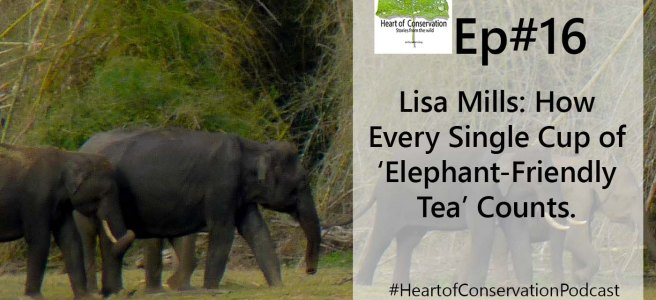
Lisa Mills: How Every Single Cup of ‘Elephant-Friendly’ Teas Counts. Ep#16

I think for me, I want to make sure that the message is that we donโ€™t necessarily want people to drink less tea. That is not our message. Tea is an affordable beverage that people can enjoy. It has health benefits and anti-oxidants. We donโ€™t want people to shun away from it because they are afraid that it is harmful to elephants. Think about the industries that could take its place. That could be much more harmful to elephants. I think my message is encouraging good farming practices with things like certification but also other things. Knowing who your farmer is, you know, knowing what their practices are, make a difference. Not just for tea but for about anything in kind of that your relationship between where your food and beverages are grown versus just blindly picking up products. You know, itโ€™s such a powerful force for change.

Sanjay Sondhi: Nature Conservation and Livelihoods Ep #8

I think for me, there are two words that are really really important.  And they go together. itโ€™s not a fancy word โ€“ itโ€™s โ€˜conservationโ€™ and โ€˜livelihoodsโ€™. I believe the only way to conserve landscapes, species, flora, and fauna is to involve the people that live in that landscape. And the only way we can get them to conserve it is if we incentivize conservation by offering them a livelihood that incentivizes conservation. if they are actually earning money from saving their forests, thatโ€™s probably the best way to link conservation and livelihood.

Nina Sengupta: Your Guide to Urban Foraging Ep#18

Now the edge effect. You can have both, a positive and negative tilt to that. Edge is something that you create, itโ€™s not always the ecotone, not always the natural boundary. Suppose I have a boundary of the forest, the natural boundary of the forest and grassland, that is an equal ecotonal area, that area will have more species but say I have cut a forest, I have cut a road in the forest and have created an edge, that edge is the boundary between the two communities, like nothing and forest would also have quite a bit of different, you know, different creatures but usually they tend to have the more generalist species. So suddenly you are favoring the generalist species rather than the forest dweller one, so it has, it can have negative impacts also and therefore, you know, as an ecologist always say that if you were actuallyโ€ฆ have a forest is better not to have it fragmented, better not to have a cut a road or cut a railway through it because you are creating more edge and that will actually affect the forest interior species or the overall health of the forests.

Salvador Lyngdoh: Wolf Biologist from the Himalayas. Ep # 2

A scientific term that I really like is: โ€˜keystoneโ€™. Itโ€™s like the keystone in a houseโ€ฆfor an arch. If you have an arch, you have a keystone there. The keystone holds together a lot of things in an archโ€ฆ if you have a bridge or something. The keystone is the stone that holds together the structure of the bridge. If you remove the keystone the whole bridge and arch collapse. That is one thing โ€“that certain species or elements are keystones for conserving- many things revolve around that. Many things are also connected because of that. For e.g. you have fig species which are keystone species. A lot of animals and birds depend on the fig species.

Sometimes they are also called โ€˜framework speciesโ€™- โ€˜Frameworkโ€™ as they build the framework for everything. If you have these species in the beginning, then what happens is, ultimately the natural flow come in and it attracts a lot of animals and dispersersโ€ฆthose who feed on it ultimately disperse seeds. Thatโ€™s how they act as a framework and support the entire framework also.

Keystone is one word I really like when you try to understand ecology in that sense. Sometimes keystone species can be called framework species.

Another term like that which I really like is โ€˜Trophic cascadeโ€™. We were talking of Yellowstone wolves and how they have a cascading effect. At the top level, you have these predators that regulate the prey population โ€ฆthe elk and the moose. In the Indian case for e.g. you have tigers that as top predators regulate a lot of the prey in the ecosystem. That way they control a part of the forest health as well by preventing the prey population from going over the carrying capacity as we call it. That way we try to understand how everything is connected with each other. Iโ€™ve given you three words. Keystone, framework and trophic cascade.

Almitra Patel. The Garbologist India SHould Thank for its Solid Waste Management Rules.Ep#13

There may small, small brands who are all making detergents for the big guys and they refuse to lower the phosphorus content.

Phosphorus is what is called a limiting nutrient. If you cut off the phosphorous, you cut off the aquatic plant growth. If you give phosphorous, itโ€™s like a special booster nutrient for aquatic vegetation. Just like what urea or nitrogen is for land crops, phosphorous is for aquatic vegetation. So itโ€™s so simple. Iโ€™ve been saying if the government doesnโ€™t want to bite the bullet and restrict it at least make it mandatory to label the phosphorous content in detergents so that environment-conscious citizens can buy a low-phosphorous detergent. Itโ€™s an ongoing battle which hasnโ€™t been won yet. But we need more voice to demand it.

Rita Banerji: How Indiaโ€™s Leading Wildlife and Environment Filmmaker Became a Catalyst for Change Ep#18

I think the word which comes to mind, there are many words actually, I guess, you know one of the things is interdependence, right, what we see in nature, right, I mean, why interdependence? Because thereโ€™s something in nature that lets (one) survive based on each otherโ€™s qualities, right?  If there is respect for each otherโ€™s way of being, nature is the best teacher in that sense, right? How to survive how differentโ€ฆ like there will a canopy, there will be a fern, there will be a leaf, there will be a frog, probably but everybody is dependent on each other strengths for survival. I think if, we can learn that, even in the way we are with the way a way of being you know where we understand that we cannot operate alone as a single person. We are interdependent on each other for so many aspects of our being and if we respect that interdependence, I think, it can solve a lot of issues of protecting it. Whether itโ€™s to do with protecting our forests, whether itโ€™s to do with respecting human rights, whether itโ€™s to do with the egos for example. So, I think, that respecting interdependence and learning from nature I mean thatโ€™s the best teacher I would say.

Lalitha Krishnan:. I hope youโ€™re enjoyed this episode of Heart of Conservation. I’m Lalitha Krishnan and , if you haven’t already, so subscribe to my podcast. It’s available on most on most platforms like Spotify, Apple Podcasts, SoundCloud… You can also read the transcripts or show notes on my blog: Earthy Matters . I would love your feedback. Write to me at earthymatters013@gmail.com Look our for Season Three, coming soon. Till then, stay safe, keep listening.

Birdsong by hillside resident, the collared owlet.


Disclaimer: Views, thoughts, and opinions expressed in the podcast and show notes belong solely to the guest featured in the episode, and not necessarily to the host of this podcast/blog or the guestโ€™s employer, organization, committee or other group or individual.

“I’m a traveller who writes not a writer who travels.” -Bill Aitken. In conversation with the Scottish-born Himalayan Author.

Bill Aitken

Heart of Conservation Podcast Ep#19 (Edited show notes)

Lalitha Krishnan: Hi. Iโ€™m Lalitha Krishnan and youโ€™re listening to episode 19 of Heart of Conservation podcast. I bring you stories from the wild that keep you connected with our natural world. Today I am speaking to a dear friend and hillside neighbour, who I have long admired for his travel writing, his wit, and his take on life. He is William McKay Aitken (Bill Aitken). Bill was born in Scotland, hitchhiked to India across Europe in the 1950s, and stayed on to become a naturalized Indian citizen. Drawn by his love for the Himalayan mountains and rivers, and the plateaus of India, Bill has written extensively about them. Heโ€™s authored over a dozen books including the Nanda Devi Affair, Seven Sacred Rivers, Footloose in the Himalaya, Divining the Deccan, Exploring Indian Railways, Riding the Ranges: Travels on My Motorcycle, to name a few.

Lalitha Krishnan: Bill thank you so much for being a guest on the Heart of Conservation Podcast. I just re-read Footloose in the Himalaya. I last read it when it was published inโ€ฆ 2003, right?

Bill Aitken: 2003, the last book I wrote.

Lalitha Krishnan:ย And now that I live in Landour, it sounds, you know, more familiar than it did when I read it back in Ranikhet. You have crisscrossed India on your feet, on your bike, by Indian rail, and looking at some of your book titles each of these travels seemed like their own literary pilgrimage so to speak.

Bill Aitken:  Quiet, yeah.

Lalitha Krishnan: So, do you always know in advance what you going to write about the places you visit and does that somehow, you know, alter your experiences, does it make you more conscious?

Bill Aitken: Absolutely, unless you do your homework, you can bypass, you know, fabulous sites then when you get back home, to your chagrin you read about this place and if you havenโ€™t read about it local people will always give you their own version of things. So, I remember in North Karnataka, I was looking for the village of this literary saint of Karnataka, Basaveshwara. I knew the village pretty well; where he was reputed to have, you know, built up a following and I asked some villagers is this the place. They said, โ€nahi haiโ€. They were of the opposite party, you know. He was a brahmin, who had given up the sacred thread so he was loathed by the Orthodox, so I mean, if I hadnโ€™t done my homework but even then Iโ€™d stupidly believed them and I just sailed through. This is life, I think the most important thing for a traveller is to be distrustful of directions, just double check triple check.

Lalitha Krishnan: Sometimes asking for directions doesnโ€™t help as I discovered today.

Bill Aitken: The most important thing for a traveller is to be distrustful of directions. Just double check, triple check.

Lalitha Krishnan: I am quoting you now from one your books, โ€œthe price you pay for living in the mountains is having to prefer your own two feetโ€ so  90% of the time that Iโ€™ve met you by chance, is while you are going out on your walks. At 86, you walk and you walk twice a day. Thatโ€™s despite, you knowโ€ฆ

Bill Aitken: Except for the last month when I had a surgery(lost in translation) of the leg.

Lalitha Krishnan:  Tell me about your love for walking and if itโ€™s connected to nature.

Bill Aitken: Yeah absolutely, I think itโ€™s the only place I mean ,the only place that you can really recollect nature, you know, when youโ€™re walking… under your feet every season different color of flowers, tiny flowers, and any speed more than walking, even jogging, youโ€™re just going to miss these sort of unexpected beauties.

Lalitha Krishnan:ย I was looking at some of your old videos and in your interview with Ted Henry, I think, about your book โ€˜Sri Sathya Sai Baba โ€“ a Lifeโ€™, you speak about the madness for the divine. You have done your share of, pardon my saying, the eat-pray-love sort of rite of passage before it was even fashionable. You spent time with Sarla Behn, previously Catherine Mary Heilman, in a Gandhian school and spent a few years in the Mirtola Ashram that is with Guru Krishna Prem, previously Ronald Henry Nixon and his successor Shri Madhav Ashish, previously Alexander Phipps. What drew you to them?

Bill Aitken: I had come across Sri Krishna Prem when in India House Library in London. I was doing this research for MA thesis on Mahatma Gandhi and this book by Krishna Prem, Iโ€™ve got it here, โ€˜Commentary on the Kathopnishadโ€™ and he said, he started off by saying โ€œprocul este profaniโ€ thatโ€™s the Latin for โ€˜begone academicsโ€™ โ€“ bhago bhago โ€“ profane. He said you will never understand the meaning of life if youโ€™re an academic, academics are overgrown schoolboys โ€“ afraid to face the world. So, I was hoping to be a budding academic so I threw this book aside in disgust. Then for my MA, the external examiner happened to be someone who knew Krishna Prem, a Bengali visiting fellow Durham(?) University and thanks to him I passed otherwise if it had been angrez, he would have failed me because they were all missionaries who had no time for anything Hinduism. So then, this Bengali guy, he said, โ€œif you ever go to India you must meet this Sri Krishna Prem, he lives in an ice caveโ€. Ha, Ha!… I thought 7000 feet, you know, sounds a bit unlikely. Anyway, I did meet Krishna Prem and he guided me to Sarla Deviโ€™s Ashram in Kausani where I stayed for four years, sort of toughening up on the village life, bathing in cold water.

Lalitha Krishnan: Better than an ice cave perhaps but not warmer than a library ha ha.

How did it influence you? Do you want to talk about these experiences, Mirtola, Kausani, these three people.

Bill Aitken: What happened was, you know, what really, I mean, turned my life around was I had hitchhiked to India and spent the 50 pounds I had started with. Reached Calcutta so I had to get a job teaching to pay for the onward fare, there was no road beyond Calcutta. I had to get a boat to Penang so I had to get a job teaching. When I was teaching I joined the Asiatic Society and I went in there one day and just happened casually looking at some books and I came across this particular book Nanda Devi by Eric Shipton and this book totally stunned me, knocked me over and I came out of that library no longer wanting to go around the world, just to see this mountain.

Lalitha Krishnan: So a lot of writers are disciplined, they say they are disciplined and have a routine but, you know, for your book, โ€˜Travels by a Lesser Lineโ€™ published in 1993, you travelled to 14 states by train by for about two months or so and you reached the four corners, if you can call it that, of India and for your book โ€˜Nanda Devi Affairโ€™ you rode long days on your bike carrying your typewriter along. I mean, I just can’t imagine, I mean, it sounds like a write-on-the-go adventure โ€“ people pay for those sort of things โ€“ sounds so exhausting. So why not a pen and a diary, I am just curious what you were thinking- about your writing process.

Bill Aitken: I had a travel column for the Delhi Statesman, so I reckon that the only way that I enjoy travel columns is if the remarks were sort of fresh, hot, you know, on the hoof. So every dayโ€ฆ I would only do 200 km in a day, that was my maximum, otherwise, you get too pooped, you know, and if you have a drink at night to recover then you are totally gaga, youโ€™re knocked out, so I had to keep this balance, you know, stay sober but also recollect and so the dayโ€™s journeys I would type out every evening, to get the fresh impressions.

Lalitha Krishnan: Why did you carry your typewriter along?

Bill Aitken: How else to record it? I mean, if you write a thing longhand and then write it up three weeks later when you get back, all the impressions have gone, the lively impression are what you actually felt on that ride nah? You have to get it down, fresh from the oven โ€“ garam garam.

Lalitha Krishnan: Writing is not easy, I think you made it harder for yourself.

Bill Aitken: No! Iโ€™ve always had the opposite, you know because if I correct anything, I will always write something entirely new, and then when I correct that I will revert it.

Lalitha Krishnan: Edit, edit, edit.

Bill Aitken: No, totally different, you know, I just have this sort of, you know, writerโ€™s diarrhea, not writerโ€™s cramp.

Lalitha Krishnan: Wow. So, you would type it all and then he would take it back and post it.

Bill Aitken: Yes.

Lalitha Krishnan: I know this is a question you get asked a lot but for aspiring writers of nature travel โ€“ what will you tell them to do or not do?

Bill Aitken: It depends entirely on your relationship with nature. If you really have the passion โ€“ woh apnay aap โ€“ you know, things will happen and it will work out for you, but if youโ€™re sort of, you know, borrowing others wisdom, you probably wonโ€™t find it, youโ€™ll find it uphill. I also find, you know, the whole vocabulary of this โ€˜Back to nature movementโ€™, I mean โ€“ environment โ€“ what a stupid word, you know? I mean there is nothing real about โ€˜forest conservatorโ€™. What does it mean, you know? You should be guardian, you know. You guard the trees with your life. Who gives a hoot for trees? In Mirtola, we had a gurubhai called Jagdish Nautiyal. Brilliant guy. He went to America, he went to Canada rather, he won the gold medal and they said โ€œplease stay, we will appoint you professorโ€. And he said, โ€œno, Iโ€™m a desh bhakt. Iโ€™m going back to the Forest Departmentโ€. He was as a junior in Almora district when he got back his fellow officers were so jealous, they sent him back to the old posting and he said โ€œFU! Iโ€™m going back to Canadaโ€ and heโ€™s a professor. I mean Hindustan mein, you know, the crab syndrome.

So, it is very hard to give advice because weโ€™re all different, you know, some enter with their soul, others enter with their mind. For me, as I say it was a religious experience at Nanda Devi totally, you know, altered my destiny. Otherwise, I was going around the world, thinking I go back to England and, you know, lecture. Didnโ€™t happen because if I was just, you know, hooked by this mountain. (Pointing to photograph of Nanda Devi). Here she is. And not everyone is going to be hooked.

Lalitha Krishnan: Not everyone is going to be hooked. I also wonder if, you know, for people who want to be writers, whether there are the habits to cultivateโ€ฆ.

Bill Aitken: Look I have to plead of being a phony writer, Iโ€™m not like Ruskin, you know? Every day I was born to write, you know? Or Hugh and Colleen, you know? Or Steve, you know? They are writers Iโ€™m not you know? Iโ€™m basically someone who enjoys traveling and writing about it.

Lalitha Krishnan: You write when you are inspired.

Bill Aitken: Iโ€™m a traveler who writes not a writer who travels.

Lalitha Krishnan: I get it.

Bill Aitken: Since Prithvi passed away, I havenโ€™t written, you know.

Lalitha Krishnan: You havenโ€™t travelled either. Have you travelled?

Bill Aitken: Exactly, but also, you know, I sort ofโ€ฆ because I was a partner to this very exalted Maharani, I had to, you know, everyone just assumed I was a toy boy and I had to as it were do something so I started writing but I donโ€™t have that โ€“ as I say like Ruskin is. Iโ€™m a bhakt of Nanda Devi, heโ€™s a bhakt of the muse of literature, you know, he must write, it is his dharam.

Lalitha Krishnan: To each his own.

Bill Aitken: Absolutely, thatโ€™s why I say I canโ€™t give advice to writers because I wouldn’t know where to begin. If you enjoy it, do it. I enjoy writing also and like many writers for example Sir V. S. Naipaul, he says โ€œI have never read anything I have writtenโ€. I love my writing, I go back to it every day, I laugh, you know hahaโ€ฆ

Lalitha Krishnan: I was going to ask you about your friendship with Ruskin Bond, both being here a long time, I know you are really good friends.

Bill Aitken: Ruskin was my neighbor here. So, I when I first came to Mussoorie he was very helpful and he appointed โ€“ he was an editor for โ€˜Imprintโ€™ sort of like โ€˜Readerโ€™s Digestโ€™ sort of stuff and he appointed me his Assistant Rejections Editor because he was so kind-hearted he couldn’t find it in himself to reject. Even if the English were bad, if it had feeling heโ€™d say โ€œchalne dhoโ€. So, I was an Assistant Rejections Editor. I also couldnโ€™t reject because when people write with feeling who gives a hoot about the grammar? We had this Superintendent of police who was going to write a book called โ€˜India Good Everybody Kingโ€™ which when you think of it is brilliant โ€“ how true. Everybodyโ€™s an archaic king, do your thing brother, yeh Hindustan hai. Anyway, I was always rejecting these and Ruskin said โ€œno, no, no, he is the Superintendent of policeโ€.

Lalitha Krishnan: We have so many writers on the hillside Hugh & Colleen Gantzer, Stephen Alter, Ganesh Saili. Why do you think โ€“ is it just a coincidence?

Bill Aitken: Iโ€™ve no idea, I have no idea. I canโ€™t โ€“ I think partly Mussoorie is near to Delhi, halfway between Badrinath and Delhi, you know, and itโ€™s also got, you know, quite a good educational crowd so I suppose itโ€™sโ€ฆ. but I don’t really know but what I do know is everybody I speak to who comes to Landour is hooked: โ€œI want to come againโ€. Why?

Lalitha Krishnan: I think itโ€™s the air. Seeing a blue skyโ€ฆ

Bill Aitken: An actual forest of deodar and the and the peace and quietโ€ฆ

Lalitha Krishnan: You were fortunate to meet Dr. Salim Ali and E R Hawkins. what was he like, Iโ€™m just curious, you know, andโ€ฆ

Bill Aitken: (Commenting on the book) Bombay centenary seminar 1983โ€ฆ

Lalitha Krishnan: Amazing signatureโ€ฆ.

Bill Aitken: Yeah! And his notebooks are beautiful, works of art.

Lalitha Krishnan: Lovely. What was they like, Bill?

Bill Aitken: I was at this seminar probably the only layman there, in the old days Bombay Natural History Society was all laymen and these are all international experts and specialists so I was really a sore thumb there but of course with a surname like Aitken, you know, youโ€™re considered some descendant of the Edward Hamilton.

Lalitha Krishnan: Are you still connected with the Himalayan Club?

Bill Aitken: Well, you know, Iโ€™m an honorary member but I was a little upset that they started the preparations for the centenary, which is some time off, few years ahead, by having a โ€“ getting the blessings of His Holiness the Dalai Lama. And I have a thing about the Dalai Lama, I sympathize with his plight because he is not just an individual, he is head of a very, you know, distressed community, Tibetan refugee community, so he has to have this respect. But Iโ€™m also a Himalayan writer and it just so happens that the best-selling book on the Himalaya was written by the Dalai Lamaโ€™s tutor โ€“ Heinrich Harrer, who was a thoroughly nasty bit of work. Harrer had been, anyway I donโ€™t know if you want to go into because of this, Harrer had been chosen by Gestapo for the mass extermination. He was in charge, he was called ski instructor. The word Nazi code for extermination was resettlement. Ski instructor meant in-charge of the training troops for the gas chamber. So thatโ€™s why the Dalai Lama has โ€ฆwhen he was asked don’t you know this about Heinrich Harrerโ€ฆ

Lalitha Krishnan: He was a child…he wasnโ€™t very old then.

Bill Aitken: I mean, he was young but the point is the publisher people in the Himalayan circle, they all know this to be true about Harrer but they wonโ€™t blow his cover. They wonโ€™t say โ€˜yes he was a nasty bit of war.

Lalitha Krishnan: Why is that you think?

Bill Aitken: People are indifferent, Chalne dho you know, the past is past. I donโ€™t know if youโ€™ve read this book by Bill Bryson โ€˜Here and Thereโ€™. ย He did the trip around Europe, one of his many travel books and he says the most shocking thing is that the president of Austria Kurt Waldheim, who got the job after being United Nations secretary-general; and he was in Greece as a German army officer and a piece of paper came on his desk saying 40,000 Jews are going to be sent to the gas chambers, please sign it. He signed it. President of Austria and then he said I thought they were going on holiday โ€“ sheer indifference โ€“ so this is why I objected. Iโ€™ve got nothing against the Dalai Lama but the fact was he was a child, his Regent invited 30 Nazi anthropologist to Lhasa, did you ever hear about this? No! It is a huge conspiracy of silence, so because Iโ€™m very upset that the best-selling book in the Himalaya was written by such a nasty bit of work. Come on, publishers are making money, readers are being taken for a ride. He didnโ€™t escape from Dehradun camp, the British offered him his freedom. He refused it. I meanโ€ฆ

Lalitha Krishnan: I guess itโ€™s just business in the endโ€ฆ itโ€™s all about the money in the end.

Bill Aitken: Anyway, the Himalayan Club, I…. (starts laughing.)

Lalitha Krishnan: OK. Do you have any regrets Bill?

Bill Aitken: About?

Lalitha Krishnan: Say Mirtolaโ€ฆ?

Bill Aitken: No! because Sri Krishna Prem… when I joined Mirtola, he said, โ€œwhat I will teach you I can give you no other guarantee that youโ€™ll never regret itโ€. I never have.

Lalitha Krishnan: I usually request my guest to, you know, share a word, I don’t knowโ€ฆ.

Bill Aitken: I thought you were going to say play the bagpipesโ€ฆ

Lalitha Krishnan: Ha ha. I usually request my guest to share a word that means something to them this is just adding to our vocabulary as a nature writer. A word or a concept or maybe a quote โ€“ your own quote, something you like that you said.

Bill Aitken: Alright I give you that quote from Salim Ali, I thought Iโ€™d written it down I havenโ€™t, anyway itโ€™s to the effect that, you know, there are so many problems for a wildlifer that you just look on the bright side and just get on with what you love doing, don’t be weighed down by all the problems.

(The actual Salim Ali quote: ” Be more realistic. Accept that we are all currently sailing through turbulent waters and should therefore avoid frittering our efforts on inconsequentials. In other words, be constructive and revel in the simple joy of lifeโ€-Salim Ali)

Mrs. Gandhi was a great wildlifer and he regretted that he hadnโ€™t sort of pushed her to do more, but the main thing is, you know, stay positive because the worst thing is if you give up then nothing is going to happen. You have to see the bright side, just look on the bright side.

Lalitha Krishnan: Thatโ€™s exactly what I think about you. In your book โ€˜Riding the Rangesโ€™ you say โ€˜mountains donโ€™t block your way, they invite closer inspection by making you slow down and find a way aroundโ€™. I feel you tackle all the obstacles in your life that way and also I havenโ€™t read all of your books but the ones I have are so delightful and regardless of how hard your journeys have been the thread that binds them is your sense of joy, I feel, and also enjoy your wit and humour. Itโ€™s very uplifting.

Bill Aitken: If you love nature, it is divine. Unfortunately, the word divine is politically incorrect, but Iโ€™ve always been fascinated by divinity, you know? I mean to me the divine is real and nature โ€“ prakriti โ€“ is the most divine thing but I was brought up you know, with this Semitic, you know, man is worthless, come on, you know, man is divine. This is Mirtola teaching โ€˜man is the measure of all thingsโ€™.

Lalitha Krishnan: Divine is nice without religion.

Bill Aitken: Exactly, religion is just a racket to try and reduce it to an infant, so you will pay the priestโ€™s salary. Look at the churchโ€™s record now this Cardinal Pell, I mean, what a disaster nah? The thing is, I was born in front of this, itโ€™s called Dumyat, and so this to me was, it stood in utter contrast to the church, you know? It stood in contrast to the church, you know, because they church is cold and, you know, like going to church is like Churchill wrote when he went to meet Stalin he said, โ€œitโ€™s like taking a lump of ice to the North Poleโ€ and so the Dumyat was my touchstone for the divine, you seeโ€ฆ and as a child, I used to love to sit on top listen to the music of the Spheres and my dream was, you know, there you couldnโ€™t settle on a mountain, youโ€™d die of cold, you know. The only thing that could survive was sheep but I alwaysโ€ฆ my aim in life was to dwell on a mountain and here I am on this beautiful mountain. So, to realize your dream, I think is the very most satisfying thing in the world.

Lalitha Krishnan: It’s important to have a dream, soโ€ฆ

Bill Aitken: Absolutely, and also to trust your dreams, you know, your actually dreams because they can really change your life. In Mirtola, you know, we had a big thing on dream interpretationโ€ฆ.

Lalitha Krishnan: Yeah, Iโ€™d heard about it. But was itโ€ฆ?

Bill Aitken: It could totally change your life andโ€ฆโ€ฆ

Lalitha Krishnan: No, but the interpretations, were they correct?

Bill Aitken: Well obviously in the scheme of things it could go horribly wrong but I remember one storyโ€ฆ

Lalitha Krishnan: Did you interpret your own dreams?

Bill Aitken: Very badly because usually theyโ€™re very critical and nobody likes to criticizeโ€ฆ so I was a very bad interpreter. But, I had this dream.. I once had a girlfriend who I wanted โ€“ weโ€™re going to hitchhike around Europe another student and I when we set off, I spent the night in a home and on the mantlepiece was a photograph of a friend of mine in the Universityโ€”Sandy, his name was Sandy, Scottish for Alexanderโ€” and suddenly I froze unconsciously and on that trip, poor girl, I never even held her hand because all my life I had been suppressed by my Big Brother Sandy. I mean, it suddenly came to me, you know, and poor gal, what had she done to suffer me? So dreams areโ€ฆ  when I saw this photograph I never associated it, you know, Sandy but then the dream said Sandy is, you know, your sort of why you came to India, was to get away from โ€“ your mother likes Sandy, your father likes Sandy, everybody likes Sandy, nobody liked me โ€“ and Sandy got a pair of skates or speed skates when I got, it was figure skates. I mean, these resentments were real and only a dream can objectify them and say โ€œyou stupid fool. All your life you felt you loved Sandy and you all the time you wanted to kick his assโ€.

Lalitha Krishnan: Did you tell him?

Bill Aitken: No, no, I mean, how will it help?

Lalitha Krishnan: Just to get it off your chest.

Bill Aitken: No, no, once again Iโ€™m the fool not him.

Lalitha Krishnan: Thank you so much Bill.

I hope you enjoyed this episode of Heart of Conservation; I am Lalitha Krishnan. Do check out Bill Aitkens books and you can listen to Heart of Conservation on Spotify, Apple podcast or any other platform of your choice. Stay safe and keep listening.

Photo: Lalitha Krishnan. Podcast interview and Artwork: Lalitha Krishnan. Special thanks to Akshay Shah who helped transcribe the show notes.

Birdsong by hillside residents.

Disclaimer: Views, thoughts, and opinions expressed in the podcast and show notes belong solely to the guests featured in the episode, and not necessarily to the host of this podcast/blog or the guestโ€™s employer, organisation, committee or other group or individual.

Urban Forager, Nina Sengupta Tells us how she’s Changing the World one Weed at a Time.

Heart of Conservation podcast Ep#18 Show notes (edited)

Lalitha Krishnan: Hi. Iโ€™m Lalitha Krishnan and youโ€™re listening to episode 18 of Heart of Conservation podcast. I bring you stories from the wild that keep you connected with our natural world. This monsoon has turned everything green and fresh and wild again, maybe a bit too wild for some of us. S,o what do you do when you see a weed occupying space with your favorite flower? Fling it aside, right? I pretty much do the same, I actually find weeding quite therapeutic. But how can you be sure you’re getting rid of the right plant? My guest today will enlighten us about the ordinary weed. She is Nina Sengupta an ecologist who lives in Auroville and works around the globe as an independent consultant, integrating biodiversity conservation and sustainable development options. She’s worked in South & Southeast Asia, Africa, Finland, and the USA. She’s passionate about food forest, food gardening, art, films, and making life science active and participatory for all. Sheโ€™s also published a coloring book for adults, the first of its kind on edible weeds.

Lalitha Krishnan:  Thank you so much for coming on Heart of Conservation podcast and am excited to talk to you. I will start with a very basic question.  So, what is urban foraging and how did you get into it.

Nina Sengupta: Get into it is entirely by chance but what is urban foraging? What is foraging? Let me explain that, that may help. Foraging involves searching, wandering and collecting food on your own from the wild or where it grows naturally but for free typically the items that are foraged are vegetables, fruits, roots, honey, and edibles but if you look at it ecologically, the theory foraging involves two key decisions of the foragers – what do forage and where to forage and for most animals who are surviving in the wild, wild animals, these are the two very critical decisions. So up until you know about 10,000 years back when humans started agriculture, humans were hunter-gatherers, and out for a lot of their survival they depended on their skills to forage. So urban foraging is nothing but within the concrete jungle of urban areas that you find areas where things are growing wild, where you can forage or collect your food or greens or whatever you choose to, sometimes it’s also flowers for beautification but also definitely food items for free, for yourself, not for selling, you know, for yourself. That’s the key thing about foraging.

Lalitha Krishnan: That’s interesting! I never thought of flowers as foraging but you so right and also to me, you know, foraging has always been a western concept, you know, you hear people picking mushrooms and strawberries and stuff like that in the woods. But I am sure in our country in rural areas, people with traditional knowledge do this all the time regularly and already and I’m sure their kids also, you know, know what is edible and whatโ€™s not. So I’m curious in urban India when you’re talking of foraging and for free is this, you think, is a recreational activity or are the people doing this regularly?

Nina Sengupta: Let me address this whole idea of the western concept, the term foraging is perhaps what we have tagged to a certain recreationally activity which is primarily coming to us from the West but, you know, if you really step back from it, how can gathering food that is seasonal, accessible and you can get it for free, how can that not be part of any culture and in any century really. So, you know, once I worked with a tribal group in India and one person, I clearly remember him saying, he kind of famously made a statement; that as long as the forest lives tribal people will not starve, you know, so I kind of remember, like it was amazing to me, because then I kind of thought that I am not there, I mean, where he is and thereโ€™s a huge truth to that and if you really look into the, you know, traditional village life you have there are people who would say, you know, after school they would come by while coming back home they will pick up this and this, this and that which they learned from their parents what to pick and those are the greens they seasonally picked. So, picking where, you know, it was not recreational at all, it was often not poverty-driven either. It was part of the lifestyle whereas if you right now look at, you know, what the foraging is, in the urban areas you find people who are consciously shifting to a healthier lifestyle. They are getting into foraging and those are, I wonโ€™t say recreational, itโ€™s really going back to a more sensitive way of living but you can call it, you know, borderline recreational too but you also find, you know, people who are foraging when they have the access to, urban poor, those who actually forage to supplement their income. I always find this, you know, amazing this – typically old ladies who would come to the fringes of a market. They never get probably a place in the market but they would have their fares on the footpath, next to the footpath, in little portions, no weight or nothing and they always bring the seasonal, you know, greens and seasonal this and that, very small portions of each. Now what they’re doing is basically they are foraging, they are foraging for themselves and a little bit extra they go and sell for this little extra money. There is some kind of seasonal weed-like what you call chickweed (Portulaca quadrifida) this you actually rarely ever find in any of the supermarkets or any of the, you know, formal shops, you always find seasonally with these ladies. So, we do have a tradition of foraging, even urban foraging, but yes, the middle-class foraging perhaps came to us from the West.

Lalitha Krishnan: Right. When you speak about it, I do remember seeing, you know, women with very little selling these greens and I always presumed it was from their garden but itโ€™s interesting that they probably foraged it. So, Nina, in a city where would one, you know, I mean without being specific, what is an ideal spot to start forging in the city.

Nina Sengupta: My recommendation would be – the first step to foraging is recognizing. In your city if you have weed walks, like the one I conduct and many cities do actually, it’s best to join them because if you are new to this, not just once, join it as many times as possible until you recognize a handful say 5-6 of them almost like second nature, like you know, kind of see that and you know it is that.  Now where you are seeing and recognizing it may not be the ideal place for collecting it because often these are in the cities, these are next to the gutter or next to a leaky pipe, or pretty terribly bad polluted water but these are actually quite excellent places to see them, know them, and recognize them. Itโ€™s actually a good source of collecting seeds because you cannot collect and eat them because these plants also often bio-accumulate & bio-concentrate which means that if they’re growing in polluted water they are actually would concentrate those and heavy metals and pollution in them, so you definitely don’t want to collect and eat where you are not very sure that the water is relatively clean. So in an urban area, once you have recognized and if you’re going for a guided walk you will already know where you know itโ€™s a safe place to collect but otherwise, you know, you say you are very confident of 5-6 plants that you are sure you can collect, then look at the fringes of the gardens even the edges of a flowering bed often, you know, where they get a lot of TLC -tender loving care every day the Flowers and all that get but you know the edges of that they start getting a little wild and start getting, you know, other plants which are not intentional, these are the places where it is absolutely safe to collect from and if you know that what they are you can. And sometimes, like you know each area in India for example has a primary seasonal flowering time. Once the garden kind of gets over there is a period when it says lull, know there is not the next, you know, set of plants hasnโ€™t been planted, these are also the absolutely ideal time to forage because the weeds kind of takes over and itโ€™s very easy to pick them at that time and you’re also very sure that they are safe.

Lalitha Krishnan: Wow! Thatโ€™s interesting. Nina, I hope youโ€™re going to be free after COVID time because I don’t know anyone else who takes people out on weed walks. Is there a network of people who do that or is, I think, it’s only you?

Nina Sengupta: I think is there somebody I mean there are lots of this you know pop up lunches and dinners where they do farm to plate kind of thing, you know, so I am just guessing when theyโ€™re doing farm to plate some of the things that they’re collecting, I am hoping, theyโ€™re also wild and not necessarily the vegetables but yes I know I didn’t realize that I was only one but you know hopefully not, hopefully, we are a tribe.

Lalitha Krishnan:  And, you know, youโ€™re also talking about foraging being free but, you know, free for us but is there a law, is it legal, I mean, could you be arrested for eating wood sorrel or would you be doing a city a favor by clearing the weeds out?

Nina Sengupta: In India, really, who cares what (plants) you eat or as long as what you eat is not commercially super attractive or declared a narcotic. If itโ€™s not either of this category whether, you know, I have, you know; whether Iโ€™m surviving on wood sorrel or something else really, you know, nobody, to me it feels like, that they have the time to but thereโ€™s an interesting anecdote I must share with you. There is a particular solanum like you know Solanaceae which is in the nightshade family is usually you don’t eat the leaves usually, you know, people kind of stay away from it, but there is a particular Solanaceae which is a lot in Solanum nigrum which is very, very nutritious, wonderful to eat and tasty and all that and I, it is it’s quite popular in South India, even though the plant grows anywhere actually pantropical not only everywhere in India but you know beyond, it is not something very popular elsewhere in India. So I went to Calcutta and I see that I am eyeing, that right all along on both sides of the road Iโ€™m walking there this Solanum nigrum is fruiting, beautiful, lush and nobody is collecting because nobody eats them and I have eyed them and eyed them for several days as I walked up and down. And then one day I decided Iโ€™d stop and just take some fruits as you know seeds so that you know I bring them back and plant them and as soon as I start collecting them, there were lots of benevolent people who just kind of crowded around me and said โ€œMadam donโ€™t, donโ€™t you are going to dieโ€ so I must say that they were very sweet, very concerned people who were very bothered that what I eat I might, you know, might kill me but otherwise there is no particular law to stop me from eating something which is I collect, not that I have encountered but I don’t think so.

Lalitha Krishnan:  Tell me why do you forage? Is it just for the pleasure of I,t for the taste and also what do you get what do you get from it personally and also what would you forage for, you did mention a few?

Nina Sengupta:  Actually to begin with it, I mean I primarily again it still is, itโ€™s fun, itโ€™s a sense of discovery and there’s a wow factor because there is that sense of discovery and if you see something beautiful, you know, you inhale a chest full of air in wonder and that wonder-appreciation of nature is quite priceless and it almost does not happen it doesn’t matter if ultimately I get to pick something, you know, I think or eat or collect enough but that I know that they are there kind of has a huge a sense of security and well-being. That is, you know, it’s hard to articulate that sense that you get that despite being an urban area I have this amazing, you know, a wonderful bounty around me, itโ€™s like even in a concrete jungle like nature kind of lets you know that it is there for you, you know, very close to you if you choose to pay attention.  So for me, I actually got very attracted to this tiny little flowers which many of the weeds have and you wonder at the detailing, you know, itโ€™s just too good and you know, I have a haiku which I actually had included in my coloring book which says that โ€˜a flowering weed hearing its name, I looked anew at itโ€™ and it’s so true because you figure out its name because of course I, first of all, it was a wonder for me, then being a trained ecologist itโ€™s not that difficult even though Iโ€™m not a botanist, itโ€™s not that hard to figure out, OK! let’s identify this species and then you read about it and then youโ€™re like amazed by the different qualities of it and soon you realize that many of them, you know, natural remedies that you are very familiar, which comes in bottles, familiar bottles, they’re actually growing right next to you. So, this is how they look and some of them you can actually eat so thatโ€™s where it is that it started and it continues to be that because I still am discovering and figuring out absolutely new things almost regularly. So the things which I get to absolutely love, there is this particular weed, one I already mentioned, Solanum nigrum locally called manathakkali and there is a cousin of it called Solanum villosum which looks like tiny little red tomatoes and itโ€™s beautiful and for me personally, there is a plant called Commelina benghalensis and it growsโ€ฆ itโ€™s prolific, and has one of the most delicate blue and beautiful flowers and it turned out to be that it is amazing for, you know, intestinal health, gut health and yeah so and of course punarnava- itโ€™s a very well-known ayurvedic medicine but it is also amazingly edible and quite tasty too. What I actually personally revel in discovering is that the ones which are not traditional, there so many greens, you know, locally if you ask they will say, you know, itโ€™s a goat food. When there is terminology like that, you know that they are perhaps not in their traditional pantheon or things that they are using which also may indicate that it had become naturalized much later it is not part of Ayurveda sidha and all the other medicinal tradition but if you really investigate and find out about them we can be edible, they can be amazingly medicinal, they are just, you know, awesome. So, Iโ€™m still discovering, Iโ€™m still at that wow stage.

Lalitha Krishnan:  I can hear the wow in your voice. I guess every time you are attracted to something it sort of begins a whole voyage of discovery because then you go into it and find out more and more and more. Nina, you created a coloring book called โ€œEdible Weeds and Naturally Growing Plants of Auroville for Adultsโ€ on weeds, I love the idea but what made you think about it? And what do you think the experience of drawing weeds does, you know, for a person?

Nina Sengupta:  Itโ€™s a variety of things and since I have kind of come up with the book it has also extended into several other things which kind of justifies it, but for me it was, you know, I was very bothered about one character in me, I have noticed in me, that for example, there is deforestation going on in some part of our country and weโ€™re all very bothered, we are, you know, signing up in some kind of a petition signature and then something else comes up – social, environmental, other factors, weโ€™re totally, you know, shift to that but hardly ever there is an update on what actually happened to the other one and it bothered me that how we can let go of that, you know because there are people who for them it’s a part and parcel of their lives and they are, whether you forget or not, they will not be able to forget it. So I kind of thought that perhaps that nature doesnโ€™t, you know, in urban life, nature is not such an integral part because you know we get our food from a grocery store, supermarkets, we, you know, have a park nearby too, so itโ€™s not like if one goes, we go to the other , you know, itโ€™s not such an end of the story and I kind of started asking people that you know how do they connect with nature and somebody who had made a statement famously that โ€œI really donโ€™t have the time and I donโ€™t afford to go and a visit, I don’t connect with nature because I really donโ€™t have the time and I donโ€™t afford to go to a National Park every now and thenโ€. And it struck me that, Oh my God is nature so disconnected that for an urban individual to connect to nature one has to actually physically take themselves out of the urban areas and go somewhere? Now, of course, there is always the bird watcher group and the other you know other wonderful tree groups and in different cities but what about people in general like they do they connect with nature? And I started thinking that what I can offer? What I can kind of point out for me and for all of us that we cannot ignore that it is right there in the cities? And I could come up with weeds because they are everywhere and so thatโ€™s how I started on, you know, focusing on weeds more carefully to make into a book. The reason I wanted to make it into a coloring book for adults because it is a concept that has remained with me since I was doing my studies abroad, that I had walked into a genetics class and I always, you know, was interested in art and here I walked into a genetics class and the professor was telling that you know you can pick yourself a coloring book and you can see the snow, learn about the cell structure that that way and for me mainstreaming coloring which is doodling and coloring was always like and you shouldn’t be doing in the class kind of training I had. So suddenly mainstreaming coloring as part of your education really seemed very attractive and from then on I always thought that you know, we should have our education also made a little more fun, little more light so that you can do it yourself so that when I made the coloring book I want it to be experiential that by holding the book it feels different, it is made in handmade paper, it is hand-stitched, it has no use of plastic in it and when you are a coloring, when you are sitting and coloring, I really believe that this calming act of coloring has an effect like osmosis, the kind of the information gets to you even without you paying attention and so it kind of gets to you in many levels, it kind of wraps you in in a certain experience, it informs you about plants. If you want to, you know, paint it crazy purple – thatโ€™s fine but you can still have a colored insert by which you can take outside and identify the weeds you want because everything is drawn to scale. So yeah that’s why.

Lalitha Krishnan: You know, I really hope people are listening with this lockdown we’re talking about growing our vegetables and microgreens, and people are thinking of taking up farming seriously. I mean, this sounds like the perfect climate to go foraging. Don’t you agree?

Nina Sengupta: It happened in our community how as I was and how it evolves here isโ€ฆ I had made the book and I actually thought everything has been very organic, you know, making thinking about making the book, making the book and I let it be, you know, I didnโ€™t, you know, start off with uh doing weed walks and it turned out to be that some peopleโ€ฆ they were gathering up to know about local food and it didn’t have so much of interest that, you know if you publish a recipe people look at it but you know theyโ€™re not very sure so they didn’t know. So, there was a group which started, they started taking people’s small groups to different farms and actually there will be a demo on how to cook it. So one of them in one of these farm demo visits that they had gone, they found that they are using my coloring book as a reference so for a lot of people that was the first time they were getting to know there is something called you know edible weeds so they called me up and said you know can you show us a few? So that was the beginning of the weed walks and I realized that you know, one weed walk and one session was not enough so it kind of became regular but even then, even when you know very well, that this is edible, people are very interested learning, taking notes. I saw, barring a few exceptions, there not many people who graduated from knowing the weed to actually cooking and eating them. Even though, you know, we have plenty of safe places where it can be collected. But come lock down suddenly with this knowledge which was already they had gathered, they decided that letโ€™s, you know, use it so there was absolutely amazing amount of energy we had, you know, there was a WhatsApp group but with hardly about 10 members it became soon a group of 90 which each one sharing their recipe on how differently they can use this weed and that weed, incorporate that a little technique, taking pictures and, you know, getting congratulation from each other. It actually really brought it into a full circle in which right now there are several people who who eat it and also this is their way of avoiding to go and stand in the line in a grocery store, they know that, you know, they can just go around and collect and how healthy and I call it ultra organic food and, you know, it has been right simply wonderful, you know, there are recipes which I would have never thought which, you know, part of this community, you know, it has developed so itโ€™s yeah it has been a great journey as far as that is concerned.

Lalitha Krishnan: โ€˜Weed recipesโ€™, thatโ€™s your new book I think. Yeah but definitely I think, you should do a webinar. There will be thousands of people who’d be really, really interested so that’s another way to promote but so do you do a lot of walks and how else can we promote foraging – school groups? I mean now itโ€™s all online. Is there a platform that one can go to and read or forums to participate in?

Nina Sengupta: There are forums to participate, I have actually initiated a new Facebook group and also a Youtube channel where I actually, regularly, tell more about the weeds, individual weeds so that they, you know, sometimes if you see 10 and then you forget all of them. So we thought that we will concentrate on one or two at a time so that, you know, it can percolate and you know make more concentrated writeups on that, make a little video how it actually looks in the becauseโ€ฆ you know, the walks we cannot do at the moment until like, since the lockdown in March, we havenโ€™t had a walk and we thought that itโ€™s, instead of people using what they had already gained other than the ones which are already using, itโ€™s a good way to connect to people who areโ€ฆ who can just look around their own homestead and start foraging from then on? So, yes, we do haveโ€ฆ and also, you know, I feel that this activity is such a calming and grounding activity in a way that this has to come to each individual at their own pace. So, if it’s OK to just, you know, sit with a coloring book, read about it and then go out and, you know, get something, read about it before you actually try out. Itโ€™s OK, but there are others who do it much, you know, at a faster pace, so the pace is decided by you, but out once you already what is really nice is thatโ€ฆa couple of things. Most of the foraging weed that we are talking about theyโ€™re pantropical, there available everywhere and sometimes even in the temperate regions, in the summer months they are available. So I find it an amazing connection that I am eating a wild here in that wild grows in somebody elseโ€™s backyard halfway across the world or a half way across the country and I find it very connecting, you know, that factors are very connecting and we make those connections to our websites and the channels that we are trying to make and so what we’re trying to do here is โ€ฆpart of it is reclaiming our tradition because many of the weeds as you get to know you see that there are traditional users then we just, you know, we may have forgotten or lifestyle didnโ€™t permit so we didnโ€™t know whatever, so we are reclaiming our past in a way then weโ€™re building on it at the present because culture and tradition are never static. It is dynamic and part of that dynamism is that there are weeds which are probably not part of our tradition but theyโ€™re here and now so you learn about them and you add to thatโ€ฆ add to your repertoire of weeds that you forage from and thus kind of you are building on that culture, you know, that you are connecting with the past and your building in the present and the next obvious step is to take it to the future which you have not touched upon just now in your question, is to take it to the next generation. And I think that there cannot be anything more amazing that as parents and adults we can do is to take this knowledge to the kids and have them that sense of wonder from a much earlier age and so thatโ€™s one of the things that we are trying. Personally in my effort, Iโ€™m trying to reprint this book because now it is out of printโ€ฆ reprint this book and have two more volumes and the way I want to do is through crowdfunding because one more uh interest in doing so in that way that I want to involve people not just printing and publishing book but also take it as a package to the schools, you know, the schools will have all the three books may be and as part of this whole initiative, the teachers will get trained. I will have different sessions with the teachers and then with the kids so that there will be many more of this weed walks and the weed knowledge that will go and percolate amongst the children in the schools and thatโ€™s where, you know, thatโ€™s where you start picking up you know things will really get rolling, I think.

Lalitha Krishnan: You’ve given us so much food for thoughtโ€ฆ

Nina Sengupta: And the idea that it is getting in touch with the wild, it is actually the best wilderness that you can remain in touch with being an urbanite. So it, you know, when I am really connected to the natural world around me I am much more sensitive and sympathetic to somebody else elsewhere and I hope that that kind of feeling comes in the decision making in the choices that we make as consumers or as individual citizens in making our decisions. So that is hope from weed to changing the world.

Lalitha Krishnan: Well this is the time to change the world. Nina, I also wanted to ask you where do you draw the line when it comes to foraging?

Nina Sengupta: I say the word foraging comes from a very western concept of foraging, where actually people do go and collect themselves to eat but it has also escalated to being a part of tourism, you know, that eating wild is part of the exotic feeling sometimes not even going to the wild, you know, sitting in the city there are famously this some restaurants in Nairobi, famous for over decades but we also now have started having them in India is that if you go there you will be served wild food. Now that’s to me is not foraging for if you are sitting in your city and somebody else is smoking the heck out of the rock bee to provide you the most amazing honey then that honey has a lot more ecological problems with it then values because the demand actually forcesโ€” demand beyond self and beyond the local areaโ€” forces a greater amount of, you know, taking off these resources and itโ€™s a concern. One of the things that I probably โ€ฆ one of the things that I also am very interested in films, I do screen an environmental film series every year and Iโ€™m โ€ฆ you know a lot of my metaphors come from filmsโ€ฆ and if you even look at Satyajit Ray films or any films as such, you see people treat the forest as the edge of civilization. So when you go to the forest you let your hair down and you be somebody else and this feeling remains there and as people have in the risk they say the last couple of 20 years people have started moving more. You know there are more people who are working you know young people there working away from their family; they are traveling, they are going into tourism, there lot more people movement and these people when theyโ€™re moving and going into a very exotic place, theyโ€™re not necessarily sticking to their, you know, traditional meals or even the very hardcore vegetarians donโ€™t remain vegetarian. So many wild foods are getting overexploited to serveโ€ฆ one thing is to serve the people who have moved away from their own community elsewhere so that they have, you know, a touch of their home and other people who are visiting and as tourists to their place and want to experience that taste of the wild without foraging. So, these two are actually very even, though it is termed as foraging, itโ€™s called forest food you are eating local honey. You know, how healthy can it be? How sustainable it can be? It is actually anything but sustainable.

Lalitha Krishnan: One more question Nina, I usually ask my guests to share a word to improve our vocabulary and I know, Iโ€™m suggesting now, ecotonal and the term edge effect. So, would you mind explaining both?

Nina Sengupta: Yes, gladly but I will start with that I will take again a little step before I go to ecotonal, that much of our lives are now locked up in the screens, you know, be it, you know, in our mobile phone or computer screen and that bit hasn’t probably changed in our lockdown period either but, you know, life happens in the periphery. So it is that peripheral vision individuals have started losing more urbanities than not but there are you know it’s becoming our character like you know we are all if you’re going in the bus or train or plane youโ€™re still looking at a screen, weโ€™re looking at a screen, many are watchingโ€ฆ The screen is our lives yet our lives are happening around so this is kind of in ecologically speaking ecotone is the region which is a transition between the two 2 biological communities two ecological areas. For example, an estuary is an ecotonal area because the river meets the ocean and the land is there in that areaโ€ฆ that confluence is the ecotonal area and naturally, the ecotone between which is the confluence between the two habitats is always richer in species than either of the two. So, you know, given the area, you know, per unit area, there usually ecotones hold more species. Now the edge effect. You can have both, a positive and negative tilt to that. Edge is something that you create, itโ€™s not always the ecotone, not always the natural boundary. Suppose I have a boundary of the forest, the natural boundary of the forest and grassland, that is an equal ecotonal area, that area will have more species but say I have cut a forest, I have cut a road in the forest and have created an edge, that edge is the boundary between the two communities, like nothing and forest would also have quite a bit of different, you know, different creatures but usually they tend to have the more generalist species. So suddenly you are favoring the generalist species rather than the forest dweller one, so it has, it can have negative impacts also and therefore, you know, as an ecologist always say that if you were actuallyโ€ฆ have a forest is better not to have it fragmented, better not to have a cut a road or cut a railway through it because you are creating more edge and that will actually affect the forest interior species or the overall health of the forests.

Lalitha Krishnan: Thatโ€™s great. Thank you so much, Nina!! That was enlightening, to say the least. You have introduced foraging, I mean, we knew it was somewhere on the edge of our consciousness now you have brought it right to our minds, into our hearts. Thank you so much.

I hope you enjoyed this episode of Heart of Conservation, Iโ€™m Lalitha Krishnan. You can listen to Heart of Conservation on Spotify or SoundCloud and other platforms of your choice. Keep listening and do check out Nina Senguptaโ€™s YouTube channel. Itโ€™s called โ€˜Edible Weed Walkโ€™. Stay safe and start foraging.

Photo courtesy Nina Sengupta.. Podcast interview and Artwork: Lalitha Krishnan. Special thanks to Akshay Shah who helped transcribe the show notes.
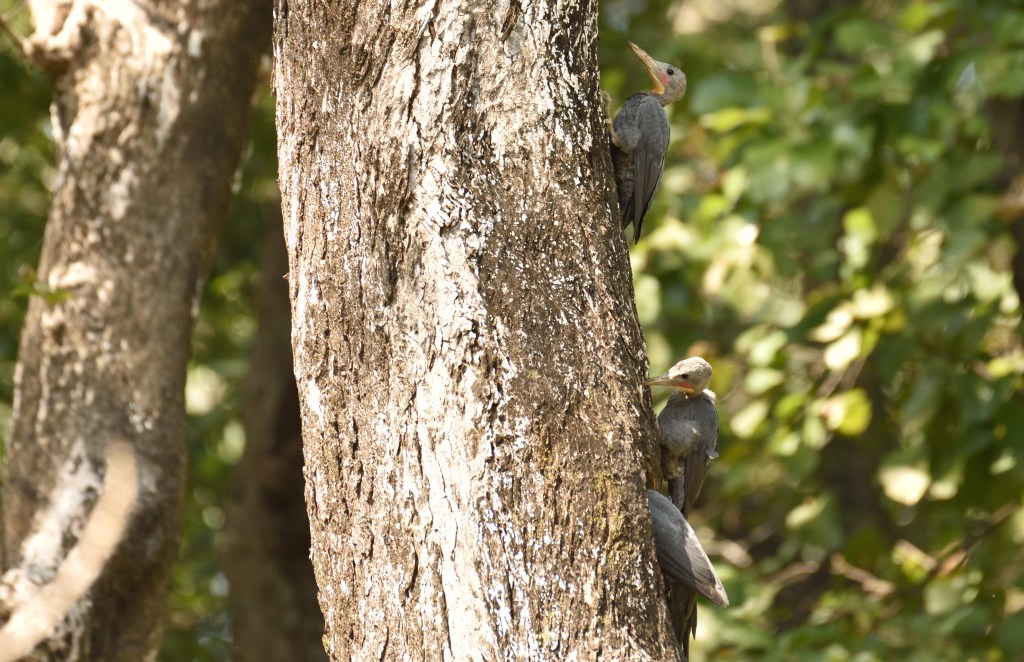
Birdsong by hillside residents.

Disclaimer: Views, thoughts, and opinions expressed in the podcast and show notes belong solely to the guests featured in the episode, and not necessarily to the host of this podcast/blog or the guestโ€™s employer, organisation, committee or other group or individual.

Rita Banerji: How India’s Leading Wildlife and Environment Filmmaker Became a Catalyst for Change.

Rita Banerji. India's Leading Wildlife & Environment Filmmaker

Heart of Conservation Podcast Episode #17 Show Notes (Edited) Read or listen in.

https://soundcloud.com/heart_of_conservation/rita-banerji-indias-leading-wildlifeenvironment-filmmaker-catalyst-for-change-ep17

Lalitha Krishnan: Hi. Iโ€™m Lalitha Krishnan and youโ€™re listening to episode 17 of Heart of Conservation podcast. I bring you stories that keep you connected to our natural world. Today, Iโ€™m speaking to Indiaโ€™s acclaimed wildlife/environment film make, Rita Banerji. She heads Dusty Foot Productions and in 2015 she founded The Green Hub a โ€˜youth and community-based fellowship and video-for-change programโ€™ based out of northeast India.

Dr.  Schaller renowned biologist, conservationist, and author has actually visited Green HUB. He was so impressed by what Green Hub is doing and wanted to know what they are doing and how they are doing it. Rita and her team of The Green Hub Fellows have interacted with the Duke and Duchess of Cambridge who has watched their films. 

Rita has recently been selected as an Ashoka Fellow which is a lifelong fellowship for the world’s leading social entrepreneurs. Check out www.ashoka.org. In 2017 she was awarded the National Geographic โ€“ CMS Prithvi Ratna Award, and in 2018 the RBS Earth Hero Award for contribution to the environment through films. Rita, welcome to Heart of Conservation Podcast, and thank you so much for speaking with us.

Rita Banerji: Itโ€™s great to be here on the call with you.

Lalitha Krishnan: It’s great to finally connect with you. So, to start with you made some incredibly powerful films. Youโ€™ve been filming in the Northeast since 2002 starting with the film on orphaned bear cubs. Your film on the wild meat trail won the Green Oscar. Now that it’s confirmed that the Coronavirus is zoonotic and there’s a link to wildlife trade and the interface between human, animal, and environment, your films seem particularly relevant. So, would you like to briefly tell us about the makings of these films?

Rita Banerji: This was right at the beginning of when we were starting our own production house Dusty Foot Productions, before that, I had worked with Riverbanks Studios for almost 10 years and most of my films were around human and wildlife issues. So we heard about this project which was about rehabilitating of re-introduction of orphan bear cubs into the wild and that was supposed to be in Pakke Tiger Reserve in Arunachal and that was the first time they were trying something like that in India. Wildlife Trust of India was trying this, so we thought it would be something very important to record, and also, I do feel connected to the northeast because my mother is from Assam. But I have never lived here or never worked here so that’s how we decided to, me and Shilpi, who started Dusty Foot with me, we both decided to start documenting the story. During this period, I think we covered it over five years. 2002 we started… we kept filming till 2007 actually… in between we didn’t have any savings. Whatever other projects we were doing we were putting in our savings into this project but while we were documenting the story of the orphaned bear cubs, one thing became very clear thatโ€ฆ and curiosity about it that it was clear that it’s because of hunting that there were so many orphaned cubs so that’s why there was a need to re-introduce them into the wild because you can’t keep them in zoos. So our question was that is there, you know, is there hunting which is related to illegal wildlife poaching which happens? Or is it also to do with just consumption of wild meat? And this is a question we wanted to explore further so that we didn’t want to make a film which was just based on our notions that traditional hunting is fine – itโ€™s for sustenance and illegal poaching is bad. We really needed to understand whether wild meat, you know, hunting for wild meat had any impact on the status of wildlife in the northeast and thatโ€™s how we kept you knowโ€ฆ it was linked to the bear story so we kept exploring you know this whole question kept filming and finally in 2006, I think both Shilpi & I took off for at the end of 2006 beginning of 2007 we saved up some money and just traveled around the northeast of 4 months to different parts, to Arunachal, Nagaland, Mizoram, parts of Assam and thatโ€™s where we came across wild meat markets and we realized that you know it was quite extensive and it wasn’t just to do with traditional hunting that was different. I mean I think earlier the hunting was like that the hunters had a lot of prestige in the village, very few hunters were there but over time with guns coming in and then a lot of the people moving from the villages to the towns, the demand for wild meat in towns increased and suddenly for something which was food for the village became a commercial commodity, you know, and that’s what kind of changed the whole balance. In a way, anything you saw was hunted and I think so thatโ€™s what the film explored โ€“ how do you strike the balance between traditional indigenous knowledge as well as adapt to changes, which are better for the environment and the people actually. So yeah thatโ€™s how this film happened and I think it was a big learning for us and I think it also laid the foundation for it was a turning point for us because this film made us realize that film is not enough. One has to work on the ground get connected to the community, work with the community, learn from them as well as then come with, you know, our own perceptions, or our own ideas of conservation.

Lalitha Krishnan: I also wanted to ask you, did you have a hard time filming all of this you know seeing wildlife meat being sold and talking to locals, or were there any uncomfortable moments?

Rita Banerji: It is an interesting question but as a filmmaker, actually because the film is such a visual medium, you know, unless you really get the content it will not have the kind of impact you want to have. Right? You can keep talking about the wild meat market but unless I see it myself and film it myself, the film or the story kind of, does not come across. So for us, it was really, really about exploring the facts and trying to really understand the issue in a deeper way. So yes, when you went to the market and you know, you saw these hundreds of birds, bunches of birds, civets in the market, it was a numbing experience. It was a numbing experience but at the same time, I think if your idea of a film is that you’re doing it to understand something deeper for making a difference then I think that objectivity comes as a filmmaker. So I wonโ€™t say there were challenges as such because for us it was something you know, every step was an exploration, every step we learned so many things about not northeast, about the forests, about the people, even the market. I mean it wasn’t just seeing wild meat and getting numbed by it but trying to understand the extent of it, you know, and talking to those people so I think for us it was more a learning journey and not really, what can I say, I think in some ways very difficult to say that it was challenging because it’s something which kind of we really felt was important in terms of doing and I think we really enjoyed the journey in terms of filming it because we spent so much time in the villages, we spent so much time traveling across the northeast. 

Lalitha Krishnan: I wonder if you have a similar response to my next question. You worked with Mike Pandey on his film โ€˜Shores of Silence- Whale Sharksโ€™ in India which also won the Green Oscar in Wildscreen 2000. Itโ€™s one thing for me, watching it on my phone but I canโ€™t imagine you actually being there watching a huge whale shark being hunted and dragged half alive and then watch it being gutted into small basket sized portions. I guess that also might have been quite a learning experience and an unforgettable experience for you.

Rita Banerji: โ€˜Shores of Silenceโ€™ and filming that, being part of that film and filming those moments I think those are times which are just frozen in your memory, you know. I think what was important to, I think, for Mike, me and Shibani, we were there when we got the first shot of the whale shark it was on the, I still remember, it was on the Veeraval port. We were filming and we were asking about this whale shark which is called the beral in the local language because of the barrel which is used to capture it and so in the local language they call it a beral. We saw this huge fish we had never seen it earlier, at least me and Shibani hadnโ€™t, Mike had seen it in his childhood and we saw this huge fish being tied between boats and trawlers and being cut open. It was a very shocking kind of a moment but at the same time you know in India I think what happens is that anything you’re doing with wildlife is linked to people’s livelihood also and you cannot isolate your work only with wildlife or only with people it’s very difficult because every way you’re seeing communities which are vulnerable at the same time you’re seeing wildlife which is vulnerable. So when we saw that, I think all of us were very clear that one we have to see what the… we were sure that the whale shark has to be protected that was a clear thing at the same time we were sure that we did not want to make it a sensational kind of a clip. It could have been that the first shot you get you just release it in the news and it becomes big news and that’s the end of it may be or it just leads to a debate, right, so we really wanted to make a film where we understood it well and this is the same thing about getting facts right and I think we spent two years going back to the place. We didnโ€™t get any shots there I think for two years… we just spoke to a lot of people and then one of the days we were walking on the beach and we found this small village and suddenly we saw these 3-4 whale sharks on the beach being cut up and I think it’s the same thing as a filmmaker you always if you have to protect something I think you have to also be able to record it and you should have to tell that story in a way with which leads to much larger protection of a species. Sometimes it’s a difficult thing to do but I think as filmmakers or as a camera person specially, you end up shooting so many things that somewhere you keep your vision in mind, why you’re making the film and I think if that clarity is there then it helps you. So yes it was not easy to see that it was not easy to see a whale shark being killed, it wasn’t easy for us to see the fins being cut and right in front of you but what happened after that was quite amazing; how people got together it wasn’t us the film just came out but other people took it up and it became a, you know, it got put under the wildlife protection act and I think that’s whereโ€ฆ then you say, OK! you know, the film was worth it. I mean there are so many people involved with it I think everybody who was part of it I think at the end of it felt that the whale shark was protected.

Lalitha Krishnan:  Thanks for explaining that. That sounds like every conservationistโ€™s environment/wildlife filmmakerโ€™s dream come true.

In your recent Mangabay interview on Green Hub the first thing that stood out for me when you talk about the diversity of the fauna and flora you also speak about the diversity of communities. Often, not always, conservationists/policymakers tend to separate wildlife from the human as two different entities rather than ones that coexist. But your films, I feel, are the opposite. They are all made working with communities to save wildlife and preserve the peopleโ€™s way of life simultaneously. Could you tell us about your journey with the filming alongside communities? 

Rita Banerji: I started my journey as a filmmaker in ’90 what…we joined Riverbanks in โ€˜91, I think, and over the next 20 years I think as part of Riverbanks as well as part of Dusty Foot I think we traveled a lot across India and all the films which we did, a lot of them were on wildlife. Like we did this whole film called the โ€˜Turtle Diariesโ€™ or another film called โ€˜Right to surviveโ€™ which was on the Olive Ridley turtles conservation as well as the likelihood of traditional fish workers and many other stories like this. In no situation was any issue related to wildlife isolated from issues of people but the key thing which we saw in all these while filming all this was that solutions always there, you know. Even with the traditional fishing community, the scientists working there, the Oliver Ridleys coming to the beach, you know, the combination of the science, community and the wildlife, if one went into the facts, if you really got into the technicalities of what was required for conservation, everything was there. The solution was there but it comes down to the intention or the governance you know? Do you want to really be driven by that idea of coexistence, you know? And when the solutions are right there, will you work towards doing that, or are there larger interests?  And that situation one has seen replicated in many of the situations when you’re talking about human-wildlife interactions across India so in the northeast also. The northeast is an amazing place because here the forests are primarily community forest, especially in the Hill states, in Arunachal, in Nagaland, and so community plays a big role in how do natural resources will be protected and because they’ve lived with those resources the kind of knowledge people have is incredible. They may have been hunters but those hunters, when they walk into a forest, know where the squirrel is going to eat, where the wild boar is going to cross the path, where the deer is going to be trappedโ€ฆ Itโ€™s the kind of knowledge which needs to be respected also. So, when we talk of conservation if we don’t use this knowledge or we don’t respect their relationship with the landscape, their relationship with the forests and rivers, how are we going to talk about conservation? So, I think, that has always been the, what you say, the trigger for our films that one has to, has to be inclusive and I am very happy to also say that the if you talk to the uh the narrative even amongst the wildlife conservationist, amongst the young filmmakers, amongst the people now working with conservation I think the narrative has moved to that. Most of the people today like, you know, and so many people like you have Aparajita, you have so many other scientists with all these people working on the ground but everybody is working with community and conservation. So, I think, that whole narrative has shifted and people are much more sensitive to the idea that conservation cannot happen without involving the community, so yes.   

Lalitha Krishnan:  Rita, youโ€™re so right. Ok So now, Iโ€™m quoting you here, โ€œWe have this false notion that traditional hunting is fine and illegal wildlife trade is the problemโ€ฆโ€ What do you mean exactly?

Rita Banerji: I can only talk from my own experience. So when we are filming the โ€˜Wild Meat Trailโ€™ we had long conversations with people we were filming with, as well as, we also saw a lot of the wild meat markets and the way the amount of wild meat which was being sold; we attended a lot of festivals, the indigenous festivals, which also involved hunting to some extent. Now some of the observations which were there were very interesting. One was that earlier, for example, if there was a traditional festival which involved hunting, for example, macaques or something in their community forest, if you speak to the older hunters, you know, they would tell you that it was right near the village like we just walked across and spent some time in the forest, got back what we wanted but now it’s not that easy because now for the younger hunters or the younger people in the community they really have to walk deep into the forests, sometimes come back with nothing, you know, so when weโ€™re talking about sustainable hunting, if there is anything like that, then this would not have happened, right? And so, many of the forestsโ€ฆ it was so difficult to see any wildlife not because they were dense, they were dense, but at the same time you did not see much and this we saw across different festivalsโ€ฆ it wasnโ€™t just one community and one festival. We saw this in different places then also during some of the interviews, say, for example, we interviewed the oldest hunter in the village and we were at that time developing our eco-club โ€˜Under The Canopyโ€™ manual and we wanted to know the local names of animals and it was such a fantastic session, 2 hours we sat with this person and he told us about the behavior of each and every animal, he would identify them on the photograph, he would tell about their behavior, he would tell us where that animal was found and he would give the local name. It was like it a 2-hour lecture on wildlife and it was just stunning, you know. Then, over the next two days we met another hunter who was maybe our age that time, mid-40s mid-30s or whatever, and we were asking about bears actually and we said that you know, what about if there was a mother bear would you kill it and it was a very straightforward answer that, โ€Yeah I mean we won’t have any problems killing itโ€, and also his knowledge about wildlife wasn’t as deep as, he hadnโ€™t seen so many animals. Then there was this young boy who was a teenager, I think, who made lovely sounds of birds, thatโ€™s how we came across him. He would also go hunting and make these amazing sounds of birds, mimic birds and all, but he had not seen any of the mammals for example which we were showing in the book. So you can see that overtime so much has gone and these are all indigenous communities we are talking about and I think what has tipped the balance is not theโ€ฆ maybe earlier the difference was that you had few hunters in the village, you know, they were highly respected because of their knowledge they would have even (?) customs before they went into the forest for hunting, come back with something and when they came back with the deer or something, the whole village shared it or at least 5-6 families shared it. Overtime the wild meat started having a commercial aspect to it because people started moving to the small towns and when you move to a small town the circle officer or the person working in the town is also part of that community and it has been a big jump. It’s not like our parents or grandparents or, you know, generations back when they were farmers or something but it’s like my father maybe somebody who’s never even stepped out of the village and I’m working in a town. So the fact is if you’re eating wild meat youโ€™ll also want to eat wild meat if you’re in the town and that demand, I think, kind of tipped the balance because then wild meat started coming into towns or quantity increased, it had a cash component. Itโ€™s almost like an ATM that you have a bird you can sell it, you get cash and I think that has increased the extent of hunting and that’s what I meant by you know from where maybe years back when it was sustainable, we cannot say it is sustainable anymore in some ways.  

Lalitha Krishnan: Yes, thanks for explaining that. Alongside your filming, you also started a wildlife education programme which you just mentioned: โ€˜Under The Canopyโ€™ and the Hoolock Gibbon Eco Club in Nagaland. Could you tell us about that?

Rita Banerji: When we were making the โ€˜Wild Meat Trailโ€™, one of the key things about the film was thatโ€ฆsee with the Whale Shark film, it was a highly impactful film. Sometimes a film alone can make a difference. You make a film, the visuals are strong and you know that you make that film and itโ€™ll make an impact. The whale shark film is like that. You can also see the clips of, in recent times the Amur Falcon clips which were shot by Ramki, Shashank, and Bano. They made a huge impact and, you know, the Amur Falcon got protected. But โ€˜Wild Meat Trailโ€™ was a film which showed a certain thing which was happening for many years and it was many communities involved, it was the wild meat market, it was a way of life, it’s not something which can just change by making a film, you know. It was a very important moment for us when we realized that the film is important, yes, and it has been viewed and people appreciate the fact that this thing was brought out but then what? And I think that is what was pushing us to think, how can we work with the community? How can we actually go back โ€ฆshow the film? Talk to people? Then we were fortunate to get a grant from IUCN to make an extension plan with the โ€˜Wild Meat Trailโ€™ which involved education and that is something which we could do. We also had to see what is it that we could do in the community because we did not have any experience. So that’s how we got together and as an extension of the โ€˜Wild Meat Trailโ€™ we created this education module called โ€˜Under The Canopyโ€™ which was along with a friend of mine Payal Maloor and she has something called โ€˜Grow Wildโ€™ and we worked on the manual and the idea was to have a Training the Trainers programme and so our budget allowed us to have kind of two Training the Trainers workshops. So, our idea was that weโ€™ll do it in the village where we had shot the โ€˜Wild Meat Trailโ€™ and we will do it with North East Network which is an NGO which is working in Nagaland, Assam, Meghalaya. The main thing was that we wanted to do the workshop in a way where it continued beyond just doing the workshop and we didn’t know at that time whether we’ll manage, but that was one of the ideas we had. That we should partner with people who have been working here for many years. So that’s how our journey started with North East Network and us kind of had the first Training the Trainers programme with local teachers who were invited from different villages including Khonoma, Chizami. This was in Chizami, North East Network has a centre in Chizami, Nagaland and that’s where we had the first Training the Trainers programme and it was really interesting because many of the teachers were into hunting, so this whole idea of not hunting, the whole idea of looking at wildlife differently and also understanding, you know, the ecosystem through the eyes of a frog, a bird, and everything. It was a very interesting workshop and the idea was that these trainers would then take it up with children in their schools where they were teaching, it could be a Sunday school, it could be a regular school and we also showed the film. So, the good thing was that โ€˜Under The Canopyโ€™, that workshop became like a catalyst and everybody really enjoyed the workshop and they said can we make it a slightly longer programme. In fact, North East Network, the NGO I work with, said โ€œcan we make it a longer programmeโ€ and that’s when we designed this whole eco-club for kids. And the idea was that weโ€™ll take 20 kids every year and theyโ€™ll be with us for three years and different resource people would come and just make them fall in love with wildlife. That was the main idea. So yeah, that model worked really well, the wonderful resource people, Sanjay Sondhi was part of it, Payal was part of it, Maya, one of our birders, was part of it. So we kept training the local trainers also and so this eco-club programme kind of then got adopted by other groups and they took it up in other villages and yeah that’s how โ€˜Under The Canopy’ happened and it is still running in 1 or 2 places including the Amur Falcon village Wokha, where the Amur Falcon project is ongoing.  

Lalitha Krishnan: Rita I am so much in awe, this makes you a very unusual filmmaker, one who goes way beyond the call of just filmmaking. We havenโ€™t even started talking about The Green Hub.  Iโ€™d love to know about this project and how a partnership between a womenโ€™s rights organisation and wildlife documentary filmmaker is empowering youth and community in the northeast states.  

Rita Banerji: Yes, Green Hub is a different project altogether. I think the interesting part is that all these have been kind of you know you move towards a certain idea and all these kind of strengthen that work on the ground. So Green Hub was an idea which I had a long time back while I was making my films, I think, one of the things I felt was that if somebody young wants to get into conservation films, it’s not an easy thing, there’s no platform in India such, unless you work with another filmmaker, right, and at the same time, I felt that the video documentation which we do is so valuable for, at multiple levels. We make, say the wild Meat Trail is just a 25 minutes film but the amount of recording we have is like hundreds of tapes. Now out of those tapes if I actually go into it and really dig out all the materials that can be useful for, at multiple levels, for researchers, for educators, for trainers. So, these are the two thoughts that would keep running in my head that how do you get youth involved with conservation films or conservation, and at the same time how do you make video documentation a more valuable asset for people working on the ground. But finally, I was able to like, I think, from the seeding of the idea till when we started, it almost took me almost 15 years when we actually ended up starting Green Hub. One of the things, when we were doing Under The Canopy, was that we felt it’s a fantastic programme we saw children’s eyes lighting up when they look through the binoculars and, you know, we saw these kids who used to hunt take a pledge of not hunting, we saw them getting influenced, influencing their parents. So it was a very interesting project but at the end of it, you felt how do you really scale up conservation. What we’re trying to do, all the groups working in conservation put us all together, the scale of what is happening against it is so large that we have to have to work together and figure out how do you scale the idea of conservation? How do you scale up the idea of protecting all whatever we have? And that’s where, I think, the Green Hub model kind of fitted in and when I wanted to start it, I wanted to start it in the northeast because I spent so much time here and I also felt that North East Network was an organization I’d worked with earlier and they work with women and they had been working for more than 20 years that time when I started working with them, you know, I felt it such a strong kind of collaboration because women are so connected to natural resources, they are core to – whether you are looking at farming, whether you’re looking at the forest, whether you’re looking at NTFPs, whether you’re looking at the wellbeing of our community- and so I felt like when we are talking about conservation, when we are talking about environment collaboration between these two thought processes would be so strong which are somewhere both grounded on compassion in some way. Thatโ€™s how I spoke to Dr. Monisha Behal the founder of North East Network and I told her about this idea and I think we both connected very strongly with the vision of involving youth and conservation and women and youth would be like the strongest combination. So thatโ€™s how we started Green Hub.

Lalitha Krishnan: This is excellent!! Tell us more and also, I’d like to know how your green hub fellows and the communities are coping with COVID-19

Rita Banerji: So, what the Green Hub is, is actually a fellowship programme and it’s based in the northeast, our hub is in Tezpur, Assam and every year what we do is we select 20 fellows from across the northeast states, all the states including Sikkim. It is quite a rigorous application process, we receive applications, we go through a phone interview, then there’s a face to face interview and our primary target group is the youth from remote areas belonging to indigenous communities or marginalized communities as well as their youth from urban centers also but somewhere we’re looking at that commitment to conservation and social change in some way and we started this in 2015 and this is the 5th year now we have 88 fellows including the drop-outs and what we do is then when they join us there with us for one year and then one year the first three months is intense training and video, and photography documentation, storytelling and there are different resource people who come from across the country for teaching and while there’s a lot of attention on the technical aspect of it they also get exposure on what’s happening on the ground. So for that what do we do is we partner with several organizations working in the northeast, as well as outside and the fellows have to make a work plan with the organisations and through the year make films along with these organizations. So, what happens is that they actually, if they’re making a film on human-elephant conflict, they have to actually go on the field and see what is happening, and record it. So, the understanding somewhere through the video documentation seeps in, you know, then there is the whole process of watching the footage, editing the footage, so the whole process of making the film is what we use for them to learn about the environment and conservation. The idea is that at the end of it, either they can take this field on but also the prime idea is that can they form a network of change-makers on the ground. Many of them, many of the Green Hub fellows have gone back, they are working with the communities, on restoration, on livelihoods on making youth collectives as well as documenting a lot of things happening in the northeast. So, itโ€™s the network of youth across which we are hoping will kind of become a changemaker kind of a movement, you can say, which helps to protect the biodiversity here. In this COVID situation, the interesting thing has been, you asked me about COVID, the interesting thing has been that after the lockdown we couldnโ€™t continue with our fellowship for two months because it starts in May but the immediate thing was that we had to get down to relief work because they’re a lot of daily wage workers and the lockdown kind of impacted a huge amount of community. So while we were doing our relief work here with food rations, the network of fellows helped a lot because – there was Johen who works in Karbi Anglong, there is  Salibon who works in Karbi Anglong, there is another Amen who works in the Silchar district, there is Rehan who works near Guwahati. So, what happened was that the alumni, many of the alumni called us that we need to help people in and we are doing relief work. So, it became an amazing network, thanks to the fellows, where we could reach out to various parts of Assam and Arunanchal for that matter. So, if we didn’t have the network fellows, we may not have been able to reach out to so many places. So you know, COVID time, somehow, for the first time one felt lessโ€ฆโ€ฆโ€ฆโ€ฆโ€ฆ. All these young youth fellows are there who are actually concerned about what is happening and are there to help their community during this time. I think that was nice, what do you say, a revelation. 

Lalitha Krishnan: Thatโ€™s such a positive story. And itโ€™s so nice that they thought for themselves that they wanted to do something for their community. Ok Rita, a few more questions.  How do you to ideate? If someone were to make a wildlife film, where you ask them to start.

Rita Banerji: I think, the way we approach a storyโ€ฆthe first thing is that there are stories all around you.  Through making an environment film or wildlife filmโ€ฆ earlier you know, this whole thing of resources was there; cameras were expensive now all that is reduced, technology is better, so one thing is stories are all around us so one is to really observe what is happening around you. That is one but the other thing is if you want to make any stories, our approach is really to get down to researching and finding the facts and really going on the ground to understand the issues before you start making the film. I think, for anybody, it’s very important especially anybody getting into this field, it is very important because every issue is so complex, there are so many layers to it. It’s never black and white. You may see a wild meat market but itโ€™s not just a black-and-white story of hunting and wildlife getting killed there are so many layers to it. So I think, for a good filmmaker it’s very important to really spend time learning, travelling, researching, talking to multiple people, getting their perspectives right and then getting down to making their film and pushing it to the way they feel what they link up with the most. Like, I may link up with the community and wildlife situation, somebody else may be very closely linked to telling the wildlife story, the Natural History part of it, that is also very beautiful. As long as your facts are correct, as long as you’ve researched it, I think you’ll come out with a good story. And to also work on your technical, like, when we talk about a film, this would be the first way to, the more you explore the more ideas come that is one thing, also watching a lot of other people’s films helps a lot. Even today I do that, I watch other people’s work, your mind opens up to that and the third thing is not to compromise on your technical, not the camera but the way you film, the way you edit, the way you use sound. You have to work on each aspect of the film, not just one aspect like just shooting something well it does not make a good film, or just using good sound does not make a good film. Each aspect of it has to be worked out, including the voice over, the words you use. I think it’s a very intense process but it’s a combination of all this which makes a good film. Working hard at it.

Lalitha Krishnan: What I actually mean is, youhave this idea, you have the story in your head, you desperately want to make a film but you don’t have the technical skills is it still possible to direct that movie without the skills?

Rita Banerji: Yes, absolutely! You can be a director and really get a good camera person to work with you, you have editors, you have musicians, you have freelancers all over. It’s a market where a lot of people are there and you can do that. What happens with wildlife films and environment films is that, what helped us because we ourselves were camera people and editors, you know budgets are so low with films, right. Any film, whether it is a documentary, whether it is a wildlife film, with wildlife what happens is you need to spend a lot of time in the field, so that’s why you will see most of the wildlife filmmakers are the directors themselves and are doing multiple things themselves. It’s not like, because you are so passionate about that subject, the subject needs passion, you have to be mad enough to be in this field also. So you know, where you enjoy being in the field you don’t mind spending hours and hours walking the beach or sitting in the forest getting bitten by insectsโ€ฆ So itโ€™s that passion also which drives a lot of wildlife filmmakers to just get that one shot and be happy with it. So that’s the only difference, I would say,  that’s why you see that you know, a lot of wildlife filmmakers, environments filmmakers are directors, camerapersons themselves but at the same time, if you’re not a technical person but you are passionate about that story, it’s absolutely possible to make it because you have people to do that for you, as long as you have the vision and the idea but you need to be with people who really relate with you, sync with you, understand what you’re saying, you know, but it is absolutely possible for a person who wants to do a story even without the technical skills.     

Lalitha Krishnan: Thatโ€™s so encouraging Rita, Iโ€™m going to go and write that storyboard right away. I request all my guests to share a conservation/wildlife related word or term that means something to them. Do you have one?

Rita Banerji: I think the word which comes to mind, there are many words actually, I guess, you know one of the things is interdependence, right, what we see in nature, right, I mean, why interdependence? Because there’s something in nature that lets (one) survive based on each other’s qualities, right?  If there is respect for each otherโ€™s way of being, nature is the best teacher in that sense, right? How to survive how differentโ€ฆ like there will a canopy, there will be a fern, there will be a leaf, there will be a frog, probably but everybody is dependent on each other strengths for survival. I think if, we can learn that, even in the way we are with the way a way of being you know where we understand that we cannot operate alone as a single person. We are interdependent on each other for so many aspects of our being and if we respect that interdependence, I think, it can solve a lot of issues of protecting it. Whether itโ€™s to do with protecting our forests, whether itโ€™s to do with respecting human rights, whether it’s to do with the egos for example. So, I think, that respecting interdependence and learning from nature I mean that’s the best teacher I would say.

Rita Banerji: Thanks.

Lalitha Krishnan: Thatโ€™s a good one. A good many.Thank you, Rita. Itโ€™s been wonderful speaking with you and so inspiring. I hope you enjoyed this episode of Heart of Conservation podcast. You can listen to previous episodes on Spotify, Soundcloud, Apple podcasts, or several other platforms. If you know somebody whoโ€™s doing interesting work or whose story should be shared, do write to me at earthymatters013@gmail.com. Stay home, stay safe, and keep listening.

Photo courtesy Rita Banerji. Podcast interview and Artwork: Lalitha Krishnan. Special thanks to Akshay Shah who helped transcribe the show notes. Birdsong by hillside residents.

—————————————————————————————————————

Disclaimer: Views, thoughts, and opinions expressed in the podcast and show notes belong solely to the guests featured in the episode, and not necessarily to the host of this podcast/blog or the guestโ€™s employer, organisation, committee or other group or individual.

How Tea is Becoming a Powerful Force for Elephant Conservation in India.

Heart of Conservation podcast Episode #16 Show Notes (Edited)

Lalitha Krishnan: Hi guys. Thanks for listening in to Heart of Conservation Podcast (ep#16).  Iโ€™m your host Lalitha Krishnan bringing you stories that keep you connected with our natural world.

How about a cup of chai? Join the club. Apparently, 25,000 cups of tea are drunk around the world every second.  Tea is the second most-consumed drink in the world being second, only to water. I wonder if the number has gone up with self-isolation? Fact is the Coronavirus has been a rude awakening forcing us to rethink how we live and consciously try and change how and what we consume. Say hello to Elephant Friendly tea. Yes, you heard right.

Today I โ€˜m speaking to Lisa Mills, program director at the Wildlife Conservation Enterprise Program at the University of Montana – Broader Impact Group.  The University of Montana in partnership with the Wildlife Friendly Enterprise Network (WFEN), has released a science-based guide or standards for the certification of tea producers under the Certified Elephant Friendlyโ„ข Tea label. Lisa has been working to save the globally endangered Asian elephant for the past 10 years and is now facilitating the โ€˜Elephant Friendly Tea Certificate Programโ€™ in northeast India.

https://soundcloud.com/heart_of_conservation/lisa-mills-how-every-single-cup-of-elephant-friendly-tea-counts-ep16

Lalitha Krishnan: Lisa, welcome, and thank you so much for speaking to us on Heart of Conservation Podcast.


Lisa Mills: Thank you this is exciting.


Lalitha Krishnan: For me as well Lisa. Thank you. So, when and how did you start working with the Asian elephant?


Lisa Mills: Well itโ€™s a bit of a long story but the brief version is that I am married to a wildlife biology professor and I also was working with the University of Montana when he got a sabbatical to go work in Asia and I needed to leave my position at the University to go spend six months in the country of Bhutan where he was training wildlife biologists. Iโ€™m a wildlife educator so I was looking for something to do. Our children were in school, in a village school in Bhutan and they were ages 8 and 10. I needed something to do. So I offered my services to the country of Bhutan. They said why don’t you do an education program on elephants. I said well I don’t know much about elephants but Iโ€™m certainly willing to pull together information with some research and see what we can do with lesson plans for teachers about elephants so that they can teach science-based information to children and think about human-elephant conflict, and what can be done and whatโ€™s helpful to people living in elephant zones. Well, this took a turn in that I realized that elephants are transboundary between India and Bhutan and the more I looked into this the more I saw that there was an opportunity for something more than lesson plans to give to teachers. There was a lot of interest in doing something transboundary with both countries involved in having the villages that lie in high human-elephant conflict zones coming together for a purpose to improve things for both people and elephants. I began that and then we got a couple of different grants that help start someโ€ฆ we did citizens science. So we actually had a group of volunteers from across six village sectors across the India side collecting information about elephants, what was happening and we had made the education program very real and alive in that they were able to share things that were really happening on a daily basis. And, we started mapping that. We got students here in the United States -college students involved in the product as well- taking information and mapping what was happening. So sort of what came of it was the very beginnings. It laid the groundwork for my current work but I wanted you to know it just started as something we would develop for teachers to use.


Lalitha Krishnan: But that sounds so interesting. Lisa, I have a very basic question. Could you explain the connection between elephants and tea? I donโ€™t see everybody seeing that connection automatically.

Lisa Mills: So, back in the 1800s when the British established tea gardens in India there wasn’t a lot of thought about elephants and their movements of course and there wasnโ€™t a lot of scientific work back then in this area but what happened was those tea plantations were established using โ€ฆyou knowโ€ฆthe tea plants are not eaten by elephants but it was a plant that was derived from a native plantโ€ฆ there were different types some from China some from the far North East which is today the Northeast India region. These plants became useful commercially and the British established these tea gardens. They just plopped them right into the middle of where elephants have been moving forever and so what happened there is these tea garden stayed and theyโ€™re still there to this day and these elephants will move when they can as long as there are corridors and their movement areas are still open they use these areas. They don’t eat the tea plant but they use these as stopping places. They are quieter sometimes than the outside areas. Sometimes theyโ€™ll even birth their young inside these tea plantations. So you know, for elephants there is often no way to avoid tea plantations and just walk around them because they are sometimes quite large and they are in the middle of an area that they need to get from one forest fragment to another. Of course, as we lose more habitat overtime elephants have to really figure out how do they get what they need to get their needs met. Tea plantations play an important role certainly in some areas as far as, you know, what happens in those tea plantations really matters for elephants.


Lalitha Krishnan: Right. I knew some tea estates are part of elephant corridors and itโ€™s news to me that the elephants sometimes even birth there. So basically, as elephant habitat is shrinking I suppose the number of elephants is also shrinking in all of Asia. Right?

Lisa Mills: All of Asiaโ€ฆIndia of course still has the most significant numbers of Asian elephant so when you are talking.. by some figures there is only 40,000 left in the world…of.Asian elephants and this species are quite different from the African elephant it’s cousin, right?
And Indiaโ€ฆ the current estimatesโ€”we could check the numbersโ€”the numbers are ever-changing depending on how the counts are doneโ€ฆtheyโ€™re not perfect numbers because of course, these elephants are not easy e to tell the difference between individuals and theyโ€™re difficult to count in within a couple of days. So anyway, these counts are done in a way that gives us a pretty good estimate. So we are looking at under 40,000 elephants in all of Asia and in India, somewhere closer to, it looks like 27,000 or so. But we can check the latest numbers. And there is a percentage that are captive elephants in India as well. It is historical that elephants are kept in captivity but they also might play a role in conservationโ€ฆeven captive elephants at some point.


Lalitha Krishnan: Lisa what are the main reasons for elephant mortality in Assam?

Lisa Mills: Well, it’s beyond just Assam but where we did the original collecting of information with this idea in mind that something is causing extremely high mortality rate of elephants and we are trying to figure out what that is; it’s not perhaps a simple answer. But what we found is that back when we started this work in 2012-13, there was a lot of poisoning of elephants, and it’s kind of hard to tell what was the source of the poisoning was. We also found a lot of electrocutions and ditch deaths. So, there were these deep narrow ditches in tea plantations that carry the water out of the area during the monsoon season. Theyโ€™re also difficult for young elephants to cross over without falling in. Sometimesโ€ฆmany times, the outcome is fine. The baby elephants move with the herd and can traverse these, but the numbers are also pretty surprising how many don’t make it. They get caught in there, and as the mother and other elephants try to dig them out, they often get covered in mud. Weโ€™ve seen a lot of ditch deaths but the number today the No 1 mortality cause over the last year has been electrocutions. So this is low hanging livewires. Also, people illegally tapping those live electric lines and putting, say, a wire around their crop field as preventing elephants from raiding a crop but the problem is, you know, itโ€™s extremely dangerous for both elephants and humans, and other animals as well. So weโ€™re finding a really high number of elephants are getting electrocuted. And this is entirely preventable.


Lalitha Krishnan: Iโ€™m a little surprised. I thought you were going to say elephant being hit by trains is the main cause of elephant deaths.

Lisa Mills: Yeah, those numbers are on the rise, for sure. I’d like to look at what those numbers are coming to that. Electrocutions, because they happen here and there all over the place, you know, and the numbers are adding up right? And I think people don’t always have the tools to think about an alternative for protecting their crops. you know there is such a thing as safe electrical fencing if you must fence. If you are just desperate and you must fence you can use electrical fencing in a way that is safe. And we do it with livestock all the time around the world. But training and having the proper supplies to do this takes up a lot of effort and you know, it needs to be a concentrated effort. And the people who are using these methods that are dangerous aren’t always in a position to go to a store and buy proper supplies or access training. Not that we want to encourage everything getting fenced off anyway but we understand it’s not easy to live in elephant movement zones and grow what you need to grow to survive.


Lalitha Krishnan: So, in situations like this how would a planter kind of resolve these conflicts?


Lisa Mills: Human elephant conflict is a very broad category. OK. For example, we have found over time if we bring science to this we see that elephant behaviour is often a reaction to whatโ€™s happening around it. So, when elephants get highly stressed, they have stress hormones go up and you can test for this even in the feces. You can test and see that their hormone levelโ€ฆcertain hormones go up. These stress hormones also you know, relate to behaviour. So when an elephant is feeling highly stressed, like when they being chased, and harassed and constantly movedโ€ฆ nobody wants them. Theyโ€™re being pushed, yelled at, things are being thrown at themโ€ฆ rocks are being thrown up themโ€ฆWhen this is happening especially you watch, there is usually a male protecting the herd and this male can get quite aggressive towards people. So, a conflict might be an example that I saw in November and I see every year. I go to India every year to observe whatโ€™s happening in different placesโ€”what youโ€™ll see is especially around the harvest time you know, around November, early December even late October, these elephants are trying to get a free meal along their pathway. A lot of the forest is gone and theyโ€™re just looking for that rice field that is comingโ€ฆ they can smell it from miles away and there just like, โ€œWeโ€™re just got to get a mealโ€. In the dark of night, they might go out and try and raid a crop field. Well, of course, people have poured an entire year of work into this crop and it’s what the family needs to survive so thereโ€™s going to be conflicts from that. But also as elephants move through tea estates and tea farms, between these, between the farms where they can raid crops and between the forest where they can get native vegetation to forage on, and get to the water that they need and so on, they are going to keep encountering people. Like โ€œWe don’t want you near our village, near our crops.โ€ So, there are people chasing them in one direction and then people chasing them in another direction and the stress levels get high and the aggression. Elephants can take a person and drop him and kill him just like just like that. I think one another thing we are seeing is those tea plantations where they have a plan and they manage it tightly, where people can’t come into the tea estate and harass elephants, where it is kept calmโ€”there are some good examples of this out thereโ€”elephants can relax a bit there is less danger. Now, there are some best practices for guarding your crops. There are some ways to do things. It’s not always 100% safe but you don’t want elephants to get habituated to eating rice. You want them to go back to the forest. You want them to eat native vegetation but when they get habituated, they do regular crop-raiding. So, there are, sort of, some elephants that are more wild and there are some that are absolutely getting away with moving around during the harvest season close to the harvest season and raiding crops. And how to manage this? The forest department overseas elephants. But they, donโ€™t of course, on their own have enough people to control crowds of these sizes or to stop all of this from happening. And they really don’t come into the tea estates themselves and handle it. So, what happens within the boundaries of the tea estate is up to the management. We see real differences in what happens. We also see where its kept calm there tend to be fewer conflicts that lead to you know, people getting hurt and killed, and elephants of course also can get killed from conflicts. I hope that helps.


Lalitha Krishnan: Yes, you painted a clearer picture for us. I read somewhere that sometimes elephants die because of chemical poisoning. How do you convince tea planter to go organic? It canโ€™t be easy.


Lisa Mills: OK, first of all with the Elephant Friendly Certification Program that we had to establish what were the things causing problems with elephants. And this took a pilot โ€ฆthis took years of work and information. Early on we started including tea growers and even large companies were involved were saying. โ€œWhat would it take to reduce all these hazards? What would it take to eliminate all these hazards?โ€. Elephants don’t appear to get poisoned by just walking through a conventional tea estate because that has been sprayed. That’s not at all what we are finding. What we are finding is improperly stored chemicals, curious elephants especially young elephants might get into some chemicals because they have salts in them and they might take them into the bodies and die a few hours later in another location. So, we are nesting on a campaign to go 100% organic but we find that organic growers will tend toโ€ฆ theyโ€™ve already you know, completely eliminated one of the potential hazards for elephants which are chemicals contributing to the potential for chemical poisoning of elephants. So, they have one major step already taken care of for it being elephant-friendly. Now a conventional tea grower might say, โ€œWell if we could get an economic opportunity that would come from you know, doing what needs to be done to improve things then we would do itโ€. And they need to be able to offset those costs of changing what has been an industry thatโ€™s been running for long before we thought about this elephant-friendly certification program. By the way that is a partnership between the Wildlife Friendly Enterprise Network. They are the certifying body and the University of Montana basically initiated this project and brought the science to this. But the certifying body is now is a group that is very, very used to doing certifications around the world that benefit wildlife. They understand fully that compliance takes effort time and often money to change things that have been not friendly towards wildlife in some way. The industry can change. It’s just often you have to find how youโ€™re going to pay for it. That’s what tea growers tell us. If the market was developed for Elephant friendly products then it will be easier if we could see a price premium come from the sale of certified products it would be much easier for us to implement this. Because they are dealing with a number of different certification programs and pressures from industry. But we are seeing more and more tea growers showing interest and more and more are coming on board and some are going through certification at this time.


Lalitha Krishnan: So, did you manage to get a good mix of the smaller and bigger tea estates on board?

Lisa Mills: Yeah, we started with reallyโ€ฆthe pilot involved two small farms one smallโ€ฆl I should say smallishโ€ฆ for the organised sector tea gardens but now we are getting some interest from what I understandโ€ฆ the Wildlife Friendly Enterprise Network is coordinating the actual certification- from what I understand, interests have come from really large growers to small growers. It is I would say right now, the ones going through the certification process this time I would consider to be small to medium operations but we are definitely beginning to see interest from not just from small grower sector but from the large grower organised tea sector where weโ€™re seeing the interest. But part of that is the markets beginning to respond. Weโ€™re seeing brands beginning to say, โ€œWe will carry the certified elephant-friendly productsโ€. That drives a lot of this. If there is a market, I think there is an opportunity here for the growers.


Lalitha Krishnan: That really sounds encouraging.

Lisa Mills: It is. I didn’t know because weโ€™ve had our bumps believe me. The pilot was full of bumps along the way but we learned a lot and we keep learning. I think if we can continue to find ways to connect growers and brands and make sure this scale of opportunity happens and keeps happening, I think we can do a lot of good.


Lalitha Krishnan: Could you give an idea or a few examples of some elephant-friendly practices that are being employed in some tea estates?


Lisa Mills: Elephant friendly standardsโ€ฆ there’s a link to it on the Wildlife Friendly Enterprise Network; there is a whole page for Elephant friendly and now a link to the standards is posted there. So, anyone can go look at them there. I am just going to give you some highlights for those interested they can read the whole document which is quite extensive. But basically, theyโ€™re looking at eliminating the risk of electrocution; so, no low hanging electrical live wires that elephant can touch even with their trunk. There has to be no electrical fencing that is you know, unsafe for livestock. So basically, elephants are kind of like equivalent to horses or cows or people in that if they touch a fence it is just as hazardous to a person or an elephant. So, you know you’re looking for that as well. They can use electric electrical fencing if it is safe and there is a way to do that. Weโ€™re are also looking at keeping the elephant corridors open so there is no news of elephant movement you reduce conflict by allowing elephants to move without encountering fences and walls. And so basically as they one of the requirements is that they know the elephant movement patterns and they make sure these corridors of movement remain open and that elephants can move freely disturbed. The other thing is there has to be a human-elephant man conflict management plan in place. So thatโ€™s a requirement. We have some tips and helpers for folks who want to develop those plans but those are based on research. They have been tried and proved. There is no perfect solution; it is difficult no doubt but there are best practices and there are some things that make things worse. So, we look at those and then also ditchesโ€ฆ. these deep narrow ditches that are about the size that a baby elephant would fall into and not be able to come outโ€ฆ you are really looking forโ€ฆ like some tea plantations have mitigated these. They have filled them if there were some problematic ones in the elephant movement areas. They might fill them a bit with rock and make them less steep or give them soft angles to the sides so that elephants can cross more safely in these zones. Theyโ€™re also looking at if the use chemicals how they store them. Are they elephant proof? And also, safety issues like wells water wells and ponds. Are they safe so that elephants can’t fall in them and not be able to get back out? So, having either if it’s a well is it covered safely so that elephants, especially young elephants, can’t get trapped but also a pond having safely graded slope on the edges so that elephants can get back out. Youโ€™ve seen probably pictures of these where elephants get trapped in the water area and can get back out it happens.


Lalitha Krishnan: It happens.


Lisa Mills: Those are some of them. There are others as well but a lot of it has to do with you know, are you allowing people to come into the tea plantation from outside and harass and chase elephants? That would be an absolute NO. That should not be allowed as it only increases stress levels of these elephants and makes it more dangerous perhaps for the people in the next town over but elephants need safe passage and tea growers in these zones are a part of the bigger picture. We hope if we get enough tea plantations co-operating and coordinating together and helping the forest department calm the situation, then you get your, you know, think aboutโ€ฆ I don’t knowโ€ฆ in some cases is there an alternative to growing crops that are attractive to elephants in key movement areas. A few folks have worked on this. What can be done? Are there alternate crops that elephants won’t raid? Are there opportunities for growing these crops elsewhere so people will have the food they need without it being raided in the middle of the night where elephants must move you know? These are just a few of the highlights but you can look up the rest and read it all

Lalitha Krishnan: This is important Lisa so Iโ€™m going to summarise what you said.1 Ensuring that there are no low hanging electric live wiring or unsafe fencing, keeping elephant corridors open, having a human-elephant conflict management plan in place based on best practice; fixing deep ditches, making storing of chemicals elephant-proof and managing safety issues with wells and ponds. And restricting people from outside the estates from coming into the estate to chase elephants. These are just some of the requirements for elephant-friendly tea certification. One can read up some of the rest online.
Would it be right to say that part of the elephant-friendly tea profits goes back into conservation?


Lisa Mills: Depends on the commercial company. Elephant Origins is one company that is putting money right back into a fund that helps communities basically with their co-existence work with elephants. Any company sourcing certified elephant-friendly tea basically they are all helping support the program itself and to help it expand and spread. So, any sales will help both the farms themselves and will also help, you know, raise these issues more broadly. Whether they donate an extra percentage back or not. That is just something that Elephant Origins has made part of its mission as a company to be philanthropic and give back and raise money forโ€ฆso much more is needed. Meeting certification alone is a significant step towards conservation though.


Lalitha Krishnan: Moving on, unlike the US, as far as I know, there arenโ€™t any specific-species-friendly products in India. Do you see a future market here for say โ€˜leopard-friendly coffeeโ€™ or something similar?


Lisa Mills: Well, there was oneโ€ฆ a couple of attempts have been made. Thereโ€™s been a โ€˜wildlife-friendly certifiedโ€™ coffee. I am not sure if they are actively continuing. I think theyโ€™re working on itโ€ฆ they did a pilot I think they are working on it with the farmers now. That would be a more general โ€˜wildlife-friendlyโ€™ it would include a number of species. Thereโ€™s also someone working on spices under โ€˜wildlife-friendlyโ€™ as well. Ok here’s an example there is a โ€˜Jaguar Friendly’ programโ€™ kind of like the University of Montana is involved with elephant-friendly there is a group called Procat Columbia and they are working in South America with coffee farmers to protect jaguar habitat. Like elephants move through tea, jaguars move through these coffee plantations in Costa Rica and Colombia, and maybe other countries as well. And they are doing really well because they founded a company that sells coffee that has a good market and they are selling that into the supply chain as Jaguar Friendly Coffee. And I think thatโ€ฆ so far so good. There’s also a project called Ibis Rice out of Cambodia. Itโ€™s a partnership with the Wildlife Conservation Society and the Wildlife Friendly Enterprise Network who we partner with for certification. And that has been really successful. The rice goes into European markets I believe and also in Asian markets and it protects the Ibis Bird. These farmers have to commit to not cutting down any additional forest they haveโ€ฆcertain things but they get a price premium for that rice. And it has been a really effective program from what I understand. I think the potential in India is huge. The biodiversity that India has and the need for producing foods, beverages are great and there is also an international market that is there already and can be expanded I believe. So, I think absolutely, leopard friendly, hornbill-friendlyโ€ฆ you have so much biodiversity. How to protect it? Getting creative. I will say these things aren’t easy. Itโ€™s many years of work for us and we are just getting started.


Lalitha Krishnan: This is the beginning. The coronavirus is already making us think about changing our evil ways so to speak and making us more conscious about what weโ€™re doing and consuming.


Lisa Mills: I hope that is the outcome. It is absolutely… I noticed there is a change here even people are starting gardens. I know I am. People are thinking about where their money is goingโ€ฆ. in ways that we have never been, truly, forced to. My hope is that it will inspire conservation by the average person. You can’t always think of how to help; it all seems like too much to do but what choices you make at the grocery storeโ€ฆ the market, do really matter.


Lalitha Krishnan: Lisa do you have something youโ€™d like people to remember?


Lisa Mills: I think for me, I want to make sure that the message is that we don’t necessarily want people to drink less tea. That is not our message. Tea is an affordable beverage that people can enjoy. It has health benefits and anti-oxidants. We don’t want people to shun away from it because they are afraid that it is harmful to elephants. Think about the industries that could take its place. That could be much more harmful to elephants. I think my message is encouraging good farming practices with things like certification but also other things. Knowing who your farmer is, you know, knowing what their practices are, make a difference. Not just for tea but for about anything in kind of that your relationship between where your food and beverages are grown versus just blindly picking up products. You know, it’s such a powerful force for change.


Lalitha Krishnan: Anyway, in India, you neednโ€™t worry about people drinking less chai.


Lisa Mills: We have tea everywhere we go. I love it. I love India. Tea ..its the social fabric of society.

Lalitha Krishnan: Absolutely. I usually ask my guests to share a new word or term thatโ€™s conservation-related. I think elephant-friendly is a good one for many of us. But do you want to add something more?


Lisa Mills: I would say is that don’t ever doubt the power of just a single cup of tea. 1 cup of teaโ€ฆ that drinking one that is elephant-friendly you know is supporting that farmer whenever they took the stepsโ€ฆ a lot of work went into meeting the criteria and what I would say is I will leave you with the thought it’s extremely powerful, this one cup of tea. Imagine that multiplied by all the people that drink tea and how powerful a change will happen. I mean these are elephants that are truly endangered. Theyโ€™re globally endangered. We could lose them, literally lose them in the next 20 to 40 years on this planet if we donโ€™t intervene. And that’s what these cups of tea are basically like a major intervention for conservation. Iโ€™d love to see people drinking elephant-friendly tea and sending stories of how they felt and how they feel about that. Drinking tea that is truly not harming elephants is a wonderful thing and we invite those big brandsโ€ฆ those big growers to get on board. I think there is going to be more opportunity overtime for them to see economic benefit. They got to see it sometimes to make changes happen. Because you know they are working on thin margins often but it’s a powerful force. So, thank you.


Lalitha Krishnan: In India, we love our chai and we love our elephants. The elephant-friendly label means we enjoy chai while elephants can roam free and safe like they were meant to. Do read up The Wildlife Friendly Enterprise Network (WFEN)- India for more info.


Iโ€™m Lalitha Krishnan. I hope you enjoyed this episode of Heart of Conservation podcast. You can listen to previous episodes on Spotify, Soundcloud, Apple podcasts, or several other platforms. If you know somebody whoโ€™s doing interesting work or whose story should be shared, do write to me at earthymatters013@gmail.com. Stay safe. Stay consciously healthy and keep listening.

#wildlifefriendly #elephantfriendly #assam #tea #chai #humanwildlifeconflict #teagrowers #teamarkets #wildlife #heartofconservationpodcast