Illegal Wildlife Trade in India with Dr Dipankar Ghose, Senior Director, Biodiversity Conservation, WWF India

Heart of Conservation podcast Ep #38 Show notes (Edited)

0:00:07: Hi, Iโ€™m Lalitha Krishnan, and youโ€™re listening to Heart of Conservation. I bring you stories from the wild that keep us all connected to our natural world. Today, I have a very special guest, and we are going to be talking about the illegal wildlife trade. Illegal trade in vulnerable to critically endangered plants and animals is an organized crime network that has spread its tentacles across every continent.

0:00:31 Lalitha Krishnan: It takes a huge world network of very specialized partner organizations to bring down illegal wildlife trade. Iโ€™m speaking with Deepankar Ghose. Senior Director, Biodiversity Conservation, WWF India, to get the scope on illegal wildlife trade in India and abroad. Heโ€™s a conservator with three decades of experience under his belt, and Iโ€™m impatient to tap into his insights and hear of his battles on tackling the dark side of nature conservation.

0:01:00 Lalitha Krishnan: Deepankar, welcome to Heart of Conservation. Iโ€™m so happy to have you on board.

0:01:05 Dr Dipankar Ghose: Thank you, Lalitha. Itโ€™s an honour to be on this podcast.

0:01:12 Lalitha Krishnan:  So, you know, if one were to dig deep enough online, one could possibly see illegal wildlife trade routes for wildlife and exotic plants originating from our own country. With the demand growing, how serious a problem exactly is wildlife crime in India? And what numbers are we talking about?

0:01:36 Dr Dipankar Ghose: Well, first of all, let me congratulate you, or rather also thank you for bringing up a very important topic on wildlife trade. And today we are going to talking about the wildlife trade, more about the illegal wildlife trade. It is very big, unthinkably big globally. Now, when we come to India, wildlife trade in India is thriving because India is a source country. As long as countries, of course not India, but other countries continue to believe that rhino horn will cure cancer or a tiger bone vine will increase somebodyโ€™s strength our animals will continue to get poached. With a very high level of protection and dedication from the forest guards and tremendous support from the local community, poaching has been contained in many places, but it is still there. So we canโ€™t say that poaching has stopped. What we need to also recognize is the fact that the culture of conservation in India, does not allow a tiger to be poached easily, right?

0:02:52 Dr Dipankar Ghose: So if, and we have actually seen it, that once a poacher in a village was identified, the person was kind of boycotted. So the local people support conservation, but it is the commercial nature of illegal wildlife trade. It is the very high demand and at times, pricing that allows the trade to thrive. Believe you me, rhino horn is nothing but a cluster of hair, which means it is keratin. Keratin does not cure cancer.
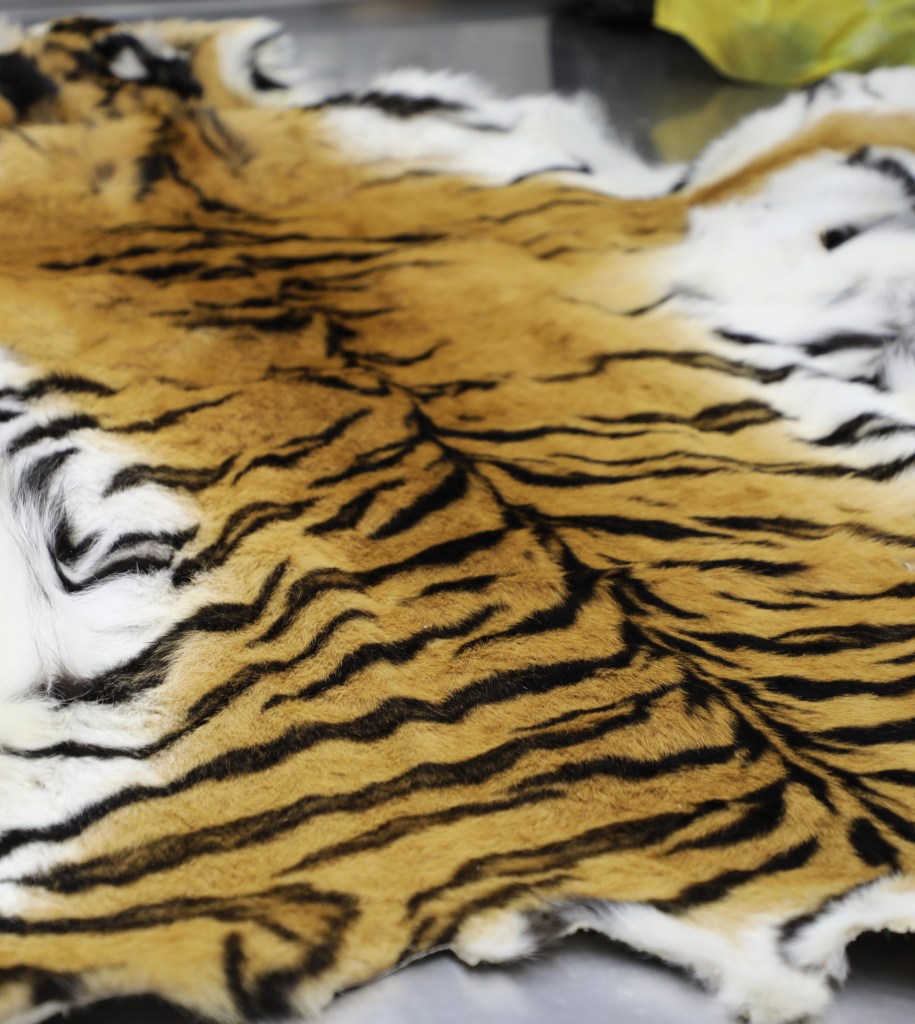
Tiger skin photo credit: Dr Saket Badola

0:03:25 Dr Dipankar Ghose: Same thing with tiger bone. Itโ€™s similar to any other carnivore bone. It will not add to the strength of a person. So while we are working in the country on strengthening protection and using modern tools to carve poaching, one also needs to work outside the country, which global organizations are doing to ensure that the demand is also reduced. So to answer your question, it is big, it is thriving, and India as a country acts as a source for some of these charismatic threatened animals. And we are talking about tiger body parts, rhino horns, elephant tusks, and sometimes even elephant bones and skins and blood bits.

0:04:17 Dr Dipankar Ghose: We are also talking about marine species, freshwater turtles, pangolin scales, you name it. Most of the threatened species from India, animal species particularly, are in the illegal market.

0:04:33 Lalitha Krishnan: Right. Itโ€™s also like a catch 22 situation where we have so much and so much has been done to look after it. But at the same time, thereโ€™s a demand for all of this. So, you know, most of us have heard of tigers, rhinos being sold for medicine and skin, and the exotic pet trade of fish and birds. But most of us, Iโ€™m sure, in India, Iโ€™m not talking of the general public, who knows about the โ€˜conservationโ€™ field… But, you know, a good number of us donโ€™t even recognize the timid pangolin, which is part of this ongoing illegal network.

0:05:11 Lalitha Krishnan: And I read that 23.5 tons of pangolin were traded in 2021 alone. Of course, I donโ€™t have the latest numbers, but why is it so?  Could we speak about why pangolins are the new tigers or the new most fashionable thing to trade?

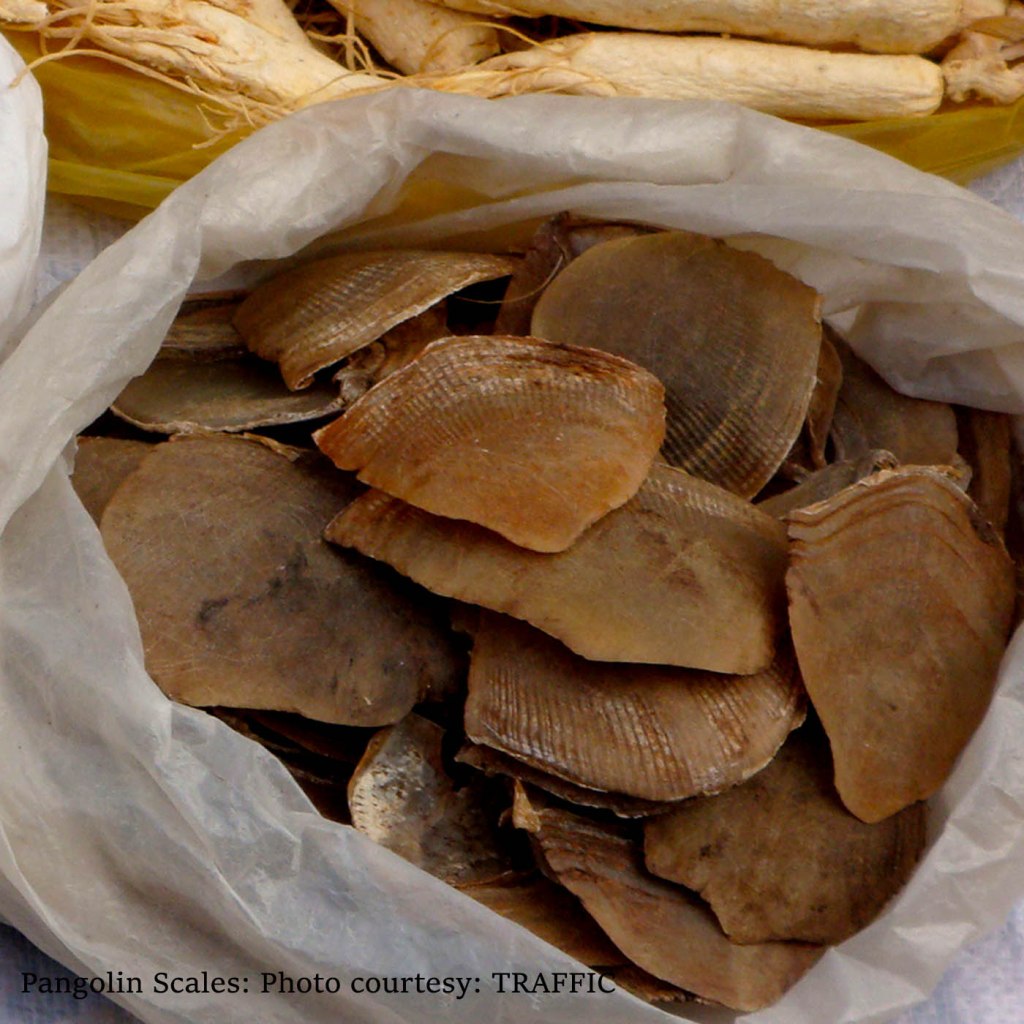
0:05:29 Dr Dipankar Ghose: So pangolin scales are used in traditional oriental medicine, right? Theyโ€™re never used in their fresh form, theyโ€™re used in their dried form. And there are papers published in reputed scientific journals which say thatโ€” thereโ€™s one particular paper I can send it to youโ€”which says scales are burnt, roasted, ashed, cooked in oil, butter vinegar, boyโ€™s urine, or roasted with oyster shells to cure a variety of ills.

0:06:00 Dr Dipankar Ghose: Among these are excessive nervousness and hysterical crying in children, women possessed by devils and ogres, malarial fever and deafness. So many pangolin skeleton requests for this purpose that yearly, the scales from some 5000 individuals were imported from a particular country. And these are all going into traditional Chinese medicine. The challenge again is the belief whether the scales have that kind of a property is not scientifically proven, but they are going to be used all the same as the rhino horn. It is keratin, which we know, does not cure cancer.

0:06:44 Dr Dipankar Ghose: Right. If it could be a cure, then probably we would have eaten up all our hair or bitten off all our nails just to prevent cancer from happening. But it doesnโ€™t help in any way. So same thing with pangolin scales. And what we are also hearing is that pangolin scales, because the belief is they cure a lot of illnesses, they help women to lactate and stuff. People started using dry pangolin scales as a hair comb for combing their hair and brushing their hair.

0:07:20 Dr Dipankar Ghose: They make tiny combs out of those scales or use them as guitar plucks just to have a feel, just to touch a pangolin scale. So itโ€™s deep in the belief that the challenge is that the users do not understand that a species is going to be exterminated from nature. Just because there is an unscientific belief in their mind, in oriental medicine, thatโ€™s the challenge.

0:07:51 Lalitha Krishnan: And this is such a small creature, it makes it even more vulnerable to ignorance you know?
0:07:58 Dr Dipankar Ghose: Absolutely. I tell you about 20 years back when many tiger skin seizures happened from India and Nepal, some of those seizures had also recorded the trade of otter skin. And then one found out, and I had been to Tibet and figured out this otter skin was used to make collars of coats of chuba. Why? Because otter skins have a very good waterproofing quality or character. So when it is snowing or it is raining, snow wonโ€™t settle on a coat which has got an otter skin collar. Now, my point is that in this time and age, when we have so much synthetic material use why kill a poor otter in the wild?

0:08:47 Dr Dipankar Ghose: And youโ€™re not, not using farmed sablel hair, but youโ€™re actually killing wild otters to use their skins on your coat.

0:08:56 Lalitha Krishnan: Makes my skin crawl. Is this still going on?

0:08:59 Dr Dipankar Ghose: Yes, we still hear otter skins getting seized. Itโ€™s likeโ€”at some point of timeโ€”in some parts of eastern India, Banded Krait, which is a veryโ€ฆ itโ€™s a poisonous snake, but a very docile snake. The Banded Krait was almost exterminated because there was high demand from the fashion industry to manufacture leather bags of Banded Krait skins. You know, yellow and very bright yellow and black stripes.

0:09:30 Dr Dipankar Ghose: That kind of exterminated the Banded Krait, which created another problem, because the Banded Krait, thrived on smaller snakes. They ate small snakes, and one of their food snakes was the Common Krait. So in Sundarbans, the hypothesis was that many people started encountering Common Krait. You see them inside your homes and fields, and you’re somebody getting into the farming room and stuff and getting bitten and bitten in odd places, odd times and dying.

0:10:04 Dr Dipankar Ghose: And one of the reasons scientists and naturalists who were working on this had said, โ€œIf bandit crates were there and there were a high number of Banded Kraits, they would have kept the population of Common Kraits.โ€ I mean, that exactly is a typical maintenance of ecological balance. You know, one creature maintains the balance of another. But we took out the Banded Kraits, they were poached for fitting into the fashion industry.

0:10:33 Dr Dipankar Ghose: Demand for snake skin all gone, you know. So, I mean, we sometimes do not even think ofโ€ฆ there is the whole illegality of it, but there is also the ecological aspect of it. And many a time one doesnโ€™t see the ecological aspect. At some point in time, in the southern part of the country, the large tuskers were all poached, and most of the tuskers were poached. So the sex ratio was skewed and breeding success went down because the makhnas or the tuskers with smaller tasks were not selected by breeding-age females.

0:11:10 Dr Dipankar Ghose: Now thatโ€™s getting recovered in successful conservation initiatives, its population is recovering. So there is this whole ecological aspect which also needs to be looked at when we deal with illegal wildlife trade, right?

0:11:25 Lalitha Krishnan: And also communicated, I donโ€™t think people realize what happens if you take all these species, especially keystone species off the picture. Wow, thatโ€™s interesting. Have you ever personally out of choice or otherwise been involved in particularly monitoring or witnessing wildlife training?

0:11:49 Dr Dipankar Ghose: Well, in my previous avatar, I was working with another organization and I was in charge of the enforcement unit: Wildlife Enforcement unit. So NGOโ€™s and civiliansโ€ฆ we are not authorized to take any enforcement action. So we worked very closely with government agencies, and enforcement agencies and monitored illegal wildlife trade and at some point in time also helped the government to bring an end to that trade. So this was around 2003, 2004 when I was working with another organization and we worked with the government of Uttar Pradesh to curb trade, or rather illegal trade in mongoose hair paintbrush.

0:12:35 Dr Dipankar Ghose: And initially what looked like a small industry of manufacturing paintbrushes, which is sold to the artists and students, we figured out that some of these brushes were actually getting into the fashion industry because that was one of the most preferred brushes, organic brushes for painting or face painting or colouring or masking. It was quite a long process. When we monitored this trade, often working with government agencies involved a lot of meticulous planning, careful planning and taking utmost care not to expose some of the people who were giving that information.

0:13:20 Dr Dipankar Ghose: And ultimately working with the government to curb the trade and bring the offenders to the book. So yes, I did that. But from WWF currently, we are not into any of these enforcement actions. If we get to know about any illegal trade, whether itโ€™s through online monitoring or whether itโ€™s based on information received by any of our field members, we immediately pass on the information to the nearest government authority, either the wildlife crime control bureau or the forest department.

0:13:56 Lalitha Krishnan: I mean, who would imagine part of your makeup is from a mongoose? To even think that, itโ€™s just so sad. Could you explain what the wildlife trade chain is? Just to have some basic understanding.

Sable fur skins in Milan. Photo by Kuerschner – Own work, Public Domain, https://commons.wikimedia.org/w/index.php?curid=3734346

0:14:18 Dr Dipankar Ghose: Itโ€™s very, very interesting. And I will take the example of Sansar Chand. And often people used to say that Sansar Chand is the Veerappan of north India, but thatโ€™s not true. So Veerappan was a person who was extracting sandalwood and who was also trading in sandalwood. But mostly his job was extraction and some bit of trade. Right? When I say extraction because it was plants, it was trees, which he was into, timber, which he was trading in and smuggling.  Come to north India, a Sansar Chand, Sansar Chand was not a direct poacher. He might have instigated or asked somebody to poach an animal, but he was essentially a trader, a big-time trader of wildlife derivatives.

0:15:08 Dr Dipankar Ghose: So there is a change in the process that we are seeing. Earlier, there used to be poaching syndicates and illegal wildlife trade syndicates which used to manage some of these. But with the advent of the Internet and social media and the dark web, a lot of supply chains and logistics solutions, we are seeing that the trade of illegal wildlife products is now going online. There was somebody who was announcing that, โ€œHey, I have this particular animal and a live specimen. If you would like, contact meโ€.

0:15:46 Dr Dipankar Ghose: And not even through the dark web in a masked wayโ€ฆhe was presenting it on an online platform. Obviously, enforcement action was initiated against the person. So the chain happens is that from the point of poaching, from the source point, it crosses our borders, land borders, primarily through Nepal or through Bhutan or through Bangladesh. Otherwise, itโ€™s through the seaports. A lot of seizures of star tortoises have happened in the seaports.

0:16:18 Dr Dipankar Ghose: Marine products through the seaports. And some fancy products are also very expensive, like shatu shawls. They are also transported by human carriers. E.g., a passenger would buy a shahtoosh shawl in India and they would take it in person when they would fly out of the country. So itโ€™s mixed and there is no one particular trade route, but essentially a land route through the northern and eastern border.

0:16:46 Dr Dipankar Ghose: Northeast has become, especially the Indo-Myanmar border has become particularly vulnerable to illegal wildlife trade. So, yes, land routes from those sides, seaports and sometimes also air routes.

0:16:59 Lalitha Krishnan: Itโ€™s more complicated than we can sort of figure out or understand.

0:17:06 Dr Dipankar Ghose: Yeah, indeed.

0:17:08 Lalitha Krishnan: At the same time, it looks so simple. I mean, a passenger taking a shawl across would be not suspected at all. Crazy.

Leopard skin photo credit: Samir Sinha

0:17:17 Lalitha Krishnan: You know, talking of technology, itโ€™s always evolving. Would you like to tell us something about environmental DNA or eDNA that WWF uses or something new that we might not even be aware of?

0:17:35 Dr Dipankar Ghose: A  very good question. We do not have a laboratory and we work primarily with government agencies. eDNA, technology is evolving and I hope that one day, subject to the availability of our resources, we will be able to get into the eDNA space and strengthen the work that researchers and officers from the government are doing. But there is something that we started about seven, eight years back. This is called the  RhODISยฎ -Rhino DNA indexing system, where we have been partnering with the Ministry of Environment, Forest and Climate Change Government of India (MoEFCC) and the Wildlife Institute of India(WII) to establish this system.

0:18:21 Dr Dipankar Ghose: The technology was borrowed from South Africa. I would say, users and initiators of the technology transferred the technology to the laboratories here and now the Wildlife Institute of India have the marker for rhino populations from all the wild, rhino-bearing areas of India. So what happens is that once a rhino is poached and its horn is collected, and if there is any tissue in it and DNA can be salvaged from there, then the rhino DNA is matched and the population where from it was collected is identified, which helps in strengthening the case. The prosecutor can then pinpoint and say that, okay, hey, this particular rhino horn, which might have been seized in a city, can say that, well, this matches with the population here.

0:19:17 Dr Dipankar Ghose: And if a carcass has been found and the DNA samples obviously, have been collected from that carcass, then that horn might even be matched with the carcass of rhino, which was poached. And, using this information, in the recent past, one conviction has happened where a person who was in possession of a rhino horn, was matched with a poached rhino. And then the call details record also showed that the suspected poachers were also talking to this person who was a trader. So this kind of technology also helps. Earlier, it would have been impossible to establish a link between the trader and the poacher. And although the case would be there when a ScheduleI species derivative would be seized from the possession of a civilian, the case would get strengthened if it could be linked with a particular poaching incident.

0:20:14 Lalitha Krishnan: Thatโ€™s so interesting and so nice to hear that. So itโ€™s not only concrete evidence, but itโ€™s speeding up the whole process of catching them before they leave the territory, wherever that is. Or the country, I suppose. Apart from the latest technology, which is also available to crime networks, what other methods or soft tools do you think are imperative to keep illegal wildlife trade at bay? What does WWF do?

0:20:50 Dr Dipankar Ghose: Again, a very good question. I think technology is important and we are working with the government agencies to help them with technology. There is a simple tool which was promoted by WWF and now many agencies use it. Itโ€™s called Deep Search Metal Detector, used to find leg snares. Sometimes these leg trap snares, metal snares, are put on the forest floor, primarily meant for catching carnivores like tigers and leopards and sometimes even herbivores. Now these DSMDs, the Deep Search Metal Detector would help a person, a forester, a forest guard, or a ranger, to find a snare.

0:21:38 Dr Dipankar Ghose: It would also, in a crime situation, help the officers to find empty cartridges or bullets or shells or metal cells or even a weapon if that was hidden in the nearby area or near the crime scene. So we also use forensic kits and stuff. But the most important fact remains that protection can be strengthened by increased patrolling, surveillance and support from the local communities who are residing within or adjacent to these wildlife habitats.

0:22:18 Dr Dipankar Ghose: These three things are of primary importance. Protection, surveillance, and community support. So we work a lot with the authorities, with the protected area managers or reserve forest managers, which are wildlife habitats, to strengthen protection, help them in surveillance using something like sniffer dogs, which could continue or which could help in the investigation, finding a spoor and also work on securing community support against wildlife crime.

0:22:56 Dr Dipankar Ghose: There is one area I would like to mention in the Terai particularly, in Uttar Pradesh. We have been able to establish, together with the forest department and local panchayats, a group of volunteers who are there to protect tigers. Theyโ€™re called Bhag Mitras and there are about 500 of them. Itโ€™s a fully voluntary force and their primary role is to help the authorities in managing human-tiger conflict.

0:23:25 Dr Dipankar Ghose: Whenever there is a challenge: a tiger is in human dominated landscape, these people come out and they form the first line of defense. So this really helps in managing conflict. But this also deters a suspected poacher. Because with so many people trying to protect the tiger, a poacher would not dare to go there because this particular group of people would then not support or would do something to stop poaching.

0:24:01 Lalitha Krishnan: First line of defence.

0:24:04 Dr Dipankar Ghose: Yes, indeed.

0:24:05 Lalitha Krishnan:  My next question is how does your partnership with other agencies like TRAFFIC (Trade Records Analysis of Flora and Fauna in Commerce) help fight wildlife trade in India? Or do you have other partners and what are their different roles?

0:24:18 Dr Dipankar Ghose: So traffic is part of WWF and I am also the Interim Head of TRAFFIC in India for the last two years. And so itโ€™s the same team which is working whether we call it TRAFFIC or WWF. But in terms of partnership, we partner a lot with not just government agencies but also NGOs and other intergovernmental bodies. We recently partnered is the South Asian Wildlife Enforcement Network (SAWEN) and the Global Tiger Forum in capacity building of enforcement authorities along the Indo Napal border at a very, very high level and a strategic level.

0:24:57 Dr Dipankar Ghose: We also work with other NGOs while it talking about capacity building or curriculum development for ranges. So most of the partnerships are through the government agencies coordinated by the Wildlife Crime Control Bureau or the State Forest Department or the Ministry of Environment, Forest and Climate Change where we partner with other enforcement agencies or with other NGOs.

0:25:25 Lalitha Krishnan: Dipankar, whatever youโ€™ve been telling me, itโ€™s such an insight. Thereโ€™s so much, as ordinary citizens that I donโ€™t know, and Iโ€™m sure most people donโ€™t know most of what youโ€™re talking about. So thank you so much for those insights.

0:25:39 Dr Dipankar Ghose:: Youโ€™re welcome.

0:25:40 Lalitha Krishnan: I kind of know the answer, but I donโ€™t know the answer. So is illegal wildlife trade a people problem or is it a government problem?

0:25:52 C: Itโ€™s a problem of both sides.

0:25:55 Lalitha Krishnan: All right.

0:25:56 Dr Dipankar Ghose: Why is it a people problem? Itโ€™s the people who do the poaching. They are normal people. What is driving them to poaching is different, but they are poaching.

0:26:08  Itโ€™s the people who are the traders, right? Itโ€™s the people who know about it but are keeping silent about it. And Iโ€™ll give you another insight, which is India is also becoming a consumer country, right? For what? For exotic pets. We have created a report from TRAFFIC India last year and you can download the soft copy from our WWF India website. We are becoming consumers of exotic pets in the country. All the way from a kangaroo roaming around on the highways of north Bengal, to vultures, to wildcats, to a lot of exotic primates from Latin America. Where are they all going? We donโ€™t have these animals. They are all coming to India as pets. The more people have affordability and more people have disposable money, they would like to do something exclusive.

0:27:08 C: Dr Dipankar Ghose: And you canโ€™t keep any Indian bird or an Indian mammal as a pet because thatโ€™s illegal under the Wildlife Protection Act. Right? So instead of going the legal ways of, you know, keeping budgerigars or there are some captive-bred birds which can be kept as pets legally, people are trying to find exclusivity. Itโ€™s like, okay, this person has a ball pen, and thatโ€™s a Reynolds or Uniball. I want something exclusive. It doesnโ€™t mean that the price has to be double or triple or four times, but it has to be exclusive. So people are always looking for that exclusivity. People are always looking for the attention. So it is a peopleโ€™s problem.

0:27:51 Dr Dipankar Ghose: It is also a government problem because people can reduce the demand, but ultimately, enforcement actions will have to be taken by the government.

0:28:00 Lalitha Krishnan: Right.

0:28:00 Dr Dipankar Ghose: So itโ€™s a problem of both. That is why I have always been saying on this podcast, as well as whenever I am talking about it or writing about this particular issue, that the support of local communities around the forest areas is of paramount importance if we are trying to stop poaching. Similarly, the support of people, of the business people or the people who are engaged in supply chain management is of paramount importance if we have to stop illegal wildlife trade through the usual supply chain or the usual logistics channel. So that is why there has to be an active involvement of people and, of course, government actions which are already going on.
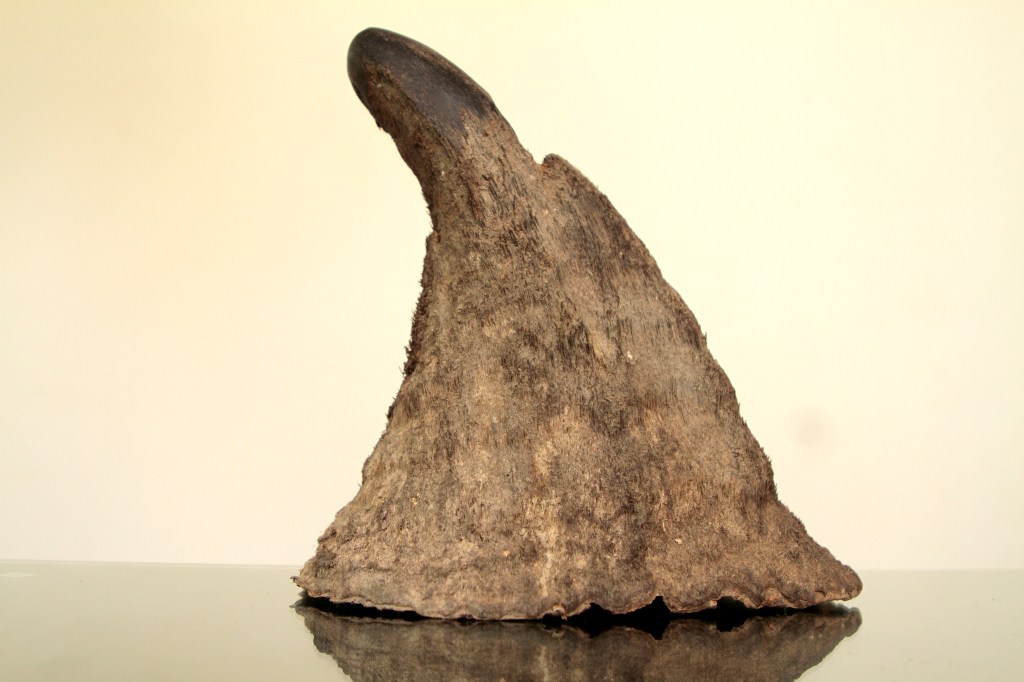
Rhino horn photo credit: Dr Saket Badola

0:28:47 Lalitha Krishnan: Okay. And, you know, what can a citizen do to report a crime of this level without risking his own life? Is there a channel? Is there any way he can report stuff that you see?

0:29:02 Dr Dipankar Ghose: Of course, one can make anonymous calls to the Wildlife Crime Control Bureau and itโ€™s a very responsible government authority. But sometimes what happens is that in these anonymous calls, the veracity of the call or the verification canโ€™t be done. So if a person is giving any information to the Wildlife Crime Control Bureau, they take care of it, you knowโ€ฆ so they, they take care of whatโ€™s the problem and why this problem has happened and stuff.

0:29:35 Lalitha Krishnan: Great. So Iโ€™d love to hear some, you know, positive stories or personal stories that give us all hope. Iโ€™m sure you have quite a few of them.

0:29:48 Dr Dipankar Ghose: There is hope because if you see so many tigers moving out of the protected areas-India has 3600 plus tigers, where thatโ€™s the mean number. It could be more, it could be a few hundred tigers more or so, right? If we are considering about 4000 tigers, adults and maybe some young ones included, 25% of those tigers are moving outside the forest areas, outside protected areas, and they are in the agriculture fields.

0:30:24 C: They are passing through here and there, right? Passing through human-dominated landscapes. There are challenges, but the tolerance of people for those tigers or to keep those tigers or tolerate allowing those tigers to be in the human-dominated space is tremendous. The tigers are allowed to be there, otherwise there would have been challenges. There have been occasional incidents where people got killed, or injured, tigers got lynched.

0:30:53 C: But if you look at the scale, in a country of 1.4 billion people, we still have 4000 tigers, we still have 27,000 plus elephants, so many rhinos, so many herbivores, leopards, conflict is there, poaching is happening, but still we have all these. Right, show me any other country which has got very high, I wonโ€™t say numbers, but a very high density of human population like we have, but still has so much wildlife wealth. Itโ€™s there in India only. Right?So that talks a lot about our tolerance and I think that is the positive story.

0:31:30 Lalitha Krishnan:: You know, also those numbers may bring cheer, whatever said and done. Yeah. No, no other country has that I think. This is my last question to you. Youโ€™ve shared a lot, a lot of food for thought, but would you like to share a word or an idea or something that you feel strongly about that you would like our listeners to remember, about wildlife crime? It could be anything.

0:31:57 Dr Dipankar Ghose: Only one thing. If you see anything unusual about wildlife, whether one is travelling by public transport or travelling by a forest area, village, or urban area, report it. Iโ€™m sure that anybody who is listening to the podcasts also has an email ID, right? So send an email to the authorities, to the Wildlife Crime Control Bureau. You donโ€™t need to judge whether itโ€™s a crime or itโ€™s not a crime but inform, you know, just stay alert and inform that, like we do, when we see any unusual movement in the neighbourhood and we call up the police, a similar sort of alacrity has to be there if we are to stop wildlife crime.

0:32:42 Dr Dipankar Ghose: I would just like to leave that thought with our, with our listeners.

0:32:47 Lalitha Krishnan: Thatโ€™s a great thought. You know, sometimes we donโ€™t think we can do anything of the sort. Weโ€™re so scared of the consequences. But when you say itโ€™s safe to report, then I think more people will and should.

0:33:00 Dr Dipankar Ghose: Yes. Send an email. Send an email to Wildlife Crime. Send an email to the  Wildlife Crime Control Bureau and with just an email ID; let the authorities reach out to you if they see that this is, this is important, this is something that they could work on. I know they might come back to you saying that, โ€œOkay. We would like to work on itโ€. Or maybe some officer might contact you.

0:33:21 Lalitha Krishnan: Okay. Thatโ€™s super. Thatโ€™s great. Thank you so much. This has been so enlightening and so good.

0:33:30 Dr Dipankar Ghose: Thank you.

DipankarGhose #WWF_INDIA #TRAFFIC #IUCN #Tigers #Rhino #Poaching #IllegalWildlifeTrade #Veerappan #CITIES #WildlifeLawEnforcement #ExoticPets #SAWEN #Pangolin #SansarChand #SmugglingSpecies #wildlifeproducts #exoticplants #rhinohorns #tigerskin #pangolinscales #LalithaKrishnan #HeartofConservation #critically_endangered #storiesfromthewild #podcast

Pangolin photo: Rajesh Kumar Mohapatra Podcast cover art created by Lalitha Krishnan

Birdsong by hillside resident, the collared owlet.

All photos courtesy as mentioned in caption /photo

Podcast artwork by Lalitha Krishnan

Disclaimer:Views, thoughts, and opinions
expressed in the podcast and show notes belong solely to the
guest/guests featured in the episode, and not necessarily to the host of
this podcast/blog or the guestโ€™s employer, organization, committee or
other group or individual.

Women for Nature: Vena Kapoor Ep #22 Part II. Heart of Conservation Podcast

Show notes (Edited)

Lalitha Krishnan: Hi! I am Lalitha Krishnan and I’m back with part 2 of episode #22 of the Heart of Conservation podcast. This is season 3. I bring you stories from the wild that keep us connected with the natural world. I’m speaking to Vena Kapoor one of the leading members of the Education and Public Engagement Programme at Nature Conservation Foundation. As an ecologist conservation researcher, she has had interesting experiences which include exploring spiders as a natural pest control agent in the rainforests of Valparai, to working in finance for NCF in Mysore. She is a recipient of the Ravi Shankaran INLAKS scholarship and holds an M.Phil in Conservation & Leadership from the University of Cambridge. She also writes conservation-related stories for children. You can read more about her on the NCF website ncf-india.org but for now, let’s hear it in her words. This interview was conducted over Skype.

Lalitha Krishnan: Vena, thank you so much for coming on Heart of Conservation and it really means a great deal to me.

Vena Kapoor: Thank you for inviting me here, Lalitha.

Lalitha Krishnan: My pleasure! So at some point in your career you were studying spiders and snakes also I think and helping restore forests in the Western ghats and then apart from, you know, you write about urban wildlife on pavements and walls, etcโ€ฆ  So could you tell us about the transition from your earlier work to now?

Vena Kapoor: Sure Lalitha, I’m happy to do that. So just to set the context, I do not have a science degree I actually did my under graduation in B.Com and I think like a lot of people just went to a regular convent school which really had absolutely no kind of career guidance thing and I really didn’t have a family who, you know, where there was anybody who’s working in this, in the field that I was really interested in and my only exposure to conservation and wildlife as such were through, you know, the documentaries that they would show on Doordarshan once in a while and whatever books I could get hold of either in the school library or something that my grandfather would bring from his friends. They used to be the BBC wildlife books and things like that. So, I used to kind of pore over them and look at these pictures of exotic wildlife all over the world and really didn’t think that you know, a career in this line would be possible. Soon after my B.Com, I kind of spoke to one of my teachers who put me in touch with a couple who was running an organization in Chennai called Center for Indian Knowledge Systems. They were working on traditional agriculture and healthcare and they needed someone to help him do some research on the effects of pesticides, you know, on agricultural plants and I was very excited about kind of, you know, trying this out. And, it was quite amazing that they took on someone like me with zero work experience to kind of help them with this work. Over there, Dr Vijayalaxmi, who was one of the people who founded the organization, she for her PhD did work on spiders especially one species of spider which specializes in catching cockroaches and so the office was full of books and photographs of spiders and it just, it was completely by both accident as well as a little bit of encouragement from them that I started just looking at this group and it just got very very kind of excited about, you know, reading about the amazing diversity of spiders around us and, you know, and they were interested specifically on seeing if spiders can be used as natural pest control agents in agricultural fields, especially in paddy and so I started kind of looking into that and my first field kind of research work in fact was in the Guindy National Park in the heart of Chennai city and I started documenting the spiders there for the organization as well as for the Forest Department and that’s where my interest in spider started kind of growing and, you know, I started doing workshops and giving talks to people because I had this huge kind of collection of pictures with me and so when I finished my Masters, sorry after I worked in this organization in Chennai, I decided to kind of look at getting a degree in ecology and wildlife sciences but the only place that would accept me as a non science student was the Pondicherry University because all the other places which had a Masters programme, the requirement was that you had a kind of undergrad degree in science. So I was disappointed but, as I said Ok, you know, let me join the Pondicherry University programme and so I did my 2 years Masters there. As part of my Masters’ thesis I looked at particular species of spider-the Green Lynx spider had a relationship with a kind of plant–the jatropha plant–and the kind of foraging techniques that they were using with the plantโ€ฆ it seemed to have a mutualistic kind of relationship. So soon after that there was an offer up that I heard about that the Nature Conservation Foundation was looking for someone to help them with their rainforest restoration programme that they had just started a couple of years before. So in 2004, sorry in 2003 I went to Valparai, very excited because I had you know, experienced working and living in the forest just once before that for a few days and so the prospect of doing actual fieldwork and field research in a rainforest area thriving with wildlife and these really cool kind of wildlife biologist was very exciting and soโ€ฆ What was supposed to be a six-month stint turned out to be a 4 year kind of engagement with the work and the programme. And so, while I was in Valparai, I ended up doing a lot of things which really helped I think, me think about you know the kind of multi-disciplinarity that feel like conservation has potential for. And so in Valparai while we were doing the rainforest restoration kind of work with the tea and coffee estate companies over there, there were studies which were being done on birds in certain rain forest fragments, small mammals and fragments and but there was really a dearth of information about spider and insect life in a lot of these forest patches. So, you know, we started discussing whether I should look at documenting spiders in this particular landscape and see if the community composition, you know, changed between each of these forest fragments and what did this mean for rainforest restoration work that we were doing. Were certain groups of spiders or a certain species of spiders was it completely absent in a rain forest fragment for example that was extremely disturbed? Right? And so, there were studies to show that birds get affected by extreme fragmentation or a lot of disturbance. Some groups seem to thrive, some completely disappear, so was this the case for spiders as well? And so, I did this year-long kind of field research work in that landscape and that turned out to be not only just fun and interesting but it also became very useful to add to the documentation work that was going on in that landscape and, so you, know the species that we found were not only used to see certain, you know, some of these rainforests fragments that we were trying to restore were also bringing back the wildlife or not. It was also used a lot in public engagement programmes where specially in exhibition setups in places like that and also for writing a lot of articles and, you know, research papers and things like that. After four years in Valparai, I felt that I needed to take a break, you feel being in a kind of a place like Valparai can also kind of completely cut you off from quote-unquote normal the normal world. I felt like I was living in a bubble for too long.  So I decided to come back and I relocated to Mysore and over there I wanted to kind of assess what I wanted to do further, you know, moving forward and so I kind of went into a part-time position to start with helping the organization with a lot of the admin and accounts kind of work, hoping that that kind of work would give me the flexibility to dabble with other kinds of things that I wanted including writing and, you know, assessing whether I wanted to get into a research field or not. There was also this brief flirtation with doing, whether I wanted to do a Ph.D. or not, and then I quickly realized that a PhD wasn’t for me at that point in time at least and so while I was helping, the organization it was also going through an interesting transition at that point of time. We were having to raise funds for the institution but we were also growing slowly and so systems had to be put in place and so I headed the admin and accounts team for about 2 1/2 years and but at the same time I was also, you know, I co-wrote a book for children with Aparajita Datta on the rain forests of the North East and the animals and the plant life for the children in the schools over there. Yeah, so it’s called the Secrets of the Rainforest, again a book which is available for download for free, I can also send you a copy later on too.

But so again yeah so then after that is when I found out in 2010, early 2010, I found out that there was this kind of a new course being set up in the Cambridge University called the M.Phil in Conservation Leadership Programme and it was meant for people who had at least three to five years of experience in the conservation field and it was meant to be a programme to engage with conservation with a very multi-disciplinary kind of a lens and so, you know, there were different departments that were going to be involved – the Management Department at Cambridge, the Economics Department in Cambridge, the Geography Department in Cambridge and so it was very exciting to kind of look at, you know, the prospect of having to engage with conservation in a very disciplinary, interdisciplinary lens?

And also the kind of step back and allow me to get back in to touch with recent research which was going on. And so I was fortunate to get a scholarship from the Ravi Shankaran INLAKS fellowship programme that was again set up that year and so I got a full scholarship to go to Cambridge and it was a one year course and it was an excellent course in terms of also giving us the ability to critique conservation in the way it was being done. You know, it was also the first time I had to write essays, that was a bit challenging for me, you know, our education system is so different in terms of examination, you know, very unidirectional kind of teaching. This is the first time I was exposed to, you know, a space where we could question our teachers and have discussions and group discussions and critique and, you know, you had to do a lot of self-learning, there was library access with any book or journal that you wanted access to, so it was intense but it was extremely useful for me I think at that point in my career to get into that course.

Lalitha Krishnan: That sounds so interesting starting with your work. I had no idea spiders eat cockroaches but the only problem is, who if you ask somebody, which one would you prefer I’m not sure what they would say.

Vena Kapoor: Well the good thing about this particular species which loves to eat cockroaches is it’s nocturnal. You may have seen it, it comes quite often to bathroom spaces at night.

Lalitha Krishnan: Yeah we have large ones in our bathrooms always, they just live there so we just let them be, but we donโ€™t have cockroaches, I donโ€™t know what they are living on.

Lalitha Krishnan: On a more serious note, how do you persuade teachers to incorporate your nature learning curriculum and use your outreach material into their existing programme or plan?

Vena Kapoor: You know, it works sometimes, it also doesn’t work sometimes because we find that we have to keep going back to the teacher and reminding him or her that, you know, โ€œAre you including the nature learning element in it? What do you think should be the nature learning element in it?โ€

Lalitha Krishnan: And not everybody is so receptive.

Vena Kapoor: At that point, they see the value in it but often because you are rushing to have to finish the portion and, you know, then you go back to your traditional kind of learning methods, right, because there’s comfort in that, there’s familiarity in that.

Lalitha Krishnan: So then do you want to talk about what resources youโ€™ll are working on and what you’ll use?

Vena Kapoor: Sure, so we are actually now in that phase in our work where we are kind of designing our modules and our curriculum and thinking of all the different kinds of tools that we can use and one of our main goals is to make it age-appropriate and this is where we are engaging with a lot of kind of theory and practice around the education field. What other people in the education sector have been using, right?  So we kind of try and read research papers to see what kind of tools work for which age group, what are they more receptive to, right? And again, as the conservation community, we tend to rely heavily on things like posters and books, you know, and flashcards which are good but sometimes it may not be appropriate for a particular age group, so we’re also trying to bring in elements like storytelling, poems, theater, language. You know, it can just be stick doodles, you know, it could be building blocks. So those are the kind of tools that we are trying to see what might work with different age groups, also keeping in mind that again each school will have access to a certain amount of outdoor space, right. One of the Govt. schools that we work with has absolutely no outdoor space, right? So what can we do in a situation like that? How do we make use of the fact that they may have one Singapore cherry tree outside the campus school campus?

So Lalitha, the other thing we do is again as part of our engagement with the teachers, are we also try and take them for a short walk around their schools, you know, because we have also realized often teachers think nature is out there. It is far away, you have to take children to a park or the zoo, you know, so often teachers would tell us you know we need a day off or two days then will take the children to Cubbon Park or to Lal Bagh which is in Bangalore and you know then we can show them the trees and the shrubs and the creepers over there because they’re learning that in the textbook. And then we have to tell them, you know, come with us for a short walk, just a 10 minute walk around the school and we see all the examples that you want to show your children are all here actually. So you just have to kind of look around and explore your area a little bit and you will find all sorts of examples in nature that you can use. So we find that’s also sometimes very kind of powerful for a teacher to kind of come to that kind of understanding that, oh you know, โ€œI really don’t need to take too much time off to get my children to experience nature outside the school or even within the school campusโ€.

Lalitha Krishnan: Yeah exactly. I’m a big believer and, you know, just knowing your backyard and just discovering what’s there, so I think that’s great.

Vena Kapoor: Often they say, oh there is nothing, you know, what can we, how can we, what will we show children? Then we start taking them and pointing out its โ€˜Xโ€™, pointing out spiders, pointing out the birds and you can start seeing, you know, they really get excited about this. They say, โ€œWe have been here for 10 years in this school and we’ve never seen thisโ€.

โ€œOh, I didn’t know that this was hereโ€.

 โ€œOh, I didn’t realizeโ€.

You know, that itself is again for us also it’s a form of trust-building and getting to know the teachers better. A lot of them also, you know, have become good friends of ours that also helps I think, a little bit when you have engagement with them.

Lalitha Krishnan: Yes. You also partner with larger organizations like WIPRO so how does that work?

Vena Kapoor: Again WIPRO has a huge network of organizations and educators that they work with and support and so we try and work with some of them because they have access to schools in different parts of India and they are embedded within that school system.

Lalitha Krishnan: So what kind of organizations are we talking about?

Vena Kapoor: So there’s this organization in Madhya Pradesh called Samavesh, they’ve been around for quite a while and they work with schools and teachers in and around Panna, the Panna Tiger Reserve. So we’ve been kind of working with them and training their trainers, so it’s like training the trainers’ programme, right? And then they take a lot of our ideas, and our kind of processes and some of the tools that we’ve designed to the teachers over there and then they end up training teachers over there based on, of course, on their local requirements. So we kind of encourage them to use their, you know, local natural history stories, you know, what is it that, what are the myths that some of the people in those areas have, right?  And so to kind of deconstruct that and to talk about that. Can that be included as part of the nature learning that they discussed with the teachers?  And then, in turn, translate to the children and to keep stressing it has to be localized, right, to their situation. So those are the kind of training programmes that we’ve also been doing and for the last one year because of COVID weโ€™ve hardly had any, we have had almost no physical contact with the school kids, all the teachers that we work with and so most of it has gone online. So the training that we’ve been doing online, unfortunately, we have not had a chance to connect with any of the government schools that we were working with earlier because they don’t have access to the internet

Lalitha Krishnan: And they also shutting and opening so randomly one never knows there’s no stability at all right now.

Vena Kapoor: Exactly, exactly, so we are also trying to figure out, you know, how we have to approach and restructure some work. A lot of the training that we’ve been doing online has been received very well thankfully so far. People are now going back to their field areas, you know, having the discussions within their own teams as well and we’re hoping that maybe in about 5-6 months we also open this out to anybody who’s interested. So far we have been only working with groups of teachers or organizations that we, have either approached us or you know, we know and then we said OK we can offer this training to you.

Lalitha Krishnan: So what kind of โ€ฆ.open to who? Give me an example?

Vena Kapoor: Open to any teacher educator who is interested in the space. It can be you also, we will be very happy for you to kind of participate in our workshops. And again all these workshops are open source, we are conducting them free of cost, you know, and we kind of showcase the kind of materials and the other approach that we take in the nature-learning work that we’re doing. So in a few months, we are hoping that we’d be able to conduct, you know, do workshops for anyone who’s interested in. It can be even parents who are kind of homeschooling their children, right, for example, because we think we have enough content, and also very specific examples people can use along with their school curriculum and textbooks that they use in the class.

Lalitha Krishnan: What about, you know, like village schools that don’t have Internet and very few resources andโ€ฆ would it be possible?

Vena Kapoor: Yes! So there again, extremely kind of cognizant of this and in fact, one of the schools, two of the schools, government schools that we worked with earlier, like I said, we didn’t have any access to them and many of them are also first-generation learners, right?  And many of them are also migrant workers’ children. So, for example in Bangalore the kids are familiar with Kannada, they can speak Kannada fluently but they still can’t read because they’ll come typically from, you know, Bihar, Rajasthan, UP, and other places. There is one Urdu medium school where Kannada again is understood and spoken but the medium of instruction for them is in Urdu, right? So they can’t read and many of them are first-generation learners, so what we did is we put together a few physical learning kits which had to be very, very kind, of which didn’t have too much text in it but relied on things like very simple poems, riddles, games put together some of these physical learning kits which we are calling. Some books from Pratham as well, storybooks from Pratham as well, and we kind of distributed them to their kits so that, with the hope that their learning is not just completely cut off or shut down. There it had some pages in which they could colour and engage and you know they had to narrate stories to us and they didn’t have to do it in Kannada, they could write it in any other language or they could record it on their phones and bring it back to us if they wanted. So we gave them that flexibility.

Lalitha Krishnan: OK, nice!

Vena Kapoor: It really helped that, especially in one of the schools we are working with another partner organization in that space and so two of the teachers are in that particular village.  So they would also, you know, occasionally try and connect with the children at a social distance, asked if they had any problems with some of the work that was given, you know, so there’s also some kind of dialogue which is happening occasionally. What the 2nd wave means we don’t know as yet, we are all a little worried, lots of kids have gone back to their hometowns, so we don’t even know if we meet them again, when we meet them again, what this means for their learning. So yeah, it is very painful and heartbreaking in these spaces.

Lalitha Krishnan: True, these are trying times as it is but you seem to have challenging situations, to begin with, so how do you cope?

Vena Kapoor: So within the programme and across NCF also we’re trying to kind of collaborate much more and try and do joint training sessions, now that each of us has our own little experience in our own little silos, we are now starting to talk to each other to see how we can, you know, not workโ€ฆ I mean yes it’s important to work you know separately as well teams because we each have our own experiences and training and, you know, on-ground experiences that we have but can we think of a more holistic kind of training programme that we can do not something that we start talking to people.

I want to maybe add that you know a lot of the work that the nature classrooms project does, a lot of it is to do with the people who are part of it as well, right?  So I have two extremely motivated wonderful colleagues, you know, who are part of this work and each of them come in with their own kind of skill sets and experiences to this work and that’s really strengthened it. So for example, early on in the work when I was thinking of this project I wanted and a person with a background in education to join, right, because we are really, because the idea was to work with schools and teachers and I thought that’s a very important kind of skill set to have or a person to kind of, you know, head that part of the work. So Roshni came on board, she doesn’t have any kind of formal training in education but she has been a teacher for 6-7 years in a school set up and she comes with a psychology background as well and she has kind of really given shape to the work in terms of understanding what teachers would, you know, react to work. How teachers would respond to certain kinds of things. The empathy factor with the teacher is also there, right, because she was a teacher herself in the space and so that became very important. Last year I had my colleague Laboni joined the project where she comes in with some experience in education and teaching and outreach but she also comes to training in design and illustration, right? So that becomes very important for us for designing our material and tools because she thinks with that hat on and she comes with that skill set and so you know. What is the kind of material and what are the shape of the material and these tools need to take in order to get someone like a teacher excited about and a child excited about as well, right? And those could take very different forms and so and so really the strength of the work right now and the way moving forward will, is the fact that all three of us come with such different skill sets and experiences and yeah and it’s exciting to work with such a diverse set of people.

Lalitha Krishnan: Yeah, could you share a word with us that’s significant for you โ€ฆrelated to conservation.

Vena Kapoor: For me, I think it would be โ€˜Natural Historyโ€™ and I think that’s really what’s missing in our very well-intentioned reason for, you know, making environmental sciences compulsory in schools, there seems to be this missing element of, you know, the fascinating aspects of nature, the inter-connectedness of nature, the ability to explore and discover and connect and sensorial experiences that you can get in nature. A lot of this is part of also learning about the Natural History of different organisms and there are so many fascinating stories waiting to be told to be shared with so many people and I think they’re really missing out on the crucial element. I mean, the little bit of Twitter engagement that I have and I would think that OK people should know this, but so many people in fact say, โ€œOh my God, I didnโ€™t know this, thank you for sharingโ€.  I keep thinking, you know,  we really need to push for more natural history stories and I think that’s what is a key to get people excited and interested in nature and without that excitement and love and a feeling of wonder and connection for nature as a starting point why would people want to protect it, right, later on in life?

So, you know, we kind of push people with the narrative of climate change, climate destruction, deforestation, yes it’s important to talk about these issues which are happening maybe to adults and maybe to slightly older children but to put that emotional burden on young children I think is extremely unfair and we really need to start with getting children specially excited with nature and to feel a sense of love for nature and then to start introducing them to, you know, the connections and the inter-connectedness and then issues which are going on, the problems which we need to kind of solve.

Lalitha Krishnan: Nice, yeah, it’s the right way to think. Thank you so much.

Vena Kapoor: Thank you for giving me this opportunity to share our story and journey.

Lalitha Krishnan: I hope you enjoyed this episode, stay tuned. Iโ€™m Lalitha Krishna and you’re listening to Heart of Conservation. You can read the show notes on my blog Earthy Matters. You can also write to me at earthymatters013@gmail.com. Heart of Conservation podcast is available on several platforms so do check it out. Until next time, stay safe and keep listening.

Birdsong by hillside resident, the collared owlet.

Disclaimer: Views, thoughts, and opinions expressed in the podcast and show notes belong solely to the guest featured in the episode, and not necessarily to the host of this podcast/blog or the guestโ€™s employer, organization, committee or other group or individual.

Photos courtesy: Vena Kapoor. Artwork: Lalitha Krishnan. Special thanks to Akshay Shah who helped transcribe the show notes.

Saving Thano Forest from an Airport Expansion Proposal

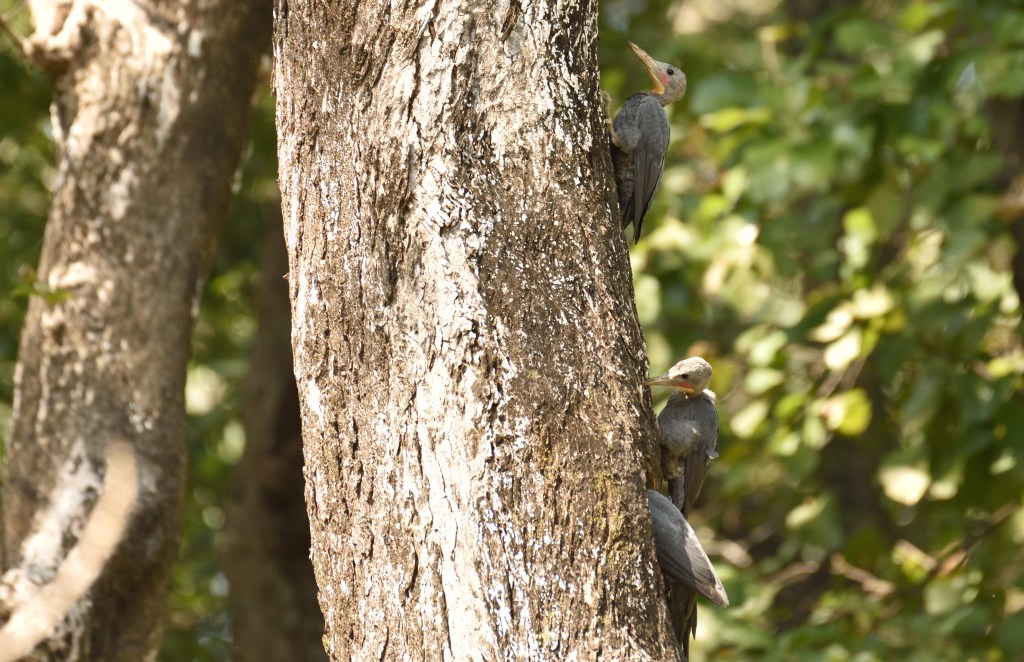
Great Slaty woodpecker pic by Sanjay Sondhi

Ep#21 Read the Show notes or Listen now.

Listen now

Download a Preliminary Checklist of birds of Thano here created by Titli Trust and Cedar.

Thano forest overview photo courtesy Mr Lokesh Ohri

Letโ€™s Talk about Thano. Ep 21 Lokesh Ohri. Abhijay Negi. Sanjay Sondhi. Show notes (Edited).

Lalitha Krishnan: Hi, Iโ€™m Lalitha Krishnan and youโ€™re listening to Season three, Episode 21 of the Heart of Conservation podcast. I bring you stories from the wild that keep us connected with the natural world. This episode is about the Thano forest in the Doon valley (Uttarakhand- the state where I live.) This forest in Dehradun has been in the news lately because the Uttarakhand government has sought the National Wildlife Board’s approval to transfer 243 acres of forest land to the Airports Authority of India. The what, where and why are questions everyone wants answered. You can hear the facts from three prominent Doon citizens who are my guests on this episode. Lokesh Ohri is an anthropologist, historian, writer, and a cultural activist & also the founder of BTDT which is the ‘Been There Doon That’ group. Abhijay Negi is a young activist-lawyer, also the founder of MAD which stands for Making a Difference. Both are active drivers of the #savethano movement. I am also speaking with Sanjay Sondhi, who is a well-known naturalist, founder of the Titli Trust, and community development and livelihood expert.

Lalitha Krishnan: Lokesh Ohri, Thank you for speaking with me. With reference to your article in the (Daily) Pioneer, you heard about these plans way back in 2003. This expansion will flatten a large chunk of the Thano forest. Could you start by telling us what transpired in that conversation? I think itโ€™s important to know the history.

Lokesh Ohri:  Yes, so it was a meeting for tourism stakeholders which was happening in the Tourism Dept. and because I do several projects with the Tourism Dept. I was part of that meeting. The chief minister was also part of that meeting. He was addressing all of us. At that point in time, the Union civil aviation minister walked in. It was unscheduled. He was probably visiting Dehradun and he decided to call on the chief minister right there at that meeting. And, thatโ€™s where I first heard about this plan of expanding the airport and having the night landing facilities, because until now, Dehradun airport does not have night landing facilities.

Lalitha Krishnan: Thatโ€™s right.

Lokesh Ohri:  We donโ€™t have a lit-up runaway, we only have flights in the day time. So that was the time when the stateโ€™s civil aviation secretary first introduced this idea that perhaps we could have night-landing facilities and we could expand the airport. So, the minister questioned him about why they wanted to do it. The reasoning he gave at that point in time was that at times thereโ€™s a lot of congestion at the Delhi airport, So Dehradun being just 45 flying-mins away from Delhi, probably, the aircraft could here and give some additional business to the state. So that argument was rebutted by the (civil aviation) minister saying that these services would not be required because very close to Delhi we have a place called Greater Noidaโ€ฆin Jewarโ€ฆweโ€™re already building Indiaโ€™s biggest international airport. Even bigger than the Indira Gandhi Terminal which is the Delhi airport. So, all the night landingโ€ฆif there is congestion or if there is fog in Delhi–which there is during winter-time, there is a lot of fog in Delhiโ€”so, visibility being poor, the flights cannot land. So, he suggested that perhaps they could perhaps take a call later on. At that point in time, one of us realized that the expansion would happen at the expense of the forest. Right now, the airport abuts, you know, two areas. One is the Thano forest area and the other area on the other side, toward the western side is already an agricultural area. As long as the airport expands in the agricultural area and people get compensated for the land the govt. acquires, we donโ€™t have any issueโ€ฆwe donโ€™t mind expansion of the airport. But we are concerned about the 10,000 trees that will fall for this planned expansion. This has only come to light now because once we have seen the environmental impact assessment report of the National Airports Authority and then weโ€™ve come to realise that this is what the government is planning. And that raises the hackles.

Lalitha Krishnan: I know. Doon citizens have been working for years to save the rivers. The Rispana has been given a special โ€˜perirenal streamโ€™ status

Lokesh Ohri:  Yes.

Lalitha Krishnan: And this proposed airport also, if constructed will be close to the Song river. The implications of this for the river, for wildlife for all life around it, would be quite huge.

Lokesh Ohri:  Yes, definitely. Itโ€™s a huge cost involved.

Lalitha Krishnan: Right. Thereโ€™s also talk of the airport not only being used for commercial flights, parking of the aircrafts in the night and stuff but also for use by the air-force- both of which according to you is really not necessary because thereโ€™s another (air-force) airport/base close by.

Lokesh Ohri: Thatโ€™s a veracious argument. I think all the projects being undertaken in Uttarakhand nowโ€ฆso the moment people start opposing them, they use this, you know, a smokescreen to say that itโ€™s because of national security. And all these people who are crying about the environment and ecology, these people are posing a security risk to the nation. So, I just wanted to counter that argument. What is the security issue? What about Indiaโ€™s water security? Because if the Song gets polluted, and the Song contaminates the Ganga, then one-tenth of humanity is at risk because the Ganga supports one-tenth of humanity in terms of its water requirements.

Lalitha Krishnan: True.

Lokesh Ohri:ย  Now, we already have two air-force bases. We have an air-force base at Sarsawa, near Saharanpur which is like, you knowโ€ฆ an air-force aircraft takes about eight minutes to reach Dehradun from Sarsawa. We have another big air-force base near Delhi. I think…so most of these fighter aircrafts are super-sonic, stuff like that. They take a very, very short time to reach the Himalayan frontiers. So, if we already have air-force bases which already have air-force materials, how is a commercial airport going to help the security of the nation? That is something I donโ€™t understand.

Lalitha Krishnan: Point. If itโ€™s already there, why (build) another one?

Lokesh Ohri: So, Iโ€™m saying, because we already have these two air-force bases and we have air-fields much closer to the borderโ€ฆso we have two airfields, one, right in Pithoragarh and one in Gauchar which cover Garhwal and Kumaonโ€”which are the regions on the India-China frontier. So, expanding the runaway in Dehradun means you are expanding it only for airbus flights to land. Now airbus flights are essentially commercial flights. They have no security angle to them. Now we have been talking to various agencies, like agencies under the Ministry of Environments and Forests. The sense I am getting from Delhi is that Uttarakhand as a state has been the most reckless in terms of forwarding proposals for infrastructure. They have not looked at the wildlife angle. They have not looked at the forest angle. And, they are very callous about the ecological angles. I am getting information that even states like Arunachal Pradesh, Sikkim which are much more precariously placed in India, in terms of security issuesโ€ฆthey still look at the environmental costs in great detail. In the case of the airport in Dehradun, the forest land has been transferred to the National Airports Authority by making just one reference to the environmental angle saying that: โ€œin conversations with forest officials it was found that no Schedule I species were found in the forest.

Lalitha Krishnan: Yes. Thatโ€™s amazing because itโ€™s an Elephant Reserve. What were they thinking?

Lokesh Ohri: Why did they name it Shivalik Elephant Reserve if no elephants are found there? It is common knowledge. Even when we went to the protests, we saw deer marks on the sand. There are so many research papers that say that this is the last surviving habitat of the Great Slaty Woodpecker. ย So, the Great Slaty Woodpecker is the largest woodpecker species found in the worldโ€”itโ€™s the largest bird among all the woodpeckers in the world. The Thano forest is the last surviving habitat for the Great Slaty Woodpecker. And, you know, this is a highly endangered species. And even when we look at Schedule I, it has the elephant, it has peafowl; and all these species are very commonly seen in the Thano forest. Any person who has walked through the forest can tell you that these species are found there. So, what were they thinking, who was consulted? They said, โ€œWe have consulted forest officialsโ€. They did not even name forest officials. Thatโ€™s why I wrote in the article that if they had named forest officials, these forest officials should be sacked. If a forest official does not even know what Schedule I is, then how is he expected to know the other schedules. And itโ€™s their job to protect the forests. Thatโ€™s what they are paid for. Thatโ€™s what they are trained for.

Lalitha Krishnan: What you said is so true in many ways. We are creating tourism infrastructure by destroying the very experience a visitor seeks.

Lokesh Ohri: Yes, itโ€™s very ironical.

Lalitha Krishnan: Also, very sad. What next? When are they going to make this decision?

 Lokesh Ohri: Actually, they still need approvals from two key bodies, from the government. So we are working on a strategy that we should raise that much noise that these permissions do not come through. But, given Uttarakhandโ€™s track recordโ€ฆthey donโ€™t even wait for the final approvals to come and they start work on the project. We have seen that in the case of the Char Dham Mahamarg project: 4 lane highways going all the way up to Badrinath, Kedarnath, (Gangotri and Yamunotri). They did not even conduct an environmental impact assessment report and just went ahead with construction. So, given that track record, we are also keeping all legal options open. We are collecting the data; we are consulting the lawyers. A lot of groups in Dehradun have come together. For the first time, I am seeing that all the environmentally conscious, socially conscious groups have come together and we are all working in a coordinated way so that a legal option is also ready.

Lalitha Krishnan: Thatโ€™s good to hear. Thatโ€™s hope. And I hope the Jolly grant stays the way it is. Itโ€™s so quaint and lovely. Thereโ€™s a sense of homecoming when you reach there unlike these big commercial airports. Thank you so much for your time and for enlightening us about whatโ€™s happening on the ground. 

Lokesh Ohri: Youโ€™re welcome.

Lalitha Krishnan: Thanks Abhijay for speaking to me on the Heart of Conservation podcast.

Abhijay Negi: Most welcome and thank you for having me.

Lalitha Krishnan: My pleasure. As the activist founder of MAD which stands for Making A Difference by being the difference, you have spearheaded several environmental causes including river rejuvenation, wall transformations, plantation activities, earthquake relief operations, etc. You are an original Doon resident. Now with the proposed expansion of the Doon airport, up to 10,000 trees, theyโ€™re saying, could be chopped down. This must be very close to your heartโ€ฆas a resident of Doon. What does Thano mean for you? I thought let me ask you that first.

Protest Photo Courtesy MAD

Abhijay Negi: So, Thano means to me and to every nature-loving Dooniteโ€ฆone of the last remaining green spaces where you could hear birds talking in their own language, where you can spot the occasional deer. Where you can just be lost in the awe of nature and be at one with your inner self. People called Dehradun the city of grey hair and green hedges. It was meant to be this kind of a conservation bastion for the country, for the state. It was not a burden imposed on Dehradun. It came naturally to the Doon valley because it was a valley. If you look at Dehradun district or the Doon valley, it is uniquely placed between two major river systems of India. Ganga is on its east and Yamuna is on its west. When we talk of Ganga, four tributaries go into this river, and one of these main tributaries, which is the Song river comes and cuts across right through Thano.  Maldevta is also very close by. Thano is very close to the Rajaji National park and acts likes a natural bump (lost in translation) to it. That entire route to Rishikesh via Thano is also one of the most beautiful drives the city residents can find. So Thano means a lot to any nature-loving Doonite and therefore this crazy, crazy plan deserves to be opposed tooth and nail.

Lalitha Krishnan: Right. It is the prettiest stretch. Even going to the airport โ€ฆitโ€™s so lovely to drive through that forest. Iโ€™m always looking out to see if I will spot any wildlife and invariably, I see some beautiful birds, you know, and it makes my day. So, this approval hasnโ€™t come as yet from theโ€ฆ

Abhijay Negi: National Board of Wildlife

Lalitha Krishnan: โ€ฆand MAD and other concerned citizens have held protests to oppose this expansion. Itโ€™s been compared to the Chipko movement, right? So, tell me something about it. How did it start? How did you organise and get so many people to participate?

Abhijay Negi: Yes,one thing about MAD, if I can give you a small context, the organisation started functioning in 2011. And more than an organisation it is like a movement. Much before this entire talk about Swachh Bharat, we as teenagers who had just passed out from school had got together, pooled in our resources, and started organising activities every Sundayโ€”because that was the time when we free. And, we used our own pocket money resources to conduct these activities.

Gradually, with time, we started realising that just us cleaning waste or us planting trees is not going to solve systemic or chronic issues which is why we needed to work on policy. Even before this Thano movement, MAD has been successful in protecting the teas estates in Doon valley near Premnagar where an equally foolish and hellish plan was being discussed which was to concretize the tea gardens of Doon valley. And, to replace the lush green tea estates with repulsive structures in the name of a โ€˜smart cityโ€™. So, we at that time, in 2016, had campaigned that we should first be making the existing city smart instead of trying to be the most unsmart people and concretise green areas.

In addition to that we have also been successful in pressuring the then Chief Minister of Uttarakhandโ€”and directly so– because we went and met him -Mr. Harish Rawat in reversing the cycle ban in Mussoorie. Imagine, they were banning cycling. We had some success with that. So, this is probably the third or fourth major policy initiative of the government which we are opposing. I wouldnโ€™t count the river rejuvenation here because that is something we are proposing. So, it is not just a group of opposition. Many people who are our detractors look at us as permanent pessimists. No. We do oppose anything and everything that has no green footprint. Which has no green thought. But that doesnโ€™t mean we are people who are opposing things. Now coming back to Thano specifically, we have a very large volunteer base of around 50-60 youngsters who themselves get activated on such issues. And I would really, Lalithaji, attract your attention to some of the visuals of the Thano protest where you will see that all the banners that MAD volunteers carriedโ€ฆthey were all carrying cloth banners.

Lalitha Krishnan: Yes, I noticed that.

Abhijay Negi: We didnโ€™t use any plastic banners. We were wearing our masks, we were very conscious, and then too, we were on the streets because this required to be challenged. It was not just MAD as you rightly noticed. Several organisations, individuals turned (up) on their own for something like this. And, we will do it many times. All of us are loosely in touch. We are coordinating amongst ourselves (to) what should be the next step. MAD for one, has been organising daily nukad-nataks outside Gandhi parkโ€”I just got back from one this evening. We will be having one tomorrow, the day after. We are also planning a series of other protests. We are having meetings. We had one with the Principal Chief Conservator of Forestsโ€”a pretty disappointing oneโ€”none the less, we had one and we had one with the Uttarakhand Biodiversity Board.  And we have urged the biodiversity board to into this situation. So, we are doing all that we can to stop this both on the street and off it.

Lalitha Krishnan: Thatโ€™s incredible. I was reading somewhere that you attended an internship in an ashram in Thano run by senior lawyer Mr. Mehta, is that right? I wasnโ€™t sure what internship that was. Would you like to speak about it?

Abhijay Negi: Yes. In fact, Iโ€™m glad that you brought it up. It was in June 2015 that Mr. M C Mehta who is Indiaโ€™s most renowned environmental lawyer; he organised this camp at an ashram that he owns in Thano. There, we went for birdwatchingโ€ฆit was an experience of a kind where we were one with nature. We went into the forest, into the jungle, we heard the birds, spotted the deer, werenโ€™t very lucky with the panther (aka leopard), but never the less we could always sense it around. That is how I can tell you that I know that place first hand. It is a beautiful place. That is why it is very sad for us to hear the Chief ministerโ€ฆ The day before yesterday, he said, itโ€™s a political conspiracy. He labelled all our efforts as a political conspiracy. And, itโ€™s very sad that in the 21st century, for a hill state created on environmental issuesโ€”as one of the important issues why this state was created. And here we have a chief minister who would probably have even labelled the Chipko movement a political conspiracy. So anything that is celebrated worldwide would be a political conspiracy to him. He doesnโ€™t even make the effort to understand these issues and thatโ€™s why we are trying to sensitize the forest dept., the Biodiversity Boardโ€ฆ Itโ€™s just looking at it from the context of cutting and felling trees. Itโ€™s not just the trees. Itโ€™s an entire ecosystem you are jeopardising.  Itโ€™s the air of the valley. Nobodyโ€™s stopping them from going into Doiwala and buying private land. Please buy private land and expand your airport as you please. But, why do you have to so easily and readily come into the Thano forest like this?    

Lalitha Krishnan: What is the timeline here. What next? Thereโ€™s a petition for it already.

Abhijay Negi: We are alert and prepared for any eventuality. If we get to know that they are actually getting on the ground with any tree felling our 100s of volunteers will be rushing there and stopping it be so physically. The second thing is we are preparing legally for all the steps we have to take. So far, we are still waiting to hear from the National Wildlife Board. We are trusting our institutions and we hope that the Uttarakhand Biodiversity Board specifically will play a role here. (It) will step up to save the biodiversity of the area that the government is so eagerly willing to put on the axe. We are also working with other like-minded organisations since this is genuinely a city effort. Several organisations are up in arms against it and we are coordinating with each one of them. At the same time, we are also working to get into a dialogue with this government. We plan to call upon the relevant bureaucrats, relevant ministers, if possible, even the chief minister to put forward our point of view and to request them to roll it back.  So, we will do everything in our power.

Lalitha Krishnan: Good to know. One more question. Does your activism come in the way of your career as a lawyer?

Abhijay Negi: Yes, that is whyโ€ฆI wanted to have this conversation myself in the afternoon. It does come in the way of my lawyering sometimes. If we do file a public interest ligation where I am representing the cause, then all the interviews and everything will stop. I restrict myself to the courtroom as our legal ethics require. I have been involved in several public interest litigations, even for environmental causes. One of themโ€ฆweโ€™ve got a stay on any construction activity between the Rajpur area of Doon valley which is onโ€ฆโ€ฆโ€ฆโ€ฆ. (lost in translation), a stay on any blasting activity in the Nanda Devi Biosphere Reserve. We also have worked on the health care system in Uttarakhand wherein an ongoing public interest litigation weโ€™ve asked all primary health centres, community health centres, and district hospitals to submit to a questioner that we have prepared. We asked them if they have the basics of health care. So, these are issues I am actively grappling (lost in translation) within the courtroomโ€ฆin the Nainital High Court. So of course, I canโ€™t generate public opinion on them as much as I might want to but since the organisation is involved here, and we are very, very ably led by Mr. Karan Kapoor who is the current president, who has been working very hard in facilitating all these meetings. And with several volunteers, who are also up and doing the job, the movement goes on.

Lalitha Krishnan: I wish you all the best for your career and your activism and thank you for your efforts.

Abhijay Negi: Thank you for having me Lalithaji.

Lalitha Krishnan: My pleasure. This is close to my heart too because the thought of it (Thano ) disappearing forever is not acceptable.

Great slaty woodpecker photo courtesy Sanjay Sondhi

Lalitha Krishnan: Sanjay, thank you so much for speaking with me on the Heart of Conservation podcast. As a naturalist, Iโ€™m sure youโ€™ve gone to the Thano forest a zillion times. Could you tell us a little about its biodiversity, the species, or what it is you love about it?

Sanjay Sondhi: So, you know, weโ€™ve been going to Thano on multiple occasions in the last decade and I think close to  Dehradun, itโ€™s one of the best bird-watching sites you can have. In fact, in recognition of this, its bird diversity, the 5th Uttarakhand Spring Bird Festival was held from 9th-11th March by the Uttarakhand Forest Dept. and during the festival, we released the Preliminary Checklist of Birds of Thano. At that point in time, the checklist was 175 birds. Of course, this is just a preliminary list because even during the festival, we added another 6 or 7 species. My estimate is that it would have more than 250 species if properly surveyed. Itโ€™s incredible.

Lalitha Krishnan: Thatโ€™s incredible. And thereโ€™s so much there than just birds. The forest itselfโ€ฆthe trees over thereโ€ฆwhat species of trees are more common.

Sanjay Sondhi: The forest itself, itโ€™s a lot a broad-leaved forest. Thereโ€™s a lot of sal over there. Itโ€™s a great spot for woodpeckers. Iโ€™m sure other people have also mentioned that itโ€™s one of the few locations close to Dehradun where the Great Slaty woodpecker can be sighted.

Lalitha Krishnan: Which is (IUCN) vulnerable, right?

Sanjay Sondhi: Which is IUCN Vulnerable listed. Absolutely. You will not believe it that if you go to Thano, and you stand just in front of the forest rest house, just standing beside the road, you will spot between 30 โ€“ 35 species in the forest around. Just standing in one single location. Thatโ€™s the kind of avian richness the forest has.

Youโ€™re right, itโ€™s not just birds. There are butterflies, thereโ€™s a lot of other stuff which actually hasnโ€™t been properly documented. The butterfliesโ€ฆ has just been opportunistic. Weโ€™re out there for a bird walk and whatever butterflies we see we document. But the quality of forest in that area is such that itโ€™s clearly a biodiversity hotspot. And, to be cutting that to build an airport which is not required is just a travesty of justice I think.  Somebody said we need fresh air.  We donโ€™t need more planes and another airport.

Lalitha Krishnan: Yes, and nobody is talking about the noise pollution that airports create or an international airport would.

Sanjay Sondhi: Correct.

Lalitha Krishnan: But Thano is not a designated hotspot is it?

Sanjay Sondhi: No, I donโ€™t think thereโ€™s a formal designation as a hot spot butโ€ฆThere are designated important bird areasโ€ฆI donโ€™t think it is even designated as an important bird area but solely by the number of species that we seeโ€ฆand not just birds but other thingsโ€ฆitโ€™s a very, very rich biodiversity hotspot which is so close to Dehradun and so easily accessible.  

Lalitha Krishnan: Right. Sanjay weโ€™ve covered the wildlife, but you also wanted to speak about the people in and around Thano.

Sanjay Sondhi: I said, Thano is such a biodiverse area and if we develop it properly, it has such a great potential for birdwatching, homestays with benefits going to the local community. In fact,  Titli Trust-thatโ€™s our NGO and Cedar, jointly we are running a nature guide training programme for rural youth which extends from Thano toโ€ฆโ€ฆโ€ฆโ€ฆjheel  and itโ€™s a 2-year programme where weโ€™re training local youth in that area to become bird guides and nature guides in the hope that it becomes a livelihood opportunity plus they are strongly focused on conservation because if the biodiversity is not there, they won’t earn anything from nature guiding. And the response has been great. There have been lots of people who have joined and the youth is very enthused because they see this as a win-win where they earn from the areaโ€™s biodiversity and they also help conserving.   

Lalitha Krishnan: And they can stay at home rather than leave the state

Sanjay Sondhi: Absolutely. And the benefit goes to the local community who belong to that area. What could be better than that?

Lalitha Krishnan: Right. Absolute win-win.

Sanjay Sondhi: Thereโ€™s no better incentive for conservation than livelihoods that they can earn living in or near their home.

Lalitha Krishnan: Itโ€™s a great initiative. Thank you for this Sanjay.

( I hope enjoyed episode 21 of the Heart of Conservation podcast. Iโ€™m Lalitha Krishnan. You can read the show notes on my blog: Earthy matters. If you want to know more about the Thano movement, or about the work my guests do thereโ€™s lots of information on the net. You can also hear my podcast on Spotify, Apple podcast, or other platforms of your choice. Till next time, stay safe and keep listening.)

Collective Wisdom:The Best From My Guests Ep#20

Listen/Read: 2 Seasons’ worth: Conservation-related Terms, Novel Ideas, Inspiring Messages & Reasons for Hope.

Hi, I’m Lalitha Krishnan and you’re listening to Heart of Conservation. I bring you stories from the wild that keep you connected with our natural world. This is Episode #20 the last episode on season two. I am ever so grateful for your support and encouragement. I hope you are looking forward to Season 3 as much as I am. Episode 20 is special because I bring you the best of my guest so far. At the end of every episode, I usually ask my guest to share something that’s significant to them. It could be a new word for us, a novel concept or idea we could adopt or their thoughts, views and hopes. I hope you enjoy this collection and rare opportunity to hear from the best.

Dr. Pasang Sherpa: the only Sherpa Person with a Ph.D. in Anthropology Studying the Sherpas #1

Dr. Pasang Sherpa: I donโ€™t think itโ€™s my favourite word necessarily but I have been thinking about it a lot lately. Itโ€™s the word โ€˜Anthropoceneโ€™. The word โ€˜Anthropoceneโ€™ comes from the ancient Greek word: โ€˜antroposeโ€™ meaning human and โ€˜ceneโ€™ meaning recent. This is referring to the geological epoch and talking about current times when human activity is dominating the earthโ€™s systems. The reason Iโ€™m interested in that is that I am spending a lot of time thinking about the Himalayas and why it is scared for us Himalayan people.

Iโ€™m also trying to connect this notion of sacred Himalaya with the ways people are thinking globally in terms of anthropocine, the new geological epoch. To me, this is interesting because, first of all in the Himalayas, nature, and human have always lived together. I donโ€™t think humans are perceived as more important or above the natural world, which is the case for the western way of thinking where humans are considered above nature and control nature. From those ways of human nature relationship, I wonder what and how we can think about โ€˜Anthropoceneโ€™ and how it might be relevant to the Himalaya we know. So Iโ€˜m also wondering if itโ€™s relevant. On the other hand, living on this planet-if, we consider ourselves global citizens-it might be important for us to think about what โ€˜Anthropoceneโ€™ is and where the conversations about the Himalayas fit in these larger global discussions of this new geological epoch. So those are the kind of questions that are in my head these days. Thatโ€™s my word contribution to you.

Ajay Rastogi. The Pursuit of Consumerism and Science of Happiness Ep#7.

Ajay Rastogi: All speciesโ€”you are a dog lover and you have had dogs practically all your lifeโ€”if you look at their behaviour, do you see them carry grudges? I think if we can stop carrying grudges, start looking inside and with that reflection, try and bring integrity into our lives: then what I am feeling inside Iโ€™m trying to act outside as honestly as I can. Lalitha is also doing that. Chingoo-Mingoo is also doing that. Then I think weโ€™ll make a better society. So my keyword is integrity. My only thing is if we can value the privileges we have, then let go some of it so that others can have an equally good life. But we are still insecure and I donโ€™t know why, despite everything going.

Dritiman Mukherjee: The Philosophy of Photography. EP#11

(From original podcast:Thereโ€™s a disconnect between the natural world and the masses and mostly I found, many policymakers are also disconnected with the natural world. So, what I am doing right now, what I am very much concerned about or what is very relevant for this time to me, is about โ€˜inclusionโ€™. Inclusion of our ecosystem, in regular policy, social structure, everything. Because there is a disconnection, it is not included in our social system. So, whenever we see things, it looks like itโ€™s separate. When we talk about development, we feel like nature, ecosystem, the natural world, forestsโ€ฆis a separate world from the word โ€˜developmentโ€™. Actually, it is all included or inbuilt. When we talk about developmentโ€ฆif someone is doing some deforestation, and we ask, why are you doing this? They say itโ€™s a need for development.)
Development is about keeping the ecosystem inside. Do everything but keep the ecosystem intact. It is about inclusion. It is inbuilt. So, I feel we have to understand that we have to all of this into our regular system. For that, we have to connect the entire masses with nature. I do photography for this purpose. Photos are the strongest tool to connect to people emotionally

Bhavna Menon: Saving the Wilderness Through Community Participation Ep#14

Right. Mine would be inclusion and acceptance. Actually two words maybe, almost meaning the same thing. Itโ€™s a word I choose or associate with conservation very deeply because had I not accepted the people/community members around tiger reserves for whom they areโ€ฆbecause Last Wilderness believes you should not change people. You should work with them to understand them and then find a solution together. So acceptance and inclusion are extremely important. They have accepted me for who I am so and so have Iโ€ฆwhich has helped me work for the past nine years in conservation and enjoy every bit of it.

Rohit Chakravarty and Pritha Dey: BatMan and Moth Lady Ep#12

Pritha Dey: What concerns me at the moment is the ongoing insect species decline that we see globally. It has gathered attention from scientists and politicians alike. We need more young people to be interested to study lesser-known taxa or less charismatic taxa from a country which is so hugely biodiverse like India. With the right techniques and tools, India has the potential to stand out in insect conservation. I would really reach out to the young people through this conversation that: Please be interested more in moths, butterflies, and other insects. Apart from science, itโ€™s very important to reach out to the non-scientific community to achieve larger conservation goals and I would end by saying thereโ€™s a famous scientific article by the scientist, EO Wilson which says that:โ€ Little things that run the worldโ€; he talks about insects and arthropods. As long as you believe that so thatโ€™s the message that I would like to spread through this conversation.

Rohit Chakravarty: So, every animal tells a different story about the world. And, only when you study them, you understand what story it conveys and how you should protect its world in order to save the animal itself.
The other message that I would like to younger people is to have faith in science. To not lose hope in science and to develop an objective view of the world; not a subjective one. And to include science in the way we conserve species. Science is not the end result and itโ€™s not the destination but itโ€™s definitely something important we need to incorporate it in conservation measures.

Dr. Dinesh Vinherkar: The Turtle Healer Ep#4

Volunteer Sagar Patel. (Translated): Our motto is: Go forward, donโ€™t see backward. Iโ€™m Sagar Patel. I am a committee member of WCAWA. I have been working here for the past 7-8 years. Our main problem is to rescue injured turtles that are caught in nets. Once they are out, we treat them and once again return them into their natural habitat. Our area falls in the green zone. There are a lot of snakes here. Why should we rescue snakes? Snakes actually eat rats. They help farmers. Where do snakes come? Snakes come where there are rats. Snakes follow rats into homes. Earlier, people here used to kill a lot of snakes. When we started an awareness programme, the mortality rate of snakes came down. They call us when they see a snake and ask us to rescue it. We get 15-20 calls per day..we rescue that many snakes per day…..What is possible for us, we do. We donโ€™t have proper facilities, we do the best we can with what we have.

Dr. Dinesh Vinherkar: All these volunteers have been here before me. From childhood maybe, some have been involved in this great work. They are doing amazing work and I am very happy to say that they are doing this voluntarily without thinking of any gain they are going to get out of it. Of course, when our centre will grow, I will definitely see to it that each one of them will have some livelihood doing something they love. I donโ€™t want them to do some work where they donโ€™t have any interest. Their whole interest is in wildlife so they should get a good job here itself and they should do whatever they love. Because I feel what you love, you will do with more interest. They have this beautiful interest.

You call them at two oโ€™clock in the night, you call them at three oโ€™ clock in the night, within one call, they will be standing in front of you.

Wild Otters Pvt. Ltd. A Business Model for Conservation? Ep#10

Katrina Fernandes: Wild otters was started as a sole proprietorship. The aim was always to create a sustainable business model for conservation in the sense, trying toโ€ฆrather than depending on funding and all the time writing grants, this, that and the other โ€”sort of just trying to generate some sort of income to keep the place floating. That was the idea. Subsequently, we also realised that is not even possible. In terms that you canโ€™t sell research. You canโ€™t monetise research. You canโ€™t make money out of pure research. You can do things that kind of help in other ways which is the internships and volunteers programmes, the workshops and the training programmes. So we do a bunch of those things. We get students from all over the world who do their placement years and their internships. We are also working with schools. We are working with one particular school called The Learning Centre which is into experiential learning. So everything is more tangible, more tactile, more outdoors and stuff like that. We are also working with The Owl House, with neurologically disabled kids. We do things with them like building insect hotels, also again tangible because we are trying to get them to be outdoors, tactile, using motor skills and stuff like that.

Katherine Bradshaw: So โ€˜spraintโ€™ is otter poop and we mark this using a GPS device so this GPS device marks the exact point where this spraint is. And we can use this to create maps of otter activity and this allows us to see month to month where otter activity is and high activity and low activity and if theyโ€™re on the move.

Vijay Dhasmana: Rewilder of Urban India Ep # 3

This term is relatively new. And it is a convenient term because you know scientists use various kinds of terminology. But, in landscape terms, I think rewilding fits pretty well, where itโ€™s also self-explanatory. Rewilding. Wilderness is the approach to the landscape treatment. Essentially what rewilding means is any fissured land, any landscape damaged due to human activity is restored to what one thinksโ€”after referring to enough documentation, visiting forests and landscapes around thenโ€”and then imitating from nature and recreating those landscapes which were damaged. That, in a nutshell, is what rewilding is.

Rewilding is important as a vocabulary because it has its own direction. It has its own momentum. Rewilding. Itโ€™s not an ornamental garden path but re-wilding which is all-inclusive. Itโ€™s inclusive of the plant community, animals, insects, birds, higher plants, lower plants โ€“all of that. So I think it is a sweet word.

Dr. Sejal Wohra: Intrepid Woman Leader Ep#5

Dr. Sejal Wohra: Itโ€™s not necessarily a scientific term but I think the term of great importance in the conservational and environmental movement, which is โ€˜consumptionโ€™. To me, the future of this planet lies in us individually and collectively as human beings, to really question whether we need so much. I am as guilty as anybody else on that.When I look around and see just stuffโ€” I think do we really need all this? If all of us humans lived with what we need this would be a very different planet. Unfortunately, the model of development that we have today is geared entirely towards consumption. Itโ€™s about getting people to consume more. Economies and countries thrive and build their economies on consumption rather than on sustainability. My dream is that we actually start questioning the whole concept of: โ€œ Do we need to consume so much?โ€ And weโ€™ll have a different planet.

Iโ€™m going to make a plug here for some friends of mine who have started a very interesting venture. Itโ€™s called, โ€˜We shareโ€™. And the idea is to not buy stuff but to share stuff. They are going to set up a web platform where it will be a platform for sharing. So, itโ€™s things that you buy but you only going to use once. Or you might just need now and then. And you can share it with others. So everybody starts buying less stuff and start sharing more stuff.

Bill Aitken: Nature as the Footprint of the Divine Ep#19

I give you that quote from Salim Ali, I thought Iโ€™d written it down I havenโ€™t, anyway itโ€™s to the effect that, you know, there are so many problems for a wildlifer that you just look on the bright side and just get on with what you love doing, donโ€™t be weighed down by all the problems.

(The original Salim Ali quote: โ€ Be more realistic. Accept that we are all currently sailing through turbulent waters and should therefore avoid frittering our efforts on inconsequentials. In other words, be constructive and revel in the simple joy of lifeโ€-Salim Ali)

Mrs. Gandhi was a great wildlifer and he regretted that he hadnโ€™t sort of pushed her to do more, but the main thing is, you know, stay positive because the worst thing is if you give up then nothing is going to happen. You have to see the bright side, just look on the bright side.

Cara Tejpal: Eco Warrior Ep#9

Another one of my focuses over the years has been on Asian elephants and Asian elephants conservation. I think what I wanted to talk about is both the inspiration I receive from nature and the heartbreak of working in conservation. Thatโ€™s something we donโ€™t talk about often.

So, a few years ago I ran something called the โ€˜Giant Refugeesโ€™ campaign with co-campaigner Aditya Panda, who is Orissa based. I had been hearing about this herd of elephants who have been trapped on the outskirts of Bhubaneshwar from Aditya and my mentor, Prerna Bindra; and this one year, along with my cousins who are filmmakers, we decided to visit. What we witnessed was so heartbreaking. It was a mob of 300 men harassing a herd of elephants. It was absolutely savage on the part of humans not on the part of wild animals. Iโ€™m bringing this up because it was such an emotional moment for me. It was one of the first big campaigns I ran and it fizzled out after a few months. I learned a lot of lessons from it and I hope to revive it soon. But I think why I brought this up is because of a conversation I was having with many of my conservation colleagues and friends is a feeling of the absence of hope. I think we must all adhere to this religion of conservation optimism because that is the only way we are going to be able to inspire others. If all we project is a sinking ship then no one is going to want to stay on it.

Aditi Mukherji: What the Drying of Himalayan Springs Means for India Ep#14

Iโ€™d like to talk about โ€˜aquifersโ€™. An aquifer is basically the water-bearing layer. We canโ€™t see it because either if youโ€™re living in the plains then itโ€™s under the ground; in the mountains, itโ€™s basically inside the rocks. Itโ€™s super important because the aquifer is where all your groundwater storage is. India completely depends on groundwater. 60% of our irrigated area gets irrigated from groundwater. 80% of our drinking water comes from groundwater. If we donโ€™t take care of our aquifers, donโ€™t ensure that our aquifers are not overexploited, our aquifers donโ€™t get dirty, we would never have water security. Thatโ€™s the word I would like your audience to know: โ€˜Aquiferโ€™ which is the water bearing layer from which our life-saving water comes from.

Suniti Bhushan: Reconnecting Children to Nature Ep#6

If I may, there are two wordsโ€ฆthat have played a major role in my life. One is this is called โ€˜Nature Deficit Disorderโ€™ which is I heard about 10 years ago. That has influenced a lot of what I do today. Basically working with children and getting them aware of nature, aware, of their surroundings, aware of their environment.

But recently, as I mentioned earlier, I became aware of this term โ€˜Plant Blindnessโ€™ and that actually struck a chord with me. Even when I am walking like just now when I was walking from the Hanifl Centre to your house, I was very aware of the fact that there were certain plants that were blooming- which are still blooming after the monsoon…The oak trees were getting new set of leaves and the ferns were going brown. The concept of plant blindness seems sad to me. That somebody can walk down a street even a city avenue street and not notice the trees or not know anything about the trees. Yeah, that struck a chord with me. I think it plays into the whole nature deficit disorder, which is also affecting adults. I know certain adults who have no clue. They live in citiesโ€ฆI mean two trees put together for them is a forest. Many of them are not aware of how nature affects us. Or how nature is good for our health. In many ways, a lot of mental illnesses in children are because of this nature deficit disorder because they are not exposed to greenery, they are not exposed to fresh airโ€ฆthe sheer peace of a forest.

Lalitha Krishnan: Fresh air is becoming harder and harder to come by.

Suniti Bhushan Datta: Yes itโ€™s harder and harder to get. So, these are two terms that really struck a chord with me. One of them like I said very, very recently.

Lisa Mills: How Every Single Cup of ‘Elephant-Friendly’ Teas Counts. Ep#16

I think for me, I want to make sure that the message is that we donโ€™t necessarily want people to drink less tea. That is not our message. Tea is an affordable beverage that people can enjoy. It has health benefits and anti-oxidants. We donโ€™t want people to shun away from it because they are afraid that it is harmful to elephants. Think about the industries that could take its place. That could be much more harmful to elephants. I think my message is encouraging good farming practices with things like certification but also other things. Knowing who your farmer is, you know, knowing what their practices are, make a difference. Not just for tea but for about anything in kind of that your relationship between where your food and beverages are grown versus just blindly picking up products. You know, itโ€™s such a powerful force for change.

Sanjay Sondhi: Nature Conservation and Livelihoods Ep #8

I think for me, there are two words that are really really important.  And they go together. itโ€™s not a fancy word โ€“ itโ€™s โ€˜conservationโ€™ and โ€˜livelihoodsโ€™. I believe the only way to conserve landscapes, species, flora, and fauna is to involve the people that live in that landscape. And the only way we can get them to conserve it is if we incentivize conservation by offering them a livelihood that incentivizes conservation. if they are actually earning money from saving their forests, thatโ€™s probably the best way to link conservation and livelihood.

Nina Sengupta: Your Guide to Urban Foraging Ep#18

Now the edge effect. You can have both, a positive and negative tilt to that. Edge is something that you create, itโ€™s not always the ecotone, not always the natural boundary. Suppose I have a boundary of the forest, the natural boundary of the forest and grassland, that is an equal ecotonal area, that area will have more species but say I have cut a forest, I have cut a road in the forest and have created an edge, that edge is the boundary between the two communities, like nothing and forest would also have quite a bit of different, you know, different creatures but usually they tend to have the more generalist species. So suddenly you are favoring the generalist species rather than the forest dweller one, so it has, it can have negative impacts also and therefore, you know, as an ecologist always say that if you were actuallyโ€ฆ have a forest is better not to have it fragmented, better not to have a cut a road or cut a railway through it because you are creating more edge and that will actually affect the forest interior species or the overall health of the forests.

Salvador Lyngdoh: Wolf Biologist from the Himalayas. Ep # 2

A scientific term that I really like is: โ€˜keystoneโ€™. Itโ€™s like the keystone in a houseโ€ฆfor an arch. If you have an arch, you have a keystone there. The keystone holds together a lot of things in an archโ€ฆ if you have a bridge or something. The keystone is the stone that holds together the structure of the bridge. If you remove the keystone the whole bridge and arch collapse. That is one thing โ€“that certain species or elements are keystones for conserving- many things revolve around that. Many things are also connected because of that. For e.g. you have fig species which are keystone species. A lot of animals and birds depend on the fig species.

Sometimes they are also called โ€˜framework speciesโ€™- โ€˜Frameworkโ€™ as they build the framework for everything. If you have these species in the beginning, then what happens is, ultimately the natural flow come in and it attracts a lot of animals and dispersersโ€ฆthose who feed on it ultimately disperse seeds. Thatโ€™s how they act as a framework and support the entire framework also.

Keystone is one word I really like when you try to understand ecology in that sense. Sometimes keystone species can be called framework species.

Another term like that which I really like is โ€˜Trophic cascadeโ€™. We were talking of Yellowstone wolves and how they have a cascading effect. At the top level, you have these predators that regulate the prey population โ€ฆthe elk and the moose. In the Indian case for e.g. you have tigers that as top predators regulate a lot of the prey in the ecosystem. That way they control a part of the forest health as well by preventing the prey population from going over the carrying capacity as we call it. That way we try to understand how everything is connected with each other. Iโ€™ve given you three words. Keystone, framework and trophic cascade.

Almitra Patel. The Garbologist India SHould Thank for its Solid Waste Management Rules.Ep#13

There may small, small brands who are all making detergents for the big guys and they refuse to lower the phosphorus content.

Phosphorus is what is called a limiting nutrient. If you cut off the phosphorous, you cut off the aquatic plant growth. If you give phosphorous, itโ€™s like a special booster nutrient for aquatic vegetation. Just like what urea or nitrogen is for land crops, phosphorous is for aquatic vegetation. So itโ€™s so simple. Iโ€™ve been saying if the government doesnโ€™t want to bite the bullet and restrict it at least make it mandatory to label the phosphorous content in detergents so that environment-conscious citizens can buy a low-phosphorous detergent. Itโ€™s an ongoing battle which hasnโ€™t been won yet. But we need more voice to demand it.

Rita Banerji: How Indiaโ€™s Leading Wildlife and Environment Filmmaker Became a Catalyst for Change Ep#18

I think the word which comes to mind, there are many words actually, I guess, you know one of the things is interdependence, right, what we see in nature, right, I mean, why interdependence? Because thereโ€™s something in nature that lets (one) survive based on each otherโ€™s qualities, right?  If there is respect for each otherโ€™s way of being, nature is the best teacher in that sense, right? How to survive how differentโ€ฆ like there will a canopy, there will be a fern, there will be a leaf, there will be a frog, probably but everybody is dependent on each other strengths for survival. I think if, we can learn that, even in the way we are with the way a way of being you know where we understand that we cannot operate alone as a single person. We are interdependent on each other for so many aspects of our being and if we respect that interdependence, I think, it can solve a lot of issues of protecting it. Whether itโ€™s to do with protecting our forests, whether itโ€™s to do with respecting human rights, whether itโ€™s to do with the egos for example. So, I think, that respecting interdependence and learning from nature I mean thatโ€™s the best teacher I would say.

Lalitha Krishnan:. I hope youโ€™re enjoyed this episode of Heart of Conservation. I’m Lalitha Krishnan and , if you haven’t already, so subscribe to my podcast. It’s available on most on most platforms like Spotify, Apple Podcasts, SoundCloud… You can also read the transcripts or show notes on my blog: Earthy Matters . I would love your feedback. Write to me at earthymatters013@gmail.com Look our for Season Three, coming soon. Till then, stay safe, keep listening.

Birdsong by hillside resident, the collared owlet.


Disclaimer: Views, thoughts, and opinions expressed in the podcast and show notes belong solely to the guest featured in the episode, and not necessarily to the host of this podcast/blog or the guestโ€™s employer, organization, committee or other group or individual.