Batman and MothLady

Ep# 12 An Interview with Rohit Chakravarty and Pritha Dey.

EP#12 Show notes (Edited).

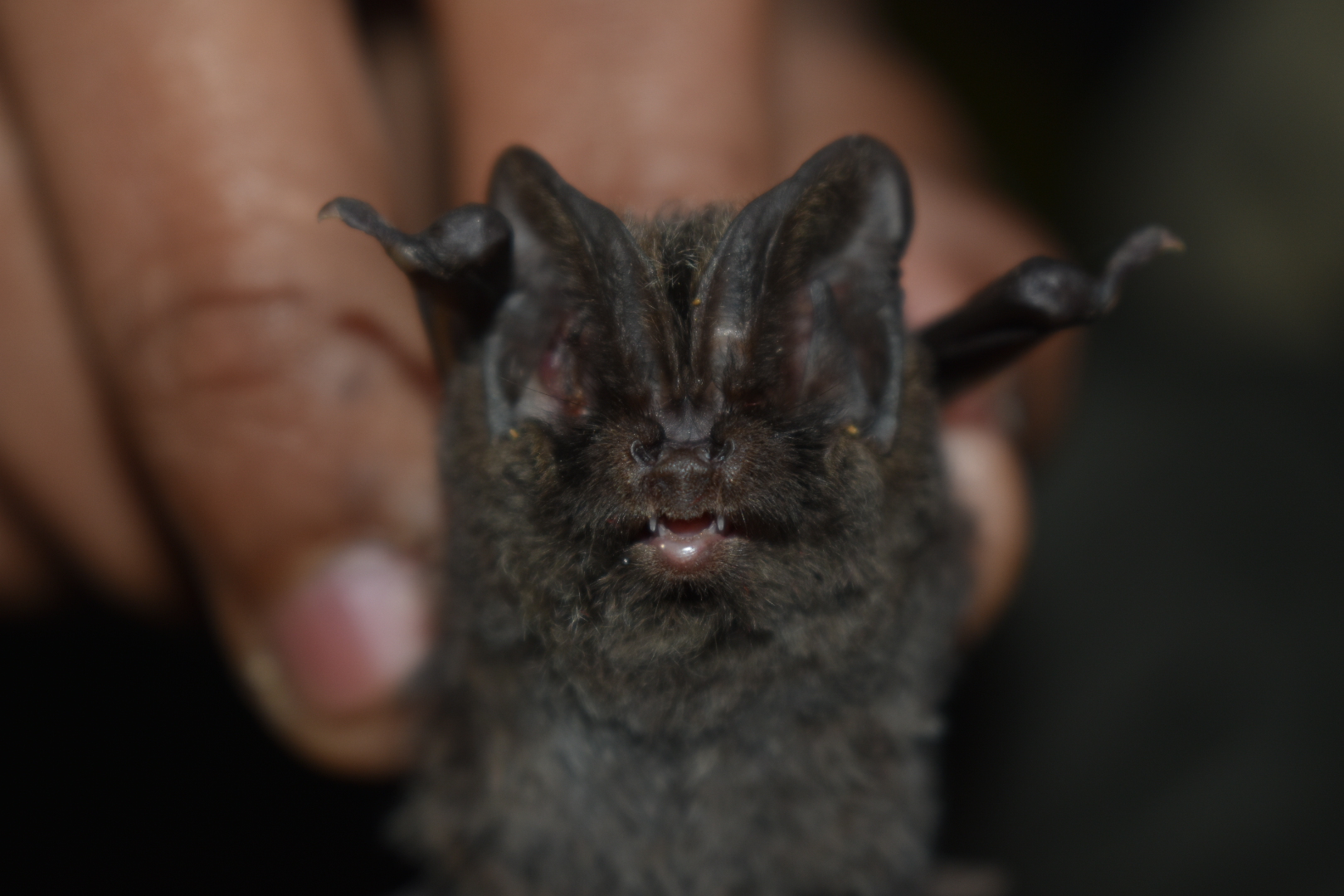
[Photos courtesy: Rohit Chakravarty. Top-L-R Clockwise: Leisler’s Bat (Nyctalus leisleri), Eastern Barbastelle (Barbastella darjelingensis), .Woolly Horseshoe Bat (Rhinolophus luctus), Kashmir Long-eared Bat (Plecotus wardi), Pearson’s Horseshoe Bat (Rhinolophus pearsonii)]

Lalitha Krishnan: Hi. Youโ€™re listening to Episode 12 of the Heart of Conservation Podcast. Your very own podcast from the Himalaya. Iโ€™m your host Lalitha Krishnan bringing you stories that keep you connected to our natural world. Today for the first time I am speaking to an interesting young researcher-couple who are both experts in their fields. Pritha Dey and Rohit Chakravarty. Pritha’s doctoral work included the study of insect biodiversity loss due to anthropogenic disturbances. My second guest is Prithaโ€™s husband, Rohit Chakravarty. He is a bat biologist currently pursuing a PhD at the Institute for Zoo and Wildlife Research, in Berlin. I met Pritha during a butterfly workshop in Devalsari, Uttarakhand and her knowledge and presentation on moths just blew me away. And so, I invited them to be guests on my show.


Pritha, Rohit, thank you so much for being on Heart of Conservation Podcast. Itโ€™s so fascinating to interview researchers anyway but to interview two who are a couple is a special bonus, I think. Itโ€™s intriguing that both of you are researching nocturnal creatures. Both of you have travelled in Uttarakhand in pursuit of your subjects. Letโ€™ start with the basics. So Pritha, why moths?


Pritha Dey: Hi Lalitha, thank you for asking us to talk to you about our research.

Lalitha Krishnan: My pleasure.

Pritha Dey: We are highly interested to talk about our research all the time. Itโ€™s new for us that both of us are doing it at the same time. So, Iโ€™ll start with my pursuits of moths. I finished my Master and immediately joined Wildlife Institute of India where there was a project to document the diversity of moths in twelve different protected areas. Initially it is was just the excitement to roam about in different places and studying moths but eventually, I started reading about them and learning about moths. What intrigued me most was how diverse they are and at the same time how understudied, they areโ€ฆbeing ecologically so important.

Lalitha Krishnan: OK.


Pritha Dey: And the myths that we find in movies, that they are evil creatures are absolutely not true. I wanted to look into that more and yes, thatโ€™s why moths.


Lalitha Krishnan: I think you have passed on a little of that love to all of us who heard your presentation at the butterfly workshop. I for one was totally inspired and now want to know more. Rohit how about you?

Rohit Chakravarty: Yes, itโ€™s a privilege to be on HOC. I would simply say I chose bats because more than half of India is busy looking at tigers, leopards, lions, elephants, bears and all other charismatic animals. It started off with me looking for an empty niche for my research but in the end, it just took me beyond that empty niche. As weโ€™re going to talk more about bats, we will hopefully convince the audience that bats are rather extraordinary animals. So more about that as we talk.


Lalitha Krishnan: Definitely. So Pritha, you completed your Ph.D. on the diversity patterns of the Geometridae family of moths along the elevation gradients in the western Himalaya. Could you tell us about this family of moths? And why you studied them in the Himalaya?

Pritha Dey: So, when I started working on the project on moths in the Himalayas, I found this particular family called the Geometridae family or commonly known as the Looper Moths. They are very abundant in mountain habitats. In mountains, you find them in huge numbers and they exhibit amazing variation in wing patterns and are hugely diverse with about 24000 species worldwide. Their taxonomy at the same time is very challenging and interesting. So, my idea was to work in the mountains and merge it with moth-study. So, moths and mountains were the ideal study group for me. I chose the western Himalayas because itโ€™s very interesting biogeographically as the tropical and the temperate elements kind of merge in this part of the country and we find very interesting diversity across all taxa. It is far less diverse than the eastern Himalaya where you find double the number of species of moths or other taxa. Yes, this was very interesting as a study group as well as a study area.

Lalitha Krishnan: Great. And the combination of moths and mountains just works right? And Rohit, correct me if I am wrong, I read that there are a thousand species of bats. Right? How many bat species do we have in India? There are so many myths about bats in general. They are not your everyday mammal either. What is the role of bats in nature?

Rohit Chakravarty: Youโ€™re correct about the 1000 species. There are close to 1,300 species of bats in the world. India has about 120 species so we have a really large diversity. And, bats are actually the most diverse group of mammals in India. They even outnumber rodents in India. Youโ€™re right. Bats are really not your everyday mammal. They are way more extraordinary than most mammals we come across in our day to day life. They are the only mammals that can fly. They use ultrasound to navigate and they have very long lifespans. From the point, for an animal that is barely the size of a mouse, it actually lives way longer than a tiger would.

Lalitha Krishnan: Wow

Rohit Chakravarty: So, bats are really long-lived and their role in natureโ€ฆ There are two broad categories. There are fruit bats and there are insectivores bats. So, fruit bats pollinate flowers and they disperse seeds of different trees. Some of the flowers that they pollinate include extremely important cash crops like agave and durian. Durian is a very important food plant.

Lalitha Krishnan: Of course.

Rohit Chakravarty: Agave is the plant that is responsible for producing tequila.

Lalitha Krishnan: Yes.

Rohit Chakravarty: So, without bats, there wonโ€™t be any tequila. People are also trying to find out more about how bats are important in systems that produce cocoa. There might be many interesting results coming out soon. Insectivores bats eat tons of pest insects, which also include moths, unfortunately.

Lalitha Krishnan: I know, I am going to ask you about that. Thatโ€™s interesting because considering there are so many bats, we barely see them. And now, youโ€™ve added a twist by saying they pollinate agave. It just made me think, do people actually breed bats by any chance?

Rohit Chakravarty: Iโ€™m not sure about it. People donโ€™t breed bats for economic benefits. The only breeding facility that I know of is for research. Not really for economic benefits.

Lalitha Krishnan: OK. Pritha, tell us about the whole mothโ€™s attraction to the flame/the whole moon connection and how many species of moths there are in the world and the Himalayas?


Pritha Dey: We are all very familiar with the phrase,โ€ Like moths to the flameโ€. Actually, itโ€™s very interesting. Itโ€™s very unique to this group of insects that their communication or orientation is towards the light. Thereโ€™s a theory called the light compass theory which means that they orient their flight towards celestial light. They try to keep the celestial light parallel and orient their flight towards the moon. So if we put any artificial source of light in their pathway, they get confused and try to orient their flight along that pathway along with that artificial light. So you mostly find moths flying in a circular manner around the lights in our houses or street lights if you see them. So thatโ€™s the reason. Itโ€™s kind of confusing for them so they fly towards the light and we are increasing their confusion by adopting artificial illumination. Itโ€™s kind of hampering their ecology.

Lalitha Krishnan: Itโ€™s like we know the way home but we use Google maps and end up in some small lane right?

Pritha Dey: Absolutely. Talking about the number of species, India has about 10,000 species of moths. I cannot even imagine how diverse they are. In the Himalayas, the eastern Himalayas have 50-60% of the total diversity, which is 5000-6000 but if you come to the western Himalayas, itโ€™s only 20-30% which is an estimated 2000-3000 species in western Himalaya. You can imagine.

Lalitha Krishnan: Yes, and a major part of it is unexplored right. Both in the west and in the east?

Pritha Dey: Right. When I started out, I was the first person to study moths in Nanda Devi Biosphere Reserve…

Lalitha Krishnan: Oh wow. Nice.

Pritha Dey: …to document them properly. So, such important areas are known for other kinds of wildlife but we donโ€™t know much about moths from such a biodiverse state like Uttarakhand.

Lalitha Krishnan: Iโ€™m glad youโ€™re doing that and you can have a lifetime of doing that if you want. There are so many moths. Rohit you did mention that bats are the only mammals that fly. Do they migrate like birds do?

Rohit Chakravarti: They do and we know very little about that in India. Most of the studies on bat migration come from Europe and the US. Because the batโ€™s flight is not as efficient as that of birds, they cannot fly to the same order as birds do. Some birds can migrate from one pole to the other but bats are not capable of that. The maximum distance that they can cover is about 1000-3000 km.

Lalitha Krishnan: Thatโ€™s quite a bit.

Rohit Chakravarty: That itself is a lot for an animal of that size. The interesting part though about bat migration is that unlike birds that migrate to remain active in a warmer climate, a lot of bats actually migrate and then they hibernate in much warmer conditions and much cooler conditions. So, bats do all sorts of interesting things that are rather unusual from the point of view of birds.

Lalitha Krishnan: Did you say to warmer and cooler conditions?

Rohit Chakravarty: Yes, I say that because particularly the studies on bats migrating on mountains have shown that the females go lower down because they mate just before migrating. So, they have a growing embryo in them; the females carry a growing pup and they have to remain active for some period of time in order to let the pup grow in their body. But the males do not have any such pressures so what they do is they actually migrate uphill to much colder conditions where it is easier to go into hibernation. Itโ€™s just like us sleeping in winters. We tend to sleep longer in winter because itโ€™s much nicer to sleep in colder conditions. Itโ€™s much easier for us to fall asleep in colder conditions so thatโ€™s what the males do.

Lalitha Krishnan: Ok and save energy, I guess.

Rohit Chakravarty: Yes.
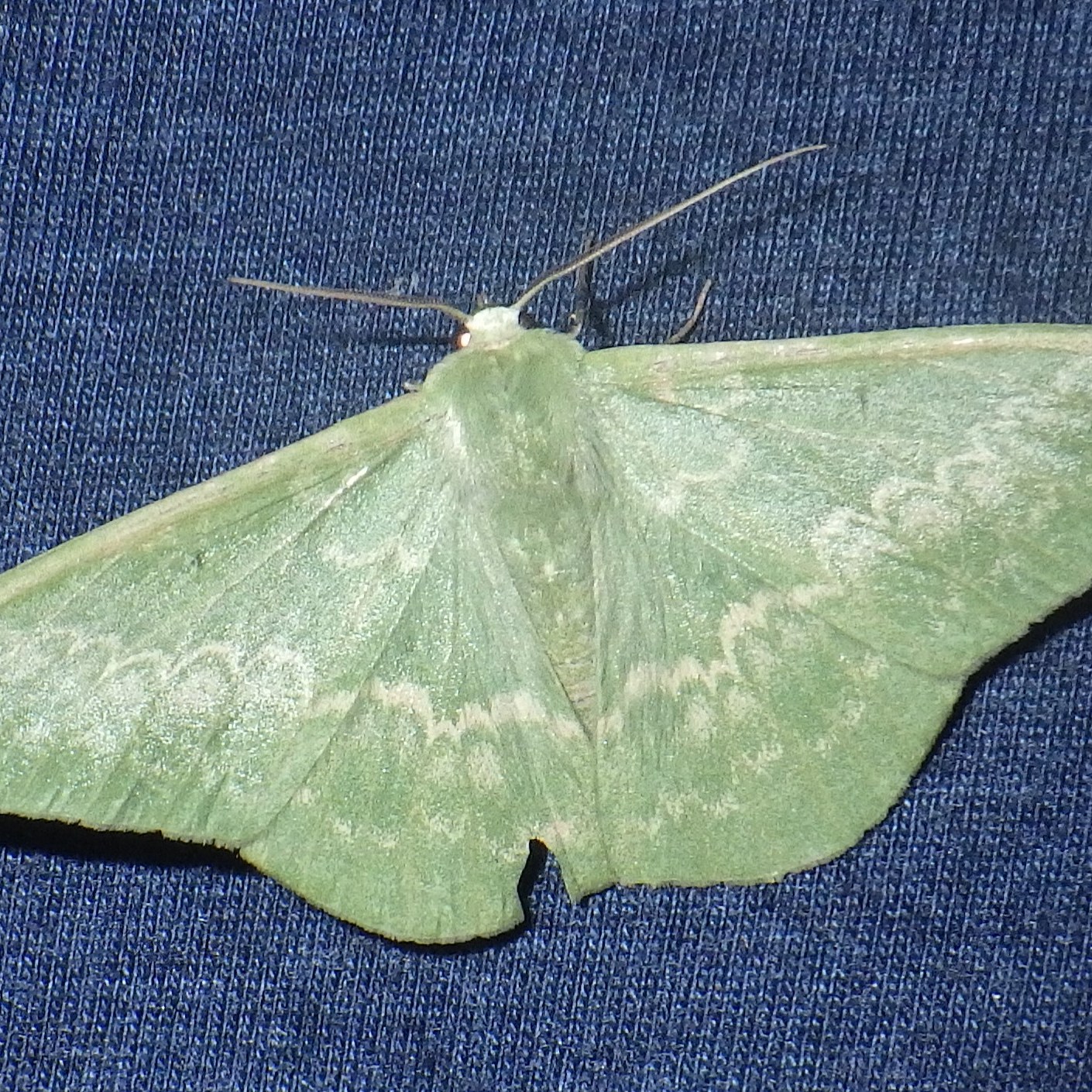
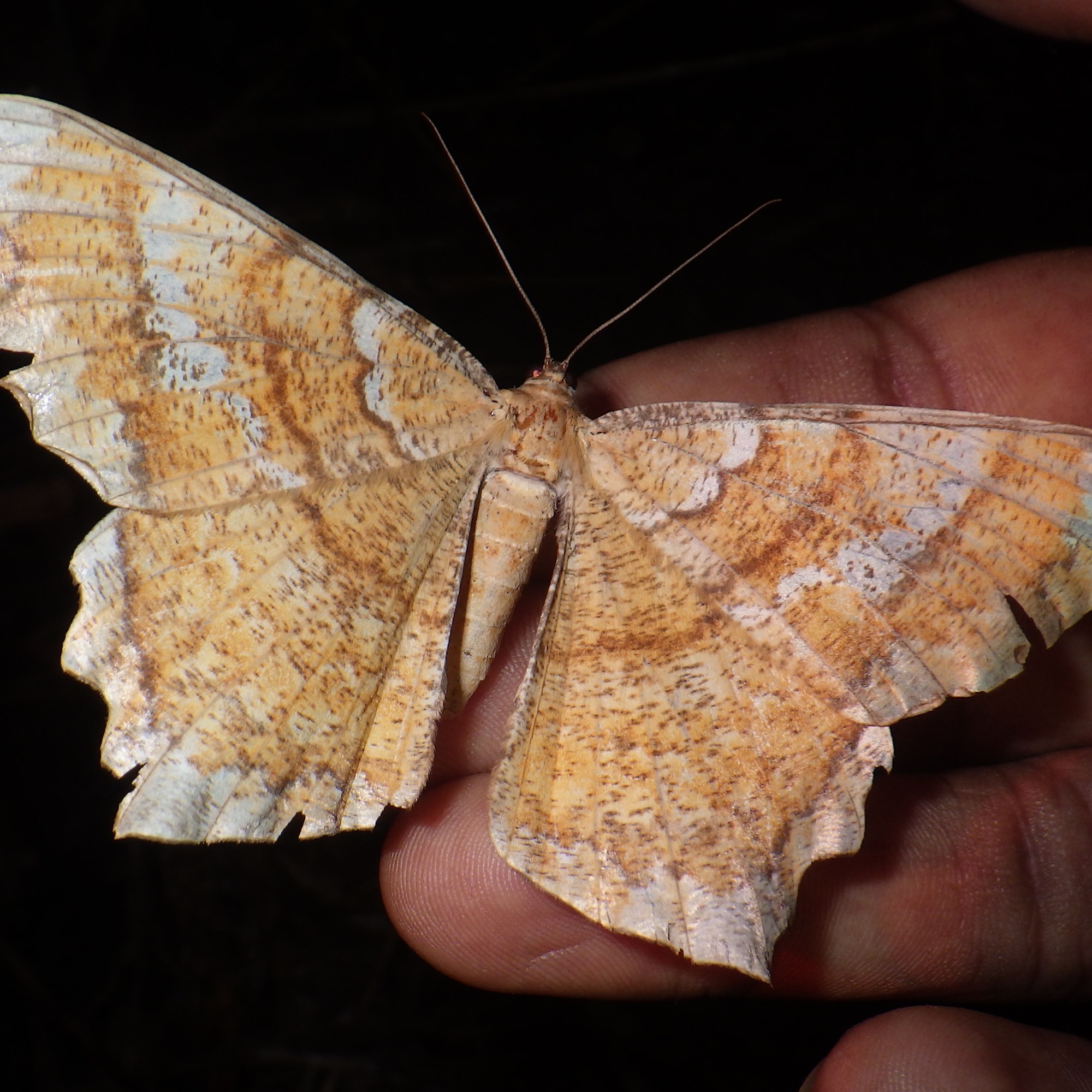
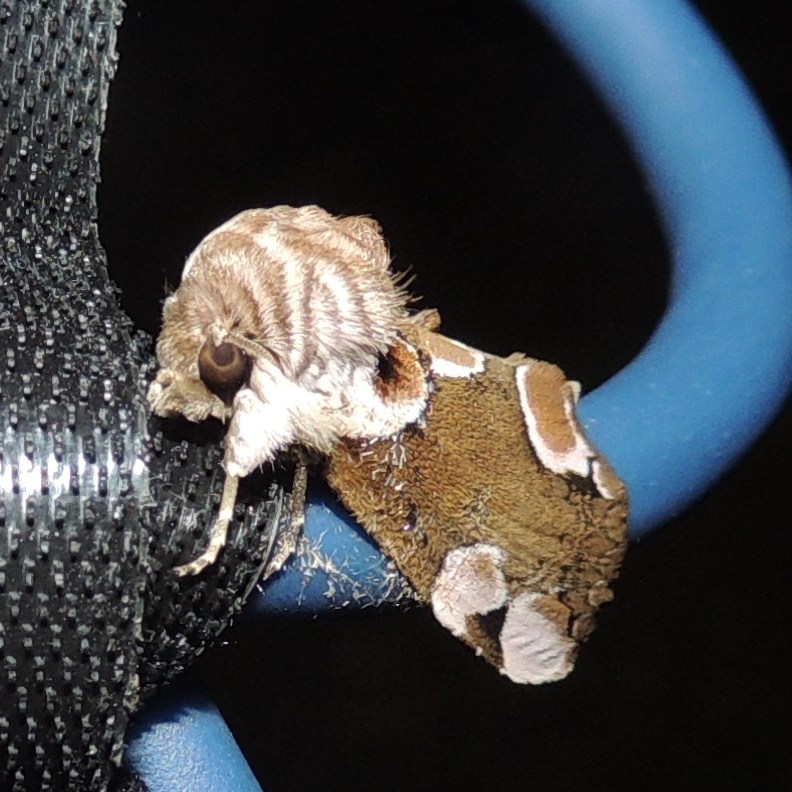
[Photos courtesy: Pritha Dey. Top:Tanaorhinus kina. Below L-R: Amblychia sp., Naga Hawk moth (Acosmeryx naga), Peach blossom moth (Thyatira batis)}

Lalitha Krishnan: OK. Pritha, back to you. There are day-flying moths and night-flying moths. I know this is a very basic question for you but for all of us who donโ€™t know anything about moths, could you tell us 4 easy ways to help us differentiate a moth from a butterfly?

Pritha Dey: Iโ€™m very happy to answer very basic questions. So, moths and butterflies, they both belong to this order, Lepidoptera. Moths came earlier than butterflies. Butterflies evolved from moths. So, there are some connecting groups in the evolutionary tree which are the day-flying moths. So they have bright coloured wings like a butterfly do but mostly moths are nocturnal in behaviour.

The easiest way to differentiate between a butterfly and a moth is to look at the antennas. The antenna for butterflies is club-shaped. They have a round ball-like structure at the end of it whereas moths, they have fuzzy, hairy antennas. Looking at them also, butterflies are more slender but moths are fuzzy and hairy. If you look at them sitting also, butterflies close their wings when they sit on a leaf or a flower and moths sit with their wings open and flat on the surface.

Lalitha Krishnan: OK.

Pritha Dey: Of course, there are exceptions to these things that Iโ€™m telling you which actually prove the rule. Another difference is the pupal stage which is very scientific or taxonomic but Iโ€™ll still mention it. The moths in a pupal stage spin a covering around their developing stage which is called a cocoon. Which is spun by the moths. But for butterflies, the covering in which the developing stage is there is called chrysalis. It is part of their body that develops into this cover.

Another interesting thing that differentiates moths and butterflies is something called a wing coupling device. In moths, there is a tiny structure called the frenulum which actually joins the forewing and the hindwing but there is no structure like that in butterflies. So, thatโ€™s why you find their flight also a bit different. Butterflies, if you see them in flight itโ€™s clearer and in moths, itโ€™s a bit fuzzier and confused flight.

Lalitha Krishnan: OK. And can one see this? Is this visibleโ€ฆthe joint between the wings?

Pritha Dey: No. itโ€™s visible under a microscope. So, the last two differentiations that I said are very scientific and taxonomic but for a layperson to differentiate between a moth and a butterfly, is to look at the antenna. Thatโ€™s the giveaway.

Lalitha Krishnan: This is an easy and practical way for people who might be interested but donโ€™t know how to start looking in their own garden to differentiate the moths and butterflies. Thank you so much. Rohit, since 2016 you have been working on bats in Uttarakhand. Could you tell us more about the bats in the Himalayas?

Rohit Chakravarty: So, Himalayan bats are quite unique. Like Pritha spoke about moths we see very similar patterns with bats as well. Just because of the geographical location of Uttarakhand, there are species that are at the edge of their distribution from Europe, from Eastern Asia like China, Japan, etc. and peninsular India. All of these species sort of merge in Uttarakhand. So it results in a unique diversity of tropical and temperate species. But what is even more fascinating for me is to see these small animals that fly. And flight, as you know, takes up a lot of energy. These small animals live in such elevation and they fly continuously throughout the night. So itโ€™s very interesting from the point of view of physiology to know how these animals do that. At some point in time, it would be great to study these things. There are bats going even further, even in Ladakh which is at 3800-4000 metres. I donโ€™t think there is any place in the whole world where bats occur at such high elevation. Thatโ€™s unique.

Lalitha Krishnan: One had a concept in oneโ€™s head that bats usually live in caves. But now theyโ€™re all over urban areas, right?

Rohit Chakravarty: Bats have actually been in urban areas for a very long time. Itโ€™s really their ability to keep themselves concealed. Most people have bats in their houses but they donโ€™t know about them until they see a pup lying on the ground or until they see a dead body in their house. But bats really have the ability to conceal themselves. And, they fly out at night, which again helps them conceal. So, bats have been with people for a very long time and itโ€™s just that their secretive behaviour had helped them keep away from people while being close to them.

Lalitha Krishnan: Pretty smart. Pritha, back to you. Could you tell us about the independent project that followed your PhD work?

Pritha Dey: When I came back from Germany after doing part of my Ph.D., I got funding from the Rufford Foundation (UK) where I got to study the moths from the Kedarnath wildlife sanctuary. It is another protected area in the western Himalaya which has not been explored for moths. We know the Himalayan Monal, we know the Musk deer, we know the Rhododendrons from this particular part of Uttarakhand but nothing about moths. In 2018 I did fieldwork there in the summer for two consecutive years. In 2019 also, I did some fieldwork. Itโ€™s been a very different diversity that I found from my earlier work in the Nanda Devi Biosphere Reserve because itโ€™s more oak-dominated, rhododendron dominated moist forest in that part of Uttarakhand. I already reported a new species to the western Himalayas from that project. Most importantly I got to do a lot of outreach activities from that project where I could reach out to people from non-scientific backgrounds to talk about moths; how theyโ€™re important to our ecosystems and how is it important to conserve them. During that time also, I got to meet you at the Devalsari meet, which was also part of my outreach activity when I could give a talk about moths. Apart from science, I really like to reach out to people about my research which I think is very important for any kind of research. I take that from my independent project.


Lalitha Krishnan: Thatโ€™s great. And what is the species you discovered?


Pritha Dey: I didnโ€™t discover. itโ€™s an already existing species. It the Drepanid moth which is a hook tip moth that was previously known to be found only in the eastern Himalaya. So, I reported this along with Mr Sanjay Sondhi. He also found it near Chakrata, in a place called Kanasar and I found it in Kedarnath wildlife sanctuary. Both of these records are first-time records from the western Himalayas. That was really something exciting.

Lalitha Krishnan: So cool. This might be a really stupid question but I havenโ€™t heard of a โ€ฆyou know we have a national bird, a national animal, but do we have a national moth? Is that something we could do to promote moths?


Pritha Dey: We donโ€™t as yet but we have state butterflies. We donโ€™t have state moths as of yet. That gives me another reason to talk about moths more and to continue my research.

Lalitha Krishnan: Itโ€™s an idea.

Pritha Dey: Itโ€™s an idea.

Lalitha Krishnan: Rohit, bats use many senses as you said but mostly their sense of hearing to communicate? You have trapped and recorded their ultrasonic calls. Could you tell us more about how they hunt, how they pick up sounds or avoid threats and stuff like that?

Rohit Chakravarty: Bats use ultrasound to navigate. They make these sounds that we canโ€™t hear. We canโ€™t hear ultrasounds. These sounds that bats make are really loud and sometimes they can be as loud as a firecracker. We are fortunate that we canโ€™t hear it. When those sounds hit objects and come back to them, bats make all these mental calculations in split seconds in their minds where they calculate their distance with respect to the object, their position, their speed, etc. and they navigate. If itโ€™s a hard object, for example, if itโ€™s wood, or itโ€™s a tree or a brick wall in front of themโ€ฆhard objects reflect almost all of the sound that has hit on them. Whereas if it is a person, or if itโ€™s an animal, thatโ€™s in front of a bat, the skin absorbs some sound and reflects part of the sound back to the bat. Depending on the time that it takes for the sound to be emitted and to be returned, and the intensity of the sound that is emitted and the intensity of the sound that comes back to the bats, bats make these calculations and they figure out if itโ€™s an object thatโ€™s in front of them – whether itโ€™s an enemy, whether theyโ€™re edging toward danger or towards food. So despite our politicians telling us that mathematics is not important, itโ€™s really important for an animal to survive in the wild and they do it subconsciously.

Lalitha Krishnan: I wonโ€™t say anything about politicians but bats sound pretty smart. Thatโ€™s so cool. You also mentioned earlier that bats also feed on moths. I just read part of an article in a scientific journal which mention that a species of tiger moth has developed a defensive ultrasonic clicking technique that jams the sonar–exactly what you were talking aboutโ€” of echolocating bats to avoid being eaten. Theyโ€™re saying this is the “first conclusive evidence of sonar jamming in natureโ€. Who wants to talk about this?

Rohit Chakravarty: Iโ€™ll let Pritha answer.

Pritha Dey: Yes.

Lalitha Krishnan: What do they mean by moth-clicks?

Pritha Dey: Moths are majorly predated upon by bats. In the conversation so far we know that bats echolocate to hunt also. They hunt for moths by echolocating. One group of moths known as the tiger moth; they haveโ€”you talk about one speciesโ€”but the entire family has developed this way of combating this echolocation by producing ultrasonic clicks. What they do is basically they produce the clicks at a certain frequency which are also ultrasonic. A frequency that hampers the echolocation of the flying bat and it confuses the bat as to where the moth is located. So, the bat gets confused about the location of the flying moth and cannot really predate on it. So, thatโ€™s how it functions and thatโ€™s how it evolved. So, the moths echolocate; they produce these ultrasonic clicks only in response to echolocating bats otherwise they do not use any ultrasound to communicate. They are mostly herbivores insects so they communicate only for mating which is mostly through pheromones.
This moth-bat ultrasound warfare is an evolutionary arms race and they are co-evolving new strategies. There is something called a โ€˜stealth echolocationโ€™ by the bats also where they have devised a way to avoid this sonar jabbing by the tiger moths and at the same time, the moths are also devising new strategies to combat these echolocating bats. So yes, itโ€™s eco-evolving, ongoing warfare in nature.

Lalitha Krishnan: This sounds like something straight out of the movies. You know this could be a hit and miss for both right?

Pritha Dey: Yes.

Rohit Chakravarty: It sounds more like the US and North Korea saying, โ€œMy button is bigger than yours.โ€

Lalitha Krishnan: Haha. Ok. Youโ€™ll have both studied abroad. Did anything stand out from those experiences? What did you bring back to your respective fields?

Pritha Dey: For me, I was in Germany for part of my PhD. After I completed my fieldwork in India, I came to Germany to complete the rest of it. My supervisor here (Germany) is a very funny and kind-hearted man who took me to South America and different parts of Europe for fieldwork.

Lalitha Krishnan: Oh nice.

Pritha Dey: I was exposed to a lot ofโ€”for the first timeโ€”I have seen so many people working on moths come together which I hardly see in India. The efficient networking that they share like all the scientists here โ€“ I am talking about the European community โ€“ the scientific networking and the taxonomic exchange that is required for lesser-known taxa is very efficient here. Which I took- something positive about my stay in Germany and want to take this culture back to India where more scientists work together toward conserving particular taxa. It would be more encouraging. We have so much diversity in India but very few people working on this kind of diversity. So yes, I took that back from my stay in Germany.

Lalitha Krishnan: That sounds so good. That sounds like a good thing to bring back. What about you Rohit.

Rohit Chakravarty: In the case of Bats, Germany is a great place to study because Germany treats its bats like we treat our large animals. So, bats receive the highest levels of protection in German law. Whereas in India, they are completed unprotected except for a few species. What is even more heartening to see is almost every month, there are citizen science events where people go around the city either recording bat calls in a scientific framework. Or they are citizen groups that put identification rings on bats much like how people put rings to study migratory birds. So groups put rings on bats before they go into hibernation or during autumn. They do this to see how populations are faring in the city or see how populations are migrating from one part of Europe to another. Most of these studies have been going on for decades now. So, this culture of studying bats is really ingrained in them. Thatโ€™s something I would really like to see in India- to bring it to India and continue for many years to come.
Other than that, of course, Germany is a technological hub. The technology we have here to study bats e.g. miniature GPS tracking devices that you can put on bats to study their movements, study their foraging, and everything. So, that technology is something that I would ideally like to bring back to India.

Lalitha Krishnan: So nice to hear that youโ€™re interested. We donโ€™t have enough of citizen science projects. Theyโ€™re a good way of creating awareness and conserving wildlife. Iโ€™m going to get back to citizen science as both of you are interested. If somebody in India is interested in moths and starts off by taking photographs or wants to id or post pictures online what or where should he/she be looking? What sites or what forums?

Pritha Dey: Yes, you correctly pointed out that both of us are interested in the citizen science framework. There are many forums like the India Biodiversity Portal or different social media groups where people put up pictures of moths and get them identified. Here, I would like to emphasise a particular portal โ€“ the Moths of India website which comes under the Biodiversity Atlas Project in India. It is completely citizen science-based. Iโ€™m a team member of this initiative. How it functions is that you see a moth, you click a good resolution picture as others can identify it and you can just put it up as an observation with a date and the location. These two things are important. Anybody can register themselves and upload their observations. Then, thereโ€™s a team of reviewers. We get these observation uploads every day and we -a team of 7-8 people-we review it, try to properly identify it if it hasnโ€™t already been done and then it is put up on our website. The website is very easily searchable. You can search by location or if you are a bit more oriented toward the moth taxonomy you can search by family or genus names and you can get your moth identified and see their distribution also which is based on whatever observations we have from different parts of the country.

Lalitha Krishnan: That will help. And for bats Rohit? What resources would a bat fan use? What website?

Rohit Chakravarty: So, I have written a detailed article on this and I would really urge the audience to google โ€˜A Beginnerโ€™s Guide to Bat watchingโ€™ and the article is up on โ€˜Conservation Indiaโ€™ Youโ€™ll be able to find it as soon as you google it. In that article, I have listed down all the resources that people can refer to, and all the equipment a bat watcher needs to start watching bats and to start identifying bats. Unfortunately, there are not any online portals that allow Indians to know more about Indian bats but thereโ€™s a lot of self-learning that people can do and Iโ€™m sure this article will help you get started.

Lalitha Krishnan: One could always start a group of sorts, right?

Rohit Chakravarty: Yes and we definitely do need something bat focused in due course of time but at the moment like โ€˜Moths of Indiaโ€™, we also have โ€˜Mammals of Indiaโ€™. Of course, we receive a lot more photographs of other large mammals but I would urge the audience to click photos of bats wherever they can find them and post them to groups of โ€˜Mammals of Indiaโ€™ and also India Biodiversity Portal.

Lalitha Krishnan: OK. That helps, Thanks. I request both of you to share a conservation-related word/concept and tell us why itโ€™s significant for you.

Pritha Dey: What concerns me at the moment is the ongoing insect species decline that we see globally. It has gathered attention from scientists and politicians alike. We need more young people to be interested to study lesser-known taxa or less charismatic taxa from a country which is so hugely biodiverse like India. With the right techniques and tools, India has the potential to stand out in insect conservation. I would really reach out to the young people through this conversation that: Please be interested more in moths, butterflies, and other insects. Apart from science, itโ€™s very important to reach out to the non-scientific community to achieve larger conservation goals and I would end by saying thereโ€™s a famous scientific article by the scientist, EO Wilson which says:โ€ Little things that run the worldโ€; he talks about insects and arthropods. As long as you believe that so thatโ€™s the message that I would like to spread through this conversation.

Lalitha Krishnan: Bravo.

Rohit Chakravarty: My message is pretty similar to Prithaโ€™s. As someone who works on a lesser-known group of animals. I believe that every animal is different and every animal tells a different story about the world. For e.g. a tiger might tell you a lot about forests and about how deer populations need to be controlled, how human interference needs to be managed, how corridors need to be connected etc. But a bat is a completely different animal and so is a moth and so is a frog. So, every animal tells a different story about the world. And, only when you study them, do you understand what story it conveys and how you should protect its world in order to save the animal itself.


The other message that I would like to younger people is to have faith in science. To not lose hope in science and to develop an objective view of the world; not a subjective one. And to include science in the way we conserve species. Science is not the end result and itโ€™s not the destination but itโ€™s definitely something important we need to incorporate into conservation measures.

Lalitha Krishnan: That was interesting and relevant for anyone who’s listening. Really great. Thank you so much Pritha and Rohit.

I hope you enjoyed this episode of Heart of Conservation Podcast. Iโ€™d love your feedback. Do write to me at earthymatters013@gmail.com. If you know somebody whose story should be told or is doing interesting work, do contact me.

If you want to know more about Prithaโ€™s and Rohitโ€™s work scroll down for the links. You can download Heart of Conservation podcast episodes for free on Soundcloud, Apple podcast, Spotify, Google Podcast or wherever you listen to your podcasts. Bye for now.


For more info on bats write to rohit.chakravarty77@gmail.com. For more on moths, write to dey.pritha126@gmail.com

Also, check out “A beginners guide to bat watching

Mammals of the Indian Subcontinent

Moths Of India

https://www.sanctuaryasia.com/conservation/field-reports/10693-like-a-moth-to-a-flame.

htmlhttps://www.livemint.com/Leisure/6vGVslxDp407q8vYzCsoVM/Searching-for-nightfliers-in-Uttarakhand.html

Birdsong by hillside residents


Disclaimer: Views, thoughts, and opinions expressed in the podcast and show notes belong solely to the guests featured in the episode, and not necessarily to the host of this podcast/blog or the guestโ€™s employer, organisation, committee or other group or individual.
Earthy Matters: 46th in Feedspot List of Top 75 Wildlife Blogs on the Web. Pretty Stoked.

Top 75 Wildlife Blogs, Websites And Newsletters To Follow in 2019 Last Updated Sep 19, 2019, via Feedspot

‘Heart of Conservation Podcast’ also on the Feedspot list of wildlife -podcasts.

Top 75 Wildlife Blogs

46. Earthy Matters

Earthy Matters

About Blogย I live in the foothills of the Himalaya and welcome you to a glimpse of my world. The landscape is never the same on any two days and I’d like to share its uniqueness: all the quirks & surprises the mountains dole out. Bird & animal behavior, flowers & bugs, sky & earth, people & their stories. You’ll find them all here. Come. Grab your favourite cuppa and join me as I document wildlife through writing, podcasting and photography.
Frequencyย about 1 post per month.
Blogย earthymatters.blog

18. Heart of Conservation

Heart of Conservation

About Podcast I want to reconnect my fellow Indians to nature through storytelling and to share everything I learn by entertaining, creating awareness, and bringing back the ‘awe’ of our natural world seamlessly.
Frequency about 1 post per month.
Podcast soundcloud.com/heart_of_cons..
Facebook fans n/a. Twitter followers n/a.View Latest Episodes โ–ธ

Dritiman Mukherjee: The Philosophy of Photography. EP#11

Show Notes: Episode #11 Dhritiman Mukherjee. [Edited]

Youโ€™re listening to Heart of Conservation, your very own podcast from the Himalaya. Iโ€™m your host, Lalitha Krishnan bringing you stories that keep you connected with our natural world.
My guest today is Dhitriman Mukerjee one of Indiaโ€™s most reputed & sought out, nature photographers. Chances are youโ€™ve seen Dhritimanโ€™s photographs more than once. His work has been featured and associated with Saveus, Sanctuary Asia, BBC, National Geographic, New York Times. Itโ€™s a long and enviable top-notch list that every photographer would love on their portfolio.

But what most people donโ€™t know about him is that he is also a self-taught photographer, a mountaineer, climber, and advanced Scuba diver. Dhritiman is also of the founding members of โ€˜Saevusโ€™, one of Indiaโ€™s leading natural history and conservation magazines. Dhritimanโ€™s work is extraordinary but here is a photographer with a conscience. His work impacts you as it creates awareness and evokes a sense of pride and, belonging in this beautiful world of ours. This interview was recorded over Skype.

(All photos courtesy/copyrighted: Dhritiman Mukherjee)

Lalitha Krishnan: Dhritiman, Welcome to Heart of Conservation Podcast. I canโ€™t tell you how delighted I am to have you as a guest on my show.

Dhritiman Mukherjee: Thank you and I am honoured.

Lalitha Krishnan: Dhritiman, youโ€™ve been known to jump off cliffs to photographs vultures and get into dry suits and immerse yourself into the sub-zero waters to shoot penguins and seals. Could you describe what attracts you to wildlife in places like this and also explain the process of your photography in inhospitable places? It canโ€™t be easy.

Dhritiman Mukherjee: The way I work; when I discovered people were started working with different subjects. Most people work on easily available subjects; of course, you go to Corbett, or Kahna or Kenya. You can actually drive into the park with a vehicle and see wildlife and shoot them. This is fantastic. Many people are doing this. If I am doing this then it will be a repetition. My point of view was whenever I planned my work, I try to do something which is different- less done or never done- which is actually not readily available to the mass(es). So, what is my goal? Initially, when I started photography, the most interesting part was that there was no better work like this. In wildlife photography life is always beautiful-what more can you want? You get a chance to be in the forest always or the ocean or any interesting landscape. Itโ€™s amazing. So that part was initially there. I loved to be in the field because it is away from normal life, which is, of course, good but sometimesโ€ฆ.my main point is that I was liking it, I was enjoying it but with addition I realised that I can also contribute to science and you know, social reasons like creating awareness for conservation. For that, I mean, it becomes meaningful. So slowly, along with my enjoyment, I always tried to think about what should I do? Which work can actually contribute to science or create awareness? From that point of view, I always thought of those works that which are not done by many people. That way it becomes exclusive. Exclusive in the sense, whatever I will do, when I share it with people, it will be interesting or contributory. That way I always selected rare subjects, difficult habitats, difficult places, difficult subjects to work with. Because not many people are doing this. Also, my background is I was into outdoors. I was into mountaineering and climbing. I always loved adventure. So that was an added tool for me. So, I thought that I could actually use that tool for my photography, because, that will help in a different way. And, from that point of view actually, I started looking for difficult and challenging places and subjects.


If you talk about jumping into the frozen Baikal or Antarctica or climbing a volcano, or diving with a crocodile or Anaconda, these things I did later. Maybe, in the last three-four years. But there is another reason also. I was mostly working in India, in all landscapes, in all habitats, in different subjects. I worked in most of the landscapes of Indiaโ€”all the states actuallyโ€” all the states of India. You saw that book I have done, The Magical Biodiversity of India? It was done to show how good our country is from a biodiversity point of view. Because India is amazing.

Lalitha Krishnan: True


Dhritiman Mukherjee: Every time I went out of India, I realised, India is best. It has so muchโ€ฆ


Lalitha Krishnan: I agree.


Dhritiman Mukherjee: Yes, all kinds of landscapes. Itโ€™s kind of a mini-world.


Lalitha Krishnan: Yeah.


Dhritiman Mukherjee: We have deserts, 10000 km of coast, we have the Himalaya, Deccan plateau, rain forests, mangroves, sets of islands. So, you know, everything, like one complete package. So definitely, India was, you know, a most lucrative place for me to work. And the main important point was that when I started not much was done. India has so many life forms but not much was done.

Lalitha Krishnan: Can I interrupt you? When did you start?

Dhritiman Mukherjee: I started photography in 1997 but started wildlife (photography) in 2000; end of 2000 actually. In India, I covered most of the landscape and did that book Magical Biodiversity of India. Then, I thought, OK, I have done a little bit in India, if I want to see the world if I want to do something interesting outside Indiaโ€ฆ with that continuation, I thought what can be the concept? So, I thought, letโ€™s go for a magical arch; that was the kind of concept I was following. The world is so big and has so much, I cannot cover everything. So, what I can go for? I decided to work on interesting things, so thatโ€™s why I decided to include an interesting phenomenon on earth. Like you know, I climbed an active volcano, dived in Antarcticaโ€™s icebergs, in Greenland, diving with the crocodiles. Basically, from one point of view, these were difficult and challenging subjects but many people have worked with it and secondly, they (subjects) are very interesting and surprising and so I planned from that perspective. My main goal is to work on less done subjects so that I can bring those events, species or places to the masses who somewhere they are disconnected with those things. I mean, in the last 10-15 years thereโ€™s a revolution is connecting the masses with different things via the internet and you know, different media. People who have access to TV have seen a lot of things but still, there are some things that havenโ€™ reached the masses. So that is one of the goals.

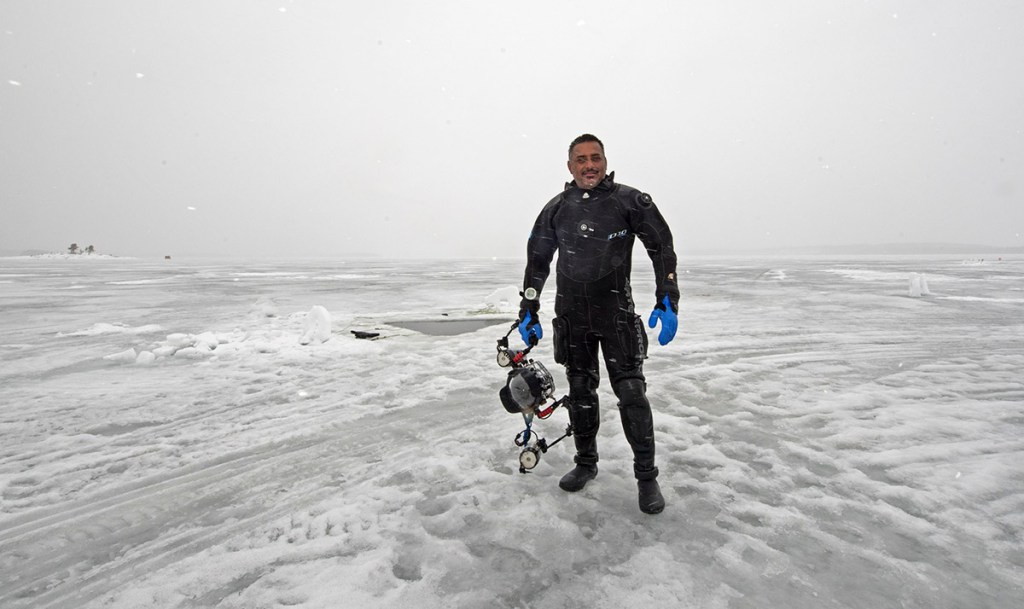
Dhritiman Mukherjee diving in the waters of Costa Rica


Lalitha Krishnan: Thatโ€™ amazing and I think it reflects in all your photography. Itโ€™s not just a photograph. When you look at it you see so many things. Thatโ€™s why I think your photographs are so special. And also, youโ€™re talking of different media. The purpose of this podcast is also to reconnect people to nature. Thatโ€™s great. So, along the same lines, I want to talk about something I just read about and itโ€™s fascinated me. In 2018, you along with 5 scientists went on the iconic Abhor expedition, right? In Arunachal Pradesh. The expedition is one of great significance because of the amazing biodiversity of the area. Abhor was also visited 106 years ago as a punitive mission following the murder of Mr. Noel Williamson who was the assistant political officer of Assam back then. Your expedition almost sounds like a Darwinian kind of exploratory; a once in a lifetime adventure. You travelled into parts unknown, you discovered and recorded multiple new species as well. Can you tell us a little bit about this expedition? Because itโ€™s huge, itโ€™s humongous, and I think everyone should know about it.


Dhritiman Mukherjee: It is actually super interesting how it started. When I was at WII, I was discussing with my friends. I always thought of this multi-taxa mission because, in India, this kind of thing is not happening in good numbers. At least, I donโ€™t know of any such kind of expeditions where scientists from different subjects participated. So, I always had a dream to go for something like this. I was discussing this there and gave a proposal to all these people, letโ€™s all do something which will be contributory and letโ€™s work in some area which is not explored yet. Actually, Abhijeet gave the idea about the place because he also was thinking about this Abhor expedition which was done 106 years back. So actually, it is a contemplation of the same route and a little more actually. Actually, this area is unexplored so why we called it the Abhor expedition is because that expedition which was done 106 years ago, was the baseline. When we do something in some area, after finishing the expedition, after getting all the data, we can compare the data with the past, available data which was gathered 100s of years back. That helps us see the impact of changes. We can see what is actually not there, if things have improved or what amount of destruction happened; what is the status actually? What are the changes? That gives us some ecological parameters. So, we split this area in where something was done 100+ years back and after that, not much was done. So, we went in one part and travelled along the Siang river then we went to bowling National Parkโ€ฆ These scientists are amazing in their own field. So, I was documenting everything. For me, there were two things actually; I could see the entire region which was mostly unexplored and I got a chance to be with five scientists. I got a chance to learn a lot โ€“ I always prefer to. And, we got a few new species, new informationโ€ฆ But we also got evidence of huge destruction and you know, habitat loss and much more. The final report is about to come but overall it was a very unique expedition for me.


Lalitha Krishnan: it sounds like a wonderful, wonderful opportunity for them and you. You bringing out the beauty of the place combined with the scientific information and discoveriesโ€ฆ You said it so casually, โ€œWe discovered a few speciesโ€. Itโ€™s not every day that people discover new species.


Dhritiman Mukherjee: No. The truth is we were expecting more species. We actually failed to give more time in some places. And maybe the timing is very important. We went there in October and if we had gone in May or June, then probably, it might have been much better because for the herpetiform like snakes and other things they are more active during that time. So, I feel if we can do another expedition in the same route in a different time, then, probably we will get more things (species) actually.


Lalitha Krishnan: OK

Dhritiman Mukherjee: Thatโ€™s the beauty of an expedition. When you go the first time, you will get to know many things you never imagined. After being there you realise OK this can be corrected or we could have done this differently. Thatโ€™s the best part. So, it will be a good thing if we can repeat the same expedition.


Lalitha Krishnan: Iโ€™m going to ask you another question that youโ€™ve been probably asked many times before. The list of cameras, lens, scopes, etc. available in the market these days is endless. How much of photography, do you think, is equipment nowadays? I donโ€™t know if this is a good question. Youโ€™re a professional photographer but what would you tell somebody who is sort of mid-way? Is it necessary to buy rather than perfect your art?


Dhritiman Mukherjee: This is a good question actually. A question regarding equipment is a very interesting questioning for others so I would like to share. Equipment is very important for sure but sometimes what happens in wildlife photography is first we buy equipment and then we plan. This should be the reverse. You should plan something and then go for equipment. Equipment is just for your certain need and equipment canโ€™t and shouldnโ€™t restrict your work. Nowadays, everyone can buy equipment, it is all available here. Once upon a time, say 20-30 years back, when very few people had good equipment, the quality was very important for good or bad photography. It defined it. If you had good equipment you could develop good quality photos and people would like it. That was one important parameter. But now everyone has the equipment. People can produce good quality photos. Now what is important is the story in the photo. For me also, quality is OK. If youโ€™re using good equipment or mediocre equipment, there will be a difference in quality but when the story becomes an important factor then, this has no value. If you produce a very interesting story with average equipment then that becomes much more important. The story or the natural history information you are providing – that becomes more important than the quality. At least for me. I take it this way. I have access to most equipment but I am not fussy about equipment these days. Once upon a time, I was very emotional about it. But now, itโ€™s not of much importance for me because the story is the ultimate thing. What Iโ€™m showing is very important – what a photo is talking about. That is much more important than how the quality is. People see the quality; it is available actually. You canโ€™t restrict yourself because of the equipment. Sometimes you say, โ€œI donโ€™t have equipmentโ€. Work with whatever equipment you have. Even with a mobile, you can get a great snap.


Lalitha Krishnan: True.

Dhritiman Mukherjee: You can go for different stories that your mobile can take. Wildlife photography is not always about getting some tight shots. I think that time has gone. Now the content is far more important. What youโ€™re talking about and what youโ€™re showing.


Lalitha Krishnan: Thatโ€™s great advice for anyone who is into any sort of photography I think, especially for wildlife. They just seem to think bigger is better. This is great thanks. So when I see wildlife posts on FB today, especially, if you go to a certain wildlife group or page, itโ€™s mostly full of tiger surrounded by at least 15 jeeps and photographers carrying huge equipment. And they wonโ€™t leave that tiger alone till they get that perfect shot. Iโ€™m as guilty. Iโ€™ve also gone to national parks, gone in a jeep and tried to click a tiger but it is ridiculous. I have seen people change tires, talk on the cell phone if thereโ€™s coverageโ€ฆ But the scale of this in our parks today makes me just feel this is not ethical at all. The way the tiger is cornered, the patience of that animal, itโ€™s tolerance for usโ€ฆtolerating us humansโ€ฆI feel itโ€™s no different from the old shikar days when the tiger was hunted. Now we just use cameras and jeeps to hassle them. What are your thoughts on this?


Dhritiman Mukherjee: Ah, this is a very complex question.


Lalitha Krishnan: I know.


[Dhritiman Mukherjee: Itโ€™s not that easy to explain. Of course, there are issues. I have been to many tiger reserves and I have seen the situation. There are different points of view. I believe tourism is one of the finest conservation tools. If people are not going into the forest, if they are not connected or interested, there will be no lobby for wildlife. We need a huge lobby for all the participants of our ecosystem. Tourism is [word lost in translation] The problem is how we manage it. So, it is not bad if some jeeps are going into the forests. In any case, the tourism zone is not that big. It is a little part of that forest. And in that part, the road is covering 10-20% of that area. In some cases, animals donโ€™t always get stressed. Sometimes, you see photographs of tigers just sitting while many jeeps are standing there. Sometimes it gives way. There is another perspective also. The tiger is a wild animal and it is just sitting in front of the cars. If it wants, it can actually jump 10 feet to be away from everything. But the tiger is not going. It is sitting there. It is not moving. In most of these places or some situations, the tiger can move away from the crowd but they donโ€™t. In tourism zones, these animals are somewhere, comfortable with people. Comfortable in the sense they have accepted the presence of people and are kind of habituated to tourists. Sometimes they just ignore. That is not where you can see the stress level of the animal. But in some cases, thereโ€™s a tigress with her cubs, or theyโ€™re in a particular area and people are chasing themโ€ฆsometimes, these things happen. There is no problem with tourism but rather the problem is the way we do it. Some management policies or awareness campaign or something for e.g. when people enter the park and if they can be given some instructions or advise, I think that will be helpful. I feel tourism is always fantastic.

There are some behavioural changes due to tourism that we see in wildlife but I donโ€™t feel it is heavily harmful to animals or for the ecosystem. I feel it is helping rather than it is harming actually. So that way I am in favour of tourism. Of course, it has to be organised and sensitive tourism.


Lalitha Krishnan: : Youโ€™re so right. We absolutely need tourism but like you said, the way we do it is more important. Talking about wildlife, nowadays everybody is a photographer. We have our mobile phones and whatever. We all claim we are photographers. What in your opinion is responsible photography? How should or shouldnโ€™t nature be documented? I think coming from you, it will be a lot for people who love wildlife but have no idea on how to be a responsible photographer.


Dhritiman Mukherjee: Ok, I always love to talk about the way I work but I would never like to tell you, โ€œyou do it like this or you should do thisโ€. I believe everyone is a sensible human being and they can take a call. I cannot suggest to people to somethings but I can tell you what I believe. If that helps then itโ€™s fine.
For me, responsibility is the backbone of anything I do actually. The word โ€˜responsibilityโ€™ is a very important word for me. So, whenever I work there are two things actually: Why am I doing this? Why I am doing this is very important. There is an ethical point of view. The โ€˜ethicalโ€™ thing is a function of time and space and the situation. 20 years back what was ethical is not ethical now because itโ€™s changing. What is the problem now? 20 years back you could hand count the number of wildlife photographers. But now, the wildlife photographers are close to a million in Indiaโ€ฆif you count the hobbyist or the amateur. These numbers are huge. In a narrow road, if there are one or two vehicles moving, itโ€™s fine but if a hundred are moving then itโ€™s not fine. It changes with time or the situation. In a park, earlier when one or two photographers were working it was not a problem. If a hundred photographers are there at a time, it becomes an issue. I am telling you this so you understand the dynamism of the situation. You have to take the call. What I doโ€ฆ I have some experience in the field, I try to understand in the field what I should go for or what I shouldnโ€™t doโ€ฆ I take the call on the basis of the situation, not by something which is provided by someone else. It is always a call of mine on the basis of my experience, my knowledge and the present scenery of the place. For example, when 20 or 30 years back, if we saw an image of a charging elephant, we used to be very excited to see the image. We used to clap for it. We appreciated those images. Now, for me, it is no longer a good image. Because, if the elephant is charging me, itโ€™s telling me that I was in its personal space. Someway, that animal was disturbed by me. It can be disturbed by anything. The main fundamental thing is when I am working in an ecosystem, the impact of my presence should be as minimum as possible. A charging animal shows the huge impact of my presence. That way, for me, it is no longer a good image.


Lalitha Krishnan: : Youโ€™re being invasive.

Dhritiman Mukherjee: I had images of charging animals before but evolution happens. If I am stuck in the old mindset then it is a problem of mine. We need to move on. We have to take the call. You have to understand that whatever you are doing, you are doing it for them. Why are we doing this (Wildlife Photography)? Because weโ€™re enjoying ——-[word lost in translation]. We are lobbying for wildlife. To connect the masses with animals. And not to disturb them; not to create stress for them. So, as a photographer, I always try to take the call in the field to see to what extent I can go. I take a lot of photographs where I go very close to the subject. But it is not like Iโ€™m pushing boundaries. It is based on a lot of experiences. I love to study the individual (subject) before doing anything. So, when I photographed an American crocodile in Mexico-you can see I am taking the photo from one foot away-but it is not like I can do it for every individual. First, I try to understand the situation. If that animal is comfortable with me, it allows meโ€ฆthen only can I do that. I canโ€™t push or stress them with my presence.
For sharks also, for all underwater photography, you need to be very careful, or you cannot take good shots. It is more like the animal comes close to me rather than I go close to them. In most cases, you have to be careful how much you can push. Because, after all, they are important. Whatever we are doing is for them. If we are caring about their comfort or wellness itโ€™s not good. For me, itโ€™s always a personal call.
When you talk about responsibility, I want to give a different example which is not directly related. I heard many people sayโ€”when they talk about their childrenโ€™s careerโ€”they say, โ€œIf you go for IAS, then youโ€™ll have a lot of powerโ€. Youโ€™ll do your office work but if you are an IAS officer, you will have a lot of power. This is confusing. In our society, this is one type of schooling which is not right. It should be: when you are an IAS officer, you will have a lot of responsibility, not power.


Lalitha Krishnan: : Correct.


Dhritiman Mukherjee: The higher you go you will not have more โ€œpowerโ€ you will have responsibility. That is one perspective I feel we confuse with many things. Because, I have been into wildlife photography for a long time and I work a lot with many institutions, many conservation organisations, many people and many forest departments, sometimes, I get a little more access than others. Some people can think this is power. But this is not power. The more I get into into all this, the more my responsibility increases. Because I am taking that responsibility. So, whatever I do, the word โ€˜responsibilityโ€™ is the backbone of everything I do. I am responsible for this because I am doing this. From that point of view, it is very important for me to be sensible and responsible in the field.
I want to add another thing. There is another kind of issue which I think of which not many people will think of. I donโ€™t know if youโ€™re e going to ask this questionโ€ฆ

Coral reefs:Andaman Islands, India


Lalitha Krishnan: Tell me.

Dhritiman Mukherjee: What is your favourite place or what is your favourite animal to work on?


Lalitha Krishnan: I was going to ask youโ€ฆ you know your photography is making an impact but if there is one project you are proud of for the change it has created? Notโ€ฆ


Dhritiman Mukherjee: This is a proper question. This question is fine but if you ask me, what is your favourite subject or species, or favourite places? If I name some species or place to answer that then I feel I am very much irresponsible.


Lalitha Krishnan: Okay. Why?

Dhritiman Mukherjee: There are some ethical responsibilities what I was talking about; that is how we work in the field where we have to keep this word (responsibility) in our mind. Where we cannot do anything which will actually do harm or damage the ecosystem. That is one part. Then, there is another part – our thought process. Though the process which I am going to tell you now about favourite species etc. Itโ€™s like this. You have 10 children and I ask you, who is your favourite? If you mention one, itโ€™ll be a very illogical and irresponsible answer. Because in the ecosystem, every species and habitat is equally important.


Lalitha Krishnan: : True. True.

Dhritiman Mukherjee: Whether itโ€™s grassland,——-[word lost in translation] or a mountain, they are equally serving their role. They have their own participants. They are all equally important. If you talk about species, from small insects to bug elephants, they all are important in the ecosystem. They have their own roles. So, you cannot be biased. So, if I am biased about a subject, then I think it is an irresponsible thought process. And you have to develop it. It is not as if when I started, I had these thoughts. Because it is a human tendency, we always love predators. Thatโ€™s why we love tigers, leopards, birds โ€ฆ that hunt or look ferocious attract us more. It was the same with me but I had to develop This is the part of the evolution of my thought process. I developed that thinking that I cannot be biased about any ecosystem or any species. That becomes irresponsibility. So then, with those consequences you can ask me about certain choices I make: why are you working or selecting these (species)? My thought process is like this. You can have 10 children and you cannot be biased on anyone but there is a chance that one child is weaker than the others and you have to take more care of them. That is not bias. What it is when one species is injured, another is in a good state, you can work on the endangered one or give more time to that species so that it can come out of its current bad state. That is the way of selecting my priorities. Itโ€™s not being biased. I work on those subjects or place which actually are in need at that time for different reasons. Endangered species or the habitat has some problems or it is scientifically less documented. So that my way of thinking; of selecting species and places. So, if I have favourites, I think itโ€™s irresponsible for me. This is one perspective I always thought of.


Lalitha Krishnan: Right. Iโ€™m glad you said it even though I didnโ€™t ask the question because Iโ€™m sure a lot of people have asked you that. Itโ€™s a completely different perspective youโ€™ve given and it makes so much sense and seriously my respect for you has gone up many, many notches because itโ€™s all about being mindful I supposeโ€ฆand responsible (while youโ€™re) out there photographing.


Lalitha Krishnan: Cool. Now I know how you choose your subjects to photograph. But which photographer has been your inspiration?


Dhritiman Mukherjee: I want to add something. Let me answer this at the end.


Lalitha Krishnan: OK.


Dhritiman Mukherjee: I initiated but forgot to tell you; I have some problems with the words, โ€˜bestโ€™, โ€˜successโ€™, โ€˜failureโ€™โ€ฆ Let me explain a little bit because I think itโ€™s required. Itโ€™s similar to โ€œfavouriteโ€ things we were talking about. People sometimes people say, โ€œDhritiman is the best photographerโ€. I am surprised how one can be defined as best because it is a qualitative thing. For qualitative things, you cannot use these words: โ€˜best,โ€™ โ€˜worstโ€™. You cannot even say โ€˜goodโ€™, or โ€˜badโ€™. Think of the first tiger-photo. If you see it now, maybe you will think: Oh, it is an average photo. But when it was taken it was surprising for everyone because there were no other (tiger) photos before. It was the first tiger photo. Imagine the first tiger-photo when there were no photos at the time, then it was the best photo (available).


Lalitha Krishnan: Right.


Dhritiman Mukherjee: It is all so subjective. All photos are documentation of some moments, some time and some species. Time, which is already gone so somewhere it is very unique. So, all the photos are unique. It cannot be good, bad or best. So, what do we go for? Basically, what happens is people actually want to see new things. When we mistakenly say it is a bad photo, itโ€™s a โ€˜seenโ€™ photo, that which we have seen already.


Lalitha Krishnan: Hmmm.


Dhritiman Mukherjee: It is not surprising you. So, what do we go for? We go for different things, new things. We donโ€™t go for old things that are done. What is done becomes a โ€œbad photoโ€. But it is not actually a โ€œbadโ€ photo. It was very much a good photo at that time. At some point in time, it was fantastic but now because people have seen it, it becomes a little bit boring and then people say, Oh it is OK or not good. So, you have to understand that this good, bad, bestโ€ฆthese words do not exist in photography or any qualitative thing. It has to be different. I mean if you are a photographer, what are you going for? Youโ€™re not going for a โ€œgood photoโ€ or โ€œbest photoโ€ but a different photo. Not what is done but new stories, new events.
So, what Iโ€™m saying is whether you realise this the word, โ€˜competitionโ€™ does not exist. When youโ€™re out of the competition, your mind becomes healthier.


Lalitha Krishnan: Right.


Dhritiman Mukherjee: Then, youโ€™ll be out of all unethical practices where competition sometimes pushes you to do something unethical. These words donโ€™t exist for me. I cannot be the โ€œbestโ€ photographer. It doesnโ€™t exist. Rather I would for being a contributory photographer where I can contribute to science or conservation.
To answer your question, who inspired meโ€ฆthat way, except for me, all that photographers inspire me. Whatever they are doing, all other photographers inspire me. Even what an amateur is doing is new for me. I am not doing that. That surprises and inspires me. So, what all other photographers, naturalists are doing is equally inspiring. So basically, everyone is inspiring me.


Lalitha Krishnan: Thatโ€™s such a novel way of thinking. Lovely.


Dhritiman Mukherjee: Itโ€™s actually a rational way of thinking. For me, the right way. So, when you think like that itโ€™s not novel.


Lalitha Krishnan: Maybe, not novel for you but for anybody else who is competitive for instance? This is just a different perspective no? Makes sense? Can I get back to the question about one project that youโ€™re proud of because of the change it has created or is creating some change while we speak?


Dhritiman Mukherjee: As I told you, I have a problem with some words that I told you.


Lalitha Krishnan: Yes.

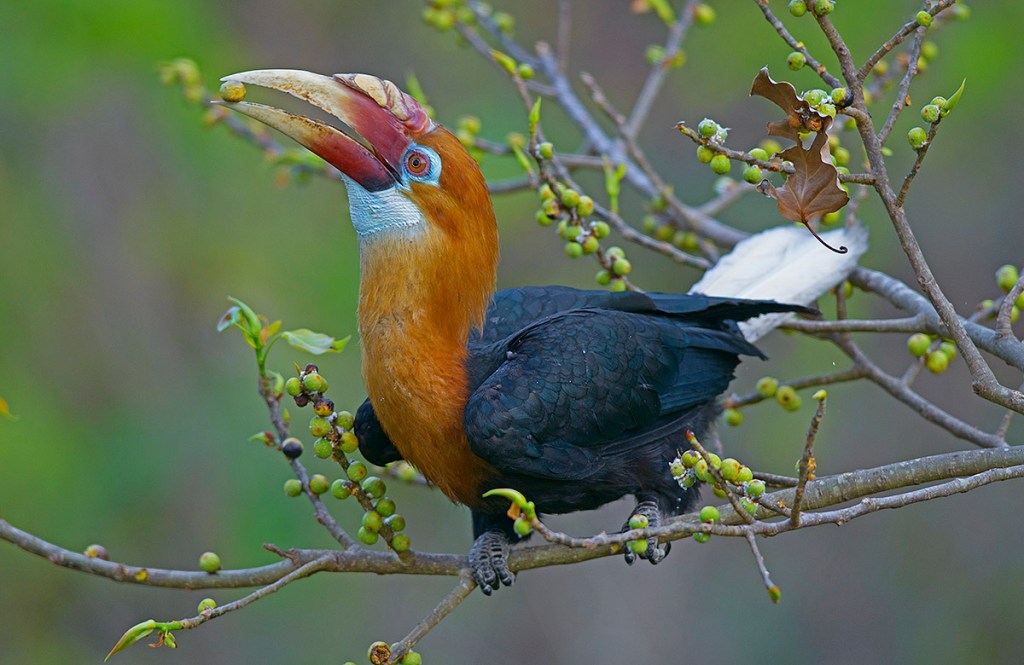
The rare Narcunda Horn Bill found only on Narkunda Island, India.


Dhritiman Mukherjee:
I try to solve some issues with these eg. โ€˜proudโ€™, โ€˜bestโ€™, โ€™worstโ€™, โ€˜competitionโ€™ or โ€˜achievementโ€™, success-failureโ€™โ€ฆThese words do not work for me. I can be a little happy not proud. The word โ€˜proudโ€™ has some sort of unhealthiness. People will have different opinions on that Iโ€™m sure. Whatever one does actually, for me, I feel it has not been done to the extent it can be done. I have worked on different subjects, like the Narkundam hornbillโ€ฆyou know about the Narkunda island which is the easternmost island in India. The Narkundam hornbill is only found on this island. They are nowhere else in the world. So me and Dr. Rahmani, Dr. Shirish Manchi, we actually went there, stayed there for 18 days. We worked there and got a lot of information on that hornbillโ€ฆphotographed them. So, that was pretty much a rewarding experience. In later days there were issues with the island. The Indian Navy wanted to put a radar station on the Narkunda island. The scientist and others were not happy to know that because you know, itโ€™s such a tiny island and that kind of activity can actually ruin the ecosystem of the island. Everybody wanted to stop that activity on the island. My photos helped to convey those (conservation) messages. Everyone used my photos, even National Geographic News also used my photos. So somewhere those photos were used for conservation. So, I feel it was a little bit contributory but itโ€™s not like a 100% thing done. It could be better.

Lalitha Krishnan: : Yes. But a start.


Dhritiman Mukherjee: I worked on different subjects. The Bengal Florican which was less documented, then, the snow leopard project was very interesting. I have been working on the brown bear which is very less done. I photographed the Western Trogopan in Himachal Pradesh which is the state bird of Himachal. There werenโ€™t many photos of it in the wild. I did different kinds of interesting things but I never feel I did a great job. I did Okay. Sometimes I was happy about how that work helped conservation but it is not like I am satisfied. I need to be more hardworking or more fruitful with my work. I cannot be satisfied with that or proud even. In any case, I have no relation with the word.


Lalitha Krishnan: I love that. But you set very high standards for yourself and itโ€™s actually very inspiring. So, do you have a conservation-linked term or a photography-linked word or concept that youโ€™d like to share?


Dhritiman Mukherjee: Thereโ€™s a disconnect between the natural world and the masses and mostly I found, many policymakers are also disconnected with the natural world. So, what I am doing right now, what I am very much concerned about or what is very relevant for this time to me, is about โ€˜inclusionโ€™. Inclusion of our ecosystem, in regular policy, social structure, everything. Because there is a disconnection, it is not included in our social system. So, whenever we see things, it looks like itโ€™s separate. When we talk about development, we feel like nature, ecosystem, the natural world, forestsโ€ฆis a separate world from the word โ€˜developmentโ€™. Actually, it is all included or inbuilt. When we talk about developmentโ€ฆif someone is doing some deforestation, and we ask, why are you doing this? They say itโ€™s a need for development.
Development is about keeping the ecosystem inside. Do everything but keep the ecosystem intact. It is about inclusion. It is inbuilt. So, I feel we have to understand that we have to all of this into our regular system. For that, we have to connect the entire masses with nature. I do photography for this purpose. Photos are the strongest tool to connect to people emotionally. If I speak about some species you have never heard of, you cannot be emotional about it. Only when you know a little bit about it even then you can think of it. So, photos actually do that. It connects people with the natural world.
So what I did as my responsibility is to lobby for the natural world or in other words, I can say I am on a mission to create as many as possible voters for the natural world. They will talk for them (wildlife). I am, one by one, connecting individuals with different species, different landscapes so that they will be in favour of them. Actually, it will create a huge lobby for them. For me, itโ€™s one step to the conservation of the natural world. This is what I tell newcomers to wildlife photography. Connect as many people as you can to the natural world. That will be the best step towards other things. Once the lobby is made, then you can play with it. So thatโ€™s why I try to show my images to the policymakers whenever I get a chance. Also, students or collages and schools so they will be inspired by the natural world and they will be in favour of it. If something happens where a mass voice is needed it will be easier to get that voice in favour of the natural world. Thatโ€™s why I make it my baseline responsibility.


Lalitha Krishnan: : Thatโ€™s a great word and the way to go forward.


Dhritiman Mukherjee: Thank you for initiating this.


Lalitha Krishnan: Dhritiman thank you so much. Itโ€™s been a really wonderful conversation and getting to know the person behind the lens is quite fascinating. Iโ€™ve put you there as a photographer with a conscience and clearly, you are. So, thanks a lot.


I hope you enjoyed this episode of Heart of Conservation Podcast. If you know somebody whose story should be told, donโ€™t hesitate to write to me at earthymatters013@gmail.com. I would love to hear from you, I would love feedback. Stay tuned, Heart of Conservation is available on Spotify, Apple Podcasts, SoundCloud, Google Podcast, Himalaya app, Android, or where you listen to your podcasts. Bye for now.

Wild Otters Pvt. Ltd. A Business Model for Conservation. Ep#10

Heart of Conservation Show notes: (edited).

Lalitha Krishnan: Hello, youโ€™re listening to episode #10 of Heart of Conservation,  your very own podcast from the Himalaya. Iโ€™m your host Lalitha Krishna bringing you stories that keep you connected with our natural world.

Ok, so today Iโ€™m taking you to an island in Goa where I went looking for the smooth-coated otter, Did you know that three out of 13 otter species are found in India?

Check them out at wildlotters.com.  So what did I do there? Scat analysis for one. It isnโ€™t as bad as it sounds but seriously only when I started disassembling scat components and saw all that fish netting did it hit me for real. Our behaviour directly impacts wildlife.

Otters are kept as pets. Can you imagine? They are a huge part of the illegal wildlife trade. I found out this and more at Wild Otters an otter-research based organisation, tucked away in a corner of Chorao island in Goa. Part of the fun was getting there on a ferry.

So what else did I do there? Between several surveys, cataloguing camera trap data, early morning bird watching and late night video editing I bonded with a bunch of like-minded folks. This podcast is a by-product of conversations I had with a few interns, volunteers,  and staff especially Ecologist & Director, Dr. Katrina Fernandez, and Director and Chief of Communications, Kshitij Garg.

Katrina Fernandes: Wild otters was started as a sole proprietorship. The aim was always to create a sustainable business model for conservation in the sense, trying to…rather than depending on funding and all the time writing grants, this, that and the other —sort of just trying to generate some sort of income to keep the place floating. That was the idea. Subsequently, we also realised that is not even possible. In terms that you canโ€™t sell research. You canโ€™t monetise research. You canโ€™t make money out of pure research. You can do things that kind of help in other ways which is the internships and volunteers programmes, the workshops and the training programmes. So we do a bunch of those things. We get students from all over the world who do their placement years and their internships. We are also working with schools. We are working with one particular school called The Learning Centre which is into experiential learning. So everything is more tangible, more tactile, more outdoors and stuff like that. We are also working with The Owl House, with neurologically disabled kids. We do things with them like building insect hotels, also again tangible because we are trying to get them to be outdoors,  tactile, using motor skills and stuff like that.

Kshitij Garg: Hi, my name is Kshitij Garg. Iโ€™m the Director and Head of Communications here at WildOtters. I essentially came in to look after some marketing and activities around which we would make this place sustainable. We are still working towards that. This is a rather challenging field I would say. Itโ€™s not the usual run-of-the-mill business model or run-of-the-mill profession. It is rather specialised. And I donโ€™t come from a zoology, biology background. I studied physics in college, then did a bunch of things pertaining to management consulting, marketing, tried my luck at physics again, then did a bit of journalism on the side.

Katrina Fernandes: The main thing we do here is research. At the moment we have a bunch of projects running. Primarily we are trying to figure out how the smooth-coated otter is adapting to and sustaining in a human-dominated, human-modified landscape.

Also, Chorao is in the middle of a river; itโ€™s still estuary – all mangrove and brackish water, not fresh water. We are also trying to see how those adaptations have happened over time. Weโ€™ve always thought they require fresh water sources and we are trying to figure out where that line can be drawn as well. A lot of their habitat requirements in a pristine environment are way-way different from what it is here. They are making dens on top of concrete retaining walls and all sorts of modifications you know, and adaptations to those sort of modifications which are quite interesting. So trying to understand all of that.

We do a lot of camera trapping to get behavioral data as well. There is a lot of deficit in terms of information for the species based on whatever historical data has been collected. We try to address those gaps.  We donโ€™t know much about their reproductive cycles and things like that. For instance, historically they have always been seen to have babies after the monsoon. But in 2017, we recorded a litter in May. That is completely out of character in terms of previous research done. So weโ€™re wondering if thatโ€™s got to do with the productivity of the place or of course mangroves have a high productivity rate in sea species compared to freshwater species. Thereโ€™s always fish, thereโ€™s always something going on. So essentially that provides more stability to a species such as the smooth coated otter.

Kshitij Garg: So one thing I am very closely involved with right now isโ€ฆracking my brain over is how we can develop things that are interesting to different kinds of communities – this could be schools, colleges, universities, local communities, corporates. So, we are trying to see if thereโ€™s a wayโ€ฆof course, you speak of it to anybodyโ€ฆpeople get extremely excited. โ€œHey, youโ€™re doing something that is fascinating, so out of the ordinary” But to build an engagement with themโ€“to build an institutional level of engagement โ€“ isnโ€™t straightforward. And, overall, through the history of Wild Otters, we have engaged with the public primarily through education. We run workshops, we run internship programmes and volunteering programmes, small field visits. So programmes can vary from four hours to four months. But, through most of this, the core content of all of this tends to be education. And though education is importantโ€ฆ I meanโ€ฆit isnโ€™t the core of what we do. We run research projects; we try to study animals, their behaviours, threats to them, fill in data gapsโ€ฆ So we work very much within the scientific community to address some of these interesting issues essentially. Iโ€™m also particularly interested in seeing if citizen science can be a part of what we do. Is there a way to connect the community and get some interesting results out of data collection. These days everyone has a smartphone. What is the next best thing we can do? How can we get everyone togetherโ€ฆcan  they tell us about their sightings, can they tell us about other interesting things they might have observed? And is there a way of everyone feeling some sense of fulfillment at the end of such activities?

Katherine Bradshaw: So hello, Iโ€™m Katherine. Iโ€™m from the UK, Lincolnshire specifically. I was originally here on my university placement year. I study wildlife conservation at the University of Kent. Having spent so much time here and have gained so much knowledge on the otter population, and the species here in Goa, I decided to extend my stay here and use camera trapping across the island to observe otter behaviour in this human-dominated landscape. So originally I was looking at comparing low human activity to high human activity. But with the island having fisherman all over it, I decided that the whole island had high human activity. So, Iโ€™m camera trapping across it and then focusing on otter behaviour looking specifically at _____ behaviour which is typically when they are alert, on edge. So if thereโ€™s a threat nearby they stand up on their hind legs, look around and observe what is going on. So, Iโ€™m looking at behaviour like that and also grooming and defecation and just focusing on whether thereโ€™s a difference across the island. For my personal project, Iโ€™m checking camera traps twice a week-three to four days. This means Iโ€™m not losing out on too much footage if the camera trap does suffer from a problem.

Lalitha Krishnan: It’s a fact that otter pups are born blind. But swimming lessons?

Katherine: So swimming lessons for otter pups typically come after maybe one to two months. They will primarily be based in their denning sites which they dig into the bunds located here on the island. Once the otters have been in their dens for a long enough time, like one to two months, then theyโ€™ll take them out for swimming lessons. So theyโ€™ll start taking the pups by the throat, taking them out into the water, getting them used to the environment and bringing them back. Then you can slowly watch them begin to become proper otters.

Lalitha Krishnan: Katherine, what are otter dens made of?

Katherine Bradshaw: So the dens here on the island are typically dug into the bunds which are the manmade body separating the waterbody. Typically, theyโ€™re made of earth, sand, and soil and theyโ€™re dug out just to separate the fishing pools between each one. So these are really easy for the otters to dig into. They can just use their front legs, dig out and make a nice little den with various burrows into it.  They can also use various vegetation, like grass to cover it which will protect them from various threats.

Lalitha Krishnan: So we know that the smooth-coated otters have adapted to the brackish waters of these mangrove forests. How significant are the mangroves and whatโ€™s the relationship of the otter to its habitat?

Katherine Bradshaw: So mangrove ecosystems have a variety of different factors that they bring to the environment. They provide coastal protection, a habitat to a variety of species including otters and this, in turn, creates a whole ecosystem. Mangroves are definitely essential. So you can see on the island how the mangrove ecosystem keeps growing out. You can see the seeds and the pods as you walk along, falling into the water which is extending the mangrove which will provide further benefits.

Otters are a keystone species which means they are basically essential for the environment and being an apex predator they do serve an essential role. So by them being present in an ecosystem, itโ€™s an indicator of the ecosystem being healthy. So therefore if you have otters, then yeah, it means you have a healthy ecosystem. And through the food chain which Iโ€™m sure youโ€™re all aware of, through that, going down each one, otters can mean fish and fish can mean various other things. So the cycle continues and continues. So if you remove a component of that cycle, that cycle will not function in the same way. So if the otters were not here then, the ecosystem would be completely different from what we have right now.

Lalitha Krishnan: Katrina, talking about community, how have they adapted to your presence here on the island? What do they think of the work youโ€™re doing here and how are you getting them to cooperate and help you conserve the otters and their habitat?

Katrina Fernandes: Itโ€™s a very indirect approach at the moment. Weโ€™ve been here now for essentially over a yearโ€ฆalmost two years actually. I think, the fishing communities around–which is essentially the people who have direct contact with the otters–if there was to be conflict, it would be between the fishermen and the otters. Because they do eat a certain proportion of their catch. It is the fishermenโ€™s livelihoods at the end of the day, we don’t have some large scale commercial operations going on here. Itโ€™s all about livelihoods, itโ€™s going to feed peopleโ€™s families and stuff like that. But we don’t push ourselves on them.  Theyโ€™ve seen us. Theyโ€™ve seen us go about to collect the data, they know exactly who we are and they see different people coming from all over the world. And, that has somehow brought some sort of value to the island, to the fishing communityโ€ฆ because itโ€™s like OK, โ€œWhy are all these people so interested? There must be something here.โ€ Thatโ€™s the thought process that is sort of…I like to think, to believe that thatโ€™s why we are not seeing any direct conflict in terms of retaliatory killings or things like that. As I said, itโ€™s a two-way street. We are all outsiders at the end of the day.  You have to make very tiny footsteps into the community and let them trust you before you start imparting all this knowledge onto them.

Yeah, now you get fishermen who see us out there and they actually give us information. โ€œOh, the otters are not here right now; theyโ€™ve gone to that sideโ€ฆwe saw them this morning. There were six of them.โ€ So you know, now they are automatically communicating.

Lalitha Krishnan: Theyโ€™re observing for themselves.

Katrina Fernandes: Exactly. They now know the movements. โ€œTheyโ€™re not here. Theyโ€™ve not been here for weeks. Come back next month. Theyโ€™ll come back.โ€ Some of them even want to tell you why they think theyโ€™re not here. โ€œ Oh, the fish are too young over here. They are waiting for them to get bigger.โ€ Stuff like that. I believe in a sense if you want to get involved with the community you canโ€™t just come into that community and try and change their minds. Itโ€™s a very slow process. For it to be a 100% workable, it needs to be very slow infiltration.

Lalitha Krishnan: Kshitij, looks like youโ€™ll have your hands full. Youโ€™ll do incredible stuff but what next?

Kshitij Garg: โ€˜Experiential learningโ€™ is a big sort of key phrase these days. One thing I would be very interested in knowing is that can we develop programmes wherein individuals donโ€™t just come to educate themselves but are directly involved from wherever they are, in solving some wildlife-related issue. In some ways, they are actually involved in more than just seeing it on TV channels or news media about things that are happening related to wildlife. And the reason I say this is because a lot of people I meet or who write to me or write to us, want to be involved but sadly the avenues are somewhat limited. They have this sense in their heads that they have to come to a very pristine, wildlife sanctuary-type environment to even start looking at wildlife. That is in itself is so wrong because thereโ€™s such a serious dearth of even the most basic knowledge of research techniques that people donโ€™t have. Using which, they could do a bunch of things in their own backyards and cities for that matter. We now have started to get people from across the world over here, essentially for long term internship programmes.

Shiri Lev: Hi Lalitha, My name is Sirilev, Iโ€™m from Israel. I came to India because I wanted to basically help otters live. A few months back, I went online to search my next step in life and naturally, it was going to be about animals and my favourite animal is (the) otter. So I went online and I found a lot of information about the otter pet trade that has been going on around here; around south-east Asia, especially in Japan and I started sending emails to whomsoever could shed some light on this subject.  Eventually, I contacted Kshitij and Katrina from Wild Otters. I got a few of the studies that were done by Katrina and some of her colleagues. Reading them back home, I was crying the whole time. I was very upset about this. And I decided to come here and try and learn more about otters…to learn how they live.

Kshitij Garg: Even in India, for instance, people just didnโ€™t know about otters. Still, most of them donโ€™t know about otters. But there is this slow and steady pace at which this knowledge is expanding. And there are a ton of other such interesting species that people just donโ€™t know about. We run a wide variety of workshops on mammalian studies for instance. Camera trapping, using a GPS, mapping techniques to invertebrate studies. We might teach them about butterfly trapping, moth analysis, pitfall trapping. We also run a couple of workshops on jungle survival. You might want to learn about building a raft or cooking your own food. Choosing what is edible or inedible berries or filtering water. There are a plethora of things that we do. Of course, we do a lot of custom programmes based on the requirements of the university or the organisation; it could vary between say ยฝ a day to as much as 10 days. We are also trying to work with a couple of local schools addressing waste management solutions over here and we are also trying to see if there are ways of expanding our reach to the community. We are working with a few more organisations on and off the island doing some programmes for them in terms of sensitising the individuals that visit them towards nature.

Lalitha Krishan: So when you do your surveys on the island, what exactly are you looking for?

Katherine Bradshaw: So when we survey the island we are looking for otter activity which is typically defecation areas and spraints. So defecation-areas are where otters repeatedly visit. They spraint there so that shows that they are active within the environment and we also look for pug marks, obviously denning sites. Marks, if they have come in and out of the water, because you can see how the way the tail has dragged. Itโ€™s typically defecation areas that we spot.

Lalitha Krishnan: Katrina, I believe we have a hybrid otter since the two species of otters, the smooth-coated otter has been breeding with the small-clawed otter. Can you tell us about that?

Katrina Fernandes: Thatโ€™s not happened in India that we know of as yet but hybridisation has happened in Singapore. So the entire otter population in Singapore is hybrids between the smooth-coated and the small-clawed. So itโ€™s a genetic mixture. And yes, theyโ€™re successfully continuing the population in that fashion.

Lalitha Krishnan: (to Shiri Lev): Youโ€™re taking on Otter trade. Thatโ€™s very brave of you. But whatโ€™s your plan of action. How are you going to do this alone?

Shiri Lev: Well, I mean, I canโ€™t do anything alone. No one can. We need people around us; we need to form friendships based on either basic interests or goals or you know, some kind of drive to try and help whatโ€™s going on around us on earth today. I figured I’ll get a college degree in university. Fine. Ok, Itโ€™s great to study. But to do stuff in life we need to learn first. So I figured volunteering was a  great way to start. Just to go somewhere, to learn first hand whatโ€™s going on. From people who have dedicated their lives to that. And from that getting inspired and developing my ideas and try and help.

Lalitha Krishnan: Thereโ€™s so much going on here with the otters, the research, the interns, the volunteers, the biodiversity, the community, tourists, feral dogs, garbage. There are no easy answers.

Katrina Fernandez: Even if you look at us, itโ€™s very easy to monetise in terms ofโ€ฆOk, Iโ€™ll just do a walk every morning and take six people and show them otters. But thatโ€™s contraindicative of what weโ€™re trying to do in the first place. Because in one sentence weโ€™re saying there is human pressure – humans are putting pressure on the habitat etc. etcโ€ฆthen you canโ€™t take those numbers of people out every day causing more disturbance. Thatโ€™s contradictory.

Lalitha Krishnan: Yes, knowingly taking them out.

Katrina Fernandes: Itโ€™s very easy to justify and say you do have to make that sacrifice to get money to actually work with the animal but weโ€™re trying to somehow, figure out an alternative model to that which doesnโ€™t involve taking people out there, showing them otters.

Kshitij Garg: Where weโ€™ll go from here, Iโ€™m not exactly certain. Weโ€™re expanding into other species. Weโ€™ve already started some studies on civets and porcupines in the Mandovi ecosystem. And we are essentially now starting to look or are starting to look at the ecosystem more holistically. Most of our previous studies have focused more on otters where you do study parts of the ecosystem along with it. And I think thatโ€™s a good approach to take when youโ€™re even looking at using all of this data โ€ฆwhether feeding into the local government or the forest department or anywhere where you want to make a policy level change. Itโ€™s good to look at the whole ecosystem more holistically. Thereโ€™s also a thin line between being educational in a research place and then sort of venturing more into tourism space. We are consciously making an effort not to venture too much on the tourism side because that just takes away a lot of mind space and effort on our side. And that does not contribute as much to the end result as much as we would like to. We definitely hope to expand to more species, more projects, and definitely more field bases beginning with a few more spots in India. But all that is of course just wishful thinking for now and hopefully, it will happen in the future sometime.

Lalitha Krishnan: OK then, I hope you enjoyed this episode. Iโ€™m going to leave you with a new word in the usual tradition. Itโ€™s โ€˜spraintโ€™. Iโ€™m going to let Katrine explain it to you as she explained it to me.

Katherine Bradshaw: So โ€˜spraintโ€™ is otter poop and we mark this using a GPS device so this GPS device marks the exact point where this spraint is. And we can use this to create maps of otter activity and this allows us to see month to month where otter activity is and high activity and low activity and if theyโ€™re on the move.

Lalitha Krishnan: So bye guys, if you know somebody whose story should be told, do write to me at earthymatters013@gmail.com. Stay tuned. FYI Heart of Conservation Podcast is available on Spotify,  Apple podcast, SoundCloud, Google podcast, Himalaya App, Androidโ€ฆso do tune in.

Birdsong by hillside residents


Disclaimer: Views, thoughts, and opinions expressed in the podcast and show notes belong solely to the guests featured in the episode, and not necessarily to the host of this podcast/blog or the guestโ€™s employer, organisation, committee or other group or individual.
Cara Tejpal: Eco Warrior Ep#9

#HeartofConservationPodcast #storiesfromthewild

Heart of Conservation Show notes (Edited)

Lalitha Krishnan: Youโ€™re listening to Ep#9 of Heart of Conservation. Your podcast from the Himalaya. Iโ€™m your host Lalitha Krishnan, bringing you stories from the wild. Stay tuned for interesting interviews and exciting stories that keep you connected to our natural world. 

My guest today is Sanctuaryโ€™s  โ€˜Young Naturalist of 2012โ€™ winner, Eco-warrior  Cara Tejpal. She describes herself as conservation generalist, who lends her skills to help confront the gamut of conservation challenges in India. She writes, fundraises, works on policy documents and develops campaigns under the umbrella of the Sanctuary Nature Foundation, while also heading their unique Mud on Boots Project. As an independent writer, her articles on wildlife have appeared in publications such as Outlook, Sanctuary Asia, Scroll, Conde Nast Traveller and National Herald. I interviewed Cara over Skype. 

Lalitha Krishnan: Hi Cara. A big welcome to you Cara on Heart of Conservation Podcast. Itโ€™s so refreshing to talk to a young, inspiring eco- achiever as yourself. So thank you for taking the time to talk to me today.

Cara Tejpal: Thanks Lalitha. I am happy to be on with you too.

Lalitha Krishnan: Cara could you first tell us about the Mud on Boots project. How does it work?

Cara Tejpal: OK.  So, the Mud on Boots Project is essentially an empowerment programme for grassroots conservation. Now, historically there continues to be a lot of scope for wildlife researchers, wildlife lawyers, wildlife journalistsโ€ฆ But when it comes to grassroots conservationists, those individuals working in the fields, who may not be very well educated or who may not speak English or have access to technology, they are very seldom recognized for their contribution to conservation. So, thatโ€™s how the Mud on Boots Project developed. Itโ€™s a two-year programme. We select individuals from across the country based on a closed nomination process. Which means we have a number of experts within Sanctuaryโ€™s network who nominate people to us. Once theyโ€™re selected, over a two-year period, we give them a small grant and depending on their conservation cause/call โ€“it could be a species or a landscape or any other issue, we customize our support to them.

Lalitha Krishnan:  How do you coordinate and monitor these projects?

Cara Tejpal: We absolutely work alongside each of our project leaders through these two years that we are supporting them and giving them the grant. Itโ€™s interesting because a lot of these individuals cannot meet the kind of corporate regulations and formats that a lot of conservation organizations demand. We have a much more flexible system. So, our project leaders can talk to us over Facetime, they can WhatsApp us information, they can send us a voice note, those who have emails will email us. Some of them donโ€™t speak Hindi, or English or Marathi, which are the languages me and my team speak, so they have a contact person who acts as a go between. Through the two-year period, we are constantly in touch with them are finding out whatโ€™s happening on the ground. We go on field visits and they continue to update us and ask for support as and when they need it.

Lalitha Krishnan:  Youโ€™re been visiting people in remote areas.  Does anything stand out for you from that experience?

Cara Tejpal: What really strikes me every time I go on a field visit especially to locations is that conservation is impossible in a vacuum. Conservation exists alongside a million and one other social issues in this country. And therefore, you need to take a holistic approach to any issue. And by that I mean, in December, my project coordinator and I, we travelled to two wildlife parks, one in Rajasthan and the Chambal Wildlife Sanctuary in U.P. In both states, the levels of illiteracy are very high, they are very patriarchal, and only when you are in these settings you can understand how these factors affect conservation implementations and solutions. I really think that is my big takeaway from my travels over the past decade across this country – that conservation cannot exist without community.

Lalitha Krishnan: Seeing that do you think the Mud On Boots project is too short and should be longer than two years?

Cara Tejpal: Oh, I hear you. Actually, this is a question, I get asked quite often. Most of these issues are long-term issues of course. I think there are two ways in which I look at this. One is that we are a booster-programme. We are giving someoneโ€”who would anyway be doing this workโ€”an opportunity to expand their work, an opportunity to build capacity, the expertise and network that an organization like Sanctuary has – which otherwise would be unattainable. And towards the last six months of each project term we kind of start finding ways for our project leaders to embed themselves further into the conservation community that may not have been accessible to them.

Lalitha Krishnan: That sounds encouraging and promising, and probably gives them a lot of confidence.

Cara Tejpal: I want to talk a little about capacity building. You know, of course. the monetary aspect of the project is very important. It gives our project leaders a kind of breatherโ€ฆthey can breathe a sigh of relief that they donโ€™t have to be struggling for funds and pursuing jobs that have nothing to do with their passionsโ€ฆ But at the same time, another aspect weโ€™ve realized is so crucial is capacity building. For a long of our project leaders, theyโ€™ve never left their hometowns or their home districts or villages. And so, they do not have a broader idea of the conservation scape of India. So to be able to either bring an expert from outside to them or take them for a field experience in another state say, but on a similar issue, is really important and it has proved and is proving to be quite exceptional in their growth.

Lalitha Krishnan: Iโ€™m sure it is. Now let’s talk about the campaign to protect the Great Indian Bustard, Rajasthanโ€™s state bird. The GIB is going extinct right before our very eyes. From what Iโ€™ve read there are less than 150 birds in India. Its decline has been attributed to the loss of grasslands, a low genetic diversity, and its narrow field of vision, which is why they keep crashing into power lines and wind turbines. So, tell us about this collaborative campaign to save this poor bird? We really need some positive stories now.

Cara Tejpal: You know, the funny thing is we, collectively as a nation, have known that the GIB is going extinct over the past 40 years. Itโ€™s not something new. The alarm bells have been ringing for a long time. Scientists and conservationists have been calling for help. The problem is that the GIB is not a sexy animal. Itโ€™s not a tiger; itโ€™s not an elephant. It doesnโ€™t have the charisma of a lot of our megafauna and subsequently, there is very little public support and political will to save it. So, this campaign is simply being projected out into the larger world, by us, at Sanctuary, but it is based on the work of dozens of scientists and conservationists, who have been protecting this species; and because of whom, the species is still alive today.

The most immediate threat to the Great Indian Bustard is the overhead power lines, which are crisscrossing their grassland habitats. The birds are flying into these overhead power lines and dying. Now, these power lines stretch across very large areas so you canโ€™t have an actual count of the number of (bird) deaths. But the Wildlife Institute of India has extrapolated a number from the surveys that theyโ€™ve been conducting. And theyโ€™re saying up to 15 Great Indian Bustards are dying by power line collision every year. When you are looking at a species that has a global population of fewer than 150 individuals, losing 15 a year to such an unnatural cause is devastating. And at this rate, we are looking at extinction in the very, very near future.

Lalitha Krishnan: So could you elaborate some more on your campaign?

Cara Tejpal: So, weโ€™ve launched this campaign in collaboration with the Corbett Foundation which is doing fantastic work with the Great Indian Bustard habitat in Gujarat, in the Kutch region and with Conservation India which is a Bangalore based conservation portal with very …effective campaigns. The thrust of the campaign right now is to get enough publicity and put enough pressure on the powers that be to enact solutions for the conservation of the Great Indian Bustard.

I think what is very important to highlight is that solutions to save the species exist. What is missing entirely in all these years has been political will and cooperation. So, we have a Wildlife Institute of Indian scientist telling us that the riskiest power lines in the Great Indian Bustard habitat need to be put underground, and the rest should be fitted with bird diverters. And that this first step can give the species a few more years during which you can do habitat protection, habitatโ€ฆyou knowโ€ฆI donโ€™t want to say upliftment but enhancement. You can give the GIB better protection. The other thing that has been pending for years now is the development of a captive breeding centre for the GIB. The middle east has been very successful in breeding a similar Bustard species and repopulating them in the wild. Thereโ€™s no reason why India cannot do this too. Especially when youโ€™re looking at a bird whose numbers are so, so critically low.

Lalitha Krishnan: Sorry, I didnโ€™t get you. Which country (in the Middle East) has started a breeding programme?

Cara Tejpal: Talks have been on for ages, in India, to set up this captive breeding programme. I think itโ€™s the U.A.E. that has set up the Houbara bustard, breeding programme. Itโ€™s been very successful and they โ€™ve released dozens and dozens, 1000s even, back into the wild.

Lalitha Krishnan: Having worked on these campaigns, what social media tools do you think are best employed to capture an audience or prompt an immediate response?

Cara Tejpal: Itโ€™s such a tragedy that India is such an ecologically illiterate nation. We have such stunning biodiversity but the truth is most people know anything about it. And what social media has done is made stories and images and news from wild spaces, accessible to the larger public.

So Sanctuary itself has a huge social media presence with over a million followers on Facebook, 50,000 on Instagram, above 25,000 on twitter. Iโ€™m personally on Instagram. Thatโ€™s definitely a channel I use for both fundraising and awareness.

Lalitha Krishnan: O.K. Now with social media, do you think the younger generation is more aware or do they not care?

Cara Tejpal: I definitely think that those who do care or are inclined towards nature and wildlife are able to find conservation much more accessible through social media. But that being said, social media is so noisy you know? For every one person talking about wildlife, there are 2000 fashion bloggers who are getting much more attention. I think it definitely falls upon conservationists to communicate much better. I think that something we have been failing for a long time. And, I am seeing now with my own generation, a lot of researchers and conservationists, and project managers kind of using social media to talk about wildlife issues.

Iโ€™d like to add that social media has also made citizens science so much easier. I know thereโ€™s something like the โ€˜Wild Canidsโ€™ project where individuals from across India are encouraged to record their wild canine sightings on a website so that one can look at this data and see vulnerable spots etcetera And to be able to get this out to a much larger audience and group of people, social media has been undeniably helpful.

Lalitha Krishnan: Alright. Youโ€™ve been a busy eco-warrior. Carawhere do you see yourself, say five to ten years from now?

Cara Tejpal: Oh wow, I have no idea. Hopefully in fiveโ€“ten years the Mud on Boots project has enabled and connected a massive, massive group of grassroots conservationists at the table alongside policy makers, researchers, journalists, and lawyers so that when weโ€™re making decisions about wildlife conservation we have representatives from the community involved.

Lalitha Krishnan: I definitely hope all of that happens. I wish you all the best. Now could you tell me about Sanctuaryโ€™s Community based rewilding project?

Cara Tejpal: This is, you know, kind of the brainchild of Bittu Saighal who is the founders of the Sanctuary Nature Foundation and the editor of Sanctuary Asia. Itโ€™s a project called COCOON, which stands for Community Owned Community Operated Nature Conservancy. The idea is for rewilding to be beneficial to people. Thereโ€™s a pilot project underway in Maharashtra where farm owners of failing farmlands have come together. pooled in their farmlands and stopped cultivating. These collective farmlands are now being re-wilded. They are being left alone for a three year period during which time the farmers are receiving a crop guarantee โ€“ thatโ€™s money to compensate them for not farming. They have formed a cooperative and in the future, we are looking at very low-impact ecotourism in these areas with the benefits going towards the farm owners and the community. We are looking at protected areas outside of government designated protected areas but which are owned by the community. So land ownership never changes.

Lalitha Krishnan:  So they were actually willing to do this? Or is a portion of the land retained for farming?

Cara Tejpal: Farm owners have completely pooled their lands together and allowed it to rewild. It has also involved years of incredible community outreach by conservationists on the ground, such as my colleague Rohit _________. It has involved co-operation and collaboration from village leaders and elders and the gram panchayat. Of course, it hasnโ€™t been easy. But at this point, I think, everyone is seeing the long-term benefits of such a project.

Lalitha Krishnan: I think getting farmers involved in conservation is wonderful. So, have you had any poignant moments? Is there something else youโ€™d like to share with us?

Cara Tejpal: Another one of my focuses over the years has been on Asian elephants and Asian elephants conservation. I think what I wanted to talk about is both the inspiration I receive from nature and the heartbreak of working in conservation. Thatโ€™s something we donโ€™t talk about often.

So, a few years ago I ran something called the โ€˜Giant Refugeesโ€™ campaign with co-campaigner Aditya Panda, who is Orissa based. I had been hearing about this herd of elephants who have been trapped on the outskirts of Bhubaneshwar from Aditya and my mentor, Prerna Bindra; and this one year, along with my cousins who are filmmakers, we decided to visit. What we witnessed was so heartbreaking. It was a mob of 300 men harassing a herd of elephants. It was absolutely savage on the part of humans not on the part of wild animals. Iโ€™m bringing this up because it was such an emotional moment for me. It was one of the first big campaigns I ran and it fizzled out after a few months. I learned a lot of lessons from it and I hope to revive it soon. But I think why I brought this up is because of a conversation I was having with many of my conservation colleagues and friends is a feeling of the absence of hope. I think we must all adhere to this religion of conservation optimism because that is the only way we are going to be able to inspire others. If all we project is a sinking ship then no one is going to want to stay on it.

Lalitha Krishnan: Conservation optimism is the need of the hour. So I couldnโ€™t agree more. I am going to end by asking you what I ask all my guests; that is to share a conservation-related word or concept thatโ€™s inspiring for you or significant for you. So, do you have one that youโ€™d like to share with us?

Cara Tejpal: I have so many. Iโ€™m trying to think which one I should talk about. I think โ€˜rewildingโ€™ is a word I love because itโ€™s a word that is full of hope. Itโ€™s a word that can be used not just for land and habitat but animals. I think itโ€™s people who really, really need to be rewilded. In an urban context collectively we have lost so much of our empathy and compassion, and understanding that as humans we are not apart from nature but we are a part of natureโ€ฆ Itโ€™s a sense of awe and returning home. Thatโ€™s why rewilding really resonates with me.

Lalitha Krishnan: โ€˜Rewildingโ€™ really is a lovely word but you also gave me โ€˜conservation optimismโ€™. So thank you so much, Cara. Itโ€™s been wonderful talking to you.

Cara Tejpal: Thank you Lalitha. This has been great.

Lalitha Krishnan: Hope youโ€™re enjoying the conservations about conservation. I would love some feedback. If you know someone whoโ€™s doing some interesting work or whose work should be showcased, do write to me at earthymatters013@gmail.com. And stay tuned for news view and updates from the world of conservation by subscribing to Heart of Conservation. Your podcast from the Himalaya.

Photo used on cover courtesy, Cara Tejpal

Birdsong by hillside residents


Disclaimer: Views, thoughts, and opinions expressed in the podcast and show notes belong solely to the guest featured in the episode, and not necessarily to the host of this podcast/blog or the guestโ€™s employer, organization, committee or other group or individual.

—————————————————————————————

Sanjay Sondhi: Nature Conservation and Livelihoods Ep #8

#HeartofConservationPodcast #storiesfromthewild

Heart of Conservation Show notes: (edited)

Lalitha Krishnan: Youโ€™re listening to Ep#8 of Heart of Conservation. Your podcast from the Himalaya. Iโ€™m your host Lalitha Krishnan, bringing you stories from the wild. Stay tuned for interesting interviews and exciting stories that keep you connected to our natural world.ย 

My guest today Sanjay Sondhi, is a man responsible for discovering a new species – the Bompu Litter Frog. This frog discovered by Sanjay was previously unknown to science. Sanjay is well known for his expertise on moths and butterflies and conducts workshops for the same. His nature column, Doon watch, in Hindustan Times and a column called Urban Nature Watch published in TERI’s monthly magazine are both very popular reads. He has researched and authored an impressive number of field guides on butterflies, lizards, and amphibians,  and is involved in conservation and livelihood projects in the western and eastern Himalaya.

Sanjay is a trustee with the Titli Trust. He is an IIT grad with 20 + years in the corporate world. Now, heโ€™s dedicating his time to the natural world as a full time practicing conservationist. I spoke to him over Skype.

Welcome to Heart of Conservation Podcast Sanjay. Iโ€™m so thrilled to be talking to you today.

Sanjay Sondhi: Likewise*

Lalitha Krishnan: Sanjay when did you decide youโ€™ve had enough of the corporate world and decided to take the road less travelled?

Sanjay Sondhi: Lalitha, in my case, actually, I had taken this decision quite some time ago. In fact, while I was doing my engineering from IIT, Kanpur, midway through my engineering I decided that I wanted to look at a different career and not necessarily engineering. But I finished my engineering; I got my degree, then I spend two years evaluating options for a full-time career in wildlife. At that point in time, virtually the only option that seemed to be viable was getting into the Indian forest serviceโ€”there were very few active NGOs at that point in timeโ€”or doing research in places like Wildlife Institute of India. I spent two years trying to figure out if I wanted to do that, you know. I came to the conclusion, that I would not lie to be in government service and I wanted to be โ€œa free birdโ€ while I was doing what I was passionate about. Then I took the decision that I am going to continue to workโ€ฆ that I enjoyed my work โ€“ itโ€™s not that I did not enjoy my workโ€” early 40s I am going to quit and spend half my life in the corporate world and the second half doing conservation. Thatโ€™s effectively what I did. Early 40s I called it a day and now Iโ€™m doing this full time

Lalitha Krishnan: Youโ€™re very brave, I must say. This decision – have you been happy with it?

Sanjay Sondhi: Yeah, itโ€™s now been 10 years. I quit in 2008.  Absolutely no regrets. Iโ€™ve enjoyed every moment of it. Absolutely.

Lalitha Krishnan: Sanjay you were in Pune earlier. What brought you to Doon?

Sanjay Sondhi: In my last job, I was based in Pune but my wife, Anchal, who is an environmentalist and is also very passionate about natureโ€ฆ both of us felt we didnโ€™t want to live in the big cities. We said, โ€œletโ€™s get out of these โ€œurban landscapes.โ€ Both our parentsโ€™ live in Delhi and surrounding areas. Obviously, both of us had a very strong link and passion with the Himalayas and Dehradun seemed like a good place because my son was still in school so I had to educate him. So from a point of view of proximity to the hills, great wildlife, compared to the big urban cities, we choose Dehradun. But we have no links otherwise to Dehradun. We just said, โ€œOK, letโ€™s go to Dehradun.โ€

Lalitha Krishnan: Thatโ€™s true. Itโ€™s close enough to escape and close enough to go back to the bigger cities if you want to. OK, Sanjay. You conduct workshops on butterflies and moths regularly. I love the fact that youโ€™re doing this locally. Especially, for all of us who are here. Itโ€™s a great opportunity to learn about our natural wealth. When did you start this?

Sanjay Sondhi: I am not a trained scientist. My love affair with nature began when I was a young child. My grandparents had a home in Dalhousie in Himachal Pradesh and I think from the age of three or four, I used to spend every summer-spend 21/2 months in Dalhousie. Basically,  wandering the wild. Wander all over the forest and stuff like that. But my formal introduction into wildlife, creatures, speciesโ€ฆactually happened in a nature club in IIT Kanpur.

I started off with an interest in birds. I did bird watching for a period of time. Then I got into butterflies, snakes, lizards, frogsโ€ฆeverything that moved, effectively. So butterflies and moths were somewhere along this journey. Butterflies started earlier and moths came later. But I also like studying things that arenโ€™t well studied. Lesser know fauna is of greater interest to me than mammals and large wildlife. Thatโ€™s why I pursued this line.

Lalitha Krishnan: OK. Whatโ€™s the best season in the Doon valley or Uttarakhand to go butterflies watching?

Sanjay Sondhi: If you talk of the Doon valley, if you talk of lower altitudesโ€” and when I say lower altitudes I mean less than a 1000mtrsโ€”then, there are two peaks of activity. One is the summers or the pre-monsoon: April-June and the other is post- monsoon which is Sept-November. This is the Doon valley. If you come higher upโ€ฆif you come to Mussoorie for e.g., the peak activity season is April, May, and June. Post monsoon, it becomes too cold and the number of species decreases significantly.

Lalitha Krishnan: Does Uttarakhand have any signature species that we should be looking out for? Or were they there and not there anymore?

Sanjay Sondhi: You know, I wrote this book on Butterflies of Uttarakhand. The book has exactly 500 species. Interestingly, out of those 500 species, about 62 species have not been recorded in Uttarakhand for 50 years or more.

Lalitha Krishnan: Thatโ€™s unbelievable. I mean, thatโ€™s a large number of speciesโ€ฆ

Sanjay Sondhi: You know, almost, I would say, 15% of those species were seen at some point in time in the last century and a half but arenโ€™t seen now. The reasons are obvious you know: habit degradation, unbridled development, climate changeโ€ฆ

Lalitha Krishnan: I was going to ask you about that. We keep learning people saying that butterflies are indicators of climate change or the state of their habitats? Yeah, tell us?

Sanjay Sondhi: Youโ€™re right. In fact, butterflies are a really good, bio-indicator- indicator of the health of the ecosystem. The reason it is so is that like most other insects, butterflies are first, cold-blooded. They are very sensitive to ambient conditions, which is temperature and humidity. And the butterfly life cycle which is from egg to larva, to pupae to the adult butterflyโ€”the early stages which are the caterpillarsโ€”they are also very selective. You have butterfly species where the caterpillars can be either monophagous or oligophagous or polyphagous. Which means that there are some species which will only feed on a single plant species. Thatโ€™s called monophagous. There are some that will feed on a small selection, which is oligophagous. And then, there are some that are generalists and can feed on a variety of plants. Effectively, if you are cutting down a forest and plant species are disappearing and plant diversity is reducing, itโ€™s going to have a very, very direct impact on butterfly diversity. So if you have habitat destruction and if you have climate change impacting plants, then it has a very direct link and impacts both the diversity as well as the density of butterflies.

Lalitha Krishnan: We need to spread the word about that.

Sanjay Sondhi: In fact, one of the things I often get very upset about isโ€ฆwe hear of deforestation happening in the name of development everywhere and the solutions that the powers-to-be propose is that weโ€™ll plant trees elsewhere to compensate for biodiversityโ€ฆ

Lalitha Krishnan: Yes…

Sanjay Sondhi: Which is ridiculous right? If you plant trees all you will have is monoculture plantations. And monoculture plantations do nothing for biodiversity. Monoculture plantations from a biodiversity point are detrimental to the health of an ecosystem.

Lalitha Krishnan: I guess, one thing you could do locally is to encourage people to grow plantsโ€ฆat least have butterfly gardens.

Sanjay Sondhi: Not only grow plantsโ€ฆI do this all the timeโ€ฆnot only grow plants, I tell them to grow plants that are native.

Lalitha Krishnan: Native, thatโ€™s what I mean. OK. Everyone in the conservation field in the northeast states knows you? Tell us about your work over there?

Sanjay Sondhi: So, basically if you look at India, there are two biodiversity hotspots. One is the Himalayan region and the Western Ghats. In the Himalayan region, people also look at, what is called the Indo-Malayan region which is the hills of north-east India. That part of the country has got the most number of birds, the most number of butterflies, the most number of virtually, every faunal group.

Lalitha Krishnan: Yes, I went to Arunachal and I was blown away, I have never seen forests like that.

Sanjay Sondhi: So I decided very early, I wanted to spend some time there. Over the last decade or so, I have been making four-five trips a year to Arunachal Pradesh, Meghalaya and Nagaland primarily. In most of the places, what I do is I select or prioritize a habitat or landscape that I want to work in. I do biodiversity assessments in that area and using the information from these biodiversity assessments, we work with local communities on a conservation and livelihood programmes where we tell the locals, โ€œYou should be conserving your natural resources. You conserve your natural resources and weโ€™ll help you earn an alternate livelihood that is sustainable. Which is, largely, nature-linked tourismโ€. So Iโ€™ve been doing this in the Garo Hills, in Meghalaya, Arunachal Pradesh and few other locations in Nagaland, as well.

Lalitha Krishnan: You must be at home there now and know every natural habitat.

Sanjay Sondhi: I have many city folks asking me, โ€œIs it safe?โ€ I tell them, โ€œLook I made 60 visits in the last decade and nothing ever happened to me. So, itโ€™s really quite safe.

Lalitha Krishnan: What do they think is unsafe? I donโ€™t get it. The air in Delhi is not safeโ€ฆ

Sanjay Sondhi: Itโ€™s incredible. The questions I get asked! I donโ€™t know how to respond.

Lalitha Krishnan: Thatโ€™s funny. Sanjay youโ€™ve made such a huge discovery. Tell us about it. Were you looking for frogs in particular when you discovered the Bombu Litter frog?

Sanjay Sondhi:  Oh no. Absolutely not. I did a five-year assessment of butterflies and moths. It was a project that I was doing across, what is called,  the Kameng Protected Area Complex. This is basically a 4000sq k.m. area which was from Pakke Tiger Reserve all the way to Eaglenest including Sessa Orchid Wildlife Sanctuary. So during one of these visits, while I was studying butterflies and moths, I was in a place called Bombu and for 4 days in a row, it just rained. It used to rain day and night. So if itโ€™s raining you know, thereโ€™s no activity of butterflies and there are very limited moths as well. So the only other thing, I could do is look for frogs. So, thatโ€™s what I did. I went out at night looking for frogs to photograph and I found this particular frog which had blue-eyes. I had never heard of a blue-eyed frog from India before. I photographed it and I wondered if it is something new. Fortunately, we had collected permits so I collected just one specimen but I took readings and records of numerous other individuals that I found there. And when I came back to Dehradun and started investigating, I found out that the frog genus was called Leptobrachium and there are just two species of that genus known from India. The, I had to look at all the other species that are known from the rest of the oriental region, viz China, Philippines, Vietnam and stuff like that. And sure enough, it turned out to be a new species. So I collaborated with a French-scientist called Ann Mary Oler and together we published this paper describing it as a new species in India and of the world of course.

Lalitha Krishnan: Such an incredible thing. Amazing, really. I donโ€™t know anyone else who has discovered something new. So tell me, were they vocal? The frogs? You said you went outโ€ฆdid you hear them, did you know where to look? How does one go out looking for frogs in the night?  I have never done that before. Sorry if I sound ignorant.

Sanjay Sondhi: Actually, there are two ways to search for frogs. One is, obviously, if youโ€™re there and theyโ€™re breeding the males will be calling. In this particular case, this male was calling. But, it was hidden in the leaf litter. It took me almost 20 minutes to find it. I could hear the call but I could see the frog. Then, of course, I had to hunt for it and I did eventually find it. And of course, the second way to look for frogs is through eyeshine. So, if you actually shine a torch at a frog, their eyes shine and hence you can locate them. But this frog was located because of its call.

Lalitha Krishnan: It was calling to be discovered. Sanjay is it true that if you discover a new species you have the right to name it or have I got it wrong?

Sanjay Sondhi: Yes, itโ€™s correct. If you find a new species, you do get to name it but you canโ€™t name it after yourself. OK? Thatโ€™s part of the rules. Thereโ€™s an international body, which is called ICZN, which International Convention for Zoological Nomenclature and they have their rules in terms of what you can do and canโ€™t do.

Lalitha Krishnan: OK

Sanjay Sondhi: You canโ€™t name it after yourself and what I decided is that I wanted to name it after the locality that it was found in.

Lalitha Krishnan: That makes sense.

Sanjay Sondhi:  Yeah, so the locals take prideโ€ฆsaying, โ€œwowโ€ you know? Bompu is the location where it was found and I named it after that locality. And hence, itโ€™s called the Bompu Litter Frog.

Lalitha Krishnan: What does your discovery mean for science?S

Sanjay Sondhi: Well, the fact is that it just continues to showcase and indicate that there are so many species, we are still to discover.  And instead of going out and finding out what else is out there, you know with habitat loss, we are losing species at a rate that is incredible. You keep hearing numbers being touted by (I)UCN about the fact that 30% – in the case of amphibians, they believe 30% of global species will be extinct in the next decade. It just reinforces the fact thatโ€ฆโ€ฆโ€ฆโ€ฆโ€ฆโ€ฆ(lost in Skype transmission).  We can only do that if we protect our habitats and ecosystems.

Lalitha Krishnan: OK. How were your efforts recognized? Do you think this has helped you further your conservation efforts?

Sanjay Sondhi: I think so. I think that the Eaglenest landscape per se, you know–a friend of mine, Ramana Athreya had discovered a new bird species called Bugun liocichla. Subsequent to that,t I discovered this frog. And, subsequent to that, we have not discovered new species, but weโ€™ve had numerous records of butterflies and moths which were extremely rare and new records for India. And all of this has helped in multiple ways. Number one, it has highlighted the conservation importance of that landscape. Number two, it has made the local folks realize that this is a landscape that needs to be protected. Number three; it has given a boost to tourism. I mean there are two tribes in Eaglenest. The Sherdukpen tribe and the  Bugun tribe who are running community-based and eco-tourism based projects and are earning a livelihood from it. Now, the livelihood has become so important that the Bugun tribe has actually donated a large tract of community land to make a community conservation reserve, where some of these species reside. It has helped even the locals realize the importance of their own lands.

Lalitha Krishnan: OK Sanjay, do you mind sharing a conservation word/term thatโ€™s significant for you. It could be anything.

Sanjay Sondhi: OK. I think for me, there are two words that are really really important.  And they go together. itโ€™s not a fancy word – itโ€™s โ€˜conservationโ€™ and โ€˜livelihoodsโ€™. I believe the only way to conserve landscapes, species, flora, and fauna is to involve the people that live in that landscape. And the only way we can get them to conserve it is if we incentivize conservation by offering them a livelihood that incentivizes conservation. if they are actually earning money from saving their forests, thatโ€™s probably the best way to link conservation and livelihood.

Lalitha Krishnan: Thatโ€™s great. Thank you very much, Sanjay. Count me in for your next workshop which is in May, right?.

Sanjay Sondhi:  Thanks Lalitha. The Devalsari Titli Utsav- (we) just announced the dates. 9-12 May. Thanks.

Lalitha Krishnan: You can read more about Sanjay Sondhi on the http://www.titlitrust.org. Hope youโ€™re enjoying the conservations about conservation. I would love some feedback. If you know someone who’s doing some interesting work or whose work should be showcased, do write to me at earthymatters013@gmail.com. And stay tuned for news view and updates from the world of conservation by subscribing to Heart of Conservation. Your podcast from the Himalaya.

*Apologies to Sanjay for not hearing the response during the recording.

Photos: courtesy Sanjay Sondhi

Birdsong by hillside residents


Disclaimer: Views, thoughts, and opinions expressed in the podcast and show notes belong solely to the guest featured in the episode, and not necessarily to the host of this podcast/blog or the guestโ€™s employer, organization, committee or other group or individual.

Ep#7 Ajay Rastogi. The Pursuit of Consumerism and Science of Happiness.

Ajay Rastogi #HeartofConservationPodcast #storiesfromthewild

Heart of Conservation Podcast . Show notes (Edited)

Lalitha Krishnan: Hi, youโ€™re listening to Episode #7 of Heart of Conservation, your podcast from the Himalaya. Iโ€™m your host Lalitha Krishnan bringing you stories from the wild. Stay tuned for interesting interviews and exciting stories that keep you connected to the natural world.

My guest today is Ajay Rastogi, He is the Co-founder & Director of the Vrikshalaya Himalayan Centre in the Majkhali a village fringing Ranikhet in the Kumaon part of Uttarakhand, India. Ajay is the one responsible for introducing the term nature contemplation to me. He is an applied ethics practitioner, philosopher and a yoga instructor I can vouch for.

Ajay studied agriculture and environmental science at Pantnagar University. Heโ€™s a recipient of the South Asia Youth Leaders Award, European Union Erasmus Mundus Fellowship in Applied Ethics, and the Nehru-Fulbright Environmental Leadership Award for Contemplative Education.

He has been invited to conduct workshops world over and has spoken at several forums including Fortune 500 events. His work has been also been translated and published in Spanish. (La Contemplacion De La Naturaleza).

Thank you so much for joining me on this podcast.

Ajay Rastogi: Thank you so much Lalitha. Itโ€™s indeed a delight to meet you. Iโ€™ve known you as a friend for so many years. Iโ€™m happy to join your podcast.

Lalitha Krishnan: Youโ€™re so welcome. Ajay, you so do so many wonderful things but what do you call yourself professionally these days.

Ajay Rastogi: What I call myself is just a teacher nowโ€ฆand a mentor because I am working with a lot of young people and I find that young people are only motivated if they see (you) leading by example. So I think from a conservationist to an ethicist to yoga teacher, I think now, I donโ€™t want any prefixes or suffixes. I just want to be a simple mentor or a teacher.

Lalitha Krishnan: Ajay I remember you were into nature contemplation. That was a long time back. Are you still doing that?

Ajay Rastogi: Very much. In fact, we are getting a little deeper as time goes by and learning many more things.

Lalitha Krishnan: What is nature contemplation? Is it the same as soaking in nature? How is it different from just enjoying nature or forest bathing? What is it specifically? Could you define it for us please?


Ajay Rastogi: I think you have, right in the beginning of the conversation asked the question, which is important. See, the thing is, that we are driven by the rational mind. And, even if the rational mind calms down to a level of tranquility, through forest bathing or anything else, it is still the rational mind. Now the fact is that now, the whole science is kind of talking that this can relax you. Because, it can put your internal physiology in order. Thereโ€™s something called the deeper trigger of physiological relaxation which can happen when the mind calms down. And all these things are excellent. Nature is definitely very healing on that account.

Where the mindfulnessโ€ฆthe contemplative bit comes into the picture is that we are trying to say this is where we are trying to mix the east with the latest neuroscience, is that somehow we need to somehow transcend the the mind. And then you connect very deeply with yourself. Thatโ€™s where the contemplative aspects are. While forest bathing if you get lost, and you forget this whole sense of mind, then, that is the contemplative way of being in the forest or connecting with nature. But if you are still trying to observe, or still making your checklist or youโ€™re still trying to imbibeโ€”which is all very beautiful, all very healingโ€”but it is not transcending. Iโ€™ll be happy to explain more.

Lalitha Krishnan: So what I understand is that if youโ€™re very conscious of what youโ€™re doing while youโ€™re observing nature or making your checklist then youโ€™re not actually transcending. Am I right?

Ajay Rastogi: The conscious is the universal consciousness. The tree has a consciousness. The bird also has a consciousness. The rock also has a consciousness. I also have a consciousness and I am part of that universal consciousness. The rational mind is not willing to accept. The thing is, I still view that I am a subject (and that) I am viewing some object. The rock, the bird, the tree, the bark. I am observing, I am interacting of course, but then I am different. This is a subject, I am the object and I am viewing itโ€ฆwhether I am viewing it with my ears, noseโ€ฆmean all sensesโ€ฆeyes, but I cannot feel that I am part of the same consciousness with the rational mind. Itโ€™s only when I go beyond, that I feel that I am part of the universal consciousness. Thatโ€™s what important. Itโ€™s important because it connects us with the very root of our being on earth. You know this thing about five elements of panch thatvaโ€ฆ Kabir and everybody has said it but how do you actually feel it? Watch your third eye or watch your breath? Itโ€™s sometimes very abstract. With nature, nature automatically does it. Itโ€™s our mother. We have been born in nature. If you look at our evolutionary pathway we are definitely a product of nature. We are biological organisms. We tend to forget (that) because of our intellect. As Joana Macy , one of the very famous mindfulness teacher in natureโ€”She says that, โ€œOften we feel, that we are a brain at the end of a stick.โ€ We often fail to feel our somatic awareness, our emotional awarenessโ€ฆmost often get into our intellect stuff. It happens in our daily lives you know. Youโ€™re in an office situation, youโ€™re dealing with an issue, youโ€™re only applying the intellect. But Iโ€™m not just that. Iโ€™m a biological organism. My emotions are equally important. My somatic awareness is equally important. So we are talking of the critical awareness. Critical awareness can only happen if we somehow not be under the influence of the brain all the time. I have to give myself, my body, my feelings, my internal depth a time to connect with my own self.

Lalitha Krishnan: Tell me Ajay, how much time do you need to connect with your whole self? After all you donโ€™t exist by yourself. You exist in an office or a queue. You exist in community. So to deal with other โ€œintellectsโ€ of the world, who donโ€™t meditate or contemplate nature, how much time do you need to do what youโ€™re doing without being an isolated person or alien who can actually look within but practically does not know how to deal with the real..the rest of the world.

Ajay Rastogi: Beautiful. If I say that you need maybe 25 minutes a dayโ€ฆjust like every other practice. You know that something may have happened 20 years ago between you and me. And I suddenly meet you on the roadside. Do you remember what happened 20 years ago? Often you will. And that will colour the way we will meet. Whereas you may have forgiven me in 20 years. While I may have realized in 20 years. We may both be different individuals at the moment but when we meet, we are still carrying that intellectual baggage. Thatโ€™s the idea of transcending. The idea of transcending is not , kind of, get in your cocoon. Itโ€™s the idea of universal consciousness. Thatโ€™s the idea -that I am meeting you, I am meeting you now, Iโ€™m meeting you now, afresh.

Letโ€™s say a colleague of mine had not responded to an email and I am his supervisor. In the morning, I am furious because thereโ€™s another reminder. I still have to point it out to my colleague. But if I donโ€™t have any baggage, we talk and we talk now. And maybe thatโ€™s more motivating. Thatโ€™s what we call โ€˜Authentic leadershipโ€™. Authentic leadership is about now. Because, most disputes in the workplace take place either because of egos.. relationships are spoilt because of peripheral things. We all work in offices with people. 90% of issues have to do with peripheral things not the content we are working with. We question how you talk, or we question, โ€œDid you actually mean that?โ€ We are trying to keep a little distance from that judgmental mind. I would once again, come back to the evolutionary pathway. The reason Lalitha, why we are suffering so muchโ€ฆsee, we have never had a better time in this world, at least for 5% of the population. We have all the gadgets, we have all the comforts, we have all the money, we have all the resources. But still we are suffering with a lot of anxiety issues, we are suffering in our relationships. It has come because of all our fearfulness. Where is this fear coming from -inside? When everything is going good where is the fear (coming from)? The root of the fear is in our biology. What is happening is because of our flight and fight that we have evolved now there are so many things to judgeโ€”we were never so judgmental. I would recommend a beautiful book by the University of Stanford, Why Zebras have no ulcers?

Lalitha Krishnan:: Donโ€™t they get ulcers?

Ajay Rastogi: Maybe a few, but not like us. The hospitals are full of patients and patients of that class who have everything going for them. If you go a hospital for a visit, you spend 5000 rupees. That means youโ€™re already in that class and youโ€™re paying for your illnesses instead of enjoying a more beautiful life. What Iโ€™m talking about is prevention. How do we prevent that level of insecurity, that level of fearfulness? I was talking of zebras. Letโ€™s say a herd of zebras is going and a lion attacks. Itโ€™s a matter of moments. The rest of the day the zebras are peaceful. One zebra is gone. The rest are moving. Itโ€™s not a big deal of worrying all the time. Now imagine ourselves in an office situation going from home. You meet the traffic all the time, you meet the gateman, then you meet the boss, your colleagues. Every time you have to take a judgment call. All the time, youโ€™re worked up. This working up is not coping up with our evolutionary pathway. You are not designed as a biological organism to be able to do that 24×7. Thatโ€™s why we say we need to get away from this whole judgment thing. That can only happen by transcending the mind. Because if the mind is involved it is already taking some decisions for you. Thatโ€™s why we are talking about 25 min. of going beyond.

Lalitha Krishnan:: Ajay are you saying this can only happen in nature?

Ajay Rastogi: I am not saying this can only happen in nature. This is ancient technology yaar. 5000-10000 years of wisdom (from) Buddha, and everybody else. I was in Sarajevo and we (visited) a shrine of a saint. They were doing it (contemplation) with a waterfallโ€ฆand many people from Nanakโ€ฆ. everybody does itโ€ฆall the prophets, you know, have done it I think.

The reason Iโ€™m talking about nature is that nature creates a multi sensuous experience in a particular direction. In the 8 fold path of yogaโ€”Iโ€™m once again coming back to east because Iโ€™m trying to mix it with neuroscienceโ€”you know theyโ€™re coming together. Theyโ€™re coming together very, very quickly. Weโ€™re putting, you know the 8 fold path -yama, niyama, asana, pranayam,dharana & Samadhi. The step of the dharana is when you can, over a longer period, focus on one particular aspect, one particular thing. Thatโ€™s what nature does by itself. All the senses are involved in the same direction. My feeling is that we have tried to recreate it in our religious places of worship. We light incense. We have a big statue, which is larger than life. We are ringing a bell. We are lighting a lamp. We are trying to put all the senses in that particular direction. Nature automatically does it so it is very helpful. It is in our internal nature to feel safe. But it cannot happen deep in a forest. It cannot happen in a tiger or elephant territory or core areas. It can happen where you feel secure. There has been a lot of work done by psychologists and neurologists that I can point out. On our website: foundnature.org youโ€™ll find a lot of references. Last yearโ€™s Noble prize (2017) in medical physiology is related to biological rhythm, connect with internal and external nature. So, contemplation is very state of the art now.

Why I feel very fortunate in India, we have a big tradition of this knowledge: of wisdom from the traditions and yoga, and other things and I feel fortunate enough as a Fulbright to interact with the best in the world on the scientific aspect. Thatโ€™s why life is so beautiful in the sense I am very deeply into nature contemplation. A university in the US is offering a three-credit course on various aspects of nature contemplation, which we ran last year. I was there again and part of the course we are doing there, a part of the course over here.

Lalitha Krishnan: Ajay youโ€™re teaching in the east as well as the west. What is the response youโ€™re getting?

Ajay Rastogi: You used the word โ€˜practicalโ€™ which I really love as to, โ€œwhat is the use to me?โ€ Practically, how does it help me? See, how do we learn? We learn either the cognitive ways, which means we read and write or you learn by experience. We join mother in the kitchen or join Lalitha in her beautiful kitchen and learn how to cookโ€ฆhuh? Or you learn intuitively as well. As a woman, you will not undermine the value of intuition?Lalitha Krishnan: Certainly not.

Ajay Rastogi: OK? So what is the biggest force? Once you get a feeling from inside itโ€™s almost like a truth. You donโ€™t question that. So, the reason why we are unable to transform the world into a more sustainable society is because we are only influenced through reading and writing. Reading and writing can make me aware. Reading and writing can perhaps also make me more knowledgeable but the chances of influencing my decisions and actions, and changing my behaviour so that the elephant also can have the required level of habitat mean that I compromise a little on my food consumption. Am I willing to do that? Or am I just willing to just talk about it and write about it?

The elephant is my brother. Thatโ€™s what all traditional cultures did. The tiger was the brother of the Mishi people in Arunachal Pradesh. And that will only come from inside.

How much will you explain or teach me? OK, you buy this Fair Trade chocolate so the farmer will get a better price. OK, donโ€™t wear this Tee shirt; it is made in a sweatshop. Donโ€™t wear this shoe. There was cruelty on this buffalo. How much will you teach me Lalitha? Every now and then? If it only comes internally, from me, then you donโ€™t have to teach me. I will be motivated to act.

Lalitha Krishnan: Just listening to Ajay, I feel we have lost it completely in India. Weโ€™re ruining our oceans. Weโ€™re dumping it with all our garbage, all our industrial waste, even our religious festivals like Ganesh Chaturthi. Youโ€™ve seen the number of dead fish that float up the next day. Weโ€™re killing all marine life. We have completely lost it, I think.

Ajay Rastogi:: Exactly. We have completely lost it in a big way. We need a huge transformation. We need an almost 180 degree turnabout in society if we need to have beautiful nature and beautiful relationships, and equity in society you know? Everybody needs to drink clean water, have healthy food and breathe healthy air. But do we really care when we put an extra air-conditioner in our home? Do we really care? We only just think we are saving some electricity bill with the 5-star rating and I can say thank you to my consciousness that Iโ€™m an energy efficient consumer. You think this will change the world? This will not change the world. It will not save our tiger. This will not save our oceans. This will not save our rivers. This will not save us.

For that, the science of happiness is coming around in a huge, huge wayโ€ฆas to what actually makes us happy. I already told you that all the hospitals are running because of rich people. We are all falling sick all the time despite having everything good going for us. 


Highest number of cases of depression present in the world are in North America where there is no dearth of infrastructure, no dearth of economic incentives, where there is no dearth of security. So now the science of happiness is coming up in a huge way as to what makes us happy because we thought that in the pursuit of all that consumerism we will be happy. We in India, are still following that. 2% of us have gotten there at the cost of 98% and the rest of us will also go there. But, is that making us happier? So the science of happiness is really coming back and that is also part of our workshop.

So what is it that I am doing? I feel that my job is done as a mentor if a student starts to question only two things at the end of it. One is, โ€œOh ho, what is it that I should do?โ€ Taking individual responsibility, I think, is the call of the hour. You cannot change the family without changing yourself. Without changing the family, I cannot change the neighbour. I cannot change society without changing my neigbhour. OK? So I have to begin with myself.

The second thing I feel, our job is done, when the students ask, โ€œwhat is it that can give me a larger purpose? A larger than life purpose that will drive (me) passionately? Passion combined with simplicity leads to happiness on a lot of occasions. You can have the most expensive brand of canvas, the most expensive brush and the most expensive Fine Arts education in the world. But that will not make you a happy painter. You can be a happy painter by just painting on mudโ€ฆif you feel happy about it. What we are saying is that it is simplicity (Keep it simple), have less clutter and have time for yourself. Otherwise, we are time-poverty people. What are you doing? Weโ€™re just managing our stuff. Where is the time to meet friends, chit-chat, sunbathe, go and swim in the river and do what we feel like? That doesnโ€™t cost money. You donโ€™t need a diving suit to sit next to a river and swim in it.

Lalitha Krishnan: Ajay, you mentioned a methodology to nature contemplation. Iโ€™m curious to know whom youโ€™re teaching it to or as part of what course youโ€™re teaching it.

Ajay Rastogi: You see, I think it all began with (Krishnan) Kutty when he was the Director of NOLS* because he wanted to start with this Nature and Culture Section based in homestays. We were approached in Machkali to set up a womenโ€™s collective. A self-help group so that students can learn. I was just back from the US after doing my nature contemplation course, as a Fulbright. So I said, โ€œWeโ€™ll start to work with the contemplation of nature as wellโ€. So, it is students and we have been offering it as a side event in conferences. For e.g., in 2012, there was a conference on the Convention of Biological Diversity. This is called Conference of Parties, so 160 countries were participating in Hyderabad. I did a side event there. As a result, some Chilean delegate who really loved this idea  invited me to Chile in 2014. Then we offered workshops there. Of course, in Santiago, you do it in a church. It was dark, we rearranged the seating in the church, (put up) flower arrangements for people to contemplateโ€ฆ It was very beautiful. And they translated the whole thing in Spanish. Then in 2016, they got a book out in Spanish, La Contemplacion De La Naturaleza, which is available on Amazon. In 2014, I think we did it (workshop) as part of the International Parks Congress in the Olympic Park in Sydney. So, that was big. A couple of yearsโ€™ back one of the participants from the National Parks service in Australia wrote (to say) how much it has helped them. She actually wrote an email, a year later, after attending this, to say how beautiful it was for her through the years and now sheโ€™s talking to others in the National Park Service. At the same time, I also feelโ€”see I used to work for the United Nationsโ€”how detached one can be. Iโ€™m writing, letโ€™s say, โ€œsmall farmers,โ€ โ€œpoor peopleโ€, โ€œmarginal environmentsโ€, โ€œimpacts of climate changeโ€ฆโ€ I am just using these words. Do they really hit me in the heart? Do I really feel for that small farmer when Iโ€™m actually typing my tour report? I feel like unless I feel it in my heart, when I put that word down โ€œmarginal environmentโ€, โ€œpoor and vulnerable communities,โ€ โ€œwomen and children,โ€ โ€œundernourishment,โ€ then I should feel it. If I doing it without feeling then I am not attaching my full being into it. I am just trying to say things for others to read. Therefore, I also tried to do it with the FAO headquarters in Rome. We suggested that before people meet in a workshop; let them contemplate before they take important decisions. So we had these little flower arrangement in the room; everybody contemplated nature for 20 min. then we started the meeting.

Lalitha Krishnan: Ajay, I know you work at the grassroots level, you personally know people in the villages here, you speak to the farmers, you know what the issues are. But, all these people who write these great sounding reports–who attend these meets and contemplate on natureโ€”do they know the ground realities of the people theyโ€™re basing their findings on? How much do they really know?

Ajay Rastogi:You are right Lalitha. Many of them actually donโ€™t. Many of them do also. They go on trips and they come back and learn from the situation โ€“rural appraisals, appreciative inquiry, indigenous knowledge systems โ€”these kinds of the methodology are quite mainstream. But the fact is do we attach that much of value or importance to it or not? In my own selfish or wasted wayโ€”ok I am already concerned about my colleagues; whether I am getting my due promotion or not? Whether my accounts were settled or not by the accounts officers rightly? Whether my supervisor will send me to the next conference or not? If I am worried about those, instead of the fact I am getting paidโ€”because some taxpayer is paying to serve that small farmerโ€”thatโ€™s the paradigm shift we need in these bureaucrats. So work with a conscience you know? And it should prick your heart. If I am wasting the amount of money in one flight from say, Rome-Papua New Guinea, and back, the amount of money that one trip of mine will cost may perhaps be good enough for a whole village yaarโ€”to do a drinking water project. Just if that thought can be in your mind. Iโ€™m not saying I should not make that trip but that will make a huge difference in how I view the project. And, how I put my foot forward in the next meeting, next trip.

So we are trying to work with diverse people as I told you. We have worked with the Wildlife Institute of India you were there. The Director told us it was very useful. The Director and the Dean were there at the contemplation of nature session. He said for the first seven minutes, he was making a checklist of the tasks to do – which is fine- but later on, he could feel the tranquility of the contemplative practice. We have done this (workshops) in Bhutan, in the US in different cities and different settings; including in the University of Washington Medical School because they are teaching mindfulness for the past 18 years. Itโ€™s happening in India of course. I was a speaker at the Fortune 500 event three years ago. I spoke about it (nature contemplation) and people were very enamoured. It so happened that the CEO of Nestle Mr. Narayanan was the speaker before me. So we shared the dais.

My only worry is that we do all the beautiful conference about poverty in five-star hotels. We are known for that. For the environment also, we have gone, almost the same route. Now in India, the first Mindfulness Summit is taking place in the hotel West Inn in Mumbai. So, my worry is if we are going that route then my worry is that we are not reaching where we want to reachโ€ฆEven with this kind of technology of mindfulness, it will go the same way and will continue to destroy the world.

Lalitha Krishnan: Ajay what youโ€™re doing is wonderful but could you tell us the impact itโ€™s creating here in the hills? All these people interacting during homestays and stuffโ€ฆdo you see any change in them? In the locals who are the hosts and the university students who are coming from abroad? Could you tell us something about that?

Ajay Rastogi: Thereโ€™s been a lot of learning for us. When we set up the village homestay in the traditional homes of the agrarian people, we made a self-help group of women. They call themselves Jagriti Sayam Sahayata Group. They have a common bank account; they have these responsibilities to decide where the students will stay and what will be the code of conduct in the house. Hygiene issues– all the food– because we have to be careful of the nutritional side of it at the same time, the food should be culturally compatible. We donโ€™t want different foods to be cooked in the home or served. They have a rotation system so everybody gets their turn. A lot has happened on its own, organically. This model works very well because the hosts are not just the women. In our case, everybody has to address it as part of the family. Say, if I am a young person and I have siblings of my age group, I will address the host mom as Eja โ€“ โ€˜momโ€™ in the local language. You have to. Grandfather is Bubu. If there is a sister, who is elder to you, then โ€˜Didi,โ€™ etc. So, itโ€™s like being in a family. There is a lot of language issues in the beginning because the women donโ€™t even read proper Hindi you know? Even for their bank accounts they only put their thumb impressions. Language has been (an issue) but some younger children go to schools and have started learning preliminary English-3th, 4th, 5th standards and they can help translate. Kids pick up very fast.

In terms of cultural exchange, our kids have learned a lot of beautiful things from the kids who have come. For e.g., Planning ahead. Now arranging your school bag on the previous night you know? Or our kids will shout at 7 in the morning. If you can organize your socks the previous evening, then the mother can peacefully do other things. You donโ€™t have to shout at her. Those kinds of things.

Ajay Rastogi: Then the gender equity had been huge for us.

Lalitha Krishnan:: Really?

Ajay Rastogi: In the western situation, there is no disparity with the girl child. In our society, itโ€™s big. When they see this in their own peer group, they question it. When Abhishek comes, he throws the bag away and goes out to play. When Geeta comes, she has to help with the cowshed work. Or fetch water. Why is that? โ€œShe should also come and play with us because she is our sister.โ€ Now you know itโ€™s a family. That had gone a big way. Now we have a standard – in the cricket pitch in the evening, all the girls are also there.

The third thing is the cleanliness of the toilets. In our own house, neither the father will clean the toilet neither will the male child clean the toilet. Usually, the toilet will be cleaned by the mom or sister. But with these people (visitors) it is not a task. They have to. So, this is also a big thing – that the children have started helping with cleaning toilets. When I say โ€œtoilets,โ€ it is the last thing they would have done.

So, we have gained a lot culturally from the visitors. Visitors also gained as they have learned to handle hand tools. Grow small patches of vegetables. Then they begin to comprehend that nothing much goes to waste because whatever is generated mostly comes locally. For e.g. a student did a project from an urban area as to when they get a litre of milk what all goes into it vs. getting a litre of milk here. You can see the whole economic enterprise of that whole litre of milk in the urban area. And the plastic and the waste, the human resources and the transportation, the energy involved and the quality. That opens up their mind to what small things you can do. Not everybody can rear a cow but grow a patch of vegetables. Consume fresh.

But to come to the brass-tacks of nature conservation, I think we rest it on three pillars. I am not talking about the steps of contemplation of nature. I am talking of the three pillars of this whole initiative we have.

One is what we call The Dignity of Physical Work. The reason why we are suffering so much and so dependent on fossil fuels and why (costs) of fossil fuels have gone up is because we donโ€™t value the dignity of physical work. Because we believe machines do this or that and we also look down sometimes on men who do manual work. We feel they are inferior in some way as compared to somebody who is doing something white collared. We want to divide that whole thing because if we have to move forward for a sustainable society we have to remove the barriers. If I donโ€™t have a pump, I can still get two buckets of water. And I will only care for that water source if I donโ€™t have a water filter at home. If I have a water filter at home and there is some distant pipeline coming to my home, how does it matter? When I start to see this then it starts to influence me. And thatโ€™s part of the dignity of physical work.

The second pillar, which I already spoke about is interdependence. To see, the interdependence of communities! Otherwise, in our current economic ways, somehow we have become very transactional. I feel if I have enough money in my pocket, I can buy the services, I can buy the goods, I can buy a holiday in a nice place. But itโ€™s not like that. Thatโ€™s where it becomes unsustainable.
You see, the communitarian ways of life of helping each other, going out, doing things togetherโ€ฆ in the villages, we still have this huge tradition that is still continuing. If you donโ€™t have a cow that is not currently giving milk, itโ€™s not like your child will not get enough milk. All the neighbours, whose cows are giving milk will come with at least one glass of milk.

Lalitha Krishnan: It literally takes a village to raise a child over here. What is especially true of the villages in the hills is that if you need help in any way, it could be a death, or it could be changing your slate roof, the whole community will come together and help you do it.

Ajay Rastogi: That is so beautiful and that is the interdependence thing we are losing as a culture.

The third is interconnectedness. You see that your cow is going to graze in the forest so you should take care of that forest. If you put litter in that forest, it will go into the stomach of that cow, it will come to you. You see the interconnectedness. You see how some sacred tree in the catchment is rejuvenating the springs. Maybe, thatโ€™s why the trees are sacred because you think they are so important. You see culturally how traditions are interwoven into nature conservation. So itโ€™s a big deal to comprehend all that – elements that are integral to the whole programme that we run with the village homestays.

Then there are other aspects. The women self-help groups get a lot of financial benefits out of it by hosting these guests. What is better is that this financial incentive of accommodating them, serving them food is all based on local affairs. They donโ€™t have to move out in search of jobs. Out-migration is such a big issue. Now if somebody is coming to your home and accepting your cultural ways, helping you physically to do things you are supposed to do like fetching water, taking care of the cowshed or a younger sibling, you know? Itโ€™s so very beautiful. It works for everybody in a very beautiful way including the guest.

Lalitha Krishnan:: Itโ€™s so wonderful to hear because one doesnโ€™t connect all these things youโ€™re talking about to home-stays.

Would you care to share one word or term or concept that you think is significant to you?

Ajay Rastogi: All speciesโ€”you are a dog lover and you have had dogs practically all your lifeโ€”if you look at their behaviour, do you see them carry grudges? I think if we can stop carrying grudges, start looking inside and with that reflection, try and bring integrity into our lives: then what I am feeling inside Iโ€™m trying to act outside as honestly as I can. Lalitha is also doing that. Chingoo-Mingoo is also doing that. Then I think weโ€™ll make a better society. So my keyword is integrity. My only thing is if we can value the privileges we have, then let go some of it so that others can have an equally good life. But we are still insecure and I donโ€™t know why, despite everything going.

Lalitha Krishnan: Thatโ€™s so true. We canโ€™t seem to have enough of anything. We always want more.

Ajay Rastogi: Whatever it is. This is it. I think we have to start sharing.

Lalitha Krishnan: Thank you so much for joining me on this podcast today.

Ajay Rastogi: Lovely talking to you Lalitha.

Lalitha Krishnan: I was talking to Ajay Rastogi. Do check him out on foundnature.org I hope youโ€™re enjoying the conversations about conservation. Do subscribe for news, views, and updates from the world of conservation. 
If you do know somebody who is doing interesting work or whose story should be shared do write to me at earthymatters013@gmail.com